My Husband Reacts Sensitively to My Tone and We Keep Fighting
Oct 24, 2025 - Seocho District Office Invited Lecture, Women's INEB Day 3, Happy Dialogue (5) Daegu
Hello. Today, after giving an invited lecture at Seocho District Office, Sunim traveled to Mungyeong Jungto Retreat Center to have a dialogue session with Women’s INEB participants, and then continued with the fifth Happy Dialogue Dharma Q&A lecture in Daegu.
After completing morning practice and meditation, Sunim headed to Seocho District Office at 7:30 AM. Seocho District Office had long requested a lecture for their civil servants under the program name “Happy Seocho Talk Box.” Since Jungto Social and Cultural Center is located in Seocho District, Sunim made special time for the hardworking civil servants.
When Sunim arrived at Seocho District Office, District Mayor Jeon Seong-su warmly welcomed him. They exchanged handshakes and moved to the mayor’s office for a brief tea conversation.
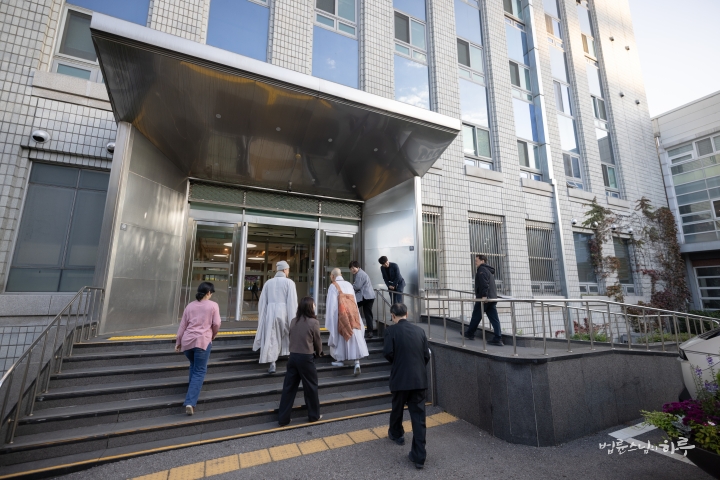
First, Mayor Jeon expressed his gratitude to Sunim for making time. Sunim also responded with a smile.
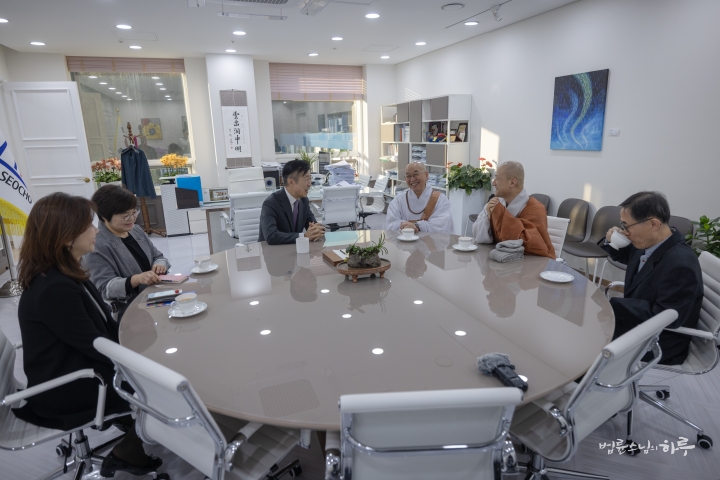
“Thank you for making time despite your busy schedule. I think today’s lecture will be a great gift for our district office staff.”
“I live in Seocho District too, so of course I should come. I readily accept most lecture requests from those who work for the public good, like military personnel, police officers, and civil servants. Whether it becomes a gift remains to be seen after the lecture. They might get upset with me for scolding them. When someone complains about how hard it is to raise children, I say, ‘Even squirrels give birth and raise their young well. Are you worse than a squirrel?'”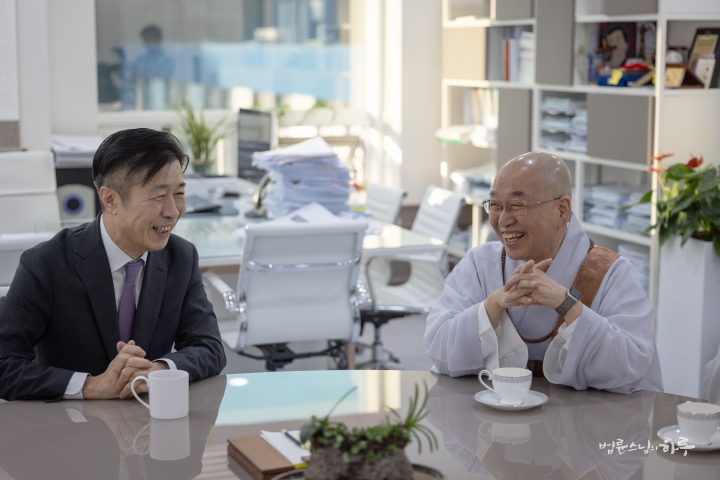
“You’re helping us snap to attention. I heard you’re holding a Youth Festa event at Jungto Social and Cultural Center from November 7th to 9th. How did you manage to book people like Kim Chang-ok, Jo In-sung, and Kim Je-dong? Your spiritual power must be tremendous.”
“They all agreed to participate as talent donations. They’ve all received some help from me during difficult times, so they listen when I ask. So I asked them to donate their talents for young people. I always provide free counseling and give free lectures. But actually, it’s not free – it’s a deferred payment system. If you’ve received help from listening to dharma talks, I tell you to share with the world too.”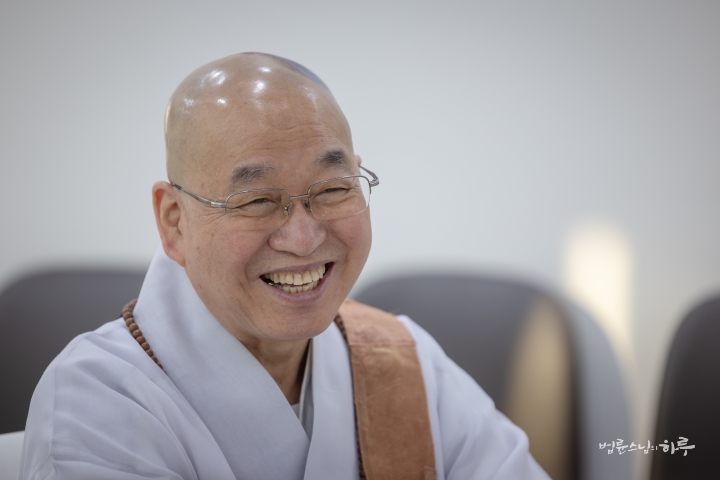
As they conversed, it was time to begin the lecture. Together with the district mayor, they moved to the main auditorium on the second floor where the district office employees had gathered.
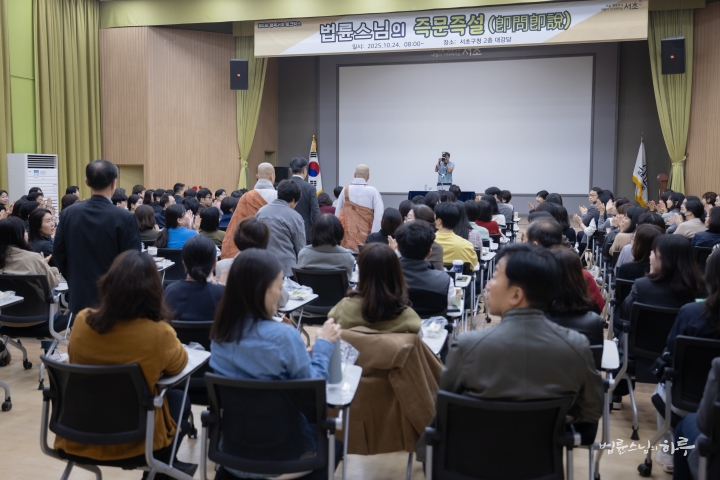
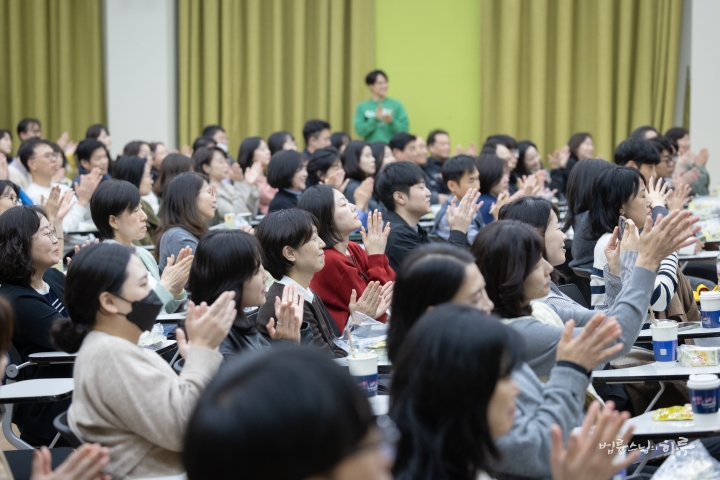
When Sunim entered the auditorium, cheers erupted. After the host introduced Sunim, he took his place on stage to great applause. Sunim began the dialogue with opening remarks.
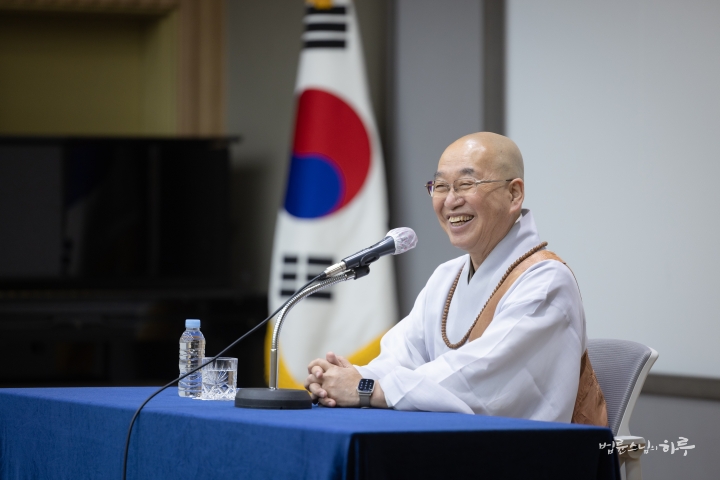
Then anyone could raise their hand and ask questions freely. During the 1 hour and 30 minutes, seven people asked Sunim questions.
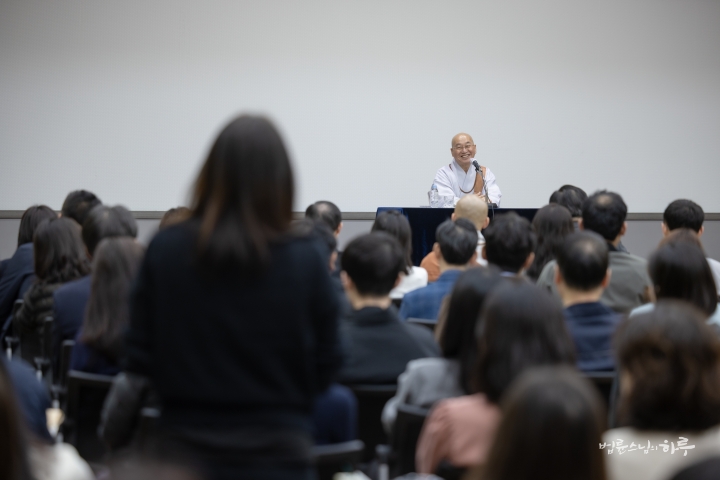
I’m struggling with where to draw the line between autonomy and control while raising my child. Is it better to let the child be independent? Or should parents provide direction?
People around me are moving forward quickly while my life pace is slow, making me anxious. How can I maintain my own pace without comparing myself to others?
I became disabled in a traffic accident. Can I still get married?
These days, social conflicts over politics, religion, and gender seem to be intensifying, dividing people further. How can we reduce these conflicts and live with mutual understanding?
Do the enlightenments of Buddha, Wonhyo, and Venerable Pomnyun share the same essence? How does one’s perception and behavior toward the world change after attaining enlightenment?
Civil servants have low salaries, and with the recent October 15 real estate measures implementing land transaction permits, my dream of owning a home has become even more difficult. How can I overcome this sense of loss?
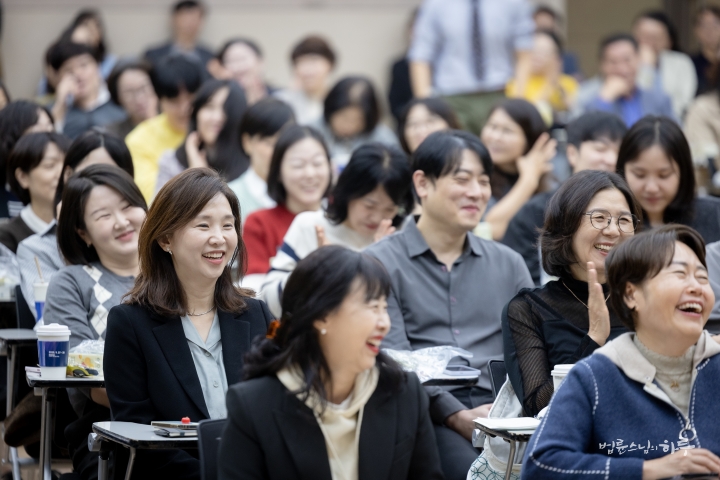
As the conversation continued, it was time to conclude the lecture. Sunim gave closing remarks.
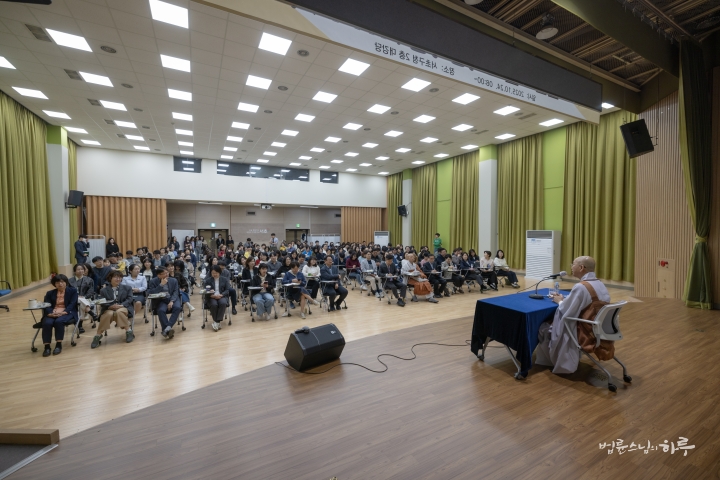
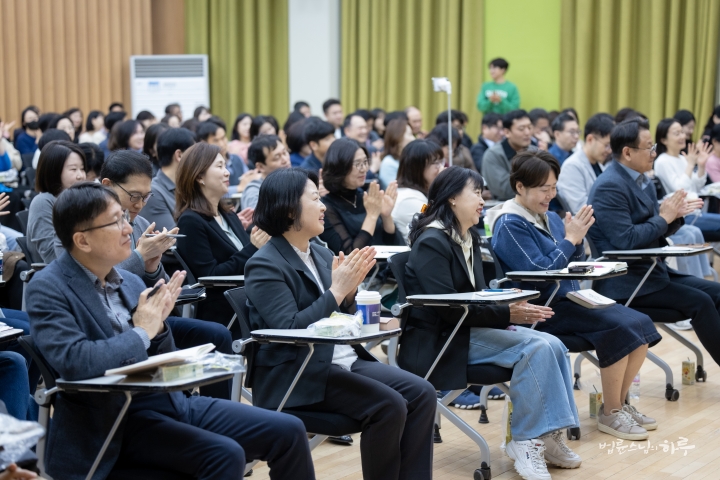
The Seocho District Office staff expressed their joy with loud applause and cheers.
Finally, District Mayor Jeon Seong-su gave closing remarks.
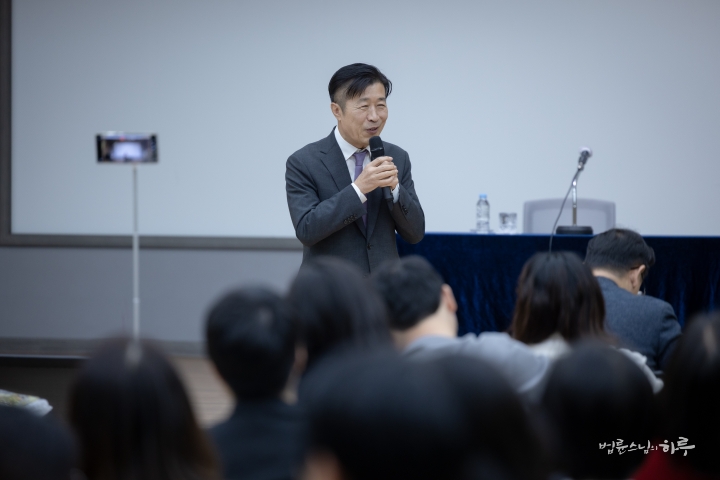
“Let’s give the world’s most enthusiastic applause to Venerable Pomnyun Sunim, who answered our Seocho District Office family’s various concerns with Buddha’s wisdom and light, and comforted our hearts. Hearing that Venerable Pomnyun is also a resident living in our Seocho District makes Seocho District shine even brighter. Thank you for your passionate lecture.”
The lecture concluded with loud applause.
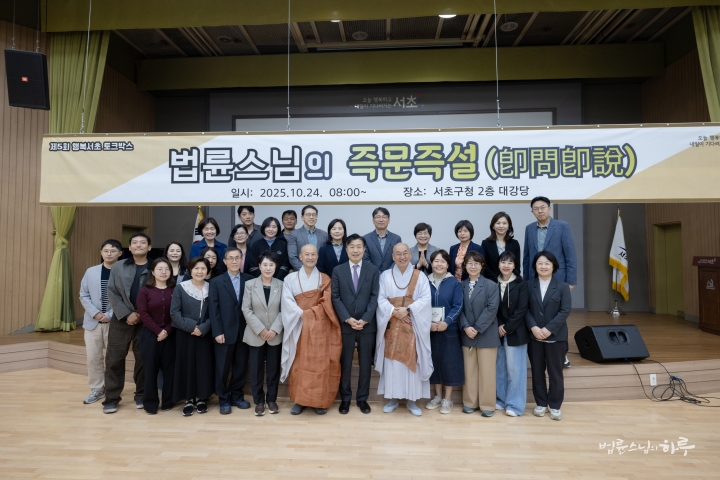
After taking a commemorative photo together on stage, they left Seocho District Office.
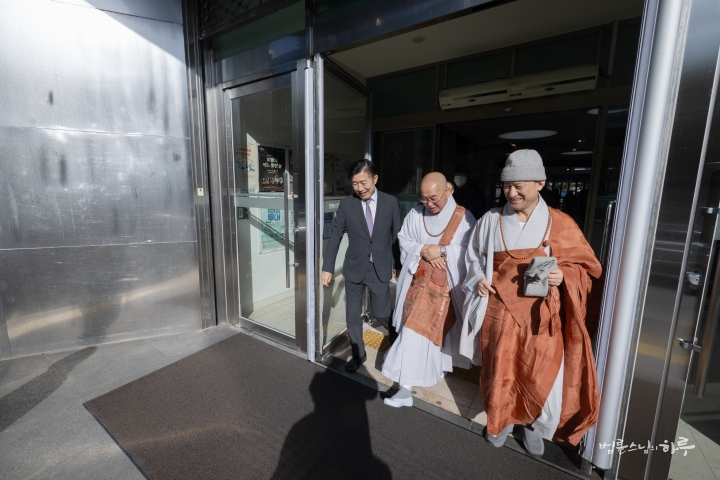
District Mayor Jeon Seong-su came out to the entrance to see them off and thanked Sunim.
“Sunim, thank you so much. It was a very beneficial time.”
Departing Seoul at 9:40 AM, they headed straight to Mungyeong.
From this morning at Mungyeong Jungto Retreat Center, Women’s INEB participants had toured the retreat center and had time to introduce their activities. In the afternoon, they planned to be introduced to Jungto Society’s training programs and have a Q&A session.
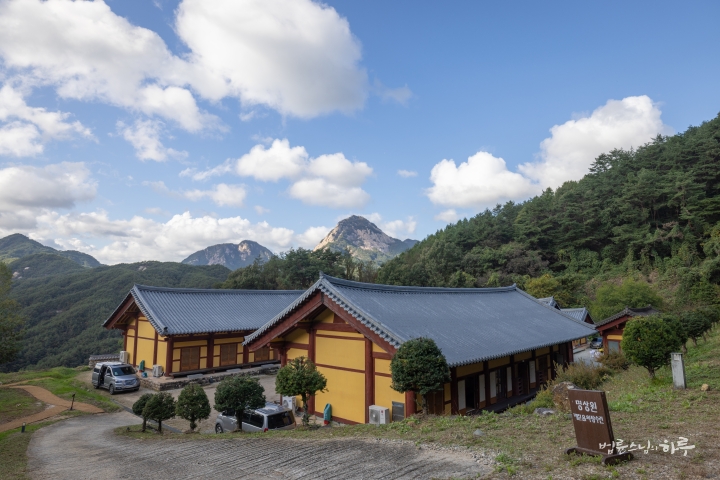
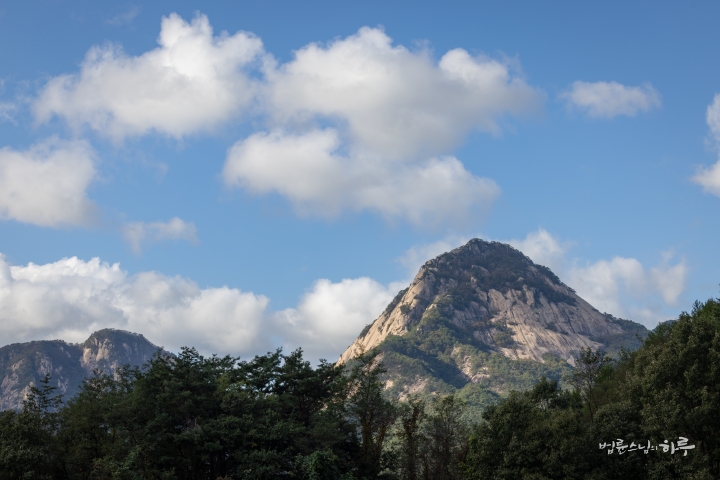
After a two-and-a-half-hour drive, Sunim arrived at the Meditation Center of Mungyeong Jungto Retreat Center at 12:10 PM. When Sunim arrived, the female INEB participants were having lunch.
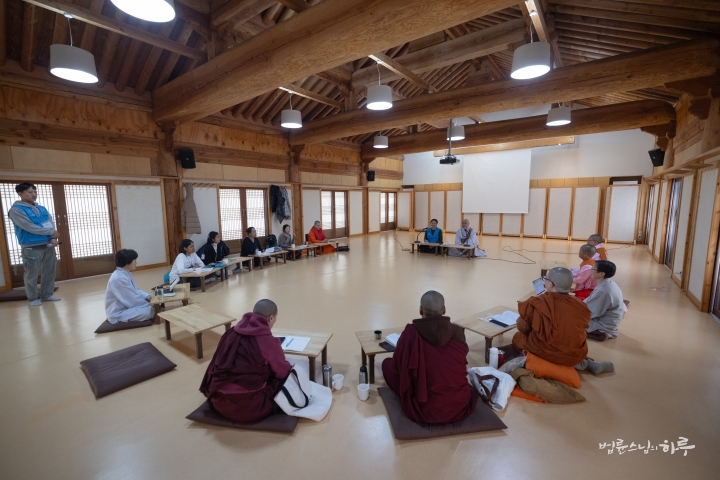
After finishing the meal, the dialogue began at 1 PM. After listening to detailed explanations about various programs conducted at Mungyeong Jungto Retreat Center, including the Awakening Retreat, Sharing Retreat, and Meditation Retreat, participants asked questions to the Dharma Teacher in charge of the retreats and received answers.
After the Q&A session, from 3 PM, participants had the opportunity to ask questions directly to Sunim. First, participants from Cambodia sought Sunim’s advice on how to address the dangers of fake news spreading amid the conflict between Cambodia and Thailand, as well as the criticism and discrimination faced by those who associate closely with Thai people.
Ms. Srey Mao from Battambang Buddhist University in Cambodia shared her concerns about what to leave for the next generation.
**What Should We Leave for the Next Generation Before We Die?
**
“What should we leave for the next generation before we die? Not money, but what can we pass on so that the next generation can live in a better world?”
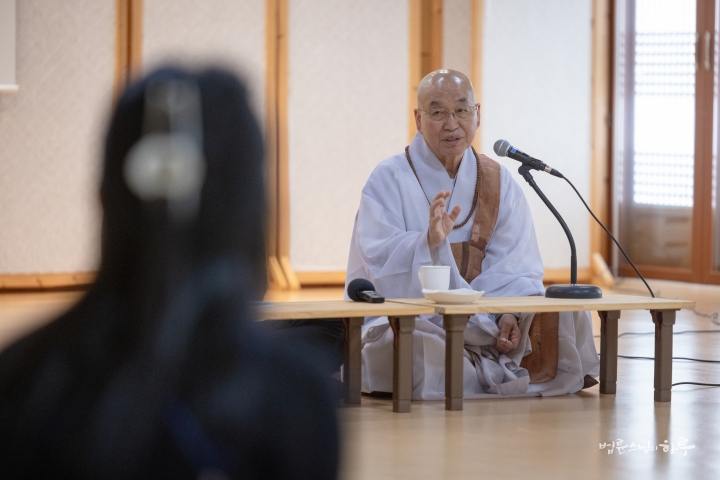
“What do you mean by living freely and happily?”
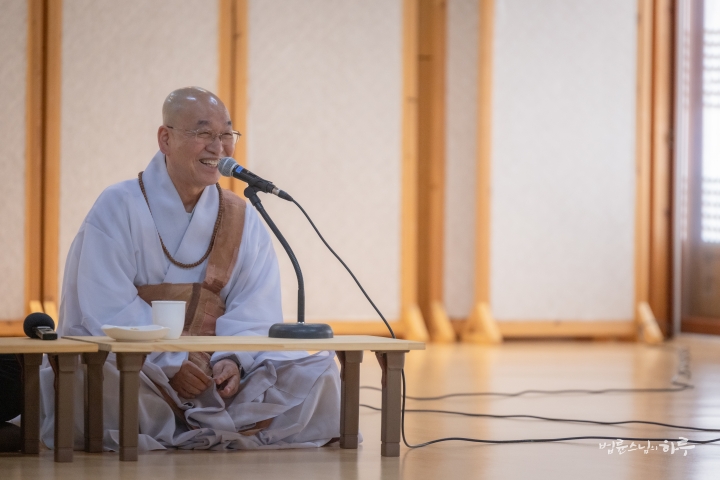
“The Buddha’s teaching is to pursue nirvana, a state without suffering. It’s even better if we not only live freely and happily ourselves but also help others to do the same. Living this way will naturally result in leaving something useful in the world. The thought of ‘I must leave something behind’ is not desirable. If there are challenges our society needs to address now, first, we must slow down the pace of the climate crisis. For this, we need to take action to reduce carbon dioxide emissions to zero. In other words, we need to reduce consumption and live frugally. This aligns with the Buddha’s teachings. Second, we must share what we have with those who need it more than we do. In Sanskrit, this is called ‘Dāna pāramitā.’ Sharing and giving can be considered acts of compassion. Finally, we need to acknowledge the beliefs and opinions of others who are different from us. We call this ‘respect.’ It means trying to understand: ‘From that person’s perspective, they might think that way, believe that way, or act that way.'”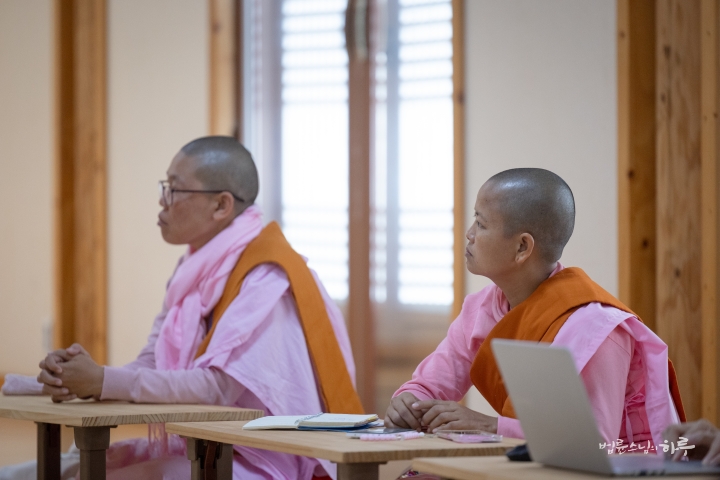
Sunim then provided a detailed introduction to the various activities that Jungto Society is undertaking to help the world. Finally, after discussing why the bhikkhuni ordination system is not active in Cambodia, the conversation came to an end.
At 4 PM, Sunim departed from Mungyeong and headed to Daegu, where the Happy Dialogue Dharma Q&A was scheduled to take place. Due to Friday evening traffic, there was severe congestion starting from the Waegwan and Gimcheon areas.

Even after leaving the highway, traffic was heavy near Yeungnam University where the lecture was being held. Today’s lecture had 1,800 pre-registrations. The roads seemed even more congested with cars heading to the lecture venue.

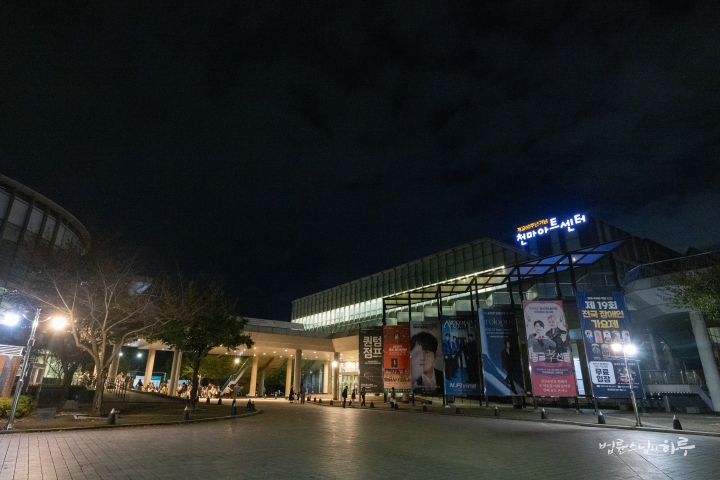
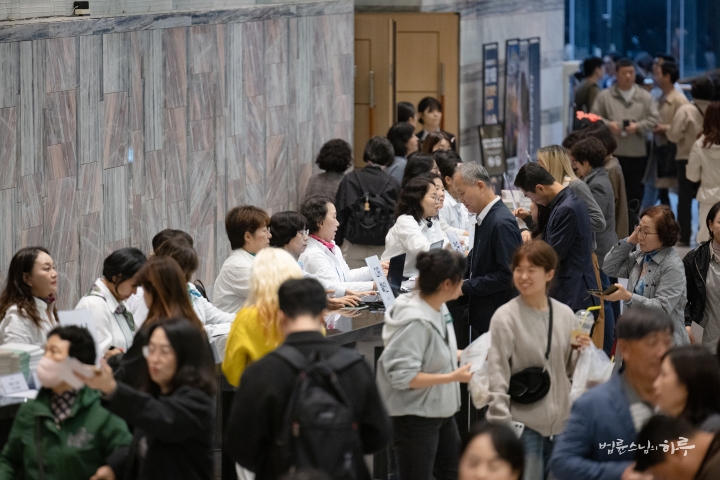
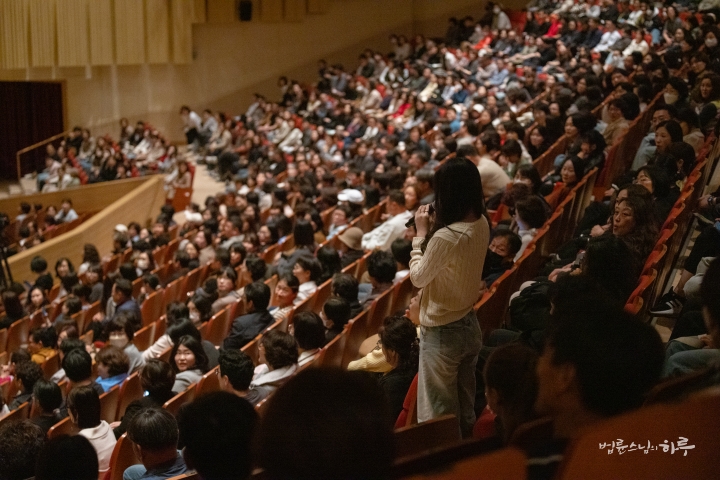
After nearly three hours of driving, Sunim arrived at 6:45 PM at the Chunma Art Center at Yeungnam University, where today’s lecture was being held. This is Daegu’s premier cultural and arts performance venue with 1,800 seats. The lobby was bustling with numerous people.
In the waiting room next to the lecture hall, Vice President Lee Kyung-soo of Yeungnam University, along with other university officials and Sunim’s high school classmates, were waiting for Sunim who was visiting Daegu after a long time.
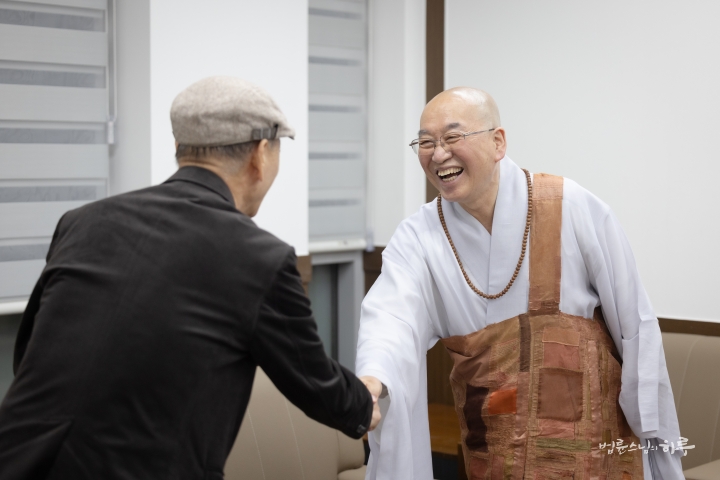
After exchanging warm greetings, they shared tea and conversation for a while. Sunim expressed his gratitude to the Vice President of Yeungnam University for providing the venue.
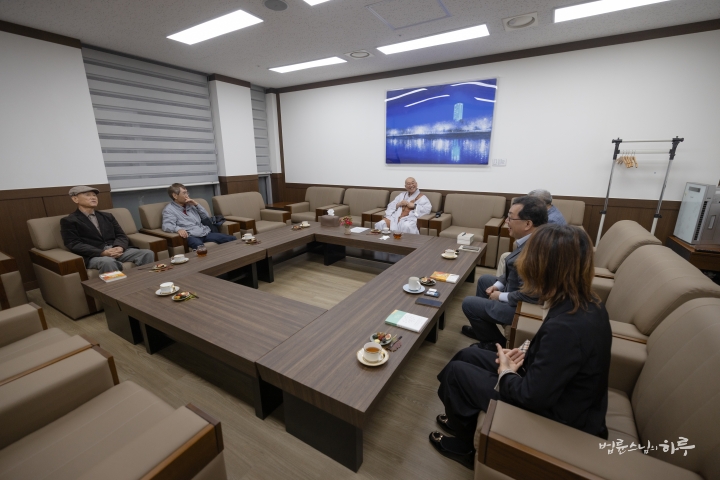
“Whenever you need it, Sunim, we’ll prepare the Grand Hall for you.” (laughter)
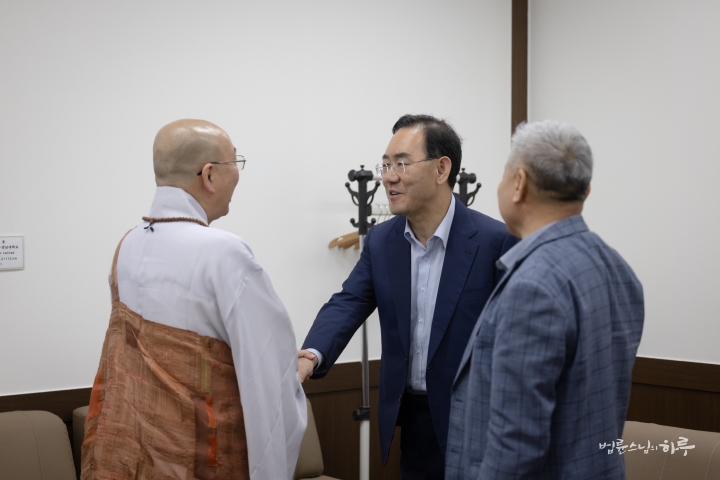
While they were conversing, National Assembly Vice Speaker Joo Ho-young arrived shortly after and greeted Sunim. After exchanging warm greetings, they moved to the lecture hall together.
Before the lecture began, Master Singer Joo Woon-sook, an Intangible Cultural Asset who won the Presidential Award at the Jeonju Daesaseup Festival finals for her performance of Simcheong-ga, performed three Namdo folk songs: Seongju Puri, Namwon Sanseong, and Jindo Arirang.
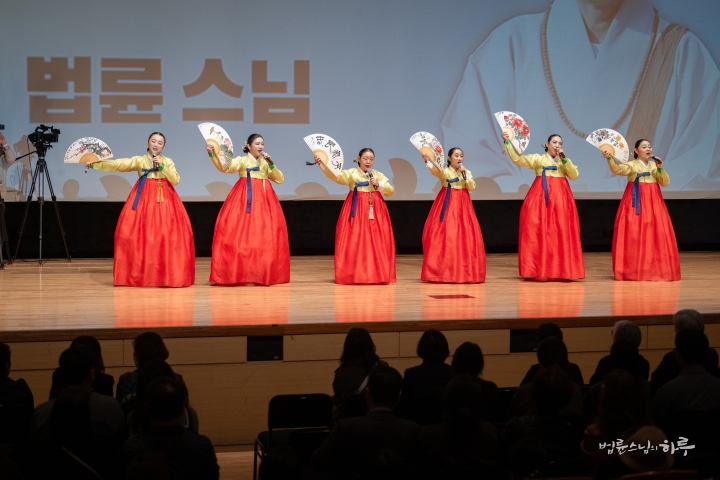
Sunim and the distinguished guests also enjoyed the performance together.
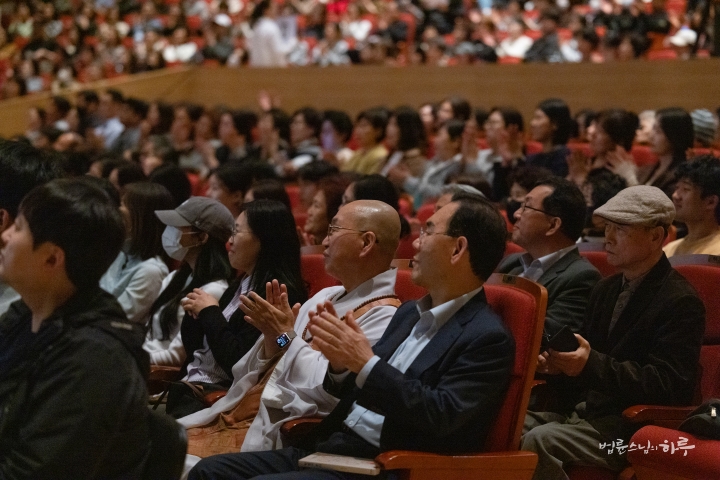
Following this, an introductory video about Sunim was shown, and when it ended, Sunim walked onto the stage.
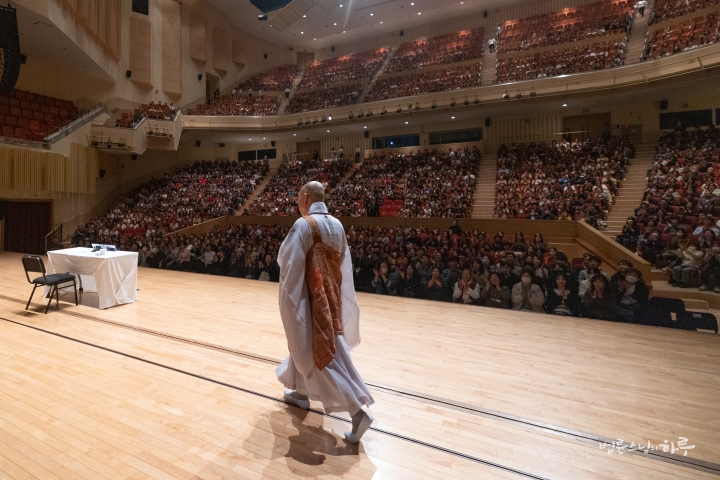
With 1,800 Daegu citizens present at the venue and about 7,000 people connected via YouTube live stream, Sunim began with a bright smile and greeting.
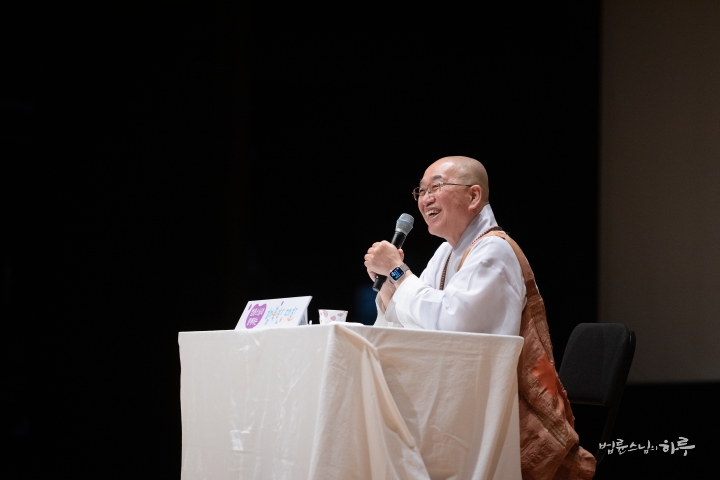
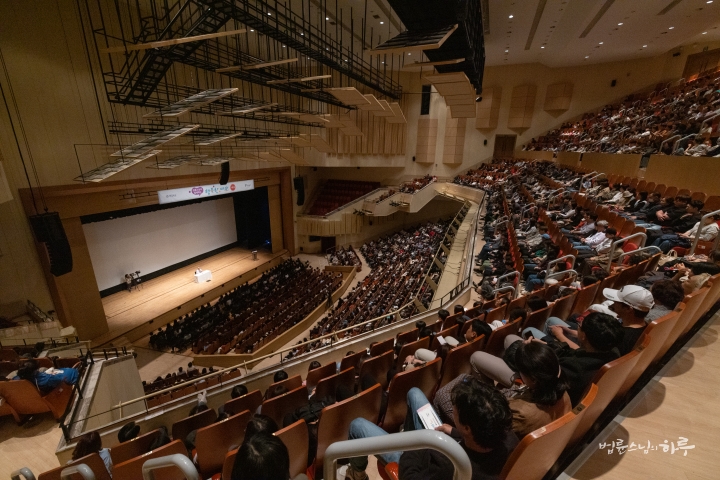
Those who had submitted questions in advance then asked Sunim their questions. Six people first had conversations with Sunim, and five more from the audience asked additional questions, giving a total of eleven people the opportunity to ask Sunim questions during the two-hour session.
One person sought Sunim’s advice on how to overcome recurring conflicts, explaining that her husband reacts sensitively to her tone of voice and even minor conversations escalate into fights.
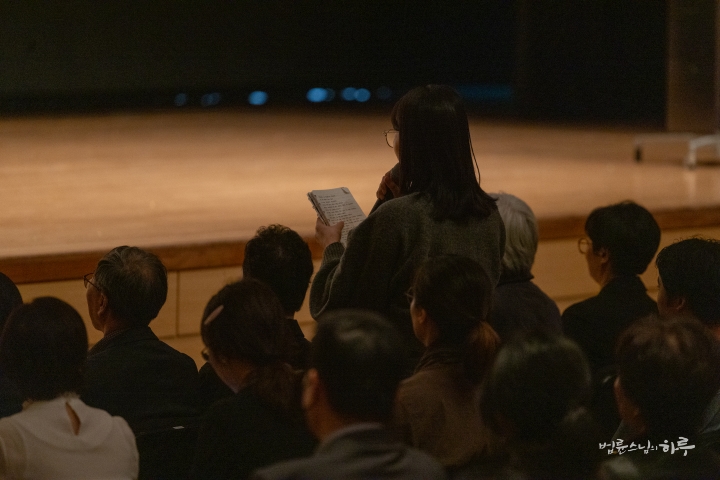
My Husband Reacts Sensitively to My Tone and We Keep Fighting
“Whenever I speak with even a slightly irritated tone or angry voice, my husband reacts sensitively to my tone, saying ‘Why are you being irritated?’ or ‘Why are you getting angry?’ We fight over my tone every time, and sometimes we don’t speak to each other for over a week because we’re both upset. As this keeps happening repeatedly, I’ve come to dislike and resent my husband. Sometimes I think it’s more comfortable not to talk at all. I seek your advice on how to overcome these recurring situations.”
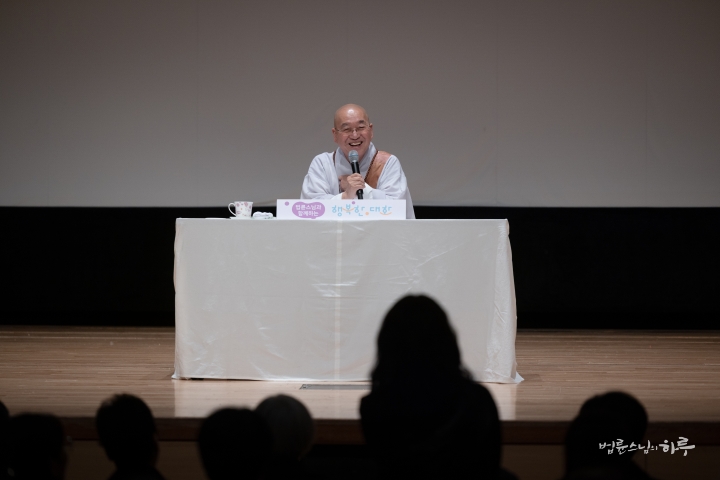
“When I get irritated, my husband doesn’t like it, and it’s hard for me to see that.”
“Nobody likes a frowning face. It’s not just your husband who dislikes it – mothers dislike it, and I dislike it too. So wouldn’t it be better if you just didn’t frown? If you’ve realized ‘My husband dislikes it when I get irritated,’ then just don’t get irritated. When your husband gets angry seeing you irritated, blaming him for that is wrong in itself. It’s like causing trouble yourself and then blaming your husband. Getting irritated isn’t something to be proud of, is it? Yet you’re hoping your husband will say, ‘You’re pretty even when you’re irritated.’ The possibility of that happening is very slim. If your husband did say that, wouldn’t he be somewhat lacking? Would you prefer a lacking man or a normal man?”“A normal man.”
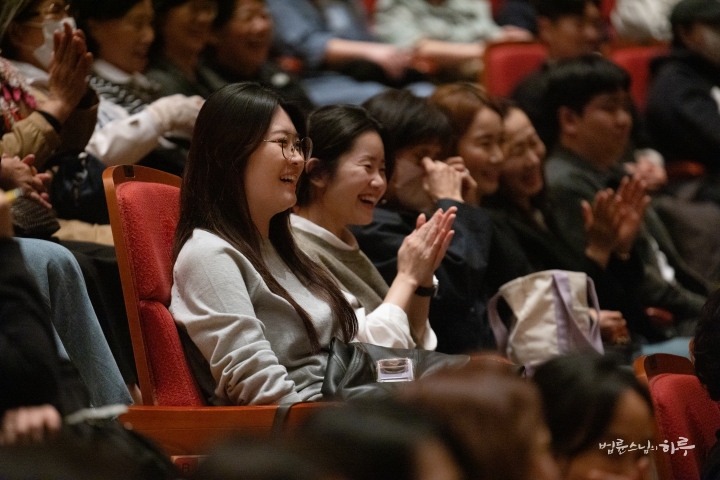
“Yes, I understand. Thank you.”
Questions continued to follow.
Why are outgoing and sincere men considered romantically unattractive? What kind of men and women do you think are romantically attractive?
I’m suffering from emotional wounds due to territorial behavior and exclusion at work. How can I manage my mind to find peace in these relationships?
I suffer from comparison and inferiority complex seeing my peers get jobs at major hospitals. How can I accept myself as I am without comparing myself to others?
I’ve lived well in studies and work, but now I want to live exceptionally well. What mindset should I have to truly live a wonderful life?
I’m worried about raising a child in a rural area where people and businesses are disappearing. How should I raise a child in a region that’s becoming extinct?
My older brothers, both over sixty, still borrow money from our father and don’t pay it back. I’ve become enemies with them by interfering. What should I do?
Since my father suddenly passed away from a heart attack, I feel heavy-hearted whenever I think of him. Will time really heal this?
I run a samgyetang (ginseng chicken soup) restaurant, and it’s so hard that I close for a month after summer. Customers complain a lot – should I continue operating this way?
I’m curious about how to respond well to changing times. Society is very noisy – how can I not be swayed?
Buddhism says that suffering from anger is all self-created, but it’s difficult not to blame others in daily life. How can I have unwavering confidence in practice?
Before we knew it, it was time to end the lecture. Sunim gave his closing remarks.
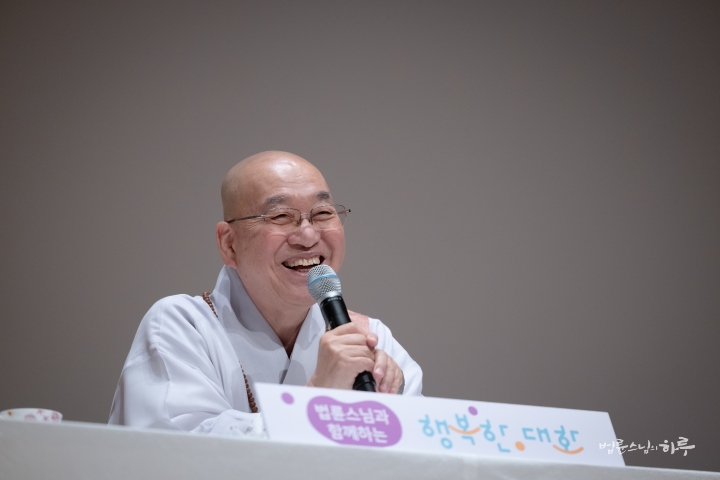
In Married Life, Is It Better to Live Kindly or Wisely?
Ultimately, there are four options. First, adjusting to the other person; second, having them adjust to me; third, compromising; fourth, if none of these work, living separately. We can’t say which method is better or worse. You just choose according to your circumstances – compromise isn’t necessarily always the best path. To make someone conform to your wishes requires persuasion. But when persuasion fails, ‘power’ eventually comes into play. This could be physical force, using money if you’re wealthy, or using authority if you have high status. The world mostly operates on this logic of ‘power.’ In factories, bosses move workers with money; in politics, people are moved by authority. When someone without power tries to make the world conform to their wishes, suffering arises. Rather than calling this ‘bad,’ we should call it ‘foolish.’ They suffer because they don’t understand how the world works. A wise person understands this principle and can escape suffering. So how should you live? Should you live kindly? Or should you live wisely?”“We should live wisely.”
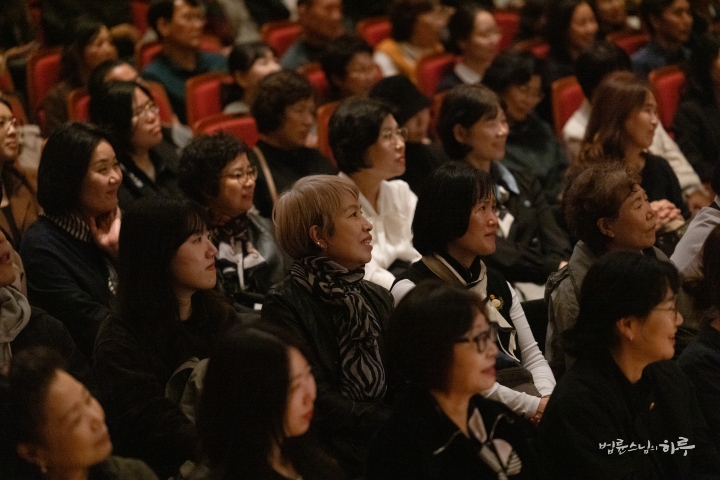
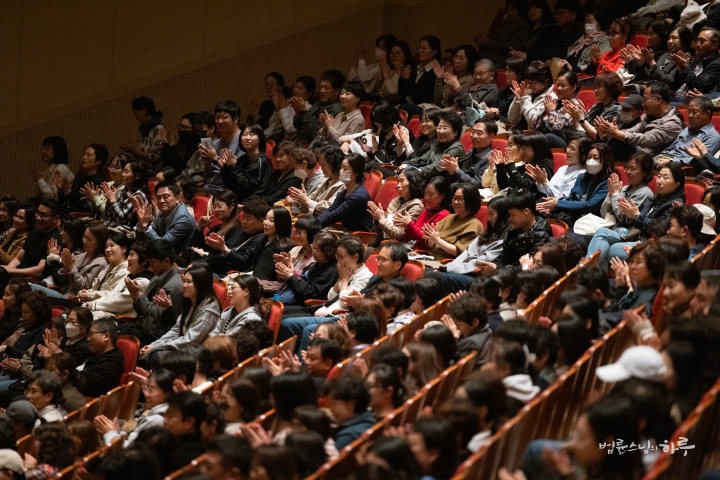
The lecture ended with loud applause.
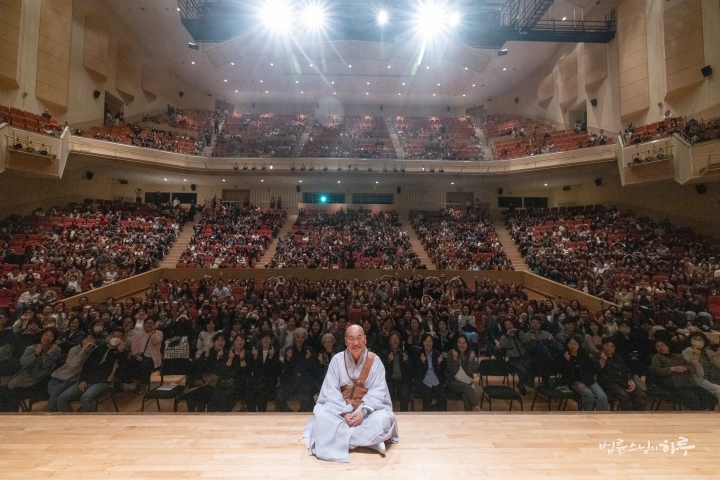
Today had the largest attendance of all the Dharma Q&A lectures held this year. To commemorate this day, Sunim took a trendy verification shot while sitting on stage with the 1,800 audience members in the background.
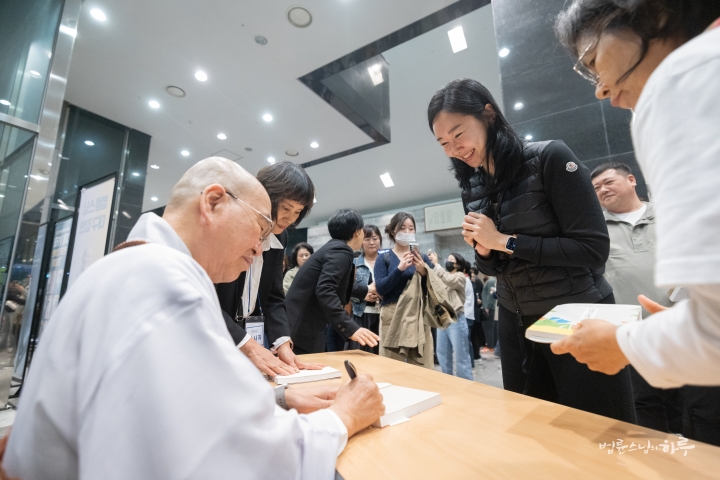
A book signing session followed in the lobby. Many Daegu citizens stood in a long line to receive Sunim’s autograph and express their gratitude to him.
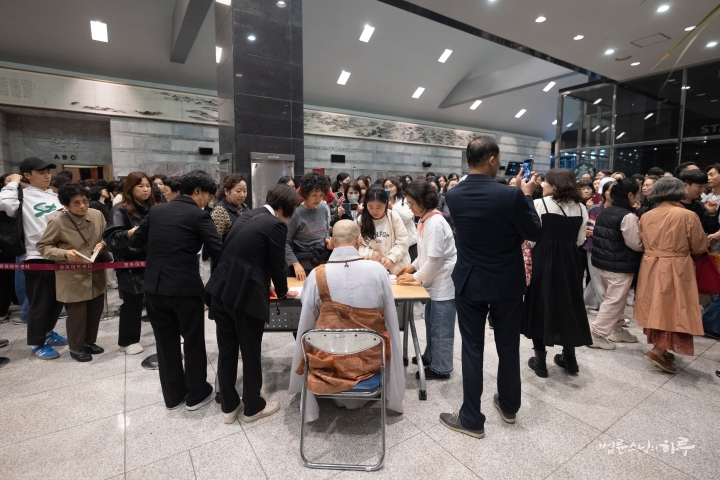
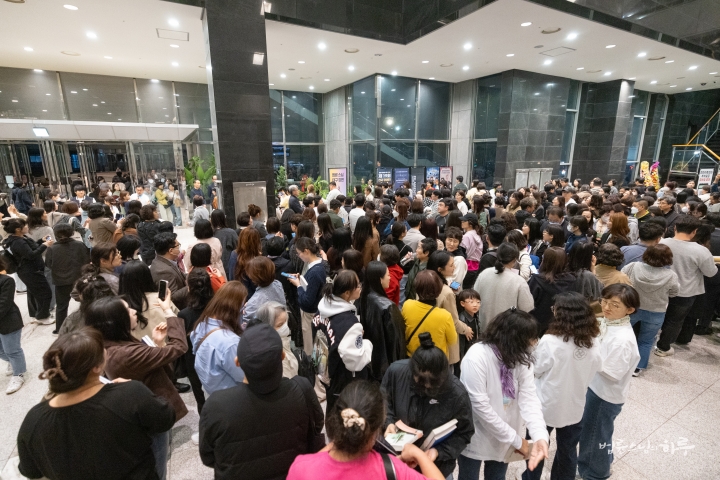
“Thanks to you, Sunim, I’m living happily now. Please stay healthy for a long time and continue to share your good words with us.”
After the book signing, Sunim took a commemorative photo with the Daegu Happy Citizens who had prepared the lecture.
“Daegu Happy Citizens, fighting! Let’s go to Happiness School!”
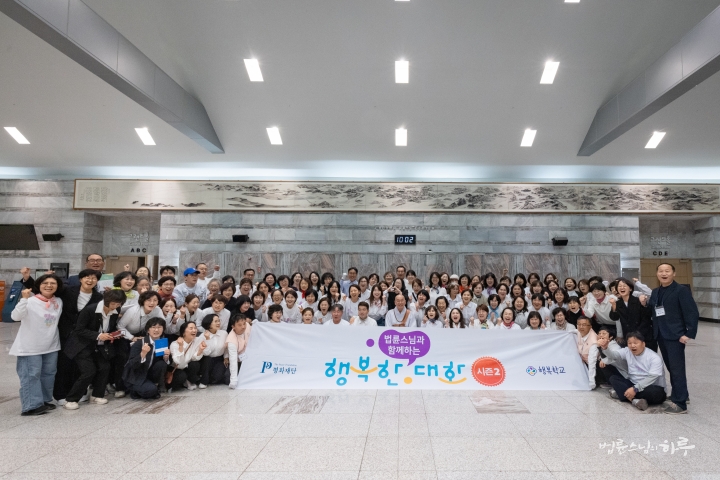
After expressing his gratitude to the Happy Citizens for their hard work, Sunim left the venue.
“Thank you all for your hard work. I need to head back to Seoul now.”“Have a safe trip.”
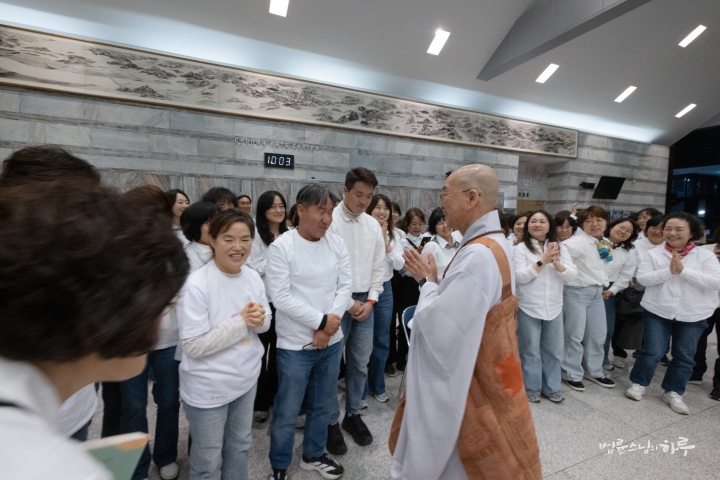
Leaving Daegu at 10 PM, he headed straight to Seoul.
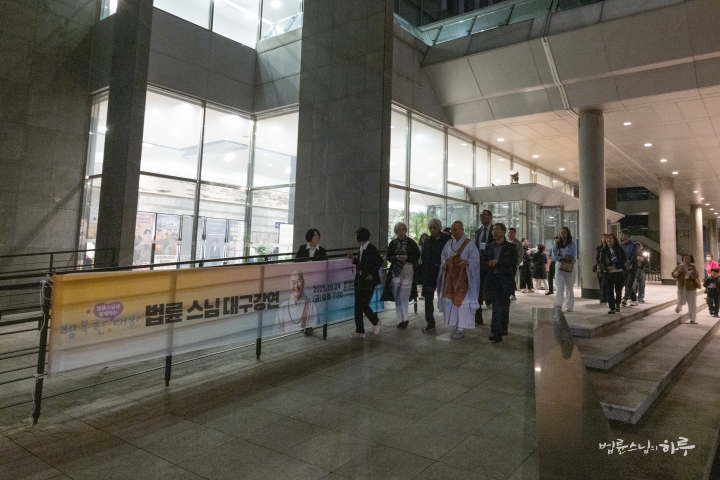
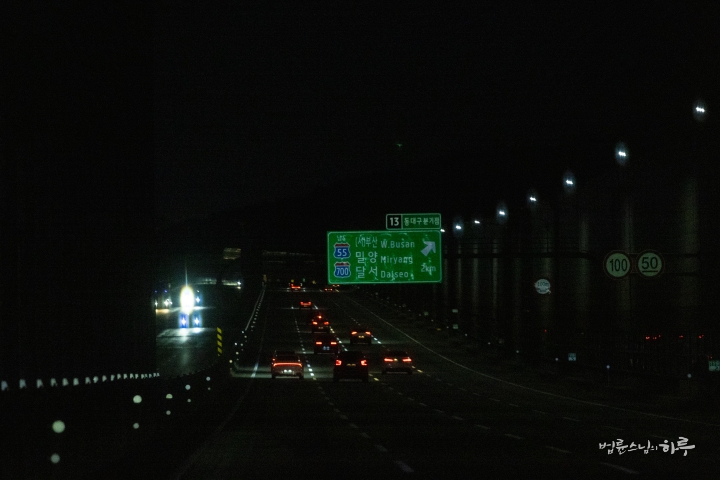
After a 3.5-hour drive, he arrived at Seoul Jungto Center at 1:30 AM and concluded his day.
Tomorrow, he will have a meeting with foreign affairs and security experts in the morning, attend the JTS 32nd anniversary seminar in the afternoon, and move to Dubuk Jungto Retreat Center in the evening.
“””