What Practice Should I Do When I’m Already Angry?
October 23, 2025 - Day 2 of Women's INEB, Introduction to Jungto Society Education
Hello. Today marks the second day of the Women’s INEB Jungto Society Study Tour. After arriving in Korea yesterday and having a welcome ceremony, the participants began their official tour of Jungto Society today. Over the next week, they will travel between Seoul, Mungyeong, Gyeongju, and Namwon to experience and learn about engaged Buddhism.
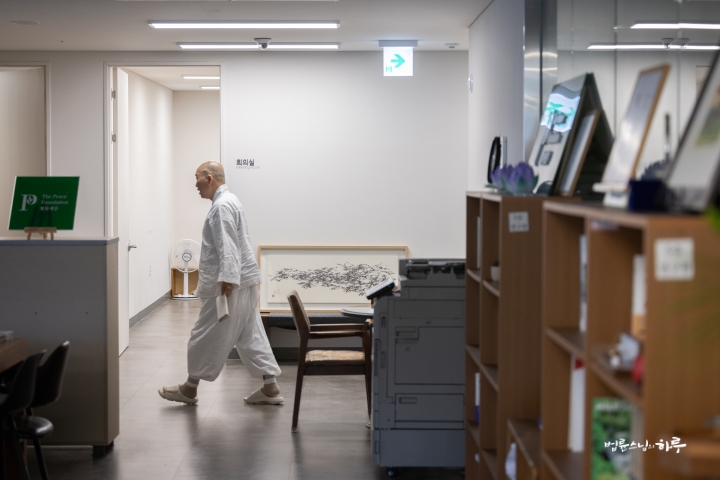
After completing morning practice and meditation, Sunim headed to the Peace Foundation. He began his day at 7 AM with a breakfast meeting with North Korea experts.
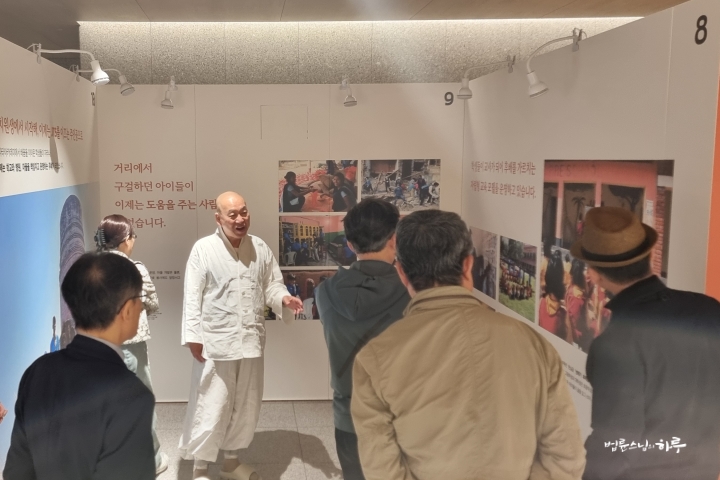
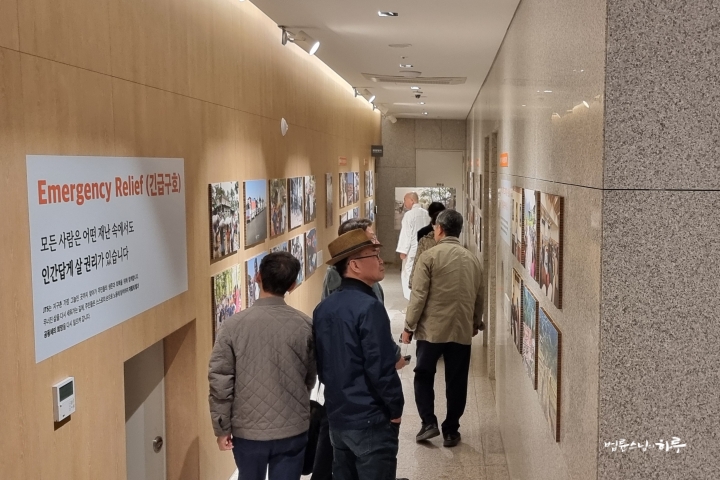
After breakfast, Sunim toured the JTS 32nd Anniversary Photo Exhibition on the 3rd basement and 2nd floors with the experts. The photos quietly captured the traces of JTS’s activities over the past 32 years – from when Sunim established Sujata Academy in an Dalit community in India 32 years ago, to when he encountered North Korea’s food crisis and started the one million signature campaign, to the story of beginning to build schools in Mindanao, Philippines after receiving the Magsaysay Award, and emergency relief activities at disaster sites around the world. The images from education and relief sites in India, Philippines, North Korea, Myanmar, and other regions silently conveyed the heart with which JTS has worked.
After viewing the photo exhibition, they moved to the Peace Foundation conference room for in-depth discussions. They analyzed North Korea’s price trends, economic conditions, market policies, and exchange rate changes, and discussed the possibility of a North Korea-US summit during the APEC period in Gyeongju. The meeting concluded at 9:30 AM.
After seeing off the experts, Sunim spent the morning in his office proofreading manuscripts and handling administrative work. At noon, an expert visited Sunim. After having lunch together, they had extensive discussions about recent changes in the security environment surrounding the Korean Peninsula and corresponding peace-building measures.
At 3 PM, Sunim met with Dharma Teacher Bogwang, Director of JTS India, and Dharma Teacher Hyanghoon, Director of JTS Philippines, who had briefly returned to Korea to attend the JTS 32nd Anniversary Seminar.
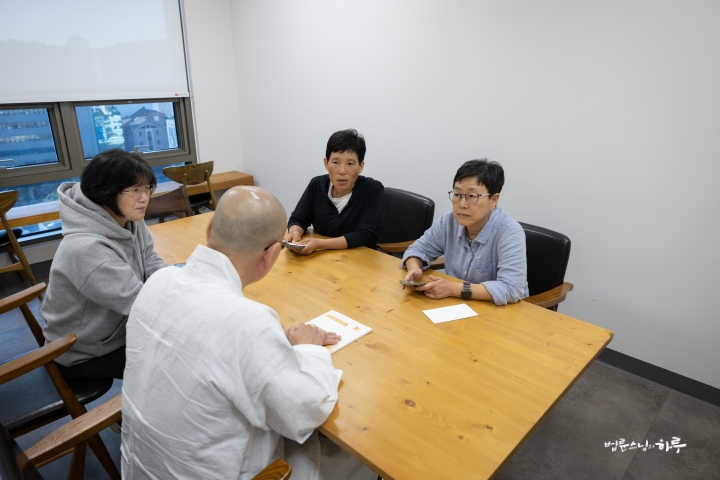
After reviewing the second-half business plans for JTS India and JTS Philippines, they discussed what topics to cover at the seminar the day after tomorrow and what schedule to follow during their stay in Korea before concluding the meeting.
From 3:30 PM, Sunim met with the Women’s INEB (International Network of Engaged Buddhists) participants who had come to tour Jungto Society. Ten participants including bhikkhunis and female activists from Thailand, Malaysia, Myanmar, Ladakh, and Cambodia attended. After warm greetings, Sunim gave each participant some pocket money to use during their stay in Korea.
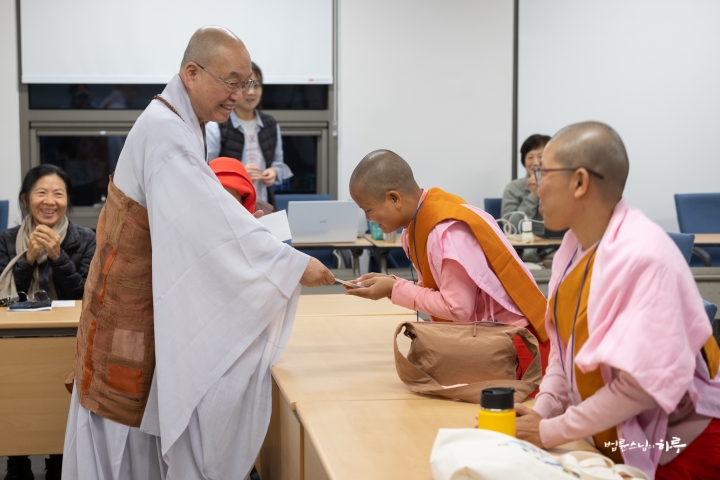
“Thank you.”
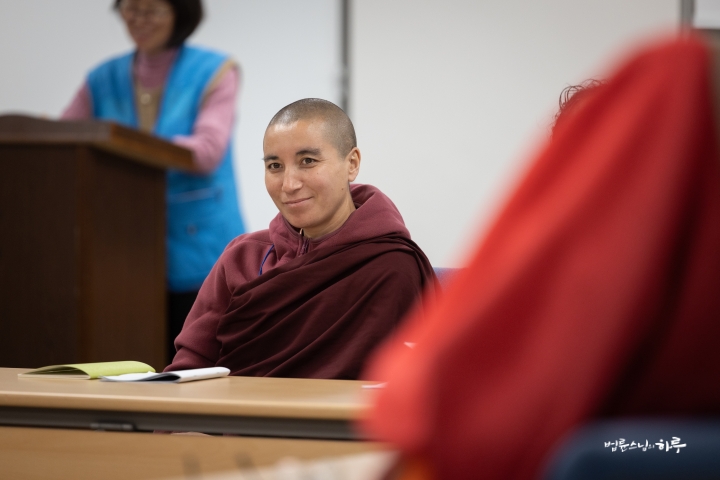
After yesterday’s welcome ceremony, the Women’s INEB participants were listening to a lecture by Dharma Teacher Mubyeonsim on “Jungto Society’s Educational Programs” and having a Q&A session.
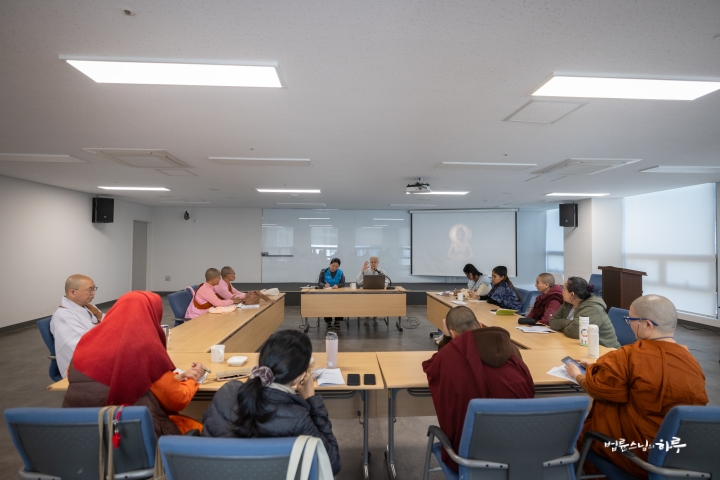
Dharma Teacher Mubyeonsim introduced various educational programs conducted by Jungto Society, including Jungto Dharma School, Sutra Course, and Happiness School, while sharing many stories about how her own life had transformed after encountering Jungto Society.
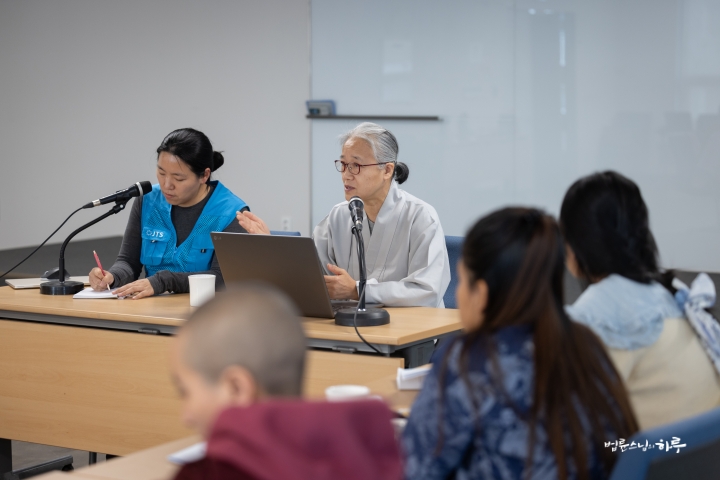
Sunim sat quietly listening to the conversation, adding supplementary explanations when needed during the Dharma Teacher’s responses.
After the Q&A session, they had dinner at 5:30 PM. Volunteers had carefully prepared the meal.
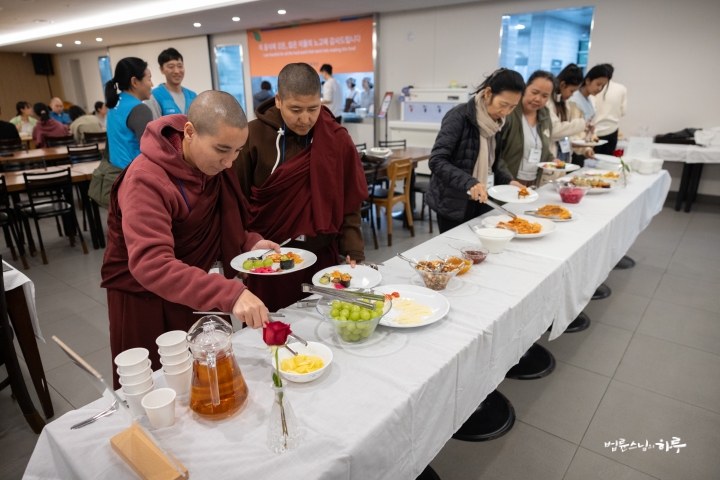
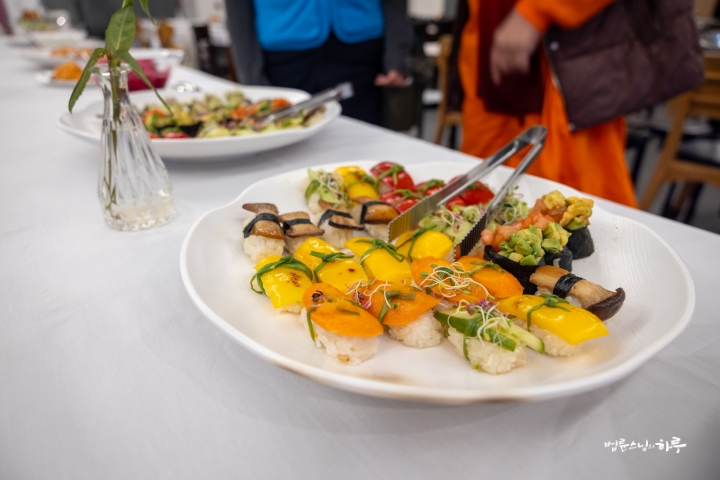
After each person served themselves an appropriate amount of food on their plates, they offered a brief prayer of gratitude and began eating.
As the sun set, from 6:30 PM they began their formal dialogue session with Sunim. First, they performed a Theravada-style Buddhist service.
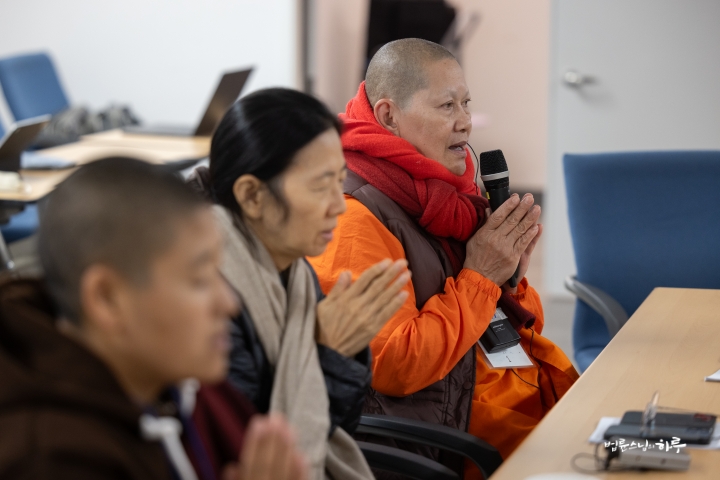
“Namo tassa bhagavato arahato sammā-sambuddhassa.”
After the service, they watched a video together showing how JTS built a school in the earthquake-affected area of Syria last year.
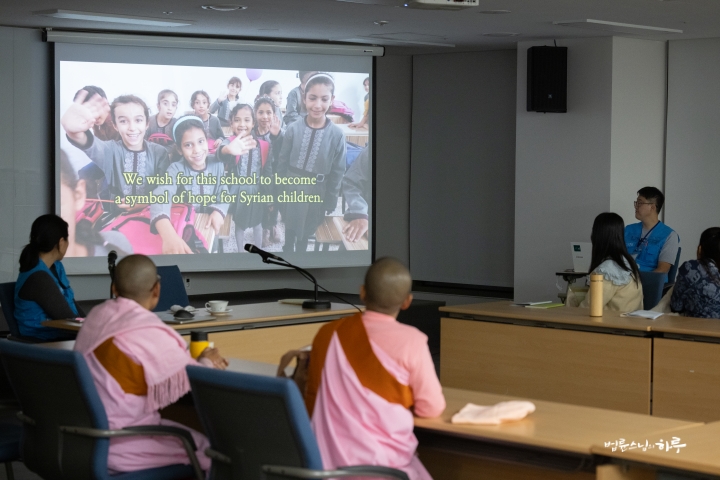
After the video ended, Sunim began the dialogue with a smile.
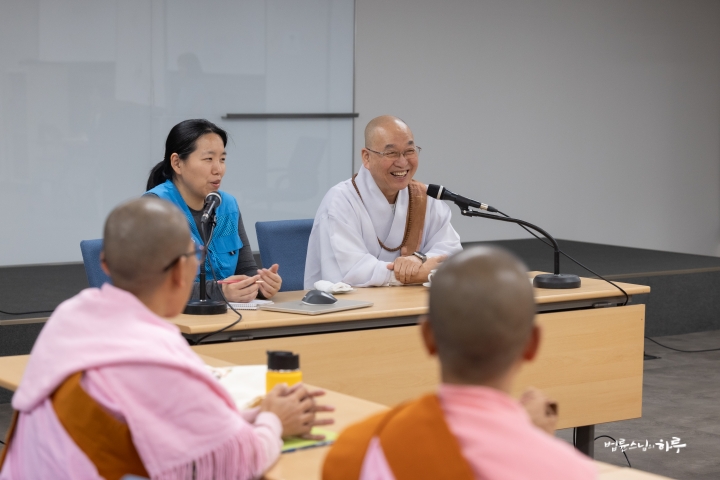
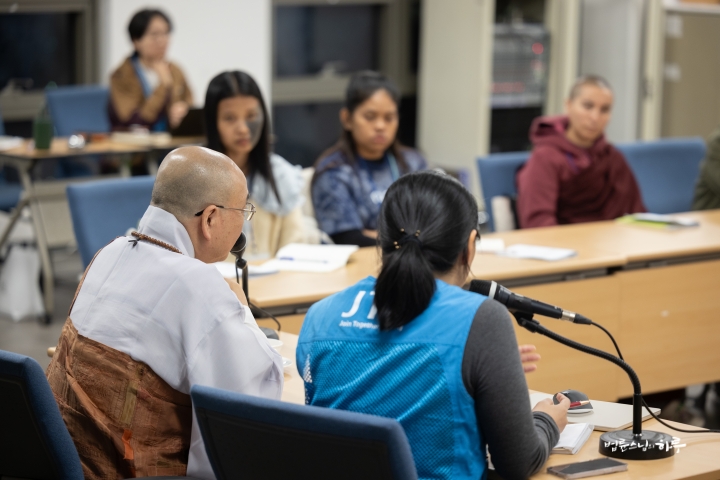
Anyone who had questions about what they had learned earlier about “Jungto Society Education” was free to raise their hand and ask Sunim. The first person to raise their hand was amazed that Jungto Society operates on a volunteer basis and was curious about the secret behind this.
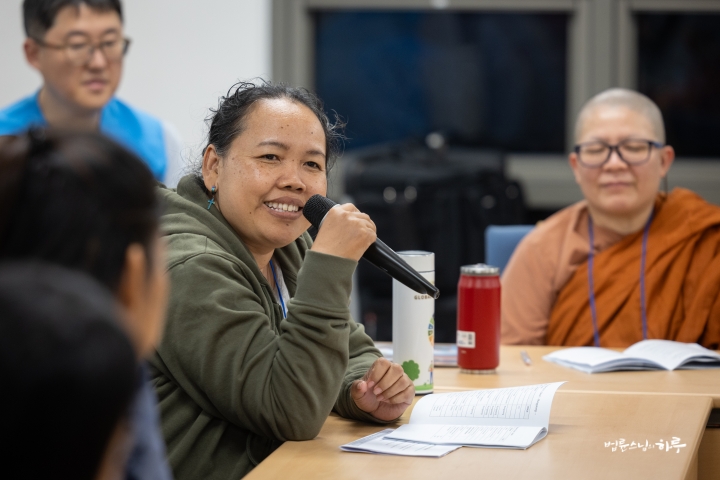
What Is the Key Factor That Makes People Volunteer?
“One thing that is very important and interesting to me is that so many people volunteer in Jungto Society. I’m curious what the connecting link is. What is the key element that brings all these people together and inspires them to volunteer?”
“The key factor that leads many people to participate in volunteer work is ‘practice.’ Because they have experienced some liberation from their own suffering through practice, they voluntarily step forward wanting to contribute in any way they can out of gratitude.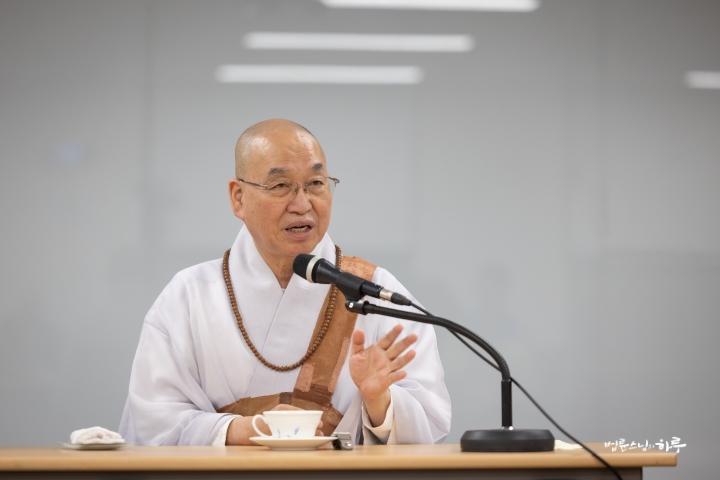
After hearing Sunim’s answer, questions about specific practice methods followed.
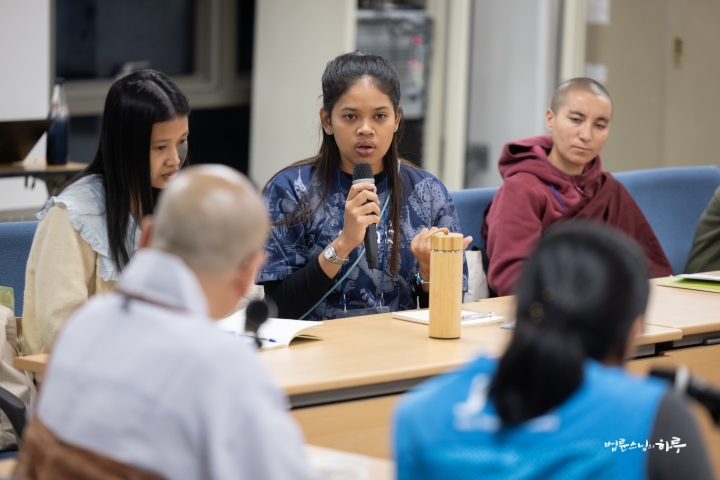
“I would like to know how to teach people not to merely recite or memorize the Buddha Dhamma, but to truly practice it from the heart.”
“Buddha Dhamma is not simply a matter of knowledge. It’s a teaching about ‘How can the mind be freed from suffering?’ Let’s first ask ourselves the question, ‘How am I living now?’ If you’re living with stress and suffering, we need to examine why. Usually it’s because we’re being greedy, trying to have things our way, or clinging in ignorance without understanding. So do you want to continue living in suffering? No, you don’t. Everyone wants to live without suffering. To live without suffering, we must realize our ignorance and let go of attachment and greed. Then anyone can be free from suffering. This is the teaching of the Four Noble Truths, called ‘suffering, its cause, its cessation, and the path’ (苦集滅道).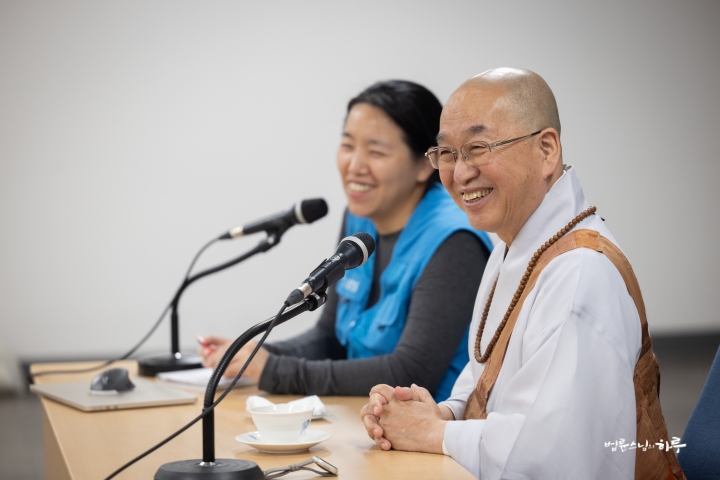
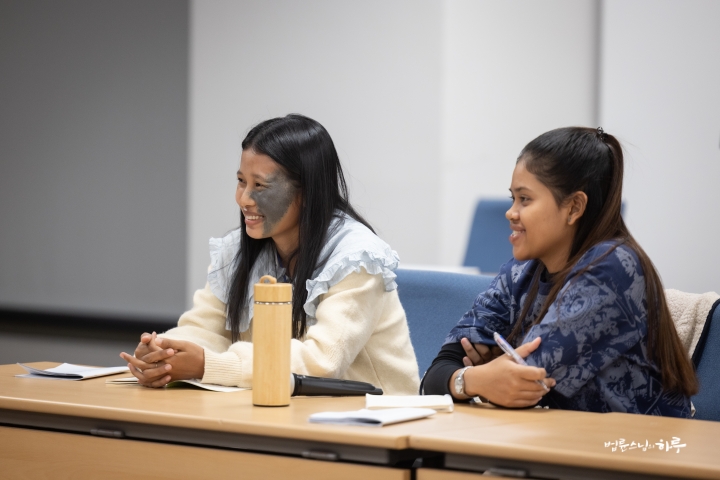
The conversation gradually deepened. One person was moved by the fact that Sunim had grown Jungto Society for 30 years and was curious about how he overcame the many difficulties he must have faced. Sunim answered with a smile.
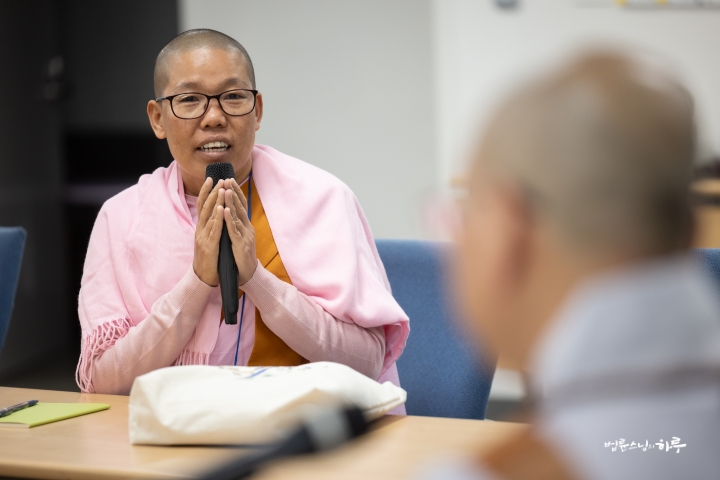
How Did You Overcome Difficulties Over the Past 30 Years?
“Jungto Society has been propagating the Dharma for over 30 years. It’s been a long and challenging journey, as life itself is not always stable. During this long journey, when you faced difficulties and disappointments, how did you overcome them?”
“Korea has four seasons: spring, summer, fall, and winter. It’s cold in winter and hot in summer. Some people ask me: ‘How did you endure those cold winters?’ ‘How did you bear those hot summers?’ But are these questions really necessary? It’s perfectly natural for winters to be cold and summers to be hot. When it’s cold, you wear more clothes; when it’s hot, you wear lighter clothes. Then there’s no problem at all. Similarly, when you try something and it doesn’t work, you try again. If it still doesn’t work, you try once more. And if it still doesn’t work, you let it go. There’s no special secret.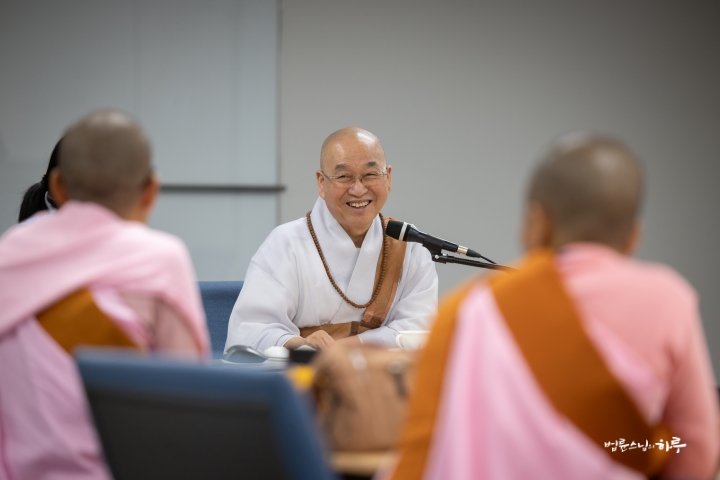
Questions continued to flow.
Among those who suffer, why do some transform their suffering into compassion while others end up harming others? How can we help them cultivate compassionate hearts even in their suffering?
You say living self-reliantly is important, but how can we practice this in daily life? When we need someone like a mirror to reflect ourselves, how do we balance self-reliance with relationships?
How can we help young people who react hypersensitively to anxiety or fear triggers? What approach is effective for youth whose anxiety recurs due to sudden sounds or stimuli?
How much is Seon Buddhist tradition reflected in your daily practice? How do you balance maintaining tradition with modern application?
As the conversation was drawing to a close, one person asked about practice. They said that while they know they should be compassionate and tolerant, there are moments when anger arises instantly, and they sought Sunim’s advice on how to practice in such situations.
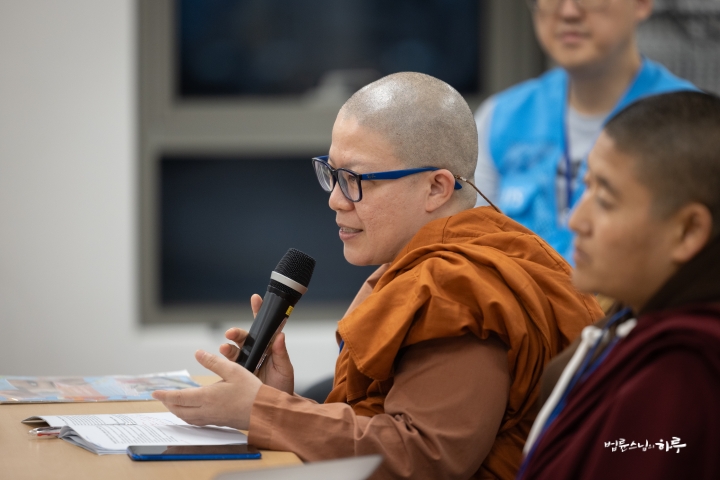
What Kind of Practice Should I Do When I’ve Already Become Angry?
“I have learned that it is very important to keep our minds pure. To do so, we must practice diligently, be compassionate, and cultivate tolerance. However, while this is easy to say, it is very difficult to put into practice in daily life. Often, we become angry before we even realize it. In such situations, how should we continue our practice?”
“If you’re angry, simply be aware that ‘I am angry.’ If you’re angry, acknowledge ‘I am angry’; if you’re not angry, acknowledge ‘I am not angry.’ What’s important is to be aware of your current state as it is. Thinking ‘I shouldn’t be angry’ and suppressing it is not practice—it’s merely enduring. That belongs to the realm of ethics or morality, not practice. Suppressing actually creates stress. Therefore, when you’re angry, be aware ‘Oh, I’m angry,’ and if you’ve expressed that anger outwardly, be aware ‘I expressed anger.’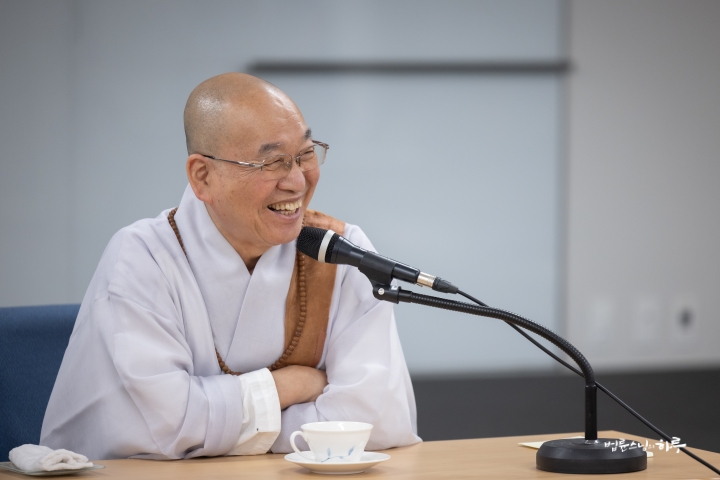
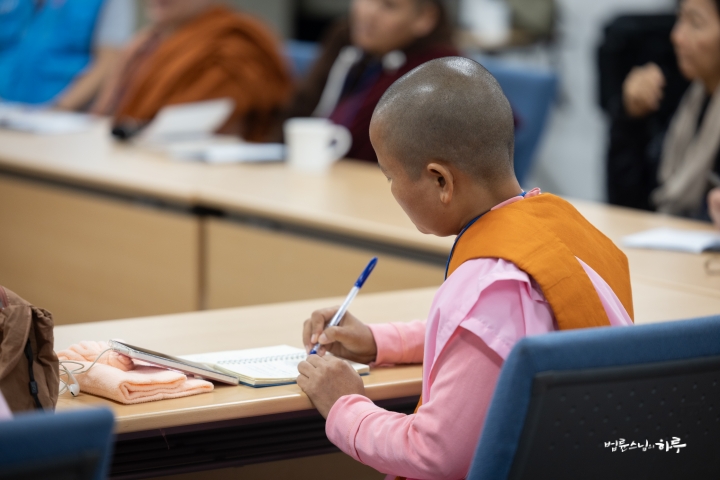
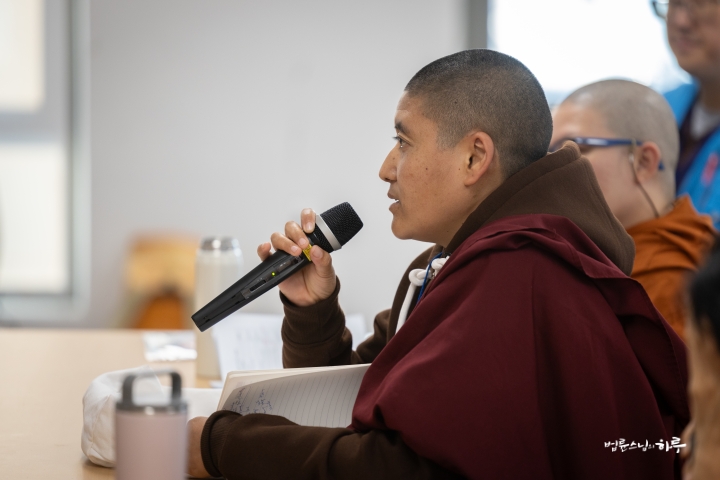
“My friend says that the moment they realize ‘I am angry.’, their anger becomes even more amplified. What is that about?”
“That’s because your friend hasn’t yet realized the fundamental ignorance. In other words, the mental habit of getting angry is deeply rooted in their unconscious mind. Therefore, before recognizing the anger, there must first be an awareness that ‘this is a symptom of madness.’ With that realization, when anger arises, one immediately recognizes it as a symptom of madness and can let go of it as soon as they become aware of it. However, without knowing that ‘this is a symptom of madness,’ the anger continues even while knowing that one is angry. Some people say, ‘I know that getting angry is a symptom of madness,’ but that’s only conscious knowledge. Deep in the unconscious, the thought ‘But you were wrong!’ still remains.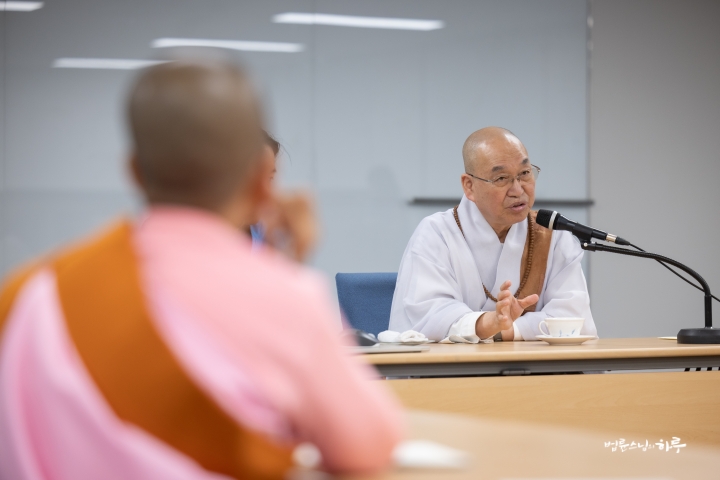
Although there were many more questions to ask, Sunim decided to end the session early as he had to travel to Mungyeong early the next morning. Sunim smiled and gave his closing remarks.
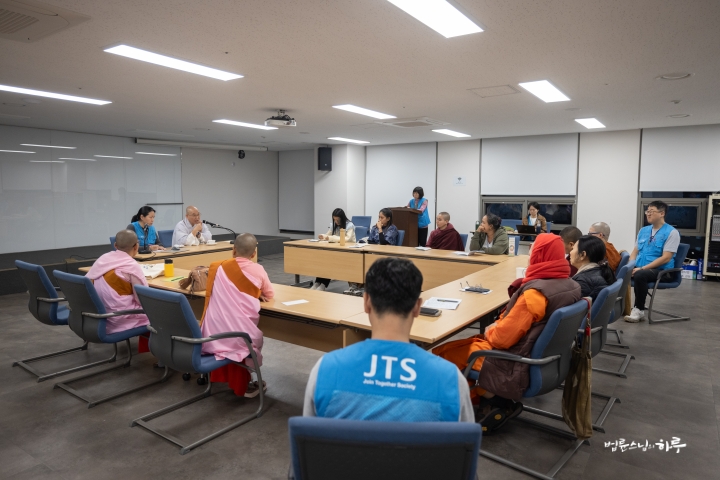
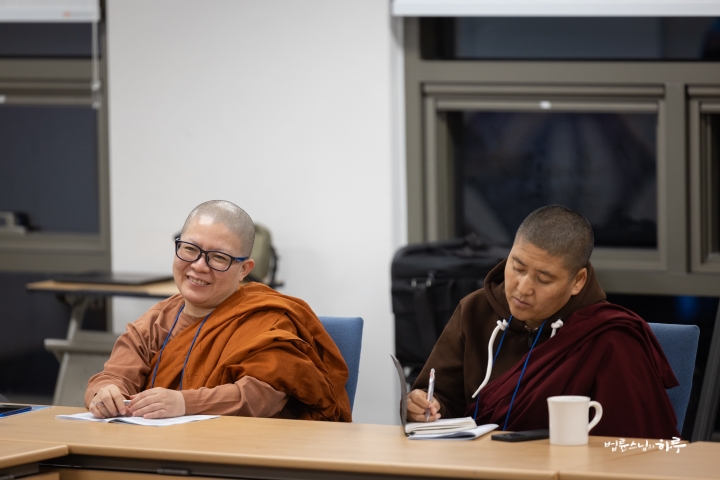
At 8:30 PM, the dialogue concluded with loud applause. The female INEB participants held a mindful sharing session to reflect on the day before wrapping up their second day of visiting Jungto Society.
Tomorrow morning, Sunim will give a Dharma Q&A lecture for civil servants at the invitation of Seocho District Office. After moving to Mungyeong Jungto Retreat Center, he will participate in the third day of the women’s INEB program in the afternoon to discuss the topic of ‘Jungto Society Practice.’ In the evening, he will hold the fourth Happy Dialogue Dharma Q&A lecture in Daegu.