How Should We View the Refugee and Migrant Issue from a Buddhist Perspective?
Sep 17, 2025. Myanmar Survey Day 2, Visiting Refugee Camps, Delivering Relief Supplies
Hello. The second morning has dawned in Mandalay, Myanmar. Today, Sunim continued the survey of earthquake-affected areas in Myanmar, following yesterday’s activities.
After completing morning practice and breakfast, Sunim conducted a live online Weekly Dharma Assembly starting at 7:30 AM.
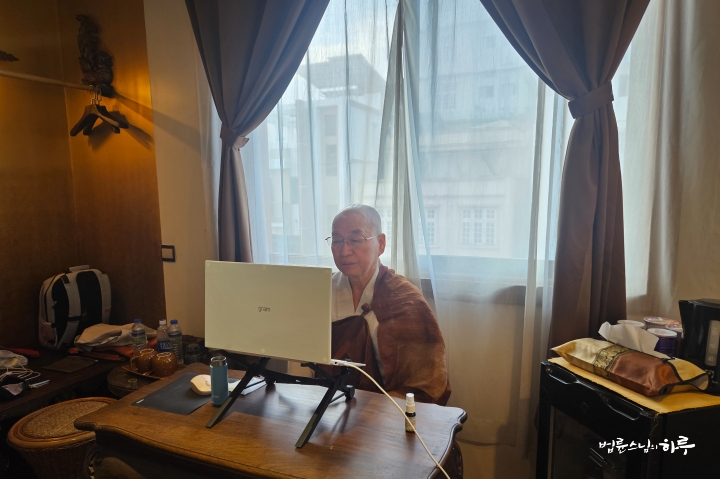
Once all Jungto Society members had entered the video conference room, they recited the Three Refuges and the Heart Sutra, then watched a video of weekly Jungto practitioner news together.
After the video ended, the assembly requested a Dharma talk from Sunim with three prostrations. Sunim first briefly explained why he had come to Myanmar and his future survey plans for Southeast Asia.
People Left Behind in Civil War and Earthquakes
“I am currently in the Mandalay region of Myanmar, where a major earthquake occurred earlier this year, after completing my European lecture tour. Myanmar is currently facing two major problems. First, military conflicts between the government and anti-government forces have led to civil war, creating refugees. Many people are fleeing across the border to Thailand or leaving their hometowns to relocate to other regions within the country. Second, most houses were destroyed in the recent earthquake. With reconstruction difficult and civil war compounding the situation, additional refugees have emerged. So today, I plan to visit refugee camps that are being cared for by nearby temples rather than international organizations. This area was formed by eight villages coming together, with a population of about 4,400 people and approximately 1,700 households. After surveying the site, I plan to establish support measures.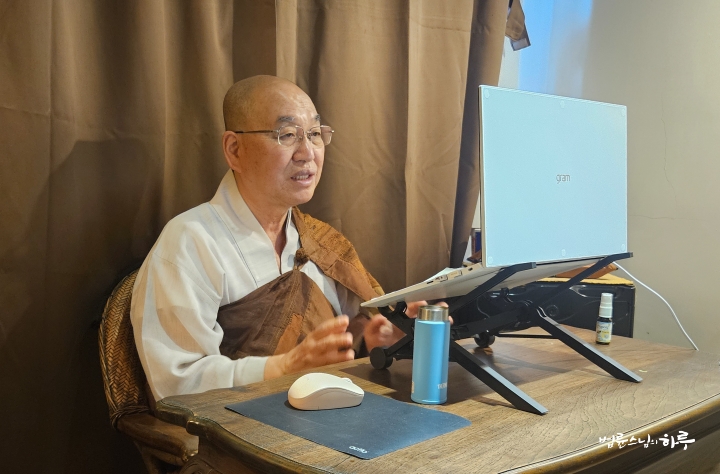
Sunim then began conversations with people who had submitted questions in advance. Four people asked questions during the hour. One of them mentioned recent visa issues in the United States and conflicts surrounding refugee accommodation facilities in the UK, seeking Sunim’s advice on the deepening conflicts between immigrants and local residents worldwide.
How Should We View the Refugee and Migrant Issue from a Buddhist Perspective?
“Recently, there was an incident where our citizens were detained in the United States due to visa issues. In the UK where I live, protests against accommodation facilities for asylum seekers have led to hotel closures and even violence. Conflicts between local residents and immigrants are intensifying worldwide. While borders are human-made constructs, they cannot be ignored as reality. So from a Buddhist perspective, is it desirable to accept refugees and overseas migrants? Or is it better to strictly close borders? Particularly regarding refugees, while there is sympathy for women and children, young male refugees are often viewed as potential criminals who illegally entered for economic reasons, or criticized for leaving their homeland. Of course, some young men may have come abroad representing their families. How should we respond to people’s anxiety and anger about this?”
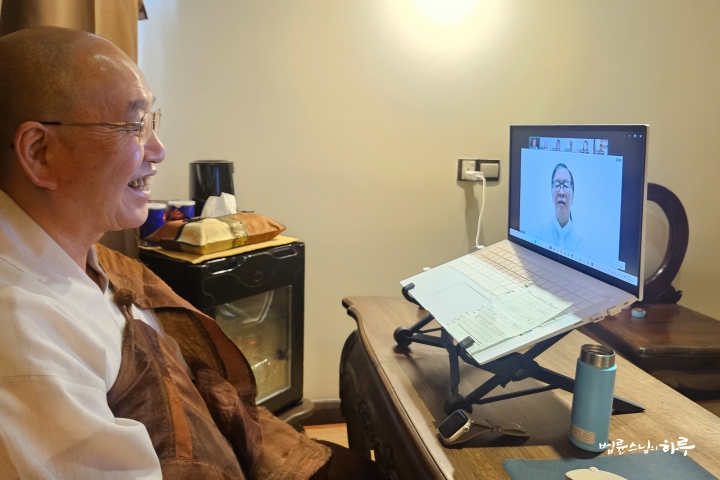
“After listening to Sunim’s words, I thought, ‘Economic inequality is the root of all problems.’ On the other hand, I also wondered what I could do as a citizen in the current situation where it’s difficult to support struggling countries immediately or solve fundamental problems.”
“What I can do as a citizen is not to treat immigrants or refugees coldly but to care for them warmly. If there are refugees or migrants around you, you can smile at them or treat them warmly when working. It would also be good to participate in activities to protect multicultural families or migrants through civic organizations. You could also provide places where migrants can gather conveniently. On the other hand, there are also people around us who react against migrants. While it’s not desirable, there may be people who have hostility. Some politicians or YouTubers exaggerate information to increase views and incite people. If you don’t understand this reality, you’ll only feel anger, so it’s necessary to understand the situation well.”“I understand well.”
Questions continued to follow.
In one month, I experienced voice phishing, a traffic accident, the flu, and falling down stairs all at once. How should I accept this situation from a practice perspective?
I’m a pregnant woman about to give birth soon. I’m worried about whether I can raise my child with love.
I divorced my husband and started a business alone. I’m embarrassed because people gossip a lot about a woman meeting male clients alone where I do business.
After finishing the dialogue, Sunim gave closing remarks.
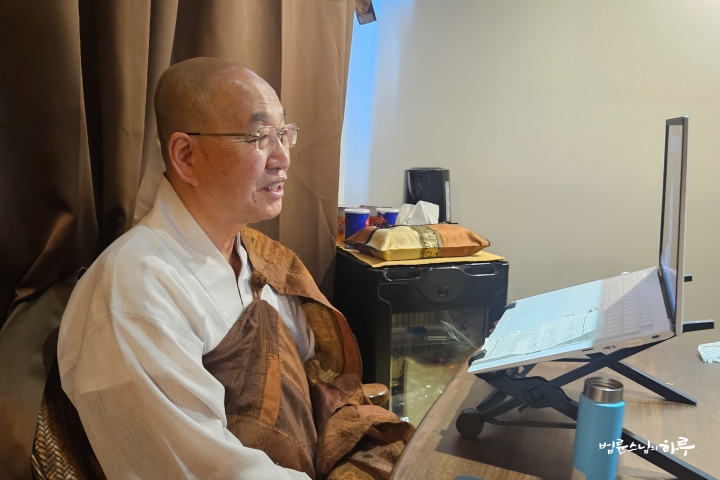
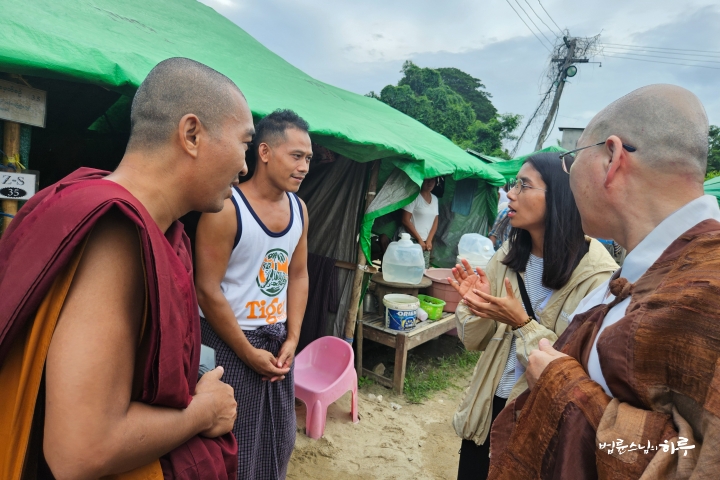
After finishing the live broadcast, Sunim departed for the Sagaing IDP (Internally Displaced Persons) camp at 9 AM. While it should have been a short distance if they could cross the river, they had to take a long detour because it was a military area. After an hour and a half drive, they arrived at the refugee camp at 10:30 AM. Inside the camp, refugees who had left their homes due to earthquakes and conflicts had settled and were living. Sunim toured the houses where people lived, toilets, and water tanks in order.
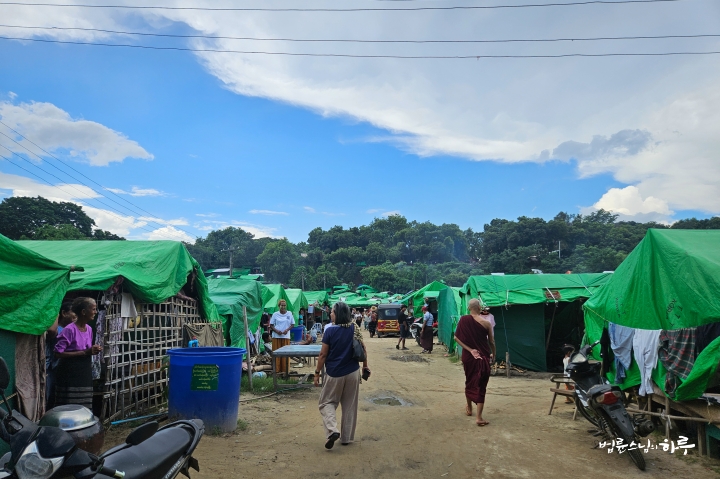
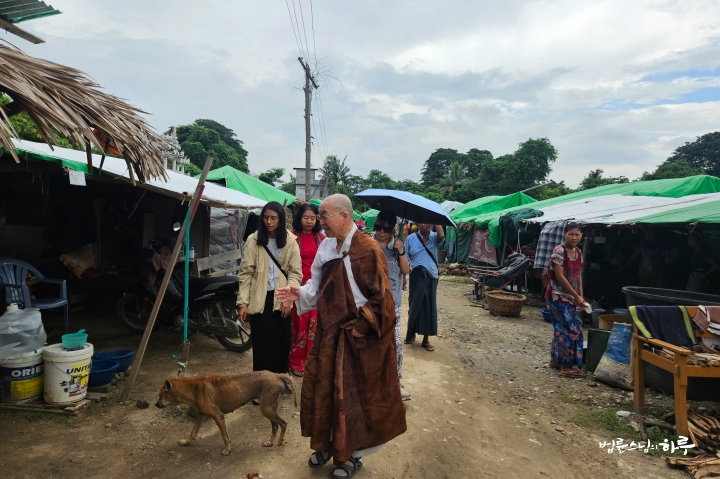
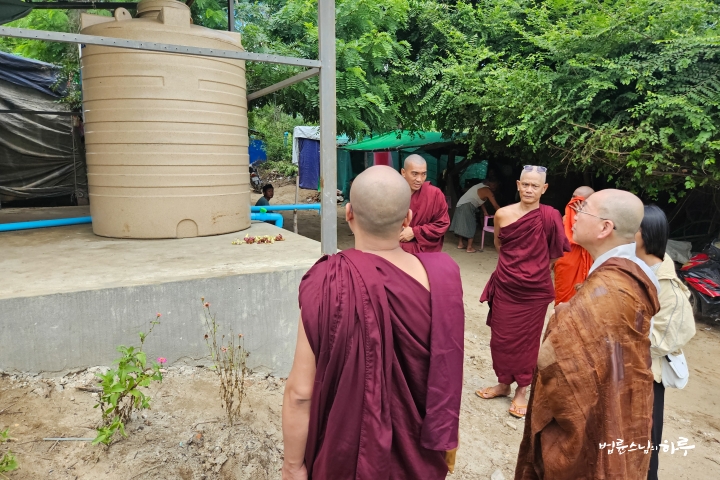
Children were gathered together studying in temporary classrooms made of bamboo.
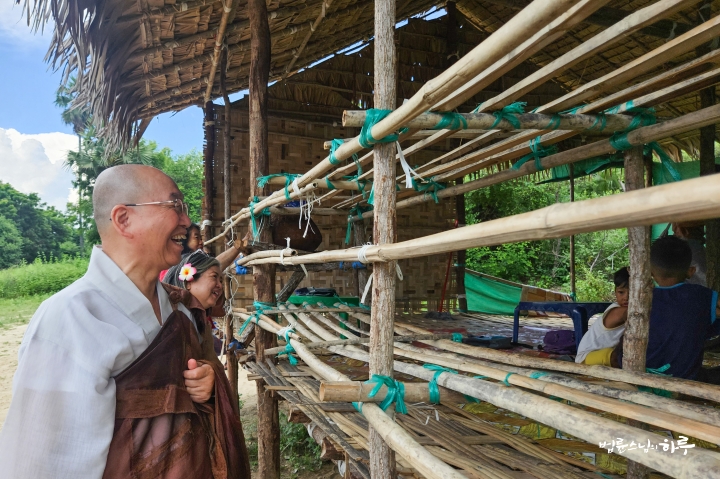
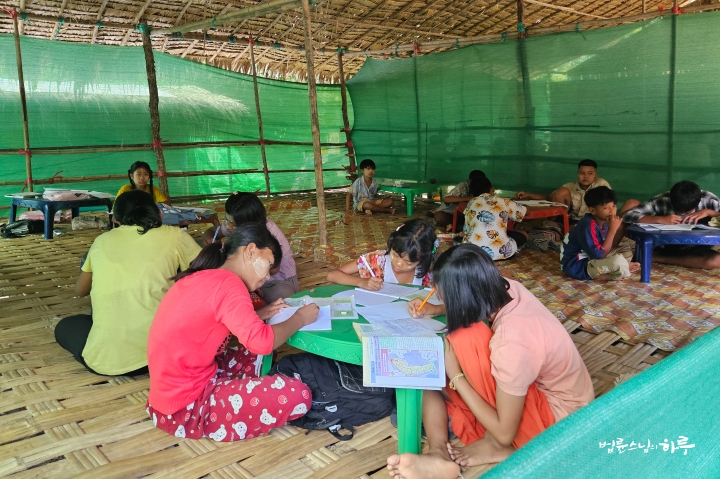
First, school supplies prepared by INEB (International Network of Engaged Buddhists) were delivered to the children.
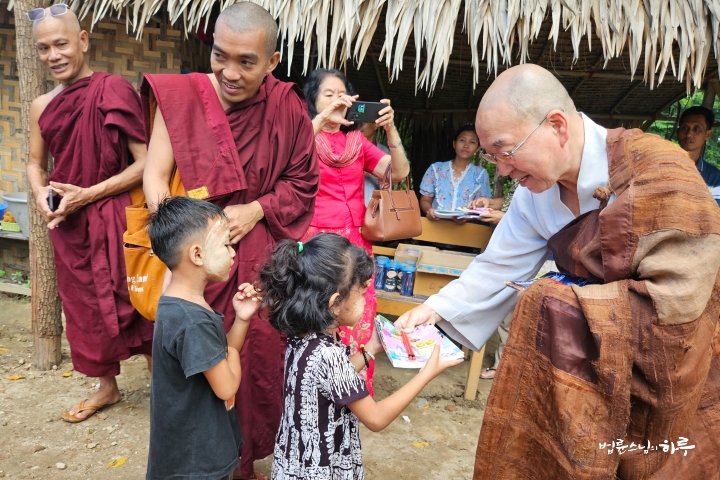
After touring the site, they had lunch at Tipitaka Nikaya Monastery near the refugee camp and then had a conversation with the monks who run the refugee camp. First, Sunim shared his feelings after directly observing the site.
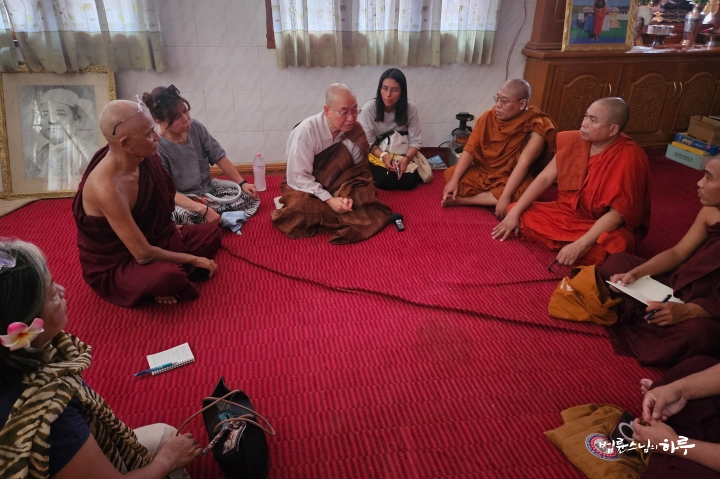
They then had focused discussions on what items were most urgently needed at the refugee camp. It was decided that JTS would provide support for drinking water, food, daily necessities, medicine, and school supplies, and the conversation concluded.
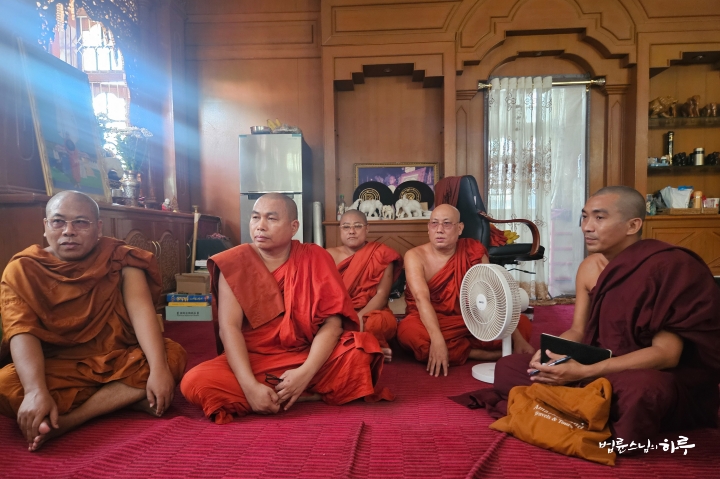
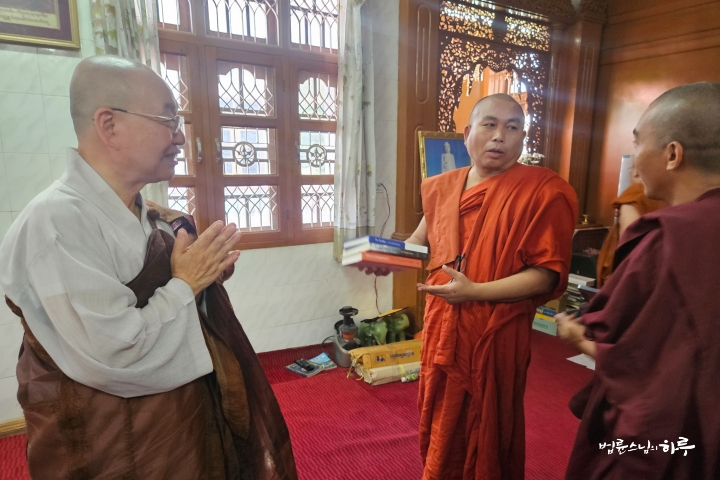
Sunim gave the monks his books translated into English as gifts and left the temple.
The next place visited was Shwe Yan Lin Min Kyaung Monastery.
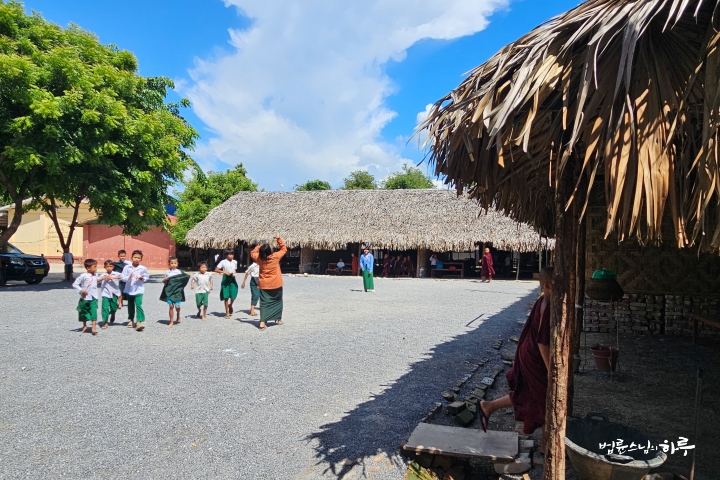
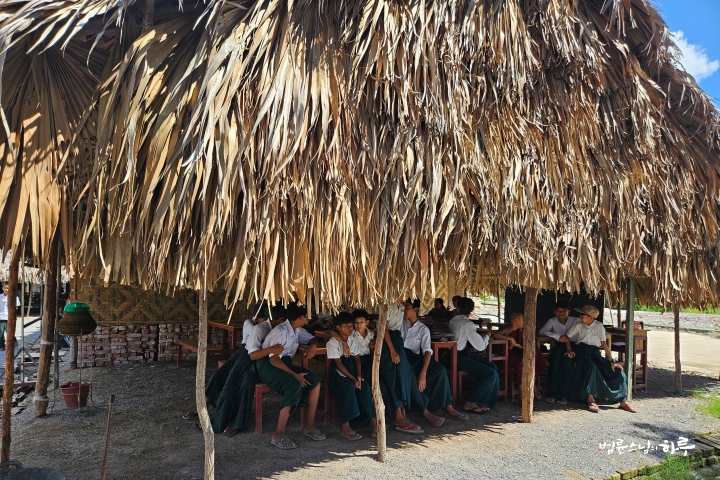
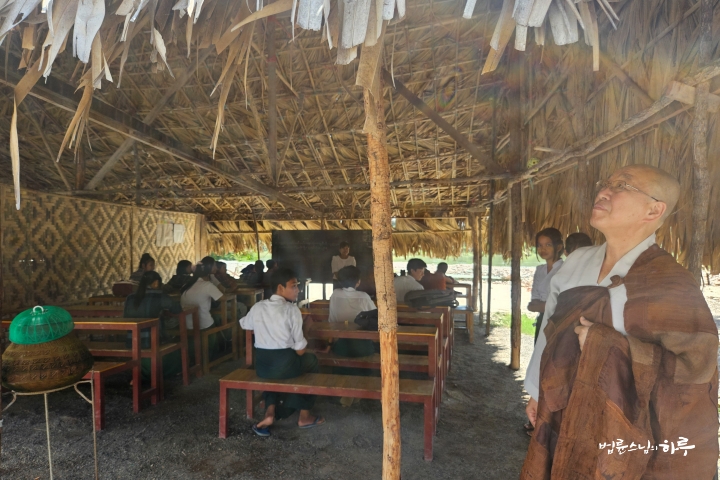
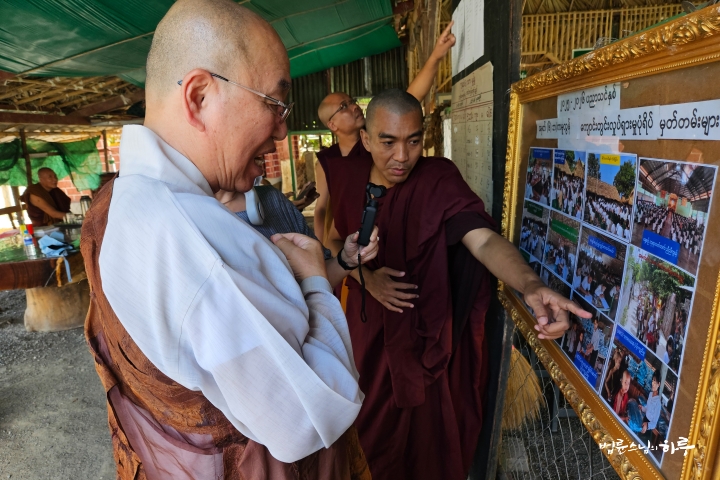
This is a school where 486 students and 68 novice monks study together. The school was destroyed by an earthquake, and classes were being held in temporary classrooms made of bamboo. The temple was generally well-organized, and the educational environment was relatively stable. So they wanted to build 10 new classrooms.
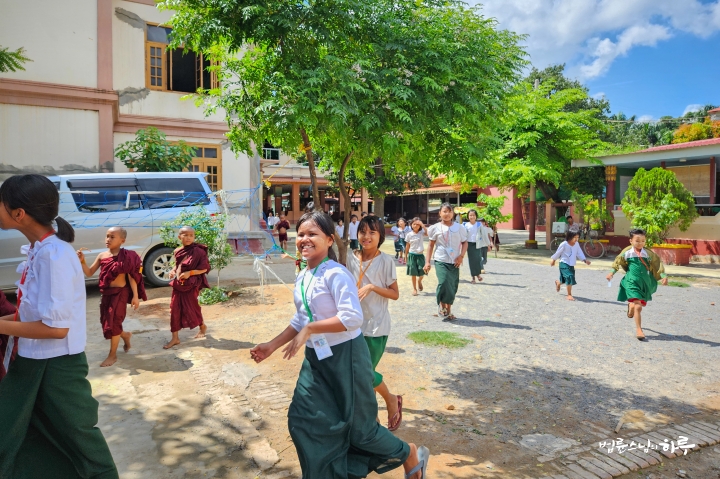
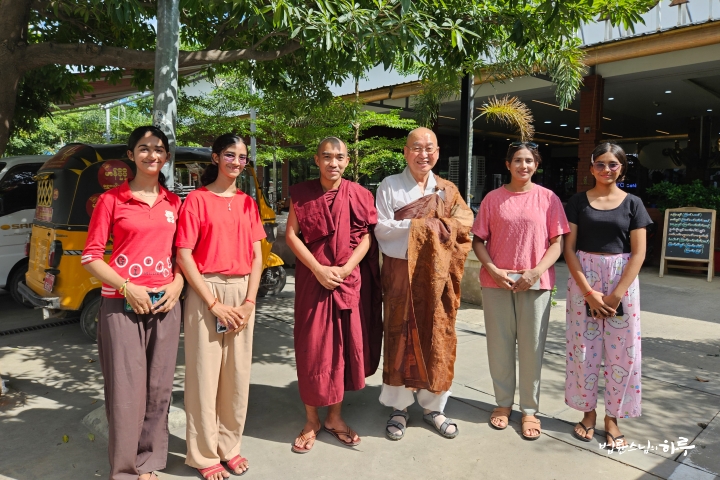
After touring the school for 30 minutes, they moved to another location.
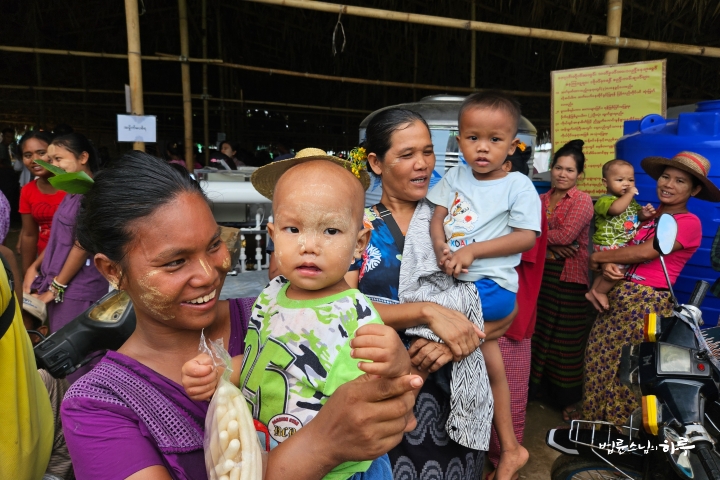
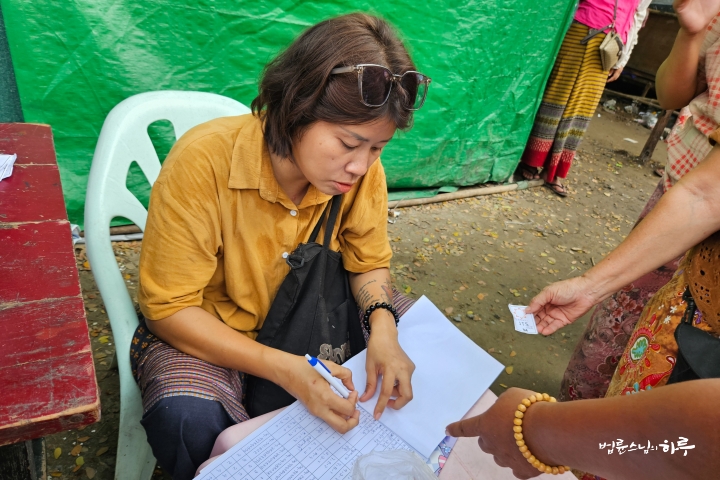
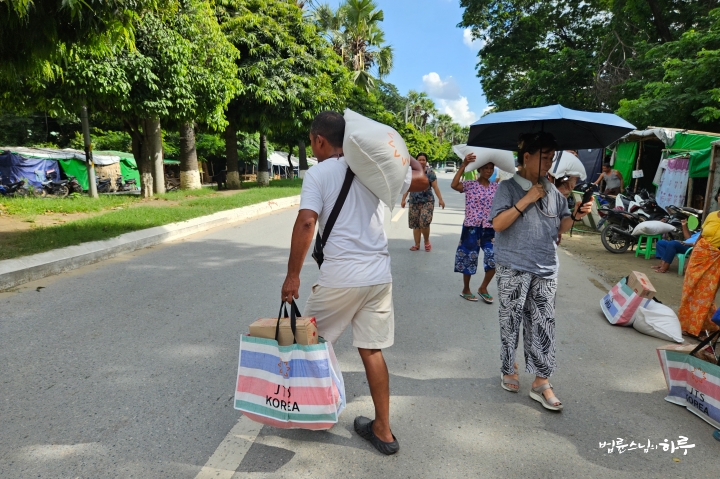
From 3 PM, JTS relief supplies were delivered to refugees. Basic food items including rice, cooking oil, chickpeas, chicken powder, Mama noodles, and green tea were distributed to 137 households in the refugee camp.
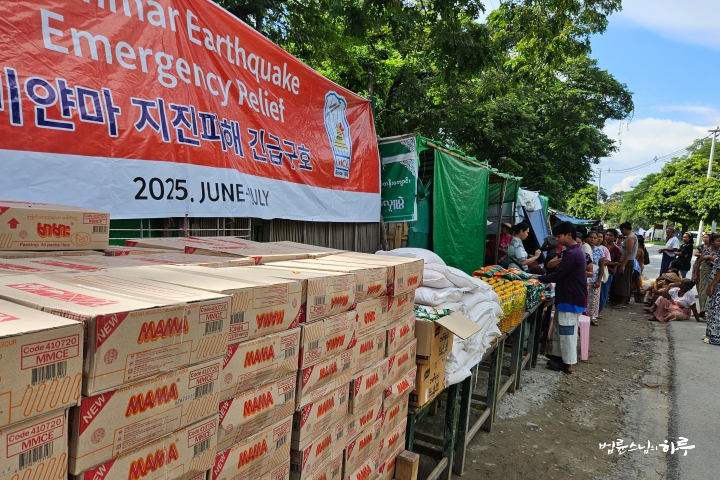
Thanks to Venerable Kittisara’s good preparation in advance, supplies could be delivered smoothly like flowing water. Items were distributed from light to heavy, and volunteers helped carry them.
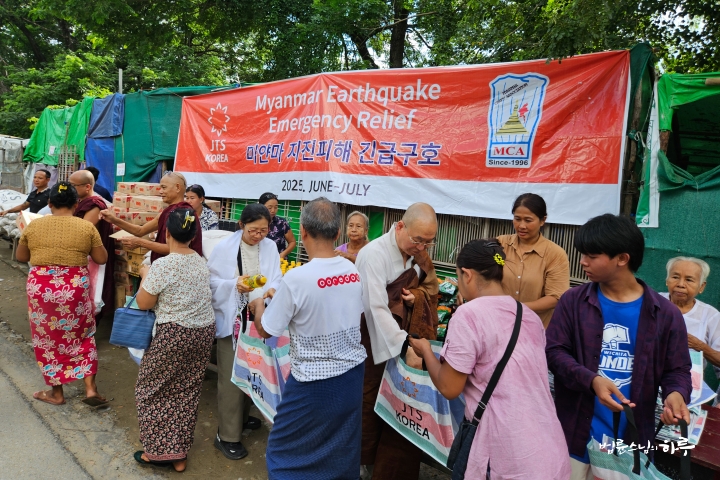
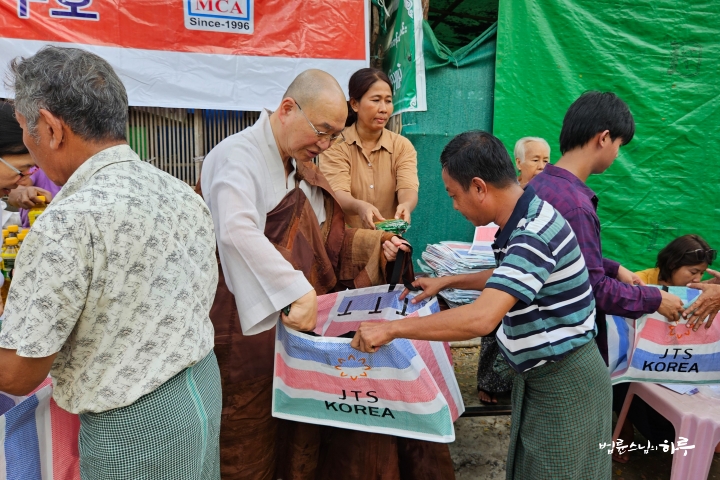
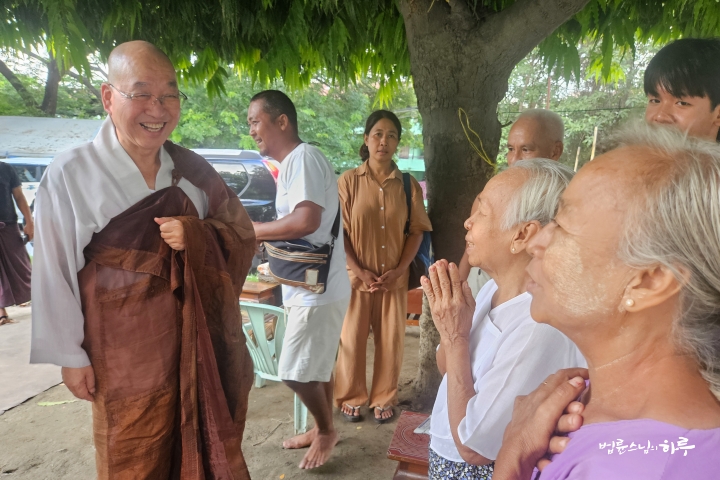
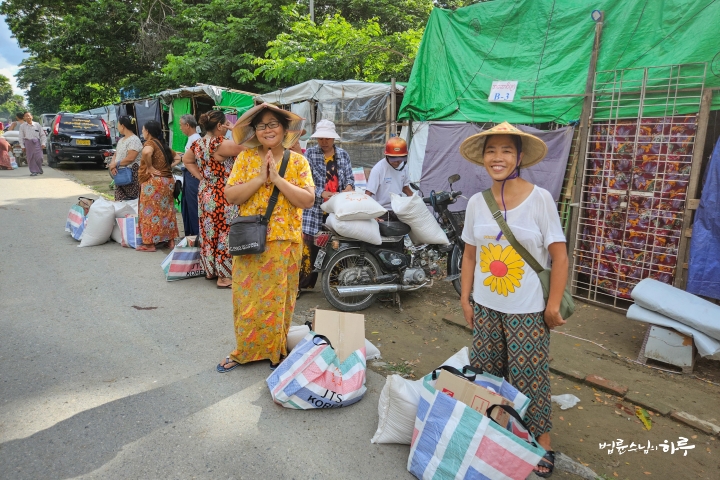
After finishing the distribution, grandmothers came to express their sincere gratitude.
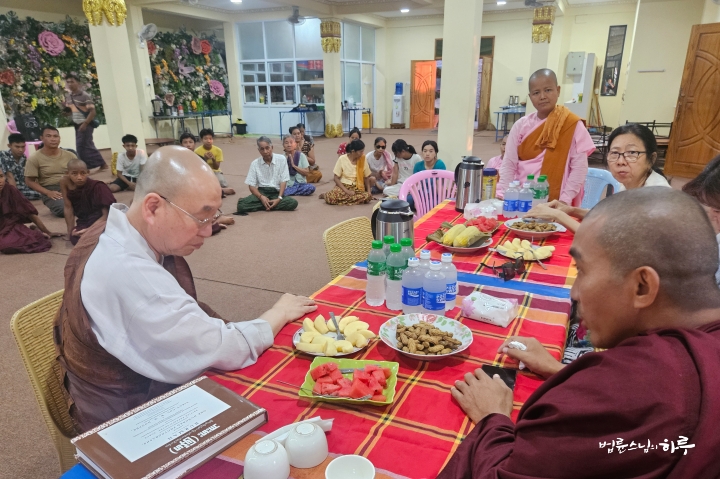
At 4 PM, they visited Phaung Daw Oo Monastic School, which has one of the large schools in Mandalay. This is an educational institution where about 1,500 students, including war-affected children, board, and about 7,000 students study. It’s a space where monks and regular students live and learn together.
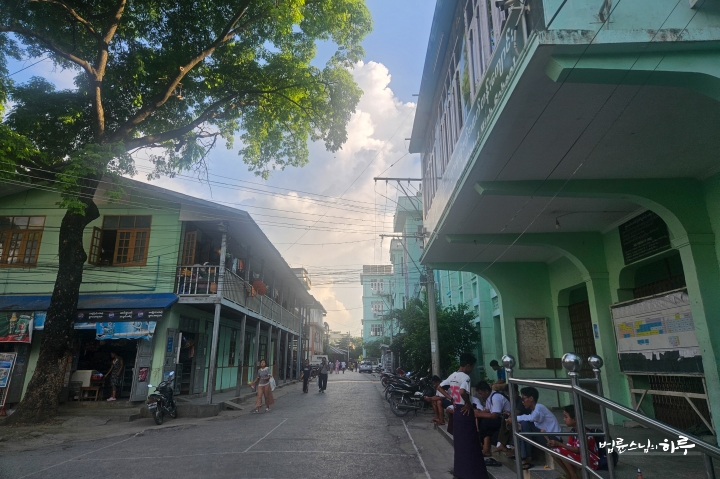
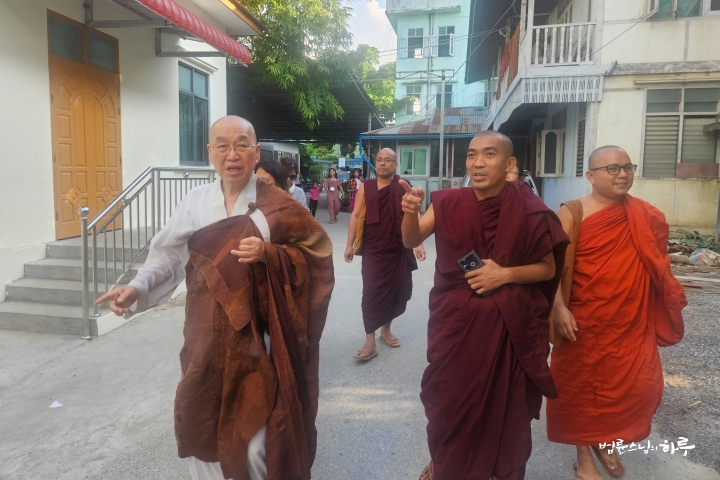
Children from various ethnic groups within Myanmar were studying together at this school. Some had come after earthquake damage. The children were generally receiving free education, and food was being provided partly through donations and partly through self-sufficiency.
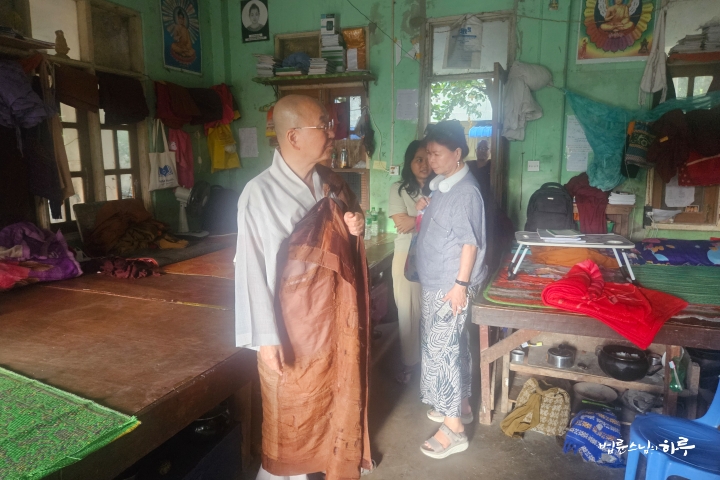
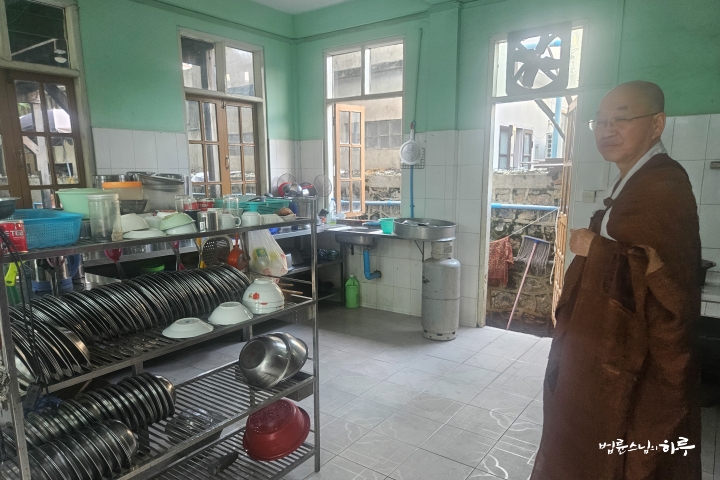
While having tea with the monk in charge of operations, Sunim asked about the financial situation needed for operations such as teacher salaries and textbook purchases. The temple was operating the school independently without government support, and was mostly handling teachers’ salaries on its own. They mainly operate with donations from international organizations abroad.
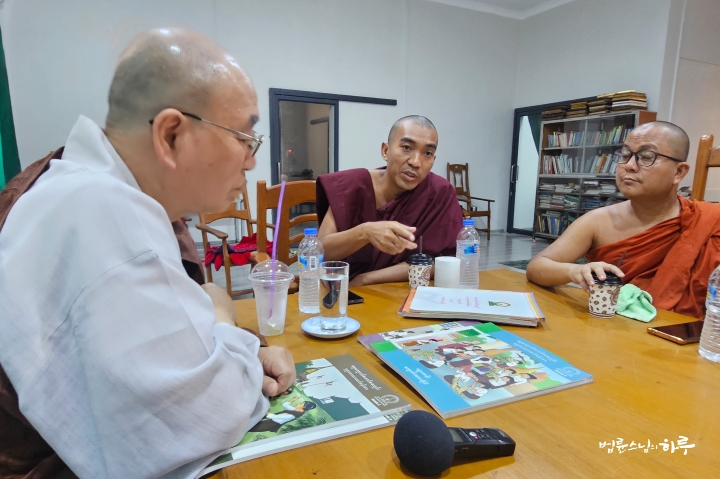
They also talked about the Sunday Dhamma schools run by temples. Before the war, Sunday Dhamma schools were operated at about 5,000 temples, but currently only 250 are open. He particularly mentioned the burden of printing costs for Dhamma school textbooks. While about 3,000 books are needed annually, it’s difficult to print all of them due to financial difficulties.
After finishing tea, Sunim gave the administrative monk his books translated into English as a gift and left the temple.
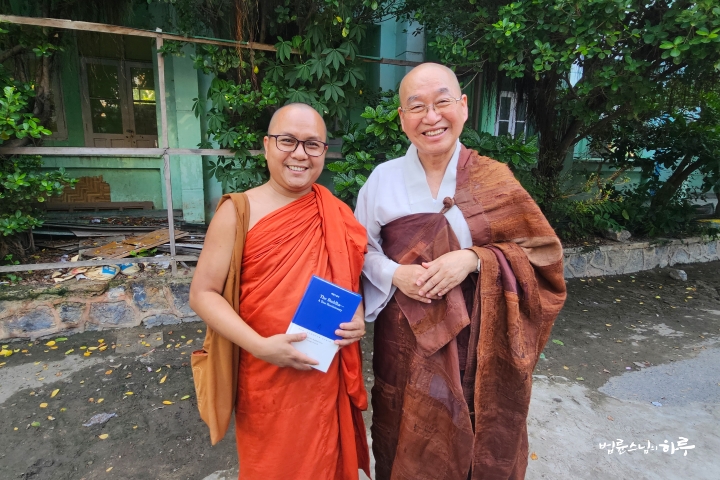
At 5:40 PM, they visited the Bodhi Aye Nyein Meditation Center run by Venerable Kittisara. This meditation center was completed in 2020, and regular meditation programs were being operated throughout the year.
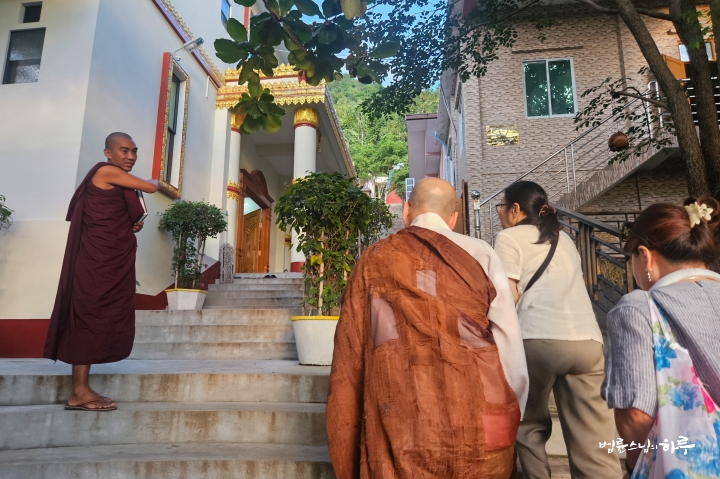
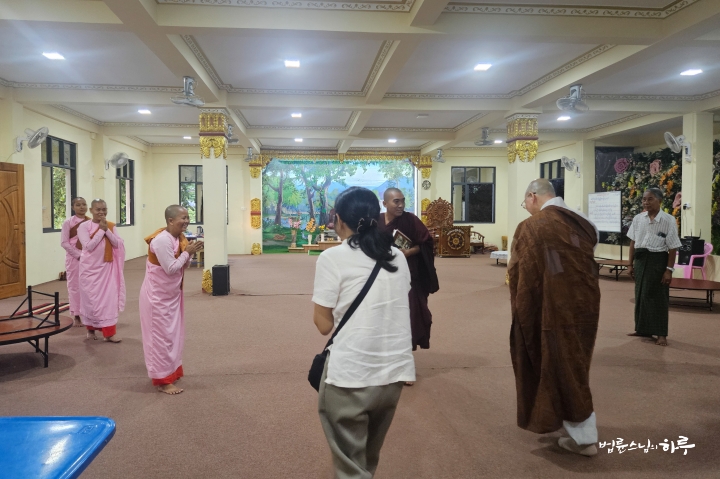
In the past, sessions were vibrant with up to 50 participants, but currently, due to civil war and earthquakes, the average has decreased to around 20. Nevertheless, Venerable Kittisara continued to lead meditation sessions steadily.
As they left the meditation center, the sunset was painting the sky.
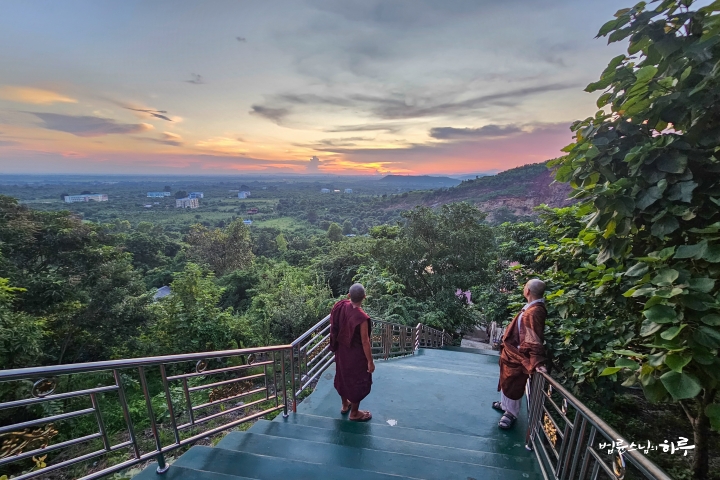
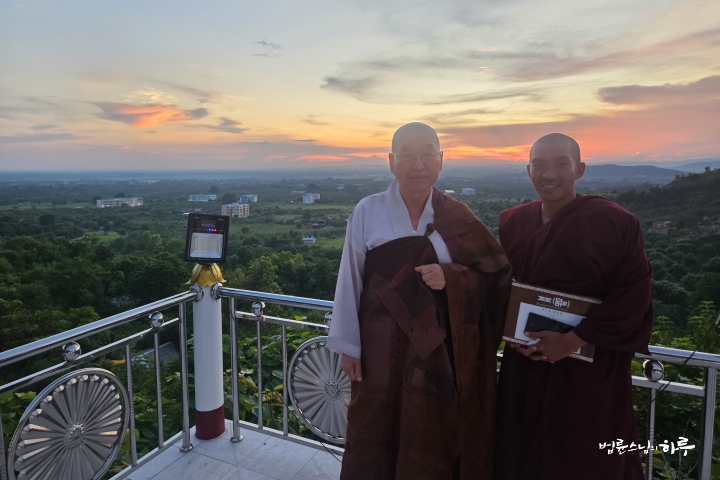
After touring the meditation center, Sunim returned to the accommodation. Starting at 7:20 PM, they held a comprehensive evaluation meeting to wrap up the two-day itinerary of visiting five educational facilities and refugee camps, and discussed future support directions.
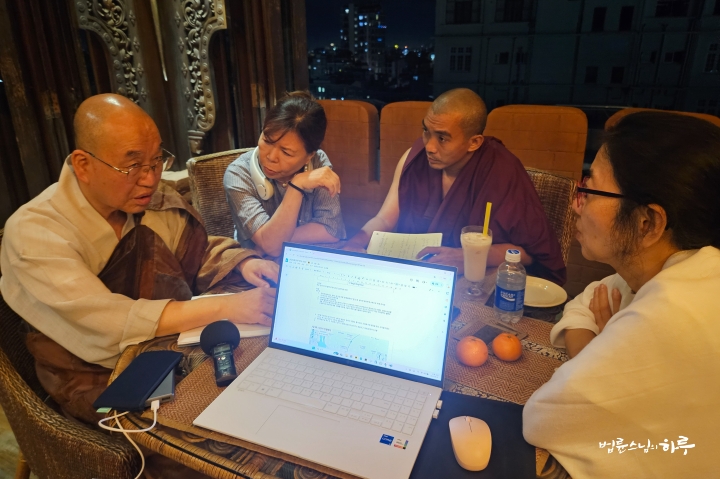
As a result of the discussion, Shwe Shat Cha Nunnery and Sagaing Civil War Refugee Camp were selected as places needing support. It was determined that Shwe Shat Cha Nunnery urgently needed facility improvements due to its extremely poor conditions. While the Sagaing Civil War Refugee Camp allowed children and residents to live relatively freely, basic necessities such as food, hygiene products, medicine, and school supplies were lacking. Accordingly, it was decided to provide food including rice and oil quarterly (four times a year), and to support essential items for daily necessities and medicine. Students would receive school supplies twice a year at the beginning of each semester, and sports equipment would be decided after further discussion.
Additionally, for Dhamma Gun Ei Myint Myint Khin Nunnery, they proposed renovating the existing building. For Shwe Yan Lin Min Kyaung Monastery’s school, they decided to review support based on how much they could self-fund and the cost estimate. Since Phaung Daw Oo Monastery’s school was already receiving help from various organizations, they decided not to provide additional support but to donate sports equipment as a commemorative gift for the visit.
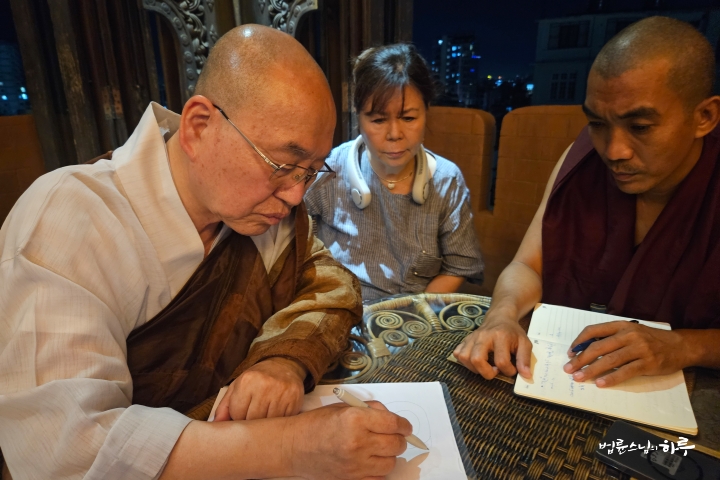
Sunim expressed gratitude to Venerable Kittisara for preparing the Myanmar visit itinerary.
“Thank you very much for preparing this visit so well. We do this work because we trust Venerable Kittisara. The content of today’s meeting will be discussed and finalized by the JTS Board of Directors. After that, we will make an official agreement regarding this matter. Please don’t overwork yourself, and do only as much as you can. JTS will support as much as Venerable Kittisara can handle.”Sunim encouraged Venerable Kittisara and presented him with English translations of Sunim’s books as a gift.
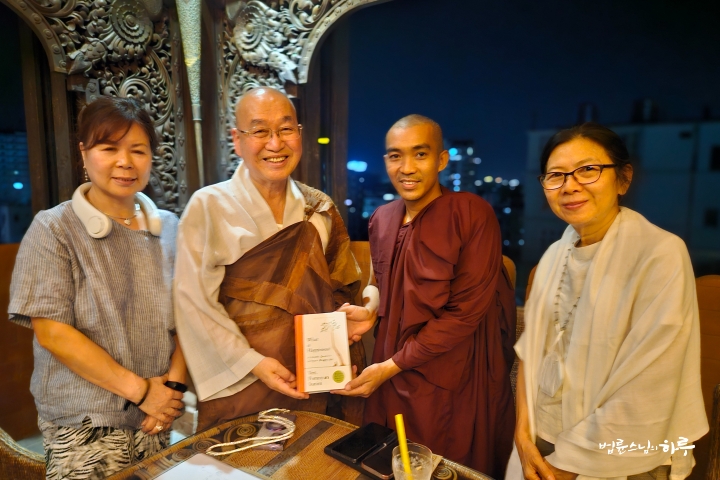
The meeting concluded at 9 PM. Sunim reviewed manuscripts before retiring for the night.
Tomorrow, Sunim will leave Myanmar for Cambodia to visit Sahaknuk Raja Buddhist University in Battambang to discuss the construction of additional female student dormitories.