Even Trivial Words Make Me Cry, How Can I Overcome Trauma?
Sep 9, 2025 - European Lecture Tour (2) Paris, Dharma Q&A with French Interpretation

Why Do Even Celebrated Events Eventually Become Sources of Suffering?
In such times, we often share our troubles with friends over a cup of tea. The conversation we’re having here today follows the same approach. We can talk comfortably about life’s problems, just as if we were having tea with a friend. There are no restrictions on topics. Through such conversations, we might realize, ‘Oh, it’s not such a big deal,’ or ‘Oh, I can handle it this way.’ We’re not looking for specific answers, but rather allowing our anguish to disappear through dialogue. In Buddhism, this is called a ‘Dharma Talk.’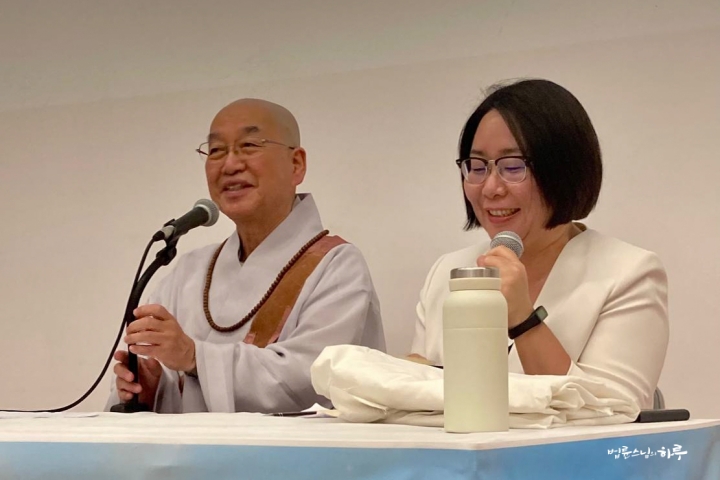
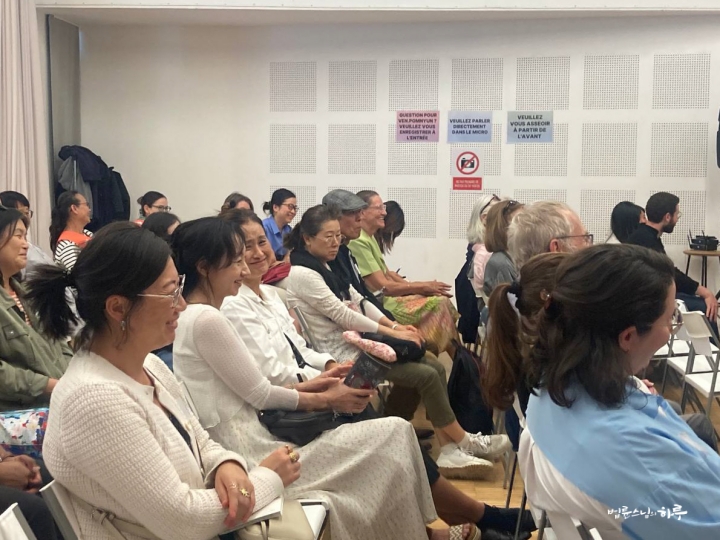
Anyone could raise their hand and ask Sunim questions. Over the course of two hours, seven people had conversations with Sunim. One of them sought Sunim’s advice about their mother who suffers from diabetes but refuses to follow treatment advice, causing her condition to worsen and their relationship to become distant.
My Mother Refused Treatment Advice, and Her Condition Got Worse
“Ma question concerne notamment la relation avec ma mère qui est un petit peu compliquée. J’aurais voulu votre avis sur la question. Il y a quelques années elle a été diagnostiquée du diabète. Ce n’est pas très très grave. Mais personnellement en tant que professionnel de santé, en tant que pharmacien, j’ai essayé de lui apporter de l’aide, des conseils pour qu’elle aille mieux dans sa vie. Malgré tous mes efforts de l’aider, elle se ferme complètement à mes conseils, elle ne souhaite pas les écouter, et finalement elle ne me dise pas jusqu’à ce qu’elle se remette dans une situation dangereuse pour sa santé, donc à la fin j’ai fini par avoir un sentiment de lassitude avec le fait de l’aider et j’ai pris un petit peu de recul avec elle. J’ai la sensation au fur et à mesure du travail personnel que c’est une situation que je voudrais essayer d’améliorer. Il me manque peut-être quelques éléments pour progresser sur cette relation avec ma mère.”
(I have concerns about my relationship with my mother. A few years ago, she was diagnosed with diabetes. As a pharmacist, I tried to help her by offering advice on lifestyle management and treatment methods several times. However, she refused to listen to me at all and continued to resist until her health became endangered. As this situation repeated, I became exhausted and naturally distanced myself. But as I reflect on myself, I now feel I want to restore our relationship in a better direction. I would like to hear your advice on how I can improve this relationship.) 
“J’y ai pensé aussi.” (I thought so too.)
“If you can’t get your own children to do what you want, how can you expect expect your own mother to listen to you? You tried to do things your way, using the excuse that it was good for your mother’s illness. The fundamental cause of the deteriorated relationship is that ‘things didn’t go your way.’ Even between mother and child, it’s a relationship between two adults. You can make good suggestions, but you cannot make decisions for her. Your mother has her own right to decide, so you must respect that.”“Merci beaucoup. Et du coup maintenant que la relation s’est un petit peu justement dégradée entre elle et moi, comment faire pour «revenir» à elle et ne plus essayer de la «manipuler» et juste revenir à elle pour retrouver une relation plus saine.”
(Thank you very much. But now that the relationship between my mother and me has become somewhat distant, how can I let go of trying to force changes or ‘manipulate’ her and just naturally become close again to restore a healthy relationship?)
“C’est assez difficile pour moi en tant que professionnel de santé de laisser quelqu’un objectivement dégrader sa santé et se mettre en danger.”
(As a health professional, it’s quite difficult for me to just watch someone objectively harm their health and put themselves in danger.)

“Merci, j’ai bien compris.” (Thank you, I understand well.)
Questions continued one after another. For over two hours, the entire audience listened attentively and focused on Sunim’s words.
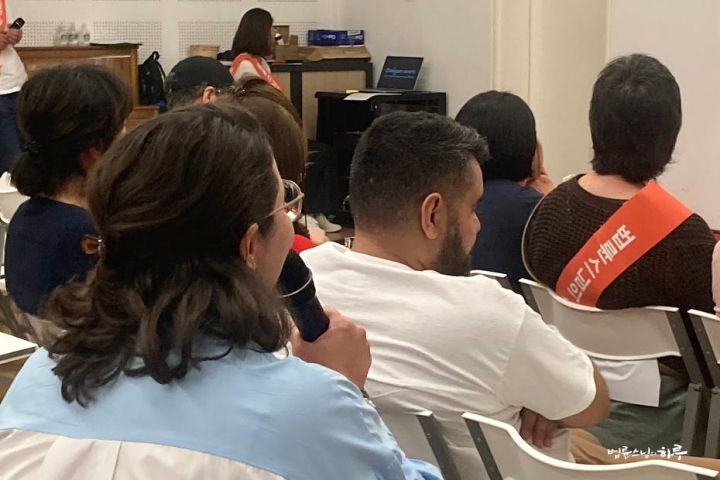
How can I recover after experiencing burnout? I worked for 4 years with too much work and no help at my job. Now I’m afraid to do other work.
I don’t want to live as an office worker, so I want to help people in difficulty by starting a personal business called ‘coaching,’ but I don’t know specifically how to do it.
In the process of encountering and learning Tibetan Buddhism, my faith is gradually disappearing and I feel deceived, but at the same time I feel guilty. How can I escape from this suffering?
What is the meaning of life? I question everything about why we live.
Why shouldn’t we suffer? Can’t we just accept suffering while living life?
I was betrayed by someone I trusted. How can I forgive him?
As the conversations continued, it was time to conclude. Though it was regrettable, the Dharma Q&A ended with hopes for future meetings.
After the lecture, there was a book signing session. Sunim warmly greeted the French attendees.
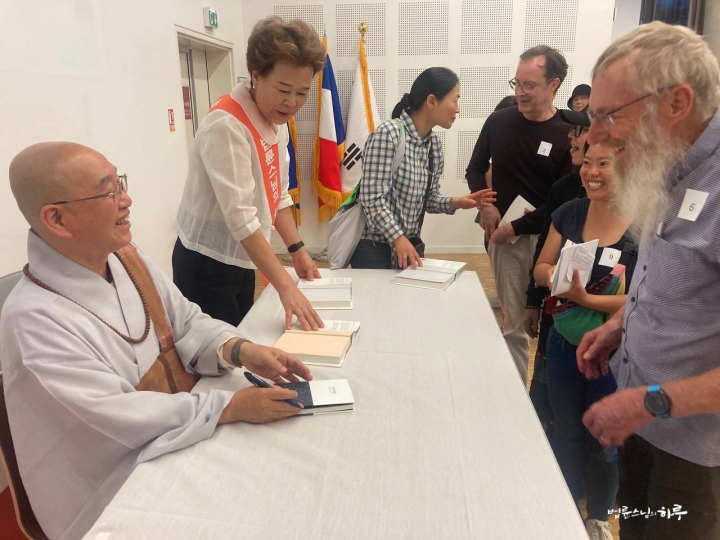
Soon after, four graduates of the English Jungto Dharma School and four new students of the French class, which opened for the first time this year, had time to introduce themselves to each other and earnestly shared their impressions from their studies.
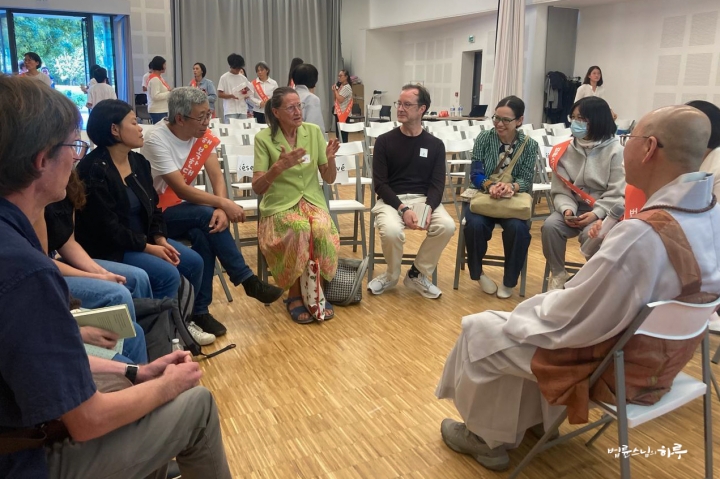
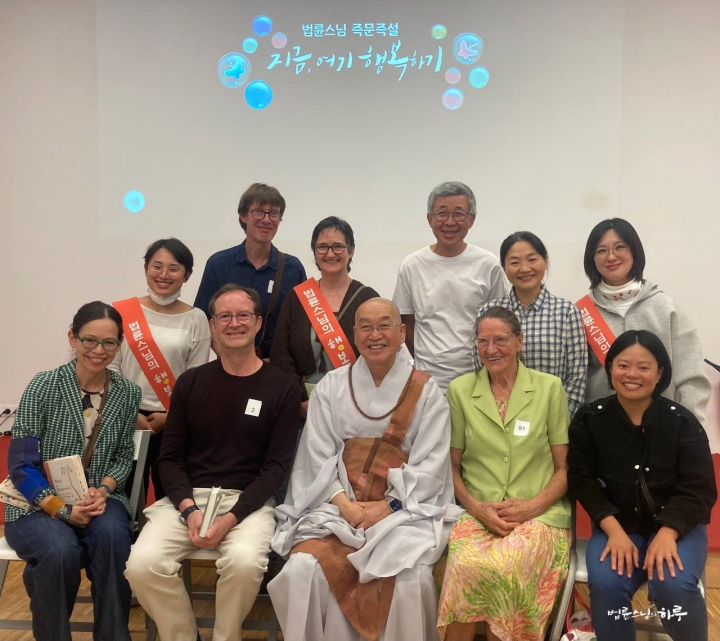
After taking a group photo together and pledging to continue their practice steadily, the gathering concluded.
After expressing gratitude to the International Division volunteers who prepared the French interpretation lecture, Sunim moved back to the accommodation for dinner.
After 6 PM, Sunim headed to the lecture hall again. In the evening, Korean expatriates living in France came to the lecture hall.
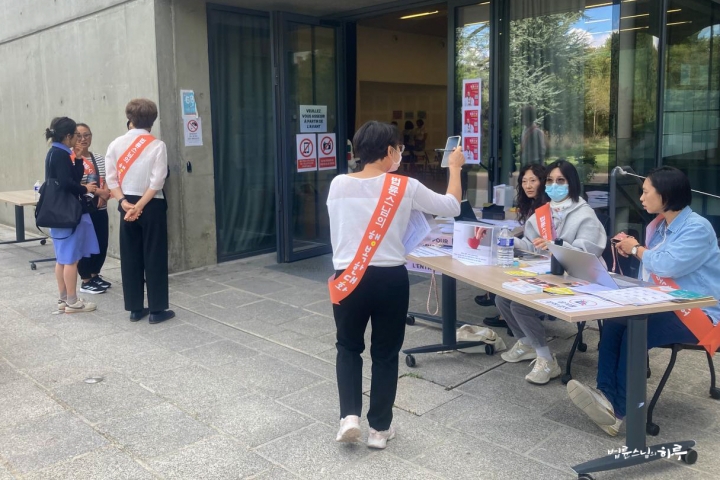
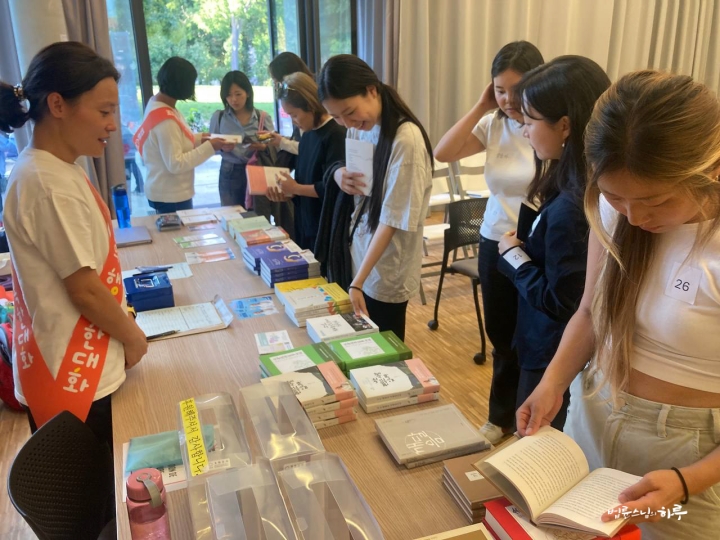
With about 110 people filling the venue, the lecture began at exactly 7 PM. When Sunim’s introduction video ended and he walked out from behind the stage, thunderous applause and cheers erupted.
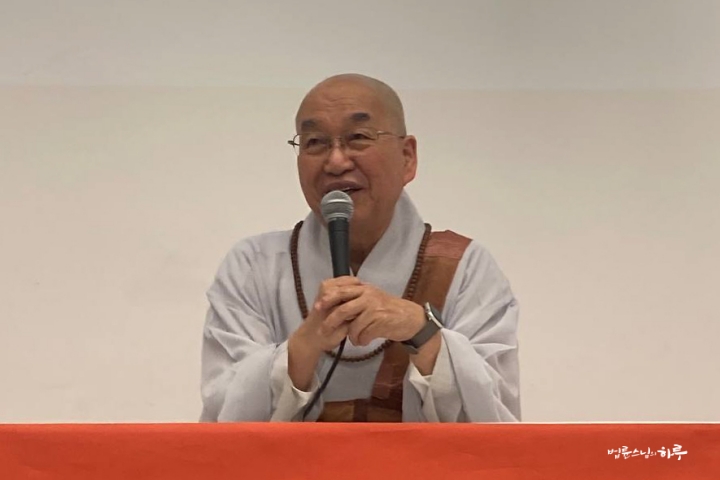
Sunim smiled and gave his opening remarks.
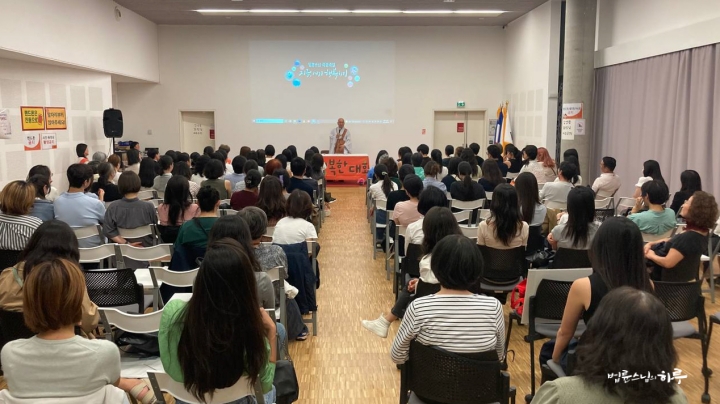
Anyone could raise their hand and ask Sunim questions. Over two hours, eight people had conversations with Sunim. One of them sought Sunim’s advice on how to overcome deep wounds and trauma from racial discrimination that cause emotional turmoil and suffering even from small incidents.
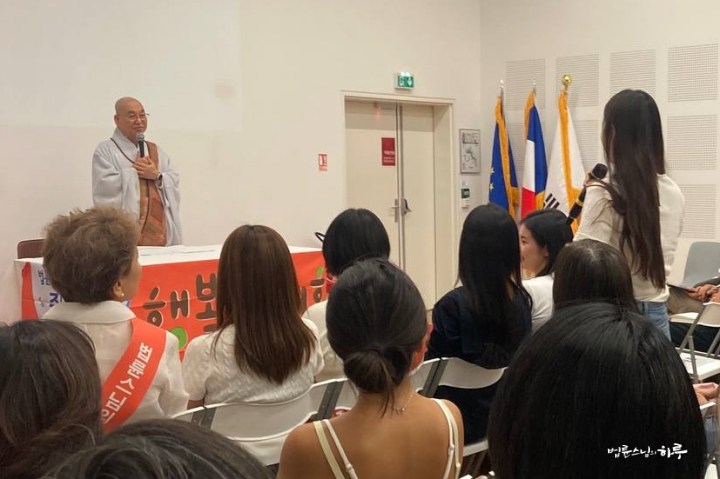
Tears Flow Even at Trivial Words, How Can I Overcome Trauma?
“How can I overcome trauma? After continuously experiencing dismissive words or racial discrimination, I tend to have big reactions even to small things. Fortunately, since last month, I’ve been able to find some peace of mind through meditation and prostrations. However, even when I know there’s absolutely no discriminatory intent, when I see something related to race, my heart pounds, tears come, and my breathing becomes rough. Emotions surge as if previous experiences are replaying, and trauma-like reactions appear. I know in my head that these reactions aren’t appropriate, but I simply can’t control them. This feeling has even grown to the point where I now dislike France as a country itself. Even in insignificant situations, I burst into tears saying I hate France and want to go to Korea. I know these reactions aren’t normal. But since emotions that feel like I’ve experienced something terrible automatically arise, I’m so distressed because I can’t control them. Is there a way to overcome this? I’m curious about how to specifically practice and train.” 
“Yes, I’ve talked with my doctor. They didn’t prescribe any medication separately, and each time I go, they just ask simple questions like a counselor and I answer.”
“For example, let’s say someone experienced sexual assault as a child. For some, that incident ends as simple pain, but for others, it remains as a wound and later even hearing related news makes them suffocate and recall the situation. This is a pathological reaction that requires healing. Sexual assault itself is a physical wound like cutting a finger, but when you receive tremendous mental shock, it becomes an emotional wound. The reason women often receive greater mental shock is related to prejudice about sexuality. It’s because they were educated from childhood in social prejudices that ‘women must protect their sexuality.’ That’s why sexual harm leaves deeper wounds. In such cases, if not healed, even married life becomes difficult. These are all cases requiring trauma treatment. But in your case, did you have experiences of receiving shock from racial discrimination as a child?”“I experienced racial discrimination here.”
“Unless you received tremendously shocking experiences, experiences after becoming an adult usually don’t remain as such deep trauma. When young, even small things feel big and become wounds, but after becoming an adult, most things have less impact. To what degree were you shocked by racial discrimination here that it became trauma?”“Rather than having tremendously big incidents, I live in a small town where there are almost no Asians. So even small things, when experienced repeatedly almost every week or month, the doctor said it might have accumulated.”

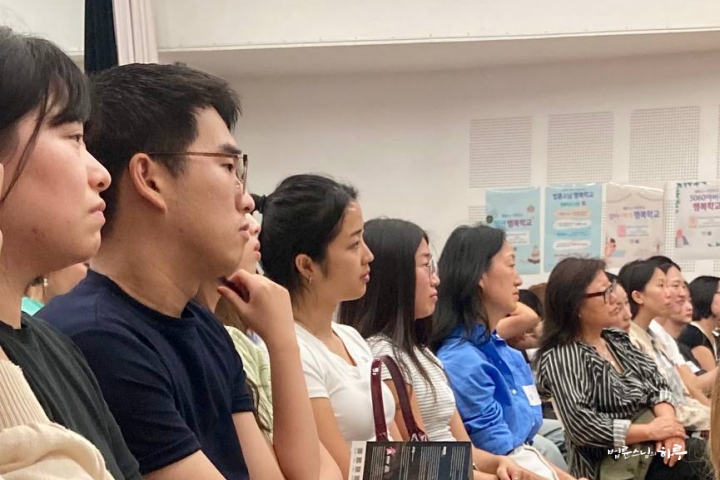
“But I often get startled because people suddenly yell at me or curse at me even when I’m just walking down the street.”
“Such things happen occasionally. Someone who dislikes Russians might curse at a Russian person they pass on the street, or someone who dislikes Chinese people might curse at an Asian person. There might be people who are mentally unstable. It’s natural to be startled when this happens, but if you react so severely that it makes you ill, it means you’re not prepared to live in that environment.”“The most shocking incident happened at a bus ticket counter. When I didn’t give the answer they wanted, the person responded by yelling at me. I was very shocked, but I composed myself and asked the next day, ‘Why did you do that yesterday?’ The person said, ‘This is just how I am.'”
“You need some psychiatric treatment right now. Being this sensitive to such incidents means you’re not in a condition to live in this environment.”“Would it be better for me to return to Korea?”
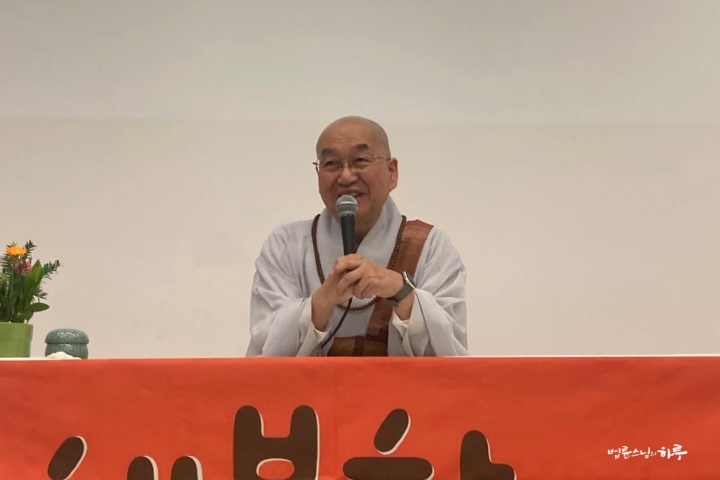
“Thank you. I understand well.”
Questions continued one after another.
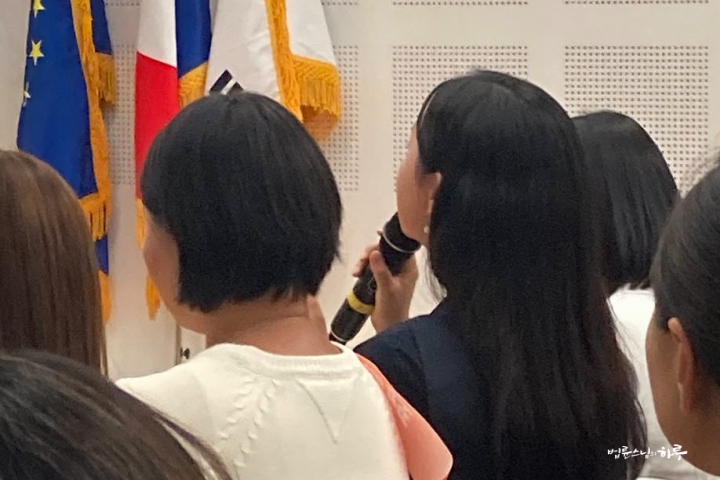
My husband and I have opposite personalities, and as stress builds up, I find myself getting angry over trivial matters. How can I reduce my anger?
I’m married and working abroad. How can I overcome the fear of possibly dying in a foreign land?
I’ve been in Paris for 8 years, and every time I visit my parents in Korea, I feel guilty seeing how they’ve aged.
I’ve been married to my French husband for 2 months. Everything is good, but our eating habits are so different that it’s difficult. How can I resolve this?
Is it hypocritical to say sorry even when I don’t feel sorry?
My boss with poor English pronunciation stresses me out so much when he curses that it makes me physically ill. How can I find peace of mind?
I’ve settled well in France and now want to help others, but sometimes people take it as lecturing. How should I help others?
After answering all the questions, Sunim offered words of encouragement to the Korean expatriates.
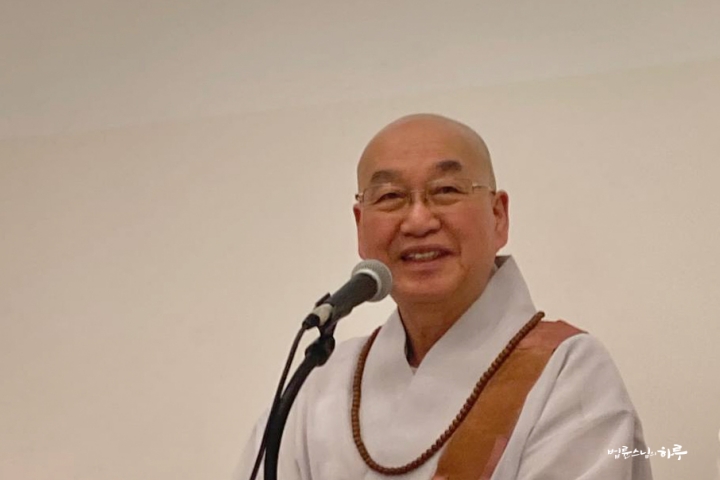
“We came because it looked better.”
“When I go to Afghanistan or Bhutan, I go to make bad places better. You all came to benefit from a good place. So don’t complain. If you have complaints, you can return to Korea. At worst, you’ll break even. When people marry, they hope for a better life, but if it doesn’t work out, they can divorce. Again, you break even. Some people worry about not being able to sell their building and ask me about it. It might be a big deal for them, but they’re still better off than those without buildings. You’re all actually doing fine. I didn’t become a monk because I wanted to. I was forced into it by my teacher. But after doing it for a long time, it’s actually fine. I have no complaints. Yet you all chose your paths and now say you can’t live with them. There’s no point in complaining. Try as much as you can, and if it doesn’t work out, quit. Return to Korea or get divorced – make your choice. Just don’t decide too hastily. ‘Since I’ve started, let me try once more. If it doesn’t work out, I can quit.’ If you take this perspective, life isn’t such a big deal.”The lecture ended with loud applause.
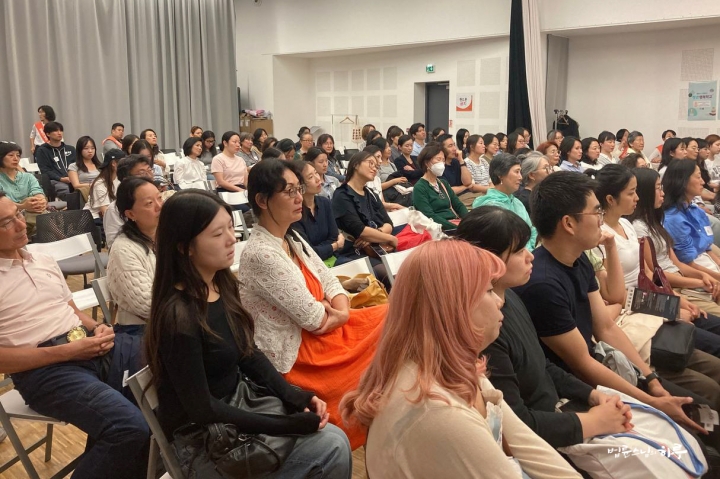
A book signing session began immediately. Most attendees lined up to receive Sunim’s signature. Sunim made eye contact and greeted each person.
“Sunim, please stay healthy.”
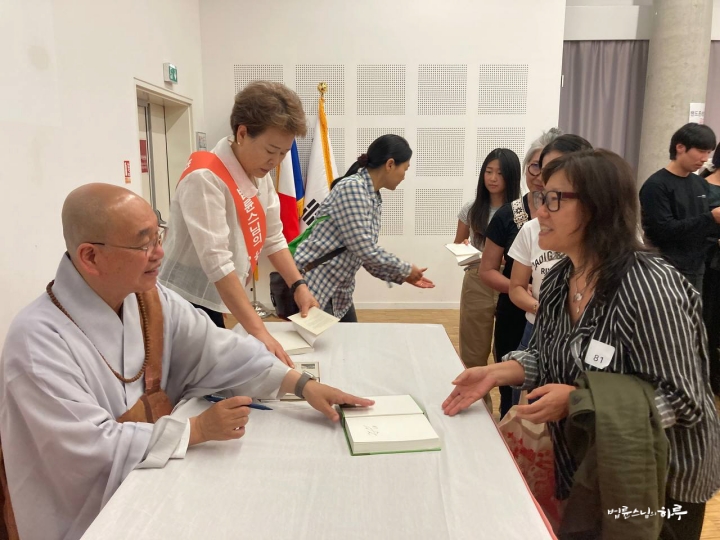
Most expressed their gratitude, saying their lives had become happier after listening to Sunim’s Dharma talks.
After all attendees left the venue, Sunim took a commemorative photo with the volunteers who had prepared the lecture.
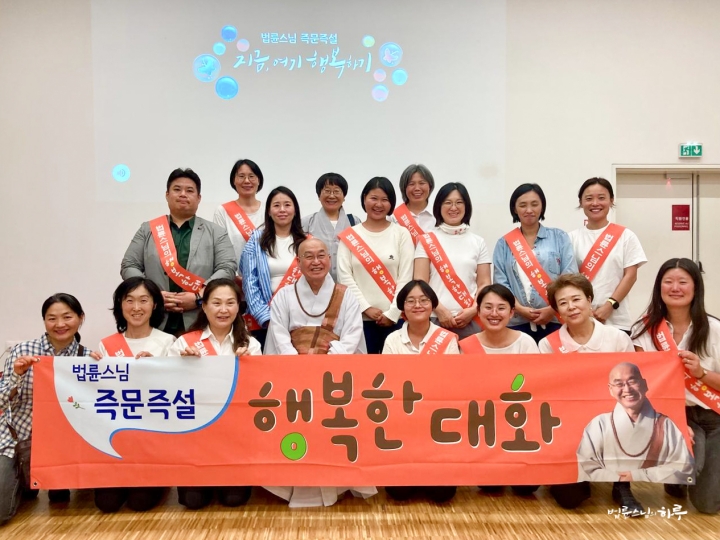
After expressing gratitude to the volunteers, Sunim moved to the accommodation. The volunteers had a mindful sharing session with Dharma Teacher Myodeok.
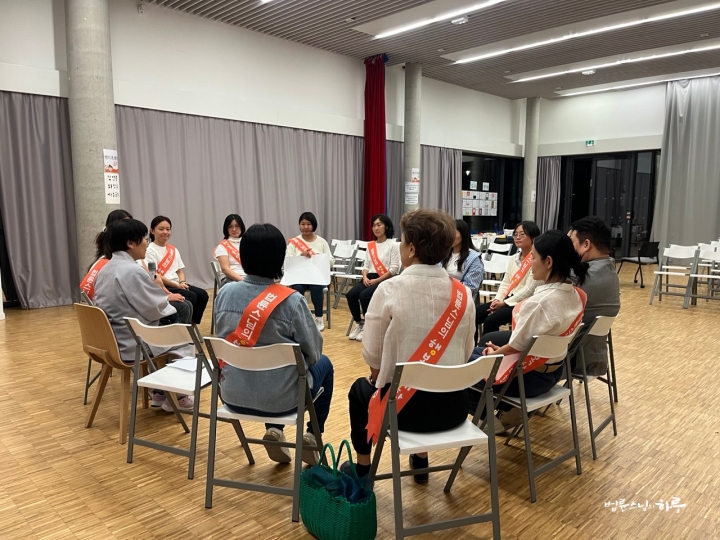
“While serving as the MC on the day of the lecture, I experienced great confusion, but seeing the people I had judged actually doing well made me reflect on my stubbornness.”
“I was happy to meet in person the fellow practitioners I had only seen online, and I’m grateful we could finish successfully together.”
“This time, instead of wanting to be praised, I approached it with the mindset of enjoying myself, and the volunteer work was much lighter and happier.”
After the lecture, the volunteers calmly continued cleaning up and were able to reflect on their time together.
Sunim arrived at the accommodation at 10 PM and concluded the day’s activities.
Tomorrow, Sunim will wake up at 2 AM to conduct a live broadcast of the Weekly Dharma Assembly for Jungto Society members in Korea, then immediately move to the train station to travel to Amsterdam for the third Dharma Q&A lecture of the European tour.