How to Right an Upside-Down Life
Sep 6, 2025 - Baekjung Closing Ceremony
Sep 6, 2025 – Baekjung Closing Ceremony
Hello. Today is Baekjung, the day we dedicate the merits of the 49-day Baekjung Prayer that has been conducted.
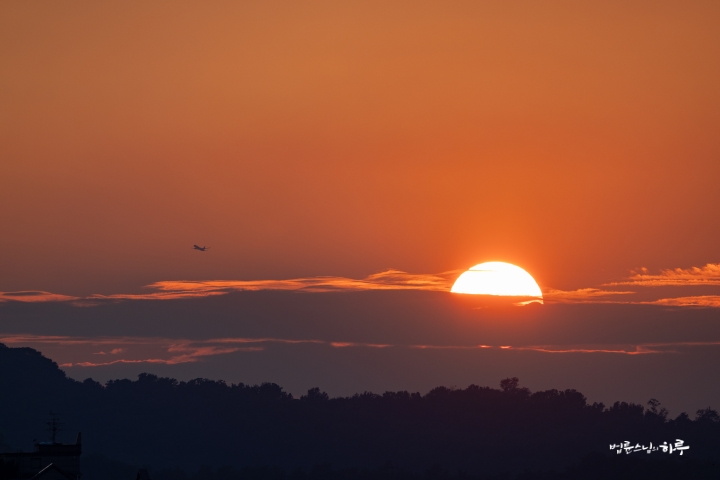
To conduct the Baekjung closing ceremony, Sunim departed from Dubuk Jungto Retreat Center at 3 AM and headed to Seoul. After a three-hour drive, he arrived at Seoul Jungto Center at 6 AM.
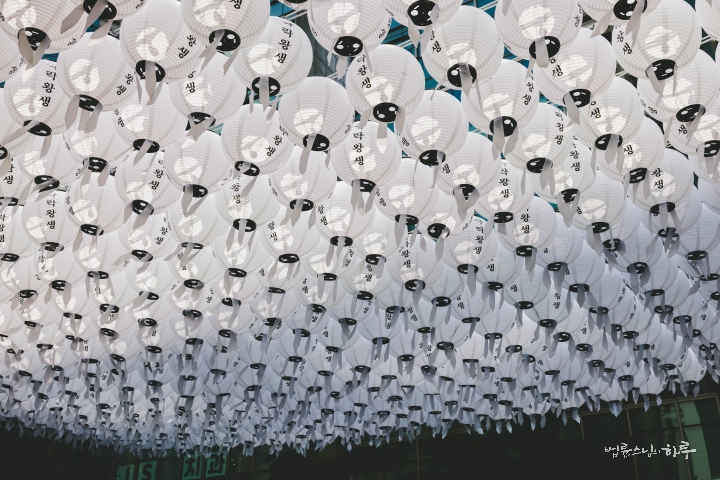
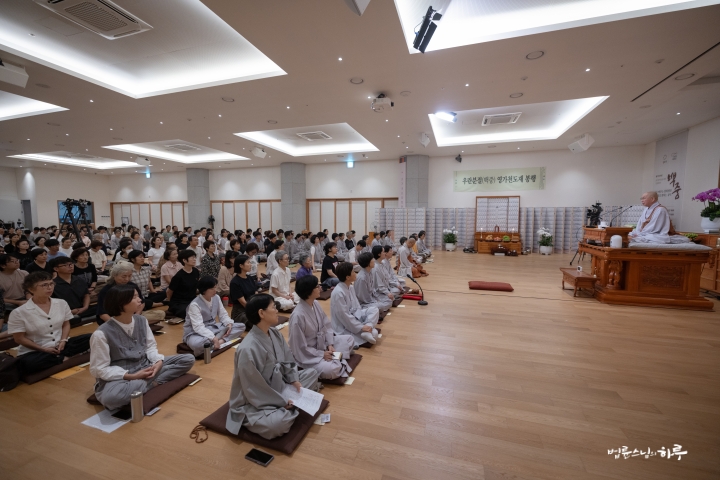
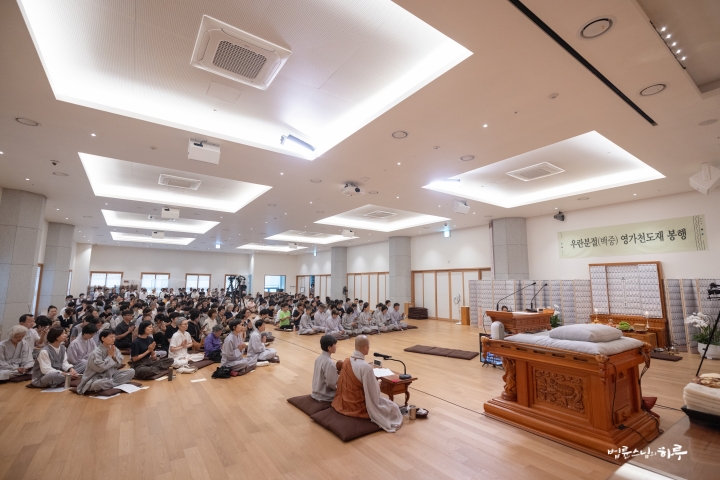
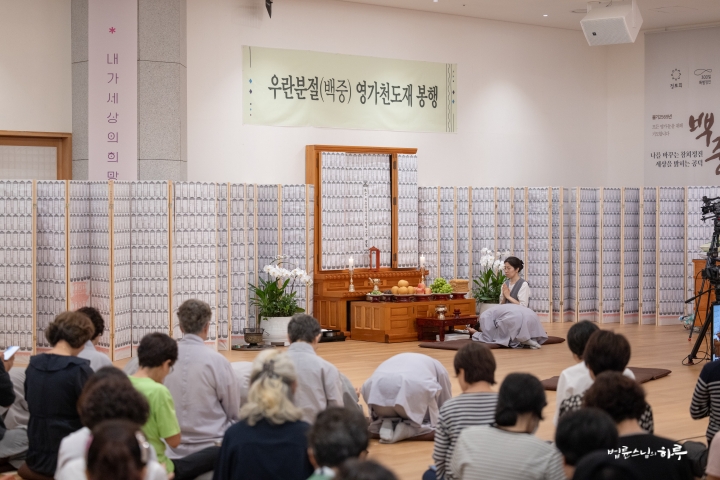
After breakfast, Sunim headed to the Dharma Hall on the third floor of Jungto Social and Cultural Center. At exactly 10 AM, the Baekjung closing ceremony began with the recitation of the Three Refuges and the Heart Sutra.
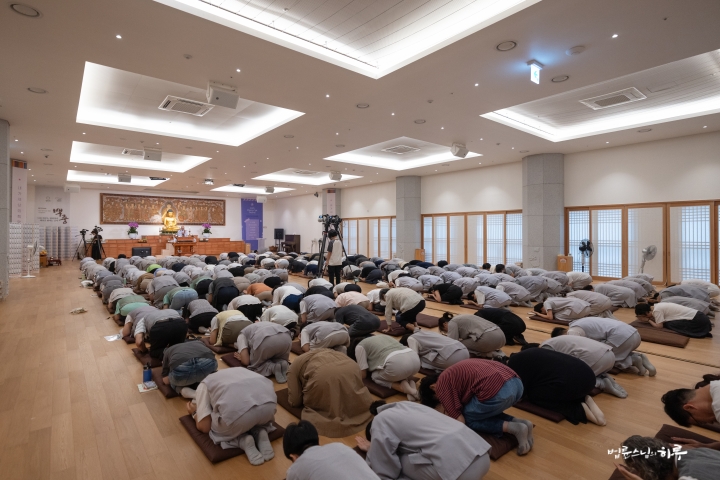
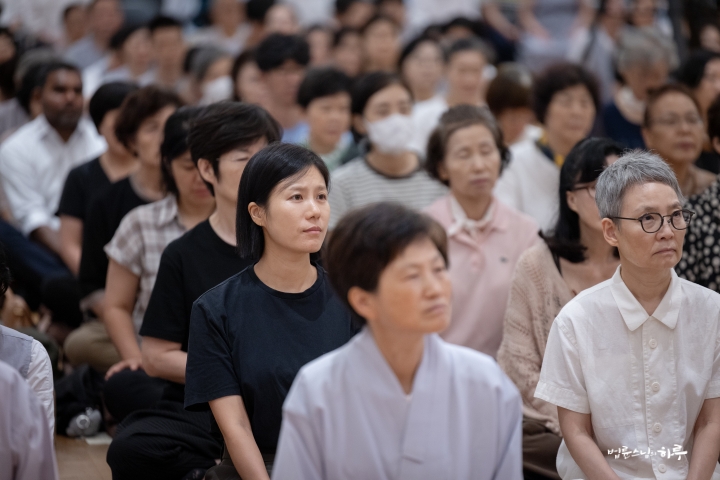
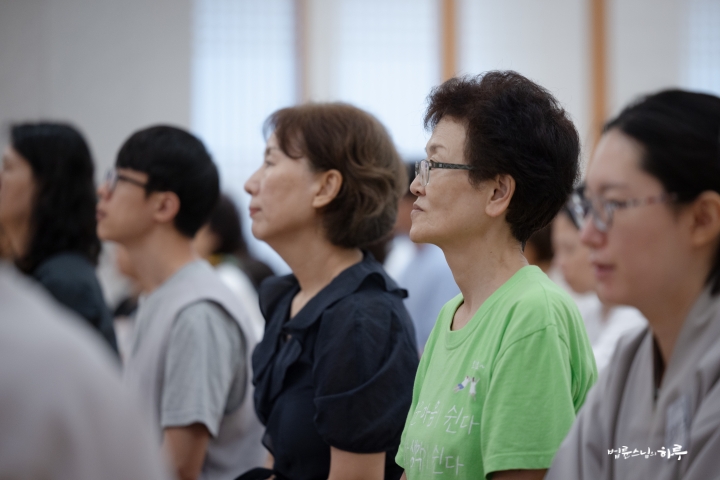
With about 4,000 Jungto Society members connected to the live broadcast, they requested a Dharma talk from Sunim with three prostrations. Sunim gave a Dharma talk for about an hour on the origins of Baekjung and the mindset for conducting Baekjung Prayer.
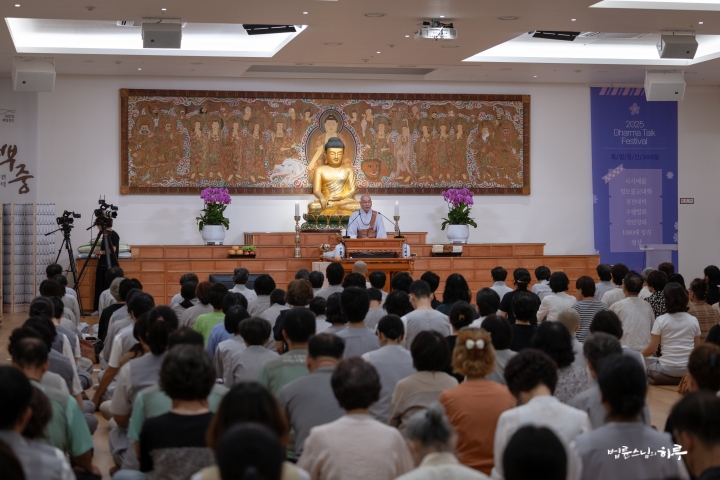
Baekjung: Four Types of Grace We Must Not Forget
In ancient times, people worshipped the heavenly gods, so among various types of grace, the first was considered ‘the grace of heaven.’ The second is ‘the grace of the nation.’ In the past, since the king was the owner of the nation, the grace of the nation was the grace of the king. The third is ‘the grace of ancestors.’ And the fourth is ‘the grace of all sentient beings.’ These four types of grace are commonly called the ‘Four Graces (sa-eun).’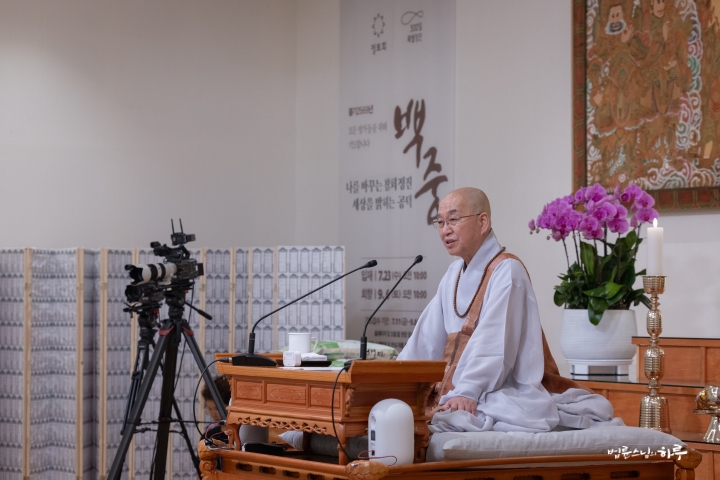
How to Right an Upside-Down Life
Among these four types of grace, what we should be especially grateful for on this Baekjung Day are first, ‘the grace of our ancestors,’ and second, ‘the grace of all sentient beings.’ This is why in the past, even servants were given freedom on Baekjung Day. Those who were human but not treated as such, who worked like animals, were given freedom for this one day. They were given pocket money to go to the marketplace, eat what they wanted, and enjoy themselves. Instead of serving their masters, on this day they became their own masters. Even livestock like oxen, who worked their entire lives, were given delicious food on this day. In a way, our lives are possible thanks to the hard work of these people we often consider insignificant. If we realize this, we won’t be arrogant or prideful, and we won’t look down on or discriminate against others. When we cultivate this mindset today, our own suffering disappears. In other words, we achieve our own spiritual liberation. The term ‘spiritual liberation’ (cheondo) refers to rescuing those in suffering and sending them to a better place. In Sanskrit, it’s called ‘Ullambana.’ It means to right what has been hung upside down. Being hung upside down refers to how we live benefiting from the grace of our ancestors, the grace of all sentient beings, and the grace of heaven and earth, yet our eyes are blind and our ears are deaf to this truth. We destroy nature, discriminate against, ignore, and abuse sentient beings, and even disrespect our ancestors in our self-importance.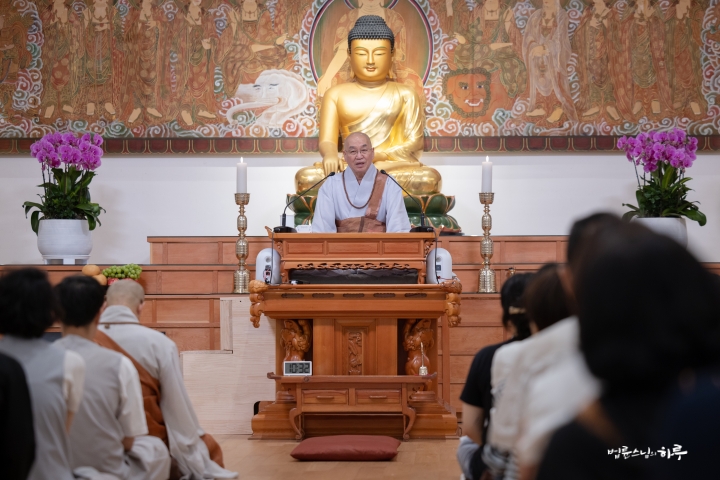
A Day to Honor Ancestors and Liberate Ourselves
This is not a commemorative day created by the Buddha. The Buddha taught being awake in the present moment, anywhere and anytime, and did not place importance on specific days or places. However, in traditional Indian culture, there were commemorative days for worshipping specific deities like Shiva or Vishnu, and among them was a day for honoring ancestral spirits. This falls on the 15th day of the 7th lunar month in our calendar. On that day, people would cook rice and scatter it by the riverside, performing traditional rituals to help ancestral spirits go to a better place. This custom eventually made its way into Indian Buddhism. From the perspective of a culture that venerates ancestral spirits, there was concern that leaving home to practice might be considered unfilial, showing ignorance of parental grace. Especially in Confucian cultural spheres like China and Korea, where filial piety was valued above all else, leaving home was regarded as unfilial behavior. However, Indians viewed monastic practice as a great path toward true freedom and liberation, considering it a path that transcended the grace of ancestors or nation. Leaving home was not seen as an act of disloyalty that abandoned family, friends, and country. Just as we praise those who leave their families to sacrifice for their country as patriots, Indians highly praised and regarded as great those practitioners who left everything behind to pursue the ultimate truth of humanity. Therefore, whenever monastics arrived, everyone would offer them food, and even kings would pay their respects when encountering them on the road. While the culture was somewhat different from ours, this didn’t mean that leaving one’s family wasn’t without regret. That’s why the Buddha, when leaving home, made a vow: “I am not leaving home for my personal benefit, but to find the path of true freedom and return to share it with my family and relatives.” This was fundamentally different from concepts of leaving home due to failed romance, grief over family deaths, or failing exams. Monastic practitioners were respected as great beings with more courage than becoming a king. However, ordinary people could not easily break free from the strong bonds of family affection. Therefore, Buddhism adopted this day of honoring ancestors, creating a belief among people that when one person from a family becomes a monastic, many people in that family would be liberated. Rather than negating the act of leaving home, they created a culture where families could also rejoice. In this way, the commemorative day for honoring ancestors was first adopted by Indian Buddhism, and as it crossed into China, it became even more emphasized. As it combined with Chinese filial piety and Korean ancestor worship traditions, it established itself as an even more significant commemorative day. This day is not the Buddha’s birthday, nor the day he left home, attained enlightenment, or entered nirvana. However, the Baekjung Prayer for honoring ancestors, along with the New Year’s Prayer and Winter Solstice Prayer, has become established as one of Buddhism’s three major prayer periods, despite not being an official Buddhist commemorative day.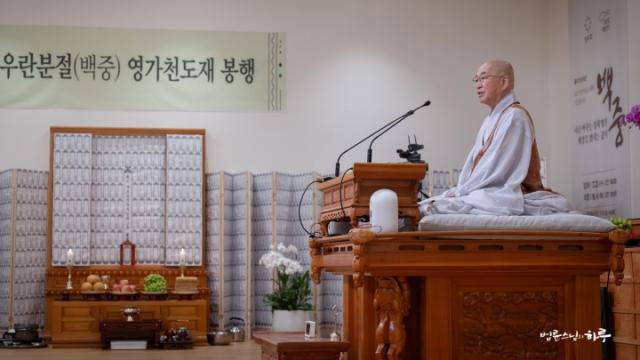
A Day to Let Go of Attachments and Open New Hope
While we should change terminology and rituals to fit the times and circumstances when possible, culture is something that countless people have practiced over long periods. As such, there may be elements that seem irrational from today’s perspective. However, what’s important is not whether it fits current reality, but that our ancestors created and practiced this culture with these intentions. For example, the Jeongcho Prayer to prepare our hearts at the beginning of the year, the Baekjung Prayer to be grateful for our ancestors’ grace and all living beings that enable our existence, or the Winter Solstice Prayer that marks the end of life’s downhill journey and the beginning of new hope tomorrow – these traditional cultures have sufficient value to be preserved in modern society. That’s why Jungto Society continues to steadily inherit these three traditional cultural practices. Therefore, those who harbor resentment and hatred toward their parents should let go of those feelings today and generate gratitude, and those who hold onto sadness and regret should release those attachments and participate in this Baekjung closing prayer with the intention of attaining freedom and liberation.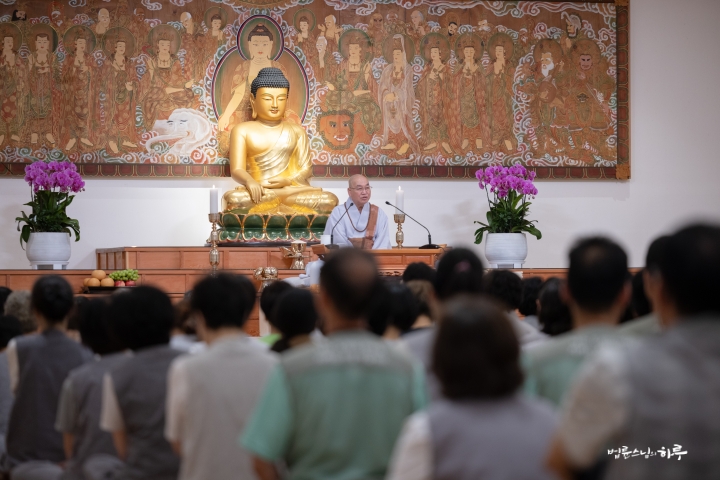
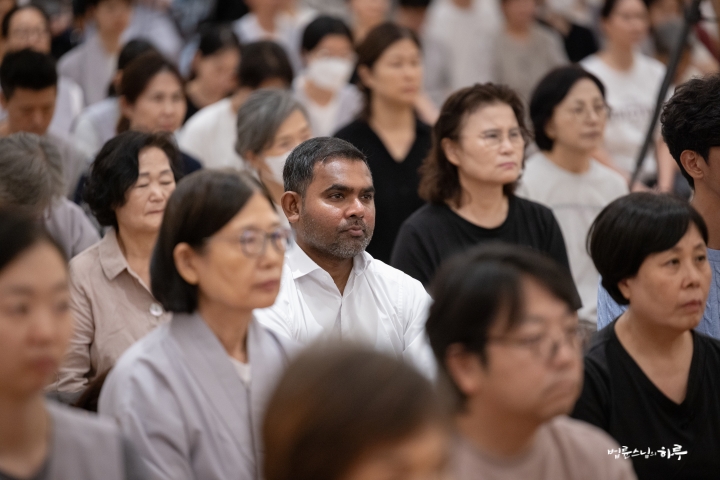
After concluding the Dharma assembly with the Four Great Vows, the participants engaged in mindful sharing.
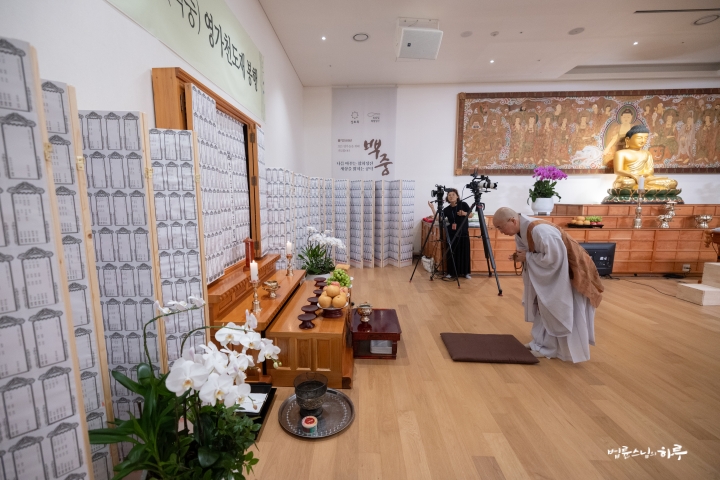
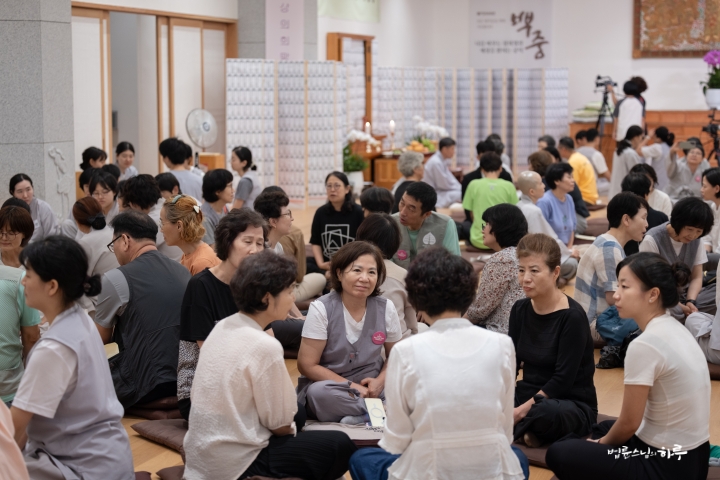
After the mindful sharing and a short break, the final memorial service of the Baekjung Prayer was held at 11:30 AM, officiated by Venerable Yusu.
Sunim had lunch with the members of the Sangha in the basement dining hall. At noon, he met with the JTS Secretary General to discuss preparations for the JTS 32nd anniversary event. The Secretary General explained the planning proposal in detail.
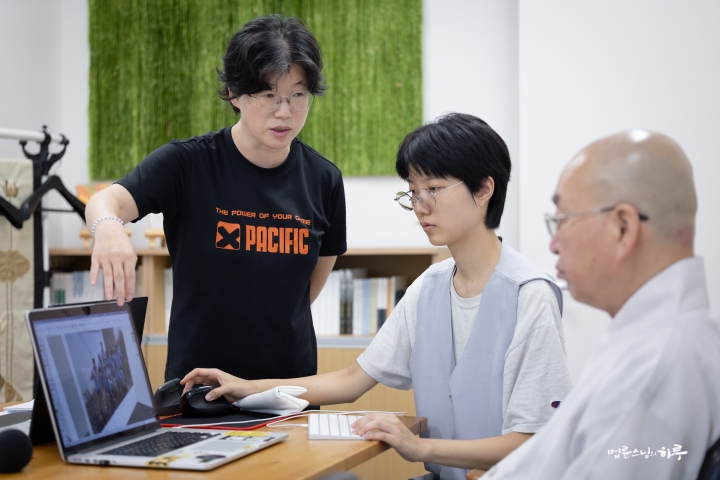
“At the end of October, we plan to hold a photo exhibition at the Jungto Social and Cultural Center showcasing JTS’s journey over the past 30 years. We will invite various relief organizations and JTS supporters for a commemorative seminar.”
After reviewing the proposal, Sunim offered various suggestions and concluded the meeting.
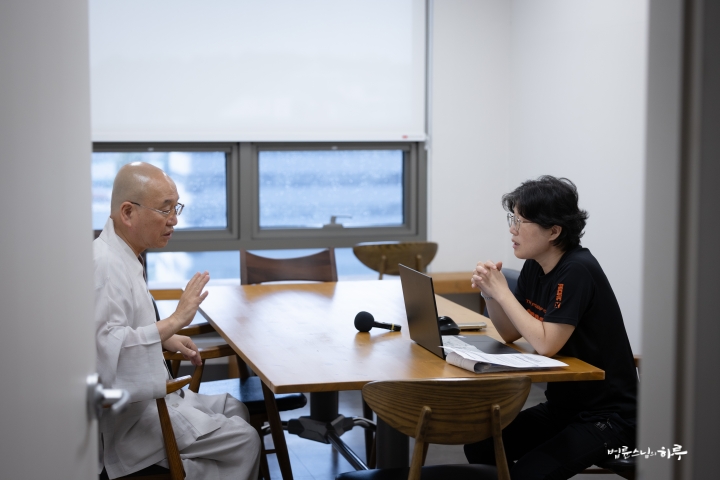
From 1 PM, Sunim received a report from the Peace Foundation Planning Committee Chair about the Peace Foundation’s activities for the second half of the year.
At 2 PM, a North Korea expert visited Sunim for a two-hour meeting. They discussed at length what role to play for peace on the Korean Peninsula, amid concerns about the strengthening of trilateral cooperation among North Korea, China, and Russia following China’s 80th Victory Day parade a few days ago.
Subsequently, the head of the Special Youth Division presented plans for the Youth Festa scheduled for November and sought Sunim’s advice.
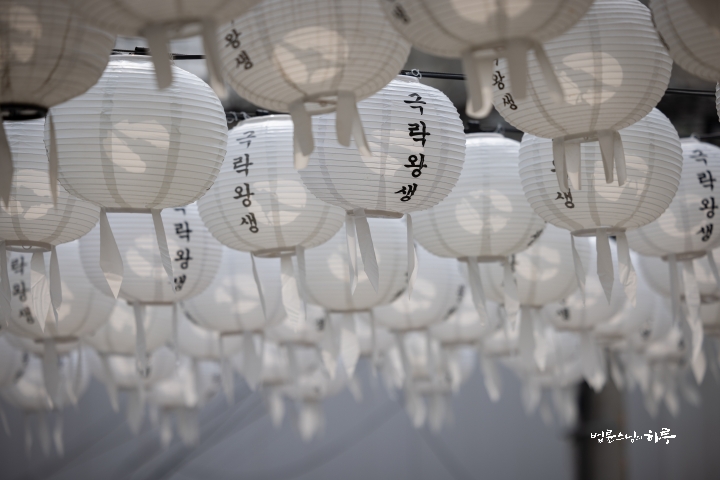
After consecutive meetings, Sunim concluded his daily activities after 5 PM. He retired early to rest and recover from the fatigue accumulated during his overseas lecture tour.
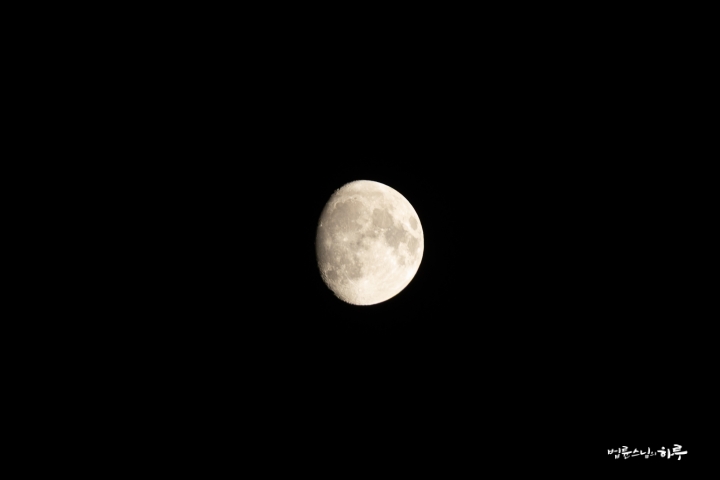
Tomorrow morning, Sunim will hold the opening ceremony for the final 10th 100-Day Prayer of Jungto Society’s 2-1st 1000-Day Practice at the Jungto Social and Cultural Center. In the afternoon, he will attend the Gyeongnam Division Members’ Day event, and in the evening, he will depart from Incheon Airport for Europe to begin his European lecture tour.