How Should I Deal with the Deepening Loneliness as I Age?
2025.8.23 - North America West Coast Tour (1) Seattle
Hello. Today marks the beginning of Sunim’s North American West Coast tour. For the next week, Sunim will travel to different cities each day to give Dharma Q&A sessions.
Sunim departed from Incheon International Airport yesterday, August 23rd at 4:40 PM Korean time. After a 10-hour and 10-minute flight, he arrived at Seattle International Airport today, August 23rd at 11:00 AM local time.
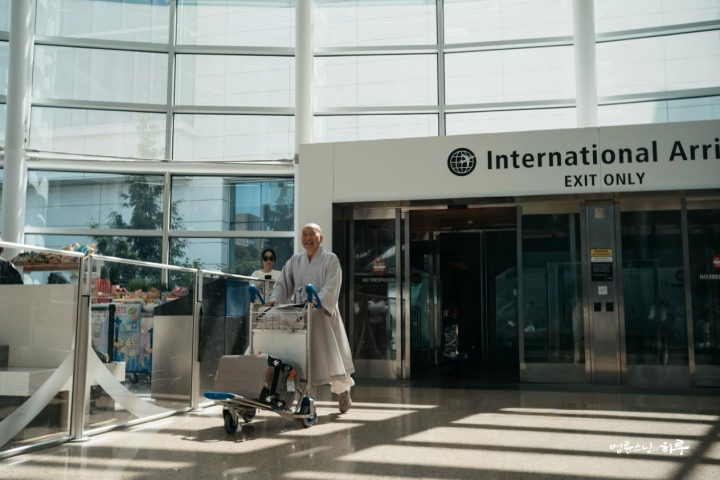
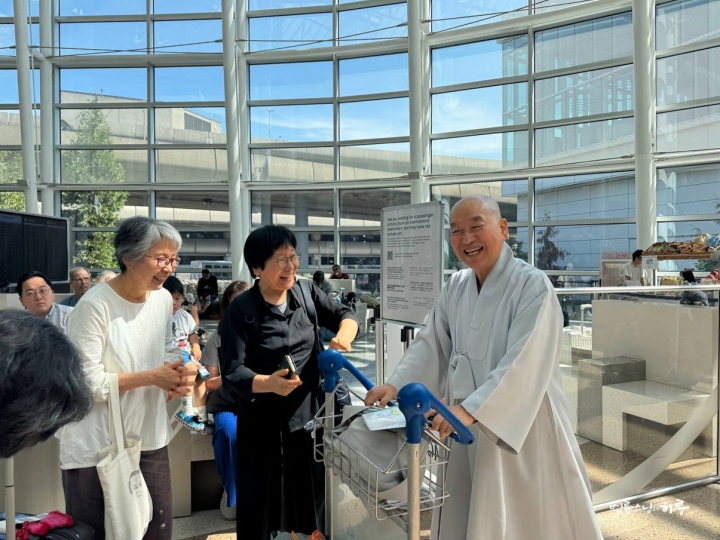
At Seattle International Airport, Dharma Teacher Myodeok and Dharma Teacher Beophae, who had completed the Sharing Retreat at the Washington DC Jungto Center, had arrived an hour earlier. Seattle Jungto member Joo Sang-hyu and Dharma Teacher Myomyeong also came to greet Sunim warmly.
“Thank you for your long journey.”
They immediately got in the car and headed to the Seattle Jungto Retreat Center. After a 10-minute drive from the airport, they quickly arrived at the retreat center.
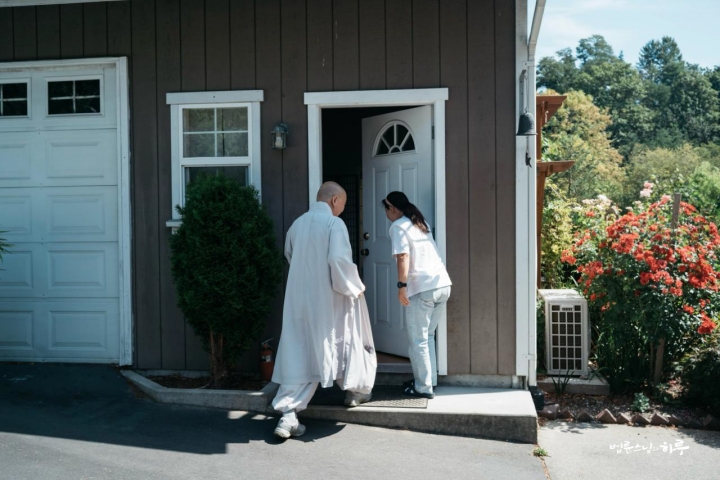
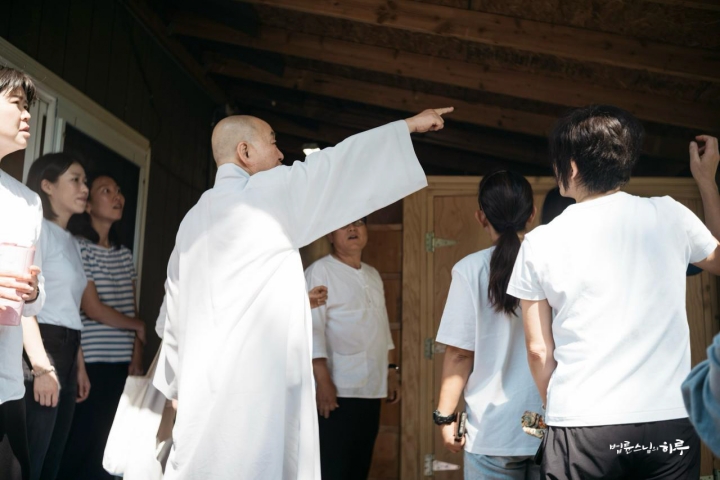
The Seattle Jungto Retreat Center serves as a practice venue for members in the northwestern United States, and many people have been dedicating their efforts to maintaining the grounds. Flowers were blooming in the garden beds, and various vegetables were growing well in the vegetable garden. Sunim toured the recently renovated changing rooms and expressed gratitude to those who had volunteered.
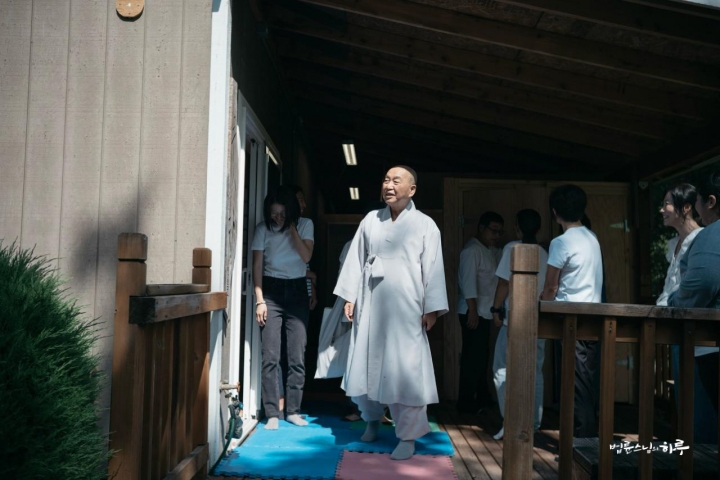
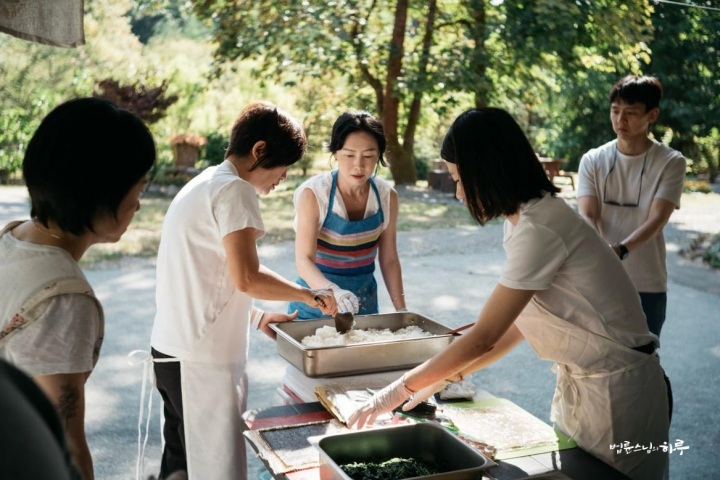
In one corner of the retreat center, volunteers were busily preparing kimbap for dinner before the lecture.
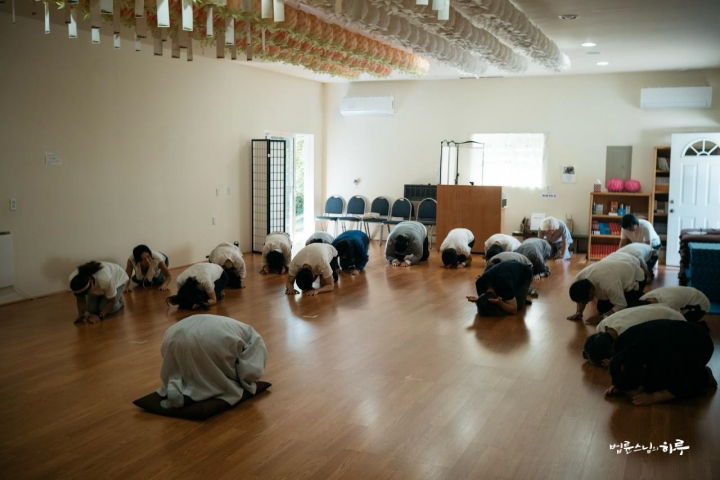
They briefly stopped their work and all went into the Dharma hall to offer three bows to Sunim.
Sunim greeted them with a bright smile.
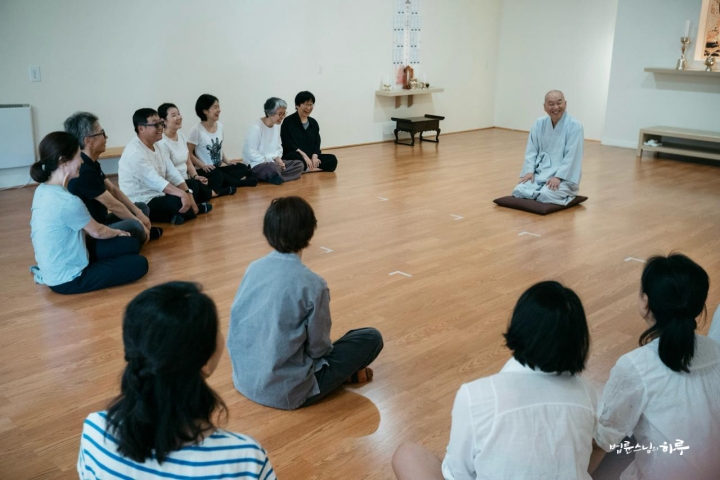
“Good!”
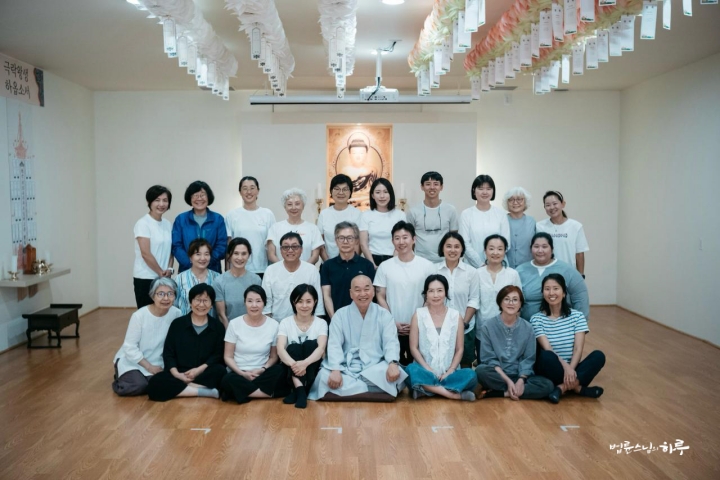
After exchanging greetings, they took a commemorative photo.
After lunch, at 3 PM, Sunim held a meeting in the Dharma hall with international students who had graduated from Jungto Dharma School. While most participants were from the Seattle area, some had flown in from as far as Minnesota, Tennessee, LA, and Portland.
“I’m sorry I could only spare a short time when you’ve all come from so far away.”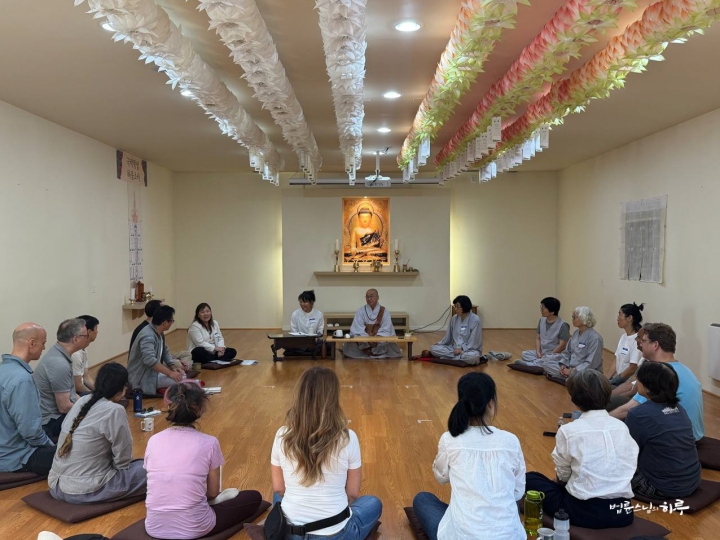
The graduates then shared honestly about how their lives had transformed through Jungto Dharma School and the 1000-Day Practice.
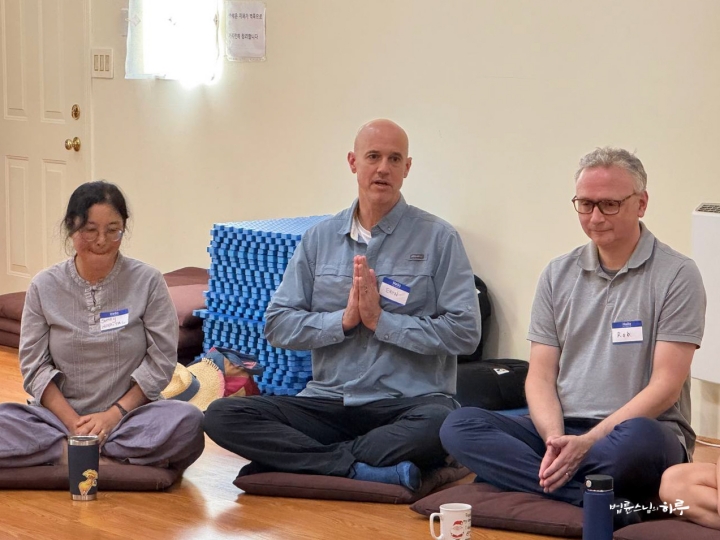
“I’m from Portland, Oregon and I’ve been with the Jungto Society for nine years. I volunteered at Dharma School as a co-facilitator and it’s been really really good. I can see how this, even the language barrier, helped me to see myself better. So I’m very grateful.”
“I came from LA yesterday. I learned about you and your teaching about five years ago during the pandemic. Thank you so much for putting the Dharma out there on YouTube. Otherwise I don’t think I would have found peace in my life.”
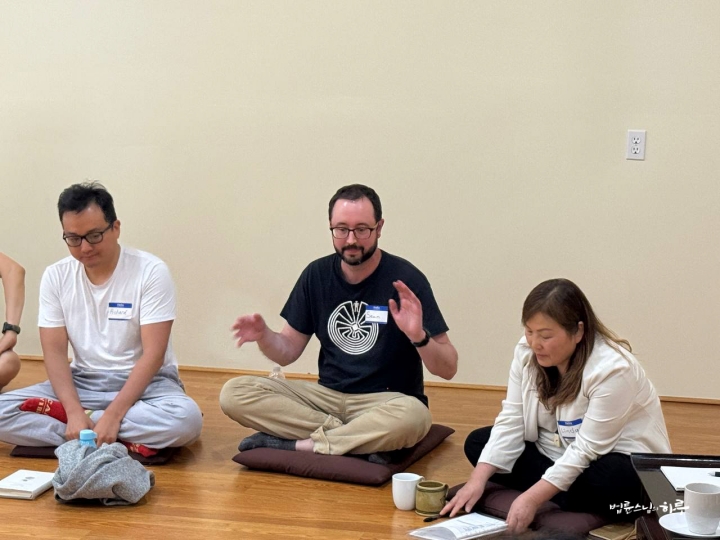
“I’m from Minnesota, I’ve been practicing for a little over eight years. At this point I can see the impact it has on my life. I’m particularly less anxious, less angry, less jittery. I continue to practice because I know there’s still plenty of work to do.”
After listening to their reflections, Sunim explained the importance of understanding any teaching within its temporal, social, and cultural context, and cautioned against absolutizing written texts. He gave examples of how Buddhist scriptures, originally written in Pali or Sanskrit, then translated into Chinese and later Korean, could have slightly different meanings and intentions at each stage of translation.
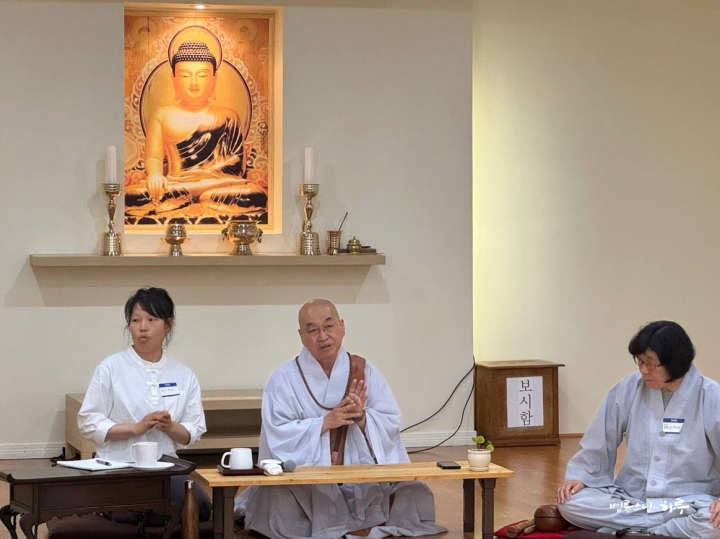
During the Q&A session that followed, various questions were raised about how to handle personal problems, how artificial intelligence is changing the job market, and how to continue doing the right thing even when expected results don’t appear.
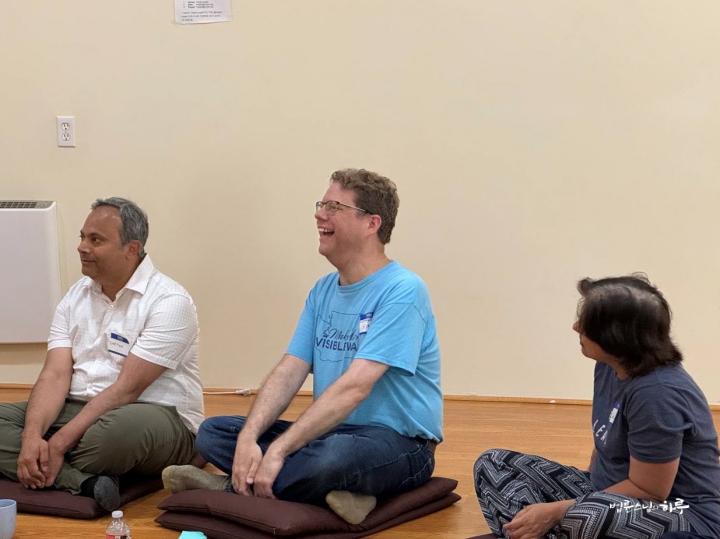
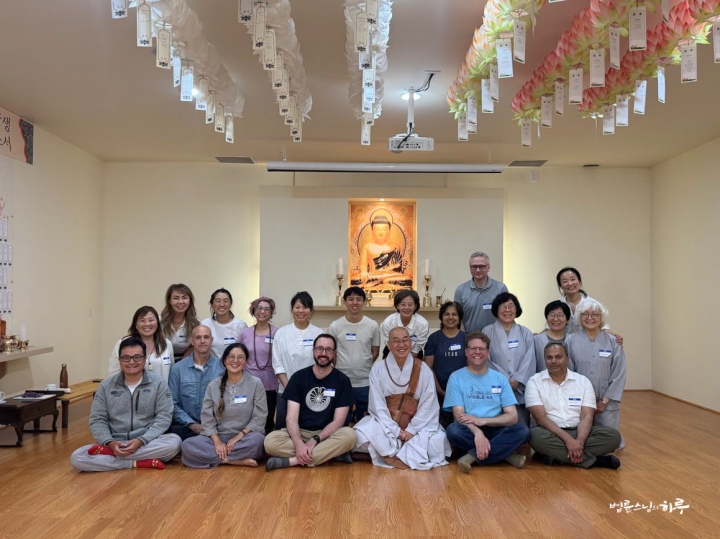
Though it was a brief meeting, the international members were able to deeply appreciate the importance of practice through their dialogue with Sunim. The meeting concluded with a group photo. After the photo session, they immediately departed for the lecture venue.
After finishing the meeting with international members, they left for the lecture venue at 5 PM.
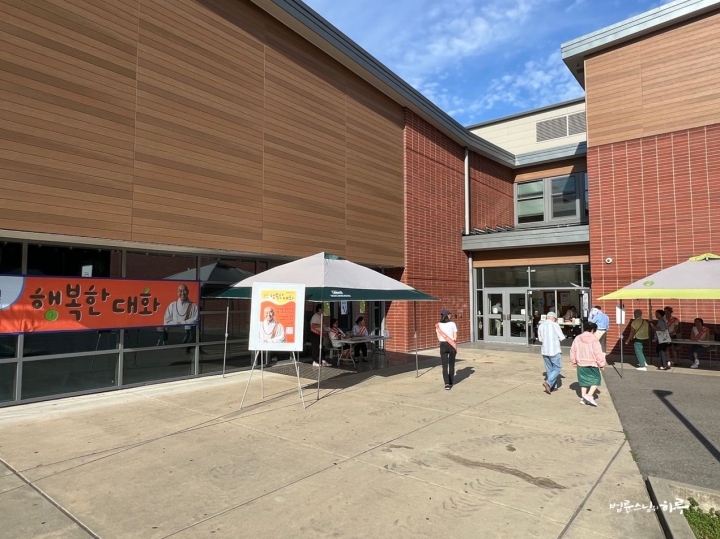
Today’s lecture was held at Risdon Middle School in Newcastle, Washington, near Seattle.
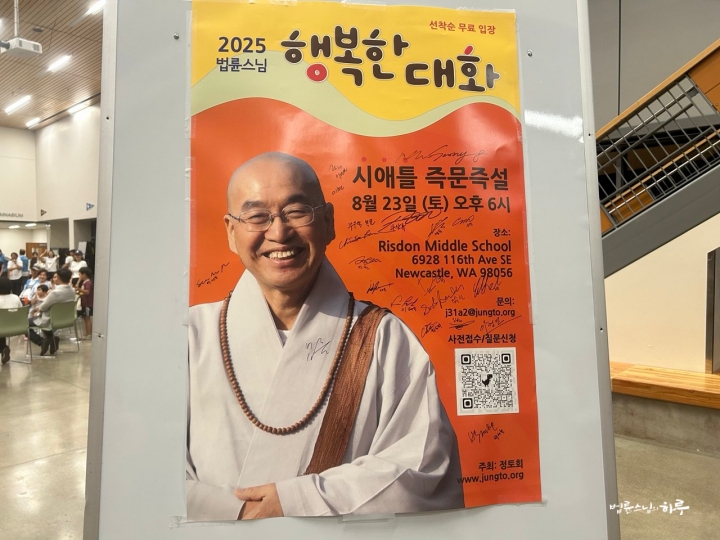
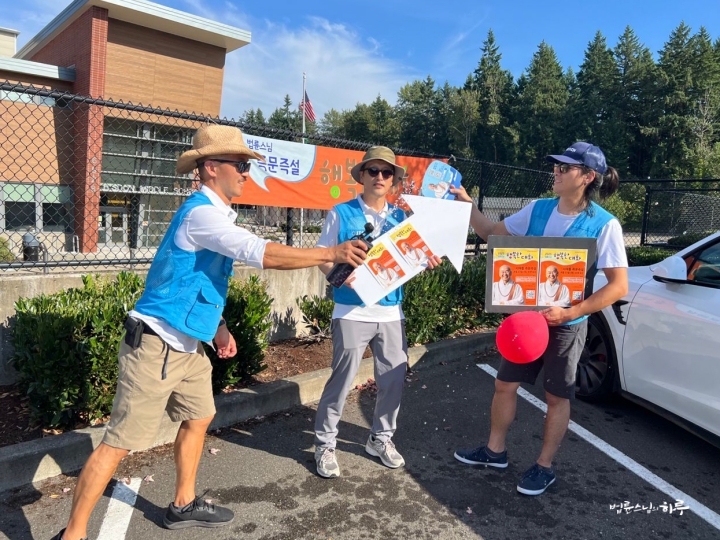
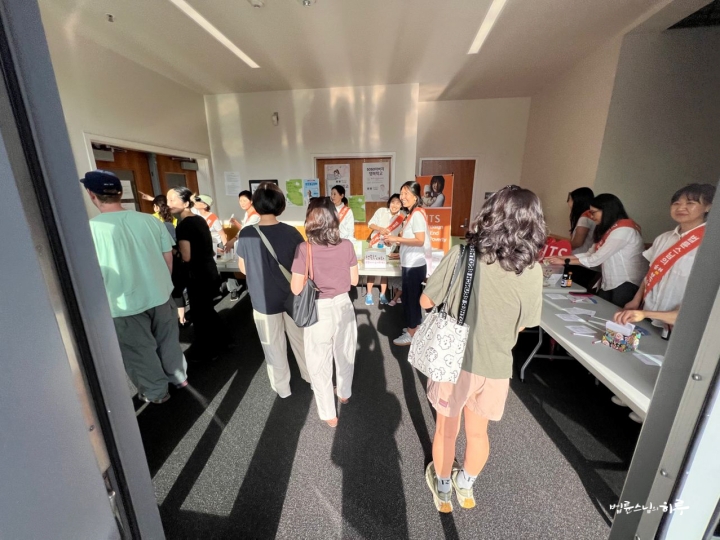
Volunteers were busy preparing for the lecture, each taking on different roles. Sunim greeted the volunteers warmly with handshakes.
After watching an introductory video about Sunim, the lecture began promptly at 6 PM. With about 250 people in attendance, Sunim gave his opening remarks.
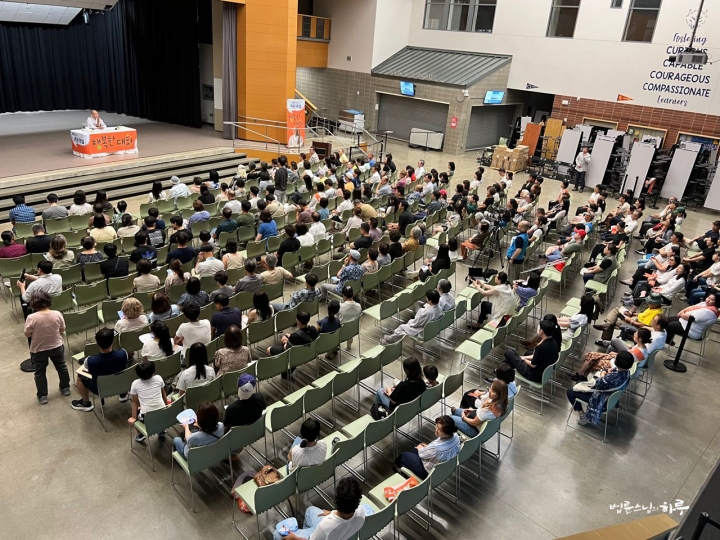
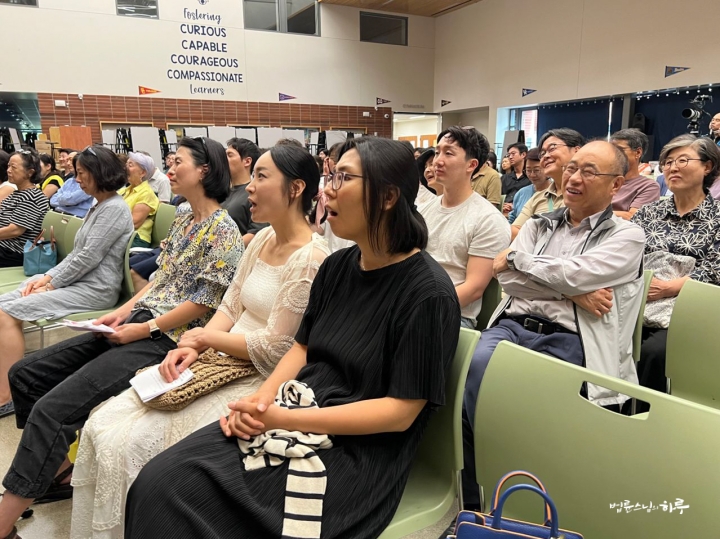
Anyone could then raise their hand and have a conversation with Sunim. Over two hours, seven people asked Sunim questions. One questioner sought Sunim’s advice on how to deal with deepening loneliness as they age.
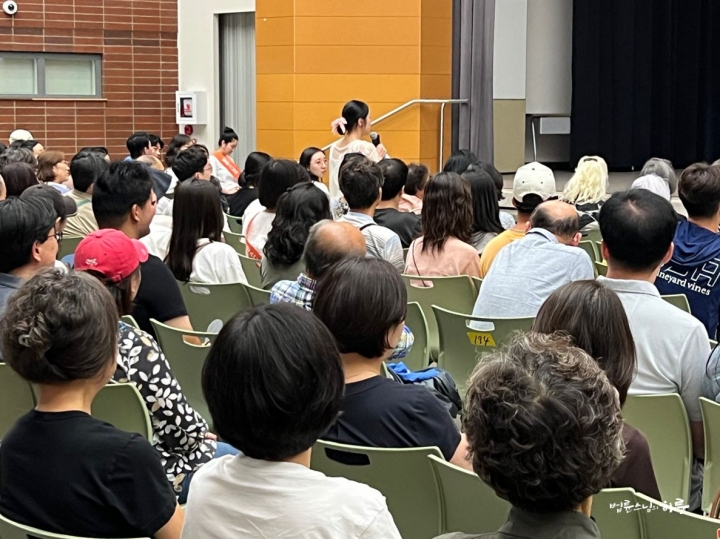
How Should I Deal with the Deepening Loneliness as I Age?
“I want to ask about loneliness today. As I get older, I feel increasingly lonely. But my husband seems to be doing well watching Venerable Pomnyun’s YouTube videos. So I came here in person today. How do you deal with loneliness, Sunim? Do you just endure it?” 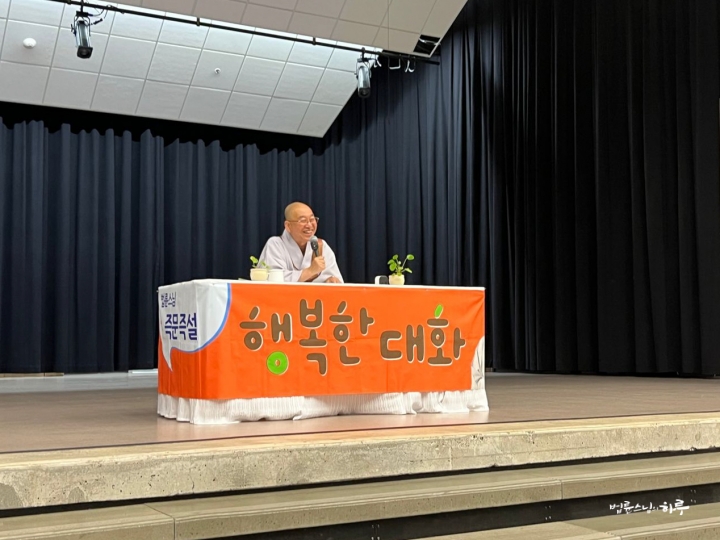
“That sounds like a good idea. But I want to know how to manage feelings of loneliness.”
“Then you need to meet someone caring. Being lonely ultimately means you need someone.”“Isn’t it natural to become lonely as we age?”
“It has nothing to do with age. Do you have children?”“Yes.”
“The reason people say they’re lonely when they’re old is because they were too busy to be lonely while getting married and raising children. But when the children grow up and leave home, there’s no one to talk to. Your husband is busy with his own work and has different interests, so you feel lonely because there’s no one to share your heart with. But even if you live alone in the forest, if you open your heart to nature and think ‘Oh, the flowers have bloomed,’ you won’t be lonely at all.”“Then aren’t you lonely, Sunim? How do you comfort yourself when you’re lonely?”
“I don’t have time to be lonely. I’m always meeting and talking with people like this. Just before coming here, I had a two-hour conversation with international students through an interpreter right after arriving. After finishing, I only had time for a quick bathroom break before coming to this venue. When this lecture ends, I have to leave for Vancouver early tomorrow morning. So I don’t have time to be lonely.”“That’s almost like a celebrity’s schedule. But what I want to ask about is the fundamental loneliness of human beings.”
“Then what do monks do when they feel lonely?”
“It varies from person to person. Some are too busy to feel lonely, others contemplate the hwadu saying ‘What is this?’ When a cow grazes and becomes full, it sits in the shade and ruminates. Is the cow lonely or bored then? It’s just comfortable. When it gets up to graze again, is the cow busy? It just eats slowly. When full again, it sits quietly and ruminates. Loneliness is a psychological state, not a biological phenomenon. Loneliness arises when you have a desire to talk or share your heart with someone. If you don’t have that desire like a cow, you’re not lonely. Even if you have the desire, if you have someone to share it with, you’re not lonely. You’re lonely because you have the desire but no one to share it with.”“Then what about the sadness or emptiness felt with aging?”
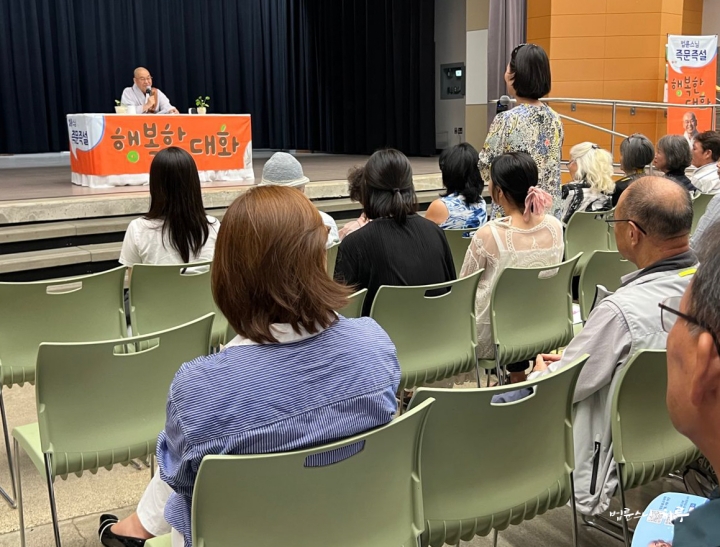
“I work too. I’m saying this despite working hard and living diligently.”
“The fundamental cause of emptiness and loneliness arises when you want to form relationships and communicate but can’t do it well. So either let go of the desire through practice, or find an object to fulfill that desire – it’s one or the other. That object doesn’t necessarily have to be a person. Drawing, making music, or various other activities can become objects that fulfill your desires.”“Yes, I understand.”
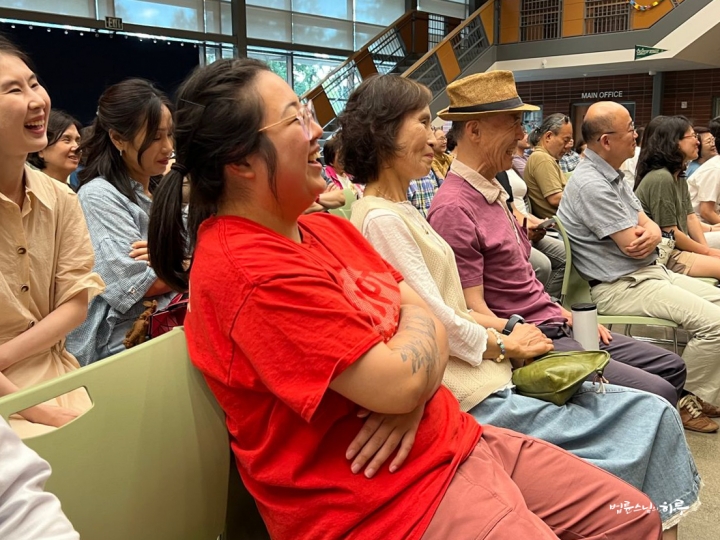
“When I say ‘Try meeting other people too!’ it might sound absurd to you now, but go home and think about it carefully. It might be the best solution.” (laughter)The audience showed their encouragement with loud applause.
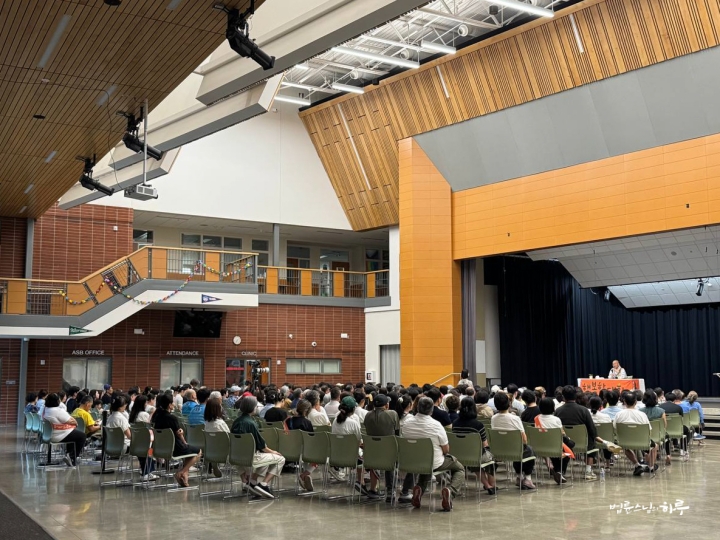
Questions continued one after another.
When I return to work, should I go back to my previous accounting job or return as a school teaching assistant?
I’m a Christian, but do I have a fate to live overseas?
As a doctor and church member facing delays in my green card process, how can I live with vitality?
During treatment for delusional disorder, I falsely accused an acquaintance of being a sex offender and now struggle with guilt. How should I live?
Is my effort to maintain equanimity an attachment? Also, if pursuing pleasure brings its opposite, what should I do?
After finishing the dialogue, the promised two hours passed quickly. Finally, Sunim concluded the lecture by emphasizing that life is not a matter of ethics but of wisdom.
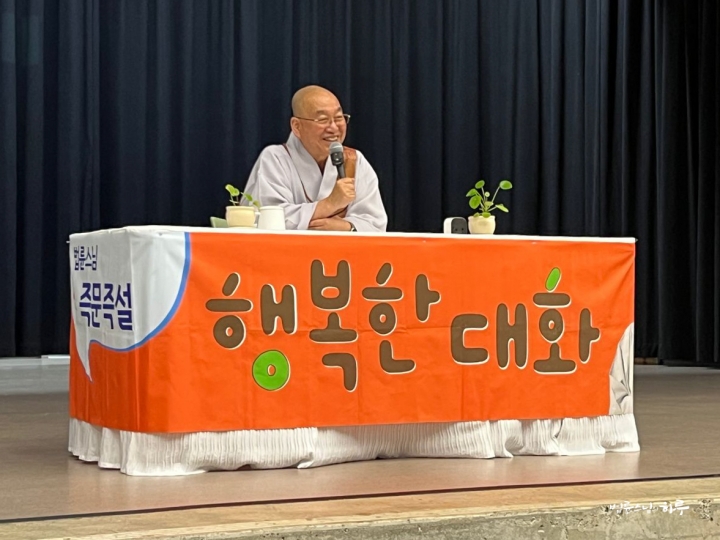
Life Is Not a Matter of Ethics but of Wisdom
“You might think Sunim lacks ethical sense, but this isn’t an ethical issue. Life is a matter of wisdom. It’s not about right or wrong, but about how wisely you live. We always act foolishly, swayed by emotions. I’ve never told you ‘Don’t eat meat!’ or ‘Don’t get married!’ What I want to say is to live your life more wisely. What religion you believe in is a freedom guaranteed by the constitution, so each person can choose. However, if you came all the way to America to live happily but say life is painful, there’s no other option. People in the world think ‘I want to go live in America’ when life gets hard, but if you’re actually living in America and suffering, there’s nowhere else to go. Similarly, if you say ‘I want to go live in heaven’ because life in this world is hard, but then suffer even in heaven, there’s really nowhere to go. So instead of chasing fantasies, you need to be aware of your inner self. You all have your circumstances, but you chose to come to America to improve your life even a little – you weren’t kidnapped and brought here. So it’s necessary to do your best to live here.”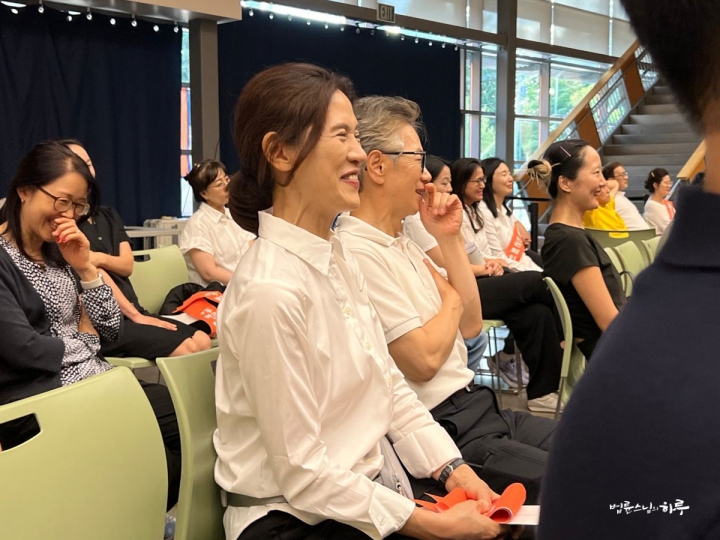
After concluding the lecture with thunderous applause, a book signing event was held on stage starting at 7:30 PM. Attendees expressed their gratitude to Sunim while receiving his autograph.
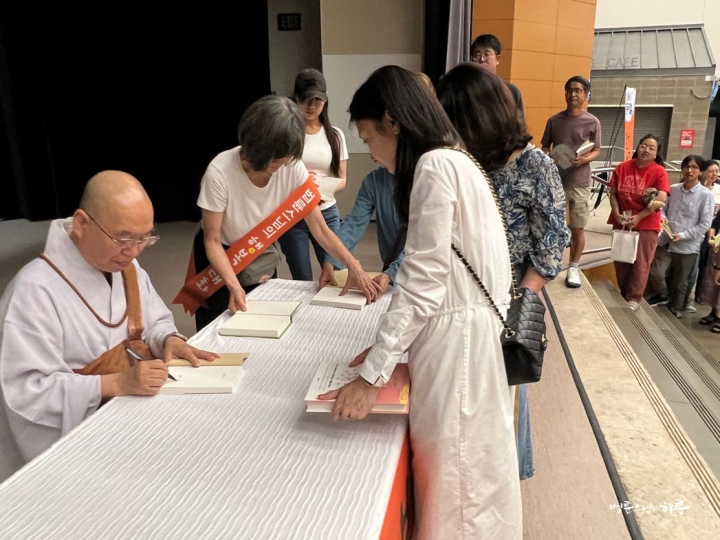
People who had attended Sunim’s lectures in Cleveland and Portland ten years ago also approached him to say hello.
After the book signing ended, Sunim took a commemorative photo with the volunteers who had prepared the lecture.
“Thank you. Great job, everyone.”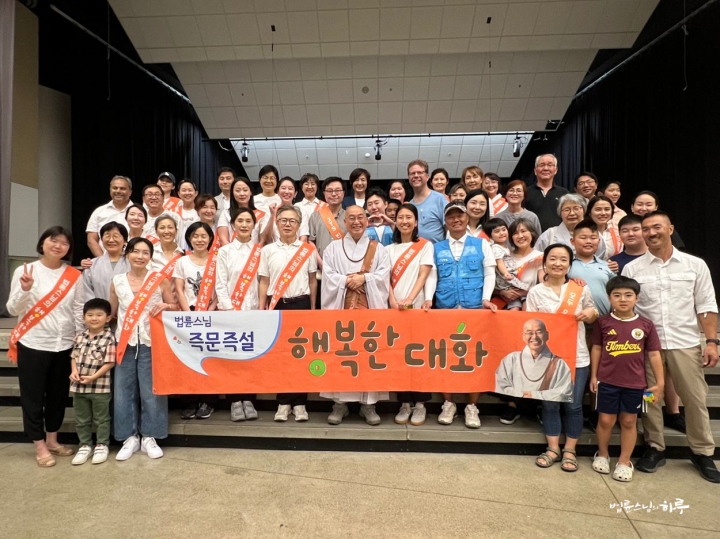
After expressing his gratitude to the volunteers, Sunim left the lecture hall. The volunteers stayed behind to have a mindful sharing session with Dharma Teacher Myodeok.
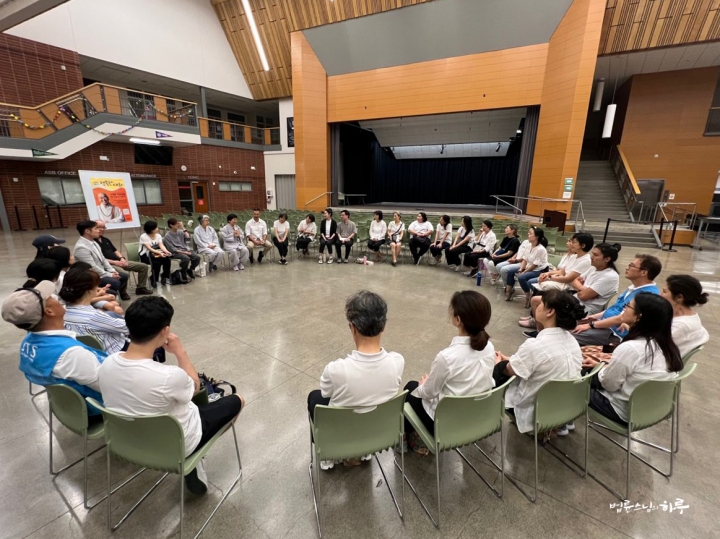
“When I contacted the organizer to attend the lecture, I was asked if I would like to volunteer. Thanks to that suggestion, I participated as a volunteer, and it was much more enjoyable than I expected. I feel proud now that it’s over. I definitely want to volunteer again at the next opportunity.”
“I was in charge of collecting questions. Perhaps because of this role, I felt more deeply connected to each person who asked a question, and their concerns touched me profoundly. It was heartbreaking to see people leave without being able to ask their questions due to time constraints.”
Departing from the lecture hall, the group arrived back at the Seattle Jungto Retreat Center at 9:30 PM.
After flying for ten hours and giving a lecture immediately without time to recover from jet lag, Sunim’s body was extremely tired. He had a late dinner and went straight to bed.
Tomorrow morning, he will cross the Canadian border to Vancouver for the second lecture of the North American West Coast tour in the afternoon, then return to the Seattle Jungto Retreat Center in the evening.