When Responsibility Feels Heavy and Overwhelming — What Should I Do?
Aug 18, 2025 - Leading Members' Dharma Assembly, Interview at Baek Yong-seong Memorial Hall
Aug 18, 2025 – Leading Members’ Dharma Assembly, Interview at Baek Yong-seong Memorial Hall
Hello. Today is the day of the Leading Members’ Dharma Assembly, where Jungto Society’s leading members share the difficulties they face in their activities and establish a practice-oriented perspective.

After completing his morning practice and meditation, Sunim headed to the hospital at 8 AM for a regular health checkup. After finishing the examination, he returned to Seoul Jungto Center.
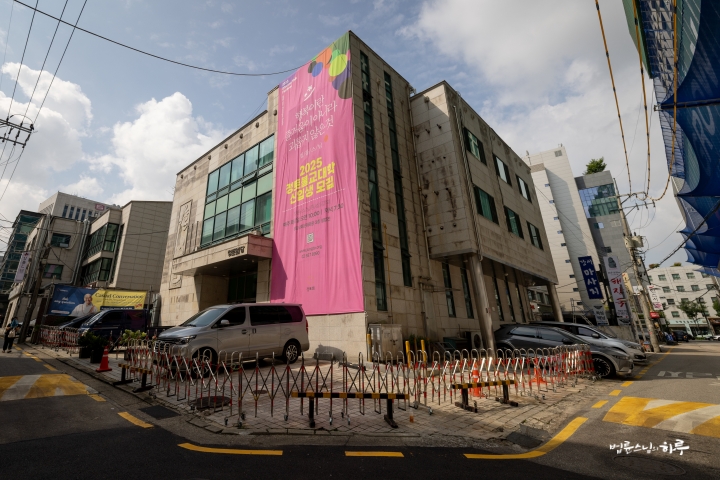
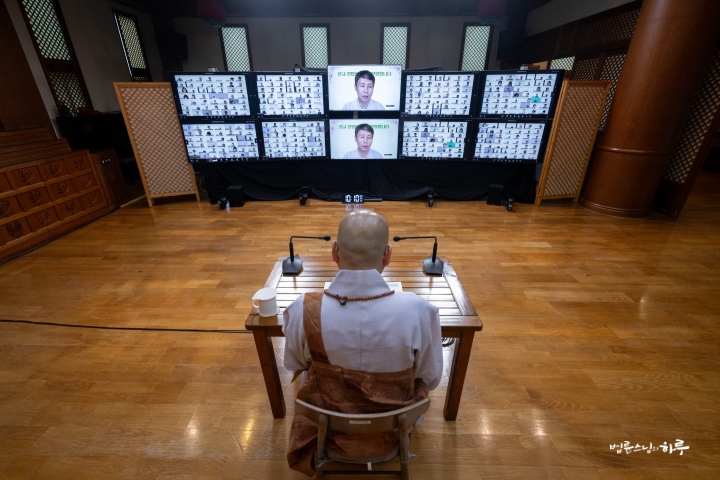
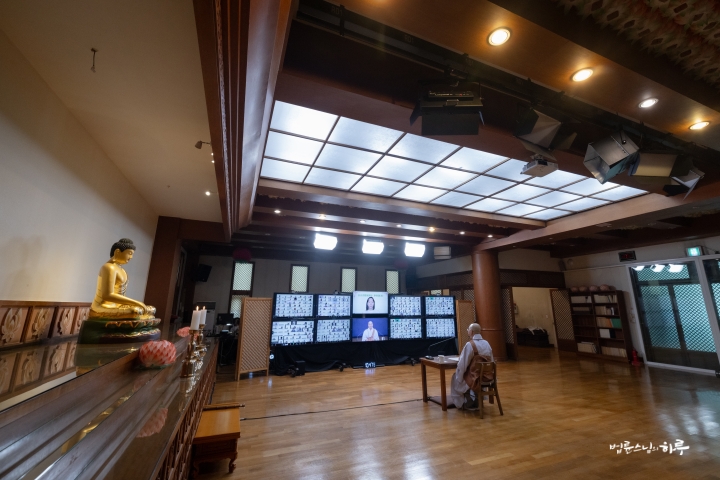
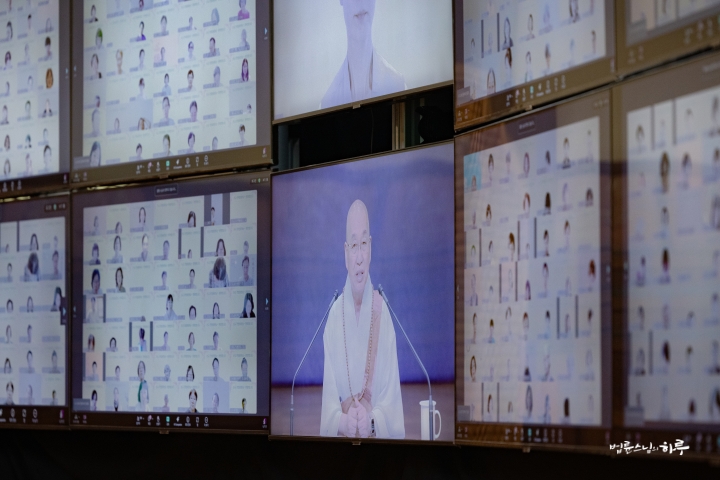
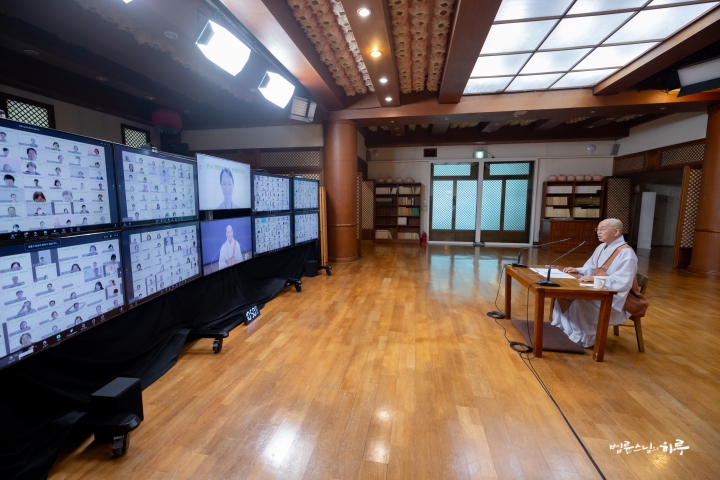
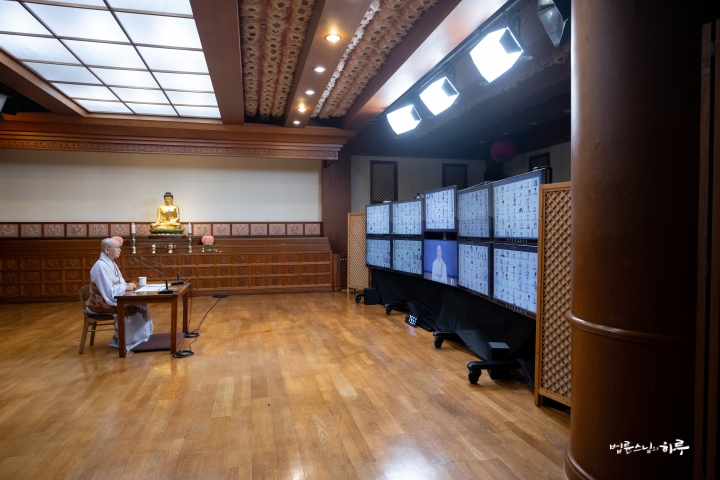
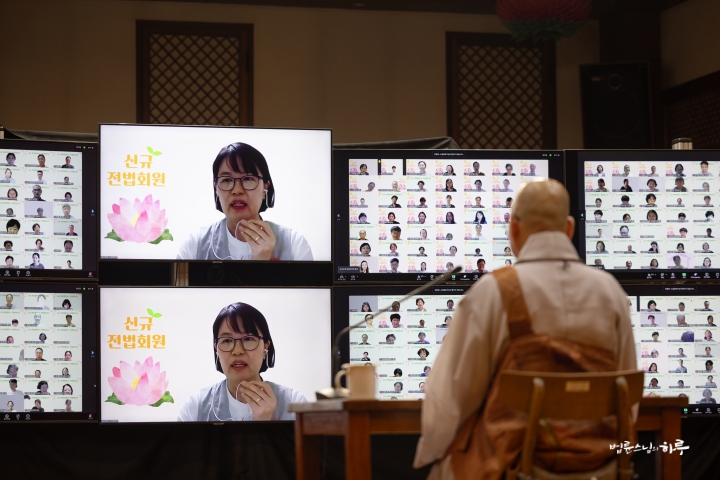
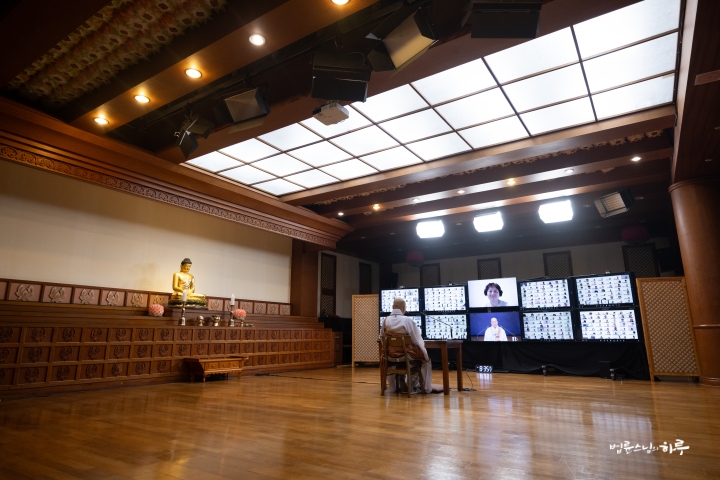
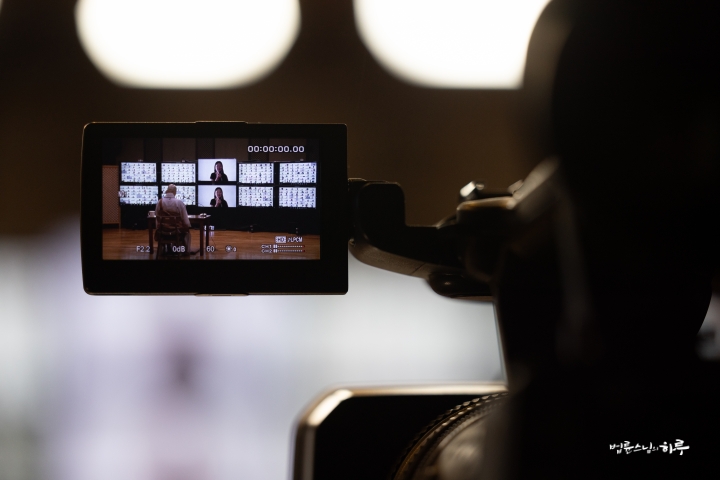
At 10 AM, the Leading Members’ Dharma Assembly began with a live broadcast from the Seoul Jungto Center broadcasting room. After the Three Refuges and Heart Sutra recitation, President Jeon Hae-jong of Jungto Society first presented the results of the national business regular meeting, followed by a welcoming ceremony for new leading members.
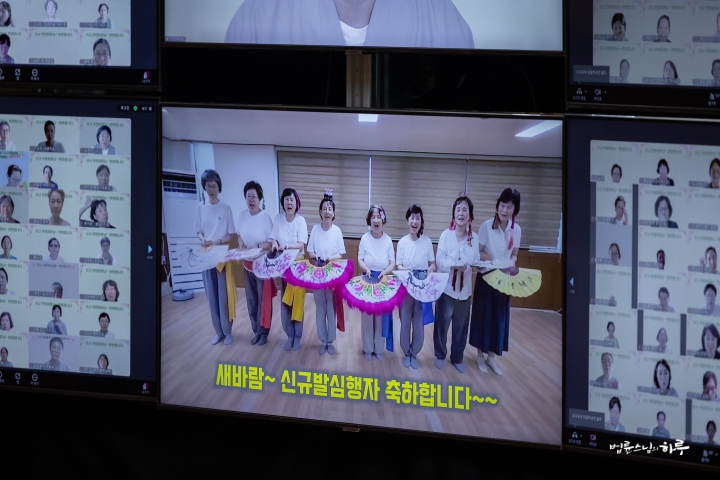
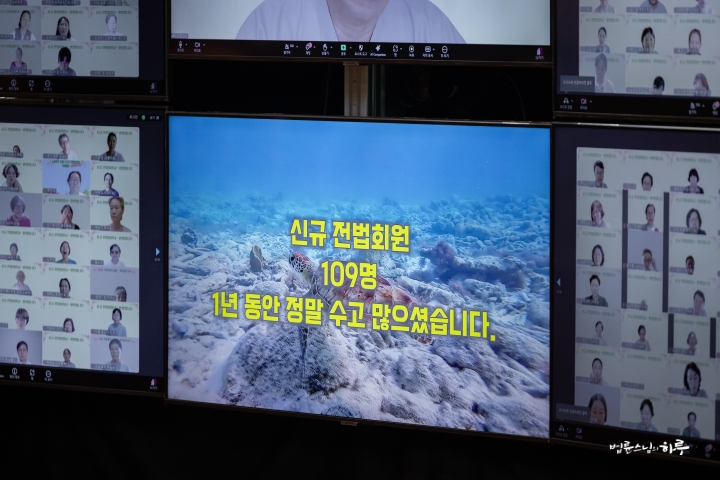
When a video introducing the 109 new leading members was shown, everyone applauded loudly to express their congratulations.
Next, representing the new leading members, Kim Mi-seung from the Suseong Branch of the Daegu-Gyeongbuk Division shared her reflections on the past year of training.
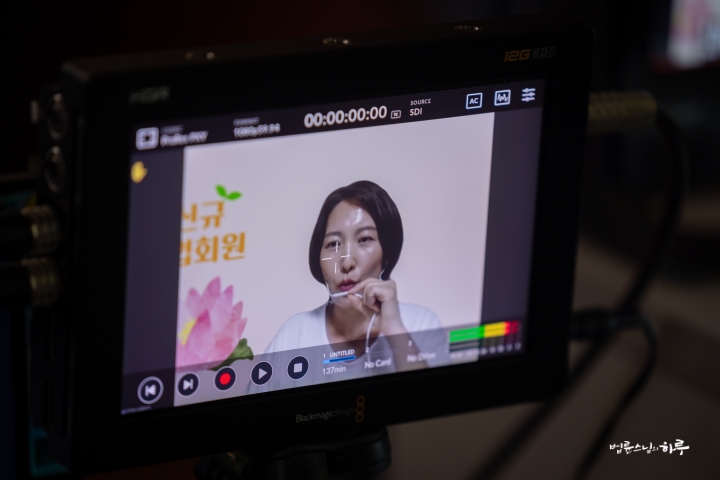
“In the spring of 2023, I was diagnosed with severe osteoporosis at an orthopedic clinic. Wondering why my body had become like this at such a young age, I thought deeply and ended up directing all my arrows of resentment at my husband. Wanting to eliminate my suffering, I enrolled in Jungto Dharma School. After attending the Awakening Retreat and realizing that everything originated from myself, my hatred toward my husband disappeared. When I tried to do three prostrations to my husband with a heart of repentance and gratitude, he said he would also do three prostrations to me, so we began doing three prostrations together every morning. Recently, when I was retested for osteoporosis, the results came back in the normal range. I believe my health has recovered because I start each day with prayer, grateful to my family and neighbors, and live according to the Buddha’s teachings. Just as I, who used to live struggling while following my desires, have become free and comfortable after encountering the Buddha’s Dharma, I hope my neighbors can also become happy. I think I now understand what fellow practitioners mean when they say that responsibilities are blessings.”
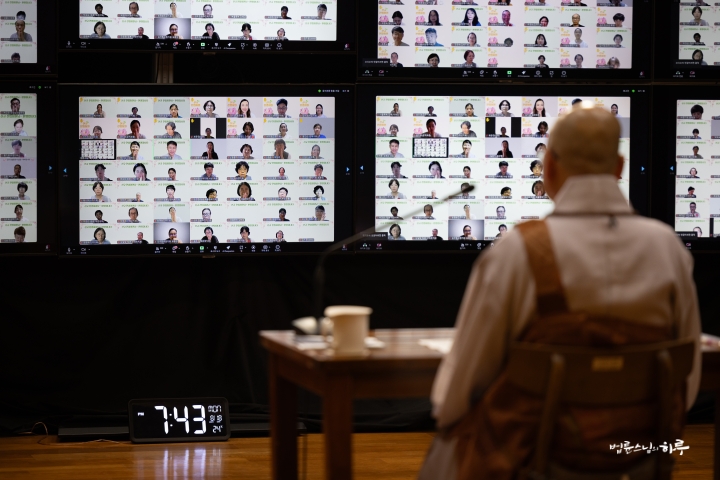
With all leading members joining the video conference, they requested a Dharma talk with three prostrations. Sunim welcomed the new leading members and shared news about the Youth Camp held over the past weekend. He also urged the leading members to show great interest in the upcoming Youth Festa scheduled for November.
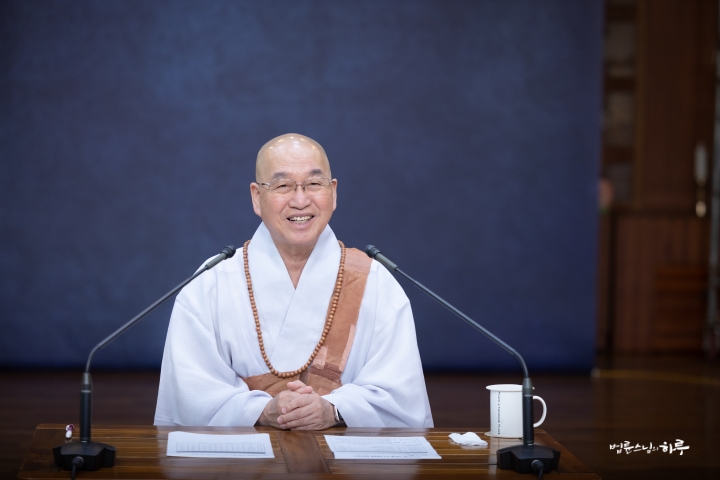
Youth, Come Out into the World! A Festival of Hope and Courage – ‘Youth Festa’
The Special Youth Division is preparing a ‘Youth Festa’ event in early November, utilizing the entire Jungto Social and Cultural Center for a 3-day, 2-night program. This event aims to help young people have dreams, hope, and courage. For young people who are secluded in their rooms, it will be an opportunity to come out into the world; for those with emotional wounds, it will be a chance for healing; and for those interested only in personal problems, it will broaden their perspectives to society, nation, country, and the world. The purpose of holding the Youth Festa is to provide young people in frustration and despair with an opportunity to gain hope and courage. Since renting an external venue from the start would be expensive and overwhelming to prepare, we plan to maximize the use of the Jungto Social and Cultural Center. Any young person can participate. We’re preparing various lectures, booths, and seminars in a format where participants can listen to, see, and participate in whatever they want. That’s why we’ve named the event ‘Youth Festa.’ Jungto Society has abundant human resources and content. We have ‘JTS’ conducting global relief activities, ‘The Peace Foundation’ working for peace on the Korean Peninsula, ‘Good Friends’ helping North Korean refugees, and ‘Eco Buddha’ conducting environmental practice movements, among various other activities. We also offer meditation, which many young people are very interested in these days. There are also training programs like the ‘Awakening Retreat’ and ‘Sharing Retreat’ held at Mungyeong Jungto Retreat Center. Few organizations domestically or internationally have as diverse content as Jungto Society. We can also utilize the space called ‘Jungto Social and Cultural Center.’ By mobilizing all of Jungto Society’s material assets and human resources, we aim to create an event with rich content while keeping costs low.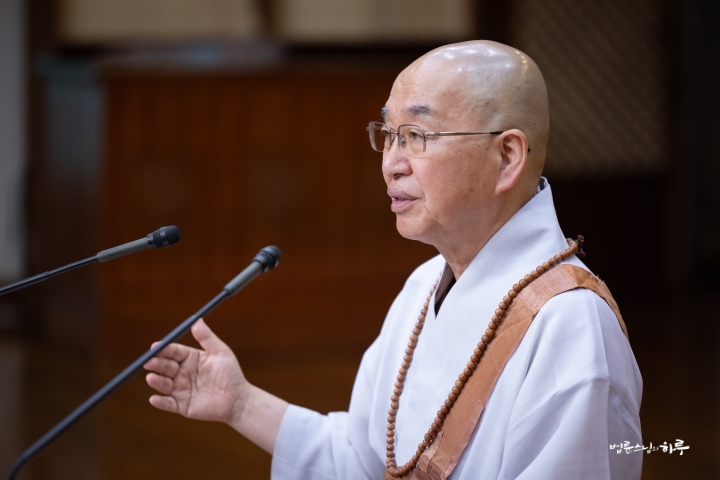
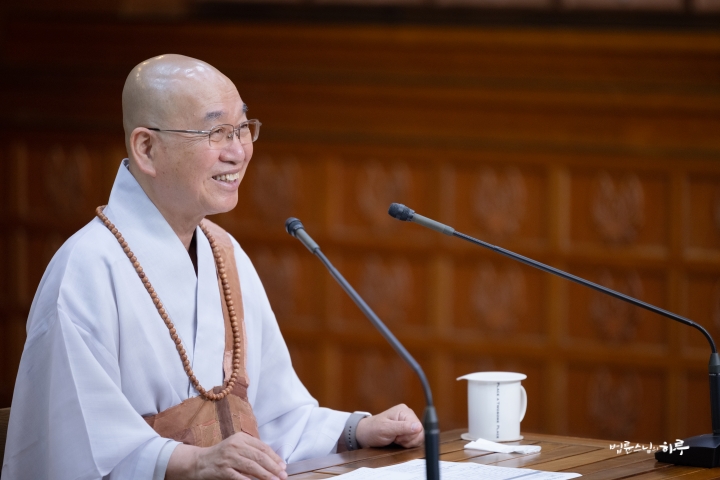
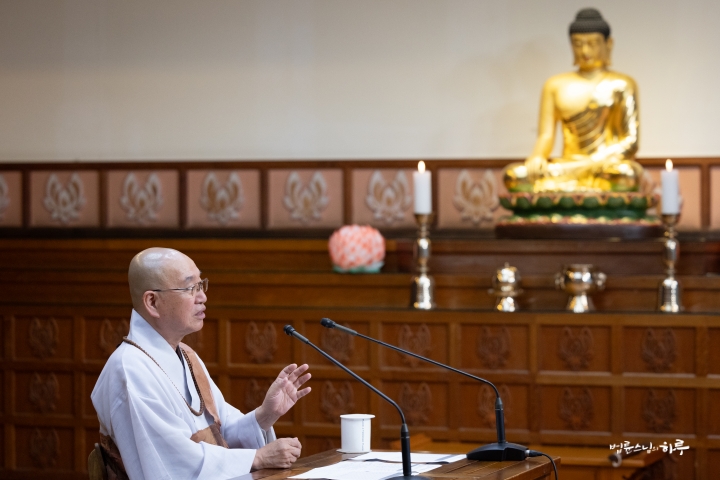
Next, Sunim received questions about difficulties experienced during activities. Three people pressed the hand-raising button and had conversations with Sunim. One of them asked for Sunim’s advice on what to do about feeling heavy and burdened whenever taking on responsibilities.
What Should I Do When I Take on Responsibilities and Only Feel Burdened?
“I received my Balsim Practitioner precepts last August and this year took on the roles of weekday class group facilitator and Sutra Course co-facilitator. I didn’t take on these roles out of enthusiasm, but because I felt I had no other choice. I think that since it was a voluntary choice, I should bear the responsibility and weight that comes with it, but on the other hand, selfish thoughts like ‘Why me?’ also arise. I’m not the kind of person who easily adjusts to what’s expected of me, I can’t even do things I don’t want to do lightly. I was worried that if I kept pushing myself until burnout or illness, I might end up leaving Jungto Society. But I want to walk with Jungto Society lightly for a long time. When I’m offered a role, I keep wanting to step back because I want to take on lighter roles with less responsibility. I’m curious about what criteria and perspective I should use when deciding on roles offered to me, and what attitude I should have when taking them on.”
“If you weren’t a leading member, that would be one thing, but you’re already a leading member, but you’re asking questions as if you’re not one – how can you do that? Aren’t you embarrassed? Still, you speak quite boldly. (laughter)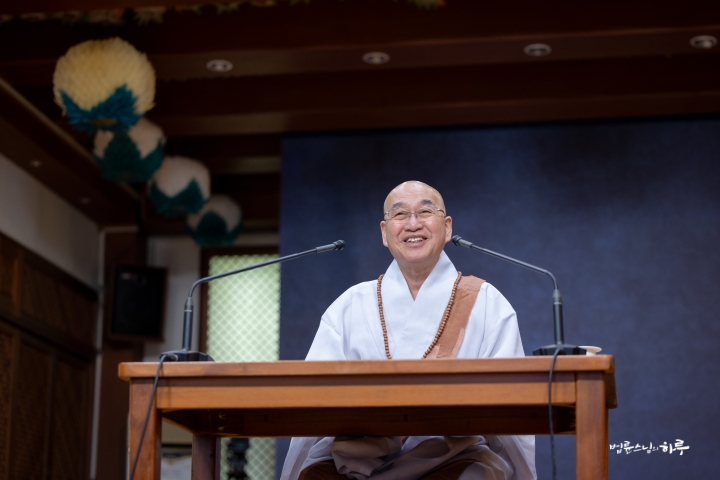
“My goal is to be active throughout the 30 years of the Second 10,000-Day Practice. So I won’t completely stop coming to Jungto Society, but I have a desire to take on lighter responsibilities with less accountability.”
“There’s no such thing as a light responsibility with less accountability. Having responsibility is what makes it a duty. Light work without responsibility is voluntary service done by general members. Even general members, when they take on responsible volunteer work, must fulfill that responsibility completely. Since you’ve already become a leading member, why not give it a try? If it really doesn’t work out, you can become a general member and do responsible volunteer work. If that’s still burdensome, you can do voluntary service. Most people climb up step by step from the bottom, but you’re starting from the top and working your way down if needed. Going down is easier than going up. Since you’ve already become a leading member, I think it would be good to give it a try. If you keep thinking ‘I don’t like this,’ ‘It’s hard,’ ‘Why am I doing this?’ there’s no end to it. The most important thing is to let go and just do it. Doing this kind of work isn’t life-threatening, you won’t get in trouble for it, and it’s not like being deceived by a cult where you have to donate all your money to Jungto Society. If someone wants to donate their entire fortune to Jungto Society, we send them back. We only accept it after confirming that all family members have agreed. So for now, I think it would be good to try and see how far you can go.”“Thank you.”
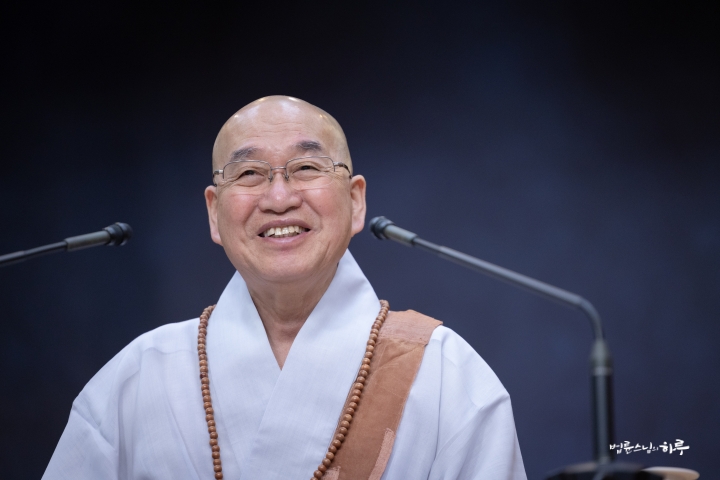
Questions continued one after another. By the time the dialogue ended, it was almost noon.

A guest had come to see Sunim, so he immediately left the broadcasting room and headed to the Jungto Social and Cultural Center. He had lunch with the guest while having a conversation. In the afternoon, another guest arrived, and he had back-to-back meetings.
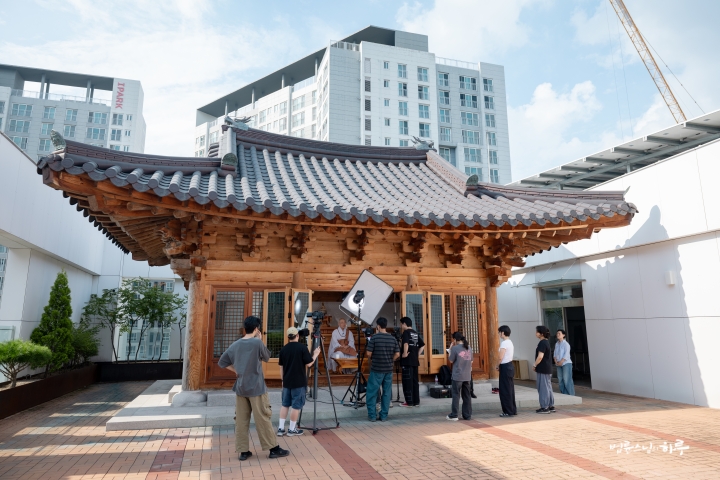
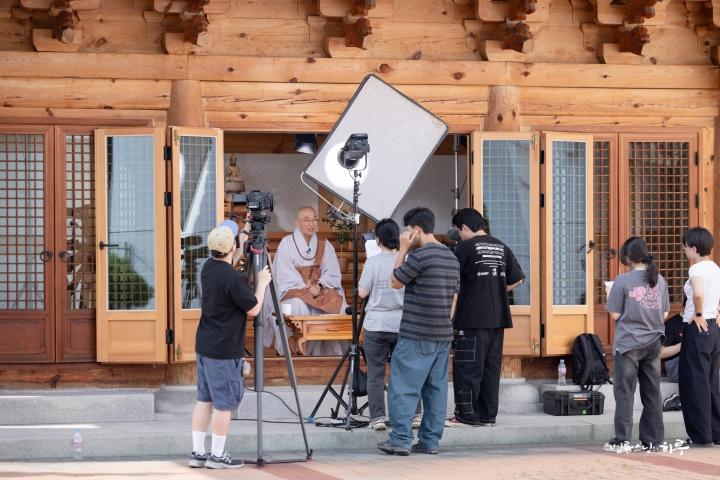
At 4 PM, representatives from the exhibition company for the Baek Yongseong Memorial Hall at Jangsu Jukrimjeongsa Temple came to visit Sunim. They came to prepare oral history materials to be displayed inside the memorial hall. After greeting Sunim, the company representatives set up their prepared cameras and lighting on the 15th floor rooftop Dharma hall. Once the filming preparations were complete, Sunim calmly took his seat and began sharing stories on various topics.
Sunim spoke in detail about many unknown episodes from Master Yongseong’s key independence movement activities, including his proposal to raise the Taegeukgi flag during the March 1st Movement, his guidance in transforming the Korean Empire restoration movement into the establishment of the Republic of Korea, his influence in adopting “Republic of Korea” as the country’s name, and his support for the Shanghai Provisional Government and dispatch of Yun Bong-gil to Shanghai.
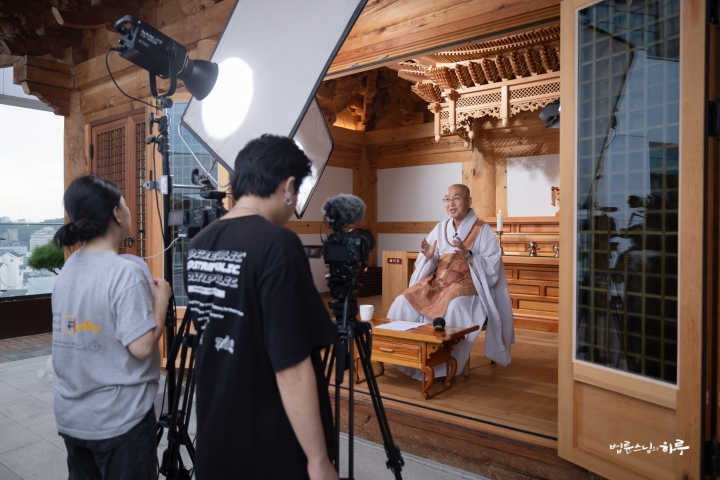
During the interview, the exhibition company representatives were curious about why Master Yongseong’s independence movement activities were not well known to the world. Sunim answered.
“What is the main reason why Master Yongseong’s independence movement records are not properly known?”
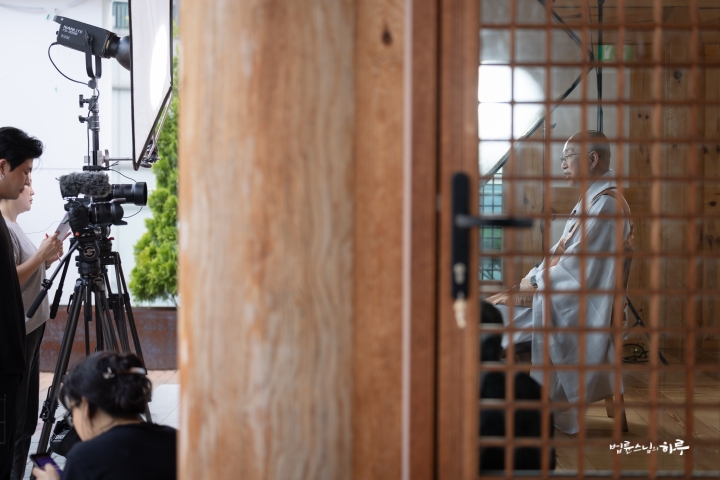
Why Manhae Is Remembered While Master Yongseong Is Forgotten
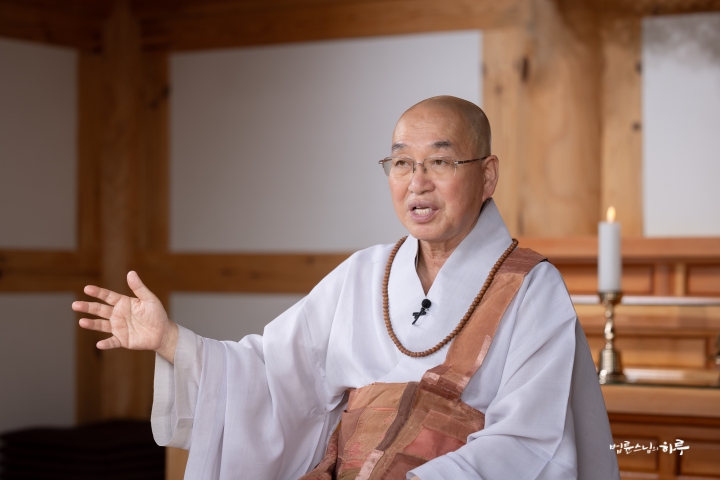
In contrast, Venerable Manhae Han Yong-un became widely known through poets and social activists. It wasn’t the Buddhist community that promoted him. Rather, the Buddhist community even rejected Han Yong-un because he had married. Nevertheless, Han Yong-un became widely known in society through social activists, while Master Yongseong never had the opportunity to be properly recognized by society. The actual roles that Master Yongseong played—signing the March 1st Declaration of Independence as a representative of the Buddhist community, providing substantial support not only to the Provisional Government in Shanghai but also to the armed independence movement in Manchuria—these many accomplishments have not been well known to the world until now.”After an hour-long interview, the interviewer asked for final words of advice for the people who will live in the future. Sunim specifically explained what it means for us to inherit Master Yongseong’s will.
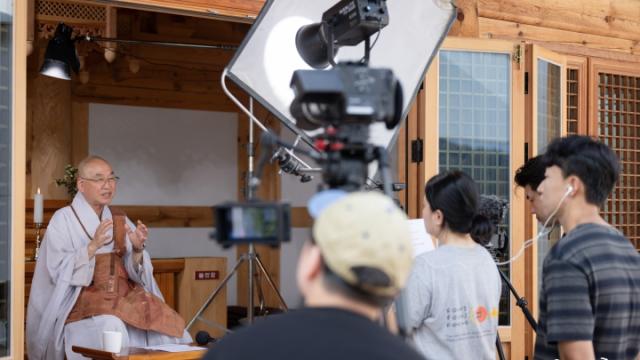
“Do you have any words about Master Yongseong’s achievements for our descendants who will open a new civilization a hundred or thousand years from now? Please tell us why we should remember Master Yongseong and carry on his will.”
“The era in which Master Yongseong lived was a dark period of chaos. When he was born, the Joseon Dynasty was collapsing with popular uprisings occurring throughout the country. In his youth, foreign powers invaded and the Donghak Revolution broke out. In the latter half of his life, the country was lost to Japan, and he resisted the brutal oppression of Japanese imperialism until he passed away without seeing liberation. Even in such dark times, he never lost hope and consistently worked for the independence of the nation, which was the task of the era, and as a monk, he devoted himself to establishing the correct Dharma of Buddhism. If we inherit this spirit today, what would be our tasks of this era?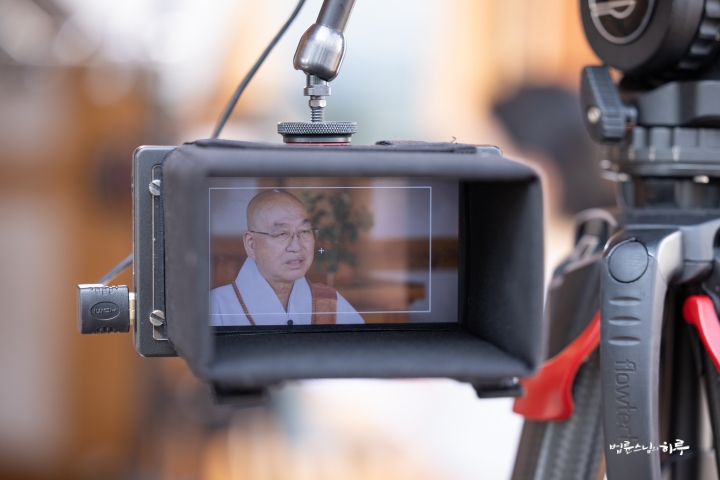
Master Yongseong’s Will Leading to Peace, Unification, and Healing Humanity’s Hearts
First, it is peace on the Korean Peninsula. The democracy, economic growth, and Korean Wave that we have cultivated over the past decades would all disappear overnight if war breaks out. Therefore, it is most important to maintain peace so that war never occurs. True liberation does not stop at recovering our lost nation but includes building a democratic country where the people are the masters and unifying our country that was divided by foreign powers. Therefore, achieving peace, unification, and a democratic society is the way to inherit Master Yongseong’s legacy in our time. Second, not only Korean people but people all over the world are experiencing mental confusion. In the past, hunger and disease were the causes of suffering, but now many people suffer from stress even amid abundance. The path to healing wounded hearts lies in the Buddha’s Dharma, which helps people realize their own ignorance and become free from suffering. This can be said to be the best medicine for all humanity, transcending any particular religion. Therefore, it is important to spread the Buddha’s correct Dharma throughout the world. Enabling people of other religions and those without religion to learn this Dharma and attain peace of mind by transcending religious forms and boundaries—that is, the activity of sharing this wonderful Dharma with humanity—is the way to inherit Master Yongseong’s legacy.”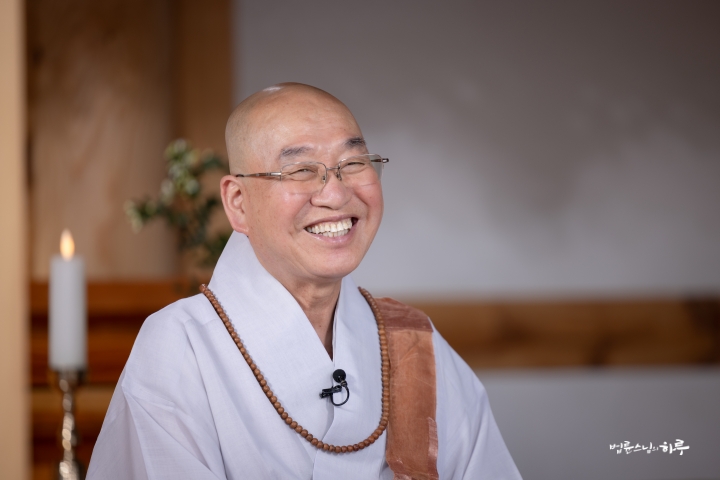
After encouraging the exhibition company staff who had worked hard on the filming, Sunim concluded the interview.
As the sun set, at 7:30 PM, the evening session of the Leading Members’ Dharma Assembly began with leading members joining the video conference.
Like the morning assembly, new leading members were introduced and welcomed. When the video introducing the new leading members was shown, everyone applauded enthusiastically to express their congratulations.
Next, representing the new leading members, Han Bong-hwa from the East Gwangju Chapter of the Gwangju-Jeolla Division shared her reflections from the past year of training.
“My journey to Buddhism didn’t begin from a desperate need. It started when I casually picked up a Jungto Buddhism Course brochure from a colleague’s bookshelf. When she asked, ‘Would you like to try studying Buddhism?’ I answered without hesitation, ‘Sure, why not?’ The mindful sharing sessions in the Buddhism Course were the most unfamiliar to me. It was then that I first realized I had never truly looked into my own heart for over 50 years. The most challenging part was the 5 AM group practice. I insisted on practicing alone, using my work schedule as an excuse, but at the Awakening Retreat, I clearly realized it was just an excuse. Since then, I’ve been reborn as a true practitioner by starting each day with the 5 AM practice. My husband complained as my Jungto activities increased. At first, I wanted to argue back, but then I realized he might feel that way from his perspective. So I expressed my love by preparing an extra side dish for dinner and preparing his favorite snacks after morning practice. Now, while he still calls it a ‘cult’ with his words, a smile spreads across his face. Now, having received the precepts, I stand at the starting line as a leading member. Though I’m inexperienced and afraid, I will say ‘yes’ to whatever responsibility is given to me. Looking back, it was a short time, but my life is clearly divided into before and after meeting Jungto Society. I aspire to live as a mosaic Buddha, practicing mindfulness, generosity, and service.”
Listening to the story of overcoming various difficulties, everyone hoped and cheered for her to continue with today’s initial aspiration.
Next, everyone requested a Dharma talk from Sunim with three prostrations. Sunim welcomed the new leading members and briefly introduced Jungto Society’s schedule for the second half of the year before beginning the Dharma Q&A.
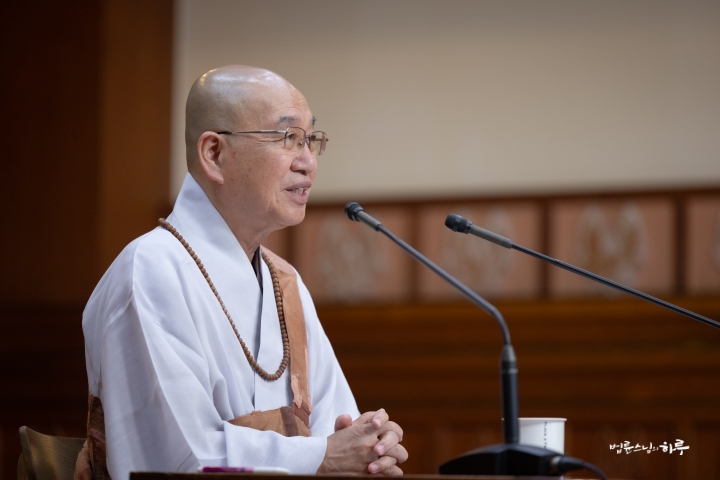
For one hour, five people pressed the hand-raising button and had conversations with Sunim. One of them sought Sunim’s advice on how to actively fulfill their role without being attached to results.
How Can I Fulfill My Responsibilities Without Being Attached to Results?
“I’m currently serving as a Jungto Buddhism Course class facilitator. I’m a bit confused about whether my active encouragement of students to enroll in the Buddhism Course, join the 1000-Day Practice, graduate, and advance to the Sutra Course comes from a sense of responsibility or attachment to results. What mindset should I have to actively fulfill my role without being attached to results?”
“Don’t you know your own mind best? Most people believe they’re acting out of responsibility when they encourage others, only to realize later that they were actually driven by attachment to results. The opposite case—thinking you’re acting out of attachment but discovering it was actually responsibility—is very rare. In other words, you might have the realization ‘I thought I was good, but I’m not,’ but rarely ‘I thought I was bad, but I’m actually quite good.’ If you’re confused about whether it’s responsibility or attachment to results, you don’t need to ask me. Just recognize, ‘I’m too attached to results.’ So when might someone not realize something themselves but come to understand their attachment after asking Sunim? It’s when someone says, ‘I fulfilled my duties solely for their benefit without any attachment,’ and Sunim points out, ‘Actually, there’s an attachment to achieving results underlying your mind,’ leading to their awakening. But right now, you already know you have a lot of attachment without needing me to tell you. Are you perhaps hoping I’ll say, ‘No, that’s not attachment, it’s responsibility’?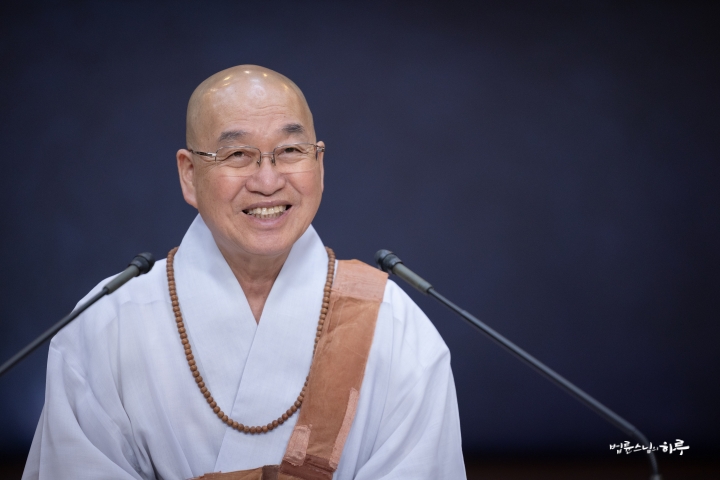
“Thank you. I understand well.”
Questions continued to follow.
When the Sutra Course content gets to about the middle, it seems to change to Buddhist history classes, and students find it a bit boring. It would be good if it could include content about mind practice as well.
As Jungto Society’s offline activities and SNS activities increase, related inquiries come to the call center. However, there’s difficulty in responding because there’s no information or advance sharing about related events or work.
Among Dharma School students, some are leaving because they feel the main temple practice activities are too religious. How should we guide them?
When meditating, my breathing is rough, so I intentionally tried to make it comfortable. Is that okay? Don’t we need a plan to recruit Dharma School students through K-meditation?
After finishing the conversation, it was well past 9 PM. The live broadcast ended with the promise of next month’s leading members’ Dharma assembly.
Tomorrow, at the request of Father Kim Hong-jin, Sunim will attend an advisory committee meeting of ‘Dungji,’ an NGO that supports overseas adoptees, and will have consecutive meetings with guests visiting the Peace Foundation.