Dharma Teacher Myohyang, May You Be Reborn in the Pure Land and Return as a Bodhisattva
Aug. 16, 2025. The 49th Day Memorial Service(final rite) for the Late Dharma Teacher Myohyang, Day 2 of Youth Camp
Hello. Today, Sunim attended the 49th day memorial service for the late Dharma Teacher Myohyang, gave a Dharma talk for the repose of the deceased’s soul, and then participated in the second day of the Youth Camp program.
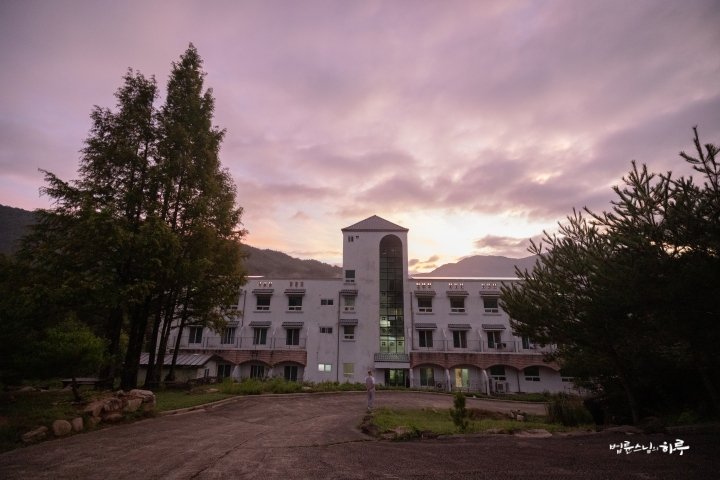
After completing morning practice and meditation, Sunim headed to Mungyeong Jungto Retreat Center to attend the 49th day memorial service for the late Dharma Teacher Myohyang.
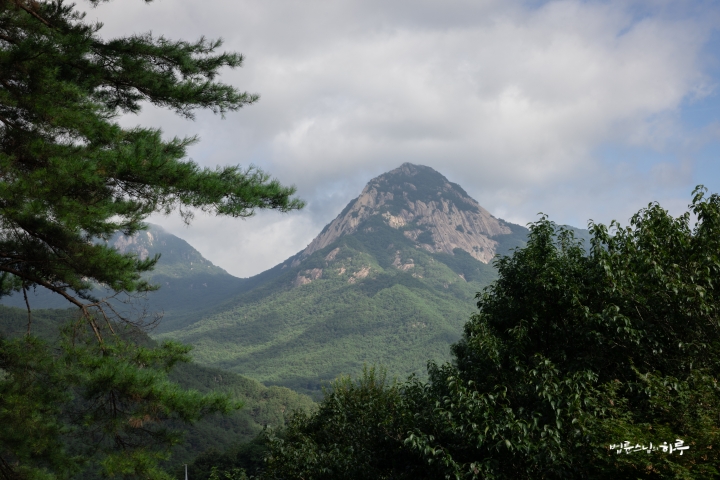
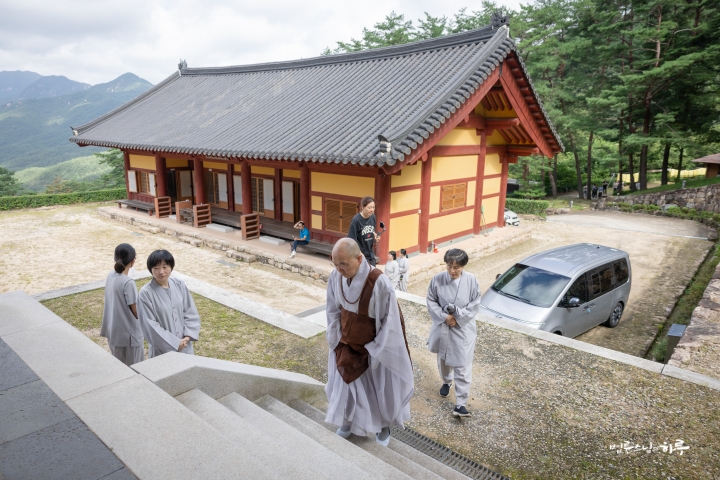
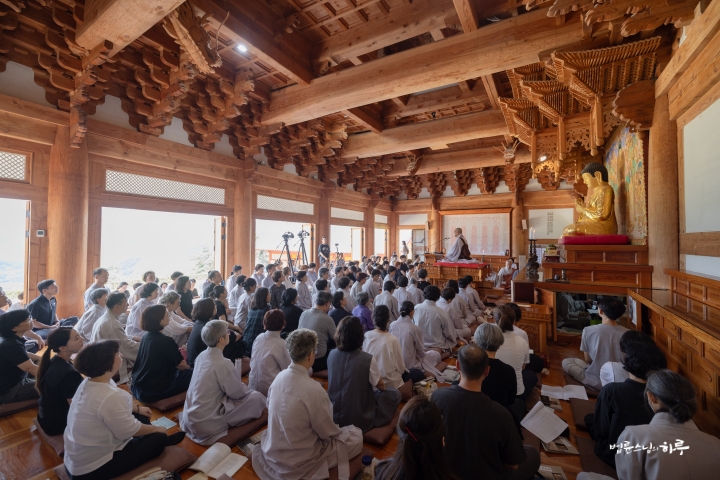
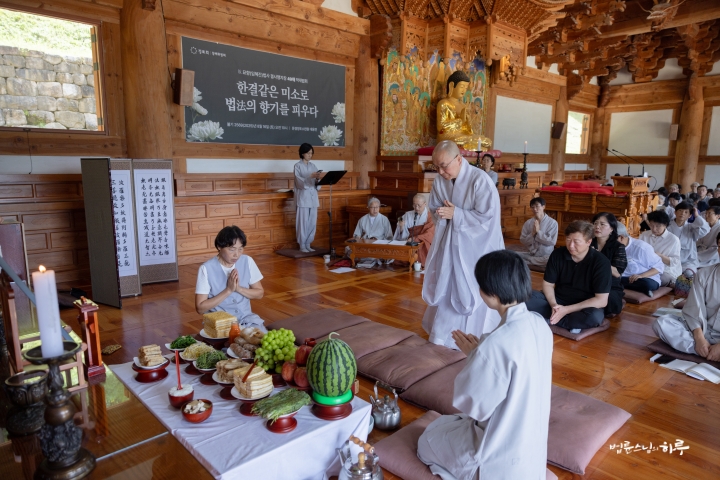
In the main Dharma hall, before conducting the 49th day memorial service, offerings were made to the Buddha at 9 AM, followed by a dedication ceremony.
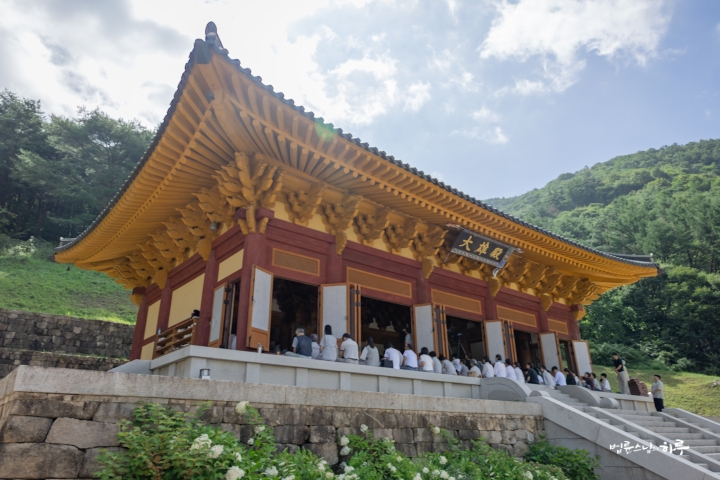
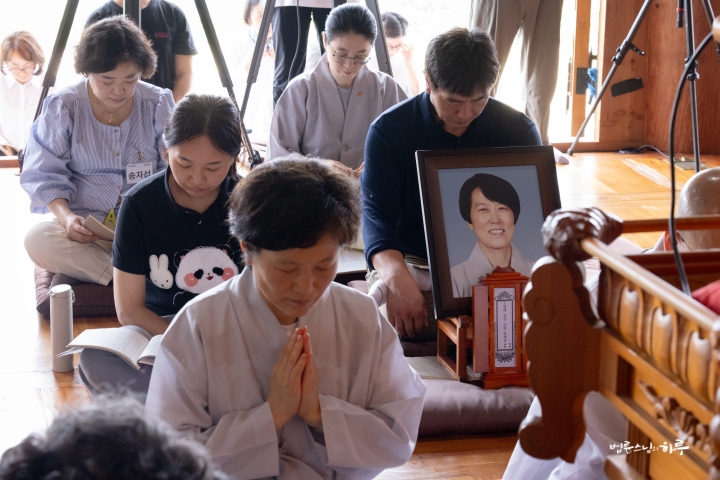
After the dedication ceremony ended, Sunim expressed gratitude to the family members who had traveled from afar early in the morning and shook hands with them.
“Thank you for coming.”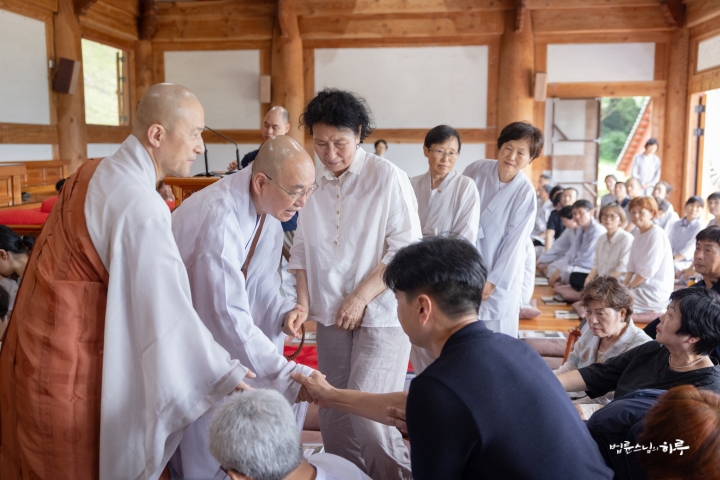
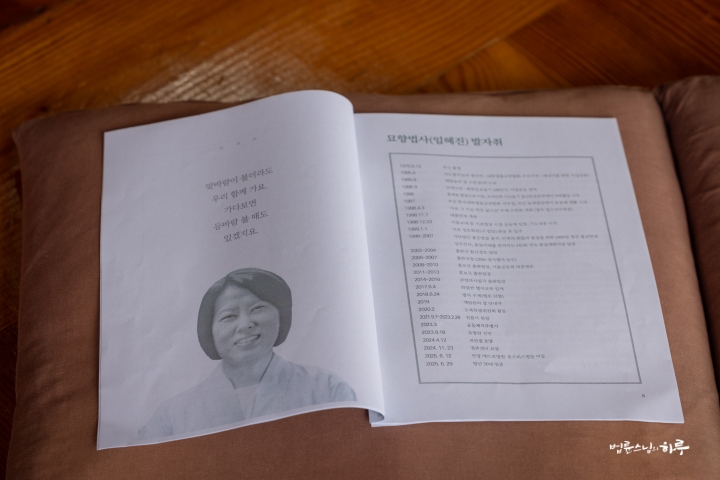
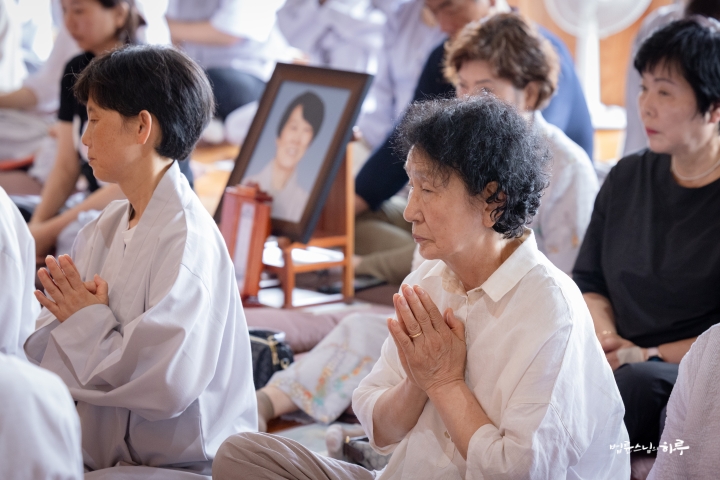
At 10 AM, the 49th day memorial service for the late Dharma Teacher Myohyang (Im Hye-jin, Gyeolsa Practitioner) began. After moving the deceased’s photo to the memorial altar, Dharma Teacher Yeogwang and Mr. Lee Seung-yong offered incense on behalf of the assembly.
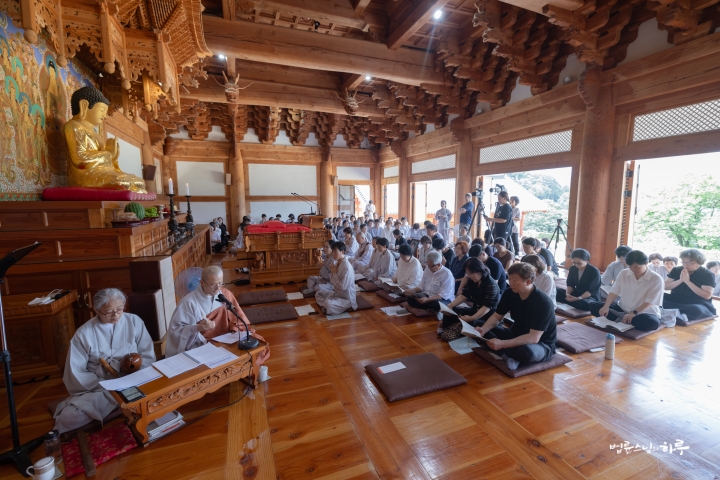
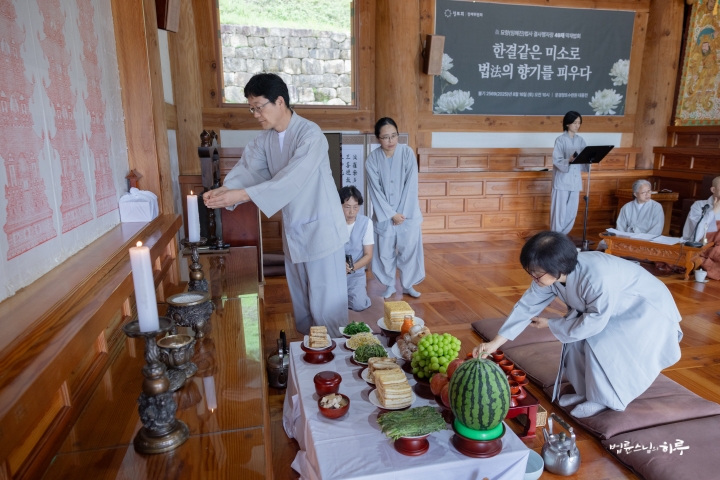
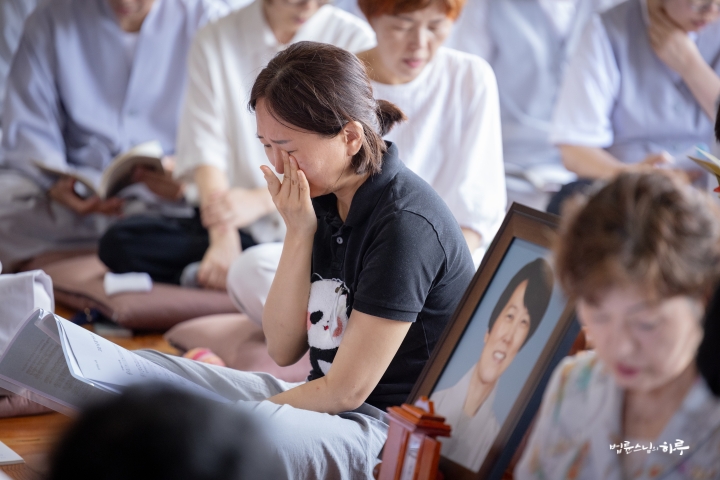
Looking at the memorial photo of her youthful and gentle face brought heartbreaking pain, and her kind smile evoked even deeper longing.
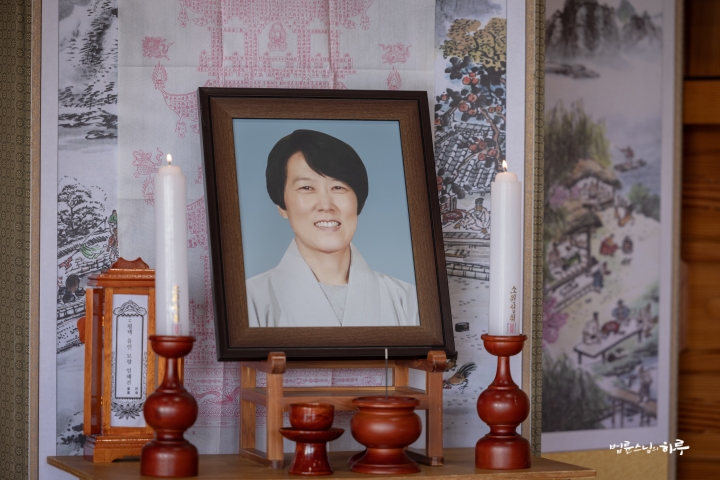
Next, the chief mourner offered tea before the memorial altar and performed three prostrations.
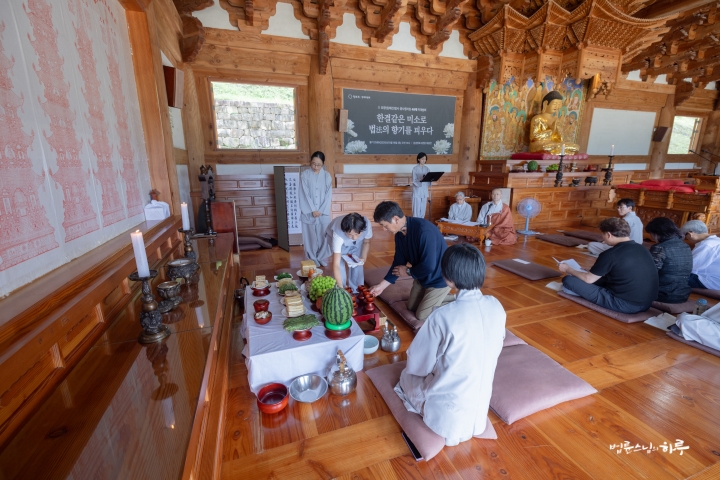
Venerable Yusu then gave welcoming remarks to the assembled participants.
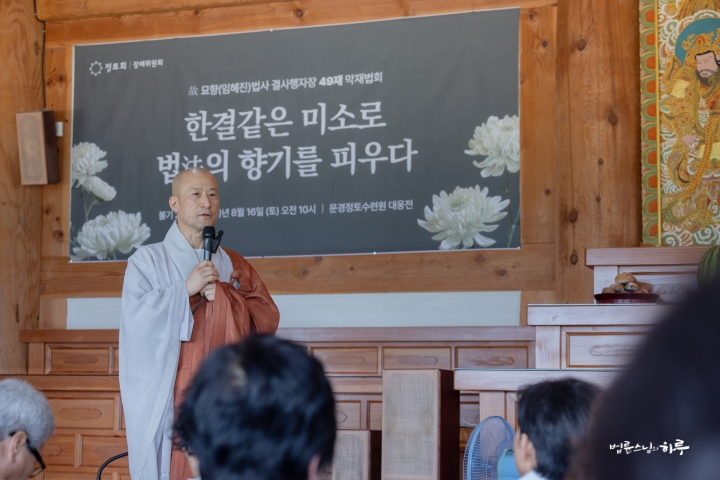
“I welcome the parents, family members, and Jungto practitioners from across the country who have come all the way to this retreat center. Although Dharma Teacher Myohyang has already been reborn in the Pure Land, we are holding this ceremony with our guiding Dharma teacher in accordance with our customs and karmic connections. I hope this ceremony becomes an opportunity to continue the Buddha’s teachings and advance on the path to enlightenment.”
Dharma Teacher Myosu then read aloud a letter written by the deceased during her lifetime.
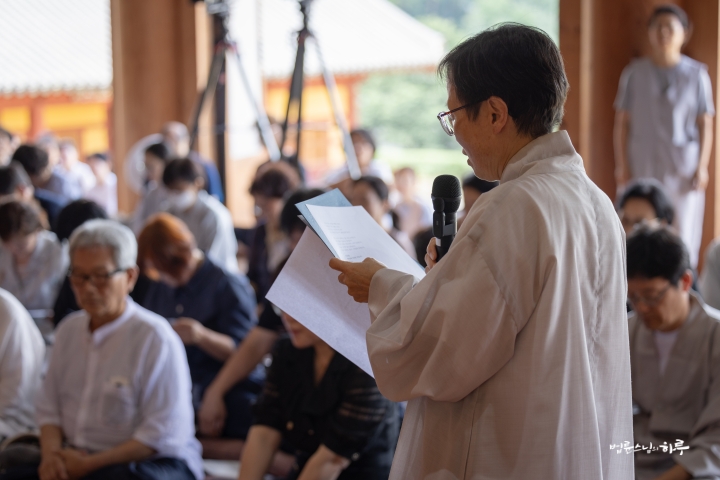
“My life underwent unimaginable changes when I first encountered Buddhism through the Awakening Retreat in 1995. In 1997, I spent a month on the streets collecting signatures for the campaign to help North Korean compatriots, gathering one million signatures. On the day we concluded the campaign, when Venerable Yusu said, ‘There are starving corpses scattered along the banks of the Tumen River that we cannot even retrieve. Who will volunteer to go retrieve the bodies?’ my heart pounded as if it would burst, and I unconsciously raised my hand. That’s how I came to Seoul’s Hongje-dong Jungto Propagation Center to volunteer at the Buddhist Headquarters for Korean National Assistance, and my life became deeply immersed in Jungto Society.
My Second Life That Began Again at Jungto Society
After working with Good Friends and spending the longest time at Jungto Publishing, I wrapped up my duties there and became responsible for ‘A Day in the Life of Sunim.’ The Haengja training I then encountered was another new opportunity in my life. During Haengja training, I could honestly face even my deepest feelings. After receiving Dharma teacher ordination and becoming a facilitator for the Awakening Retreat, I became convinced that it is possible to live without suffering by awakening to truth according to the Buddha’s teachings. Meeting the lives of many people in this way was a precious opportunity to root myself even more deeply in the Buddha, the Dharma, and the Sangha. I hope such opportunities will be given to all fellow practitioners. The title of ‘Dharma Teacher’ attached to my Dharma name is too great for me to bear. However, I feel fortunate just knowing my own inadequacies, and it reminds me to always remain humble.
When I first joined the community, my parents strongly opposed it. But now they say, ‘You’re living the best life,’ and that I’ve become someone they can consult when times are difficult. I’m proud that I can give my parents such trust. On the other hand, I realized that people in the world have nowhere to turn when they have concerns, no one they can trust to ask questions and discuss things with. In that sense, I thought our Jungto Society has much work to do.
The Most Precious Moment Is Right Now, This Very Moment
When I sent a letter expressing my joy at encountering the Buddha’s teachings and gratitude for this grace, Venerable Pomnyun Sunim replied despite his busy schedule.
‘Life is simply being alive here and now. There is nothing we particularly owe. We are merely hands and feet of one body. Everything is the merit we have all created together.’
Keeping Venerable Pomnyun Sunim’s words in mind, I begin again. He said, ‘Happiness is a state without suffering.’ I realized that I had been living in pursuit of something better, unable to face reality and seeking something that doesn’t exist in reality. I understood that the most precious moment in life is not the passion and sincerity I showed in the past, but right now, this very moment. So I place my mind again at the starting line, here and now.
Thank you to the many people who look after me, knowingly or unknowingly. I truly live with the help of all things. I feel anew the grace of my parents and am grateful. Today too, there are countless things to be thankful for. I am grateful that each day begins. With gratitude, Myohyang Boeunhaeng Im Hye-jin.”
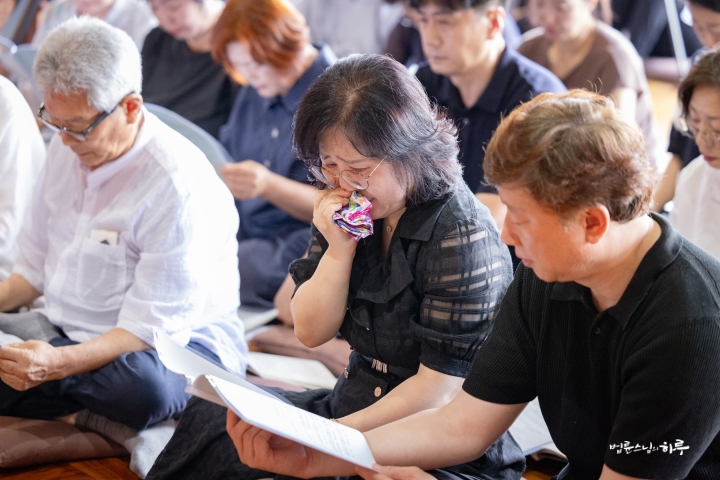
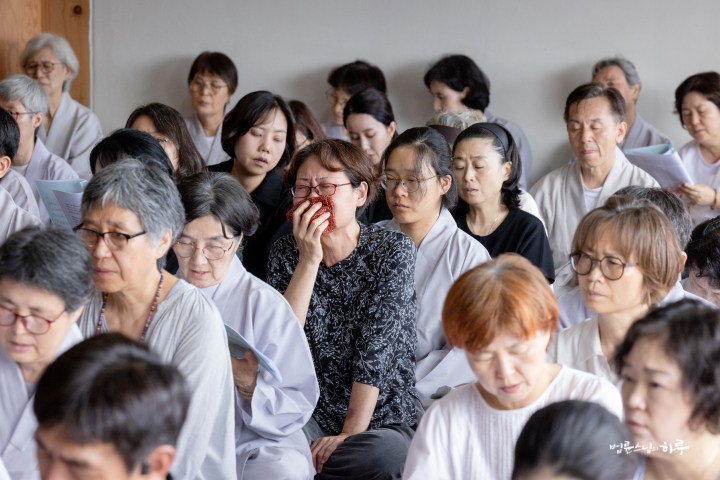
The assembly sang together the song for the repose of souls, “Farewell, Dear One,” praying for the deceased’s rebirth in the Pure Land. Memories shared with Dharma Teacher Myohyang came flooding back, bringing tears to many eyes, as gratitude and longing welled up from deep within their hearts.
Venerable Pomnyun Sunim then gave a Dharma talk for the family members and assembly in attendance.
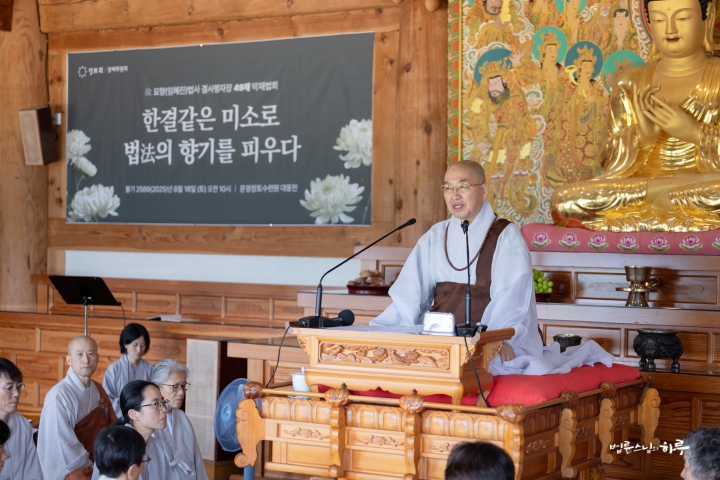
Dharma Teacher Myohyang, Who Devoted Her Entire Life to Those Without Care
From her parents’ perspective, since they raised Dharma Teacher Myohyang when she was a young child, they can only imagine her as that vulnerable little girl, making their grief beyond words. However, from the perspective of the Jungto Society members, she lived steadfastly for over 30 years not as a young child or a foolish person, but as a dedicated activist and Dharma teacher. The sorrow of parting is the same for both family and Jungto Society members. Yet, because the family holds memories from her childhood, their sorrow may be even greater than that of Jungto Society members. While Jungto Society members, fellow practitioners, and Dharma teachers also feel indescribable sorrow, I believe their grief may be somewhat less than the family’s because they remember her dignified and confident presence. This is because they believe she will live well wherever she may be, whether here or elsewhere. As the song we just sang suggests, who among us doesn’t feel the sorrow of parting? The reason so many Jungto Society members gathered here feel such deep affection for Dharma Teacher Myohyang is precisely because she was younger than them. The affection we feel when caring for someone is much stronger than when receiving care. That’s why we have the expression “downward love.” There’s a saying that no matter how much our parents loved us, we bury them in the ground when they die, but when a child dies before their parents, the parents bury them in their hearts. This is because people feel deeper affection when caring for someone. Moreover, childhood memories last longer and are stronger. That’s why the family’s grief is inevitably greater. Among Jungto Society members as well, Dharma Teacher Myohyang’s seniors feel more heartache and affection than her juniors.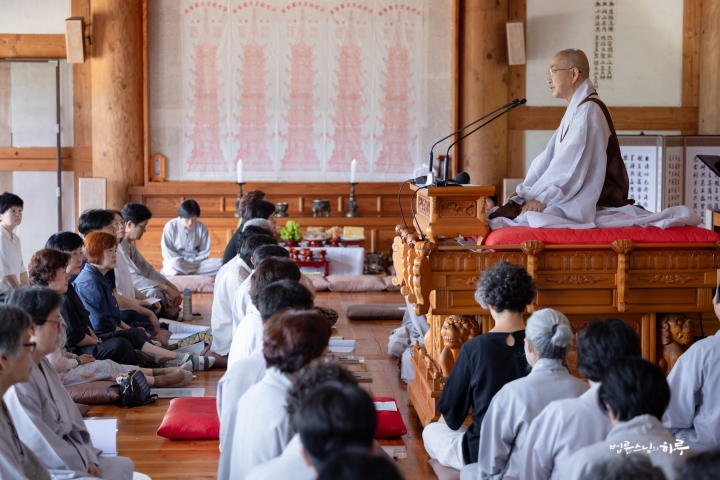
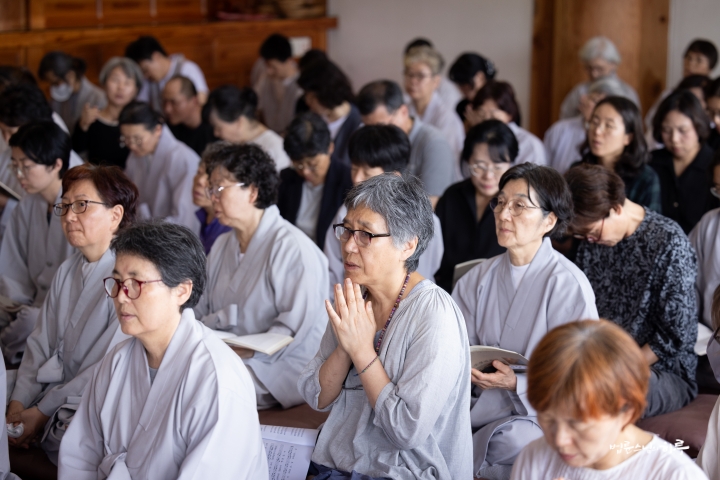
Sunim then gave a Dharma talk for the liberation of the late Dharma Teacher Myohyang, who had passed away.
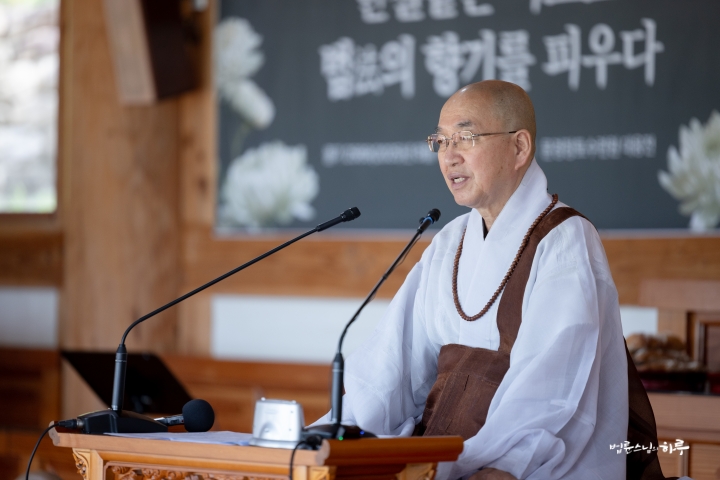
Dharma Teacher Myohyang, May You Be Reborn in the Pure Land and Return as a Bodhisattva
If we become entangled in all the good and bad events and karmic connections while living in this world, the path to liberation will only grow more distant. Today, on the 49th day memorial service, may you break free from these shackles and not only be reborn in the Pure Land as a liberated soul, but also return to this Saha world as a Bodhisattva. Just as when you were alive, you witnessed the North Korean people dying of starvation and disease and participated in Jungto Society activities with great compassion, please abandon the Pure Land and return to this Saha world as a light for all suffering beings. If there remains even the slightest attachment, all the members of the Sangha gathered here will wholeheartedly pray for your passage to the Pure Land. Through the power of this merit, may you surely be reborn in the Pure Land. Today, on the occasion of Dharma Teacher Myohyang’s 49th day memorial service, through the merit of praying for and guiding her rebirth in the Pure Land, may all the karma accumulated over countless lifetimes of the parents, families, friends, and Jungto practitioners gathered here be dissolved, and may they practice the Bodhisattva path life after life. We dedicate the merit of guiding Dharma Teacher Myohyang today to all sentient beings. May all wandering spirits, with or without refuge, follow Dharma Teacher Myohyang and be reborn in the Pure Land.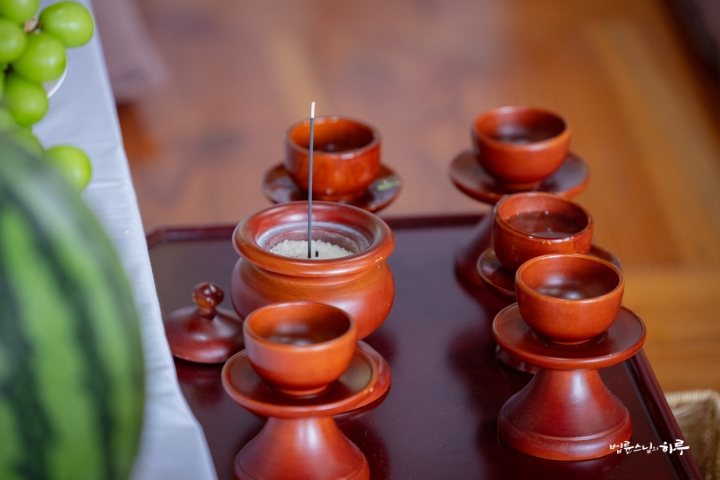
Together, everyone recited the solemn chanting for the memorial service, honoring the deceased’s wishes and praying for their rebirth in the Pure Land.
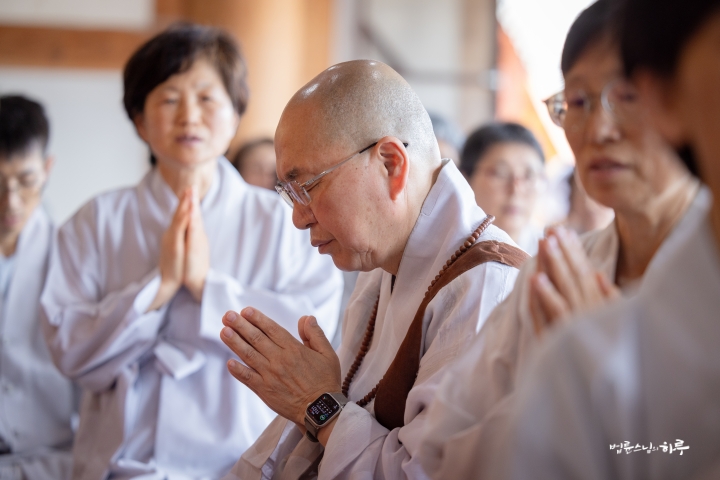
Starting with the bereaved family members offering tea at the altar, Sunim also offered tea for the departed spirit and performed three prostrations. Distinguished guests who wished to offer tea also came forward in turn to pay their respects to the deceased.
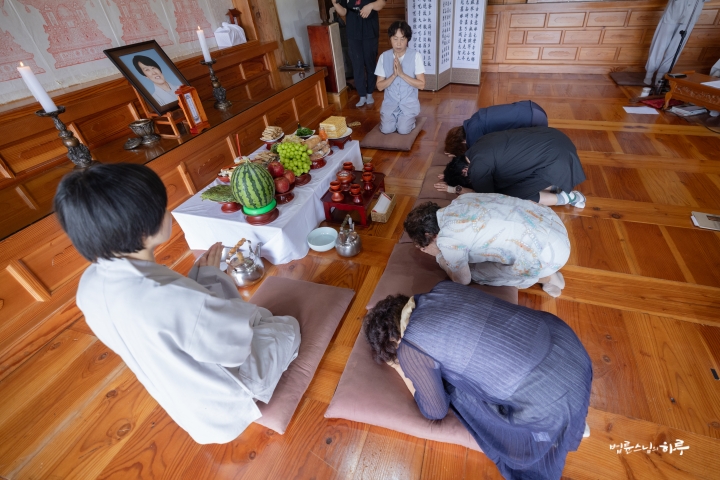
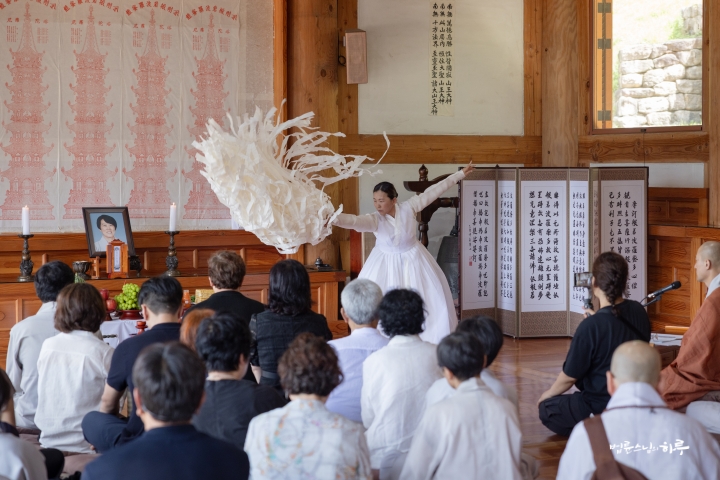
After the solemn chanting ended, a memorial performance honoring the deceased’s wishes followed. The performance was given by Lee Soo-jin, a longtime Dharma friend. Dressed in pure white hanbok, she gracefully waved white salpuri fabric, and as her dance movements unfolded with both gentleness and strength, the Dharma hall was instantly filled with a quiet yet sublime energy. The audience watching the performance carefully controlled even their breathing, sharing feelings of longing and gratitude toward the deceased.
Next, everyone sang together the song “Never Ending Story,” expressing their commitment to never forget the deceased and to carry on their spirit in their lives.
If we long for each other, we’ll meet again someday ♬ Like in a movie, these things will come true. On the difficult days when I couldn’t protect you ♬ You who remain in those beautiful times
Members of the Sangha who had deep connections with the deceased couldn’t hide their overwhelming grief and their eyes reddened with tears.
Finally, representing the bereaved family, Dharma Teacher Myohyang’s father gave a speech.
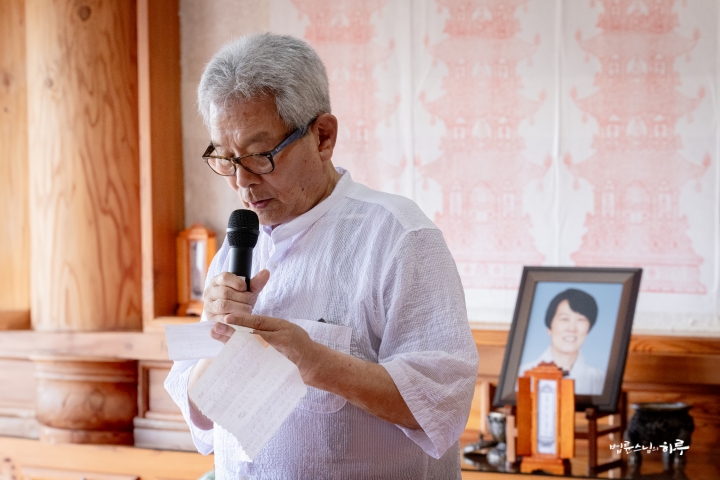
“I am grateful to Venerable Pomnyun Sunim and Venerable Yusu Sunim for taking care of Hyejin for such a long time. At the funeral home, when Jungto Society volunteers told me, ‘We are also Hyejin’s family,’ those words touched me so deeply, and they still remain in my heart. I am even more grateful that so many family members are helping to ease our sorrow.”
The audience was deeply moved and touched by the father’s words, sharing tears together and offering warm applause to convey their comfort and empathy.
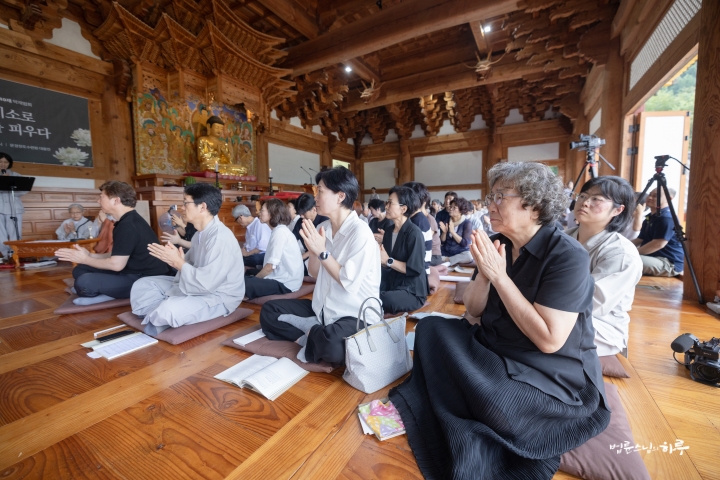
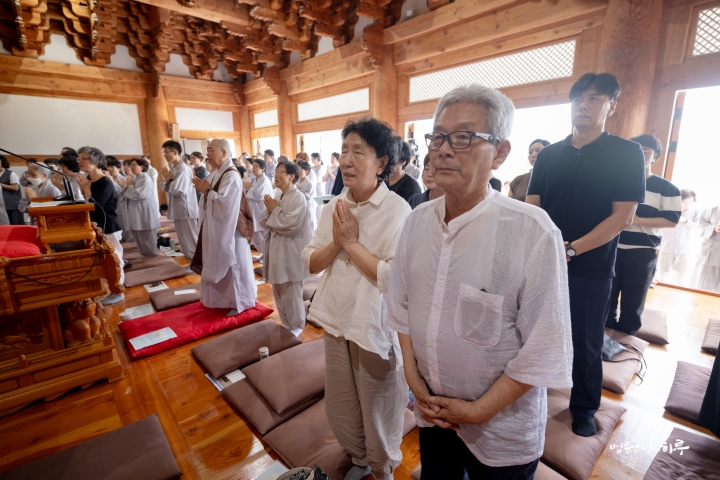
With the Four Great Vows, the 49th-day memorial service for the late Dharma Teacher Myohyang, Lim Hye-jin, came to a close.
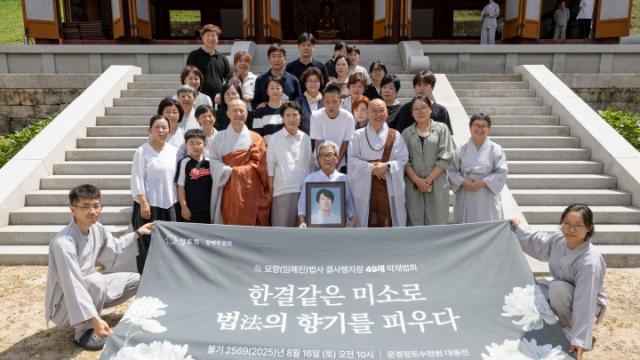
All participants stood in front of the Main Buddha Hall steps to take a commemorative photo. Dharma Teacher Myohyang’s father held the memorial portrait to his chest, with family members standing in the center and Jungto Society Dharma friends lined up behind them. When the expressions of the Sangha members looked too somber, Sunim smiled and said:
“You can smile now.”At Sunim’s words, the Sangha members relaxed their tense faces and smiled at each other. As the camera shutter clicked, everyone shouted out loud the words they had kept in their hearts:
“Dharma Teacher Myohyang, we love you!”
As they bid farewell to Dharma Teacher Myohyang, the Sangha members offered warm smiles to the deceased who remained in each of their hearts.
The Sangha members moved to the main hall for lunch with food and fruit prepared by the retreat center. After exchanging greetings with the Sangha members, Sunim headed to Seonyudong Education and Training Center to attend the Youth Camp.
“I have an event with young people, so I’ll leave first.”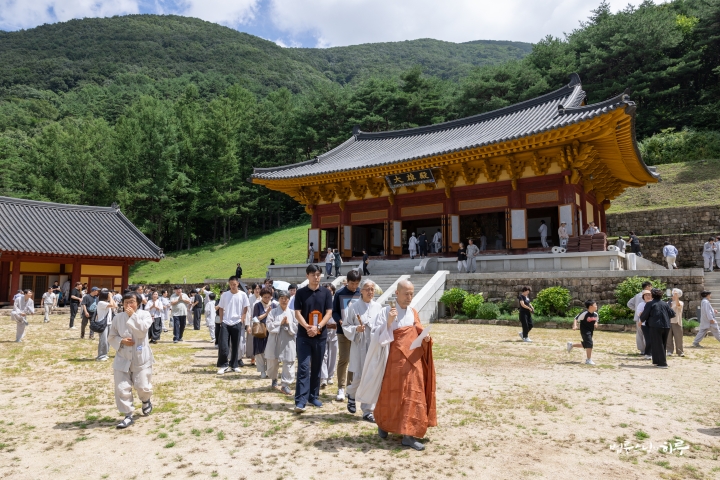
Sunim arrived at Seonyudong Education and Training Center at 12 PM and had lunch. Shortly after, the young people also finished their morning program and arrived at the cafeteria for lunch.
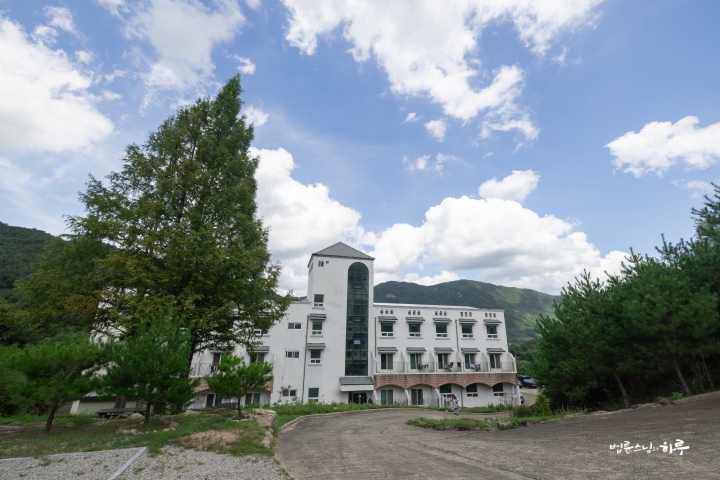
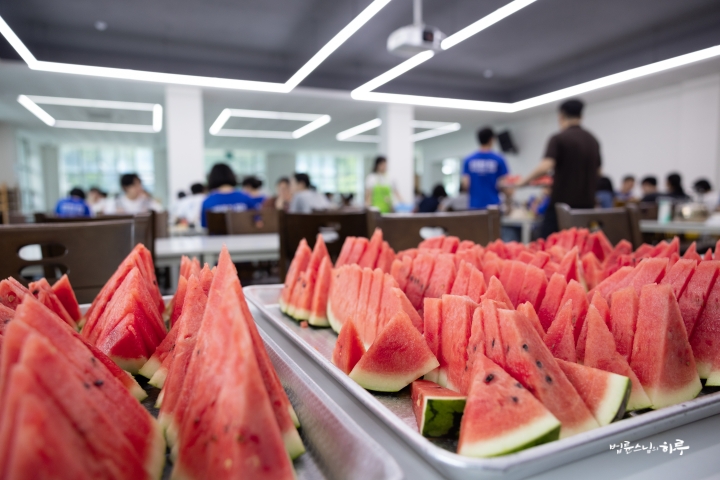
From 1:30 PM, everyone gathered in the main hall for a discussion about the background and purpose of the upcoming “Youth Festa” event scheduled for November. Sunim opened the conversation first.
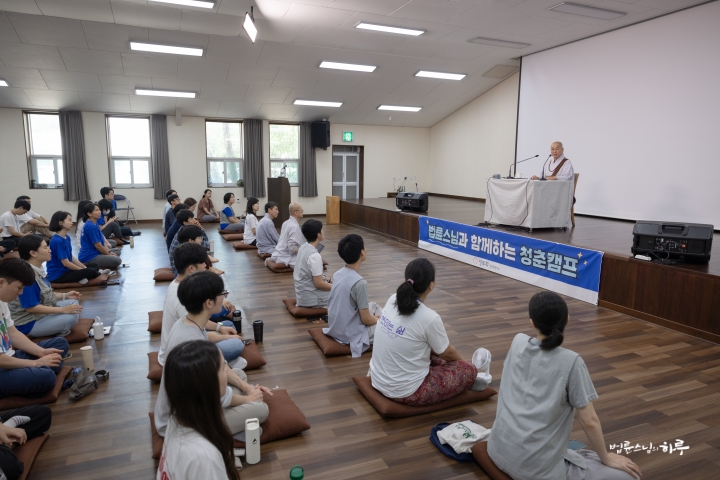
“Yes”
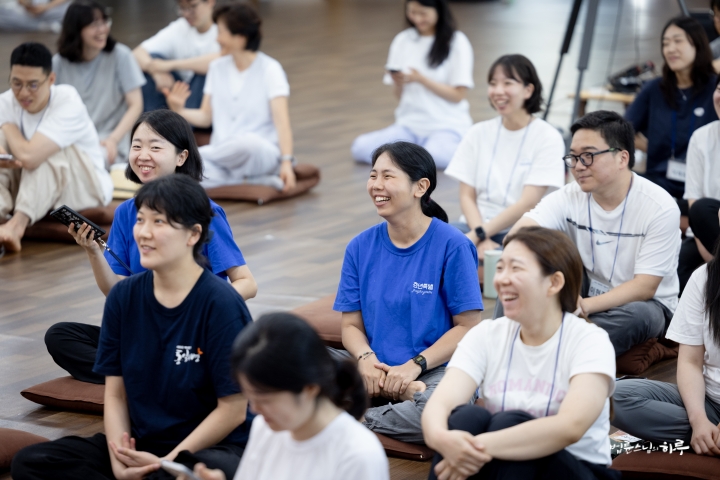
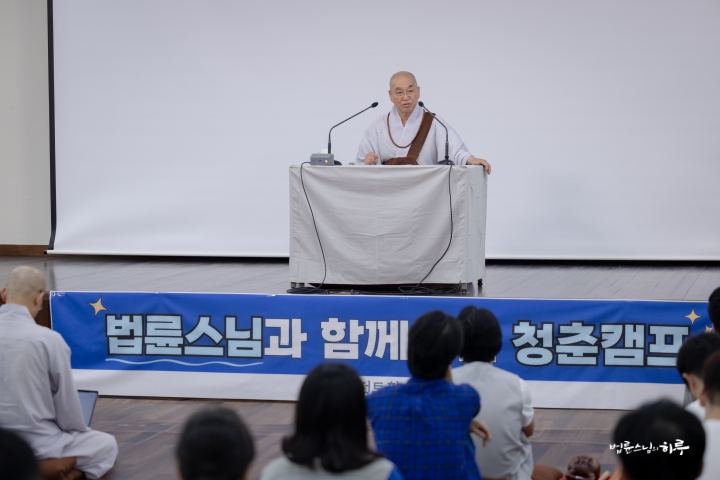
Sunim immediately received questions about various concerns. The young people asked many questions focusing on the direction of the Youth Festa and practical operational methods. One of them sought Sunim’s advice on what causes young people’s lack of spirit and reclusive behavior (hikikomori), and how these issues could be addressed.
Is the Purpose of the Youth Festa to Help Young People Develop Spirit?
“I was curious about the purpose of the Youth Festa event. After listening to Sunim’s opening Dharma talk, I understood that the purpose of the event is to empower young people to develop spirit, since their spirit seems somewhat diminished these days. I think it would be better conveyed to young people if this purpose could be summarized in one sentence. Would it be correct to understand it as: ‘Living this way has given me spirit in my life. Would you like to try living this way together with me?'” 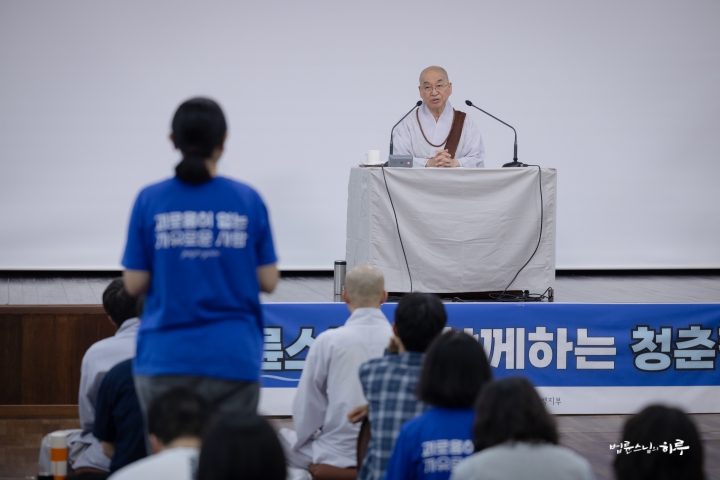
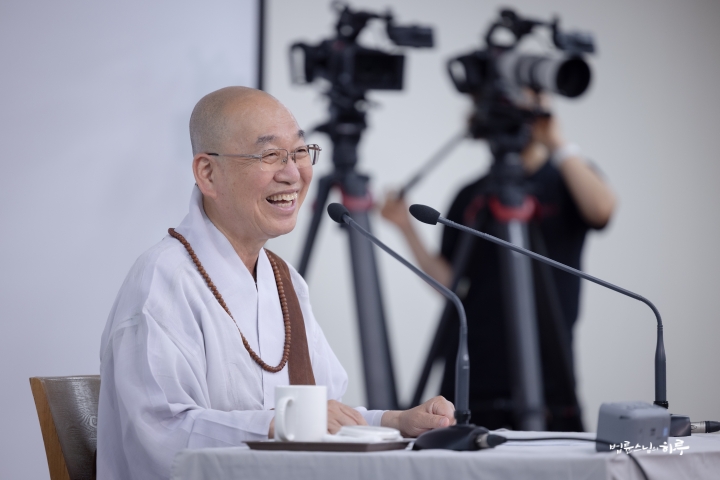
“Yes, thank you.”
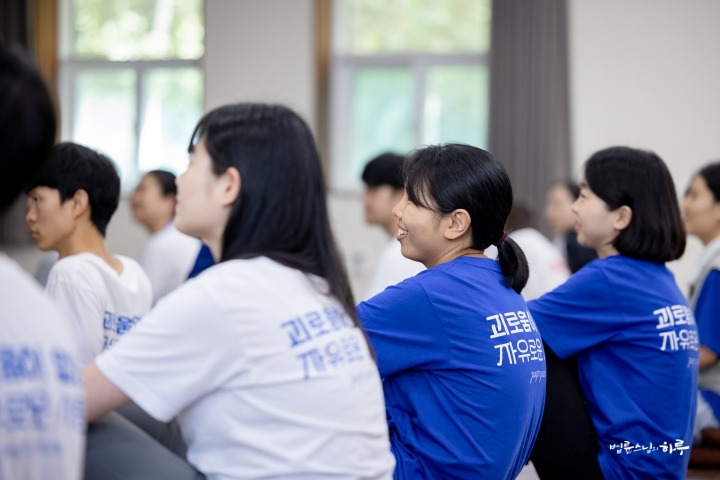
Questions continued to flow. The youth were conducting extensive research on how the ‘Youth Festa’ could meaningfully reach more young people and encompass various demographics and social issues, rather than being just a simple event.
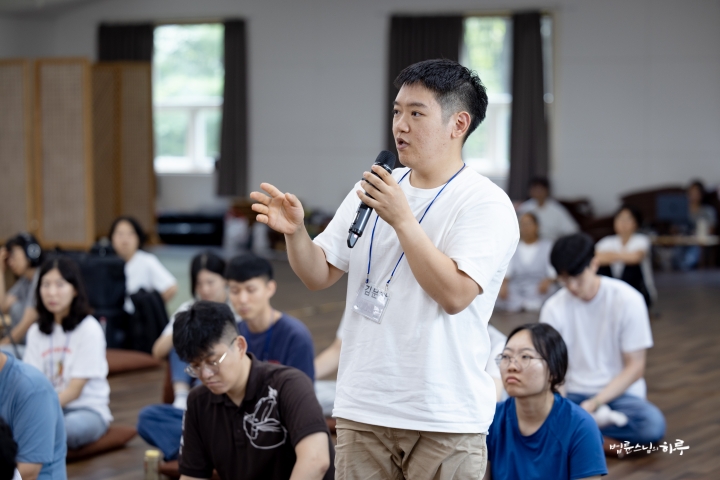
What characteristics of Korean Jungto youth can they take pride in compared to youth from other countries?
Should the Youth Festa rely only on Jungto Society’s internal resources, or can we actively utilize external resources as well?
Why was the target attendance for the Youth Festa set at 10,000 people, and how do you plan to recruit them?
Can teenagers also participate in the Youth Festa? It would be good to prepare online programs for socially withdrawn youth.
How about blocking the road in front of the Jungto Social and Cultural Center and operating booths so passing citizens can participate?
Would Venerable Pomnyun Sunim be willing to participate as a model in the Youth Festa promotional video?
Would it be okay to invite politicians with different political orientations to give lectures on the theme of ‘national unity’?
After the Q&A session, team leaders from the Youth Festa Executive Committee came forward to present the content they had planned and prepared over several sleepless nights. The ideas each team presented went beyond simple event management—they were like small declarations capturing the lives and concerns of young people.
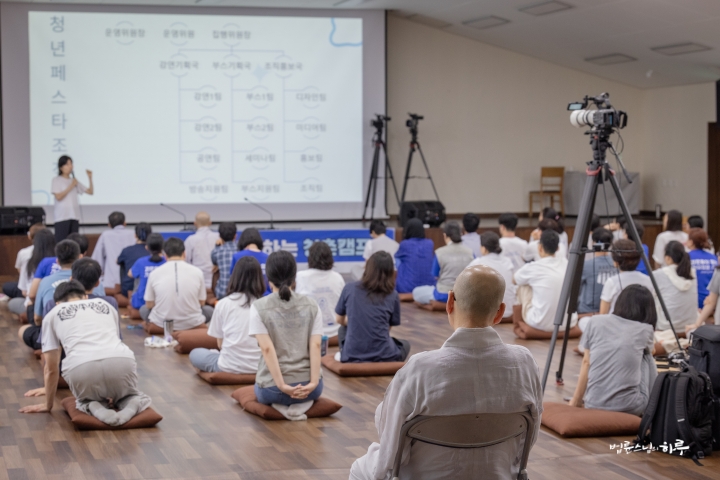
The Lecture Planning Team said they endlessly pondered, “What do young people really want to enjoy?” Their desire to create a space where people could learn while playing and connect through experiences, rather than just simple lectures or seminars, was palpable. True to the name ‘Festa,’ their planning stood out for creating an environment where youth could temporarily escape their daily lives and laugh and enjoy themselves freely.
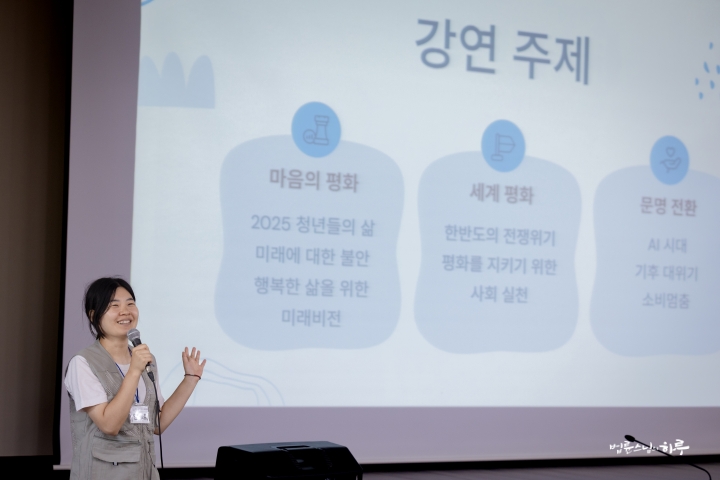
The Booth Team conceived spaces where youth could participate and experience things firsthand, not just simple exhibitions. Their composition allowing youth to easily and enjoyably experience the values Jungto Society pursues—environmental protection, peace, sharing, and meditation—was notable. The message “not a festival to watch, but a festival to create together” was clearly felt.
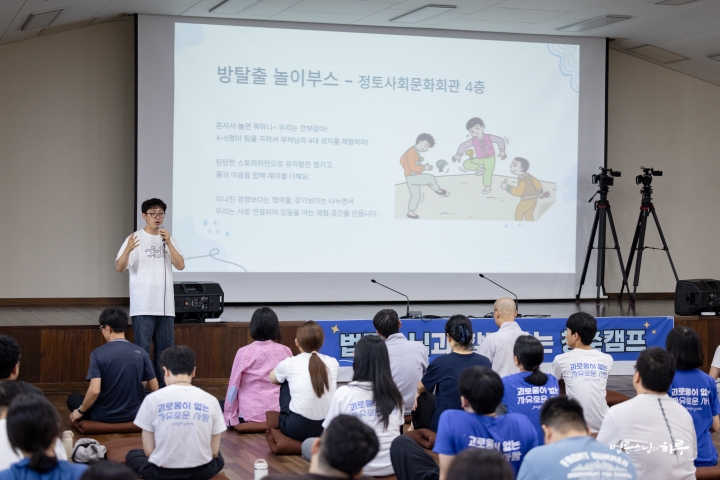
The Performance Team emphasized an approach through culture and arts. As the saying goes, “Songs move hearts more than words, performances more than lectures,” their plan combining various cultural elements like invited singer performances, youth band stages, and performances stood out. They showed the potential for the Youth Festa to establish itself as a genuine youth cultural festival, not just a religious event or discussion forum.
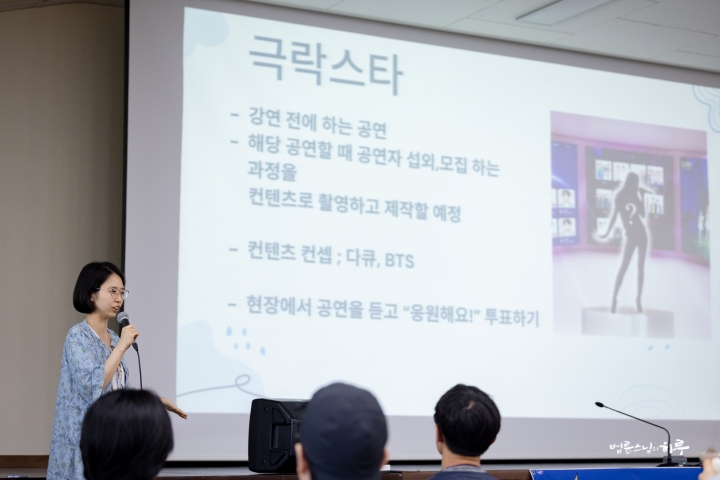
The Seminar Team aimed to create spaces where youth could honestly share their concerns. They planned small-scale dialogue gatherings where youth and experts could discuss topics like career paths, relationships, and emotional difficulties together. It was impressive that they recognized small communication spaces where around 50 people could share sincerely would resonate much more than massive lectures.
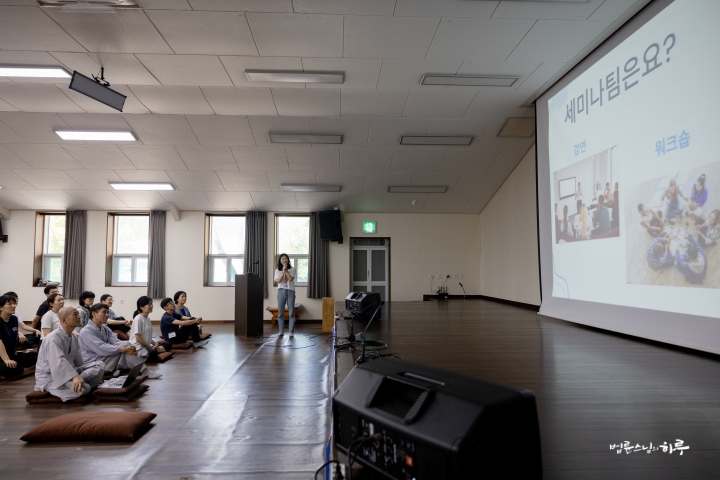
The Media Team was considering how to include socially withdrawn youth and teenagers who couldn’t attend the event. Their attempts to broaden accessibility through online program production and replay videos were impressive. The warm hearts of youth trying to practice the value of “a festa where everyone can participate together” was deeply felt.
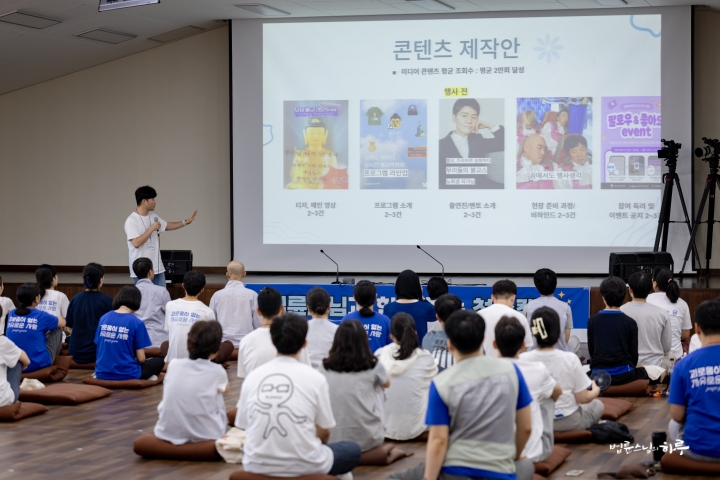
The Promotion Team shared their awareness that “even the best programs are meaningless if they’re not known.” They considered participatory promotional strategies tailored to youth perspectives rather than simple announcements. Creative ideas emerged like SNS short-form videos, meme utilization, and viral campaigns linked with university clubs. Like the slogan “youth calling youth,” they painted a picture where youth themselves become the main agents of event promotion.
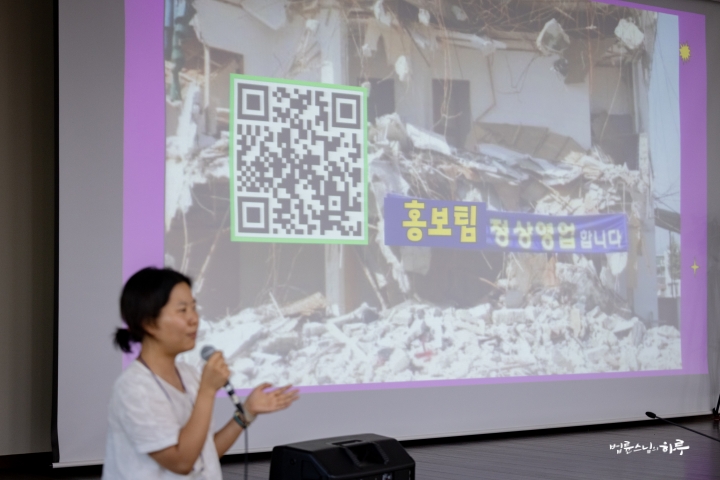
The question “How can we actually gather 10,000 youth?” was the biggest concern shared by all teams. Various proposals poured out, from SNS promotion to collaboration with famous influencers, and methods where youth themselves become promotional ambassadors bringing their friends. It was impressive that they valued the process of gathering together to create a movement, not just ‘filling numbers.’
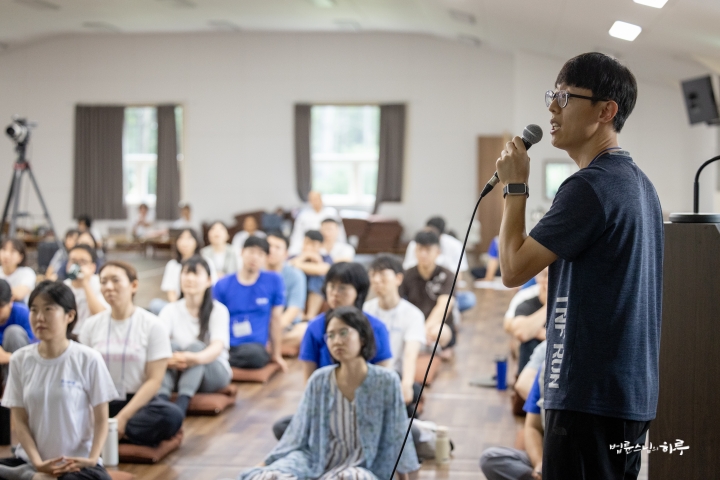
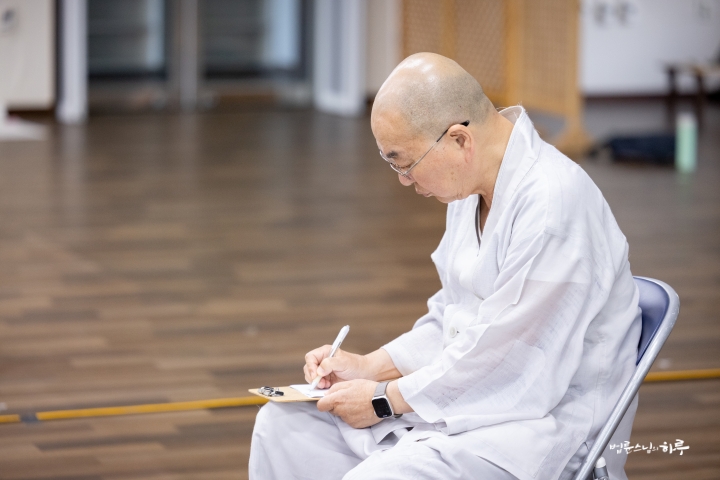
After finishing the presentations, the youth applauded each other’s ideas and pledged to make the event a success.
“Youth! Come out! Youth! Let’s play!”
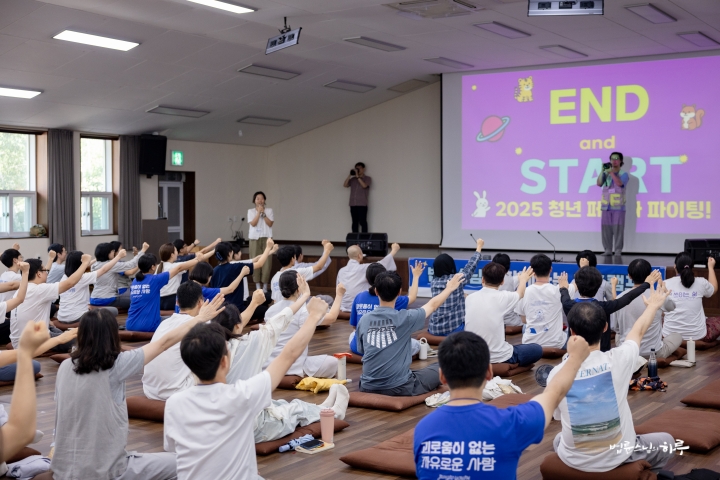
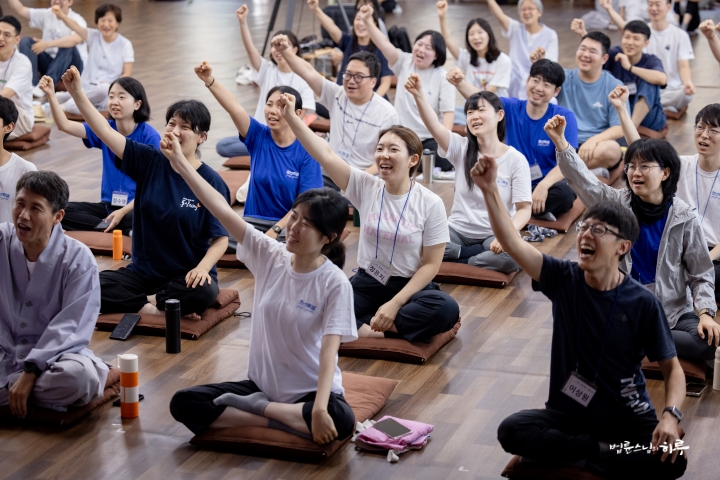
The youth raised their fists high and shouted with powerful voices. The auditorium instantly filled with passionate energy.
After listening carefully to the presentations, Sunim added several suggestions. Emphasizing practical feasibility and efficiency, he made various proposals regarding space utilization and traffic flow management, differentiating the scale of lectures and seminars, practical planning for food preparation and volunteer operations, and cooperation with government officials, experts, and celebrities.
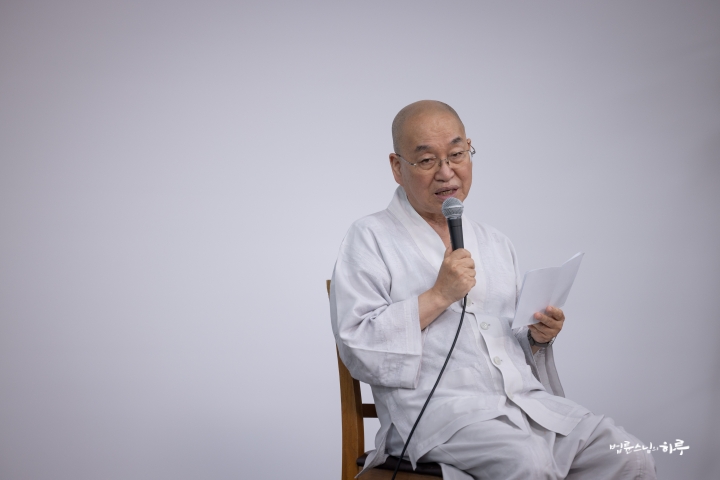
After receiving Sunim’s suggestions, they decided to have the youth discuss detailed content among themselves and concluded the dialogue session.
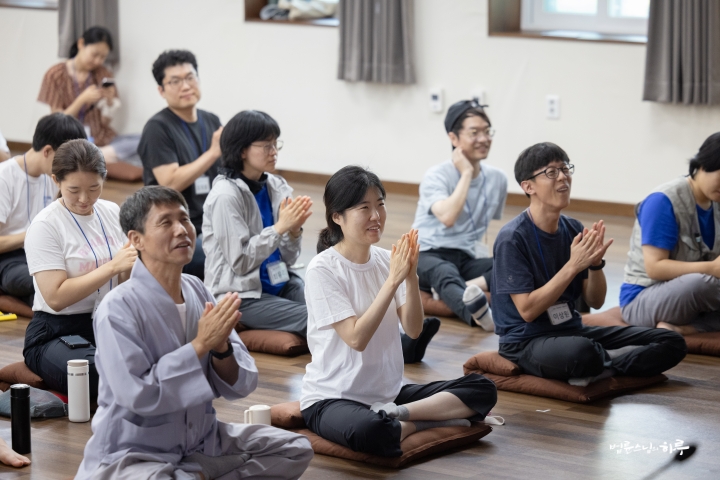
They took a commemorative group photo together.
“Three years together, 30 years to come, Youth Festa fighting!”
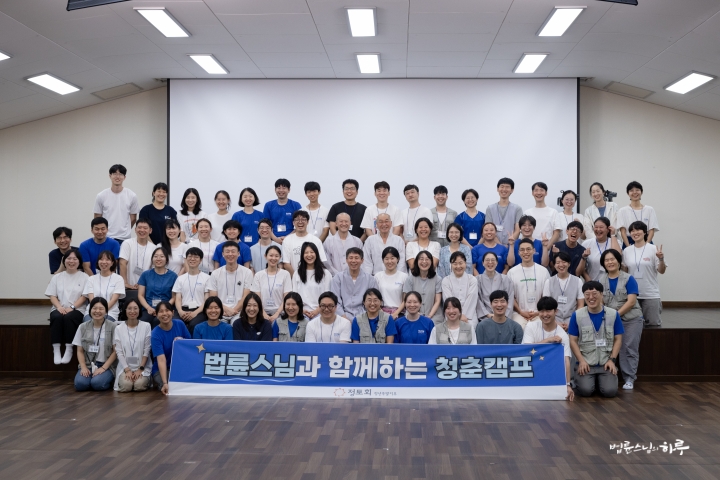
We hope that the ‘Youth Festa’ event, conceived and planned by the youth themselves, will become a new beginning that connects people across generations and regions.
After telling the youth to have time for free discussion among themselves, Sunim departed from Seonyudong Education and Training Center at 4 PM and headed to Dubuk Jungto Retreat Center.
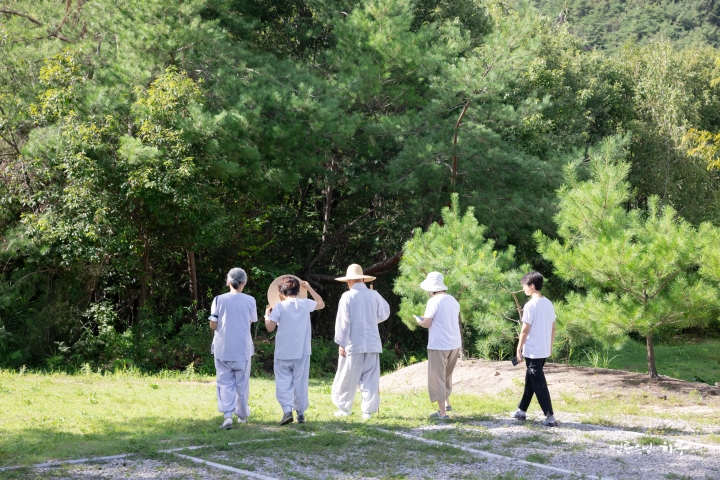
The youth entered into full-scale discussions on contentious issues. In particular, various ideas poured out regarding ‘how to gather 10,000 youth.’ After continuing passionate discussions for two hours, they had dinner.
After sunset and evening practice, they gathered by teams to continue discussions on concretizing detailed plans. Today was a meaningful time spent drawing the blueprint for the Youth Festa together.
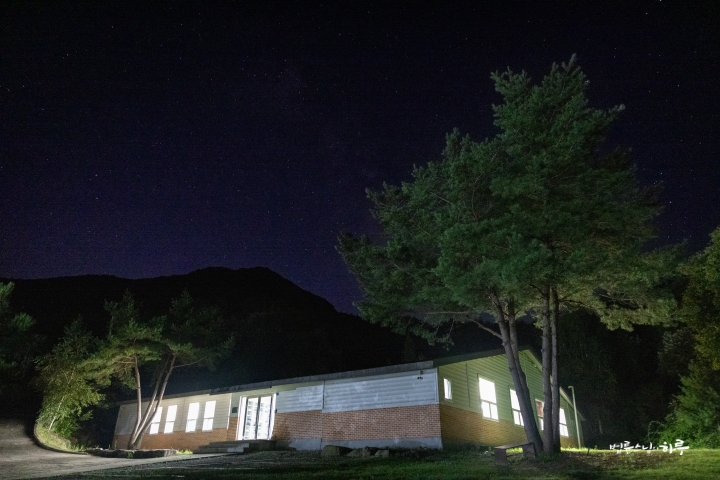
Tomorrow is the third day of the Youth Camp. Sunim will return from Dubuk Jungto Retreat Center to Seonyudong Education and Training Center to have a dialogue with youth starting at 10 AM on the topic of ‘2-2nd 1000-Day Practice Youth Division Organizational Restructuring,’ then in the afternoon participate online in the Tongil Euibyung Assembly for a Dharma Q&A session, and give a closing Dharma talk to conclude the Youth Camp.