Exhausted Wife from Solo Parenting, Distant Child… What Should I Do?
AUG 12, 2025. Invited Lecture at Pohang Naval Air Command

After an hour’s drive, Sunim arrived at the Pohang Naval Air Command at 9:20 AM. As Sunim stepped out of the car, Commander Cho Young-sang and other military officials warmly welcomed him.
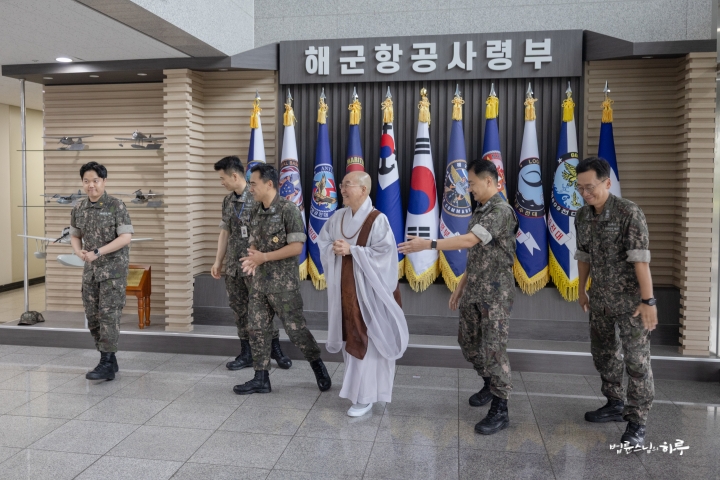
After taking a commemorative photo at the command entrance, they moved to the reception room for tea. First, the Commander introduced the Air Command.
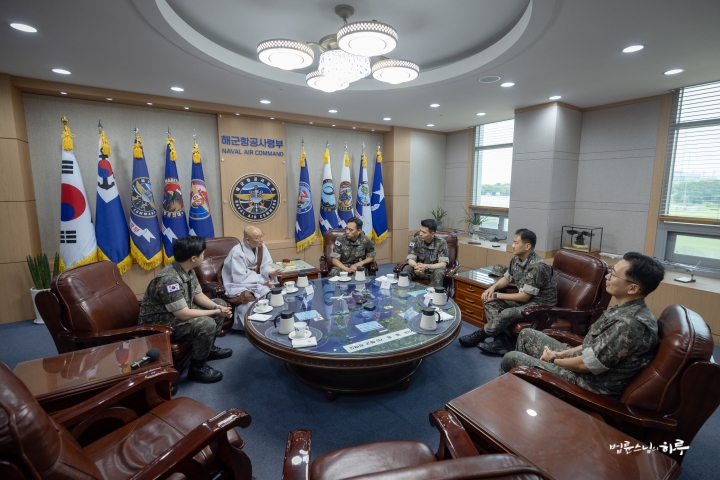
“We oversee all of South Korea’s maritime areas using aircraft. Though we are a small unit, we fly the farthest to carry out operations. We are responsible for an area eight times the size of the Korean Peninsula.”
The military officials then asked Sunim questions about their curiosities.
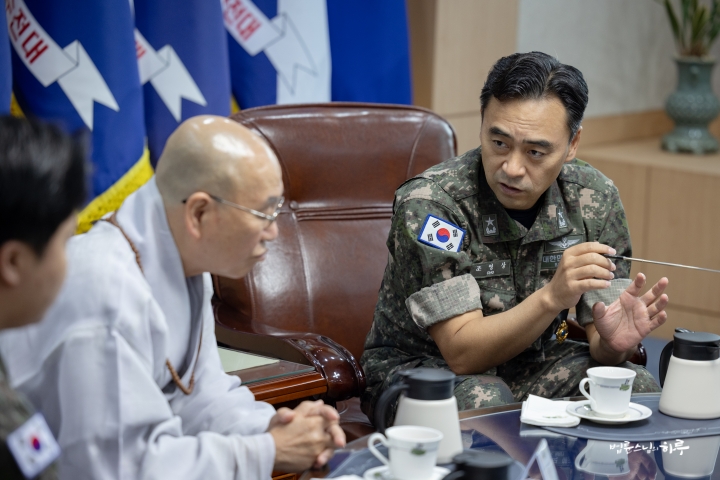
“We heard you became a monk in Gyeongju, which is close to Pohang. It seems you became a monk at a young age.”
“My teacher had me become a monk when I was attending Gyeongju High School. As a high school student with a shaved head, I wore a school uniform to school and Buddhist robes at the temple. Since high school students and monks had the same hairstyle, there was no problem.” (laughter)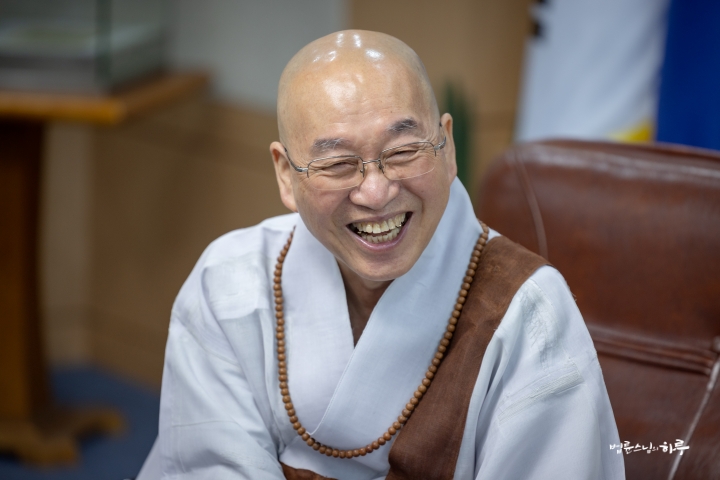
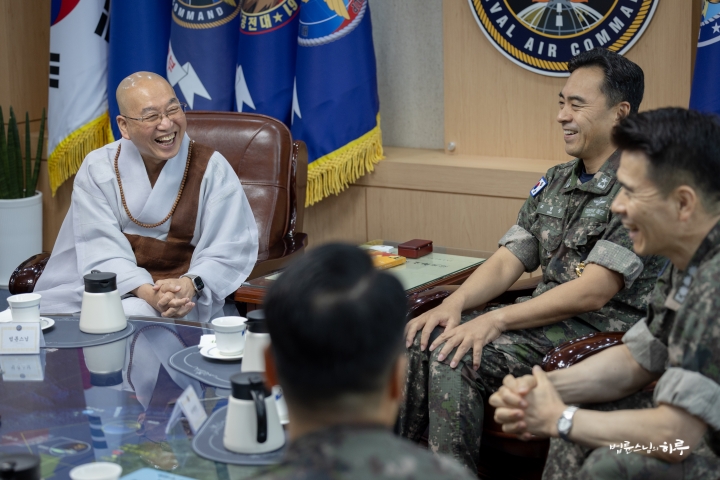
As they chatted and laughed, it was time to begin the lecture. After expressing gratitude for the Naval Air Command’s efforts and dedication to national defense, Sunim rose from his seat.
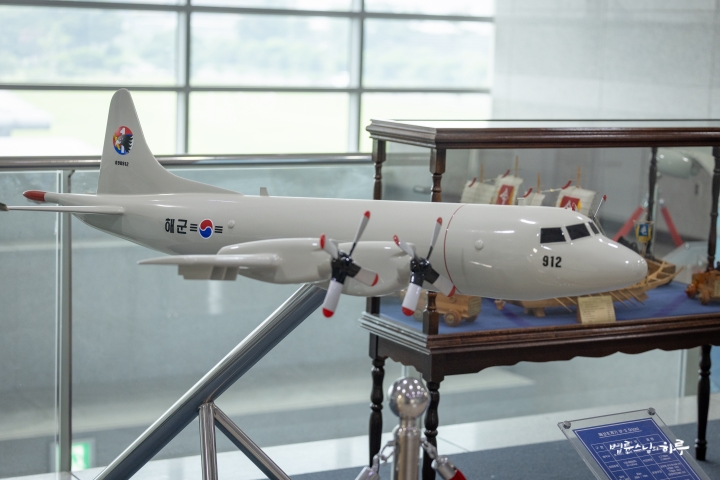
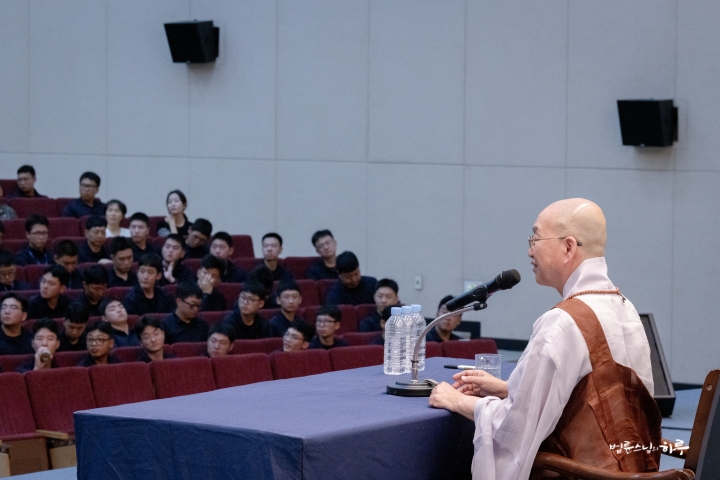
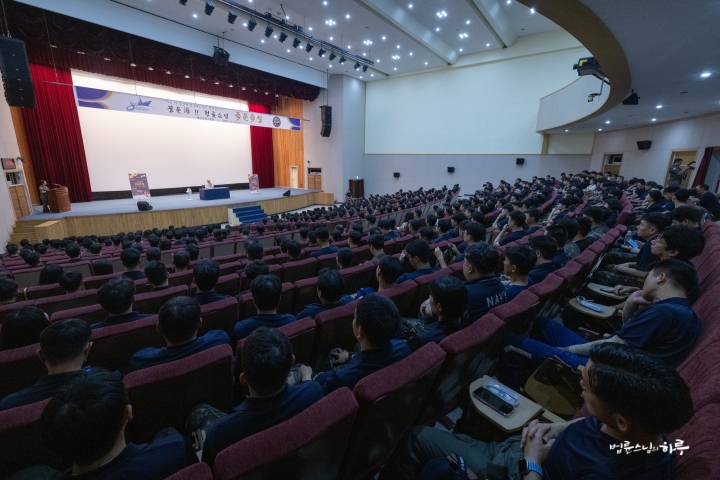
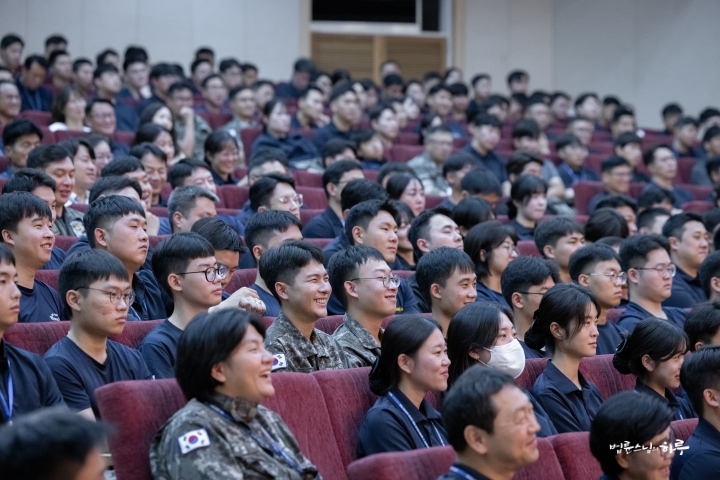
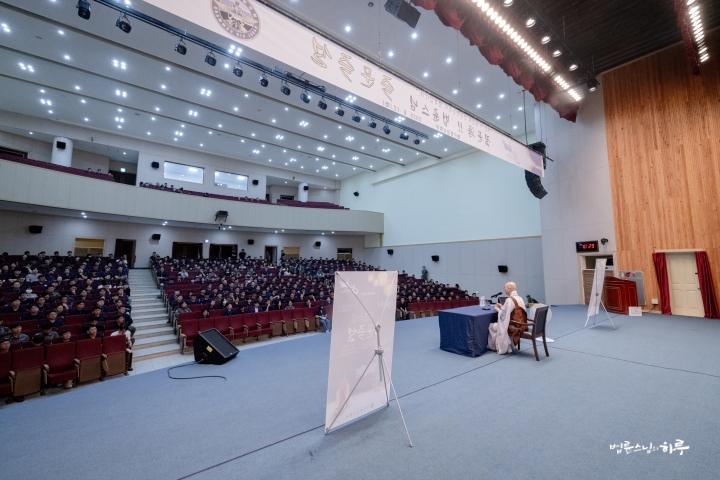
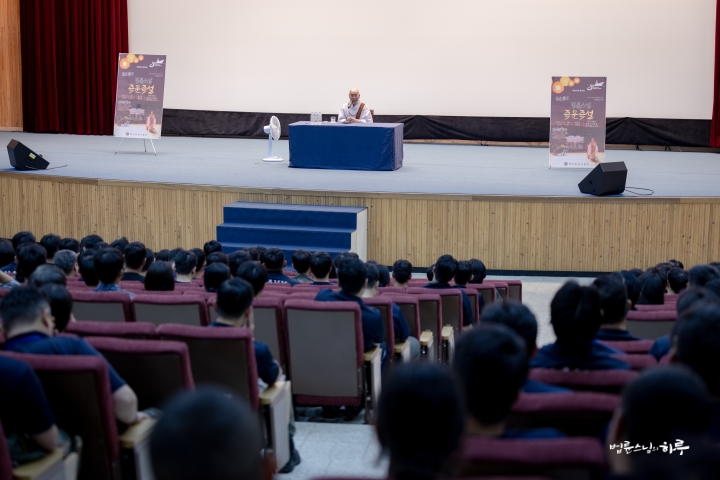
They all headed to the Aviation Management Building together. With about 500 military personnel and their families filling the venue, thunderous applause and cheers erupted as Sunim appeared.
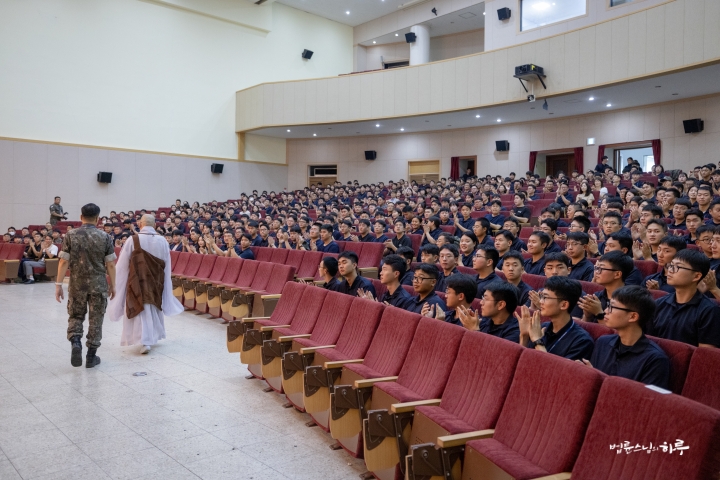
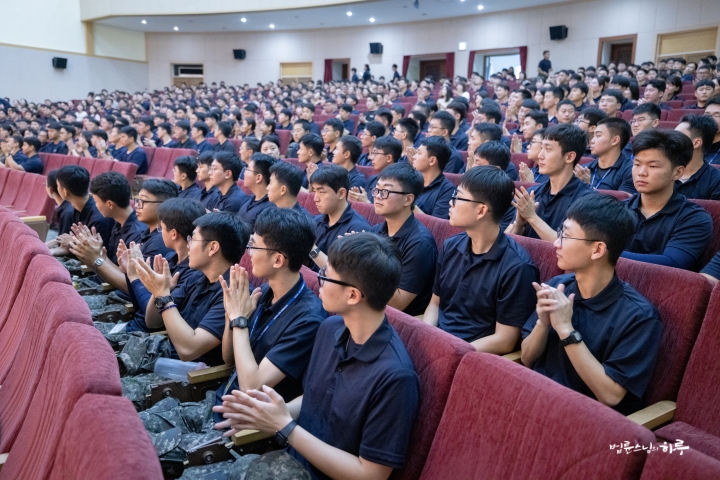
After the host introduced Sunim, he took the stage and began the lecture. Sunim first suggested taking a moment to honor the soldiers who died in the naval patrol aircraft crash that occurred in Donghae-myeon, Pohang on May 29th.
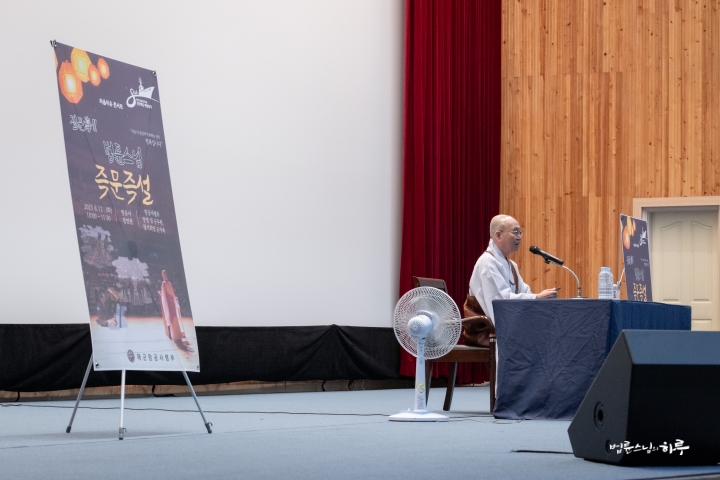
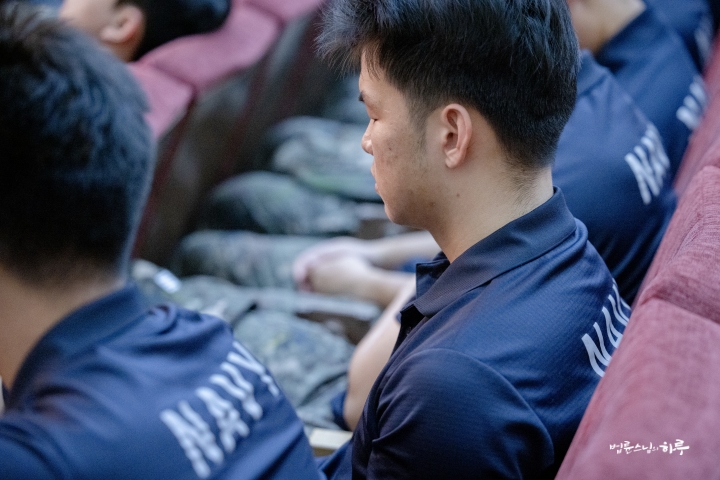
After a brief moment of silence, they began their conversation.
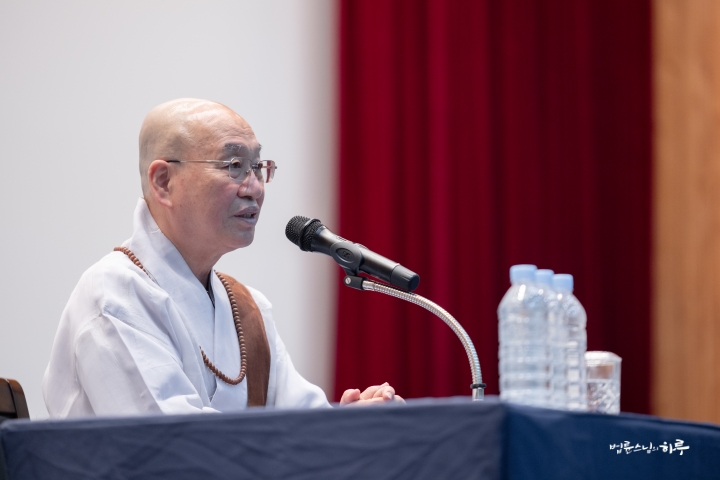
Growth Through Failure, the Path to Safety Left by Sacrifice
While this incident is unfortunate, it can serve as an opportunity to establish policies that minimize defects by maintaining aircraft more safely and replacing aging models with newer ones. Training can also be planned more meticulously. If an accident can prevent larger accidents that might occur in the future, then the previous failure is not merely unfortunate. If it has the effect of preventing the sacrifice of many remaining people, then the sacrifice of those who have departed will not be in vain and will become a great merit. I hope you will view this incident from that perspective. Today’s gathering is a place where you can temporarily set aside your identity as soldiers and freely share various difficulties and problems you face in daily life as individuals, as well as things you want to say or good suggestions. Many officers have attended, but even if the commander is present, feel free to speak up if you have complaints. Today is a time for dialogue, and if anyone takes issue with that, I will take responsibility.” (laughter)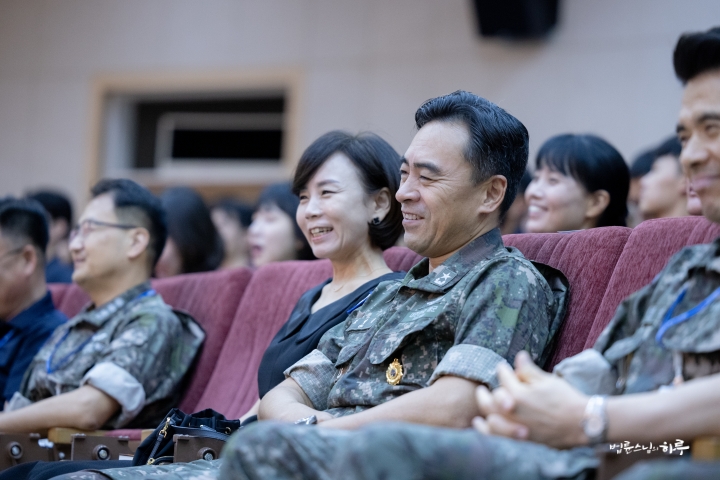
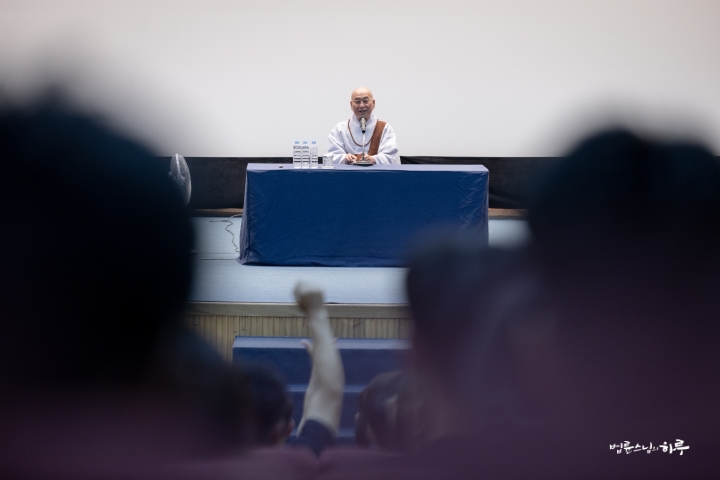
Following this, anyone could raise their hand and ask questions about concerns they face in life. Many service members raised their hands wanting to ask questions. Over the course of two hours, 14 military personnel asked Sunim questions and engaged in dialogue.
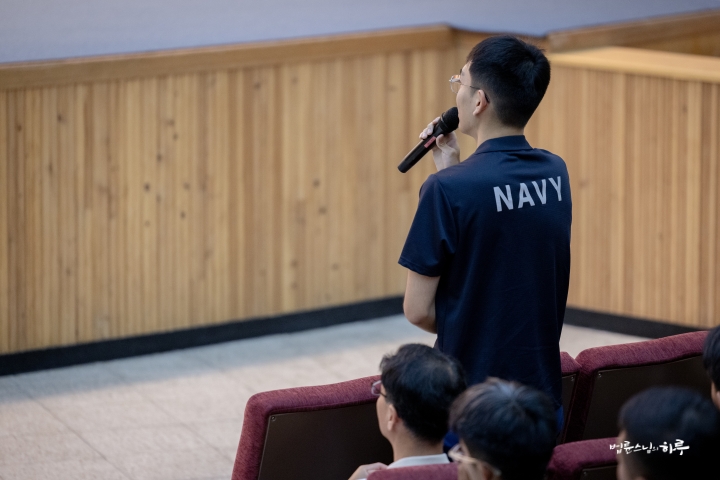
One of them had been living as a weekend couple for 10 years and often neglected his family due to fatigue when he went home. He sought Sunim’s advice on how to promote family harmony.
My Wife Is Exhausted from Solo Parenting, My Child Has Become Distant… What Should I Do?
“I have served in the military for over 20 years, and after marriage, my wife and I have lived as a weekend couple for about 10 years. When we didn’t have children, it felt like dating whenever we met, but after having a child and my wife doing all the parenting alone, we began to argue frequently. After five years, even my child has become distant from me. While I have been neglectful of my family using fatigue as an excuse, I find it difficult to care for them attentively. How can weekend couple soldiers like me share emotions with their families and live feeling love?”
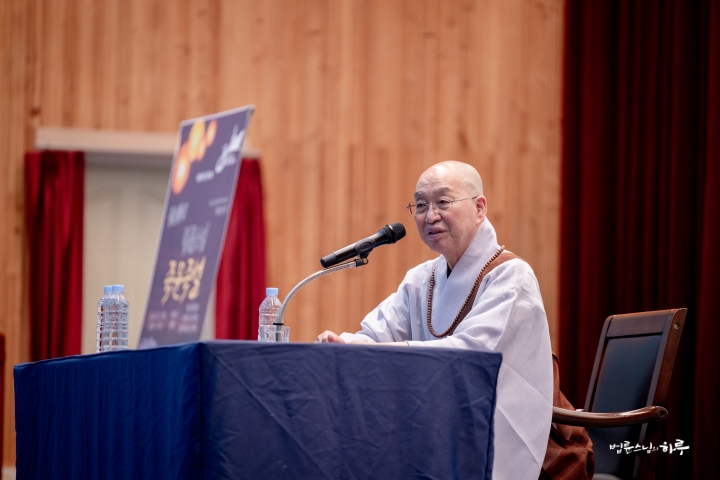
“While you think this problem arose because you’re a weekend couple, couples who live together experience similar problems. Living together constantly brings daily conflicts, while living apart creates feelings of disappointment and dissatisfaction from the separation. So if you live apart, you need to observe and respond to the problems that arise from living apart, and if you live together, you need to observe and resolve the problems that arise from living together.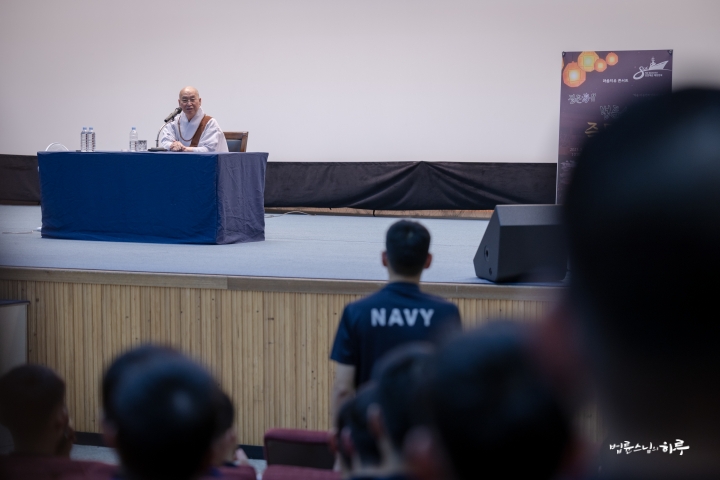
“Thank you. I understand well.”
Questions continued to follow.
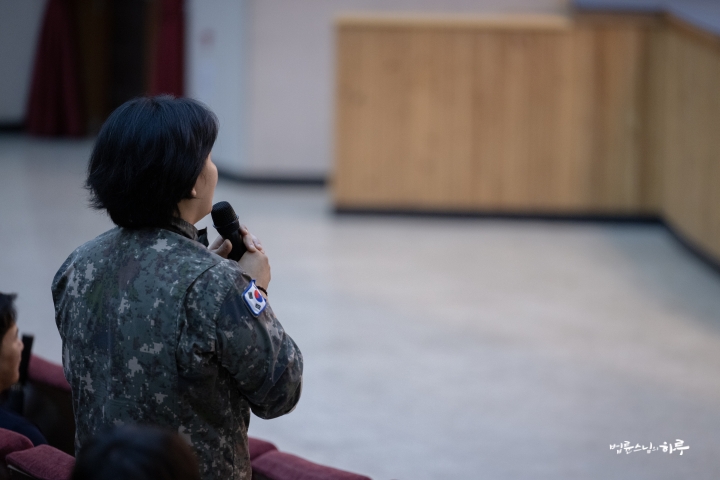
Why do monks wear gray clothes?
Do you ever get angry, Sunim? How do you control your mind when that happens?
My husband wanted to take care of his mother, so we’re living together. Living with in-laws is difficult.
Are there heating and cooling systems in the spaces where monks practice? How do monks feel about people who come for temple stays?
As a soldier living far from home, how can I show filial piety to my parents from a distance?
What do you think about DJ Monk New-Jean who sings and dances?
I’ve been preparing for employment for five years and have failed countless times, so I’m afraid to try again. What mindset should I have?
To do what I want to do, I need my parents’ support. Their expectations are burdensome.
I often end up counseling people about their worries. Do you have any know-how for counseling?
Even when something uncomfortable happens, I try to understand it thinking ‘It could happen,’ but when the same situation repeats, I get angry. Is it because my practice is insufficient?
My wife and daughter keep fighting. Should I intervene as the person in the middle?
Do you ever feel hatred, Sunim? What do you do when that happens?
Among the various questions, many were about the difficulties felt as soldiers. One officer asked for Sunim’s advice on what perspective to have, saying that sometimes when carrying out duties, getting angry makes subordinates more careful and can lead to better results.

Isn’t Getting Angry Sometimes Necessary to Carry Out Military Duties?
“I believe that every result has its reasons, and I always try to live with this mindset. However, we soldiers here have gathered to carry out our assigned duties. When the desired results don’t come from our assigned work, conflicts, irritation, and anger often surface. As a middle manager, I’m in a position where I must take responsibility as a superior when necessary functions aren’t performed. Sometimes when I get angry, subordinates become more careful and results improve. So I wonder if the Buddhist teaching of not getting angry and maintaining equanimity might be inappropriate for carrying out duties. I think that sometimes, for important mission accomplishment, direct irritation, anger, or pushing might be necessary. I’m curious about what wisdom to apply within the structural framework of the military.”
“When we talk about any work in the world, first, it must be effective, and second, it must produce some level of results. This applies not only to the military but also to companies. Let’s say you were given a mission and worked with subordinates, but the results fell short of expectations. Will getting angry improve the results next time? That’s not the case. The reason I’m getting angry isn’t because of the work. It’s just because I have a bad temper. Getting angry because work wasn’t done well is just a way of rationalizing my emotions.. We shouldn’t connect work with emotions.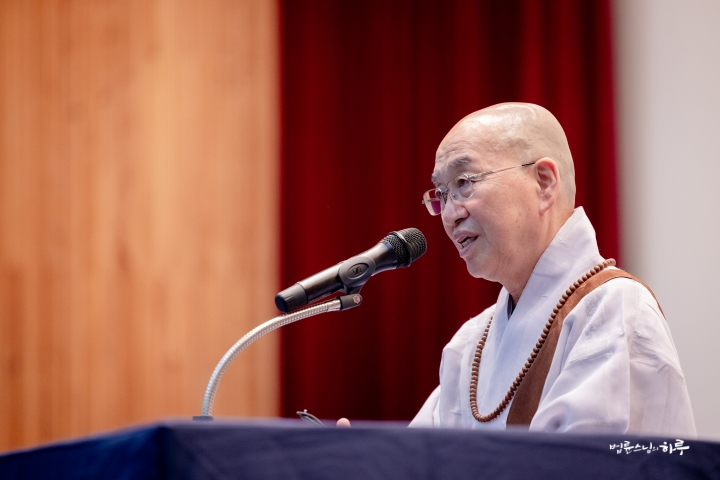
“Yes, thank you. I understand well.”
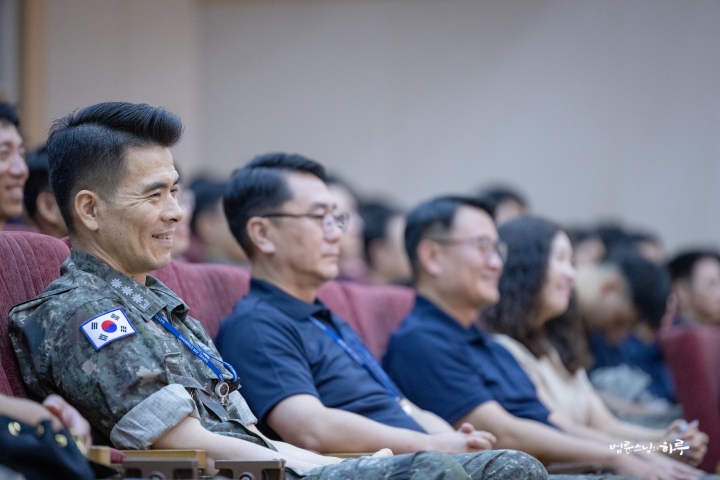
As they conversed, time flew by and it was time to wrap up. Although many service members wanted to ask more questions, Sunim concluded with closing remarks, leaving their eagerness behind.
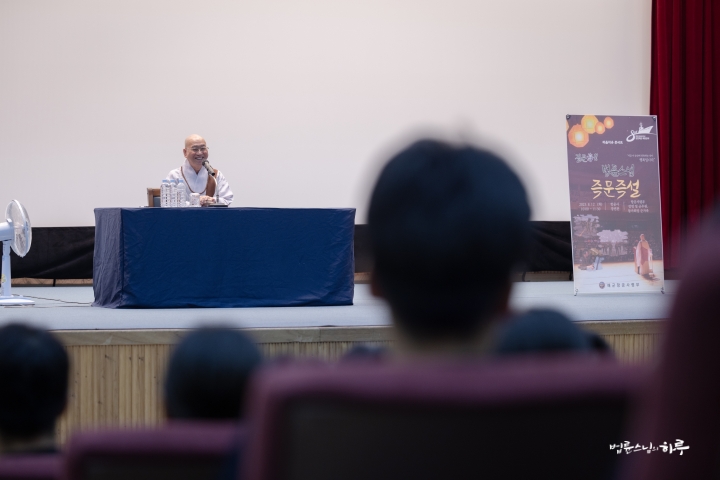
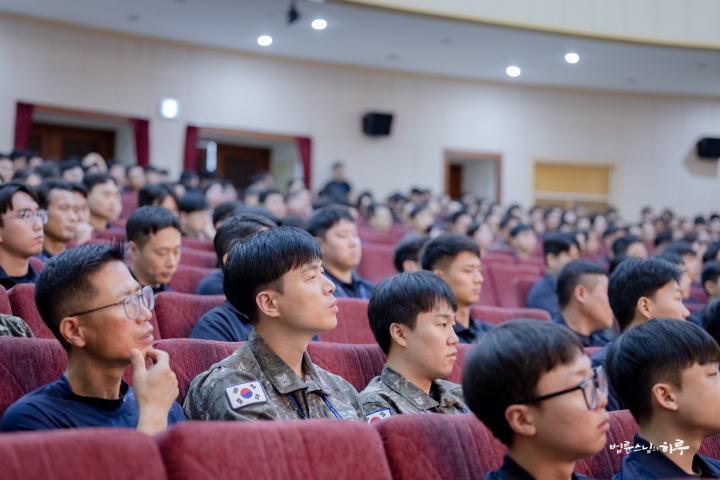
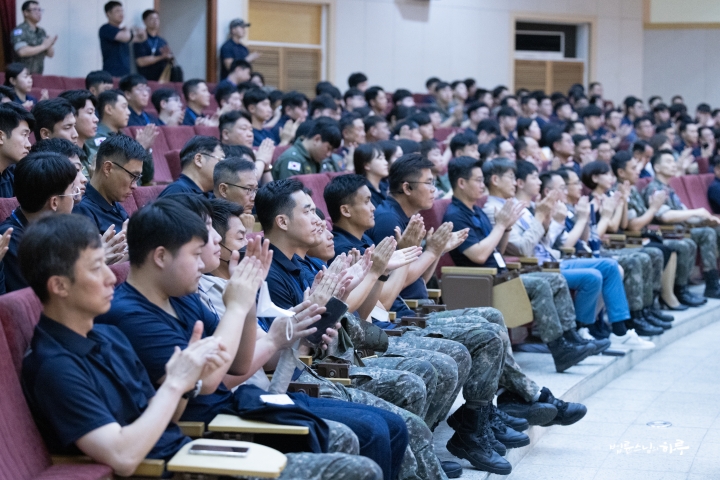
Sunim’s warm encouragement provided great comfort to the service members. The lecture ended with loud applause.
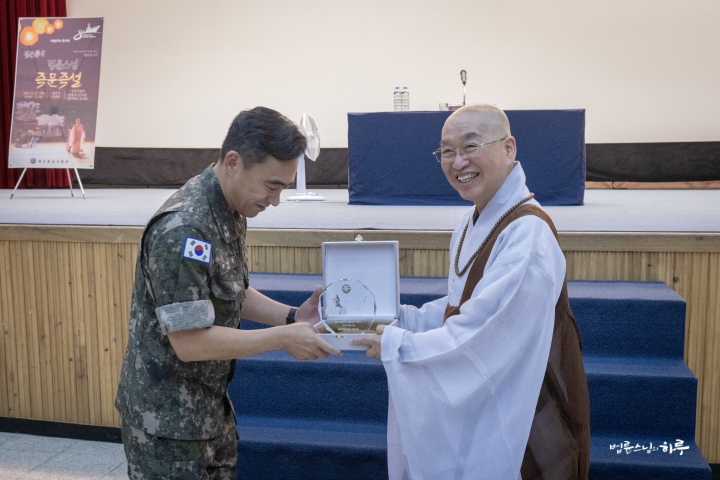
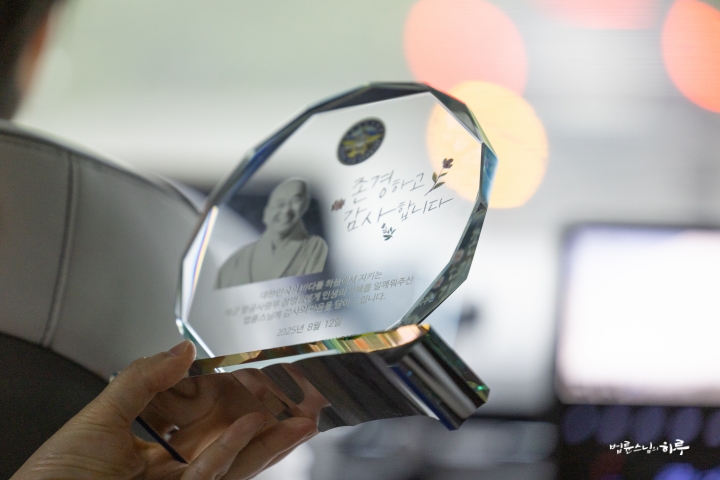
The commander then presented Sunim with a plaque of appreciation.
“Thank you so much for taking time out of your busy schedule.”
Next, Sunim took a commemorative photo on stage with military officers and their families.
“Naval Air Command, fighting!”
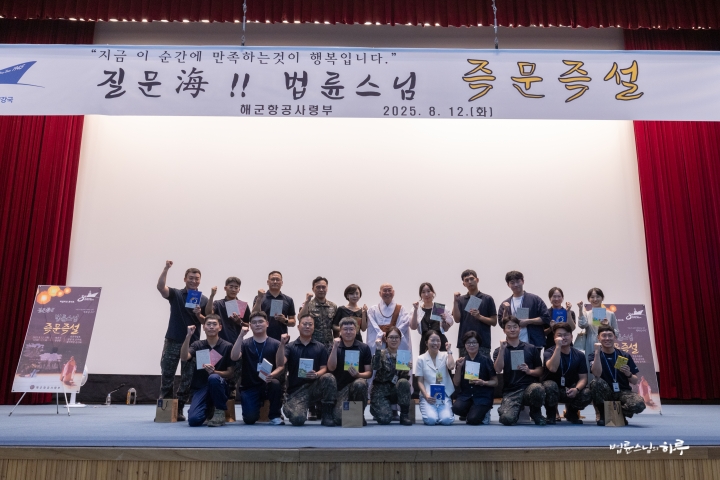
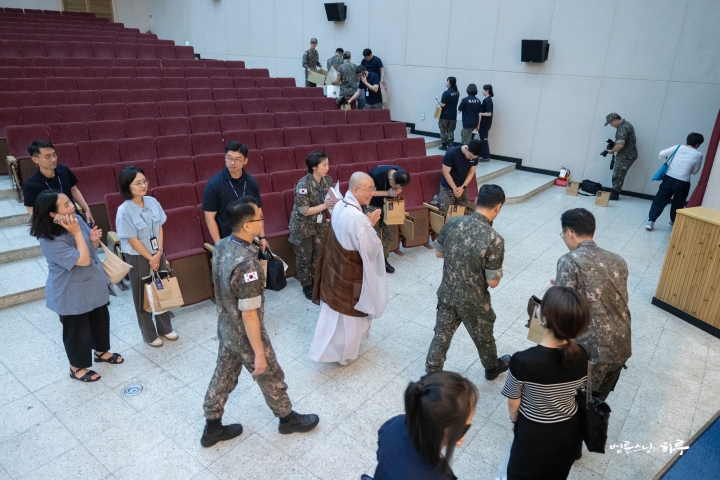
After the photo session, a book signing event immediately followed. The military unit had given Sunim’s books as gifts to the service members who asked questions. The service members lined up to get Sunim’s autograph in their books.
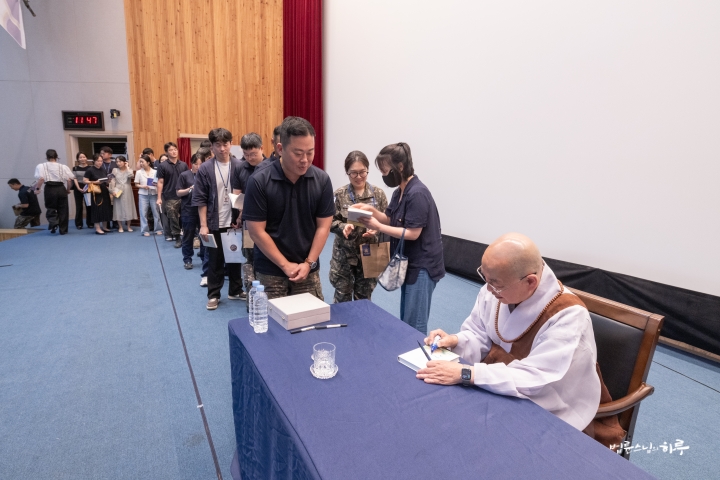
“I really enjoyed today’s lecture.”
“Continue your military service well.”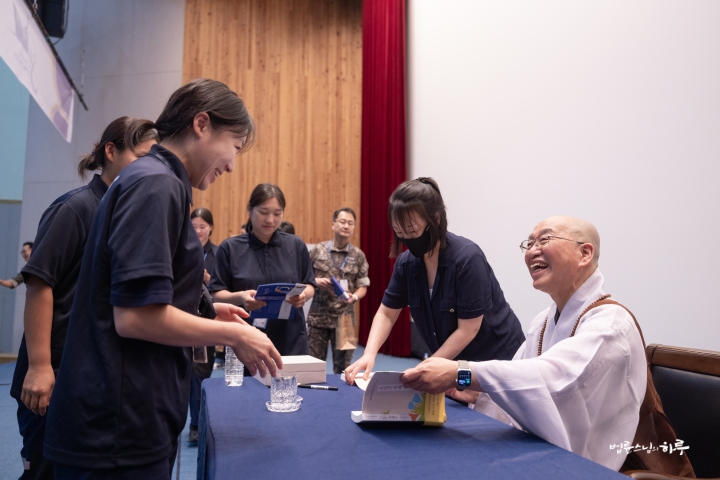
Sunim offered warm words of encouragement with a bright smile to the service members who expressed their gratitude.
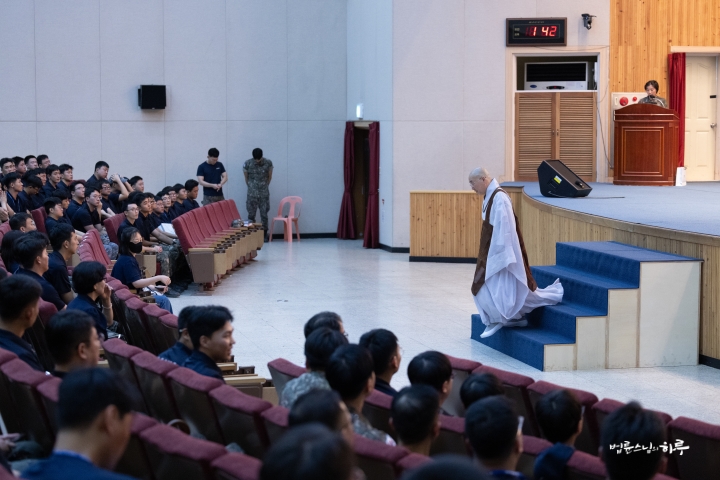
The commander and other military officials saw Sunim off from the lecture hall until he got into the car. A pastor serving as a military chaplain quietly expressed his gratitude to Sunim.
“The words you shared today were truly needed by our service members. We would be very grateful if you could make time for sessions like this more often in the future.”
“I will. See you again next time.”After shaking hands with the commander, Sunim got into the car. Departing from Pohang at noon, Sunim headed back to Dubuk Jungto Retreat Center.

Arriving at Dubuk Jungto Retreat Center at 1 PM, Sunim had lunch. In the afternoon, he traveled to Busan for dental treatment.


After sunset, Sunim spent the evening indoors proofreading manuscripts and attending to various tasks before concluding the day’s activities.
Tomorrow morning, Sunim will trim the overgrown grass on both sides of the village entrance road and conduct a live broadcast of the Weekly Dharma Assembly from the broadcasting room. In the afternoon, he will travel to Seoul to pay respects at the funeral hall of the late Most Venerable Hyogyeong, Honorary Chairman of Daegakhoe. In the evening, he will meet with JTS volunteers to discuss the dispatch of personnel to Bhutan.