The Blood of Our Ancestors Permeates the Grass and Stones of This Manchurian Plain
Aug 9, 2025 - Day 7 of the Northeast Asian History Tour: Liaoning Provincial Museum and Return to Korea
Hello. This is the seventh day of the Northeast Asian History Tour. Today, Sunim will visit the Liaoning Provincial Museum in Shenyang, conclude the history tour, and return to Korea.
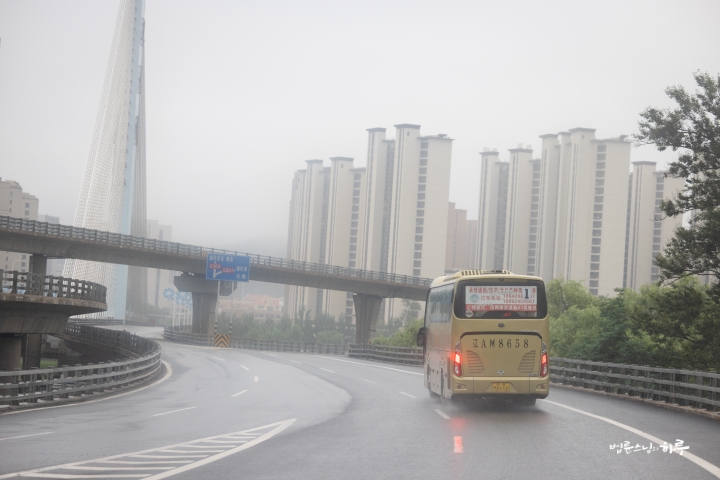
The tour group woke up at 4:20 AM again today and left the accommodation at 5:00 AM. They went to the early morning market in Tonghua for breakfast.
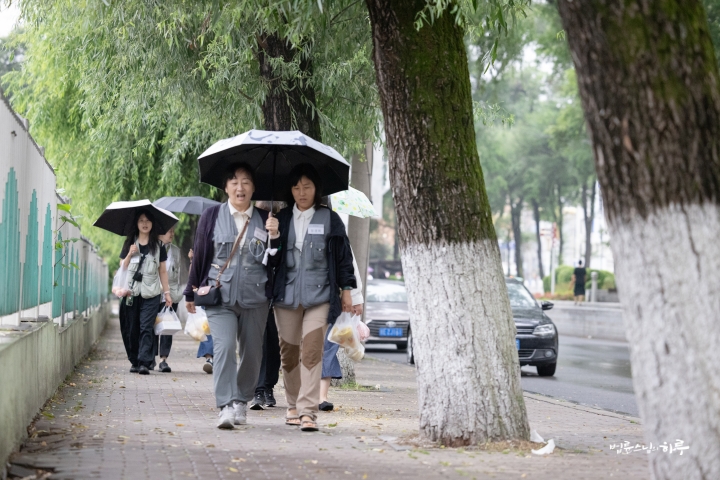
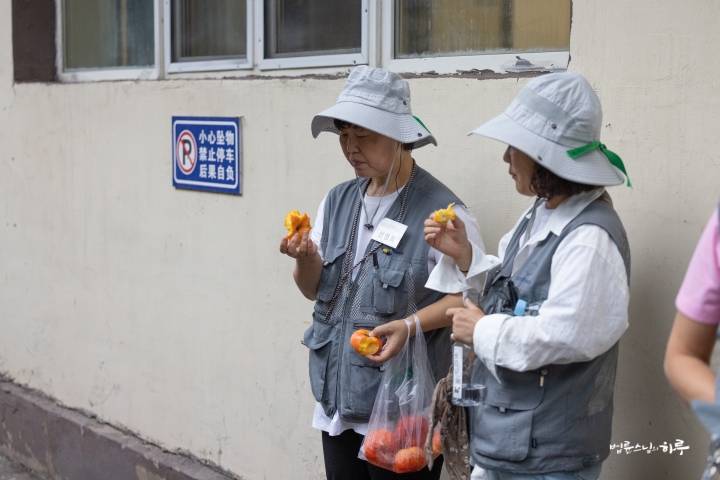
Gathering in small groups, everyone purchased food to their liking for the meal and also prepared lunch boxes for later before boarding the bus. As the bus departed, Sunim briefly explained today’s schedule.
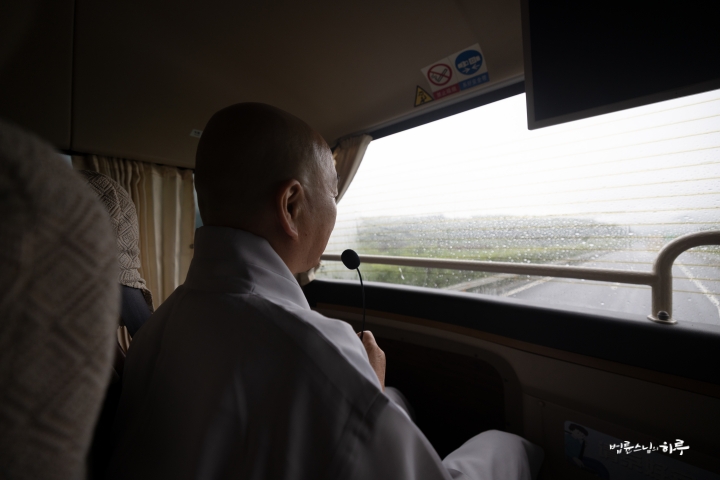
Leaving Tonghua at 6:00 AM, they drove non-stop to Shenyang with two rest stops along the way.
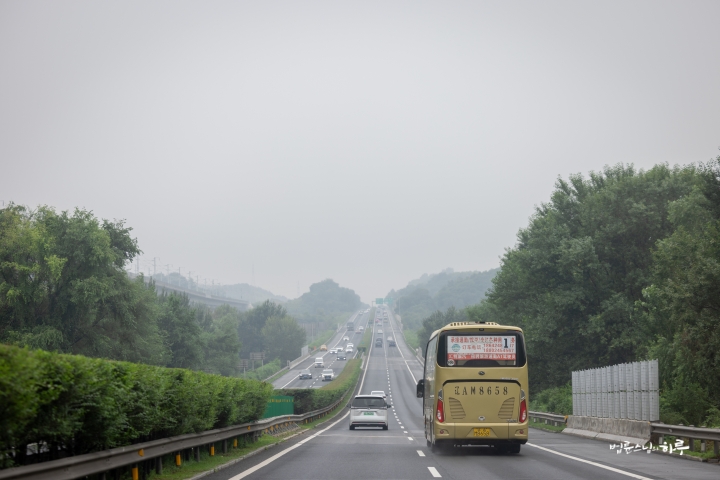
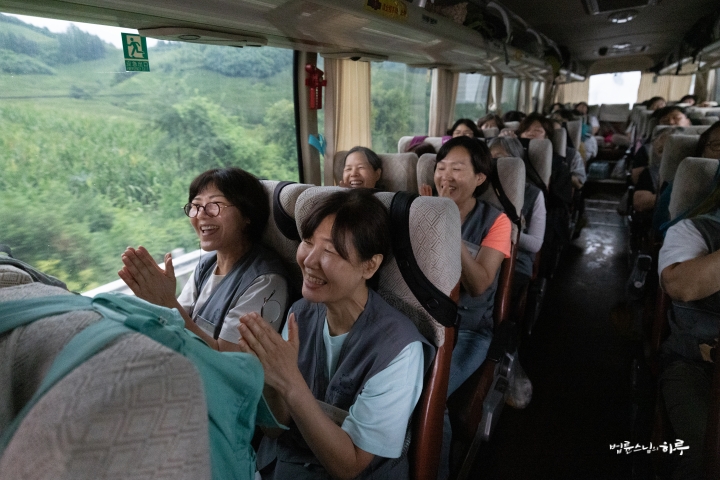
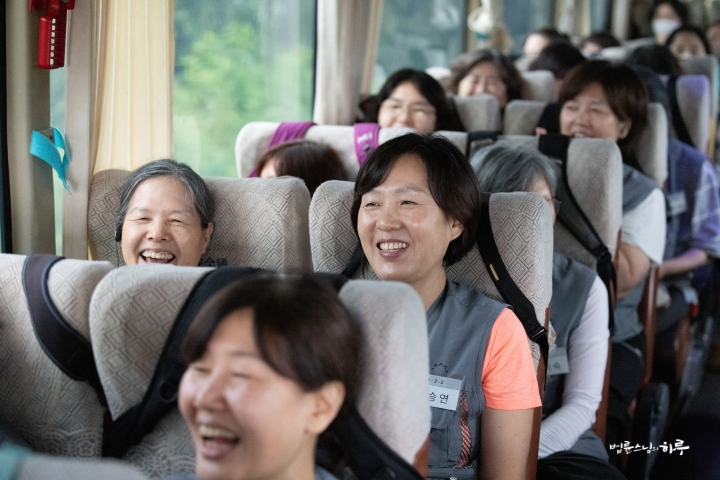
On the bus, participants shared the reflections they had written yesterday. Representatives selected from each group took turns reading their reflections through the transmitter.
Resolutions Made While Walking the Lands of Goguryeo, Balhae, and the Independence Movement
Most participants said they had rediscovered their national roots and pride by directly experiencing history, expressed gratitude for their ancestors’ sacrifices, and strengthened their resolve to take action for unification.
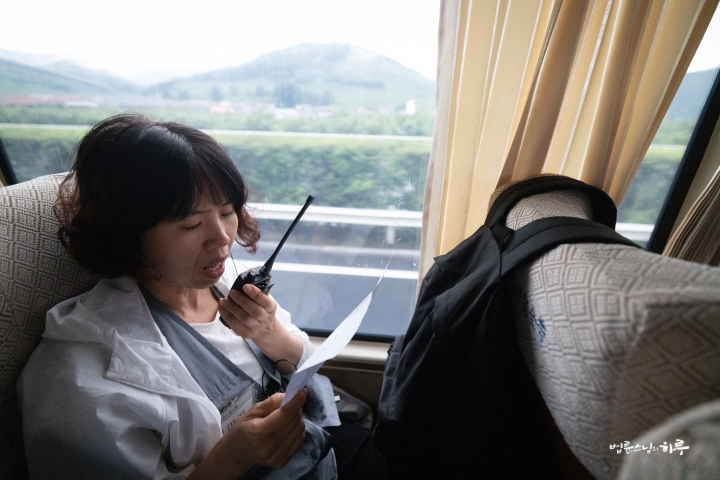
“Ignorance and indifference were forms of violence. I had been hiding behind the shield of indifference, turning away from the challenges of our times. I learned so much in this region where the sorrows of Korean-Chinese compatriots are intertwined with traces of our ancestors. Climbing to Cheonji Lake on Mt. Baekdu, I clasped my small hands together and made a wish. I will become a person without suffering, a free person. I won’t seek invisible fortune but will look at the happiness blooming abundantly before my eyes. With this mindset, my worries and mannerisms seemed to transform into tiny fragments. Faced with the challenges of unification and our country’s sustainable development, I could easily shake off my concerns. I will play even a small role for unification.”
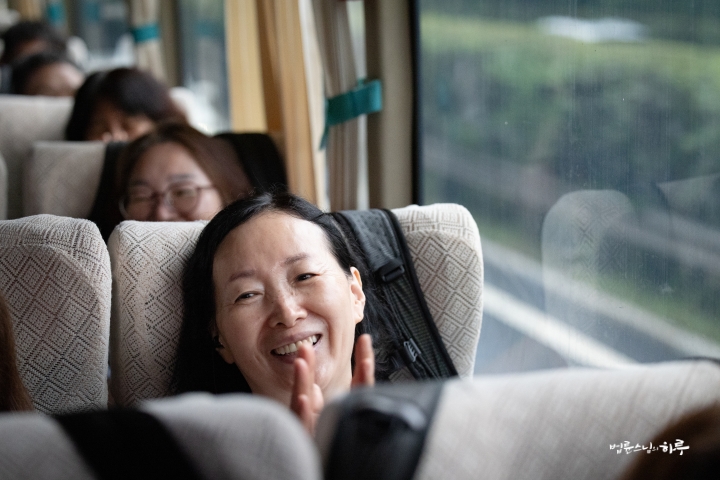
“The attitude of doing what we could even with security agents following us everywhere, studying past history felt like practicing to do it again. The endless green cornfields, cream-like clouds, and forgotten historical sites. While looking at the scenery outside the bus window, my inner thoughts suddenly emerged: ‘Let’s run, let’s run toward our vow.’ This resolved the concerns I had been having, and I was moved to tears. There were many songs I didn’t know. Perhaps it was due to generational differences, or maybe because I had been isolated for a long time during my school years, which made my heart ache. I will slowly comfort my long-standing loneliness. I will dedicate myself to those who suffer. I hadn’t acted concretely because I feared becoming poorer and lonelier. However, I will turn my wounds into strengths and fulfill my vow. As a young person, I dream of meeting our compatriots in the flower fields across the river in a unified Korea on a warm spring day.”
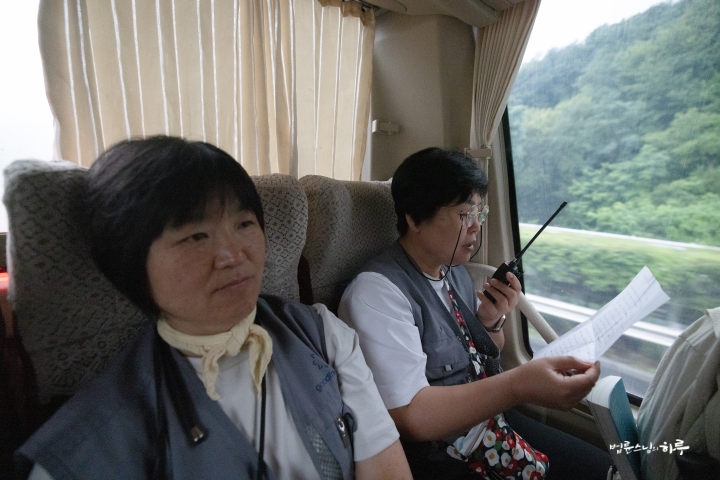
“Just by learning history, my life has changed. By discovering my roots during this history tour, I realized that boundaries and exclusiveness stem from ignorance. Not just fragmentary knowledge of the independence movement history, but the fact that our current freedom exists thanks to countless ancestors’ sacrifices deeply touched me. Seeing the lives of North Korean and Korean-Chinese compatriots firsthand, I was ashamed of myself for only complaining in comfort. Like Avalokitesvara Bodhisattva’s vow to save all suffering beings in the world, I too pledge to help our suffering people. I will live to correct distorted history and alleviate our nation’s pain.”
The Blood of Our Ancestors Permeates the Grass and Stones of This Manchurian Plain
“China and North Korea, which I revisited after more than 10 years, had changed significantly. However, what moved my heart the most was the life of Korean-Chinese compatriots who have endured hardships for over 100 years. Now, ‘Korean-Chinese’ are not strangers but people who share the same roots as me. Feeling the spirit and wisdom of our ancestors who roamed the continent, my pride as a Korean has grown. Engraving that unification is both our ancestors’ dying wish and the destiny of our times, I pledge to pass on a unified Korea to our descendants. History is still being written.”
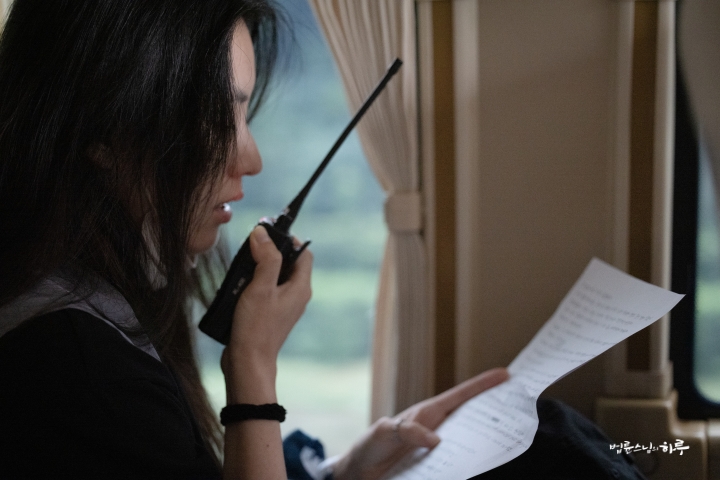
“I will express my reflection on this history tour in one line: ‘Dear ones, do not carelessly regard even a blade of grass, a tree, or a stone on this Manchurian plain. Beneath them permeates the red blood shed by our independence fighters.’ Thank you.”
The past seven days flashed by like a revolving lantern through the scenery outside the window. It was a time of awakening from ignorance, rediscovering our national roots, engraving our ancestors’ sacrifices and spirit in our hearts, and strengthening our resolve for a unified future.
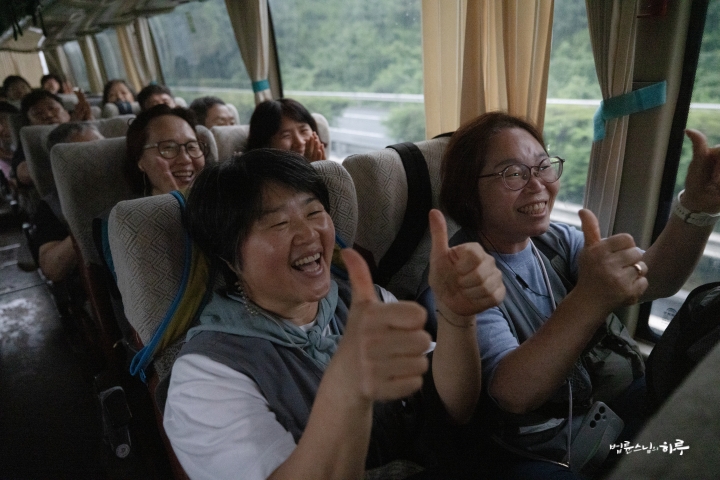
After one person from each of the 15 groups shared their reflections, there was also time for voluntary sharing. Following the sharing session, participants sang songs one by one. Various genres of songs, from those expressing the pain of division to the latest popular songs, resonated through the moving bus with diverse voices. The lyrics of songs expressing the pain of division no longer felt like mere song lyrics. This was because they had seen, heard, and experienced historical sites over the past six nights and seven days.
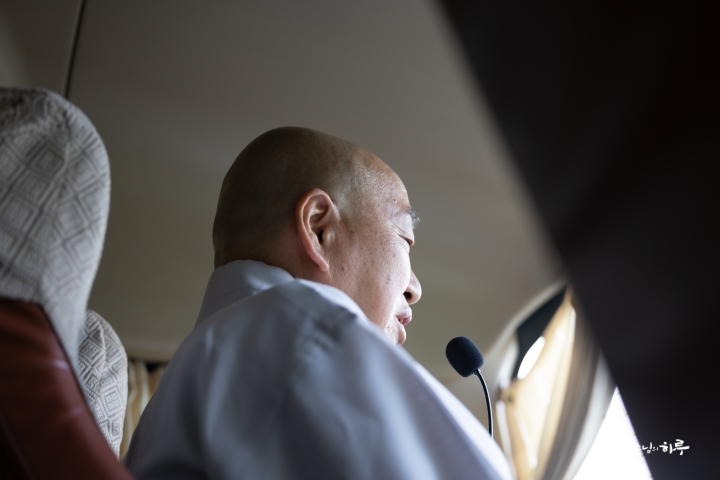
The bus entered downtown Shenyang at 10:00 AM. Sunim provided an overview of the Liaoning Provincial Museum they would soon visit.
Our Roots Seen at the Liaoning Provincial Museum
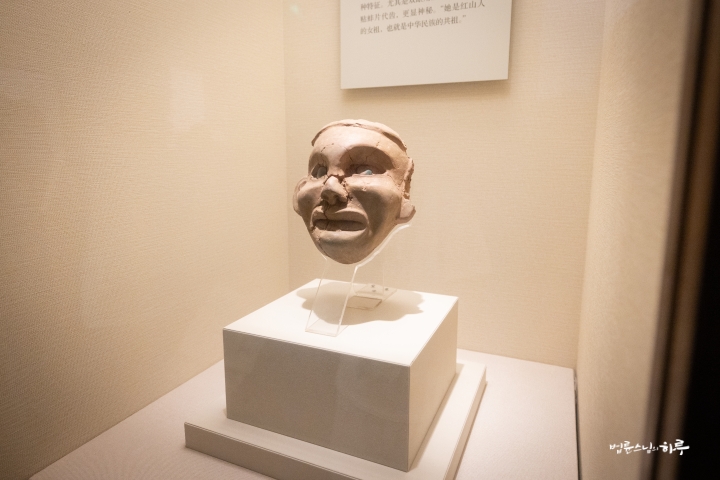
Next, you can see very beautiful jade artifacts. While people commonly say the Bronze Age follows the Neolithic Age, since very intricately made jade artifacts were excavated from before the Bronze Age, we can say the Bronze Age began after the Jade Age. These jade artifacts are from 6,000 years ago, a period called the Hongshan Civilization or Liaohe Civilization. The tombs where these jade artifacts were excavated had pyramid-style structures similar to the tombs of King Gwanggaeto and King Jangsu. Following this, you’ll see displayed the broken face, chest, arms, and legs of female deity statues. At the time of excavation, some were smaller than actual people, some were human-sized, and some were about three times larger than humans. These female deity statues remind us of the bear-woman (Ungnyeo) from the Dangun myth, suggesting these are historical artifacts deeply connected to our people. This is because there are no cases of goddess worship in any myths from surrounding regions. So I want to tell you that you don’t need to view our Gojoseon history as purely mythical. This is the most important key point to see in Hall 1.
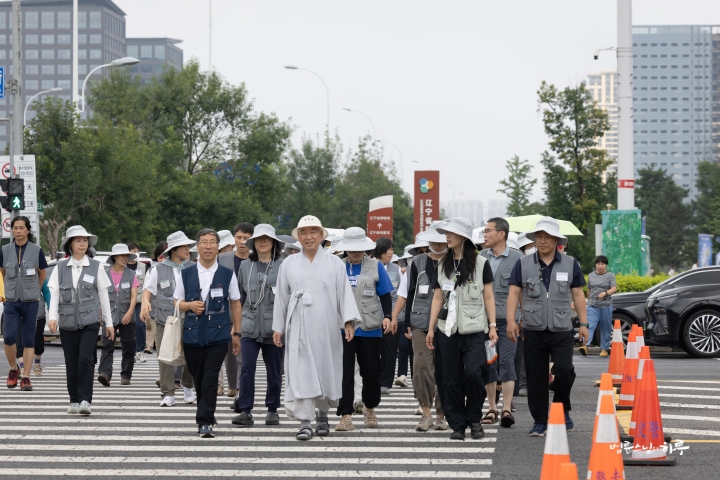
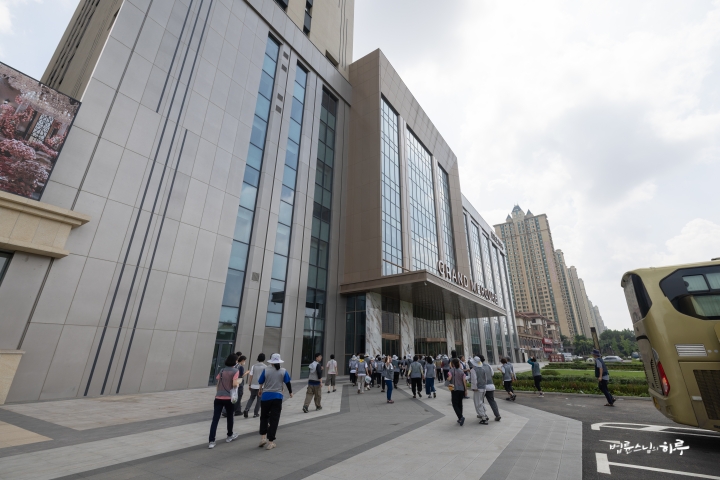
As they stepped off the bus and entered the grand building, a vast treasure trove where layers of ancient times were stacked greeted the tour group.
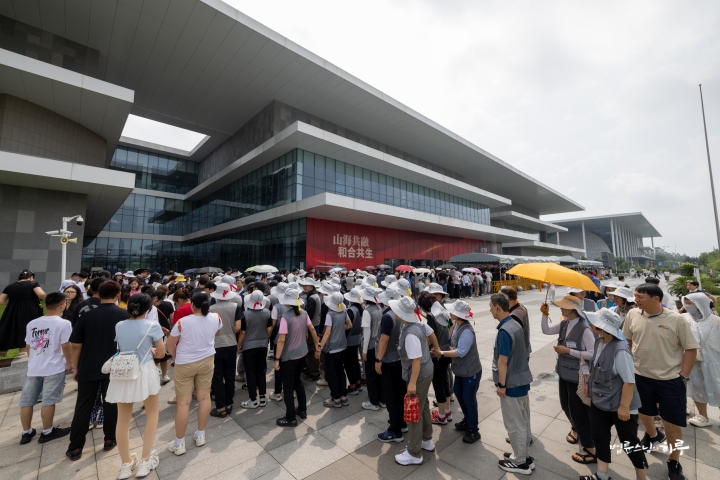
The museum was bustling with Chinese visitors. Sunim began guiding the group.
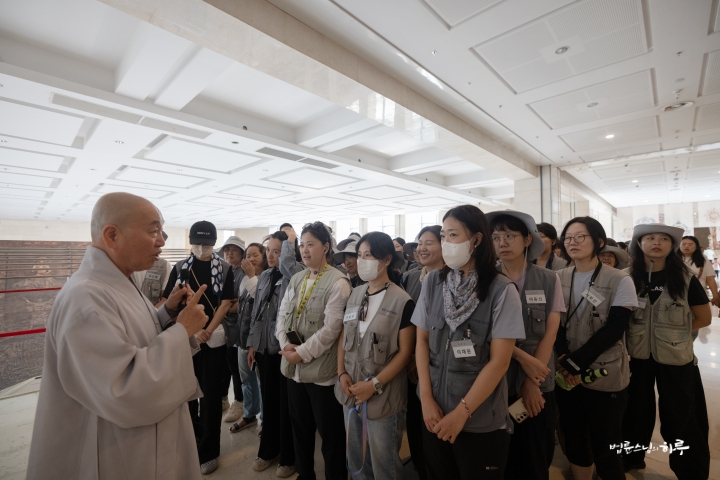
Sunim led the tour group to the history exhibition hall. Many artifacts were displayed in chronological order, from ancient humans 280,000 years ago through the Neolithic Age, the ancient Xia-Shang-Zhou period, the Qin-Han period, the Sui-Tang period, and up to the Yuan-Ming-Qing period.
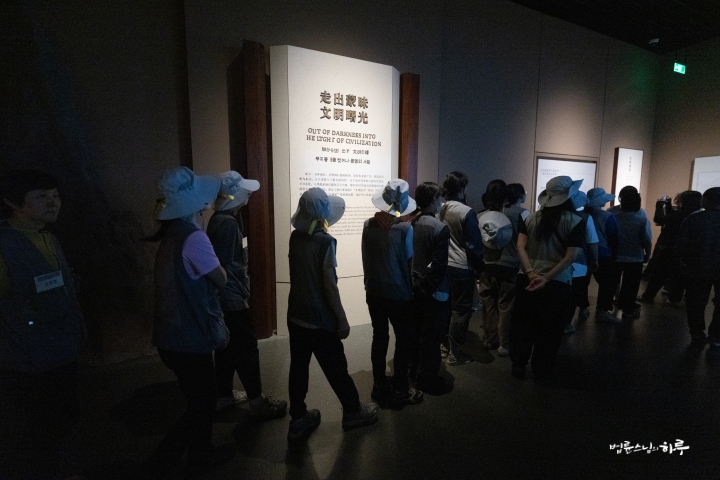
As they slowly moved in single file, a map placed in the center of the exhibition hall caught their attention. The map marked numerous Neolithic artifact excavation sites, among which the Niuheliang site, the center of Hongshan Culture, stood out prominently.
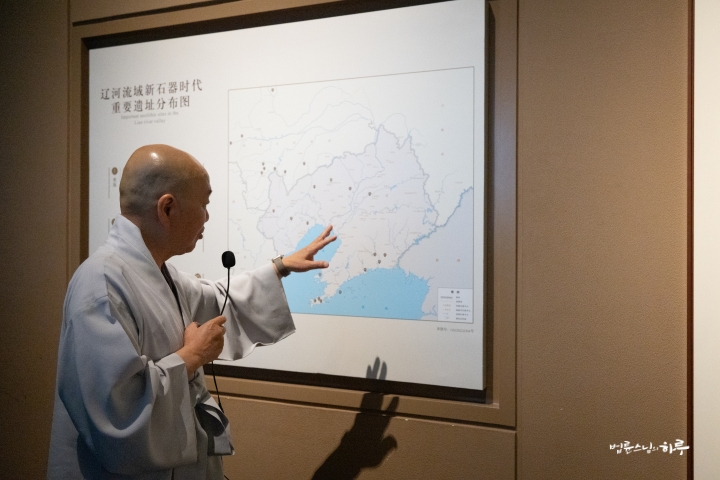
Sunim pointed to the map and began explaining calmly.
“From here, we enter what we call the Hongshan Culture. The Hongshan Culture is distributed across western Liaoning Province and Chifeng City in the Inner Mongolia Autonomous Region.”The first impression of Hongshan Culture was overwhelming. Inside the glass display cases was an ancient goddess statue, accompanied by sculptures with intricately detailed ears, hands, and chest. Next to it was a pregnant woman statue symbolizing fertility and abundance.
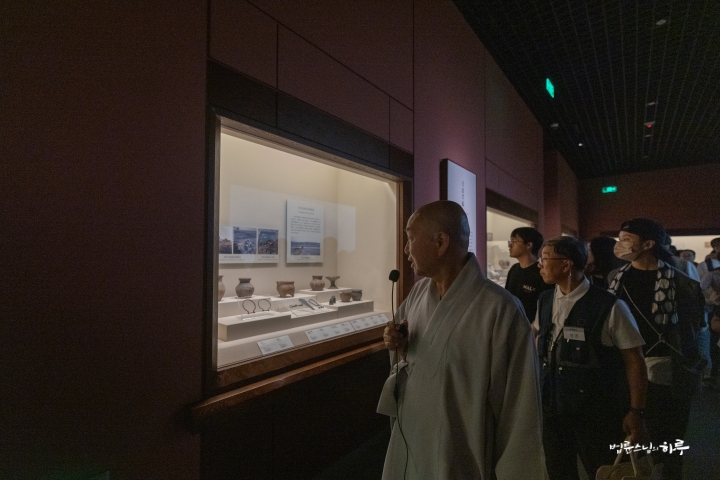
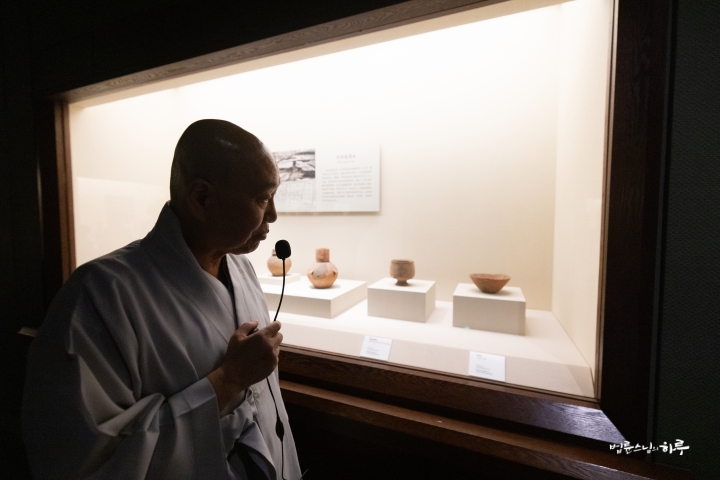
Among the artifacts, the most eye-catching were the intricately carved jade objects. The jade ornaments, gleaming softly in the light, conveyed the touch of ancient craftsmen intact.
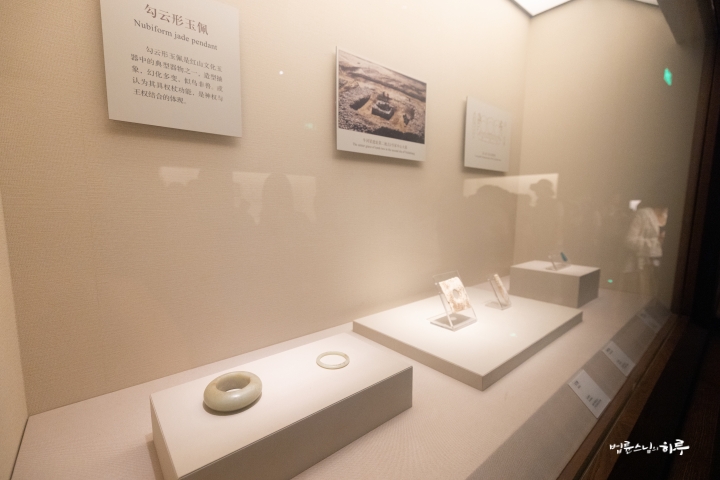
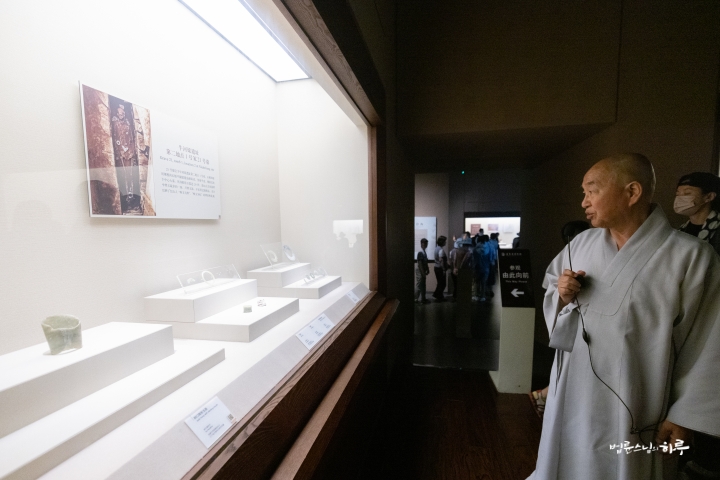
The origin of the name Hongshan was also interesting. The artifacts were first discovered on a red mountain behind Chifeng City in Inner Mongolia, and the name was adopted from there.
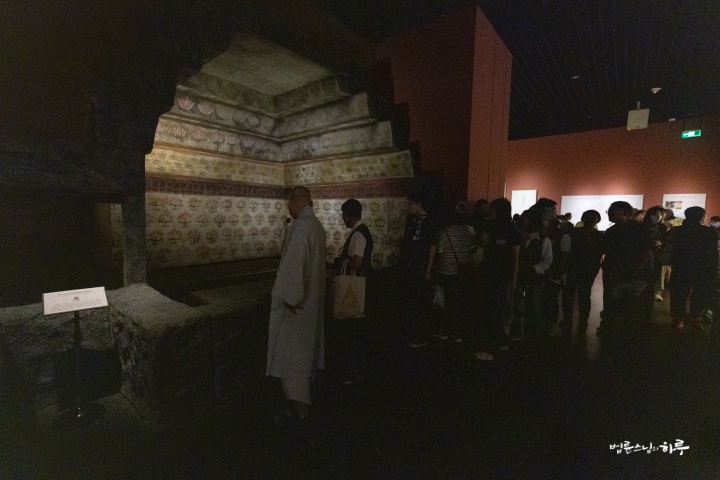
On the way out of the exhibition hall, Sunim shared important points for the group to remember.
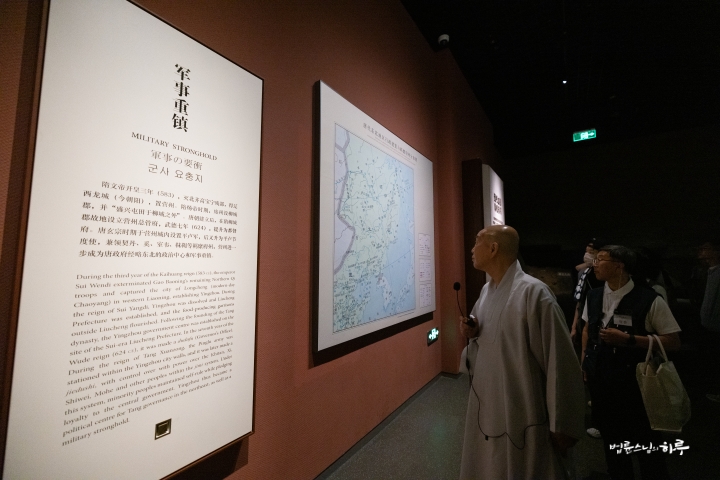
The ancient breath conveyed by the artifacts made the present air feel heavier. The traces left by people who lived on this land 6,000 years ago were not merely relics of the past but posed the question to us now: ‘Where did we come from?’
With the tour of Liaoning Provincial Museum complete, the Northeast Asian History Tour came to an end.
Everyone moved to a space where the entire group could gather. They hastily rented a banquet hall to have time to wrap up the history tour.
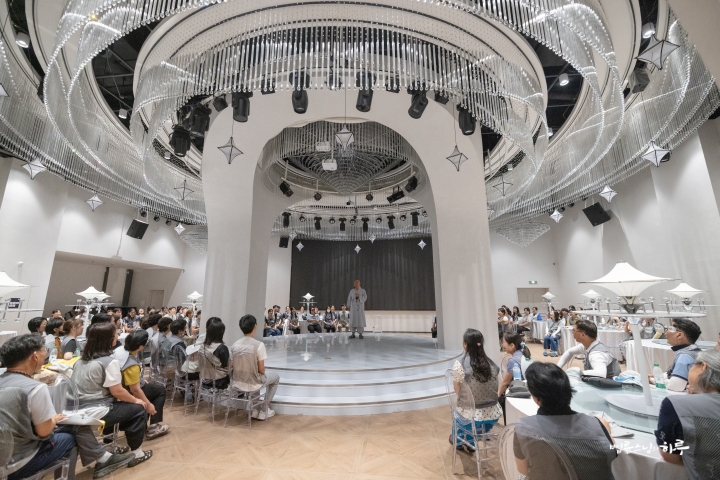
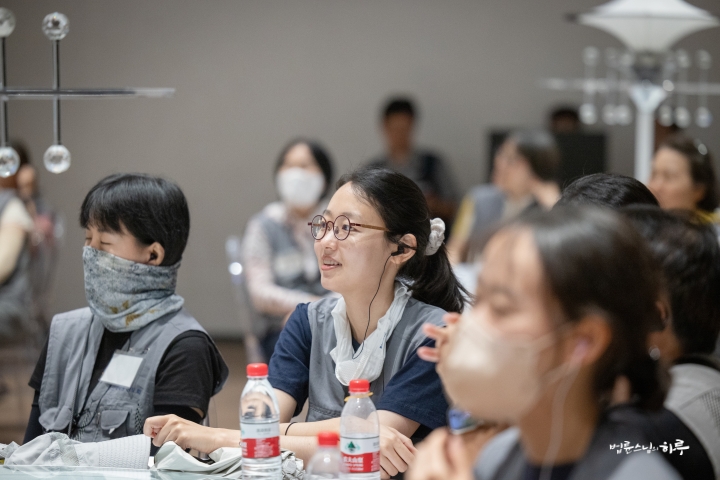
At 12:30 PM, Sunim began the final summary lecture. He provided supplementary explanations, noting that there might have been some confusing aspects while touring Liaoning Provincial Museum.
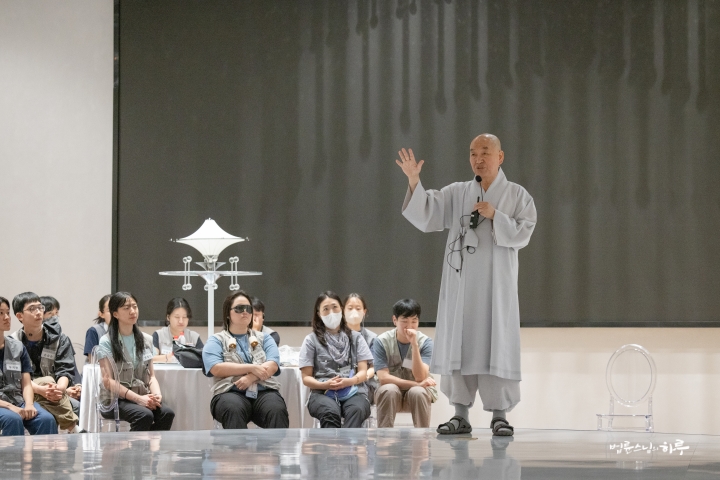
The Liaohe Civilization in Liaoning Provincial Museum Is Just the Tip of the Iceberg
The beginning of Liaohe Civilization is the Neolithic civilization. Between 9,000 and 6,000 years ago, Neolithic cultures formed in various places, which corresponds to the Han Dynasty period of Hwanin in our ancient history. The next period is the Hongshan Culture, mainly characterized by jade artifacts. In our history, this is between 6,000 and 4,500 years ago, which can be seen as the Baedal period of Hwanung. The center of Hongshan Culture is Chifeng City in the Inner Mongolia Autonomous Region, further west than Liaoning Province. Jade artifacts were mainly excavated there, dating from 5,000 to 6,000 years ago. In the Chaoyang area of western Liaoning, goddess statues and pyramid-shaped tombs were discovered. Chronologically, from 6,000 to 4,500 years ago, jade artifacts mainly came from Chifeng City in the Inner Mongolia Autonomous Region to the west, and around 4,500 years ago in the later period, tombs were mainly discovered in the western Liaoning region. Notably, in Chifeng City, there are 4,500-year-old fortifications made of stacked stones. So to properly see the Liaohe and Hongshan civilizations, one must go to Chifeng City. About 70 percent was excavated there. About 30 percent can be seen in Chaoyang City in western Liaoning Province. The artifacts we saw today in Liaoning Provincial Museum represent only a small portion of the Hongshan Civilization.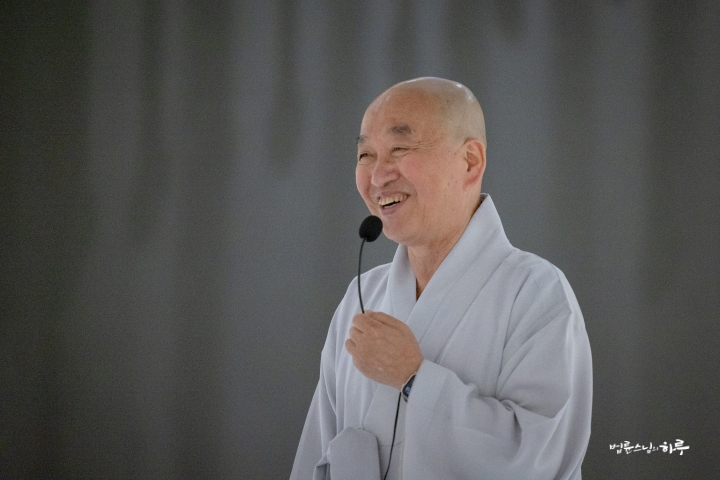
Traces of Gojoseon Bronze Age Civilization During the Xia-Shang-Zhou Period
Hall 2 displays artifacts excavated from the Xia-Shang-Zhou period. Chinese history includes the Three Sovereigns and Five Emperors. You’ve heard names like Yao, Shun, Yu, and Tang, right? The Xia Dynasty was founded by Emperor Yu, and the Shang Dynasty, also known as the Yin Dynasty, was founded by Emperor Tang. After the fall of the Yin Dynasty, the Zhou Dynasty was established. This is called the Xia-Shang-Zhou period, spanning approximately 1,500 years from 4,000 to 2,500 years ago. Artifacts from this period include advanced pottery and bronze ware. Compared to our history, this corresponds to the Gojoseon period. However, since the Liaoning Province region was not under the control of the Xia, Yin, or Zhou dynasties at that time, there is actually no historical connection. The nation that ruled this region during that period was Gojoseon. Therefore, the bronze civilization artifacts excavated from this region during the Xia-Shang-Zhou period can be considered Gojoseon relics. The museum’s signage doesn’t claim that the displayed pottery or bronze ware are Shang or Zhou Dynasty artifacts. They are simply labeled as “artifacts from this region during the Zhou period” or “artifacts from this region during the Shang period.”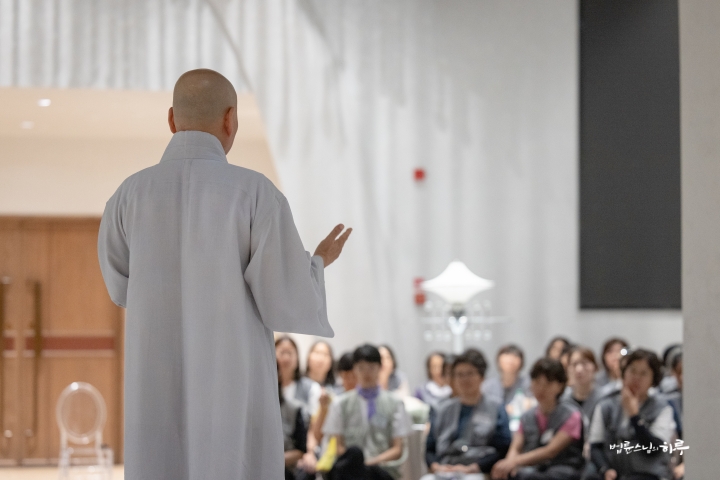
Traces of Gojoseon, Goguryeo, and Balhae Remaining in the Western Liao Region
The third hall displays artifacts excavated from the Warring States period through the Qin-Han period, Wei-Jin period, and Sui-Tang period. You’ve heard of the Spring and Autumn period or the Seven Warring States, right? The Warring States mentioned here refers to that period. Among the Seven Warring States, there was the Yan state established by the Xianbei people, a northern ethnic group. The Yan state was part of the same northern ethnic groups as our people. The Yan state occupied the area around present-day Beijing, and the Qi state was on the Shandong Peninsula. Among the Seven States, these two can be considered Eastern Yi ethnic groups. Some of the Yan state artifacts on display can be seen as traces of our civilization.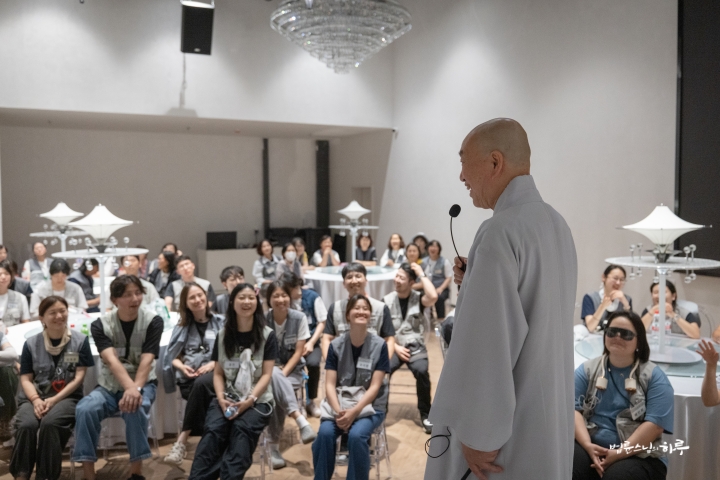
From the Jurchen to the Manchu: Our Brother Peoples with Different Names
The fourth hall displays artifacts from the Liao and Jin dynasties. After the fall of Balhae, the Khitan people who had been under Goguryeo established the Liao Dynasty. Subsequently, the Jurchen people established the Jin Dynasty. At that time, China was under the Song Dynasty, and we were in the Goryeo period. Both Liao and Jin pressured the Song Dynasty, so most of the northern territories of Song were lost to Liao and Jin. Later, the Jin Dynasty fell, and the Mongols established the Yuan Dynasty. The Yuan Dynasty dominated the Central Plains. Following this, the Han people established the Ming Dynasty, and then the Manchu people established the Qing Dynasty. The final fifth hall exhibited artifacts from the Yuan, Ming, and Qing dynasties. This region was occupied by the Yuan Dynasty, then successively ruled by the Ming and Qing dynasties. If we define the Yuan and Qing dynasties as northern peoples, the culture of this period can also be seen as northern peoples’ culture. Since the Ming Dynasty also occupied this area at times, some Ming artifacts may appear as well. Therefore, the artifacts from this region in the fifth hall can be considered distant from our ethnic heritage.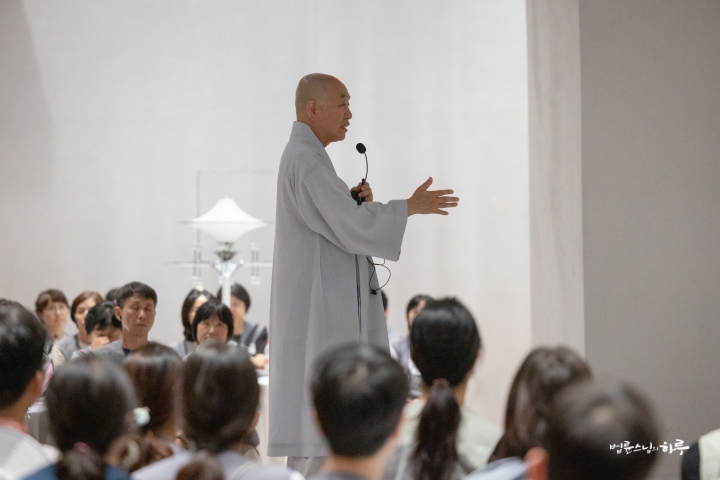
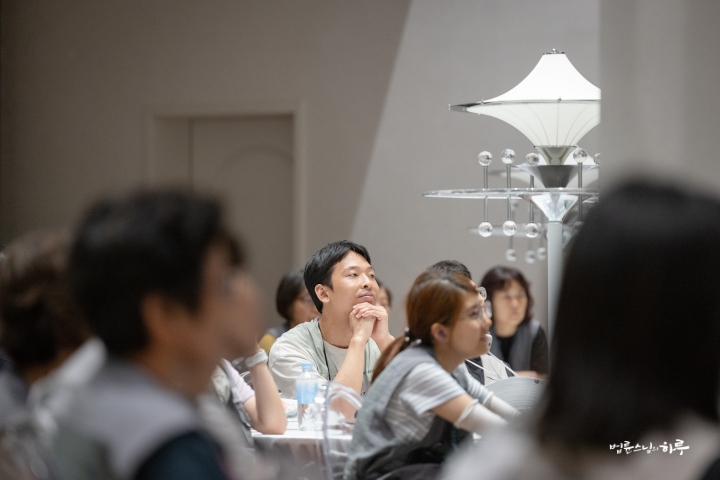
Northeast Asian History from a Civilizational Perspective
How is China establishing its historical perspective now? China has incorporated the Liao, Jin, Yuan, and Qing dynasties—established by other ethnic groups who conquered the Central Plains—into Chinese history rather than excluding them. While these weren’t originally their history, this approach inevitably makes Chinese history appear grand. China currently views all history that occurred on present-day Chinese territory as Chinese history. If we similarly viewed the history of all northeastern ethnic groups who lived in the original Gojoseon territory as our history, it would become quite extensive. The northeastern peoples conquered the Central Plains several times, such as during the Sixteen Kingdoms of the Five Barbarians period, the Yuan dynasty, and the Qing dynasty. From this perspective, the Central Plains were occupied equally by southern and northern peoples. We need to develop this civilizational perspective when viewing history.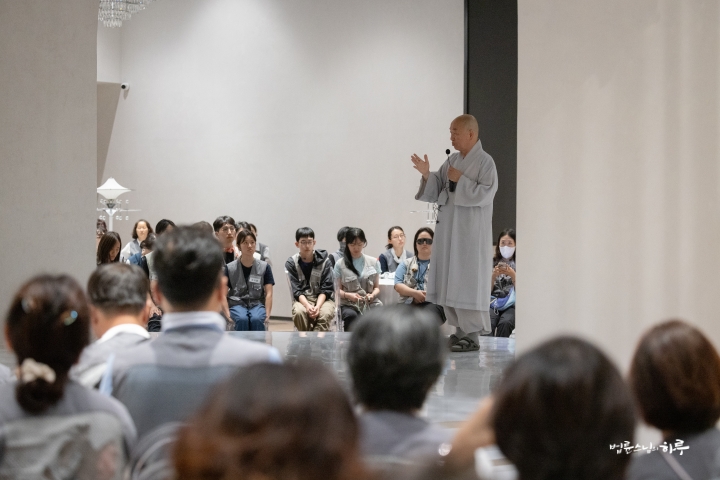
Next, there was time to introduce the staff members who had worked hard during the past seven days. As Sunim introduced each staff member, thunderous applause erupted.
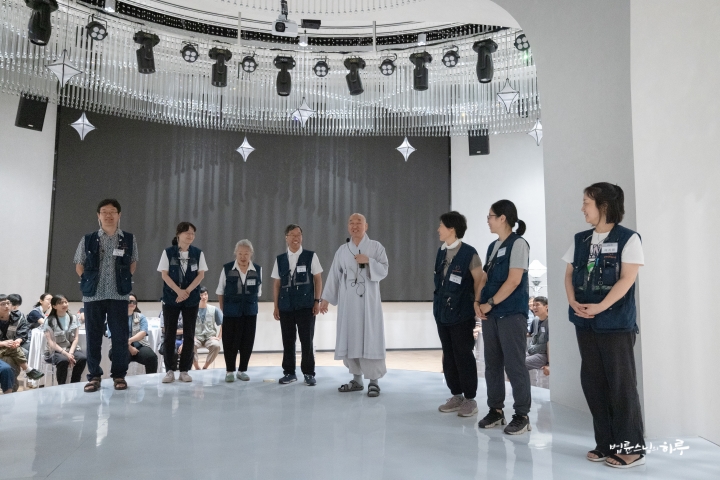
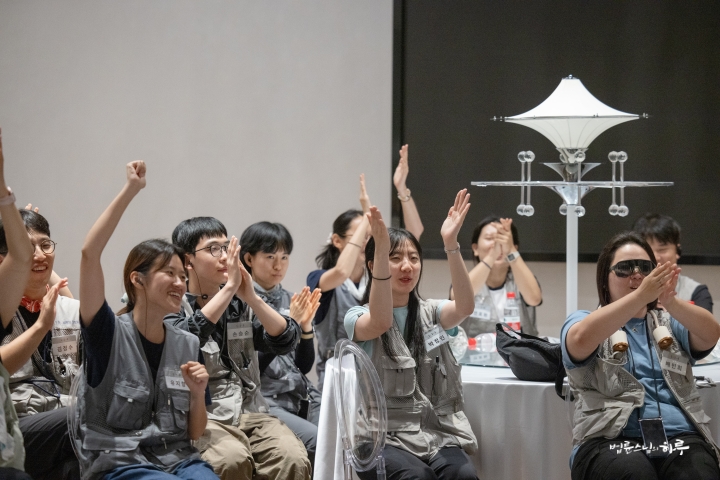
The participants were then introduced as well. After sharing greetings and brief reflections, they each sang a song.
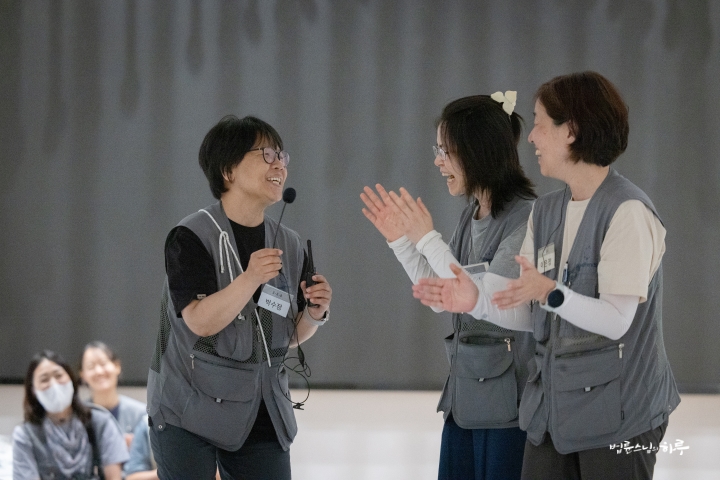
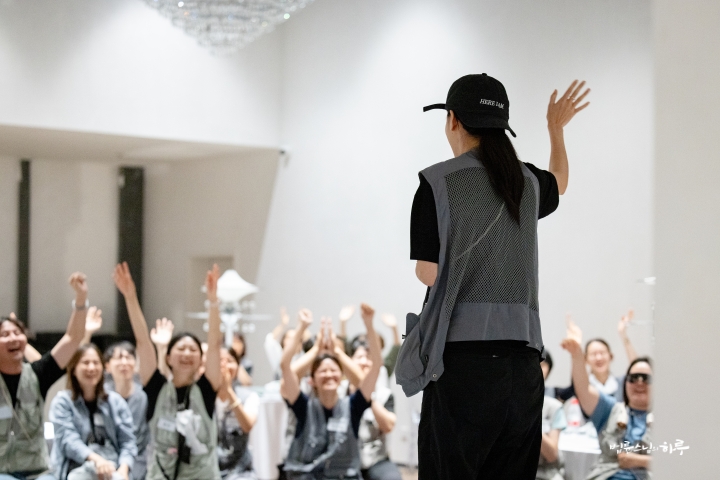
Everyone spent the final moments of the history tour together, laughing and clapping. When it was time to depart for the airport, Sunim gave his closing remarks.
“This concludes our Northeast Asian History Tour. Thank you all for your hard work.”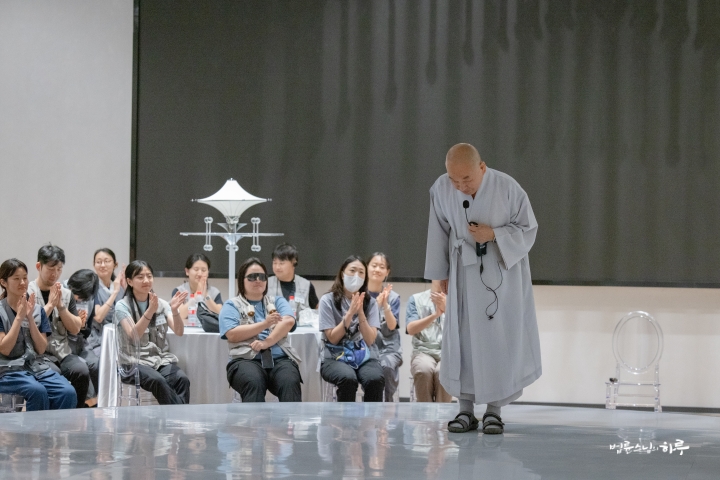
The group departed for Shenyang Airport a bit early, considering the time needed for departure procedures.
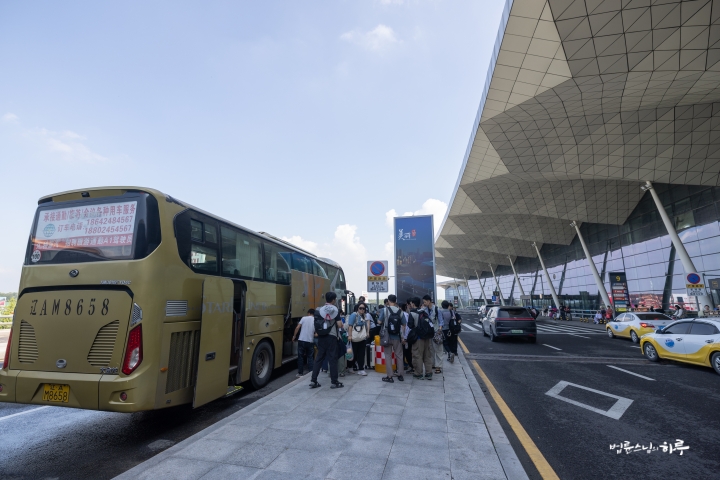
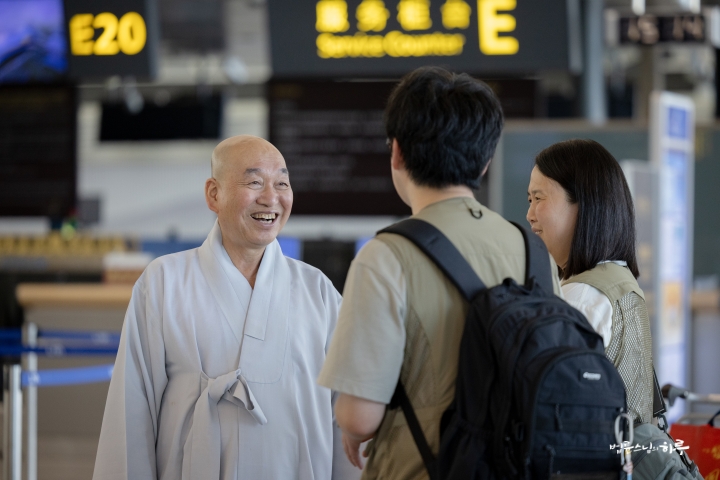
Upon arriving at Shenyang Airport at 2 PM, the members immediately formed a long line at the counter to complete departure procedures. After finishing the check-in process, Sunim expressed his gratitude to Joshin and Jinshin, who had guided the history tour, before heading to the boarding gate.
The flight departed from Shenyang Airport at 4:50 PM and, after a two-hour journey, landed at Incheon Airport at 7:50 PM local time.
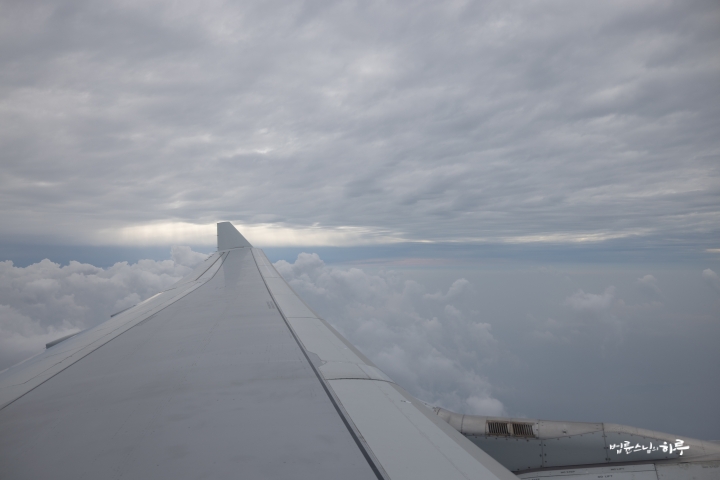
After collecting their luggage and exiting the arrival hall, Sunim bid farewell to the participants.
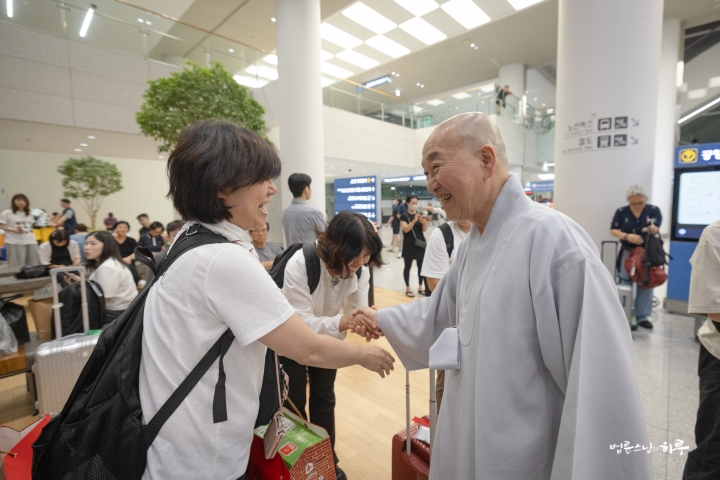
“Thank you.”
Departing from Incheon Airport, the group returned to Seoul Jungto Center by 10 PM. The 7-day, 6-night Northeast Asian History Tour, resumed for the first time in five years since the COVID-19 pandemic, was successfully completed.
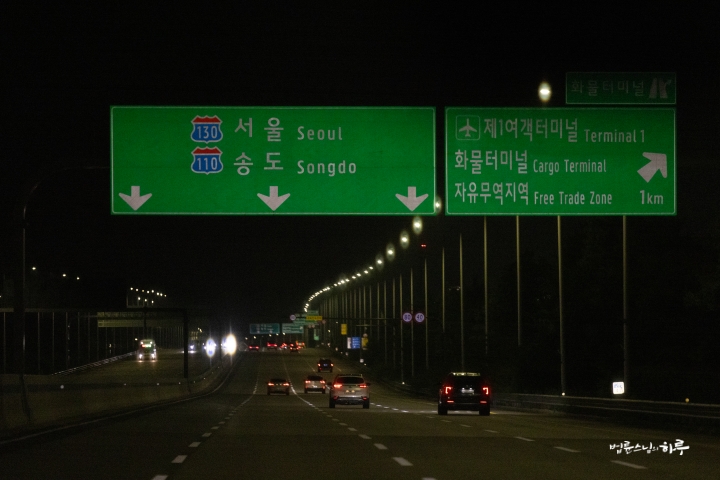
Tomorrow, Sunim’s schedule in Korea will resume. In the morning, he will attend the Jungto Dharma School graduation ceremony. In the afternoon, he will attend the Jungto Sutra Course graduation ceremony, followed by the Balsim Practitioner ordination ceremony where he will give a Dharma talk. In the evening, he plans to travel to Dubuk Jungto Retreat Center.