I Don’t Have Any Friends to Open Up To
Jun 27, 2025 - INEB Day 2, Discussion on Education, Happy Dialogue (1) Seoul
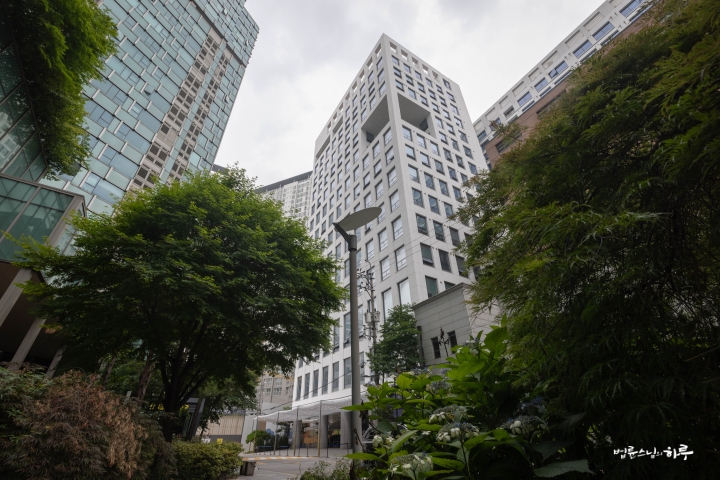
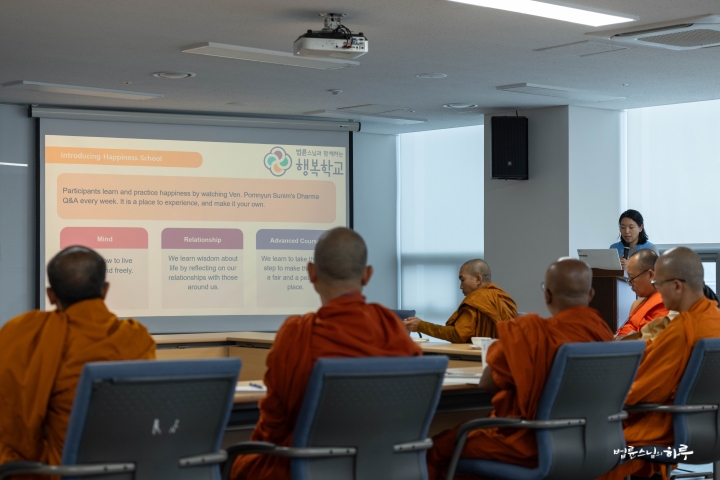
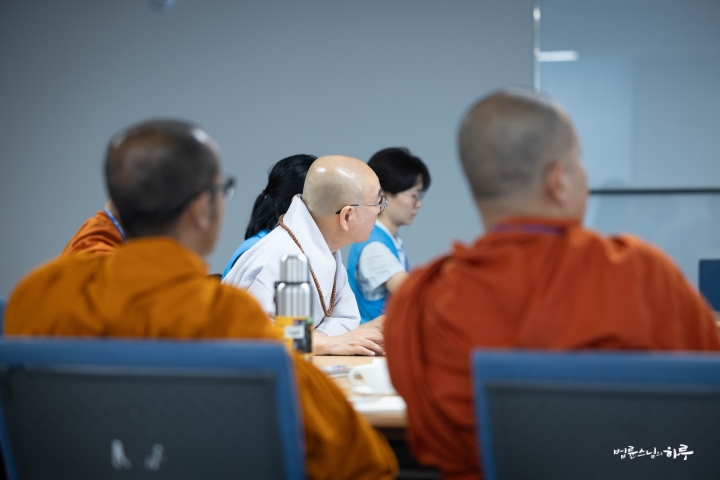
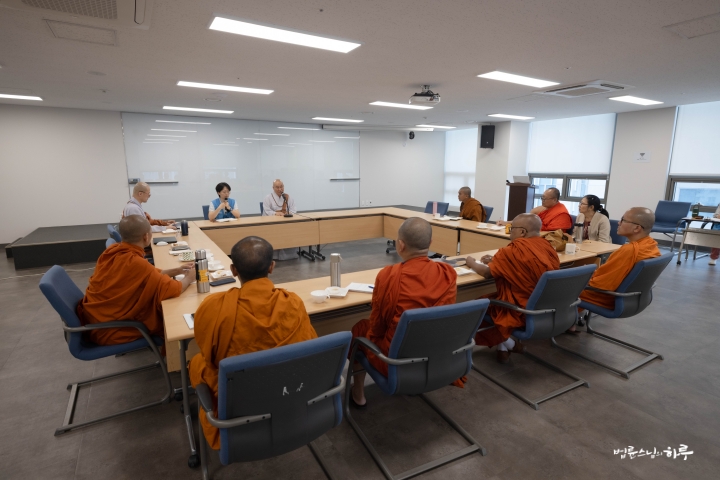
At 9 o’clock, Sunim went to the auditorium on the 9th floor to participate in the INEB Study Tour. The topic for discussion throughout the day was ‘education.’ First, there was time to introduce Jungto Society’s educational programs. Kim Mi-sun, a volunteer who conducts the English Jungto Dharma School, explained the educational goals and programs of Jungto Dharma School, Sutra Course, and Happiness School.
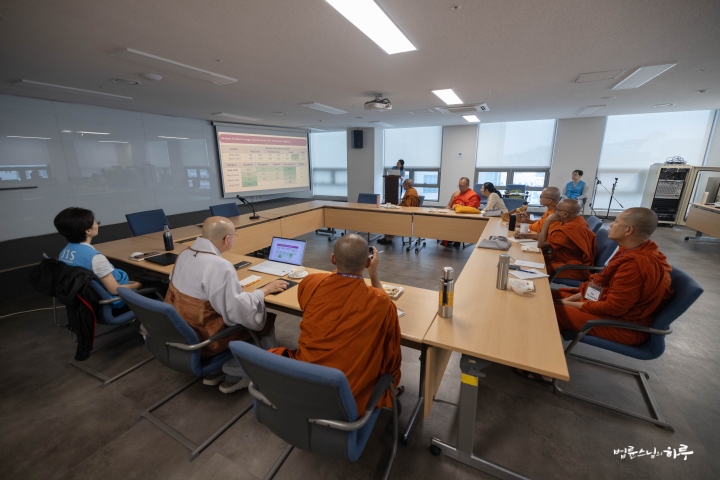
“Jungto Society’s Buddhist propagation begins with the Jungto Dharma School course. Participants who complete the course are encouraged to become Jungto Society members. They also move on to the next course, the Jungto Sutra Course. Those who complete the Jungto Sutra Course are encouraged to become leading members. I myself have walked a similar path. We also operate the ‘Happiness School’ for general citizens, which doesn’t use religious language…”
Next, Ven. Khongsin, who serves as the principal of Wat Nicrotharam Temple Buddhist School in Thailand, introduced the school’s operations and educational goals.
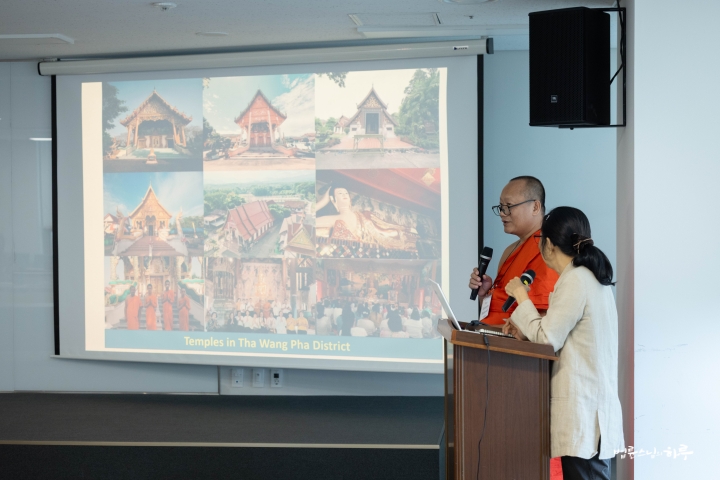
“Wat Nicrotharam Temple Buddhist School was established in 1993 to address the shortage of resident monks and novices at the temple. It provides secondary education, and students learn not only the knowledge and skills necessary for Buddhist rituals but also Thai language, mathematics, English, and ethics education.”
It was impressive that the educational curriculum realizes holistic education by collaborating with the local community and including nature conservation and vocational skills training.
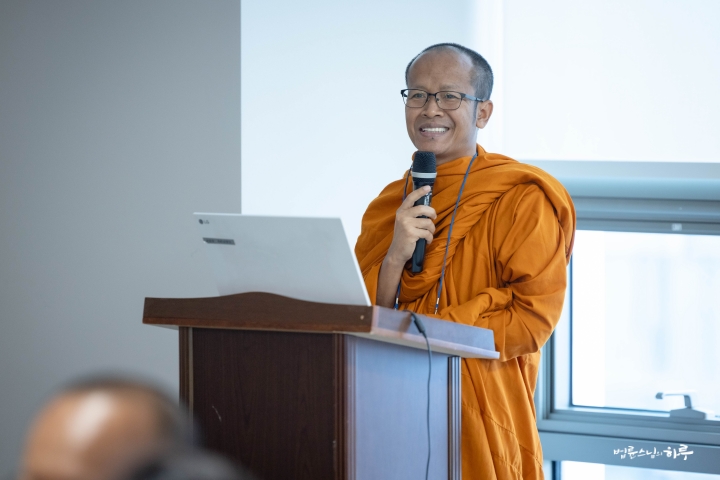
Next, Ven. Sayadej from Laos presented about Ongtue Sangha College.
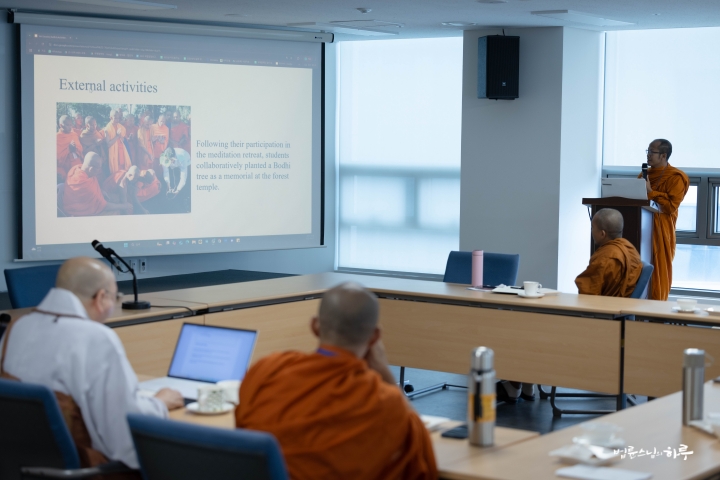
“Since its establishment in 1929, Ongtue Sangha College has grown into Laos’s leading higher Buddhist educational institution. Currently, it operates a 4-year degree program centered on Buddhist studies and English education, with meditation practice and internships included as mandatory courses. Graduates work as teachers in Buddhist high schools nationwide and in Buddhist-related institutions…”
It was impressive that they pursue integrated and modern Buddhist education through connections with local communities and academic exchanges with international Buddhist universities.
After the presentations, there was a Q&A session. Various questions poured in as participants showed deep interest in each other’s activities.
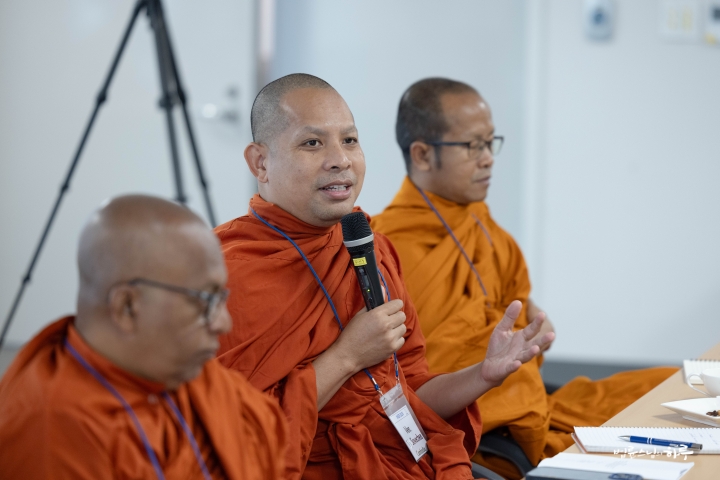
INEB participant monks asked many questions about the specific methods and educational content of Jungto Dharma School and Happiness School. Sunim added detailed explanations.
Jungto Dharma School: Practice-Centered Buddhist Education to Overcome Suffering
As explained earlier, let me provide some additional explanation about Jungto Dharma School operated by Jungto Society. The educational target of Jungto Dharma School is general adults who are beginning their journey in Buddhism. Education is conducted online, with classes once a week for six months. Anyone aged 19 or older can participate. Classes are usually conducted with 7 students forming one group, and each group is assigned 1 facilitator and 1 co-facilitator. When 7 such groups come together, they form one class, and each class is assigned 1 Dharma Teacher and 1 administrator. Students can freely ask questions to the Dharma Teacher whenever they have questions. Two 50-minute video lectures are provided online each week, and students watch them individually. Then, once a week, they gather online to share their thoughts and reflections on the teachings, taking turns to speak. If they don’t understand the Dharma talk content well or have questions, they can ask the assigned Dharma Teacher at any time and receive personal answers.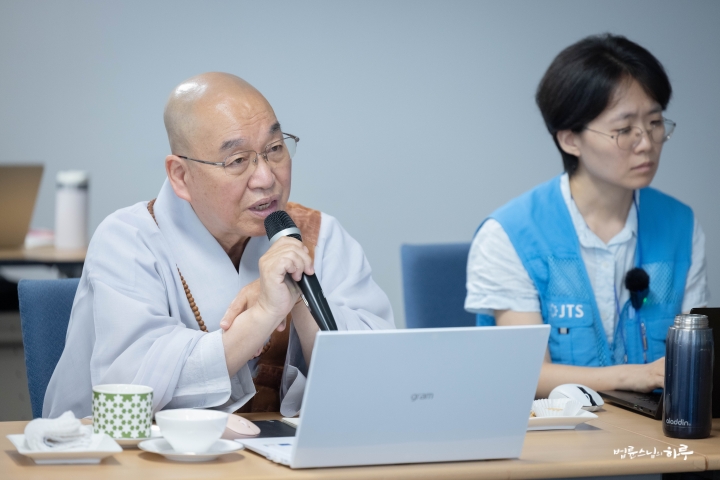
Happiness School: A 4-Week Mind Study Program Anyone Can Start Without Burden
However, Happiness School has a slightly different character from Jungto Dharma School. Even though we try to explain things as simply as possible using everyday language at Jungto Dharma School, students still need to learn basic Buddhist terms and concepts. They need to learn terms like ‘Four Noble Truths,’ ‘Middle Way,’ and ‘Dependent Origination.’ No matter how much Jungto Dharma School claims to teach beyond religious boundaries, it can still feel burdensome to those of different religions or those who have resistance to religion. So we created Happiness School to allow many citizens to study the mind without any resistance. At Happiness School, we only approach questions like ‘Why does the mind suffer?’ and ‘How can we escape from this suffering?’ We don’t use Buddhist terms like the Four Noble Truths. This makes it easy for anyone to participate, and the course is short—just one month. If they like it after trying it, they can do it again later.”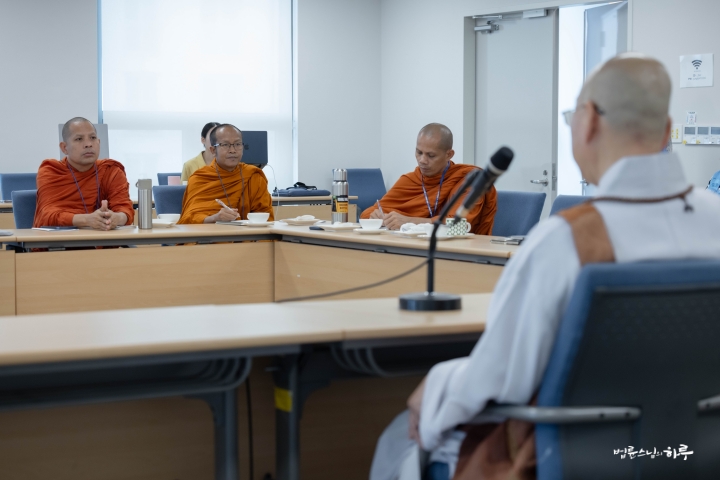
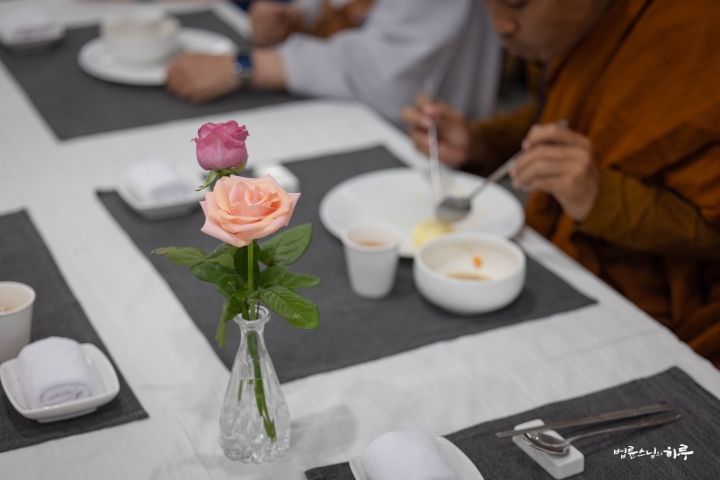
After finishing the morning program, at 11:30 AM everyone went down to the basement dining hall together for lunch. The volunteers had prepared food with care and a welcoming heart.
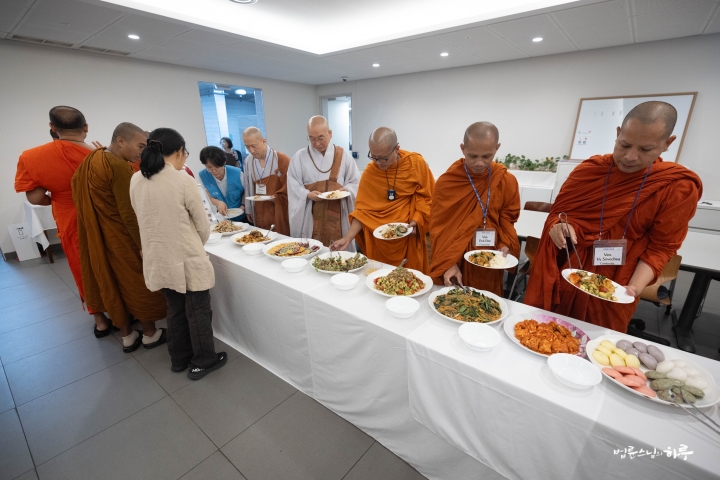
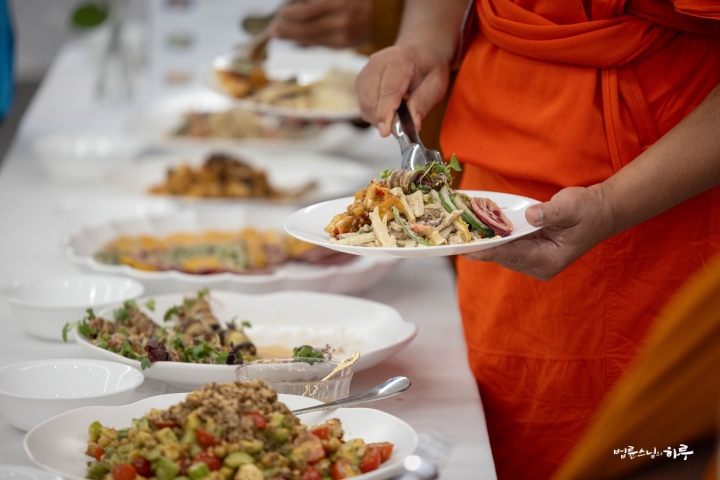
After each person served themselves as much food as they wanted to eat, everyone together offered a Theravada-style prayer of gratitude.
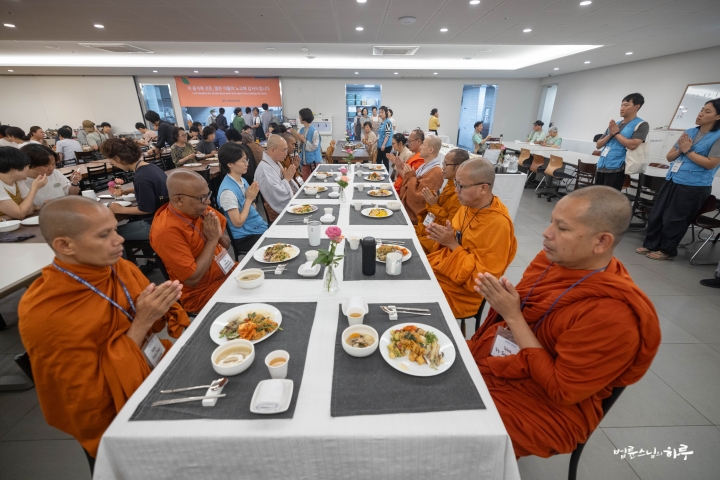
Venerable Kongsin from Thailand expressed admiration upon seeing the neatly prepared food.:
“If we eat like this every day, we’ll become healthy.”
Sunim replied with a smile:
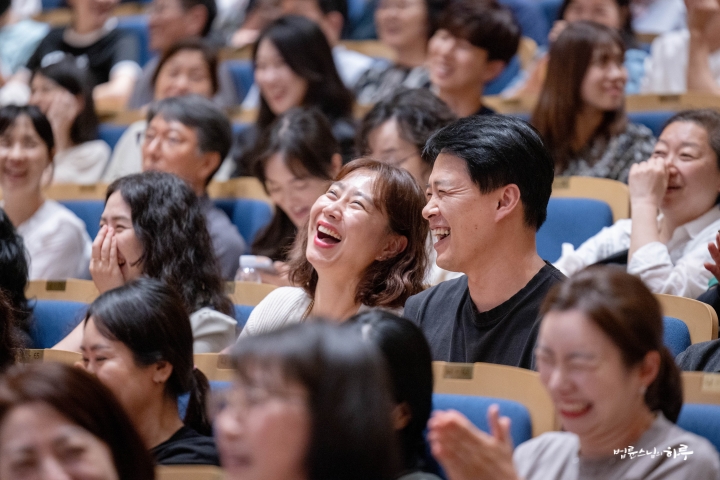
“We don’t usually eat like this either. We prepared this special food because the venerable monks are visiting.” (Laughter)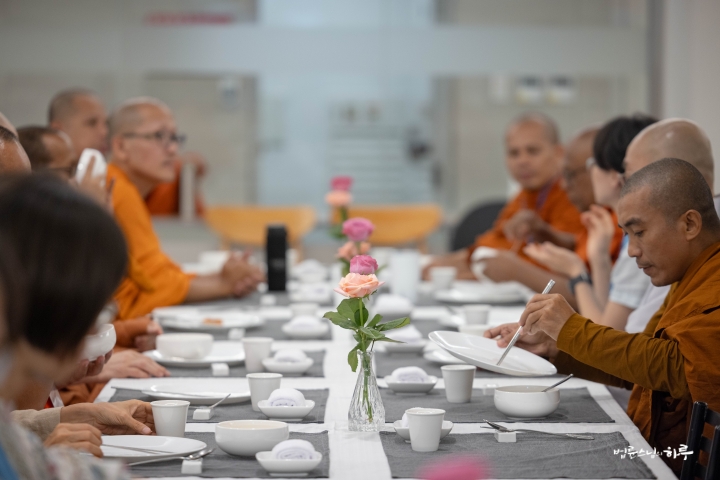
After finishing the meal, Sunim went to the kitchen to thank the volunteers.
“Thank you for the meal.”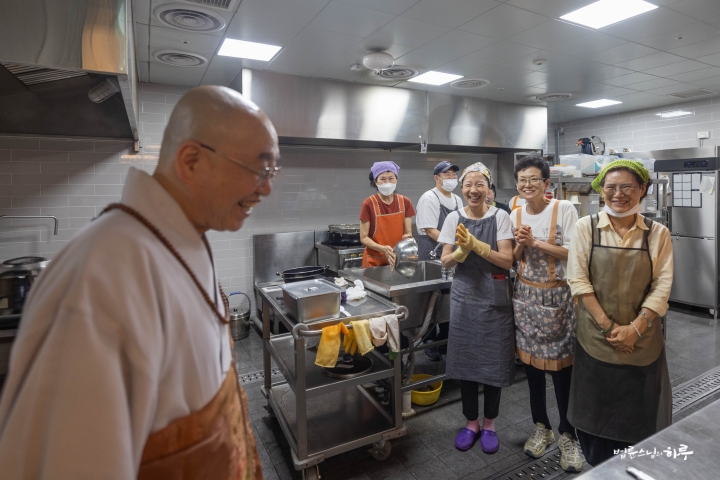
The program resumed at 1:30 PM. Before starting the dialogue, Kim Yoon-mi, a JTS volunteer who recently visited the Myanmar earthquake relief site, explained the damage situation and JTS’s relief activities. While watching videos of the relief efforts, participants deeply empathized with the suffering of Myanmar’s disaster victims and once again felt the urgent need for solidarity and support to alleviate their pain.
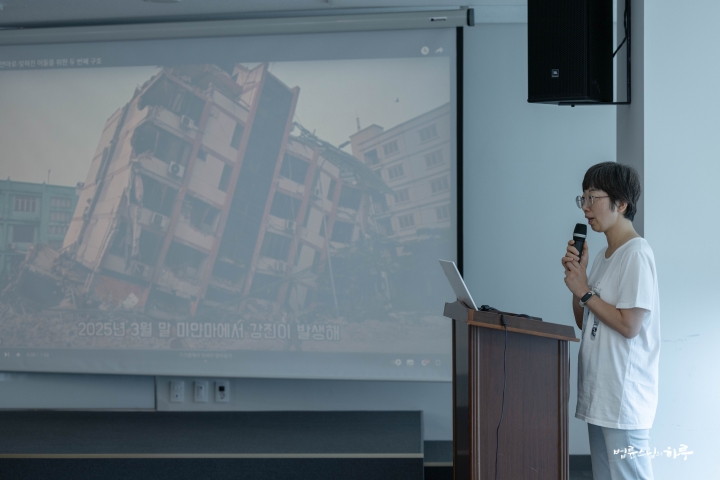
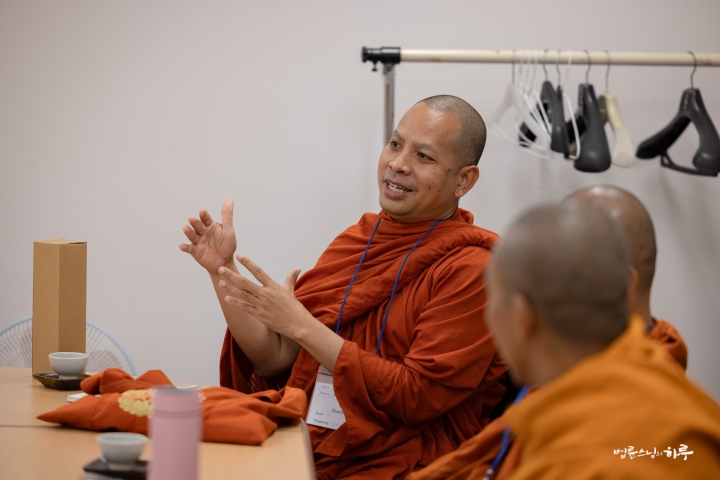
A Q&A session followed. The INEB participant monks were very intrigued by the phenomenon of ordinary citizens asking Venerable Pomnyun Sunim about their life concerns and finding relief from their suffering after hearing his answers.
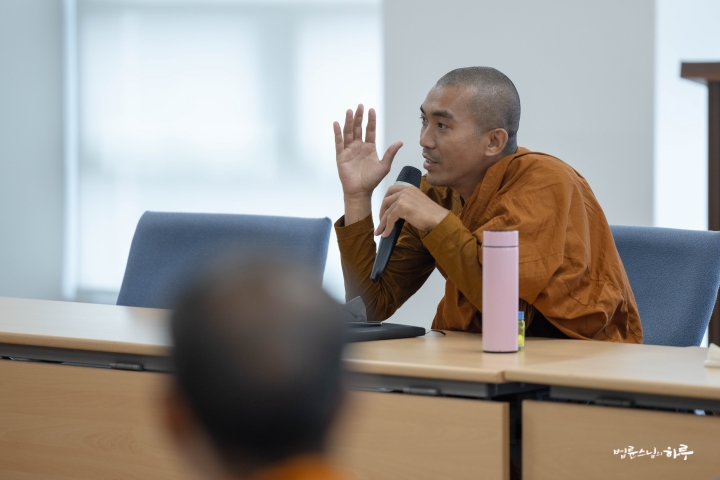
How Can We Approach Lay Practitioners Who Cannot Open Their Hearts to Monks?
“We are all Theravada monks. Generally, Buddhist lay practitioners greatly respect and revere Theravada monks, finding it difficult to approach us comfortably. Men, in particular, are very careful with their words in front of monks and cannot converse freely. When I came to Jungto Society in 2000, I was amazed watching Venerable Pomnyun Sunim’s Dharma Q&A. The questioners were very comfortably sharing their suffering and trauma. I tried to implement similar mindful sharing or discussions at my meditation center, but most people couldn’t easily accept it and wouldn’t share their inner problems with monks. Within the Theravada tradition, it seems that lay practitioners find it difficult to easily talk about their suffering to monks. Perhaps this comes from their respect for monks. I’m curious how Venerable Pomnyun Sunim can communicate and work so freely with ordinary people. I’d like to have comfortable conversations over a cup of tea, but lay practitioners seem to find me difficult to approach, which concerns me.”
Sunim answered.
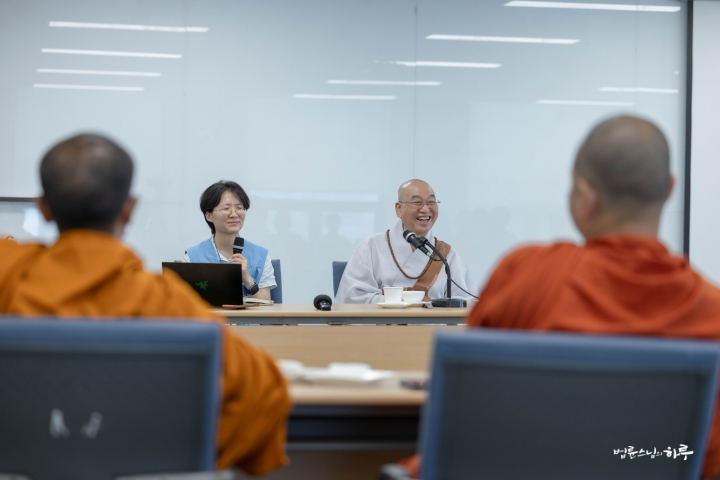
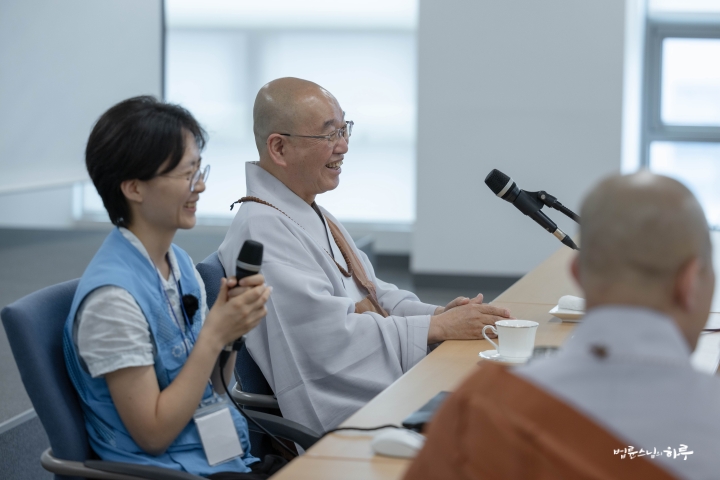
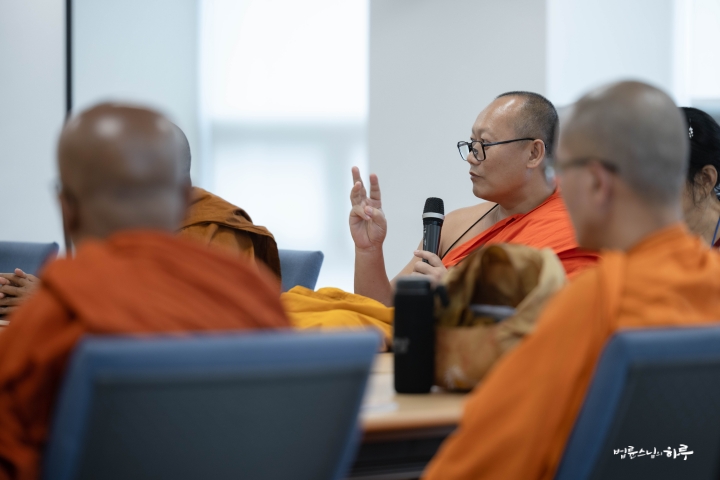
Venerable Kongsin from Thailand shared his concerns about how to teach happiness to people. Sunim first defined what happiness is and then explained from what perspective he conducts Dharma Q&A sessions with people.
What Kind of Education Is Needed for People to Be Truly Happy?
“Educational reform is currently underway in Thailand. The goal is to develop people into more professional and happy beings. However, I’m not sure how well this goal is actually being met. Education is increasingly shifting toward focusing on how children think and act, developing their capabilities in these areas. I want to focus on happiness at the school where I work because people have so much suffering. It’s difficult for many people to be happy. So I’d like to introduce methods for becoming happy, like what Jungto Society does, to the school I run. I’d like to hear your advice on how this might be possible.”
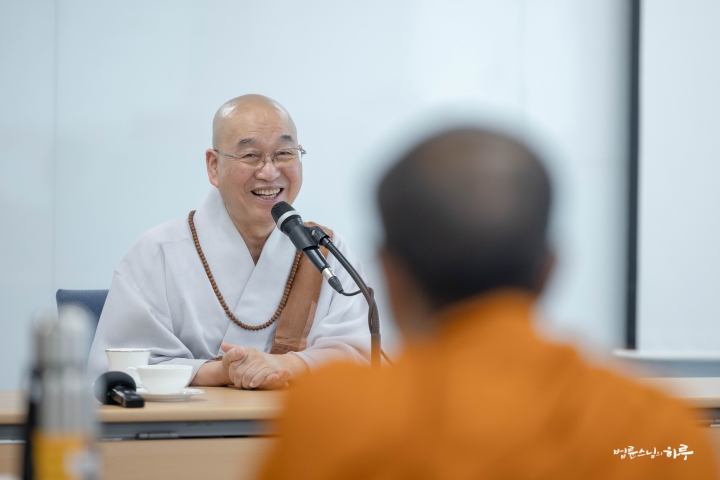
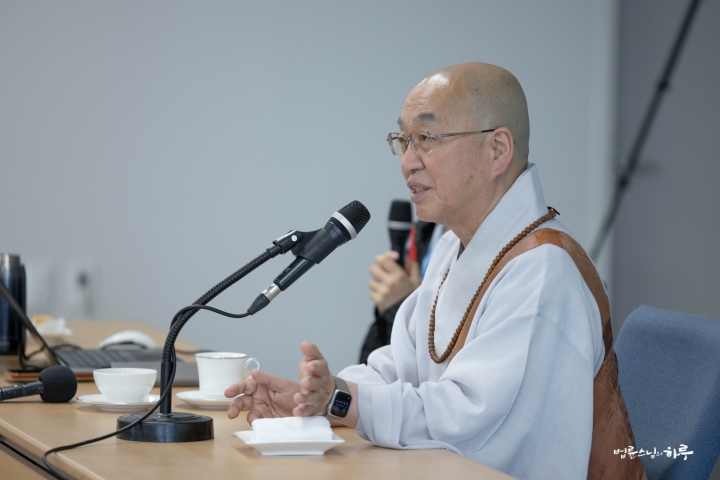
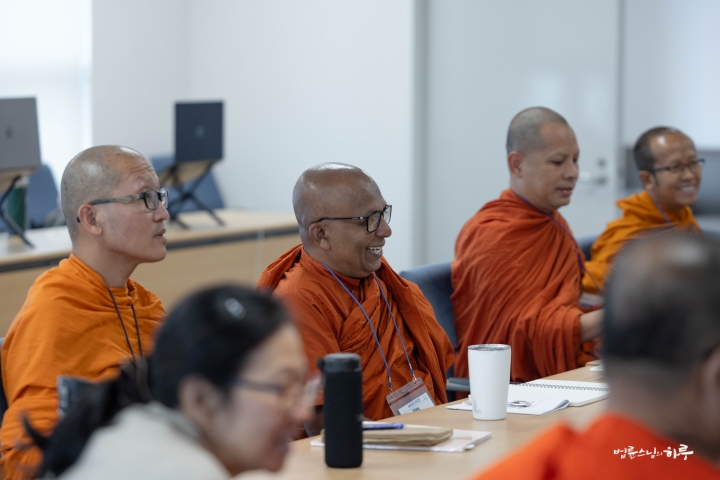
After two hours of conversation, they took a short break.
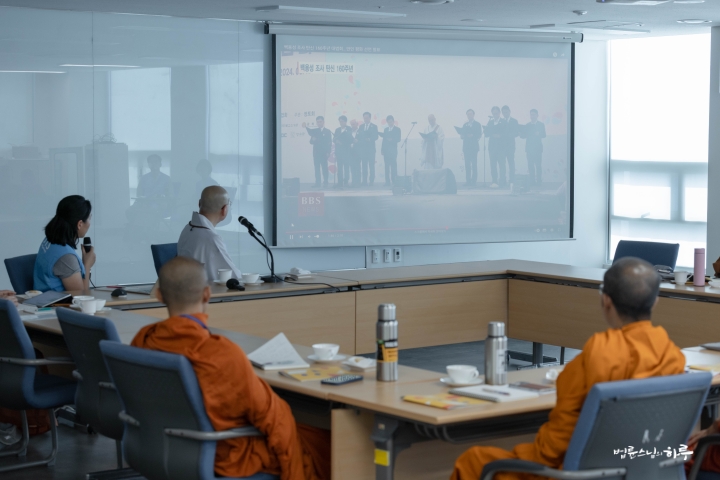
Before resuming the dialogue, they watched a video of Jungto Society’s 6.13 Grand Dharma Assembly held last year and introduced the purpose of the event. Then Sunim took more questions.
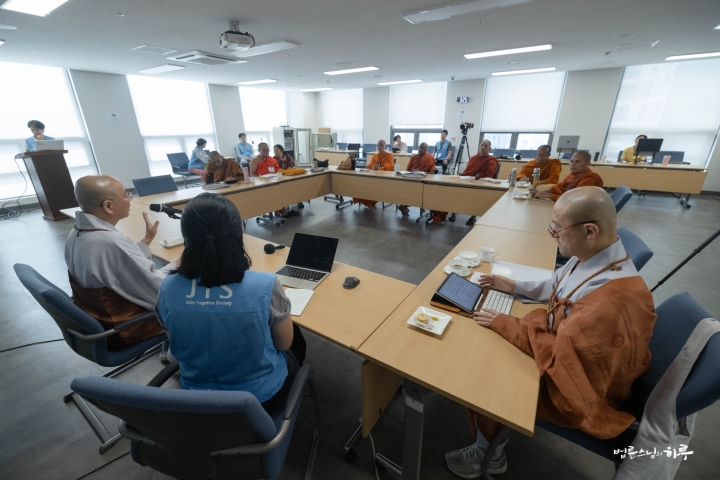
Everyone showed great interest in the Happiness School, so Sunim explained the curriculum in more detail. They then had a full discussion on the topic of “new member education.” Various questions followed: “Is there Buddhism in North Korea?”, “Can people from Thailand visit North Korea?”, “How does Sunim make contact with North Korean people?” There was also interest in inter-Korean relations and the religious situation in North Korea.
Participants continued with questions about the content that Venerable Kongsin had presented in the morning.
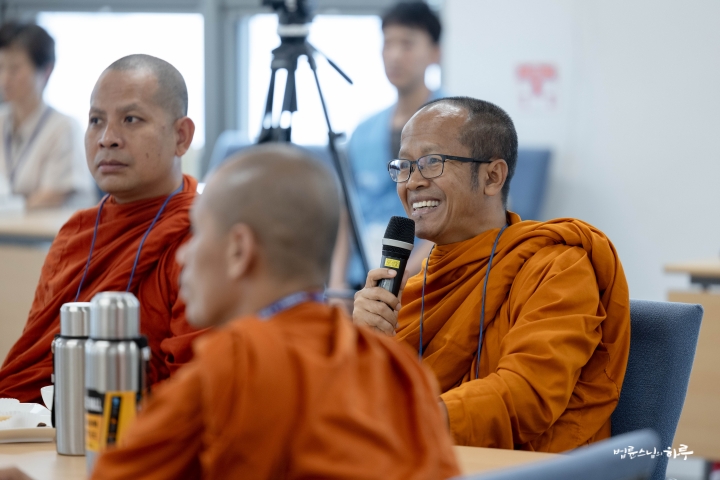
They spent time resolving questions about Thailand’s education system, such as “Can students who graduate from Buddhist schools enter regular universities?” and “Why do they attend monastic schools instead of regular schools? Is it for economic reasons or because of interest in Buddhist practice?”
Questions about Korean Buddhism also arose.
“Besides Jungto Society, how many other Buddhist educational institutions are there in Korea? Are there any run by the government?”
“In Thai Buddhist schools, even monks don’t choose Buddhism. They study law, sociology, political science, and science, then leave the temple to find employment. How is it in Korea?”
Everyone expressed concern about the declining number of Buddhist followers. Sunim shared his thoughts on this issue as they concluded today’s discussion.
Can Buddhism, Which Young Generations Are Leaving Behind, Become Hope Again?
I believe that hope for overcoming the crisis of modern civilization lies in the Buddha’s teachings. In the past, people were materially deprived, so religious practices of praying for blessings were prevalent. Now that the problem of making a living has been resolved, doesn’t mental suffering still remain? This suffering requires spiritual healing, and I think the Buddha’s teachings are most effective for this. While meditation can help, meditation alone seems insufficient. We need to learn the Buddha’s teachings and attain wisdom. I believe we need to return to the Buddha’s fundamental teachings and understand the principles of how the mind works. This education should be applicable to daily life and easy to understand. We need efforts to study the Buddha’s teachings beyond traditional religious views and apply them to eliminating people’s suffering.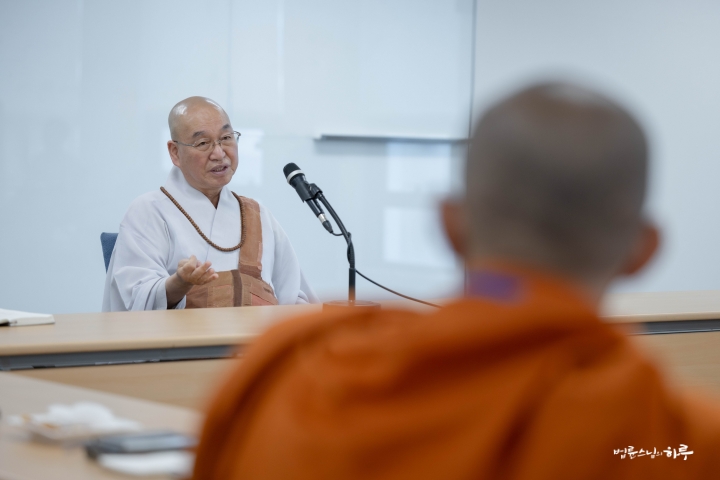
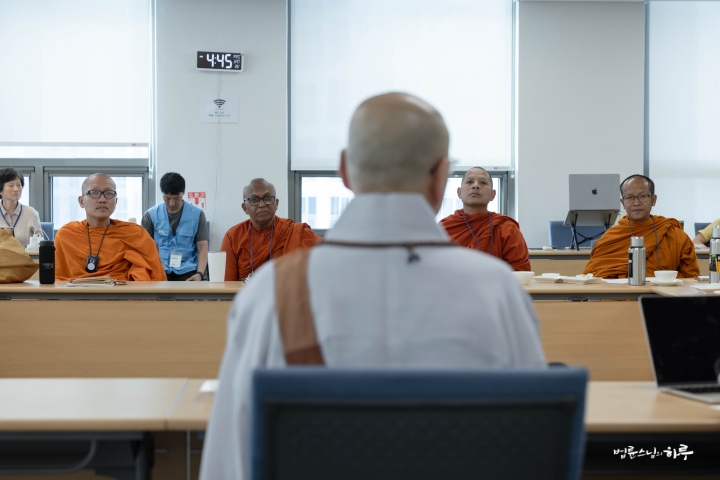
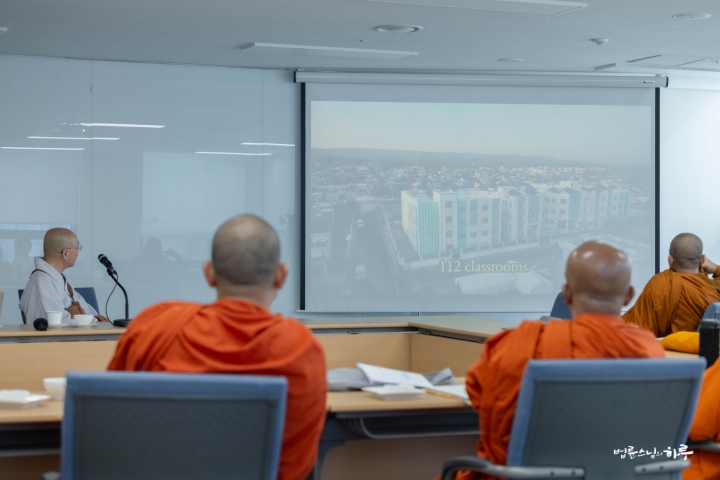
Finally, after watching a video together about JTS rebuilding a school for over 4,000 students in Syria, which had been destroyed by earthquakes and war, the conversation came to an end.
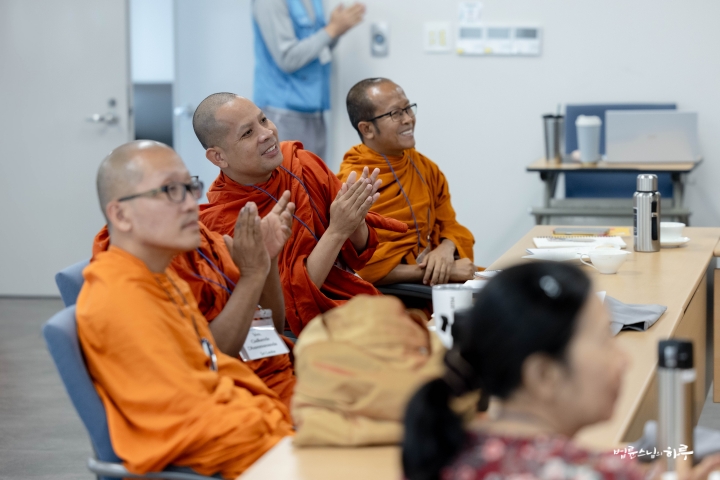
As guests arrived, Sunim immediately moved to the reception room, while the INEB participant monks moved to the basement dining hall for light refreshments.
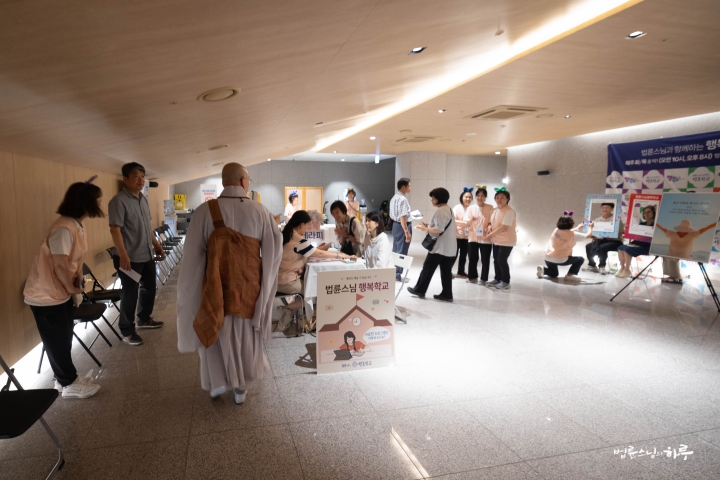
As the sun set, at 7:10 PM, everyone gathered at the second-floor lounge and moved together to the basement auditorium where the Happy Conversation Dharma Q&A was to be held.
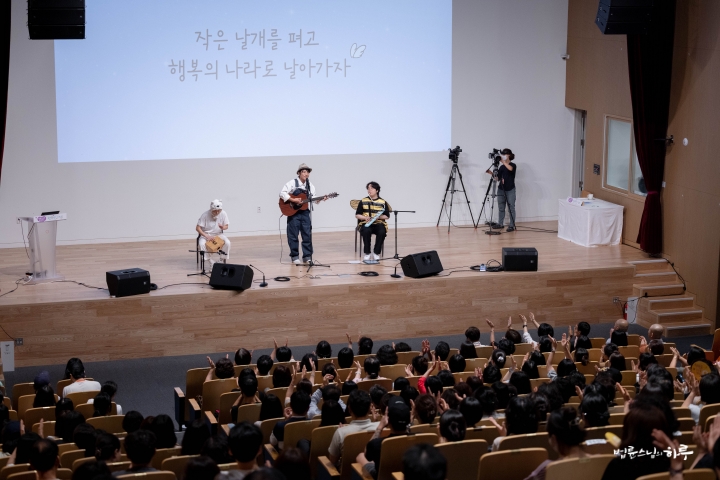
When Sunim and the INEB participant monks entered the auditorium, everyone welcomed them with enthusiastic applause. Today’s lecture began with an exciting song performance by the indie band “Magic Donkey.”
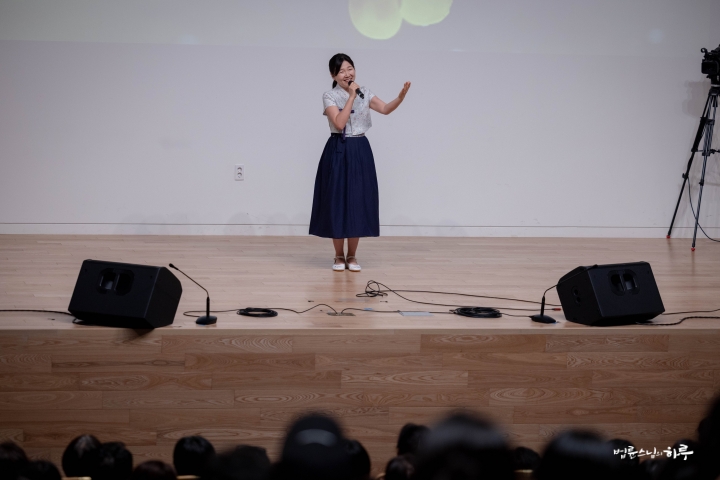
Next, Lee Seon-ho from the Cheongju branch of Jungto Society performed a parody of the song “Age, Go Away” titled “Defilements, Go Away,” filling the lecture hall with laughter and energy.
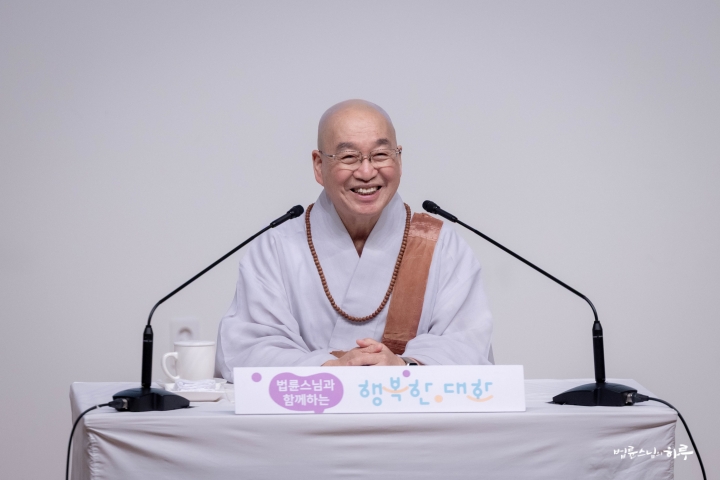
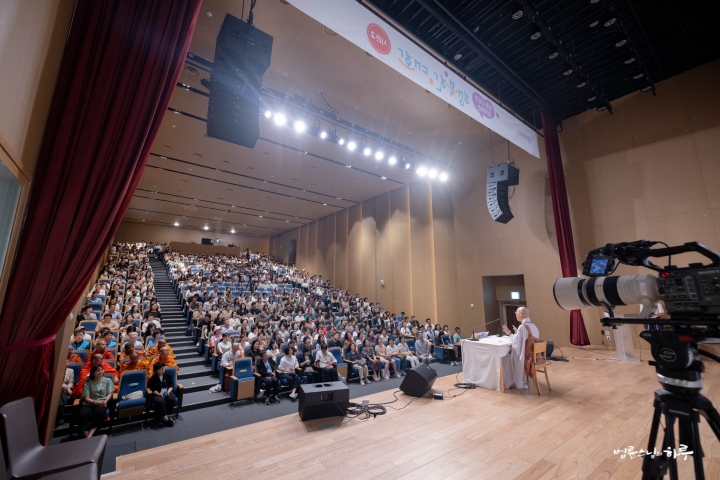
After the introductory video about Sunim ended, he came up on stage to great applause. About 3,900 people were connected to the YouTube live stream. Sunim greeted everyone with a smile.
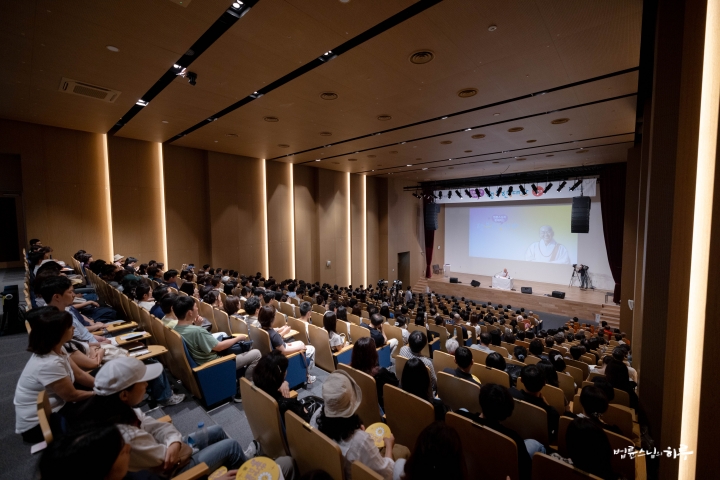
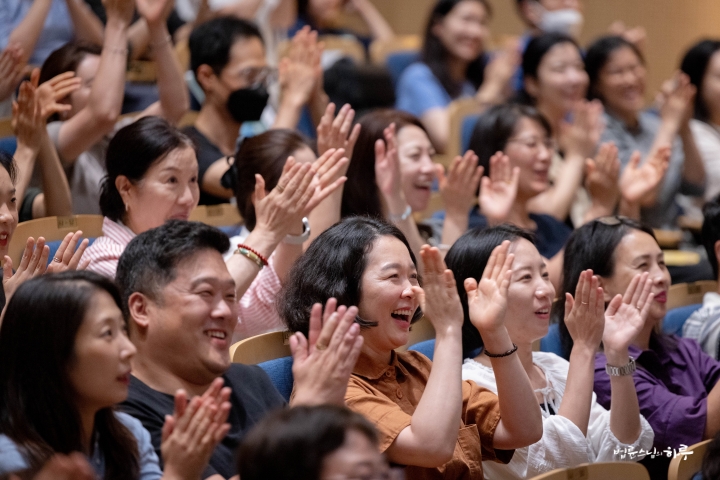
Shall We Begin This Conversation Where Suffering Disappears?
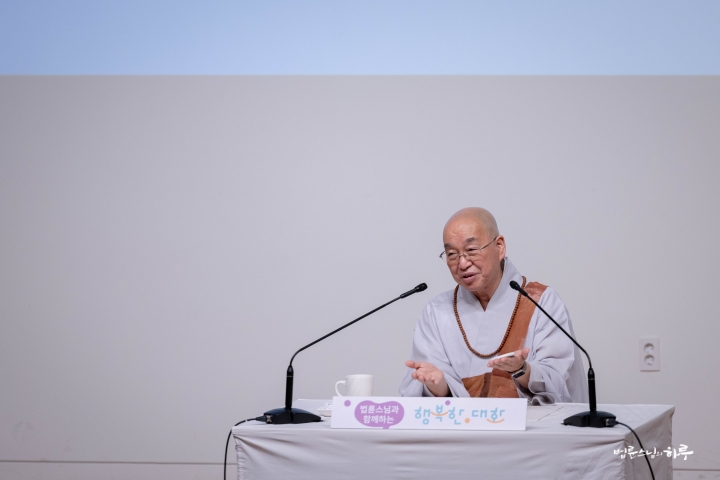
“Dharma Q&A is not a place to convey certain knowledge or beliefs. It’s not about sharing prepared stories either. It’s a time to comfortably reveal the anguish in our hearts and talk about it together. Through conversation, you might think, ‘It’s not such a big deal!’ When thinking alone, it might feel unbearably painful and seem like a huge problem, but when we talk together, you realize, ‘It wasn’t worth being so distressed about!’ and the suffering disappears. This kind of conversation is called Dharma discourse. Dharma discourse isn’t about explaining Buddhist doctrine; rather, it’s when suffering disappears during our conversation about suffering. In English, we call it a Dharma Talk.” “This time today is for sharing Dharma discourse with you. We’ll have conversations using the troubles and suffering each of you experiences in life as topics. At first glance, it might look like personal counseling, but actually, we’re engaging in Dharma discourse. The material for the Dharma discourse is the specific difficulties you face in life, and we have conversations based on those difficulties.”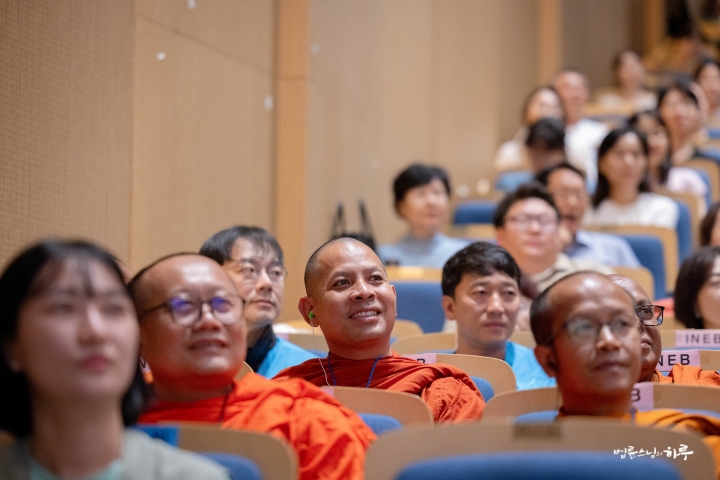
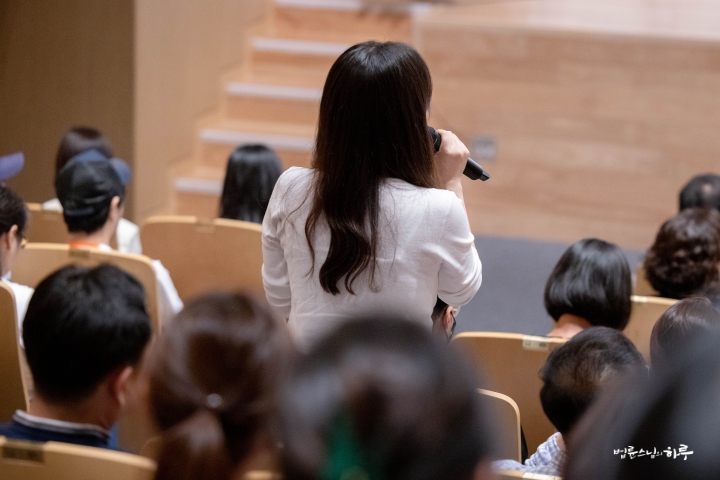
Sunim immediately began taking questions and started the dialogue. Over the course of an hour and a half, seven people asked Sunim questions. One of them sought Sunim’s advice on how to solve the problem of feeling lonely because there was no one around to confide in.
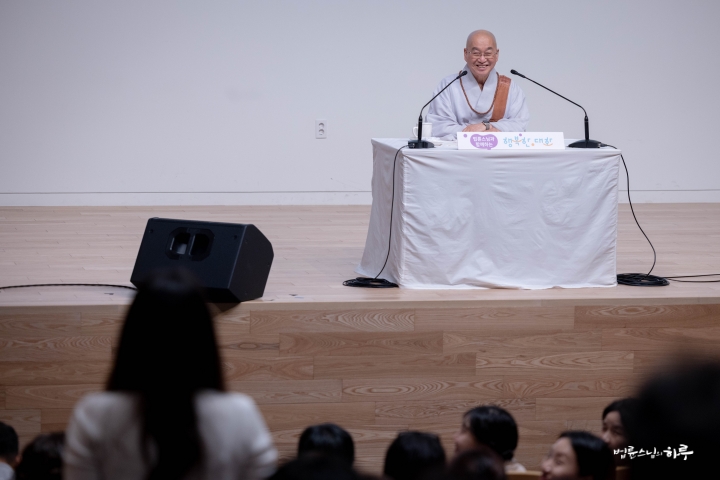
How Can I Overcome Loneliness When I Can’t Share My True Feelings?
“I find it difficult to share my true feelings with my family and friends. While I have no problem communicating on a daily basis, I struggle to express my deeper emotions. I feel lonely thinking that I don’t have any friends with whom I can share my true heart. I want to tell people around me that I’m struggling, but I can’t bring myself to do it. I’m wondering if I should just live with this feeling or if there’s a way to overcome this loneliness.”
“If you want to have deep conversations, why don’t you just have them? You say you can’t speak, but is it really that you can’t speak, or is it that you don’t want to?”“I think I don’t want to.”
“If you don’t want to speak, then don’t.”“Then should I live a lonely life?”
“That’s your choice. You’re choosing not to speak because you don’t want to, so you can’t say someone else is making you lonely. If you don’t want to speak, just don’t. But then why do you say you’re lonely?”“Looking back now, I think I didn’t want to speak.”
“I just feel like I don’t have anyone I can share my true feelings with.”
“You just said you don’t want to open up. It’s not that you don’t have anyone to talk to—you don’t want to open up, so why do you say you don’t have anyone to talk to?”“Yes, you’re right.”
“You said you don’t want to open up, right? Is it that you don’t have anyone to open up to, or is it that you don’t want to?”“I don’t think I have anyone I want to open up to yet.”
“Are you looking for someone you want to open up to?”“I think so.”
“Yes. My perspective seems wrong.”
“How is it wrong?”“I didn’t realize that I didn’t want to speak all this time.”
“You thought you wanted to open up but couldn’t, right? But actually, you didn’t speak because you didn’t want to. It’s not that you couldn’t. When the alarm goes off in the morning and you’re lying in bed thinking ‘I should get up, I should get up’—is it that you want to get up but can’t, or is it that you don’t want to get up?”“I don’t want to get up.”
“It means I don’t want to let go.”
“That’s right. When you’re still lying down, you need determination and resolve to ‘get up!’ Once you’re up, you don’t need determination or resolve. It’s the same with practice. Practice doesn’t require determination or resolve. Having determination and resolve means you’re still lying down. You all always just make determinations and resolutions, but nothing actually gets resolved. That’s because you don’t see through to the essence. If you see through to the essence—that it’s a feeling of ‘not wanting to’—then if you want to sleep, just sleep. You’ll face other losses, but at least you slept, right? Or just get up. Then you won’t sleep, but you won’t be late either.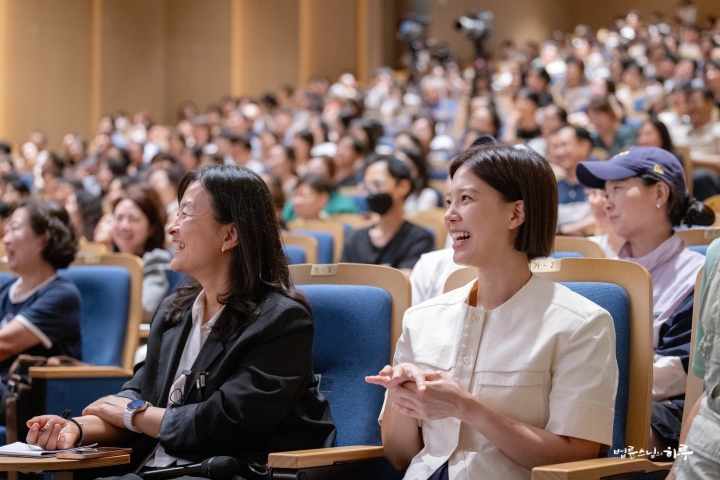
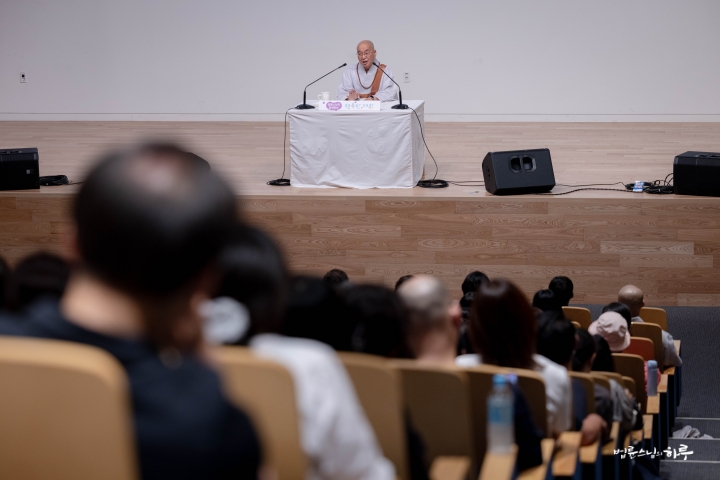
“I’ll practice opening up.”
“Good. When you attend Jungto Dharma School, there’s time to practice ‘opening your heart.’ We call it ‘mindful sharing.’ Opening your heart requires practice too. At first, the words get stuck in your throat, seeming to come out but not quite, but if you keep at it, it becomes nothing special. When you’re struggling alone, it feels huge, but when you actually speak it out, it’s often really nothing at all. After you open your heart, you realize it was actually nothing.”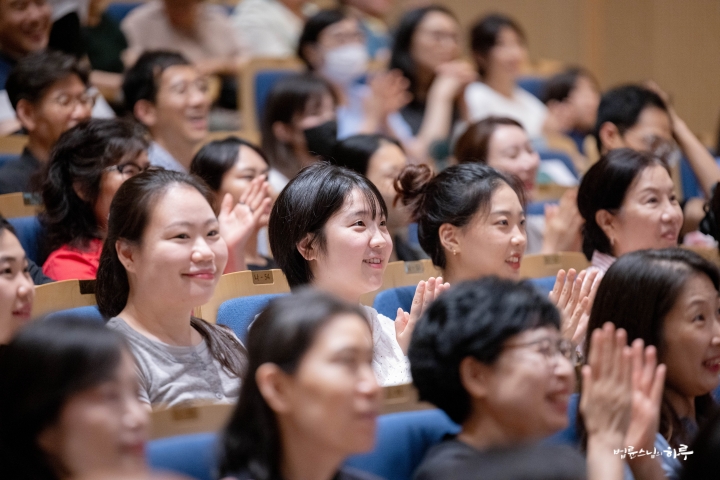
Questions continued to come in.
My parents oppose my marriage because of fortune-telling. I’m trying to get married without their help, but my father says he won’t leave my boyfriend and his parents alone, which scares me. What should I do?
I’ve been working at a large corporation for 25 years, but I think I’ll be asked to resign soon. I could hold on, but I’m thinking about starting a second life. Is it okay to take on a new challenge at fifty?
After bouncing between part-time jobs, I’m now running a YouTube channel. However, YouTube income is unstable compared to the time invested, and I’m getting exhausted from being so conscious of subscribers’ reactions. What mindset should I have?
Outsiders have come to our neighborhood for a Moa Town project and are getting residents’ consent. I need to rally residents to oppose the project, but it’s giving me headaches and making my chest feel tight.
After taking three more questions from the floor, the lecture ended after 9 PM.
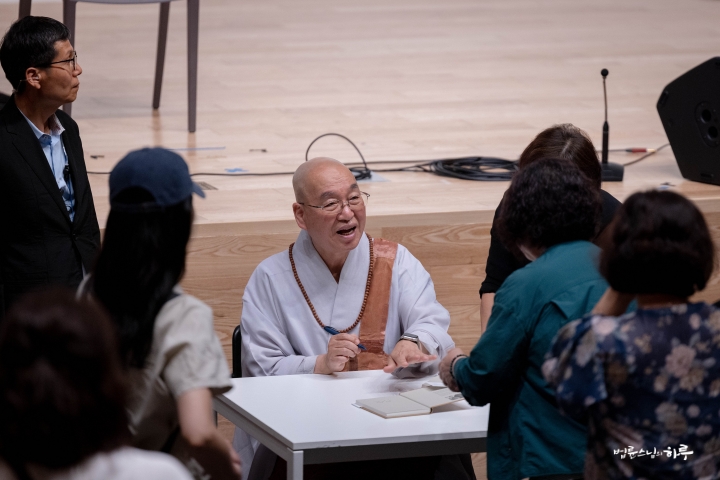
A book signing session was immediately held below the stage. Many people brought Sunim’s new book “Buddha the Revolutionary” to get it signed.
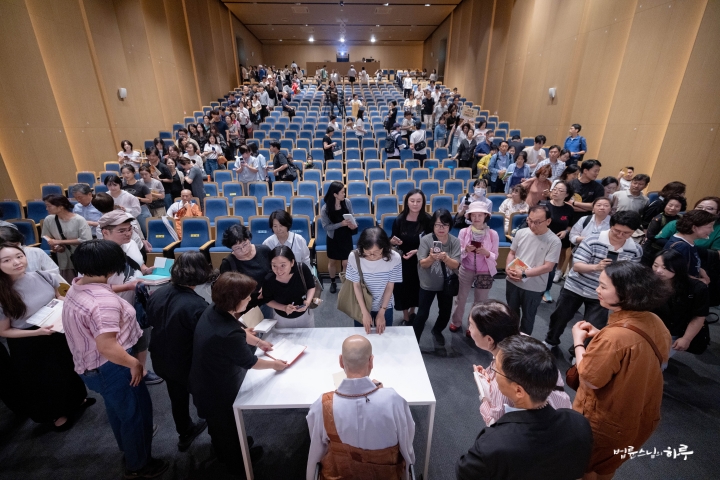
“Thanks to you, Sunim, many of my worries have been resolved. Thank you.”
Everyone expressed their gratitude to Sunim. Sunim made eye contact and exchanged greetings with each person.
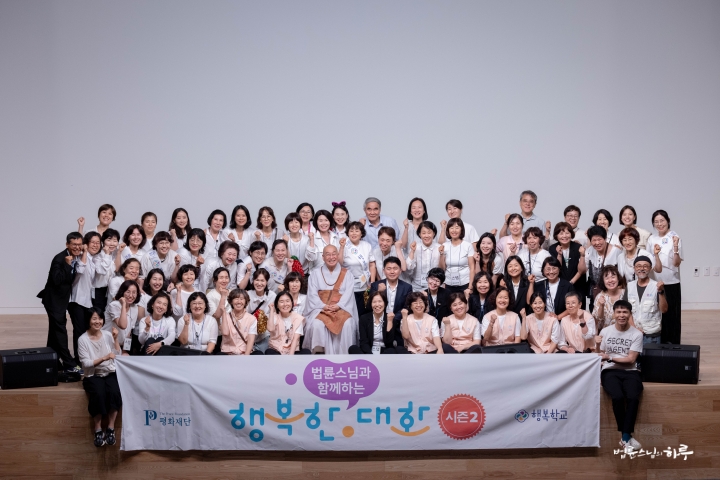
Finally, after taking a commemorative photo with the volunteers from the Seoul-Jeju Branch of the Special Happiness Movement Headquarters who prepared today’s lecture, Sunim left the venue.
The INEB participant monks moved to the 10th floor conference room for a mindful sharing session. Venerable Kittisara from Myanmar shared his thoughts.
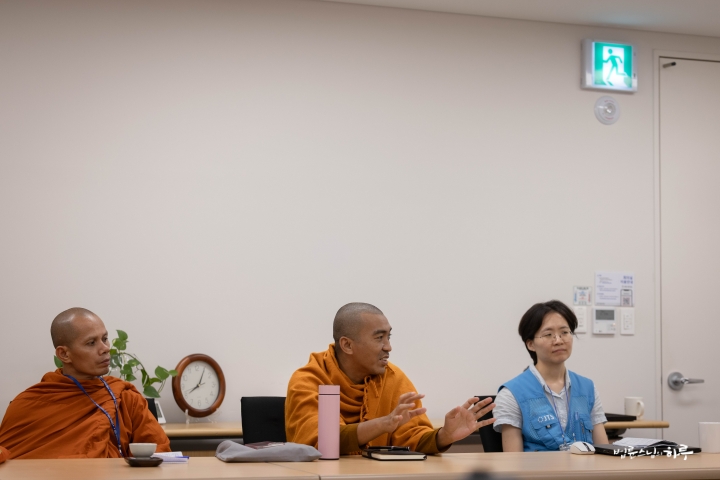
“Venerable Pomnyun’s answers during the Dharma Q&A were different from what I expected. If someone asked about their parents opposing their marriage, I would have told them to listen to their parents. But while that answer might be moral, it would have actually caused more suffering for the questioner. However, Venerable Pomnyun’s answer was that there’s no right or wrong in any decision. When he said that whatever decision you make, you must accept the consequences, I saw the questioner’s anguish disappear. I could see how Buddha’s teachings are applied in real life.”
The staff members were all moved seeing how the INEB participant monks immediately understood and were touched by Venerable Pomnyun’s message. Today was a time to discuss extensively how Buddhism resolves people’s suffering and then see and hear specific examples firsthand.
Tomorrow is the third day of the INEB study tour. In the morning, they will visit Bongamsa Temple in Mungyeong to observe how the meditation hall operated by the Jogye Order functions, and in the afternoon, they will have an intensive discussion on the theme of ‘practice’ at Mungyeong Jungto Retreat Center.