Can I Refuse My Son’s Request to Pay His Child Support After Divorce?
Visit to Silsangsa Temple, 161st Anniversary Memorial Service for Master Yongseong's Birth
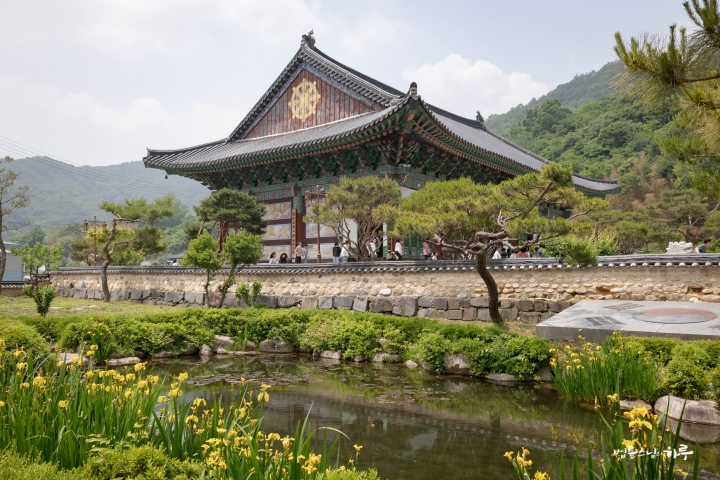
Hello. Today is the day of the memorial service commemorating the 161st anniversary of Master Yongseong’s birth at Jangsu Jukrimjeongsa Temple. Master Yongseong was an independence activist and a great reviver of modern Korean Buddhism. Sunim departed from Dubuk Retreat Center at 5 a.m. to attend the memorial service.
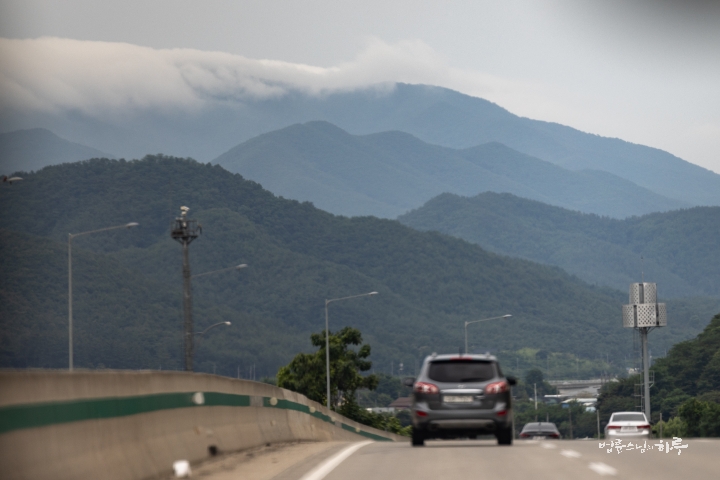
On the way to Jangsu Jukrimjeongsa Temple, Sunim first visited Silsangsa Temple. He went to visit Venerable Dobup, the spiritual leader of Silsangsa Temple, who was reported to be in poor health.
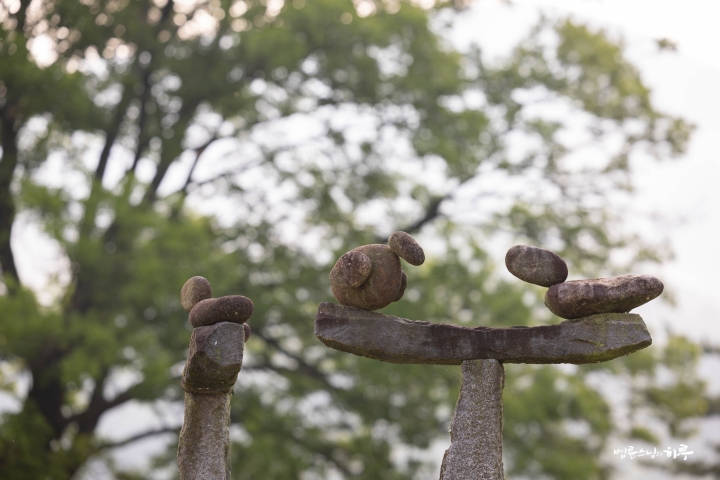
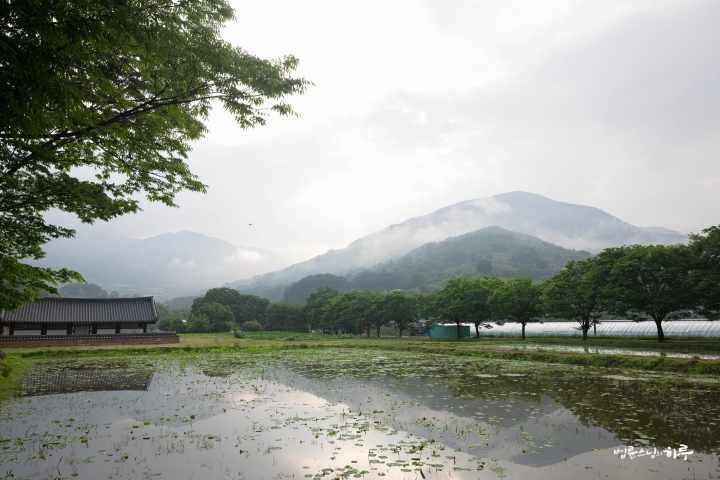
After driving on the highway for two hours, Sunim arrived at Silsangsa Temple after 7 a.m. As Sunim entered the temple grounds, Venerable Dobup warmly welcomed him.
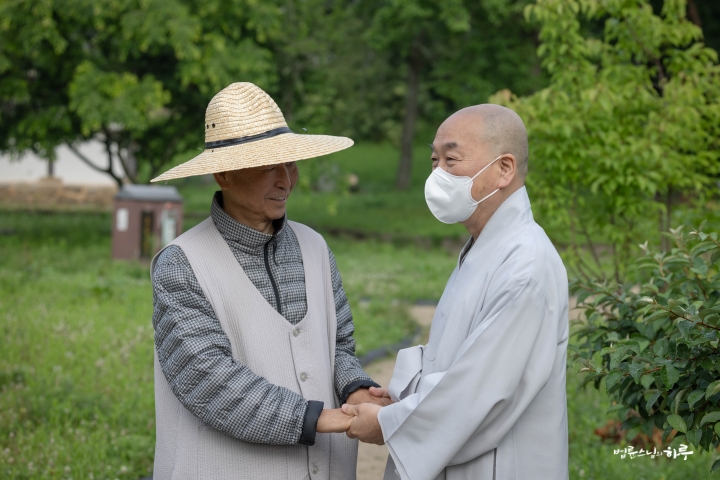
“What health? I’m getting by just fine.”
“Venerable Sugyeong told me your health wasn’t good, so I stopped by on my way to Jukrimjeongsa Temple.”“That’s right. Venerable Sugyeong visited recently. I’m fine.”
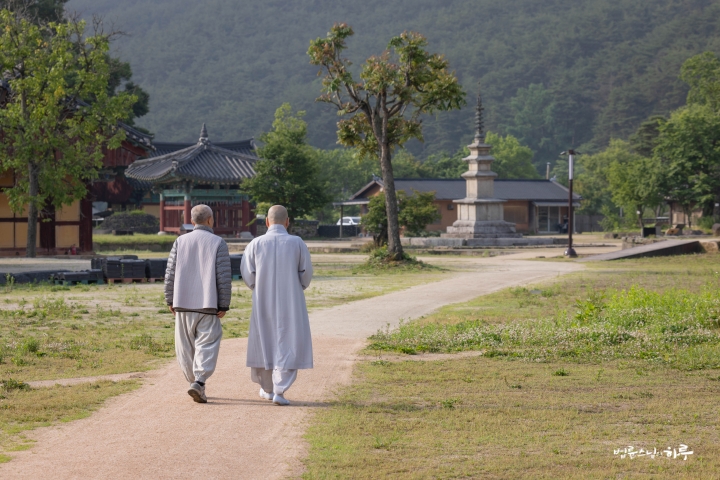
After exchanging greetings, Sunim toured the temple grounds with Venerable Dobup to discuss how to proceed with the event, as the INEB Jungto Society delegation is scheduled to visit Silsangsa Temple at the end of June. Every corner was neatly and well-maintained.
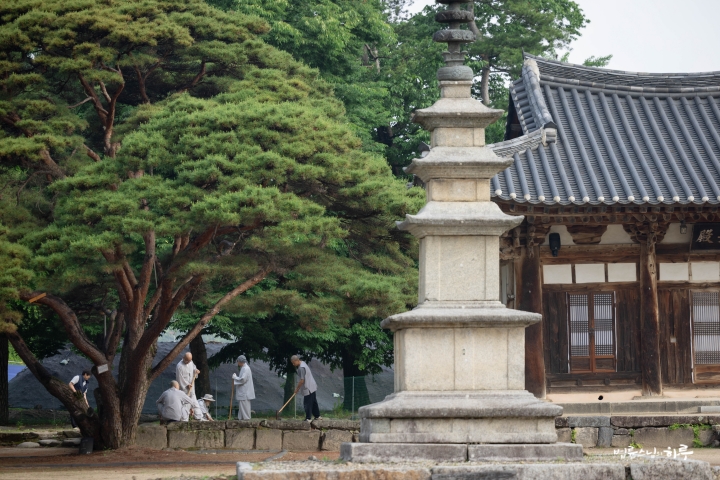
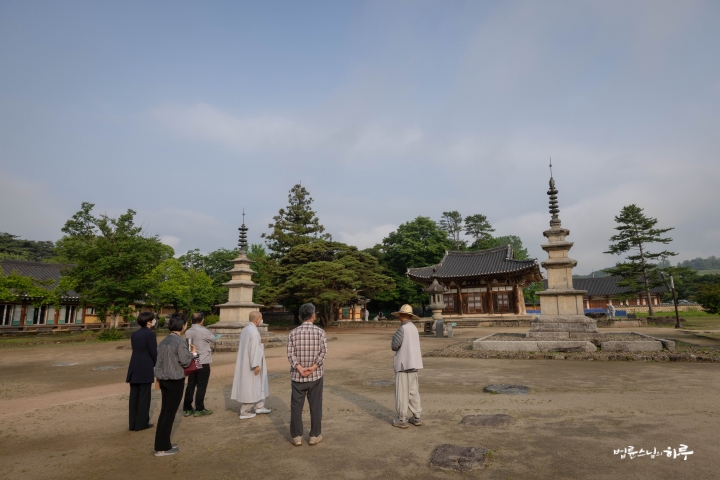
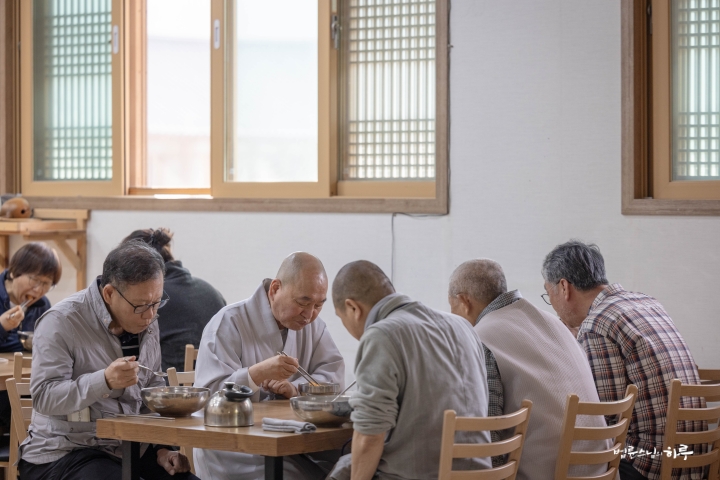
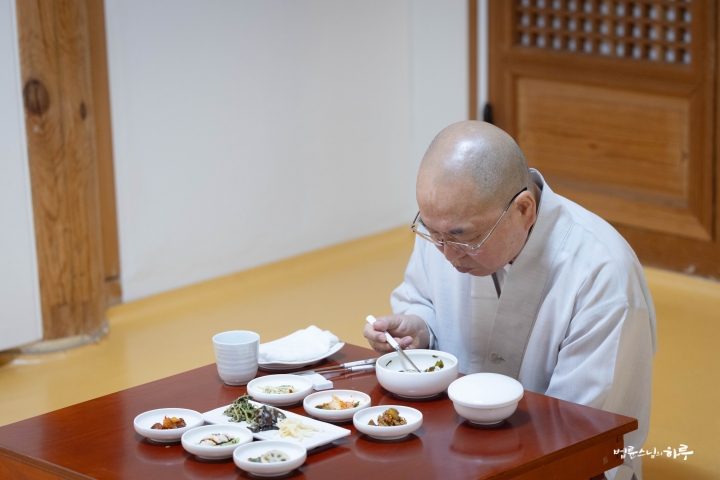
After having breakfast together in the Silsangsa Temple dining hall, Sunim shared tea and conversation with Venerable Dobup before leaving Silsangsa Temple.
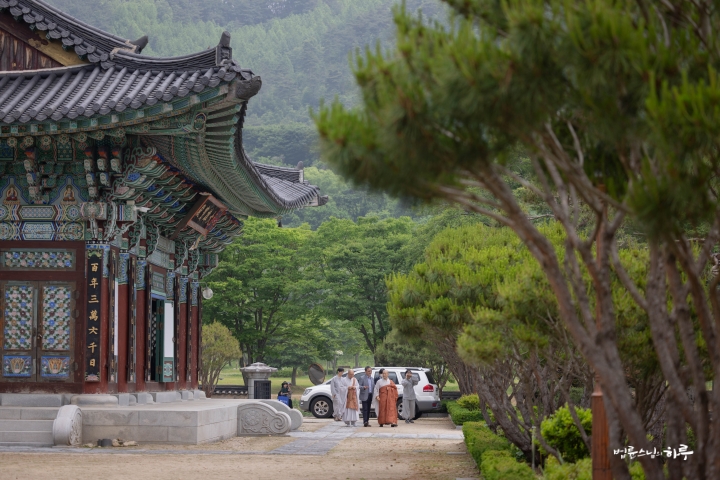
After another 30-minute drive, Sunim arrived at Jangsu Jukrimjeongsa Temple at 9 a.m. Before beginning the memorial service, a tea ceremony was held to honor the successive lineage masters.
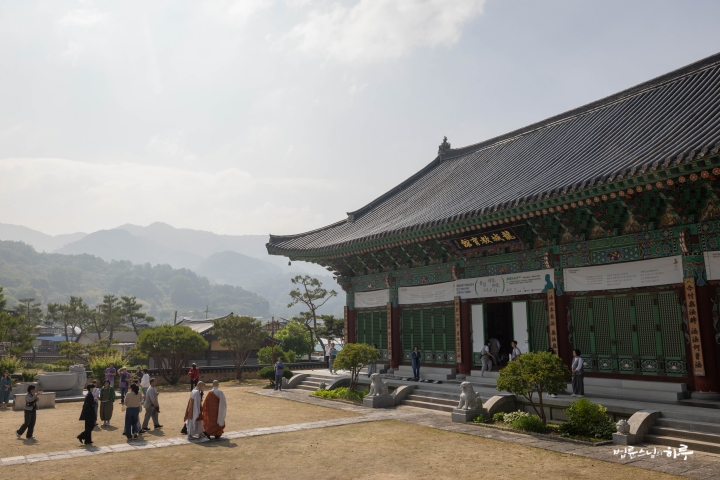
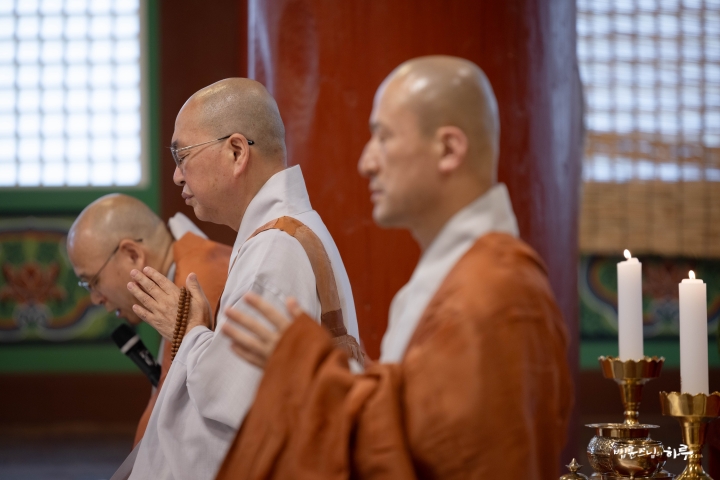
After completing the tea ceremony and paying respects at the main hall, Sunim toured the construction site of the Yongseong Memorial Hall being built in Mulbit Park.
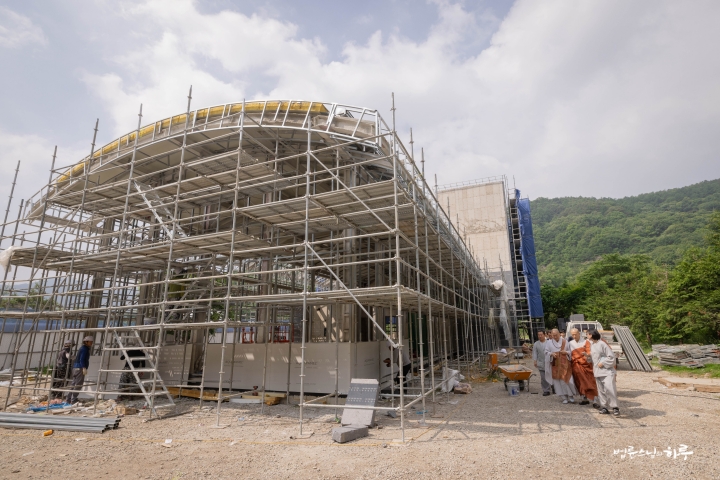
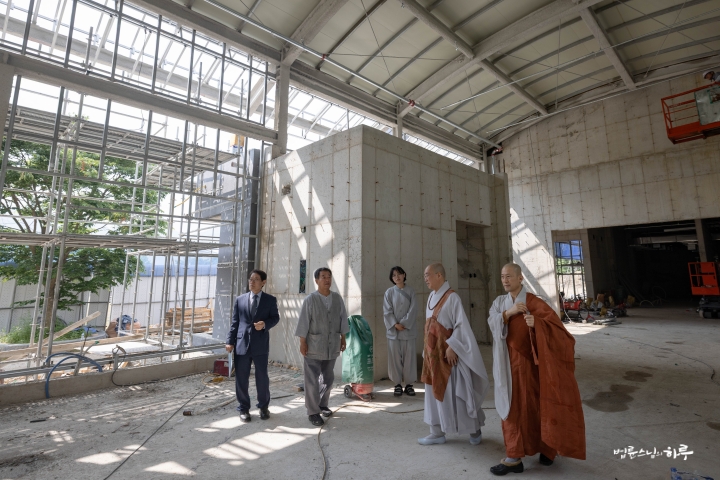
The structural work forming the building’s framework—foundation, columns, beams, floors, walls, stairs, and roof—has been completed. Construction will continue for another six months, with the completion ceremony scheduled for the end of the year. After encouraging the Jungto Society construction team and the construction company staff working on site, Sunim headed to the Yongseong Education Center for the memorial service.
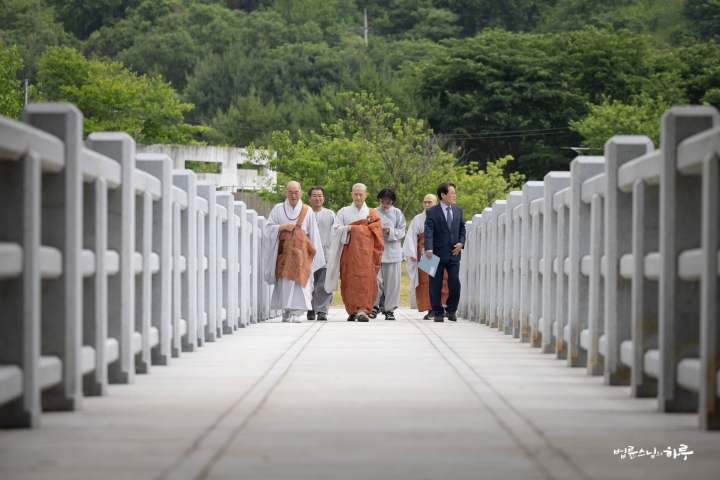
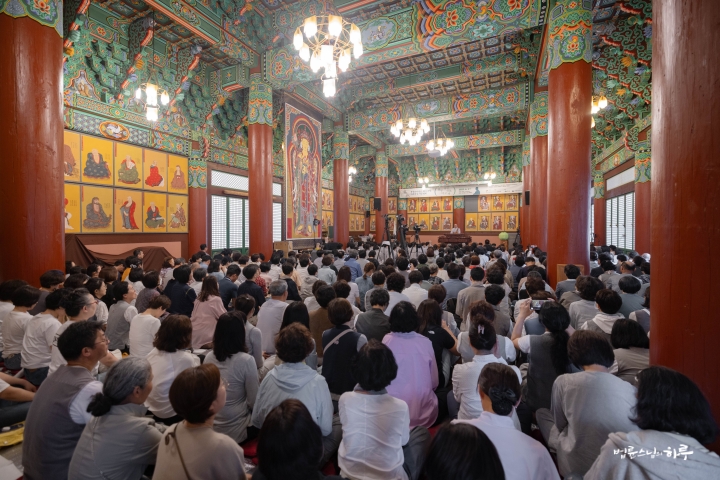
The memorial service began at exactly 10 a.m. with about 400 Jungto Society members in attendance from across the country, including the Daejeon-Chungcheong Division, Gyeongnam Division, Busan-Ulsan Division, Gwangju-Jeolla Division, and the Happiness Movement Headquarters.
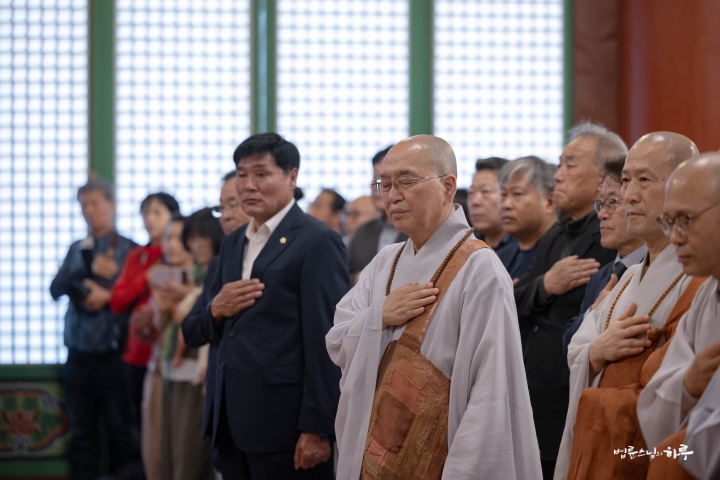
After reciting the Three Refuges and the Heart Sutra, the ceremony included saluting the national flag, singing the national anthem, and observing a moment of silence for fallen patriots. Jeon Hae-jong, President of Jungto Society, then read Master Yongseong’s biography.
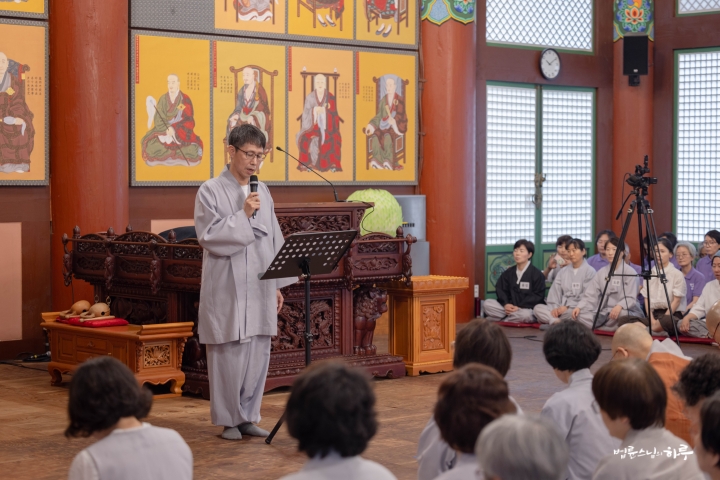
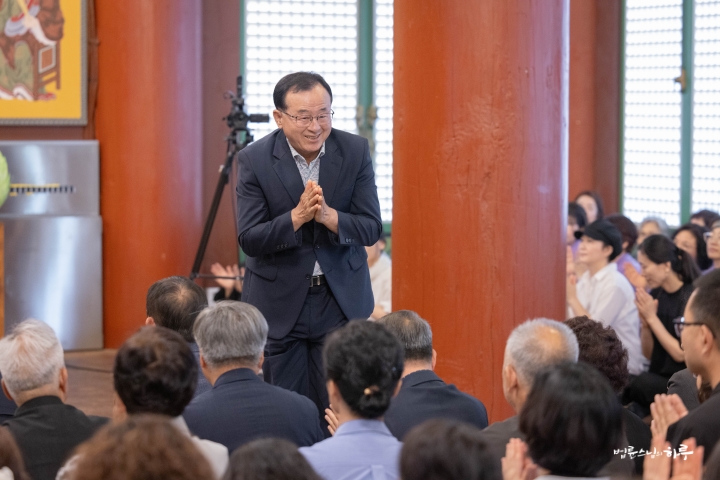
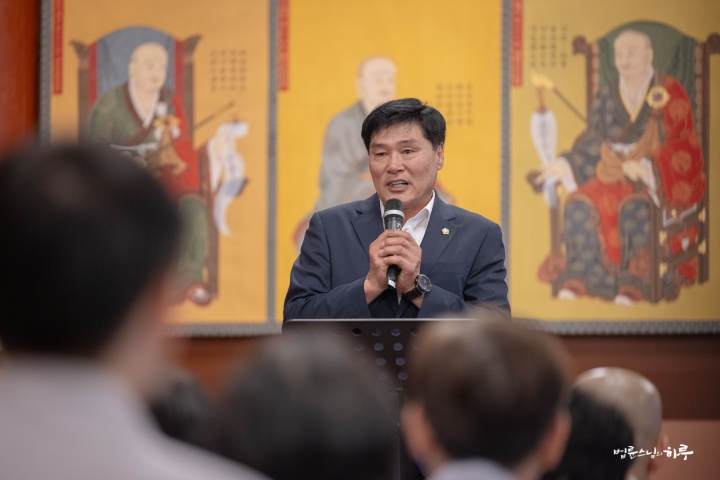
Distinguished guests were then introduced. Local community leaders graced the occasion, including representatives from Jangsu County Council, Jangsu Cultural Center, Jangsu County Office of Education, Master Baek Yongseong Memorial Foundation, Beonam Township Office, Jangsu Agricultural Cooperative, Beonam Township Residents’ Autonomy Committee, and the Village Chiefs’ Association. Among them, Councilman Lee Jong-seop from Jangsu County Council delivered congratulatory remarks.
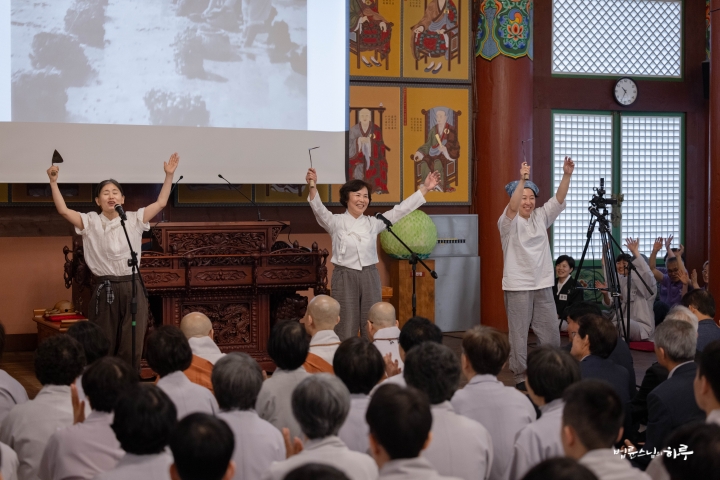
Next, members of the Daejeon-Chungcheong Division presented a commemorative performance in honor of Master Yongseong’s birthday. The epic story unfolded in a 10-minute play spanning five acts, from Master Yongseong’s birth through his path as an independence activist to his final teachings and passing into nirvana.
“As Master Yongseong said, the Republic of Korea will now open a brilliant path and take a new road that no one has traveled before. That path is right before our eyes. Now we will do it!”
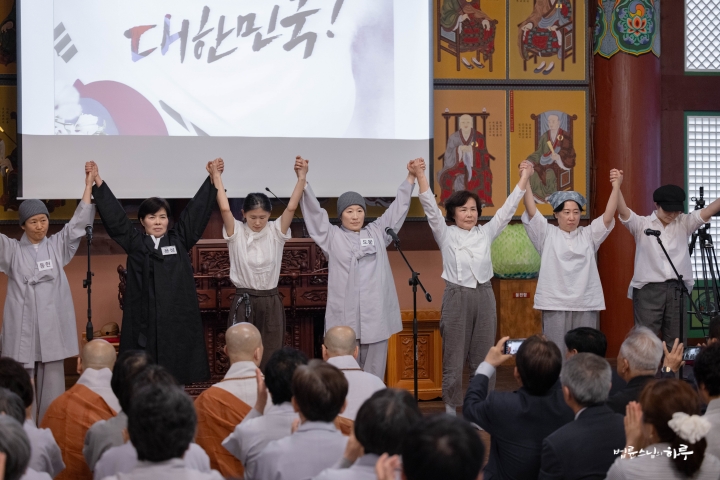
Everyone gave enthusiastic applause to the declaration that “Now we will do it!”
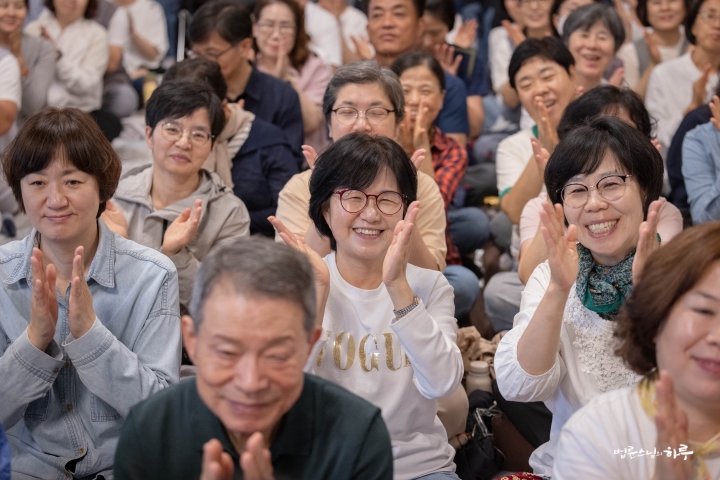
Everyone then sang “Song of the Whole Nation” together. This song was written by Master Yongseong and arranged by Venerable Bulshim Domun. Led by the Jukrimjeongsa Temple guide team, everyone sang together with vigor.
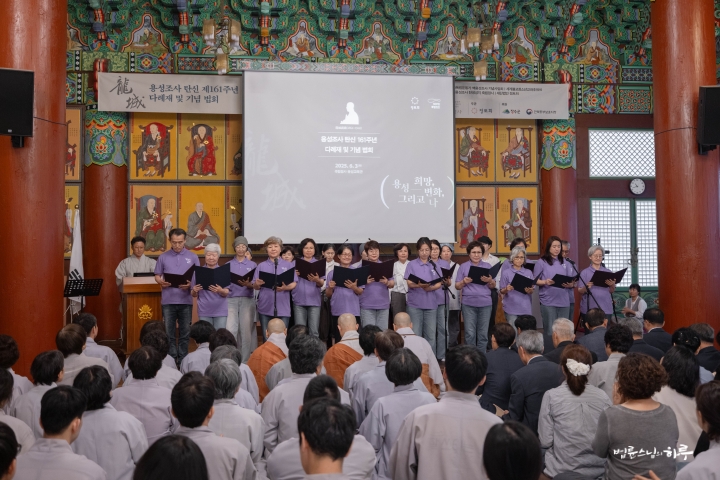
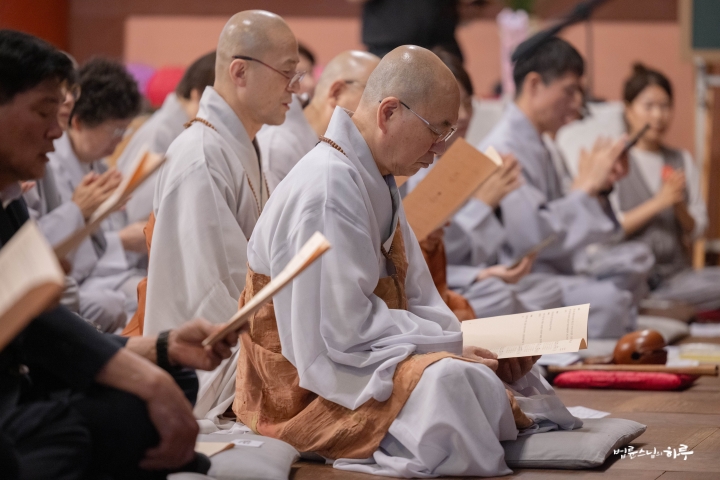
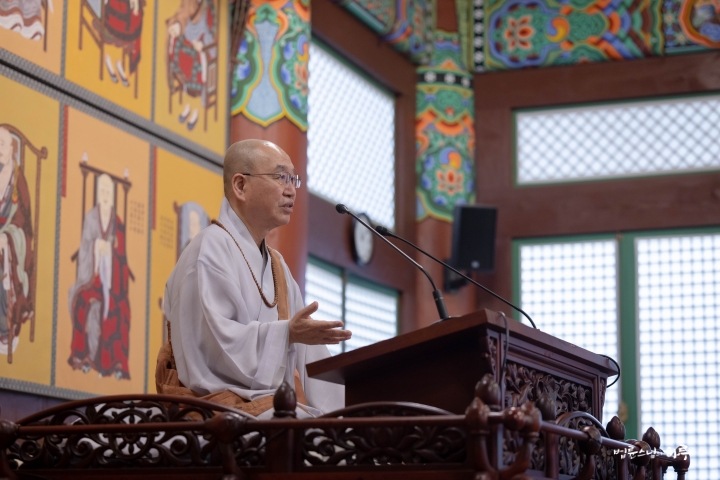
Next, Venerable Pomnyun Sunim gave a commemorative Dharma talk on the theme “Yongseong, Hope, Change, and I.”
Master Yongseong Who Awakened Buddhism and Korea: The Path of Innovation and Independence
Today, as we commemorate the 161st anniversary of Master Yongseong’s birth, looking back on his life reveals that he walked a path different from most Korean monks. Korean monks primarily focus on personal practice or praying for the blessings of sentient beings. Since they have left the secular world, there was a strong notion that involvement in worldly affairs was not the proper role of a monk. Additionally, under the perception that Buddhist scriptures should be read in their original Chinese text to be authentic, the tradition of studying and chanting Buddhist scriptures in Chinese continues to this day. However, Master Yongseong brought change and innovation to these long-held notions and traditions of Buddhism, pursuing the intellectualization, popularization, and practical application of Buddhism in daily life. He translated Chinese scriptures into Korean so that anyone could easily read and understand them. At a time when there was not a single temple within the four gates of Seoul, he purchased a private home and established a temple called ‘Daegaksa,’ opening a propagation center where the public could easily come and go. By holding Dharma assemblies for children and operating meditation centers for women, he opened a path where Buddhism was not the exclusive domain of monks, but where anyone with the will could learn the Buddha’s teachings. He also composed Buddhist hymns and introduced the reed organ, in keeping with the times, and took the lead in changing complex and difficult traditional Buddhist rituals into Korean that anyone could understand. While such practices are now commonplace, attempting such changes a hundred years ago was by no means an easy task. Furthermore, Master Yongseong devoted himself wholeheartedly to the most sensitive issue of the time: ‘national independence.’ Resisting Japanese imperial colonial rule and pursuing independence meant risking one’s life. Even during such harsh times, he continued his activities tirelessly, dreaming of the nation’s independence. In the process, he also suffered imprisonment.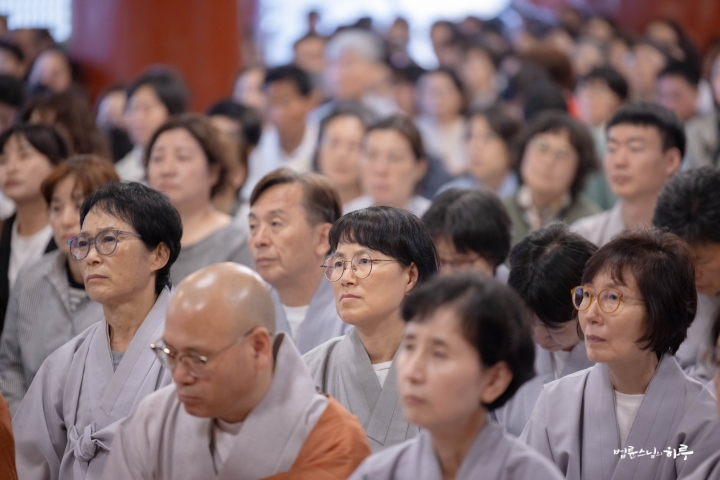
The Hidden Cornerstone of the March 1st Movement: Master Yongseong Who Prepared the Shanghai Provisional Government
Master Yongseong began to actively engage in worldly affairs around the time of the Eulsa Treaty in 1905. While we commonly believe that Korea lost its sovereignty with the Japan-Korea Annexation in 1910, in reality, the country had already lost its sovereignty when diplomatic rights were stripped away by the Eulsa Treaty in 1905. The following year, in 1906, Master Yongseong went to Haeinsa Temple to work on the Tripitaka project and raised some funds. With support from benefactors including layman Im Dong-su, he traveled to China in 1907 to prepare for establishing a government in exile. At that time, he had already laid the financial foundation for the provisional government in Shanghai. However, when Joseon was forcibly annexed in 1910, we could not immediately establish a government in exile. Historically, when a country is conquered, it is common for some royalty to go abroad and establish a government in exile. Emperor Gojong also made various attempts, including sending secret envoys to The Hague in 1907, but ultimately achieved no results.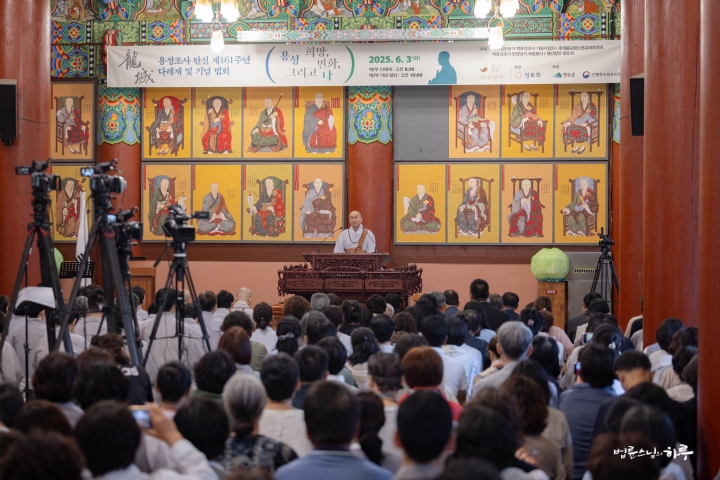
The History of the Independence Movement That Could Not Be Recorded
Master Yongseong continued to steadily support the families and wounded of independence fighters in the Manchuria region. He also led many young people to join the independence movement, including sending Yun Bong-gil to the Shanghai Provisional Government. While numerous hidden stories are passed down, no evidence could be left behind due to the severe oppression by the Japanese. The fact that there are almost no revealed records actually demonstrates how perfect and meticulous Sunim’s activities were. Having much evidence might actually mean that movements were carried out carelessly. Since we often lack records to prove the reality of the independence movement, we frequently evaluate the contributions of independence fighters based mainly on Japanese trial records or investigation documents. The reality is that if one’s name appears in records created by Japanese imperialism to punish independence fighters, they become recognized as great independence fighters, but without records, they cannot be recognized as such. Even those who did nothing but have records are recognized as independence fighters, while those who devoted themselves fiercely but left no evidence are treated as if they did nothing. Master Yongseong also always moved thoroughly from behind the scenes, making it difficult to properly understand his contributions.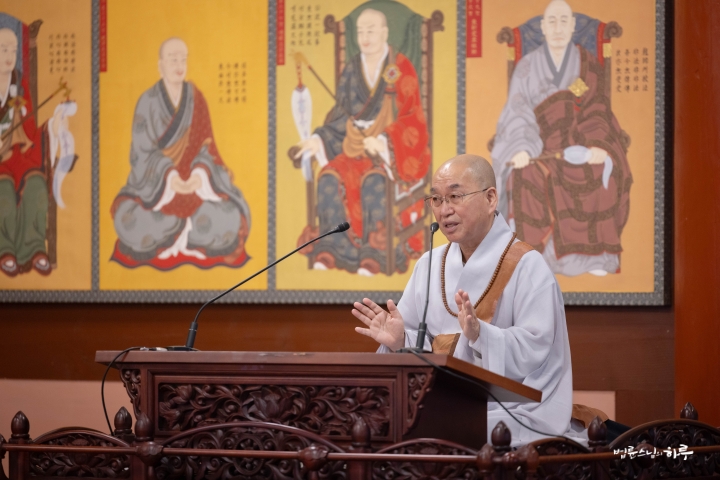
The First Step of 800 Years of the Great Korean Nation, the Just Country We Will Create
Today, on the 161st anniversary of Master Yongseong’s birth, we once again reflect on his life and teachings. Master Yongseong said that a new path for the Republic of Korea would open from 2025. Although he left a prophecy that the great fortune of 800 years of the Great Korean Nation would begin, those words felt overwhelming to us living today. Until last year, we worried that rather than opening, the great fortune might be closing. However, now with the launch of a new government, there is hope that a new path might open. Rather than talking about gloomy stories, it is time to move forward progressively with even small hopes. It is time to end the state of war that has not been concluded for the past 75 years, establish a peace system on the Korean Peninsula, and realize mutual cooperation between the South and North and national unity. I believe that creating a country where the people are the masters, a just and righteous Republic of Korea together, is the way to realize Master Yongseong’s teachings.”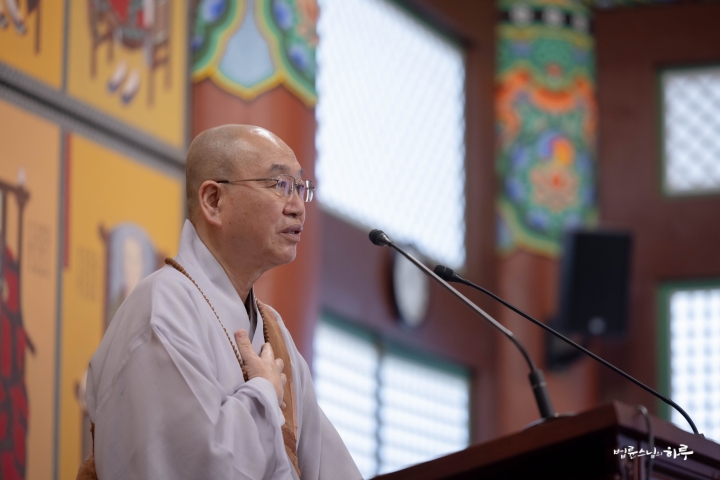
The commemorative ceremony concluded with the audience taking Sunim’s Dharma talk to heart and praying for peace and unification on the Korean Peninsula.
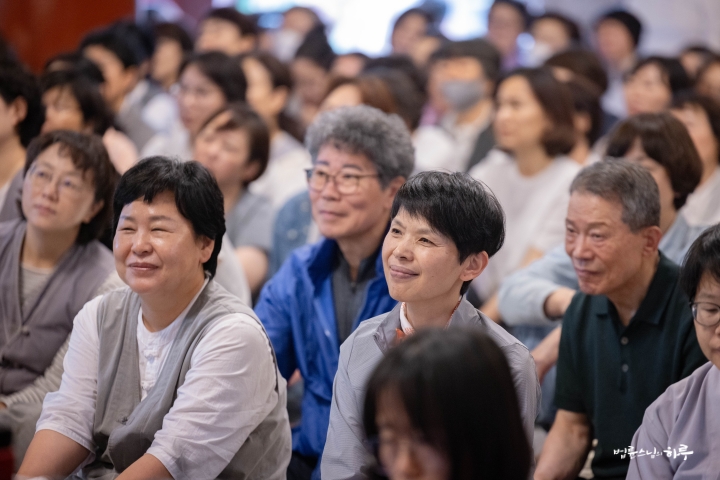
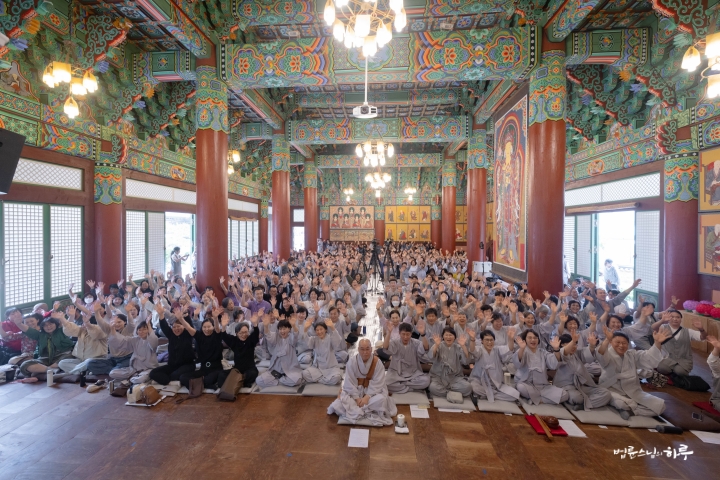
After the distinguished guests left and the venue was briefly reorganized, a Dharma Q&A session began immediately at 12 PM. First, a commemorative photo was taken with the approximately 400 people who attended in person.
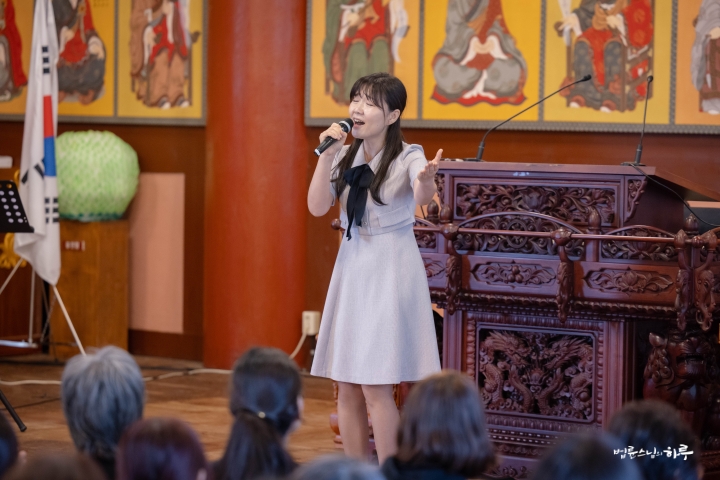
As the opening performance, Mr. Lee Seon-ho sang cheerful songs with her rich voice.
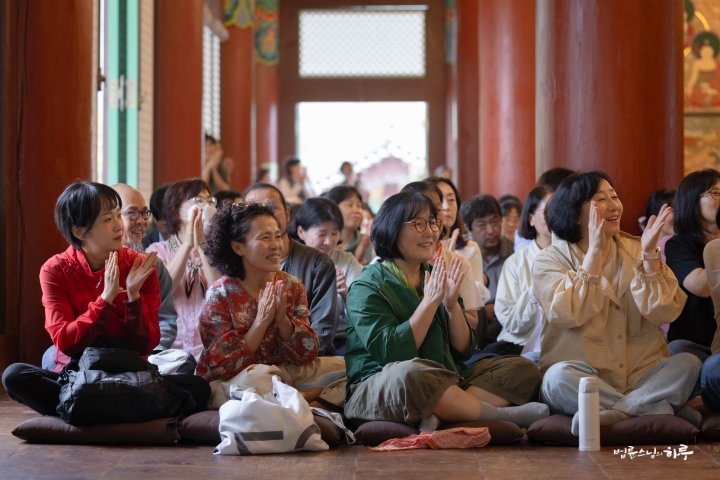
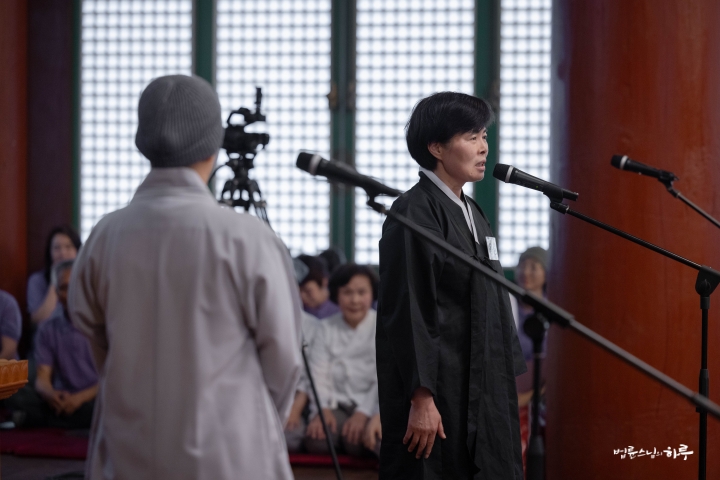
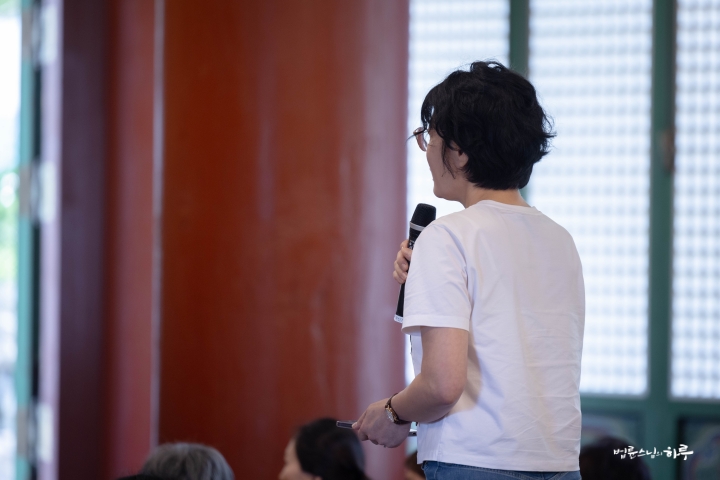
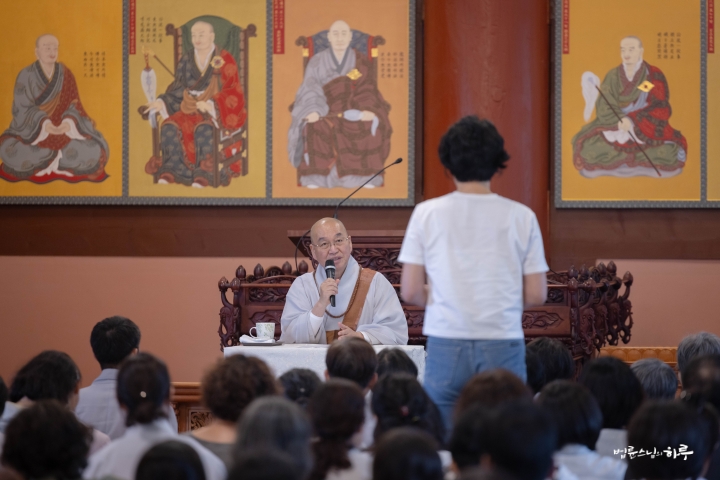
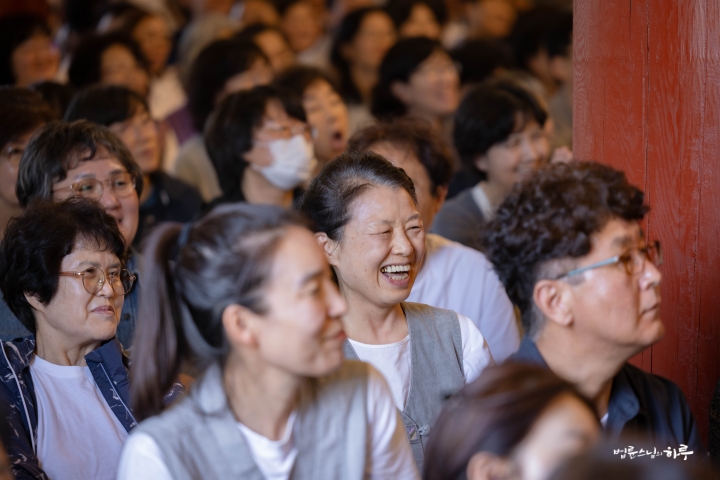
With the lingering afterglow of the performance, everyone present was given the opportunity to raise their hand and ask questions to Sunim. For about an hour, people freely asked questions about doubts that arose while practicing or doing volunteer work. One person asked for Sunim’s advice on what to do as a mother when her son, after getting divorced, found child support burdensome and asked her to pay it instead.
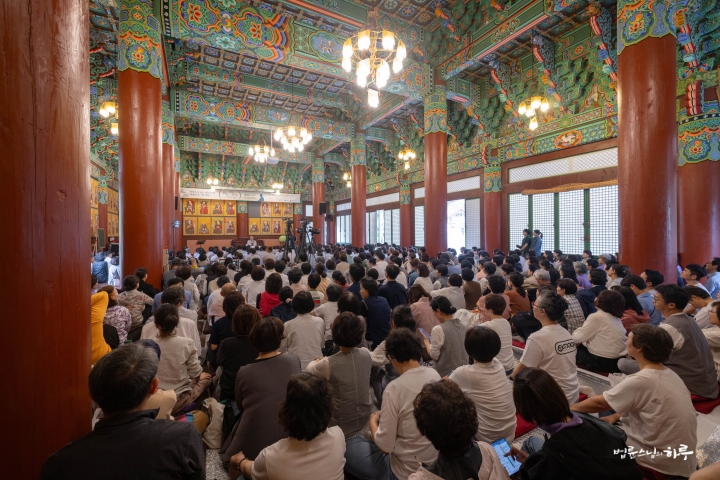
My Son Wants Me to Pay His Child Support After Divorce, Can I Refuse?
“My son got divorced. His ex-wife is raising the child, and my son only sends child support. However, he seems to find the child support burdensome and asks me to pay it instead. I refused for now, but I’m worried he’ll ask again. When I think about ‘why is he like this,’ I wonder if it’s because he takes after me, or if I somehow contributed to this situation. What should I do?”
“Your son must think you have some money?”“Actually, I don’t have money, but my son seems to be mistaken.”
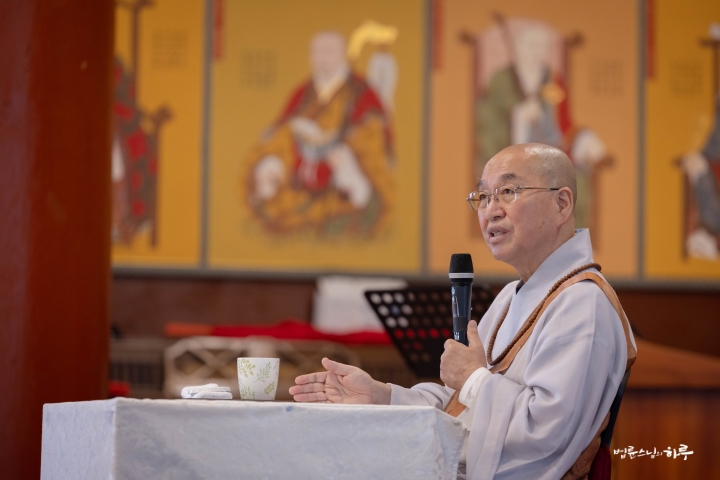
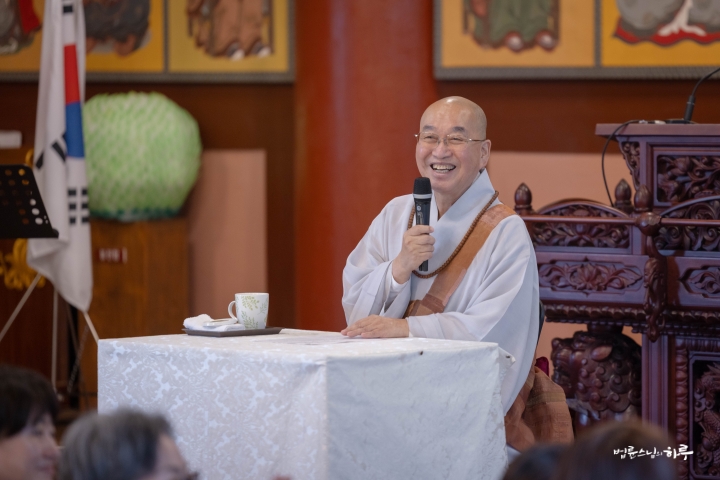
“Yes, I understand.”
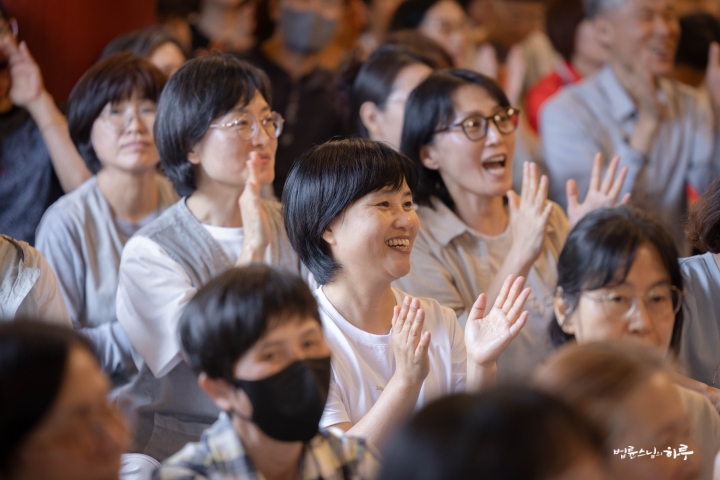
Questions continued one after another. After conversing with five people, the Dharma Q&A session concluded after 1 PM.
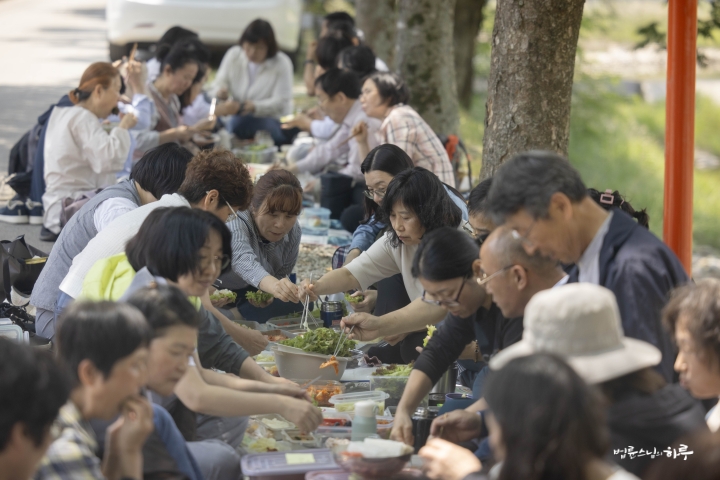
Following this, there was time for lunch. The members of the Sangha took out their packed lunches and gathered in small groups to enjoy their meals before cleaning the temple grounds.
Sunim also had a simple lunch, then departed from Jangsu at 2 PM heading for Seoul.
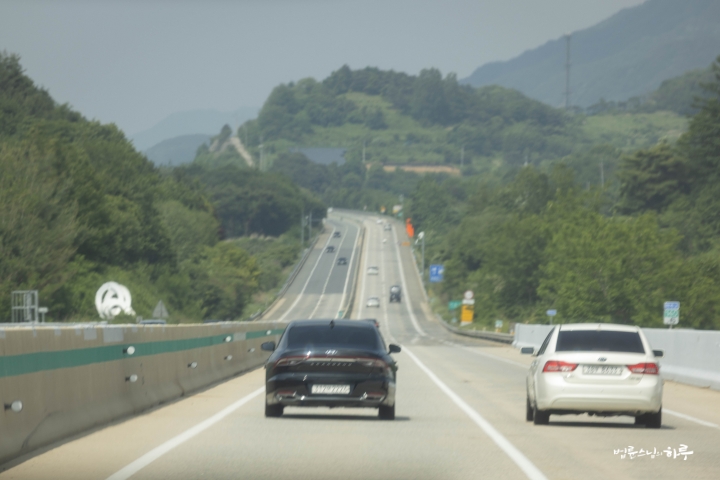
After a three-hour drive, he arrived in Seoul at 5 PM and had dinner. As the sun set, from 7:30 PM, a meeting was held at the Peace Foundation conference room with leaders from the Special Youth Division and Social Activities Committee on the topic of “Youth Dharma Propagation.”
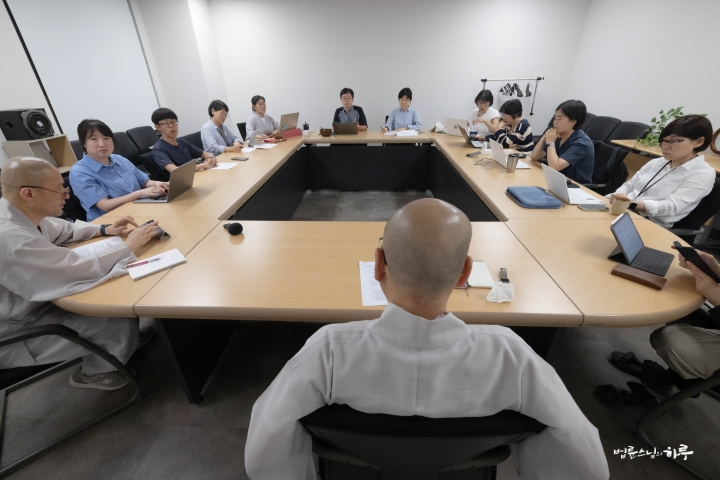
Since last year, Sunim has repeatedly suggested holding a youth festival to give hope and courage to young people who are struggling with various issues such as youth unemployment, low birth rates, housing problems, and the burden of private education costs. This was the fourth meeting held since last month to implement this plan.
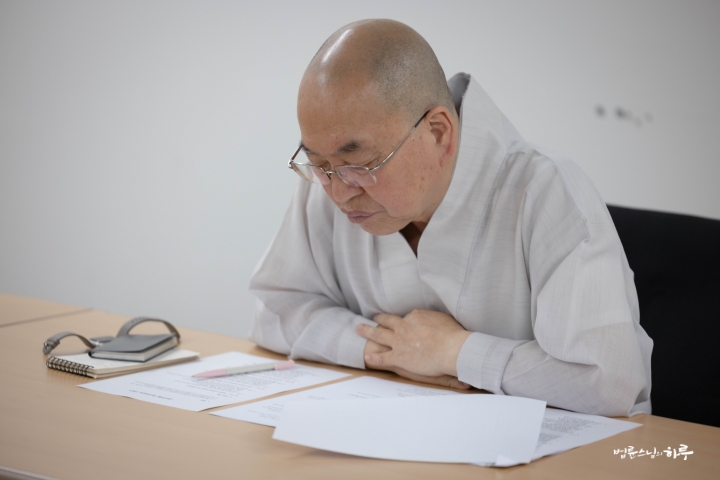
After reviewing the draft prepared by the Special Youth Division and gathering opinions from various participants, Sunim gave his concluding remarks.
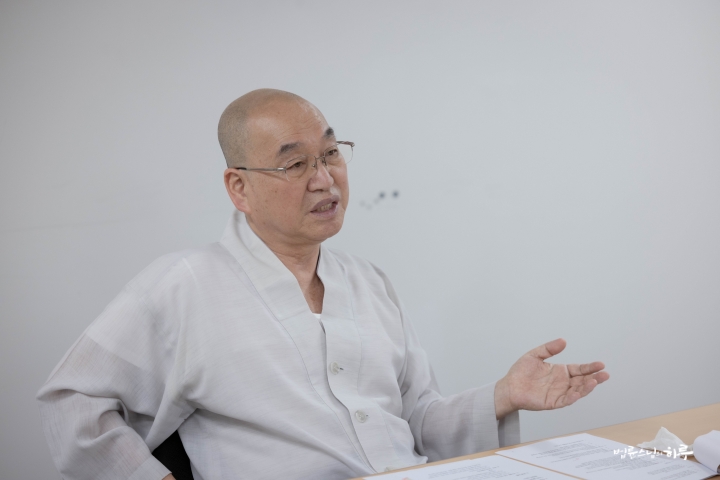
What Content Should We Include in a Festival for 10,000 Young People?
Among the lecture topics, I’d like to include informing young people that the Korea risk is precisely the danger of war. We also need to let young people know that inter-Korean cooperation will greatly benefit Korea’s future economy. This is because nowadays, young people can only think, ‘Isn’t cooperating with poor North Korea a loss for us?’ However, cooperation with North Korea could actually become a source of livelihood for young people. I hope we can hold lectures, even on a small scale, that inform them how combining South Korea’s technology and capital with North Korea’s labor and resources would bring tremendous benefits not only to North Korea but also to South Korea. JTS could prepare a program introducing how young people who volunteered in India and the Philippines are living now. When I go to give lectures in various places, I often see young people who participated in the Seonjae Youth Program now playing important roles throughout society. Having those young people with volunteer experience come and share their stories could also inspire today’s youth. Based on these considerations, I think we can gradually develop programs through continued research. Since I’ll be starting my overseas schedule tomorrow, I hope you all will continue to have more discussions going forward.”“Yes, Sunim. Have a safe trip.”
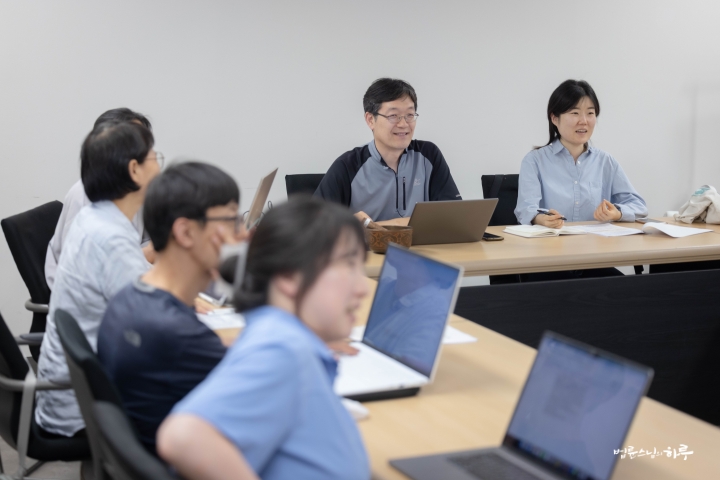
The meeting concluded after 9 PM.
Sunim packed his luggage for tomorrow’s overseas departure and concluded his day’s activities.
Starting tomorrow, he will visit Laos for three days and two nights to review JTS projects and meet with local officials.