How Can We Live a Good Life?
Jun 2, 2025 Opening Ceremony of the 9th 100-Day Practice for International Practitioners, Green Talk at the Environmental Foundation
Hello. Today is the day when international practitioners begin their 1000-Day Practice. Sunim also attended the Green Talk Concert hosted by the Environmental Foundation and gave a Dharma Q&A.
After completing morning practice and meditation, Sunim attended the opening ceremony of the 9th 100-Day Practice for international 1000-Day Practice participants at 8 AM in the broadcasting room of Seoul Jungto Center.

Yesterday, Jungto practitioners from around the world who use Korean began their 100-Day Practice, and today, Jungto practitioners from around the world who use foreign languages began their 100-Day Practice.
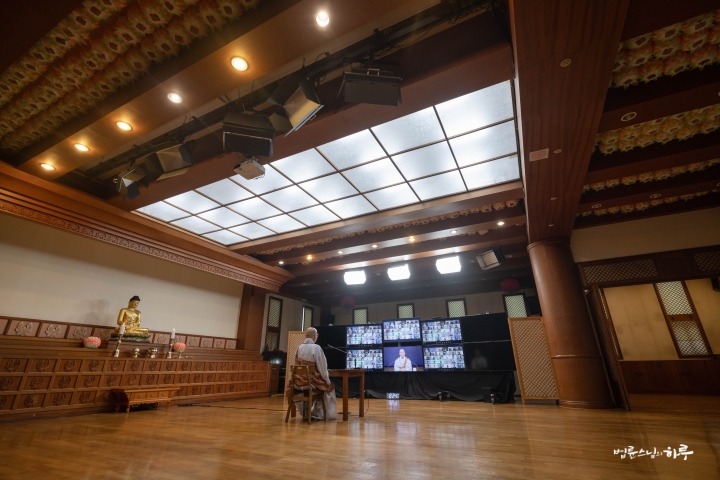
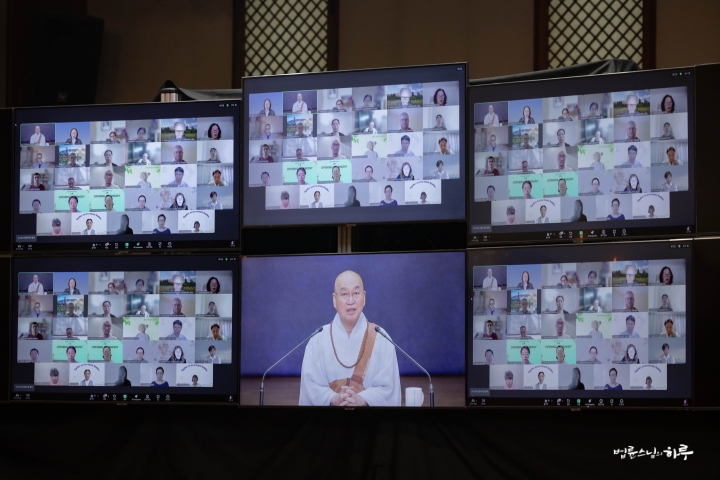
Once all the international Jungto practitioners entered the video conference room, the host warmly welcomed them.
“Hello and welcome to the Opening Ceremony of the 9th 100-Day Practice, which is part of the first 1000-Day Practice.”
Today’s opening ceremony was attended by 21 participants from around the world, including the United States, Canada, Hong Kong, Korea, Japan, Indonesia, Italy, Ireland, Australia, and the United Kingdom. First, participants shared their reflections from practicing diligently over the past 100 days.
Craig Lewis from Hong Kong shared his reflections first.
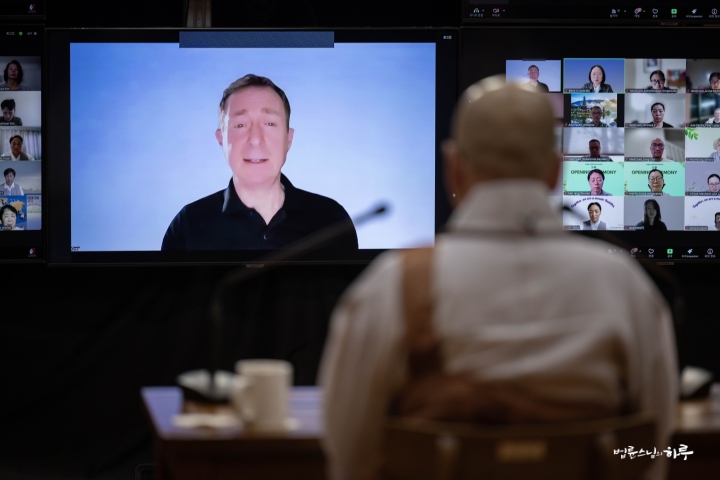
“Jungto Society recently concluded the 100-day 2025 Dharma Talk Festival. And I had the privilege of joining the weekend practice days — for 1,080 prostrations on Saturdays and extended meditation on Sundays.
Although my body has grown more comfortable with sitting in meditation since I became a Jungto practitioner … I’ve always been bothered by physical pain during longer sitting sessions. But something shifted during this year’s practice at Jungto Center: for the first time I was able to sit without moving until the end. During the meditation sessions, I noticed shifting contrasts — between physical discomfort and mental discomfort; between a restless mind and moments of quiet. Yet I felt encouraged and supported by the focus of the practitioners around me.
For 1,080 bows … I was nervous! It seemed like a marathon to me! When I learned to let go of my mind during the practice, I was able to complete all of the bows before the end … I might even say that I found that there was only one prostration needed to complete 1,080.
This experience has helped to change my perspective toward practice. Since taking part in both of these practices, I’ve found that daily practice is now much easier. 108 prostrations used to feel like a burden — and I’d often feel lazy in the morning. Now, I know that 108 bows doesn’t have to be a big deal. I also found longer meditation to be very helpful. Now, I sometimes feel that 10 minutes in the morning isn’t enough. Sitting alongside other practitioners is also a very different experience than sitting alone. This is something that I hope I can explore further.”
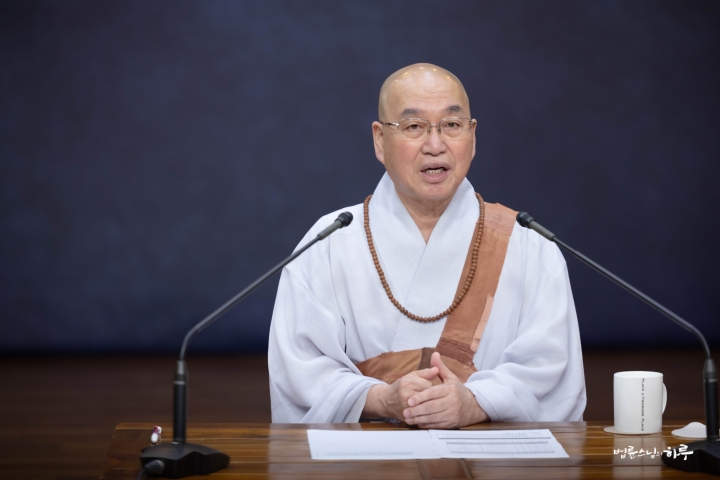
Following this, everyone offered three prostrations to request a Dharma talk from Sunim. Sunim spoke to the international Jungto practitioners about the perspective that practitioners should maintain to live a life free from suffering. He also expressed gratitude to those who volunteered to teach English to students at Sujata Academy in India’s untouchable villages over the past 100 days.
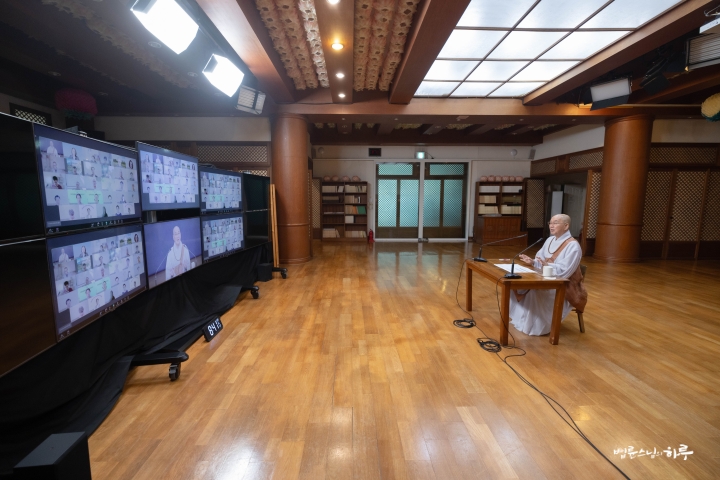
What Should We Do When Our Hearts Are Troubled?
So how can we maintain peace in our hearts? Everyone faces difficulties in life. This can lead to stress and suffering. At such times, we must ask ourselves, ‘What is really the problem?’ When we face life directly, we realize that there is actually no problem. On the surface, there seems to be a problem, but when we look closely, there is no problem at all. At first glance, it seems painful, but when we look deeply, there is nothing to be troubled about. For example, if you lose money, it is certainly regrettable. However, when you think about whether it is truly something to suffer over, it is not. We lived well even when we didn’t have that money. Therefore, we simply don’t have the money – there is no reason to suffer. Let’s say you broke up with someone you love. While this is also regrettable, whether it is truly something to suffer over is worth reconsidering.
The Energy That Tormented Me, Now Becomes the Power to Help Others
There is something special I would like to express gratitude for among the activities of the past 100 days. JTS provides educational opportunities for poor children from the Dalit (untouchable) caste in India. Since this region is so remote, it is very difficult to find good teachers. However, three members from India in Jungto Society’s International Division graciously volunteered to teach online classes for them. Of course, it would be better to volunteer in person on-site, but when site visits are difficult due to various circumstances, there are many ways to volunteer online like this.
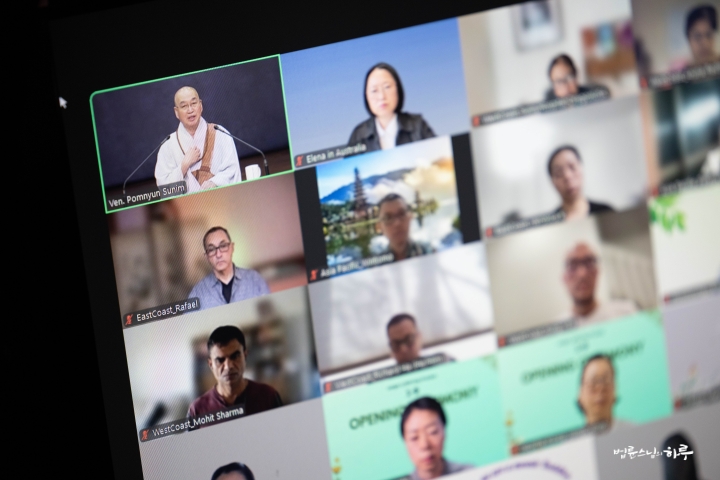
Next, Sunim received questions about practice from those who were curious. After one person pressed the hand-raising button and had a conversation with Sunim, the 100-Day Prayer opening ceremony concluded after 9 o’clock.
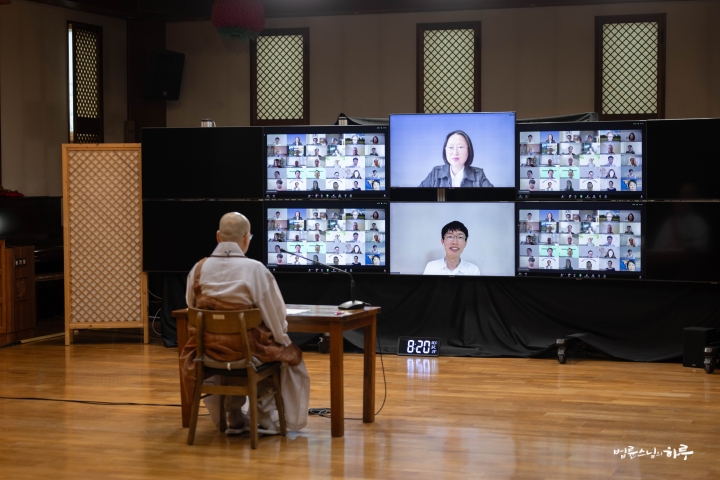
Sunim left the broadcasting room a bit early due to poor health. Since he wouldn’t be able to receive treatment once his overseas schedule began the day after tomorrow, he took some time to visit the hospital for medical care.

After returning from the hospital and having lunch, Sunim departed from Seoul Jungto Center at 12:20 PM and headed to Daejeon.

Ahead of World Environment Day on June 5th, the Environment Foundation requested Sunim to give a lecture on the topic “Small Practices That Change Our Lives.” After a 2-hour and 20-minute drive, Sunim arrived at the KAIST auditorium in Daejeon at 2:40 PM, where the lecture was to be held. Soon after, Chairman Choi Yeol of the Environment Foundation arrived, and they exchanged warm greetings.
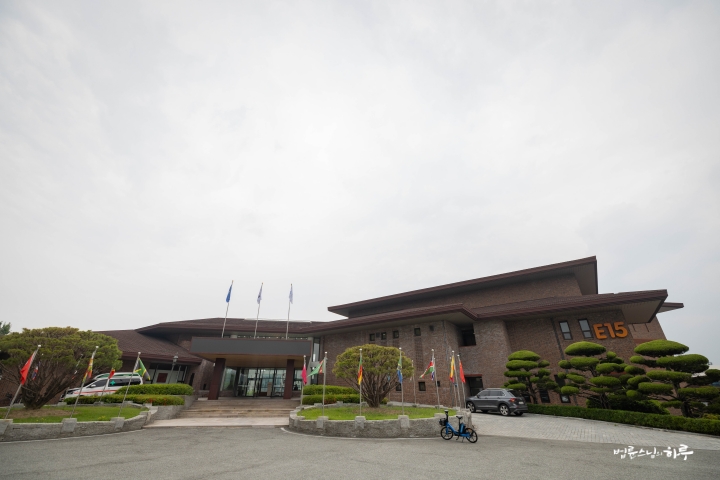
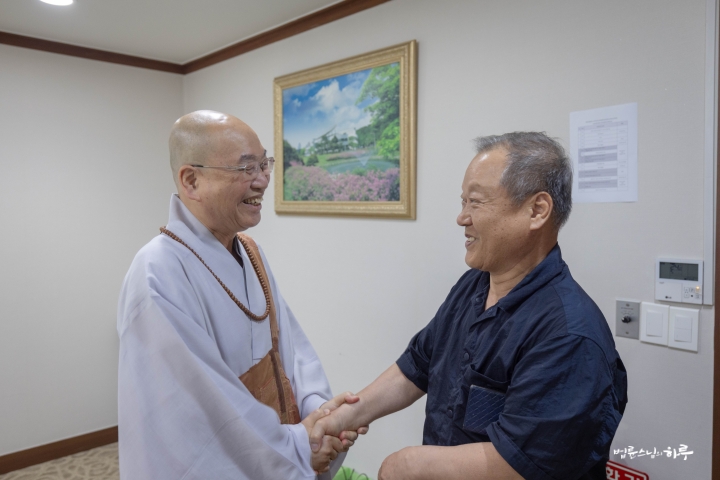
Before the lecture began, Sunim had a tea conversation with officials from the Environmental Foundation and KAIST.

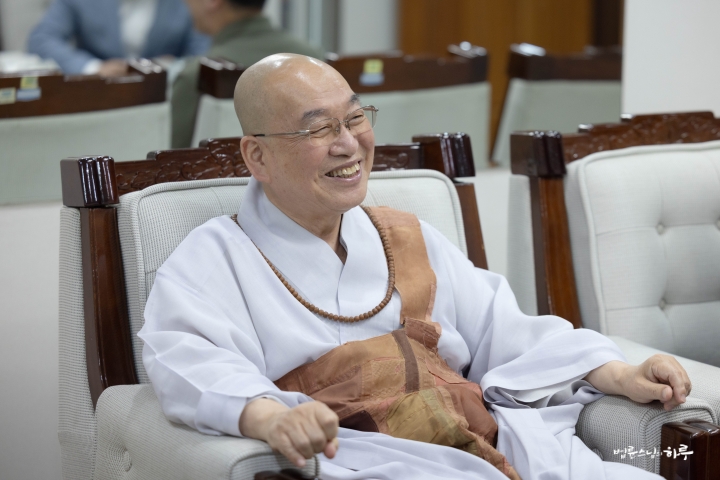
KAIST doesn’t usually rent out lecture halls to outsiders, but they made a special exception today because Venerable Pomnyun Sunim was giving the lecture. As they chatted with smiles, it was time to begin the lecture.
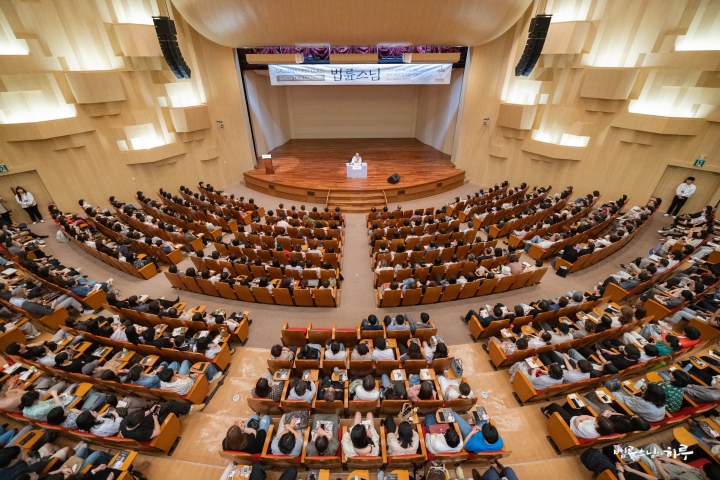
At 3 PM, everyone moved to the lecture hall together. About 700 citizens filled the KAIST auditorium. When the host introduced Sunim, he received loud applause as he stepped onto the stage.
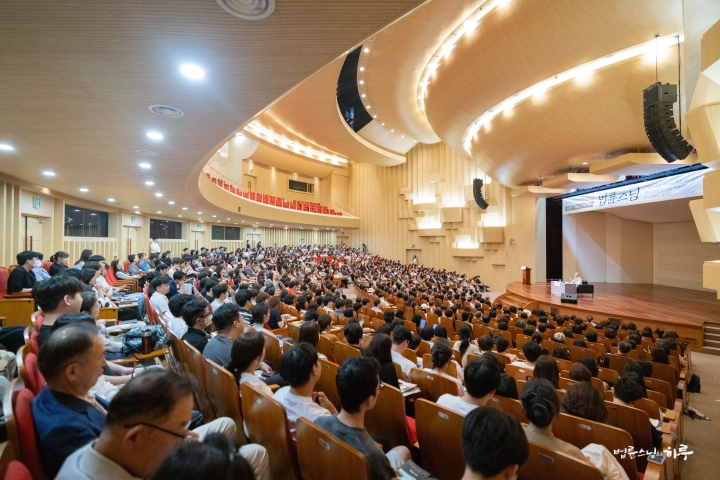
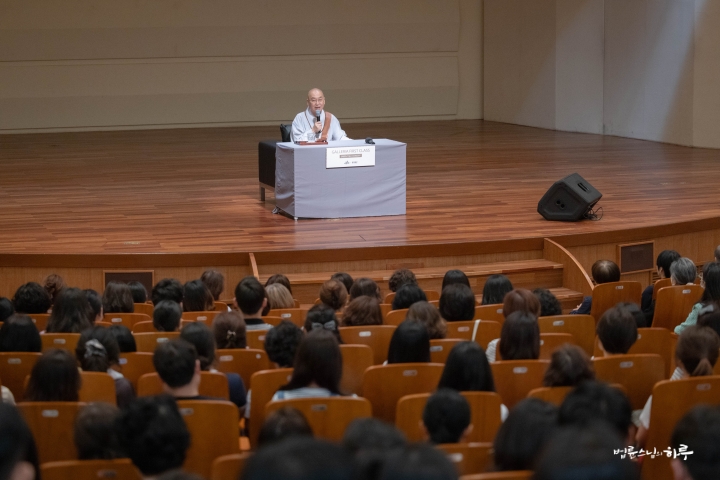
Before beginning the Dharma Q&A session, Sunim first gave a keynote lecture on today’s topic, “Small Practices That Change Our Lives.”
If Bees Disappear, Our Dining Tables Disappear Too
When I looked up the data, I found that if bees completely disappeared and natural pollination couldn’t occur, humanity’s food production would decrease by as much as 70 percent. You realize how precious those small bees are. The disappearance of bees is far more frightening than disasters like volcanic eruptions or earthquakes that destroy a single region. If bees disappear, the entire ecosystem collapses, and food shortages become particularly severe. At that time, looking at the bees, I suddenly thought of car parts. A car is made up of about 20,000 parts, and if even one is missing, it won’t function properly, right? It’s the same with bees. Within the circular structure of the ecosystem, even if just bees disappear, the entire cycle takes a major hit. Yet we live without even knowing how precious small creatures like bees and butterflies are to our lives.
Why We Need to Stop Consuming: “I Will Not Buy Anymore”
However, the problem is that humans bear great responsibility for bringing about this crisis. The belief that consuming more means living better has spread throughout society, and this value system has encouraged mass consumption. Mass consumption leads to mass production, and mass production rapidly depletes Earth’s resources. As a result, resource wars break out, and while artificial resources are developed as alternatives, they bring other side effects. Moreover, mass consumption creates massive amounts of waste. This waste significantly impacts the global environment, making climate change increasingly severe. Ultimately, humanity may face extinction or many species may disappear due to climate change before resources are depleted. Throughout Earth’s history, climate change has occurred dramatically several times, causing numerous species to go extinct in short periods. If such changes are part of natural cycles, we have no choice but to accept them. However, if they are the result of our artificial actions, then the responsibility lies with us. If our efforts to live better have instead led us to destruction, then we have been foolish. Yet people still do not fully grasp the severity of this problem. The same is true globally. U.S. President Trump did not acknowledge the climate crisis, and on January 20, 2025, immediately after beginning his second term, he signed an executive order to withdraw from the Paris Agreement again. Responding to the climate crisis requires cooperation from the entire world. However, major countries are actually not cooperating. In fact, we ourselves are not much different. We first think, “Is the climate crisis really that serious?” and consider living more conveniently today to be more important than addressing it. This is our reality.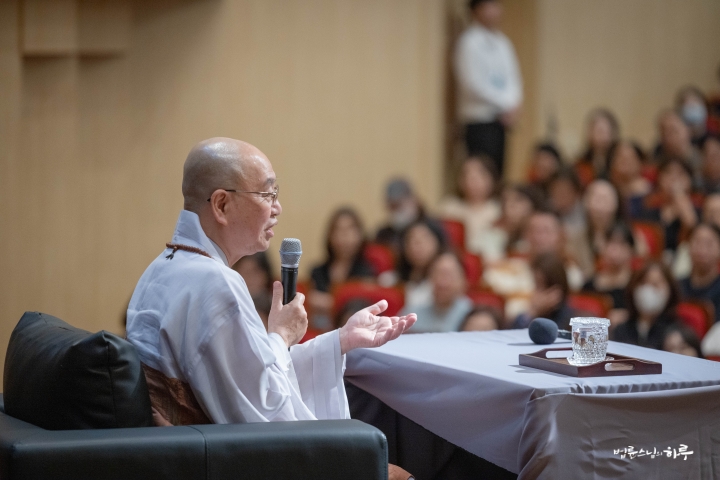

In the Era of Climate Crisis, Overconsumption Is Now a Crime.
The fundamental cause of the environmental problems and climate crisis we face today ultimately lies in excessive consumption. Because we consume too much, carbon dioxide emissions increase proportionally, resulting in the climate crisis. In other words, overconsumption has brought about the climate crisis. So who are the main culprits of this overconsumption? Is it the low-income class or the high-income class? What’s clear is that those who live affluently consume far more. Then, in this era of climate crisis, should the high-income class be objects of envy? Or should they be people who must take responsibility? I believe the high-income class should not be objects of envy but people who take responsibility. If someone threatens countless lives and brings great misfortune to the world, that’s not just a simple mistake—it constitutes a serious crime. In the era of climate crisis, overconsumption is a criminal act. It’s just that the law hasn’t properly defined this crime yet. For example, with gambling, authorities let it slide when it’s small-scale, but when the stakes get high, they prosecute. Similarly, if today’s overconsumption were to be legally defined as a serious crime threatening all of humanity, it would certainly warrant severe punishment. However, because it’s not yet legally defined, instead of punishing such people, we actually envy them. Many people envy them, thinking, “I wish I could live like that just once…” But if someone gave me the things they consume, I would throw them in the trash. What about you? Even if someone gave them to you, would you throw them in the trash? Or would you see them in the trash and pick them back up? (laughter)
A Life That Is Good for Me, Good for Others, and Good for the Earth
Compared to the past, we now have plenty of food, clothing, and shelter. The life we enjoy today is better than that of kings in ancient times. So there’s no need to keep being greedy, wanting more. If we change our mindset this way, first, life becomes much more comfortable. Second, there’s less need to compare or compete with others, reducing conflicts. Third, by consuming less and sharing what’s left with others, we gain more freedom in life. Most importantly, this way of living becomes a practical action to overcome climate change. What if we all lived this way together? Shouldn’t we live a life that is good for me, good for others, and good for the world? With this perspective, there is hope for modern civilization. Yet when I say this, some people respond, ‘Sunim, what difference will it make now? Isn’t it already too late?’ However, if there is a path, shouldn’t we take it? Whether that path will succeed or fail is a secondary issue. If there were no path at all, that would be different, but if there is a path that can make things even slightly better, I believe we should take it, even if just for a day or a month. We must walk together on a path that saves both people and the environment.”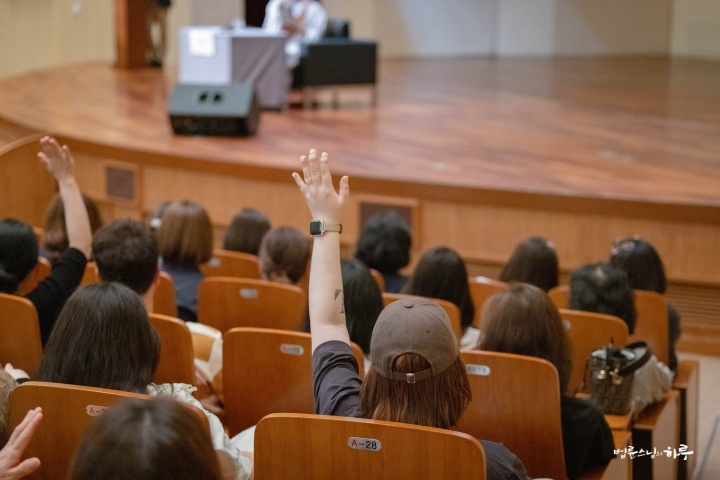
Following this, participants were given the opportunity to freely ask questions. Anyone could raise their hand and ask Sunim a question. During the one-hour session, six people had conversations with Sunim. One of them sought Sunim’s advice on how to live life well.

How Can I Live Life Well?
“As I’m gradually growing into an adult, I have a desire to live well. While there may be various standards for living well, what kind of life is truly a life well-lived? I’m curious about what the wisest attitude toward life would be.”
“The wisest attitude is to ask yourself what the problem is and adopt the perspective that ‘it’s not a big deal.’ If you’re suffering because you’re facing divorce, ask yourself, ‘What’s the problem?’ Think seriously about why you’re suffering over separation. After all, even if you separate, you’re just returning to the state you were in before you met. You’re breaking even. (Laughter) You lived well on your own before marriage, didn’t you? But after experiencing married life, you feel it’s worse than being alone, so you want to separate. In the end, you’re returning to what you wanted, so what exactly is the problem? When suffering comes in life, instead of trying to avoid it or cover it up, you should ask yourself each time, ‘Is this really a problem?’ For instance, if your mother passed away, ask yourself, ‘What’s the problem? Why is the fact that my mother died a problem?’ In human history, no one has escaped death, and death is simply a natural fact. So why is it a problem? Ultimately, the problem isn’t the fact of death, but the attachment within you thinking, ‘I wish she hadn’t died.’ Holding onto the regret that she shouldn’t have died when she already has—that’s foolishness. To live wisely, whenever suffering overwhelms you, you must ask yourself, ‘What’s the problem?’ and ‘So why is that a problem?’ After reflecting on it a few times, you’ll naturally realize, ‘It’s not a big deal!’ That’s when we can finally live wisely.”
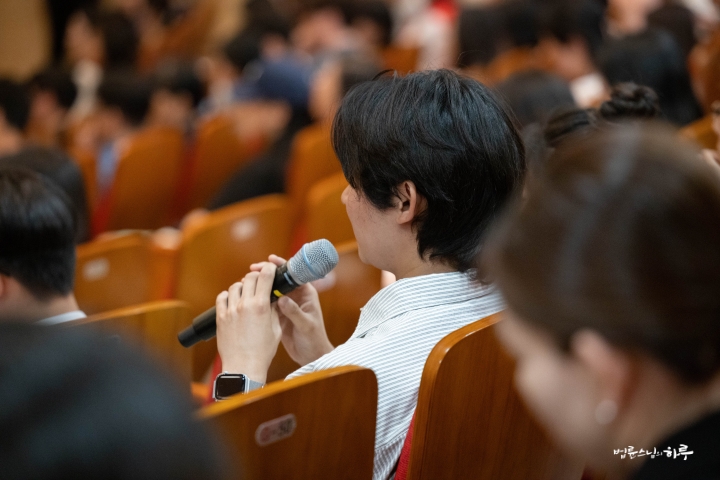
The next questioner was a 27-year-old young man who asked Sunim for advice, saying he still didn’t know what he wanted to do with his life.
I Don’t Know What I Want to Do
“I’m 27 years old this year, but I still don’t know what I want to do. All my friends around me seem to have found what they want to do and are living well. I don’t know what I should do.”
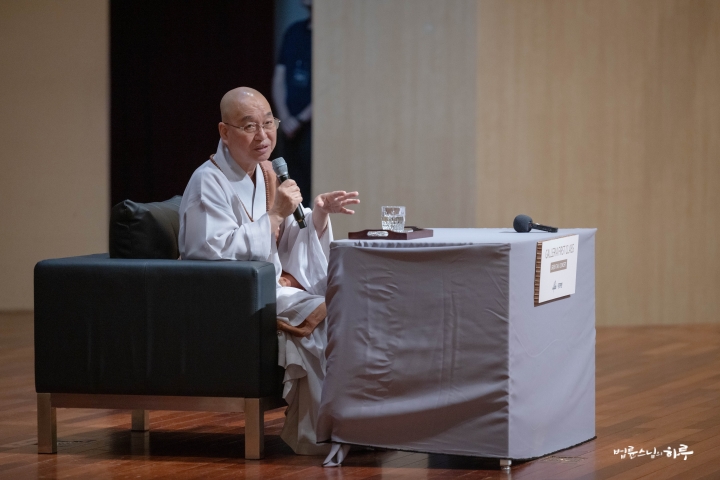
“Where do you live? Do you live with your mother?”“I live alone.”
“You said you’re not doing anything, so what money are you living on?”“I am actually working.”
“So you’re earning enough to feed yourself?”“Yes.”

“Thank you. I understand well.”
As they conversed, it was already time to wrap up.
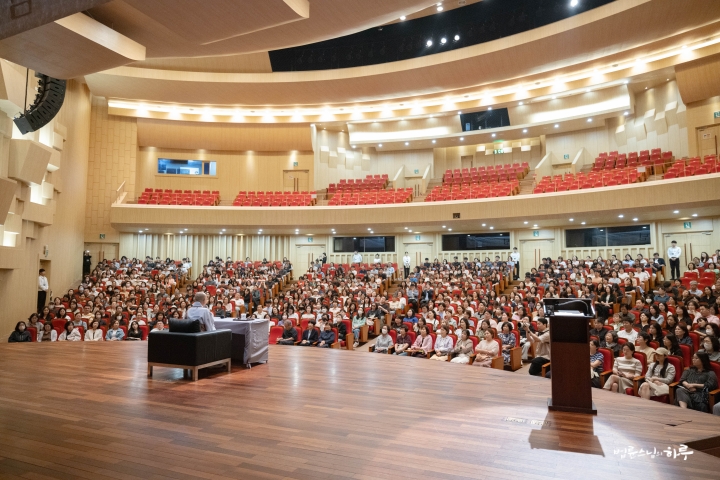

When Sunim finished the lecture and came down, an event for on-site participants was held. Sunim immediately left the lecture hall, exchanged greetings with officials from the Environmental Foundation, and then departed from Daejeon.
Leaving Daejeon at 5 PM, Sunim headed to Dubuk Jungto Retreat Center. After a three-hour drive, he arrived at Dubuk Jungto Retreat Center after 7 PM and concluded the day’s activities.
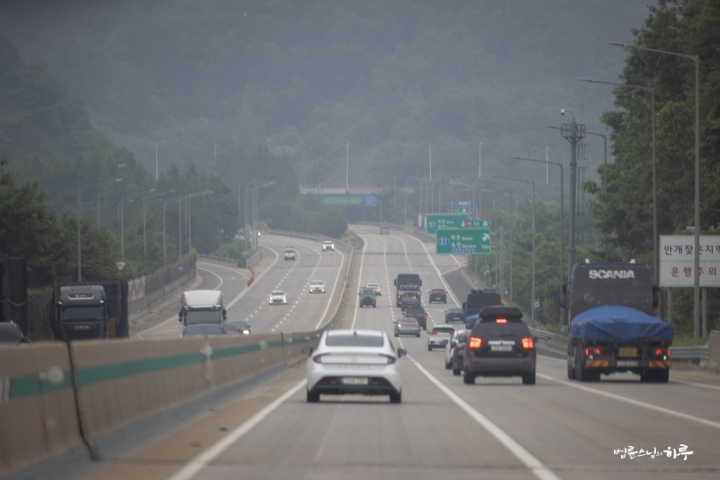
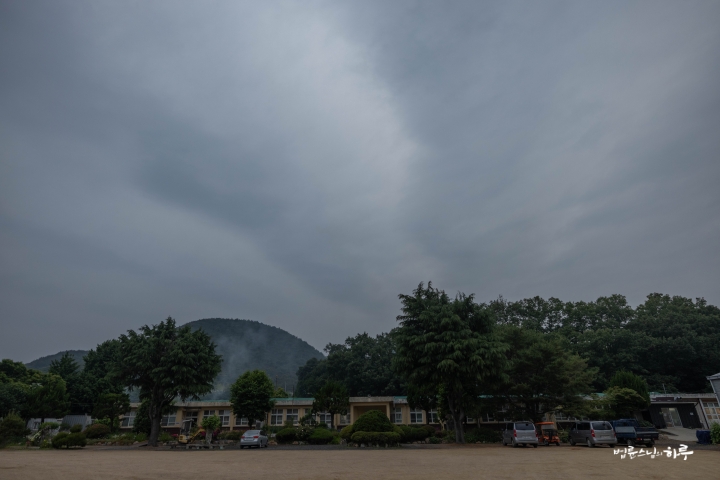
Tomorrow, after holding a memorial service for the 161st anniversary of Master Yongseong’s birth at Jukrim Jeongsa Temple in Jangsu, Sunim will have a Dharma Q&A session with on-site participants and tour the Yongseong Memorial Hall construction site. In the afternoon, he will travel to Seoul, and in the evening, he will hold a meeting with volunteers on the topic of ‘Youth Dharma Propagation.’