The Middle Way: Neither Pleasure nor Asceticism, the Path Discovered by the Buddha
May 20, 2025 - 93rd Day of the 100-Day Dharma Talk, Jungto Buddhism Course "Human Buddha" Lecture 3, Meeting to ...
Hello. This is the 93rd day of Venerable Pomnyun Sunim’s 100-Day Dharma Talk. Today, Sunim gave a lecture at the Jungto Dharma School and attended a meeting with senior social leaders to prepare for the Transition Forum, where he shared his thoughts.
After completing his morning practice and meditation, Sunim headed to the Jungto Social and Cultural Center to give a lecture at the Jungto Dharma School.
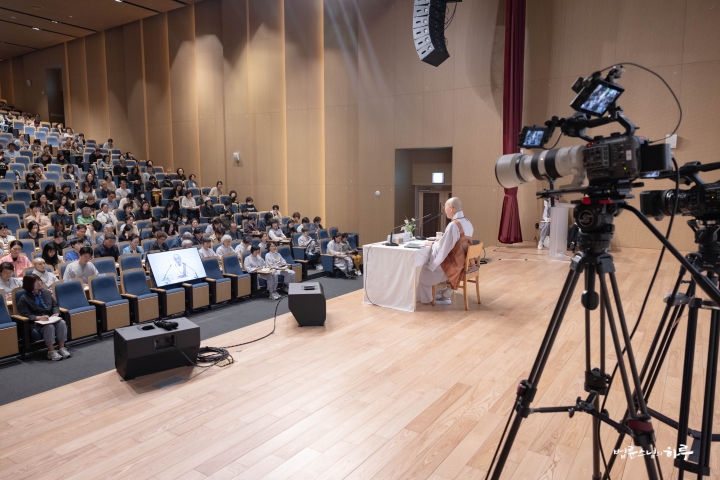
At 10:15 AM, Sunim began the morning session of the Jungto Dharma School. About 150 students were seated in the basement auditorium, and approximately 170 more were connected to the online live broadcast.
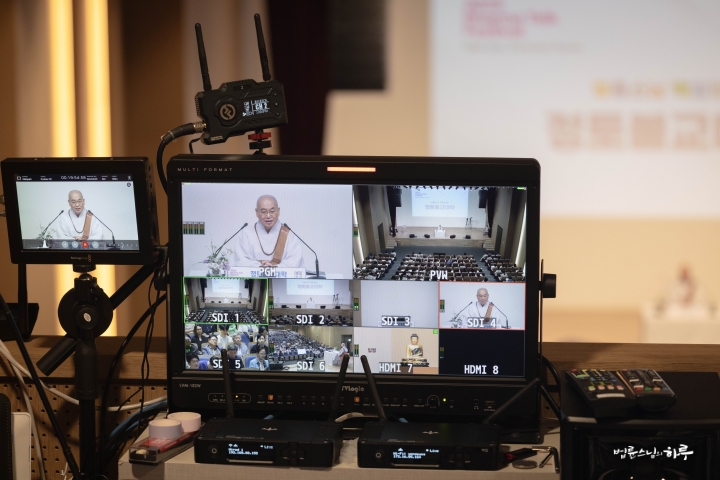
Today was the third session on learning about the Buddha’s life. In the previous session, they covered the Buddha’s birth, growth, his four encounters that led to his spiritual quest, and his renunciation. Today, they would examine the six years of ascetic practice and spiritual seeking after his renunciation.
After reciting the Three Refuges and Words for Practice together, and requesting the Dharma teaching with three bows, Sunim began his lecture.
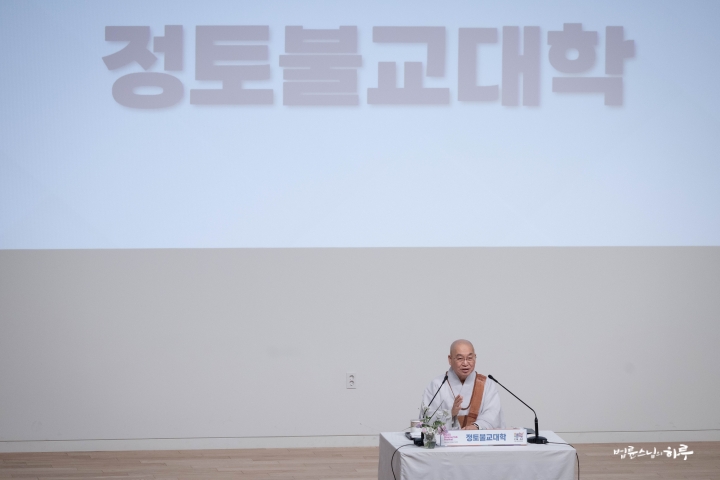
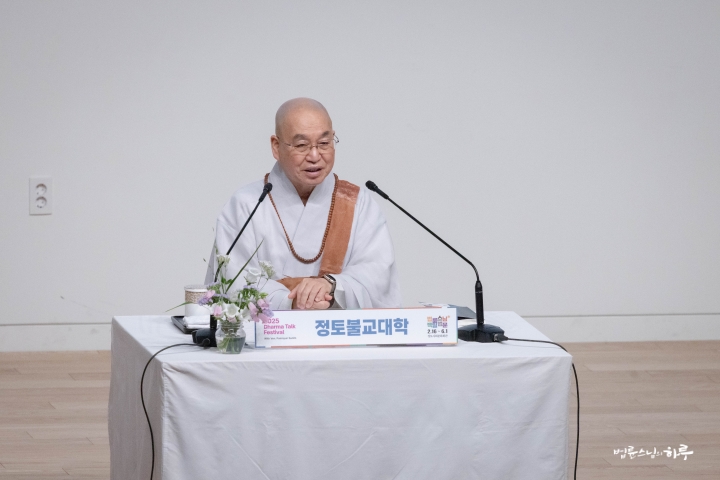
The Buddha’s Six Years of Asceticism: Confronting Endless Doubt
The renunciants of that time were fundamentally ascetics. The Buddha, also an ascetic, did not even bathe in his determination to cut off attachment to his body. When sitting, he avoided comfortable or soft cushions, and never consumed soft foods. As time passed, dirt accumulated on his shoulders, moss grew, and insects swarmed. Birds would perch on his shoulders to eat these insects. Even when birds pecked at his shoulders and defecated on him, the Buddha remained completely motionless. One day, some children from the untouchable caste who were playing in the forest saw him and argued among themselves, “That person is dead!” “No, he’s alive!” Some threw clumps of dirt at him, while others poked his ears with sticks. Still, the Buddha showed no reaction whatsoever. According to the scriptures, the Buddha felt neither irritation nor hatred toward these children. He was that deeply immersed in his practice. The Buddha had reached such an extreme state. The scriptures record that when he reached such an extreme state that he would have collapsed and died if he lost focus for even a moment, Mara the Evil One appeared and whispered: “What use is it to die here alone in ascetic practice? Rather than this, abandon your practice and return home. You were born with the destiny to become a universal monarch. You could become a king who rules the world, but what meaning is there in dying while practicing in this deep forest?”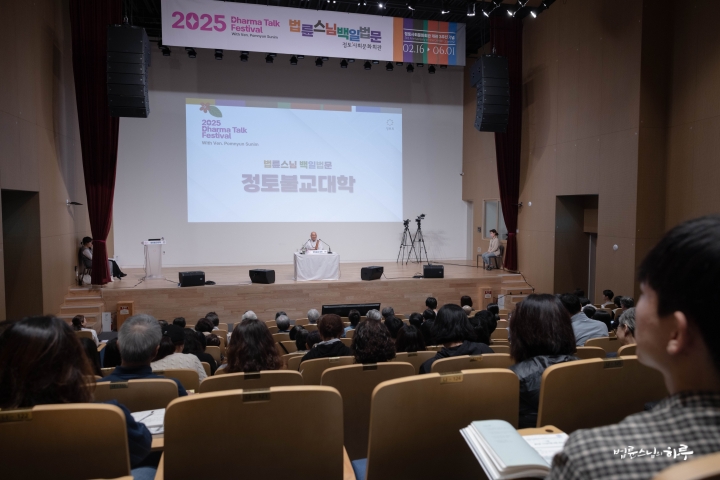
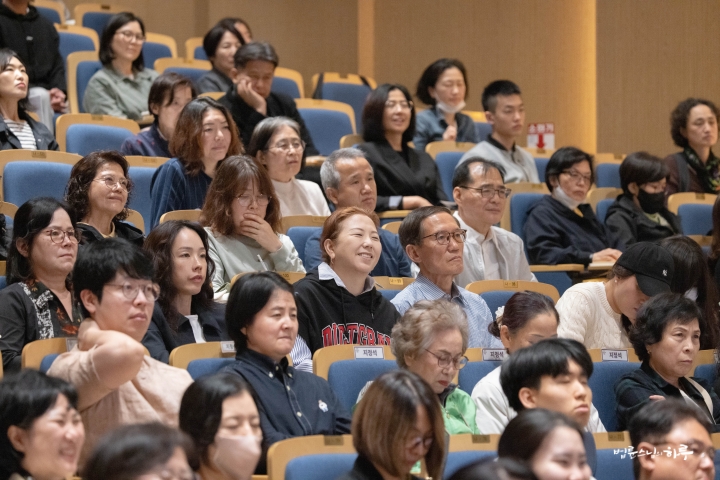
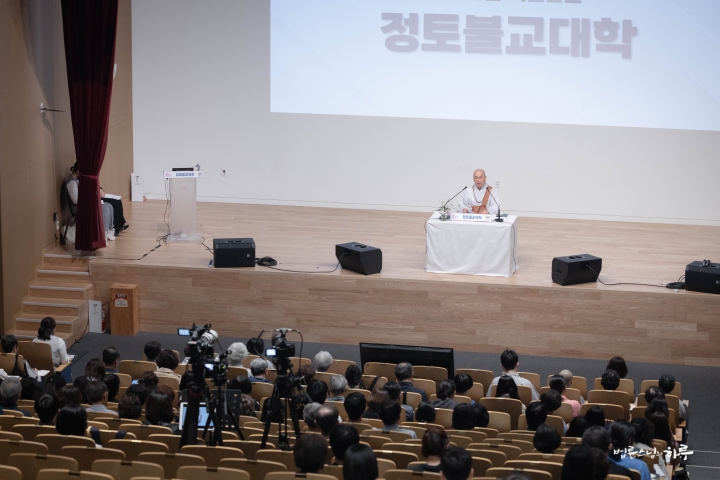
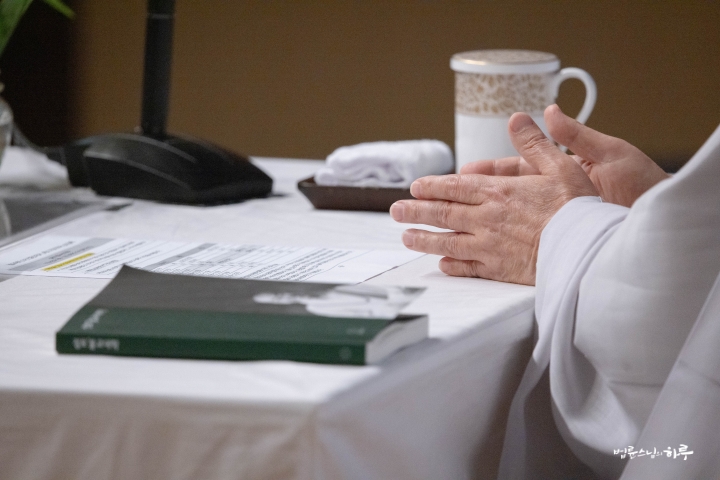
After this, Sunim explained in detail how the Buddha reflected on his previous practices and discovered the Middle Way, then concluded the lecture. The students agreed to continue their practice exercises until next week’s meeting and then broke into groups for mindful sharing. Sunim immediately got into a car and headed to the Korea Dialogue Academy in Pyeongchang-dong, Jongno-gu, Seoul.

Recently, Honorary Director Kang Dae-in of the Korea Dialogue Academy visited Sunim and proposed creating a platform that could serve as an open forum for dialogue between people with different thoughts and positions. After several discussions, today they held a meeting with about 20 senior community leaders to prepare for the “Transition Forum.”
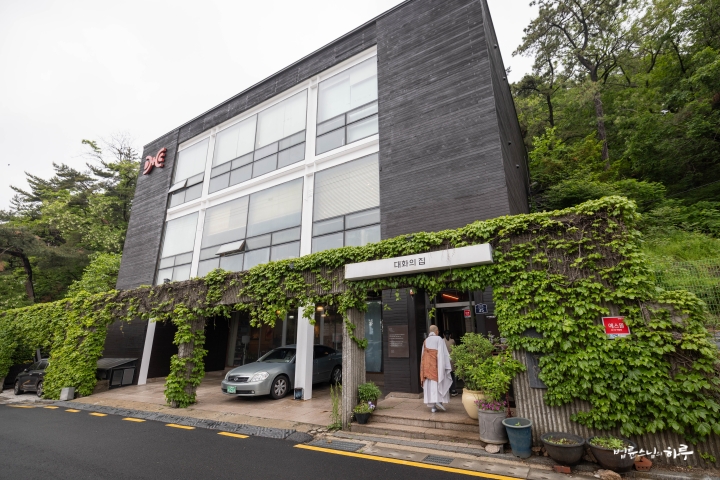
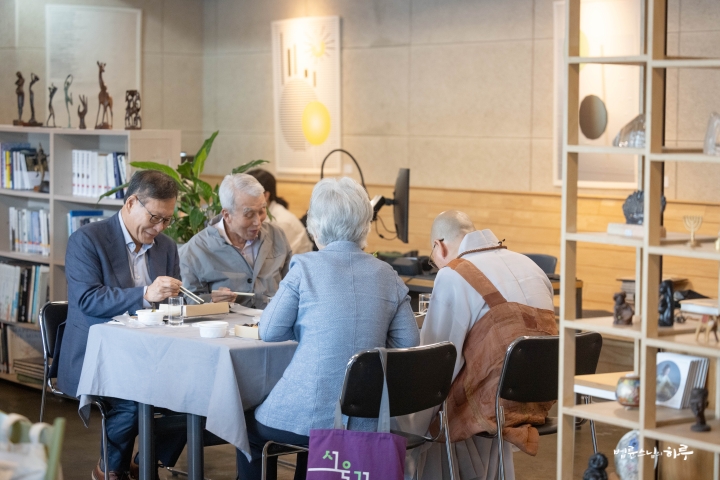
Arriving at the Academy at 1 PM, Sunim chatted with Director Kang and had lunch with the participants.
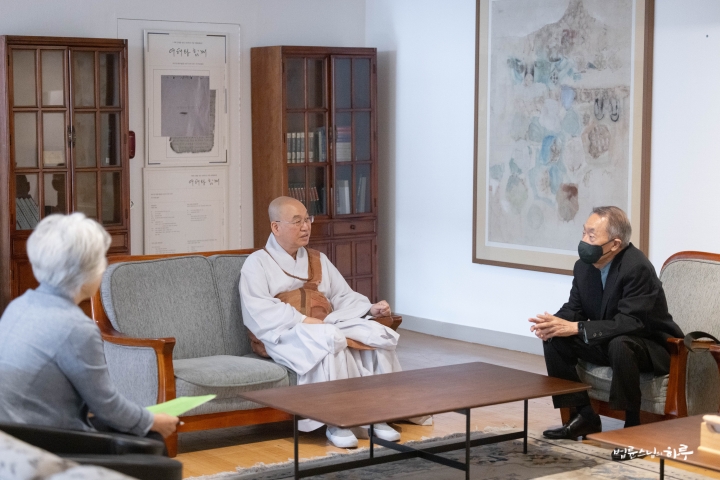
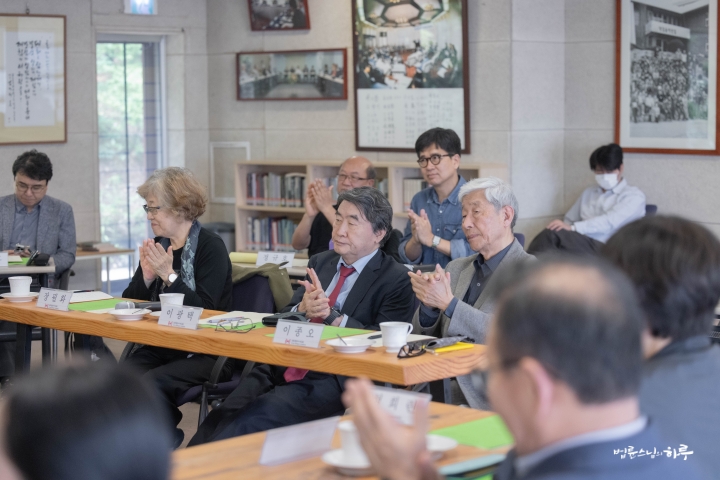
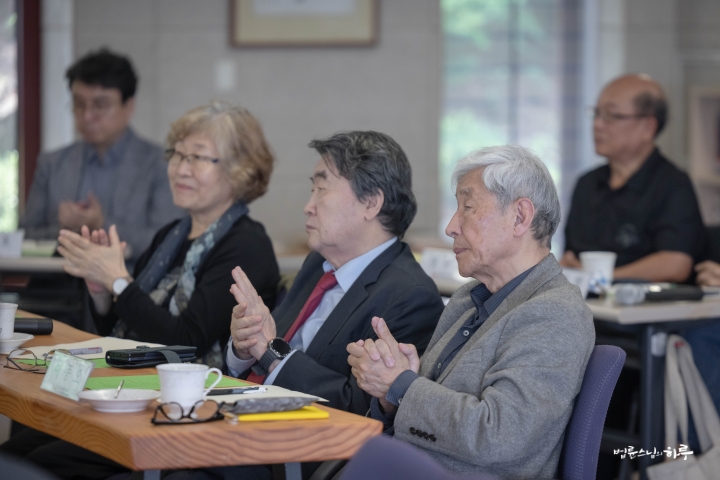
After lunch, at 2 PM, they began with participant introductions. As each of the distinguished community leaders who had guided various sectors of Korean society for many years was introduced, they received enthusiastic applause.
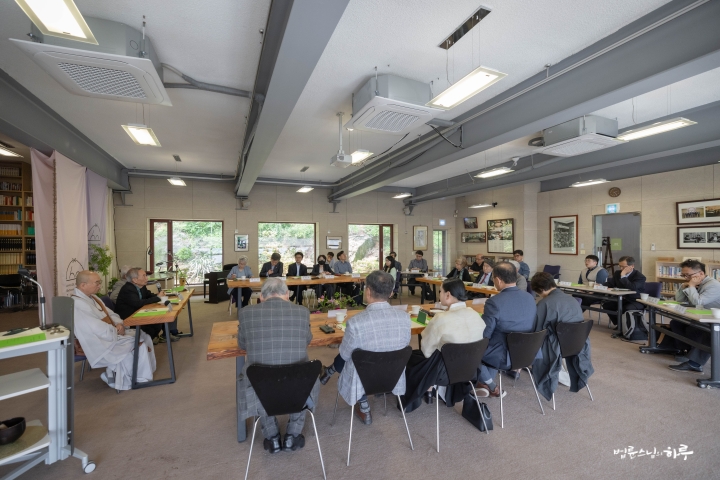
Next, three individuals who agreed to serve as stepping stones for this gathering gave keynote speeches to open the dialogue. First, Director Kang introduced the purpose of today’s meeting.
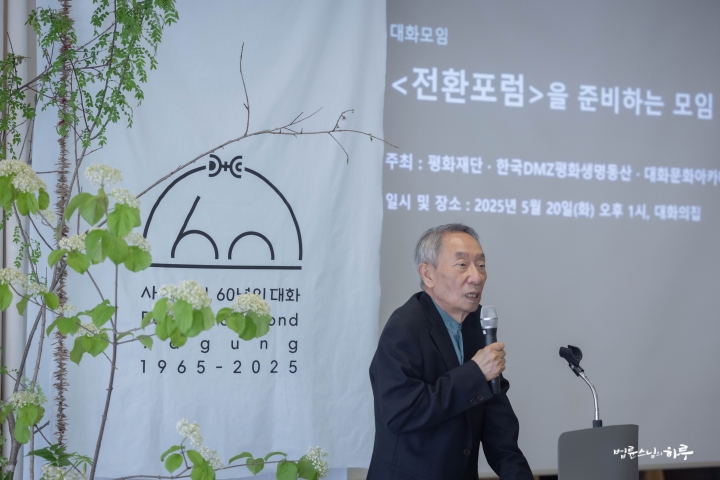
“The division in Korean society is growing increasingly severe. Since the declaration of martial law on December 3rd, haven’t we endured many sleepless nights filled with anxiety over an uncertain future? In these troubled times, there was a suggestion that community elders should play a role. So Venerable Dobeop, Mr. Lee Nam-gok, Venerable Pomnyun, Mr. Jung Sung-hun, and I gathered to discuss how we could help with national integration. Today’s meeting is an expanded gathering for informal discussions, and we plan to open forums for dialogue intensively over the next three years.
Divided Korean Society: Where Should We Begin Again?
In this era of climate crisis, the values of life and environment are becoming increasingly important. However, as a first step, we want to discuss the transformation of politics. Politics seems to be the biggest obstacle to becoming an advanced society. I hope we can avoid discourse-centered discussions and instead hold workshop-style meetings that present practical methods.”
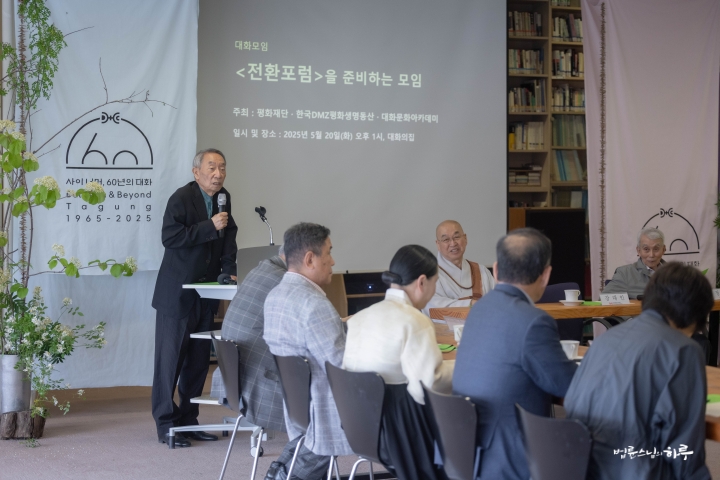
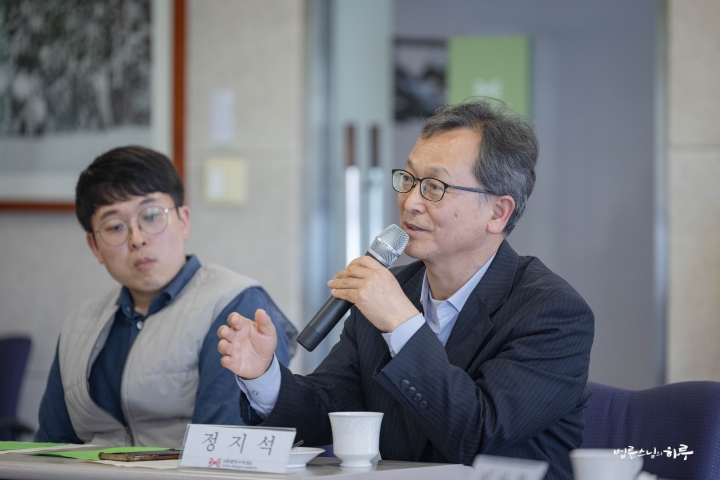
Next, Jung Sung-hun, Chairman of the DMZ Life Peace Garden, raised a topic about honeybees.
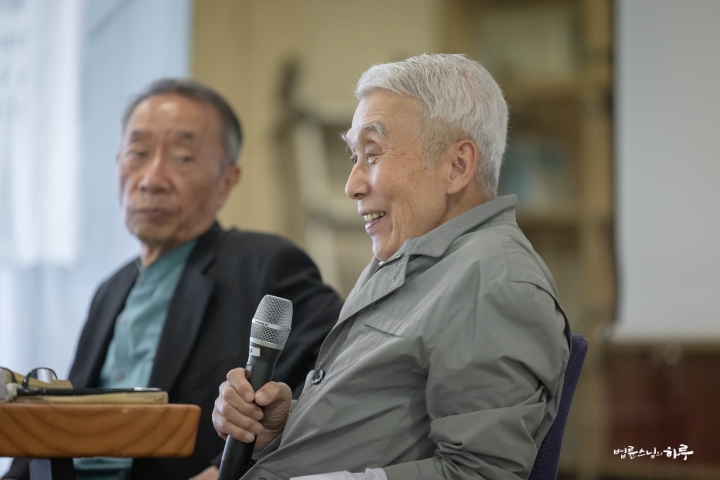
“Today is World Bee Day. The United Nations designated this day to protect honeybees because they are dying in alarming numbers. If bees become extinct, humans will die too. This is because bees play a crucial role in producing fruits beneficial to humans. Before the climate crisis, we will face a food crisis, and the first sign is the disappearance of honeybees. The second sign is the dramatic reduction of microorganisms in the soil. I hope we can aspire to what I call ‘honeybee democracy.’ We need to disconnect from anti-life and anti-peace elements and focus on fundamental issues to touch people’s hearts. I would prefer this gathering to be a place where we share case studies, whether successful or failed, rather than theoretical discussions. If our gathering can become self-sufficient and sustainable, the world we want to change will follow suit. I hope we can start by each contributing to our meals rather than just receiving, and speakers can share good examples voluntarily without receiving honorariums. I’ll pay for my meal even if I have to get money from my daughter-in-law.” (Laughter)
Finally, Venerable Pomnyun Sunim shared his diagnosis of our society’s current state and thoughts on the direction forward.
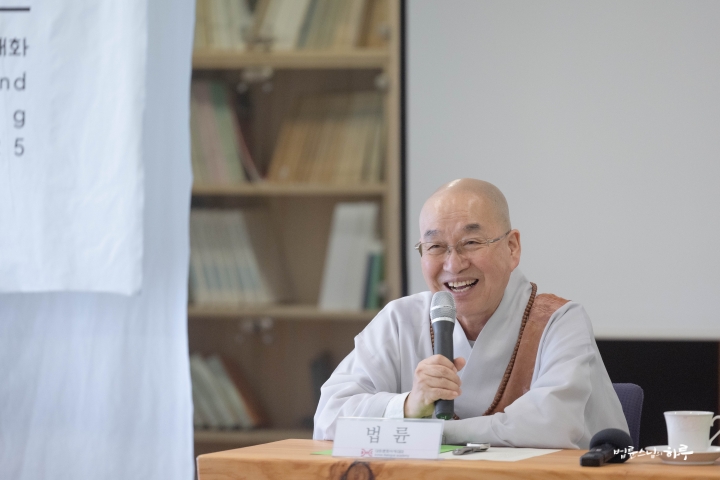
Has Our Society Passed the Peak of Its Parabolic Curve?
However, when I look at the conflicts appearing in our society today, I sometimes wonder whether this is truly a process where failure becomes the mother of success, or if it’s a precursor to a downward trend. Rather than a productive pattern where we attempt something, experience failure, and then make new challenges based on that experience, it increasingly appears that the divisions are deepening and we’re simply consuming each other. The current conflicts don’t lead to reconciliation after fighting; instead, they continue to intensify. This suggests that our society may have passed the peak of its historical parabolic curve and is heading downhill. Therefore, the first point I want to emphasize is that we need to find a way to overcome this trend.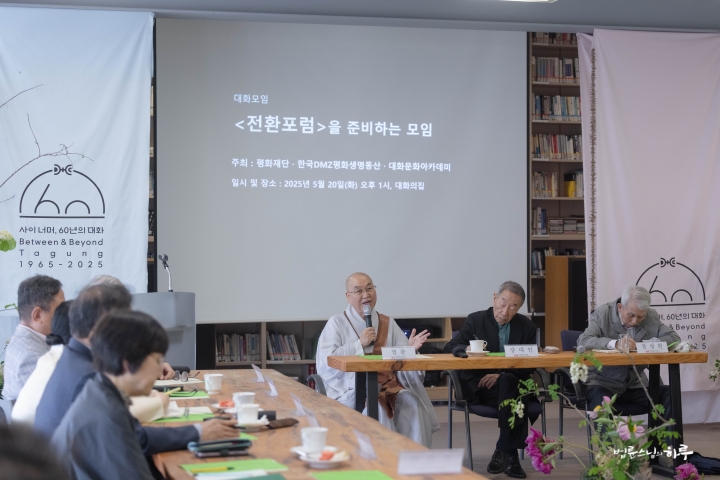
Is Now the Time to Settle the Past or Prepare for the Future?
The second point I’d like to address is that while understanding our history and learning from it is crucial, our society’s current conflicts appear excessively focused on “living off the past.” We revert to discussions about Park Chung-hee and Kim Dae-jung, talk about Syngman Rhee and Kim Gu, and bring the Japanese colonial period into today’s issues. Of course, remembering the past and learning from it is very important. But shouldn’t we place more emphasis on “how to solve current problems” and “what to do moving forward”? I’m concerned that our social issues today are always tilted toward the past.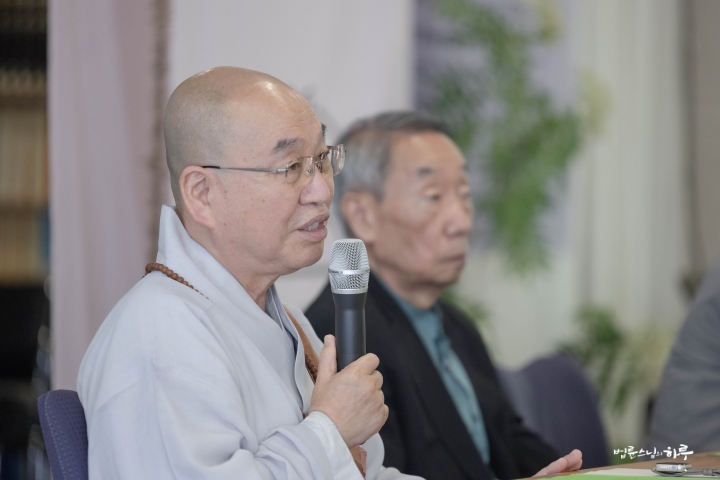
Why Can’t Moderate and Reasonable People Change Society?
Throughout my social engagement work, I’ve observed something: a moderate and reasonable mindset is a precious quality in one’s personal character. People with this mindset are generally not extreme in their views. However, it seems that people with refined character often hesitate to take action. They offer advice, but when the moment calls for actual implementation, they rarely step forward. As a result, those with extreme positions often become the dominant forces in society. When these individuals voice extreme opinions, the initial reaction is often, “Isn’t that too harsh?” Yet, as time passes, these same people consistently hold political leadership and move forward. The logic behind extremists gaining social dominance seems obvious to me: they dedicate their time, contribute financially, and take action. In contrast, most reasonable people avoid criticism, dislike getting “dirty,” and hesitate to take concrete action. They may have a critical consciousness and speak eloquently, but they fail to exert the influence needed to lead society. That’s why I sympathize with concerns about the difficulty of creating a political force centered on moderation.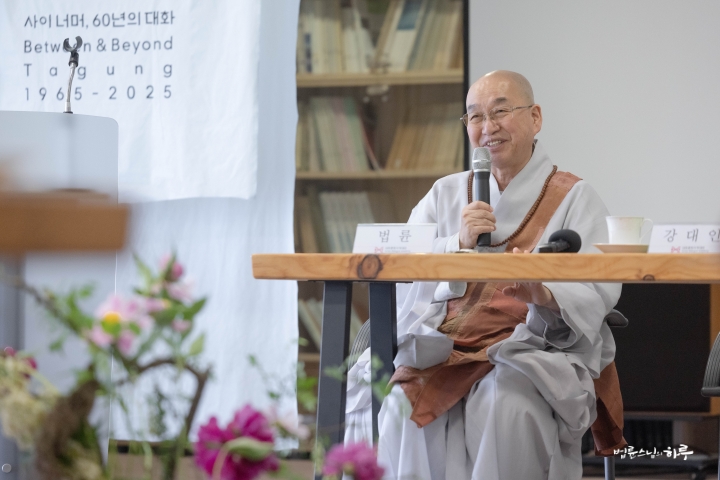
For Korean Wave to Have a Lasting Positive Impact on Other Countries
Recently, I have been engaged in many international activities. As the Korean Wave sweeps across foreign countries, our nation takes great pride in it. However, what I’ve observed abroad is that the Korean Wave often represents just another form of consumerism for people in those countries. It encourages consumption among young people. While this may benefit those exporting Korean culture, many in other countries have concerns. I believe that a Korean Wave focused primarily on consumer culture will not last long. The true Korean Wave depends on how we contribute to their societies. Peace activities, poverty eradication, women’s education, support for democracy—Korean cultural influence should be accompanied by contributions to these countries’ development. Wouldn’t this approach help sustain even the consumer-oriented aspects of the Korean Wave? With this in mind, I’ve dedicated most of my efforts to international activities over the past decade.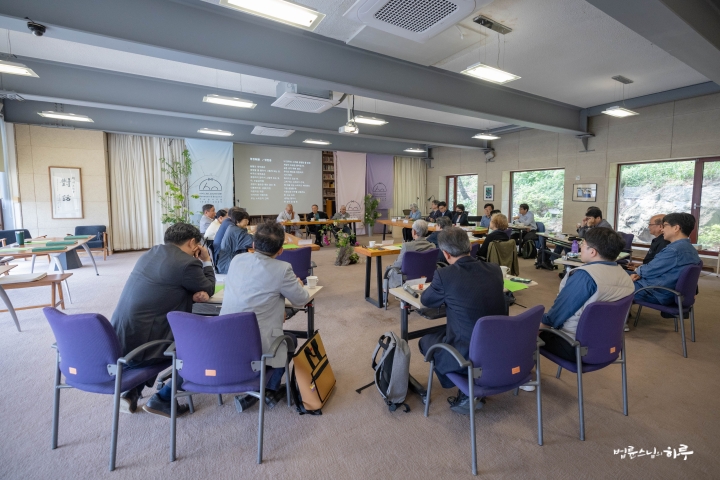
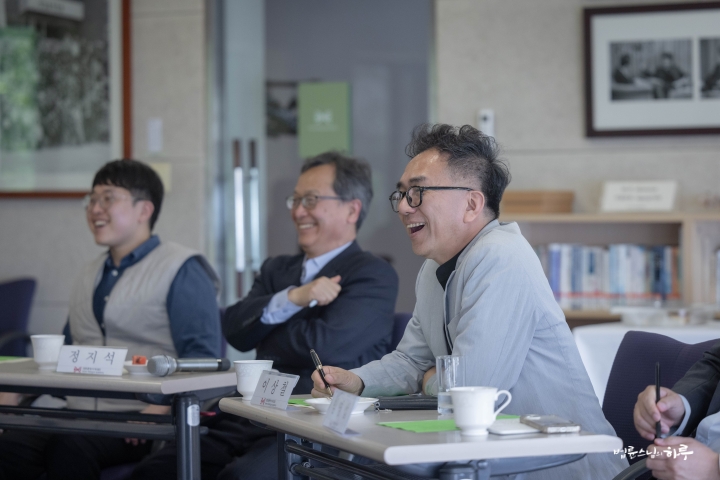
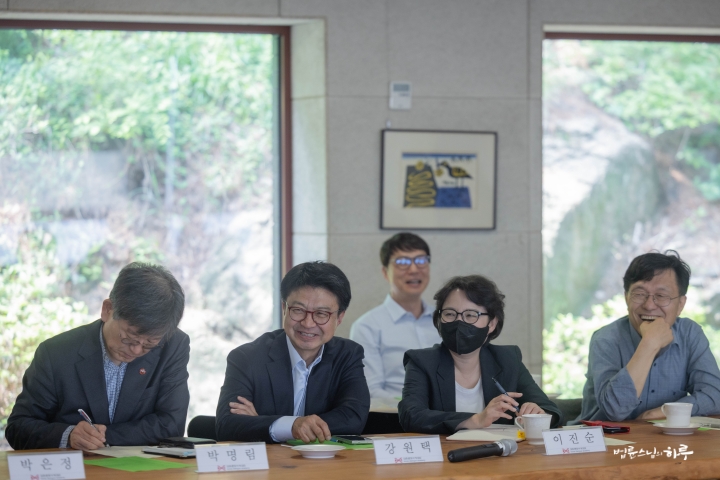
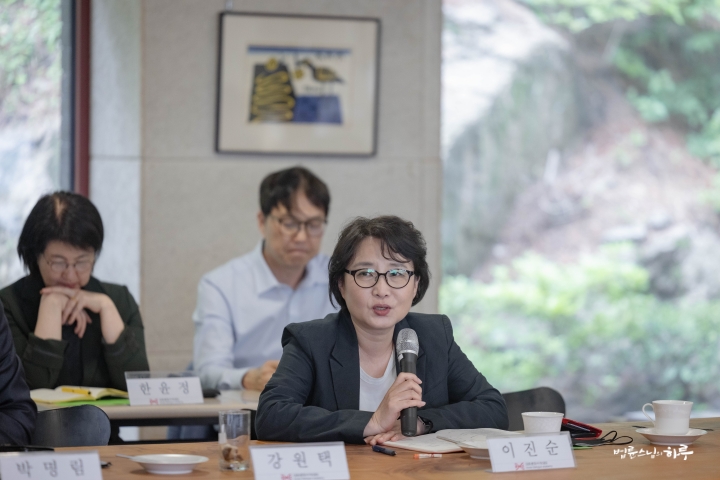
Afterward, participants engaged in an open discussion. Moderated by Professor Park Eun-jung from Ewha Womans University, about 20 representatives from civil society, academia, and religious communities gathered to discuss what our society truly needs, engaging in profound conversation.
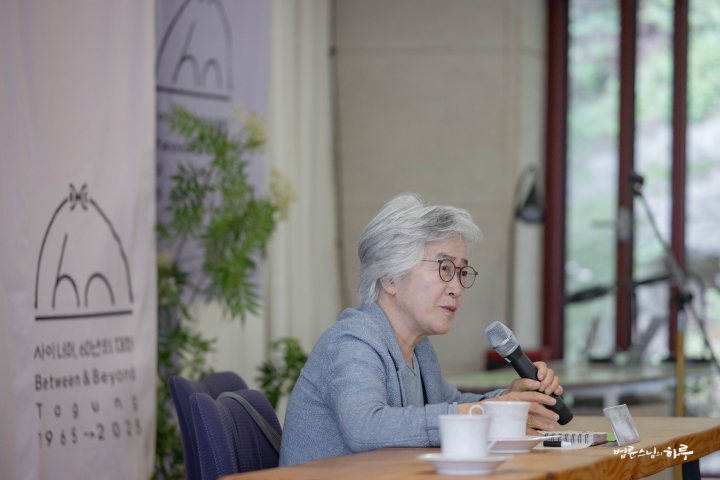
The diverse group of leaders defined the crisis facing Korean society as an “era of transition” and agreed on the need for a new paradigm to address structural issues such as the climate crisis, inequality, and threats to democracy.
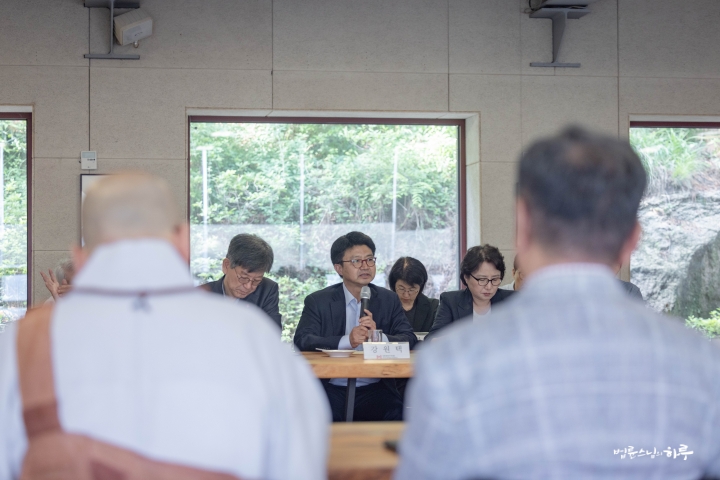
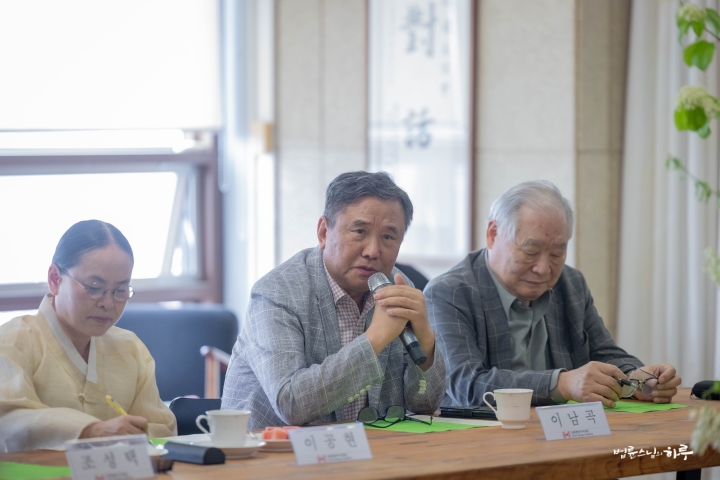
Participants pointed out the limitations of existing political systems and emphasized that non-institutional sectors such as civil society, religion, education, and youth movements should become the key agents of transformation. They stressed the importance of practices rooted in everyday values like care, ecology, coexistence, and solidarity, and voiced the need to communicate these ideas in new language that resonates with citizens.
Finally, Director Kang Dae-in offered closing remarks.
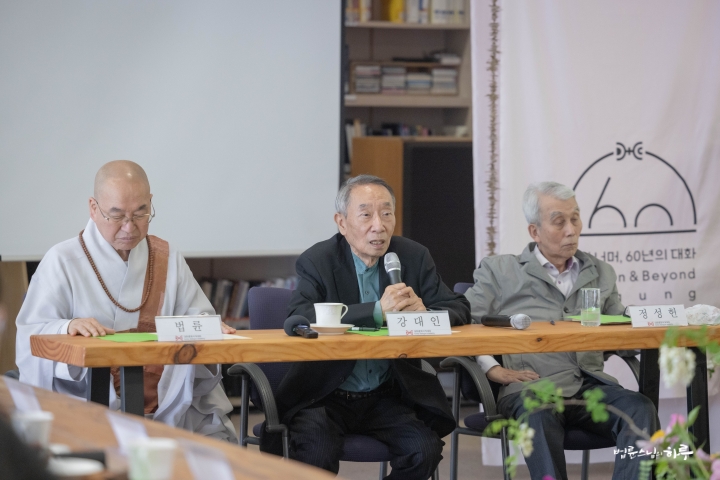
“Looking at Venerable Pomnyun Sunim’s schedule, I can see how incredibly busy he is, yet his presence here today, listening attentively to our discussions for such a long time, has been tremendously encouraging. I hope we can continue these monthly meetings for the next three years. I’m particularly grateful that the Jungto Social and Cultural Center has offered to provide studio space, which will allow us to create broadcasts to share the Transition Forum’s message.”
Although it’s impossible to predict what currents this small, quiet gathering might generate in the future, the meeting concluded with everyone celebrating this first step together.
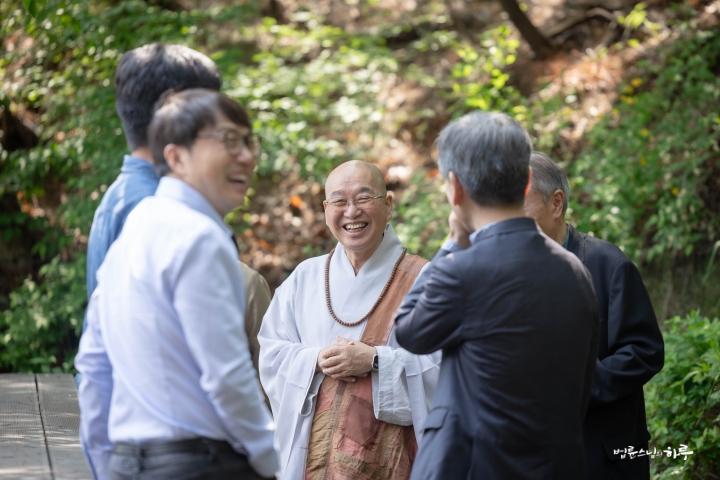
After exchanging farewells with the participants, Sunim returned to the Jungto Social and Cultural Center by car.

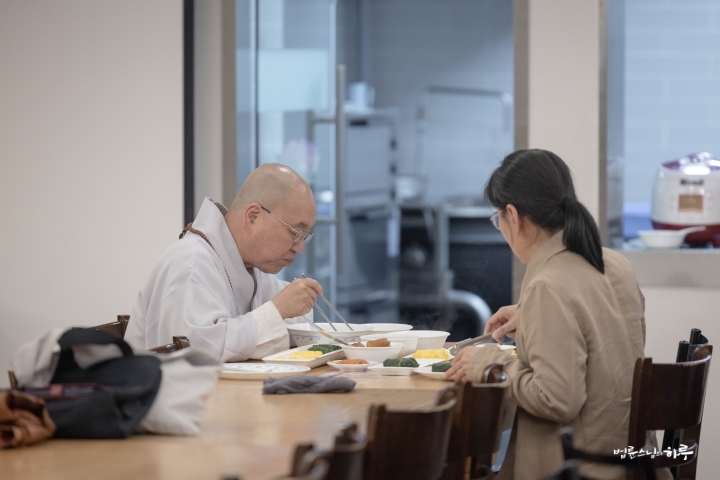
After having dinner with the Sangha members in the basement dining hall, Sunim headed to the main auditorium for his 100-Day Dharma Talk.
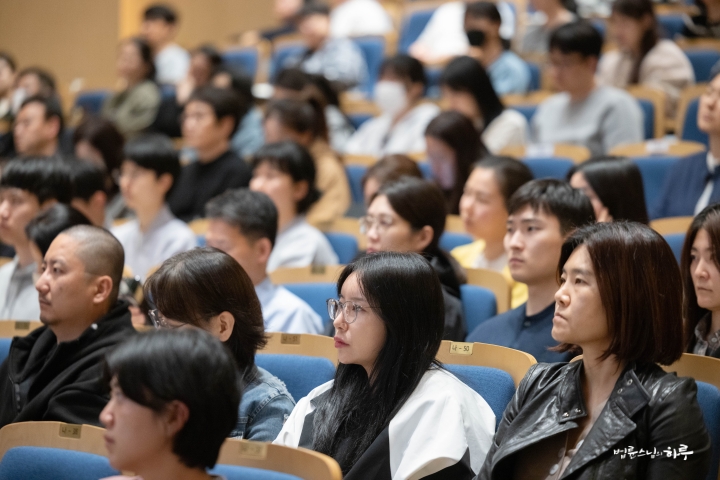
As the sun set, at 7:30 PM, Sunim began teaching the third session of the evening class “Human Buddha” for the Jungto Dharma School. About 150 students who had rushed over after work filled the basement auditorium, while approximately 340 others connected to the online live broadcast.
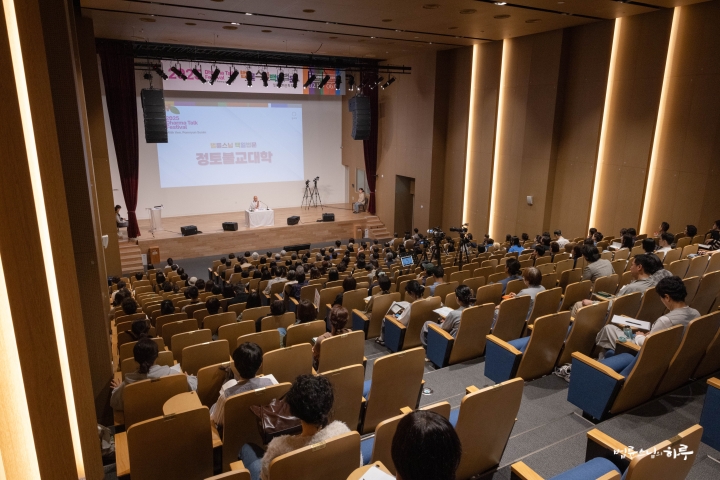
The session began with everyone reciting the Three Refuges and Words for Practice, followed by three bows to request Sunim’s teaching. Like in the morning lecture, Sunim spoke about the Buddha’s journey after leaving the palace. He explained in detail how, after six years of ascetic practice, the Buddha reflected on his approach and discovered the Middle Way.
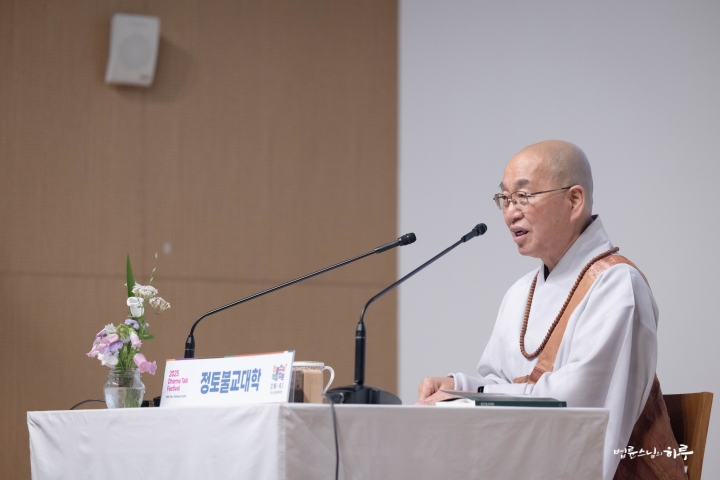
The Middle Way: Neither Indulgence Nor Asceticism, the Path Discovered by the Buddha
In his youth, the Buddha enjoyed all pleasures as a prince. After renouncing the world, he practiced extreme asceticism. Yet he found enlightenment through neither path. Examining what went wrong, the Buddha came to this conclusion: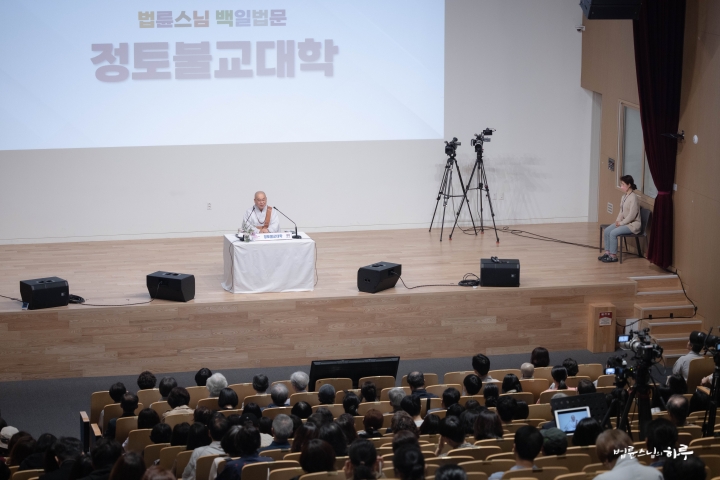
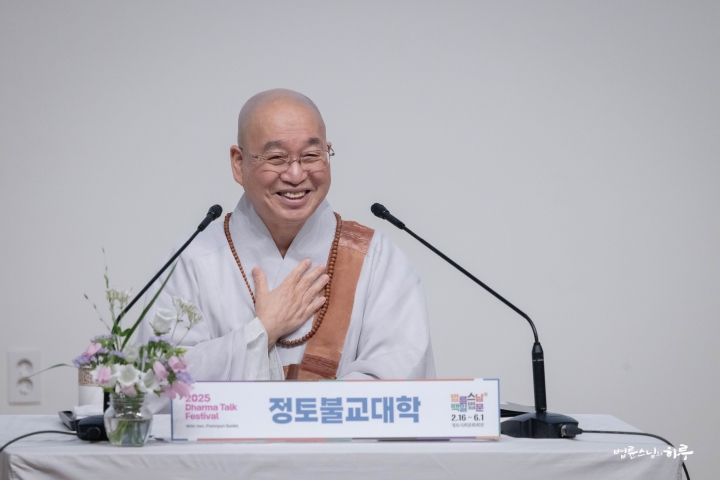
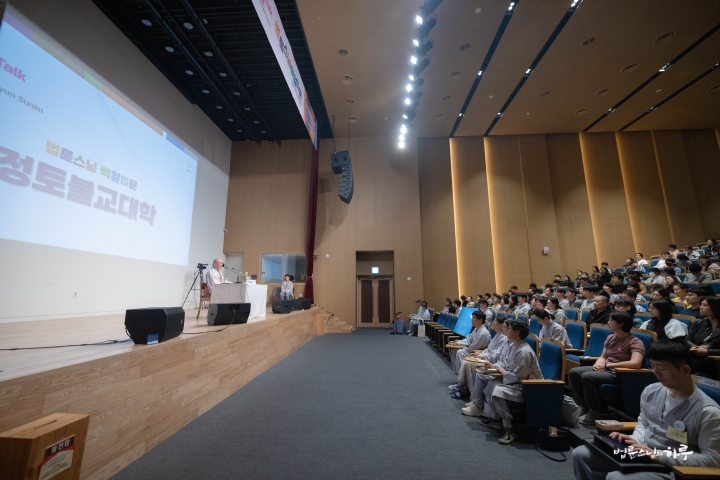
Today, Sunim taught about Buddha’s journey after leaving his palace and his path of seeking enlightenment, as well as examining what the Middle Way means. The third class concluded with plans to learn about Buddha’s process of attaining enlightenment under the Bodhi tree next week.

Following this, the facilitator explained the practice assignments to the students, after which they gathered in groups for mindful sharing.
Tomorrow will be the 94th day of the 100-Day Dharma Talk. In the morning, Sunim will livestream the Weekly Dharma Assembly for the daytime group, attend a Peace Research Seminar in the afternoon followed by a planning committee meeting at The Peace Foundation, and in the evening, he will livestream the Weekly Dharma Assembly for the evening group.