I hope these relief supplies help the wildfire victims feel less alone
May 8, 2025 - 81st Day of the 100-Day Dharma Talk, Heart Sutra Lecture 4, Buddhist Social Studies Course Lecture ...
Hello. This is the 81st day of Venerable Pomnyun Sunim’s 100-Day Dharma Talk. Today, Sunim continued with a busy schedule immediately after arriving from Vietnam.
After departing Ho Chi Minh City, Vietnam at 11:45 PM last night, Sunim flew for 5 hours and 15 minutes, arriving at Incheon International Airport at 7 AM this morning. He managed to get only brief moments of sleep during the overnight flight.
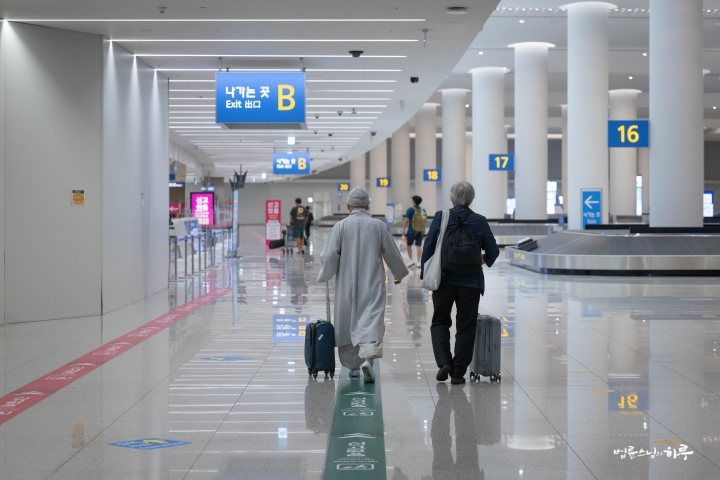
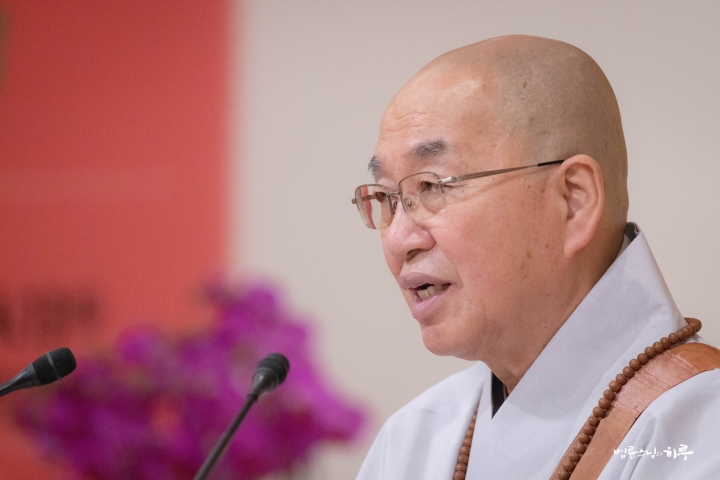
Hurrying out of the airport, Sunim headed directly to the Jungto Social and Cultural Center. After a quick breakfast upon arrival, he began the Heart Sutra lecture at 10 AM.
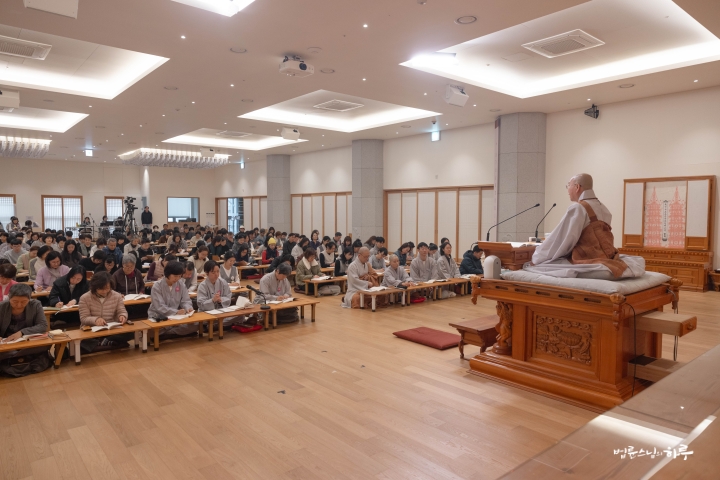
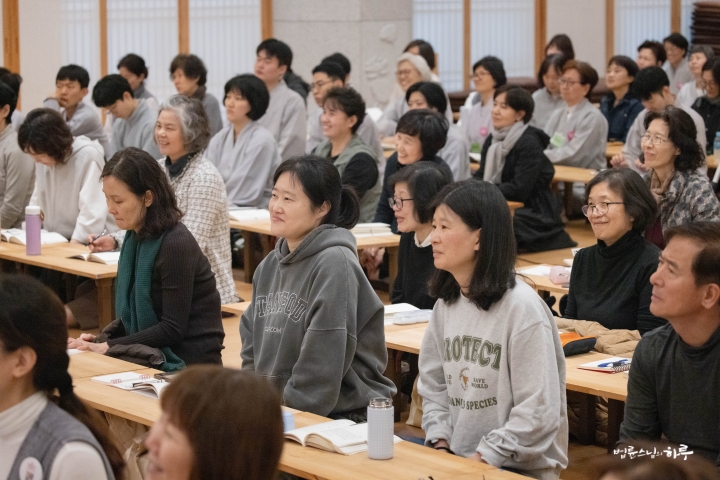
About 100 people gathered in the third-floor Dharma hall, while approximately 560 people connected to the online live broadcast. After the audience requested the Dharma talk with three bows, Sunim ascended to the Dharma seat.
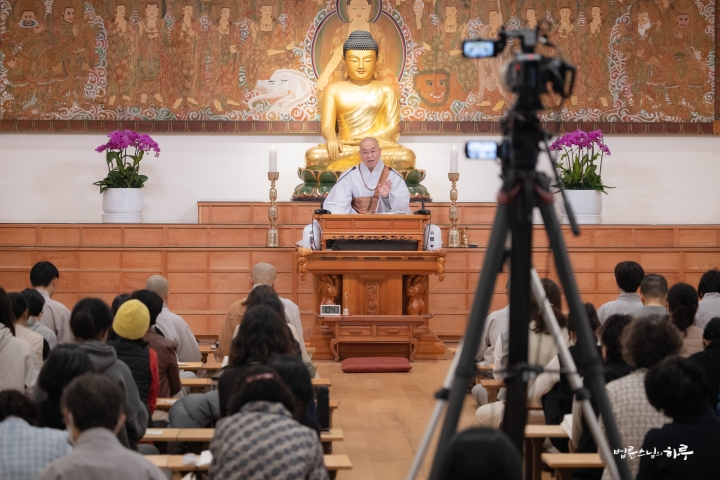
Sunim briefly summarized the content covered in previous sessions before continuing with the fourth lecture on the Heart Sutra.
Sariputra, all dharmas are marked with emptiness; they are neither born nor destroyed, neither defiled nor pure, neither increasing nor decreasing.
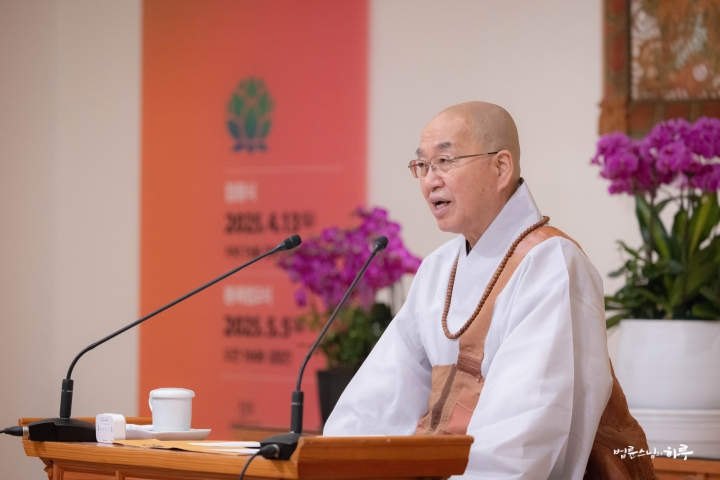
Nothing Has Arisen, Nothing Has Disappeared: The Truth of Neither Birth Nor Death
Among these distinctions, ‘birth and death’ is perhaps the most fundamental characteristic of the phenomenal world. This universe arises and disappears, as do mountains, atoms, matter, and people. Humans are born and die, and even a single thought arises and disappears repeatedly. Thus, birth and death constitute the most distinct feature defining the world we live in. However, when we view all these phenomena from the perspective that ‘all dharmas are empty,’ we cannot say that anything has truly arisen or disappeared. ‘Neither born nor destroyed’ doesn’t mean that something is eternal and unchanging. Rather, it means that fundamentally nothing has ever been born, and nothing has ever disappeared. For example, imagine giving a five-year-old child an ice marble frozen to about minus 30 degrees Celsius in a bowl. The child plays with the ice marble for a few minutes, rattling it around and having fun. This hard, cold ice marble doesn’t melt immediately at room temperature, so it appears unchanged. But when the child leaves the marble in the room, goes outside to play, and returns about 30 minutes later, the marble has disappeared, leaving only water. The child might think the marble has vanished or that water has suddenly appeared because the child perceived the marble as a solid object. However, from an adult’s perspective, knowing the entire process of change, we can’t say the marble has disappeared or that water has been created. The ice has simply melted into water. From a physical state perspective, one might say the ice disappeared and water appeared as it changed from solid to liquid. However, from the perspective of water molecules, there is no essential change. The molecules still exist; only their structure has changed from tightly bound to loosely connected. It’s like interlocking your fingers and then releasing them. Thus, at the essential level, we cannot say that water has newly appeared or that ice has disappeared.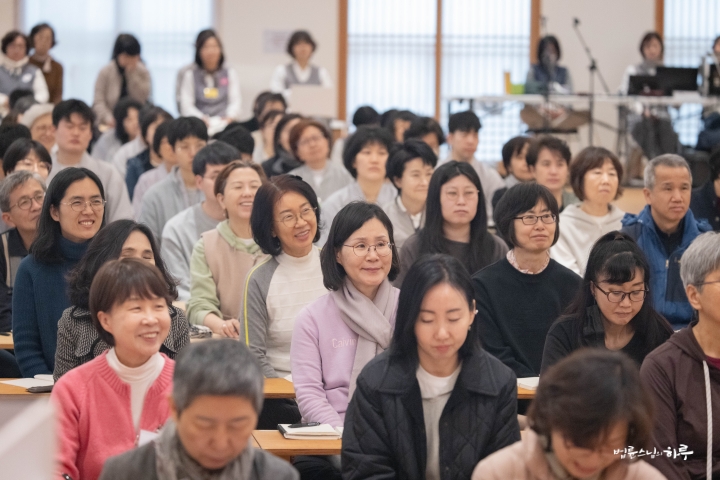
No One Can Defile Me: The Teaching of Neither Purity Nor Impurity
“Neither defiled nor pure” means that there is neither holiness nor impurity. No being in the world can be considered essentially holy or essentially impure. Though outward appearances may differ, their fundamental nature is empty, with no substantial difference. However, the reality we live in doesn’t reflect this understanding. For example, in India’s caste system, Brahmins are considered holy while untouchables are deemed impure. Dichotomies such as “men are holy, women are impure” or “God is holy, humans are impure” all follow the premise that holiness and impurity exist. The distinction between “cleanliness” and “filthiness” is similar. These are merely constructs created within the framework of customs and perception.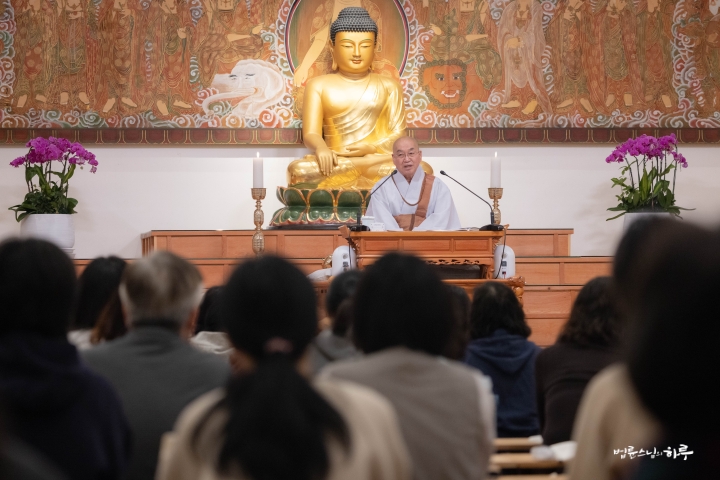
There Is Only Change, No Loss or Gain: The Truth of No Increase, No Decrease
“No increase, no decrease” (不增不減, bujeung bulgam) means that nothing truly increases or decreases. From a macroscopic perspective, we cannot say that anything is truly added or subtracted. Although changes appear to occur moment by moment on the surface, the essence remains unchanged. Even if the human population increases from 1 billion to 10 billion, it’s difficult to say that the fundamental weight of the Earth has changed. The form and composition may have changed, but the total quantity remains the same. The changes we observe are evident, but they are merely transformations in form. Let me give you an easier example to understand. Imagine a house with two rooms, with three people in one room and two people in the other. If one person moves from one room to the other, we could say that the number of people decreased in one room and increased in the other. However, looking at the house as a whole, nothing has changed. People have simply changed their positions. As another example, consider an airplane loaded with food that is served to passengers. Even after people eat the food, the food hasn’t disappeared from the airplane. It still exists within the plane, just in a different form. And even if a passenger uses the restroom, that weight doesn’t leave the airplane. Ultimately, terms like “increased” or “decreased” are matters of perspective. Depending on the scope from which you view things, the interpretation can be completely different. Let’s say a family of four gathers during a holiday to play yut (traditional Korean board game) with money at stake. The eldest child might win sometimes, and the second child might lose. If the father wins, the mother might lose. As this happens, someone smiles while someone else gets upset, and arguments might break out. The second child might complain, “My brother took all my money,” to which the older brother might retort, “I won it fair and square!” In this situation, the mother might say, “Be quiet, it’s all the same money.” The mother is right because she sees the flow of money within the entire household. The money has merely moved around within the family; no one has actually lost anything, and no one has gained anything. However, from the children’s perspective, since the money is in different pockets, it doesn’t seem like the same money at all. Thus, whether you see the whole or just a part leads to completely different judgments.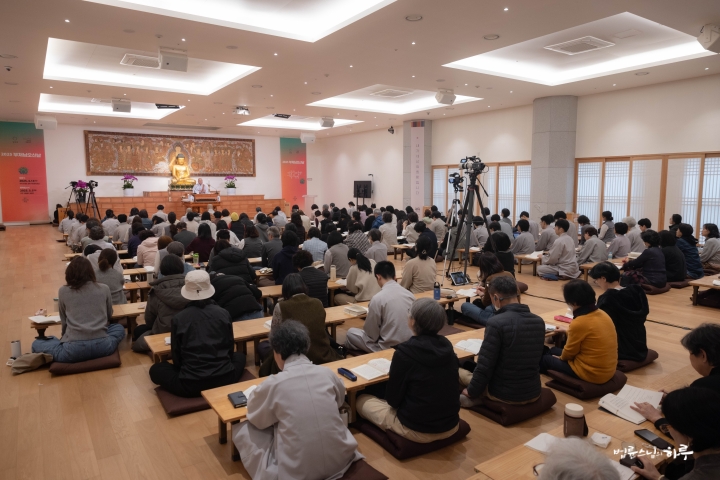
Thanks to Sunim’s various examples, the students of the sutra lecture gained a deeper understanding of the Mahayana Buddhist concept of emptiness (śūnyatā).
Today, due to a busy afternoon schedule, Sunim concluded the lecture an hour earlier than usual. The participants decided to gather in groups to have sufficient time for mindful sharing, while Sunim hurriedly departed from the Jungto Social and Cultural Center and headed to Andong.
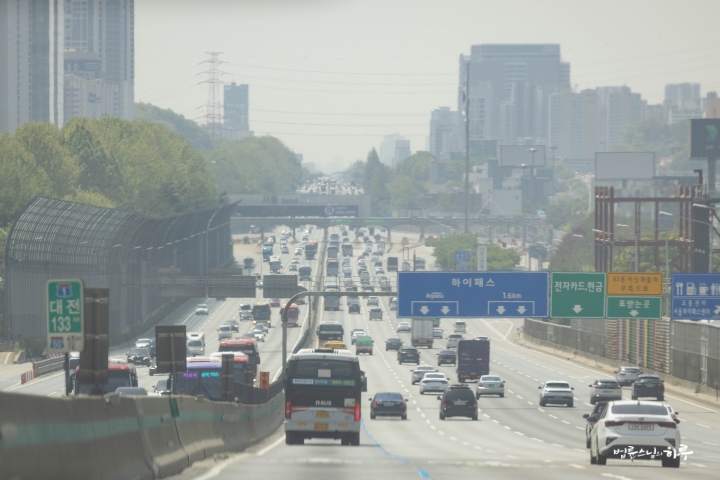
The car that left Seoul at 11:15 AM arrived at Andong Civic Stadium precisely at 2:00 PM. Today is the day to deliver relief supplies prepared by JTS to residents who lost their homes in the massive forest fire that swept through the northern part of North Gyeongsang Province in late March.
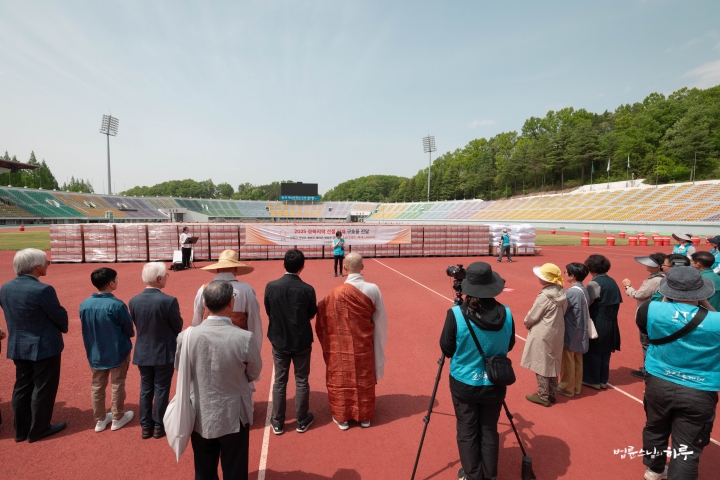
As Sunim got out of the car, government officials from five cities and counties—Andong, Uiseong, Cheongsong, Yeongdeok, and Yeongyang—along with JTS volunteers, gave him a warm welcome. The delivery ceremony was attended by writer Kim Hong-shin, screenwriter Noh Hee-kyung, broadcaster Kim Je-dong, and Roh Jae-guk, the representative of JTS Philippines, making it a meaningful time to share the pain of the affected residents and offer warm consolation.

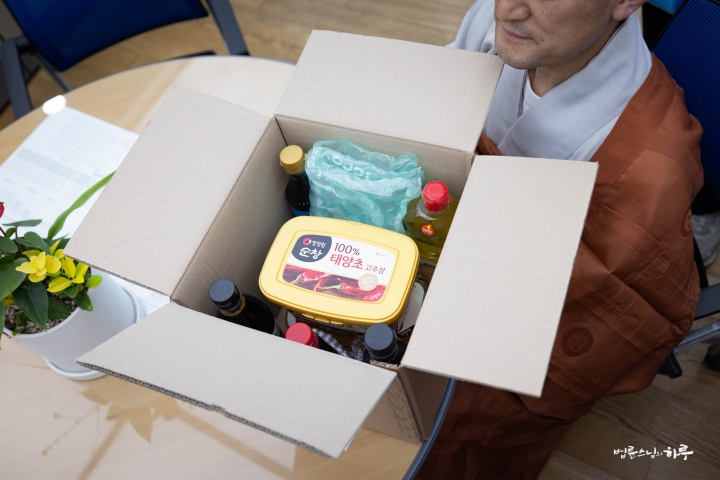
First, the JTS Secretary General provided a progress report on the events leading up to today’s ceremony. JTS had dispatched an emergency relief team from March 27 to 30, immediately after the forest fire, providing personal hygiene items and daily necessities such as soap, toothbrushes, toothpaste, underwear, socks, and dust masks. After confirming the needs of the victims through local governments, JTS learned that those who had moved into temporary housing needed household goods and condiments to maintain their independent daily lives. Therefore, JTS decided to provide 2,877 sets of condiments to the five cities and counties, including soy sauce, soybean paste, red pepper paste, soybean oil, sesame oil, and fish sauce—a total of seven items. In particular, as there was an urgent request for pillows in the Andong area, 1,000 pillows were prepared separately from the condiment sets. Yesterday, about 100 volunteers worked from 9 AM to 6 PM to prepare the 2,877 sets of condiments with great care.
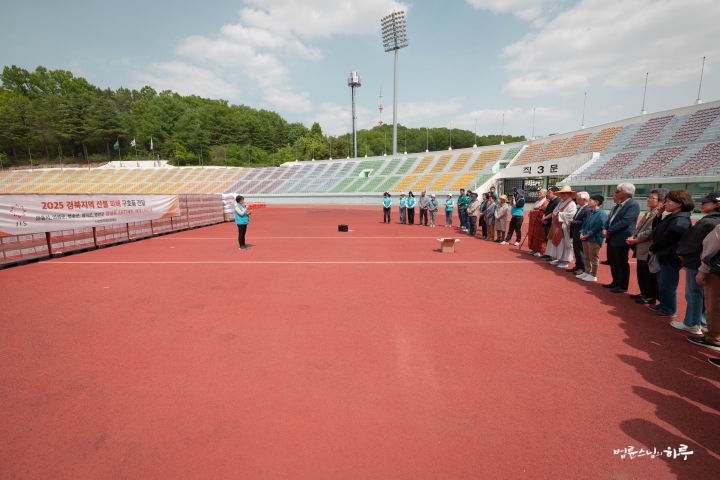
Next, Venerable Pomnyun Sunim, the chairman of JTS, addressed the government officials who would distribute the relief supplies to the forest fire victims. Sunim sincerely hoped that this small gesture would become a seed of hope.
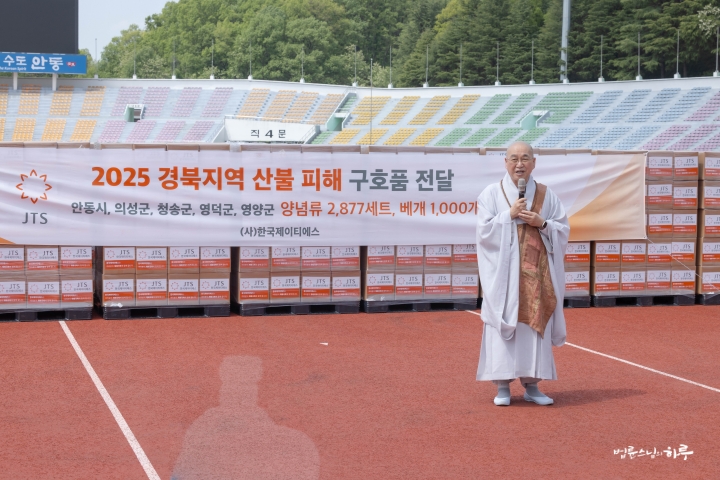
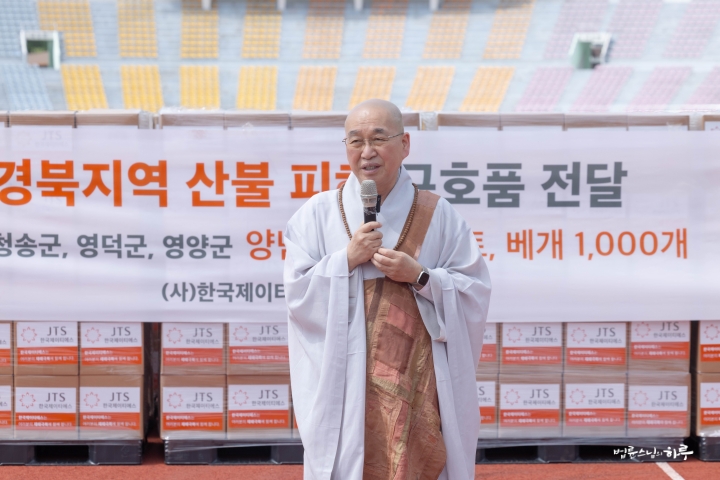
My sincere thanks to all of you who have worked tirelessly on the frontlines of disaster
Today, we are delivering basic necessities. In the future, when homes are established, appliances like refrigerators will be needed. I recently discussed this with the Chief Administrator of the Jogye Order, who mentioned that they also plan to support necessary appliances. We will continue to identify and provide the items needed going forward.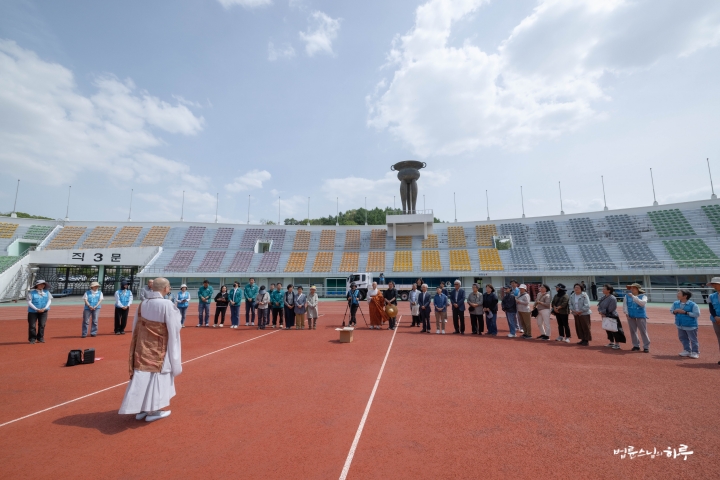
The officials responded with enthusiastic applause to show their appreciation.
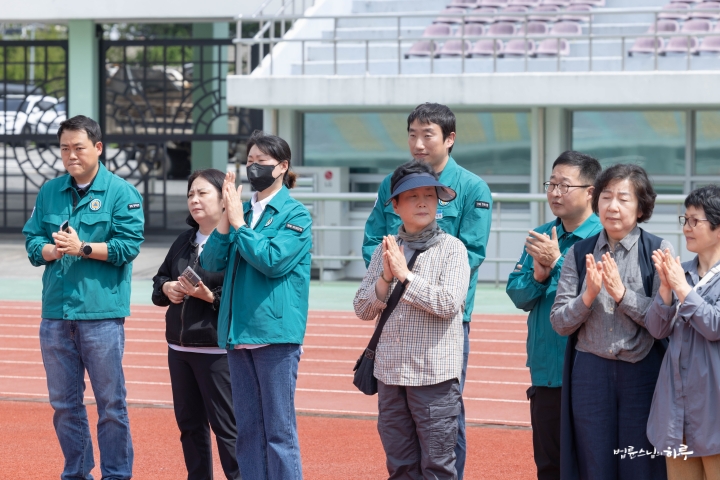
Next, writer Kim Hong-shin offered words of comfort to the affected residents.
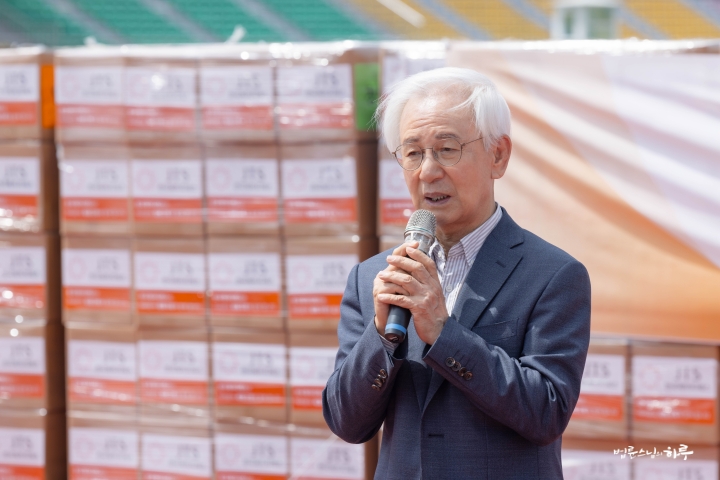
“All I could do was pray earnestly, but it seems heaven did not hear my prayers as the flames were not easily contained, and the damage increased. Nevertheless, I feel warmhearted to be here today with Venerable Pomnyun Sunim and officials from the five districts for this relief supply ceremony. Though our contribution may be modest, I hope you will accept it with an open heart and find peace by sharing with your neighbors. I understand the government will be taking more active steps in recovery efforts, so please be reassured. Though our gesture is small, I hope you will receive it with the deep sincerity with which it is given.”
Next, writer Noh Hee-kyung offered words of comfort to the affected residents.
I hope these relief supplies will help the forest fire victims feel less alone
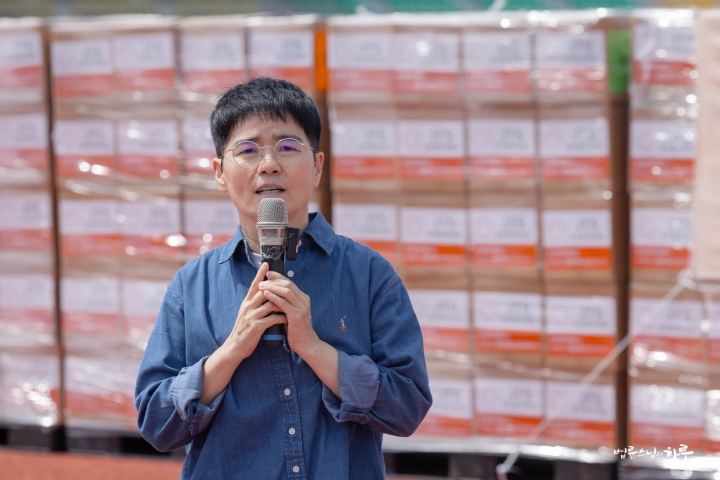
“I cried a lot and prayed a lot while watching the news. But I felt helpless and could only pace anxiously. I’m truly grateful to be able to contribute even a little through action today. Thank you for giving me the opportunity to be part of this gathering. I hope that through this small act of sharing, those who have suffered will feel a little less alone.”
Finally, Kim Je-dong offered words of comfort to the affected residents.
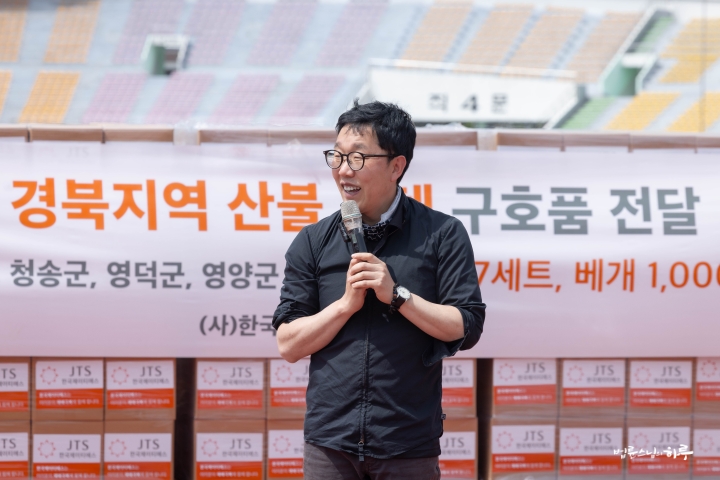
“I lost my father at an early age, and my mother couldn’t produce milk, so she had to ask mothers in the neighborhood for wet nursing to raise me. That’s why I believe having neighbors is truly important. Just knowing that neighbors are there can give you strength to live. Please remember that you have neighbors by your side right now. I learned the meaning of the saying ‘giving everything you’ve got, down to the last ounce of energy’ through this forest fire. I would like to prepare a delicious meal, even if it’s just a simple radish salad dish, for all the public officials who have worked so hard. Thank you.”
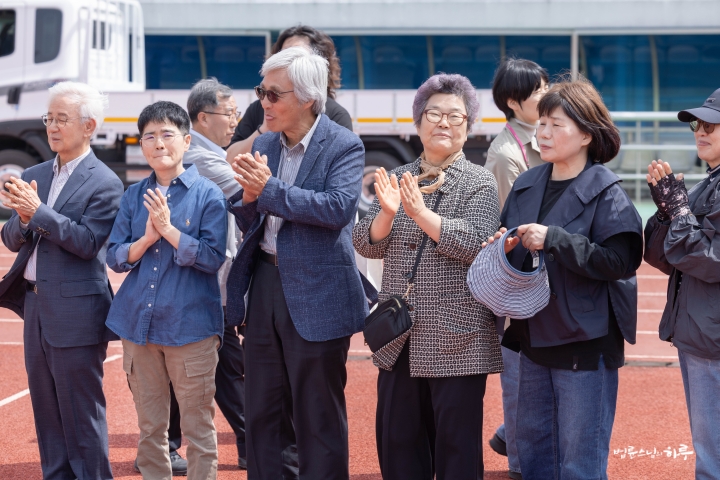
The relief supply handover ceremony followed. First, Sunim presented Andong City with 1,000 sets of seasoning supplies and 1,000 pillows for forest fire disaster relief.
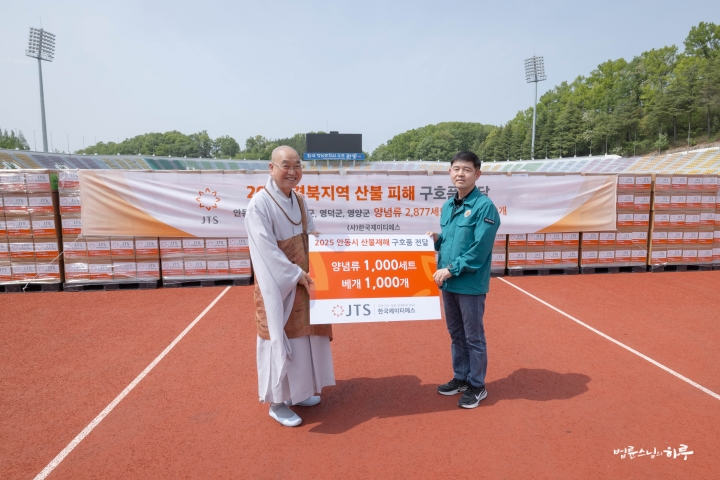
“Thank you.”
Next, writer Kim Hong-shin presented Uiseong County with 241 sets of seasoning supplies for forest fire disaster relief.
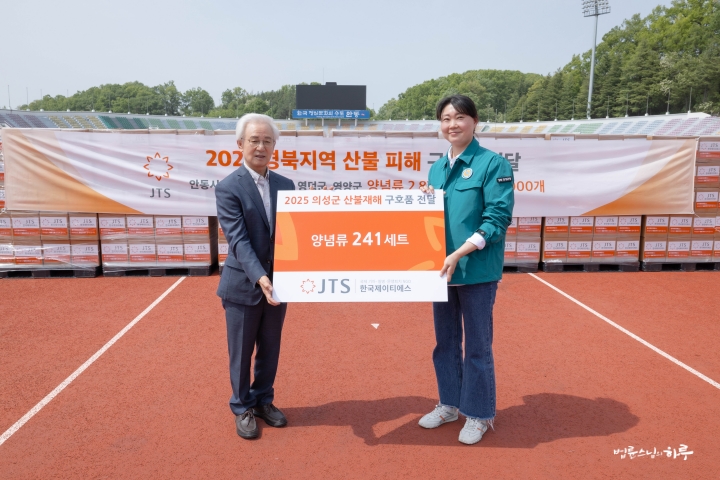
Then, writer Noh Hee-kyung presented Cheongsong County with 570 sets of seasoning supplies for forest fire disaster relief.

Kim Je-dong presented Yeongdeok County with 916 sets of seasoning supplies for forest fire disaster relief. Coincidentally, the Yeongdeok County official was Kim Je-dong’s high school junior, so the two exchanged brief greetings as they confirmed their connection, bringing warm smiles to everyone at the ceremony.

Then, Noh Jae-guk, the representative of JTS Philippines, presented Yeongyang County with 150 sets of seasoning supplies for forest fire disaster relief.

Finally, all the guests and officials from the five districts gathered for a commemorative photo. Looking at the seven types of seasonings—soy sauce, soybean paste, red pepper paste, sesame oil, cooking oil, fish sauce, and soup soy sauce—packed with sincere care, everyone’s faces lit up with smiles as bright as the spring sunshine.


After the handover ceremony, Sunim had a brief conversation with the officials. He asked about the difficulties they faced in supporting the affected residents.
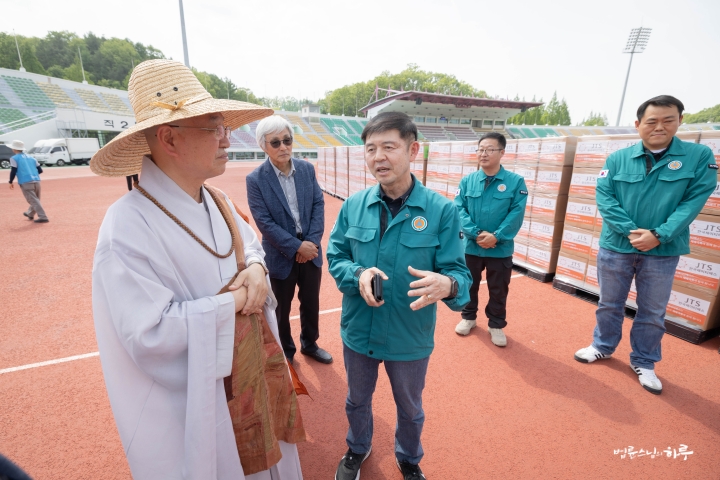
“We don’t have to worry about budget shortages as donations continue to come in from across the country. However, we’re severely short on personnel to distribute the relief supplies.”
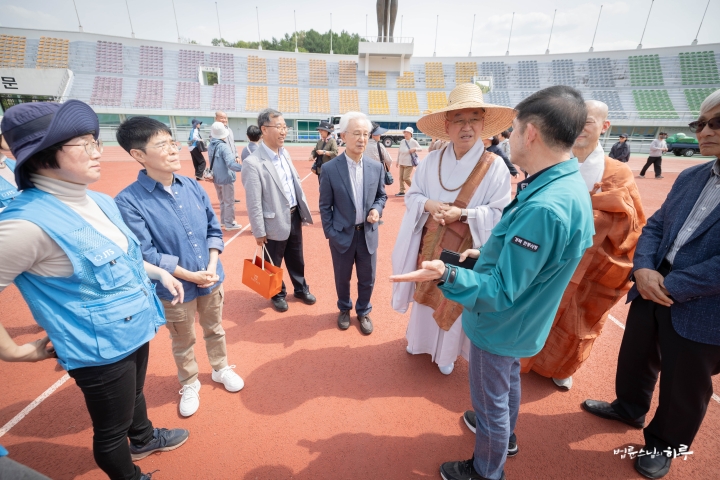
“Thank you.”
Writer Noh Hee-kyung and Kim Je-dong departed with JTS volunteers to deliver relief supplies to each village, while Sunim headed to the Gyeongsangbuk-do (North Gyeongsang Province) Provincial Office with writer Kim Hong-shin.
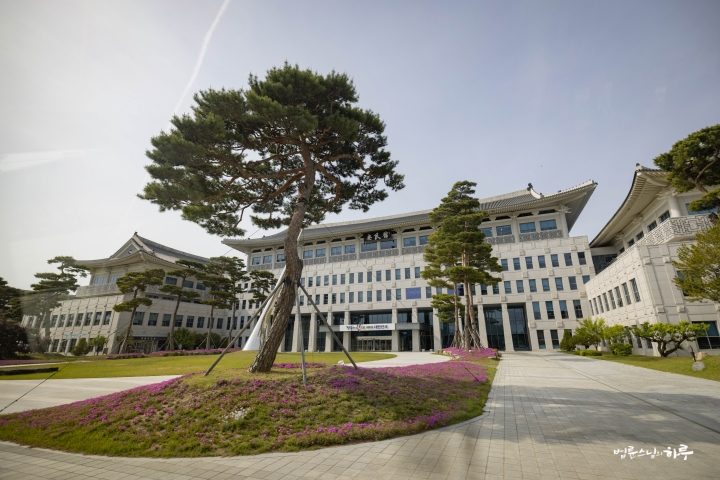

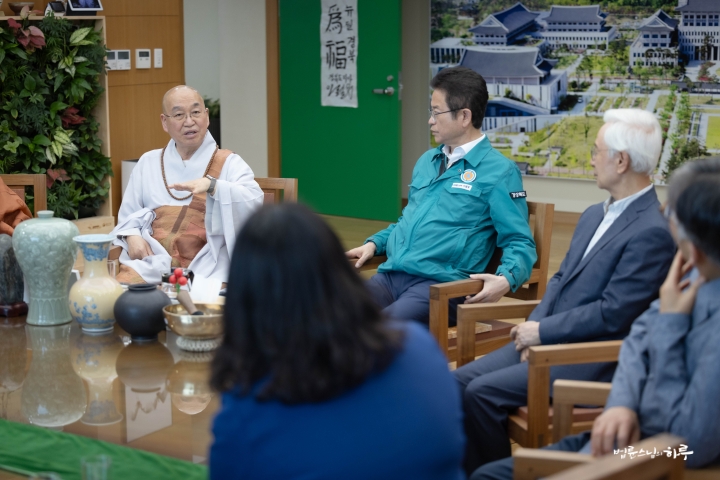
After a 30-minute drive, they arrived at the Gyeongsangbuk-do Provincial Office. Upon entering the governor’s office, Governor Lee Cheol-woo welcomed Sunim. After exchanging greetings, they immediately took a commemorative photo of the handover ceremony.
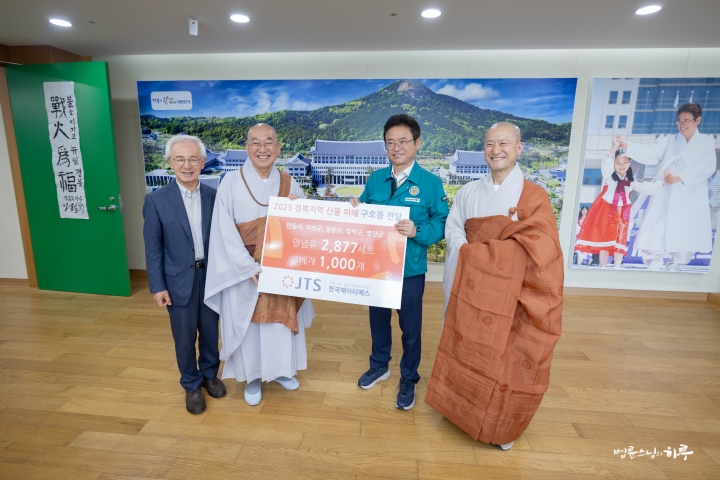
“Thank you. We will make sure these are distributed to the affected residents.”
Sunim then showed the governor the seasoning sets prepared for the forest fire victims in North Gyeongsang Province.
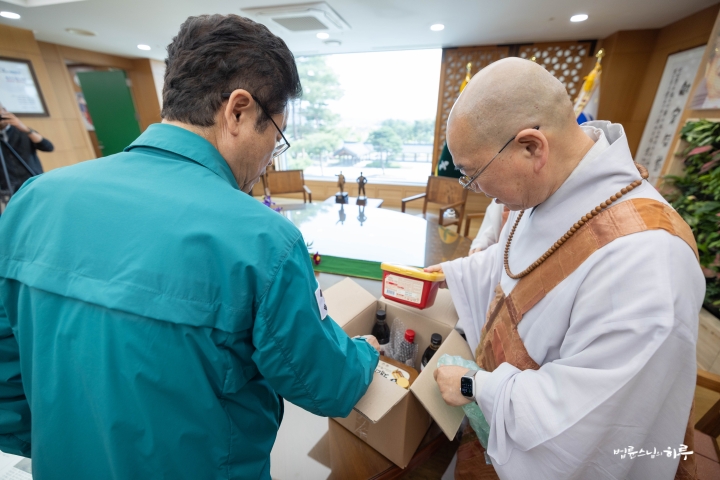
“That’s right. You’ve prepared exactly what the residents said they needed most. Thank you.”
After the handover ceremony, Sunim had tea with the governor. Sunim suggested that local governments and JTS work together to help affected residents return to normal life as quickly as possible.
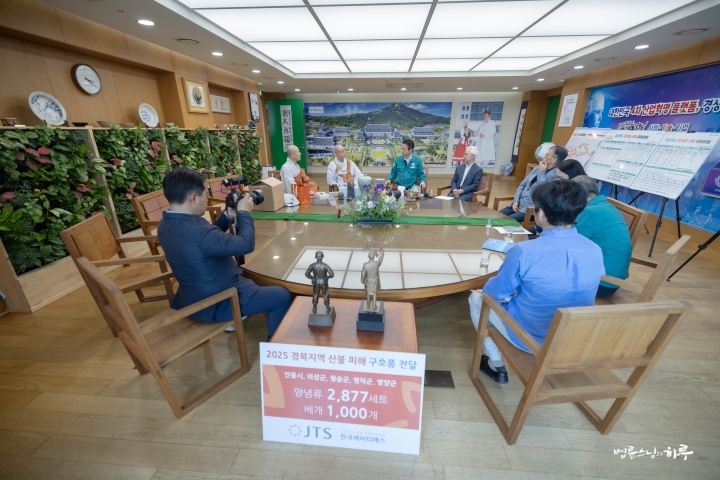
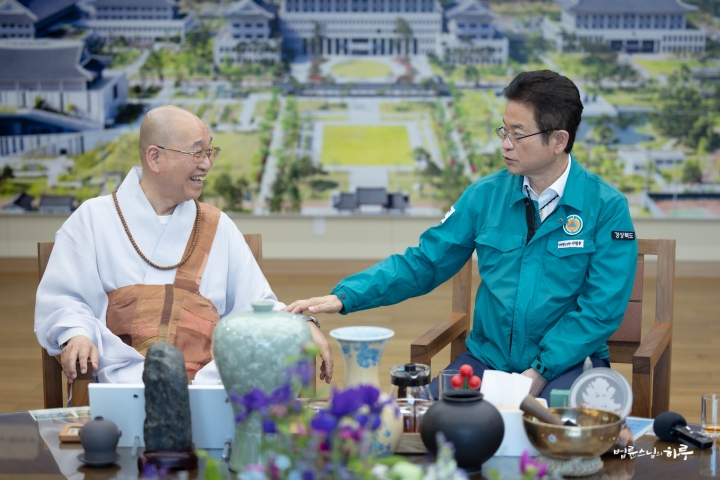
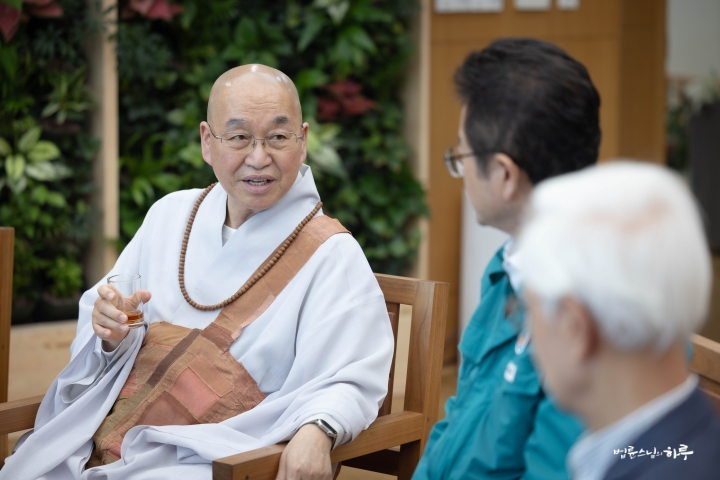
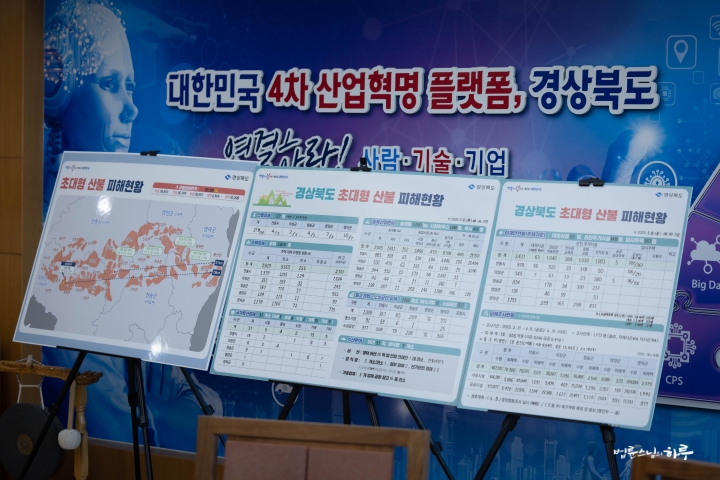
The governor strongly agreed with Sunim’s thoughts and continued by recalling the urgent situation when the large forest fire broke out.
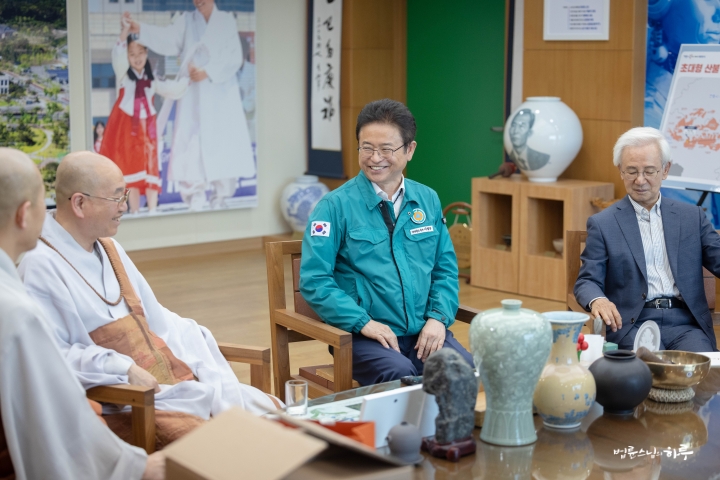
“Since our country began keeping statistics, the area damaged by forest fires has never exceeded 80,000 hectares. But this fire burned a staggering 100,000 hectares. This happened in just 4.5 hours, from 4 PM to 8:30 PM on March 25, as typhoon-strength winds spread the fire. This is the largest area ever damaged by a forest fire in Korean history. When strong winds blow, fire embers grow like ‘fire bombs’ and can travel up to 2 kilometers. In fact, 31 fishing boats anchored off the coast of Yeongdeok were burned. Cases of boats at sea being burned by forest fires are unprecedented worldwide. This incident made us realize the terrifying nature of abnormal climate conditions. Twenty-six people lost their lives in this forest fire, a tragedy that occurred in just four hours. The fire was so powerful that it even spread to vehicles people were using to escape.”
Sunim agreed with the governor’s words and said:
The governor responded that he would focus all efforts on recovery from the damage.
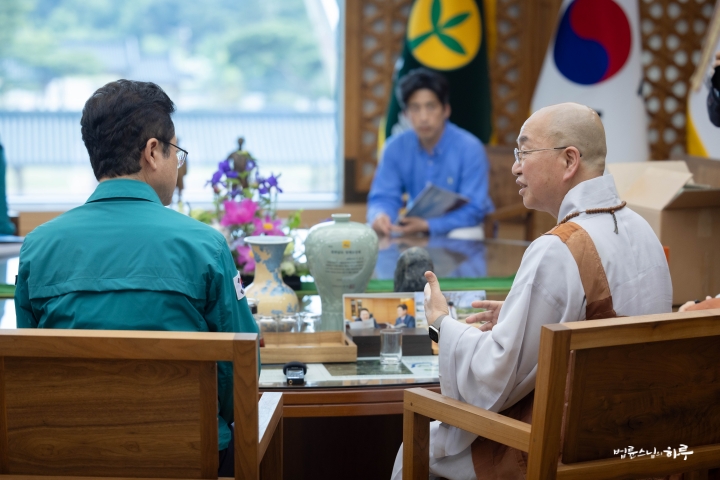
“That’s absolutely right. Due to the wind direction, if the forest fire had started at the western end of the Korean Peninsula, the entire country could have been engulfed in flames. I deeply appreciate your help during this crisis. We plan to pursue not just simple disaster recovery, but improvements that amount to a recreation-level restoration.”
After agreeing to actively cooperate if any further support was needed, Sunim left the Gyeongbuk Provincial Office.
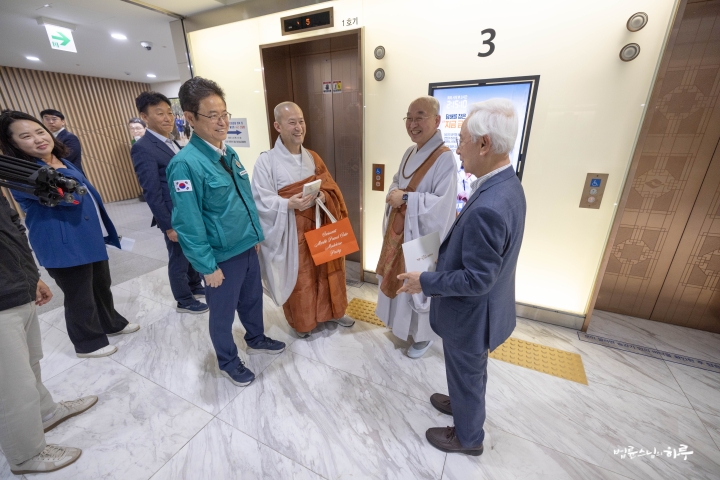
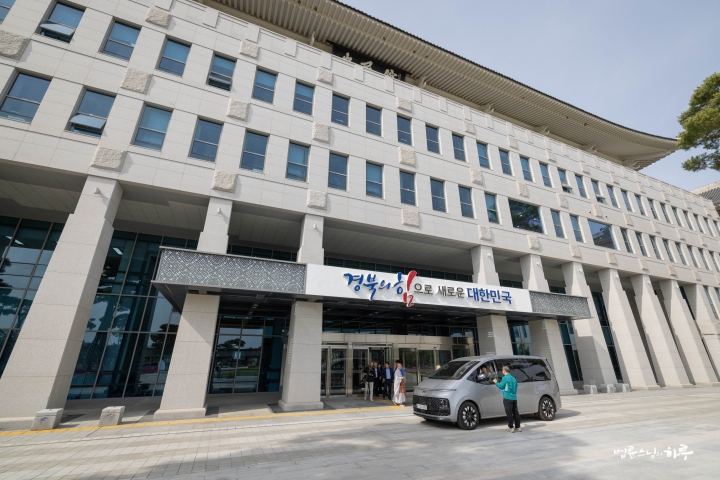
At 3:30 PM, Sunim departed from the Gyeongbuk Provincial Office and headed back to Seoul.
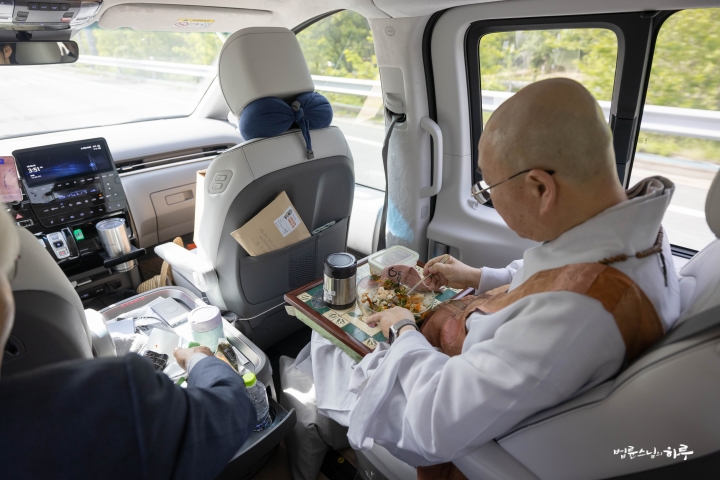
Since Sunim had no time to eat all day, he had a late lunch with a packed meal after getting in the car.
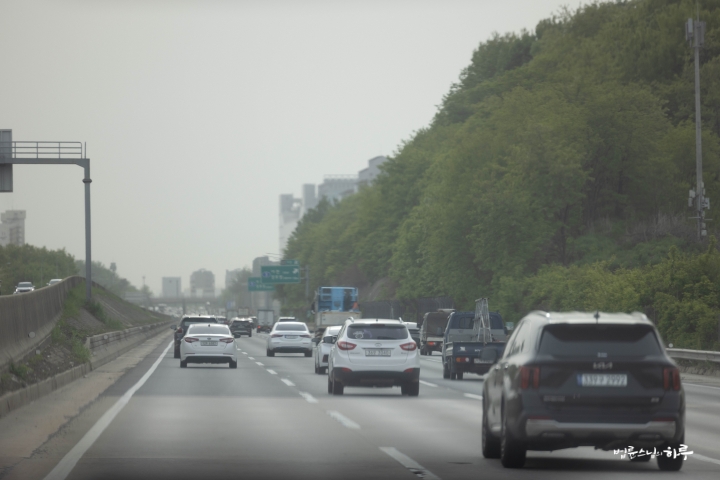
After driving diligently on the highway, Sunim arrived at the Jungto Social and Cultural Center in Seoul just after 7 PM.
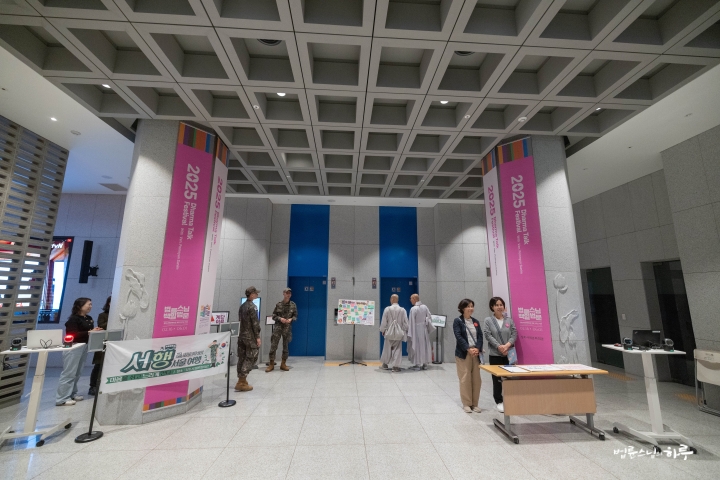
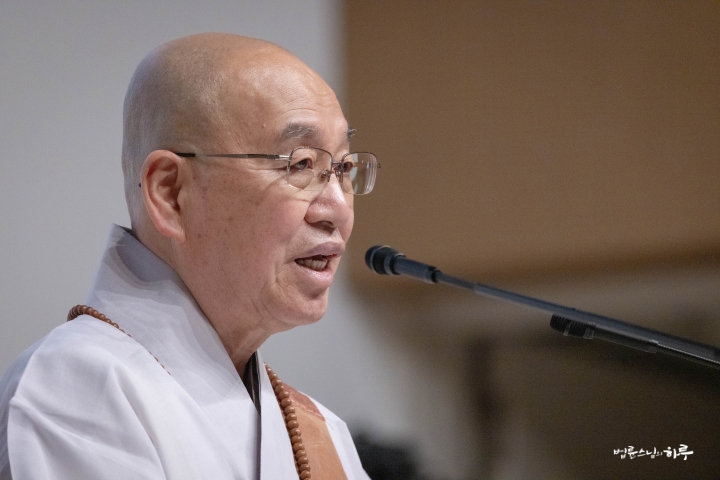
As the sun set, at 7:30 PM, Sunim gave the 17th lecture of the Buddhist Social Studies Course in the basement auditorium of the Jungto Social and Cultural Center. About 170 people attended in person, while approximately 1,900 connected online.
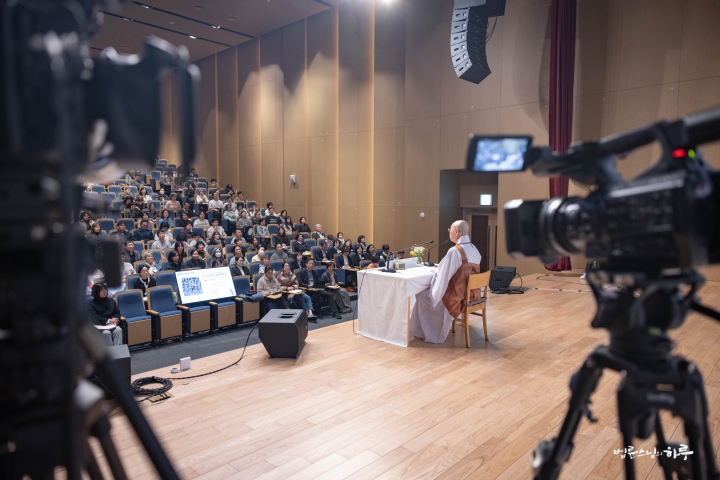
In the previous session, Sunim taught about “Why We Should Help Others,” covering Buddhism and welfare practice, the socialization of compassion, principles of relief, and volunteering. Today, he continued with a lecture on “Climate Crisis and Stopping Consumption.”
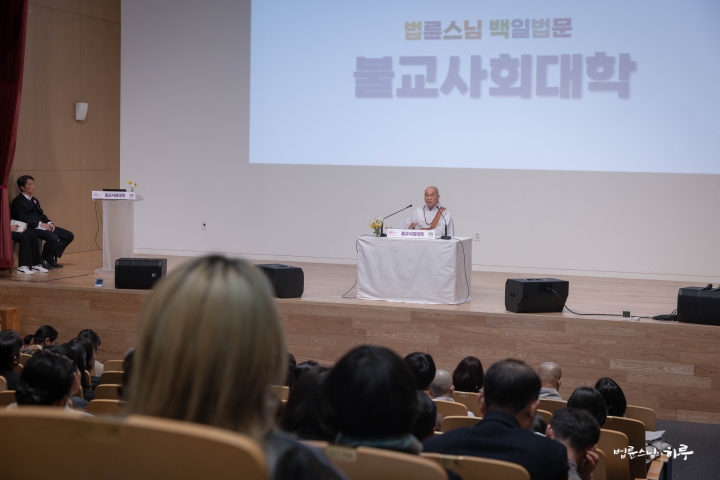
Why Human Ethics Must Be Based on Natural Ethics in the Age of Climate Crisis
Let me explain with an analogy. There was a wealthy household with a storehouse full of rice. The son of this family would take rice from the storehouse and sell it at the market for pocket money. He would have a servant carry one sack to sell for money, and two sacks for twice the money. As this continued, the son came to view the value of rice merely as the cost of transporting it from the storehouse to the market. This was because the storehouse was always full of rice. However, as time passed, the son’s consumption increased, and his transportation capacity grew. He began selling ten or twenty sacks a day. Then one day, the rice in the storehouse finally ran out. The son was taking out rice faster than his parents could replenish it. Only then did he realize that the value of rice wasn’t just in the labor of transportation. He learned that it included the entire effort of farmers cultivating, harvesting, and storing the rice. The foolish son had assumed that rice would always be available in the storehouse, so he failed to recognize its true value.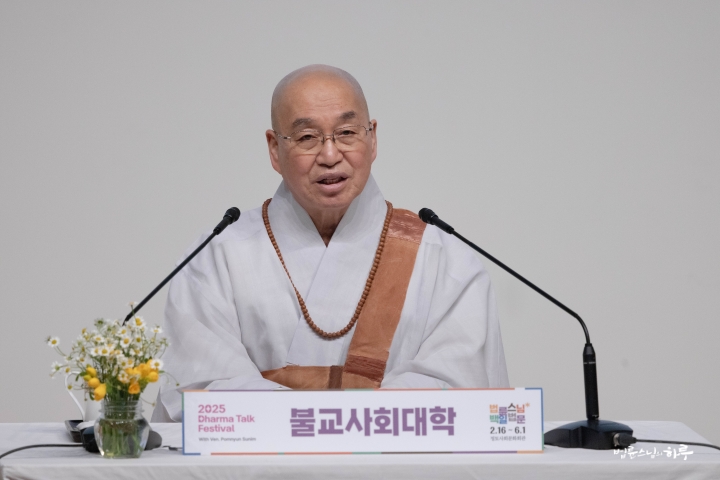
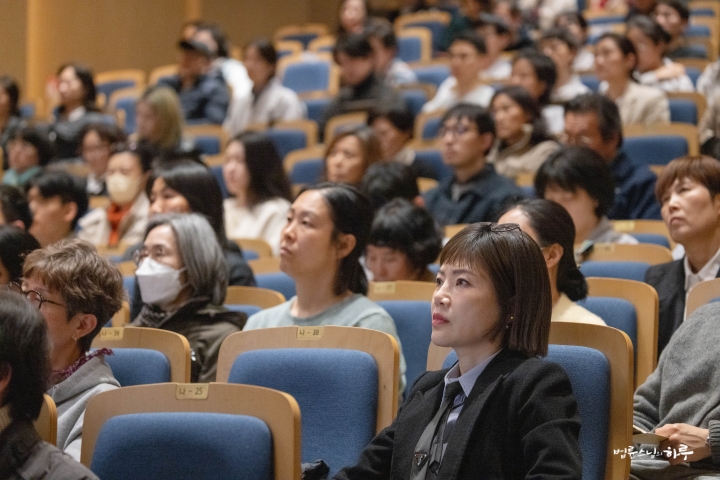
Today’s Prosperity Built on the Suffering of Future Generations
Until now, we have considered a good life to be one where we produce and consume in abundance. We have distinguished between wealthy and poor countries based on how much they consume annually. For example, we’ve judged whether a country is developed based on its consumption of cola, coffee, electricity, water, and even the number of hospital beds per person. In other words, we measured the standard of living by the quantity of consumption. As a result of humanity racing forward with this value system, we have established the current mass production system. However, this mass production system exceeds nature’s production limits and is therefore unsustainable. We don’t know exactly how many more years this system can continue, but what is clear is that there is only a finite amount of time left. If until now we have been like people busy selling rice from our full storehouses, our descendants will likely be struggling to fill empty storehouses. Perhaps our descendants will spend their entire lives trying to fill these empty storehouses. If our generation consumes the share meant for future generations, the next generation may spend their lifetime paying off that debt. In reality, we could live sufficiently until we die just wearing the shoes and clothes we already have. Yet we continuously buy new things and discard them after using them only once or twice. In this process, carbon dioxide (CO2) is constantly emitted. To prevent this, first, we need to stop consumption. Second, even if complete cessation of consumption isn’t possible, we need to live a life of reduced consumption. At the very least, we should not increase our consumption any further. If I spend 1 million won per month, “stopping consumption” means not spending anything, while “reducing consumption” means cutting expenses to less than 1 million won. However, we have lived with the value system that considers a good life to be one where we continuously increase our consumption, even if only slightly. It is important to change this value system itself. Ultimately, our lives should approach zero carbon dioxide emissions. We should cultivate green spaces so that the amount of carbon dioxide we emit does not exceed what can be absorbed by nature’s carbon assimilation process. But even if we do this right now, the climate crisis is likely to continue for some time because there is already too much carbon dioxide that has been emitted. Moreover, realistically, it is not easy to stop increasing consumption right away. The rate of consumption increase will gradually slow down and eventually stop at some point.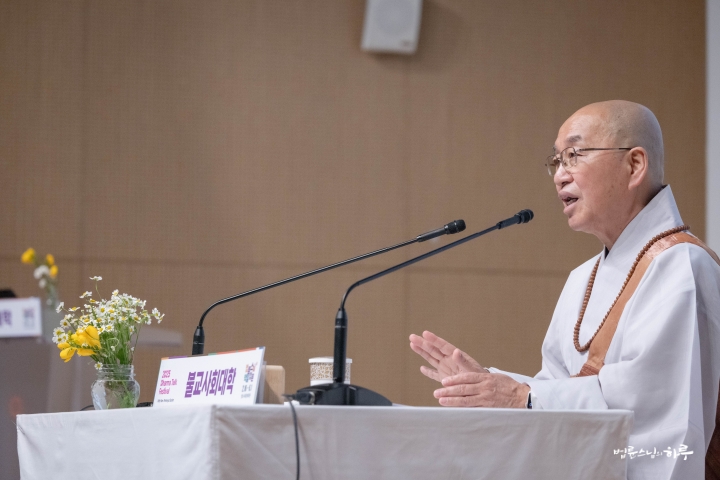
When Bees Disappear, Our Dining Tables Will Also Disappear
I have personally experienced the impact of climate change while farming. When temperatures suddenly drop in winter, many honeybees freeze to death. Conversely, when winter weather unexpectedly warms, flowers bloom and bees emerge early. If it then turns cold again, the unprepared bees die. The more frequently the weather fluctuates between warm and cold—that is, the more severe the climate change—the more the bee population decreases. This creates changes in the natural ecosystem. The first to suffer are beekeepers who produce honey. In the countryside where I live, people used to keep 100 beehives, but now they only maintain two or three—just enough for household consumption rather than commercial honey production. While the reduction in honey production is problematic, an even bigger issue is fruit pollination. Crops like rice that are pollinated by wind are fine, but most fruits we eat are pollinated by honeybees or butterflies. When bee populations decline, fruits aren’t properly pollinated, ultimately reducing fruit production. Nowadays, many fruits are grown in greenhouses. However, manually pollinating each flower is extremely labor-intensive and expensive. To solve this problem, some farmers leave greenhouse doors open to allow natural bees to enter. This creates issues with pests, and moreover, with declining bee populations in nature, leaving doors open becomes pointless. As a result, some farmers purchase specially raised greenhouse bees. The decline of honeybees is like missing a crucial part in a car. The car may look fine on the outside, but without that one part, it won’t start or move—that’s how important bees are as a link in our ecosystem. The problem we face today isn’t simply about forest fires or crop failures in certain regions. It’s about a key link in the ecosystem breaking, causing the entire circulation system to collapse.The Buddha’s Carbon-Zero Lifestyle
How should we live as practitioners in this era of climate crisis? We should adopt the perspective of following the Buddha’s example. The Buddha ate food that others had discarded and wore clothes that others had thrown away. He slept under the eaves of abandoned houses or in caves. In modern terms, the Buddha lived a carbon-neutral life. While we may not be able to live exactly as the Buddha did, we should at least refrain from complaining about the three basic necessities: food, clothing, and shelter. We should be able to live happily without increasing our current level of consumption.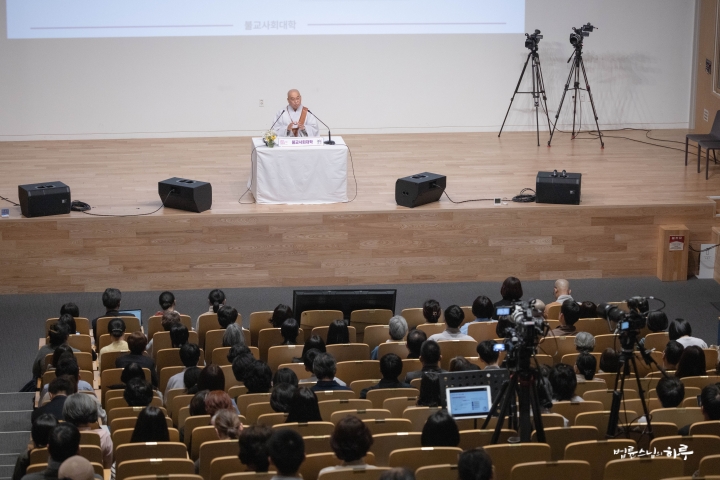
How Should Practitioners Live in the Era of Climate Crisis?
First, we must be confident about stopping consumption. Second, we need to properly recognize the dangers of consumption addiction. I believe consumption addiction is far more harmful than drug addiction. Drug addiction harms individual health and causes worry for family members, but consumption addiction can endanger all of humanity and destroy the Earth’s ecosystem, making it a much more serious problem. Socially, we need to reduce overconsumption through institutional improvements and mitigate wealth disparities to avoid encouraging excessive consumption. Media and broadcasting should also refrain from showing excessively glamorous scenes in provocative ways. In other words, we need national policies that can reduce consumption and carbon emissions. Furthermore, international cooperation beyond the level of individual countries is necessary. Each of us must engage in community-based practices and cooperation, in addition to NGO or civic group activities. This is the path we should follow as practitioners in the era of climate crisis.”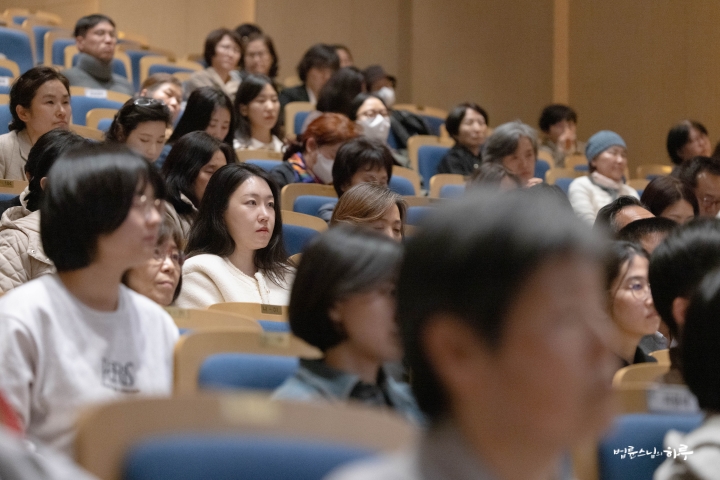
The class ended after 9 PM, with an agreement to discuss the topic “Can We Change the World Through Peaceful Methods?” in the next session.

Participants engaged in mindful sharing by groups, while Sunim returned to the Jungto Center to conclude his day.
Tomorrow will be the 82nd day of the 100-Day Dharma Talk. In the morning, Sunim will conduct the Friday Dharma Q&A for the daytime session at the main hall in the basement of the Jungto Social and Cultural Center. In the afternoon, he will attend the book launch of “Donghak Manri” by Yeom Sangcheol, a Cheondogyo leader, and deliver congratulatory remarks. In the evening, Sunim will lead the evening session of the Friday Dharma Q&A before heading to the Dubuk Jungto Retreat Center.