I want to be happy on my own, free from a life that revolves only around my husband
May 2, 2025 - Day 75 of 100-Day Dharma Talk, Friday Dharma Q&A, K-Democracy National Assembly Forum
Hello. Today is the 75th day of Venerable Pomnyun Sunim’s 100-Day Dharma Talk. Today features the Friday Dharma Q&A session, which is open to all citizens.
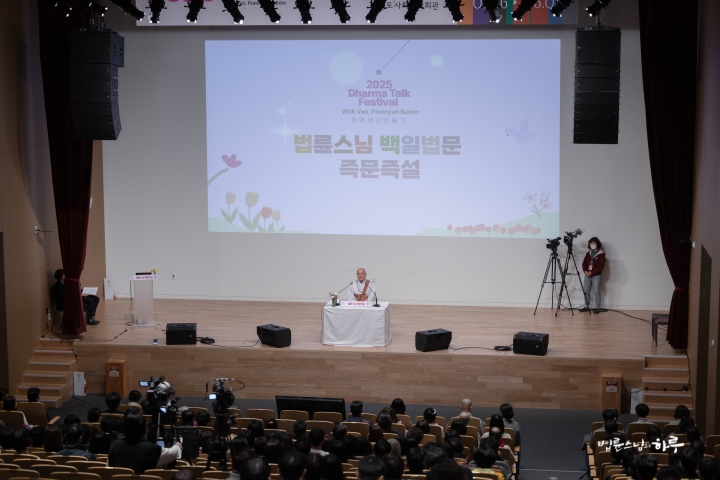
After completing his morning practice and meditation, Sunim headed to the Jungto Social and Cultural Center to conduct the Friday Dharma Q&A session. Volunteers had arrived early in the morning to welcome citizens who came to attend the Q&A.
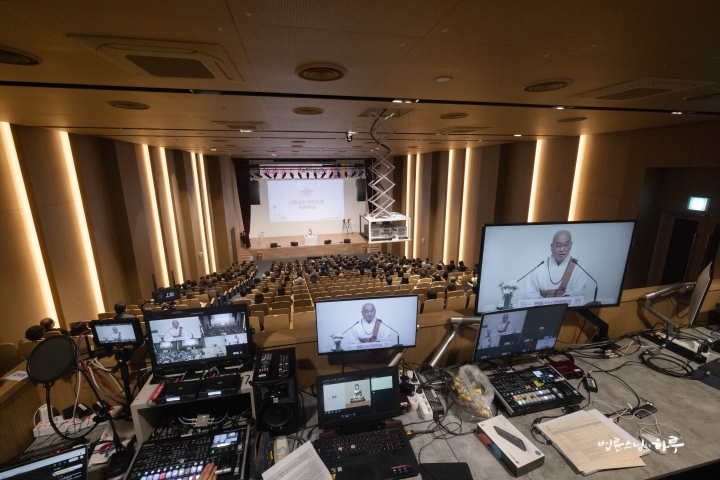
At 10:15 AM, the YouTube livestream began, and everyone recited the Three Refuges and Words for Practice together. With about 230 people in attendance and around 3,400 viewers connected to the YouTube livestream, Sunim began the conversation by discussing the rapidly changing political situation in South Korea.
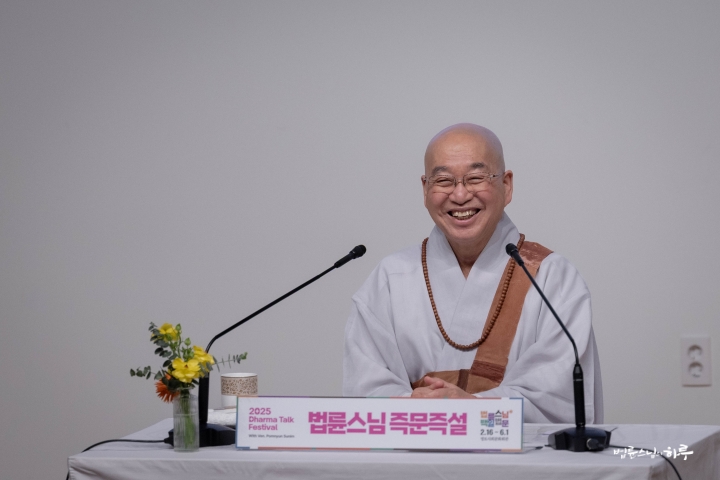
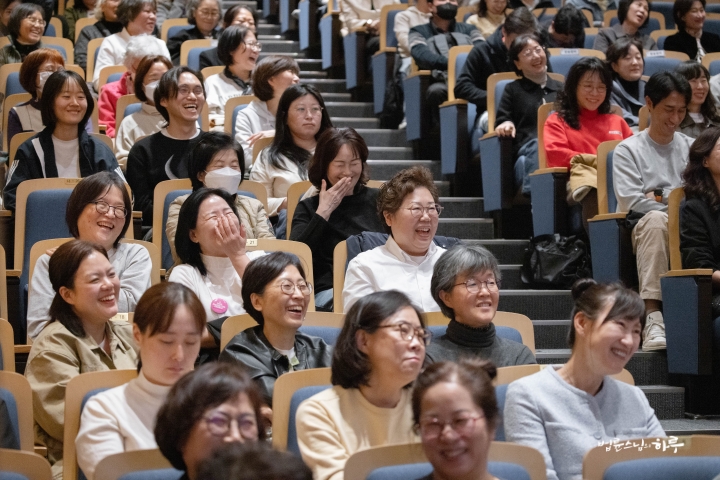
Sunim immediately began conversing with the questioners. Over the course of an hour and a half, eight people asked him questions. After responding to various inquiries, it was time to conclude. Though reluctantly, the talk ended at 12 o’clock.
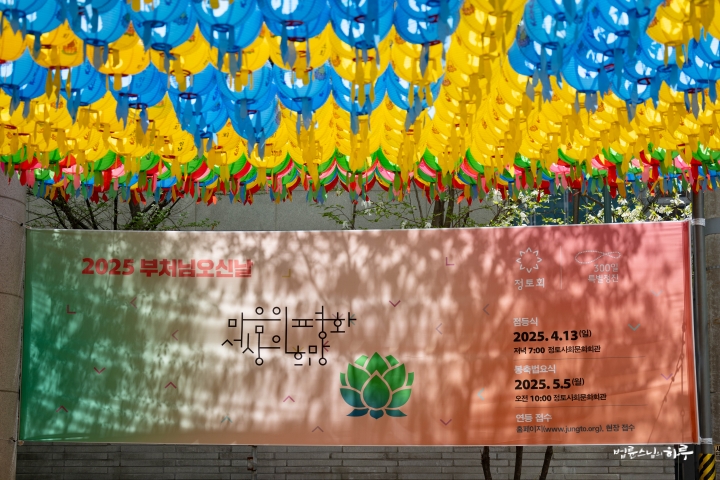
Sunim had lunch with the group in the dining hall on the first basement level. After finishing the meal, at 1 PM, he headed to the National Assembly.
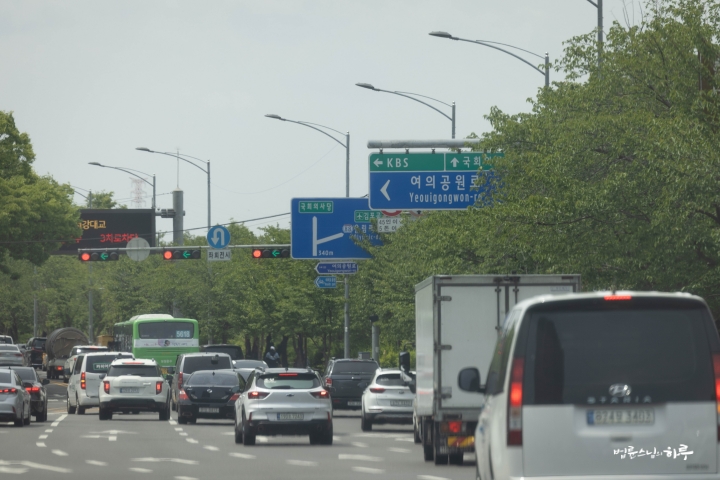
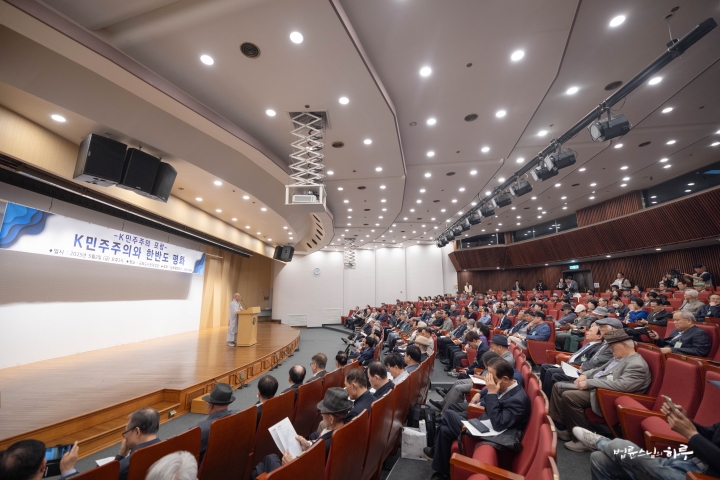
The South-North Peace Council, formed by senior figures in the Korean unification movement, held a K-Democracy Forum on the theme “K-Democracy and Peace on the Korean Peninsula.” Pastor Lee Hae-hak, the standing representative chairperson of the South-North Peace Council, had visited Sunim a few days earlier to request that he deliver congratulatory remarks at this forum.
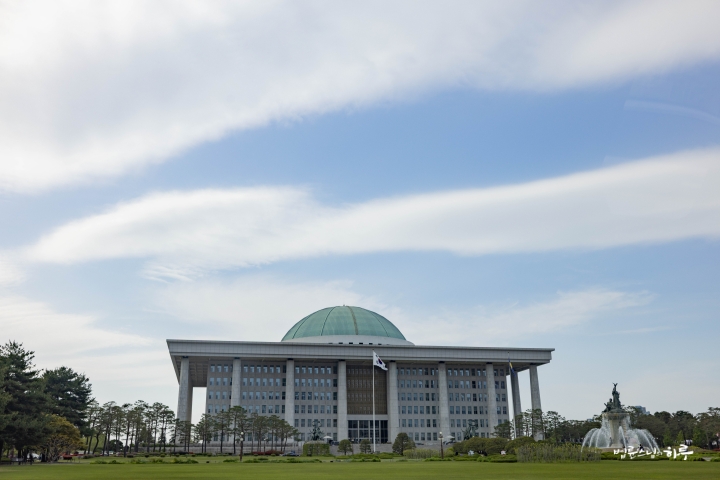
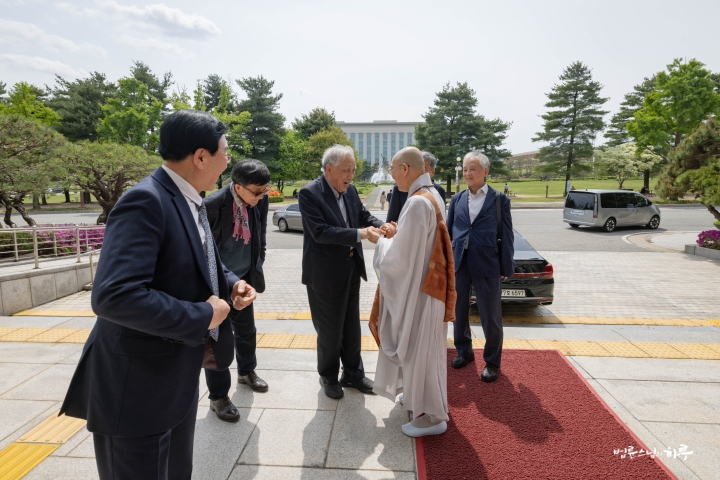
Upon arriving at the National Assembly Library Auditorium, Sunim exchanged warm greetings with the senior community leaders. Pastor Lee Hae-hak also welcomed him.
At 2 PM, the forum began with the national ceremony.
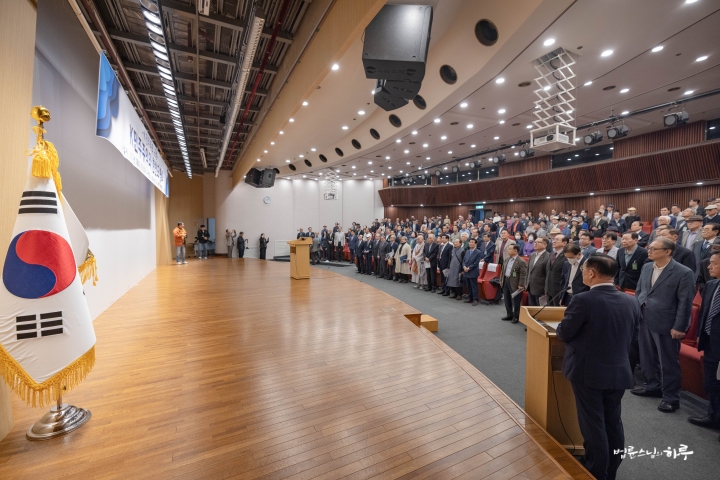
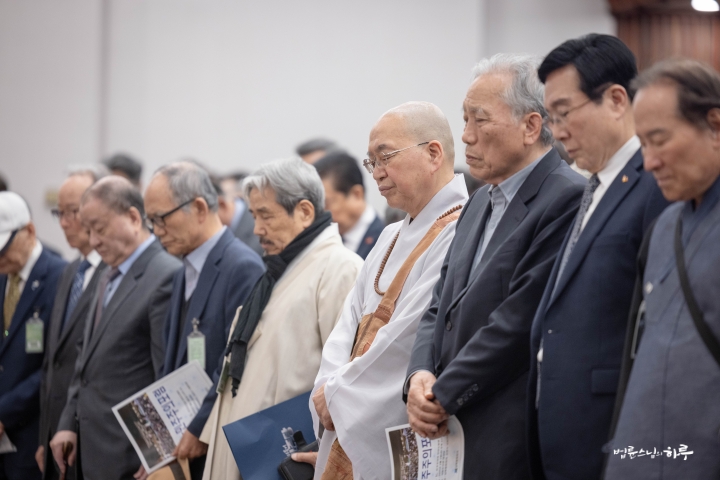
Pastor Lee Hae-hak delivered the opening address first. He emphasized how citizens should carry forward the democratic spirit that stood against the December 3rd Martial Law.
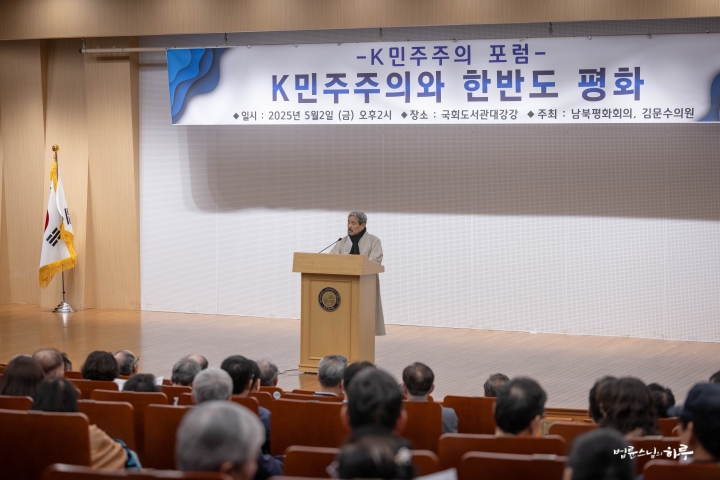
“K-Democracy aspires to a society where all people around the world can live their lives with confidence. We must not repeat the failure of the Candlelight Revolution during the Park Geun-hye impeachment movement. The December 3rd Martial Law and the impeachment of President Yoon Seok-yeol should lead to the creation of new growth engines to overcome the deteriorated inter-Korean peace and the collapsed people’s economy.”
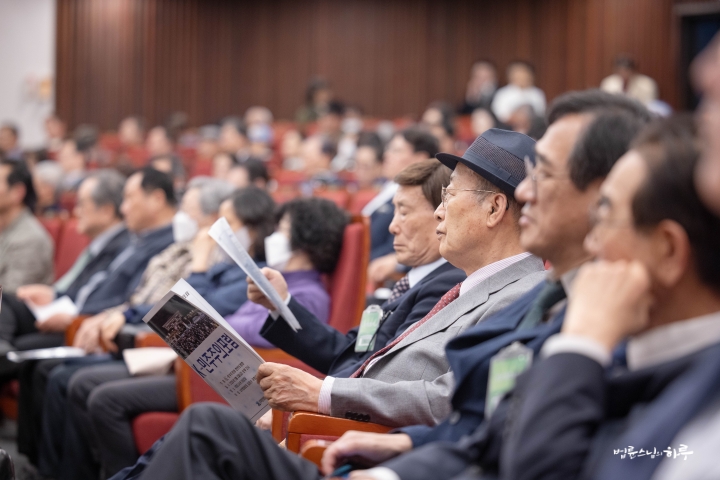
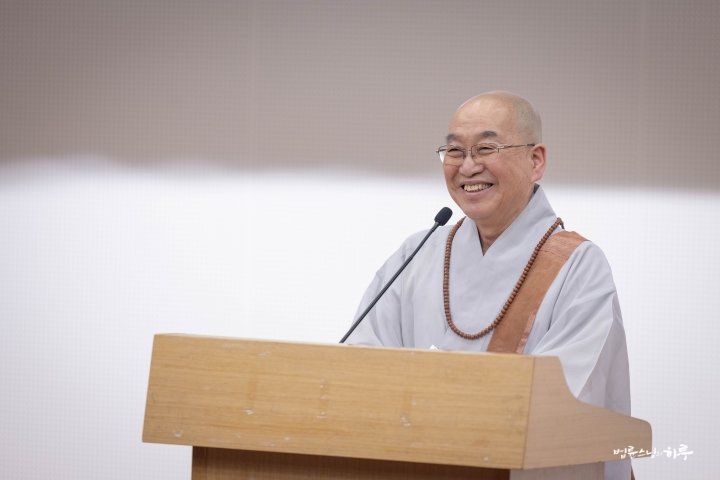
Next, Sunim took the stage to deliver his congratulatory remarks.
The Collapse of the Existing Order Presents a New Opportunity
Despite these conditions, I agree with the South-North Peace Council’s purpose of trying to improve inter-Korean relations. However, I believe it won’t be easy in a short period. Looking back at our history, such attempts have rarely succeeded easily. In a way, we have been challenging the impossible for the past 100 years, repeatedly failing until now. While each individual event may seem like a failure when examined separately, looking back now, they represent steps toward success. Just as a child falls repeatedly while learning to ride a bicycle but eventually succeeds, our modern history has created a great Republic of Korea through these processes of failure.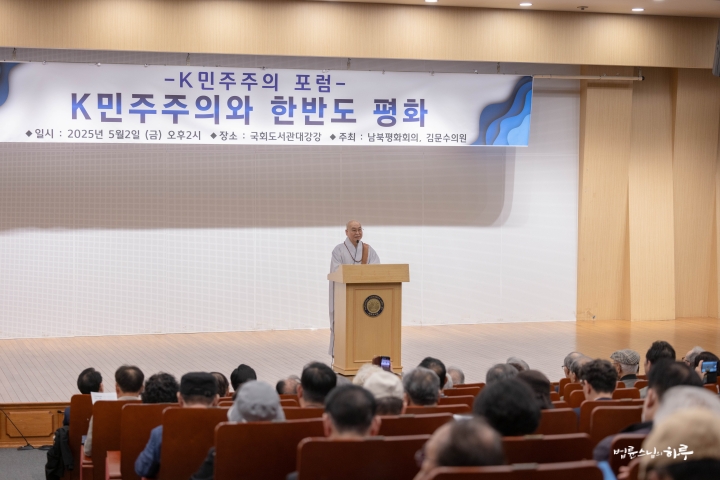
The Martial Law Incident: Showing Both Institutional Vulnerability and Democratic Resilience
From a historical perspective, although there seemed to be many failures at the time, in the long view, we can see that we have been steadily progressing toward peace on the Korean Peninsula and the development of democracy. I believe this martial law incident is something that could only happen in South Korea. The ease with which martial law was declared reveals vulnerabilities in our democratic institutions. On the other hand, the fact that it was lifted within two hours is a positive aspect that would be difficult to find elsewhere in the world. South Korea’s democracy shows a duality – while it carries the risk of a president declaring martial law, it simultaneously possesses characteristics that make such attempts difficult to sustain.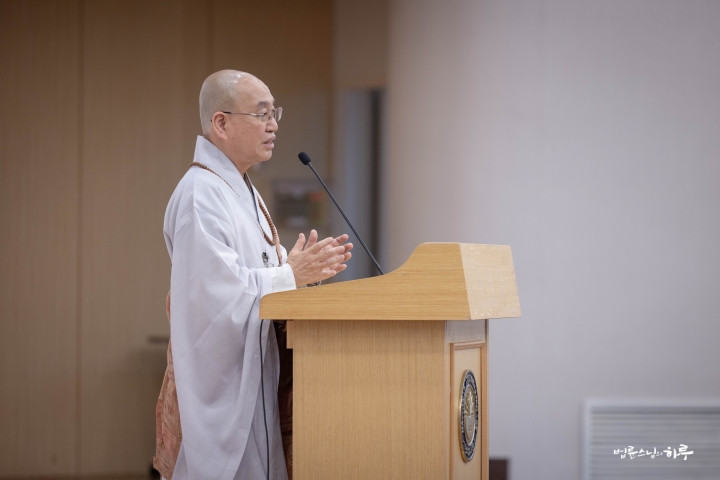
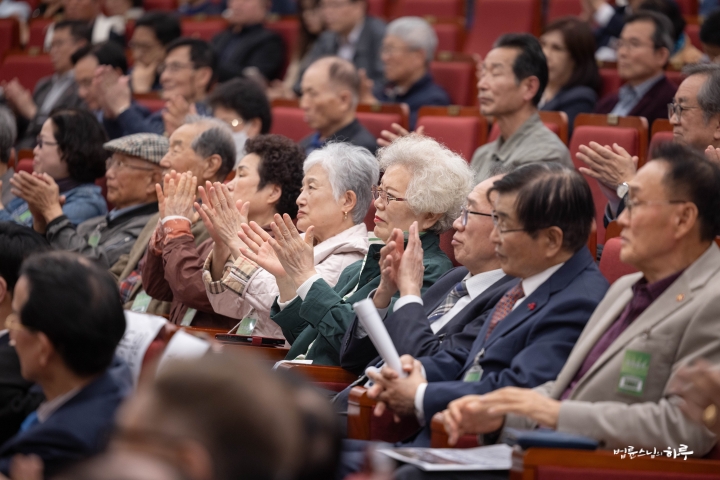
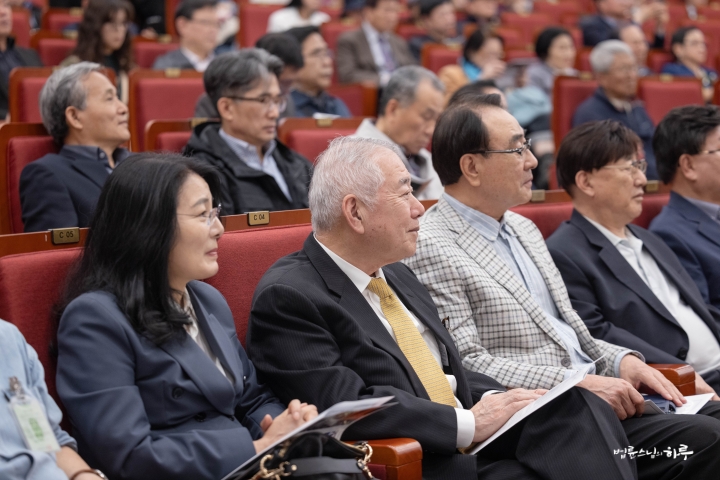
The talk show then proceeded in earnest. Moderated by Yoon Kyung-ro, former president of Hansung University, the panel featured Moon Chung-in, former special advisor for unification, security, and foreign affairs under the Moon Jae-in administration; Kang Chang-il, former ambassador to Japan; and Do Cheon-su, standing representative of the North-South Peace Conference. They engaged in a lively discussion on various topics including “The Present and Future of K-Democracy,” “International Situation Surrounding the Korean Peninsula,” “Changes in North Korea’s Unification Strategy and Our Response,” and “Prospects for Peaceful Unification of the Republic of Korea.” Sunim listened attentively to the discussions among these senior figures of society.
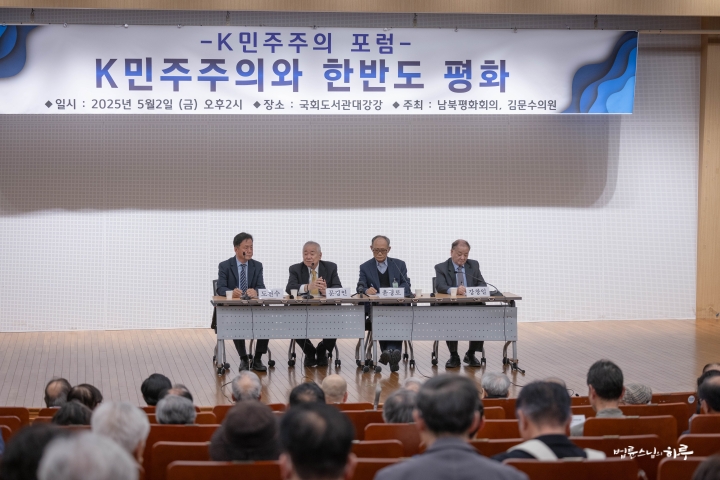
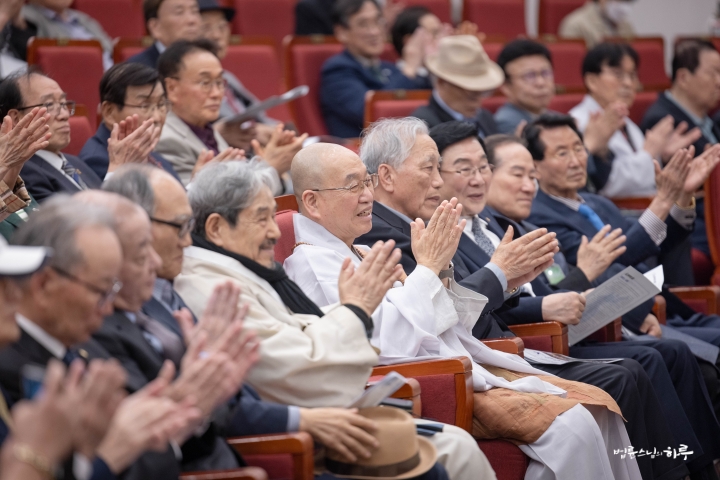
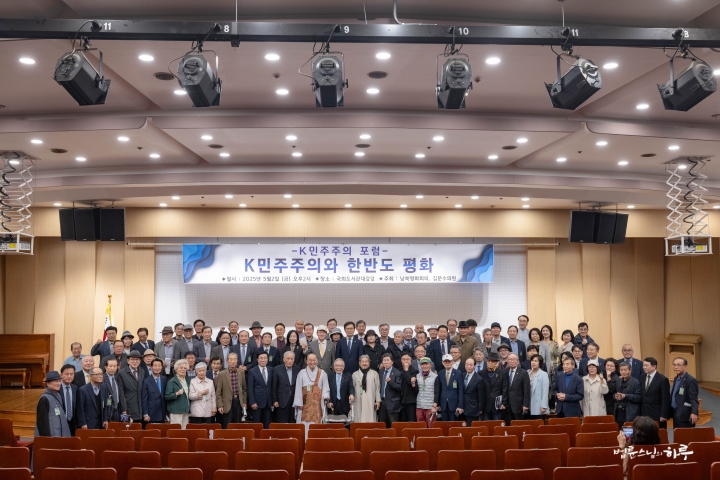
After the forum concluded, everyone gathered for a commemorative photo before leaving the National Assembly.

After returning to the Jungto Social and Cultural Center, Sunim had dinner with the Sangha members and then headed to the basement auditorium for the Friday Dharma Q&A session.

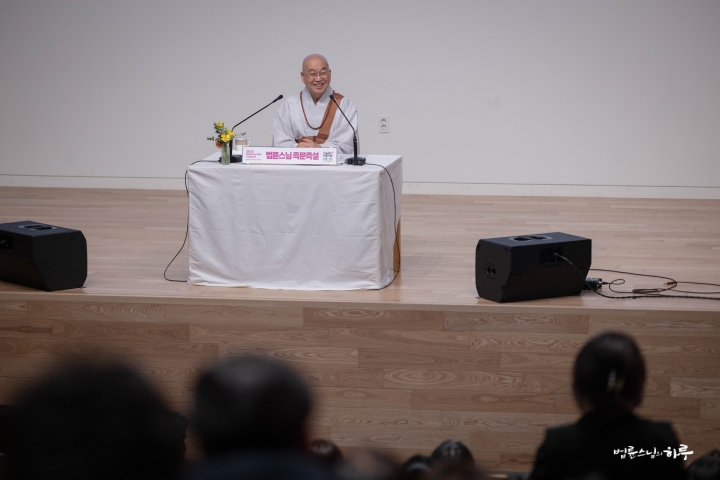
As the sun set, many citizens arrived at the Jungto Social and Cultural Center after work to attend the Dharma Q&A. About 4,900 people connected via YouTube, while approximately 170 people were present at the venue.
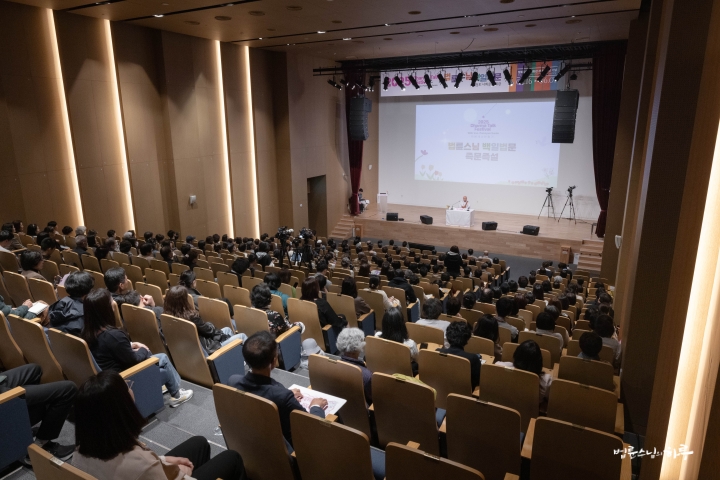
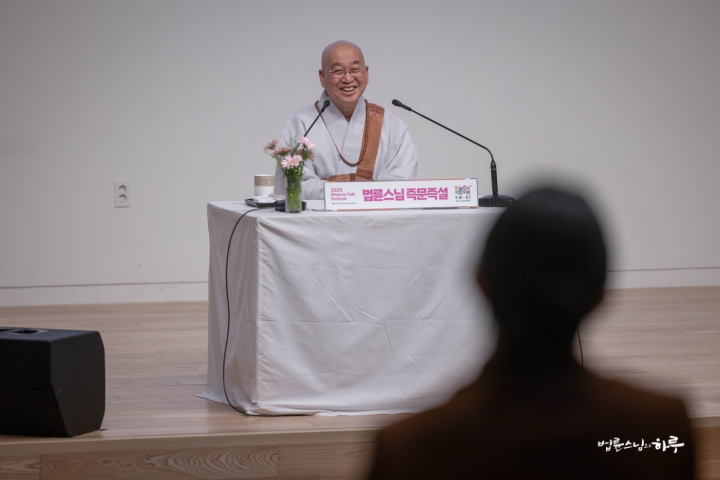
After reciting the Three Refuges and Words for Practice, Sunim took the stage. Over the course of an hour and a half, six people raised their hands to engage in dialogue with him. Today, an interesting scene unfolded as a married couple came to the lecture together and asked questions from their respective perspectives. A wife who had endured loneliness living next to her in-laws for 26 years, and a husband who felt frustrated by their increasingly distant relationship despite his efforts to care for his wife, both sought Sunim’s advice on how they could live happily together.
I Want to Break Free from a Life Centered Around My Husband and Be Happy on My Own
“I’ve been living next to my in-laws for 26 years with my husband, who has three older sisters and a mother who has lived her entire life devoted to her son. My wish is to live peacefully with just my husband. I feel burdened when I’m with my husband because of his mother and sisters who seek him out every day, as well as his neighborhood friends. When my children were young, I could focus on them even when my husband wasn’t around, but now they’ve all grown up and moved out. Whether at work or at home, I feel empty and lonely whenever I try to immerse myself in something. My childhood friends are all in Busan, and most of the people I know now are my husband’s acquaintances. I can’t open up to people I’ve met at work because our lifestyles and thoughts are different. Given this situation, I want to be close with my husband who is nearby, but he has many friends who contact him, which makes me feel like I’m holding him back, and I keep feeling petty. It seems like it will be a long time before my husband returns to me, and waiting feels petty and difficult. I’d like to ask how I can let go of my feelings for my husband and live well on my own.”
“There are several approaches. First, since he’s your husband, don’t be self-conscious and just keep holding onto him. If your husband complains that he can’t stand it and makes a fuss, then you can let go a little. Don’t preemptively let go on your own. This is because you don’t know whether your husband wants to be with you or go to others, but you’re letting go out of fear in advance. Now that your children have grown up, you should do what you want to do.”“When I let him go, he keeps going outside.”
“Today I came to the Dharma Q&A with my husband. I thought we should listen to Sunim’s teachings together. When I suggest going somewhere, he usually agrees, but even when we’re together, I feel anxious because others keep contacting him.”
“That’s your problem. You should go to the hospital and get a prescription for anti-anxiety medication.”“The hospital?”
“If you feel anxious when people call your husband, that’s not your husband’s responsibility. How can your husband solve your anxiety about his phone ringing? He can’t be expected to not answer calls at all.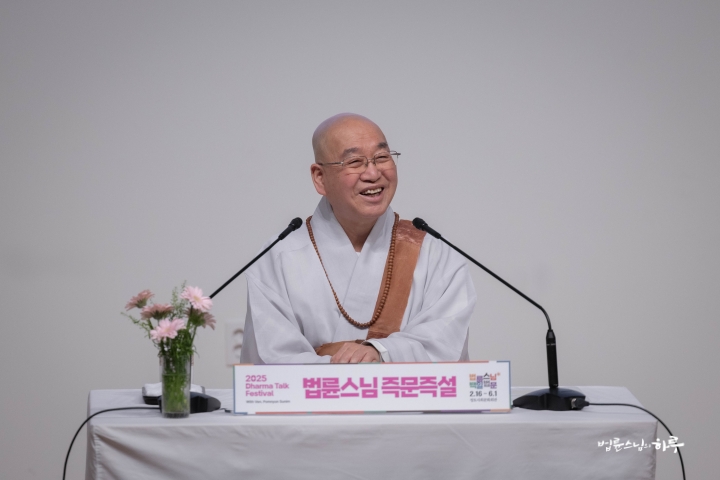
“Is that so? I thought my husband should hear this too.”
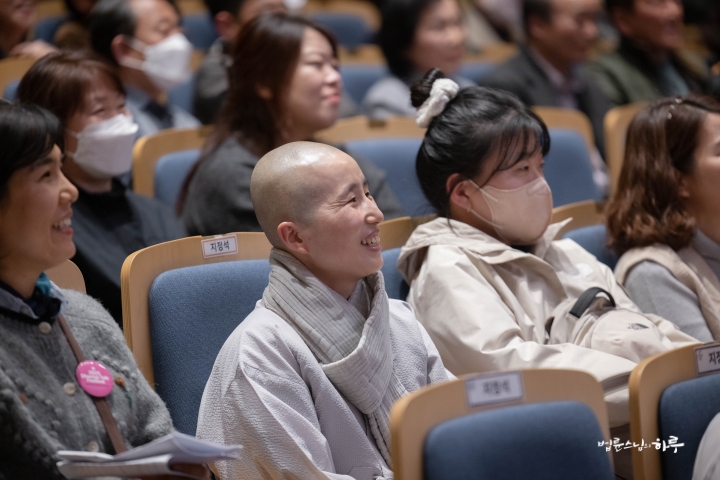
“I’m trying to interfere less with my in-laws compared to before. But I feel uncomfortable whether I interfere or not.”
“If you’re uncomfortable whether you interfere or not, is this your problem or your in-laws’ problem?”“It’s my problem. So I’m trying to manage on my own. But lately, I keep tearing up for no reason, and I feel sad whenever I speak.”
“I understand. Thank you.”
“Who is the husband? Please raise your hand.”Sunim identified the husband and then asked him a question.
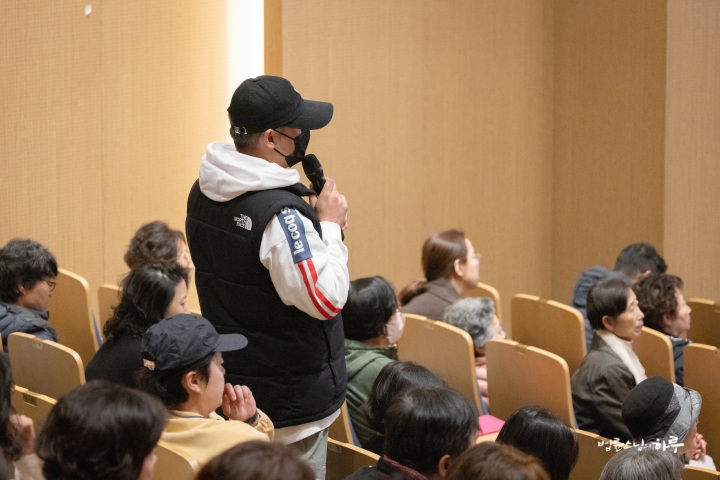
Why Does Trying Harder to Please My Wife Make Us Grow Further Apart?
“Why did you marry only to leave your wife so lonely? Would you like her to find another man?”“That’s not it. I’m doing my best for my wife in my own way. My wife has been strong and endured well until now, but now that our children have grown up and become independent, I think she’s going through menopause. My wife called me a filial son, but I’ve been visiting my parents on my own to reduce her stress about my family. I also visit her parents occasionally. Despite this, my wife seems to feel guilty about not fulfilling her duties. I tell her she’s done well so far, but I think it’s because of menopause.”
“If it’s because of menopause, should you just leave her alone? Or should you understand her and take care of her warmly?”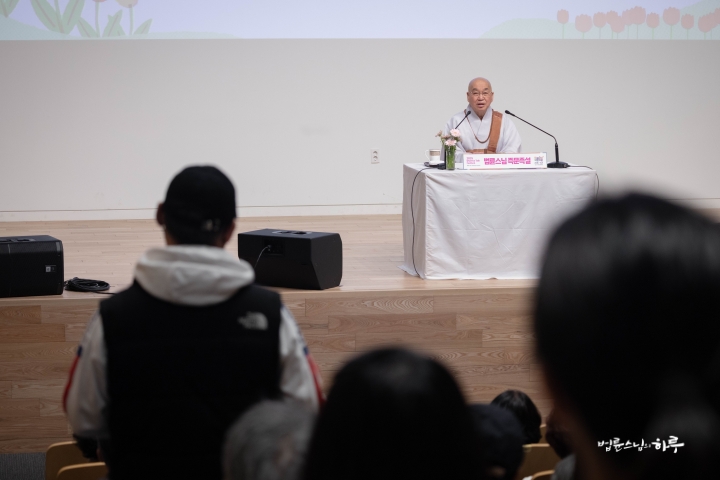
“I should take good care of my wife and spend more time with her, but it seems like the more I try, the more distant we become. I try to understand her, but when her irritability continues, I also get angry. I’m making an effort in my own way, but when she criticizes me for it, I find it difficult.”
“From what the husband is saying, it sounds like the more he tries to please his wife, the more she demands. And the wife is saying that the more she lets him go, the further he runs away.” (laughter)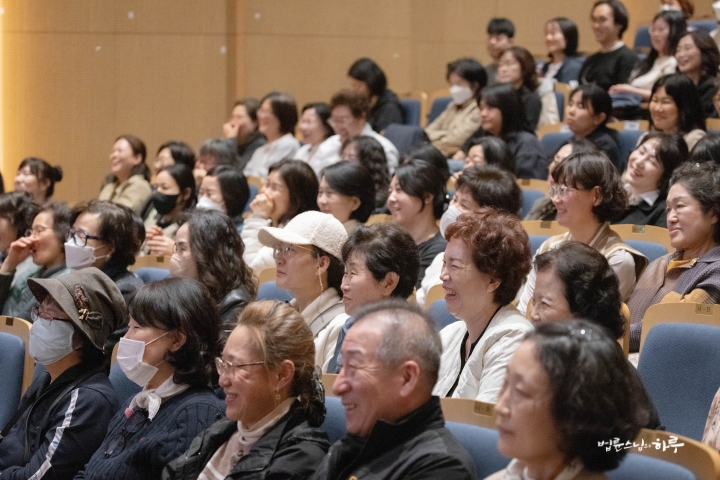
“I find the time we spend arguing very wasteful. I feel sorry for my aging parents, but I try to focus more on my wife despite this. Yet the more I try, the more difficult our relationship becomes. When I come home irritated from outside, it’s harder for me to accept what my wife says. But if I engage in some hobbies before coming home, it’s a bit easier for me to handle her irritability.”
“The husband is saying exactly what I was going to say. But the husband also needs to reflect on something. He mentioned that his wife has endured well until now but can’t anymore. Enduring isn’t a good thing. Those who endure suffer, and after a certain time, they either become ill or explode. So praising her for enduring well until now isn’t right. You should create conditions where there’s nothing to endure.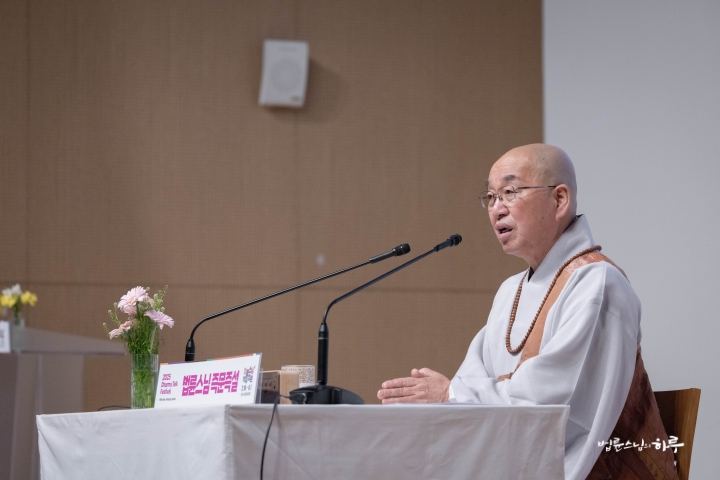
After Sunim’s response, both the husband and wife were asked for their thoughts. The husband spoke first.
“Thank you. Listening to Sunim, I realized I still have shortcomings. I will make more effort to fulfill my wife’s emotional needs.”
The wife also shared her thoughts.
“I will try to manage my emotions better. Thank you.”
The entire audience applauded loudly to support the couple.
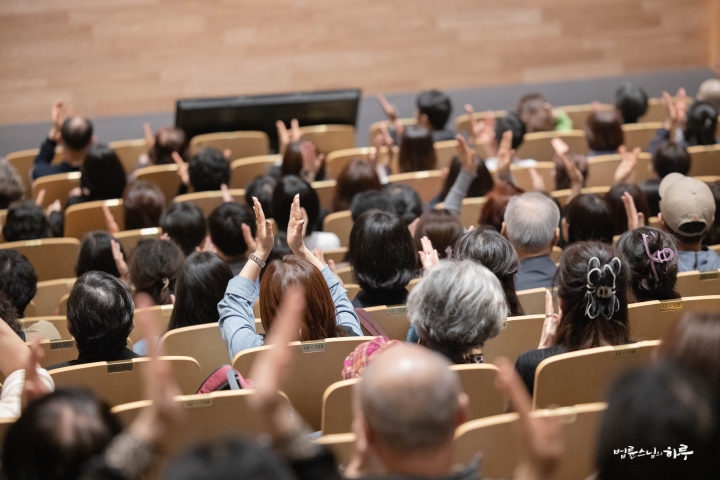
Today’s Dharma Q&A was particularly enriching as we could hear both the wife’s and husband’s perspectives in conversation.
The questions continued.
I have a serious personality and often don’t understand when someone makes a joke. How can I become more perceptive and better at understanding jokes?
Because I don’t express myself well, my wife doubts whether I love her. When she shares her concerns, I offer solutions without empathy, which makes her feel hurt.
I’m curious why Sunim said that mothers should raise their babies for three years. What happens if they don’t?
When I was in 8th grade, my parents left home, and I lived with my younger brother, who is 12 years younger, until we became adults. We don’t get along well. How can we improve our relationship?
In Buddhist terminology, there’s a term “muwi” (non-action). I’m curious about its meaning.
By the time the conversation ended, it was past 9 PM. The talk concluded with the Four Great Vows, with a promise to meet again next week at the same time.
Tomorrow is the 76th day of the 100-Day Dharma Talk. With no scheduled talks, Sunim plans to spend the entire day working indoors.