Why We Light Lanterns Before Buddha’s Birthday
Apr 13, 2025 - Farming, Buddha's Birthday Lantern Lighting Ceremony
Hello. Today is the 56th day of Venerable Pomnyun Sunim’s 100-Day Dharma Talk. It feels like we just started, but eight weeks have already passed. Today, after farming at Dubuk Retreat Center, Sunim traveled to Seoul to participate in the lantern lighting ceremony ahead of Buddha’s Birthday at the Jungto Social and Cultural Center.
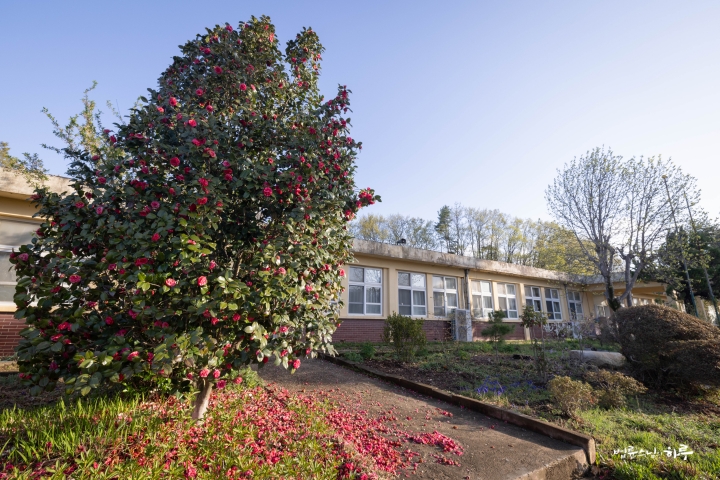
Sunim began farming after completing his morning practice and meditation. The early morning rain and strong winds had left the garden in disarray. The lettuce seedlings and coriander seeds planted two weeks ago showed no signs of sprouting, while weeds flourished.
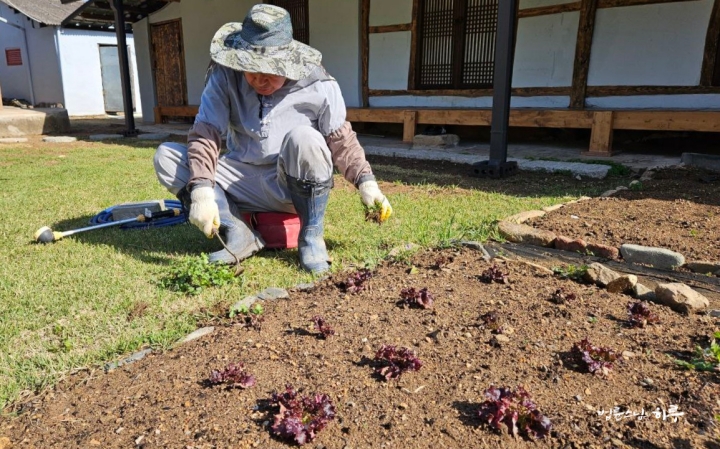
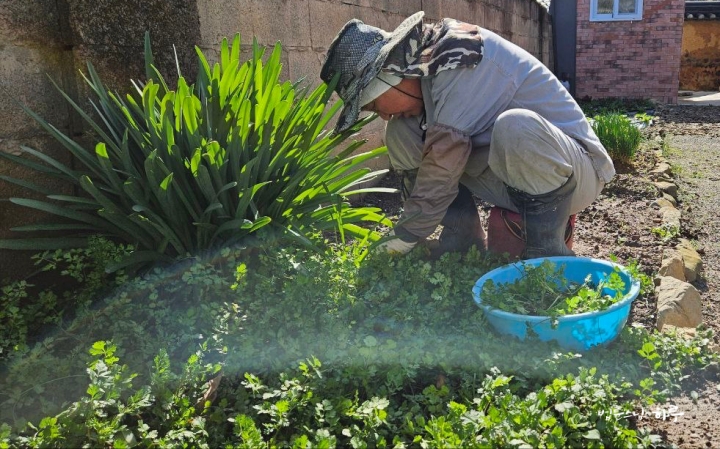
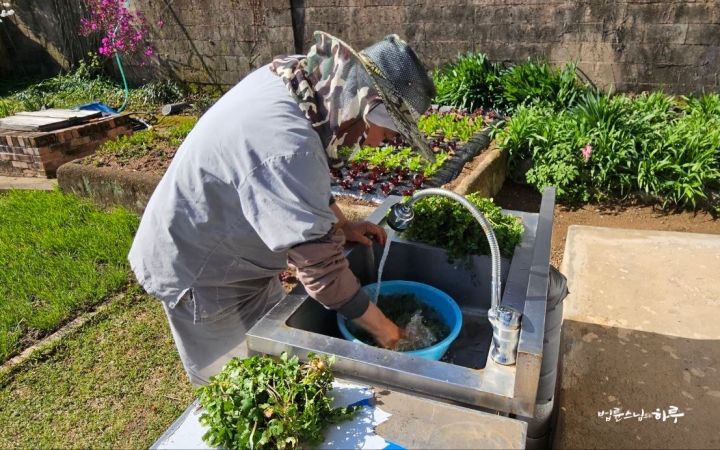
After weeding, Sunim harvested the coriander planted last winter. He washed and trimmed it neatly before finishing the farm work.
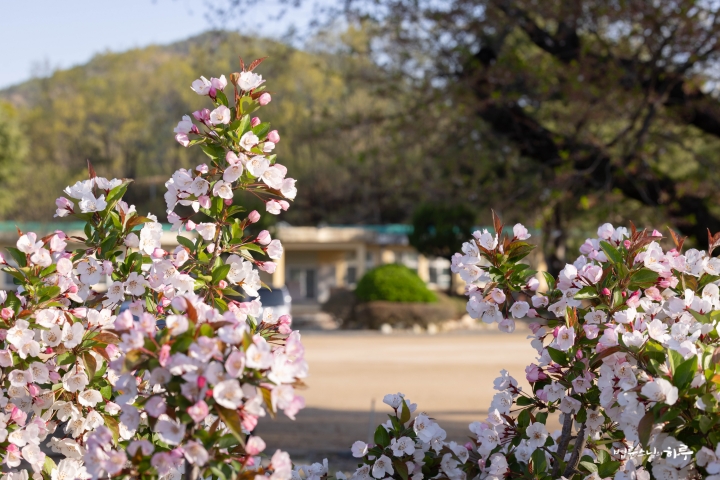
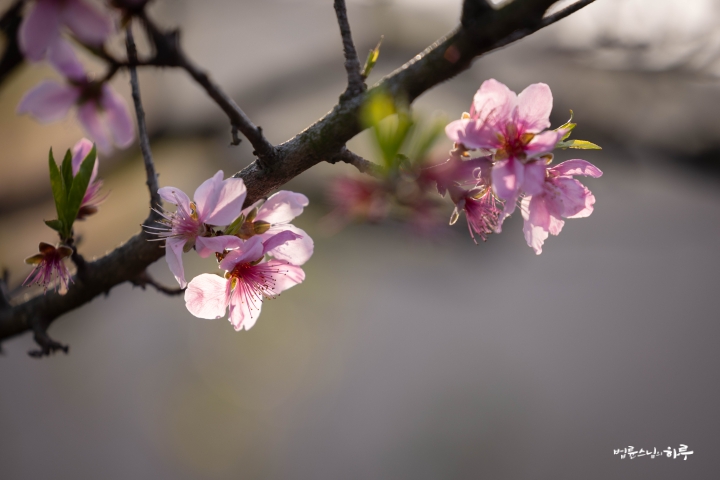
Despite the cool breeze, spring was blooming everywhere. Throughout the Dubuk Retreat Center, flowers were quietly emerging.
After lunch, Sunim departed for Seoul at 2 PM.
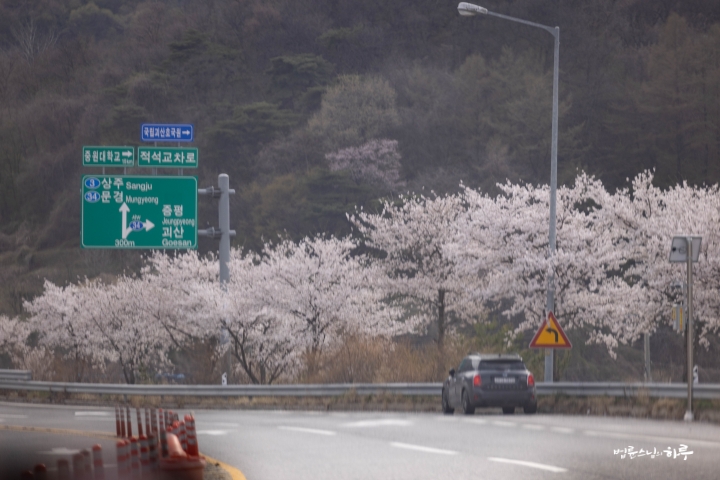
Though Sunim had enjoyed feeling the spring energy while farming over the weekend, his body was quite tired. He took a nap as the car traveled along the highway.
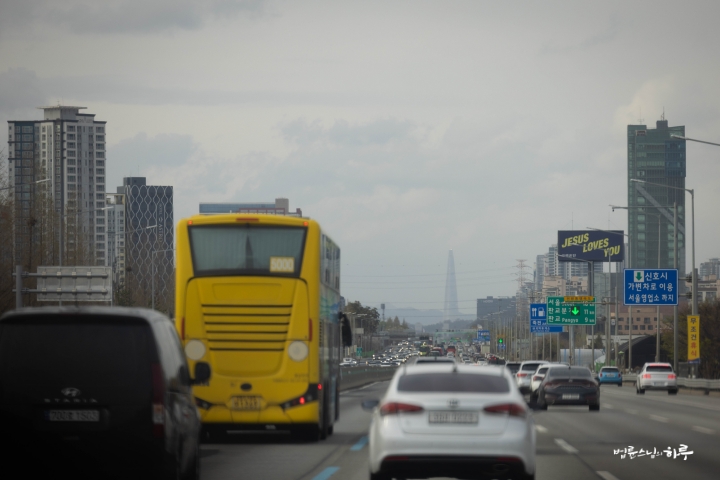
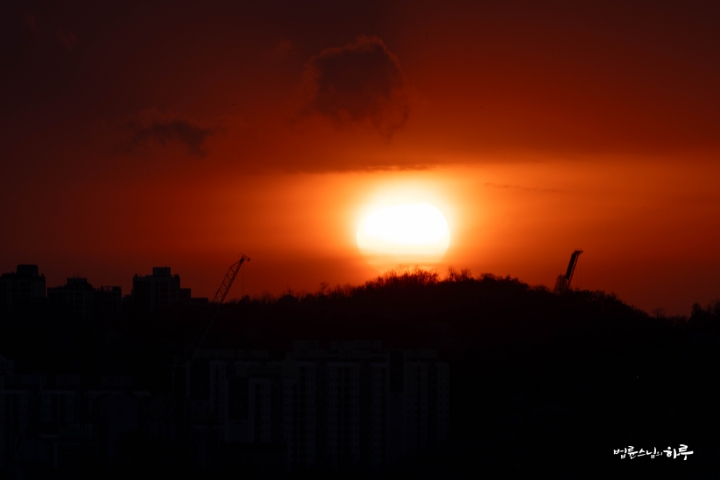
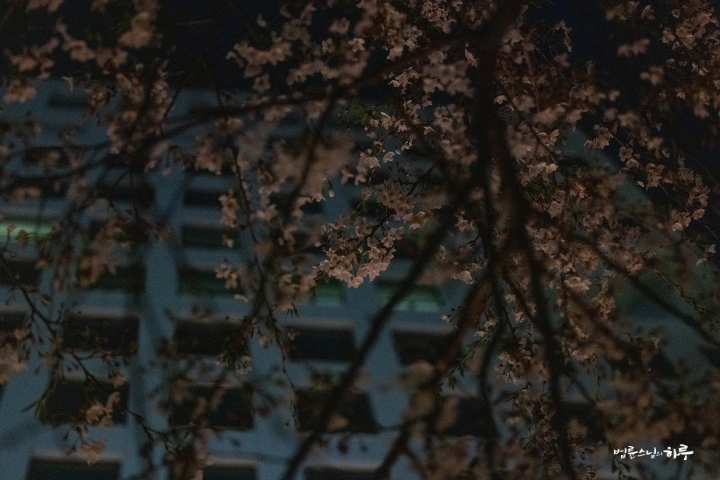
Due to traffic, Sunim arrived at the Seoul Jungto Social and Cultural Center after 6 PM. As the sun set, preparations for the lantern lighting ceremony, a month ahead of Buddha’s Birthday, were in full swing in the courtyard.
After completing preparations for lighting the lanterns, the ceremony began at 7 PM sharp in the third-floor Dharma Hall. About 300 Jungto Society members gathered, aspiring for peaceful minds and a world filled with hope. Jungto Society members from around the world, along with their families and those who had sponsored lanterns, joined the ceremony via online livestream.
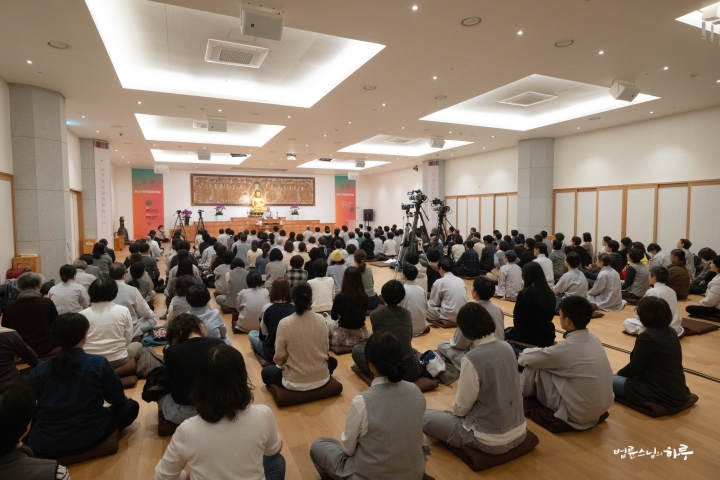
After the President of Jungto Society’s greeting, the assembly requested teachings with three bows, and Sunim gave a Dharma talk about the significance of the lantern lighting ceremony before Buddha’s Birthday.
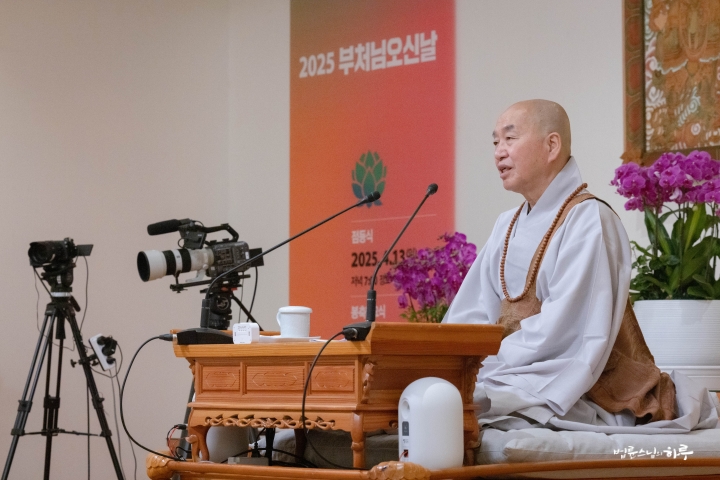
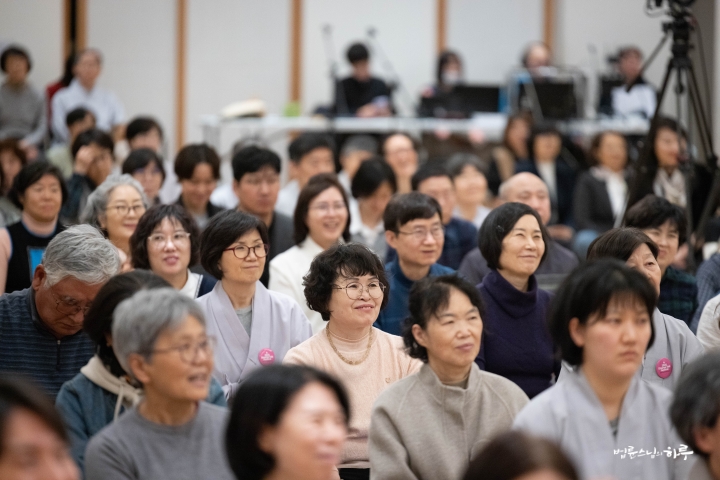
Why We Light Lanterns Before Buddha’s Birthday
A lamp’s value shines brightest when lit in the dark night. Similarly, wisdom like a lamp is most needed by ignorant sentient beings. Therefore, the Buddha’s teachings exist for the benefit of sentient beings. The Buddha’s teachings serve as excellent medicine for sentient beings to awaken from ignorance and live without suffering. In a hospital, the patients, not the doctors, are the main focus, as hospitals exist to treat patients’ illnesses. However, in reality, things often become inverted, with hospitals becoming money-making tools for doctors. This is called ‘inversion.’ Similarly, in schools, students should be the focus since schools are places of learning. But when teachers become the focus, schools become places of teaching, inverting the proper relationship. Likewise, in Buddhism, sentient beings don’t exist for the Buddha; the Buddha exists for sentient beings. ‘Buddha’ means being the master of one’s own life. That’s why in Buddhism, there is no culture of declaring oneself a servant of the Buddha. The Buddha’s teachings are like a lamp guiding us on the right path to awaken from ignorance. It is with this meaning that we light lanterns today. The reason we hold the lantern lighting ceremony a month before Buddha’s Birthday is to announce its approach. We light lanterns around temples and along streets to inform people that Buddha’s Birthday is coming soon. This might inspire those who don’t usually visit temples to consider visiting on Buddha’s Birthday, generating interest in Buddhism. As the saying goes, ‘seeing gives rise to thought’ – whatever we see and hear naturally stirs our minds. Lighting lanterns throughout the streets becomes an opportunity for spreading the Dharma. Thus, the act of lighting even one lantern becomes an act of spreading the Dharma. The intention we generate is called ‘balsim’ (generating the mind), and this is the starting point of spreading the Dharma.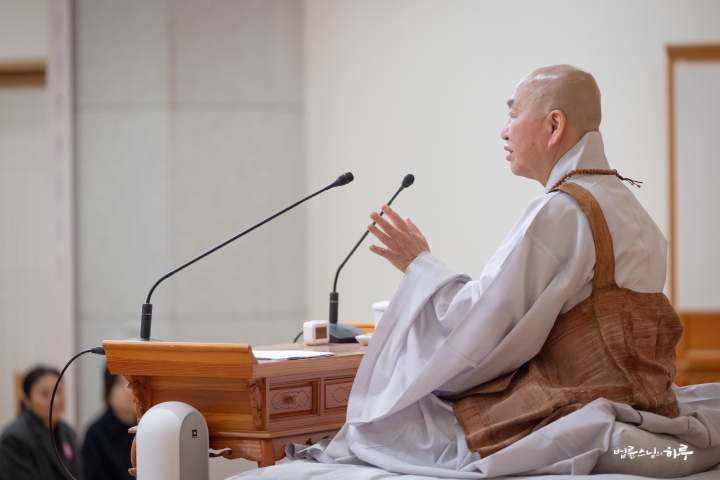
Even if people become interested in Buddhism, they might find it burdensome to enroll in the Jungto Dharma School. However, lighting a lantern is considered a way to accumulate merit and feels less intimidating. Therefore, we can ensure that the donations people make when lighting lanterns are used effectively where needed, allowing them to genuinely create good karma. We can provide food aid to earthquake victims in Myanmar and malnourished children in North Korea, or support reconstruction efforts in Syria, where long-term civil war has destroyed all infrastructure.
Most people are too busy with their daily lives to pay attention to situations in other countries. So they ask, “Sunim, how can you continuously generate such compassion?” I feel this way because I have witnessed these situations firsthand. When I visited the border regions between China and North Korea, I saw the bodies of North Korean residents floating down the Yalu and Tumen Rivers. Among those who managed to cross the rivers alive, many were reduced to skin and bones, which pained my heart deeply. When you see such people, distinctions about nationality disappear, and you only think about providing water, food, clothing, shelter, and medicine necessary for survival. Of course, some people impose conditions like “I’ll give you food if you believe in God” or “I’ll help you if you memorize a Bible verse.” However, I believe we should not discriminate based on religion, nationality, ethnicity, ideology, or gender when dealing with people in survival crises. They are simply people who need water, food, clothing, medicine, and at least temporary shelter. We must cultivate the heart to help them escape from the suffering of basic survival.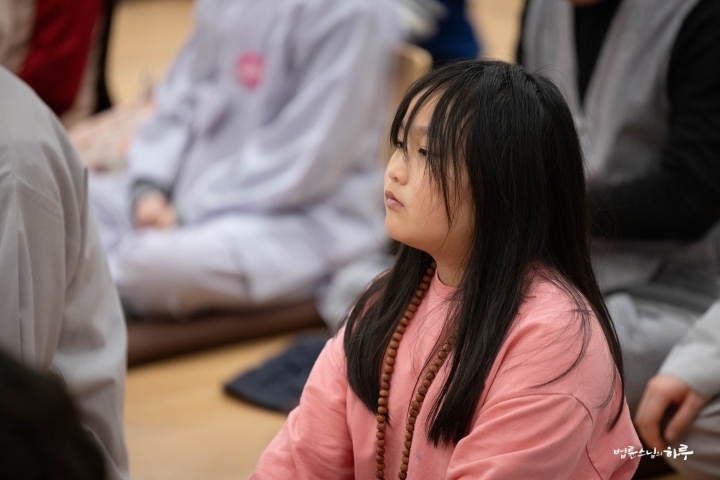
With the Mind of Lighting the Lamp of Wisdom and Compassion
Wisdom means ‘seeing things as they are.’ When we see things as they are, the question ‘What can I do to help?’ naturally arises within us. This mindset is like reaching out to someone drowning in water, without expecting anything in return. This is ‘compassion.’ Wisdom and compassion are not separate; when there is wisdom, compassion follows, and without wisdom, there is no compassion. If compassion is lacking, it is because we are not seeing things as they truly are. The Buddha’s teachings are like a lamp of wisdom that illuminates our ignorance. When we light this lamp and view the world through the eyes of wisdom, we can see the suffering of people in the world. This naturally gives rise to compassion, the desire to alleviate their suffering, even if only a little. This compassion manifests as actions like giving and service. That is why the lanterns we light on Buddha’s Birthday are called the ‘Lamp of Wisdom’ and the ‘Lamp of Compassion.’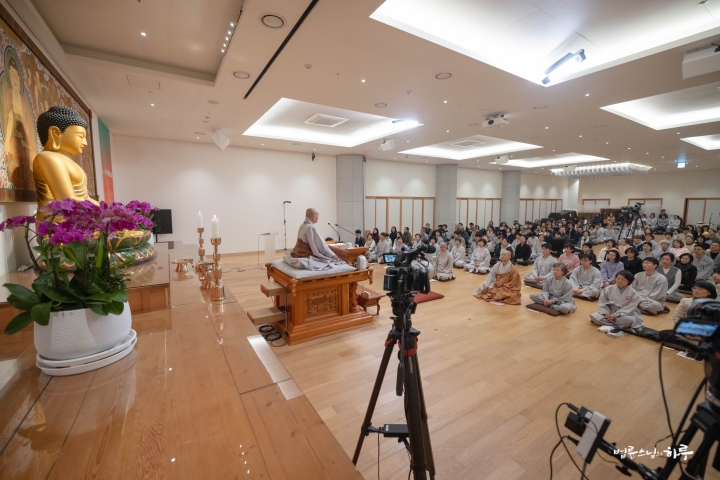
Praying for Peace on the Korean Peninsula, National Unity, and Sustainable Development
Look at how the United States is waging a tariff war right now. They don’t distinguish between allies and adversaries. They pursue only their own national interests, evaluating international relationships solely based on trade figures. The global trade market is rapidly changing in this way.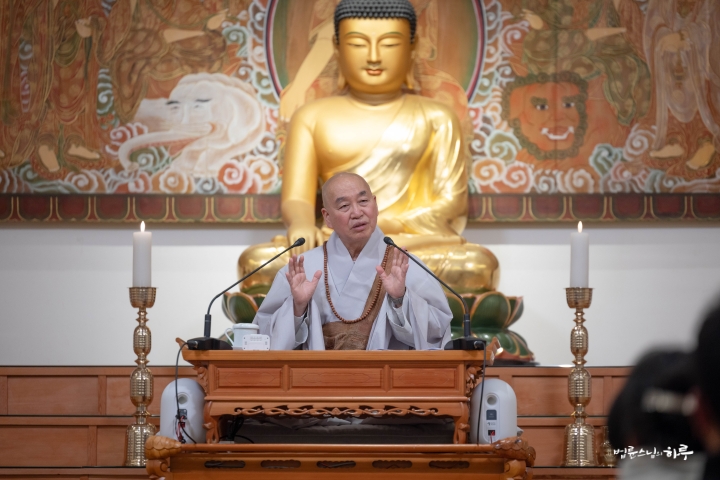
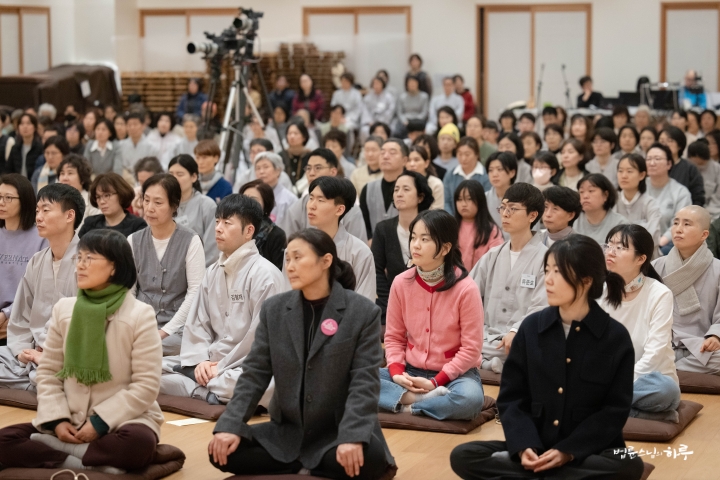
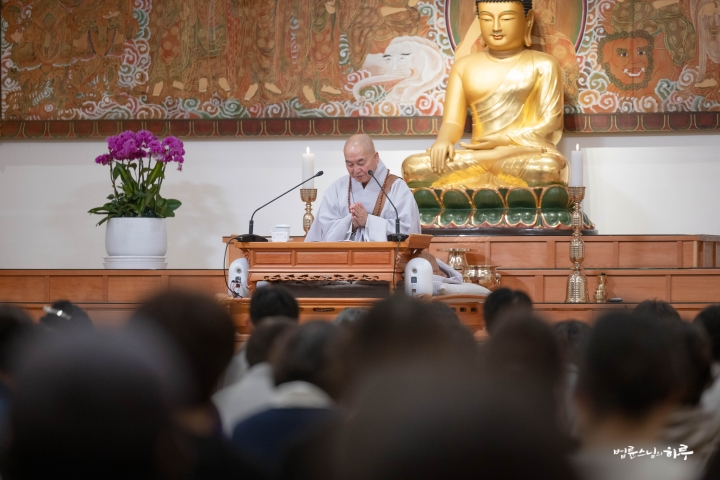
After the Dharma talk ended, Sunim moved to the courtyard in front of the first floor of the center to continue with the lantern lighting ceremony.
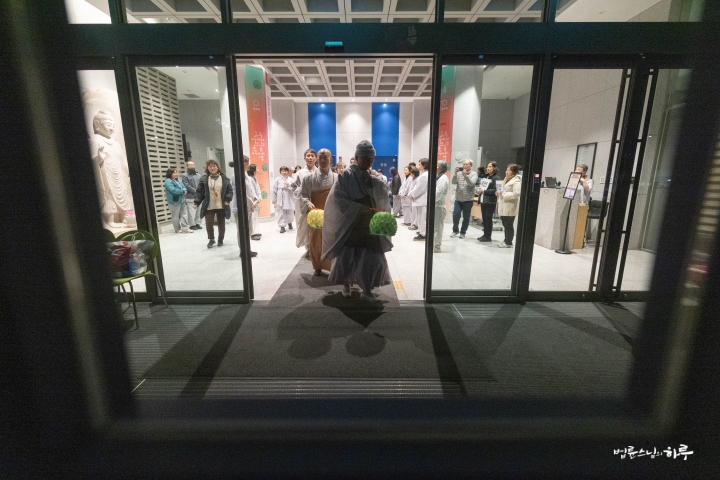
While moving, the Bodhi Tree Choir sang Buddhist hymns. The background video showed various parts of the Jungto Social and Cultural Center where the 100-Day Dharma Talk was taking place. Following this, everyone watched a video showing how each of the main temples of Jungto Society was preparing for Buddha’s Birthday.
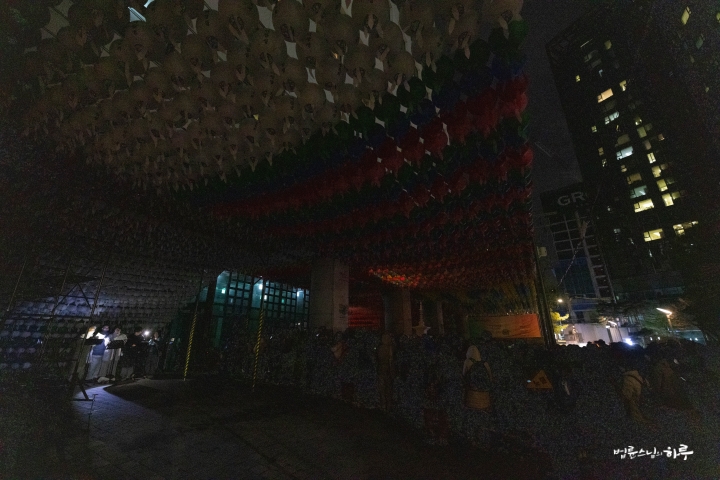
As everyone watched the video, the atmosphere of the lantern lighting ceremony grew more festive. In the dark courtyard, Sunim led the recitation of the Bodhisattva’s vow. The audience joined in, reading the subtitles displayed on the live broadcast screen.
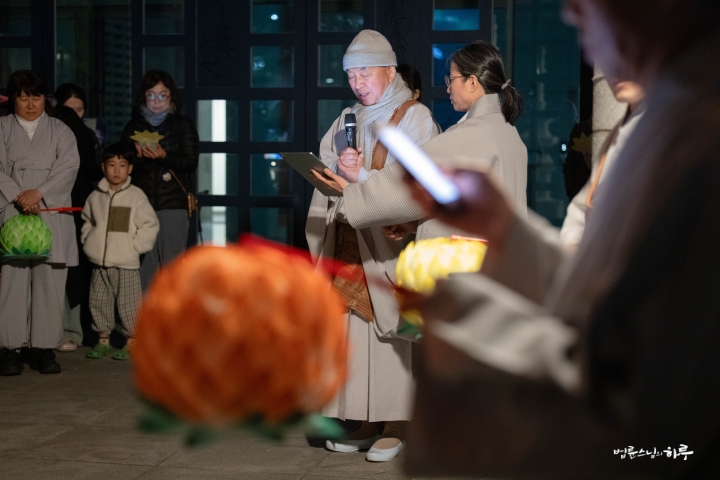
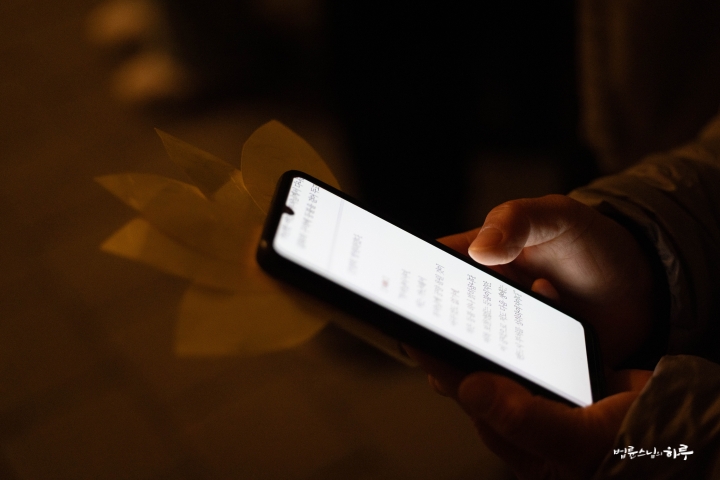
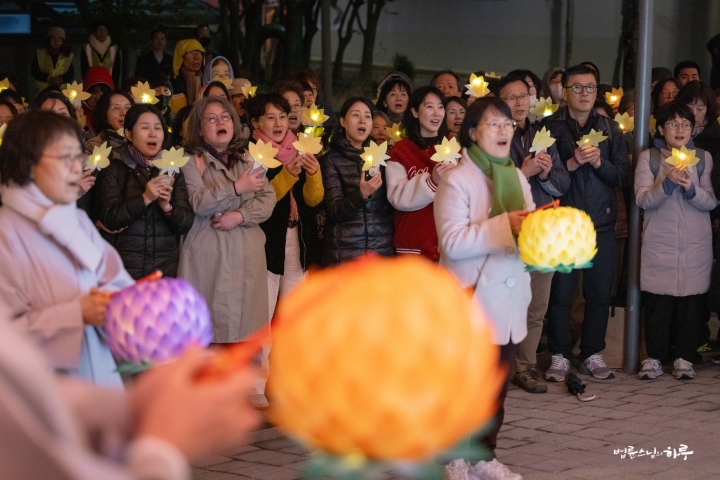
The next part of the ceremony was the lighting of lanterns, symbolizing the hope that the light of peace would illuminate the world. Everyone joined together with one heart to light their lanterns. Following the MC’s lead, the audience chanted enthusiastically:
“Peace of mind!”
“Hope for the world!”

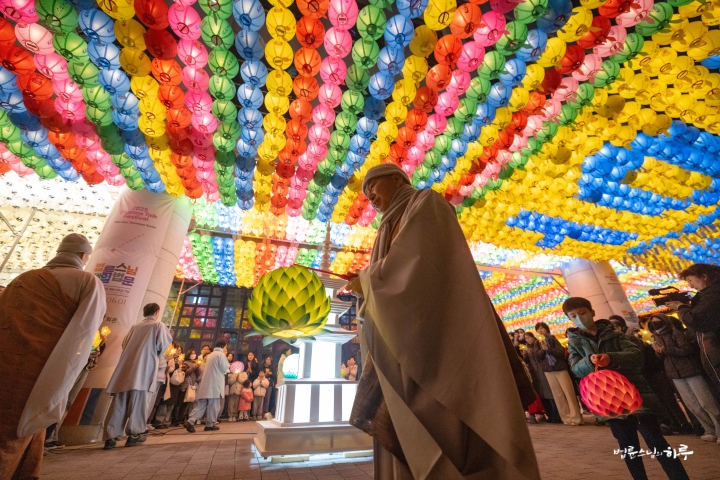
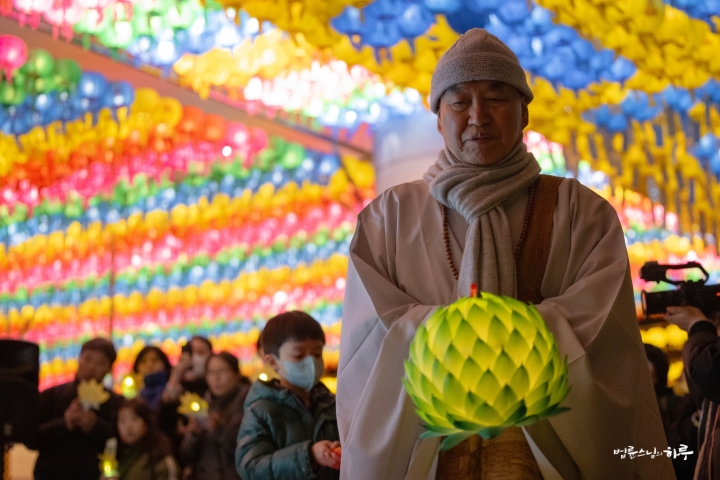
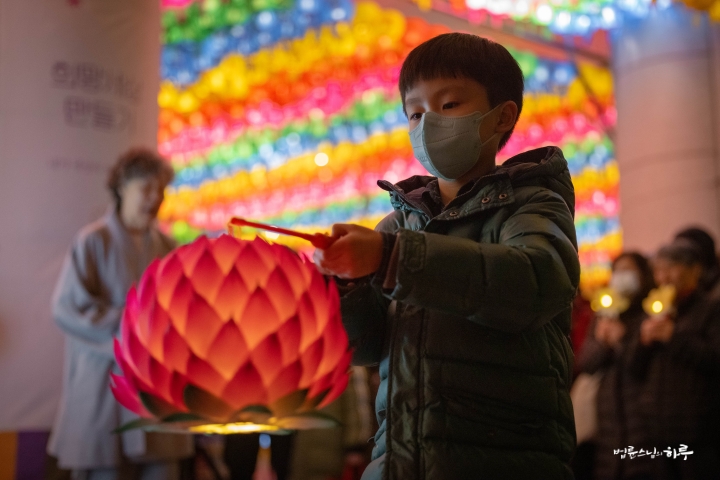
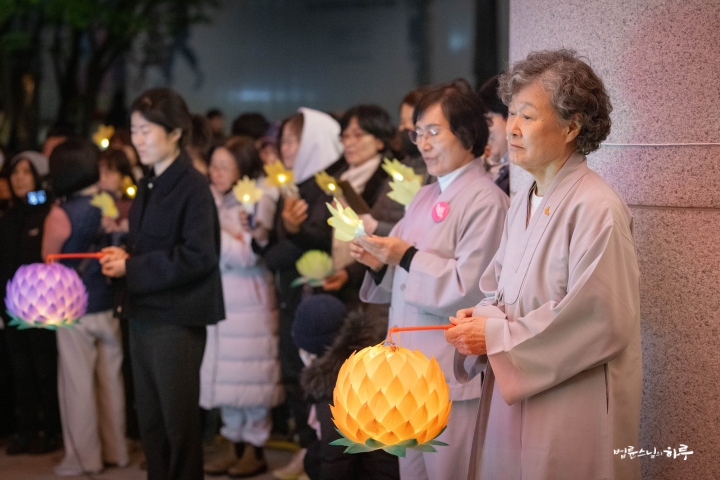
With these shouts, the lanterns were lit one by one above their heads. As the lights on the pagoda and the main lantern were turned on, the approximately 300 people surrounding the pagoda also lit their individual lanterns.
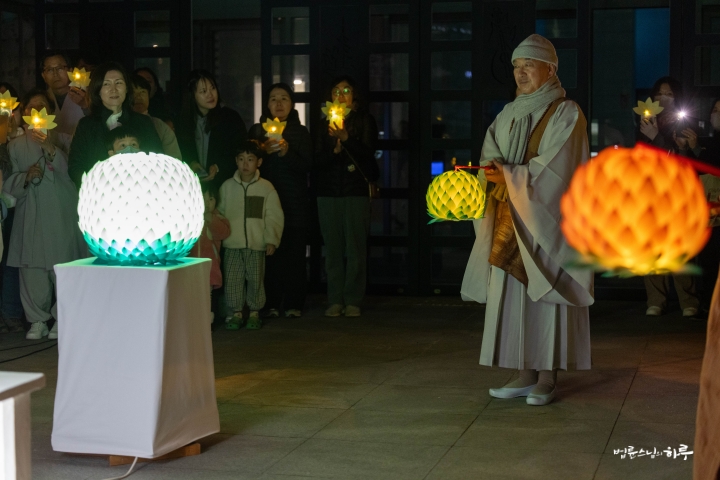
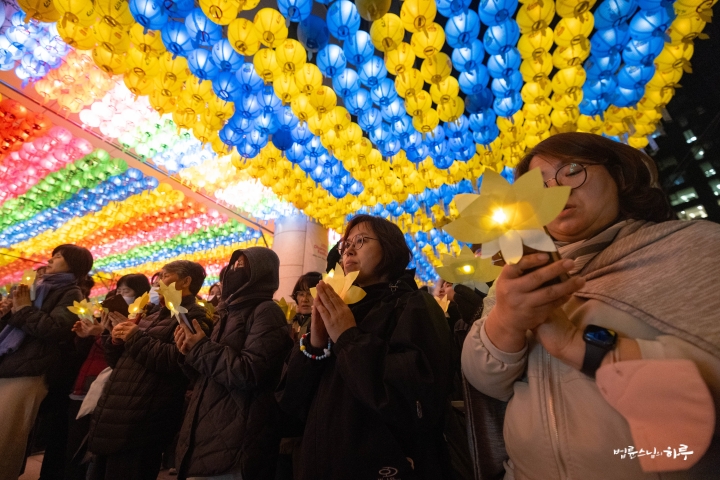
One by one, the lights illuminated the darkness, quietly transforming the space.
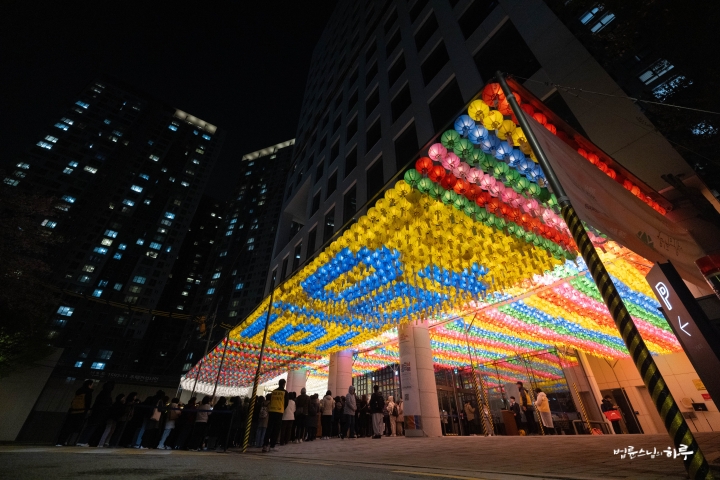
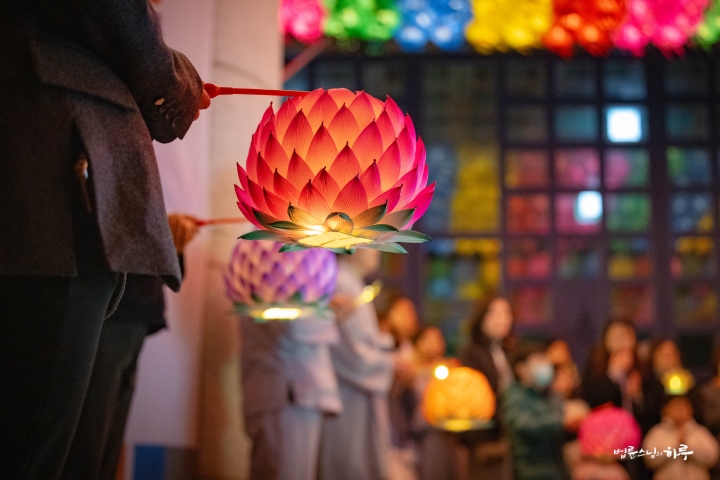
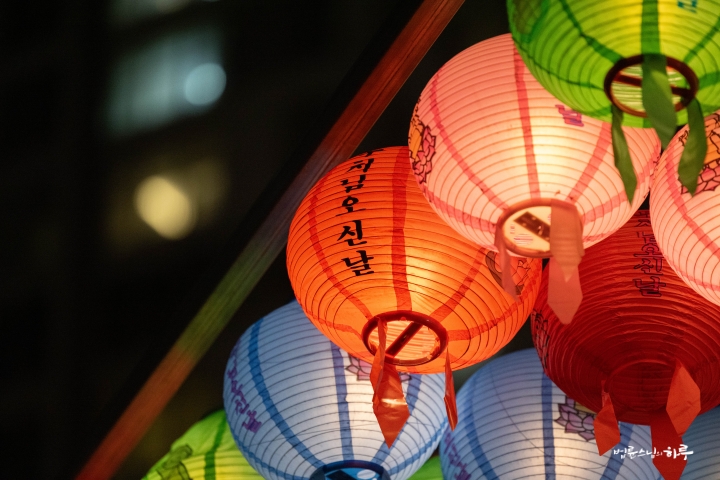
Under the colorful lanterns, everyone earnestly wished that such bright light would fill the entire world. Jungto Society members watching the live broadcast online also lit lanterns in their own homes.
Next, everyone circumambulated the pagoda while chanting Shakyamuni Buddha. Together, they prayed for Buddha’s teachings to spread throughout the world and into the future. Led by Sunim, the procession included Venerable Yusu, the President of Jungto Society, the Secretary General, Venerable Jajae representing the Yeonhwa Association, the head of the Special Youth Division, and a child representative symbolizing the future generation.
After singing the Buddhist hymn ‘Lantern’ together, Sunim recited Buddha’s prophecy.
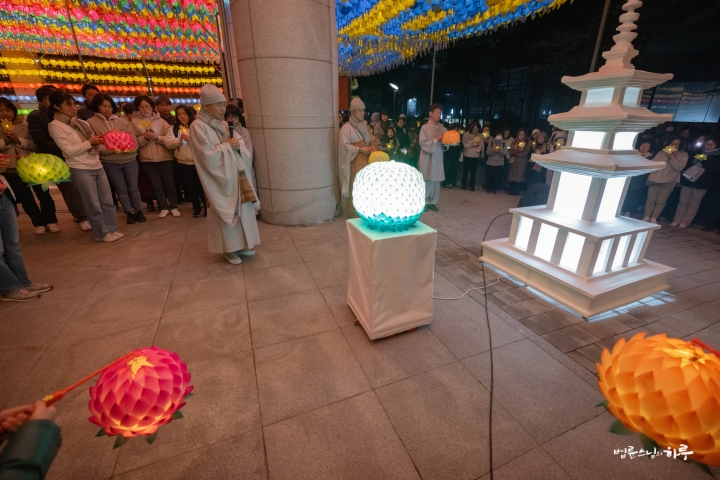
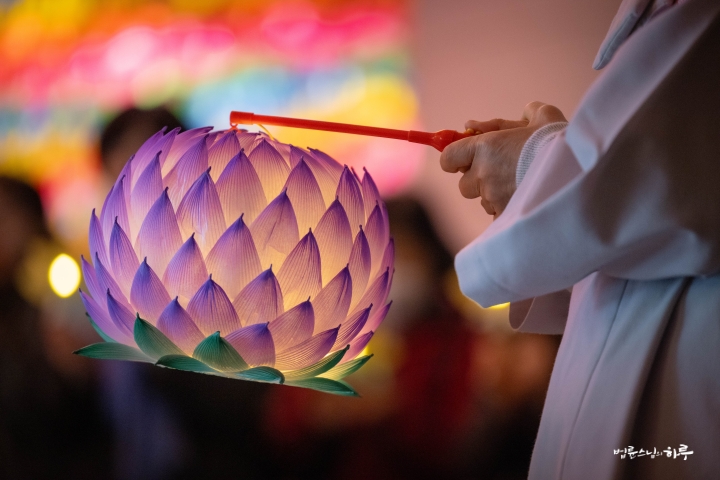
Sunim then offered a blessing prayer.
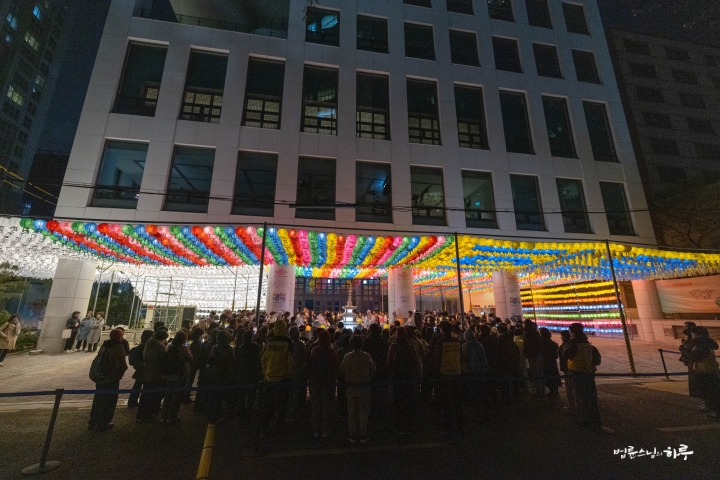
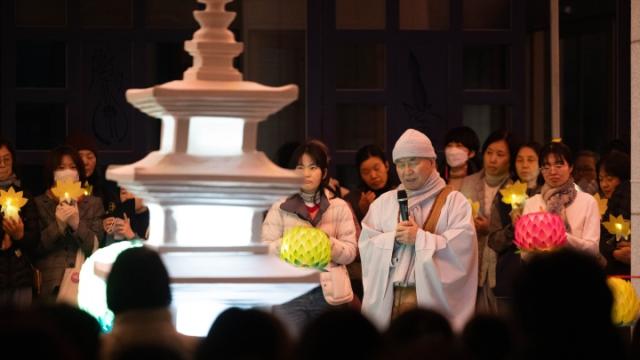
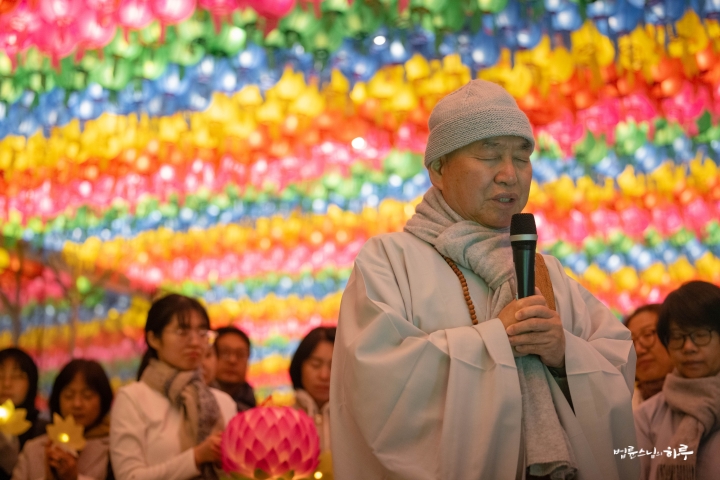
Just as lanterns illuminate the darkness, the hearts of Jungto Society members united in their desire to shine light on the world. Sunim’s blessing made the lantern lighting ceremony an even more meaningful occasion.
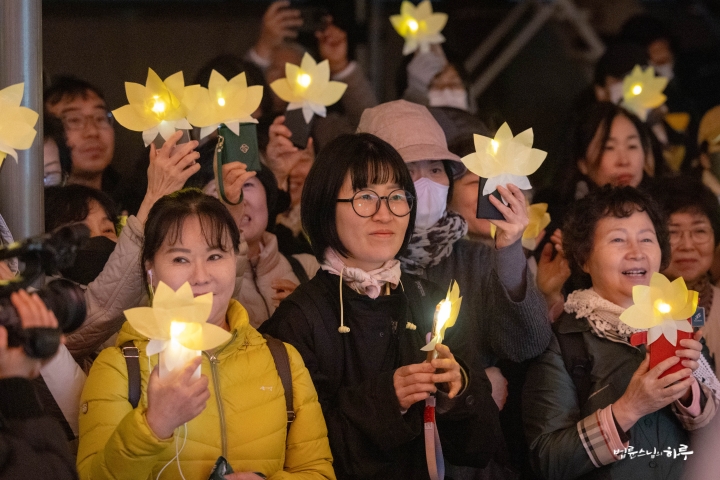
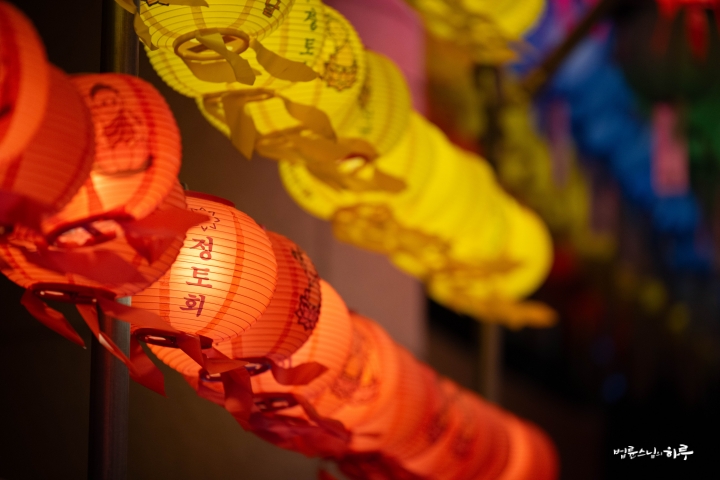
After reciting the Four Great Vows and singing the closing song together, the lantern lighting ceremony for Buddha’s Birthday in the Buddhist year 2569 came to an end.
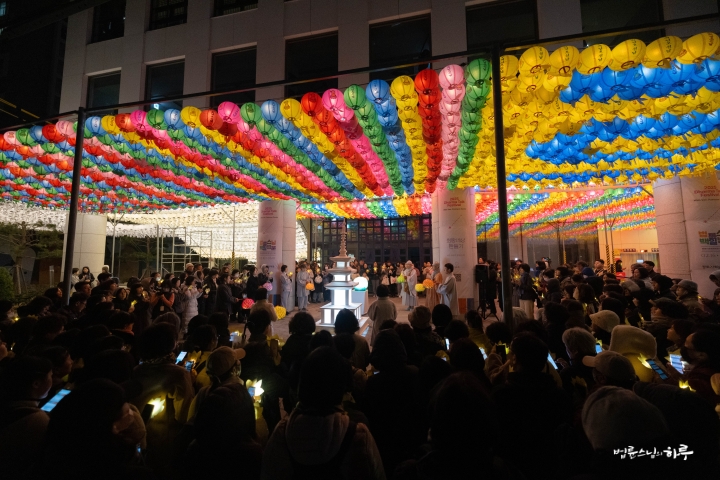
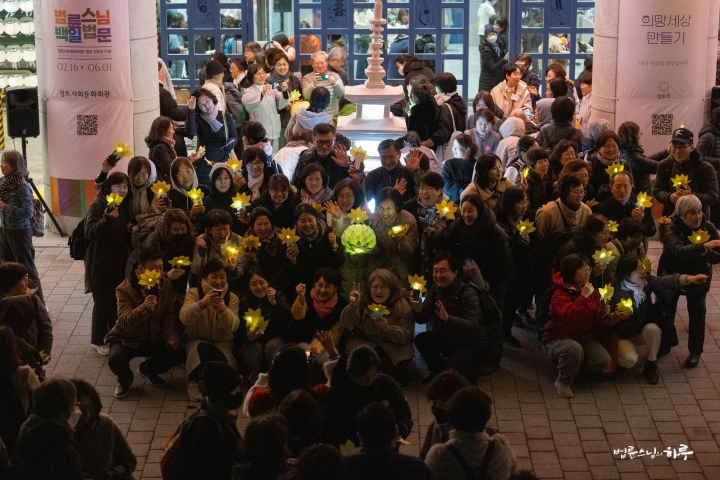
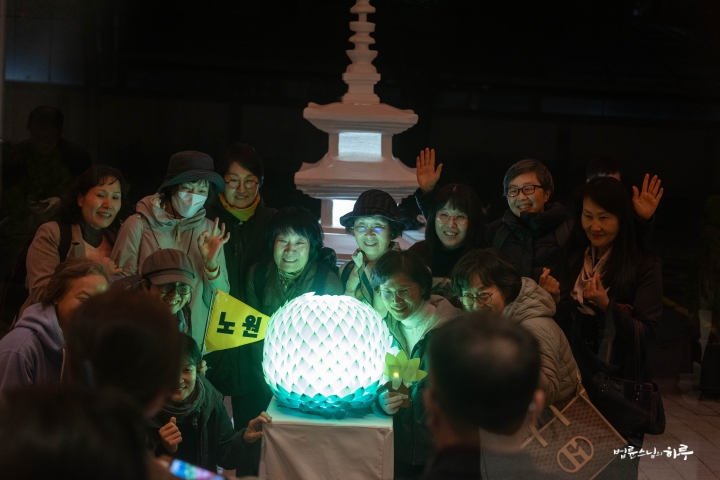
Under the lantern lights, members of the Sangha gathered in small groups to take commemorative photos, each inscribing their personal vows in their hearts.
Tomorrow will be the 57th day of the 100-Day Dharma Talk. In the morning, Sunim will give the 11th Sutra lecture at the Dharma Hall on the 3rd floor of the Jungto Social and Cultural Center, and in the evening, he will conduct the 11th Buddhist Social Studies Course lecture in the main auditorium in the basement.