My Husband Gives Too Much Financial Support to His Parents, and It Upsets Me
April 11, 2025 - 54th Day of the 100-Day Dharma Talk, Friday Dharma Q&A
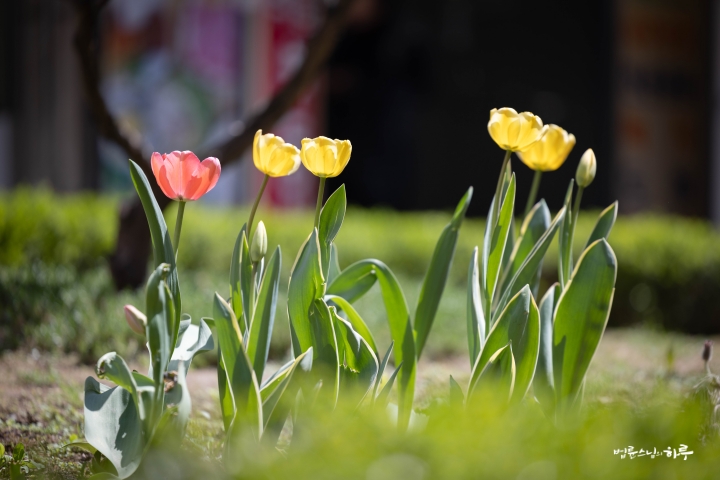
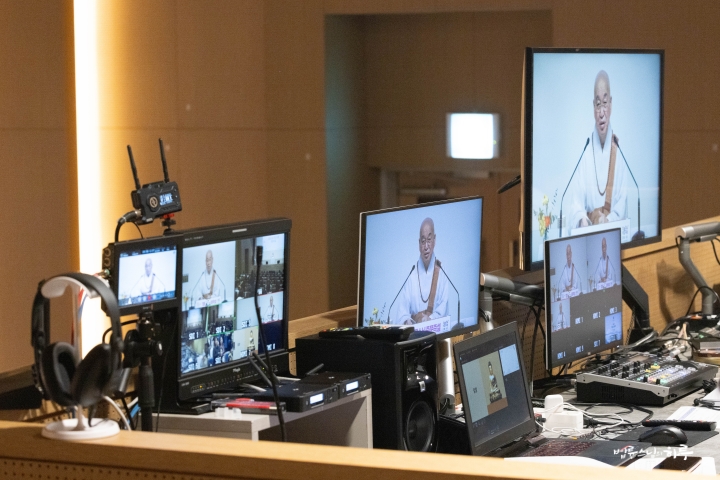
After completing his morning practice and meditation, Sunim headed to the Jungto Social and Cultural Center to conduct the Friday Dharma Q&A. Early in the morning, volunteers were already welcoming citizens who had come to attend the session.

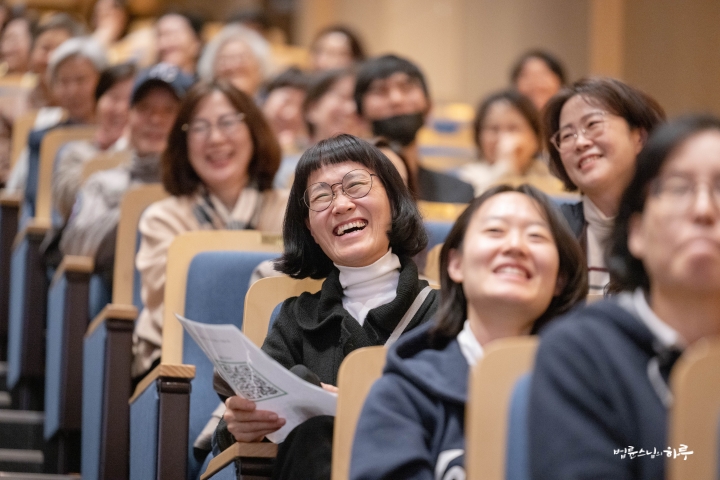
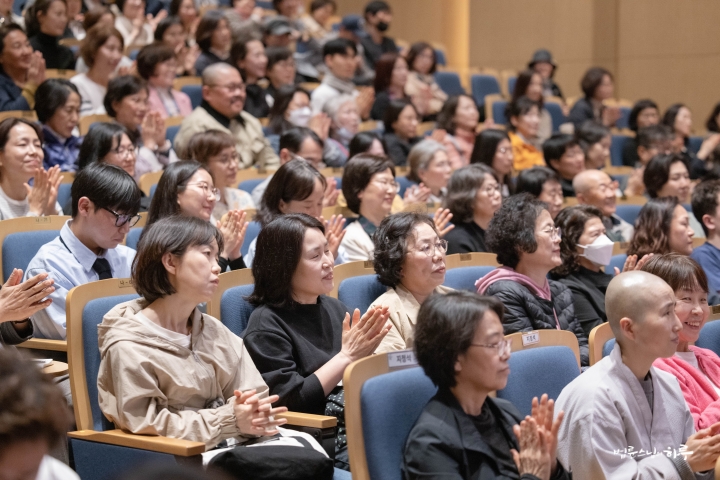
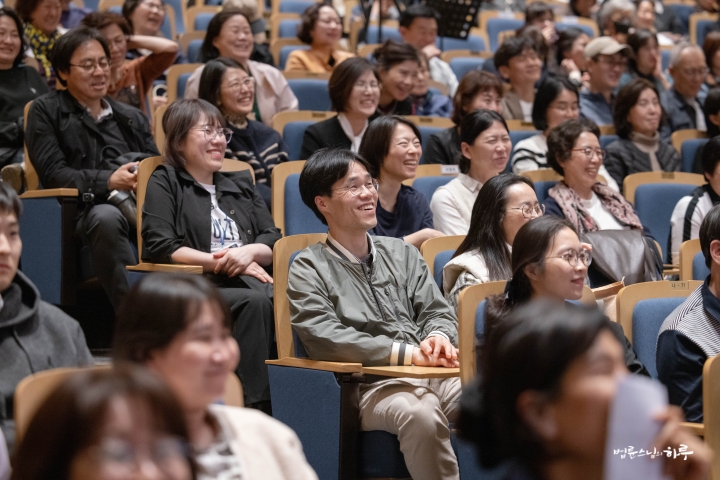
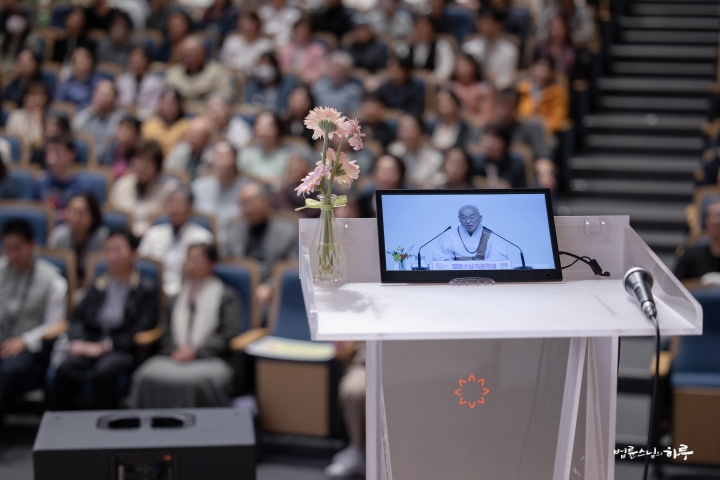
At 10:15 AM, with about 260 people in attendance, the Friday Dharma Q&A began with the recitation of the Three Refuges and Words for Practice. Approximately 3,400 people were connected to the YouTube live stream.
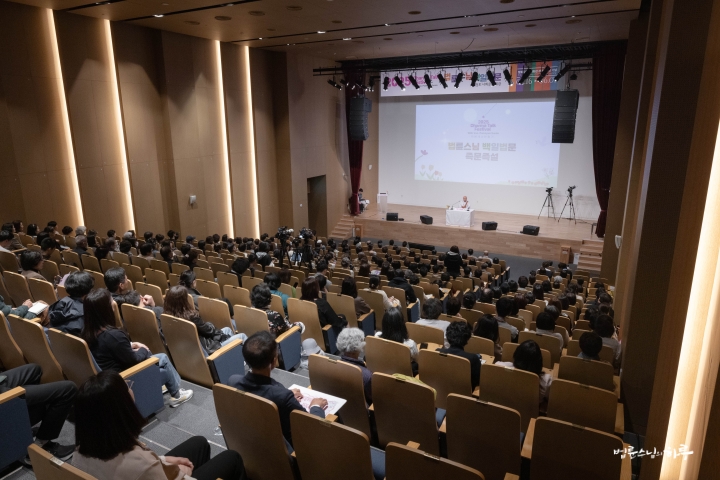
Sunim briefly explained the purpose and format of the Dharma Q&A before starting the session.
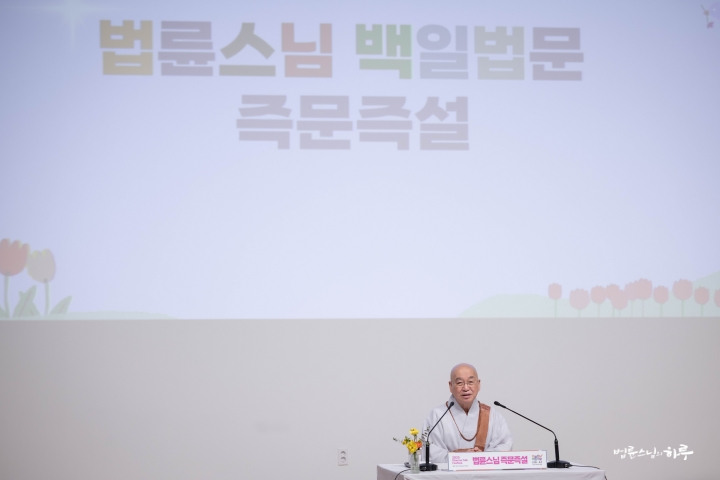
During the hour and a half session, eight people raised their hands to ask Sunim questions. One person sought advice on how to manage feelings of jealousy about her husband providing too much financial assistance to his parents.
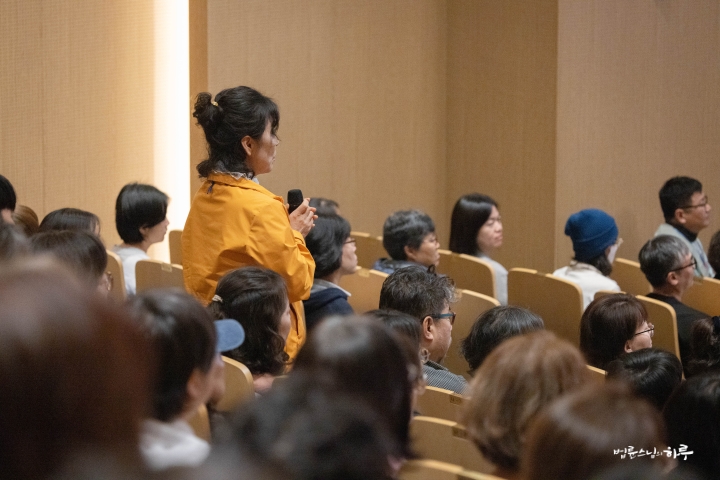
My Husband Gives Too Much Financial Support to His Parents, and It Upsets Me
“I’ve been feeling troubled, upset, and angry these past few days. My husband is pouring his heart into supporting his parents, not just financially but with his whole devotion, and seeing this makes me jealous and upset. After living together for thirty years, I feel wronged. Recently, there was a wildfire, and although their house didn’t burn down, their farming equipment did. When I saw my husband’s face after hearing about it, I could tell he really wanted to help them. He wanted to provide financial support, but initially, I ignored his feelings. I thought we would just bring them medicine and help clean up their house, but seeing my husband’s face I had no choice but to agree with my husband, so I eventually suggested helping them a little. He was delighted and mentioned an amount larger than what I had suggested. Instead of feeling relieved after helping them, I feel bad. I keep thinking, ‘How long do we have to keep doing this?’ My husband will continue to be this way. He has never changed, and I know he won’t change in the future. But when I face these situations, I feel upset and samll minded again, and I feel wronged. I want to know how to control my mind”
“Has the questioner ever gone hungry, been unable to buy a house, or been unable to educate your children because your husband helped his parents? Have you suffered any decisive loss like that?”“No, I haven’t.”
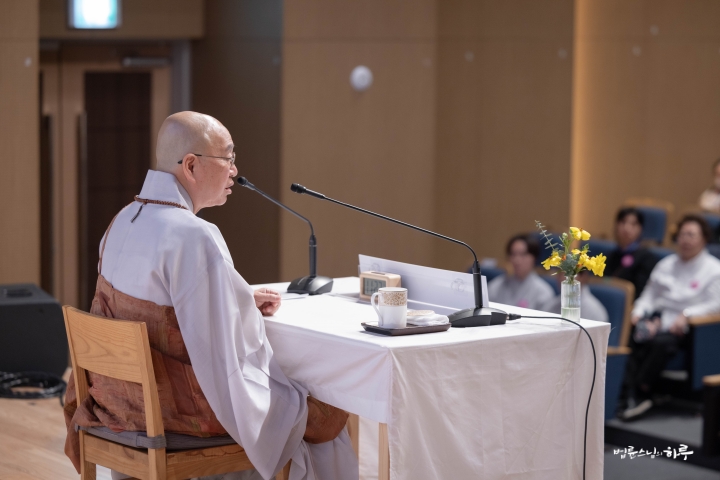
“I’ve tried that, but it doesn’t work well.”
“I go to a temple.”
“Yes, I’ll try it about ten times as you suggested.”
“If you still feel uncomfortable after trying it ten times, come back with another question. Then I’ll give you a different prescription.”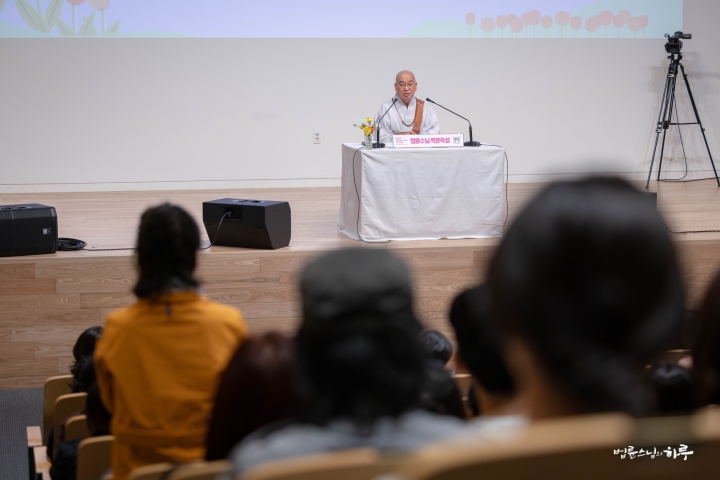
“I have one more question. We’ve been helping his parents for 30 years now. So helping them has become routine. Not just his parents but also his older brother and his wife take our help for granted. I don’t necessarily need to hear thank you, but I feel hurt sometimes.”
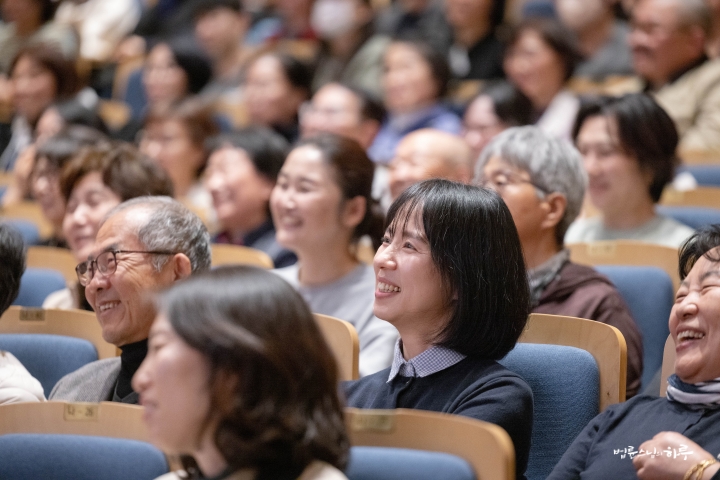
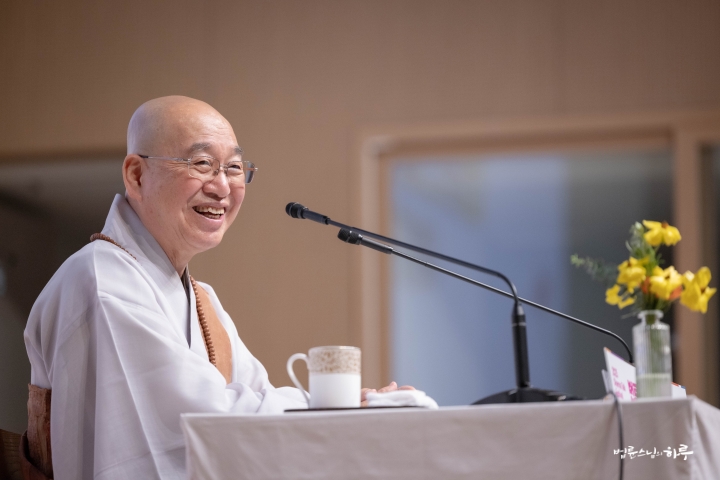
“That’s inevitable. You’ve been helping for 30 years. When people do something for a long time, it becomes routine. For example, people don’t always appreciate that I do these Dharma Q&A sessions for free. Now they just think, ‘We can go ask Sunim.’ If this were a session that cost 1 million won to attend, and I called to say, ‘Today is free for you,’ you would be very grateful. When something happens repeatedly, it becomes expected, and when it’s expected, people forget to be grateful. So being unconditionally good isn’t always the best approach. It’s natural for things to become routine. So don’t expect gratitude from your in-laws. Helping your husband’s family will only end when both parents-in-law pass away. Sibling relationships are maintained while parents are alive but definitely become distant after they pass away. That’s because the parent is the mediator in sibling relationships. So just continue a little longer. You’ve already done it for 30 years, so how about continuing until 50 years?”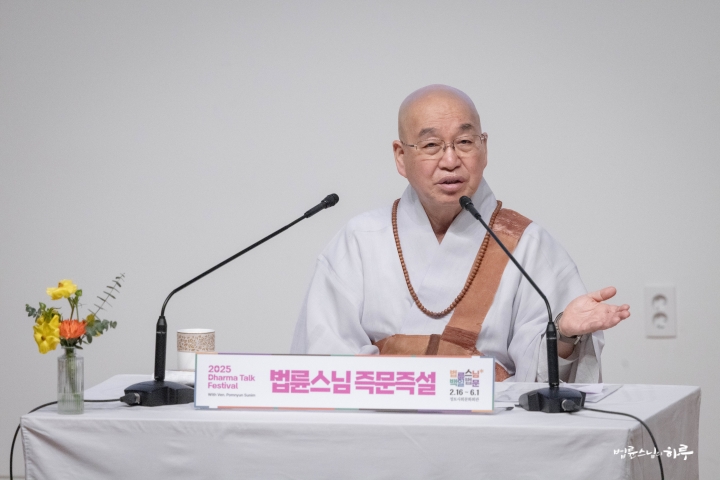
“My son is over sixty, and I want to tell my mother-in-law to stop now. She’s turning 90 this year.”
“If your mother-in-law is 90, she has at most 10 years left. Just continue for 10 more years.”“I understand. I’ll do as you suggested, Sunim.”
The questions continued.
After divorcing my husband, my son is living with his stepmother. Since returning from abroad during COVID, he stays at home, swears, and smokes. I’m very worried. What should I do?
I care deeply about animal welfare. I saw a dog guarding a field in terrible conditions, and I feel guilty for not being able to help.
I used to hate and resent my father who suffers from schizophrenia. Now he’s bedridden. How should I care for him?
I hated my mother so much as a child that I wanted to kill her. Now I’m seized with fear just seeing someone who resembles her. How can I manage these feelings?
I met a wonderful sister-like friend who helped me a lot. Recently, she was harmed by someone. How can I help her?
In the Vow of a Jungto Practitioner, what does “collapse of community” mean when diagnosing the world’s problems?
I’m listening to sutra lectures, but I don’t understand the term “ilsangmusang (一相無相)” in the Diamond Sutra. Could you explain it more clearly?
Many people raised their hands wanting to ask questions, but as it was nearly noon, Sunim concluded the lecture, promising to continue with the remaining questions at the next session.
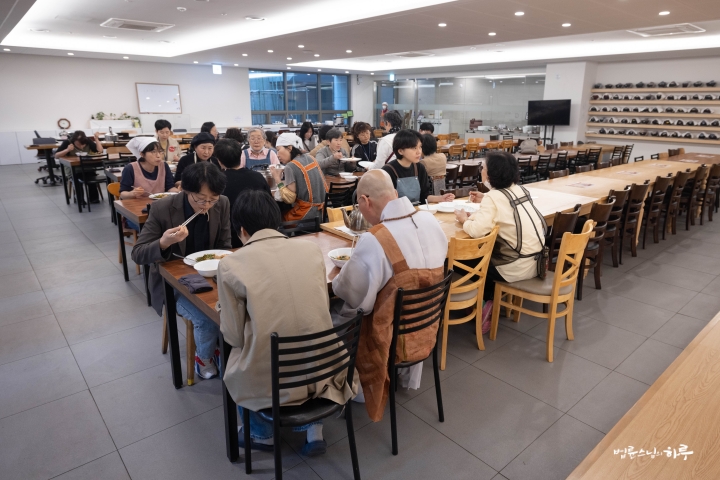
After having lunch with the Sangha in the basement dining hall, Sunim spent the afternoon organizing the office with the trainees.

As the sun set, Sunim continued with the Friday Dharma Q&A lecture at 7:30 PM in the basement auditorium. Many citizens came to the Jungto Social and Cultural Center to attend. They registered on-site or submitted their questions before heading to the basement auditorium with light steps.

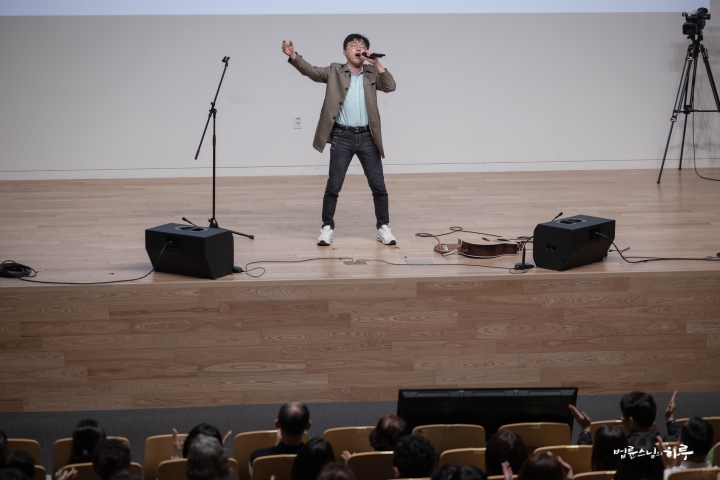
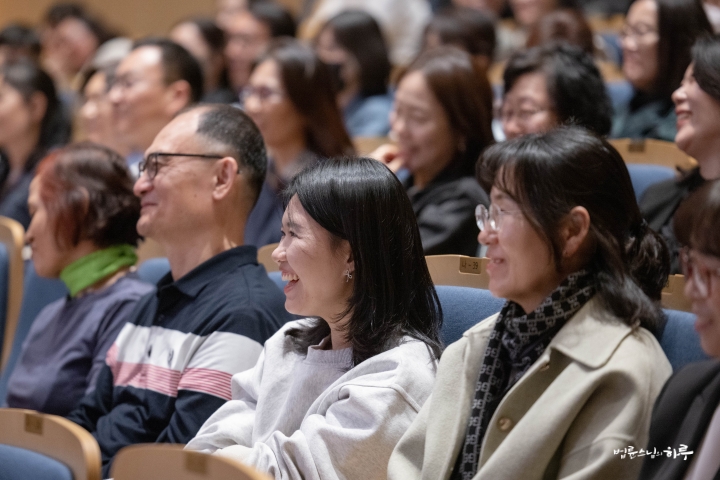
With about 5,000 people connected via YouTube and 210 people present at the venue, the Friday Dharma Q&A began with a performance by singer Seong-guk.
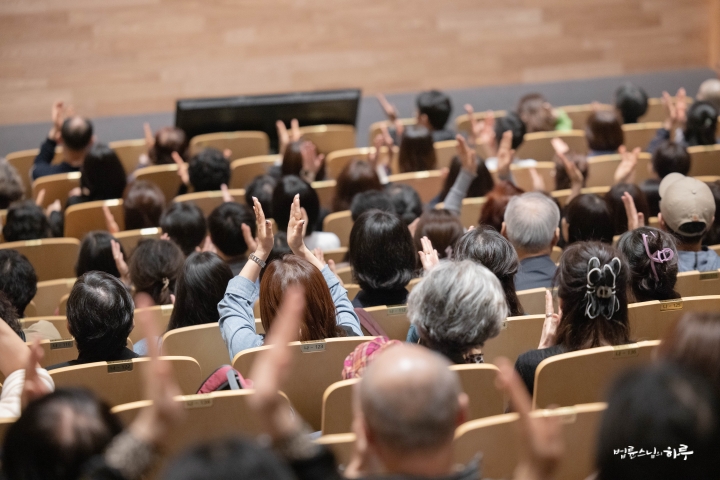
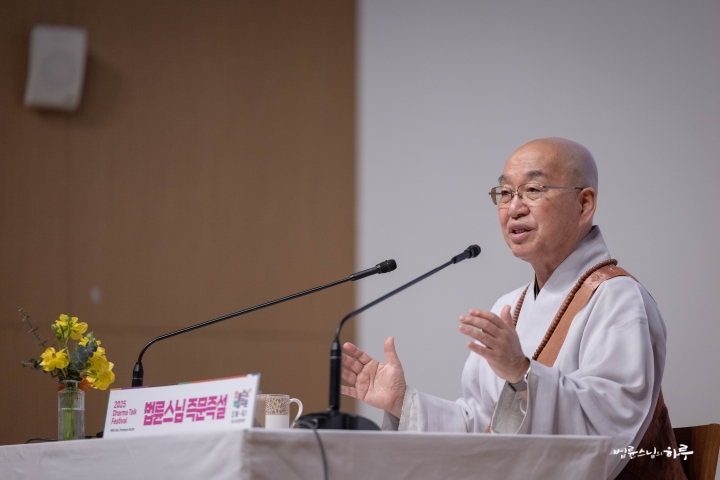
After reciting the Three Refuges and Words for Practice, Sunim took the stage.
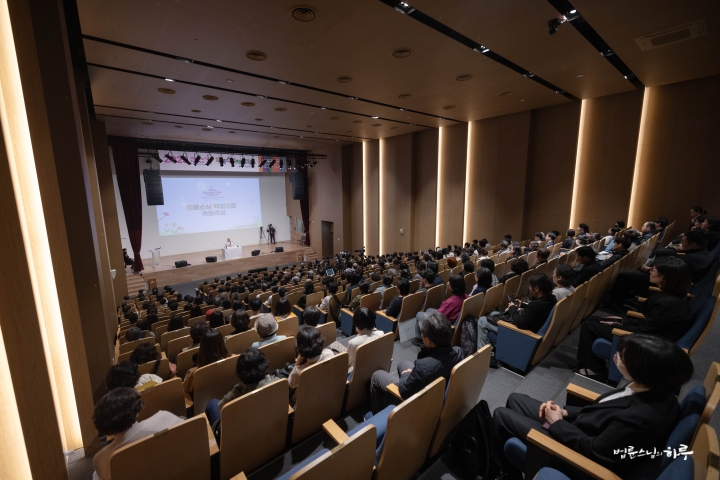
Over the course of an hour and a half, six people raised their hands to engage in conversation with Sunim. One person sought advice on how to become mentally stronger, explaining that their sensitive nature made forming relationships difficult.
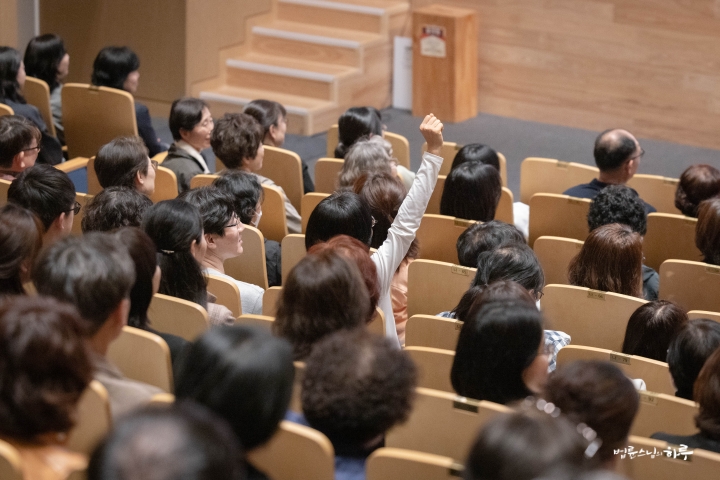
My Sensitive Nature Makes Meeting People Uncomfortable
“I’m very sensitive emotionally—I cry easily and laugh easily too. This has caused problems in my professional life. Because I’m so sensitive, meeting many people is uncomfortable for me. I react sensitively to everything, which seems to limit my social activities. Sunim, you meet politicians and many other people—I wonder how you can listen to their opinions even when facing criticism or arguments. I’m too emotionally fragile and easily hurt, which makes it difficult to expand my relationships. How can I become mentally stronger? I cry so easily.” 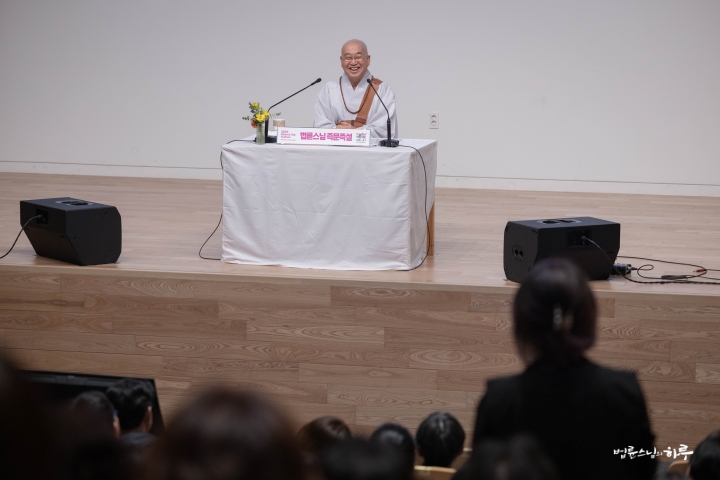
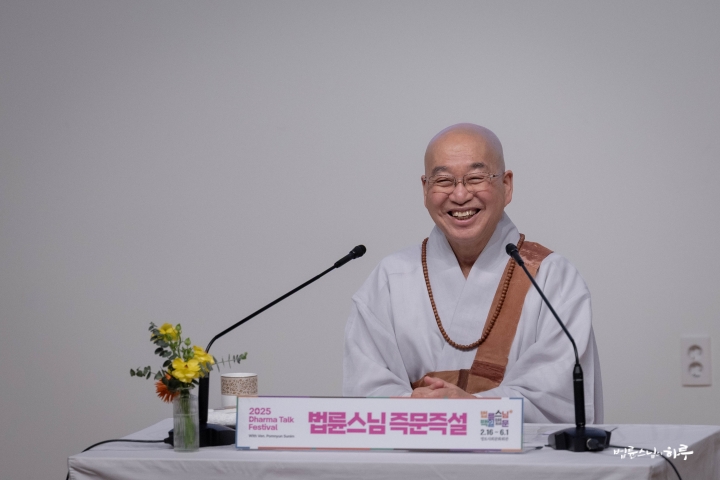
“How can I strengthen my mind? Is there a method?”
“Just as you need hard training to strengthen your body, you need mental training to strengthen your mind. To strengthen your legs, you run with sandbags; to strengthen your arms, you lift weights. Similarly, to strengthen your mind, you should live with someone who insults or mistreats you. If you endure it, you become stronger. If you live with someone who curses at you every day, you’ll eventually be able to withstand most insults. If you live with someone who constantly asks you to run errands, you’ll find it less burdensome when others ask you to do things. That’s how you become stronger.”“I’ve experienced such insults before, but I collapsed immediately and found it difficult to get back up.”
“What if I keep enduring it but eventually collapse because I can’t bear it anymore?”
“Then you can stop.”“So should I just give up and live with it?”
“Wanting to achieve something without being willing to practice for it is greed. You’re constantly being greedy instead of living with what you have. How are you tender-hearted? A truly tender-hearted person wouldn’t persistently question like this, asking again and again even after I’ve answered. A tender-hearted person would be too shy to speak up. So what you’re saying doesn’t make sense.” (laughs)“Yes, I understand. Thank you.”
The questions continued.
I’m divorced with a child and experiencing psychological stress while dating a new girlfriend. What mindset should I have?
Since Jungto Society transitioned online, I’ve noticed conflicts between the online and offline generations. What are your thoughts on this?
I’ve been going to a temple for 30 years, but the monks there frequently suggest I become ordained, which makes me uncomfortable and avoid going. What should I do?
Buddhism says there’s no right or wrong, but I don’t understand this. If someone breaks my leg, aren’t they doing something wrong?
How can I listen attentively to others like you do, Sunim? When I listen to others, I tend to start talking about myself.
I’m generally sensitive and feel a lot of guilt. What should I do when I feel guilty?
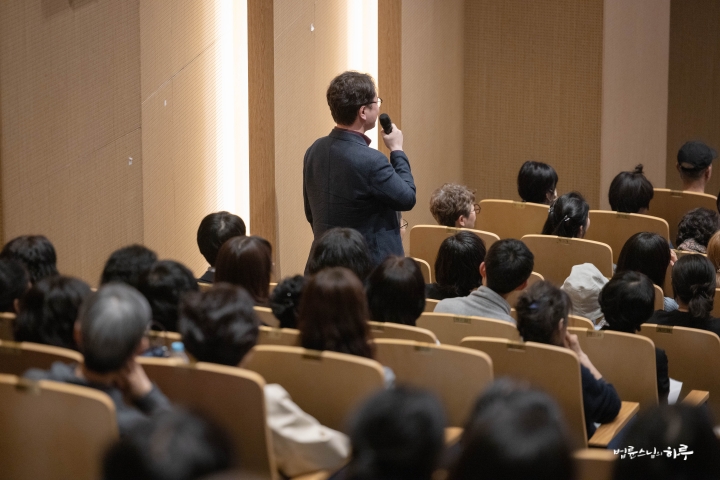
By the time the conversation ended, it was past 9 PM. Sunim concluded the talk with the Four Great Vows, promising to meet again at the same time next week.
After leaving the Jungto Social and Cultural Center, Sunim immediately departed for Dubuk Jungto Retreat Center. After driving on the highway for 3 hours and 30 minutes, he arrived at Dubuk Retreat Center at 12:45 AM, concluding his day.

Tomorrow, Sunim plans to spend the entire day farming at Dubuk Retreat Center.