President’s Impeachment Should Not Be Repeated
Apr 4, 2025 - Day 47 of 100-Day Dharma Talk, Friday Dharma Q&A
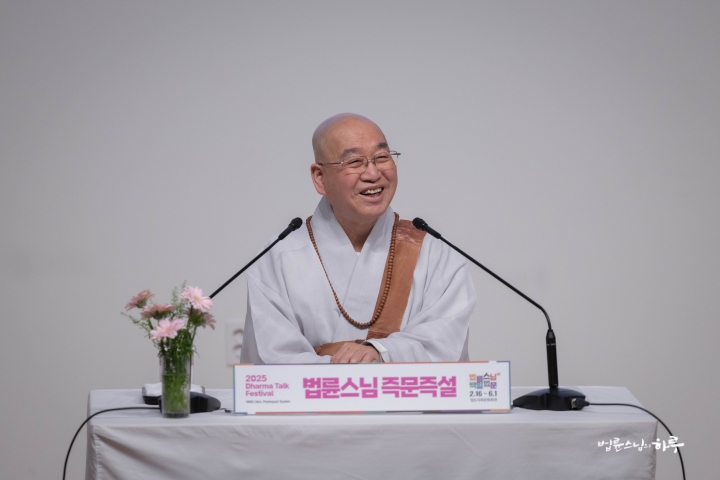
Hello. Today is the 47th day of Venerable Pomnyun Sunim’s 100-Day Dharma Talk. Today features a Friday Dharma Q&A session open to the general public.

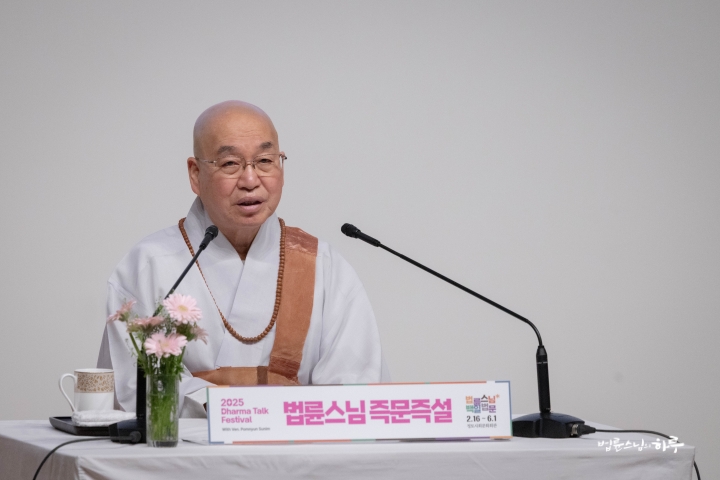
After completing his morning practice and meditation, Sunim headed to the Jungto Social and Cultural Center to conduct the Friday Dharma Q&A session. Early in the morning, volunteers were already welcoming citizens who had come to attend the Q&A.

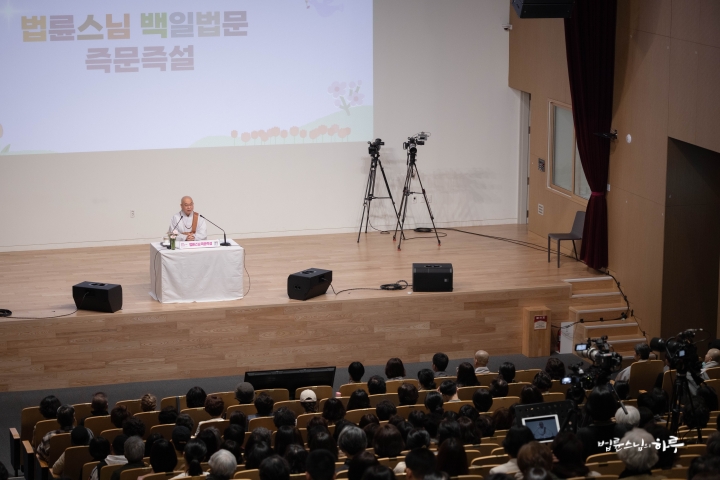
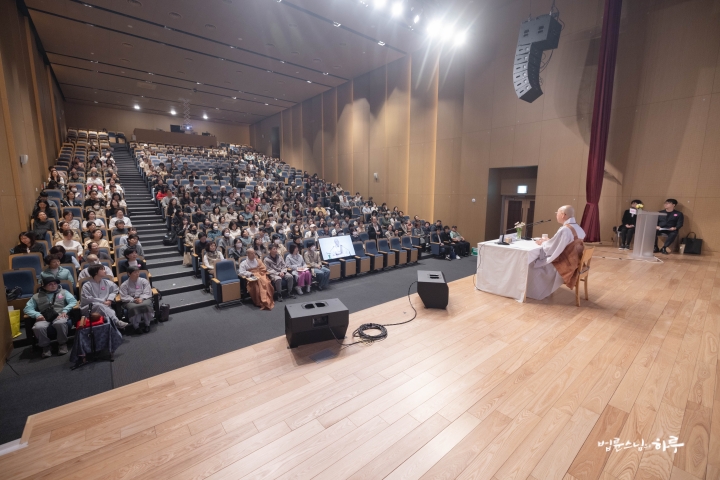
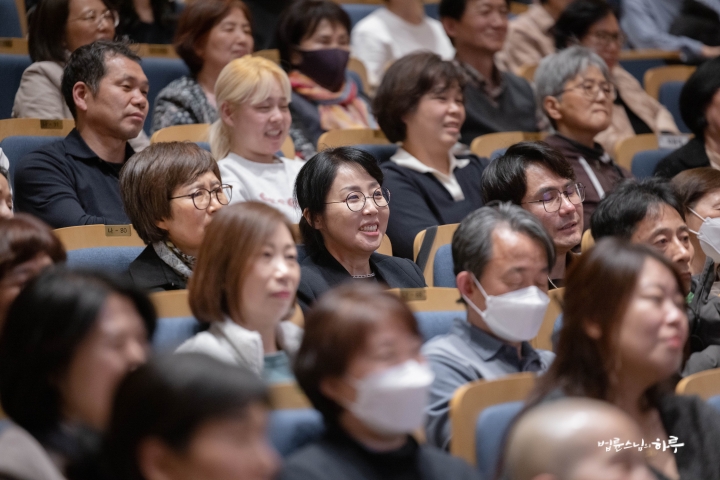
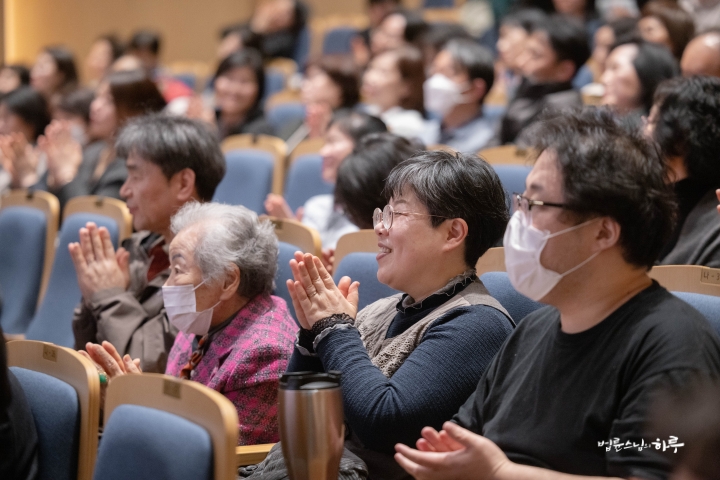
At 10:15 AM, with about 220 people in attendance, the Friday Dharma Q&A session began with the recitation of the Three Refuges and Words for Practice. Approximately 2,300 people were connected to the YouTube livestream.
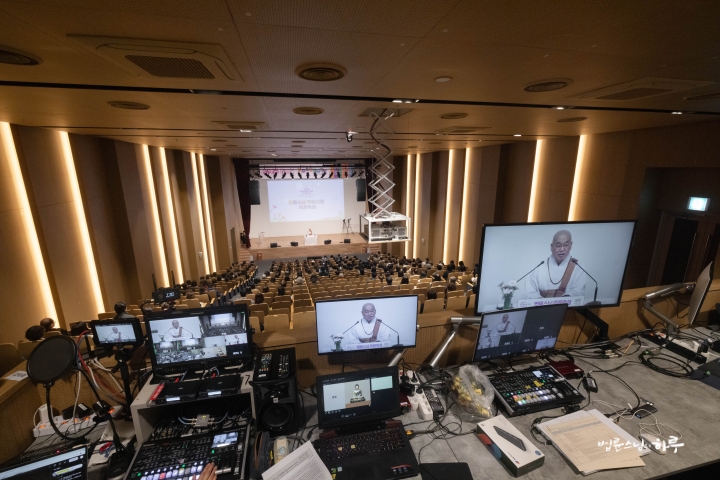
Sunim explained the purpose and format of the Dharma Q&A before promptly beginning the session. During the 90-minute session, five people raised their hands to ask questions. One person sought Sunim’s advice about her husband who wants to quit his job due to stress but continues to overwork himself for the sake of his family.
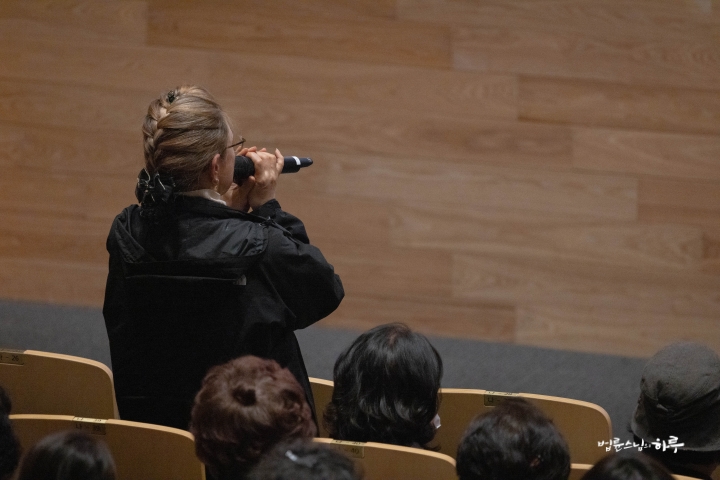
It’s painful to see my husband struggling at work
My suffering began about eight months ago when my husband said he wanted to quit his job. After seeking various counseling and asking questions, I came to the conclusion that the problem wasn’t my husband but my own mind. The reason my husband hasn’t quit his job for eight months is ultimately because of me, our children, and our family. Although I tell him ‘it’s okay to quit,’ he still can’t make a decision, and that continues to weigh on my mind and cause me suffering. Having worked at the same company for over 20 years with a high salary, he seems to feel enslaved by that income. His body is deteriorating and his mind is exhausted, yet he continues working without quitting. What should I do?
“Why is your husband’s work causing you suffering?”“It’s very painful for me to watch him.”
“Why don’t you just leave him be?”“My husband works from home about ten days a month, so he’s constantly at home.”
“What’s wrong with him being at home? He’s earning money while at home, so just let him be.”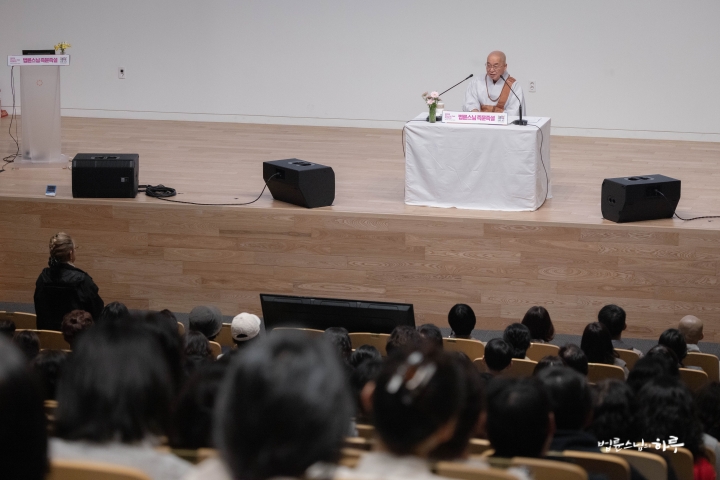
“I think I need to tell him more strongly and sincerely that ‘it’s okay to quit now,’ so that he can make up his mind and prevent his illness from getting worse.”
“Just leave him be. If he really gets so sick that he’s about to die, you can always remarry a healthy man then.” (Laughter)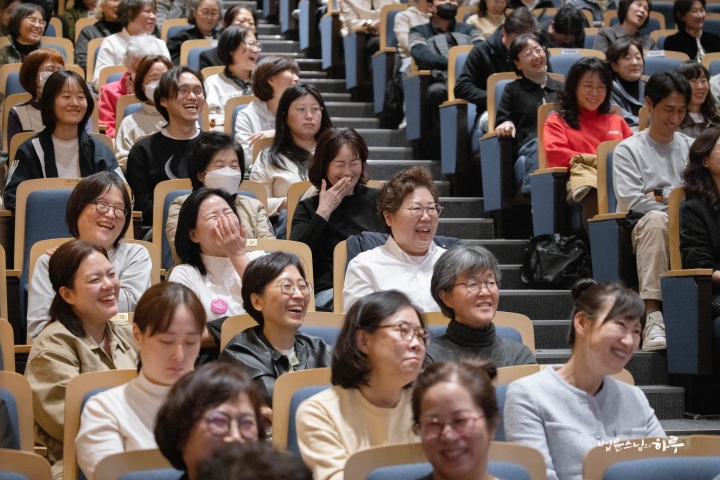
“Thank you. I understand now.”
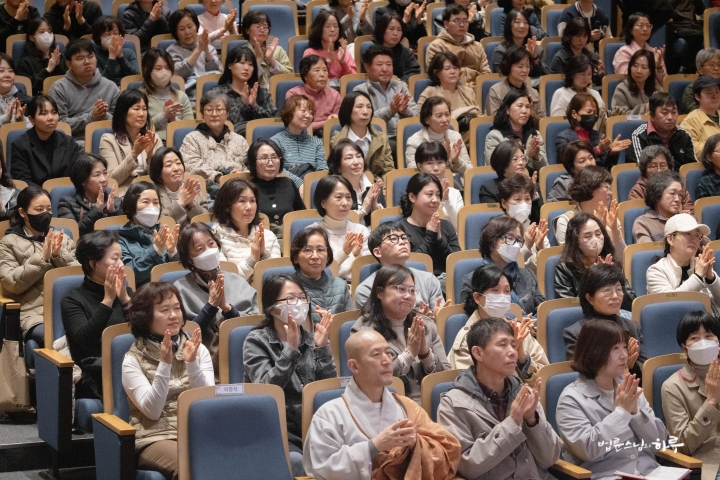
The questions continued.
I want to end my relationship with siblings who have caused me a lot of pain. I’m worried that showing this attitude will distress my mother who lives alone. What should I do?
I’m feeling desperate after severely injuring my back during interior construction work. I’m concerned about my old age as things will only get harder as I get older.
I received a suspended sentence after committing an offense while suffering from obsessive-compulsive disorder. Would using an electric shock device to punish myself when I break rules help with my treatment?
My son is 38 years old and still lives with me. He drinks until he passes out and seems to be suffering from depression. How should I view my son so that I can find peace of mind?
Many people raised their hands wanting to ask questions, but as it was approaching noon, the session ended with a promise to continue with the remaining questions at the next Dharma Q&A.

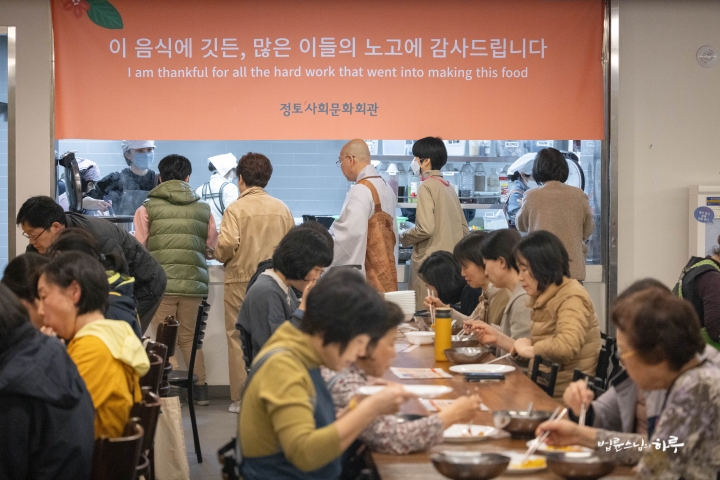
After having lunch with the Sangha in the dining hall on the first basement floor, Sunim spent the afternoon working in his office.


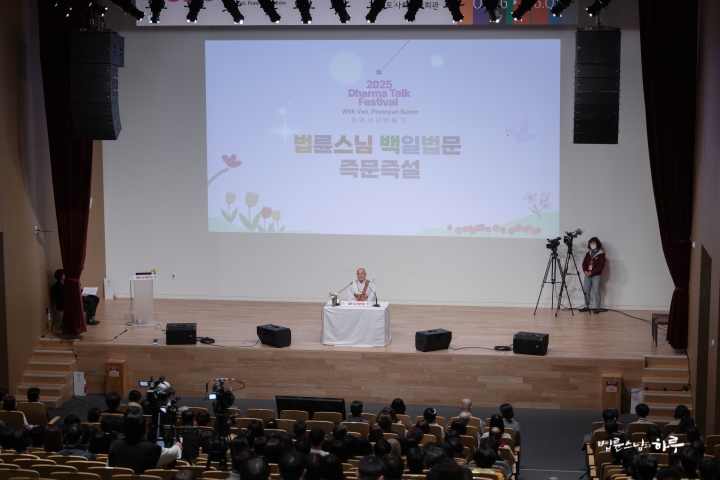
As the sun set, at 7:30 PM, Sunim continued with the Friday Dharma Q&A session in the main hall in the basement. Many citizens came to the Jungto Social and Cultural Center to attend. They registered on-site or submitted their questions before heading to the basement hall with light steps.

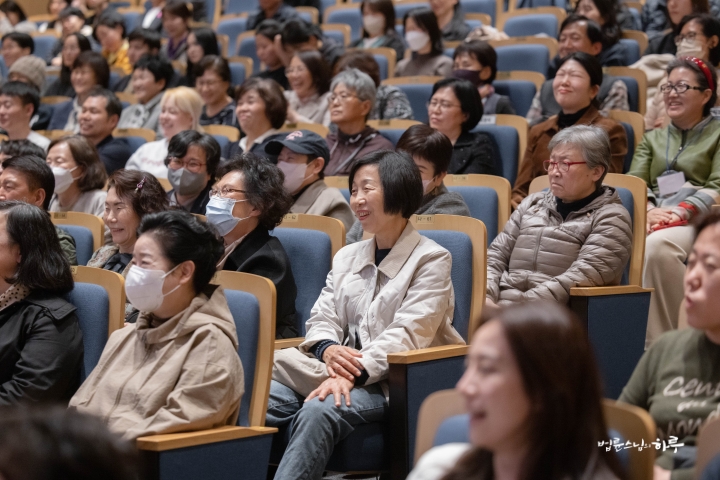
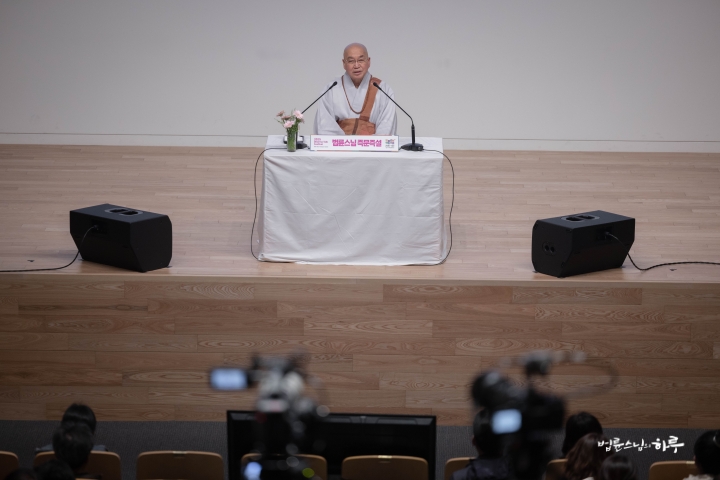
The Friday Dharma Q&A began with about 5,400 people connected via YouTube and around 100 people present at the venue. After reciting the Three Refuges and Words for Practice, Sunim took his place on the stage.
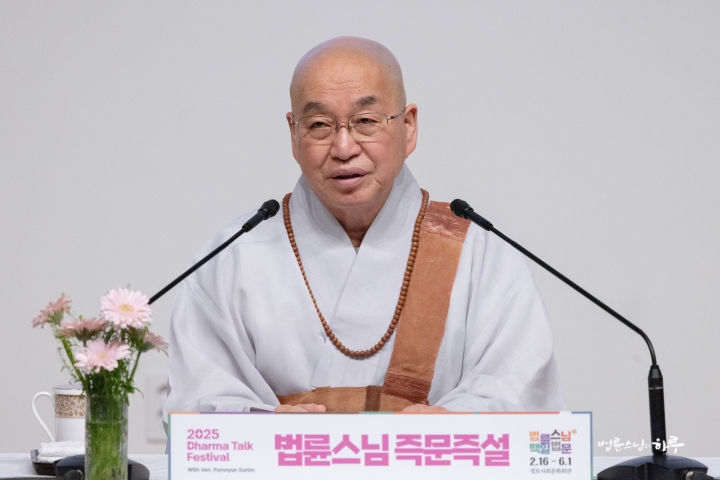
Today at around 11:22 AM, the Constitutional Court announced the impeachment of former President Yoon Suk Yeol. While President Yoon’s removal resolved the uncertainty that had weighed on Korean society for over four months since the December 3 martial law crisis, the conflict between political factions has intensified throughout the impeachment process. Sunim began his talk by discussing what perspective citizens should adopt in the current situation.
Presidential Impeachment: Why Does It Keep Happening?
But why does this happen not just once, but twice? This is because during the 1987 constitutional amendment for direct presidential elections, the focus was solely on achieving direct elections, without properly anticipating the side effects that could arise from granting excessive power to the president. The excessive power held by presidents has led to disgrace for past presidents. To prevent this from happening again, I hope all citizens will come together to implement safety measures that distribute some presidential powers to the cabinet. When power is excessively concentrated in one person, there may be benefits, but various problems are bound to occur during the five-year term. If the highest official in government bears all this responsibility, it becomes difficult to complete the term safely, and even after completing it, the pattern of imprisonment after leaving office continues. In most cases, this is evaluated as an issue of the president’s personal qualifications. Of course, there are cases where individual qualifications are lacking. However, if we say that all eight presidents lacked qualifications, this would be an insult to the citizens. It would raise the question of why citizens repeatedly elected unqualified presidents. This is tantamount to arguing that citizens don’t know how to properly exercise their sovereignty and therefore their sovereignty should be revoked. It’s easy to blame individuals, but this also places responsibility on all citizens. While we can question individual qualifications, if the same issues keep recurring, we must also acknowledge that there’s a problem with the excessive power granted to the president.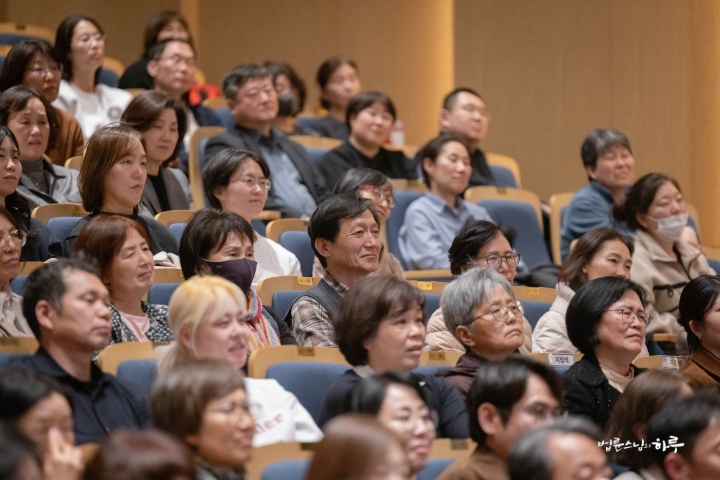
Rather Than Resolving Everything Through Law, We Should Honor the Will of the People
If someone is celebrating and cheering because the side they support won in court, that person can only see one perspective. Politics isn’t something judges should do. Politics should follow the will of the people. Legal judgments are only a last resort. Yet nowadays, our society tries to resolve everything through law. Then why do we need politics? We would only need laws. More important than “whether something complies with the law or not” is “whether citizens want it or not.” From this perspective, I hope politics can be restored. I hope we will see fewer cases where all matters are left to the courts.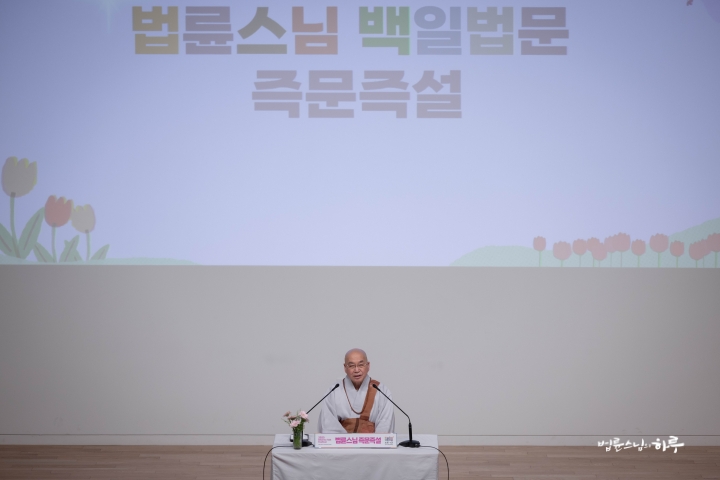
To Prevent the Recurrence of the Misfortune of Presidential Impeachment
The current election system in South Korea follows the principle of majority rule, where everything is decided by whoever receives even one more vote of support. In the current situation where progressives and conservatives are almost evenly matched, this approach ultimately becomes a game of repeated wins and losses. If emotions escalate, it could eventually lead to violence. Therefore, we should learn from this unfortunate situation and build social consensus on establishing institutional safeguards to prevent such incidents from recurring. If we just move on because we lack time, the next president will become another victim. Only then will we belatedly discuss constitutional amendments. Even if we’re busy, we should push for constitutional reform to distribute presidential powers before holding elections to prevent future misfortunes. If more consensus can be reached, we should also improve the current structure where the central government’s power is too strong and local autonomy is too weak. While the introduction of local autonomy is certainly positive, true autonomy requires the transfer of substantial authority. The central government’s powers should be transferred to regional local governments, regional powers should be transferred to basic local governments, and basic local government powers should be further transferred to the people. Currently, citizens are only the masters during elections, but for the next four years, agency heads become the masters. The country is being run in a way where the president acts like a king and agency heads act like magistrates. Strengthening local autonomy doesn’t mean local government heads should act like kings; it means citizens should have real authority in their daily lives. Whether it’s a member of the National Assembly or the president, if they do wrong during their term, we should establish a system where citizens can recall them rather than always resorting to the extreme measure of impeachment.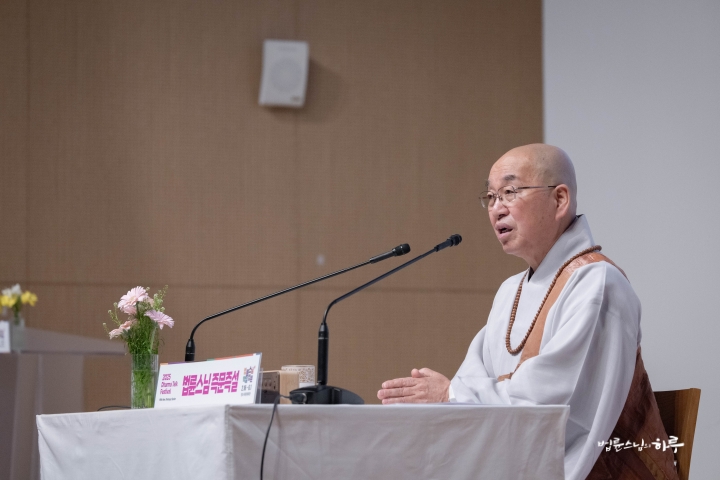
What We Need Now Is an Attitude of Reconciliation
We must all come together to ensure that the unfortunate impeachment of a sitting president never happens again in the constitutional history of the Republic of Korea. I hope people don’t view this simply as a matter of winning or losing. The current international situation is also very challenging. Trump’s tariff barriers and the hegemonic competition between the United States and China make our future uncertain. Even if we put our heads together and consult with each other, it’s unclear whether we can overcome these barriers. If we remain internally divided as we are now, our national fortune will inevitably decline. Rather than blaming this situation solely on a few leaders, I hope that you, the citizens, will adopt the right mindset as sovereign people.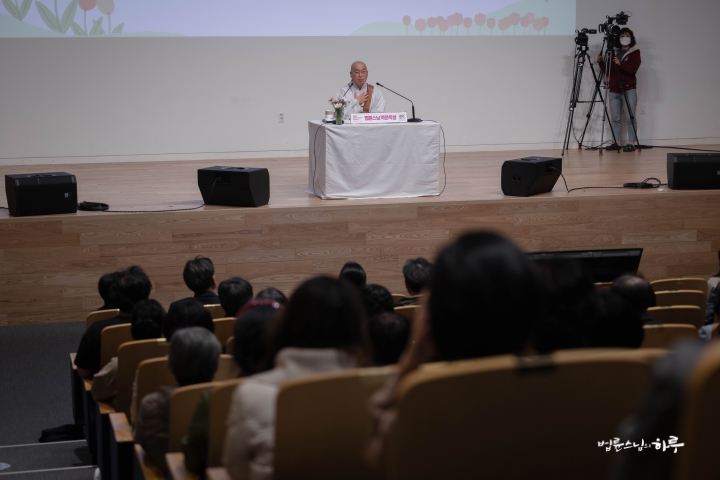
For an hour and a half, six people raised their hands to engage in conversation with Sunim. One person sought Sunim’s advice on how to manage their feelings when repeatedly experiencing unfair treatment at work.
**
I Feel Wronged Because I’m Often Treated Unfairly at Work **
I’m frequently treated unfairly at my workplace. I can’t find any reason to be grateful to the people who treat me unjustly, and I just feel wronged. What aspects of my work situation should I be grateful for?
“You should be grateful for things that deserve gratitude, but how can you be grateful for unfair treatment? Should you be grateful if someone sexually harasses you? That would be foolish. The negative effects you’re experiencing come from thinking you must be grateful for everything. Could you tell me specifically what happened to you?”“I’m a permanent employee, and there’s a contract worker in our team. Our team purchases about 9 million won worth of supplies every month or two. The contract worker buys items without consulting me first, then asks me to sign off on the purchase.”
“Then you shouldn’t sign.”“I tried that, but they insisted I sign, saying it was urgent.”
“Still, don’t sign. Tell them, ‘You made the purchase on your own, so you should report directly to the team leader. I can’t sign because I didn’t approve it.'”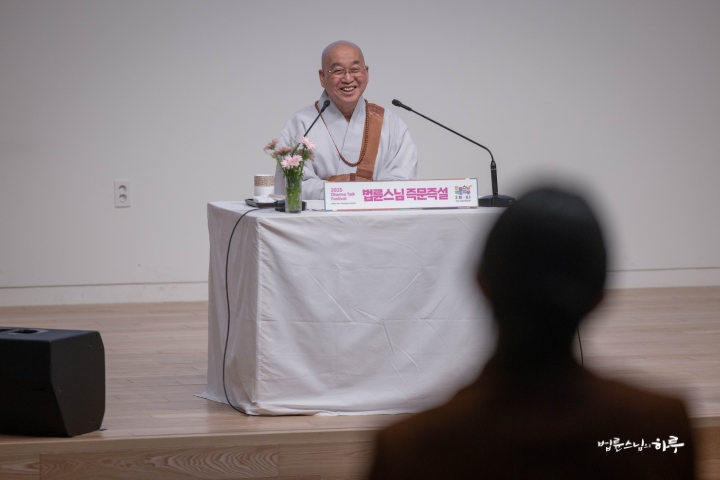
“But the team leader told me to just sign it.”
“Then sign it. It becomes the team leader’s responsibility.”“But then I end up being audited.”
“If an audit comes, just tell the truth: ‘I didn’t approve this, but I signed it because the team leader instructed me to do so.’“
“But I don’t have evidence that the team leader gave such instructions. I don’t have a recording.”
“Of course there’s no documentation for verbal instructions. Recently, there was testimony that a president called military commanders and ordered them to arrest members of the National Assembly, but the president denied it. While we can’t be 100% certain, circumstances suggest there’s some truth to it. If these incidents keep happening, keep records. Note the date, who purchased what items and for how much, that you didn’t approve it but signed because the team leader instructed you to. Whether you write it in a notebook or save it on your computer, maintain a record. Don’t worry.”“I understand.”
The questioner continued with another concern.
I’m Struggling Because My Team Leader Gives Me Too Much Work
“Another issue is that every team leader gives me too much work.”
“That’s actually a good thing.”“But I work desperately. I do a lot of overtime, and even after work, I can’t rest because work stays on my mind. I wake up suddenly at night thinking, ‘How does this work legally? What’s the basis for this?’ and so on.”
“But it’s physically exhausting. Team leaders seem to think they can naturally take advantage of me. Last year, my colleague didn’t understand the work or know how to handle administrative tasks, so I did everything. They were more than ten years my senior. This year, when my colleague changed, the team leader told me to do everything again because I was the senior staff. When I asked, ‘Last year I did everything because I was junior, but do I have to do everything this year too?’ they told me not to bring up the past. This time, even though I became the youngest, they said I should take the lead because I’m single and don’t have children. Why do all the team leaders I meet distribute work unfairly and try to overwork just me?”
“I face the same situation. For example, when I assign tasks to several staff members, some consistently complete their work properly, some never do, and others make frequent mistakes. Initially, I point out errors and ask for corrections, but over time, I learn each person’s style. After working with someone for a year, I generally understand their patterns. When there’s an urgent task, who would you assign it to?”“I don’t want to answer.” (laughs)
“Not even close.”
“I see. So your team leader’s behavior is natural. They’re definitely not trying to torment you. Rather, they trust you. While you feel exploited, from your team leader’s perspective, they have confidence that you’ll complete tasks properly.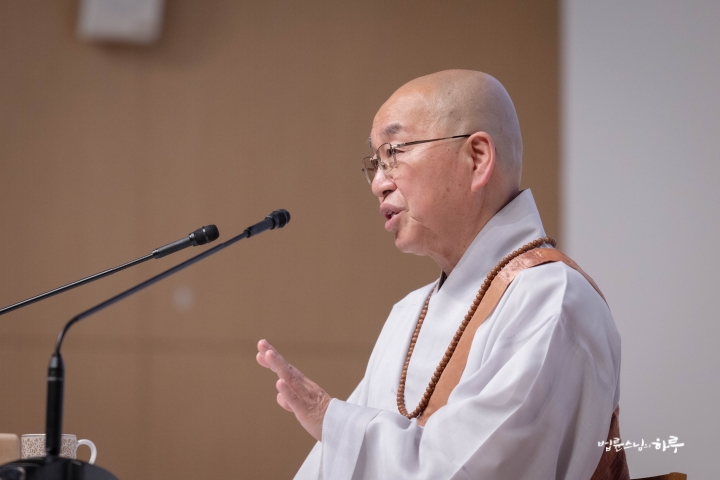
“I tried missing a deadline once, and my team leader scolded me intensely for thirty minutes. They continue to reprimand me after that.”
“If you go back to being diligent after being scolded once, they’ll keep scolding you because they’ll think, ‘This person works well when reprimanded.’ It’s like training animals with carrots and sticks—hitting them when they don’t listen and rewarding them when they do. If the other person can predict your reactions this way, you’ll be manipulated. So if you want to reduce your workload, respond with ‘I understand, I’ll work hard,’ but don’t actually do the work. When your team leader gets angry, say, ‘I’m sorry, I’ve been struggling lately.’ Even if they threaten, ‘I’ll fire you if you don’t do your job properly!’ don’t respond with defiance like, ‘Go ahead and fire me. Are there no other jobs?’ Instead, say, ‘I’m sorry. I still need to be here. Where would I go? I have nowhere else to go,’ and hold your ground. But in life, it’s actually easier to receive praise than criticism. That’s why most people live in ways that earn them praise. Even though you’re complaining now, I don’t think you’re someone who can live with being criticized. The easiest path is usually to do what you’re naturally good at.”“Thank you.”
“Thank you. After hearing that my boss might think, ‘They listen well when scolded!’ I realize I need to be more bold. I’ll either consistently perform well or adjust my workload even if it means being scolded.”
The questions continued.
My husband erupts in anger whenever I speak more than two sentences, and my daughter also gets upset when I talk, asking why I’m speaking again. It’s very difficult for me.
I confessed my feelings to someone I was interested in and was rejected. I feel ashamed. What mindset should I have when meeting new people?
I sent summary notes to help a fellow student, but ended up feeling deflated when they received a higher score than me. What criteria should I use when helping others?
I tried to do well after opening a new kindergarten, but ended up being reported for abusive behavior. I feel both wronged and embarrassed. How can I get through this period?
By the time the conversation ended, it was past 9 PM. The session concluded with the Four Great Vows, with a promise to meet again at the same time next week.
Tomorrow will be the 48th day of the 100-Day Dharma Talk. In the morning, Sunim will give a Dharma talk for participants in the 1080 Prostrations Practice, and in the afternoon, he will conduct a Dharma Q&A session for “Gilbeot,” a gathering of broadcasting, film, theater, and art professionals.