How can I overcome the suffering of losing someone I love?
Mar 30, 2025 - Farming, Planting Lettuce Seedlings
Hello everyone. Today, Sunim engaged in farming activities for the first time this spring.
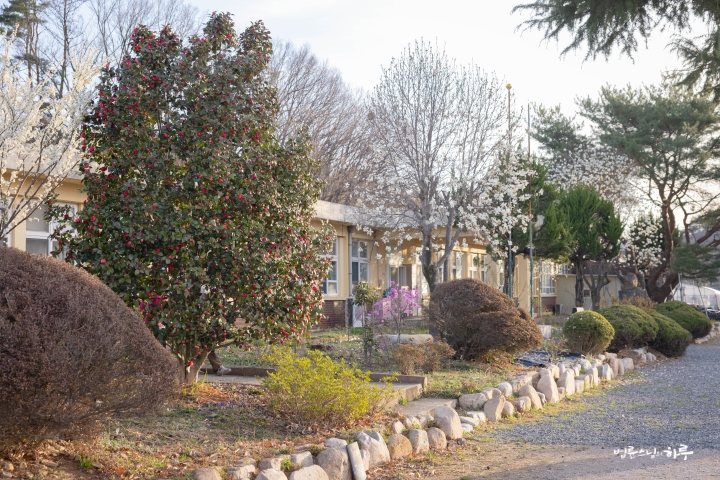
After completing his morning practice and meditation, Sunim began farming at 8 o’clock.
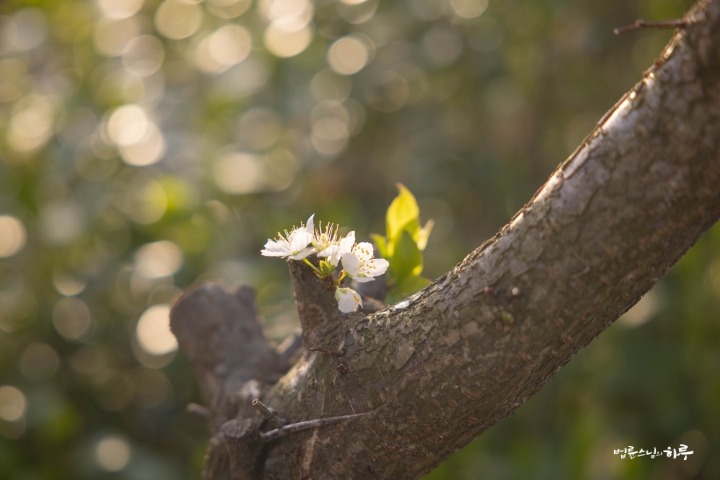
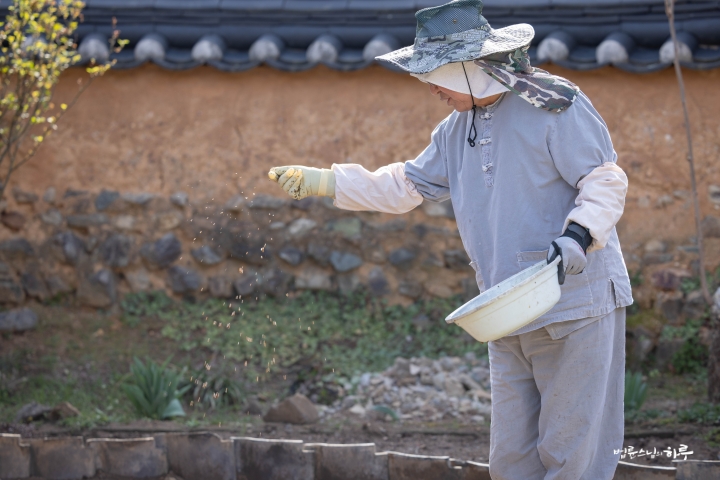
First, Sunim headed to the garden with coriander seeds that had been soaked in water the previous day. These seeds were dried and saved from coriander plants he grew last year. After thoroughly watering four spots in the garden, he scattered the seeds and lightly covered them with soil.
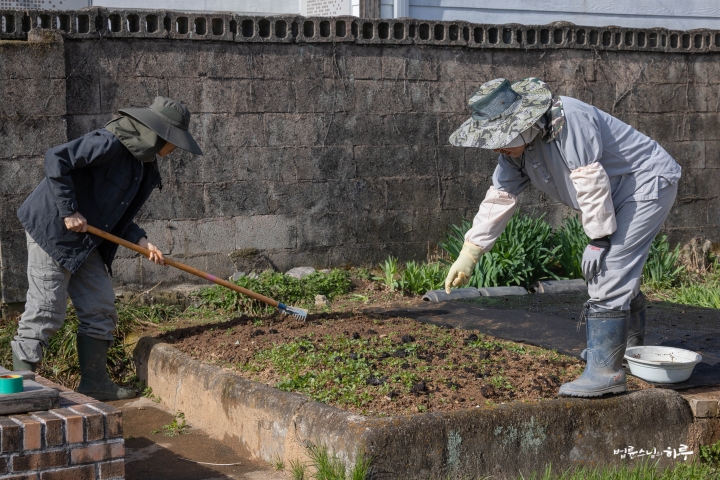
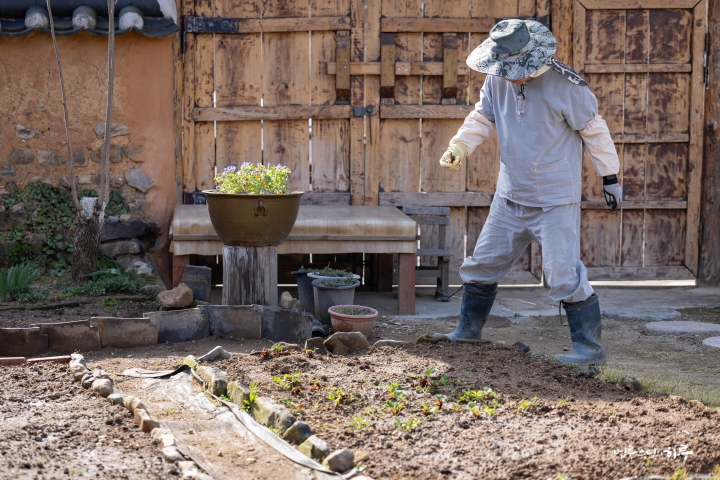
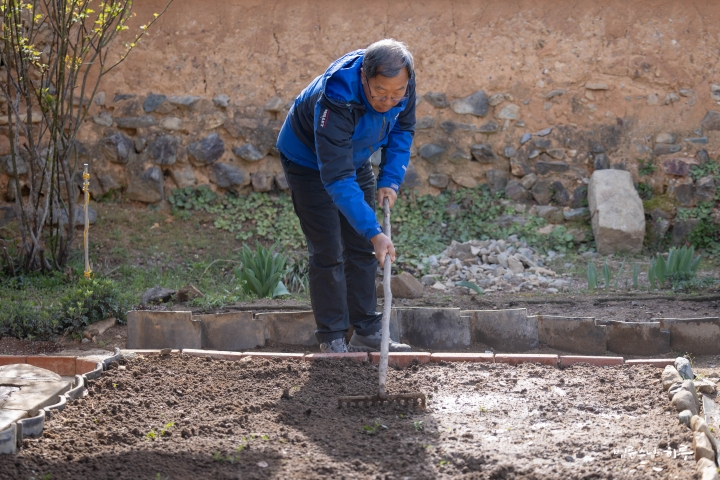
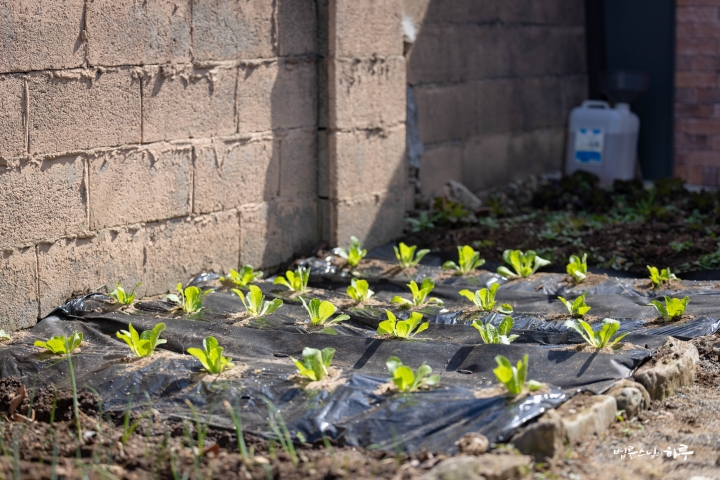
Next, Sunim began planting lettuce seedlings. He planted five different varieties of lettuce evenly throughout the garden.
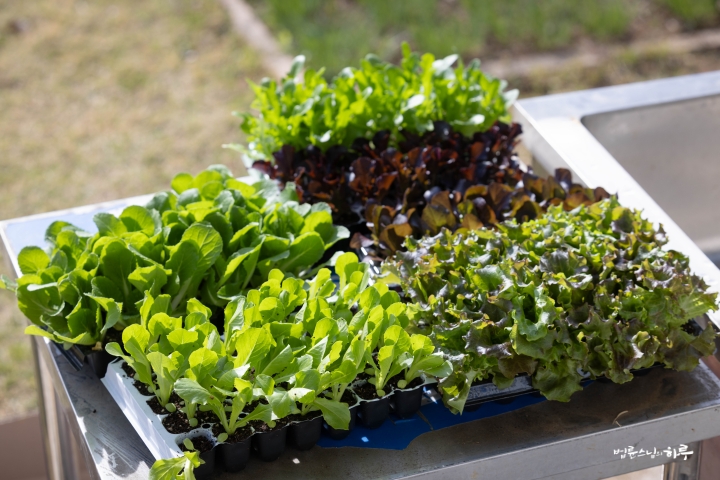
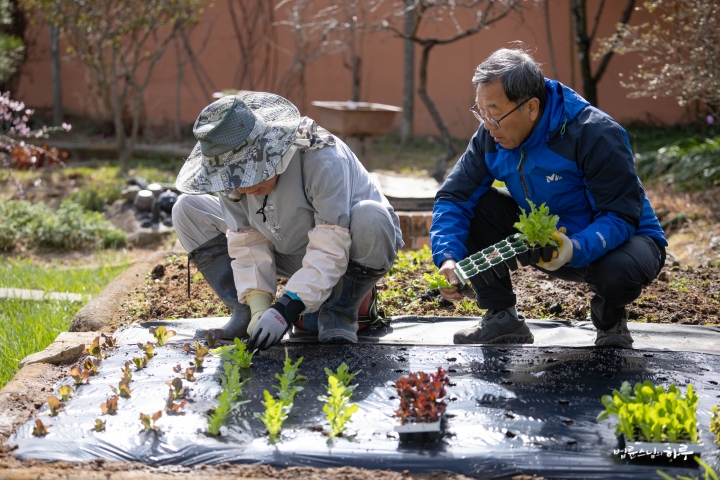
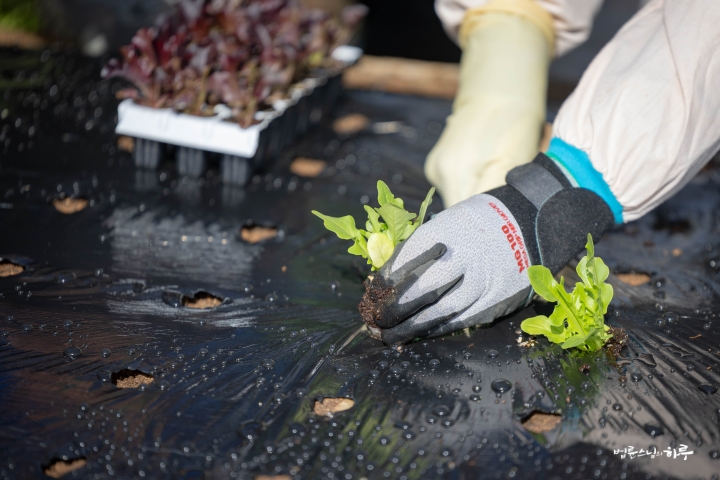
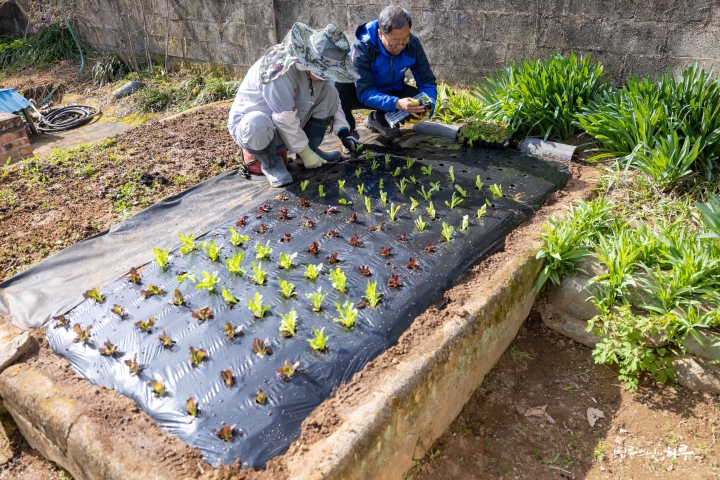
For the varieties that grow larger, Sunim planted them in another garden bed with wider spacing.
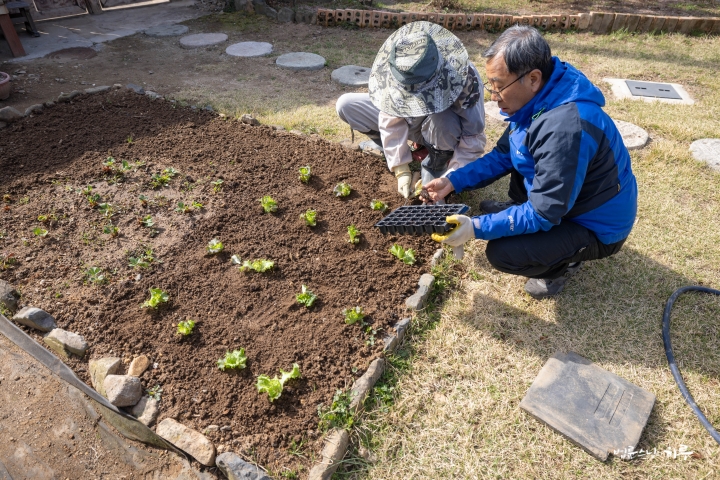
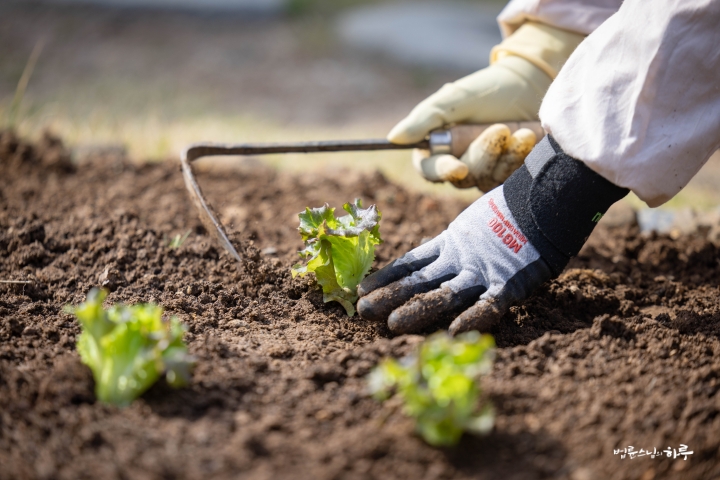
After planting all the seedlings, Sunim went to the stream to collect fine sand, which he sifted through a strainer. He gently spread this fine sand around each seedling and then gave them a generous watering.
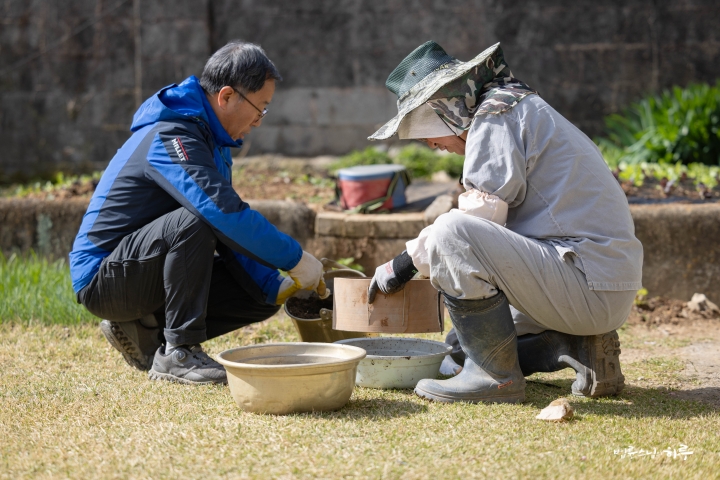
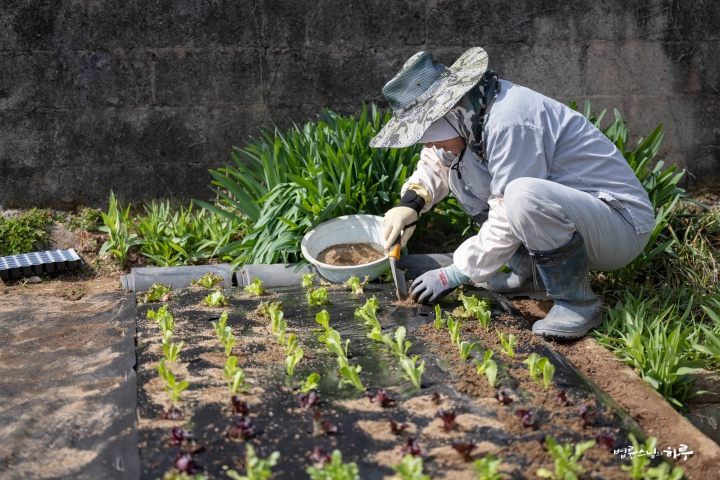
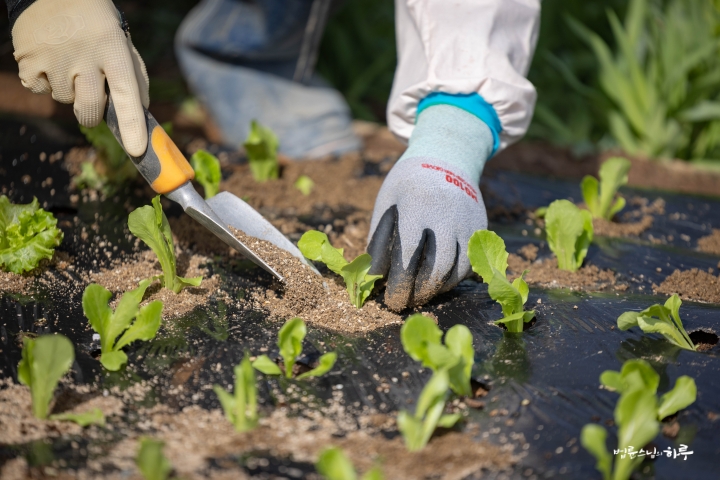
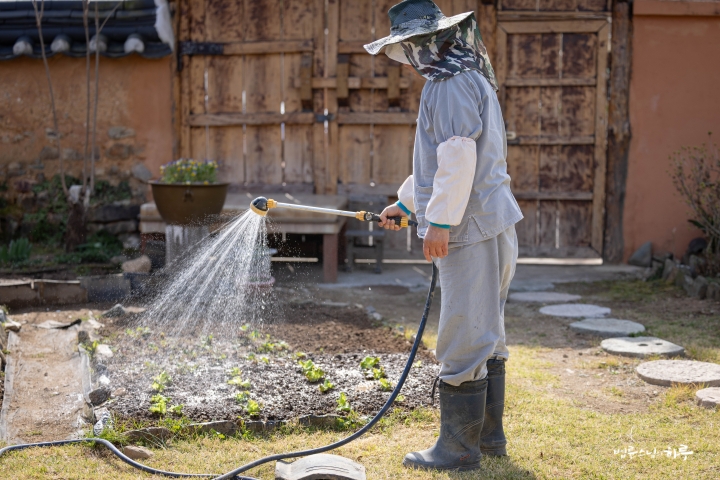
Next, Sunim visited the lettuce patch that had been planted last winter. As he sat down to weed, he realized that what appeared to be weeds from a distance were actually kale plants.
“These aren’t weeds, they’re plebeian sage!”The kale had grown naturally from seeds that had fallen from plants Sunim had grown last year, which he had planted because plebeian sage is known to be good for throat health.
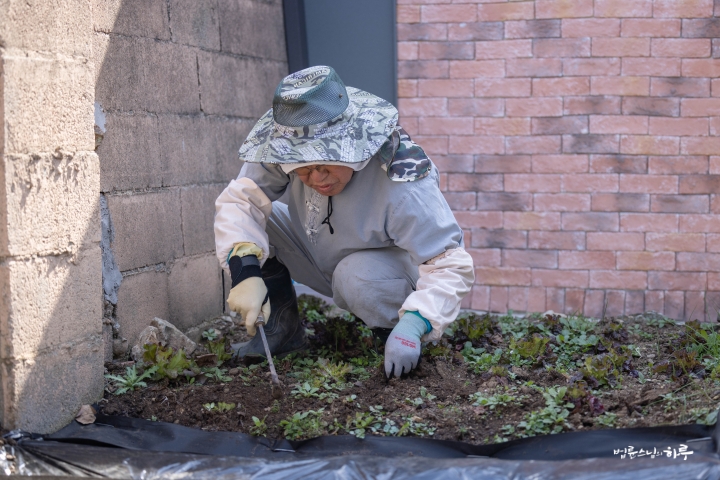
Finally, Sunim planted spring cabbage. Despite working diligently all morning, his hands became cold from the sudden drop in temperature. He warmed his hands by blowing on them as he finished planting the cabbage.
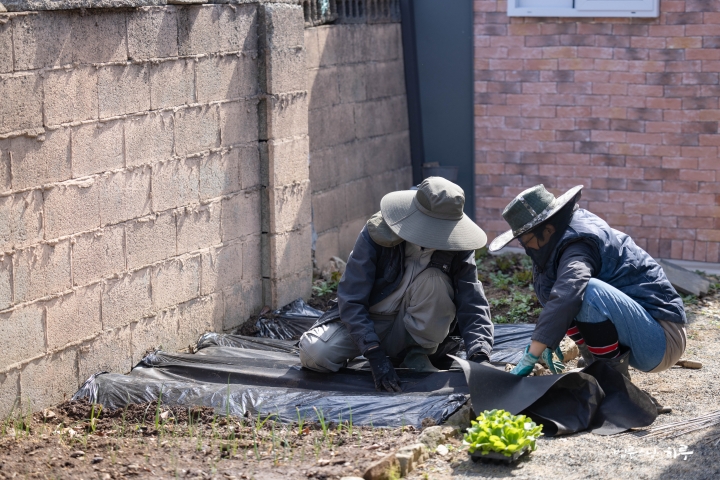
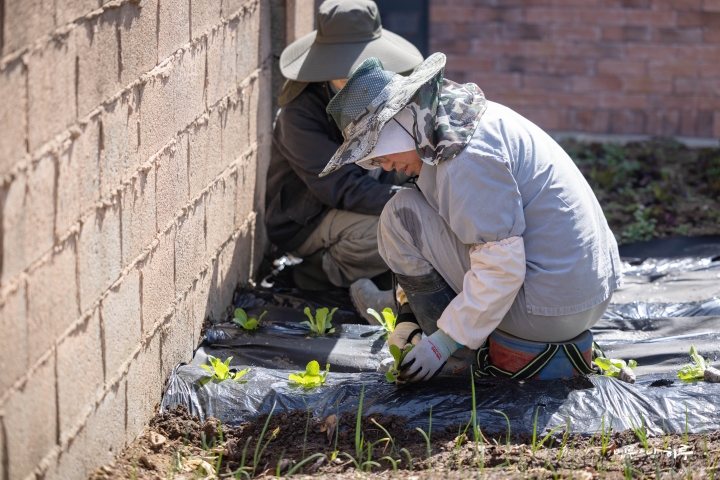
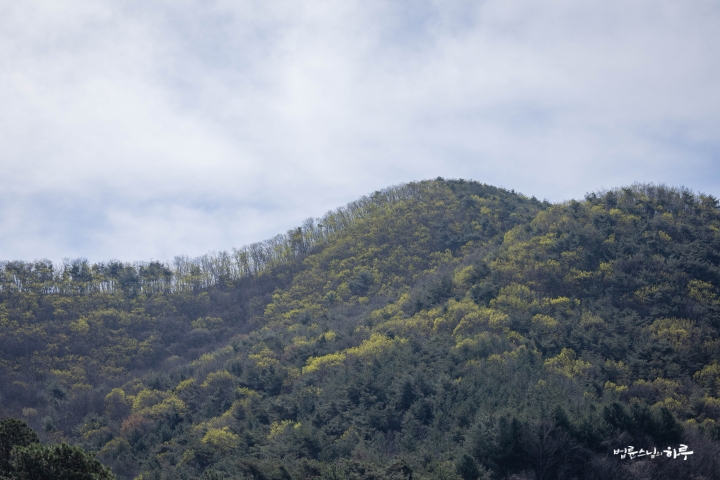
After working with his eyes on the ground for so long, Sunim looked up and was greeted by the sight of mountains turning light green.
“Wow, look at that mountain.”
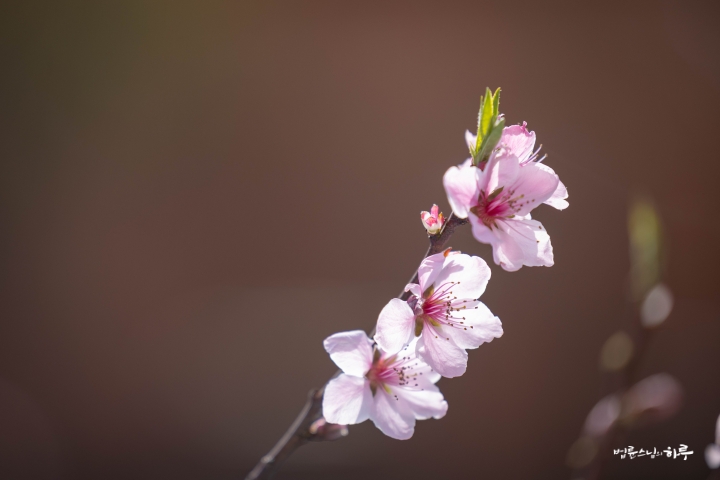
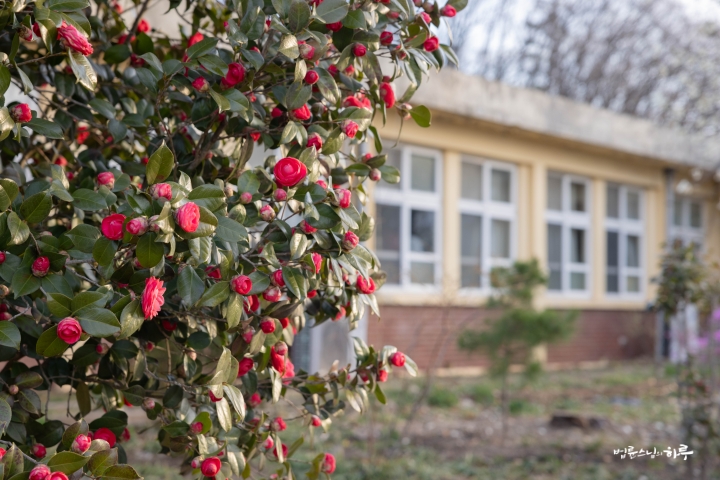
Though the wind was still cool, signs of spring were visible everywhere.
After finishing the farm work and having lunch, Sunim visited his older brother who is hospitalized after returning from the United States. After checking on his condition and exchanging greetings, Sunim returned to the Dubuk Retreat Center.
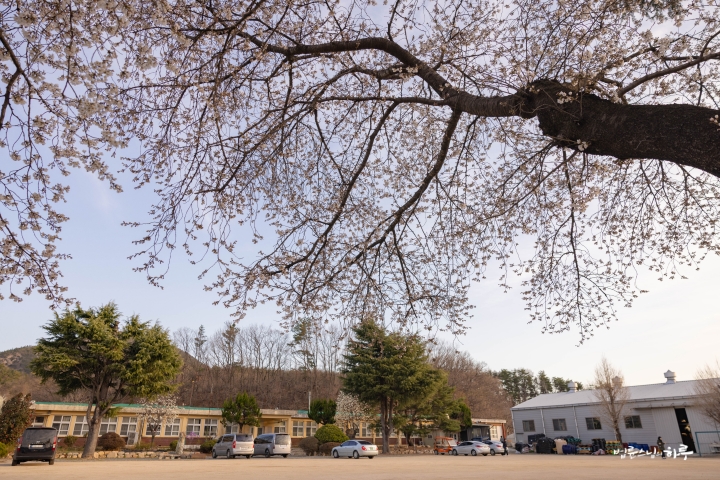
Sunim had a brief meeting with Dharma Teachers Myodang, Hwagwang, and Hyangjon to discuss this year’s farming plans. After dinner, he left the Dubuk Retreat Center at 7 PM and headed to Seoul.
“I’m leaving after feeling the spring energy for the first time in a while.”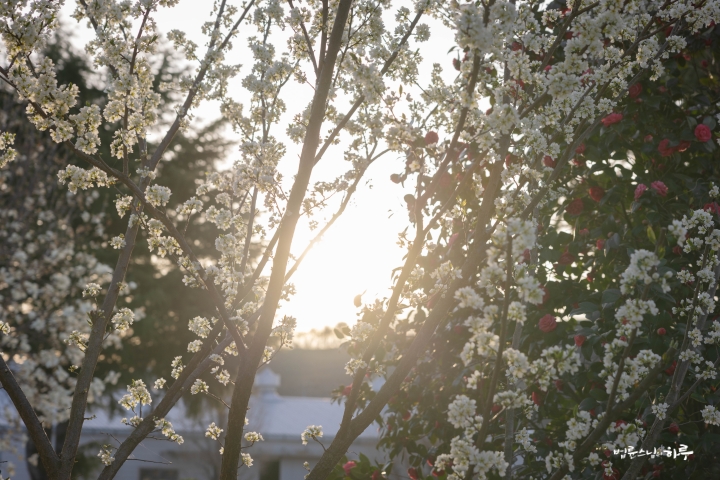
Over the weekend, Sunim experienced the arrival of spring while engaging in farming activities after a long time. The journey on the highway took four hours. Sunim slept soundly in the car.
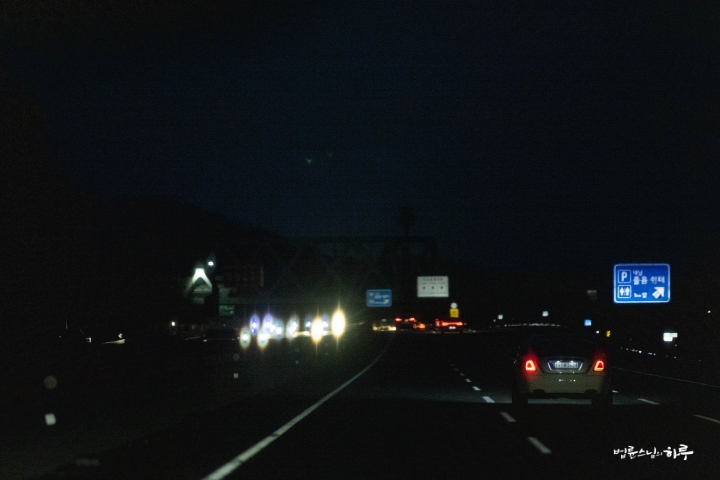
Arriving at the Seoul Jungto Center at 11 PM, Sunim concluded his day.
Since there was no Dharma talk today, we will end this post by sharing a conversation between Sunim and a questioner from the Friday Dharma Q&A session held at the Jungto Social and Cultural Center on the 28th.
How can I overcome the suffering of losing someone I love?
“I’ve broadened my understanding by listening to your Dharma talks on birth, aging, illness, and death multiple times. I especially keep in mind your teaching that death should be viewed as part of life. However, when facing actual situations, my mind becomes complicated. I pray for sick people to recover and find myself falling into suffering. I wonder what I’m missing from a practice perspective. I’m also curious about how much practice is needed to become free from these emotions. How can I overcome the suffering of losing someone I love?”
“Even losing a small item can make us feel sad. Analyzing this feeling, it’s not just about losing the object itself. It’s a reaction to our attachment to that object. For example, if we move water from one place to another, the original space becomes empty. Over time, water from somewhere else flows in to fill that empty space. Until it’s refilled, that empty space feels hollow, but once filled, the emptiness disappears. The stronger our attachment, the larger that empty space feels, and the longer it takes to refill. During that time, we feel sad. As this progresses, it becomes suffering. It’s like how an illness might start with mild cold symptoms but can develop into pneumonia and become serious. When we feel emptiness, it usually disappears with time. Like water refilling an empty space, it resolves naturally. However, sometimes sadness persists or even worsens over time, especially when we separate from or lose someone close like parents or partners. But the surface reason isn’t the whole story. The degree of our attachment determines the intensity and duration of our pain. If emotions remain difficult to manage for a long time, it becomes a mental health issue. And if there’s a weak psychological link, even a small shock can cause illness. There’s an old saying that ‘time heals all wounds.’ But when no improvement comes despite the passage of time, some people take their own lives. In the past, such extreme grief might have been labeled as devotion or filial piety, but modern medicine recognizes it as mental illness. When the mind leans too far in one direction, obsessive symptoms appear. In spiritual terms, we say someone is ‘captivated.’ Suicide occurs when one cannot escape from this captivation. If losing a small item makes us sad, it’s natural that losing parents, children, or spouses causes greater pain. The closer the relationship, the greater the suffering. This is because the intensity of attachment to that person is stronger. That’s why it’s said that losing someone you love causes more pain than meeting an enemy. The pain of losing a loved one exceeds the pain of being harmed by an enemy. In Buddhism, human suffering is categorized into eight types: birth, aging, illness, death, separation from loved ones, meeting with enemies, not getting what one wants, and suffering from the five aggregates. After the four sufferings of birth, aging, illness, and death, the next suffering mentioned is separation from loved ones. It comes before the suffering of meeting with enemies. This indicates that while meeting someone you dislike is painful, separating from someone you love is even more painful.
“I’ve been meditating a lot lately. When I meditate, I become calm and return to my daily life. However, when I talk to someone who is sick or something happens, my mind becomes troubled again. What kind of practice would help me maintain my peace of mind?”
“The reason you’re looking for a more helpful practice is because you want to achieve greater results with less effort. It’s like trying to find a way to make more money with minimal effort—wondering whether to invest in stocks, buy gold, or purchase cryptocurrency. Similarly, contemplating whether to call upon Ksitigarbha Bodhisattva or Avalokitesvara Bodhisattva, or deciding between attending a temple or a church comes from the same mindset. However, this issue doesn’t depend on which method of practice you choose. It’s about letting go of the attachments that you’re holding onto. Whether you recite Buddha’s name, practice Seon meditation, or suddenly realize and let go—the solution is simply releasing your attachments. But if you can’t let go of your attachments regardless of what you do, your suffering won’t be resolved. If you think there’s a specific practice that solves suffering, you’re looking at practice from a purely technical perspective. It’s a misunderstanding that arises from viewing it like a mathematical formula where 1 plus 1 equals 2. Therefore, your meditation isn’t directly related to freeing yourself from suffering. From the perspective of cosmic time, human life, shorter than the lifespan of a speck of cosmic dust, has little significance. From a universal viewpoint, the human lifespan of about 100 years is just a moment. Whether it’s a quarter of a moment or half a moment, it’s still just a moment. It’s like a mayfly dying at 4 PM or 10 PM, from a human perspective, it’s still just one day. From a broader perspective, the Earth doesn’t become heavier when a person is born, nor lighter when someone dies. The total amount of matter on Earth remains the same. It’s just a repetitive process of genetic assembly creating life and then disassembling. This is like waves undulating in the ocean. Looking at individual waves, they rise and fall, sometimes large, sometimes small. But viewing the entire ocean, nothing is truly created or destroyed. There is no birth or death, just the rippling of waves. You need to broaden your perspective, recognize when your mind is fixated on one thing, and let go of attachments. However, if you cling to thoughts like ‘my mother has died,’ no practice will help you. Not even the Buddha could resolve this for you.”“Yes, I understand. Thank you.”
Tomorrow is the 43rd day of the 100-Day Dharma Talk. In the morning, Sunim will give the 7th lecture on Buddhist scriptures in the Dharma Hall on the 3rd floor of the Jungto Social and Cultural Center, and in the evening, he will present the 7th lecture of the Buddhist Social Studies Course in the main auditorium in the basement.