Social Conflict Increases the Need for Buddha’s Teachings
Mar 22, 2025 - 34th Day of the 100-Day Dharma Talk, Jungto Dharma School and Sutra Course Basic Class Entrance ...
Hello, this is the 34th day of Venerable Pomnyun Sunim’s 100-Day Dharma Talk. Today marks the first step for new students entering the Jungto Dharma School and Sutra Course.
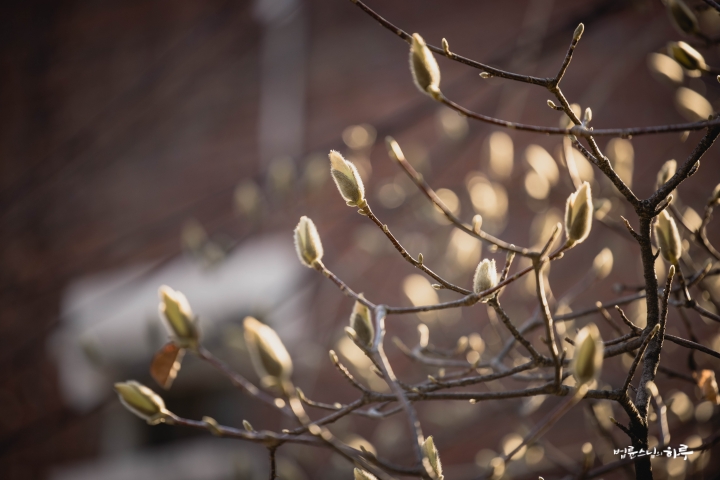
Magnolias are bursting into soft buds, and light green shoots are emerging from every branch. As spring silently seeps into our surroundings, new students begin their learning journey with excitement and anticipation.
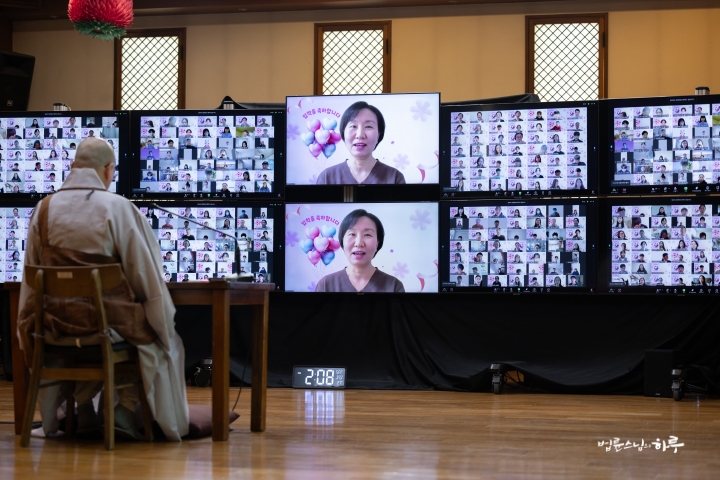
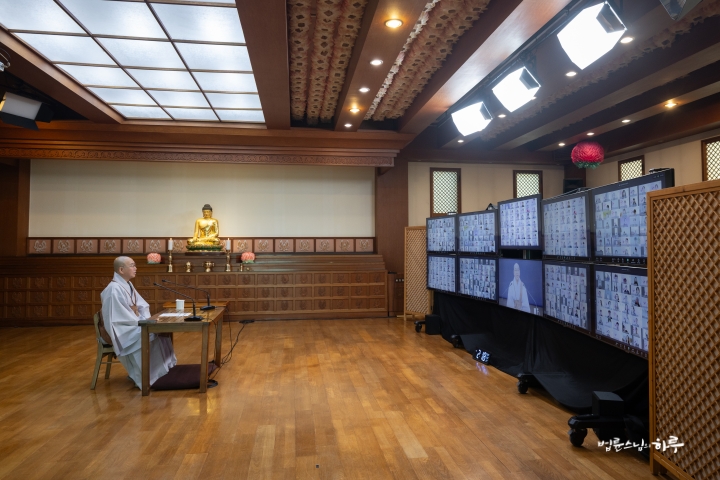
After completing his morning practice and meditation, Sunim spent the morning working in his office. Following lunch, at 2 PM, he began the entrance ceremony for the Jungto Dharma School Basic Class. The Basic Class refers to courses conducted online, following the established format. This name distinguishes it from the in-person lectures held at the Seoul Jungto Social and Cultural Center during the 100-day period.

For this term’s Jungto Dharma School Basic Class, approximately 1,400 students from both domestic and international locations have enrolled. With 198 classrooms established, they have begun their five-month journey. Once everyone connected to the video conference, a time of celebration and welcome commenced.

After watching congratulatory messages and performances from alumni who had previously graduated from the Dharma School, Sunim listened to the new students’ thoughts. Hearing each person’s reflections revealed their excitement and expectations for this new beginning.
“Although I regularly visited temples and prayed diligently, I didn’t really understand what Buddhism was. As my frustration grew, a friend introduced me to the Jungto Dharma School. I’m thrilled to be able to study Buddhism through Venerable Pomnyun Sunim’s explanations.”
“After listening to Sunim’s Dharma Q&A, 90 percent of my life concerns disappeared. When I heard that self-blame comes from thinking too highly of oneself, my mind immediately felt lighter. I want to graduate from the Jungto Dharma School and become a freer, happier person.”

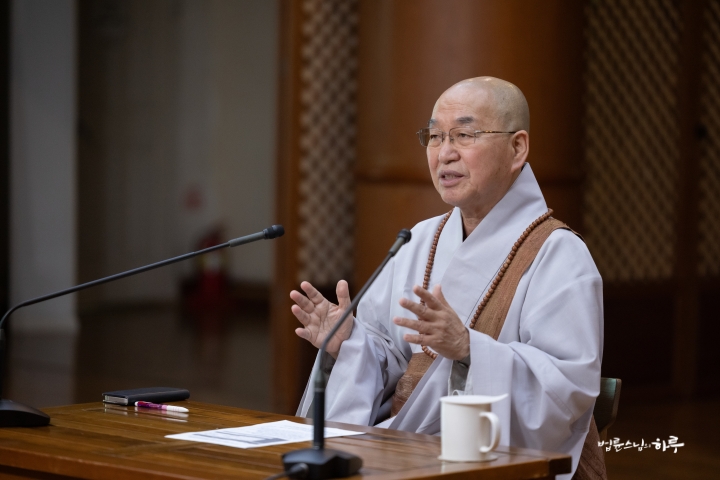
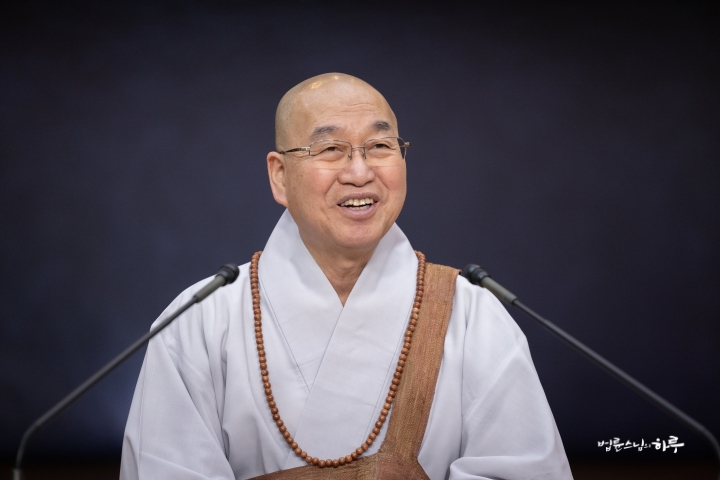
Following the welcome address from the President of Jungto Society, everyone requested a commemorative Dharma talk from Sunim for the entrance ceremony. While conveying his congratulations, Sunim explained in detail what students would learn at the Jungto Dharma School.
Studying to Overcome Suffering by Awakening from My Ignorance
What we learn at Jungto Dharma School is “Buddhism as practice.” “Buddhism as practice” is realizing that my suffering doesn’t arise because of sins from past lives, punishment from God, or bad fortune, but because of my own ignorance and foolishness. My suffering isn’t caused by my husband, children, or money, but by my own ignorance. Conflicts between spouses don’t occur because of incompatibility, but because I cling too stubbornly to my own perspective. However, in “Buddhism as religion,” people believe that all problems can be solved if a powerful, omniscient deity helps them. While religious Buddhism holds the belief that Avalokitesvara Bodhisattva with a thousand hands and eyes will help resolve suffering, Buddhism as practice teaches that awakening from ignorance eliminates suffering. That’s why religious Buddhism is also called “other-power faith” – meaning one borrows power from others to solve problems. Buddhism as practice, on the other hand, is called “self-power faith” because one liberates oneself from suffering. To do this, one must accurately assess the situation, identify “what is the problem right now?”, determine the cause of the problem, and resolve that cause to be free from suffering.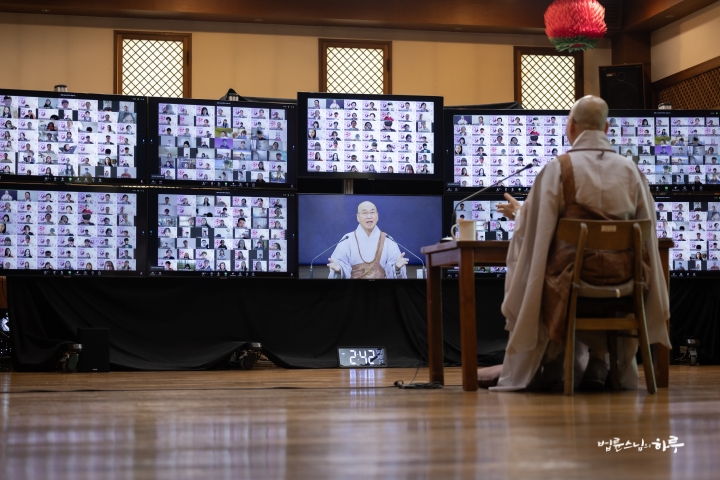
The Graduation Standard for Jungto Dharma School: Has Your Suffering Decreased?
When viewed only intellectually, Buddhism doesn’t differ much from philosophy. However, Buddhism as a practice differs from philosophy in that it emphasizes not just understanding concepts but actually experiencing them. The most important thing is whether studying Buddhism has helped you resolve marital conflicts, reduced your anger or irritation toward your children, or decreased your stress levels. Therefore, the graduation standard for Jungto Dharma School is not how much Buddhist doctrine you’ve learned. If you can answer “yes” when you ask yourself, “Has my suffering decreased since I enrolled?” “Have more of my questions been resolved?” “Has my stress been reduced?” then you qualify for graduation. Does Buddhism as a practice contain no religious or philosophical elements? It does. Sunim’s Dharma talks include many doctrinal and philosophical contents. While the overall curriculum focuses on Buddhism as a practice, about 30 percent involves Buddhism as philosophy, and about 10 percent involves Buddhism as religion. So while listening to the Dharma talks, you might sometimes want to question, “Sunim, isn’t that a religious perspective?” or “Sunim, isn’t that a philosophical perspective?” Please keep in mind that while you’ll primarily learn Buddhism as a practice, you’ll also learn some philosophical and religious elements. However, I want to emphasize that the main focus is Buddhism as a practice. Now as the weather warms, forsythia blooms and spring is in full swing. I hope that through your studies at Jungto Dharma School, your frozen hearts will gradually thaw, bringing not just spring to the outside world but also a warm spring to your hearts.”
After the commemorative Dharma talk for the entrance ceremony concluded, all participants entered their group video conference rooms to exchange initial greetings and introduce themselves.
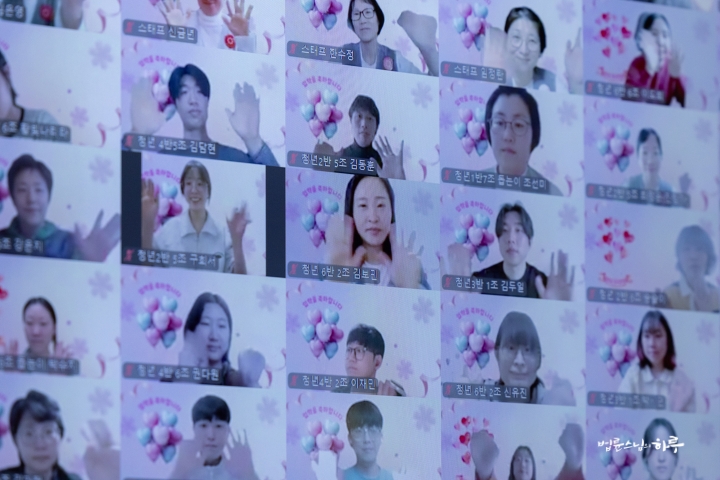
Following a short break, the entrance ceremony for the Jungto Sutra Course began at 4 PM. Approximately 1,140 students who enrolled in the March Sutra Course connected to the live broadcast. A total of 164 online classrooms were established for the five-month course.
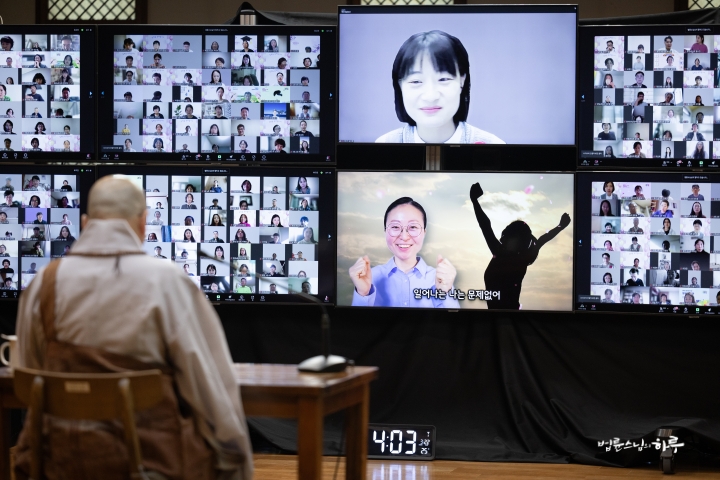
After senior graduates presented congratulatory performances and welcome messages, there was time to hear from the new students about their thoughts on joining the program.
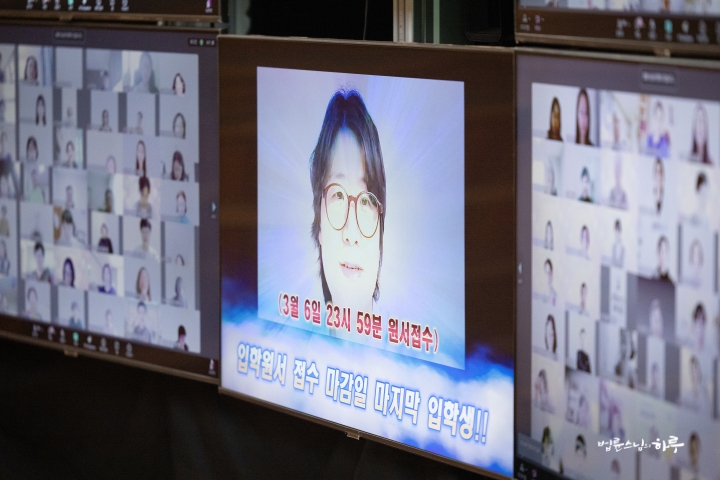
“After graduating from the Buddhism Course, my interest in studying sutras grew even stronger. I enrolled hoping that studying the sutras will help me live a more free and happy life.”
“During the Buddhism Course, I realized how precious it was to meet with fellow practitioners once a week to review our practice. That’s why I wanted to continue with the Sutra Course.”
“This is my fourth time enrolling in the Sutra Course. This year, I really want to graduate! Let’s all study hard and do our best!”
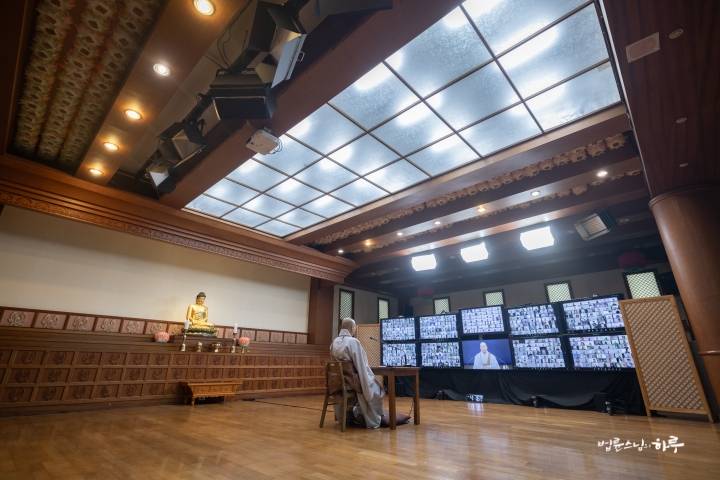
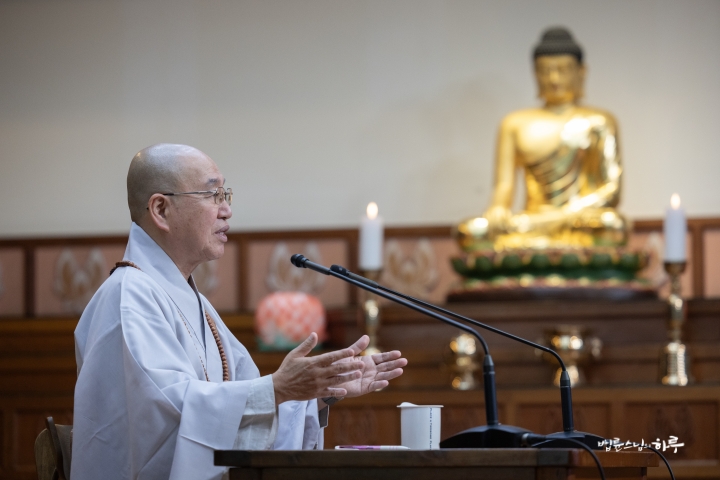
Following this, everyone listened to the welcome address from the President of Jungto Society and then collectively requested a commemorative Dharma talk from Sunim. Sunim provided a detailed explanation of the Sutra Course curriculum structure and characteristics, as well as the proper mindset for understanding and accepting the sutras.
A New Buddhist Movement Seeking to Return to the Buddha’s Original Teachings
Traditional Buddhism was centered around monastics who had renounced secular life. However, in the new Buddhist movement called ‘Mahayana Buddhism,’ lay practitioners known as bodhisattvas became the center of the Sangha. Although monastics also participated in this movement, the main participants were primarily lay practitioners. Those who initiated this new Buddhist movement called themselves ‘Mahayana Buddhism’ and referred to the existing Buddhism as ‘Hinayana Buddhism.’ After several hundred more years, Buddhism combined with traditional Indian thought and transformed into forms like folk Buddhism, which is called Vajrayana or Tantric Buddhism. Thus, Buddhism is divided into three branches: Theravada (Hinayana Buddhism), Mahayana (Great Vehicle Buddhism), and Vajrayana (Diamond Vehicle Buddhism, Tantric Buddhism). When Hinayana Buddhism, Mahayana Buddhism, and Tantric Buddhism were transmitted to China, they arrived almost simultaneously. Although the changes in Buddhism in India occurred over several centuries, various types of Buddhism were transmitted to China during the same period. Among these, Mahayana Buddhism developed most extensively in China. Later, as Mahayana Buddhism again became more religious and philosophical, Seon Buddhism emerged as a movement centered on practice. The Platform Sutra of the Sixth Patriarch was a teaching they valued as much as the sutras. Korean Buddhism can be described as an integrated Buddhism that inherited Hinayana Buddhism, Mahayana Buddhism, and Seon Buddhism. That’s why Jungto Society ensures that its members learn Hinayana sutras, Mahayana sutras, and Seon Buddhism. The fundamental philosophy of Buddhism and the life of the Buddha that you learned in the Buddhism Course can be considered the core ideas of Hinayana Buddhism. In contrast, what you are about to learn in the Sutra Course represents the core ideas of Mahayana Buddhism and Seon Buddhism. In particular, the Sutra Course categorizes the types of Buddhism in detail, allowing you to cover most of Buddhism comprehensively. However, the study of Tantric Buddhism is not included in the curriculum due to time constraints.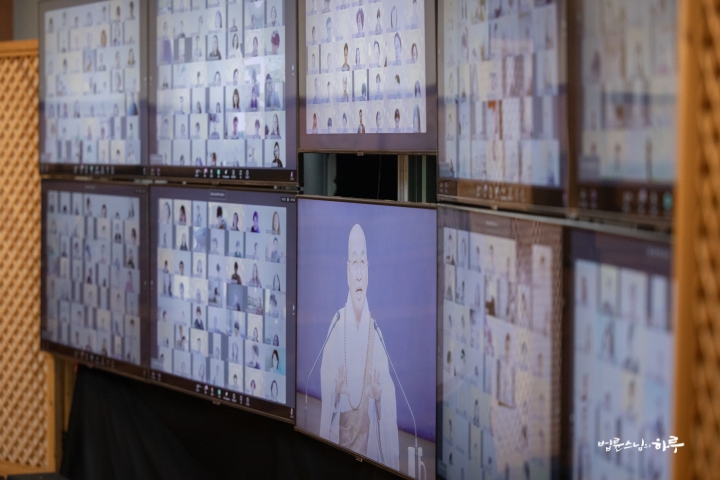
Cultivate Love Instead of Hatred
Let’s take a closer look at what is taught in the Jungto Sutra Course. First, we examine the historical background of the Mahayana Buddhist movement within Buddhist history. Next, we study the Diamond Sutra, one of the early Mahayana texts. We then learn about the history of Mahayana Buddhism and study the Heart Sutra among the Mahayana scriptures. For the Lotus Sutra and Avatamsaka Sutra, two of the most famous Mahayana texts, we focus on summarized content rather than studying the original texts. We then explore the emergence of Seon Buddhism after Buddhism spread to China, examining this within the context of Chinese Buddhist history. Next, we study the Platform Sutra of the Sixth Patriarch, which holds significant meaning in Seon Buddhism. After learning about Korean Buddhist history and the current state of Buddhism worldwide, we finally study the new Buddhist movements taking place in various countries today. The Jungto Sutra Course is structured as described above. However, the most important aspect of the course is practicing and experiencing “how to use our minds.” The practice exercises are more in-depth compared to the Jungto Buddhism Course. For example, while in the Buddhism Course we might learn that “there is inherently nothing to hate” when we feel hatred toward someone, in the Sutra Course we learn to “cultivate love instead of hatred.” This is because Mahayana Buddhism teaches the principle that when we cultivate love, hatred naturally disappears.
Why Buddha’s Teachings Are Needed as Social Conflicts Intensify
In our world, people always say, “These are the end times” in every era. Looking back at South Korea’s past, each period was considered the worst at that time. However, reflecting on our country’s history through the 80s and 90s, despite social turmoil and confusion, there was definite progress. Of course, not all chaos leads to development. In some cases, like the late Joseon Dynasty, confusion led to the collapse of the nation. So what about now? Is the current turmoil in South Korea a sign of decline? Or is it part of a process toward greater development? Is this confusion a phenomenon that appears during development, or is it a sign leading to national collapse?
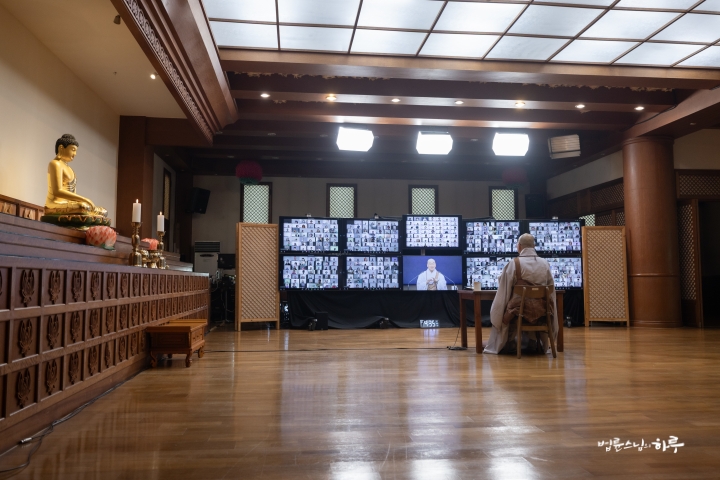
After concluding the entrance ceremony with the Four Great Vows, participants entered their respective virtual classrooms for introductions and greetings.

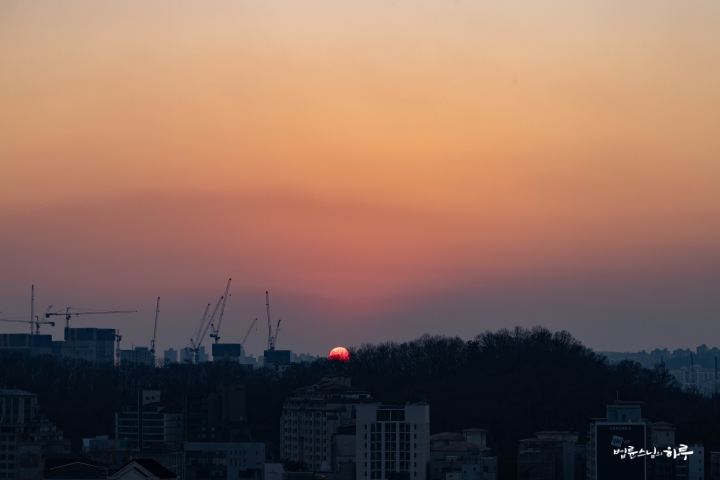
As the sun set, Sunim spent the evening working in the office and proofreading manuscripts before concluding his day.

Tomorrow marks the 85th anniversary of the passing of Master Yongseong, who revitalized modern Korean Buddhism and was a national independence activist. Sunim will travel to Jangsu Jungnim Temple to hold a special Dharma service in the morning, conduct a Dharma Q&A with Jungto Society members in the afternoon, attend the board meeting of the Baek Yongseong Memorial Foundation, and return to Seoul in the evening.