Isn’t There a Case Where the Other Person Is Completely Wrong?
Feb 1, 2025 - Jungto Dharma School Q&A, Meeting with JTS India Staff
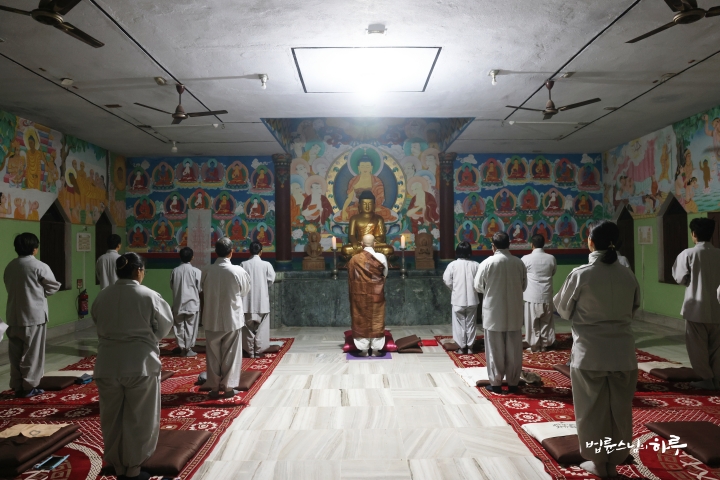
After completing his morning practice and meditation, Sunim conducted the Jungto Dharma School Q&A broadcast starting at 6:30 AM.
The Jungto Dharma School students have almost finished the “Human Buddha” course and are now approaching their graduation. This is a time for them to ask Sunim questions about things they’ve been curious about during their studies. Many students asked questions, but due to time constraints, we selected six representative questions for discussion. One of them raised a doubt about what they had learned in the Dharma School – that it’s not about being right or wrong, but about being different – asking if there aren’t cases where the other person is completely wrong.
Isn’t It Possible That The Other Person Is Completely Wrong Rather Than Different?
“In the Jungto Dharma School, we learned that it’s not about the other person being wrong and me being right, but about us being different. However, aren’t there cases where one of us is completely wrong? For example, how should we view Nazi supporters in Europe or those who say during the COVID-19 pandemic that it’s good if many elderly people die because it reduces the population polluting the environment? I don’t think it’s right to say they’re not wrong, but just different. This seems to contradict the Buddhist teaching of ‘just being different,’ and it troubles me. I seek your wise guidance, Sunim.”
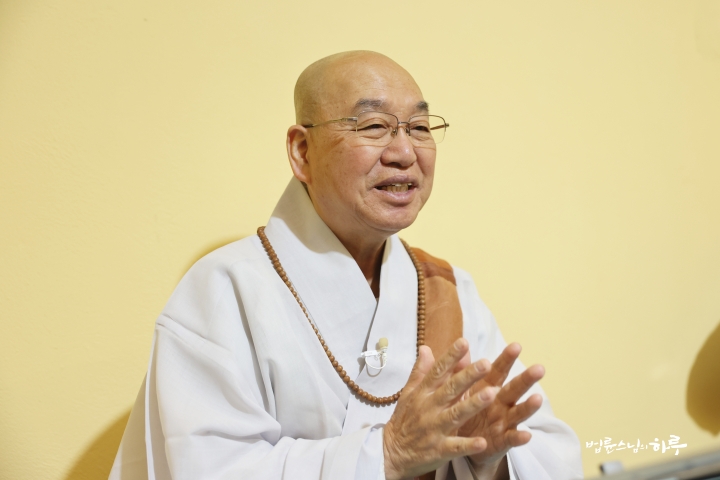
“I had thought that things were both different and wrong, but I hadn’t considered that they could be different while I disagree with them. Thank you for introducing me to this new way of thinking.”
“It seems you’ve had a significant realization. People’s thoughts in this world are different from each other. If you don’t agree with something, you don’t have to participate. You can also say that you oppose it. For example, if someone claims that men and women are different and that men are superior to women, you can take the perspective that ‘You can make that claim, but I can’t agree with it.’ However, you can’t say ‘You’re wrong.’ What can you do if they say that’s what they believe? If someone believes in God, you may not agree, but you can acknowledge that they believe that way. Sometimes, to prevent the negative effects of gender discrimination, you will take action, and you can say that you might clash with them over this issue. However, you shouldn’t say ‘You’re wrong and you’re a bad person.’ In the current impeachment situation in Korean society, there are pros and cons, right? From my perspective, some arguments might seem absurd, but I can’t say they’re wrong. What can I do if that’s what they believe? There are people who listen to claims on YouTube, believe them to be true, think they’re patriotic actions, and participate by donating money and time. These YouTubers make such claims partly because they believe in them, but also because it’s profitable for them. People often don’t consider this aspect. We can say they’re foolish, but it’s difficult to say ‘They’re bad people’ or ‘They’re wrong.’ Foolish actions should be addressed with compassion. If we think they’re bad people, we tend to think we should correct their behavior, which leads to violence. That’s why in Buddhism, we don’t say ‘bad,’ but ‘foolish.’ Foolish people are not objects of condemnation, but objects that need to be helped to return to a clear mind through love. However, if we think bad people should be killed, that makes a big difference.”“Thank you. I understand well.”
The questions continued.
The 1000-Day Practice brings peace of mind, but I’m struggling with the weight of continuous participation.
I wonder if Angulimala’s repentance can be fully accepted without the forgiveness of his victims, even though he was reformed.
I’m curious about how to distinguish between letting go of emotions through awareness during practice and resignation, and how to recognize the attainment of enlightenment.
As someone who hasn’t experienced war, what attitude should I have as a practitioner towards those around me who support war?
While the Buddha and many monks leaving their families for ordination may be for a greater cause, isn’t it a selfish choice from the family’s perspective?
As the conversation continued, it was soon time to conclude. Sunim introduced the 100-Day Dharma Talk starting from February 16th before ending the live broadcast.
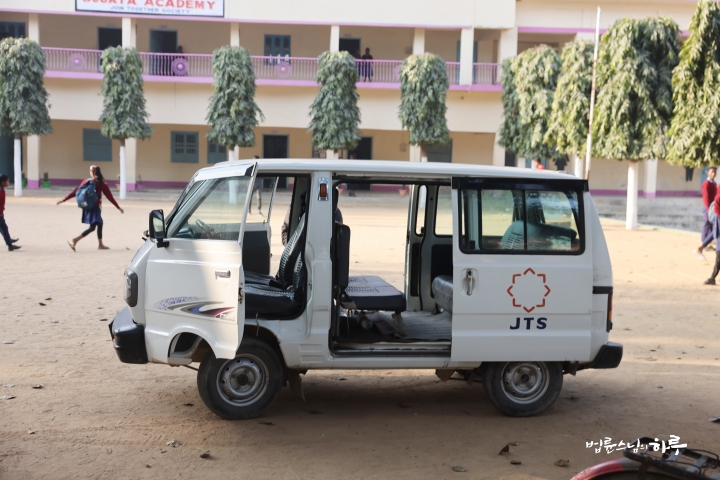
After finishing the broadcast, it was 7:50 AM. Sunim boarded the JTS van waiting in the playground and departed for Bodhgaya at 8:00 AM.
The scenery on the way to Bodhgaya had changed significantly from before. Large, new shops had been built on both sides of the road, the roads were completely paved and clean, and vehicle movement was much smoother.
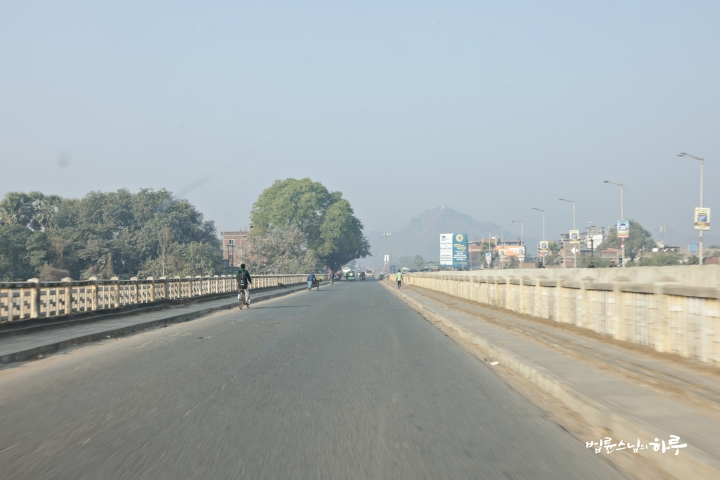
During the journey, Sunim spoke to Dharma Teacher Bogwang, the director of JTS India.
“In the future, we need to establish a technical school to train nurses, construction and civil engineers, electrical technicians, and automotive technicians, and support their employment. If we were to build a new technical school, where would be the best place to set it up? We need to consider whether it’s better to establish it within the current Sujata Academy or if it would be more appropriate to build it closer to the city. The main reason for starting even a small new project is to help the staff become economically self-reliant. Even the staff who have been dedicating themselves to volunteer work will eventually face limitations when it comes time to send their children to college. Therefore, we aim to help the staff find stable employment in companies after retiring from the school, allowing them to earn a steady income, while the younger generation takes over the school operations. The goal is for them to gain experience by volunteering at JTS while their children are young, and then transition to maintaining a stable livelihood by receiving a salary from a small company after a certain point.”“Yes, I understand.”
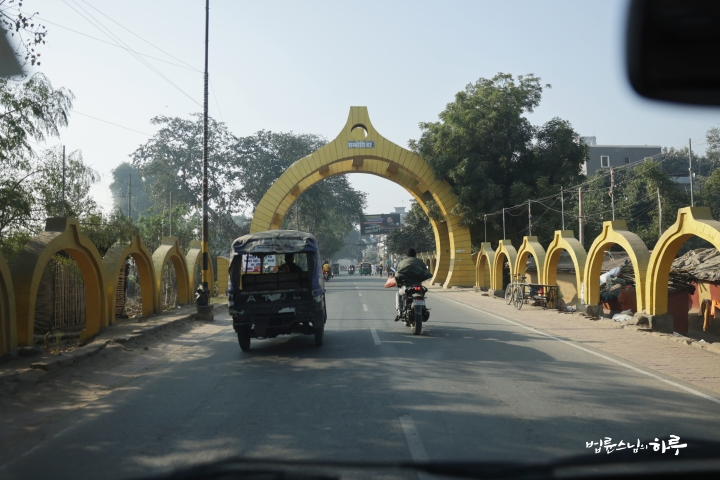
As they were talking, they arrived at the Thai temple in Bodhgaya. Remembering that the monk from the New Thai Temple in Sarnath, whom they met during the Indian pilgrimage, had said, “Please visit the Thai temple in Bodhgaya as they run a school there,” Sunim decided to visit in person.
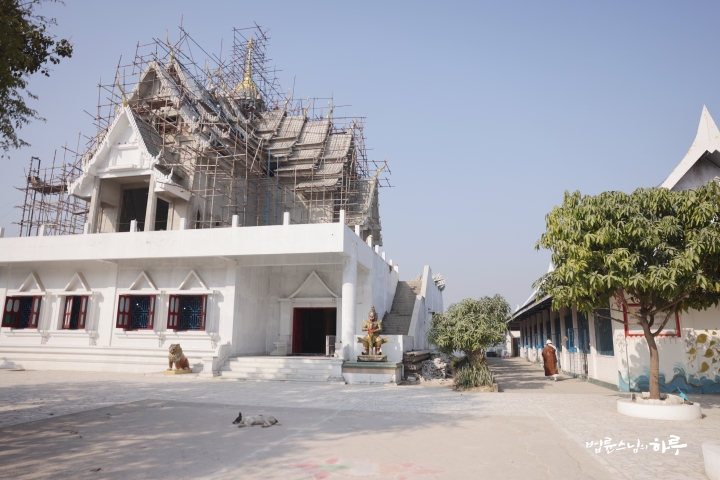
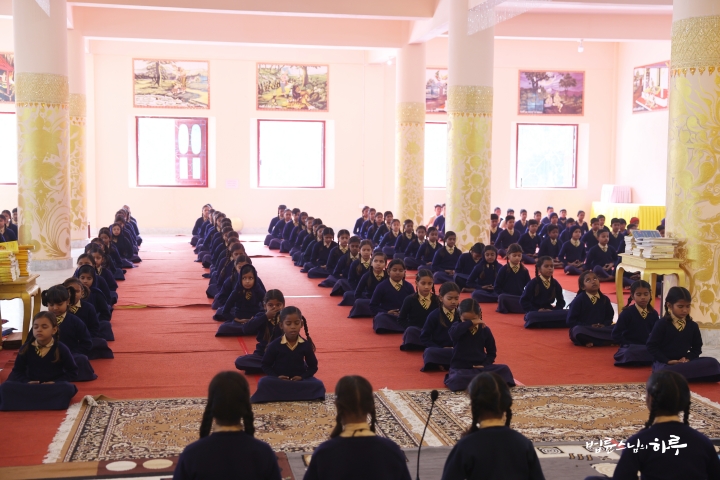
Sunim first visited the main hall to pay respects, then looked around the temple. There was indeed a school in operation. There were about five classrooms, and young students who appeared to be elementary school age were meditating in the main hall.
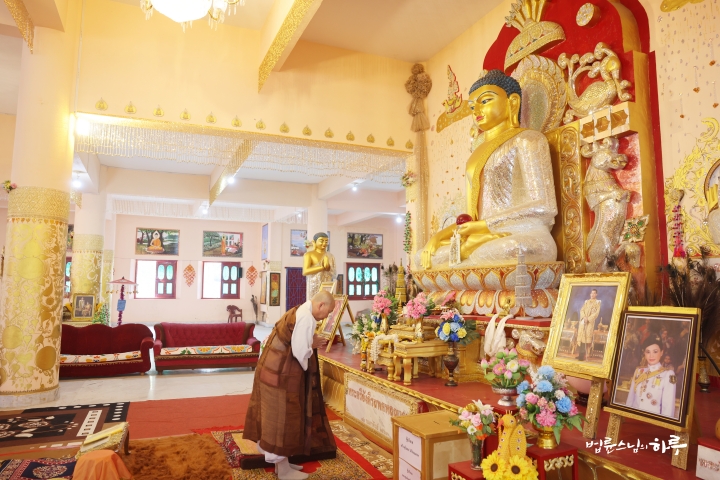
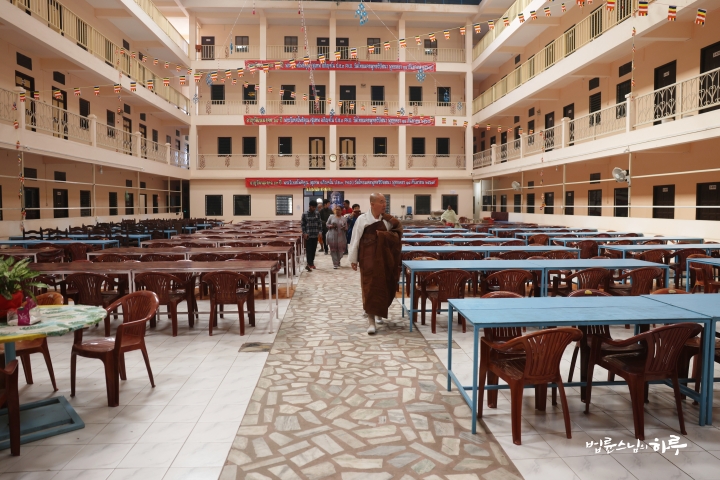
The pilgrim’s lodging inside was extremely large. The central space was used as a dining area, surrounded by accommodations on all four sides.
At that moment, a representative from the Thai temple approached Sunim and his group.
“Hello. What brings you here?”
“Hello, we’re from Sujata Academy. The abbot of the New Thai Temple in Sarnath suggested we visit the school operating in Bodhgaya, so we came to see it.”“Oh! You’re from Sujata Academy? Welcome. We’ve heard a lot about you. Please, have some tea before you go.”
While having tea and conversing, the Thai temple representative said:
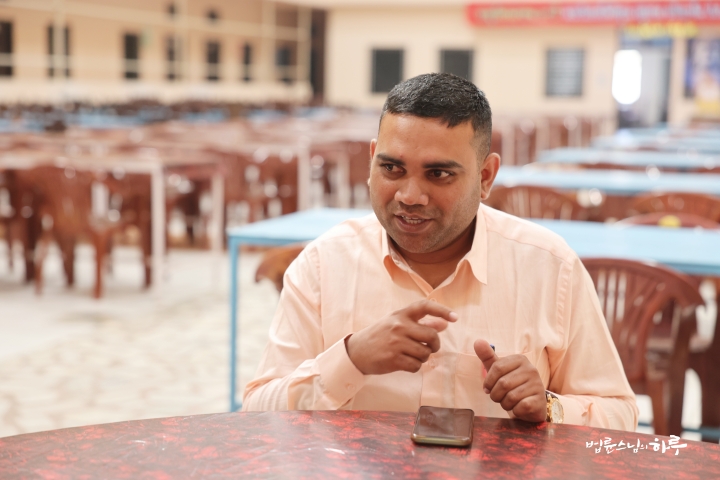
“I once saw Sujata Academy when I visited Pragbodhi Mountain. The positive influence of Sujata Academy on the village is widely known. Many people say that thanks to Sujata Academy, the development of the Dungeshwari area has been accelerated by 15 years.”
“Thank you.”During the conversation, they exchanged information about administrative procedures for operating grades 9 and above. As time passed, Sunim stood up to leave.
“It was nice meeting you. You seem to be skilled in administrative work. We would appreciate your help in obtaining permission to operate grades 9 and above.”“Yes, I’ll do that.”
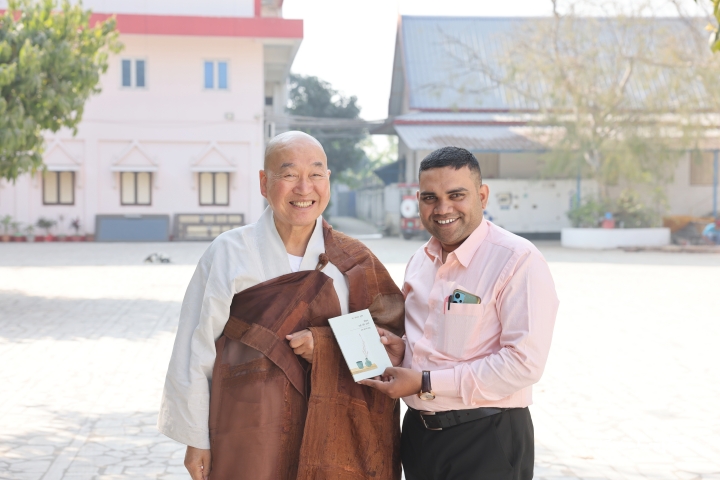
Sunim returned to the village streets. Soon, a sign reading ‘Bunhwangsa,’ indicating a Korean temple, caught his eye.
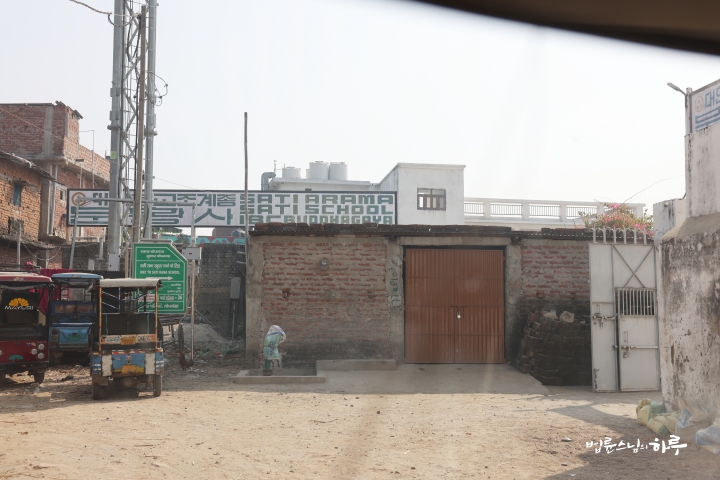
Upon entering the temple, a bhikkhuni warmly welcomed them.
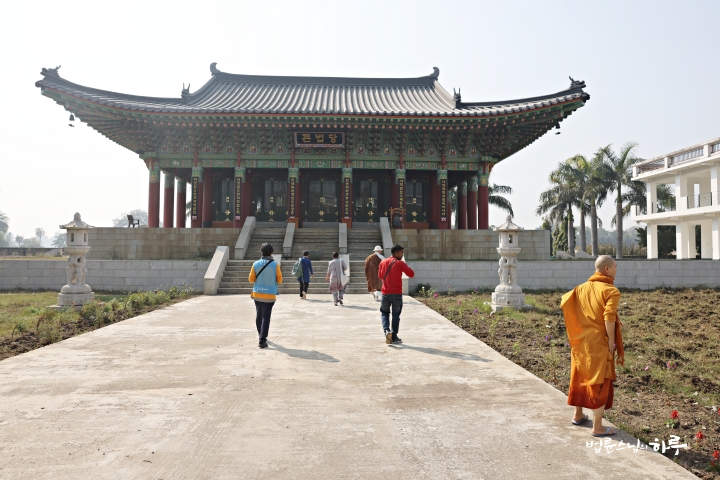
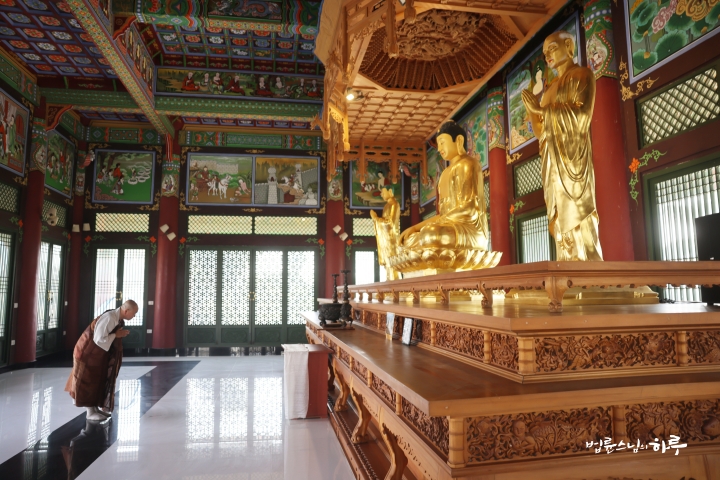
Sunim first visited the main hall to pay respects. The bhikkhuni offered tea, but Sunim politely declined and left.
“Sunim, please have some tea before you go.”
“No, thank you. We have another appointment. We’ll be on our way now.”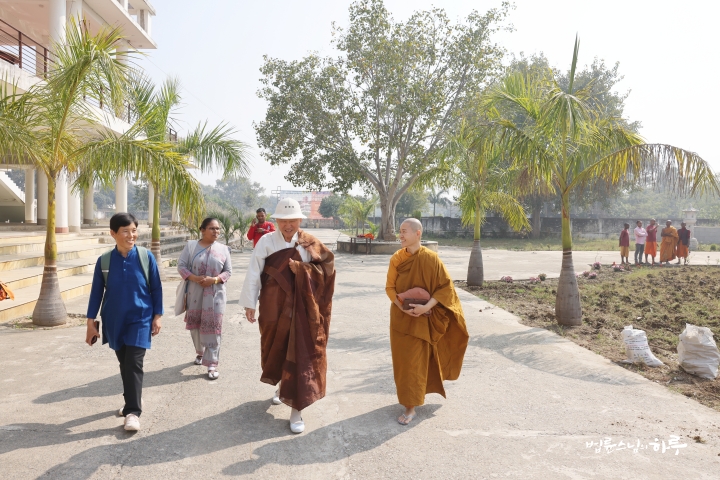
After leaving Bunhwangsa, Sunim moved on to meet the abbot of the Bangladeshi temple who had attended the Sujata Academy anniversary ceremony recently. Upon arriving at the Bangladeshi temple, Sunim went to the main hall to pay respects. As he came out, the abbot appeared.
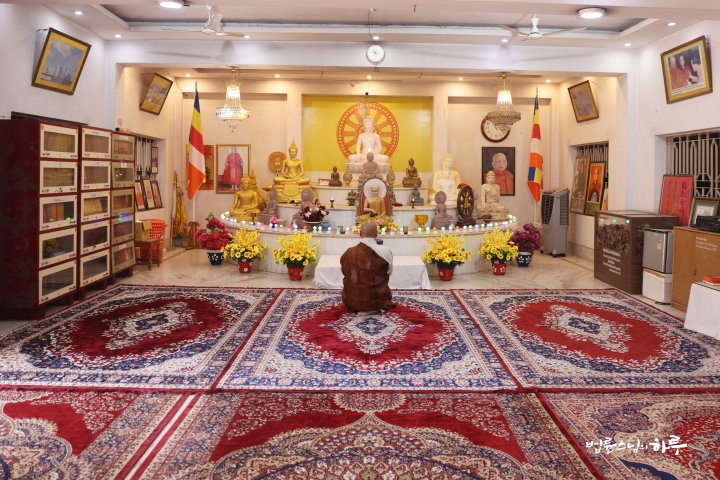
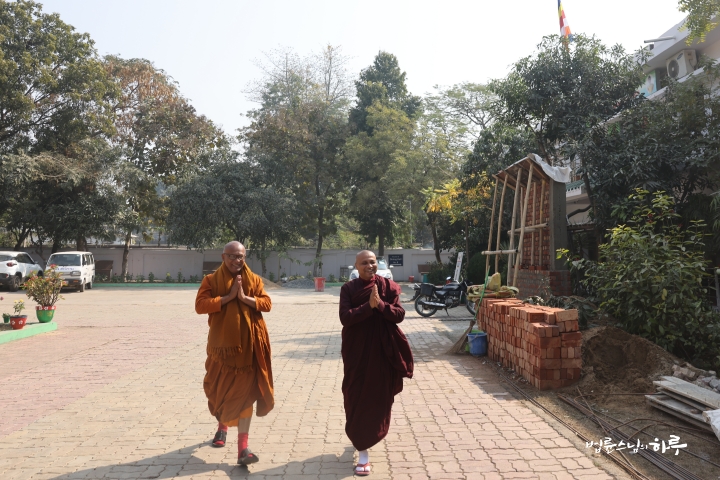
“Welcome, Sunim.”
“Yes, I had some business in Bodhgaya and stopped by briefly.”Sunim had tea with the abbot and exchanged greetings. As they were talking, it was soon time for the appointment with Naresh. They moved to the Anand Hotel operated by Naresh.
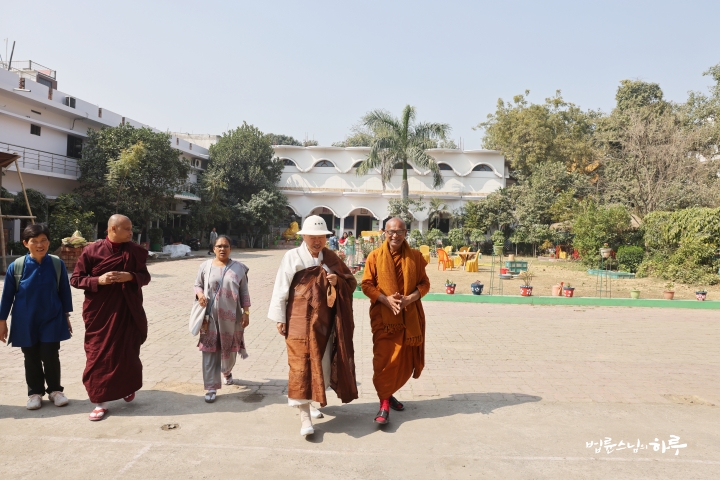
Naresh was waiting in the hotel lobby.
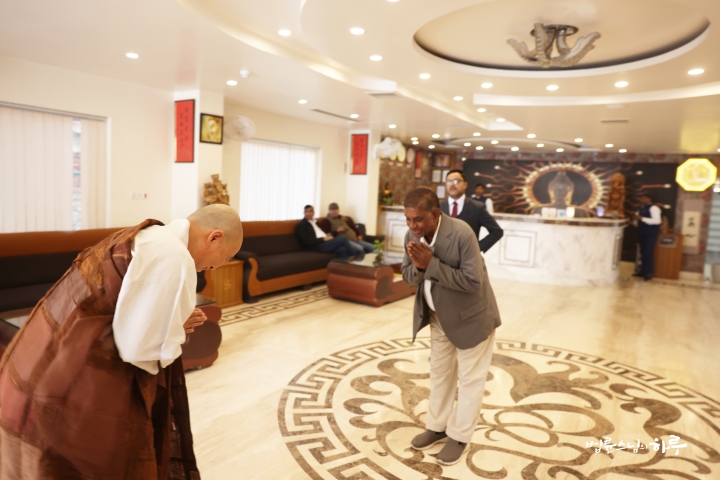
“Welcome, Sunim.”
“Naresh, how have you been? You’ve never missed a school anniversary ceremony before, but I didn’t see you this time, so I was worried about your health and came to check on you.”“I’ve lost a lot of weight. My health is good. Sunim, you must be hungry. Let’s have a meal first.”
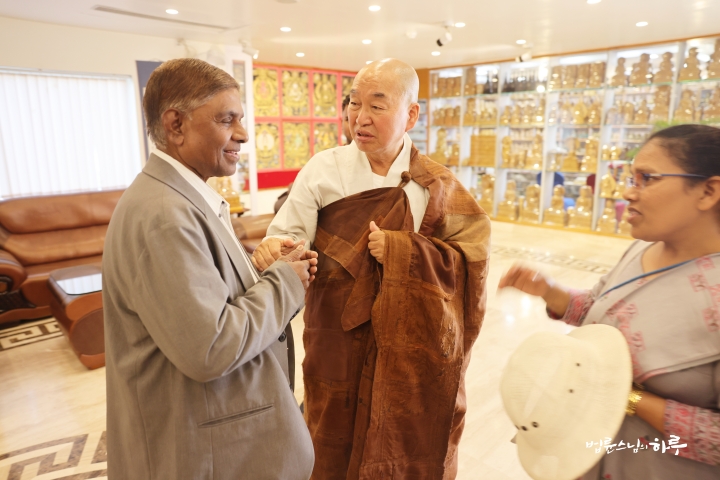
Naresh had prepared various vegetable dishes for Sunim. His thoughtful consideration was evident.
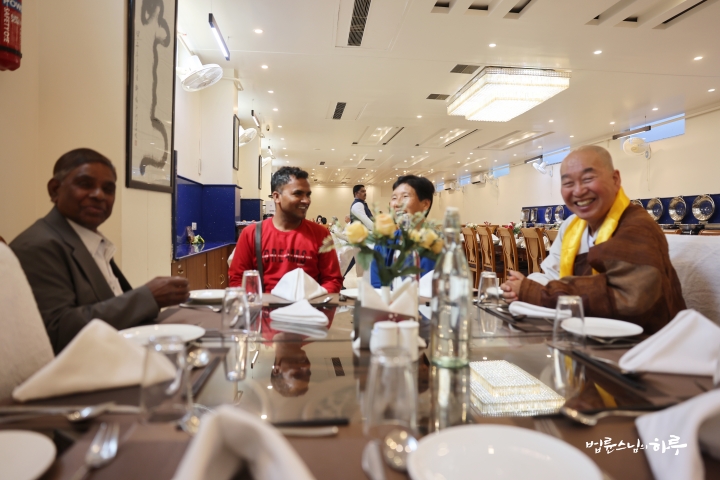
“Running the hotel is difficult. Many new, good hotels have opened recently, so unless we improve our facilities, it’s not easy to survive the competition.”
“In Korea, the current political situation is complex, and people are refraining from traveling abroad.”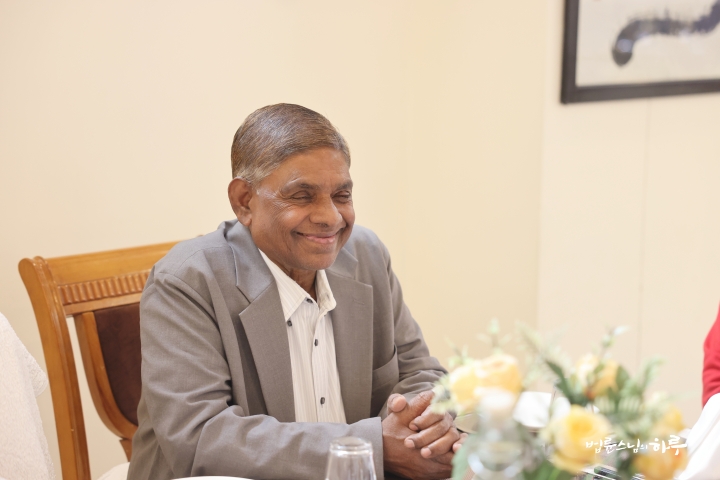
At 1 PM, Sunim expressed his gratitude and stood up to leave.
“Naresh, thank you for preparing this meal with such care. The food suited my taste well. I’m grateful for your special preparation.”“Sunim, please come again next time. Thank you for enjoying the meal.”
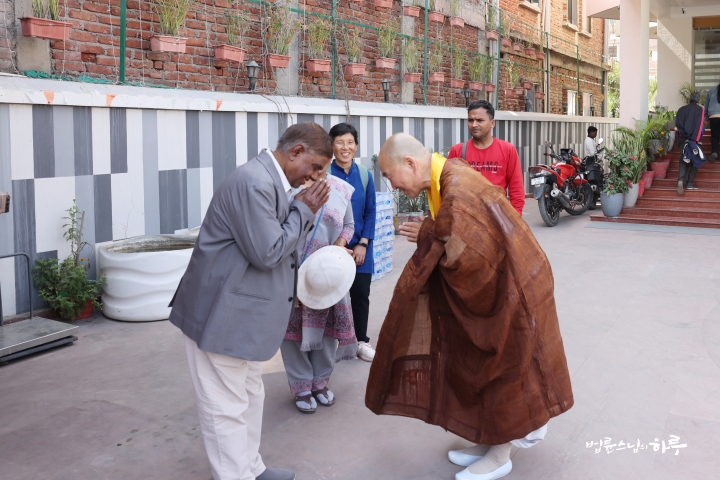
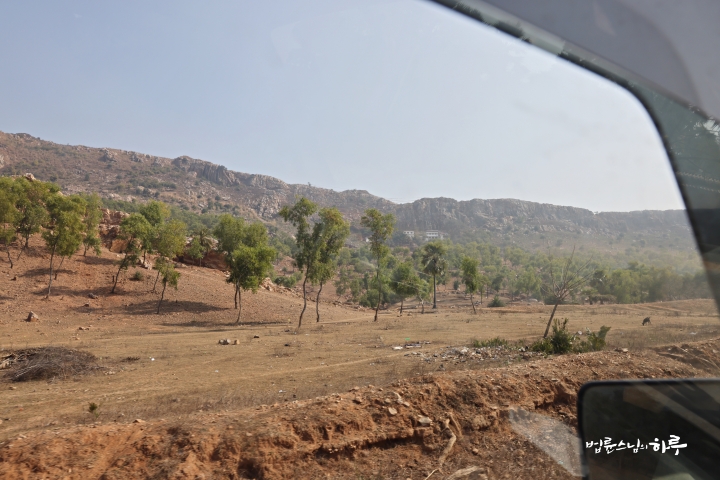
After exchanging farewells, we headed towards Sujata Academy by car. After an hour, a wide open space beneath Pragbodhi Mountain appeared outside the car window. We realized we had returned to Dungeshwari.
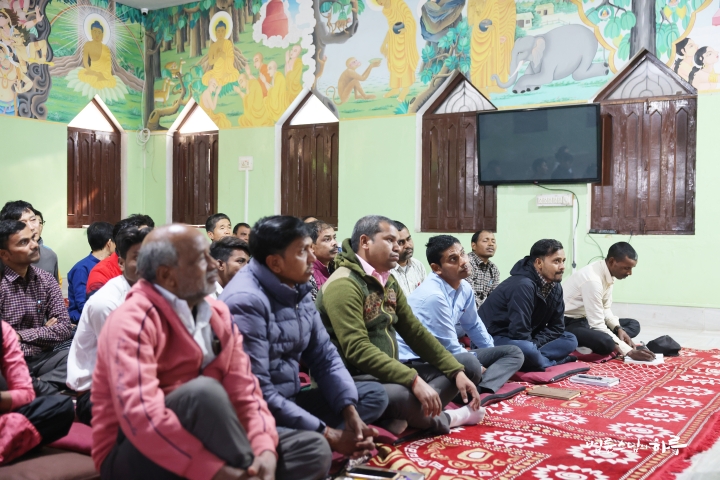
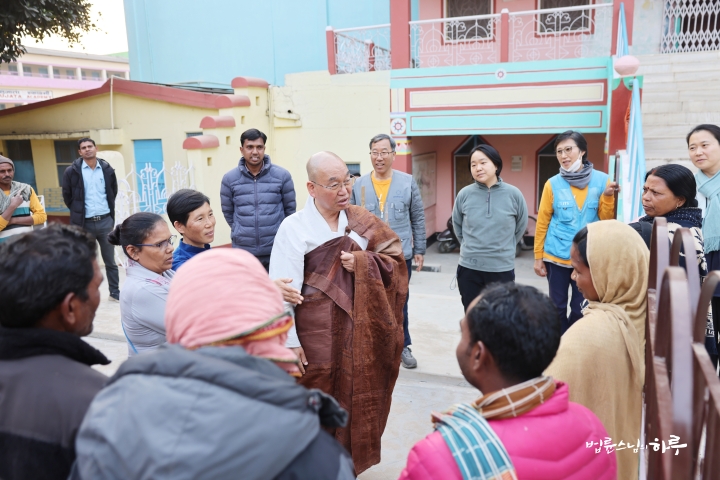
As soon as we arrived at Sujata Academy, a meeting with the Indian JTS staff began at 2 PM in the Dharma hall. Upon entering the hall, the staff were meditating while waiting for Sunim. After three strikes of the wooden block, Sunim began speaking with words of gratitude.
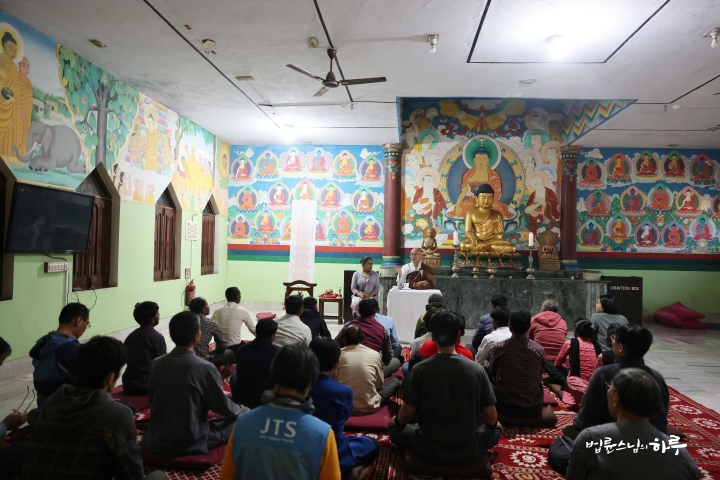
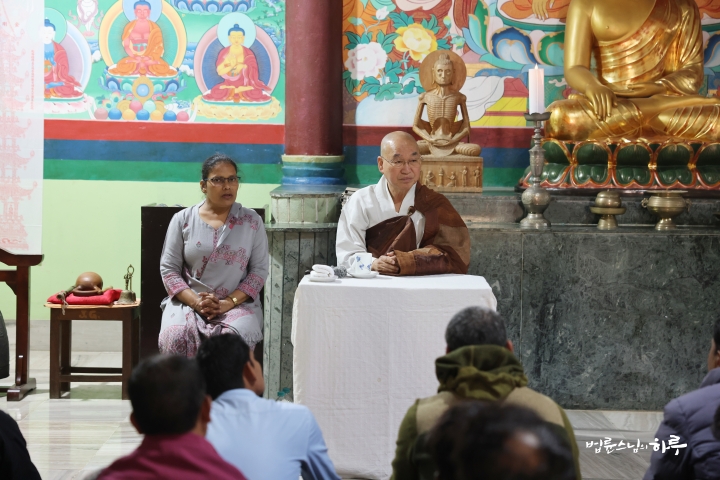
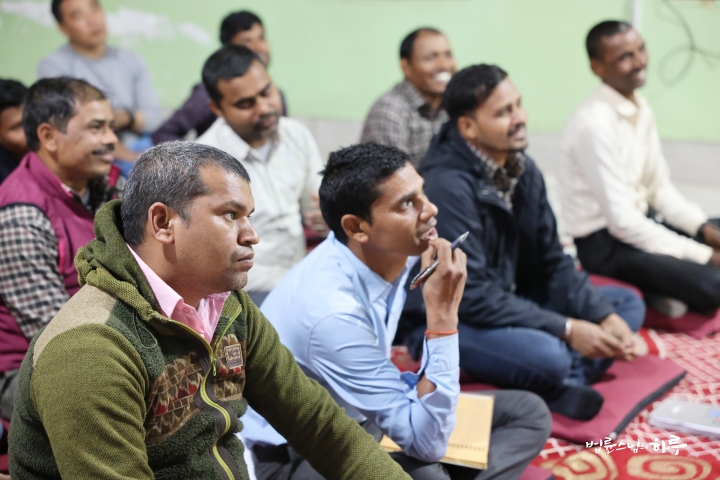
Most of the staff agreed, and the procedure for electricity supply was also discussed.
“Second, please check the floor carpets that the preschool children sit on. The current carpets are in very poor condition. Please improve the preschool environment to make it cleaner and more comfortable. Also, I noticed that the 7th-grade classroom was very cramped. The younger children with smaller builds are using larger classrooms, while the older children are in smaller ones. It would be good to reconsider the classroom assignments. Also, please repair the broken chairs promptly. Currently, two students are sitting on one long bench during classes. Please improve this so that students can learn in a more comfortable environment. Are there any other areas of the school facilities that need improvement?”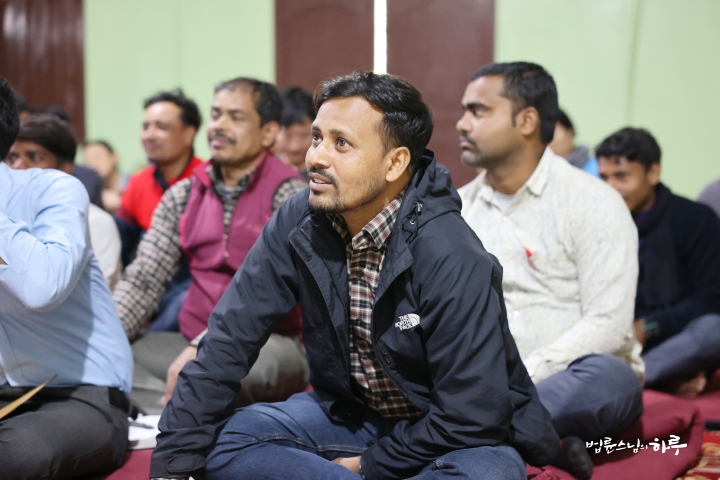
A staff member who is a teacher responded.
“In the long term, we need a computer room. Taekwondo classes are mainly held in winter, but because it’s cold indoors during winter, we conduct classes on the playground. Currently, the Taekwondo room and science room are not being used properly. How about converting this space into a computer room?”
The staff exchanged opinions on where to place the computer room. Sunim pointed out the areas of education to focus on in the future.
“Please discuss among yourselves how to use the classrooms. Going forward, we need to focus on four areas of education. First, computer education must be activated. It should be mandatory for middle school students and above, and if possible, elementary students should also be able to receive this education. Please prepare facilities and space so that all middle school students can learn computers. Second is physical education. It would be good to expand Taekwondo education to all students. How about assigning teachers and assistant instructors so that all students can learn the basics on the playground? Later, when advancing to higher levels, we can create small groups for professional guidance, while providing opportunities for all students to learn the basics. Also, please guide the Sujata Academy students to master one sport so that they can win competitions like the Bihar State Championship. This will be an opportunity for students to gain confidence. The idea is to create and operate Sujata Academy soccer and Taekwondo teams.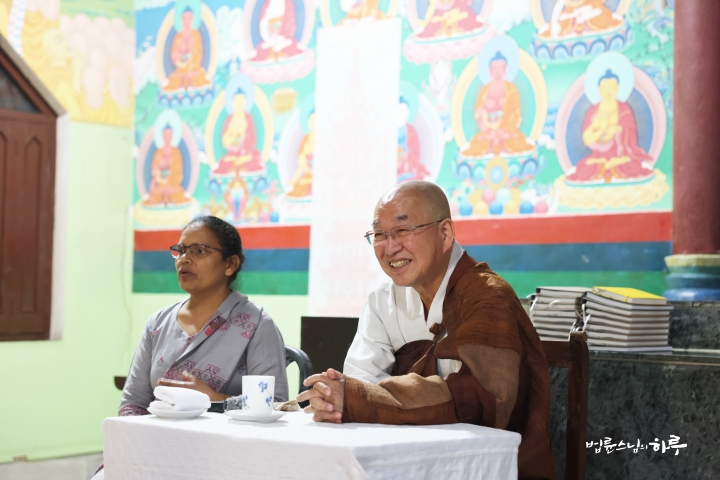
“Yes.”
“I’m glad that the system is set up for asking questions. When I go back to Korea, I’ll check if I can have a direct online conversation. Lastly, teaching the children about Buddha’s life. For lower grades, introduce it simply, and as they advance in grades, develop a curriculum that allows for deeper learning. It would be good to educate them so that by the time they graduate from Sujata Academy, they have a good understanding of Buddha’s life.”Following the discussion about the school, we also talked about the challenges in the hospital and village development.
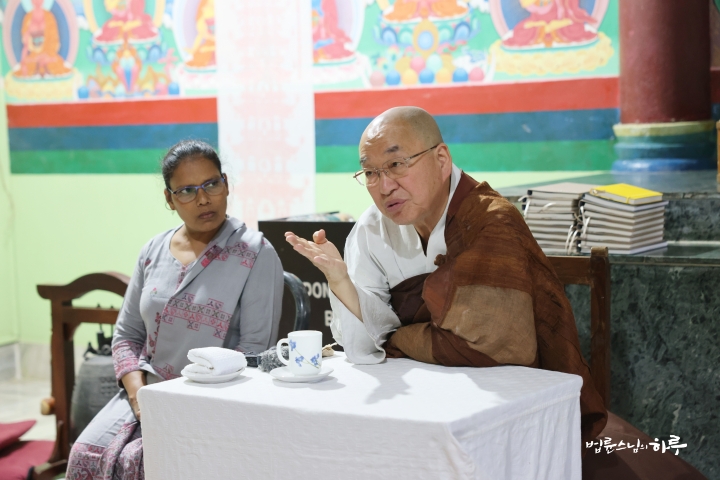
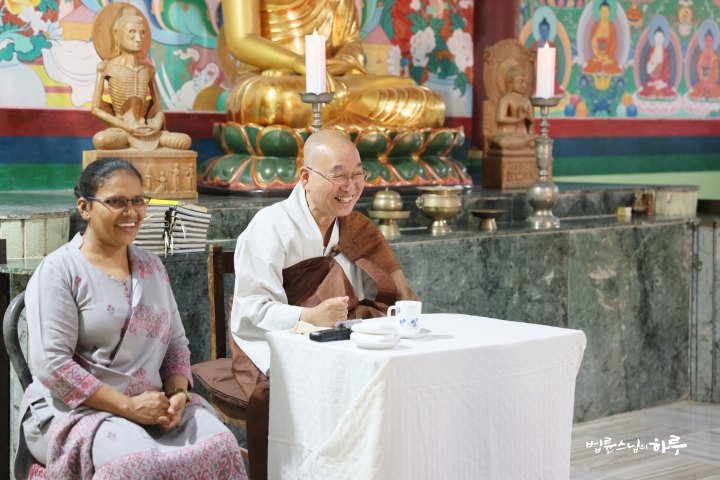
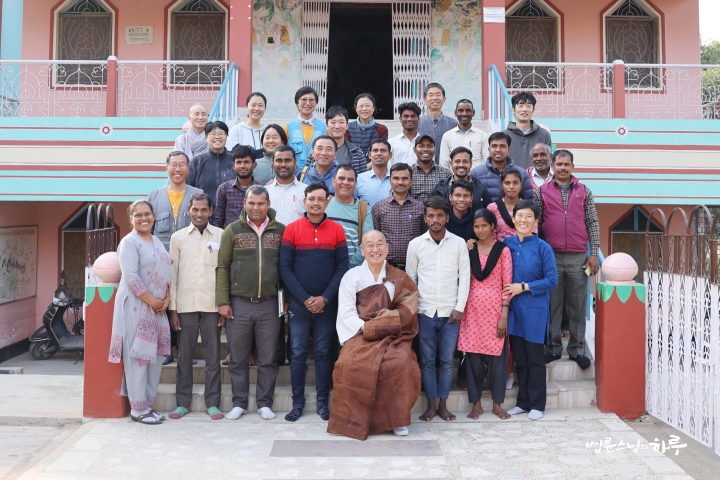
After concluding the meeting with the staff, Sunim presented gifts and took a group photo in front of the Dharma hall.
Next, he held a meeting with Korean volunteers about the Sankasia project.
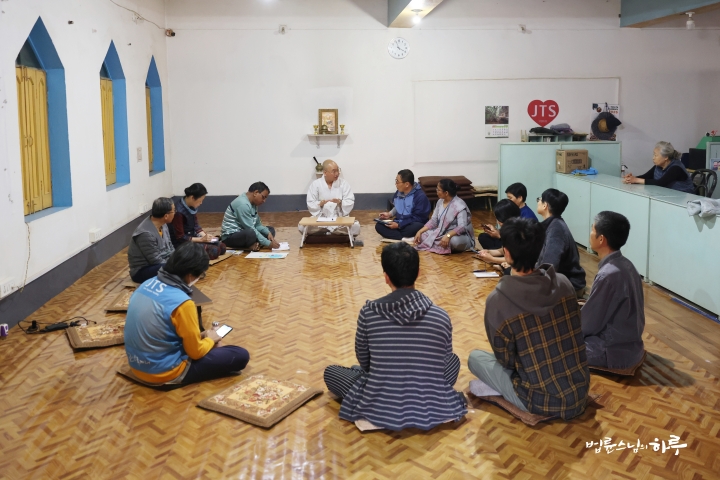
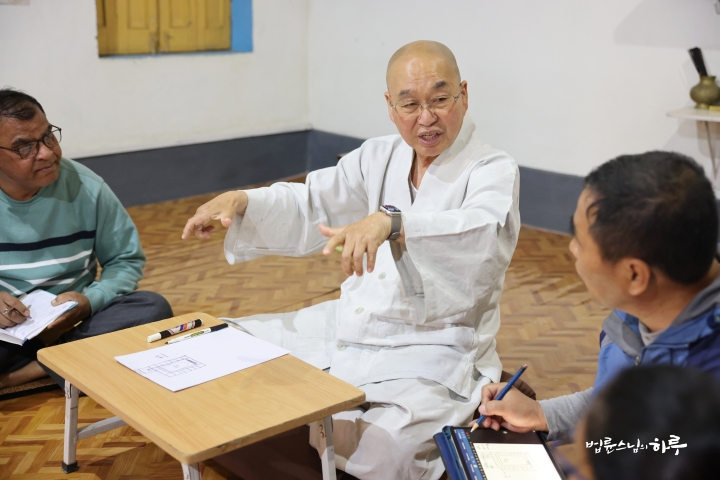
While discussing the Sankasia project, there was an opinion that additional guest houses should be built at Sujata Academy, so we briefly toured the campus. Afterwards, Sunim encouraged the Indian JTS construction department activists by giving them small gifts.
The schedule in India is gradually wrapping up, one by one.
Tomorrow, we will move to Ghazipur in Varanasi. Sunim has been invited to give a Dharma talk at a gathering of 50,000 people to commemorate King Ashoka’s achievements.