I Get Hurt When I Give, Should I Turn Away?
Jan 27, 2025 - Visit to YBS School in Sankasia, Groundbreaking Ceremony for Ashoka Pillar in Kannauj
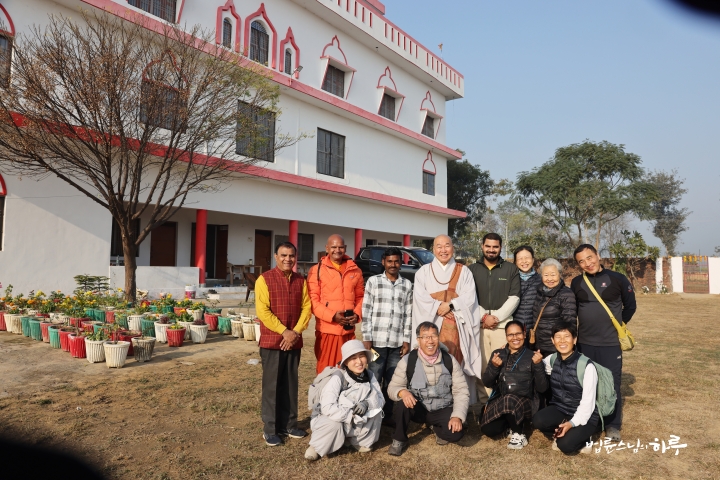
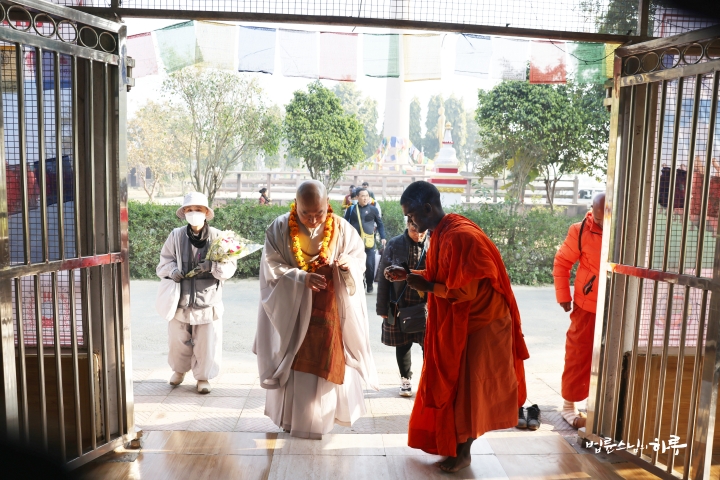
Sunim packed biscuits and mithai to distribute to the students and headed to YBS school. Suresh, the principal, and some students were waiting for Sunim outside the school gate.
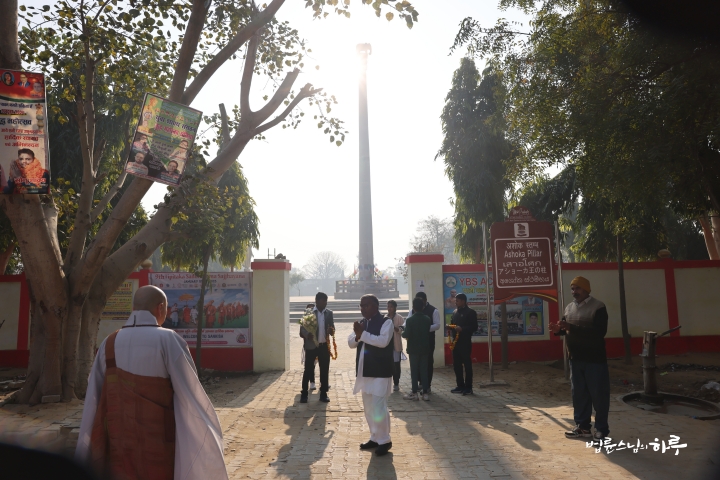
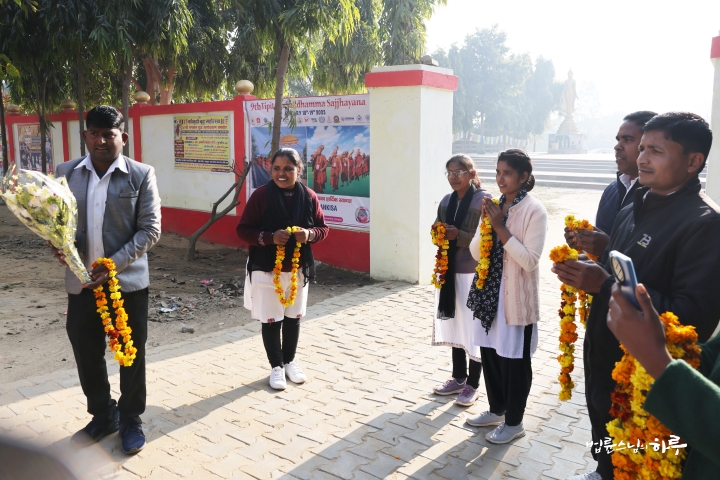
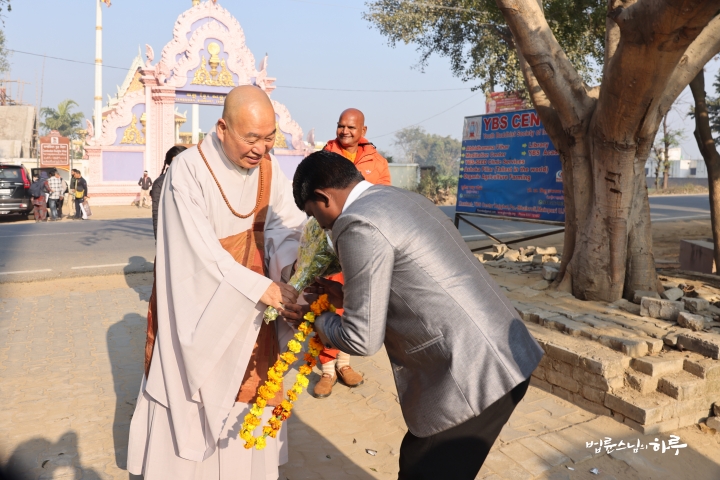
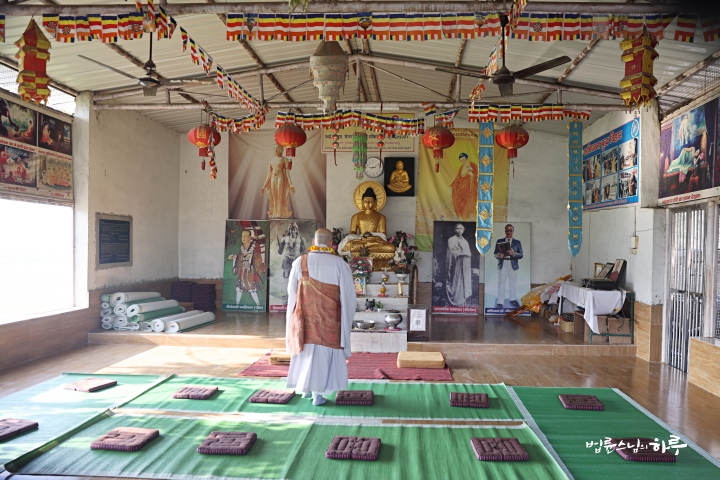
Sunim greeted them warmly, visited the dharma hall to pay respect, and gave donations. Then he moved to the school field where the students were waiting.
In the school field, the students were sitting in rows waiting for Sunim. The teachers welcomed Sunim and placed flower garlands around his neck.
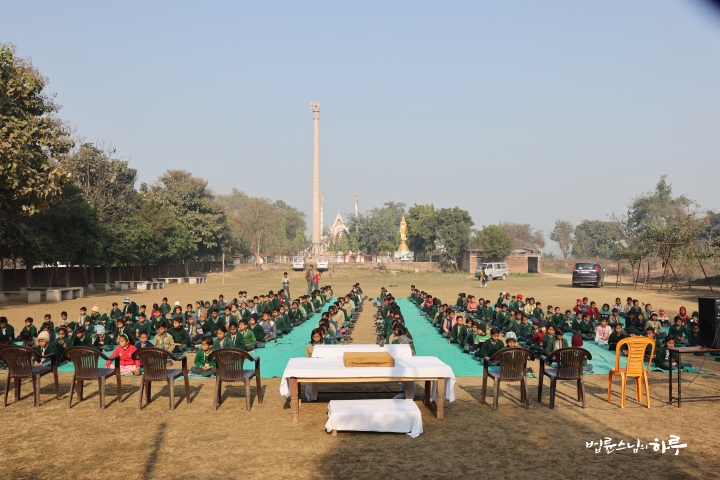
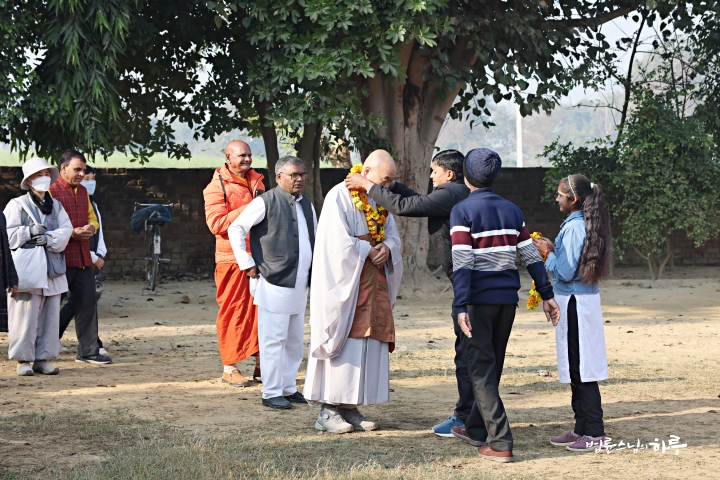
As Sunim stood before the students, they all stood up, sang the Indian national anthem, and performed three bows. Everyone showed their respect, welcoming Sunim with sincerity.
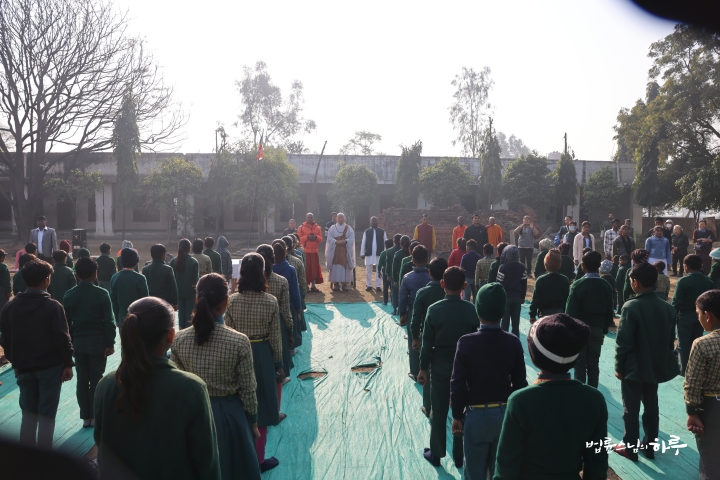
After a YBS school teacher introduced Sunim, he gave his opening words.
“It’s nice to meet you all. I am a monk from Korea. Do you know about the country called Korea?”“Yes.”
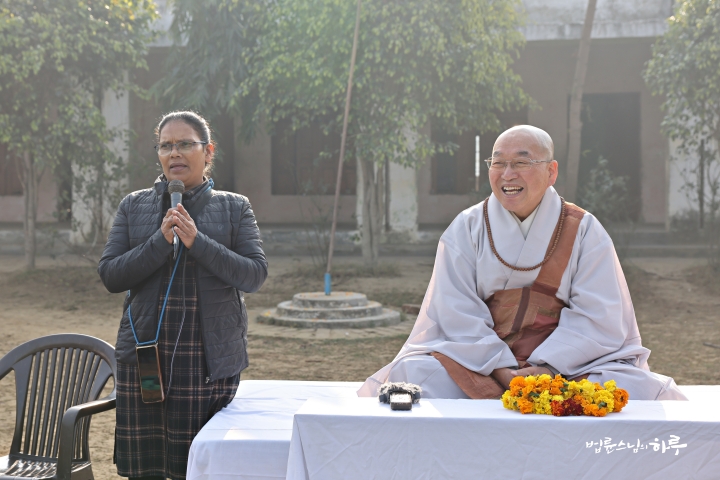
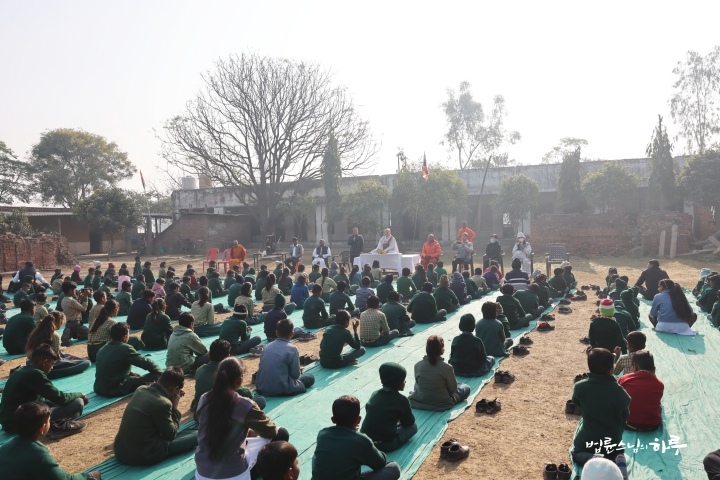
However, Korea and India have had exchanges for 2000 years. 2000 years ago, an Indian monk and princess came to Korea by boat. The princess from India married a Korean king, and the monk introduced Buddhism to Korea. In the 8th and 9th centuries, Korean monks studied at Nalanda University in India or took pilgrimages to Buddha’s sacred sites. This is how Korea and India began to interact, starting with the introduction of Buddhism. That’s why I could come here today.
Among Indian figures, Buddha is the most well-known worldwide. 2600 years ago, Buddha was born in Kapilavastu, which in present-day is in Nepal. He attained enlightenment in the Magadha kingdom, which in the present-day is in the Bihar region. Sankasia, where we are now, is also one of Buddha’s eight great sacred sites.
The next famous person after Buddha is King Ashoka. You know the tall pillar at the entrance of your school? King Ashoka was the first to erect such pillars at Buddha’s sacred sites. After King Ashoka took refuge in Buddha’s teachings, Buddhism began to spread throughout India and the world.
At that time, India was one of the most advanced civilizations in the world, but recently it has faced many difficulties. However, India is now reviving. In 10 years, India will probably be one of the world’s top three economic powers. Many young Indians are active all over the world. Among IT experts in the United States, there are many Indians. So if you study hard, you can work not only in India but all over the world in the future. You should be proud that you were born in India. And you should be proud that you are Buddhists. You should also be proud that you are from Sankasia. With such confidence, you can study well and live healthily and happily.”
“Yes.”
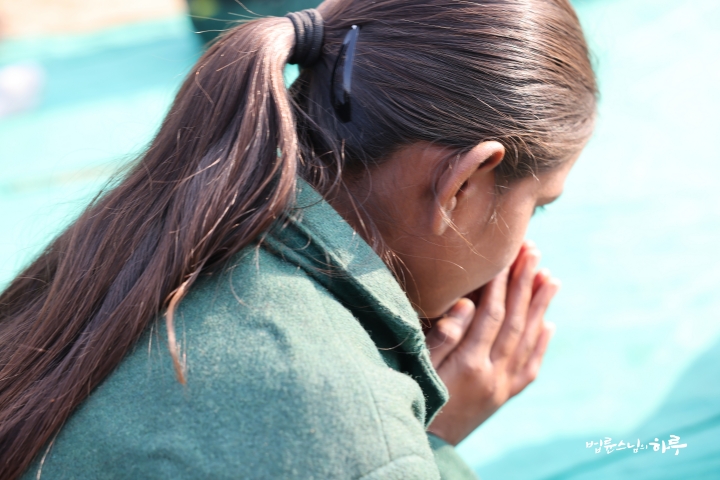
“Thank you for coming to the Dhamma Center three days ago to put flowers on and perform for the Buddhists from Korea. So I brought biscuits and mithai to give to you.”The students put their hands together and bowed their heads to show respect to Sunim.
“Thank you.”
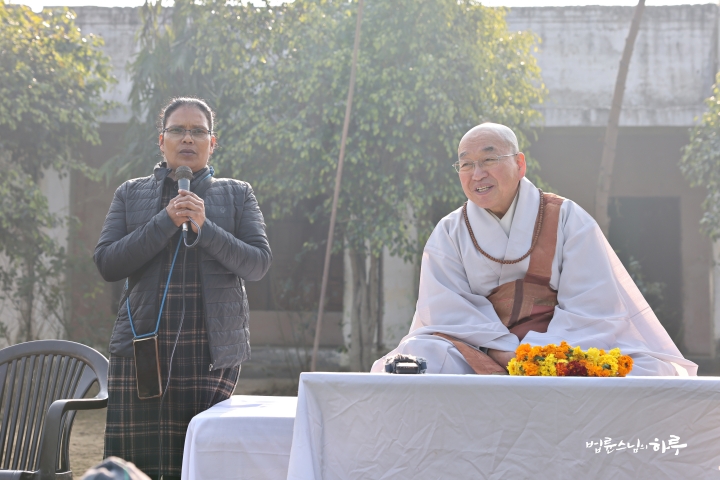
After meeting with the students, Suresh offered Sunim some warm tea.
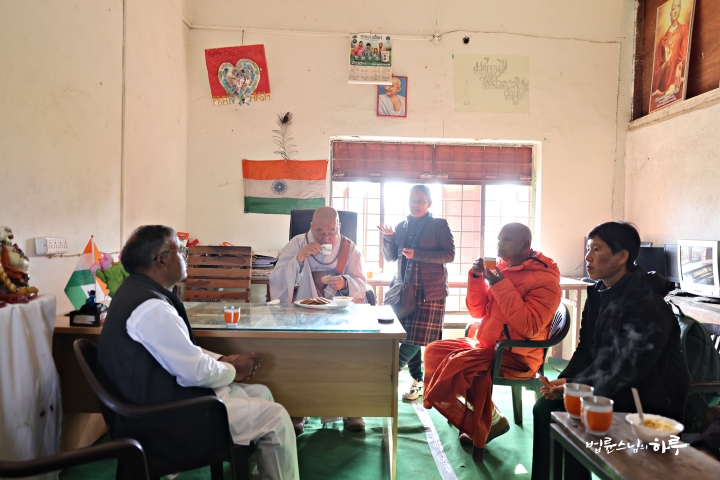
Suresh shared his thoughts on running the school.
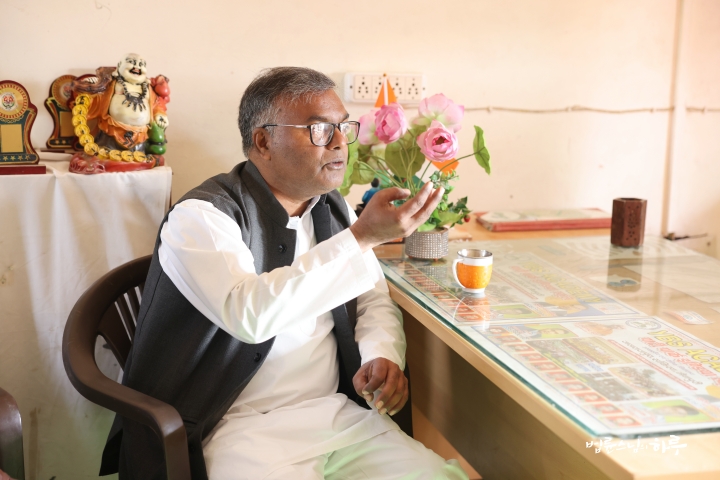
“As students learn more, they don’t want to do hard labor. As they increasingly avoid farming and physical work, we’re losing young people who know how to handle machines and repair things. The education India really needs might be technical schools.”
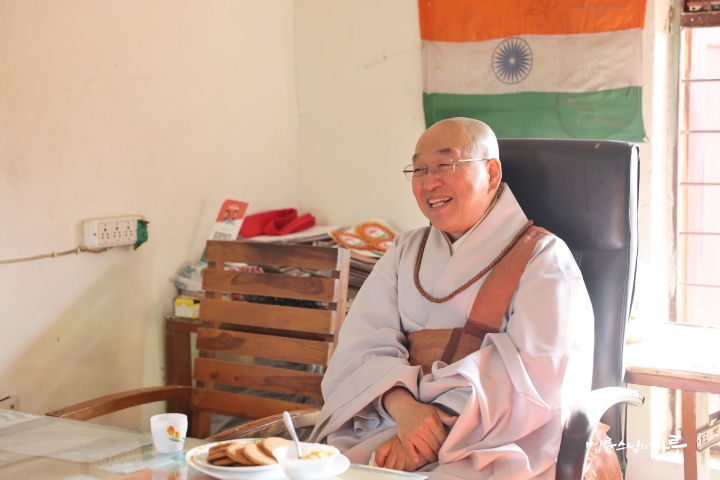
Sunim empathized with Suresh’s words and said:
“It’s not just India, Korea is the same. In Korea, the same problem will become apparent in 10 years. Twenty years ago, we tried to establish and run a technical school in Dungeshwari, but we had to stop after two years because it was difficult. For regular schools, you can teach with just textbooks, but to run a technical school, you need teachers with skills and a system. That process wasn’t easy.”Sunim and Suresh discussed the current state of student education and various problems arising from it. After their conversation, they left for Kannauj.
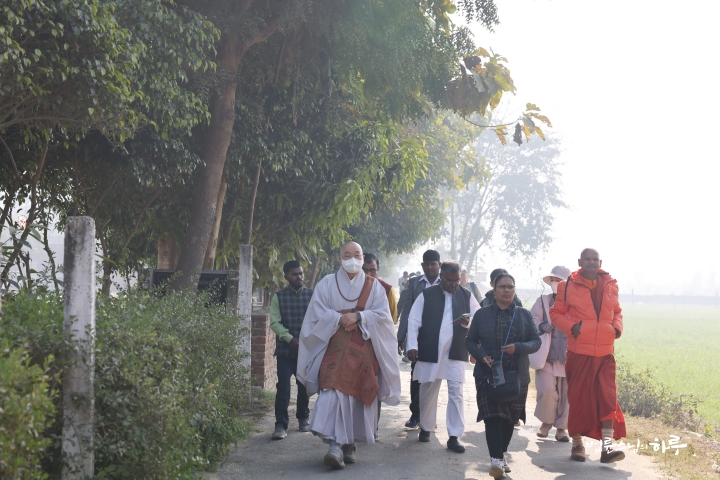
After about an hour’s drive, they arrived at the event venue in Kannauj.
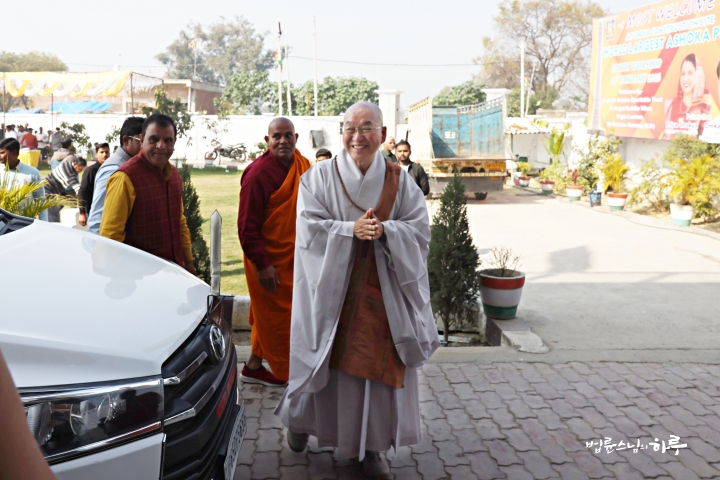
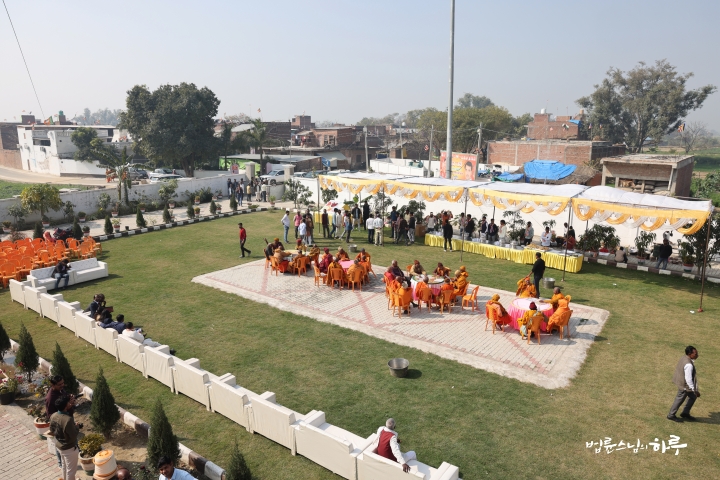
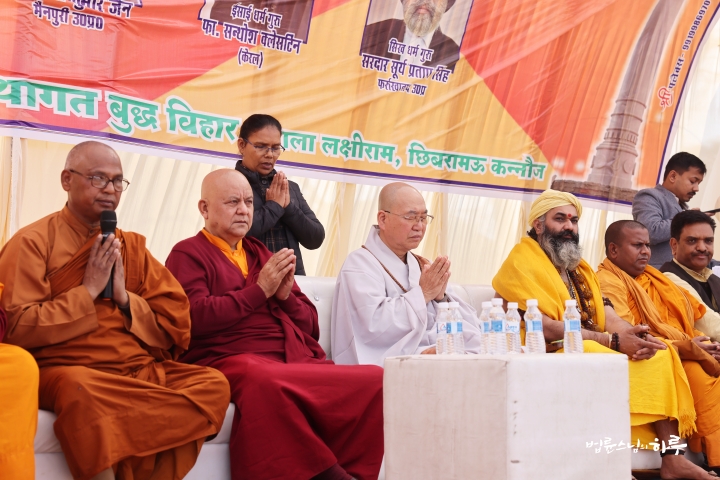
Today is the groundbreaking ceremony for building the world’s largest Ashoka Pillar by a member of the Shakya clan living in Kannauj. It was an event inviting religious leaders and politicians representing various religions in India. Sunim was the only foreign monk invited, as he has been supporting the activities of the Shakya clan for 30 years, and many Shakya clan members respect him.
Initially, the request was for Sunim to attend the completion ceremony of a temple built by the Shakya clan people living in Kannauj to give a dharma talk. However, upon arriving at the venue, it turned out to be a groundbreaking ceremony for the Ashoka Pillar. Subhash had repeatedly and earnestly requested Sunim to attend this event, but the explanation of the event’s purpose and content was insufficient. Nevertheless, Sunim attended today’s event, accepting Subhash’s request.
After arriving at the venue, lunch was served at 12 o’clock. The couple planning to erect the Ashoka Pillar offered a meal to Sunim and greeted him. After the meal, a member of the Shakya clan asked Sunim a question. Sunim answered the question.
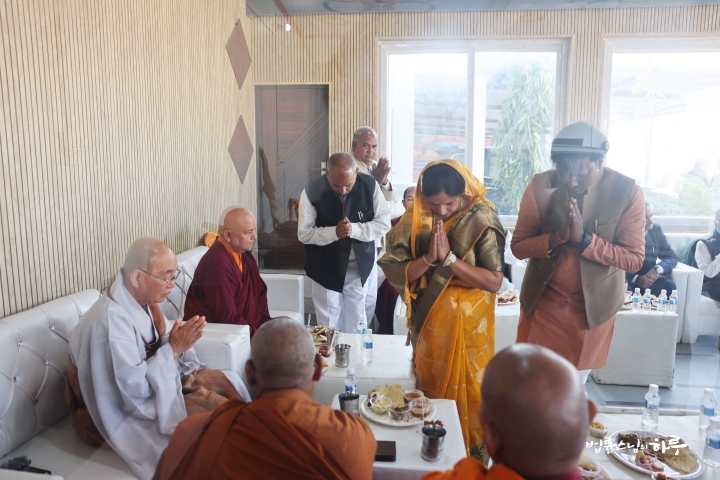
“Sunim, as you know, we are planning to erect an Ashoka Pillar. Since you have traveled to many countries and have a lot of experience, we would appreciate your advice.”
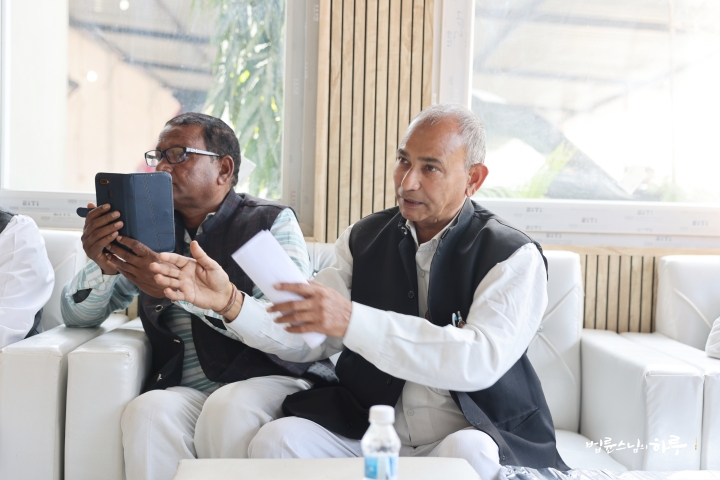
“There are Ashoka Pillars at each of Buddha’s sacred sites, and the Ashoka Pillar has become a symbol of Buddha’s sacred site to many people. I also want to leave an Ashoka Pillar here in Kannauj as a symbol to show future generations that the Shakya clan lived here.”
“King Ashoka was active 200 years after Buddha’s passing. King Ashoka took refuge in Buddha’s teachings and revered Buddha, so he personally made pilgrimages following Buddha’s footsteps. To commemorate Buddha’s deeds, he erected Ashoka Pillars at each sacred site. So, thanks to the Ashoka Pillars, later generations could know, ‘Oh, Buddha was born here,’ ‘Buddha attained enlightenment here,’ and learn about Buddha’s deeds. But what are you commemorating by erecting an Ashoka Pillar here now?”“Although it’s a small village now, Kannauj was once a large city that was the capital. A Shakya clan member from Kannauj is currently serving as the Chief Minister of UP state, and we want to erect this to show that during his term, a Shakya clan member from this village served as the Chief Minister of UP state.”
“I see.”“We are collecting money little by little, 1 lakh, 10 lakhs. We think if we connect with you, it will be a bigger promotion and we can collect more money.”
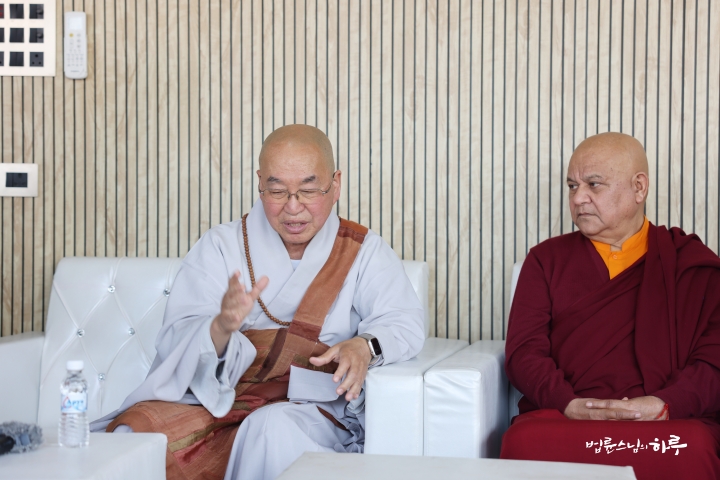
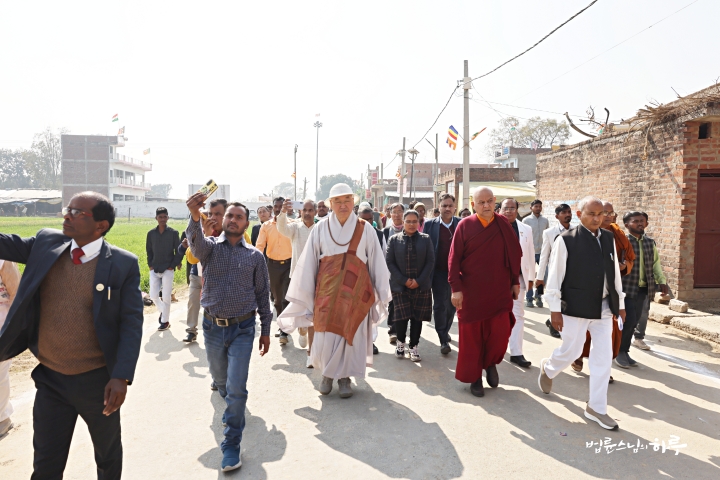
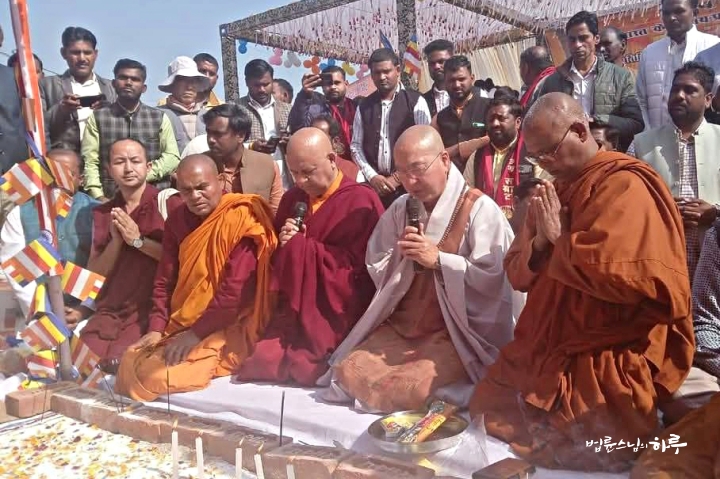
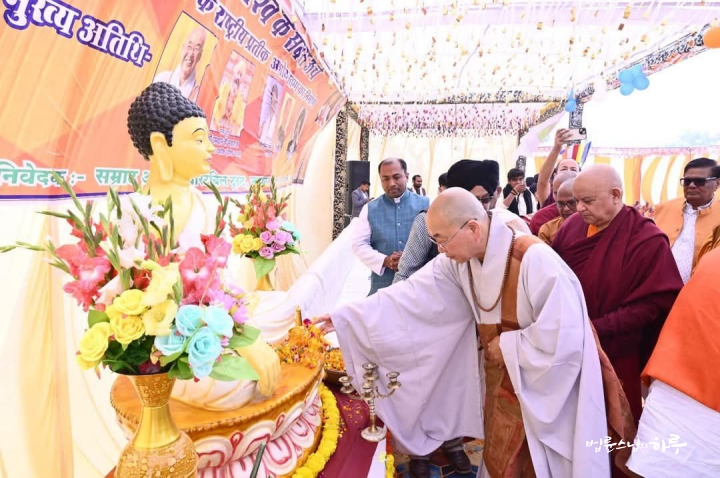
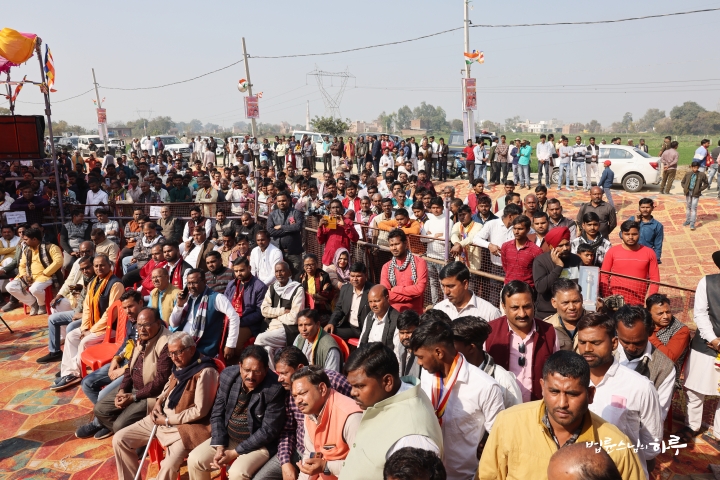
As the conversation was ending, it was time for Sunim to move to the event stage. The venue was very crowded with about 1,500 local villagers and invited guests from outside.
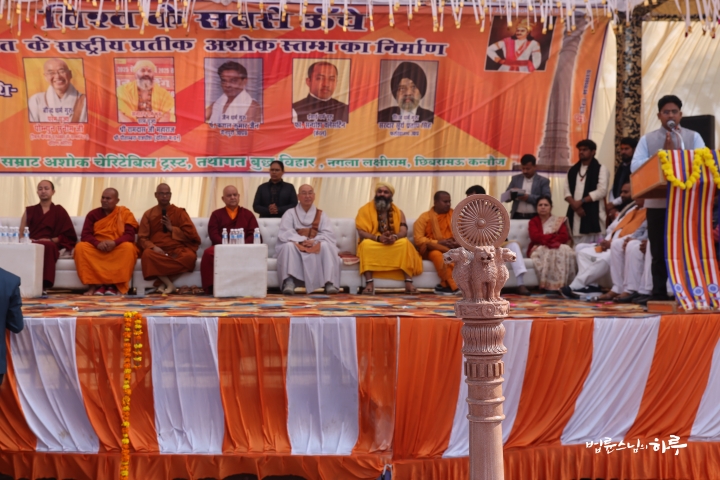
With the participation of various religious leaders from India, everyone performed a ceremony praying for the successful construction of the Ashoka Pillar, followed by blessing prayers in each religion’s way, and then Sunim gave a congratulatory speech.
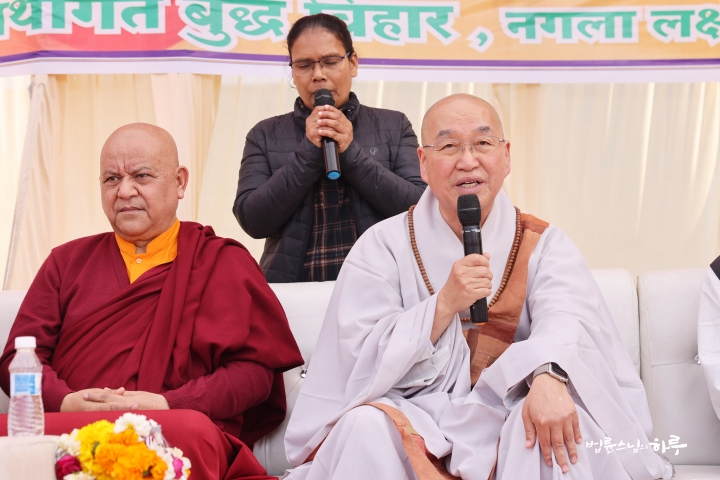
While Buddhism began with the Buddha, Emperor Ashoka played a crucial role in spreading it worldwide. Because this Dharma spread across the world and reached Korea where I am, I was able to receive the Buddha’s grace and become a monk.
However, this isn’t necessarily all good. If we consume this much, it will pollute the global environment. This will exacerbate the climate crisis. Therefore, we need to focus not only on development and growth but also on environmental conservation. Moreover, as people become more financially comfortable, they often become less compassionate, leading to many social problems. At such times, religion alone cannot solve these social issues. The Buddha’s teachings are at the forefront of solving various human sufferings. Instead of viewing Buddhism as just a specific religion, consider it as a hope for resolving human anguish. I hope you will also study Buddha Dharma.
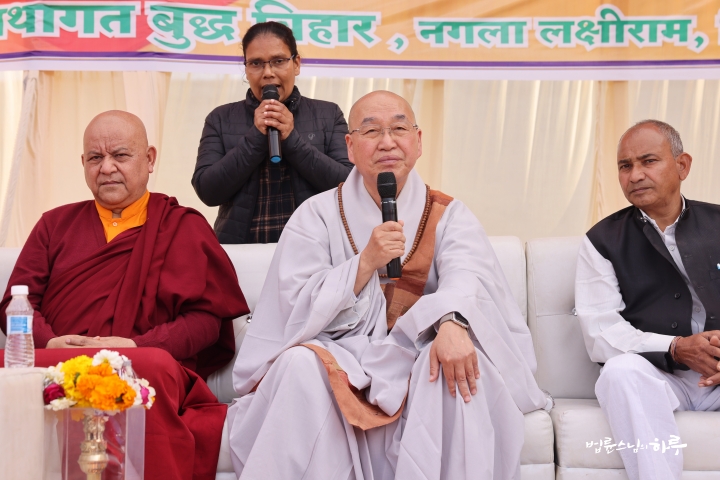
Despite the chaotic atmosphere filled with people’s chatter and trumpet sounds, the venue fell silent during Sunim’s Dharma talk. The 1,500 Indian attendees listened attentively to Sunim’s congratulatory message and erupted in applause when it concluded.
After finishing his congratulatory remarks, Sunim departed for Etawah. With some time left before the train’s departure, Subhash invited Sunim and his group to rest at his home. After traveling for about two hours from Kannauj, they arrived in Etawah at 4 PM, where Subhash’s wife, Narsha, rushed out to greet Sunim.
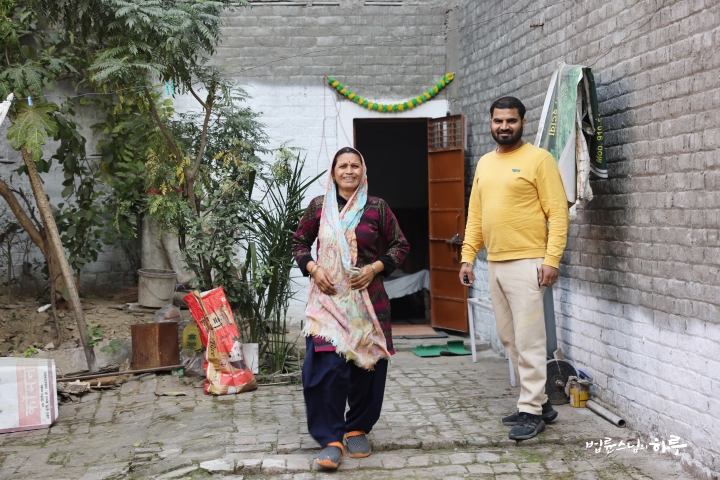
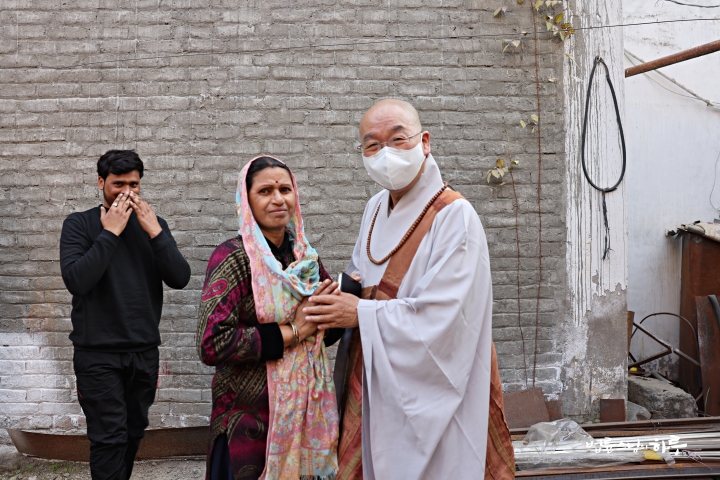
Guided by Narsha, Sunim rested briefly in a room before having dinner. He sat with Subhash’s family, exchanging greetings and inquiring about their well-being.
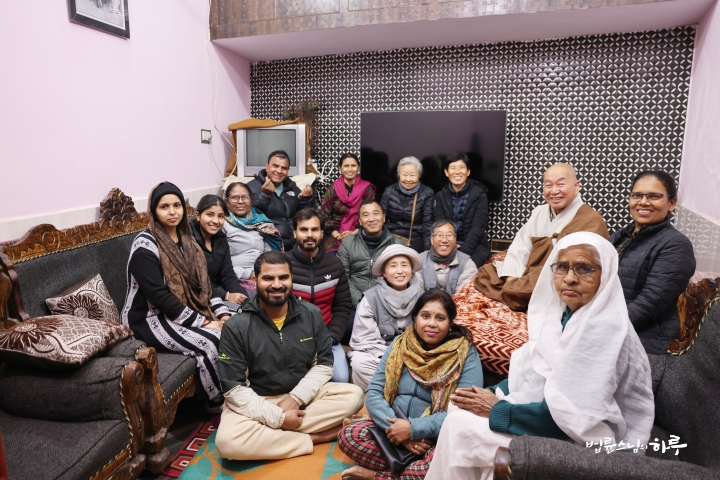
Before long, it was 9 PM. Subhash’s son, Vicky, drove Sunim and his group to the train station. Due to continuous delays, they boarded the train at 10:30 PM.
They are scheduled to travel by train for the next 12 hours, arriving in Gaya tomorrow morning.
As there was no Dharma talk today, the article will conclude by sharing a conversation between Sunim and a questioner from the Dharma Q&A session held for Korean expatriates at the Korean Cultural Center in Delhi on the 24th.
I Get Hurt When I Give, Should I Turn Away?
“I’ve been in India for 8 years now. When I thought about why I came to India, I realized it was to live a life of giving, so I initially tried to be very generous. I helped many newcomers to India and those who were struggling. However, what I received in return were reactions like ‘Why don’t you give more?’ or ‘Why are you being so inconsiderate?’ which was very difficult for me. If I give 50 rupees to a beggar on the street, they follow me asking for 100 rupees, and if I give 100 rupees, they ask for 200 rupees. It eventually got to the point where all the money in my wallet was gone. I’m confused about whether I should just leave newcomers to India to struggle on their own, or if I should continue giving as I have been, managing my own feelings alone despite getting hurt. It’s so difficult that I wanted to ask you about it.”
“Do as you please. If you want to do it this way, do it this way, and if you want to do it that way, do it that way. The world doesn’t improve much just because you give, nor does the expatriate community suffer if you don’t give. If you like giving, then give, and if you don’t like it, then stop. When people ask me, ‘Should I give to Indian children when they beg ‘baksheesh?” I answer like this: ‘Do as you please. Give if you want to give, don’t if you don’t want to. The child won’t live well just because you give, nor will they starve to death if you don’t. If you feel uneasy not giving, then give. If you think they’ll just buy candy with it, then don’t give. It’s up to you. You’re not giving for the child’s sake. Don’t think of it as if you’re doing something for the world.’ Think about it. For example, let’s say you lent money to a struggling classmate at a reunion. All your classmates praised you for helping a friend in need. Now, who do you think they’ll contact first when they’re in trouble? The person who gave money or the person who didn’t? Of course, they’ll contact the person who gave money. But if they contact someone who didn’t give money and don’t receive help, that’s the end of it. However, if they contact the person who gave money before and don’t receive help this time, they’ll curse at them. There’s no reason to curse, but they don’t think that way. They curse, asking why that person gave to others but not to them. Therefore, I don’t know how much you’ve helped, but if you have, you’ll probably receive more requests. And if you don’t help, it’s inevitable that you’ll be cursed at. This happened because you didn’t know that this action would lead to this result. I’ve been running schools in India for 30 years. Do you think people in this area will praise me or criticize me in the future? As time passes, the probability of criticism is high. Why is that? When they were living among themselves, they had no relationship with me. But when I built an elementary school to help them, they were grateful. However, when a child graduates from elementary school, they’ll want to go to middle school. So they’ll ask, ‘Please send them to middle school,’ and if I don’t, they’ll feel bad. At first, they might feel a bit bad, but a young child can’t harm me much. So if I send them to middle school, next they’ll want to go to high school. And if I don’t send them to high school, they’ll curse at me. Not everyone thinks, ‘Thank you for sending me to middle school.’ More people think, ‘If you’re going to educate us, you should do it properly. How can we get jobs like this?’ And if I help them graduate from high school, now they’ll want to go to university. After graduating from university, if they can’t find a job, they’ll ask for help finding employment. If I don’t help, they’ll criticize me. Others might think they’ve been betrayed when they’re criticized, but I think it’s natural for them to criticize. The children can criticize because they’ve been educated. If they hadn’t been educated, they wouldn’t have the ability to criticize. because they’ve been educated, they know how to protest and criticize. When I first started building schools, I predicted this. If I had expected to only hear good things after helping, I might regret, ‘What has my life come to after working for the village and children for 30 years?’ But that’s not a problem with those people, it’s proof that I was foolish. Therefore, we need to understand this when we help others. It’s not important whether we receive criticism or praise. Didn’t we teach the children so they could know how to resist and criticize? If not, why would we teach the children? When I started building schools and teaching children, many high-caste people in India initially opposed it. They said, ‘If you educate them, you’ll only end up being cursed at later. They have no loyalty. Even we find it difficult to use them.’ So I replied:‘I know that too. It’s natural that when children learn, they’ll know how to look after their own interests, and they’ll know how to resist when things don’t go their way. Not everyone will be grateful that we built a school. Some will come and protest, asking what we’ve actually done for them.’
I’ve done something where the results are predictable. Similarly, if you help others and then feel disappointed, that’s not a problem with the expatriates, it’s your problem. So if you want to do it that way, do it that way, and if you think ‘Why bother helping if this is what I get’ then there’s no problem if you don’t help. If you bring an Indian housekeeper to live with you, there are cases where they go home for a holiday and don’t return. If they don’t come back, you might feel betrayed, thinking they could at least call to say they’re not coming back. But that’s all from our perspective. If you paid them as much as you would pay a Korean person, this would never happen. When you give Indian children 1 rupee, they follow you asking for more after a while. When I first came to India, children followed me a lot, and I said, ‘I just gave you money, why are you following me?’ Then, thinking it was strange, I sat down and experimented. When a child asked for 1 rupee, I gave it again, and I did this 37 times before they stopped holding out their hand. Even after giving 37 times, it’s only 37 rupees. If I had given 100 rupees from the start, they wouldn’t have followed me, but I got angry for having to give 37 times even though it was only 37 rupees. If you’re going to live in India, you shouldn’t curse at Indian people. If you do, why are you living in India instead of going back to Korea? If you’re going to live in India, you need to adapt to life here. Why do you think Korean people were attacked by Black people during the riots in LA in the past? It’s because they earned money from Black neighborhoods but lived in White neighborhoods, which made Black people feel bad. Similarly, everything that happens in the world has a cause. So don’t feel too wronged, and knowing this, do many good deeds.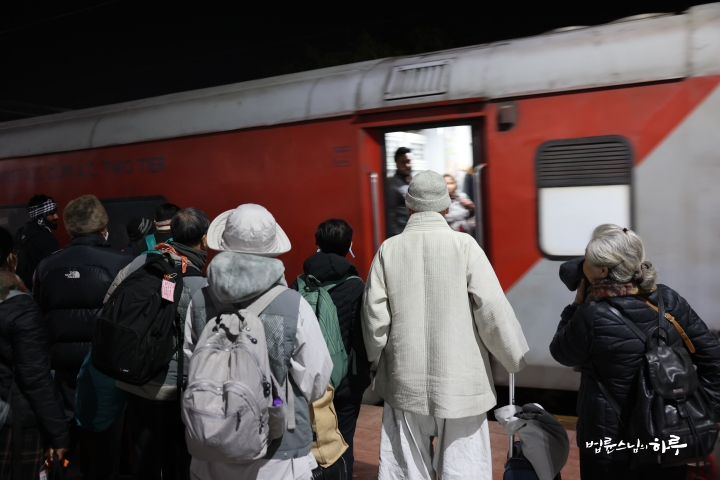
They’re asking for more because you gave them money. Who would ask for more from someone who doesn’t give anything? Once you start donating to a company or expatriate community, all sorts of organizations will contact you asking for donations. People seek out those who give money, not those who don’t. Even Indian children cling to those who give money. If you don’t give money and just walk away, they’ll follow you for a bit and then stop. But if you engage in conversation or even make eye contact, they’ll follow you for miles. That’s human psychology. It’s good to know this if you’re living in India. If you don’t like it, you can always go back to Korea.
“Thank you. I understood well.”