My Husband Complains That I Speak Too Harshly, What Should I Do?
January 24, 2025 - Dharma Q&A for Korean Residents at the National Museum of Delhi, India
Hello. Today, Sunim traveled to Delhi with the pilgrims to visit the National Museum of Delhi. He conducted the Friday Dharma Q&A broadcast and gave a lecture for Korean residents at the Korean Cultural Center. Afterwards, he had dinner with the Ambassador and consuls at the Embassy of the Republic of Korea in India.
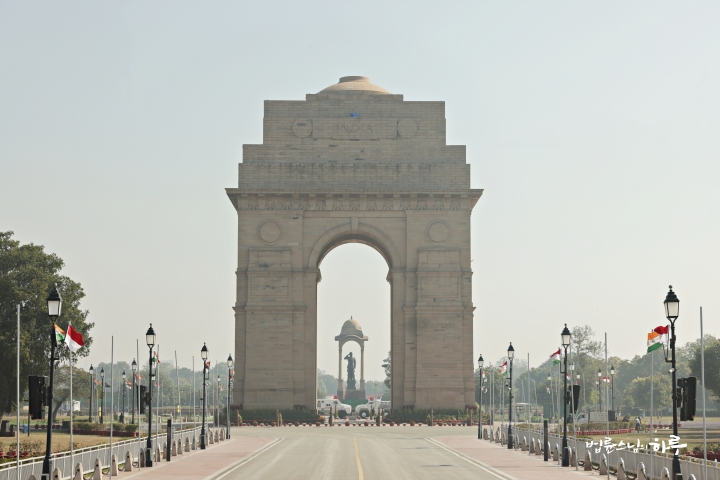
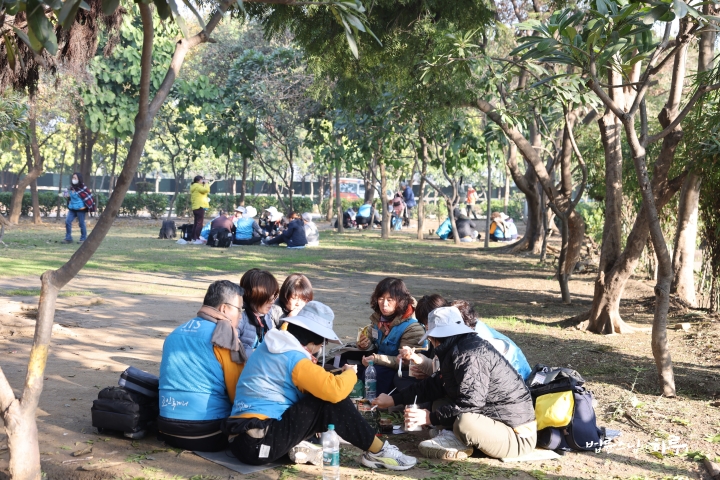
At 3:50 AM, Sunim and the pilgrimage group departed from Sankasia for Delhi. After boarding the bus, they performed their morning practice and meditation before falling into a deep sleep. After about a 6-hour drive, they arrived at a rest stop near Delhi at 9 AM. At the rest stop, they had their last meal together with the group members who had shared joys and sorrows throughout the pilgrimage.
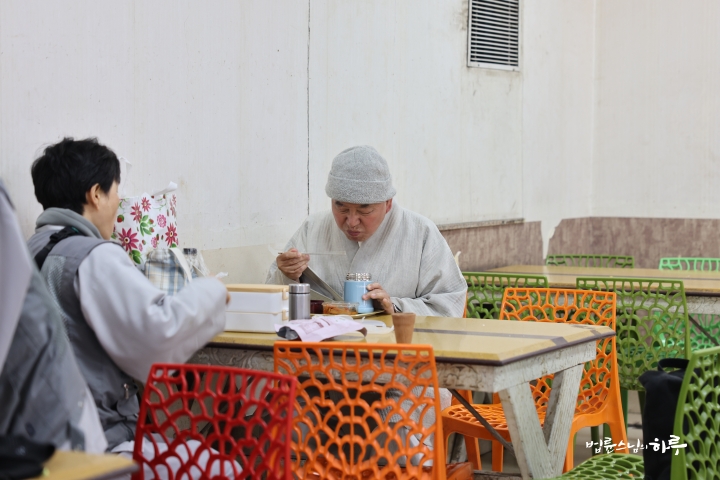
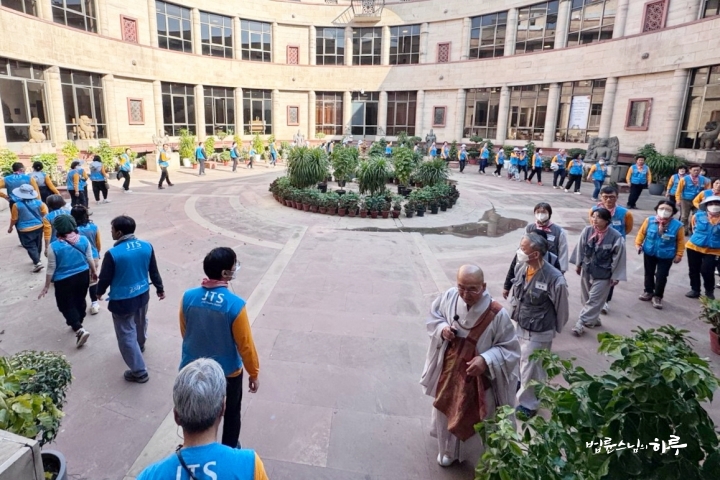
After breakfast, they traveled for about an hour more and arrived at the National Museum of Delhi at 11:30 AM. The pilgrimage group was divided into advance and rear parties to tour the museum. Sunim began guiding those who arrived first at the museum entrance.
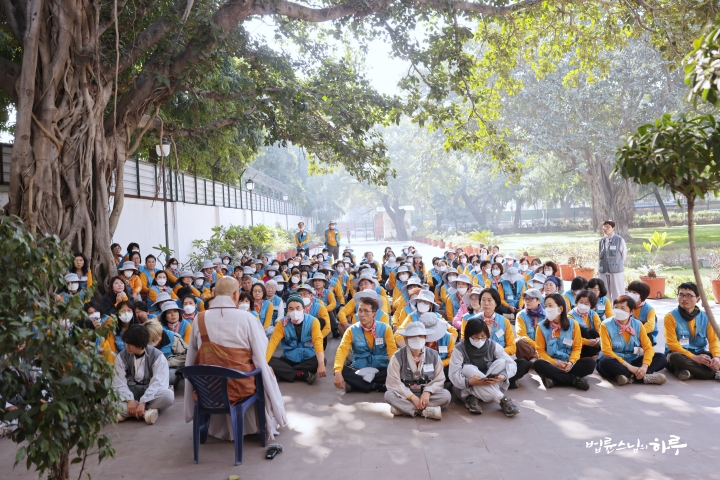
Sunim continued explaining about the exhibits.
“Inside the museum, there are Buddhist artifacts from the Indus Valley Civilization, Maurya Dynasty, Kushan Dynasty, and Gupta Dynasty. Following these, you can see Hindu deity statues, ivory artifacts, and traditional Rajasthani paintings. Behind the painting exhibition hall, there are artifacts from the British colonial period and the Mughal Empire, followed by exhibits on the history of Indian coins and scripts, and textile displays. What we should particularly note is that the Buddha’s relics discovered in Piprahwa and the genuine relic stupa are displayed here, allowing us to pay our respects.”Sunim explained while touching on India’s history and culture.
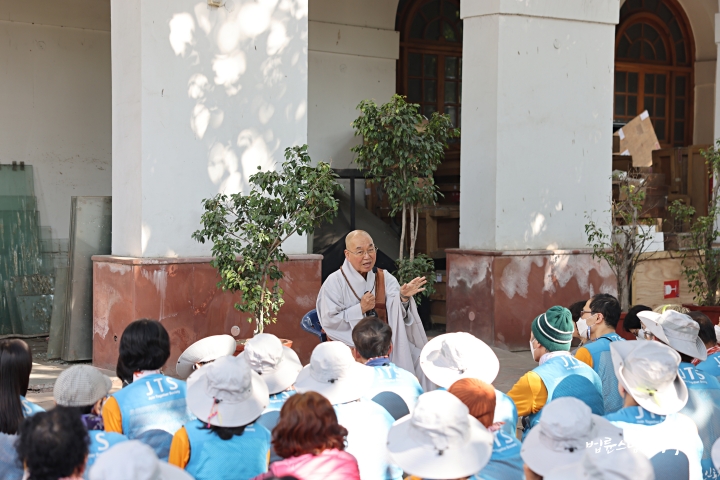
Sunim also explained that there could be misunderstandings in perceiving India as a single country.
“Viewing India as a single country is as mistaken as viewing Europe as one country. Just as there are various countries within Europe, India too consists of numerous regions and cultures.”Sunim explained the historical flow of India from the Maurya Dynasty to the Gupta Dynasty and the Mughal Empire, and also touched on the intersection of Buddhism and Hinduism.
“During the Maurya Dynasty, King Ashoka unified most of the Indian peninsula and adopted Buddhism as the central ideology. As it transitioned to the Gupta Dynasty era, Hinduism flourished and became reestablished as the central ideology of India. During the Gupta period, caste and gender discrimination were strengthened, even leading to the prohibition of women’s ordination.”Finally, he added some points to be cautious about.
“The reason we came here is not to study Indian culture. We came to see the Buddha statues from the Indus Valley Civilization, Maurya period, Kushan period, Gupta period, and the genuine relic stupa that we couldn’t see in Piprahwa. Feel free to look around, but don’t break away from the group while taking photos. I’ll give you free time later. Since we have a large group, let’s move in a single file and be careful not to inconvenience other visitors.”
After finishing the explanation, they entered the museum and slowly looked around the artifacts. During the tour, Sunim added brief explanations in front of some exhibits.
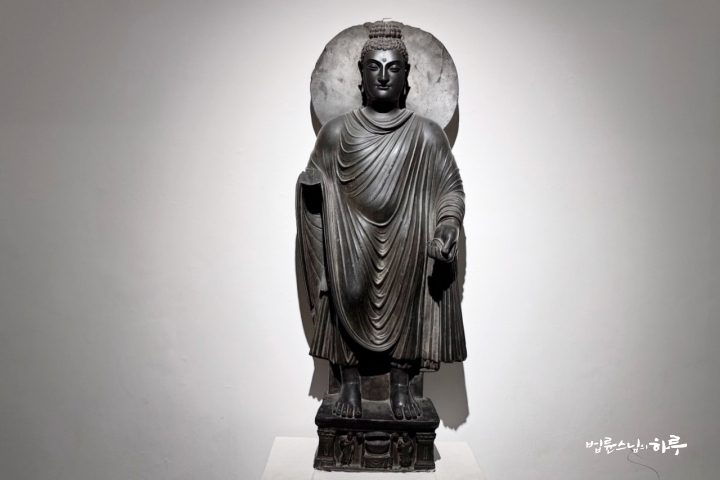
“Do you see how the left knee is slightly bent? This sculpture depicts the Buddha walking. It represents the Buddha in action, practicing. By the way, we tried to model the Buddha statue at the entrance of our Jungto Social and Cultural Center after this work. However, we couldn’t properly express the bent knee, so it ended up looking a bit stubby.” (laughter)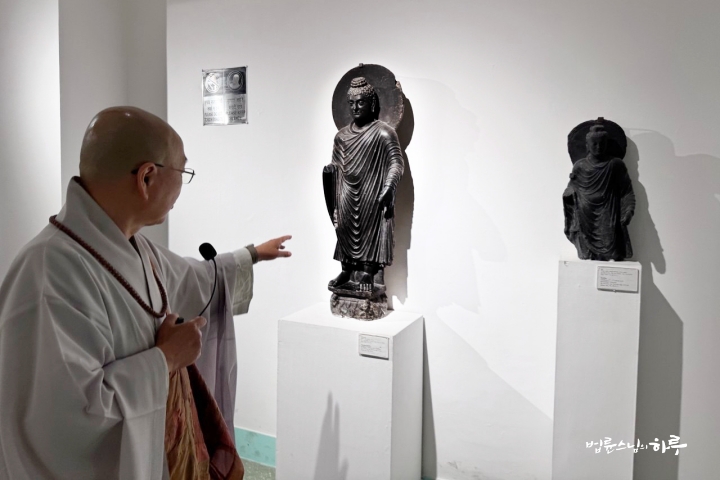
In front of the genuine relics, everyone paid their respects together by performing three bows.
“These are the genuine relics discovered in Piprahwa.”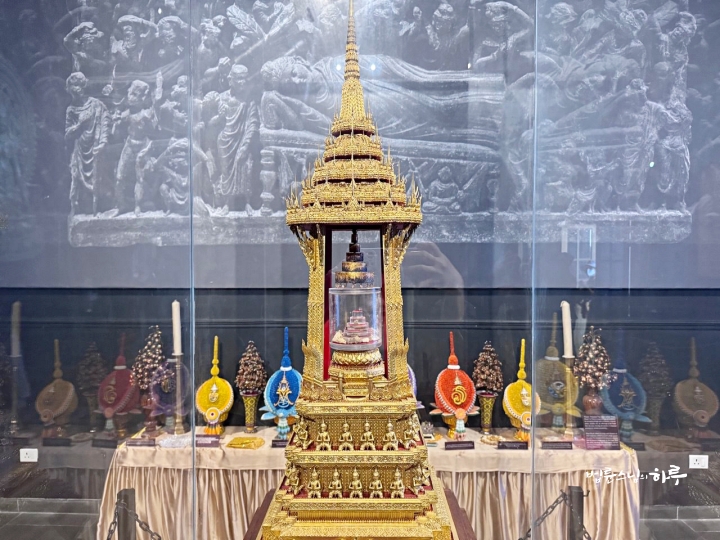
After giving two museum tours, Sunim bid farewell to the pilgrimage group and moved to the Korean Cultural Center to broadcast the Friday Dharma Q&A at 3 PM.
Upon arriving at the Korean Cultural Center at 3:30 PM, the director and several staff members warmly welcomed Sunim at the entrance.
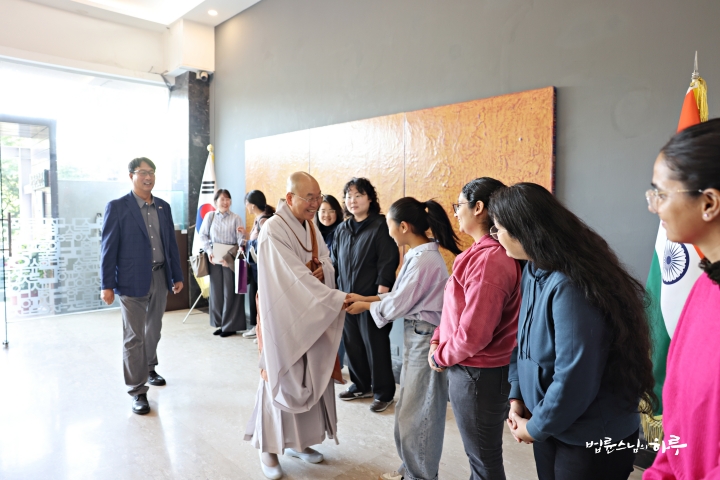
“Hello, welcome. Please come in.”
Before preparing for the broadcast, Sunim had a brief tea conversation with the director, discussing the changes and developments in India.
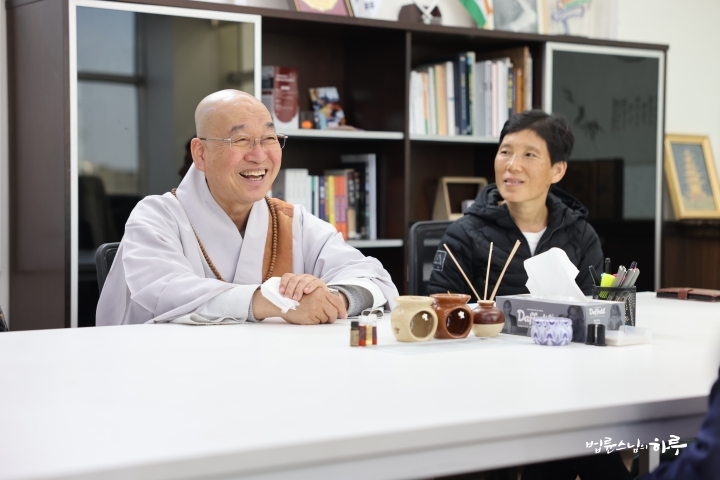
“Yes, the pace of development in India feels incredibly fast these days. During the COVID-19 pandemic, it seemed like the whole world had stopped, but now international exchanges are actively taking place again.”
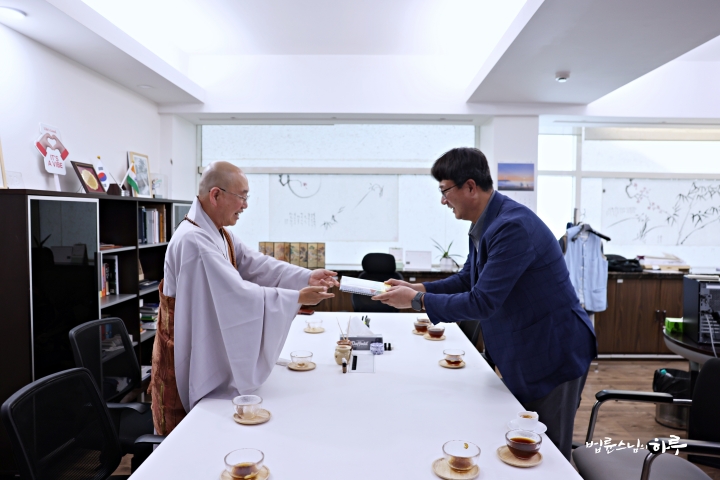
Sunim presented a book to the director as a token of gratitude before heading to the broadcast location.
At 4 PM Indian time (7:30 PM Korean time), the Friday Dharma Q&A live broadcast began. Sunim conversed with four people who had submitted questions in advance. One of them had been taking medication for obsessive-compulsive disorder (OCD) for ten years and asked Sunim for advice on how to manage their mind, as their symptoms become unbearable when stressed.
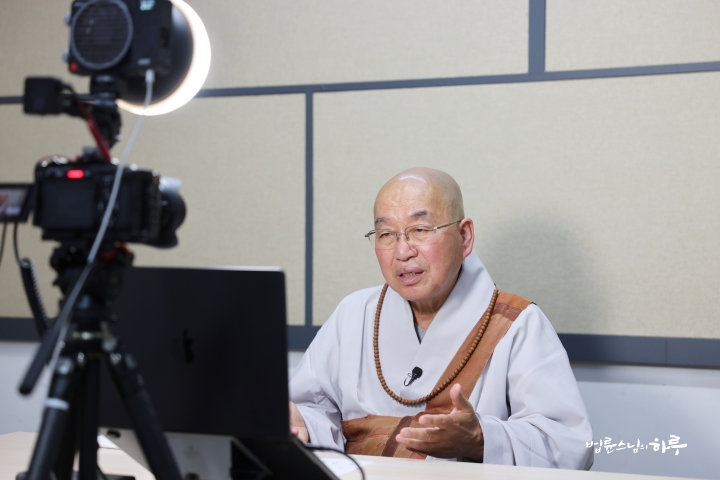
When OCD Worsens, It’s Unbearable
“I’ve been taking medication for OCD for 10 years, which allows me to function in daily life. However, when I’m stressed or something bad happens, I can’t do anything, and my OCD becomes severe. It affects those around me, and above all, it’s incredibly difficult for me to endure. I’m wondering how I can comfort myself during these challenging times.”
“Let’s say you had injured your leg and it was in a cast. But you really want to run. What should you do in that situation?”“Um… I’m not sure.”
“If someone with a leg in a cast really wants to run but can’t, there’s no solution in this situation. Do you think asking me, Pomnyun Sunim, will provide an answer? Do you think praying to Buddha will give you a solution? In this situation, first, you need to wait until the bone heals. You shouldn’t feel frustrated about wanting to run but not being able to. You have to wait until you’re healed. If you had OCD but weren’t aware of it, I would have first advised you to go to the hospital for a checkup. If the hospital diagnosed you with OCD after the examination, they would have told you to take medication. But you’re already going to the hospital and taking medication for your OCD. It seems like you’re saying, ‘I want to live a normal life now,’ ‘I want to live like ordinary people,’ but there’s no such method available. If you’ve injured your leg, you have to use crutches or a wheelchair, even if it’s inconvenient. You have to accept the discomfort. You should think, ‘It’s a bit inconvenient, but it’s better than having both legs broken. It’s better than dying.’ This is the perspective you need to have. You’re currently going to the hospital and receiving treatment from a specialist. Do you think I suddenly have a way to cure something that hasn’t been cured despite that?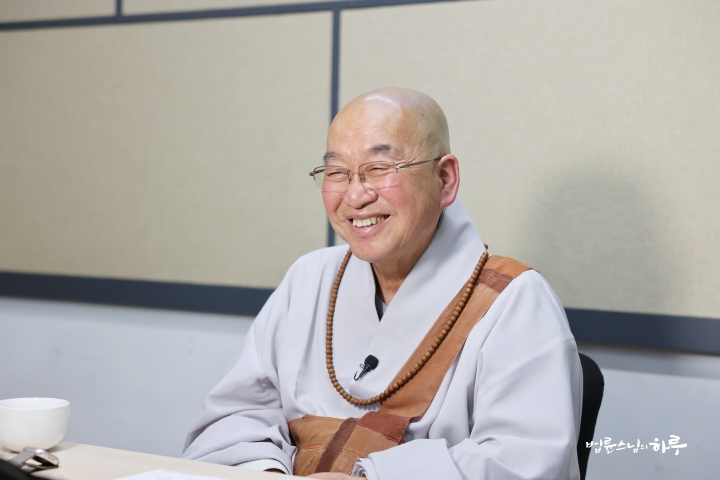
“Listening to your words, Sunim, I feel much more at ease. I asked this question thinking I needed to completely cure my OCD, but you’ve made me realize that such thinking can make it worse.”
“Yes, thank you for listening. Being greedy can worsen OCD. The more you cultivate grateful thoughts like ‘I’m fortunate to be this way,’ ‘I’m grateful I can walk,’ ‘I’m thankful I can manage daily life,’ the more your symptoms will alleviate. Physically, exercising a lot helps. Especially lower body exercises are beneficial. Walking a lot and doing bowing exercises are good. If you need to have a job, it’s better to avoid work that’s time-pressured or subject to others’ evaluations. It’s good to do work that you can do at your own pace when you have time. Have the mindset of ‘It’s okay if the income is low. I’ll live with less food and clothing.’ When studying, it’s fine to study out of curiosity, but avoid exam-oriented studying. That can make you anxious and worsen your condition. Try this approach and see how it goes.”“Thank you. I understand well.”
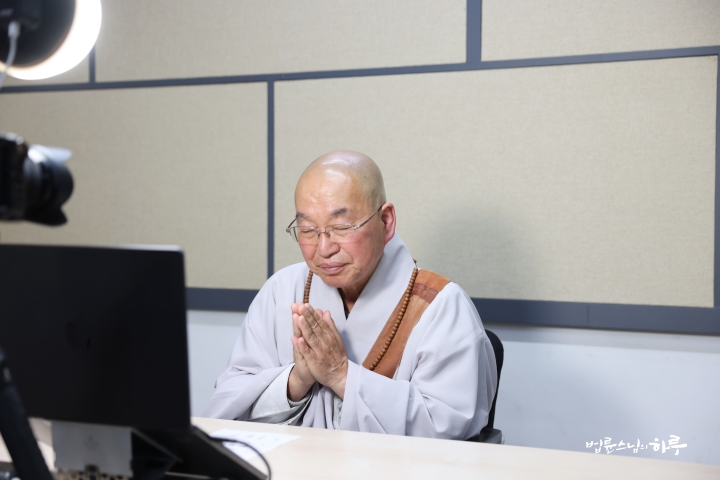
During the broadcast, Sunim’s voice suddenly became hoarse, but he finished the conversations with four questioners. After soothing himself with a warm cup of ginger tea provided by the director of the cultural center, he immediately proceeded to conduct a Dharma assembly with the Indian community in the basement hall of the cultural center at 5:30 PM. Sunim began with opening remarks.
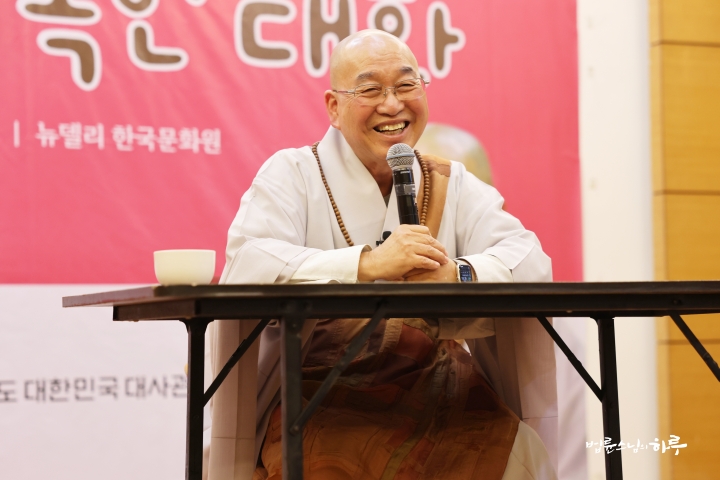
Following this, anyone could raise their hand and ask Sunim questions. The questions kept coming, and one person expressed concern about her husband’s complaints about her speaking harshly, worrying that conflicts might worsen after retirement when they spend more time together, and sought Sunim’s advice.
My Husband Complains That I Speak Harshly, What Should I Do?
“I have a husband who is about to retire. Until now, my husband didn’t have many complaints about me, but as I’m getting older, he says I speak to him more harshly. He says I’m speaking in a way that’s uncomfortable for him to hear. When he retires, we’ll have more time together, but honestly, I’m not confident I can change the way of speaking that my husband finds unpleasant. When I was younger, I might have been more patient and spoken more nicely, but as I’ve gotten older, I seem to be less patient and express myself more freely. As we spend more time together, this is likely to happen more frequently, and if my husband isn’t working and I speak harshly, he’ll feel hurt, won’t he? In this situation, what mindset should I have so that my husband is less dissatisfied and I’m less dissatisfied too?”
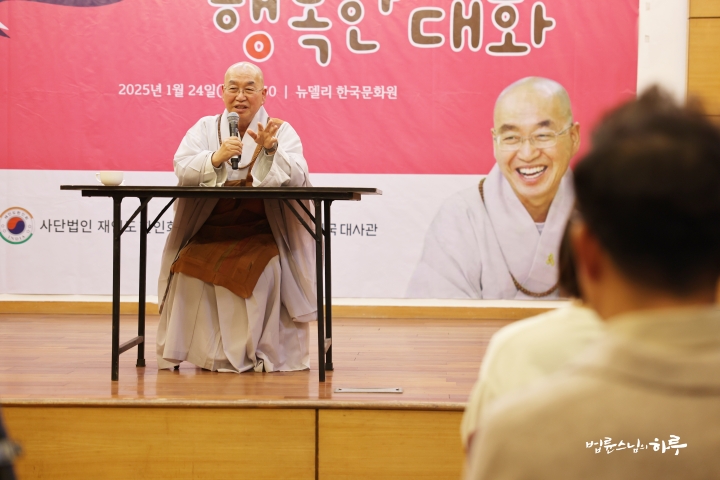
“But then I’ll feel wronged.”
“What do you feel wronged about?”“As I get older and live with my husband, stress builds up.”
“If you’re stressed, you should say, ‘This is stressing me out.’ Why speak harshly? The reason for speaking harshly is because you’ve been holding it in. When people get angry, they usually don’t get angry right away, but after holding it in about three times. They say things like, ‘Not once, not twice, but I’ve had enough!’ and get angry. That’s why you shouldn’t hold it in. When I say don’t hold it in, I don’t mean get angry right away, but if you feel bad, say something like, ‘When you say that, it makes me feel bad.’ Don’t suppress your feelings, but express them lightly. Don’t say, ‘It’s because you did something wrong that I’m like this,’ but rather, ‘When you say that, it makes me feel this way.’ Try expressing it like this. If someone were to say to me, ‘Sunim, when you give Dharma talks like that, it makes me feel bad!’ that puts the responsibility on me. But if they say, ‘When you spoke like that today, Sunim, it made me feel uncomfortable,’ this isn’t shifting blame to the other person. If they express it that way, even I would think, ‘I should be more mindful next time.’ You need to practice expressing your feelings lightly without shifting blame to the other person. It’s because you’ve been holding it in that your words come out harshly. If you don’t hold it in, there’s no reason for your words to be harsh. Also, harsh speech might be due to the Gyeongsang-do dialect. Where are you from?”“Busan.”
“Where is your husband from?”“Busan.”
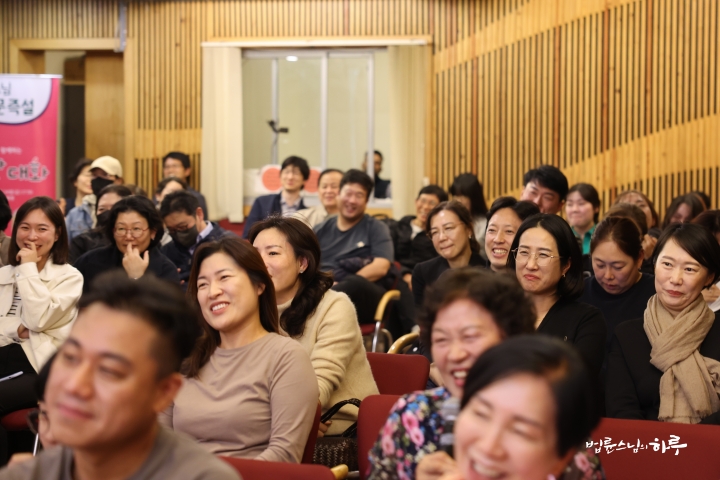
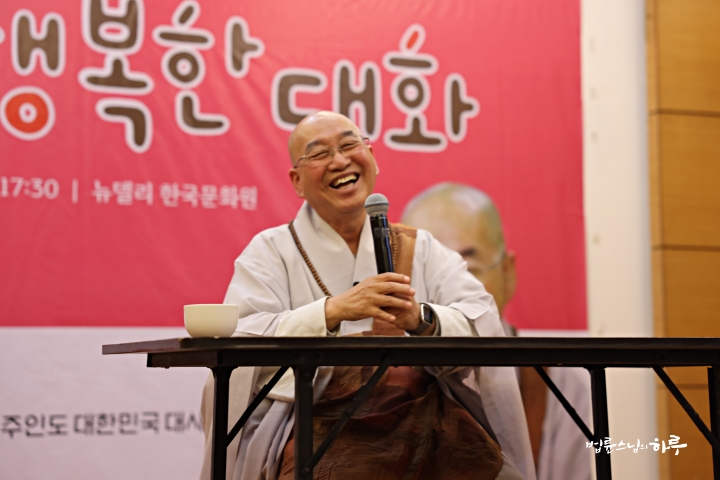
“Yes, thank you.”
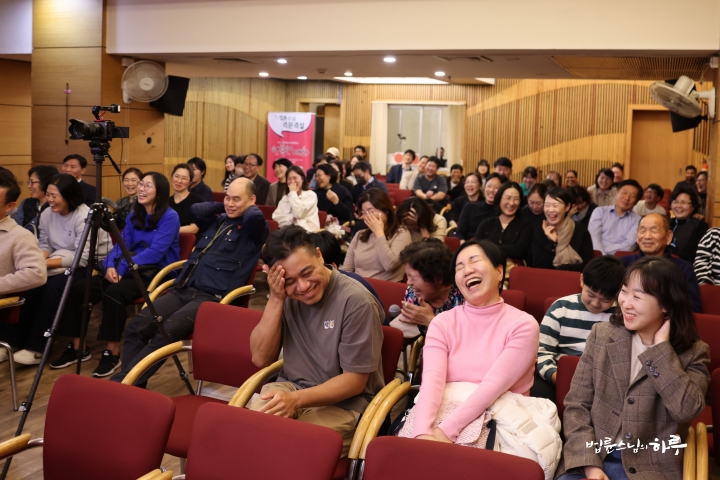
In a lively atmosphere, Sunim engaged in dialogue with six people. Although it went longer than the scheduled time, Sunim answered each question thoughtfully, spending a meaningful time with the expatriates.

After the lecture, Sunim took a commemorative photo with the attendees and then hurriedly departed for the Korean Embassy in India at 7:40 PM. This was because the newly appointed ambassador had invited him for dinner. Arriving at the embassy after 8 PM, the ambassador and consuls greeted Sunim at the entrance.
“Sunim, thank you for coming from so far away.”
“Thank you for inviting me. I’m sorry I’m late; the expatriate lecture in Delhi ran a bit long.”“Not at all. You probably haven’t had anything since lunch, so let’s start with dinner first.”
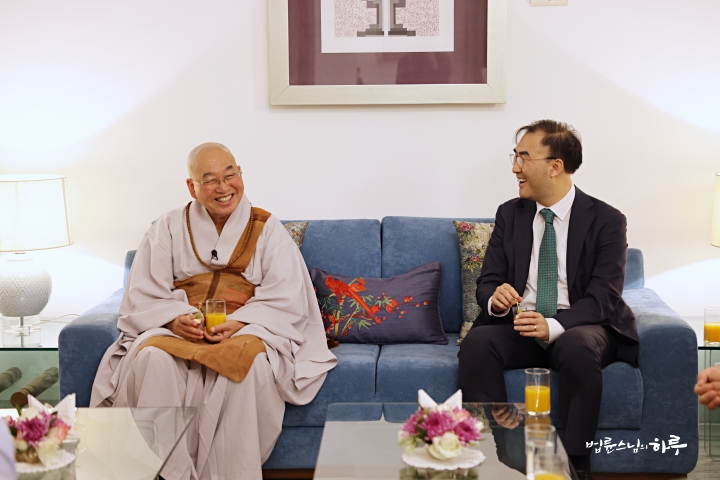
During dinner, Sunim and the ambassador engaged in an in-depth conversation about India’s history, civilization, international exchanges, and pace of development.
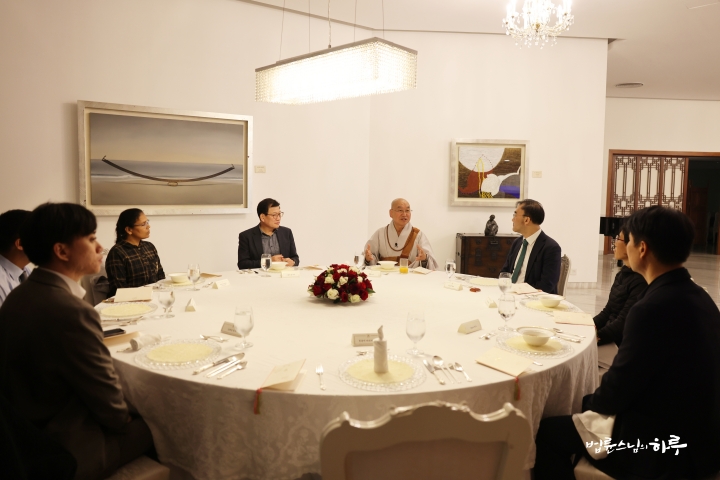
The ambassador and consuls showed great interest in Sunim’s overseas activities, and various stories were shared about Sujata Academy, the establishment of schools in Syria, and sustainable development cases in Bhutan. One consul shared his experience of visiting Sujata Academy last year.
“Sunim, I visited Sujata Academy last year, and it was truly moving. Seeing it in person was completely different from just hearing about it. I could vividly feel not only the children’s presence but also the positive impact on the villagers and the village itself. I strongly recommend that the ambassador visit as well.”
In response, Sunim brought up the topic of the Korean Wave.
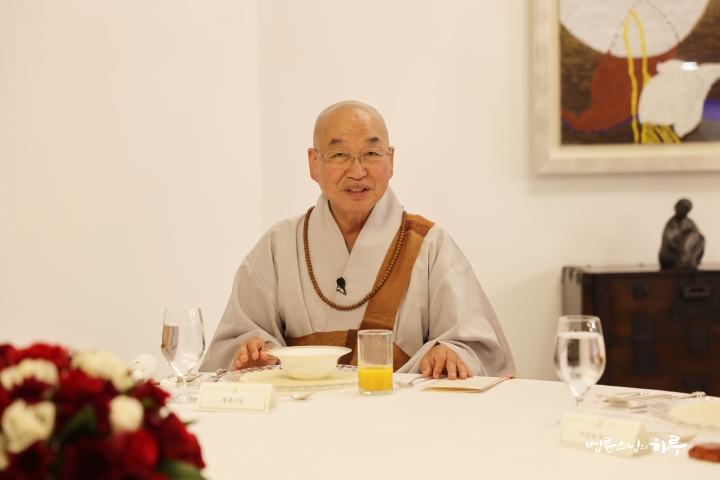
As the conversation continued past 10:30 PM, the ambassador said:
“I heard that you finished your pilgrimage today, Sunim. You must be tired. Thank you for staying with us until this late hour.”
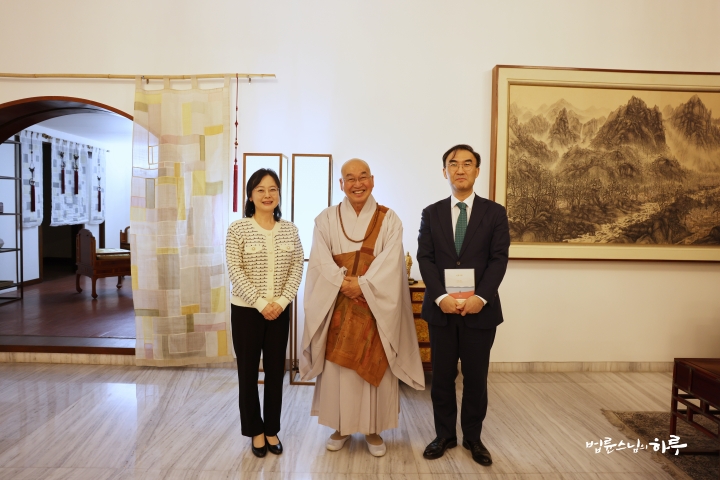
After taking a commemorative photo with the ambassador and his wife, Sunim returned to his lodging at 11:30 PM. Upon returning, Sunim proofread his manuscript before concluding the day.
Tomorrow, he plans to move back to Sankasia to conduct training with the Shakya clan.