The Buddha Seems to Have Rejected Religious Rituals, So Why Do We Perform Them?
Jan 22, 2025 - Indian Pilgrimage Day 12, Jetavana Monastery
Hello. This is the 12th day of our Indian pilgrimage. Today, we held a live-streamed Dharma assembly in Shravasti, and visited the sites of the Sudatta Stupa and the Angulimala Stupa, as well as Jetavana Monastery.
Sunim finished his morning practice and meditation, and began the Dharma assembly at 6:30 AM local time. As Jungto Society members entered the video conference room, Sunim greeted them.
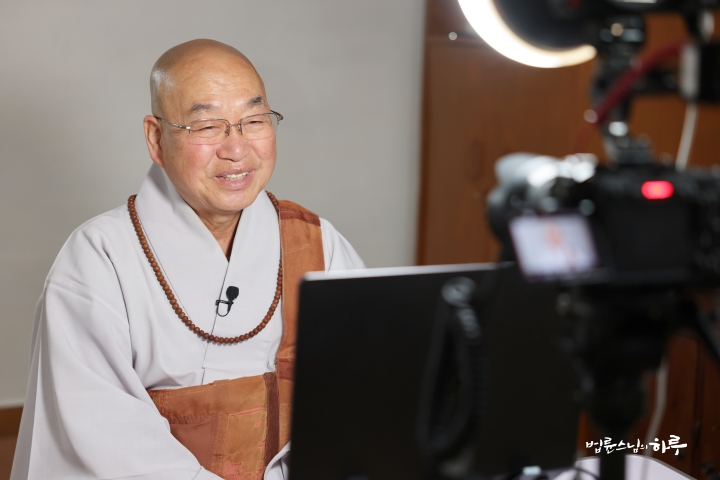
Why We Often Part on Bad Terms with Family After Meeting During Lunar New Year
Soon, you’ll be meeting your families for Lunar New Year. Why is it that we often part on bad terms rather than with good feelings after these reunions? There are several reasons, but two main ones stand out. First, our expectations are too high. When family members are apart, we tend to remember only the good times, which inflates our expectations. When we actually meet, everyone is focused on their current lives, leading to disappointment as they don’t match our memories. Second, when living with family as children, we often experience more conflicts and hurts than good times. However, when we live apart, the bad memories fade and only the good ones remain, making us long for the past. When we meet again and see familiar behaviors or hear certain tones of voice, old wounds resurface, leading to new conflicts. So, one issue is that buried negative memories resurface, and another is that our longing creates unrealistic expectations, leading to disappointment. These are the main reasons why we often part on bad terms after holiday gatherings rather than on good terms.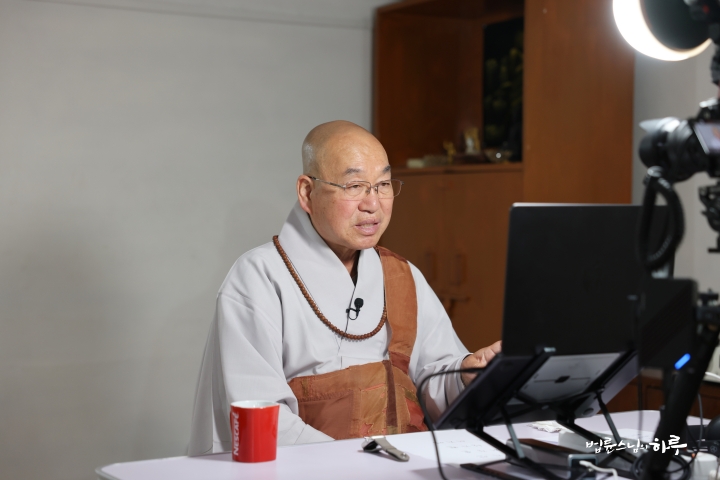
To have a good holiday, we need to accept that our family members are different from us. Don’t have high expectations, and even if you see unpleasant behavior, think to yourself, ‘This is just my old wound.’ If you see something that needs to be done, take the initiative to do it yourself. Never compare family members. Especially if you’re an elder, be very careful not to say things like ‘This child is like this, that child is like that.’
Following this, four pre-selected individuals asked questions and engaged in dialogue with Sunim. The conversation quickly spanned an hour and a half. As the live stream concluded, Sunim offered closing remarks.
“Our society is currently in turmoil. From an outside perspective, South Korea appears to be a great country, yet many people here are worried about Korea these days. It’s not common for a president to be arrested, which is causing concern. Following this period of political unrest, there’s a high possibility of economic difficulties ahead. We need to resolve the current issues democratically, according to the will of the people and the law. Instead of insisting only on our own views, we should strive to understand and embrace each other, prioritizing national unity. Based on this unity, we should work to ease tensions between North and South Korea and cooperate, hoping that by 2025, South Korea will be on a path of mutual prosperity.”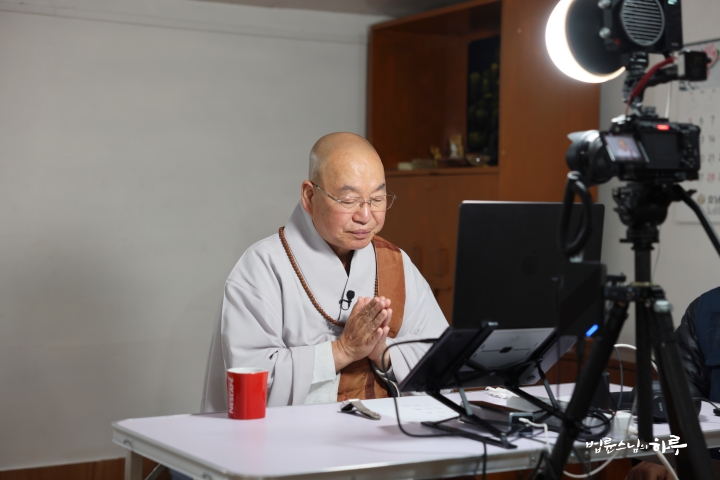
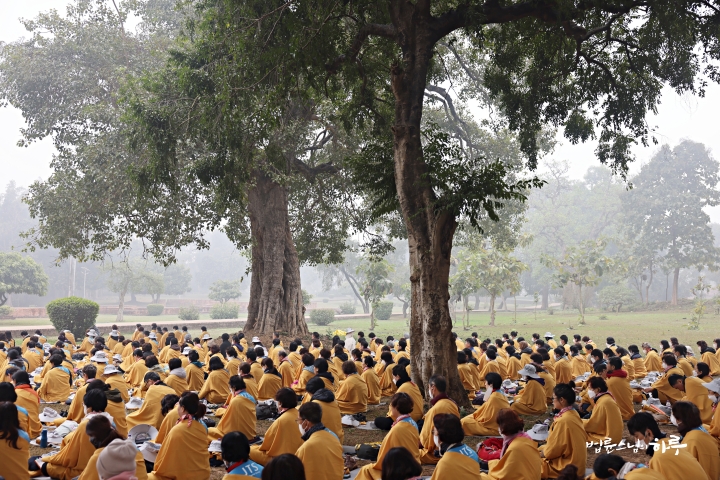
While Sunim was conducting the Dharma assembly, the pilgrimage group walked to Sudatta’s stupa site at 7:30 AM. After finishing the assembly, Sunim immediately went by car to Angulimala’s stupa site. A thick fog had descended, making the ground very wet as if it had rained.
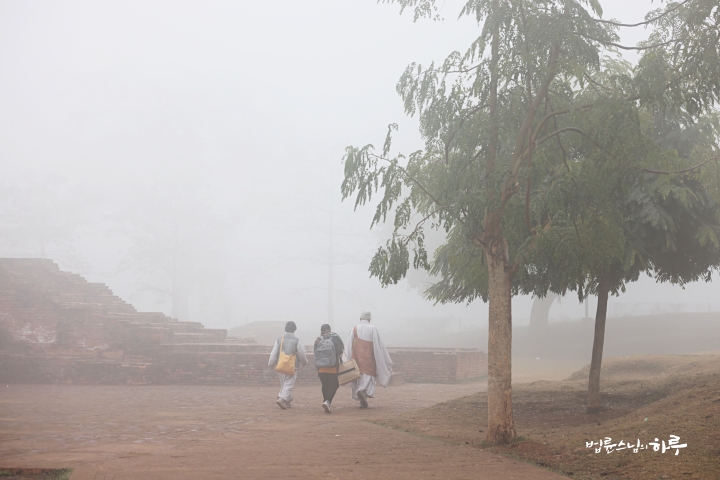
Before the pilgrimage group arrived, Sunim went back and forth between Angulimala’s and Sudatta’s stupa sites, checking the circumambulation route and where the group could sit. It was decided to hold the assembly at Sudatta’s stupa site where the ground was less wet.
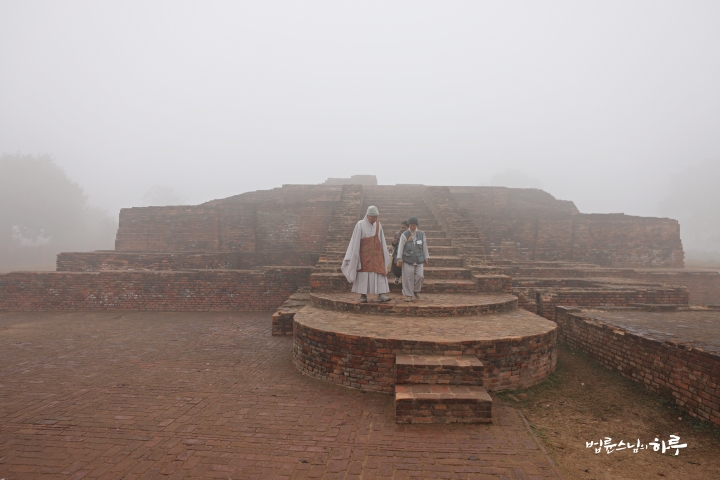
At nearly 8 o’clock, the pilgrimage group arrived at Sudatta’s stupa site. They first performed circumambulation and then offered prayers.
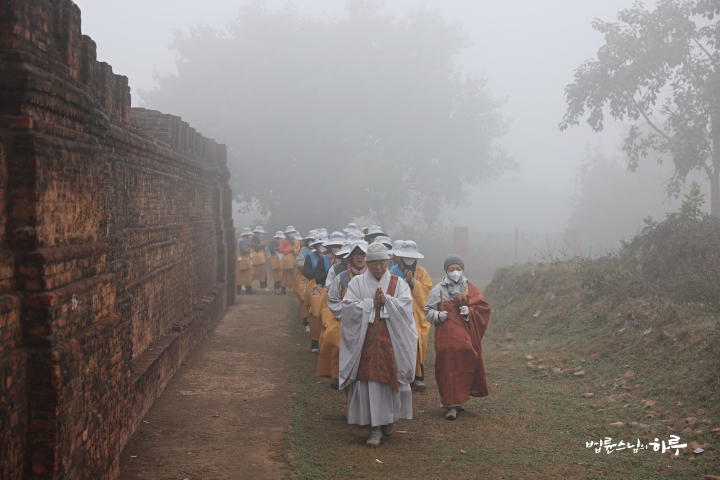
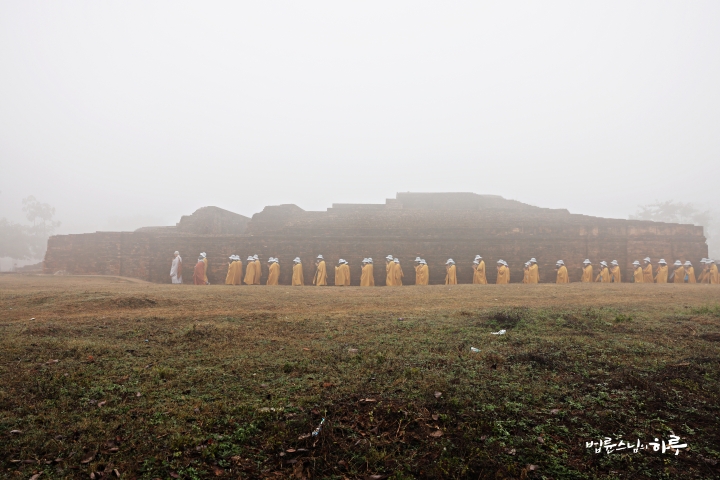
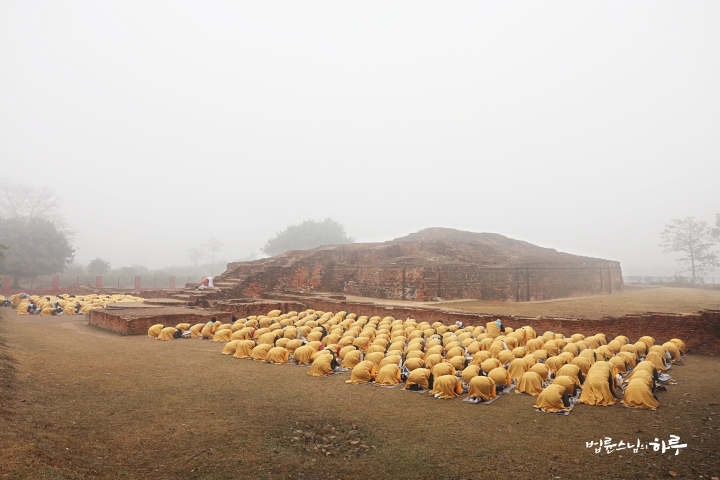
After a brief meditation, Sunim began explaining about Sudatta.
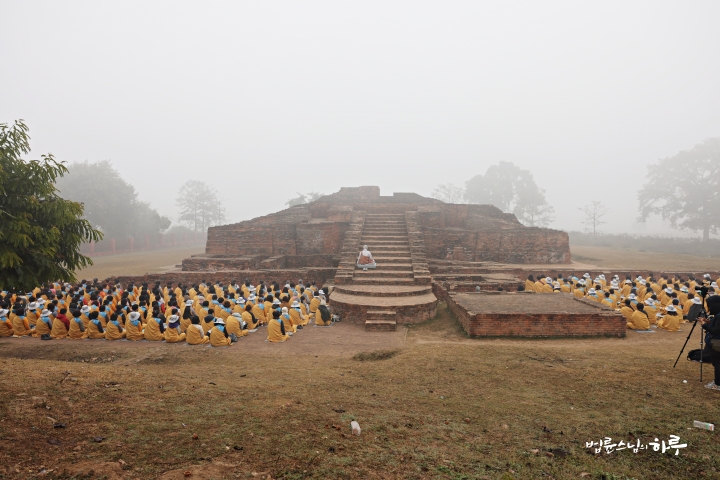
Today’s weather is typical of an Indian winter. The weather you’ve experienced until now was somewhat unusual for the climate, and today’s weather is more representative of an Indian winter. The fog is so thick that cars can hardly move. Even though visibility is about 100 meters today, sometimes it can be so dense that you can’t see even 2 meters ahead. While headlights work in the dark of night, in fog, turning them on actually makes it harder to see. (Laughter)
I’ve experienced this kind of weather in India many times. When the fog is too thick, we’ve often had to stop and couldn’t move. Or sometimes, we’d follow behind a brave vehicle that was moving, using its brake lights to find our way.
Do you see how water droplets are dripping to the ground due to the fog? This is the season when wheat grows well in India, but in the area where Sujata Academy is located, the weather has been too warm this year with almost no fog. So the villagers are worried about their crops failing. While this foggy weather is inconvenient for pilgrimage, it’s very good for farmers. Instead of complaining about your clothes getting wet on a day like today, try to think, ‘Ah, this weather must be good for the crops.’ (Laughter)
The Meeting of Sudatta and the Buddha
The meeting between Sudatta and the Buddha also took place on a foggy day like today. Sudatta visited his friend’s house in Rajagriha. Usually, his friend would run out barefoot to greet Sudatta, as they were very close. But this time, even after Sudatta announced his arrival through a servant, his friend didn’t come out immediately. Sudatta felt a bit hurt but waited, and after a while, his friend came out wiping his wet hands.‘I’m sorry.’
‘What’s keeping you so busy? Are you marrying off your daughter or son?’
‘Do you think I would have kept you waiting for something like that?’
‘Then what’s the matter?’
‘The Buddha has come to Rajagriha. We’re offering a meal at our house tomorrow morning, and I was personally supervising the preparations because the servants are inexperienced.’
That night, his friend told Sudatta many stories about the Buddha. Sudatta listened late into the night and then tried to sleep, but he was too excited about meeting the Buddha the next day to fall asleep. He finally went out for a walk at dawn and saw a practitioner sitting in the forest. Upon closer look, it seemed to be the Buddha.
‘Are you not the Buddha?’
‘Yes, I am. I have been waiting for you for a long time.’
The Buddha then taught Sudatta using various metaphors, and Sudatta immediately attained enlightenment.
Sudatta requested the Buddha, ‘It would be wonderful if the people of Shravasti, where I live, could also hear this excellent Dharma. Please come to Shravasti.’ He had long been troubled by the people of Shravasti being misled by heretical teachings, and hearing the Buddha’s teachings brought him great relief. The Buddha accepted his request with silence.
Thus, three years after his enlightenment, the Buddha visited Shravasti. Sudatta prepared accommodations for the Buddha and his disciples, which became Jetavana Monastery. Sudatta was known for his charitable activities and was nicknamed ‘Anathapindika,’ meaning ‘one who gives alms to the helpless.’ This included ‘orphaned children, childless elderly, widows, and widowers,’ to whom he dedicated himself, living a virtuous life. Thanks to this good person becoming the Buddha’s disciple and offering all his wealth to support the Buddha and the Sangha, he made a great contribution to the propagation of the Dharma in this region.”
Sunim continued his story.
The Conversion of Angulimala the Murderer
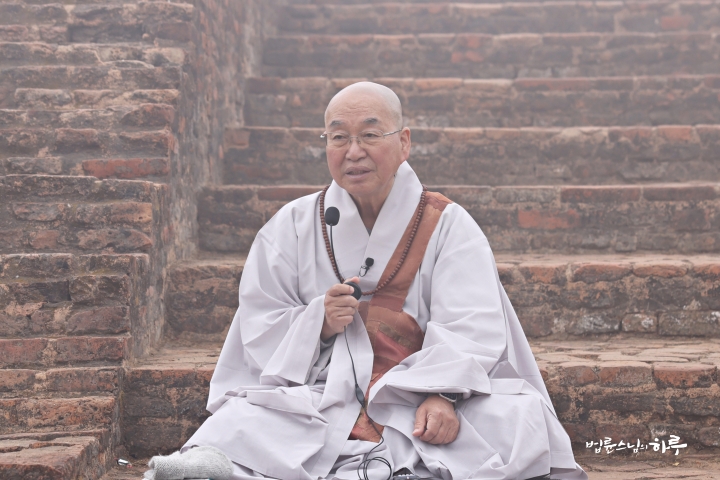
“When we come here, we often feel more moved by the stupa site of Angulimala across from Anathapindika’s. This is because the transformation of an evil person into a virtuous one provides a greater impact and lesson than a good person becoming even more admirable. ‘Anguli’ means finger, and ‘mala’ means a set of Buddhist prayer beads. It implies making a set of Buddhist prayer beads out of fingers. As a child, Angulimala came from a good family and was very intelligent. His father sent him to study in Taxila under a renowned teacher to raise him well. In Taxila, Angulimala lived and studied at his teacher’s house. The teacher was old, and his wife was young. Unlike day students from the neighborhood, boarding students lived in the teacher’s home. As time passed, when Angulimala was about 15 years old, a misunderstanding arose about a subtle romantic relationship between the teacher’s wife and Angulimala. As Angulimala was intelligent and began to show a handsome appearance, he gained the affection of the wife, which made other students jealous and they spoke words to the teacher that caused misunderstanding. One day, when the wife was feeding Angulimala, the teacher suddenly came in and witnessed the scene. After that, the teacher began to harbor suspicions. On another occasion, the teacher found Angulimala and his wife in a disheveled state as they were chasing a mouse that had appeared in the house. One day, while the teacher was away on a long journey, the wife confessed her feelings to Angulimala. However, Angulimala firmly rejected her, saying she was the teacher’s wife. From the wife’s perspective, she had cared for Angulimala with all her heart, and his rejection was a great wound. This wound turned into hatred, and when the teacher returned, the wife lied to protect herself. ‘While you were away, that boy tried to assault me.’ Eventually, the teacher became suspicious of the relationship between Angulimala and his wife and tried to send Angulimala home. Angulimala pleaded, saying: ‘Teacher, I need to learn more. I will follow any of your teachings.’ The teacher said, ‘I have nothing more to teach you,’ but after Angulimala’s repeated pleas, he revealed a difficult practice method. ‘There is one thing left. But it is a very difficult task. I cannot tell you what it is.’ Angulimala vowed to do whatever it was, no matter how difficult, and finally, the teacher said: ‘If you kill 100 people and make a set of Buddhist prayer beads with their 1,000 fingers to wear around your neck, you can ascend to heaven.’ Angulimala believed these words literally and began his horrific actions. He killed people and made a set of Buddhist prayer beads from their fingers, and the rumor spread quickly. Angulimala became known as the most vicious person in the world, and the news reached his hometown of Shravasti. The people of Shravasti decided to hang bells in every house to warn each other if Angulimala appeared. This also increased resentment towards the king for not being able to catch Angulimala. One day, as the Buddha was walking along the road, people rushed up to him and said: ‘Buddha, don’t go that way! Angulimala is coming!’ The Buddha calmly replied: ‘The Tathagata has no fear.’ Soon after, Angulimala appeared with a sword and shouted at the Buddha: ‘Stop, ascetic!’ However, the Buddha continued walking slowly. Angulimala tried to catch up with the Buddha, but no matter how fast he ran, he couldn’t reach him. Finally, the exhausted Angulimala barely caught up with the Buddha and angrily said: ‘Why don’t you stop when I tell you to?’ The Buddha replied: ‘I have long since stopped. It is you who have not stopped.’ ‘What do you mean? I have stopped out of exhaustion, while you kept going.’ ‘The Tathagata has stopped killing and harming others. But you have not yet stopped.’ Hearing these words, Angulimala realized he had been trapped on the wrong path. He knelt before the Buddha and said: ‘Buddha, what should I do? Can I also become a monk?’ The Buddha accepted his request. Angulimala entered the Sangha, received the Dharma name ‘Ahimsa’ (non-violence), and began his life as a practitioner. Although Angulimala faced many hardships afterward, he practiced diligently according to the Buddha’s teachings and attained enlightenment.”The pilgrims listened intently, deeply moved by the greatness of the Buddha and the Dharma. After the explanation, they recited sutras and began circumambulating the stupa. They walked with folded hands from Anathapindika’s stupa site to Angulimala’s stupa site, then headed towards Jetavana Monastery.
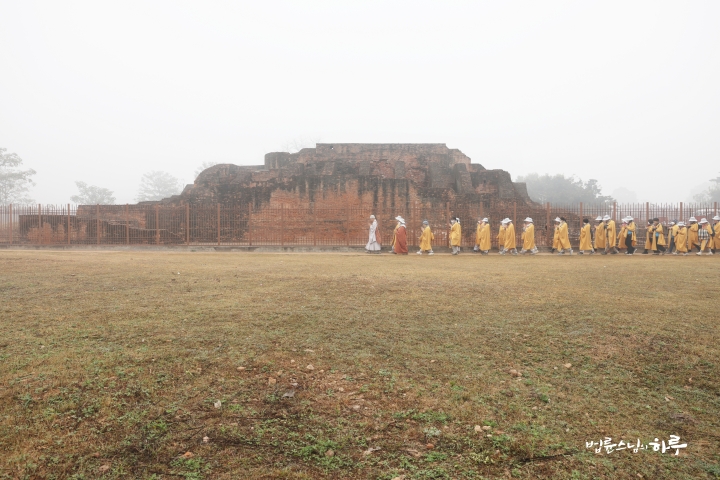
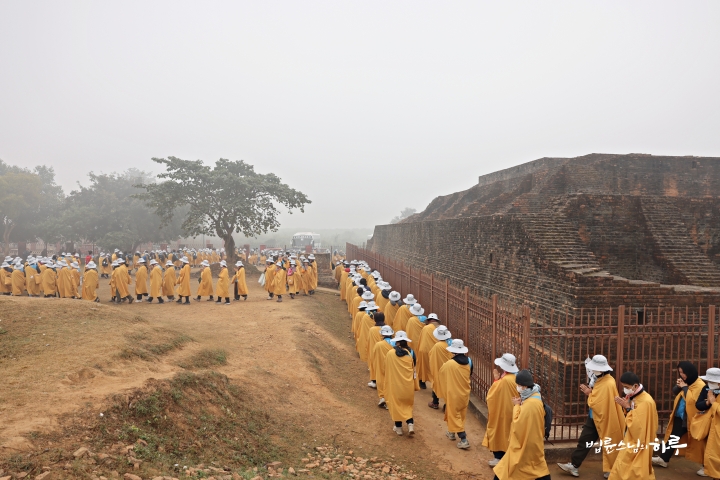
The pilgrims quietly chanted and focused on their steps.
“Shakyamuni Buddha, Shakyamuni Buddha…”
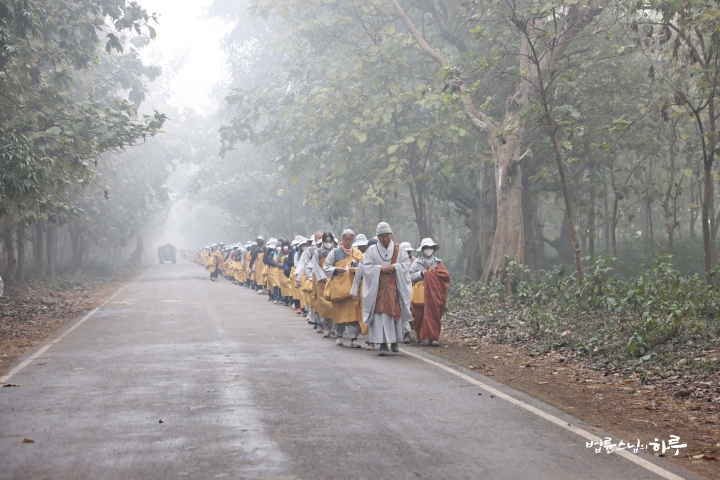
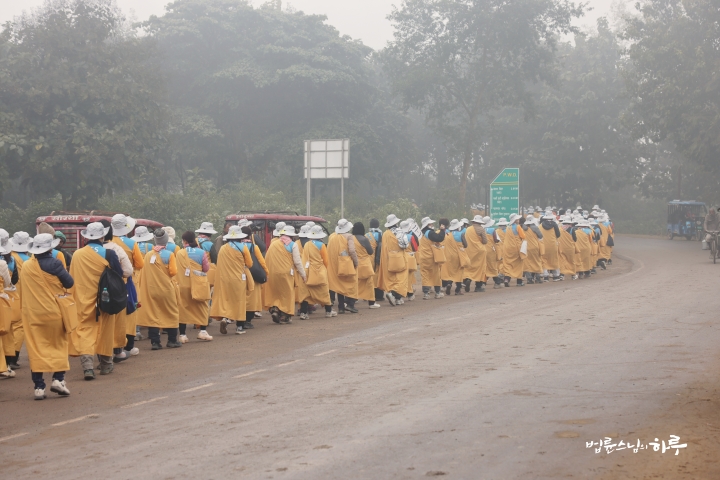
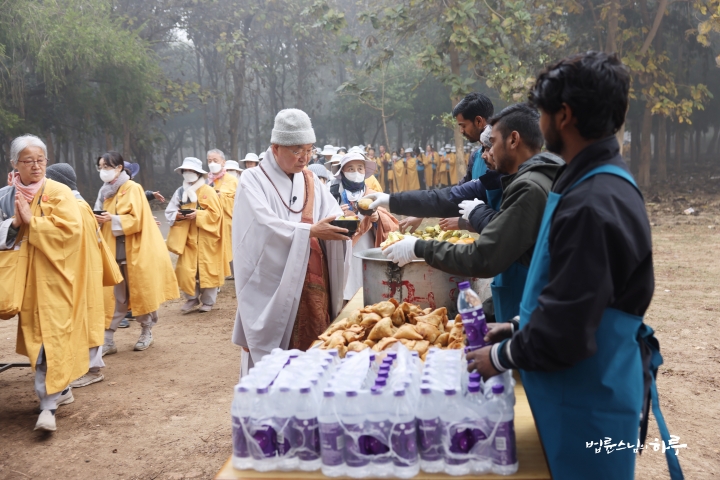
Soon after, they arrived at the alms-round location. The pilgrims lined up and received samosas, tangerines, and potatoes in their alms bowls, which were prepared with care by Venerable Dain of Cheonchuk Seonwon. They then moved to Jetavana Monastery.
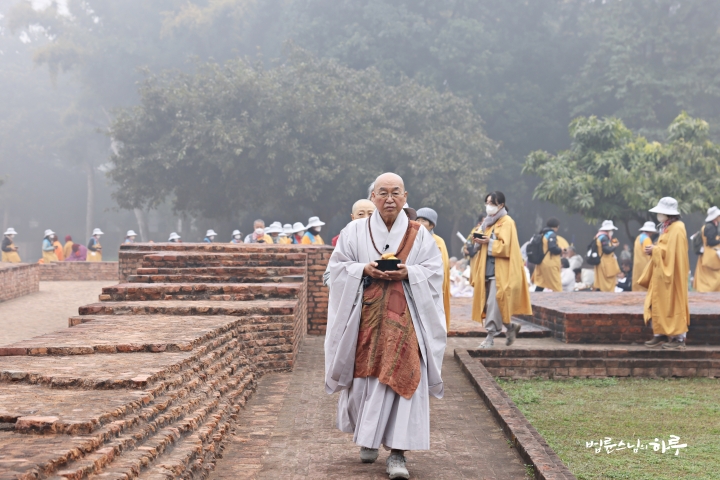
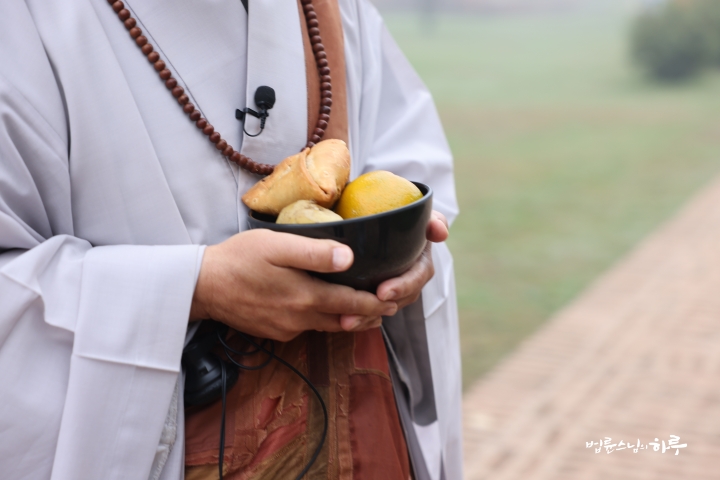
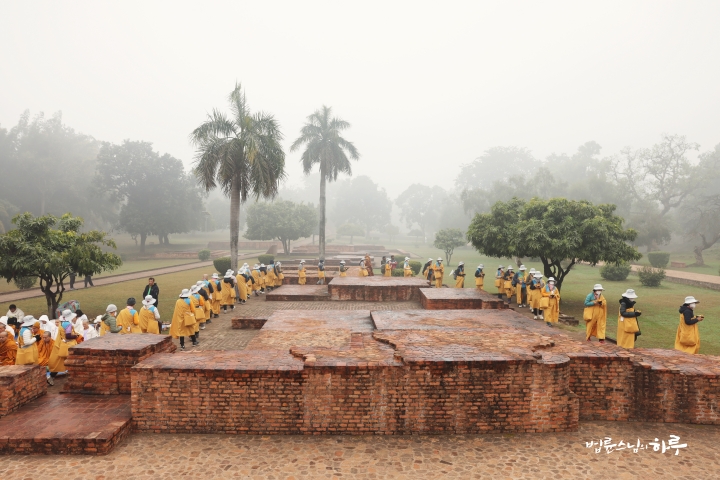
Upon arriving at Jetavana Monastery, the pilgrims sat neatly in the courtyard, recited the Short Heart Sutra, and then ate their meals quietly.
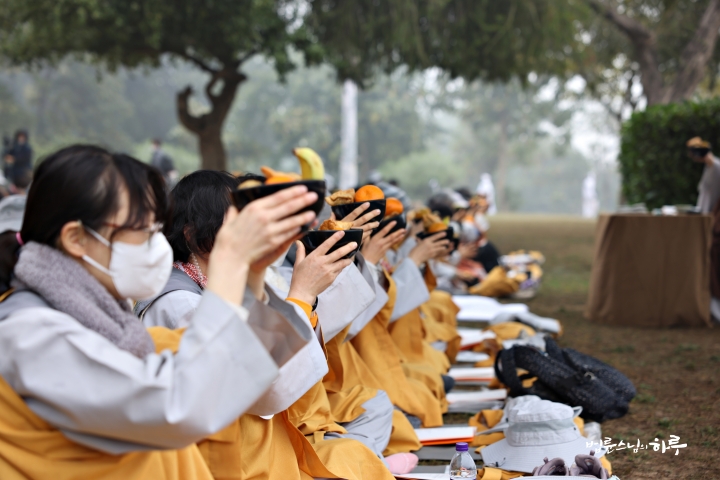
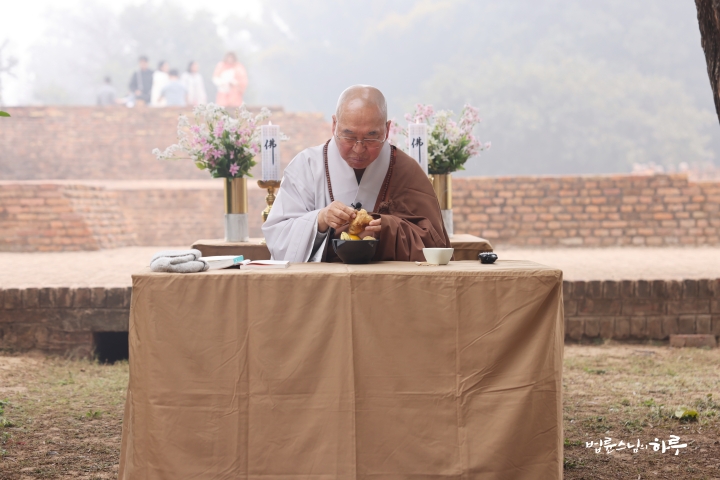
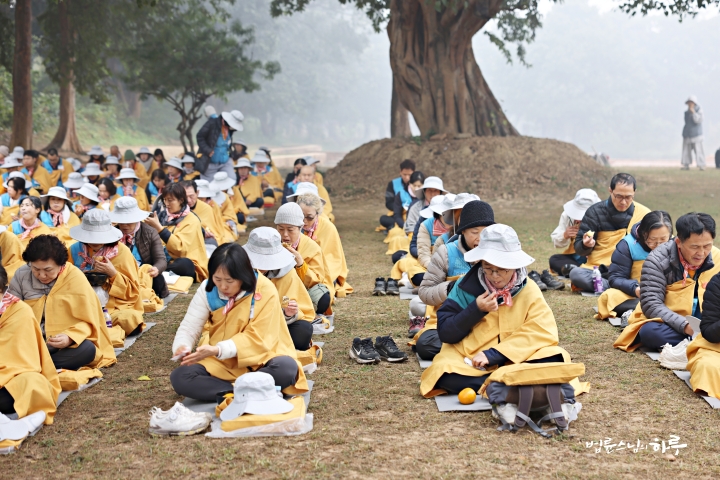
As the group finished their meals, Sunim began to explain the Short Heart Sutra.
“Did you enjoy your meal? We have experienced alms-round, following the path the Buddha walked. Those who haven’t finished eating, please take your time. If anyone needs to use the restroom, please do so. For those who have finished, please open your books. (Laughter) Now, let’s study the Short Heart Sutra we just recited. (Laughter)”After the explanation of the Short Heart Sutra and tidying up, they offered prayers to show reverence to the Buddha.
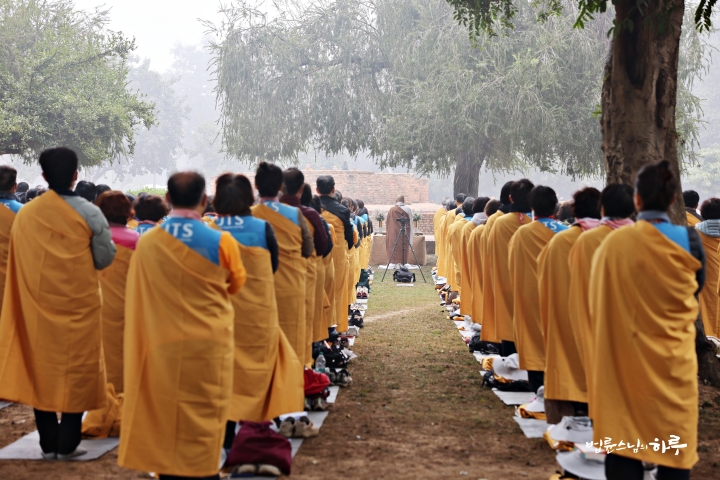
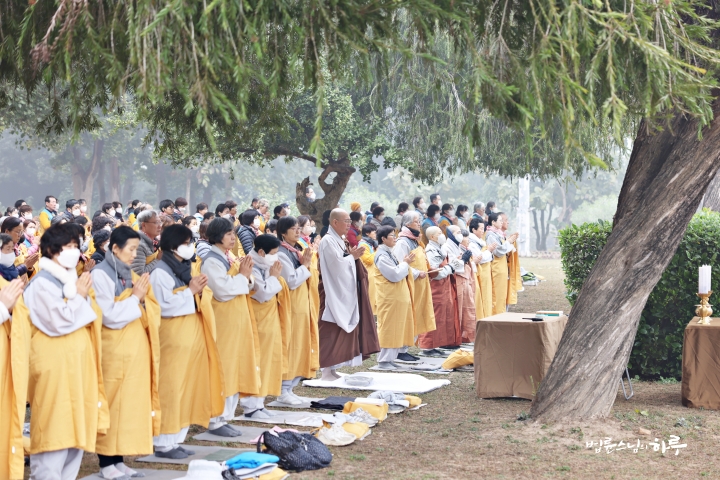
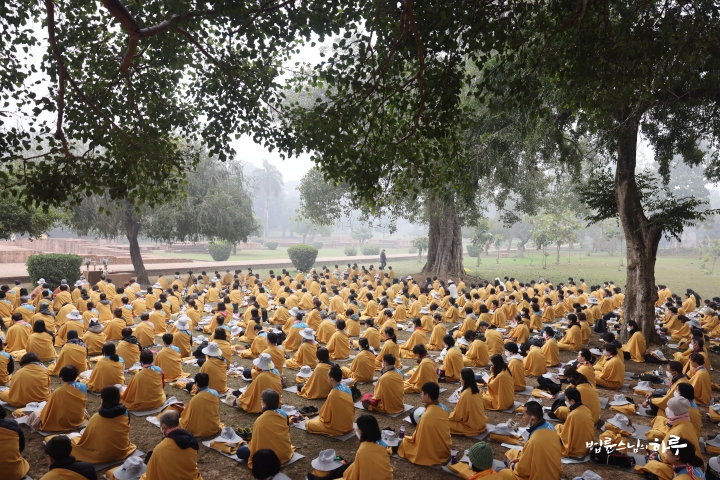
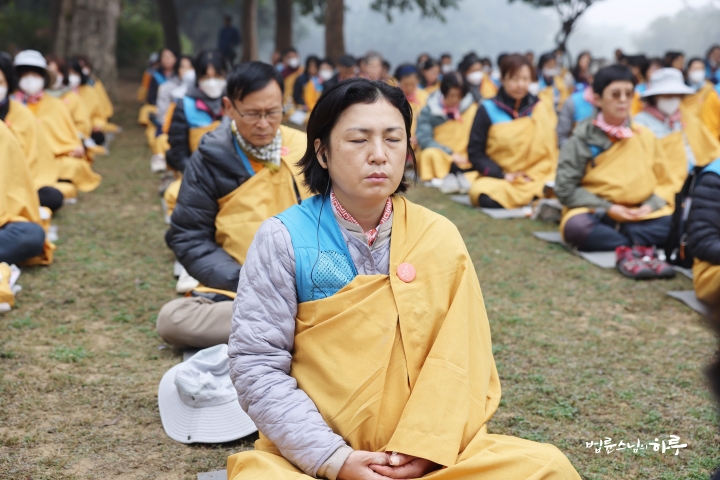
After meditation, Sunim began guiding the tour of the sacred site.
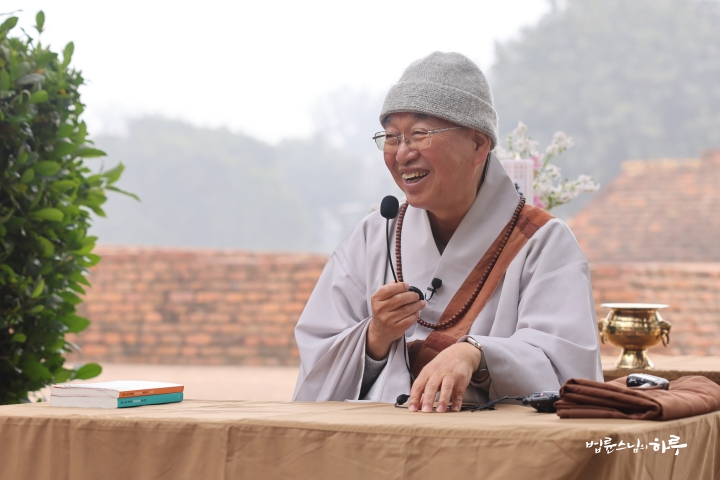
Jetavana Monastery: Where the Buddha Stayed the Longest
After attaining enlightenment, the Buddha spent 45 years teaching sentient beings before passing away. In other words, he spent 45 rainy seasons in retreat. ‘Rainy season retreat’ refers to staying in one place for three months during the rainy season without moving. Out of these 45 retreats, the Buddha spent 25 here in Shravasti. He stayed in Shravasti for more than half of his retreats. Among these, he spent 19 retreats here at Jetavana Monastery. So, Jetavana Monastery is where the Buddha stayed the longest. Naturally, there are more stories about the Buddha related to Jetavana Monastery than any other place. The Diamond Sutra, which is the most beloved sutra among Korean Buddhists, is set in Jetavana Monastery. That’s why Korean Buddhists consider Jetavana Monastery a very important sacred site. This is also why Master Yongseong didn’t instruct us to take care of the eight great sacred sites, but rather the five great sacred sites. He referred to the five great sacred sites as the four main sites where the Buddha was born, attained enlightenment, teach the Dharma, and entered nirvana, plus Jetavana Monastery where he stayed for the longest time. Since the Buddha stayed here the longest, all kinds of stories and events occurred here. The story of the woman who tried to defame the Buddha by putting a wooden bowl under her clothes and claiming to be pregnant with his child also took place here at Jetavana Monastery. Many stories from Mahayana sutras, including the story of the poor woman’s lamp, are set in Jetavana Monastery.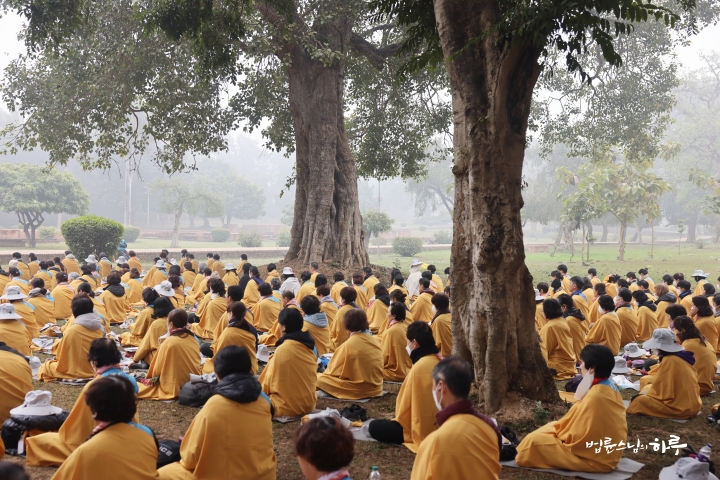
Looking at How the Buddha Taught Numerous People Over 45 Years
The Buddha’s life is mostly documented chronologically up to the sixth year of his teaching. The last year before his passing into nirvana is also recorded day by day. In between, various teaching examples unfold. If we categorize these teaching examples by content, firstly, we see that the Buddha sharply pointed out the ignorance of proud people like Brahmins and subdued them with wisdom. When the Shakyas hesitated to bow to Upali, who had been their barber until the day before, the Buddha pointed this out very sharply. He helped his disciples break free from worldly pretenses. Secondly, he showed almost excessive compassion towards poor people, foolish people, those who had committed murder and robbery, and untouchables who carried night soil. This is why ‘wisdom’ and ‘compassion’ came to symbolize the Buddha. The blade of wisdom was incredibly sharp, and the embrace of compassion was unfathomably deep. Another characteristic of the Buddha was that he remained largely unshaken by criticism directed at himself or the Sangha. When monks who couldn’t bear the criticism complained about their difficulties, he would say, ‘Just wait a little longer!’ When they raised issues about not being given food, he told them to fast for a few days and wait. When the monks went for alms, people would curse at them and not give them food, so the monks faced many difficulties. When the Buddha allowed women to become monks, there was a lot of resistance, and when he even allowed courtesans to become monks, they faced a lot of finger-pointing. It was the same when he allowed untouchables to become monks. At this time, not only was the Buddha criticized, but disciples like Sariputra and Moggallana, who were of Brahmin origin, were also heavily criticized by their Brahmin friends. In a society where caste discrimination was severe at the time, untouchables were considered so impure that they could be killed just for their shadow touching someone. In today’s terms, it would be like being criticized for living in a pigsty. However, the Buddha’s disciples had already opened their eyes, so they weren’t very concerned about it. When you read the sutras, you can see several instances where people tried to defame the Buddha. When the Buddha went for alms and people got angry, saying, ‘Why are you begging when you have a healthy body?’, the Buddha would smile and engage in conversation with them, teaching them. In this way, the Buddha remained largely unshaken by criticism.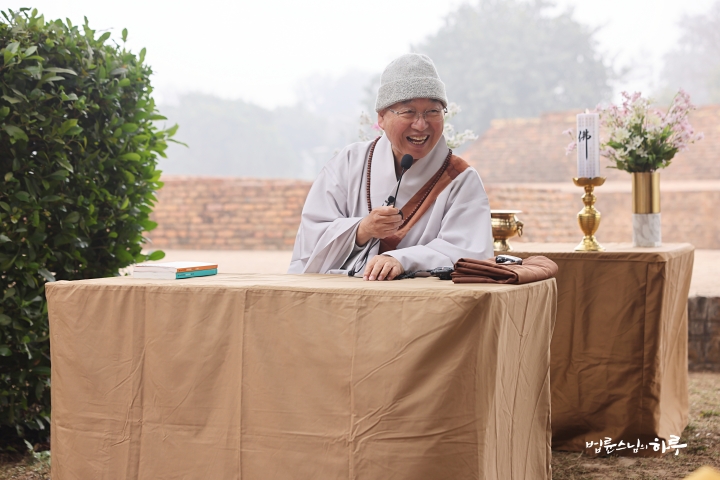
After finishing the explanation, they recited sutras. As the sutra content related to Jetavana Monastery was long, they took a short break during the recitation and then continued.
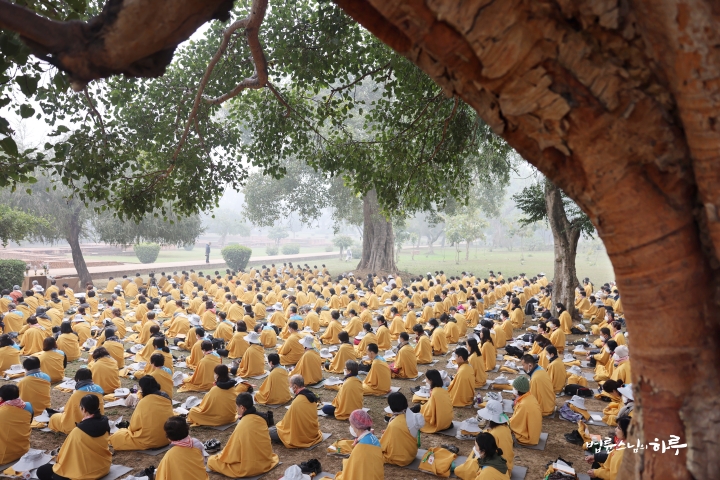
After completing the sutra recitation, the pilgrimage group toured Jetavana Monastery with their respective group leaders. Meanwhile, Sunim took individual photos with the young participants.
Following this, a Dharma Q&A session with Sunim was held. Originally scheduled for the evening at Cheonchuk Seonwon, it was moved up and conducted at Jetavana Monastery due to unfavorable weather conditions. The previous evening’s session had been disrupted by extreme cold, and today the carpets at Cheonchuk Seonwon were too damp from fog and humidity for the group to sit comfortably.
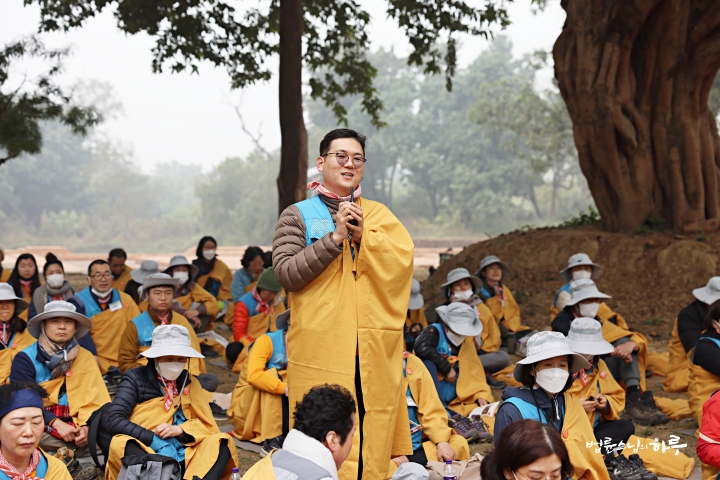
Continuing from yesterday, participants had the opportunity to freely ask questions about any doubts they had during the pilgrimage. Four people raised their hands to inquire. One person asked about the apparent contradiction between the Buddha’s teaching in the Diamond Sutra to not be attached to forms and the practice of calling upon Shakyamuni Buddha or performing cultural rituals during the pilgrimage.
Why Do We Perform Religious Rituals When Buddha Seems to Have Rejected Them?
“In the Diamond Sutra, there’s a passage that says, ‘If one seeks to perceive me through form, or seeks me through sound, this person practices a heretical path, and cannot see the Tathagata.It seems that the Buddha rejected religious rituals, yet during our pilgrimage, we constantly chant ‘Namu Shakyamuni Buddha’ when paying respects. I’m curious if these religious rituals might be contradicting the Buddha’s teachings.”
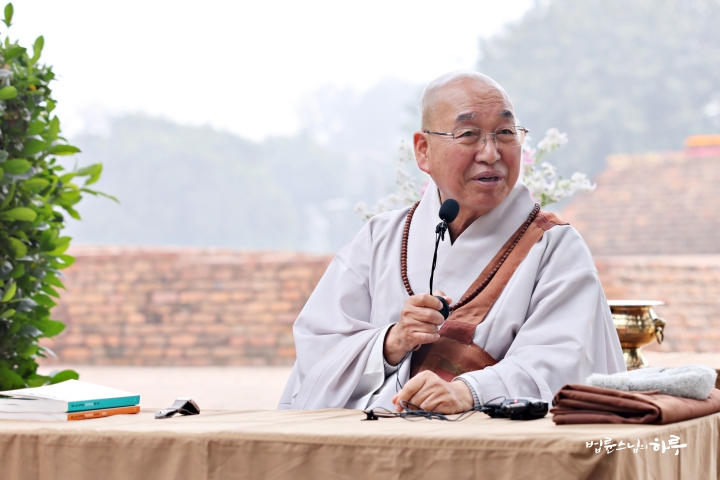
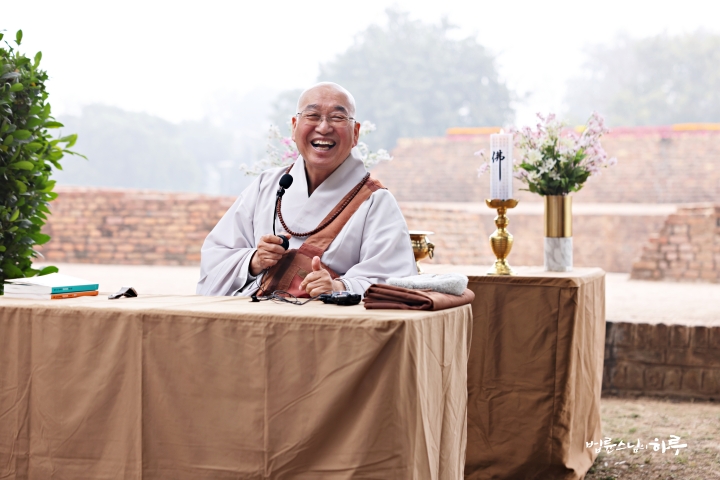
“Thank you.”
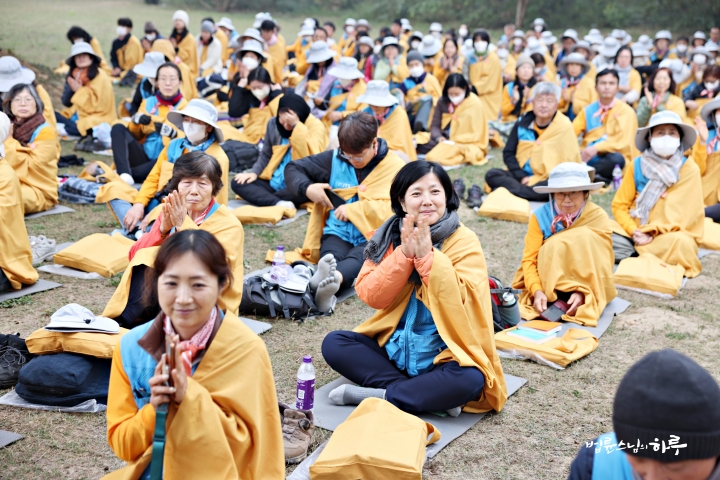
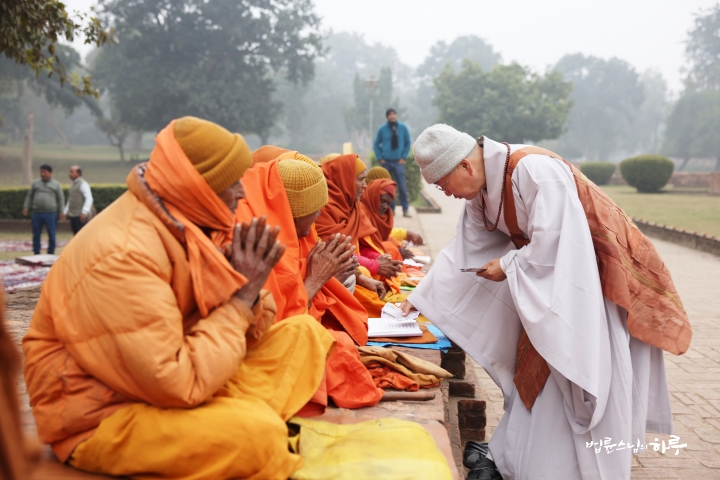
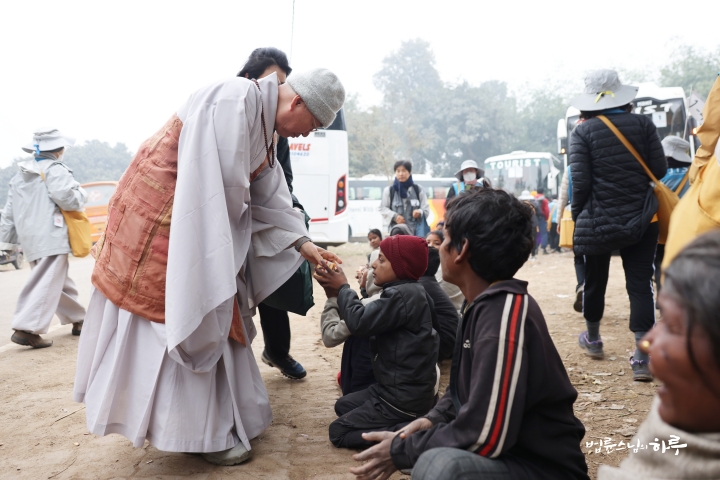
Questions continued to flow. After an hour and a half of dialogue, the evening Dharma assembly concluded at 5 PM. Sunim made offerings to the Southeast Asian monks meditating at Jetavana Monastery, distributed candy to the children, and then moved to Cheonchuk Seonwon.
At Cheonchuk Seonwon, a heartfelt evening meal was prepared for the pilgrimage group once again.
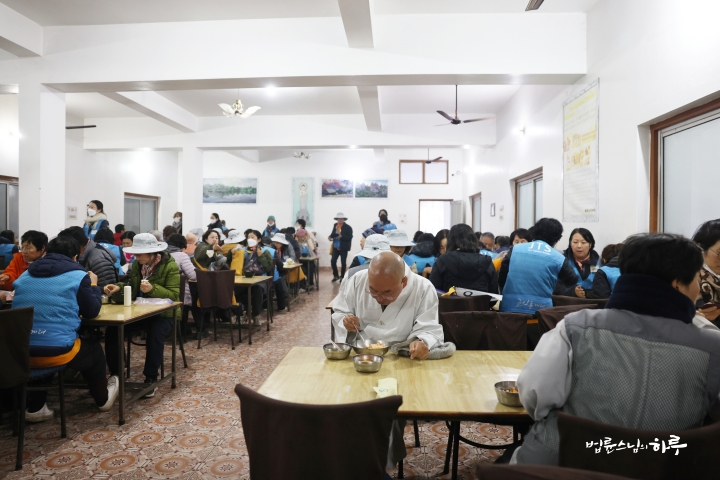
After the meal, Sunim expressed his gratitude to Venerable Daein. Venerable Daein had specially procured delicious rice and prepared it with care for the pilgrimage group from Korea, and had spent the night making samosas for the alms offering. The Dharma teachers and staff also thanked Venerable Daein, concluding the day’s schedule in Shravasti.
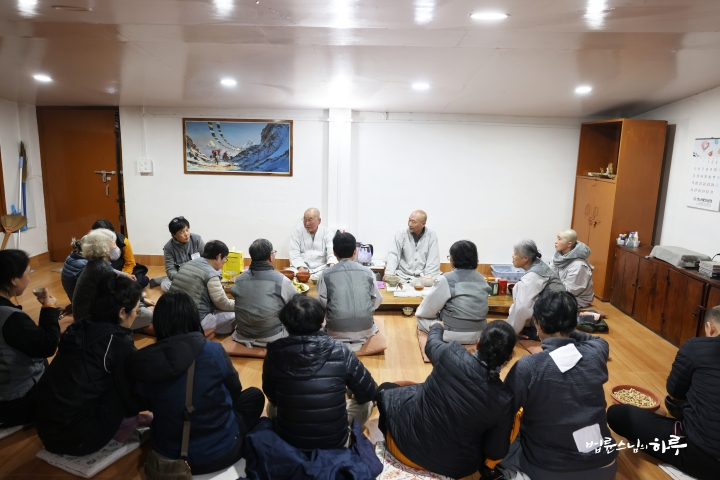
Tomorrow, the group plans to visit Sankasia, pay respects at the Sankasia Stupa site, and hold a closing ceremony.”