A Cultural-Historical Perspective on the Buddha’s Birth
Jan 19, 2025 - India Pilgrimage Day 9, Lumbini
Jan 19, 2025 – India Pilgrimage Day 9, Lumbini
Hello. This is the 9th day of our Indian pilgrimage. Today, we crossed the India-Nepal border and visited Ranagram, the Rohini River, and Lumbini, the birthplace of Buddha.
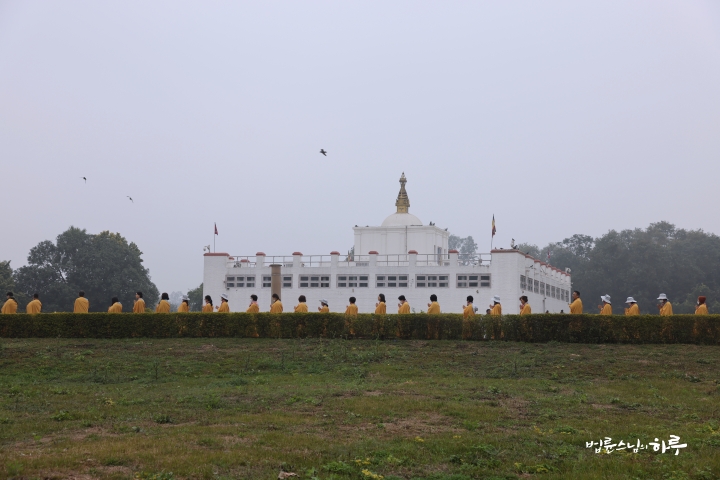
On the day of traveling to Nepal, we often spend more than 6 hours crossing the border, so we start the schedule earlier than usual. At 2 AM, the sound of the pilgrimage bus starting its engine was heard in front of the accommodation. After tidying up their rooms and loading their luggage, the pilgrimage group departed from Kushinagar for the Nepal border at 2:30 AM. As soon as the lights in the vehicle went out, most of the pilgrims fell back asleep, and the bus quietly headed towards the border.
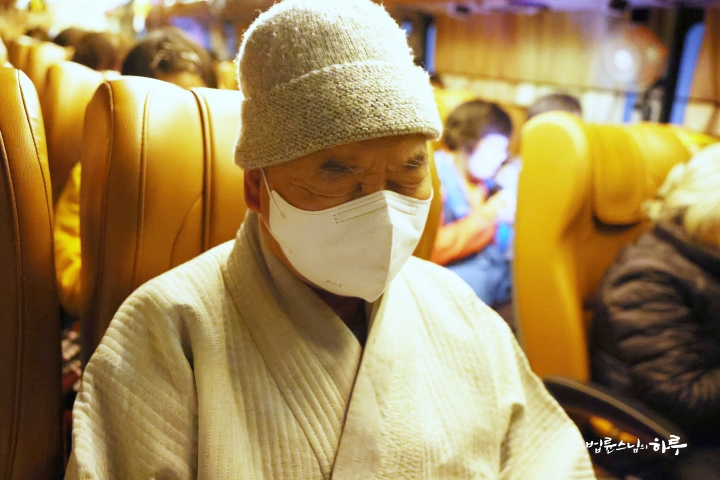
At 5 AM, we held a morning service in the moving vehicle with the lights on. Shortly after the service ended, the bus arrived at the India-Nepal border. The 400 or so pilgrims got off of the bus in order and lined up in an orderly manner. Despite moving efficiently, it was still uncertain how long it would take to cross the border. While waiting in the car, Sunim began his Dharma talk using a walkie-talkie.
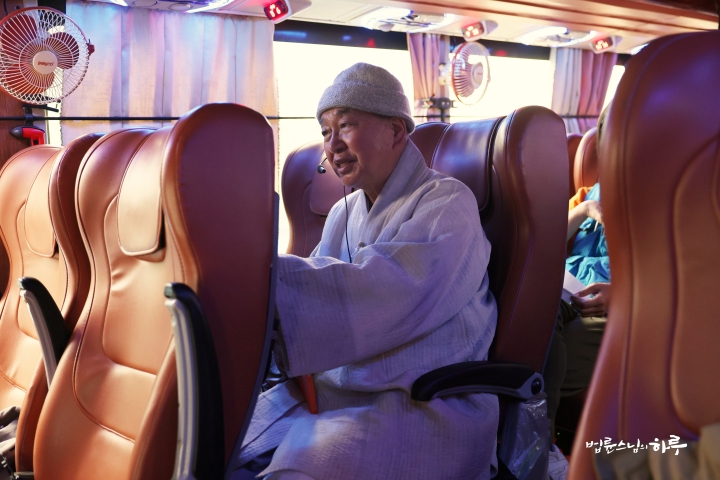
Sunim explained the ‘Three Refuges and Five Precepts’ in Pali. Not only those who had already crossed the border but also those waiting in the car could spend their time meaningfully listening to the Dharma talk.
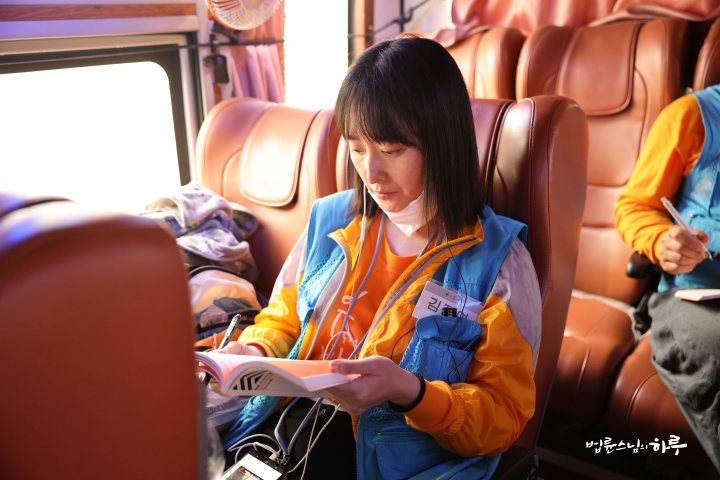
Thanks to the quick actions of the leading Dharma teachers and staff while Sunim was giving his Dharma talk, we were able to cross the border faster than expected. It took only 3 hours for 400 people to cross the border. Originally, if the crossing time took longer, the plan was to split into advance and rear groups to proceed with the schedule, but this year, everyone was able to depart together for Ranagram. As the bus departed, Sunim spoke through the walkie-talkie.
“We are now heading to the stupa containing Buddha’s actual relics, built by the Koliya clan. This stupa has never been demolished, and even King Ashoka couldn’t extract the relics. Today, we will pay homage to this relic stupa of the Koliya clan, and tomorrow we plan to visit the relic stupa built by the Shakya clan.”At 10 AM, upon arriving in Ranagram, the pilgrimage group sat down, briefly meditated, and then bowed three times to Sunim, requesting the Dharma.
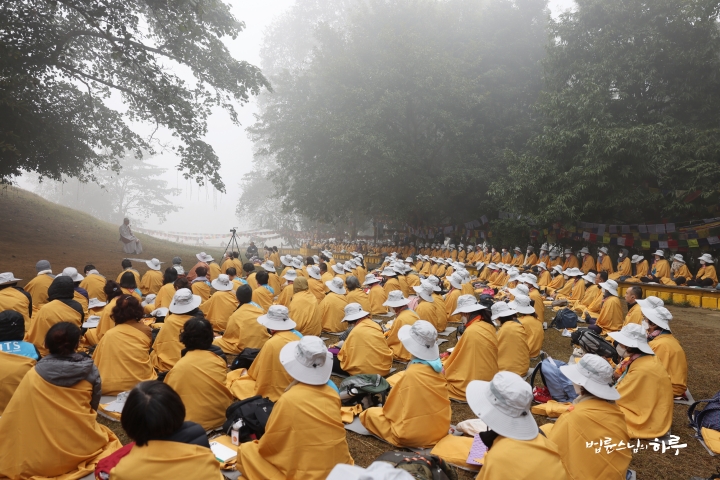
Sunim first explained to the group the background of the smooth border crossing.
“In previous years, it took more than 5 hours to cross the border, but this year, India opened many counters, and we were almost the only group crossing into Nepal, so it went smoothly. Thanks to this, we can all pay homage together in Ranagram after a long time.”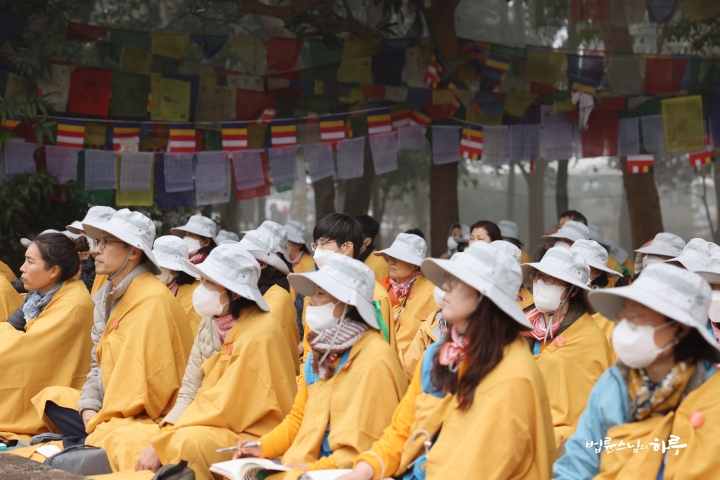
He then introduced the geography and history of India during Buddha’s time, explaining the importance of Ranagram.
“India is a continent that formed its own unique civilization, isolated by the Himalayas and Hindu Kush mountains to the north, the Thar Desert to the west, the Arakan Mountains to the east, and the Indian Ocean to the south. At that time, there were about 300 large and small countries in India, and Ranagram was a region in the country established by the Koliya clan. The two kingdoms were connected by marriage alliances, and Yasodhara and Queen Maya were from the Koliya clan.”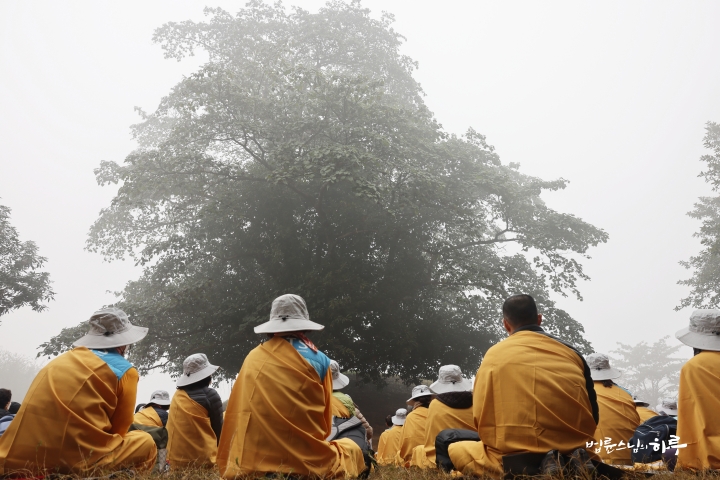
After the explanation, the group paid homage in front of the Ranagram relic stupa and meditated briefly.
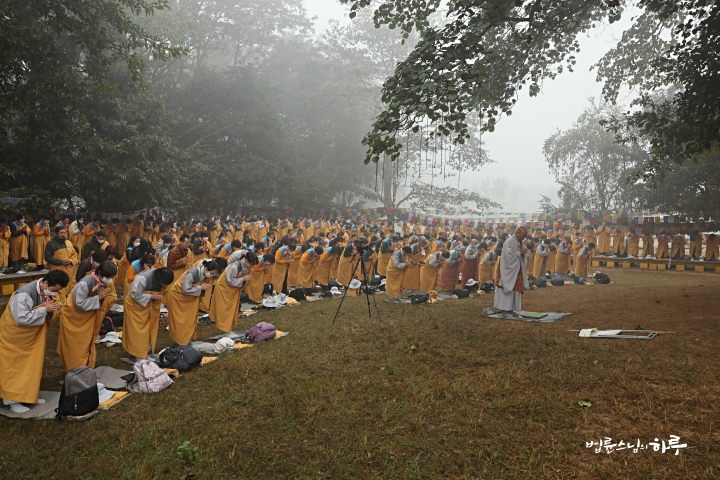
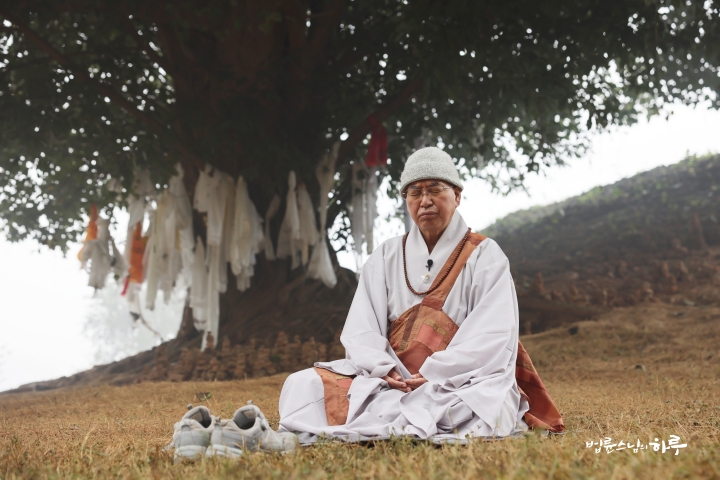
After meditation, we circumambulated the stupa to express our reverence.
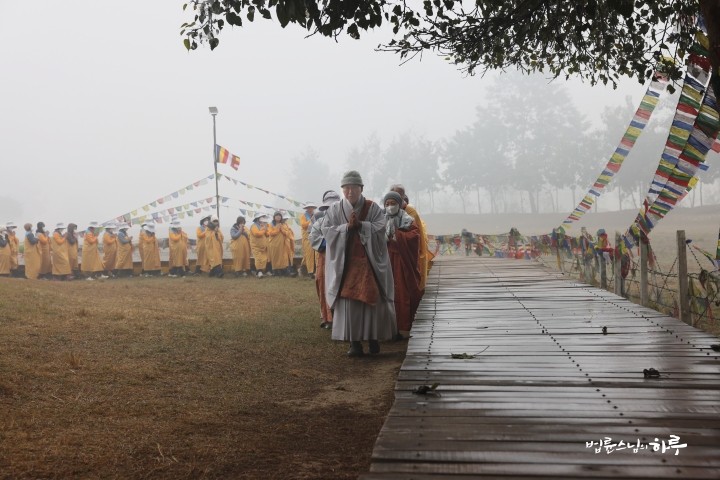
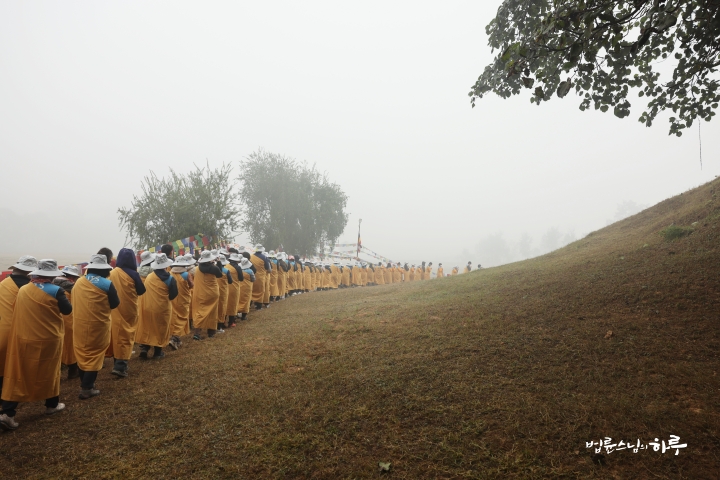
Originally, the plan was to go to the accommodation for lunch, but Sunim flexibly adjusted the schedule considering the drivers.
“The weather has suddenly turned cold. We originally planned to move to the accommodation for lunch, but I hear the drivers are preparing the meal now. If we go to the accommodation, the drivers will have to stop preparing the food and drive again, which might be inconvenient. So, even though it’s a bit cold, let’s have lunch here before we leave. Is that okay?”“Yes!”
“The drivers have been working hard driving since dawn, so let’s be considerate. We’ll finish the Ranagram schedule here, and after lunch, we’ll move to the Rohini River.”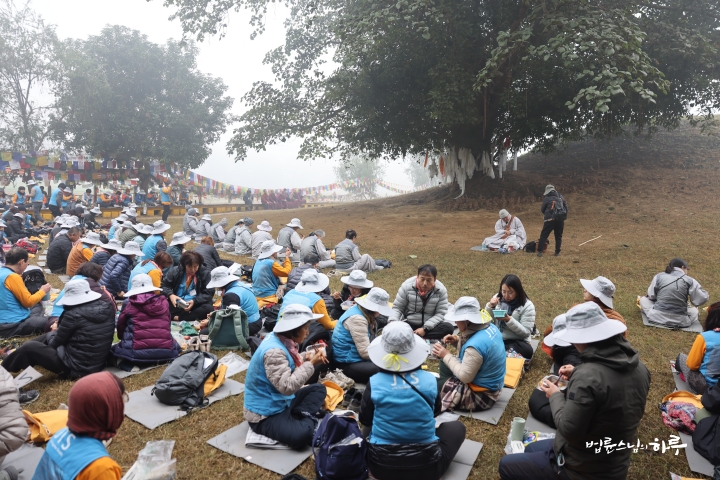
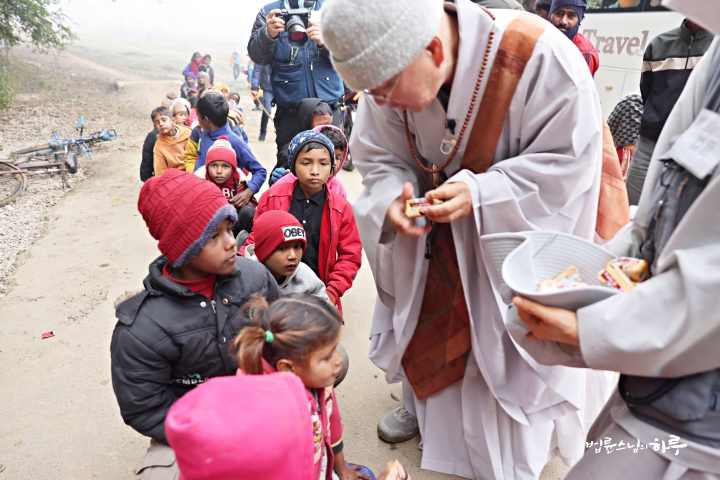
After eating the packed lunches they had prepared, the pilgrimage group came outside to board the bus. Children from the nearby village had already gathered. Sunim distributed snacks to the children before departing for the Rohini River.
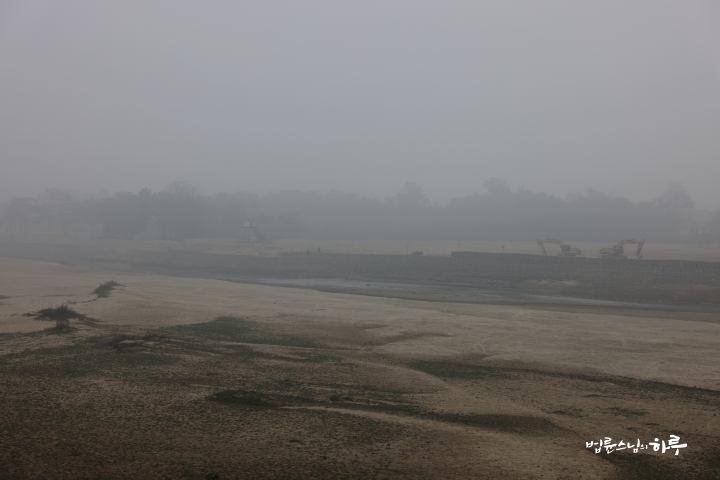
After about a 10-minute drive, a sandy beach appeared. From inside the vehicle, Sunim began explaining as they looked out at the Rohini River.
Which Is More Precious, Water or Blood?
“Now, this is the Rohini River. It flows between Kapilavastu, the country of the Shakya clan, and Devadaha, the capital of the Koliya clan, which was the hometown of Buddha’s mother, Maya. One year, a water dispute broke out between the Shakya and Koliya clans over this river. As drought reduced the water supply, crops began to wither. The Koliya clan, being closer to the capital, told the Shakya farmers, ‘To avoid our crops falling, we will use the water alone.’ The Shakya farmers retorted, ‘We will divert the water to our side.’ Their verbal argument escalated into throwing stones at each other.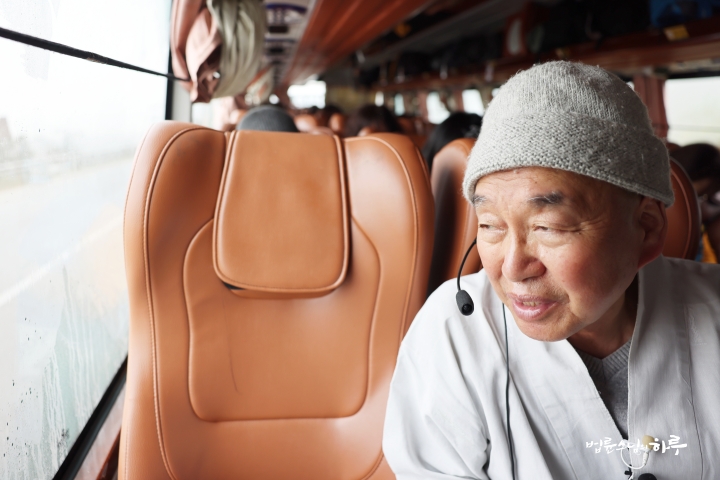
Sunim recited the scripture with the group, reflecting on the values of peace and harmony.
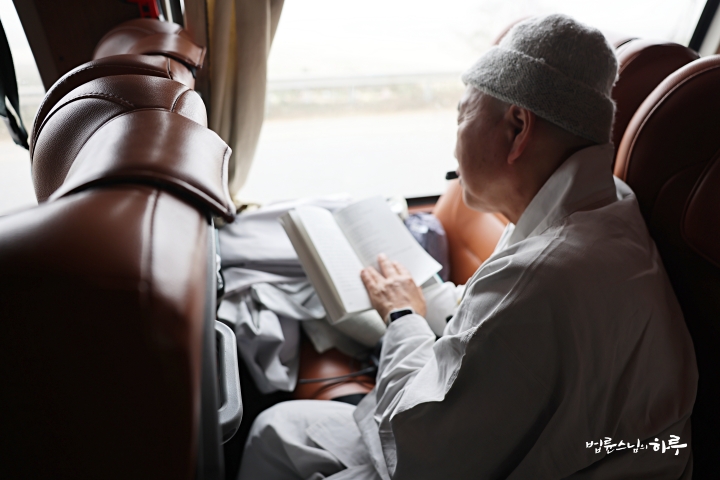
Leaving the Rohini River, they traveled by car for about an hour and arrived at Lumbini, the birthplace of the Buddha, at 1 PM.
The pilgrimage group settled in front of the Maya Devi Temple, built in honor of Queen Maya, performed three bows to request teachings from Sunim, and then listened to his guidance about the sacred site.
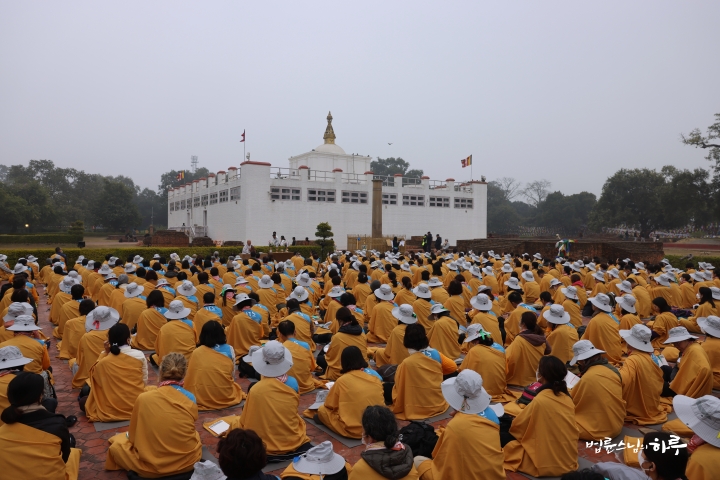
What Was the Buddha Like at Birth?
It’s said that King Suddhodana and Queen Maya had no children even as they approached the age of forty. Nowadays, it’s not uncommon for people to have babies at forty, but in ancient times, that was already an age when one might expect to have grandchildren. Since Maya had no children until then, the kingdom was not entirely at ease. The issue of succession was always a concern, causing much worry and anxiety. So when she became pregnant, it must have felt truly auspicious. On the day of a grand festival in the kingdom, Queen Maya made various offerings and fell into a light sleep, during which she had a dream. She heard heavenly music and looked up from the second-floor balcony towards the sound. Something like starlight twinkled in the sky above, approaching closer. As it came nearer, she saw it was a white elephant with six tusks. Normally, elephants have two tusks, so six tusks symbolized the most auspicious sign. The white color also symbolized sacredness. Suddenly, the elephant entered through her right side. She woke up startled, realizing it was a dream. Maya called upon a sage to interpret this strange phenomenon from her dream. The sage replied, ‘It is a dream of conceiving a noble being.’ Hearing this, King Suddhodana and Queen Maya were overjoyed.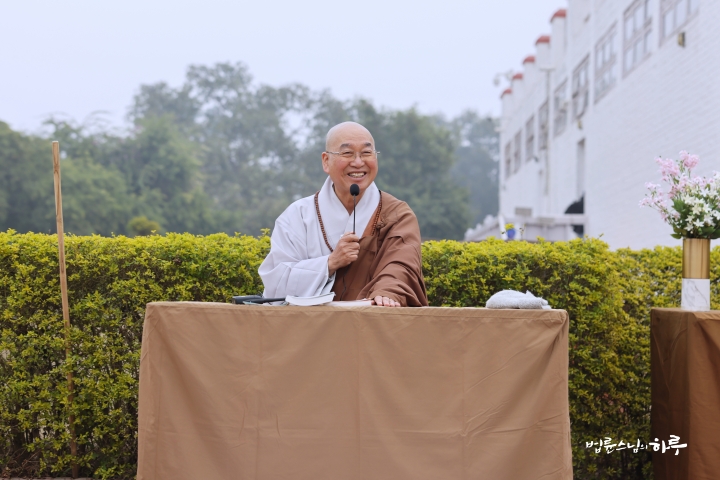
A Cultural-Historical Perspective on the Buddha’s Birth
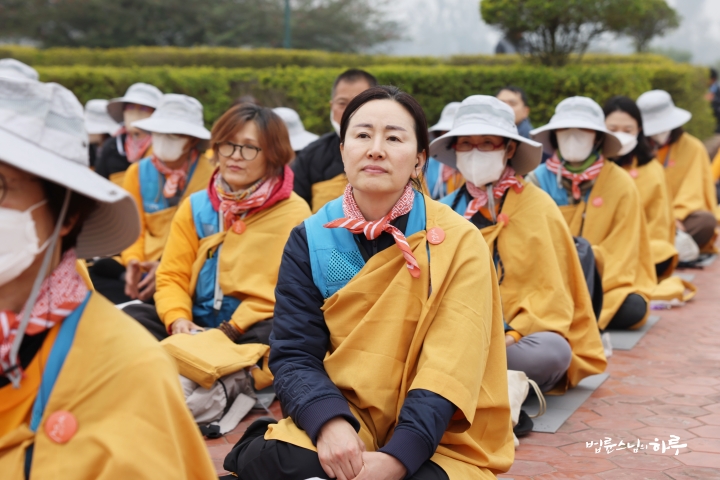
From a cultural-historical perspective, the expression that the Buddha was born from the right side of Maya’s body symbolizes that the Buddha belonged to the Kshatriya caste. In Indian folklore, when the god created the universe and finally created humans, it is said that Brahmins were created from the god’s mouth, Kshatriyas from the side, Vaishyas from the belly, and Sudras from the feet. This became the origin of the caste system, with Brahmins living to praise the gods, Kshatriyas ruling the world with their arms, Vaishyas engaging in agriculture and trade related to livelihood as they were born from the belly, and Sudras serving and laboring as they were born from the feet. Thus, the expression that the Buddha was born from the side symbolizes that he was of royal descent.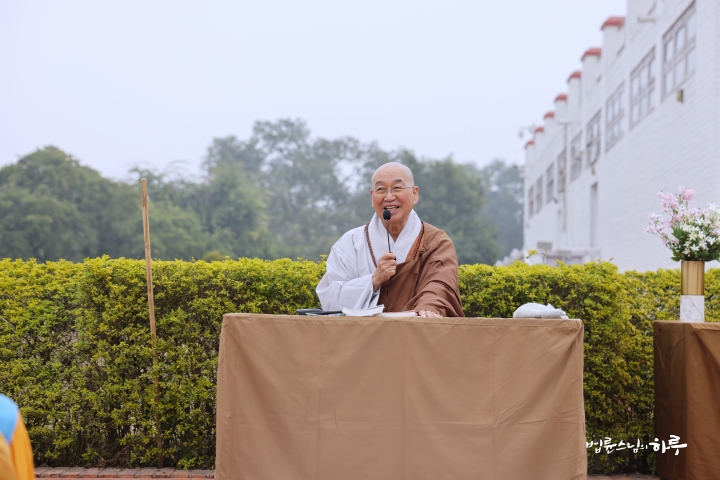
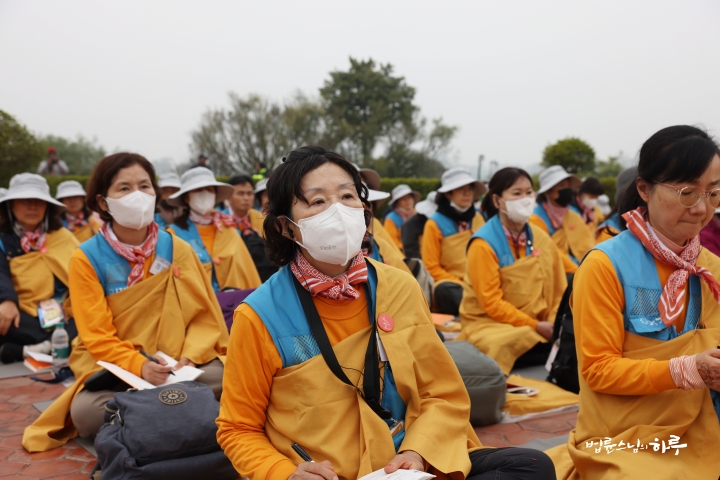
After the guided tour of the sacred site, the group recited sutras and meditated.
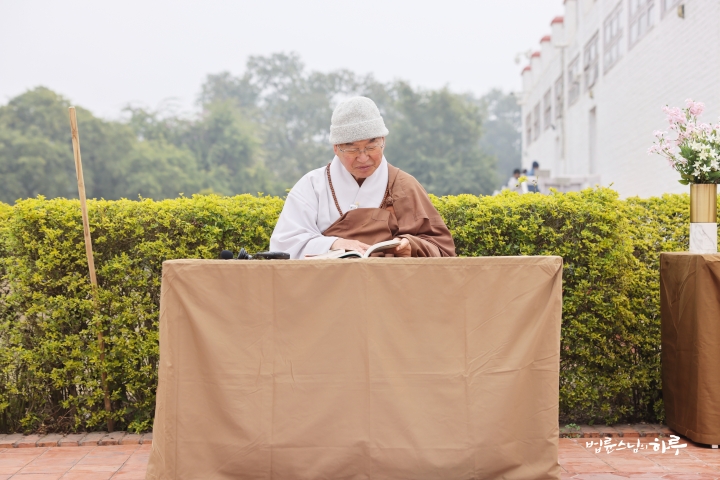
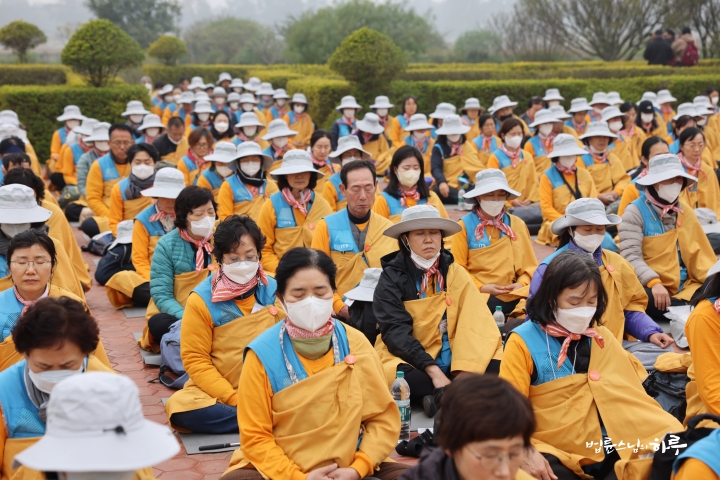
After meditation, the group paid homage to the Maya Devi Temple, and Sunim offered blessings for the pilgrims.
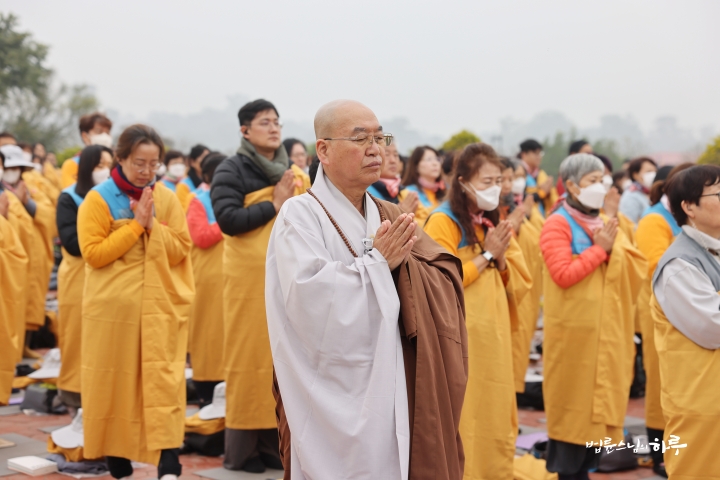
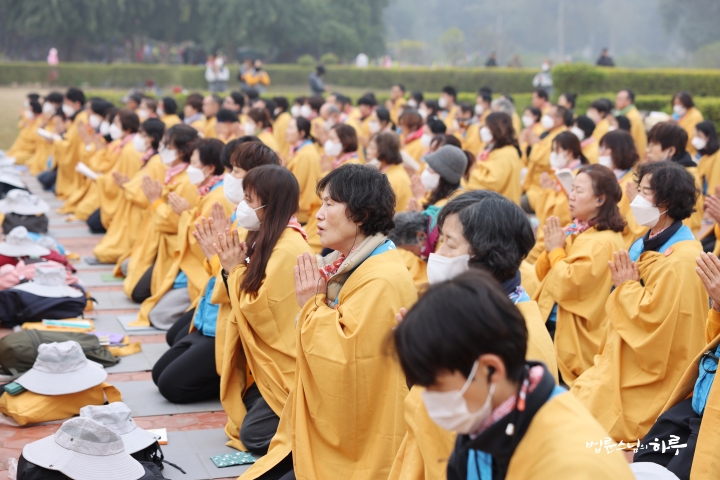
Then, they recited the Heart Sutra and performed the Buddha bathing ceremony, commemorating the birth of the Buddha.
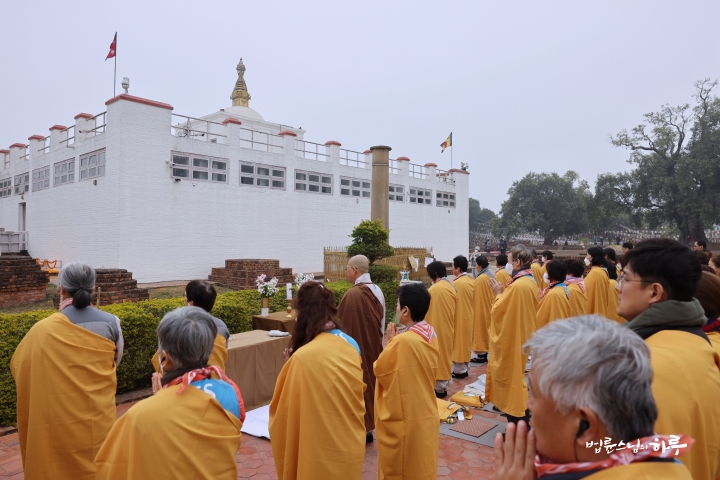
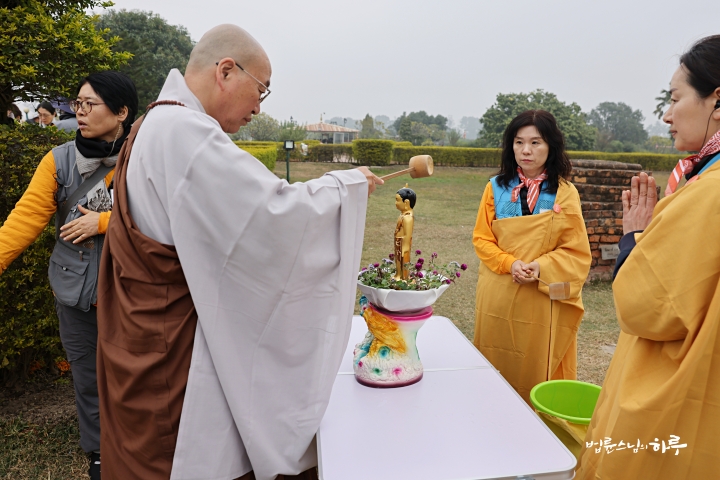
After the bathing ceremony, the pilgrims stood in a single line with their hands together in a prayer position, chanting “Shakyamuni Buddha” as they passed the Ashoka Pillar and entered the Maya Devi Temple. After viewing the statue of Buddha’s birth and his footprints, they circumambulated the Lumbini Garden once before returning to their seats.
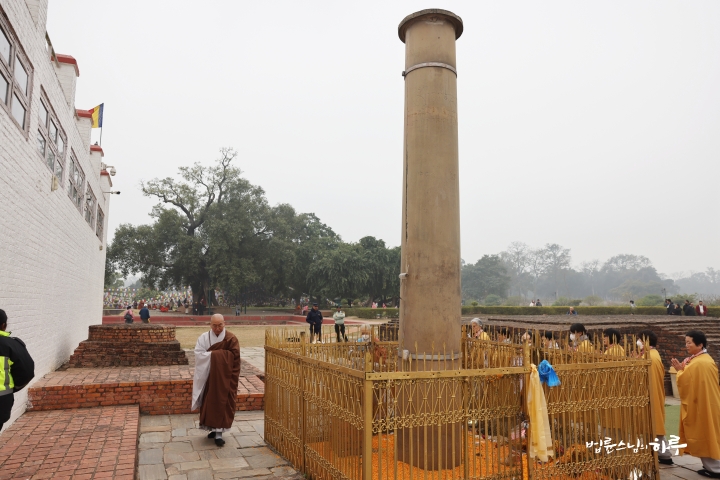
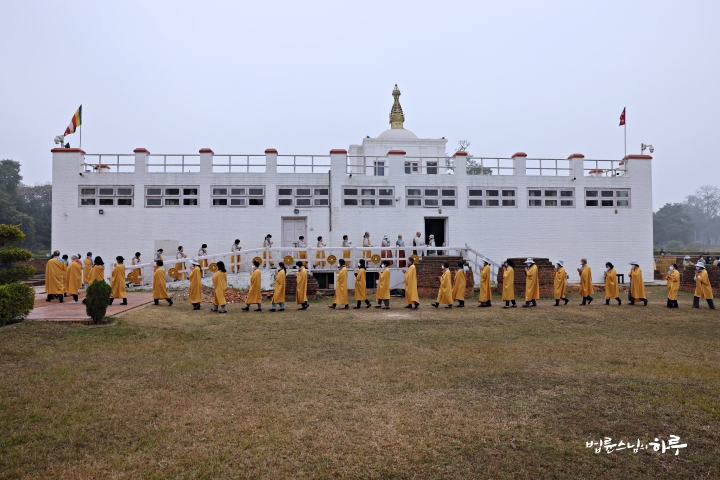
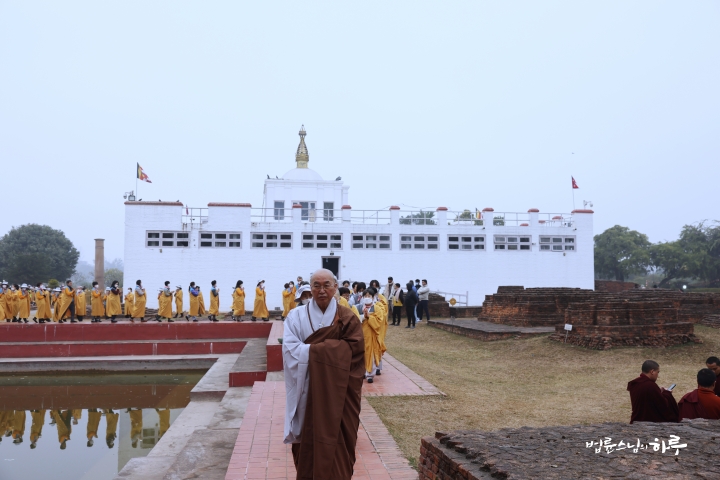
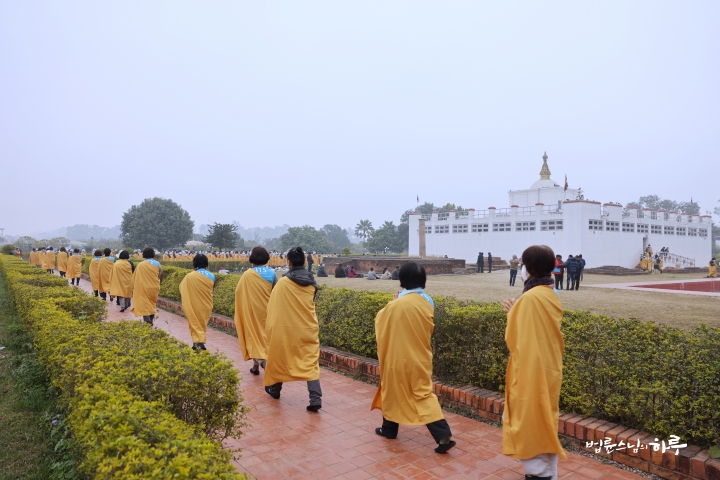
After spending about three hours paying homage in Lumbini, Sunim briefed the pilgrims on the next day’s schedule and walked to the lodging at Daeseong Shakya Temple.
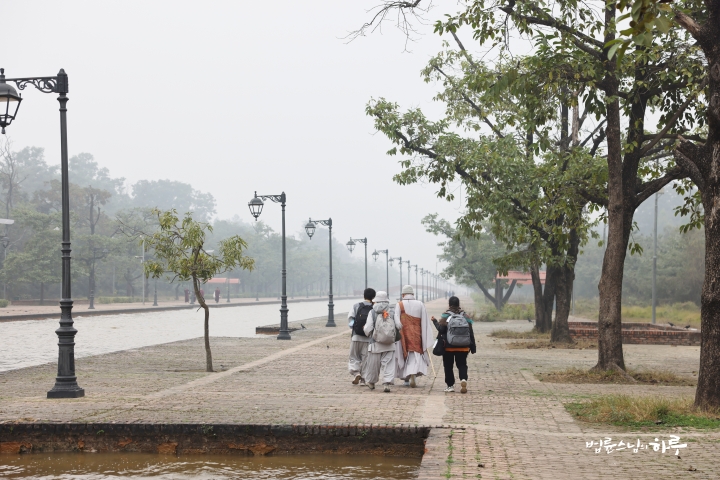
At 5 o’clock, upon arriving at Daeseong Shakya Temple, they were greeted by the temple’s administrative monk, Venerable Bohyeon. Sunim first went to the main hall to pay respects. The hall enshrined statues of Buddha and Master Yongseong.
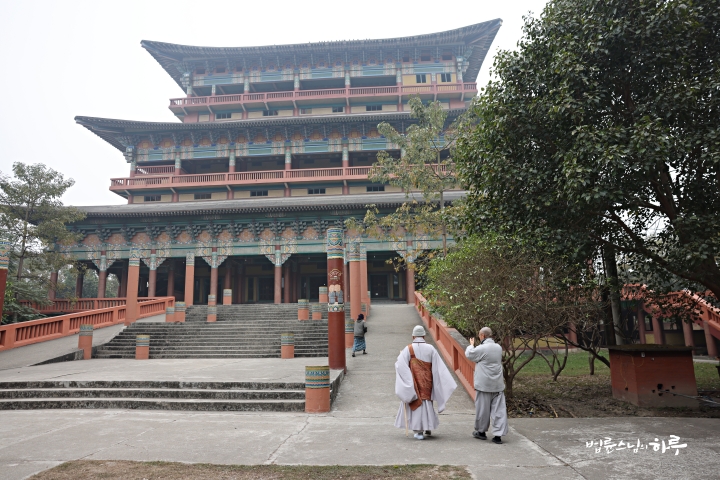
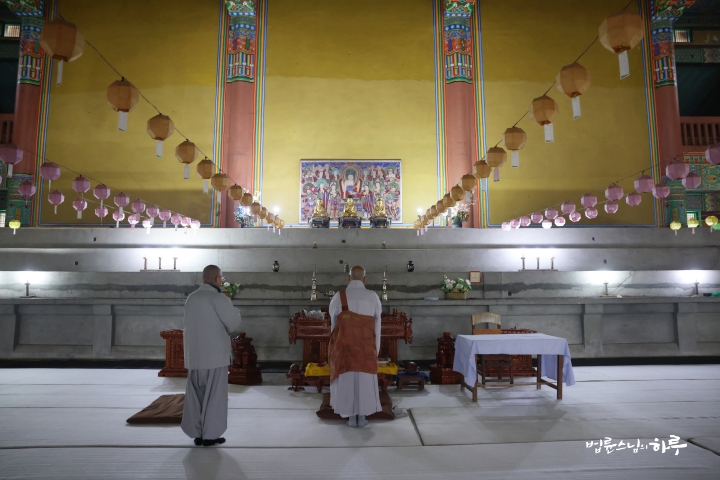
The pilgrims had dinner and then attended evening prayers in the main hall at 6:30 PM. After the prayers, Venerable Bohyeon welcomed the group and introduced the history and construction process of Daeseong Shakya Temple.
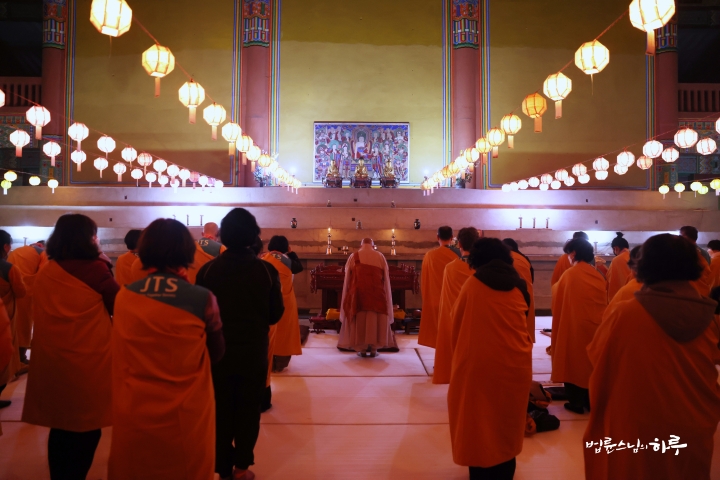
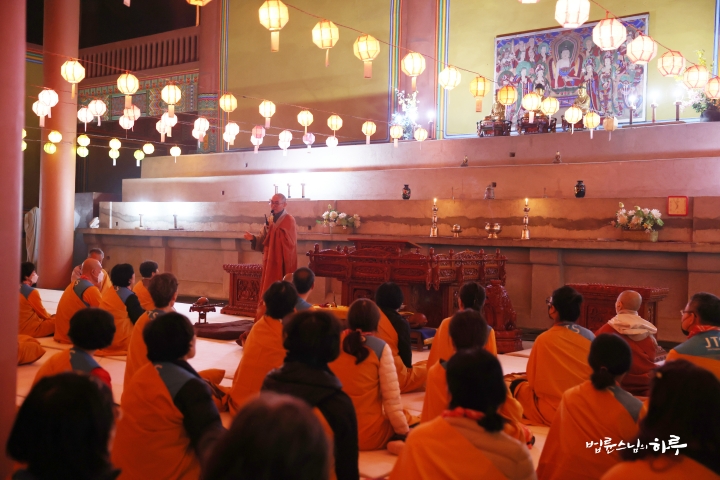
“Hello, I am Venerable Bohyeon, the administrative monk of Daeseong Shakya Temple. It’s a pleasure to meet you all. We are grateful that Jungto Society chooses to stay at Daeseong Shakya Temple in Lumbini during your annual pilgrimage.
Daeseong Shakya Temple began in 1995 when Great Master Bulsim Domun signed a lease agreement with the Nepalese government. In the same year, Venerable Beopshin came here and started the construction. From 1999 to 2001, we built the main Buddha hall while simultaneously completing the living quarters where you are staying now.
The main hall’s framework was completed in 2007, and from 2014 to 2022, we carried out the dancheong (traditional decorative coloring) to achieve its current appearance. The main hall is quite large, isn’t it?”
“Yes!”
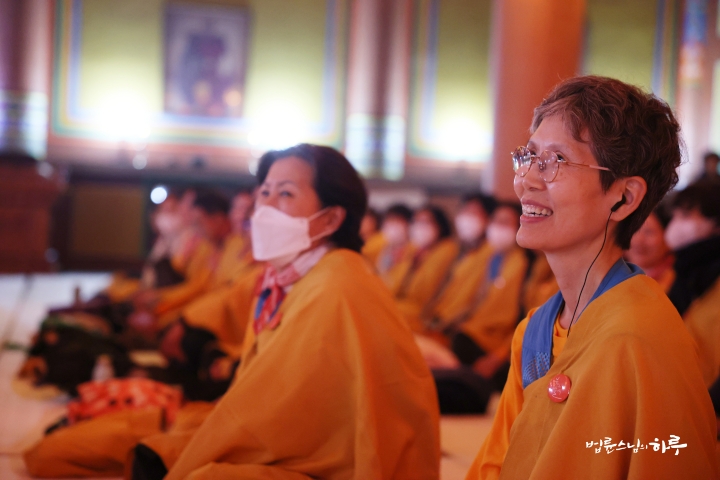
“It’s truly gratifying to have a Korean temple in Lumbini, the birthplace of Buddha, where many Buddhists can gather for large dharma assemblies.”
Venerable Bohyeon continued, wishing for the group’s comfortable pilgrimage.
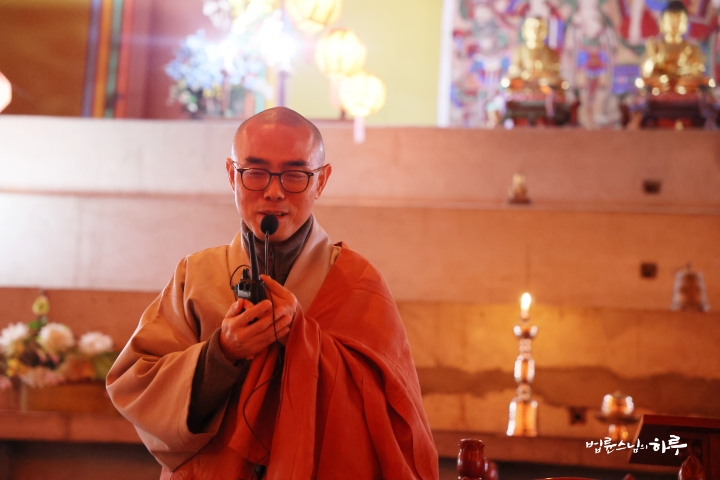
“Our facilities may not be the best, so it might be cold and uncomfortable. However, the Jungto Society pilgrims always come here with bright expressions and light hearts, which is truly pleasant to see. I hope you rest well during your stay. Thank you.”
Sunim then added to Venerable Bohyeon’s words, emphasizing the significance of Daeseong Shakya Temple.
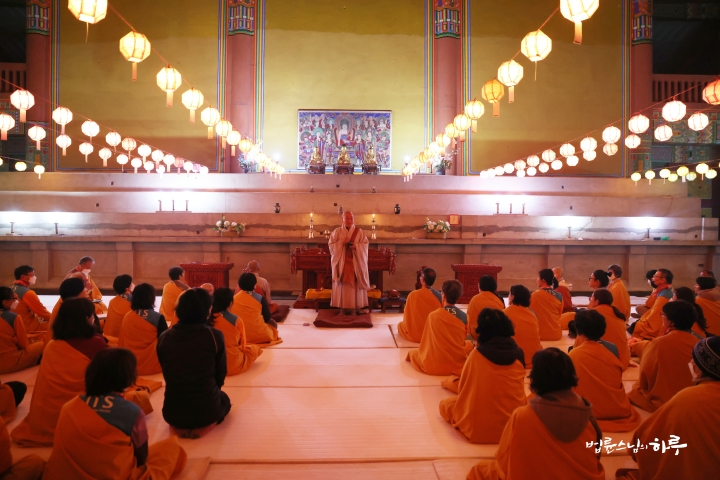
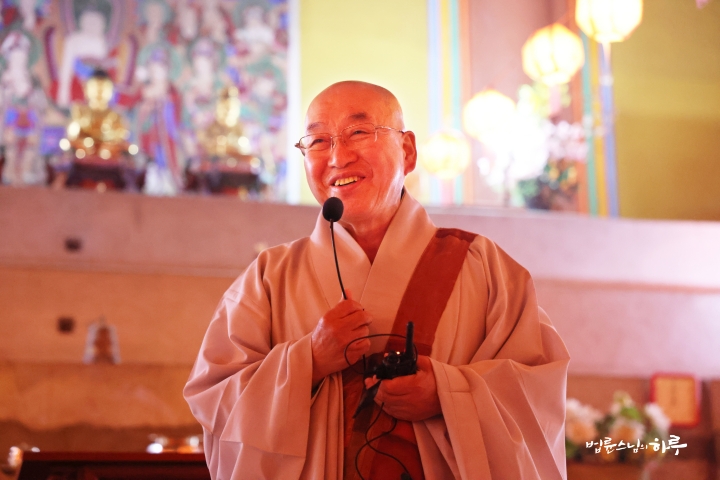
The group gave a warm round of applause, expressing their deep gratitude and support for Venerable Bohyeon’s dedication.
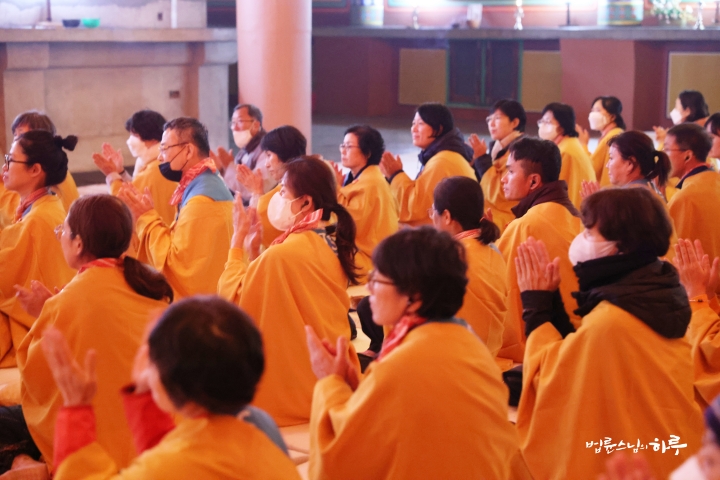
After about 30 minutes of greetings, the pilgrims returned to their rooms, prepared lunch boxes for the next day, and went to bed. The long day that began at 2 AM finally came to an end. Tomorrow, they will depart for Tansen at 3 AM to watch the sunrise and then visit Kapilavastu, where Buddha grew up.