What Should I Do About My Husband Who Refuses Marital Relations After Marriage?
JAN 17, 2025 - Indin Pilgrimage Day 7, Vaishali
Hello. This is the 7th day of our Indian pilgrimage. Today, we moved to Vaishali and visited the Relic Stupa and the Monkey’s Offering Site.
At 4:50 AM, the pilgrimage group departed from Rajgir for Vaishali. During the journey, we started the day with morning prayers in the vehicle. After about 3 hours and 30 minutes of travel, we arrived in Vaishali at 8 AM, an hour earlier than expected. As road conditions in India continue to improve, travel times are becoming shorter. Fortunately, the accommodations were available, so the group unpacked in their rooms, had breakfast, and then walked to the Relic Stupa site at 9 AM.
Upon arriving at the Relic Stupa site, we composed our bodies and minds through meditation before Sunim provided an explanation about the sacred site.
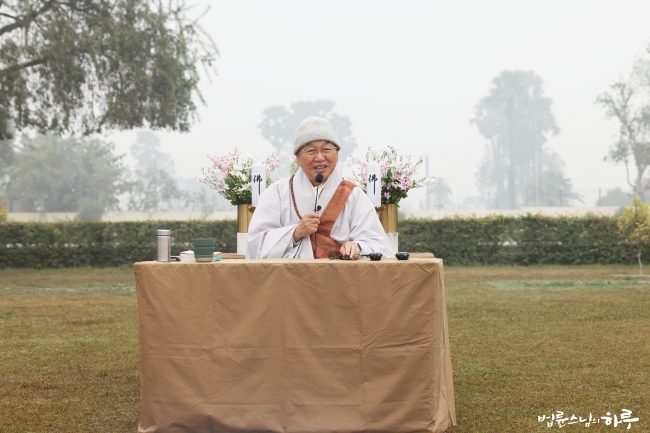
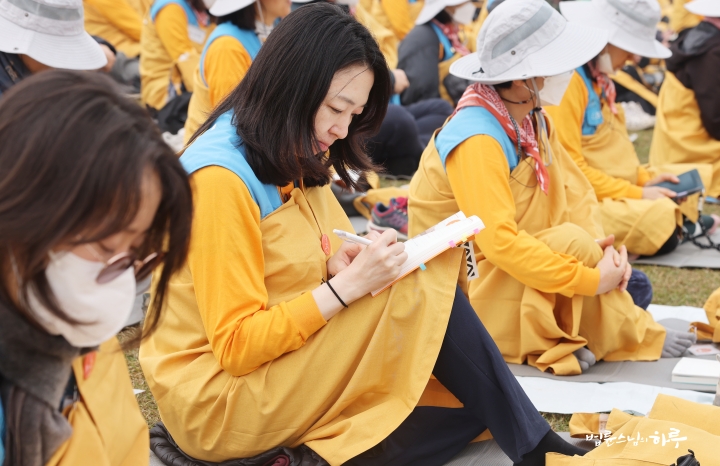
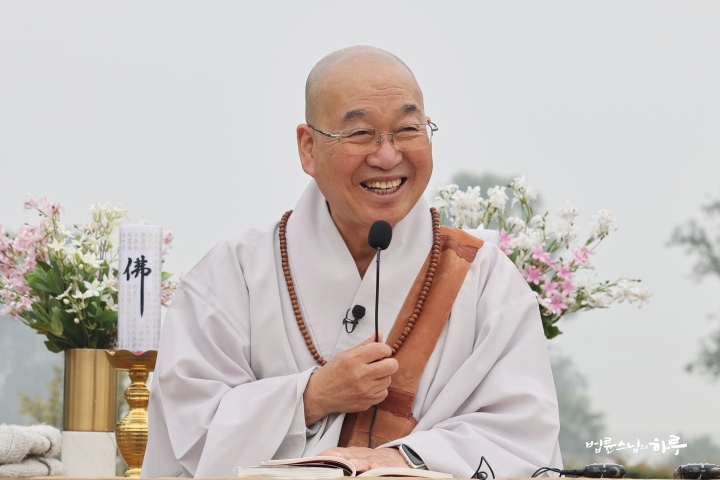
After explaining the stories connecting Buddha and Vaishali, Sunim introduced the Relic Stupa.
“This Relic Stupa is the original stupa enshrining Buddha’s relics, which the Licchavis brought from Kushinagar after Buddha’s parinirvana. Currently, the relics are kept in the Patna Museum, but the Bihar state government is now constructing a large-scale stupa to house Buddha’s authentic relics. You can see the stupa under construction next to us.”After the explanation, the group recited sutras and meditated.
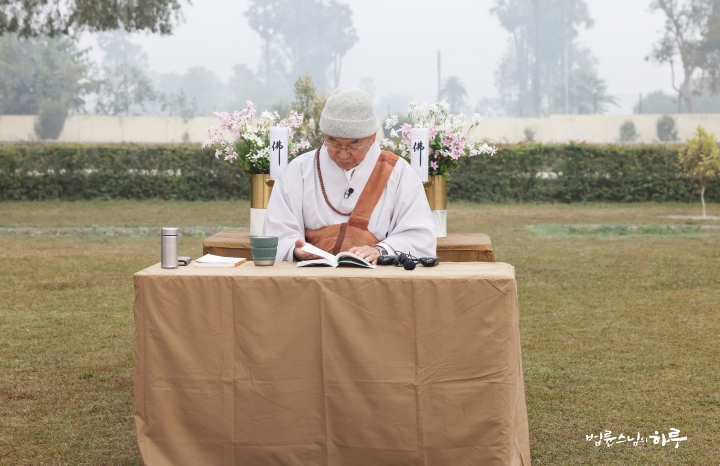
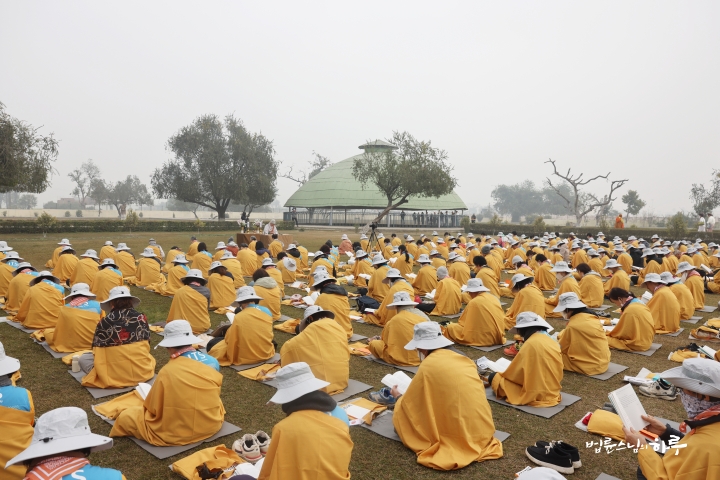
Then, they offered sincere prostrations towards the Relic Stupa and circumambulated it, expressing their reverence for Buddha.
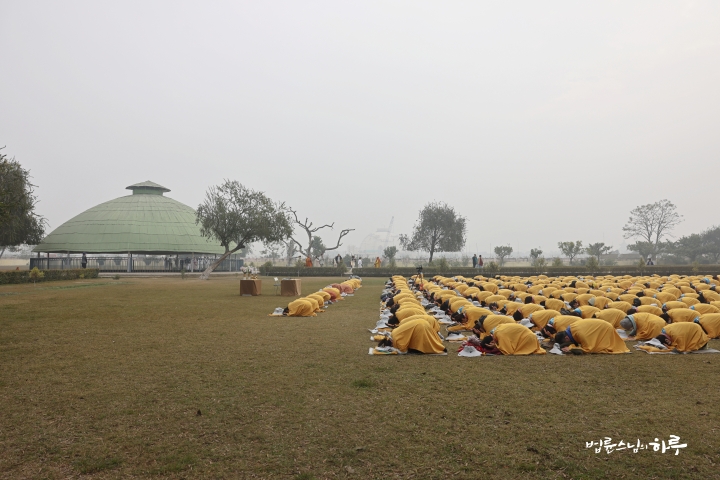
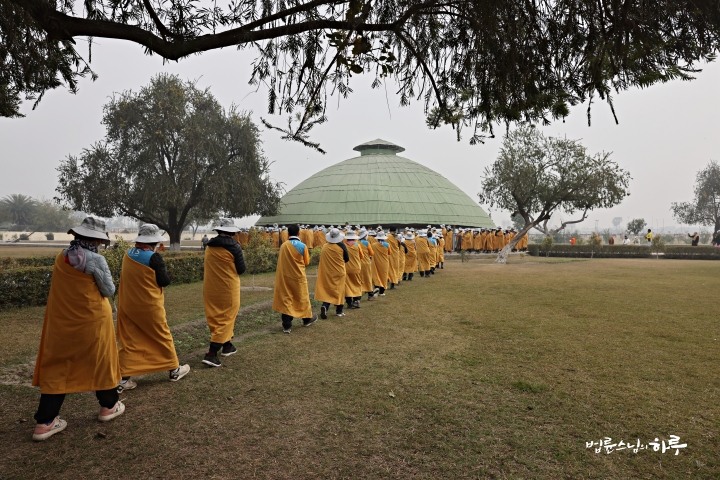
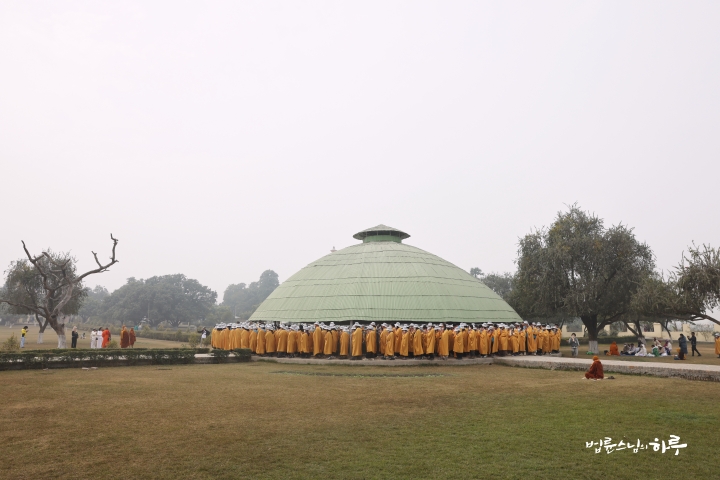
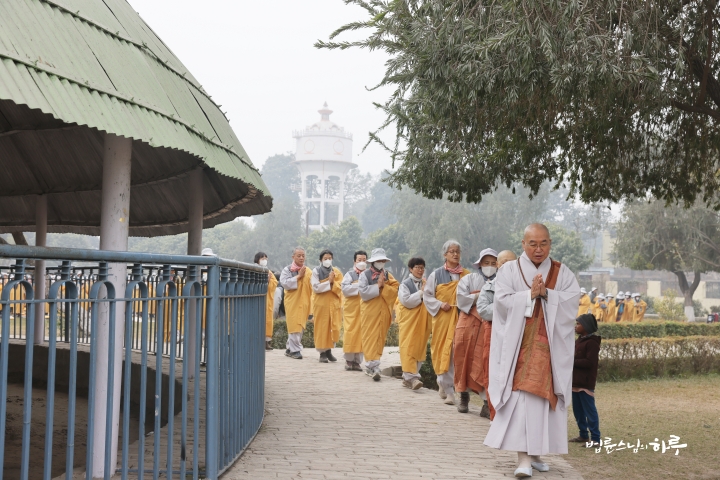
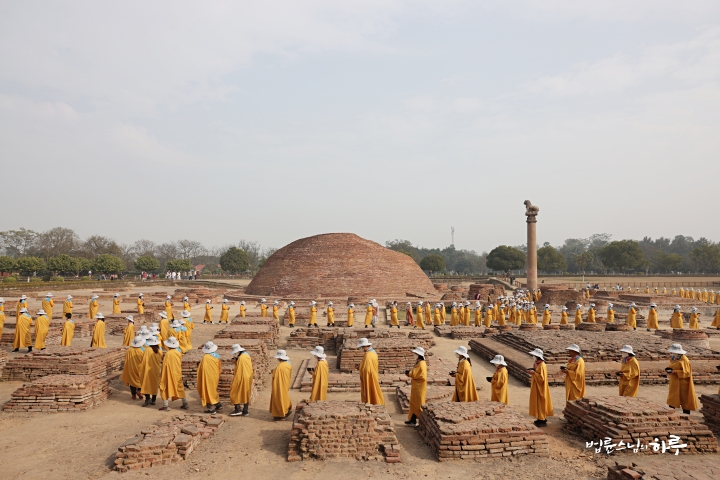
About 400 people gathered closely around the stupa, offered three prostrations towards it, recited the Three Refuges, and then slowly circumambulated the stupa before returning to their seats.
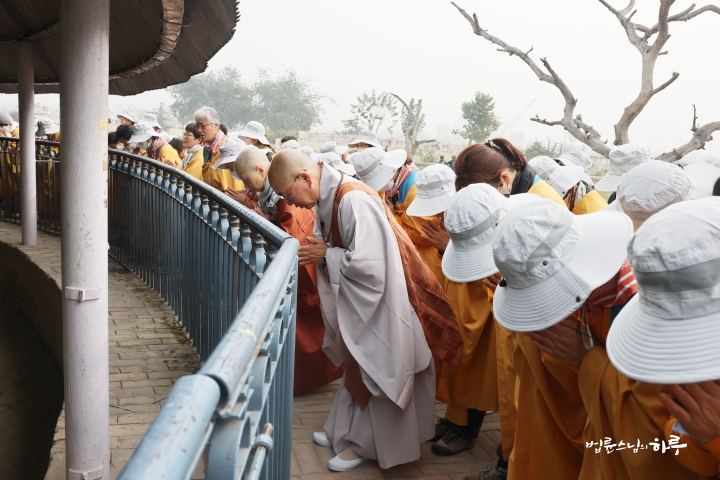
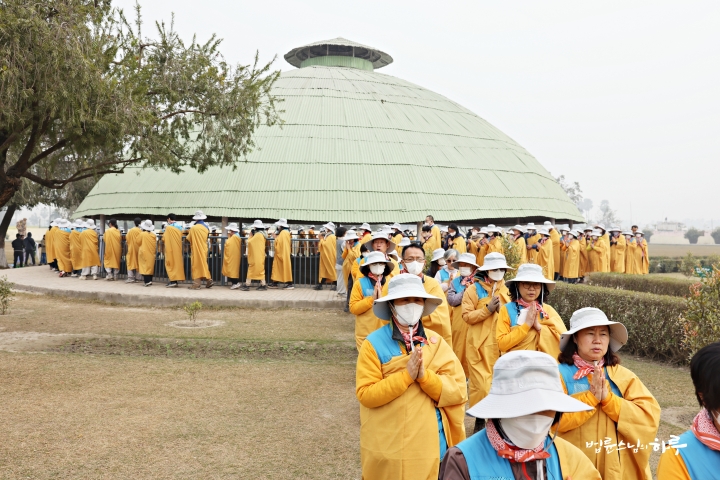
After returning to their seats, Sunim continued his explanation.
“From a religious perspective, we can say that we have just visited one of the most sacred places. This is because, even after 2600 years, this place still contains physical traces of our teacher, Shakyamuni Buddha. However, Buddha himself said about his living body, ‘This body will soon grow old, become ill, and die. What is the use of looking at this illusory body?’ Following his words, we should always see the emptiness of all phenomena. Nevertheless, from a devotional standpoint, we can say that we have visited one of the most sacred places today.”Sunim then gave a detailed lecture on the meaning of the prostration text. The pilgrimage group performs prostrations several times a day at each sacred site, but some people do not understand the Chinese characters in the prostration text. So, he explained the meaning contained in the prostration text.
After completing their visit to the Relic Stupa, Sunim and the pilgrimage group moved to the Monkey’s Honey Offering site.
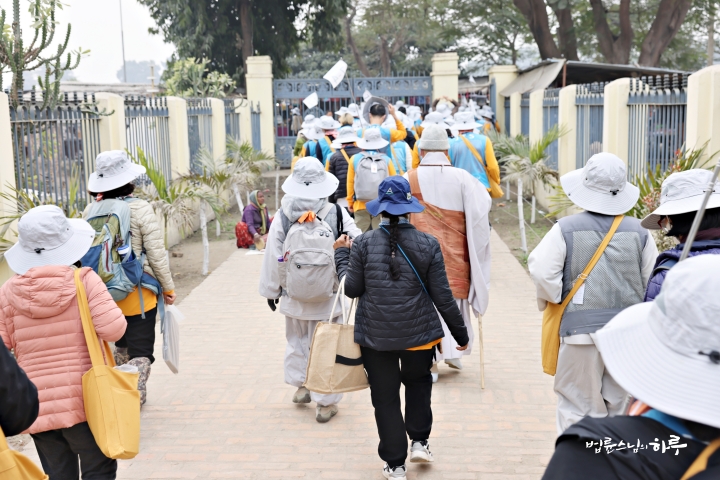
Once everyone was seated, Sunim first explained about the Monkey’s Honey Offering site.
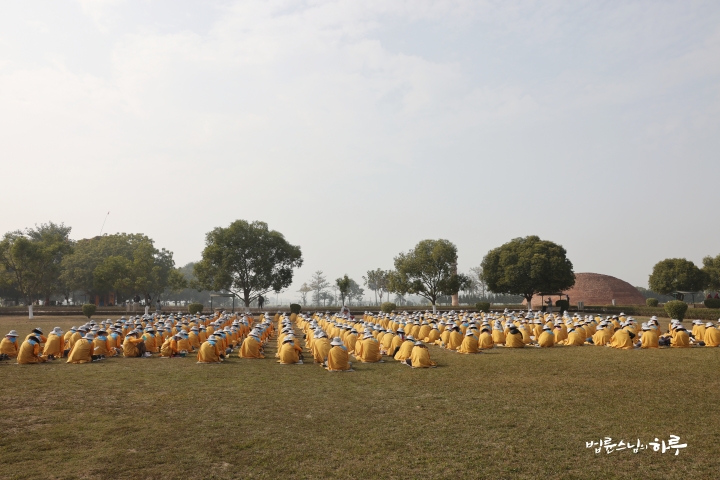
The Place Where a Monkey Offered Honey to Buddha
One day, Buddha and his disciples were scheduled to receive alms from the public. They would lay out their alms bowls, and the person inviting them for a meal would distribute food into the bowls. Suddenly, a group of monkeys appeared, grabbed Buddha’s alms bowl, climbed up a tree, and filled it with honeycomb. When Buddha didn’t eat it, the monkeys tilted their heads in confusion. Looking at the honey, they saw that the entire honeycomb had been torn off and placed in the bowl, with larvae still wriggling inside. So the monkeys used tree branches to remove all the larvae, but Buddha still didn’t eat it. When the monkey poured water, stirred it, and offered it again, Buddha accepted it and shared it with his disciples. This story can be interpreted as even animals recognizing Buddha. The four major sacred sites where Buddha was born, attained enlightenment, first taught the Dharma, and entered parinirvana are historical facts. However, the remaining four of the eight major sacred sites all symbolize miraculous events like this. Rajgir symbolizes the story of an angry elephant kneeling before Buddha, Vaishali represents the monkey offering honey to Buddha, Sravasti commemorates the metamorphosis and manifestation of a thousand Buddhas. These are all mythical stories. If all these stories were created later, we could understand them as reflecting elements of Indian mythical culture. However, seeing the Ashoka pillar erected here suggests that such legends existed from the early days. We can’t know exactly what specific events led to these legends, but we can consider them as stories that existed from the beginning. It seems to show that no matter how rationally Buddha taught, the life of a great sage was inevitably described in a mysterious way.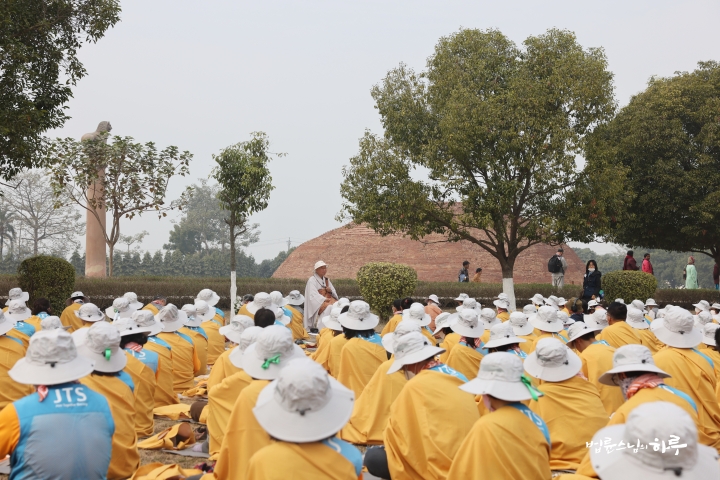
The First Place Where Women Were Allowed to Become Monastics
Vaishali is also known as the place where women were first allowed to become monastics. After the Buddha’s first five disciples, there were lay practitioners like the wealthy merchant Yasa and his wife. This shows that from the beginning, there were both male and female lay practitioners. However, it wasn’t until 20 years later that women were allowed to become monastics. This indicates that even for the Buddha, it was extremely difficult to allow women to become monastics given the social conditions of the time. There were no instances of women requesting to become monastics, likely because they were bound by the caste system and couldn’t even imagine such a possibility. When the Buddha’s father passed away, his mother was left without a husband, her son had become a monastic, and even her grandson had been ordained by the Buddha, leaving her without any family. Her parents had already passed away as well. At that time, a woman without a male guardian could be taken by anyone. Princess Yasodhara was in a similar situation. It is said that there were 500 such women among the Shakya clan. This must have been a significant social issue at the time. These women had already studied the Dharma as lay practitioners. So they decided, “Let’s become monastics too.” This was because all the obstacles to becoming monastics had disappeared. They had no children, no husbands, no parents – all their familial ties had been severed. So the Buddha’s mother, representing them, requested the Buddha to allow them to become monastics. The Buddha refused. In Buddhist tradition, it’s customary to grant a request after it’s been made three times. However, even after three requests, the Buddha refused. Deeply disappointed, they asked again a few months later, but the Buddha refused once more. Later, the Buddha moved to Vaishali. The 500 women followed him there. These women, who were once noble, must have looked quite disheveled by then. They followed him to Vaishali and requested again to become monastics, but the Buddha refused once more. Their disappointment was indescribable. Ananda, seeing this, felt great compassion for them. He went to the Buddha and spoke about the merits of Mahapajapati Gotami. He talked about how she had nursed the Buddha since childhood, how she had lost her husband and was now without a guardian, and how there was no reason not to allow her to become a monastic except for the fact that she was a woman. She met all the conditions necessary for ordination except for her gender. So Ananda asked the Buddha if women were incapable of attaining enlightenment through practice. The Buddha replied that women could indeed attain enlightenment. He said, “As you say, Mahapajapati Gotami’s merits are immeasurable. When my birth mother passed away seven days after I was born, she devoted herself to raising me.” With these words, he allowed women to become monastics. Thus, through Ananda’s intercession, women were permitted to become monastics. This was how the bhikkhuni (female monastic) order was first established.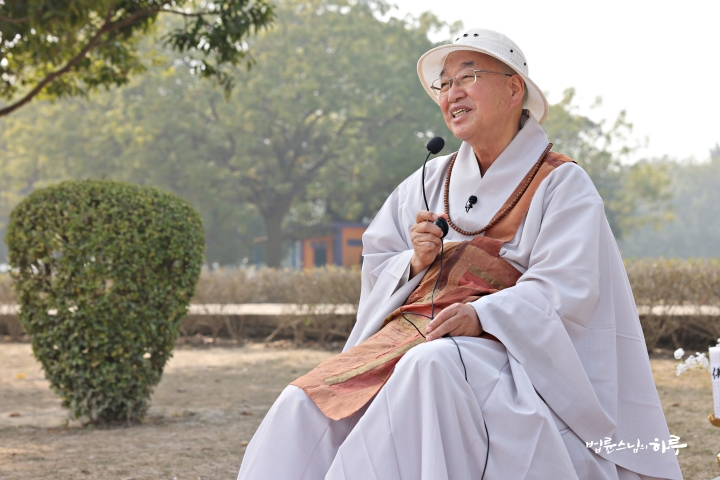
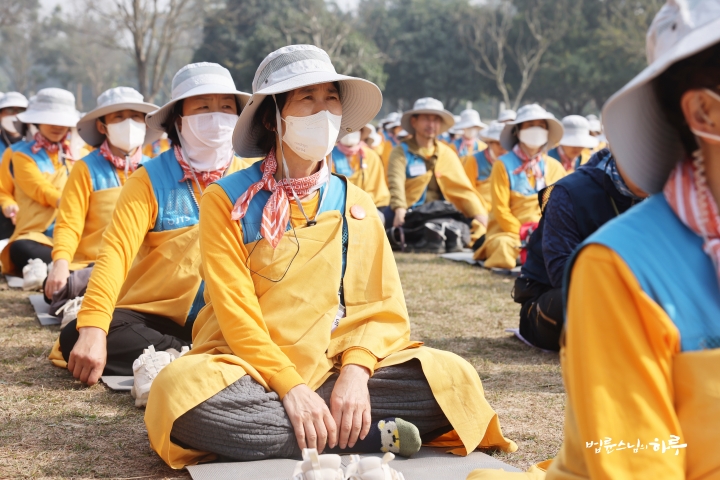
After Sunim explained the sacred site, everyone recited sutras together.
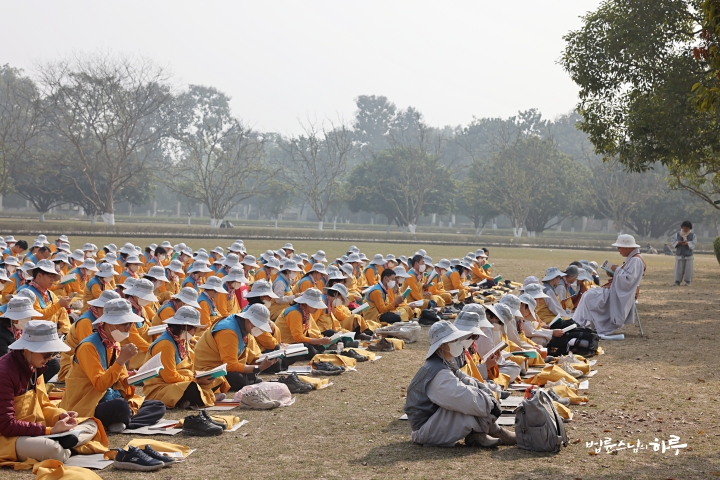
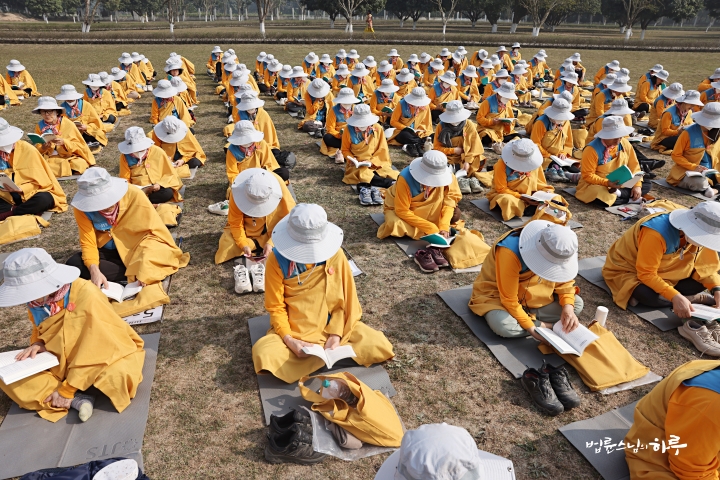
After finishing the sutra recitation, the pilgrimage group received bread and honey in their bowls, then slowly circled the stupa once before returning to their seats.
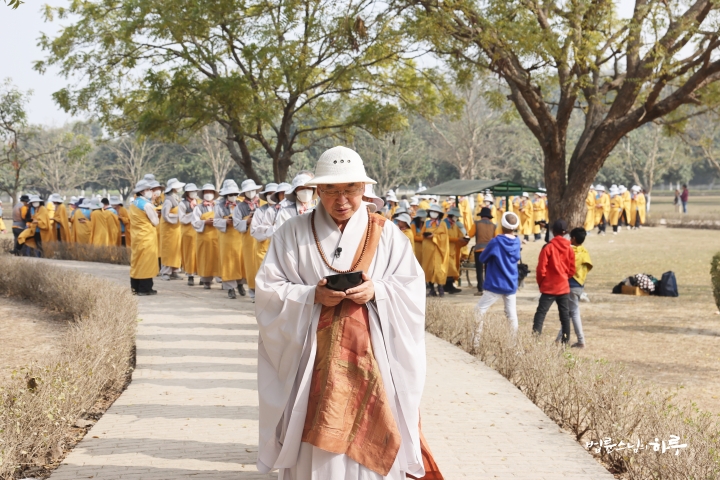
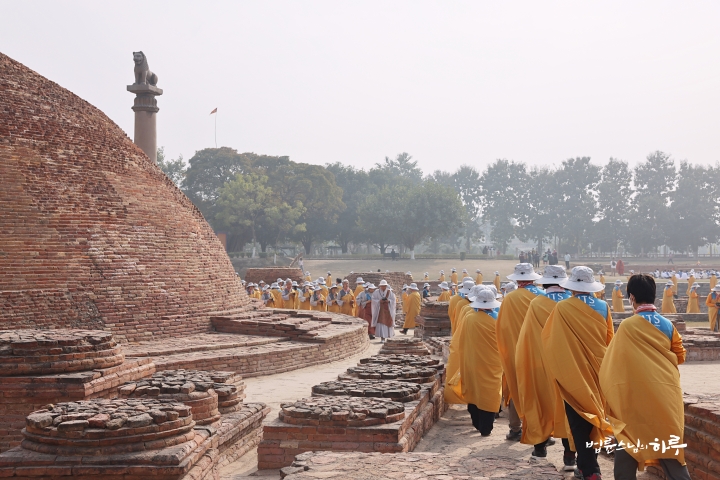
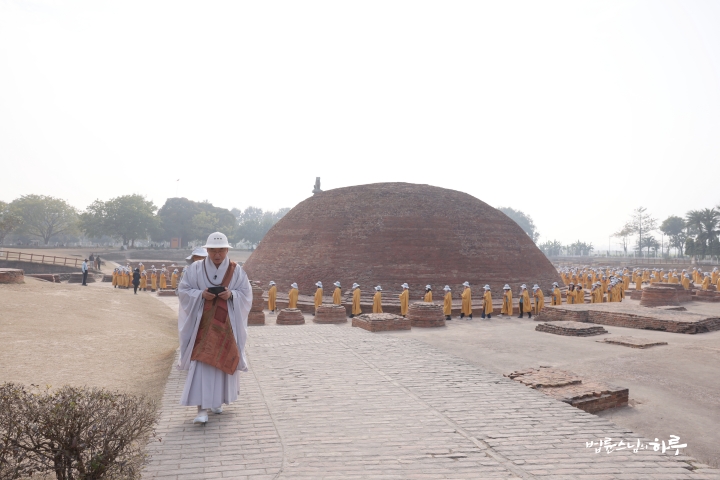
After offering prayers before the meal and meditating, they slowly ate the honey and bread.
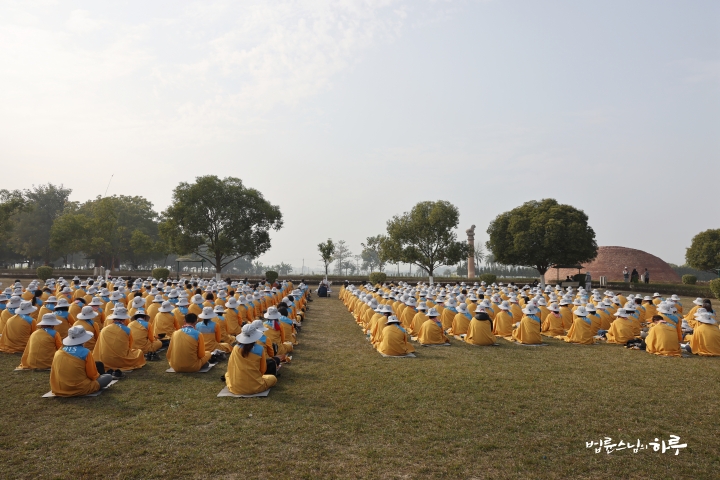
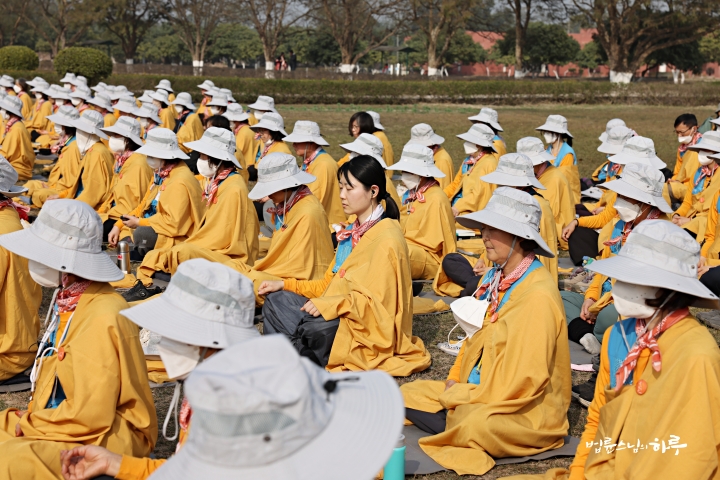
As the group finished their meal, Sunim shared his honest thoughts and feelings about who the Buddha truly was, based on his experiences during the pilgrimage.
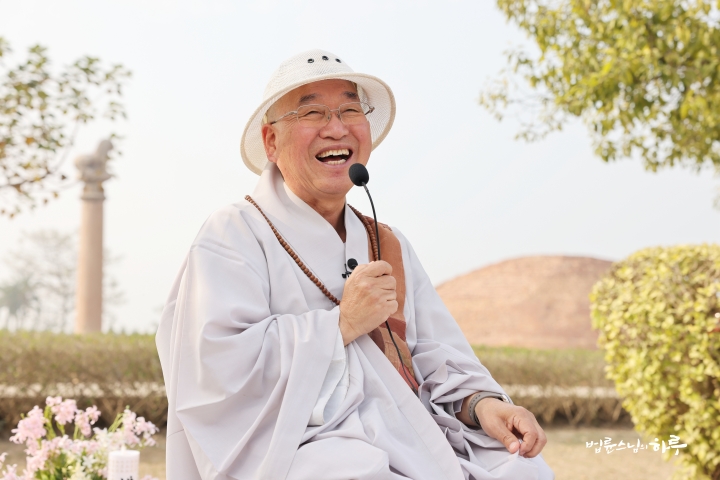
How Could the Buddha Have Had Such Thoughts 2,600 Years Ago?
What we should truly be ashamed of today is that we can’t even do what the Buddha did 2,600 years ago. It seems the Buddha was able to do this because he begged for alms and slept under trees. In the Buddha’s time, religion and power were absolute, but since the Buddha begged for alms, he didn’t need to ask anything special from kings or the wealthy. You only need help from kings or the wealthy if you need to build a large temple. Now that we have possessions, we tend to try to get something from rich or high-status people. Many monks, when they meet powerful people or tycoons, say things like, “Please build us a temple,” or “Please build us a Buddhist hospital.” But is it really because we don’t have Buddhist hospitals that we can’t properly spread the Dharma? Is it because we don’t have temples that Buddhism isn’t expanding? Rather, we should think, ‘In the Buddha’s time, there were limitations due to the era that even the Buddha couldn’t overcome. But in our world of advanced civilization, we can do anything.’ Instead, we’re struggling to even do as much as the Buddha did 2,600 years ago. So how great is the Buddha? If we don’t say he was great, we become too insignificant. We keep saying the Buddha was great so that we can at least be considered ordinary people. (Laughter)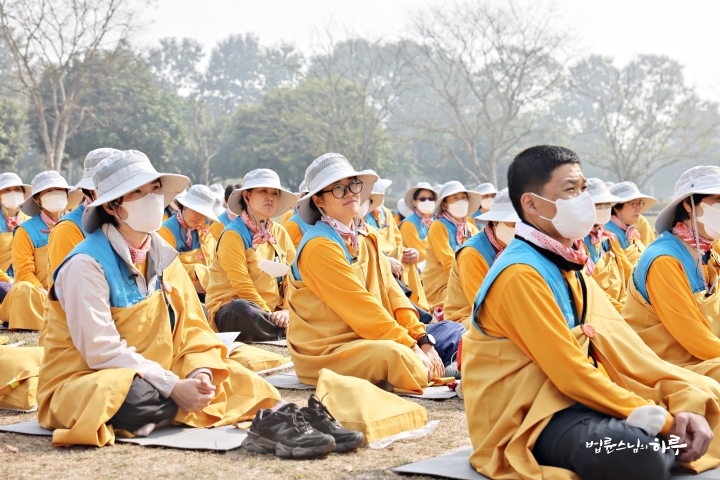
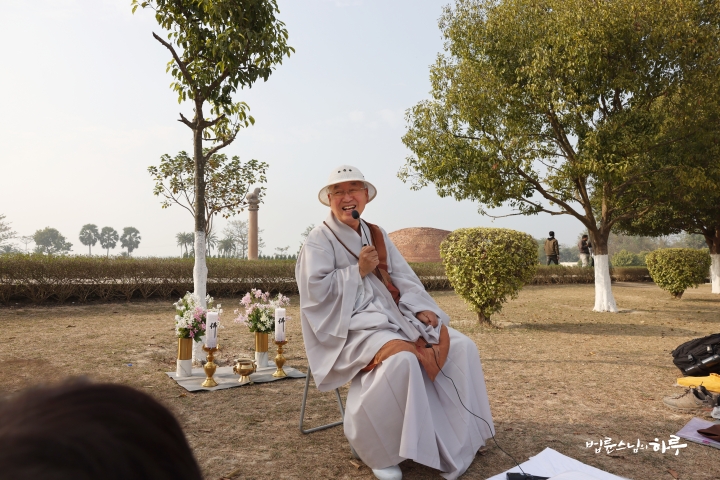
The Pride and Confidence of Those Who Have Attained Enlightenment
When the courtesan Ambapali heard the Buddha’s dharma talk and suddenly became enlightened, she refused an offer from princes, her clients, who said, “We’ll give you 100,000 gold coins if you transfer the right to invite the Buddha for a meal.” She replied, “I wouldn’t accept even if you gave me the entire kingdom of Vaishali.” The right to invite for a meal doesn’t even make money; rather, one has to spend money to prepare the meal. Yet, she wouldn’t give it to the princes. What kind of realization could have given her such pride? Even though she was a courtesan who sold her body, upon attaining enlightenment, she gained tremendous pride and confidence. Seeing this, not only is Ambapali remarkable, but the Buddha is also extraordinary. If it were me, and I had made an appointment with someone, but then received a call from the President, I would have said, “I’m sorry, but I have to go now because I got a call from the Blue House. Let’s meet another time,” and changed the appointment. (Laughter) I think we may be diminishing the Buddha’s greatness by thinking of him too abstractly. You might feel his greatness from stories like “he flew through the sky” or “he walked on water,” but what’s so amazing about that when we have airplanes flying and ships carrying heavy loads? I believe that later generations unnecessarily wrote things like “flower petals rained from the sky,” which actually diminished the Buddha’s dignity. If the Buddha’s words and actions had been recorded accurately, we would have been so moved that we would have shed tears and our heads would have bowed to the ground involuntarily. I believe that as humanity continues to pursue desires, we will eventually face limitations due to the climate crisis and be forced to seek a new path. So instead of constantly telling poor people to reduce consumption, those of us who are slightly better off should reduce our consumption and humble ourselves. This is how we can fundamentally solve this problem. Even if we can’t live exactly like the Buddha, shouldn’t we at least live frugally? However, just as it’s not easy to break free from drug addiction once you’re hooked, we’re already addicted to the consumption of ‘convenience’ and it’s not easy to escape. The level at which we eat, dress, and sleep while on this pilgrimage is much better compared to the local people here in India. Yet, you all say it’s difficult, don’t you? You’re struggling so much and forcing yourselves to endure that as soon as you board the plane back to Korea, about ten people collapse. They stumble and faint as the tension is released. This happens because you’re gritting your teeth to get through it now. India’s 1.4 billion people live like this, so what’s so difficult? I hope you can travel with a more relaxed mindset.”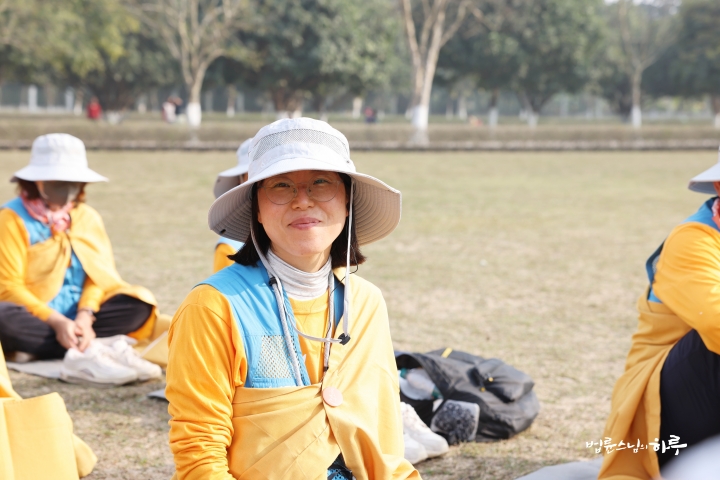
Finally, everyone sang “Land of Happiness” together, concluding the pilgrimage to Wonhubongmil site.
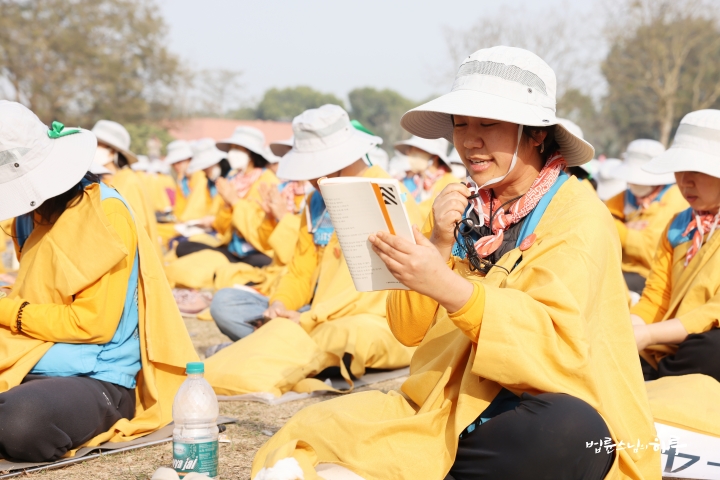
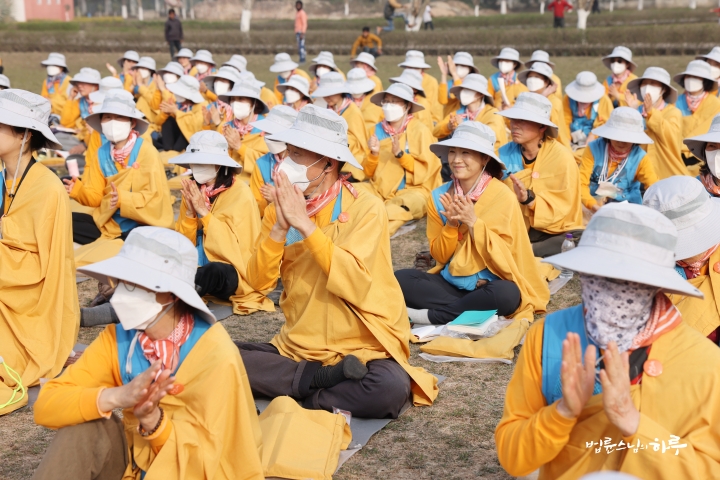
After reciting the Four Great Vows, the two-hour visit to Wonhubongmil site came to an end, and group photos were taken.
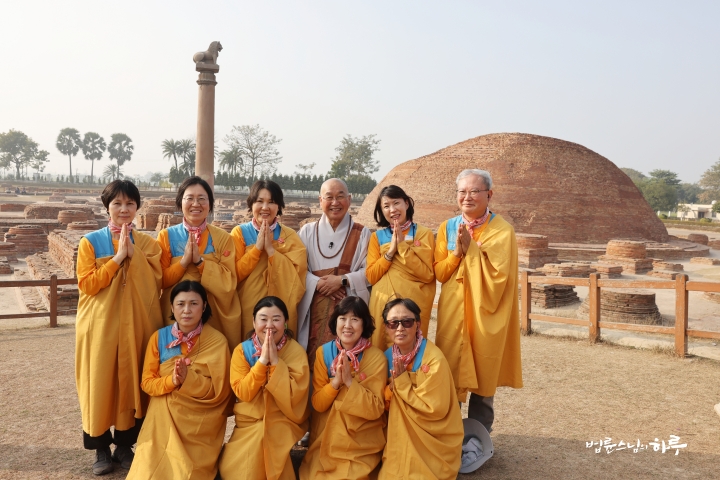
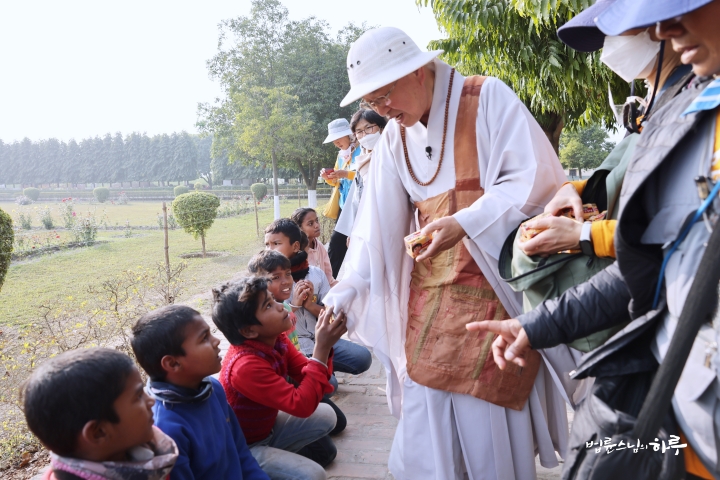
After taking photos with the 16 groups corresponding to four vehicles, Sunim left Wonhubongmil site. At the entrance, there was a long line of village children who gathered after hearing Sunim had come. Sunim handed out handfuls of candy and snacks to both adults and children who reached out their hands.
After distributing all the prepared snacks, Sunim hurried back to the lodging to conduct the Dharma Q&A broadcast. The Friday live Dharma Q&A was scheduled to begin at 4 PM. Fortunately, they were able to arrive in time for the broadcast.
The live broadcast began at 4 PM Indian time, which is 7:30 PM Korean time. With about 4,000 people connected to the live stream, the Dharma Q&A started immediately. Four people had submitted questions in advance and engaged in conversations with Sunim. One of them sought Sunim’s advice on how to overcome the difficulty of not having had a marital relationship with her husband since their marriage.
How Should I Handle a Husband Who Refuses Marital Relations After Marriage?
“I am a working mother with one son. My concern is that my husband has not wanted to have marital relations since our marriage. We agreed to have a child and had relations once, and I immediately became pregnant. I am grateful for the child who came to us like a miracle, but there has been no relationship since then. I suggested couples counseling, but my husband refused, saying we don’t have any problems. My husband is good to our child and diligent in family life, so there are no major issues. Therefore, I try not to be greedy and to be grateful for what we have, focusing on my husband’s positive qualities. However, when I hear stories of other couples having normal marital relations and living happily together, I feel devastated and filled with self-doubt. I’m not considering divorce because we have a child. As a mother, I intend to be devoted to our family for at least 20 years. Even with this mindset, I often feel depressed and sad. I’m wondering what kind of attitude I should have when these feelings arise.”
“Currently, your husband is not having an affair, not engaging in domestic violence, not causing trouble while drunk, and not financially incompetent. If you think of marriage as living together like friends, there’s no problem with this person. Now the decision is yours. You can live your entire life without sexual activity, like bhikkhunis or nuns. Even if you’re not a bhikkhuni or a nun, many people live alone these days. You can just live with your husband like a friend, or you can live together while being grateful for his role as the child’s father. However, if you absolutely want to fulfill your sexual desires, you need to make a choice. If it’s extremely difficult for you to give up your sex life and live only as a family community, that’s a valid reason for divorce. This is not so much your husband’s fault as it is your choice. But if you’re not certain about getting a divorce, you need to accept the current situation and live with it. If you have sexual desires but your husband doesn’t respond, as a married woman, you can’t meet other men while having a husband, so you end up having to endure it. This can be seen as a form of unhappiness. Of course, if you decide to live as you are now while raising your child, that’s fine too.”The questioner continued to cry and sob while listening to Sunim’s answer. Sunim continued speaking.
“But I don’t understand why you’re crying. Why are you sad? Your current husband isn’t failing to earn money, he’s not having an affair, he’s not causing trouble while drunk. The only problem, if you can call it that, is that you can’t have a sex life, which is marital relations. If you have strong sexual desires that you can’t fulfill, and that makes you sad, I can understand that. But if that’s not the case, not having a sex life doesn’t mean you can’t live happily together. You need to clearly see what you’re worried about. Your husband is good to the child, does well with housework, goes to work well, he’s doing everything well. In that case, you should first go to a couple’s clinic and get counseling from a professional. But if your husband is refusing that, the first possibility is that your husband has his own life philosophy of living like a priest or a monk. There are occasionally people who, even after getting married, want to live as practitioners and not have marital relations. The second possibility is that your husband might be asexual. Asexual people have no interest or curiosity about sex life, and even find it bothersome and dirty. There are such people among both women and men. This is not due to any physical disability. If your husband had a physical disability, you wouldn’t have been able to conceive a child. Your husband might say he has no problem because he’s asexual. If you have a conversation and find out he’s asexual, then either your husband needs to consider you who has sexual desires, or you need to consider your asexual husband, or you need to get divorced because you’re not compatible. You need to choose one of these three paths. For that, you need to be honest with yourself. This is not something to endure. It’s something where you need to know the facts and make a choice. Priests, monks, nuns, these people aren’t completely without sexual desire. They voluntarily choose that life and live while restraining themselves. Similarly, if you’ve chosen to live with your husband, you need to restrain your sexual desires. The third possibility is that your husband might be homosexual. This means a man might feel sexual attraction towards men but not towards women, or a woman might not feel sexual attraction towards men but only towards women. Of course, this is not common. In the past, this was considered sinful, but as it has been medically recognized, it’s now being accepted as individual freedom. So now there’s a growing atmosphere of accepting homosexuality. If your husband has homosexual tendencies, he might not feel any sexual attraction towards the opposite sex. Because there’s no problem with a man’s sexual function, a child can be conceived if they have relations, but because he doesn’t feel sexual attraction towards women, it’s extremely uncomfortable for him to share a bed with his wife. So your husband might be one of these three cases. He might be negative about sex life, or he might be asexual and have no sexual desires, or he might be homosexual and unable to feel sexual attraction towards the opposite sex. That’s why your husband might be showing such reactions now. You need to talk with your husband to find out what the exact reason is. Of course, if you’ve decided that there’s no problem with your husband just living with you as a cohabitant, you don’t need to talk with him. If you take the position that ‘We have a child, there’s no major problem with work life, even nuns and bhikkhunis live like this, so I’ll restrain my sexual desires and live,’ then you don’t need to talk with your husband anymore. However, if you feel you need to fulfill your sexual desires while living, that’s an important right you should enjoy, so you need to discuss it with your husband. Ask your husband what the reason is, and then either say ‘Okay, if that’s how you are, I’ll restrain myself and live,’ or ‘I’ll divorce you and live pursuing my sexual desires.’ You can make either of these decisions. It’s not something to be distressed about, not something to endure, it’s something you need to discuss thoroughly. Seeing that your husband is reluctant to talk, there might be other reasons besides the three I mentioned earlier. There might be some reason that he finds extremely difficult to reveal. So sufficient conversation is necessary. After that, you can make your choice based on that. This is not something to cry about, not something to endure, it’s just something that can happen in the world. You’re still young and have many days to live. Have a conversation, understand the problem, make a choice, take responsibility for it, and live like that. That’s how your child can grow up healthy too. If you live under stress and force yourself to endure, your child might be psychologically affected and develop mental issues. So you need to actively live your own life. Have a conversation with your husband, understand the situation, and then choose how to live your life.”“I tried to endure and not separate because of our child. I always tried not to negatively influence the child, but I feel very sorry to the child thinking that even that might have been an inadequate approach.”
“So from now on, don’t endure. There’s no reason for you to be unhappy. Talk with your husband to understand the situation, and make a choice based on that situation. This isn’t the 18th century medieval era, it’s the 21st century South Korea. What do you have to be conscious of others for? First, understand the current situation, make a choice based on that, take responsibility for that choice, and live proudly like that.”“I understand. Thank you.”
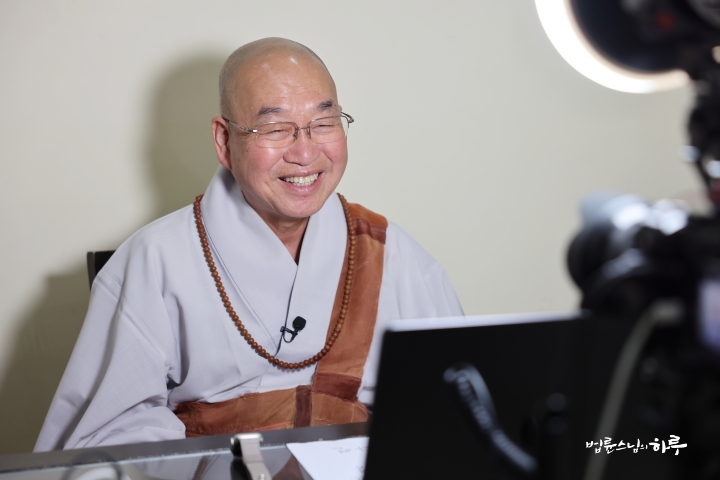
Questions continued to come in. The live broadcast ended at 6 PM.
After the broadcast, at 6:30 PM, Sunim headed to the Vaishali Palace site with the pilgrimage group. On the way, the scenery of blooming yellow canola flowers lightened the steps of the pilgrimage group.
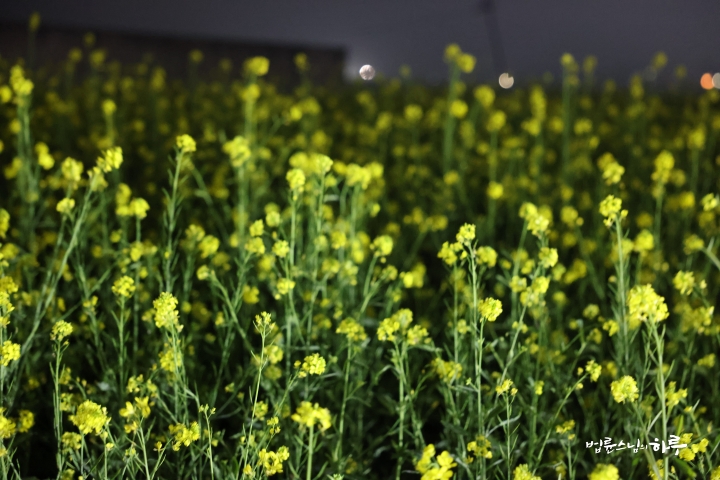
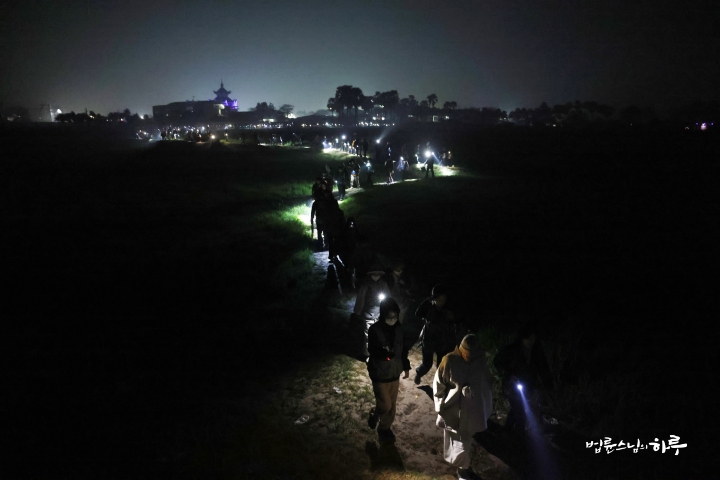
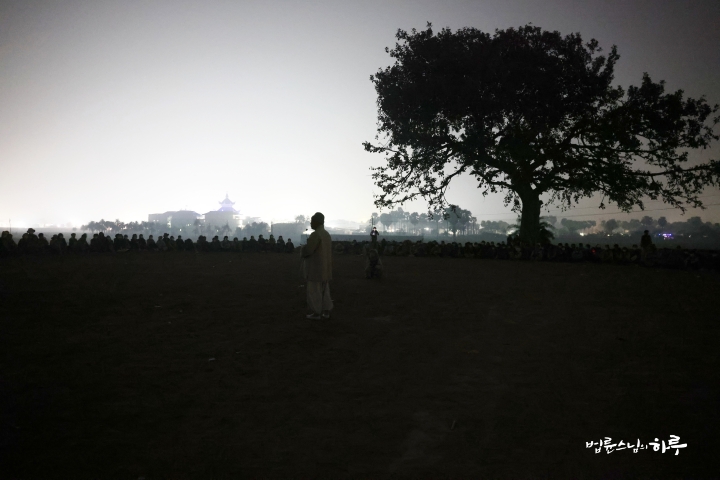
Walking along the path between rice fields, the vast palace site came into view. Upon arriving at the palace site, the group of about 400 people formed a large circle. Sunim spoke to the group.
“Turn off all the lights. That’s how we can properly see the starlight.”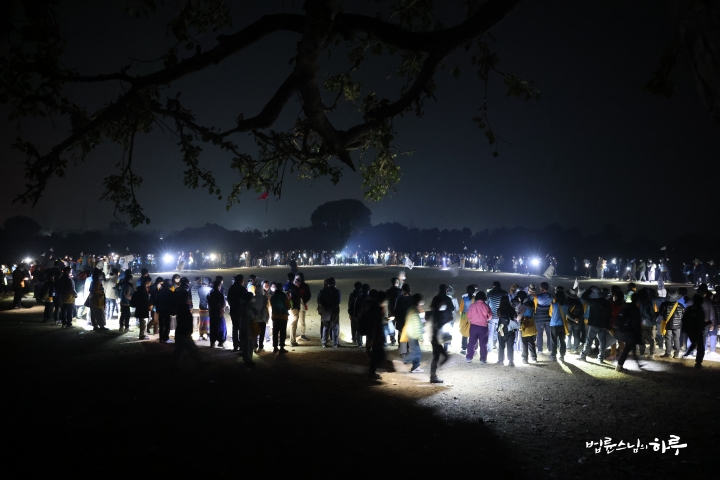
As all the lights were turned off, the pilgrimages began to appear under the soft starlight. Then, the pilgrimage group’s talent show began.
One person sang a song about their six years of practice, sharing a sincere story, while another sang “Sindang-dong Tteokbokki House” to make the pilgrimage group laugh, who might be missing the spicy taste of Korean food. Following the various songs, there were flute performances and group singing and dancing, creating a diverse stage.
As the night deepened, the palace site was filled with the bright laughter and singing of the Jungto practitioners. They could have enjoyed the entertainment until the moon rose, but they returned to their lodgings at 8 PM for tomorrow’s pilgrimage.
Tomorrow, they will leave Vaishali and make a pilgrimage to Kushinagar, where the Buddha entered parinirvana.