Will I Attain Enlightenment by Listening to Many Dharma Talks?
Jan 16, 2025 - India Pilgrimage Day 6_Rajgir
Hello. It’s the sixth day of our India pilgrimage. Today, we moved from Sujata Academy to Rajgir. Rajgir, the capital of the Magadha kingdom during Buddha’s time, is home to many historically significant Buddhist sites. We visited several of these, including ‘Jethian,’ the path where King Bimbisara of Magadha came to greet the Buddha; ‘Vulture Peak,’ known as the site where the Lotus Sutra was preached; ‘Venuvana,’ the first Buddhist monastery; and ‘Saptaparni Cave,’ where the First Buddhist Council was held after Buddha’s parinirvana.
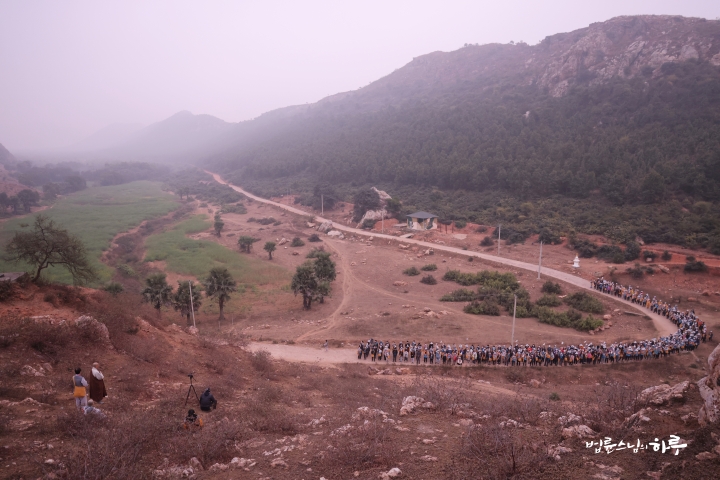
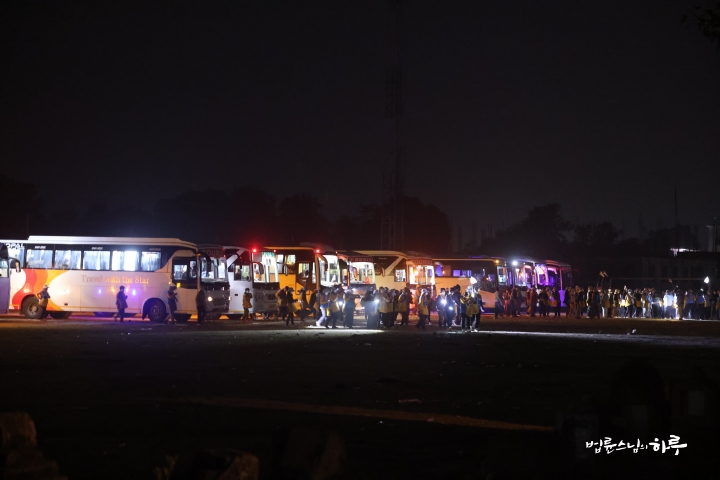
Sunim and the pilgrimage group woke up at 3:40 AM. They began loading luggage onto the vehicles at 4:00 AM, and the first fully loaded vehicles departed for Rajgir at 4:30 AM. The group performed their morning prayers inside the vehicles during the journey.
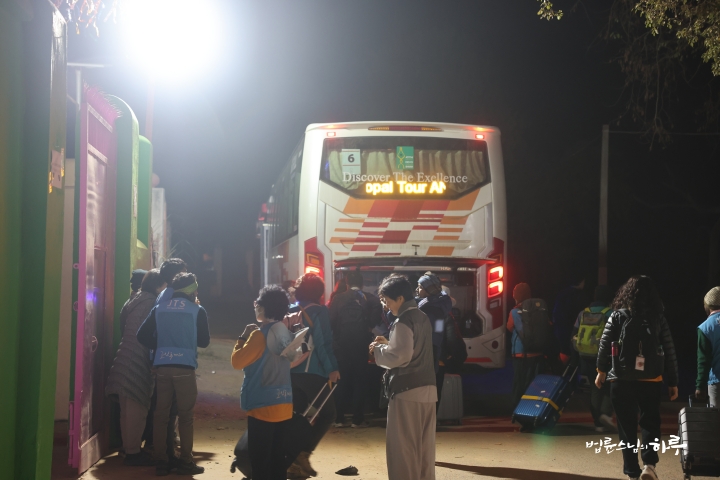
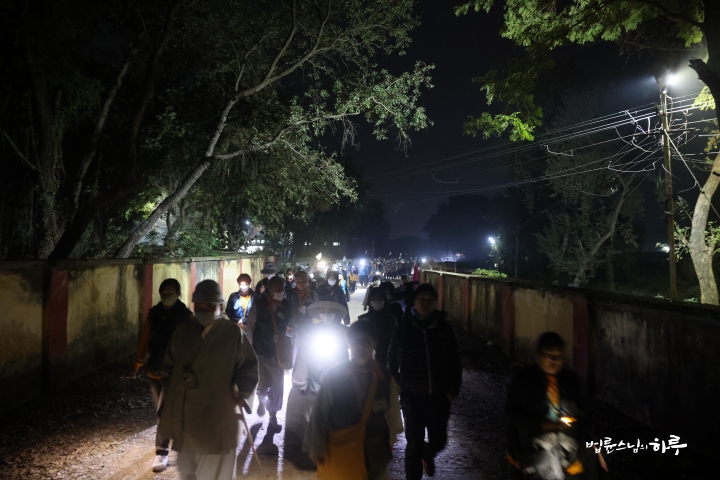
After a 90-minute drive, they arrived at a large open area near Jethian. The pilgrims disembarked from the buses and walked through the village towards Jethian.
As they reached Jethian and Sunim was about to begin his Dharma talk, dawn was just breaking. Sunim explained the history and significance of Jethian.
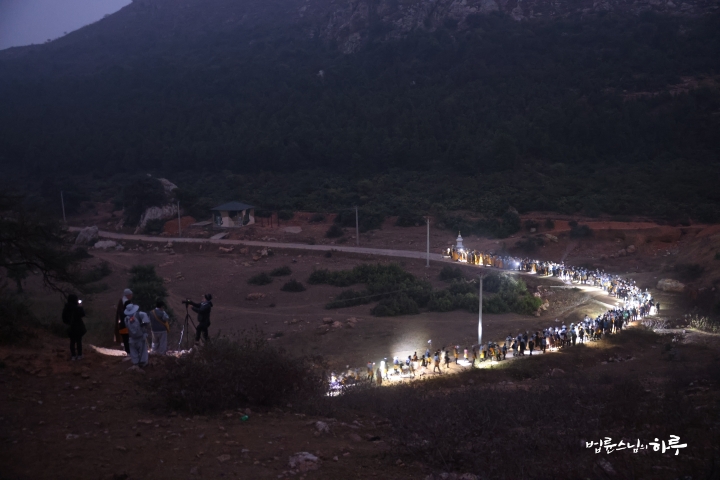
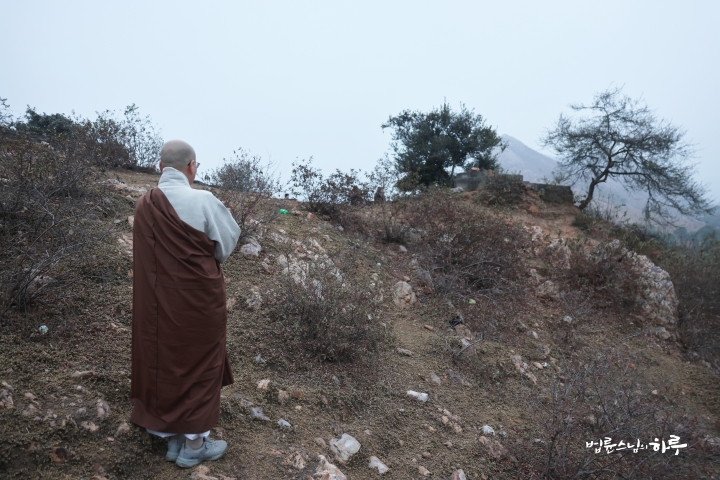
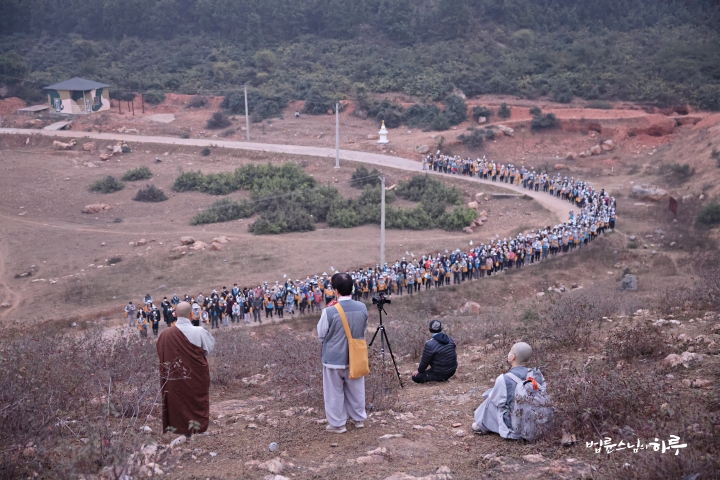
Sunim continued by sharing the historical account of the meeting between King Bimbisara and the Buddha.
“It is said that King Bimbisara of Magadha, upon hearing of the Buddha’s arrival, waited for him at a place called Jettian, about 1 yojana (12 km) from the western gate of the city. While the scriptures record that King Bimbisara waited for the Buddha, considering that the Buddha was not yet widely known at the time, it seems more plausible that the king actually came to welcome Uruvela Kassapa, who was like a national preceptor. At that time, Uruvela Kassapa was a leader with a following of a thousand people and was a very important religious figure in Magadha. As Uruvela Kassapa led his thousand followers to Rajagaha, King Bimbisara, in accordance with protocol, came out to greet him with a thousand of his ministers. After the two groups met here, and Uruvela Kassapa and the Buddha took their seats, a great question arose among the king and his ministers. ‘How could the young ascetic Gotama be the teacher of Uruvela Kassapa, who is over eighty years old? Is this really possible?’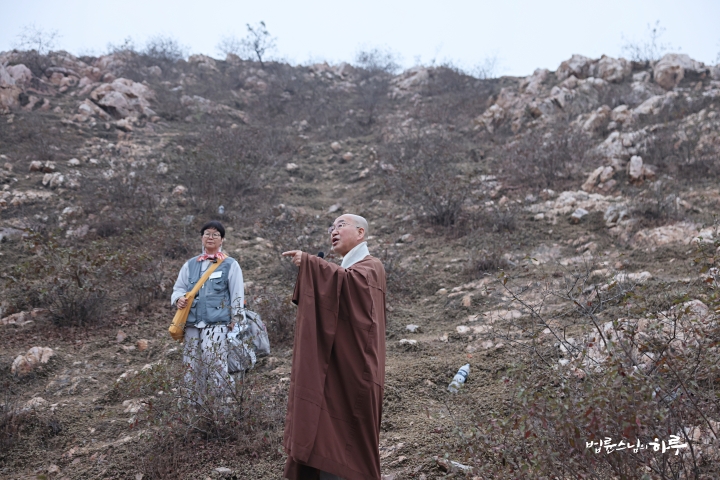
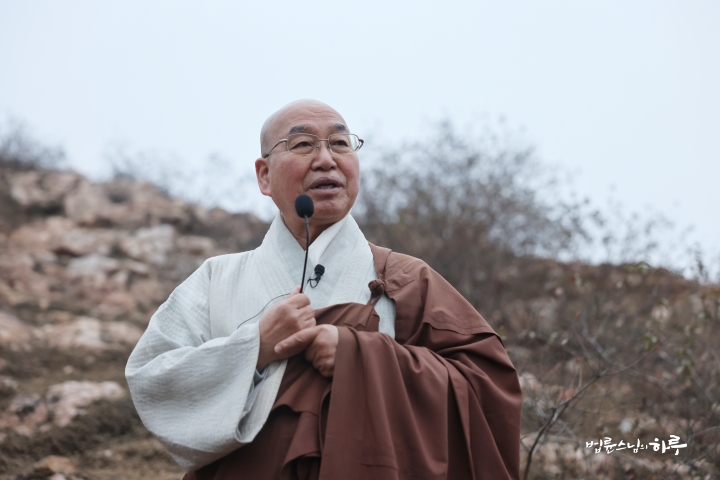
After the explanation, Sunim and the pilgrimage group meditated briefly and recited sutras.
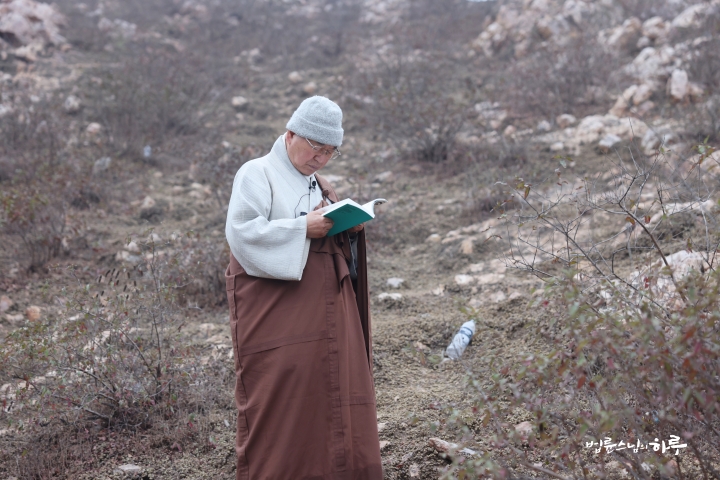
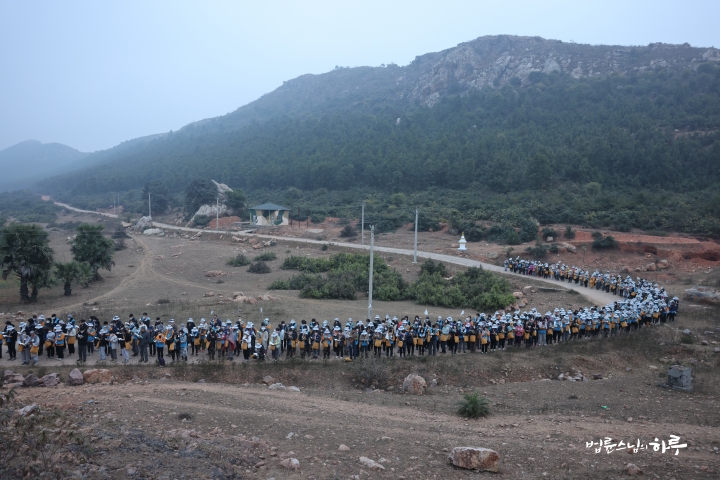
Afterwards, they left Jethian and moved to the next pilgrimage site, Vulture Peak.
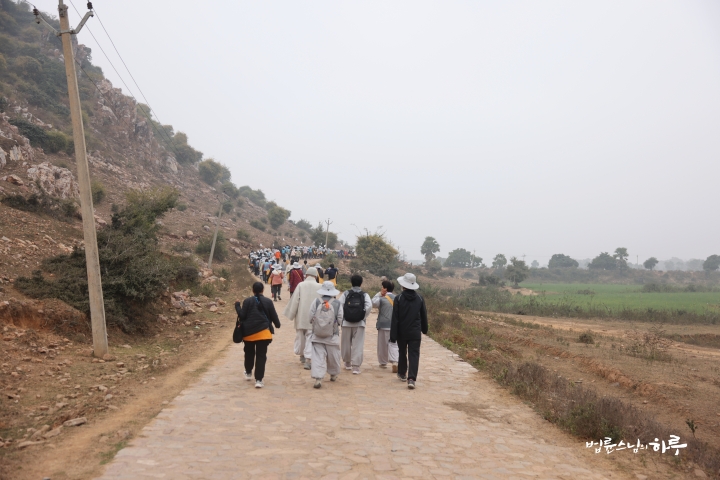
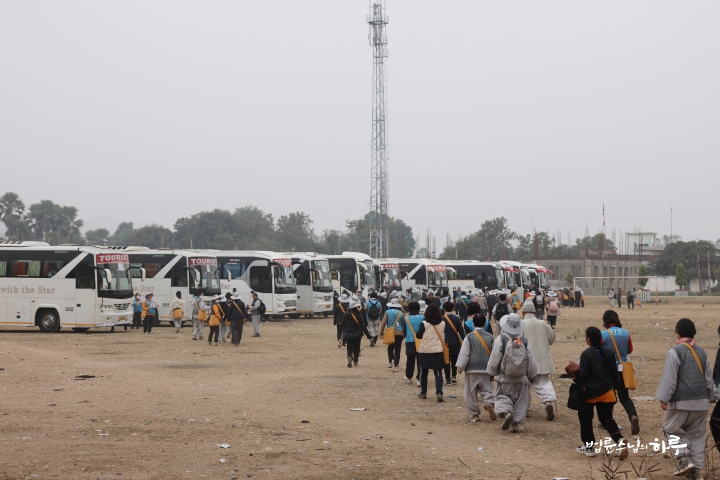
The previously dark sky had completely brightened. The pilgrimage group took a bus to the southern gate of Rajagriha.
Entering through the southern gate of Rajagriha, they passed by the site with King Bimbisara’s chariot wheel marks and Jivaka’s mango park, known as the Buddha’s physician. They arrived at the entrance of Vulture Peak just before 9 o’clock. After getting off the bus, they slowly began to climb the mountain.
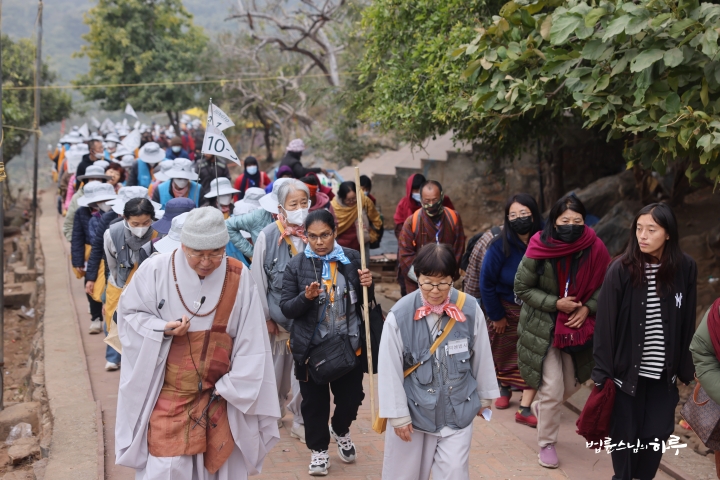
While climbing, they encountered a pilgrimage group from Bhutan. For Bhutanese people, visiting India and going on a pilgrimage is like a lifelong wish. Seeing this, Sunim gently said to the group:
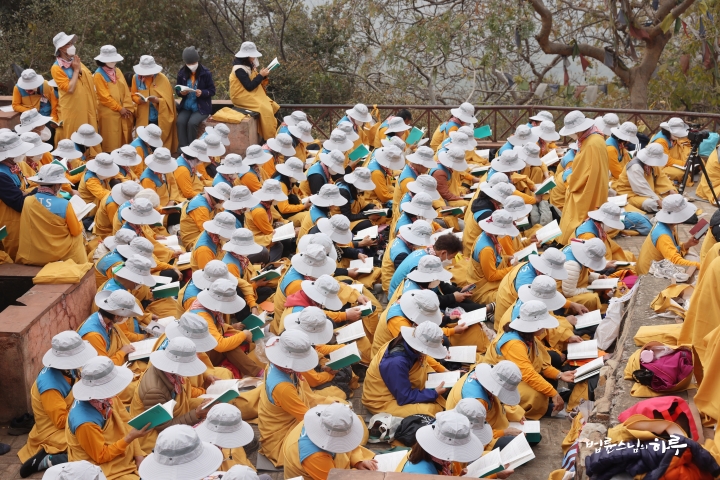
“It might not be easy to pay respects at the peak of Vulture Peak today. For the Bhutanese people, just visiting this place is like a dream, so let’s give up the peak and pay our respects below.”As expected, the peak of Vulture Peak was crowded with pilgrims, leaving no room to step. Sunim and the pilgrimage group found a spot below the Buddha’s preaching place, where they quietly meditated and paid their respects. The sound of prayers mingling with the mountain breeze calmed the hearts of the pilgrimage group even more.
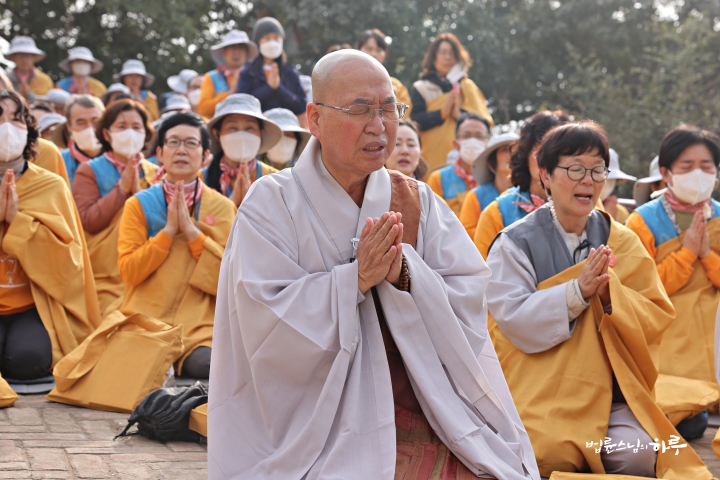
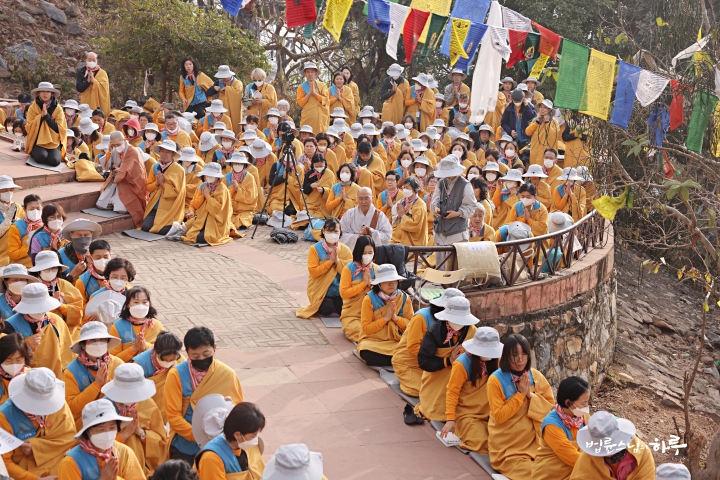
After paying respects, Sunim shared stories related to Vulture Peak, conveying its history and Buddhist significance to the pilgrimage group.
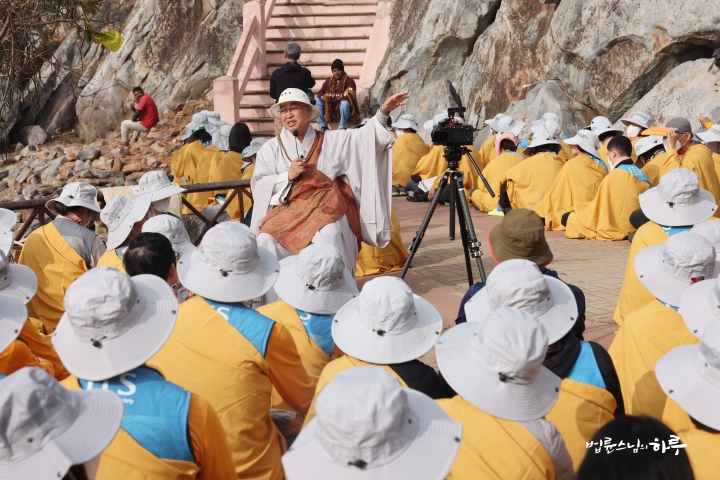
He then shared a story about Devadatta.
“Among the Buddha’s disciples was Devadatta, who was from the Shakya clan and of royal lineage. When the Buddha visited Kapilavastu, seven princes became monks, and among them, Devadatta was considered the most outstanding. He had a fundamentalist nature and was such an excellent practitioner that even Sariputra praised him. However, Devadatta ultimately couldn’t let go of his worldly ambitions.”Sunim vividly recounted the incidents between the Buddha and Devadatta.
“As the Buddha grew older, Devadatta repeatedly proposed that he should become the leader of the Sangha. ‘Buddha, you are getting old. Let me take over and lead the Sangha.’ But the Buddha firmly replied: ‘The Sangha is a community of enlightened beings, so there’s no need for someone to step up as a leader. And if needed, there are those like Sariputra or Maudgalyayana who have the experience and character.’ Then, Devadatta said to the Buddha in front of many people: ‘A practitioner should not accept meal invitations from lay followers but must always beg for alms, and should only eat vegetarian food. They should eat only once a day and wear only discarded robes. Also, they should sleep only under trees or in caves.’ To this, the Buddha replied: ‘Devadatta, it is admirable for a practitioner to do so. However, sometimes one can accept offerings from devout lay followers. Young novices or patients may eat twice a day. When begging for alms, one might receive food mixed with fish. Sleeping under trees is good, but on rainy days, one can sleep under the eaves of an empty house. When unable to find discarded clothes, one can wear new clothes.’ As the Buddha’s words seemed more reasonable to many people, Devadatta thought it would be difficult to be recognized as a successor through dialogue with the Buddha. Thinking of seizing control of the Sangha like a prince staging a rebellion, he attempted to assassinate the Buddha. He hired assassins, set loose an enraged elephant, and there’s even a story that he once tried to harm the Buddha by rolling a large rock from the top of this Vulture Peak.”Sunim concluded by introducing various legends related to Vulture Peak.
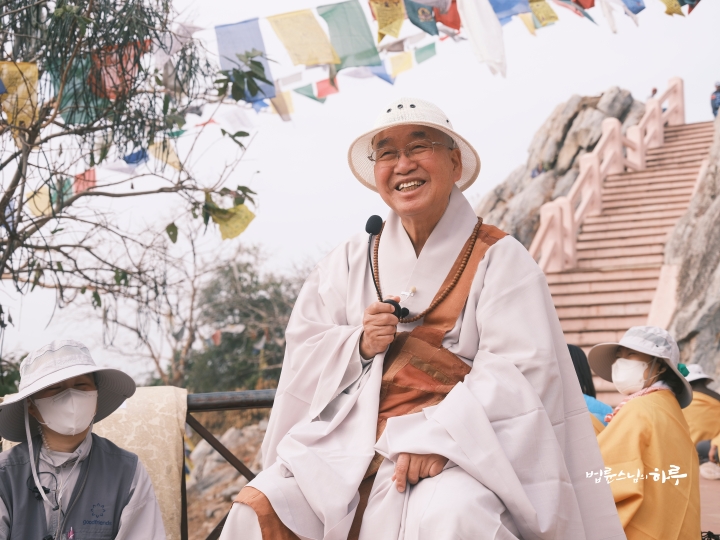
Sunim’s words were as intriguing as listening to an old tale, and the pilgrimage group was deeply immersed in the story. An hour had already passed. After the explanation, as Sunim suggested, some paid respects at the stupa while others recited sutras.
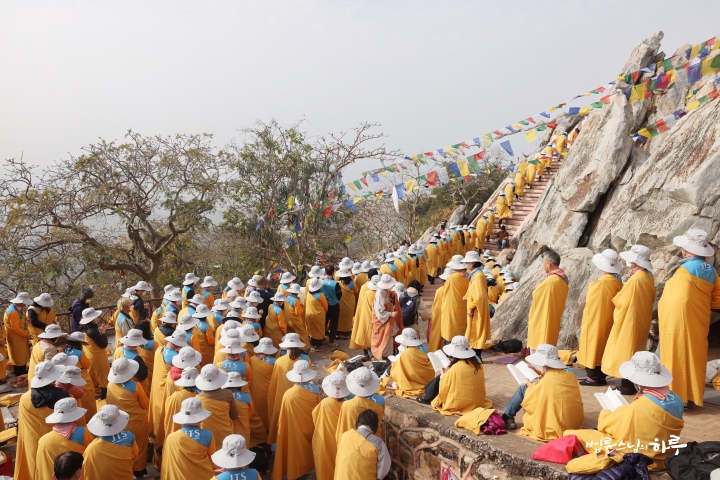
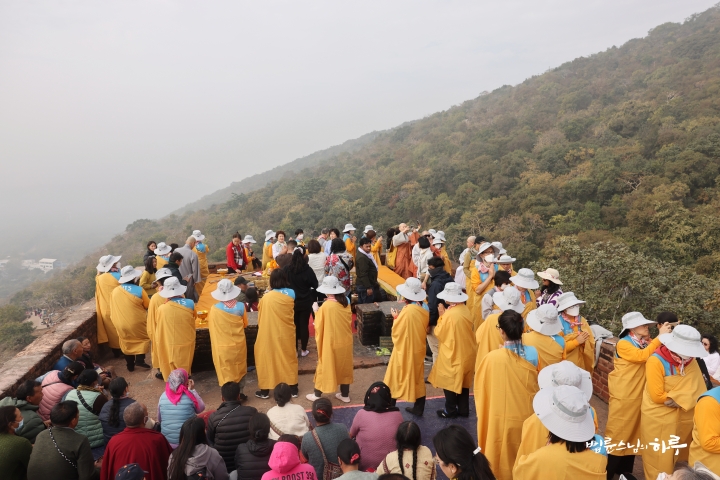
After paying respects at Vulture Peak, they descended the mountain. They also took commemorative photos at a spot where the Vulture Peak stupa was visible.
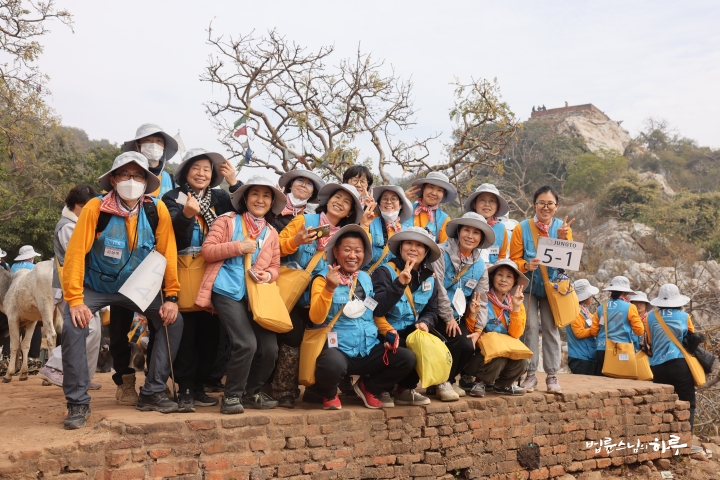
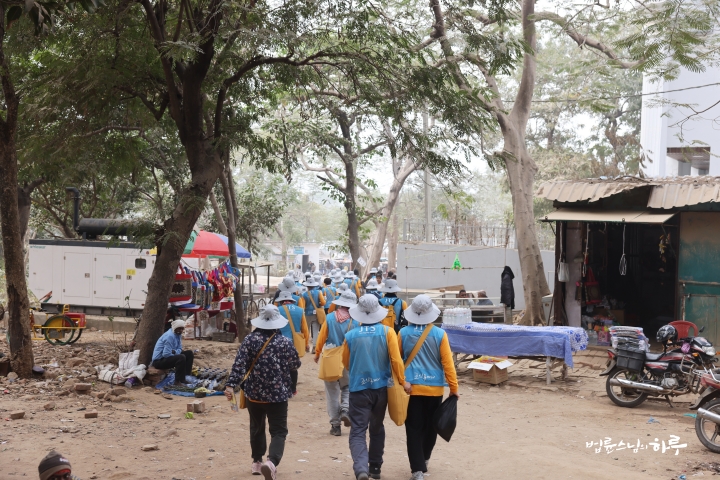
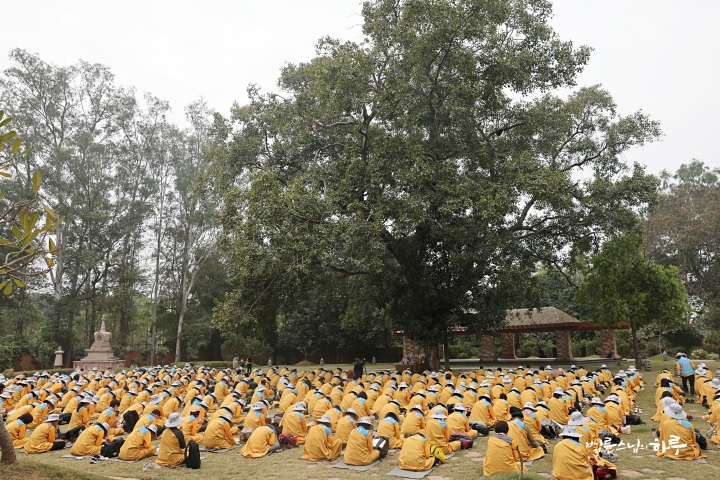
They boarded the bus again and arrived at the Bamboo Grove Monastery at 11 am. Everyone was hungry as they had started their schedule at 4 am. Upon arrival, they first had packed meals that served as both breakfast and lunch, meditated briefly, and then Sunim shared stories related to the Bamboo Grove Monastery.
Sunim meditated briefly and began explaining about the sacred site. He shared detailed stories about how the Buddha’s chief disciples, Sariputra and Maudgalyayana, took refuge in the Buddha here, and how Mahakasyapa took refuge in the Buddha.
Rajagriha, Where Great Disciples Became Monks in the Early Days of the Buddha
Rajagriha is where the Buddha met two teachers and practiced after leaving home, and also where he visited after attaining enlightenment to convert King Bimbisara. It’s also where he received the donation of the Bamboo Grove Monastery and stayed for nearly three years, actively spreading the Dharma. As a result, he went from being an unknown figure to a famous one, making many people aware of the Buddha. While it was a significant event when a thousand practitioners including Uruvela Kassapa took refuge in the Buddha near Gaya, it was also a major event when Sariputra and Maudgalyayana took refuge in the Buddha here in Rajagriha, leading their 250 disciples to follow suit. This led to criticisms that ‘Gotama is stealing other people’s sons, husbands, and disciples.’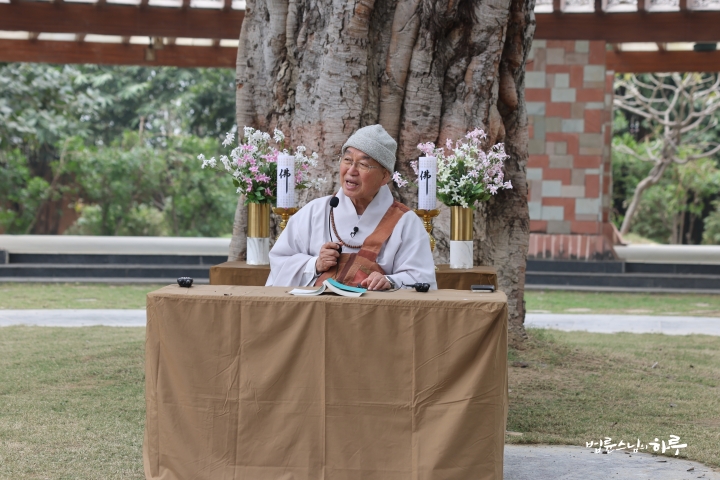
Mahakasyapa, I Have Been Waiting for You for a Long Time
However, Mahakasyapa had no interest in worldly matters. He wasn’t interested in married life, wealth, or status. He only wanted to practice purely, but his parents desperately wanted him to get married. The law in India at that time was that if there was no male in the family, all property would be confiscated by the state. Women and property were just things to be distributed. So as parents, they desperately wanted their son to get married and have grandchildren. But Mahakasyapa was a person who had no interest in such things at all. However, he couldn’t disobey his parents’ continuous requests out of filial piety. So, with the intention of not getting married, he asked an artist to carve a beautiful woman out of sandalwood. He presented this carving to his parents, declaring that he would only marry someone like this, otherwise he wouldn’t marry at all. However, his parents kept searching for a woman with this carving, and by chance, they found such a beauty. This left Mahakasyapa with no choice but to get married. On their wedding night, it’s said that Mahakasyapa confessed to his bride: ‘Actually, I had no intention of getting married. I only did so under pressure from my parents, but I have no desire for this.’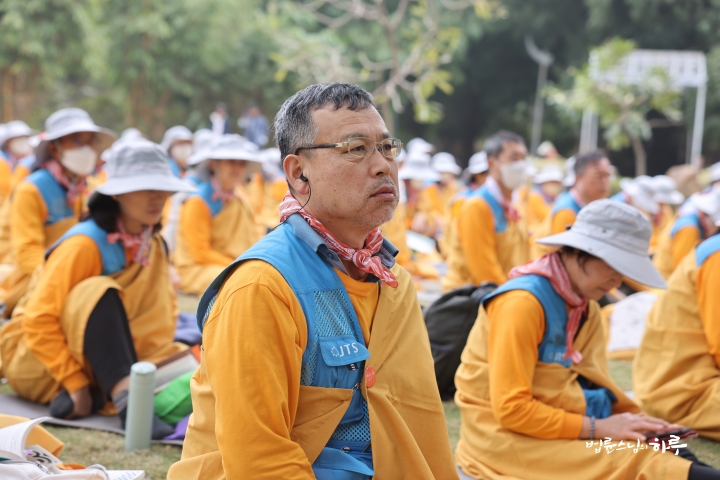
Understanding Impermanence Is Seeing the Buddha
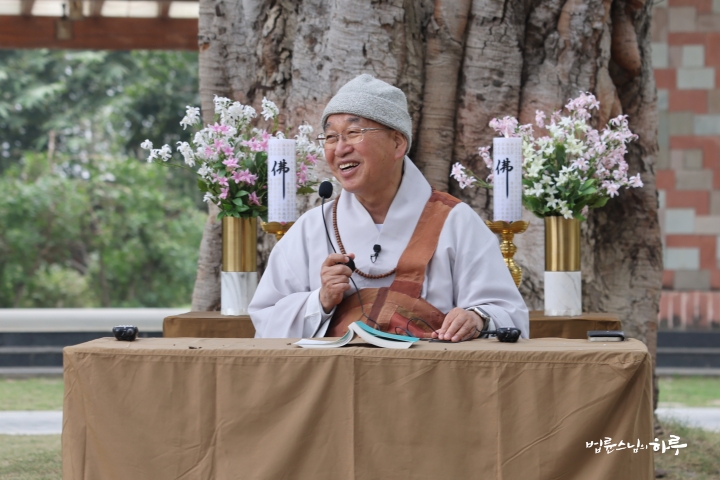
In addition to these stories about great disciples, there are many diverse anecdotes from this place. One story tells of a bhikkhu who was on the verge of death due to illness, with no one to care for him. The Buddha himself came to look after this sick bhikkhu. While tending to him, the Buddha asked, “Have you ever cared for other patients when you were healthy?” The bhikkhu replied, “No.” The Buddha then asked, “Have you ever visited the sick?” Again, the bhikkhu answered, “No.” This indicates that while the bhikkhus were diligent in their practice, they showed little concern for others, not caring whether someone lived or died. There is a record of the Buddha saying, “Those who have left home to become monastics should take care of each other when they fall ill.” On another occasion, a sick bhikkhu told his friend that his last wish was to see the Buddha before he died. When the friend relayed this message to the Buddha, he went to visit the sick bhikkhu. The Buddha asked, “How are you?” The bhikkhu replied, “I have no regrets. My only wish was to see the Tathagata before I die.” The Buddha then said: ‘This body is impermanent. It is a futile thing that grows old, becomes ill, and dies. What is the use of seeing it? One who sees the Dharma sees the Tathagata. Understanding the principle of impermanence is truly seeing the Buddha. Seeing the physical body of the Tathagata is not seeing the Tathagata.’ This shows how the Buddha enlightened his disciple even in his final moments. All these events took place here in Rajgir. The second scene of the Mahaparinirvana Sutra also takes place here at the Bamboo Grove Monastery. While the first scene discusses the seven principles for a nation not to decline, the second scene, which explains the seven principles for the Sangha not to decline, was taught right here. I’ll stop here, and now let’s recite from the sutra you have with you.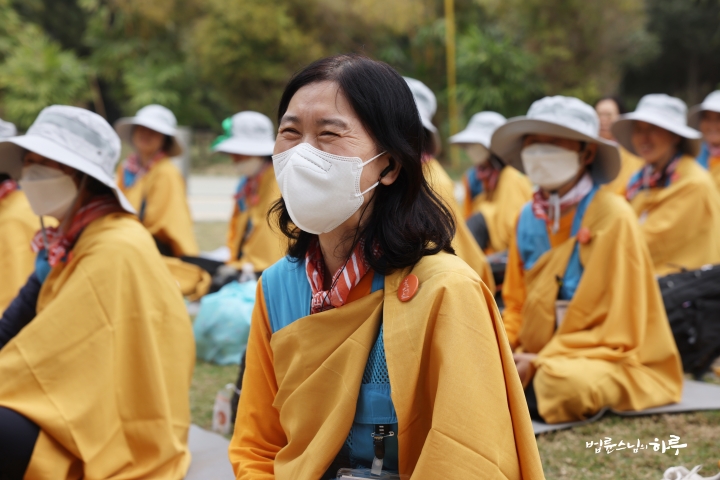
After Sunim finished explaining about the sacred site, everyone recited sutras and performed a Buddhist ceremony.
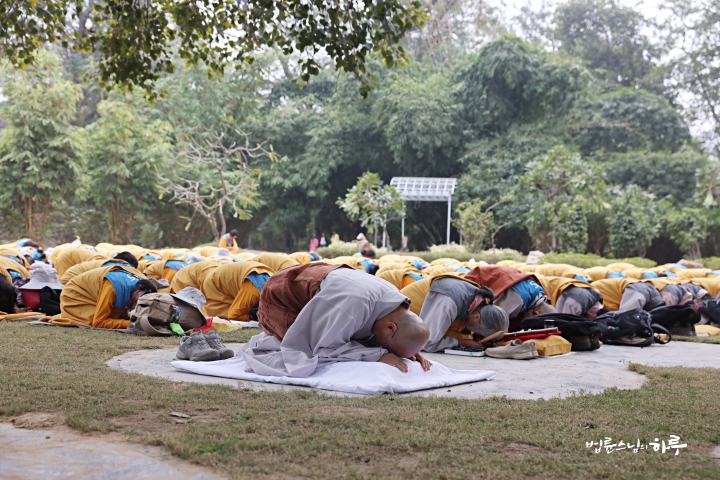
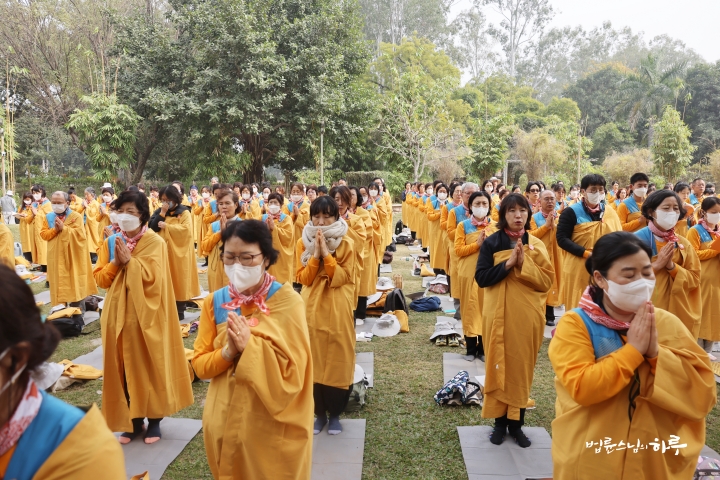
Despite wanting to stay longer, they took photos in groups by their vehicles in front of the Kalandaka pond before leaving the Bamboo Grove Monastery and heading directly to the Saptaparni Cave.
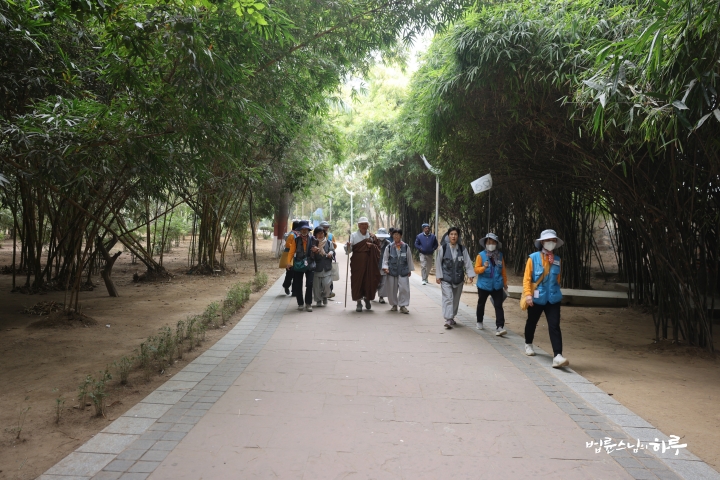
On the way to Saptaparni Cave, there is a bathing place called ‘Hot Spring Monastery’. At this place, it is said that the highest castes bathe at the top, while the lower castes bathe in the dirty water at the bottom.
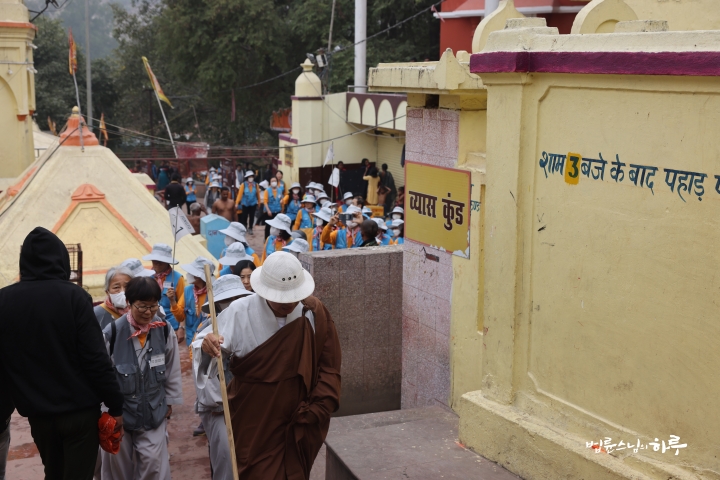
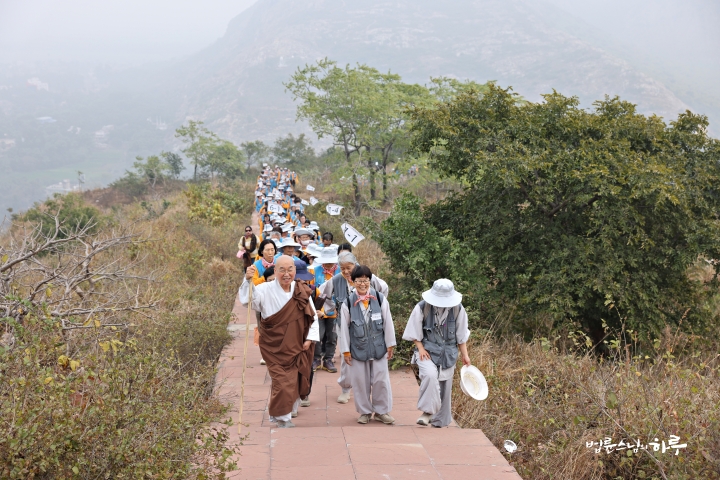
After climbing a bit and looking back, the entire view of Rajgir surrounded by mountains comes into sight. The path was longer and steeper than expected. Upon reaching Saptaparni Cave after a long climb, the open view along with the cave is refreshing. Sunim climbed the mountain with difficulty, breathing heavily. He had to stop several times before finally reaching Saptaparni Cave. His entire body was drenched in sweat.
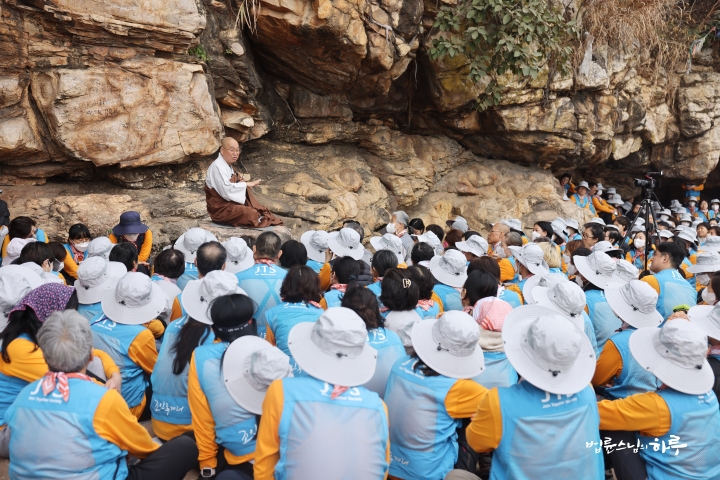
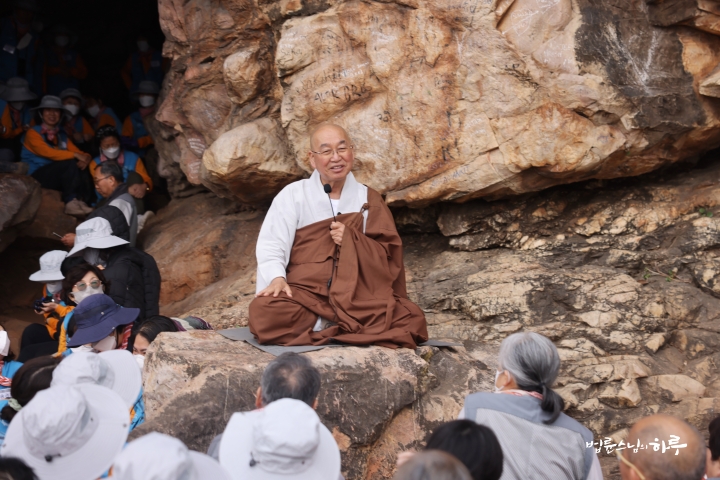
At Saptaparni Cave, Sunim provided a detailed explanation about the circumstances of the Buddhist council held there and the history of Buddhism after Buddha’s passing.
Why We Can Access Buddha’s Teachings Across Time and Region
Buddha entered nirvana in Kushinagar. In worldly years, he was 80 years old. It had been 51 years since he left home, and he had been teaching for 45 years since his enlightenment before entering nirvana. When Buddha entered nirvana, everyone felt sad about losing their teacher. However, some young monks reportedly said, ‘Oh, thank goodness that old man is dead.’ To use a modern comparison, it’s like some of the MZ generation thinking, ‘He used to nag us about what not to do, but now we can live comfortably without hearing his nagging.’ With tens of thousands of disciples, it’s quite possible that such people existed. After Buddha’s passing, Mahakasyapa, the eldest and most experienced disciple, heard these comments and became worried. ‘If such talk is already happening right after Buddha’s passing, won’t people start making their own claims as they please in ten or a hundred years? So, we who have heard Buddha’s teachings while he was alive need to gather and organize his words.’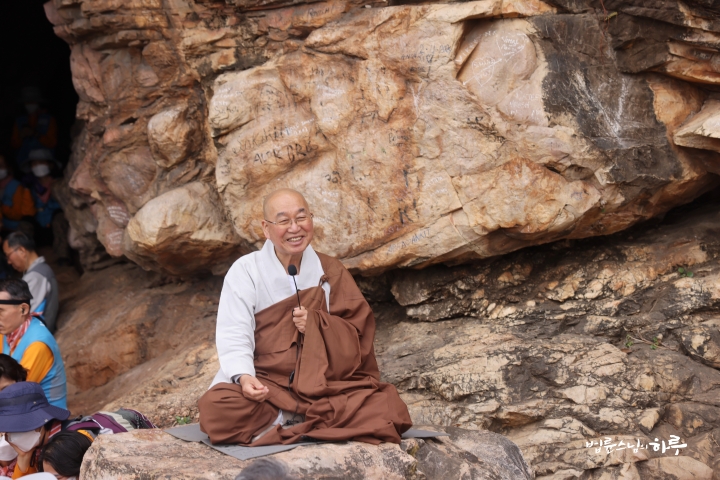
Can One Attain Enlightenment by Listening to Many Dharma Talks?
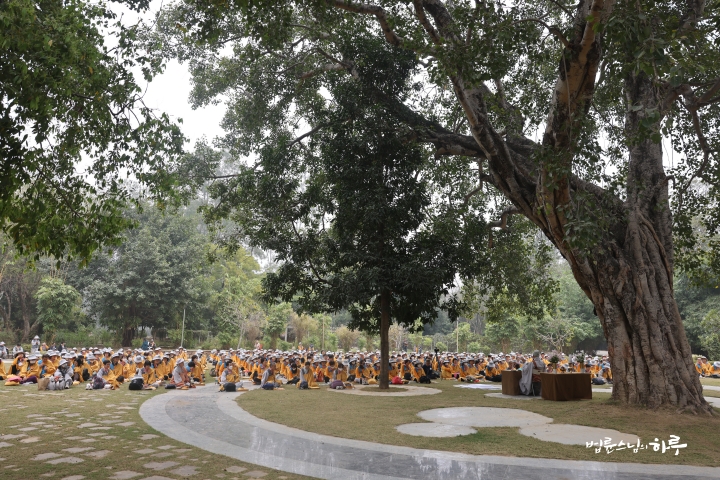
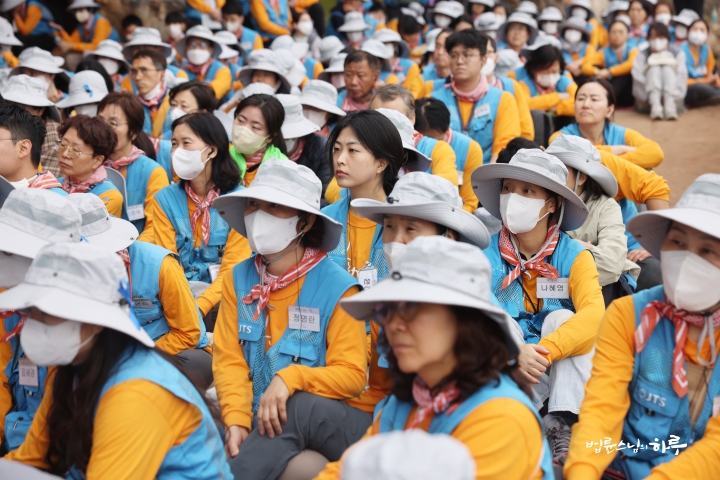
There’s an interesting anecdote related to this. Venerable Ananda, who had served by Buddha’s side for 25 years and heard so many dharma talks that he could recite all the sutras, had not yet attained arhatship at that time. This meant he didn’t qualify to participate in the council. It’s said that Ananda practiced with fearless determination and barely attained enlightenment in time to join the council. That’s why there are murals depicting Ananda sitting on the edge of a rock, making his final push in practice. I think this story might have emerged to symbolize that one doesn’t attain enlightenment simply by listening to many dharma talks. Anyway, 500 people gathered like this. We have 400 people here now, so do you think 500 could fit in this place?”“Yes!”
The Beginning of All Sutras: “Thus Have I Heard”
When Ananda presented the initial draft to the assembly, he always provided specific details about “when, where, who, to whom, what, and how” it happened. And the sutras always began with “Thus have I heard.” The reason for not saying “The Buddha said this” is because it’s not 100% certain whether the Buddha actually said it or not. Some people even translate this phrase as “This is how it sounded to me.” However, many of you often say, “Sunim said this.” The phrase “Thus have I heard” is expressed in Chinese characters as “如是我聞” (yeosi amun). When Ananda imitated the Buddha’s voice exactly, even matching the intonation, it is said that the listeners had three thoughts: Has Ananda attained enlightenment? Has the Buddha come back to life? Has a Buddha from another world come? This shows how precisely Ananda repeated the Buddha’s words. For final confirmation, all five hundred members had to agree without objection. The Bible, as you know, is a record of stories passed down by individual disciples. But the Buddhist sutras were compiled with the consensus of five hundred people. Instead of being written down, they were memorized and passed on orally. While this method of oral transmission might seem difficult nowadays, it was actually more accurate at that time. When texts are recorded and transmitted in writing, there are often mistranslations when translating into different languages.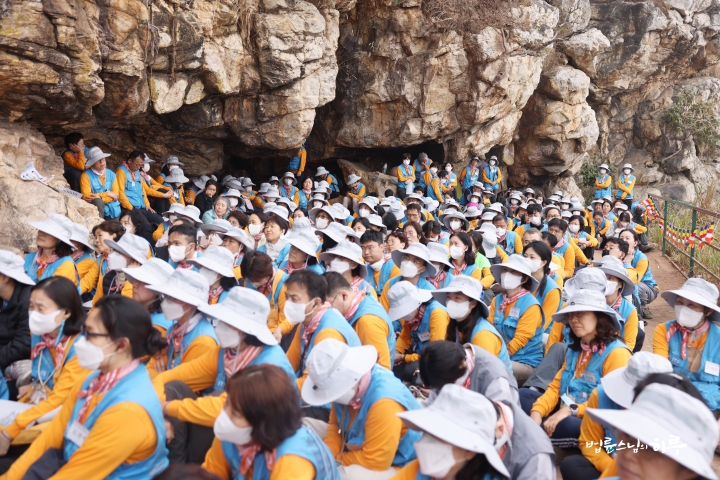
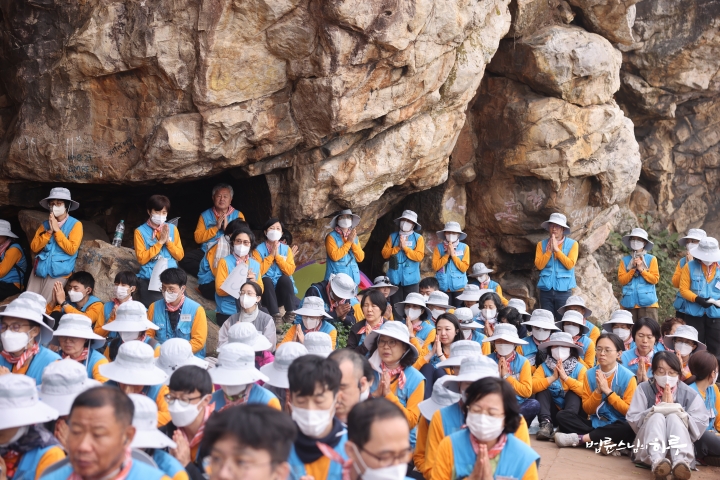
Imagining the scene of five hundred people reciting the scriptures, Sunim led the group in meditation and chanting.
After paying respects at the Saptaparni Cave, Sunim decided to visit the Bhutanese Temple in Rajgir. Upon arrival, Dasho Dorji, the Bhutanese businessman whom Sunim had met yesterday with the president of the Mahabodhi Society, warmly welcomed him.
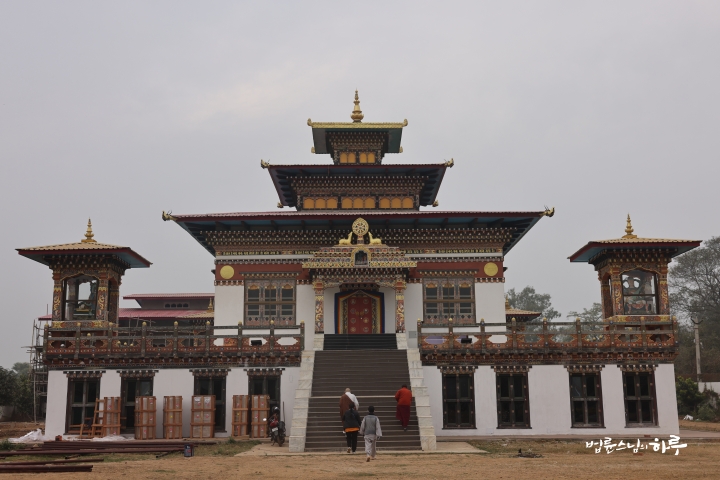
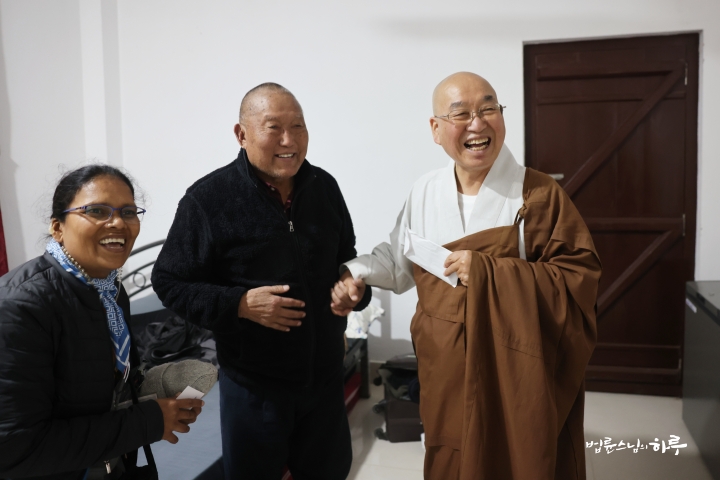
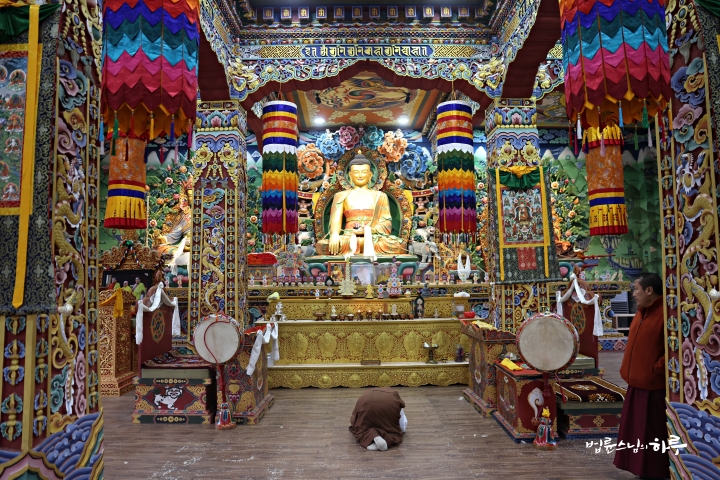
Although construction was still ongoing at the Bhutanese Temple, the main hall was mostly complete. Sunim presented a donation for the construction to the monk in charge and paid his respects in the hall.
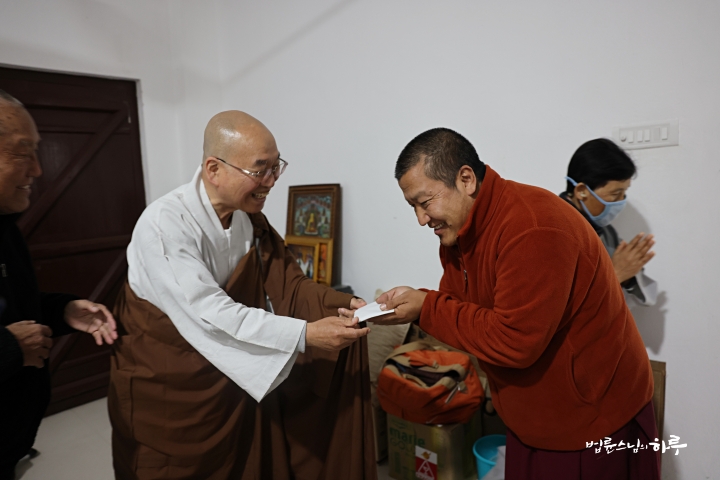
As Sunim was about to leave hurriedly to join the waiting pilgrimage group, Dorji presented him with a gift.
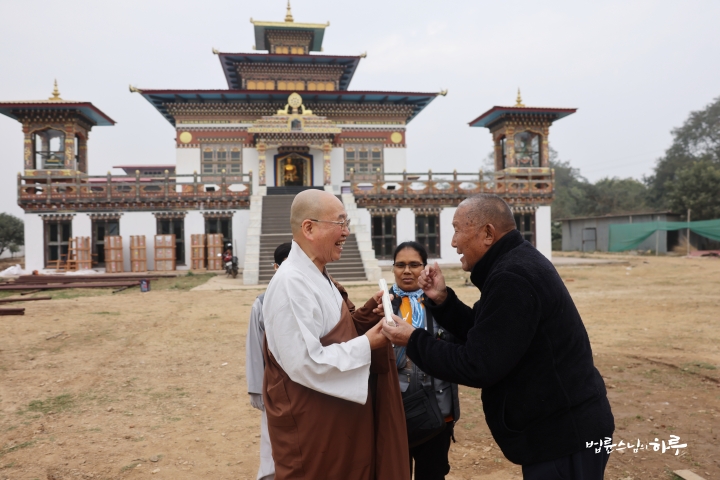
“This is precious incense. I would like to offer it to you, Sunim.”
“Thank you.”Dorji expressed his gratitude for Sunim’s visit and promised to meet again in Bhutan.
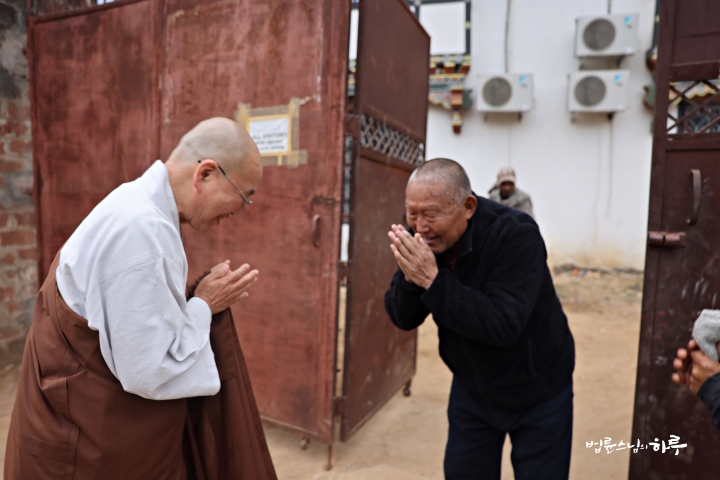
“Yes, Sunim. I’ll be moving to Bhutan soon, so I look forward to seeing you again.”
Sunim and the pilgrimage group concluded their tour of Rajgir and arrived at their lodging, New Thai Temple, at 5:30 PM. After dinner, they prepared packed lunches for the next morning and retired early.
Tomorrow, they will visit Vaishali, the site of the first female ordination.