My Close Friend Became My Boss at Work and I’m Struggling
Jan 15, 2025 - India Pilgrimage Day 5, Sujata Academy 31st Anniversary Ceremony
Hello. It’s the fifth day of the India pilgrimage. Today, Sunim conducted the Weekly Dharma Assembly broadcast early in the morning, attended the Sujata Academy anniversary ceremony in the morning, had a conversation with Mahathero Bhikkhu, the abbot of Sarnath Mahabodhi Society who visited in the afternoon, held a general meeting with the pilgrimage staff, and conducted a Dharma Q&A with the pilgrimage group in the evening.
At 6:30 AM, Sunim started the live broadcast of the Weekly Dharma Assembly. It was 10 AM Korean time. As all the Jungto Society members entered the video conference room, Sunim greeted them warmly.
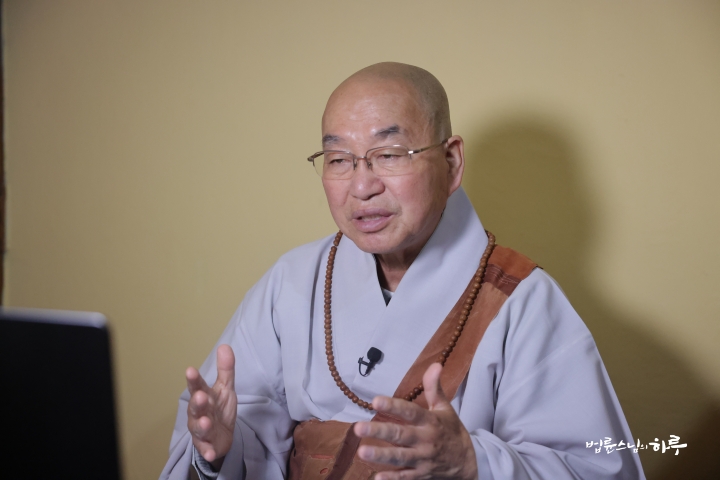
After that, they looked at photos of the pilgrimage group’s visits to Varanasi, Bodhgaya, and Vulture Peak over the past three days. After sharing detailed news about the pilgrimage, Sunim began the Dharma Q&A.
Four people had signed up in advance to ask questions and have a conversation with Sunim. One of them sought Sunim’s advice on how to overcome the discomfort of having a friend promoted to become his boss at work.
My Close Friend Became My Boss at Work and I’m Struggling
“There was an organizational restructuring at my company last December. Our team, which hadn’t seen any changes for the past four years, had our team leader promoted, and a member from another team was appointed as the new team leader. However, the new team leader is a close friend of mine. This makes me feel complicated and distressed for two reasons. First, I feel very disappointed that after working closely with the previous team leader for nearly four years, someone from another team was chosen as the successor instead of me or my teammates. Second, the new team leader is my friend. Having to serve my friend as a superior creates an uncomfortable situation. It’s difficult for me to acknowledge my friend as a boss. Every time the new team leader talks about work, I feel uncomfortable. Because my friend is now my superior, I feel like my personal growth has stagnated, and I’m worried that my chances of being recognized are somewhat limited. I’m wondering if I should leave this team, but what should I do?”
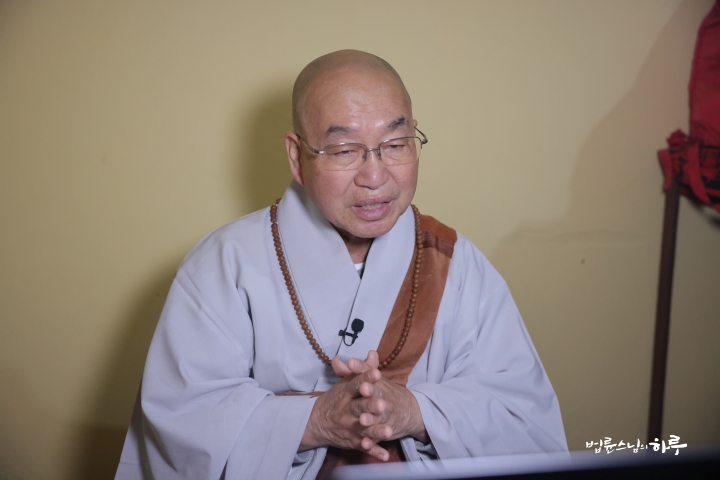
“Yes, I understand. Thank you.”
The questions continued.
Should I forcibly hospitalize my son whose bipolar disorder has relapsed? Or should I let him go to the hospital on his own?
I’m now working in the same department again with an employee I dislike at the company. I’m stressed about potential conflicts arising again. What should I do?
One day, my husband suddenly fell ill, and I had no choice but to work at the elderly welfare center run by my sister-in-law. The pay is good, but I find the work very boring. How can I overcome this?
When the conversations ended, the day had already brightened.
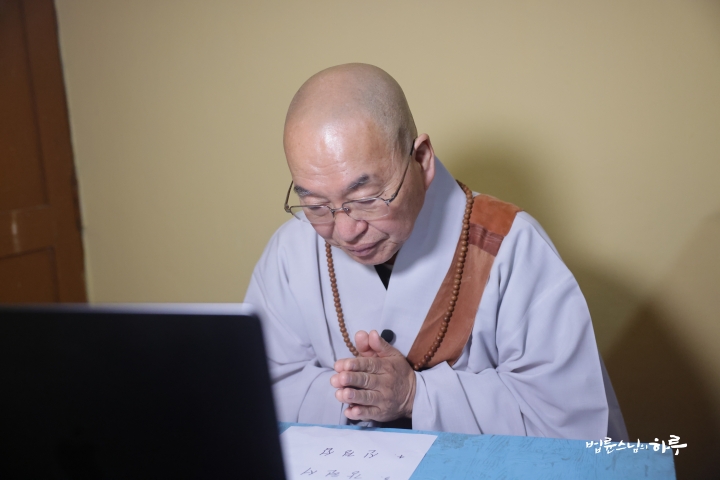
After the Dharma assembly broadcast, Sunim met with the Indian community members to exchange New Year’s greetings. Short-term volunteers were also present to help with this pilgrimage. Sunim expressed gratitude to the community members for their efforts in preparing for the pilgrimage and promised to have another conversation after the pilgrimage ended, concluding the brief greeting.
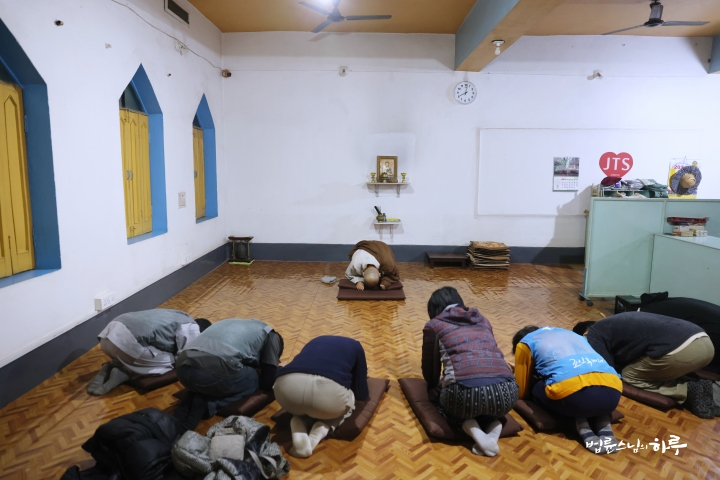
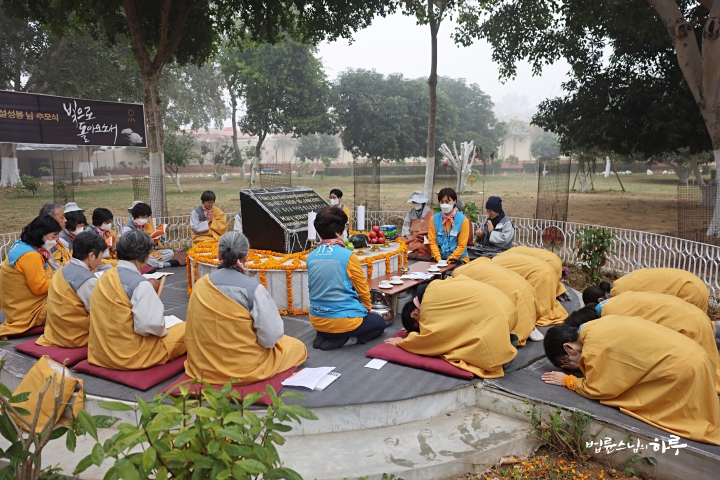
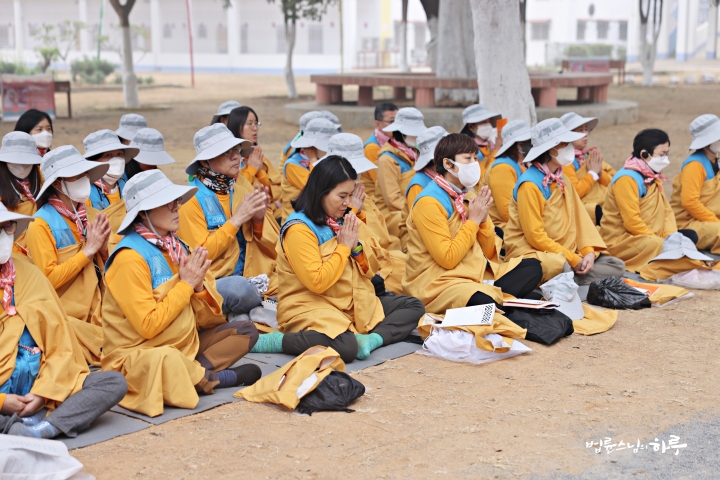
At 8:30 AM, a memorial service began for the late Seol Seong-bong, who was sacrificed during an armed intruder attack in the early days of JTS India. The community gathered in front of the late Seol Seong-bong’s stupa to perform the memorial service. Some members wiped away tears as they remembered the deceased. The attendees offered cups in gratitude to the deceased.
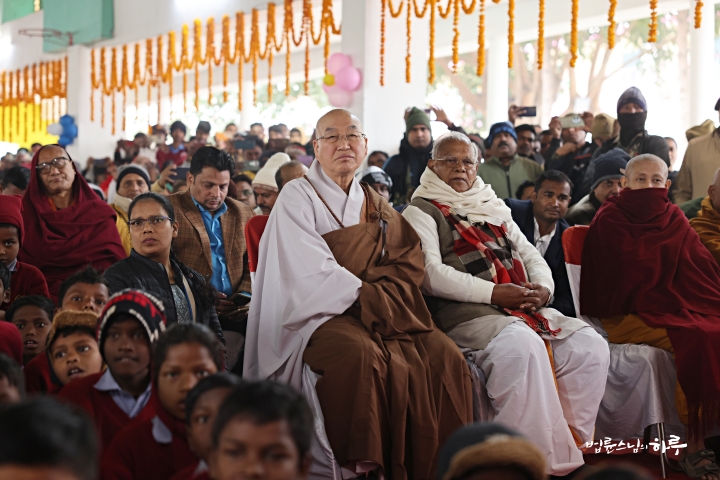
After the memorial service, people from the Shakya clan arrived from distant Sankasia. They greeted Sunim warmly and moved together to the Prak Bodhi Hall where the anniversary ceremony would be held today.
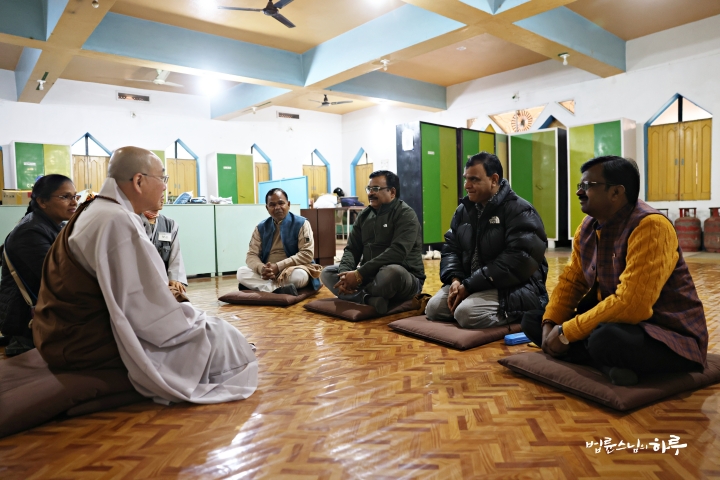
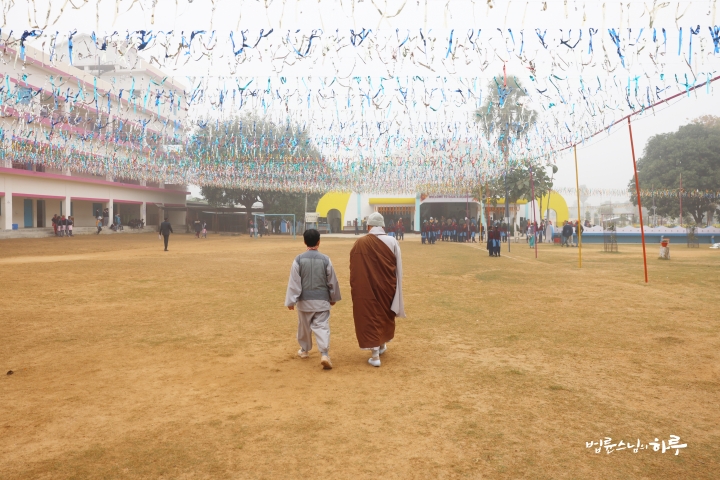
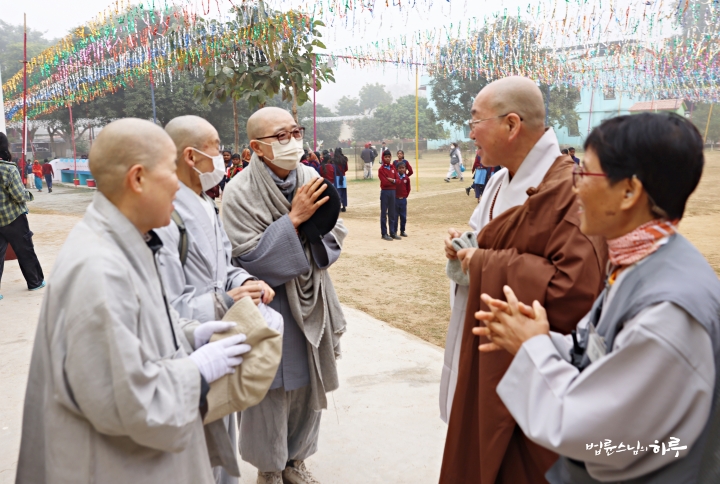
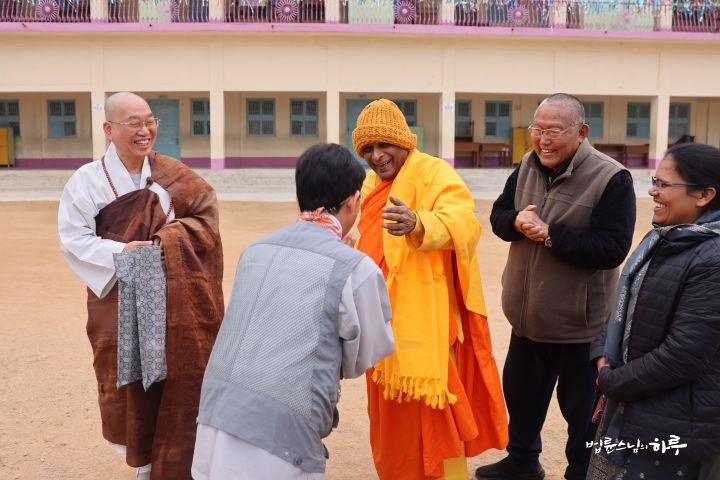
In front of the Prak Bodhi Hall, bhikkhuni nuns from Korea were waiting for Sunim. Sunim greeted the bhikkhuni nuns and also exchanged greetings with the guests who had arrived early.
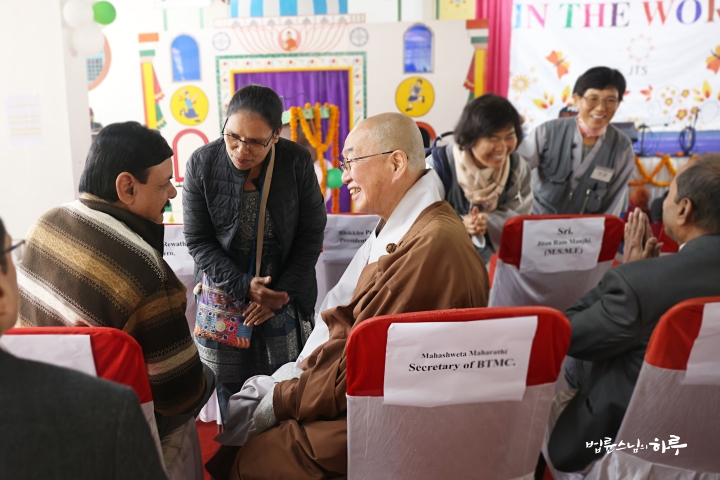
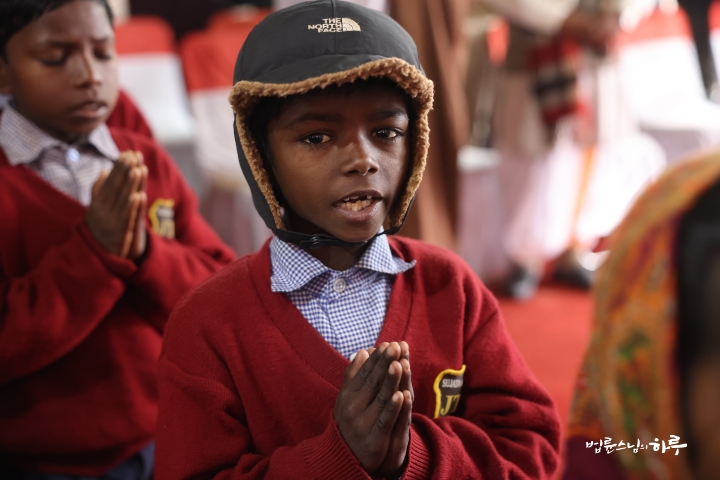
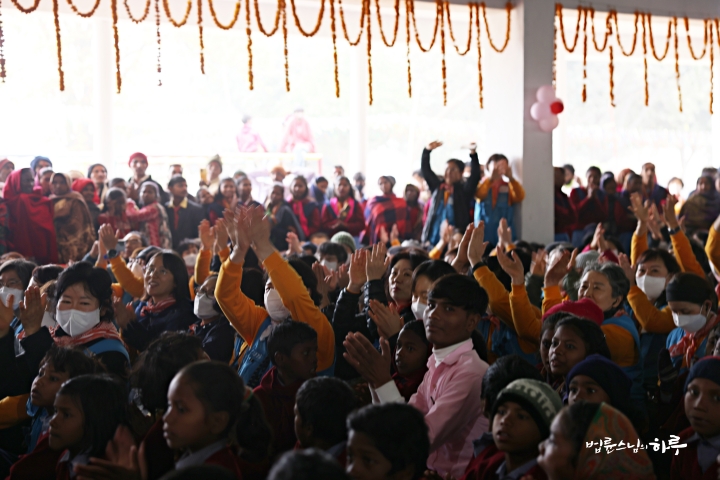
At 10 AM, the 31st anniversary ceremony of Sujata Academy began. The students opened the event by singing the Pancasila (Three Refuges and Five Precepts) and the school anthem, which they sing every day at school.
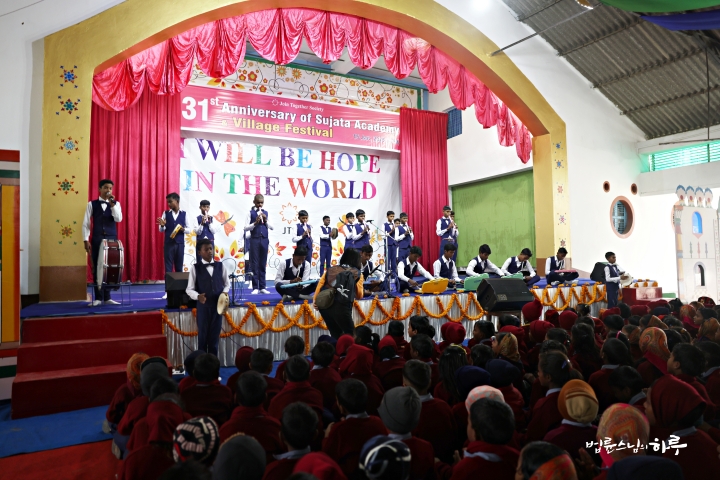
After the welcome speech by Priyapal Sunim, the JTS chairman, the students’ performances followed.
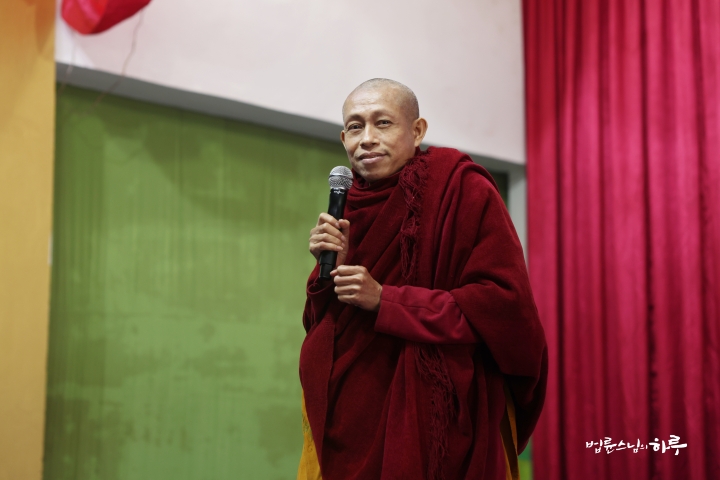
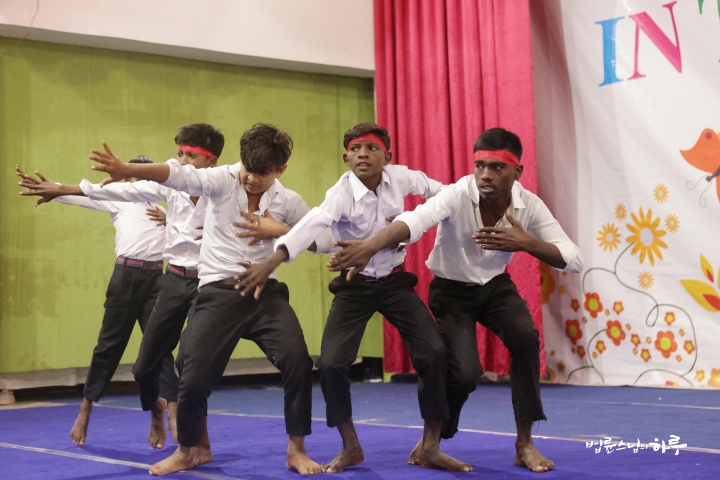
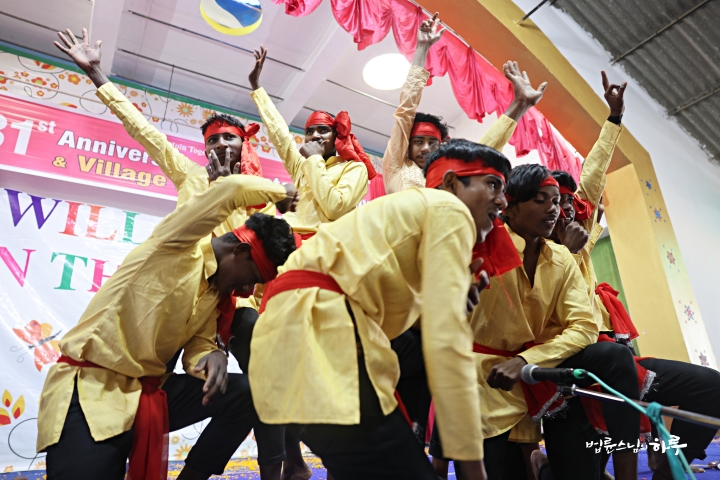
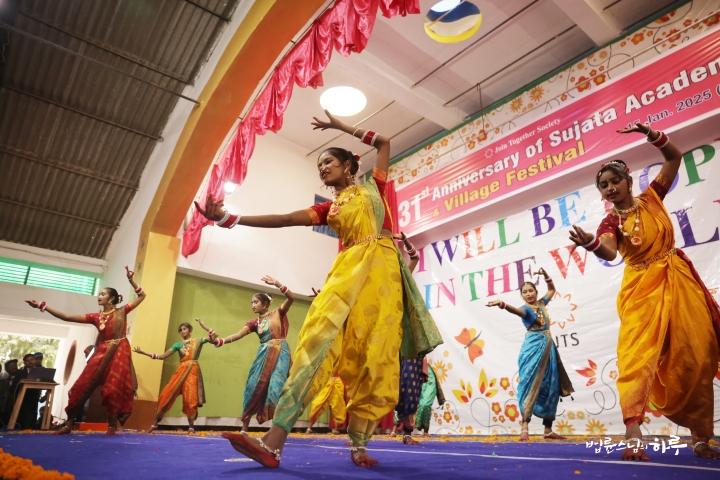
The performances included an action dance by kindergarten children, a song by women from Durgapur village, a ‘Shalala’ dance by elementary school girls, and a ‘Bezua Isk’ dance by middle school boys.
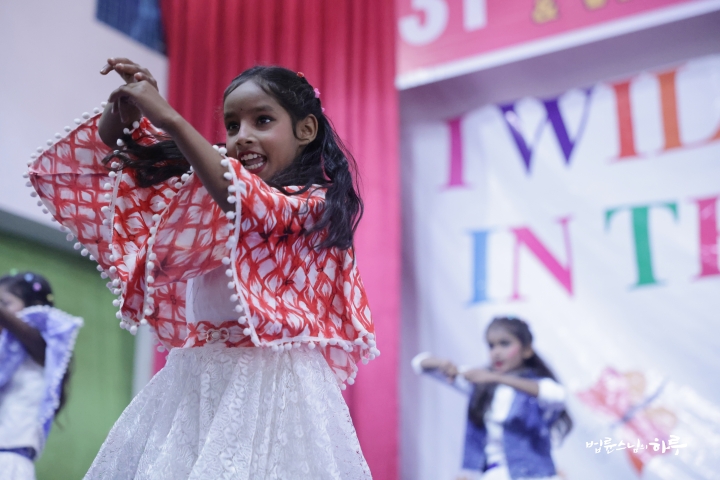
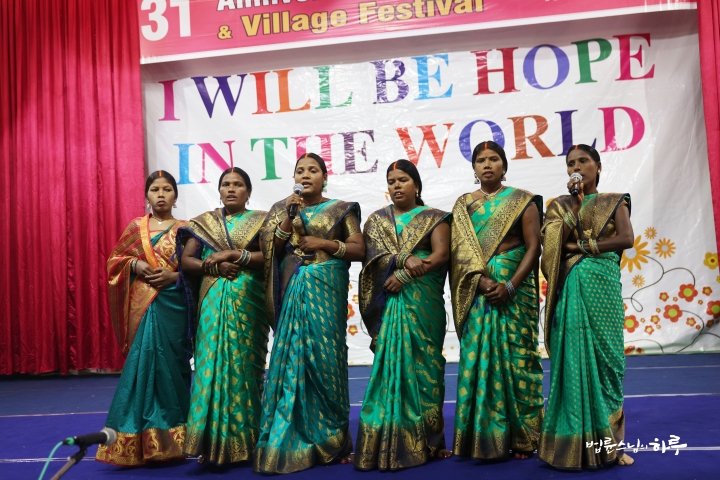
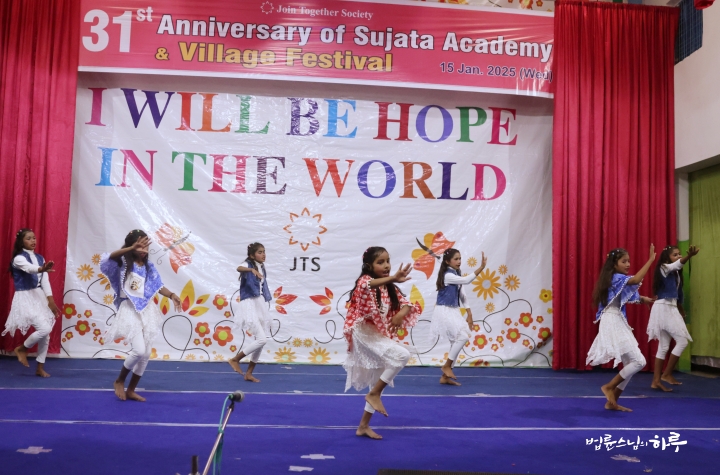
The lively musical performance by the residents of Bagahi village, dressed in matching yellow clothes, also received a big round of applause.
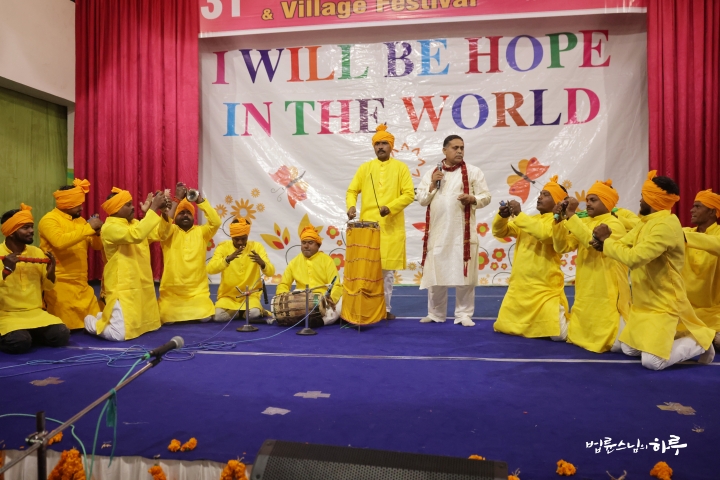
Then, Mukiya Sankar Yadav from Kanhaul village delivered a short congratulatory speech, saying:
“Congratulations on the opening of Sujata Academy, and thank you for doing so much for our village.”
The exciting performances continued. Middle school girls performed a ‘Punjabi’ dance, and elementary school students demonstrated Taekwondo. This year’s Taekwondo performance was particularly notable for the participation of female students.
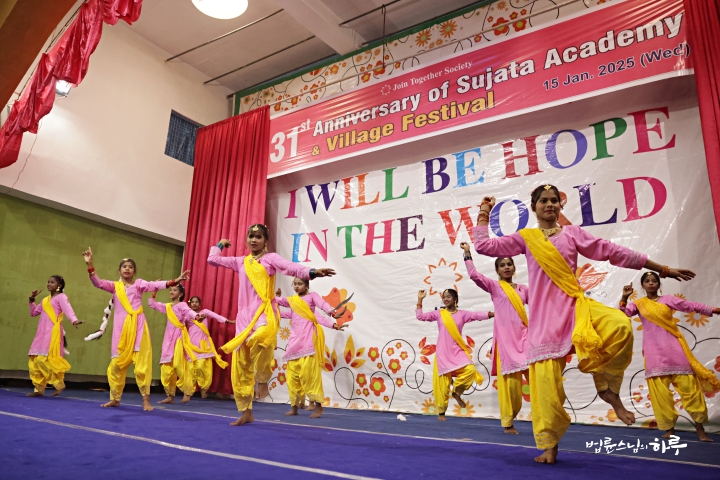
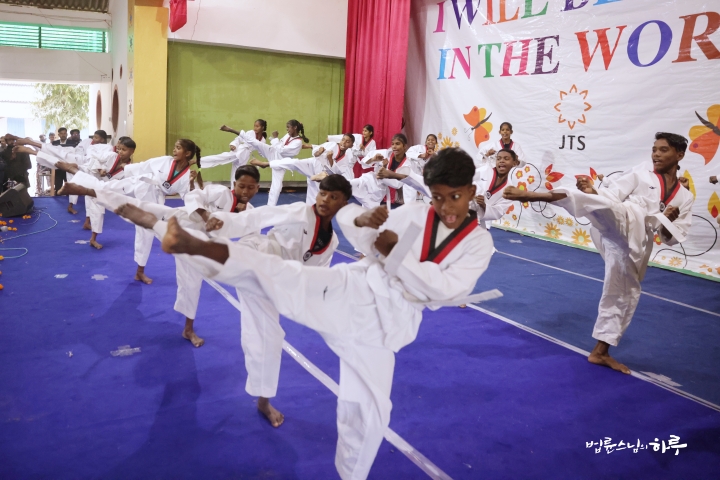
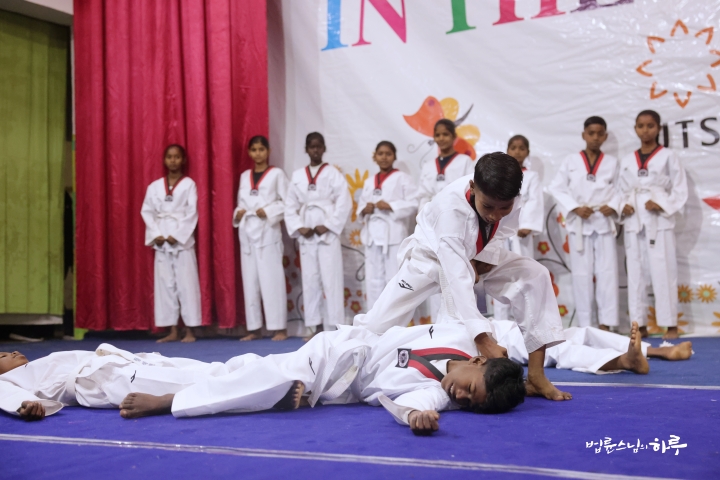
Following this, performances by Kanhaul village residents, a ‘Dolbeje’ dance by middle school boys, and a ‘Pinga’ dance by middle school girls further enriched the stage.
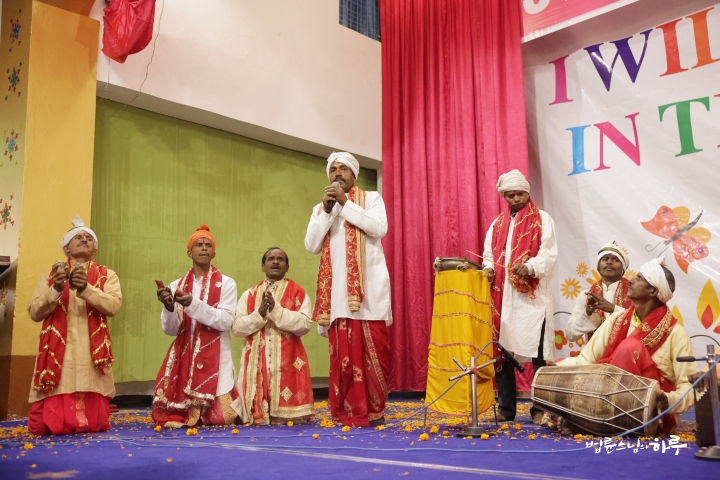
After the students’ performances, Member of Parliament Jitendra Manjhi delivered a congratulatory speech.
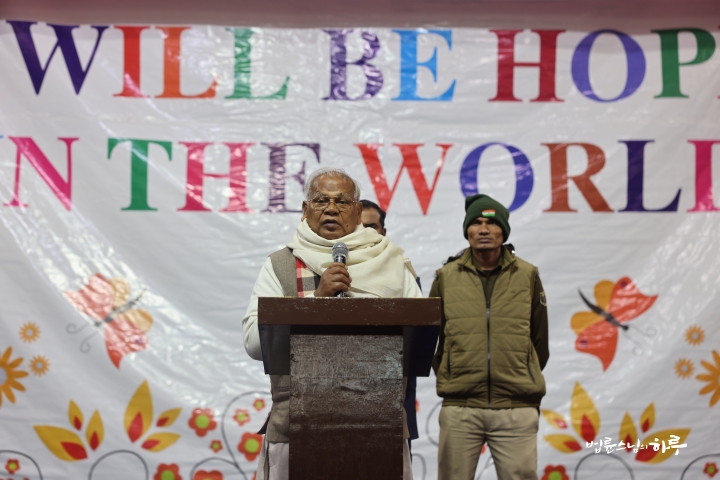
“Hello everyone. Thank you for inviting me to the Sujata Academy anniversary ceremony. I should have come earlier, but I’m glad I could visit today. I’ve heard a lot about Sujata Academy, but seeing it in person today, I sincerely thank JTS for doing what the Indian government should be doing. This place, like the Buddha’s teachings, educates all children equally regardless of caste, gender, or class. Education is everyone’s right, and children especially need to be educated at the right time. Let me tell you an old Indian story.
One day, two brothers were walking down a road when they saw a god standing on one side and a teacher on the other. The older brother asked the younger:
‘Who should we greet first?’
The younger sibling replied:
“Thanks to my teacher, I came to know about the existence of God. I would like to first pay my respects to the teacher who taught me about God.”
Education holds a meaning beyond mere knowledge. However, education that only imparts knowledge is not true education. Knowledge without compassion is useless. To follow the Buddha’s teachings, we must cultivate compassion and a non-discriminating mind.
These days, young people in India, whether in cities or villages, suffer from difficulties in finding employment. However, those with compassion and a non-discriminating mind find peace of mind. Such people can live happily even if they can’t find a job.
What was impressive about today’s event was the active participation of villagers in the children’s school anniversary celebration. The residents of Dungeshwari village also performed on stage and enjoyed themselves. Through this, we could feel the positive influence that Sujata Academy has on the entire village. This occasion has greatly inspired me. Thank you sincerely.”
After Jitendra Manjhi’s congratulatory speech, the high school boys of Sujata Academy performed a dance to a BTS (Bangtan Boys) song. The students’ performance skills are improving every year, earning big applause from the audience.
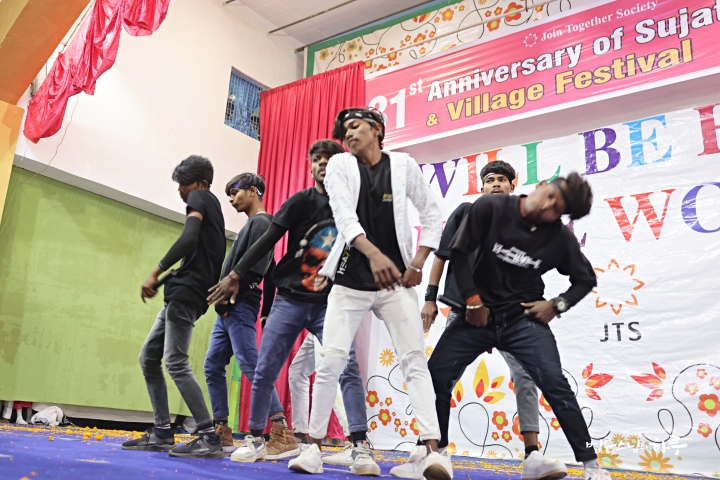
Almost two hours into the event, all the performances prepared by Sujata Academy students came to an end. Sunim expressed his gratitude to everyone who attended the school anniversary ceremony and gave his closing remarks.

“Yes!”
“Just like the seniors who gave great performances on stage, you too can give wonderful performances if you practice. No one is born talented. Anyone can excel if they learn and practice. Are you ready to learn and practice hard?”“Yes!”
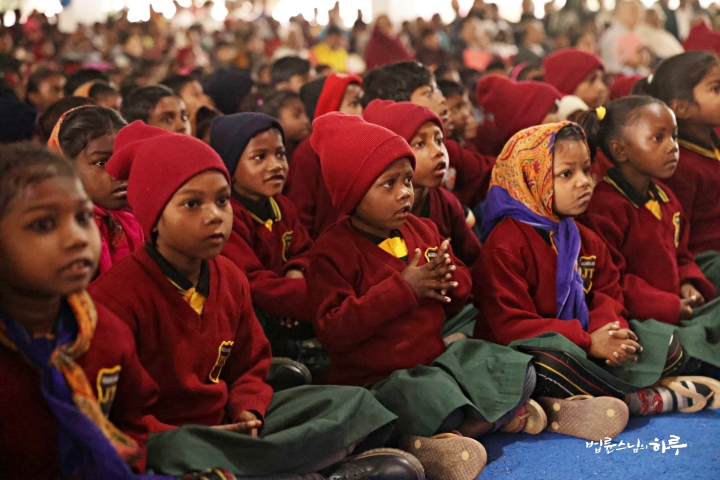
“Yes!”
“Buddha attained enlightenment and became Buddha through six years of practice here. Dr. Ambedkar, though born as an untouchable, studied hard and became India’s independence activist and first Minister of Law and Justice. We too can become great people if we learn and practice here. While it might seem beneficial for children to help with household chores now, if they receive proper education, their quality of life will be significantly different in ten years. So, your continued interest and support are necessary. All children born into this world have the right to education, regardless of skin color, caste, or physical condition. JTS is building schools and providing learning opportunities to realize this value. All of this is possible thanks to the support of Korean Buddhists. Korean sponsors believe that ‘helping children is a greater Buddhist practice than building temples.’ Seeing the children study and grow, don’t you think the sponsorship is worthwhile?” (laughs)“Yes!”
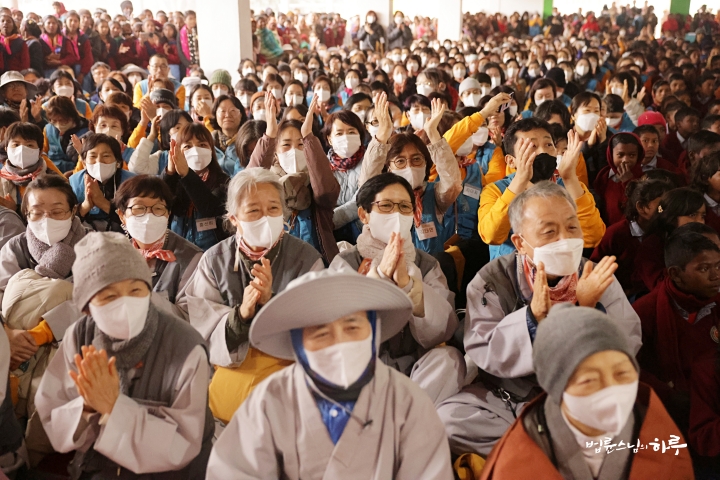
“Students and villagers, let’s give a round of applause to thank the Korean sponsors who have helped your children receive education.”Cheers and applause filled Pragyabodhihal, and the pilgrims also expressed their gratitude.
“Sujata offered food to a practitioner who had collapsed by the Ganges. Buddha regained his health with that offering, continued his practice diligently, and attained enlightenment to become Buddha. JTS will carry on Sujata’s spirit and provide learning opportunities to all children. Thank you.”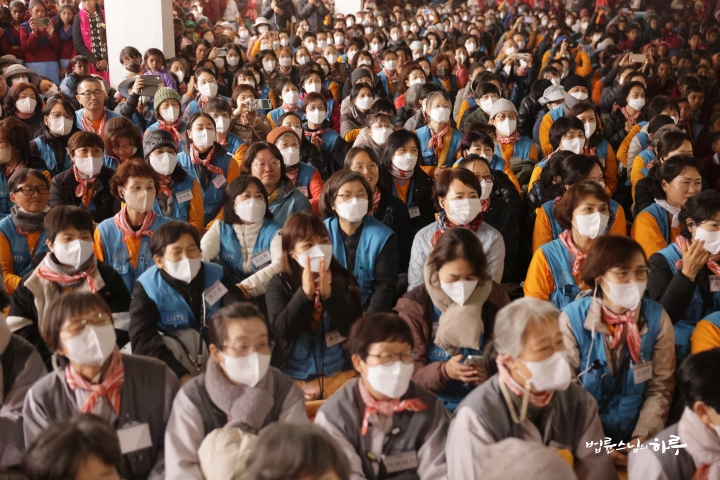
The final performance of Sujata Academy’s anniversary celebration was the Memorial Dance. This performance visualized through dance the process of Sunim establishing a school in Dungeshwari and providing learning opportunities to children.
“Heal the world. Make it a better place for you and for me and the entire human race.”
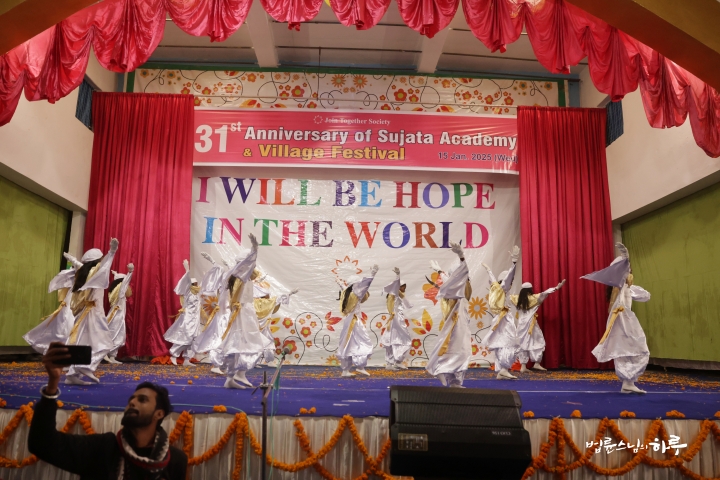
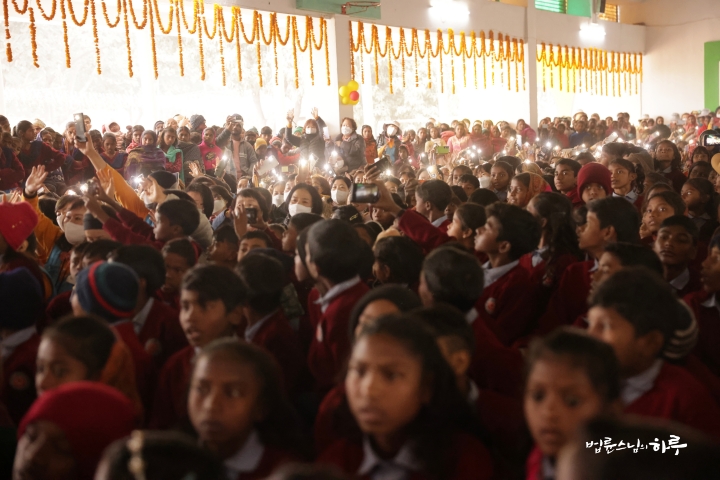
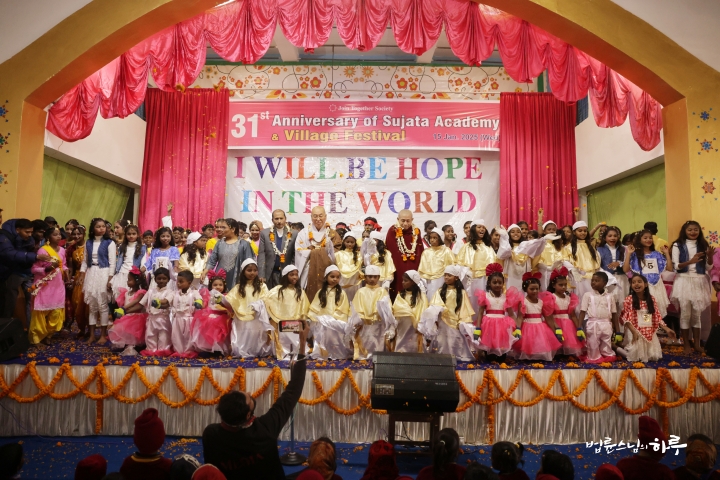
The children’s dance was moving, as if healing the world. The Korean pilgrimage group also waved their phone lights, sharing in the emotion of the final moment.
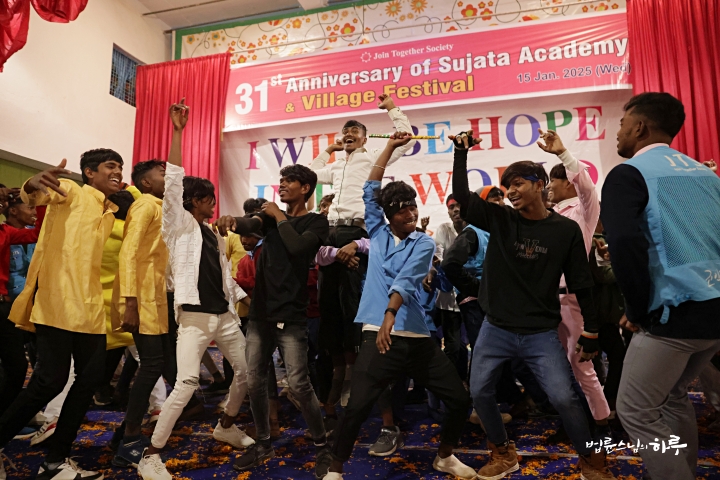
After the performance, even the students who hadn’t been on stage came up and danced freely, concluding the 31st anniversary celebration.
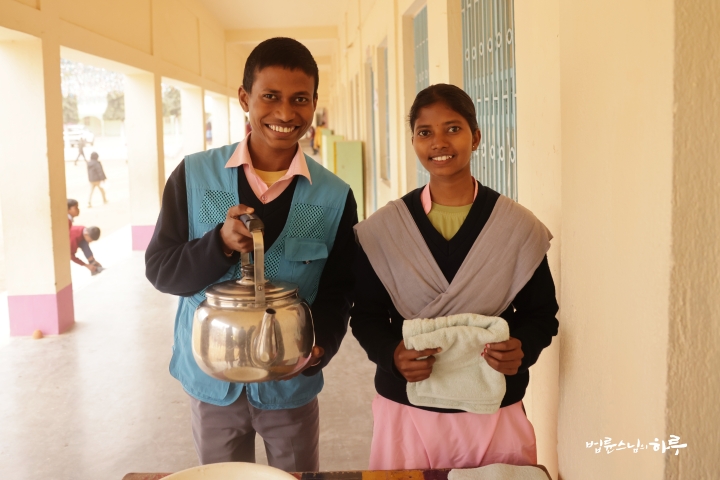
Sunim moved to the lunch venue with the guests. The 10th-grade students were preparing to welcome the guests in a neat appearance.
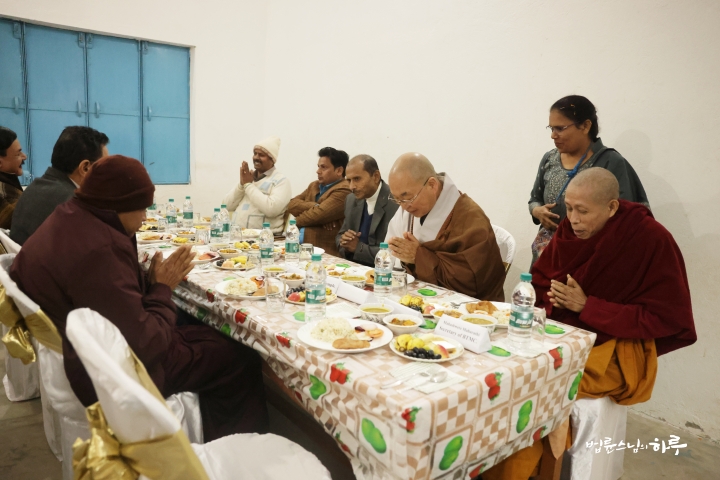
Sunim had lunch and conversed with the guests.
“When I first came here 30 years ago, children were falling ill one by one. I didn’t know the cause and was about to send them to the hospital, but Dr. Burma said, ‘These children don’t need medicine, they need food.’ So from then on, we started providing free meals at Sujata Academy. But that became a big problem. Children started coming to school in countless numbers. Initially, we planned to build a small four-room school, but thanks to Dr. Burma, Sujata Academy has grown this big.” (laughs)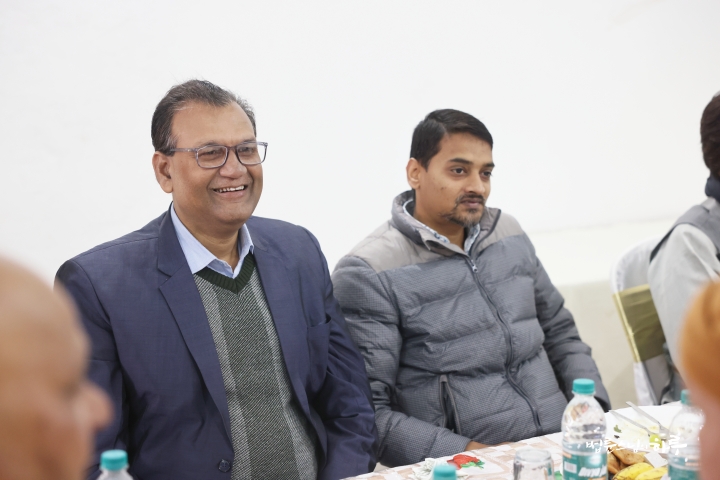
All the guests burst into laughter, sharing the emotional impact of the story. Venerable Priyapal asked:
“What kind of practice do you do to remember such old events so vividly?”
Sunim smiled and replied:
“Well, even though it happened 30 years ago, I remember it all as vividly as if it were yesterday.”Sunim pointed to one person and said:
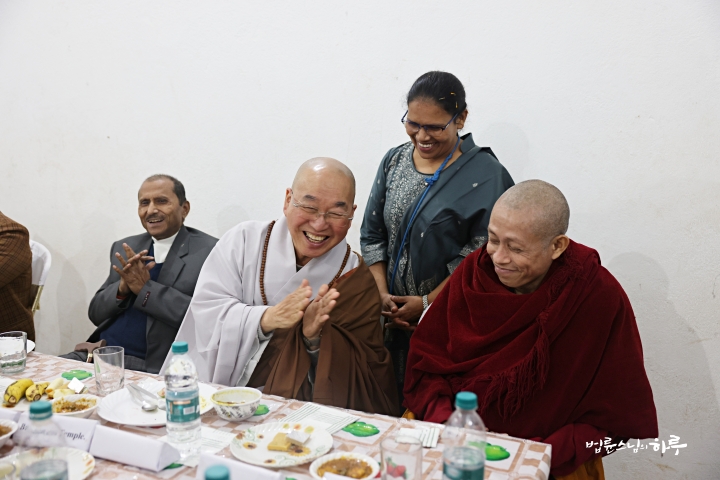
As Sunim continued his story, he recalled how many precious connections came together to establish Sujata Academy.
After finishing lunch with the guests, Sunim checked the dining area for the villagers to ensure there was enough food. Upon hearing that food was scarce in Jagdishpur village, Sunim checked the remaining food and made arrangements to ensure everyone could eat.
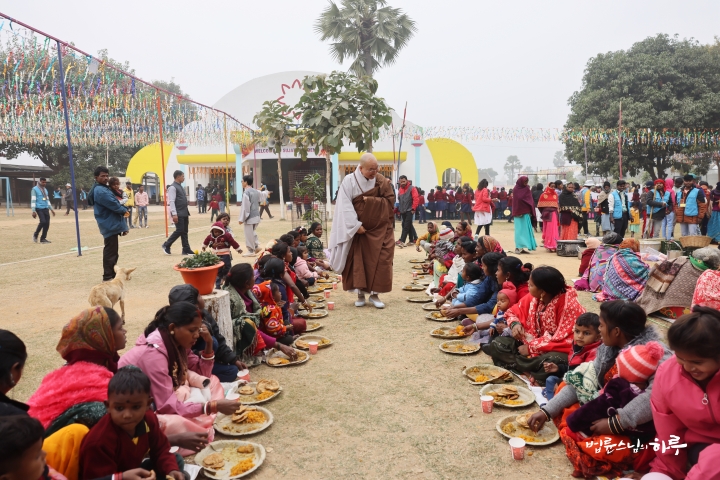
After inspecting all the dining areas, Sunim presented gifts to the villagers who had prepared performances, expressing his gratitude.
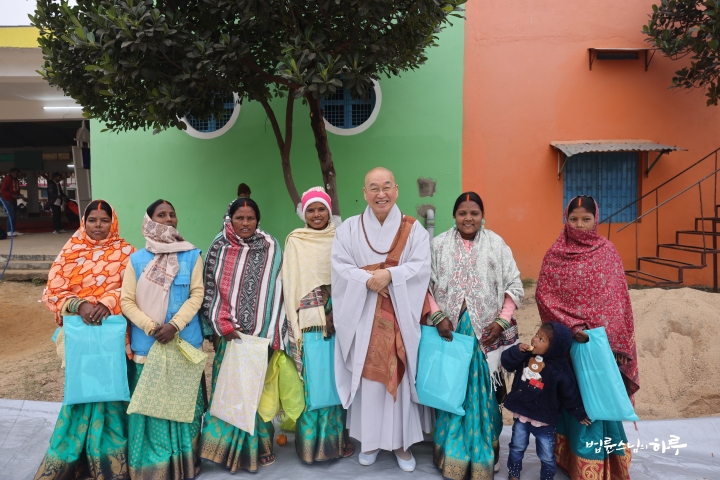
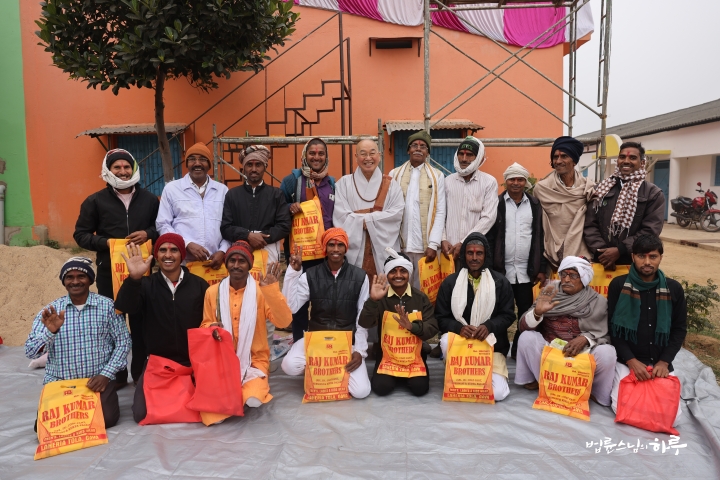
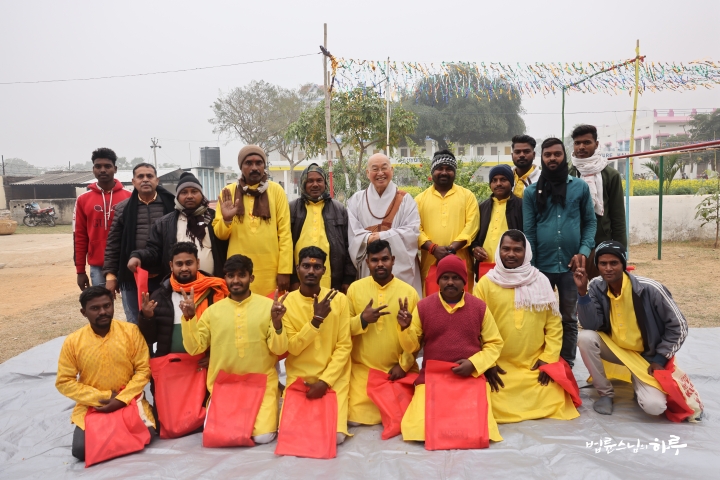
The women from Durgapur, dressed in beautiful green saris, smiled shyly and replied:
“Yes.”
At 3 PM, Mahathero Sunim, the president of the Mahabodhi Society in Sarnath, visited the school. Sunim welcomed Mahathero Sunim warmly.
“Welcome, Sunim. We successfully concluded the school’s anniversary celebration two hours ago. We thought you wouldn’t be able to make it today.”Mahathero Sunim apologized hurriedly and said:
“I’m sorry for being late. I had to come since I promised. I was planning to fly from Sarnath to Gaya this morning, but the flight was canceled, so I looked for train tickets. However, all tickets were sold out, and I barely managed to arrive. Next year, I’ll come a day early to make sure I attend the anniversary celebration.”
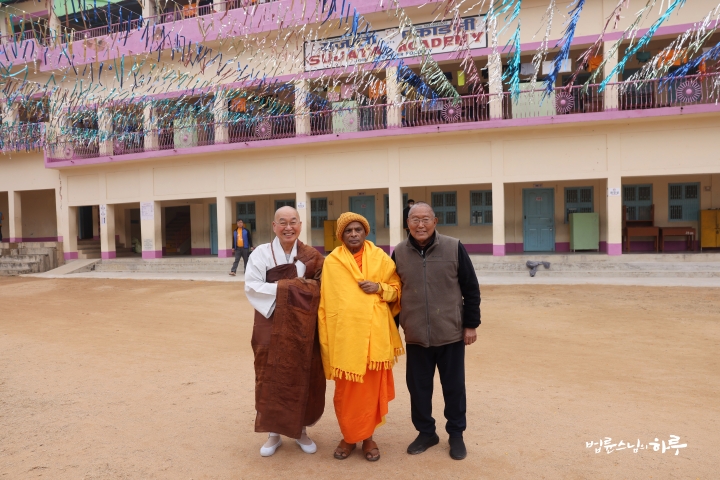
Sunim sincerely thanked Mahathero Sunim for coming such a long way. Mahathero Sunim was impressed by Sunim’s story about the sustainable development project in Bhutan and visited Sujata Academy with Dasho Dorji, who is currently working on a Bhutan temple project in Rajgir, to offer help.
Sunim, Mahathero Sunim, and Dasho Dorji spent about an hour discussing the sustainable development project in Bhutan and the details of this visit. Mahathero Sunim was deeply moved to learn that the school built under Pragbodhi Hill was established by Sunim and conveyed his joy and encouragement to Bogwang Dharma Teacher, the current head of the school. After the conversation, Mahathero Sunim and Dasho Dorji left for Bodhgaya.
At 4 PM, the Indian JTS staff gathered in the office to meet Sunim.
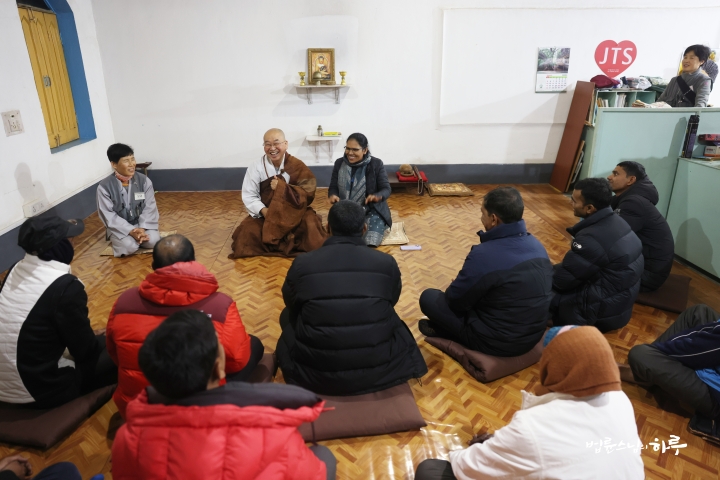
“No, we still have the Korean pilgrimage group staying at the school, so we’ll stay until all the schedules are completed. We plan to stay at the school until today.”
Sunim smiled and replied:
“I see. After the pilgrimage is over, let’s discuss whether we should go on a picnic together or make other plans. The New Year has passed, but since we’re exchanging New Year’s greetings now, I’ll give you some New Year’s money.” (laughs)After exchanging New Year’s greetings with the Indian staff, Sunim held a meeting with all the pilgrimage staff at 5 PM. They reviewed the progress so far, discussed points for improvement, and carefully checked the next day’s schedule.
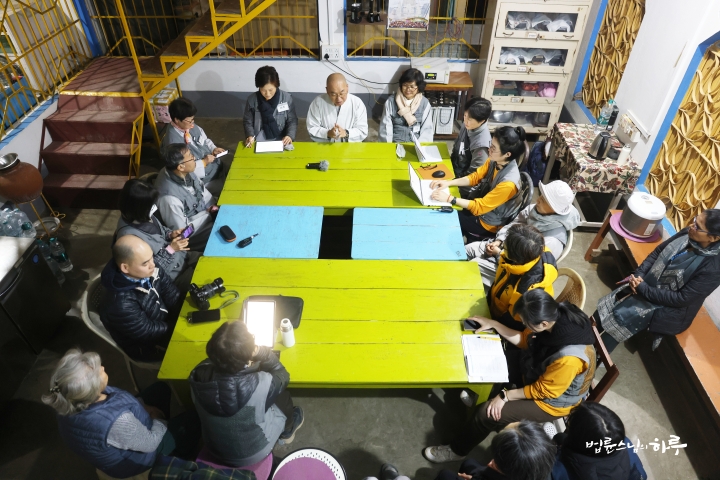
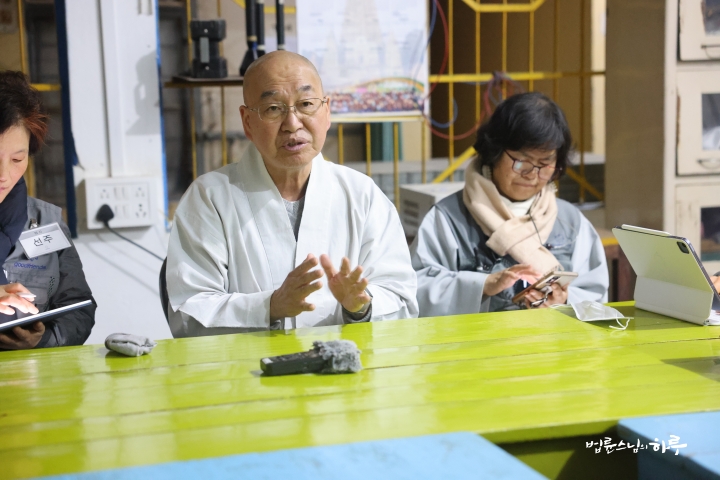
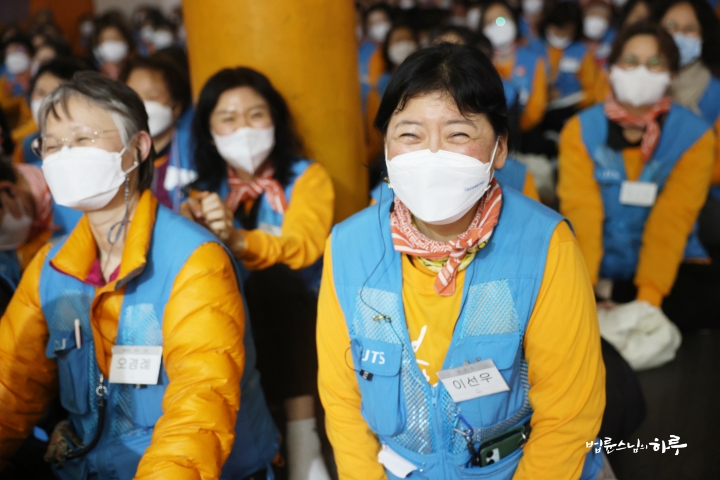
As the sun set, around 400 people gathered in Pragbodhi Hall at 6 PM for evening prayers. After the prayers, they had a Q&A session with Sunim. The pilgrims freely raised their hands to ask Sunim questions about things they had been curious about during the pilgrimage.
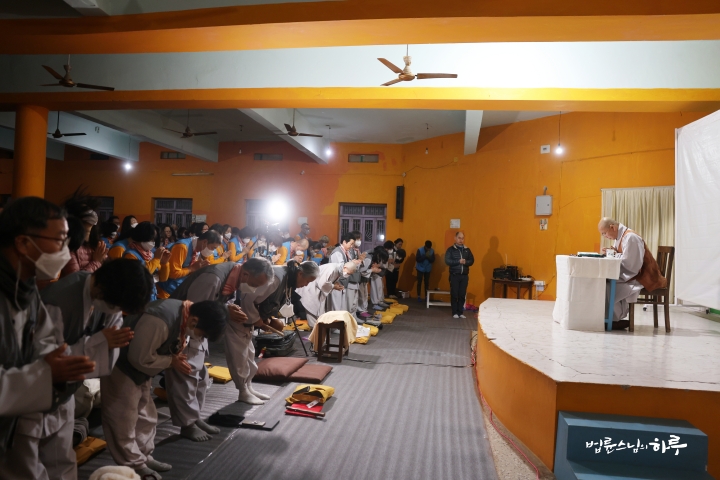

For an hour and a half, six people asked questions and had conversations with Sunim. One of them mentioned not feeling particularly moved at times during the pilgrimage and asked for Sunim’s advice on how to approach the pilgrimage with the right mindset.
How Can We Approach the Pilgrimage to Feel More Moved?
“I think emotion is something that arises from the unconscious. I was incredibly moved when I took the precepts in Sarnath and when I was welcomed by the students here at Sujata Academy. It made me think that I should work harder and donate more to JTS. However, I didn’t feel particularly moved while visiting the Buddha’s sacred sites. I just understood the historical facts, like ‘Oh, this is where the Buddha attained enlightenment’ or ‘This is where Sujata offered food to the Buddha.’ That’s about all I felt, and sometimes I even had doubts like ‘Is this really true?’ or ‘Is this the right location?’ I usually have a mindset that discriminates against visible things or facts. But coming here and seeing differences from a broader perspective, I realized ‘We are really very different.’ In relationships with fellow practitioners, I came to understand that ‘We are all so different, so it’s natural that we clash.’ So now I’m really enjoying this pilgrimage in India. For the remaining schedule, as we follow in the Buddha’s footsteps, what perspective should I have to gain a deeper emotional experience at the sacred sites?”
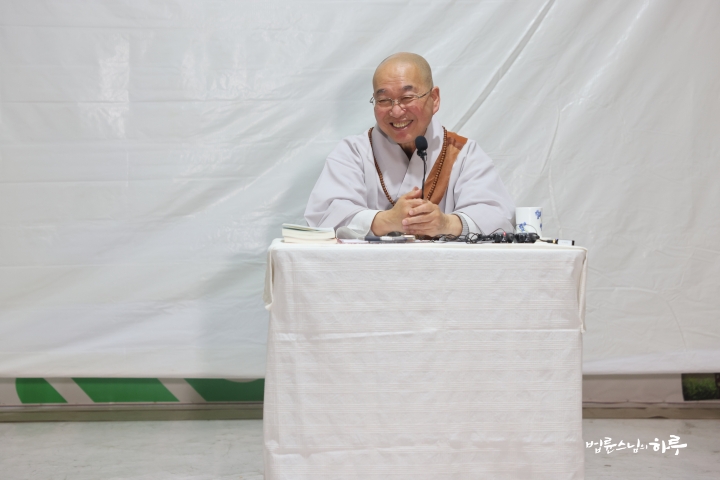
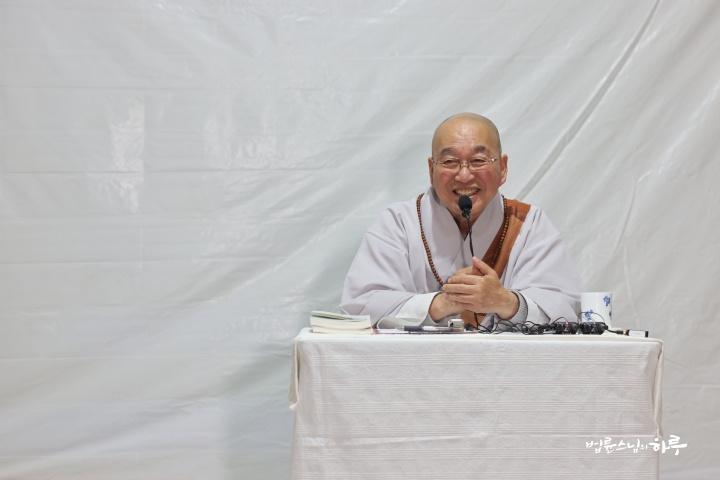
“Thank you. I understand well.”
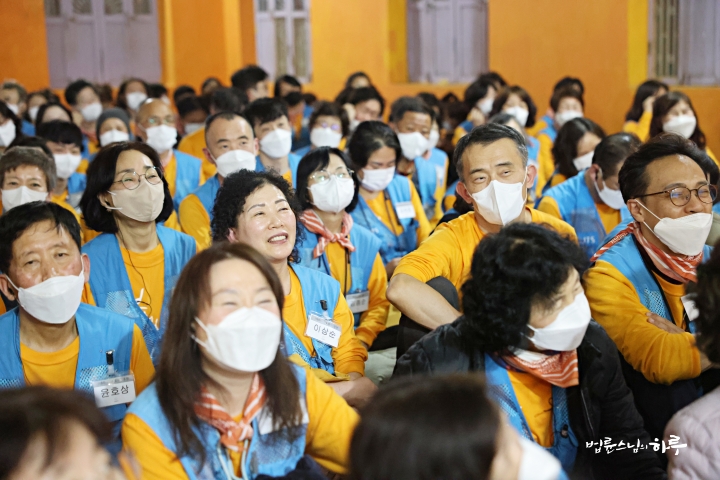
Although there were more people who wanted to ask questions, the day’s schedule was concluded to prepare for tomorrow’s pilgrimage. After the Dharma talk, the pilgrims returned to their accommodations, shared their thoughts in groups, prepared lunch boxes for the next day, and then went to bed.
Tomorrow, we will move to Rajgir, where the Bamboo Grove Monastery is located, early in the morning. We will once again follow in the footsteps of the Buddha.