The Same 7 Dollars Creates Miracles on the Other Side of the Earth
Jan 13, 2025 - India Pilgrimage Day 3, Pragbodhi Hill
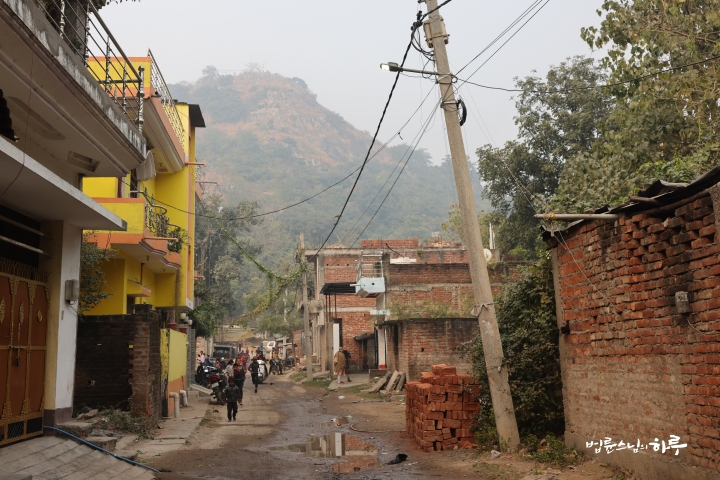
Usually, the bus journey from Varanasi to Gaya takes about 8 hours. The pilgrimage group departed from Varanasi at 4:20 AM, planning to arrive at Sujata Academy around noon. However, after calculating the remaining distance and time during the journey, it was estimated that they would arrive about 2 hours earlier than expected. Arriving too early would rush the children and teachers preparing for the welcoming ceremony at the school, so the group decided to change plans and visit Gayasisa first.
At 9:40 AM, they arrived near Gayasisa. After disembarking from the bus and entering the village, the pilgrimage group encountered steep stairs. Recently in Bhutan, Sunim had to stop several times to catch his breath while climbing steep paths. Today’s climb was also challenging, but Sunim led the pilgrims, taking several breaks and slowly making his way to the summit.
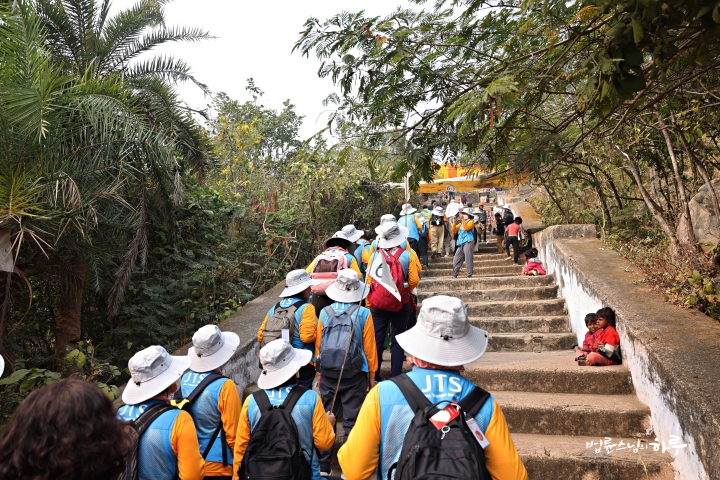
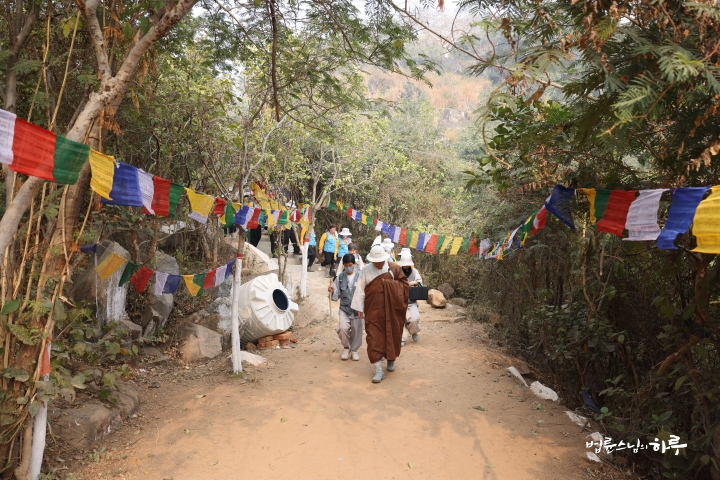
Upon reaching the summit of Gayasisa, while waiting for the remaining pilgrims to arrive, Sunim instructed those who had already arrived to have breakfast with the prepared lunch boxes. He also sat on a rock and had his meal.
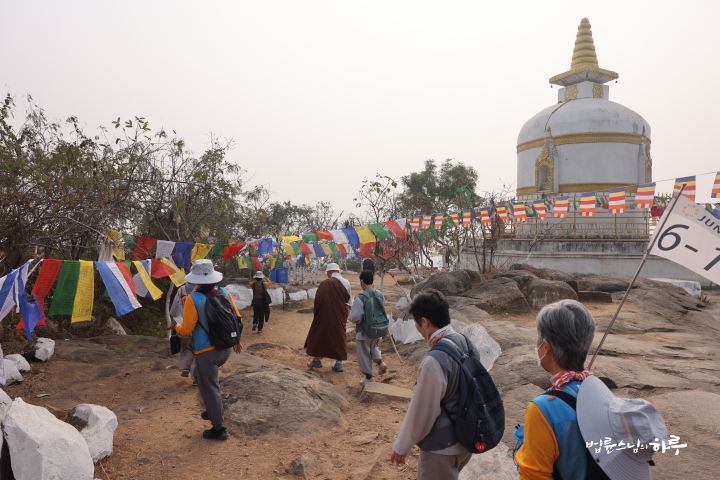
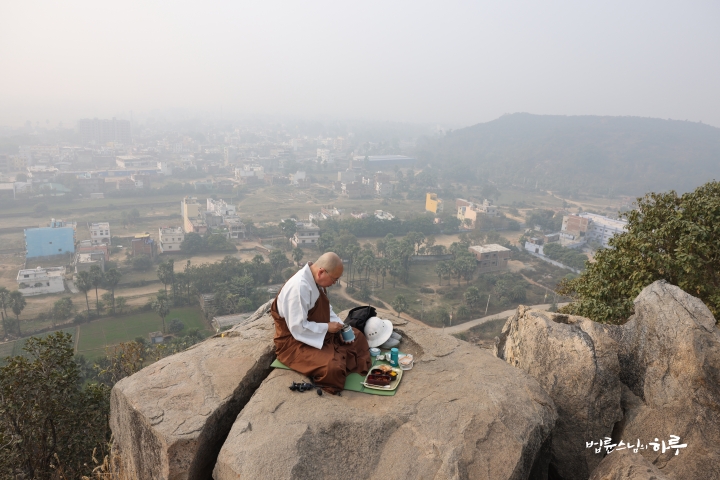
As the meal was ending, all the pilgrims had arrived. Sunim began his guidance.
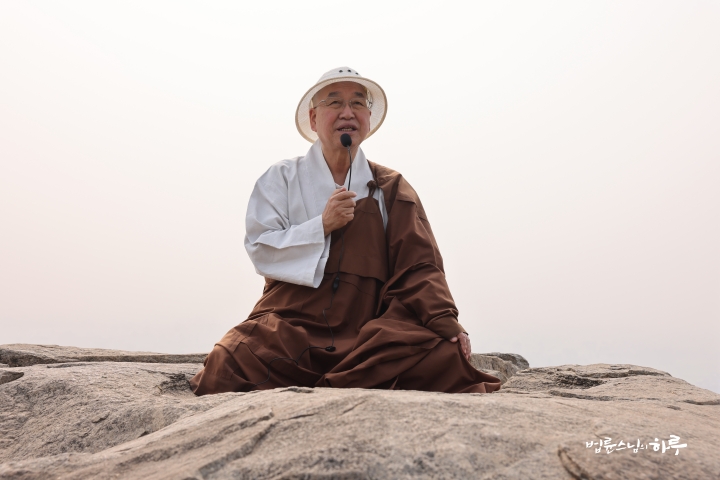
After a brief meditation, he began his explanation in earnest.
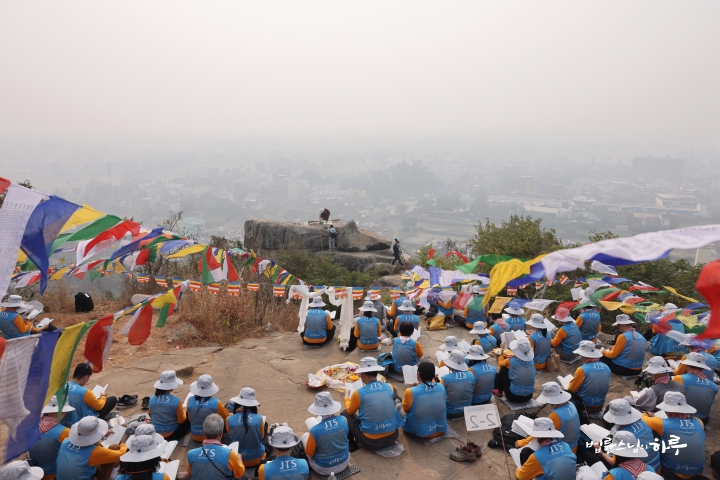
Sunim then explained two scriptural records related to Gayasisa.
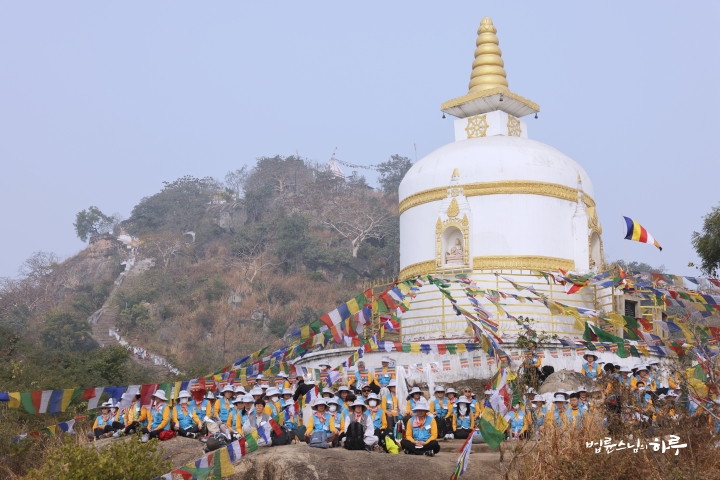
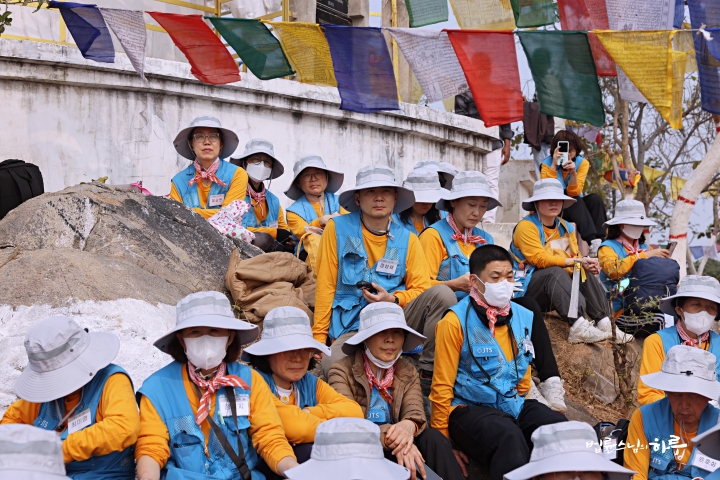
After finishing the explanation and a brief meditation, the pilgrimage group departed for Sujata Academy at 11:40 AM.
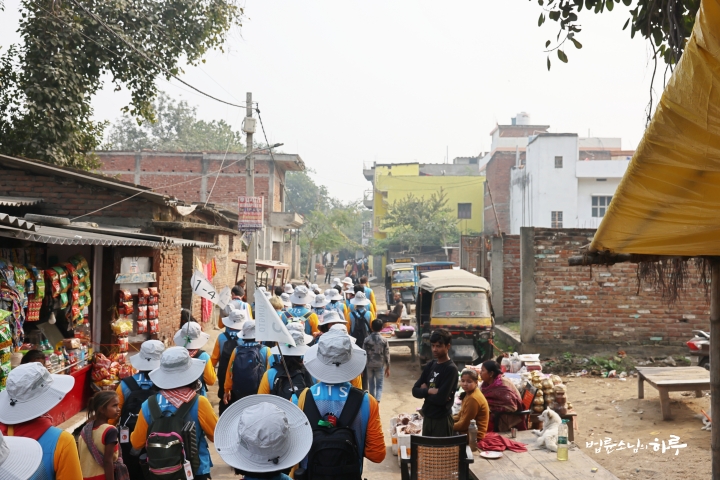
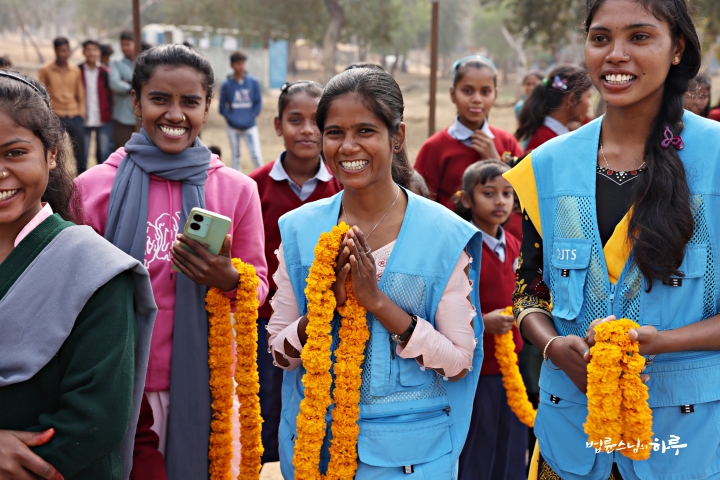
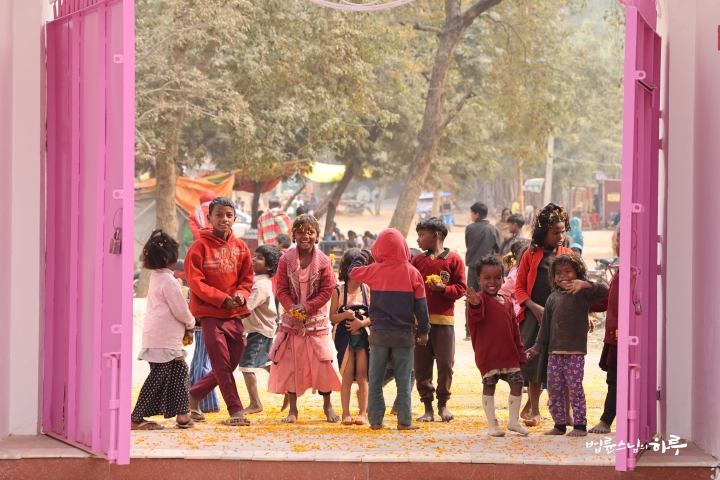
At 12:10 PM, they arrived at Sujata Academy in Dungeshwari. The students, dressed in beautiful clothes, were waiting to greet the pilgrimage group.
“Welcome to Sujata Academy!”
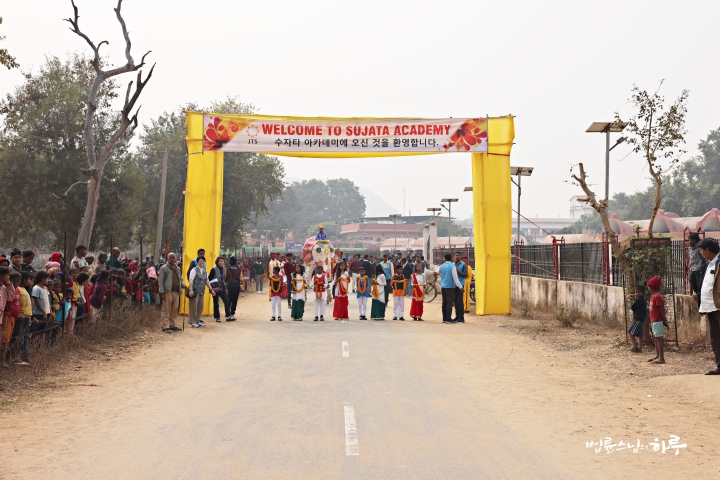
The children’s faces were filled with smiles as they welcomed the visitors.
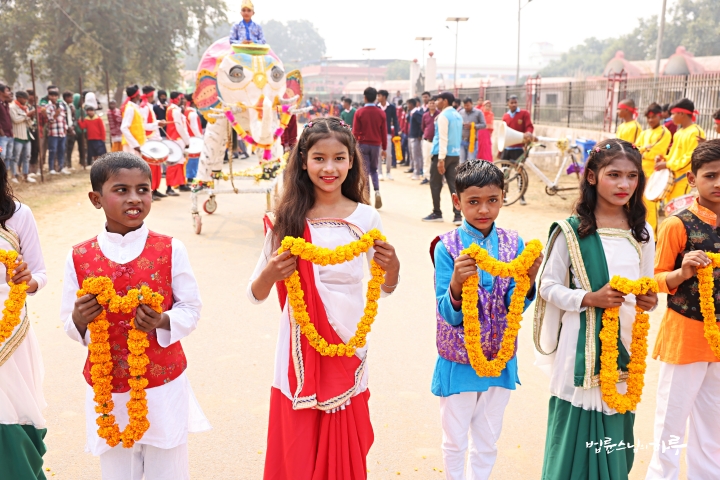
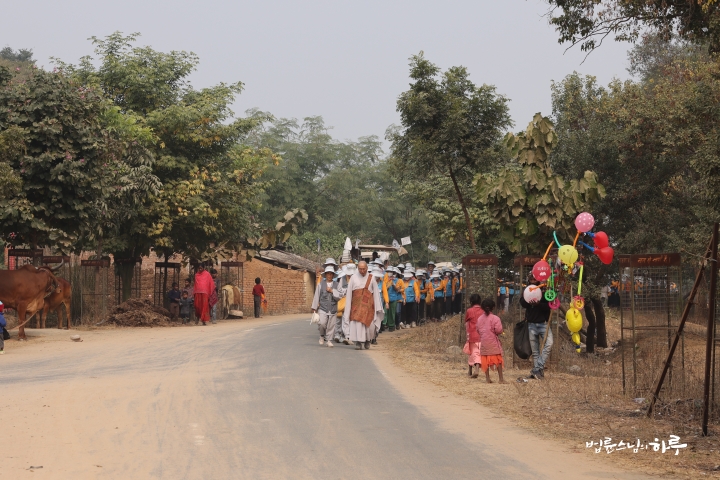
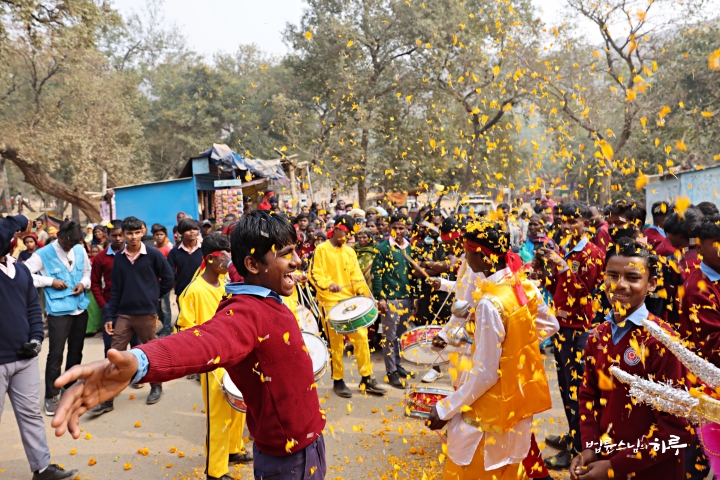
Sunim led the pilgrimage group, walking one step at a time towards the school. At that moment, the exciting sounds of trumpets and drums played by the students filled the air.
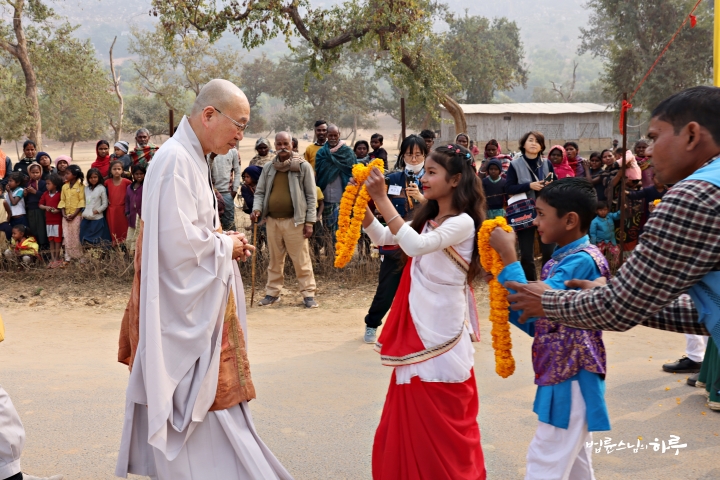
Soon, a student from Sujata Academy approached Sunim and placed a flower garland around his neck. Sunim walked with the student through the yellow gate to the school entrance. The other students then welcomed each pilgrim by placing flower garlands around their necks.
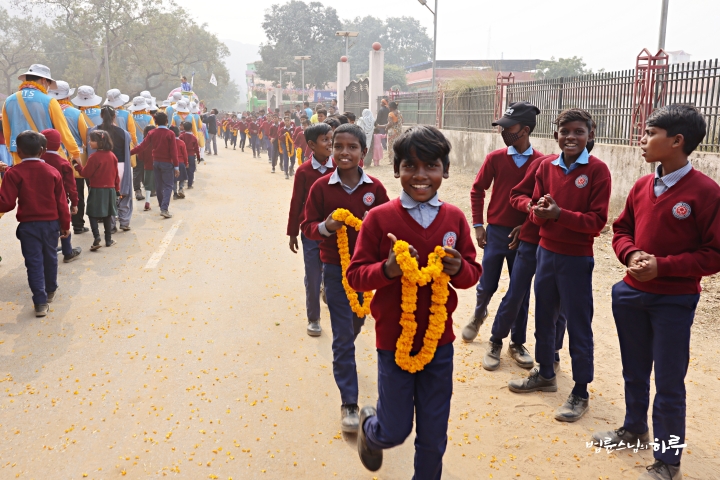
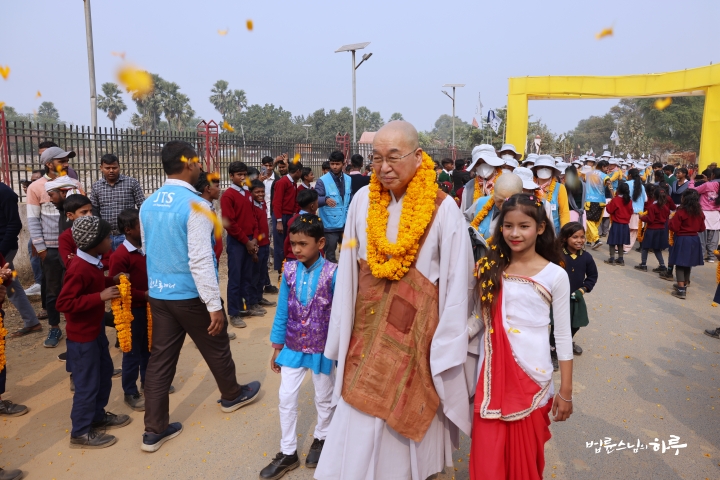
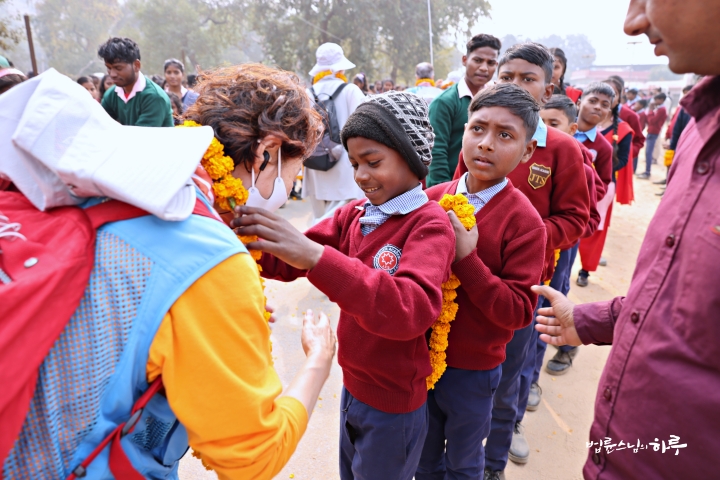
In front of the pilgrimage group, a first-grade student riding on an elephant showered them with flower petals. The pilgrims’ steps looked even more beautiful under the fluttering flower petals.
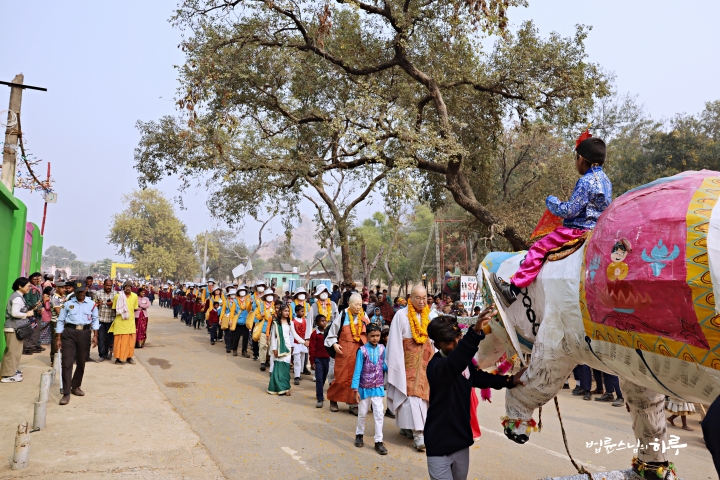
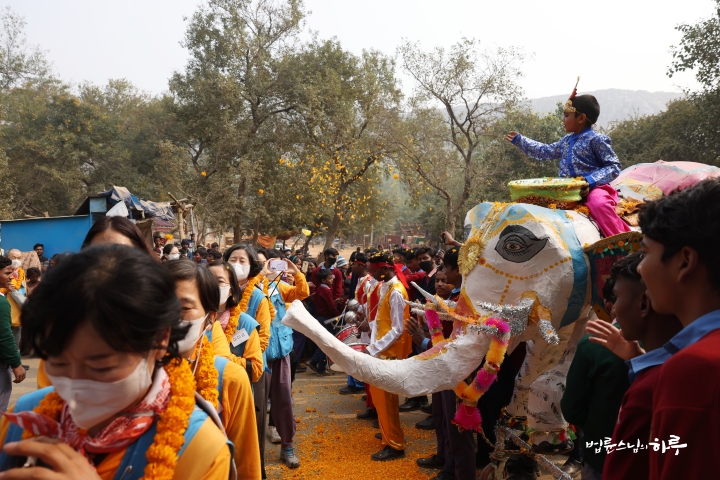
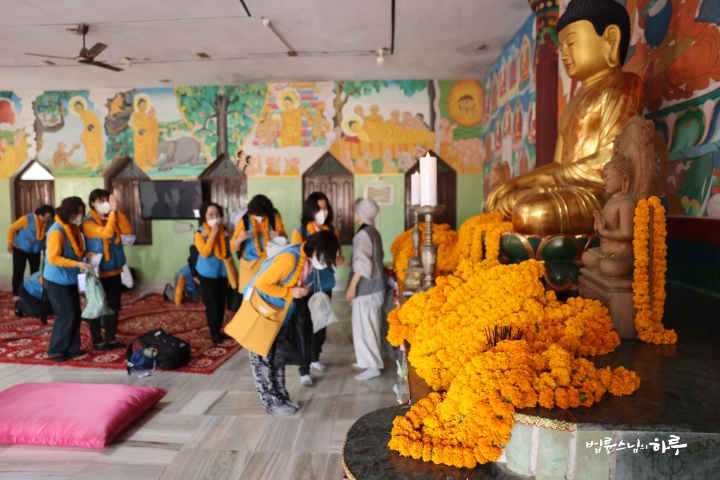
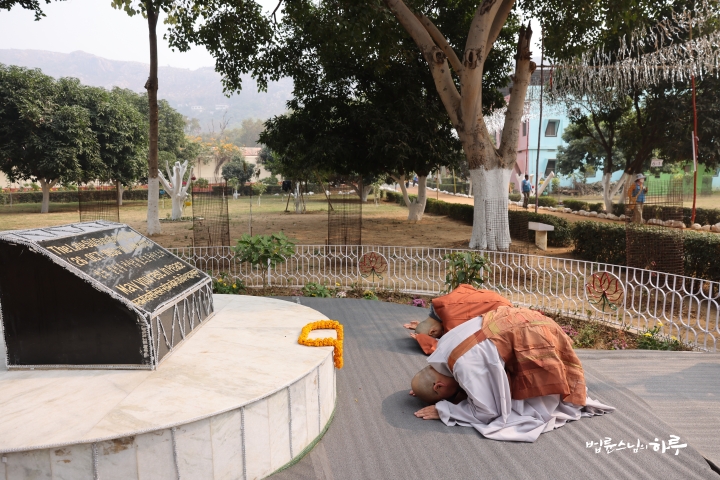
The pilgrimage group entered Sujata Academy and first paid respects at the Dharma hall, then visited the memorial stupa of the late Seol Seong-bong, who passed away 20 years ago after being attacked by an assailant while volunteering at Sujata Academy.
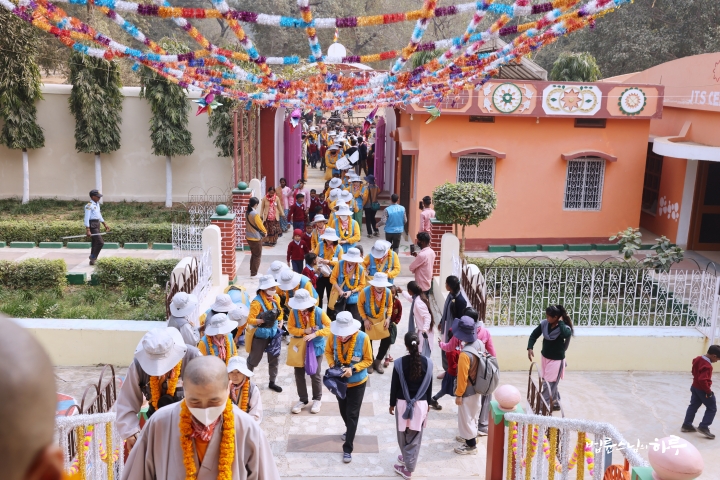
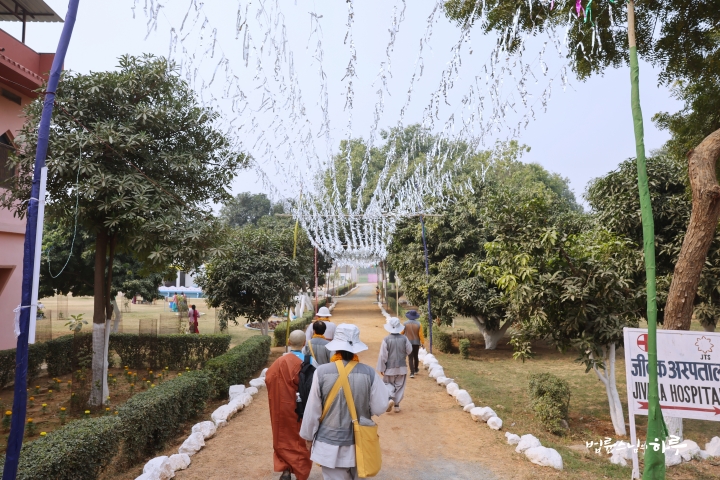
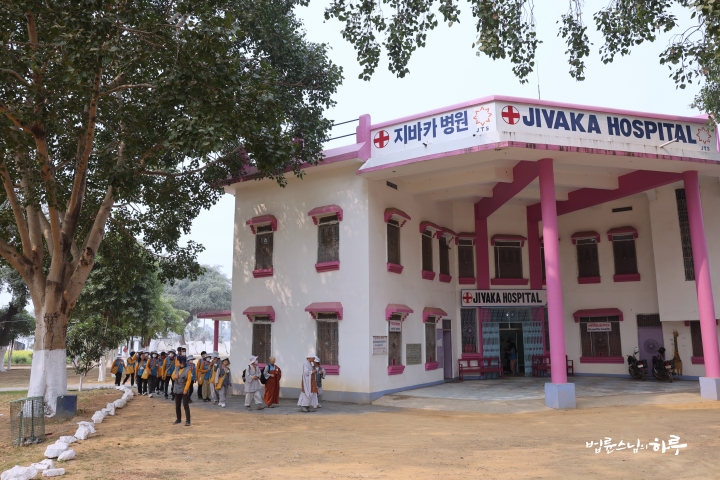
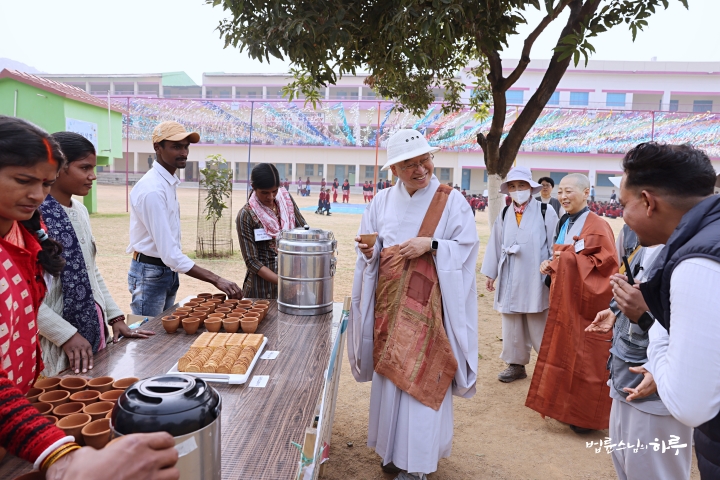
They then toured Jivaka Hospital and headed to the playground. Warm tea and snacks were prepared on the playground. The pilgrimage group, tired from the long journey, took a moment to relax while enjoying the warm tea.
Once all 400 members of the pilgrimage group were seated on the playground, the welcoming ceremony began. First, all the students of Sujata Academy opened the ceremony with a dance performance. The children’s movements were incredibly pure and beautiful. The pilgrimage group also stood up and danced together, facing the children.
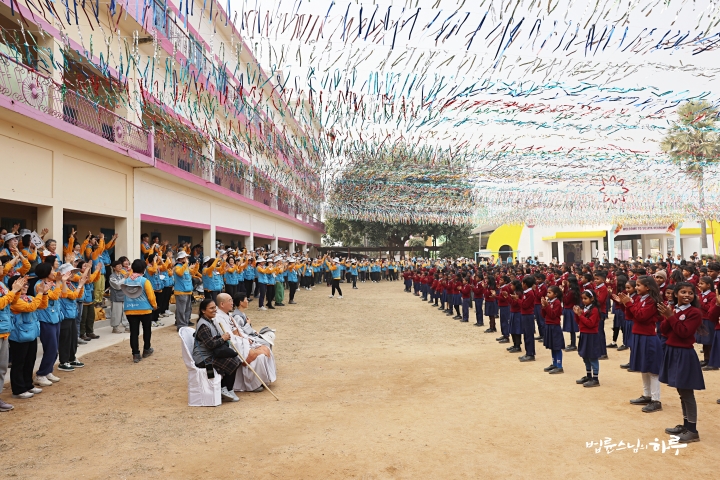
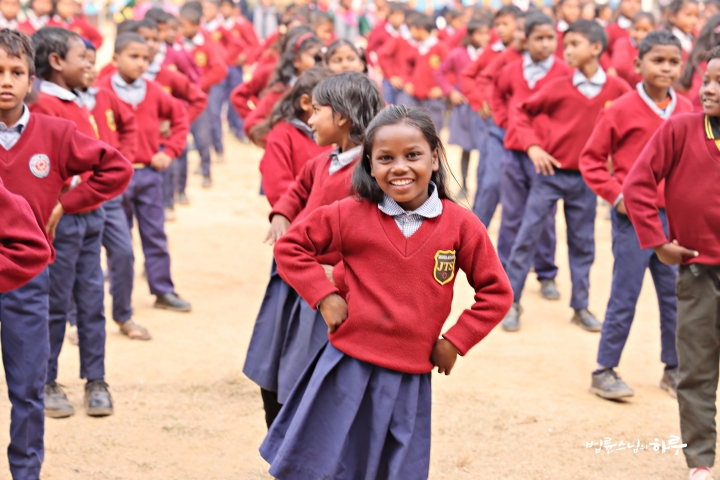
Next, celebratory performances by each grade level followed. The children, dressed in colorful costumes, danced skillfully with confident expressions. Their free and beautiful blossoming appearance was truly admirable.
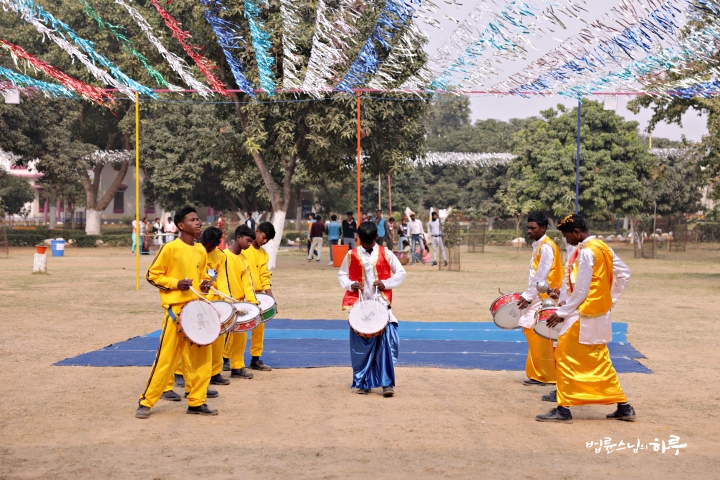
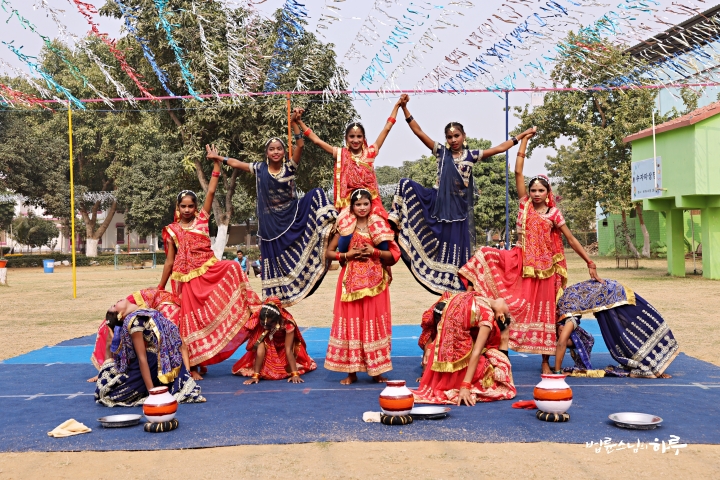
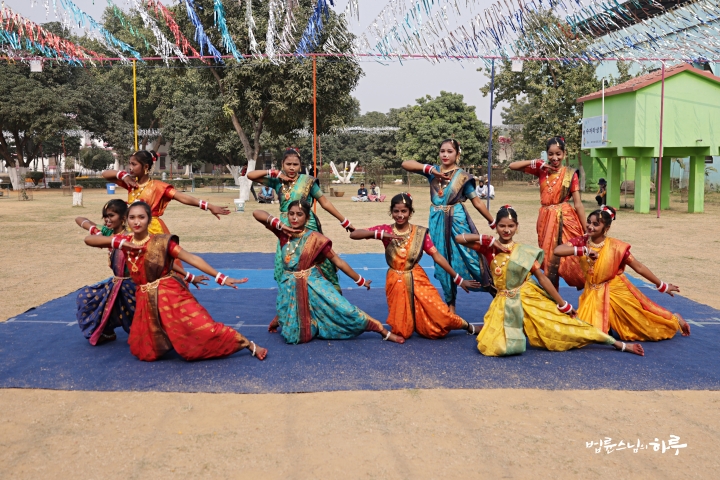
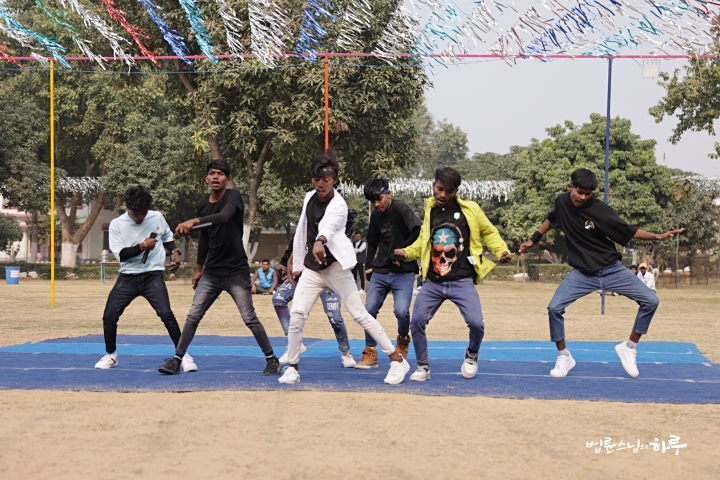
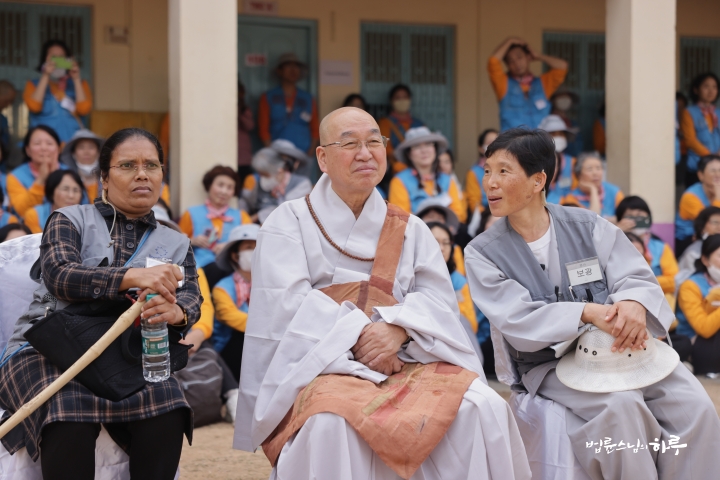
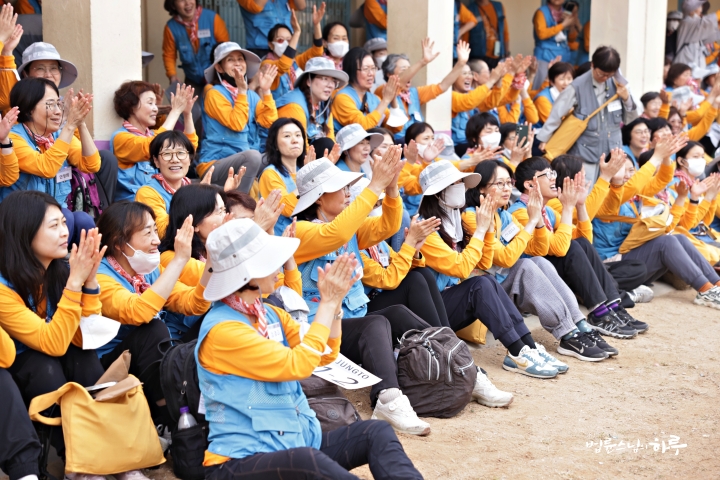
After watching four celebratory performances, it was regrettable to end the welcoming ceremony. Sunim smiled and said.
“I hear there are more performances prepared for the school anniversary celebration the day after tomorrow. (Laughs) Let’s plan to see them again at the anniversary celebration. For now, we’ll move on to Pragbodhi Mountain.”At 1:30 PM, they departed for Pragbodhi Mountain.
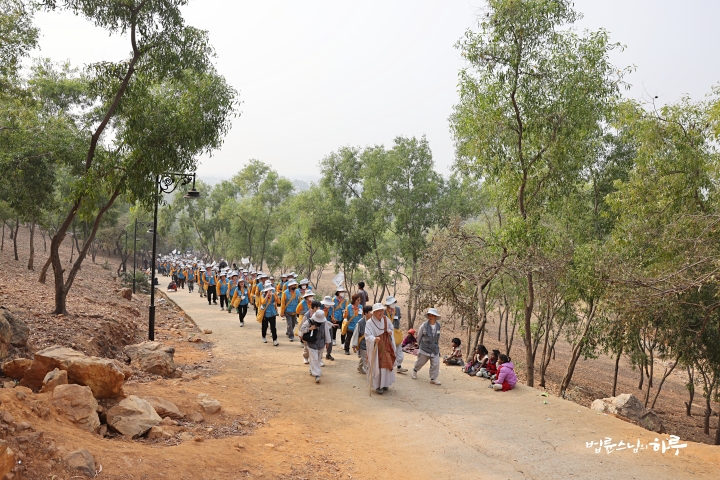
After arriving at Pragbodhi Mountain and everyone had put on their kasayas and taken their seats, Sunim began his explanation.
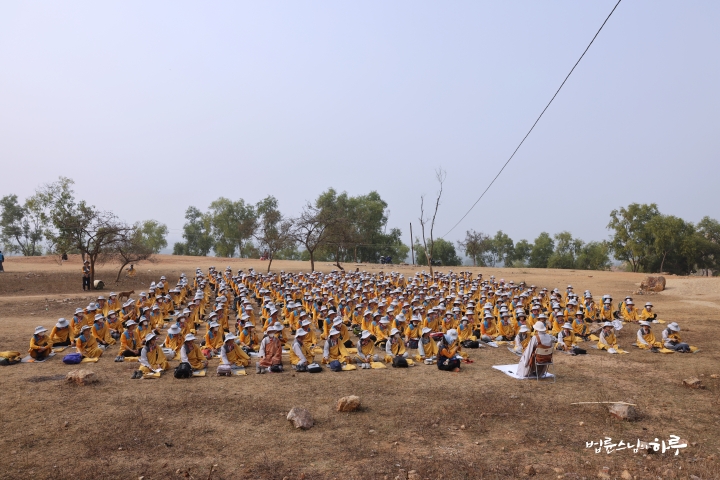
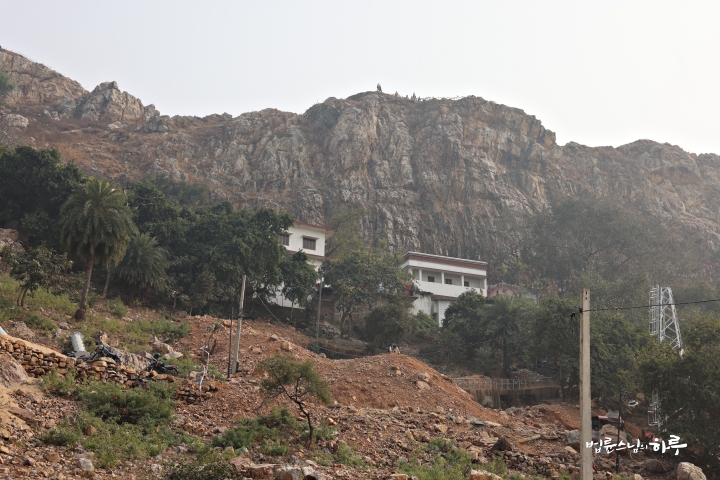
Sunim then spoke about Buddha’s process of enlightenment.
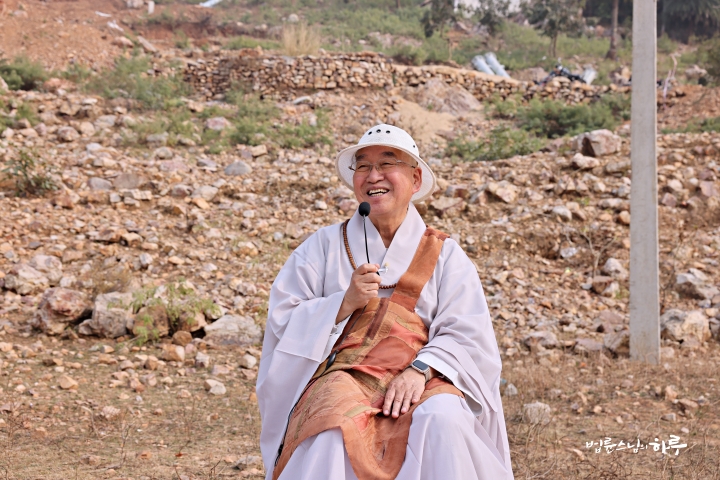
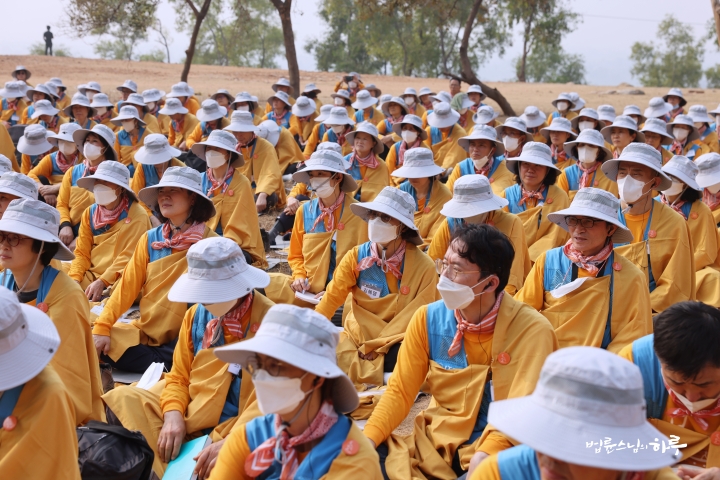
After the explanation, the pilgrimage group engaged in meditation and sutra recitation, then offered prayers while facing Pragbodhi Mountain.
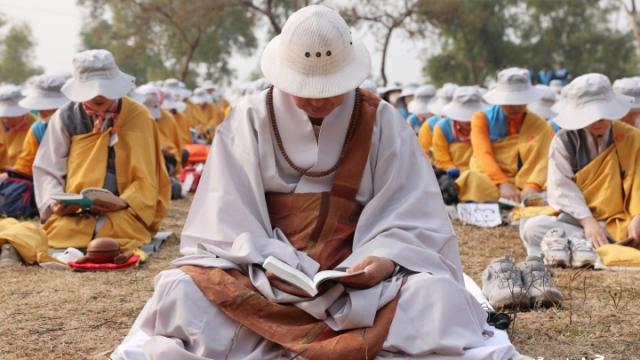
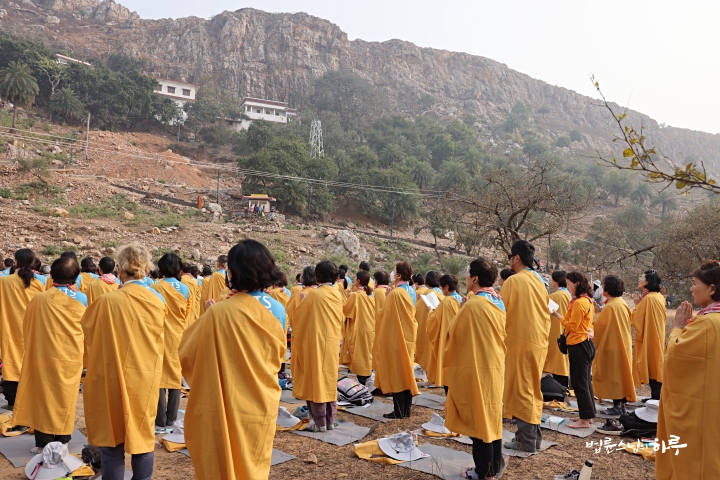
At 3:20 PM, after completing the pilgrimage to Pragbodhi Mountain, the group returned to Sujata Academy. Following dinner, a Dharma assembly was held in the Culture Hall starting at 7 PM.
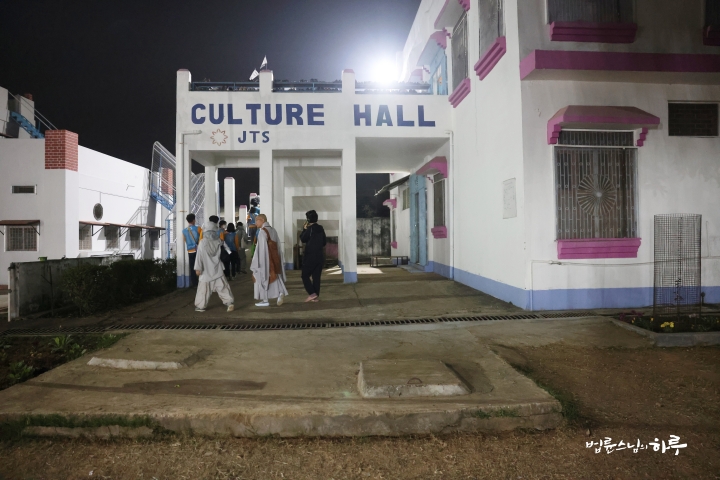
After watching a video introducing the 30-year history of Sujata Academy, the pilgrimage group performed three prostrations to Sunim and requested teachings.
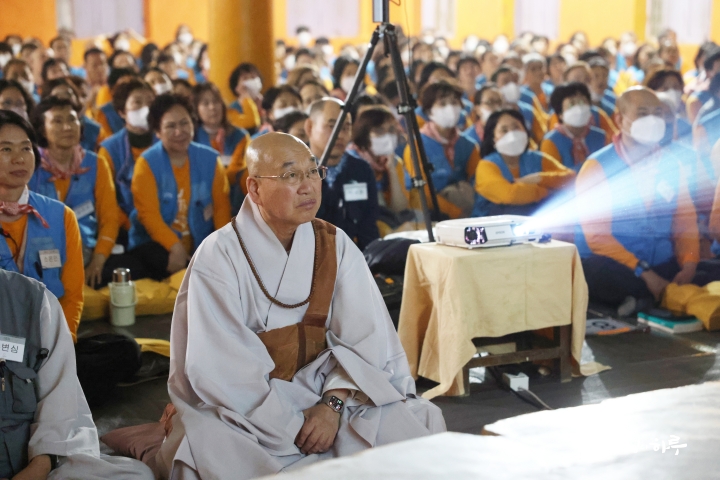
Sunim explained the history of JTS India and Sujata Academy.
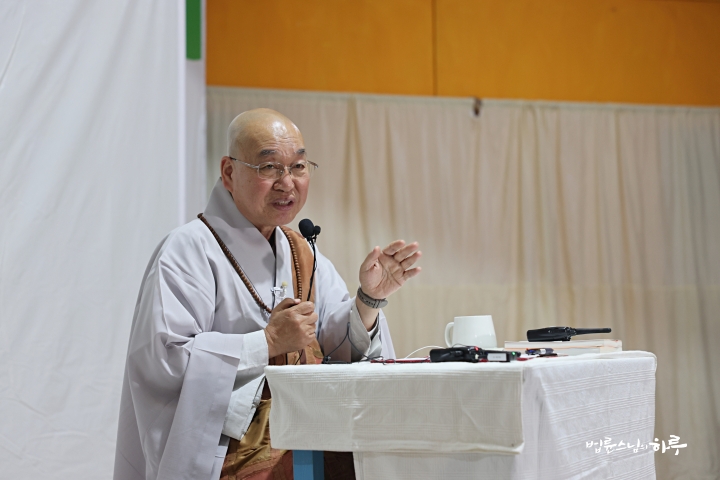
How Can There Be No School for Hundreds of Children?
If I had seen about 50 children begging, as we do nowadays, I would have thought some children were in school while others were begging. But seeing hundreds of children sitting and begging was very puzzling. It seemed unbelievable that there was no school nearby with so many children around, so I asked again, and they confirmed there really wasn’t one. This led to discussions with the villagers about building a school. I asked the villagers: “Is this Korea or India?” “It’s India.” “Whose children are these?” “They are our children.” “I’m not even Indian, but Korean, and moreover, I’m a monk who isn’t married and has no children. So who should be responsible for educating your children?” “We should, but we have no money. We are poor.” “Even if you’re poor, shouldn’t you do something if you’ve had children?” “We can’t do anything.” “Why can’t you do anything? Don’t you have any land?” “We do have land.” “Then shouldn’t you at least provide land to build a school?” This is how ten villagers agreed to donate one katha of land each. One katha is about 42 pyeong (approximately 139 square meters). We built the first school on this wasteland that was too barren for farming. But since providing land alone isn’t enough to build a school, I persuaded the villagers, saying, “These are your children, so shouldn’t you do something?” They agreed to work together, and that’s how the school construction began.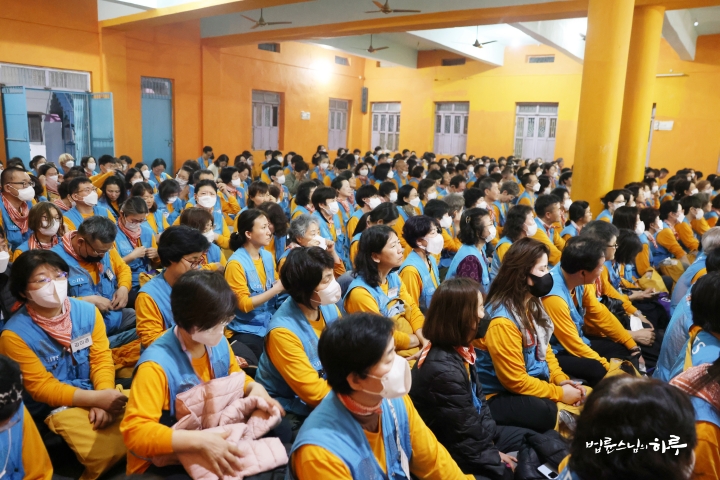
How Literacy Eradication Was Possible in Untouchable Villages
The near 100% literacy eradication in this area became possible when we established kindergartens in every village. Initially, I had planned to eradicate illiteracy through elementary schools. However, by the time children reach elementary school age, they’re already old enough to work, so parents wouldn’t send them to school and made them work instead. But when we built kindergartens in every village, parents readily sent their young children. They couldn’t put toddlers to work, and it was difficult for parents to take care of all the children, so they sent them to kindergarten. Even though it was just a place where children gathered to eat snacks and play together before going home, parents almost always sent them. This was because parents could work while their children were at kindergarten. From toddlerhood, children went to kindergarten with their friends, and after graduating from kindergarten, they naturally entered elementary school together. As you know, children tend to follow their peers. So, in the end, literacy eradication was made possible through kindergartens rather than elementary schools. After establishing kindergartens, we no longer had to go around calling children to school every day. Currently, there are about 1,000 kindergarten students in 15 villages. If all the kindergarten graduates came to Sujata Academy, JTS wouldn’t be able to handle it. If JTS had accepted all those students, we would have had well over 1,000 elementary school students. However, government schools have been established here and there, although they’re not very good. So we forced students living in villages with government schools to attend those schools. If all the children came to Sujata Academy, not only would it overburden our school, but it would also make it difficult for government schools to operate. So while children attend JTS-run kindergartens, we made them go to government schools for elementary education depending on where they lived. Initially, there was a lot of resistance from parents. This was because most people here are untouchables, and government schools were established in upper-caste villages, so untouchable children faced discrimination at school. When a child faces discrimination at school, they soon stop going. Also, while upper-caste children had seniors at school, untouchable children were the first to go, so they often couldn’t find their place. Another difficulty for untouchables was that in government schools attended by upper-caste children, parents had to bear the cost of all school supplies. There was some resistance and side effects at first, but after persuading the parents and as time passed, they eventually settled into attending government schools. Instead, for children who absolutely couldn’t adapt to government schools or faced severe discrimination for being untouchables, we allowed them to attend Sujata Academy. This is because children need to learn at the right time, regardless of the reason. Through this process, we’ve reached today’s Sujata Academy. Currently, including branch schools, there are about 500 elementary school students, about 200 middle school students, and about 1,000 kindergarten students. A total of about 1,700 children are currently receiving education at Sujata Academy. Next to the school is Jivaka Hospital, which you should think of more as a health center rather than a general hospital. In addition to running the school and hospital, we’ve also been involved in village development, such as helping the needy in the village and solving water problems through hand pumps. These days, as the Indian economy has improved a lot, government support is gradually increasing. As a result, the overall road conditions are improving, and most thatched houses are being replaced with brick houses, showing gradual improvement.Village Development Was Not as Easy as Expected
Among the projects we’ve carried out so far, education has been relatively successful. The eradication of tuberculosis through the hospital and the significant reduction in infant and maternal mortality were also successful. On the other hand, village development was not as effective as we thought. We wanted to develop villages by building houses, paving roads, increasing agricultural production, creating production and consumer cooperatives, and establishing village banks. But firstly, our capabilities were quite limited. Secondly, the problem here isn’t just poverty; because they’re untouchables, they rarely own land to cultivate and mostly survive by working as day laborers. As a result, we couldn’t establish the foundation to form organizations like production cooperatives with resident participation. There’s also the issue of residents being completely illiterate, although this might improve as more young people who can read and write emerge. Overall, their way of life is very different from typical rural areas. It’s possible to create cooperatives when people have even a small piece of land to farm and live poorly, but here, like urban slums, untouchables live around upper-caste villages and survive by working for their masters. This system made village development challenging.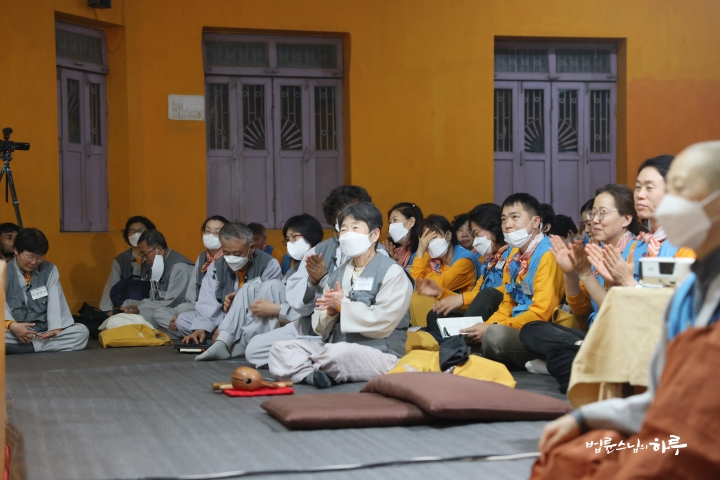
The Same 7 Dollars Creates Miracles on the Other Side of the World
When your donations are used well, they provide educational opportunities for children like this. They give treatment opportunities to sick people. In some areas, they can provide clean water, and for the hungry, they can provide food. The same 7 Dollars in Korea might only buy one bowl of rice, but here it can become ten or a hundred bowls. The story of five loaves and two fish from the Bible isn’t just a story in a book; depending on where the money is used, miraculous things can actually happen. If we reduce the waste in our own lives and transfer that money to people on the other side of the world who we can’t see or hear, it can greatly help alleviate their suffering. Of course, as you’ve seen, money alone doesn’t make things happen. The money spent here alone couldn’t have formed this. More than money, it’s the sincerity, ideas, and continuous efforts that have come together to create the current results. If you ask, ‘Has everything gone well?’ it hasn’t, and if you ask, ‘Is everything going well?’ it’s not going well even now. There are always many challenges remaining.After the explanation, the pilgrimage group raised their hands and asked questions about what they were curious about. Two people asked Sunim questions.
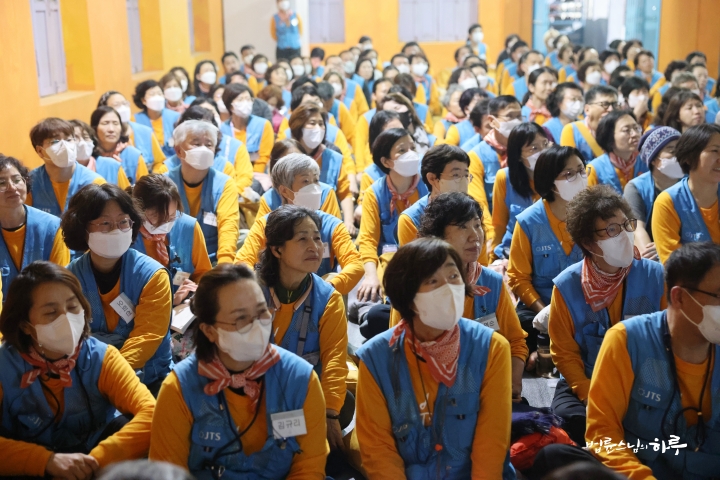
“While traveling on the Indian pilgrimage, I felt uncomfortable seeing mothers begging with babies in their arms. Is this feeling of discomfort similar to what Buddha felt during his four sights?”
“From my perspective, the poor people in India look pitiful, but it seems that the Indian people themselves don’t think that way. How should we view this?”
Sunim answered the last question and concluded the Q&A session.
The Poor in India Look Pitiful to Me, How Should I View This Feeling?
“There are two reasons why Indian people have a different perspective from us. First, they were born and raised in this society. They are already adapted to this system. Second, in India, caste is divided by occupation. Originally, the caste system was a social hierarchy, but occupations became fixed according to social status. The son of a barber becomes a barber, the son of a driver becomes a driver, and the son of a cleaner becomes a cleaner. There are about 3,000 occupations classified this way. The broad division of castes into Brahmin, Kshatriya, Vaishya, and Sudra is called ‘Varna’. Within these, there are about 3,000 detailed castes. This is India’s traditional culture, and Indians accept their life as karma, or destiny. It’s like how we use livestock – we consider plowing fields as the job of oxen, and carrying people as the job of horses. Indian people believe that by doing their best in the job that matches their caste, they will go to a better place in their next life. They believe this and live their lives accordingly. The Indian person you met probably said that based on the Indian way of thinking.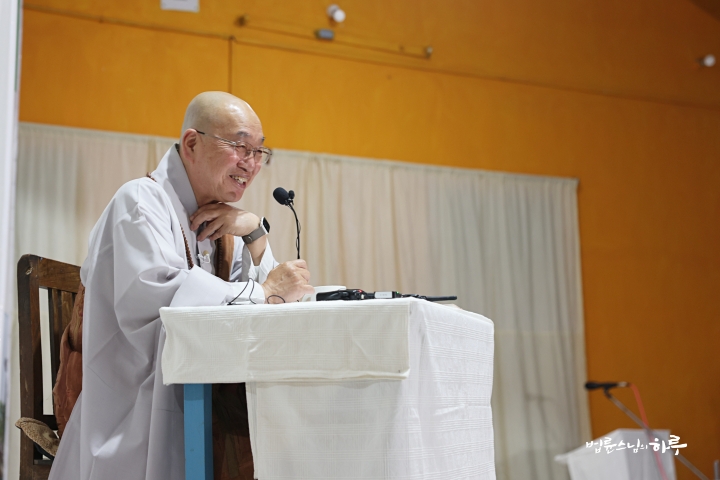
“Thank you. I understand well.”
Regrettably, as it was past 9 PM, the Dharma talk ended to prepare for tomorrow’s pilgrimage. Sunim went to check on a person who had injured her leg during the pilgrimage.
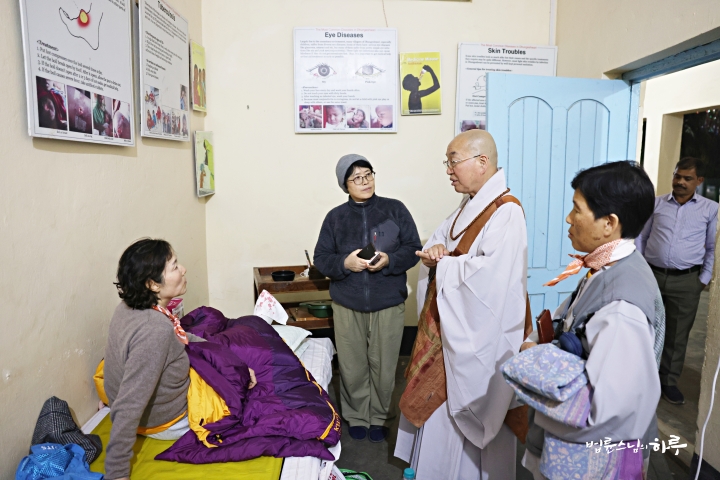
“Sunim, thank you.”
The first day at Sujata Academy came to an end.
Tomorrow, Sunim plan to visit the Mahabodhi Temple in Bodhgaya, where the Buddha attained enlightenment.