Why We Begin the Pilgrimage Here
Jan 12, 2025 - India Pilgrimage Day 2, Sarnath
Hello. It’s the second day of our pilgrimage. Today’s schedule included meeting with the abbot of the Thai temple, the precept ceremony at Sarnath, visiting the Sarnath Museum, and meeting with the new abbot of the Thai temple.
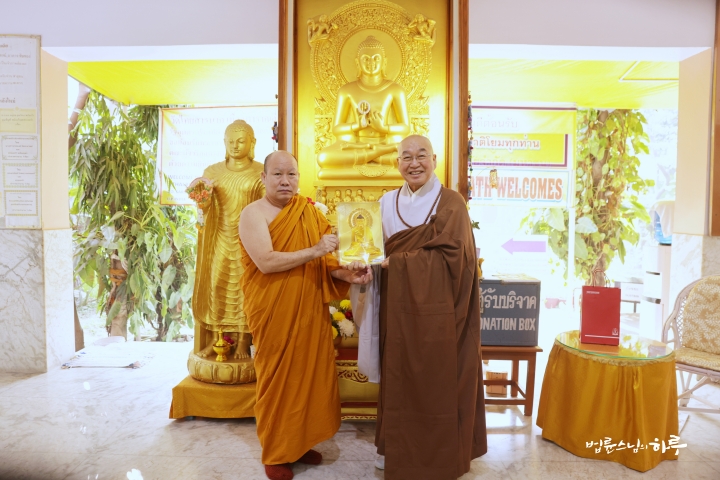
After completing his morning practice and meditation, Sunim had breakfast and at 9 AM, visited the abbot of the Thai temple who provides accommodation for pilgrims every year.
The abbot of the Thai temple welcomed Sunim with a bright expression and said to feel free to use the accommodation anytime. This time too, he provided lodging for the pilgrimage group to stay comfortably. Sunim offered ginseng tea and a donation to show gratitude, and the abbot presented several gifts including a statue of the Dharmachakra and an Ashoka pillar.
Pilgrims who arrived in Varanasi yesterday joined the ordination ceremony at Sarnath after visiting the Ganges River and the Eternal Light Stupa at dawn, while those who visited the Ganges yesterday rested at the lodging this morning before attending the ceremony.
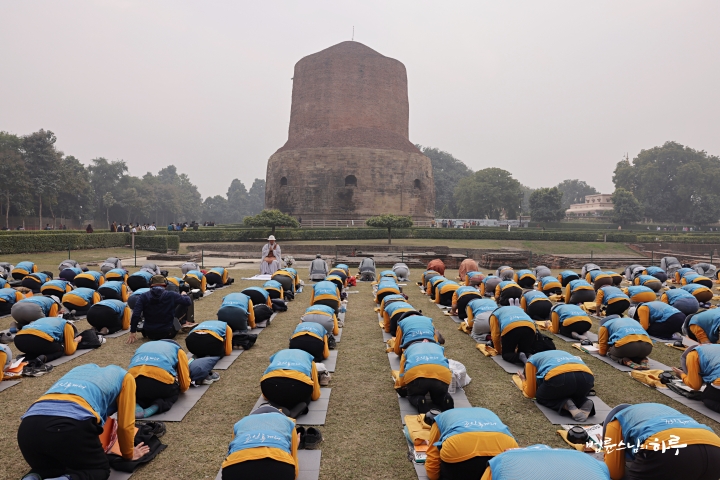
After visiting the Thai temple, Sunim went to Sarnath at 10 AM. The 400 pilgrims had already arrived and were seated neatly in front of the Dhamek Stupa.
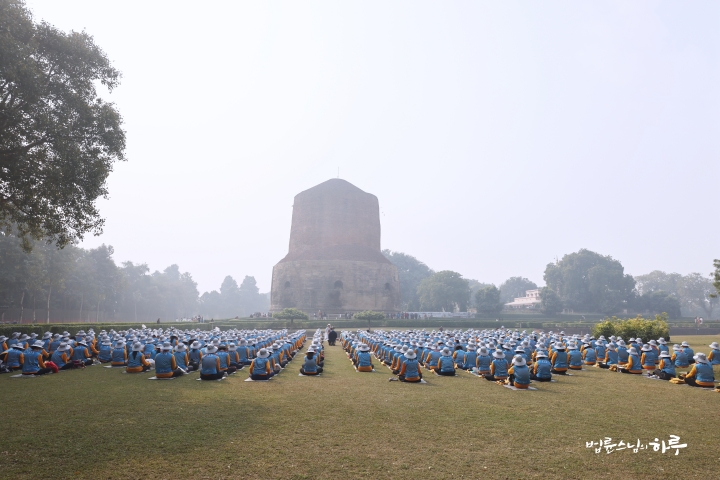
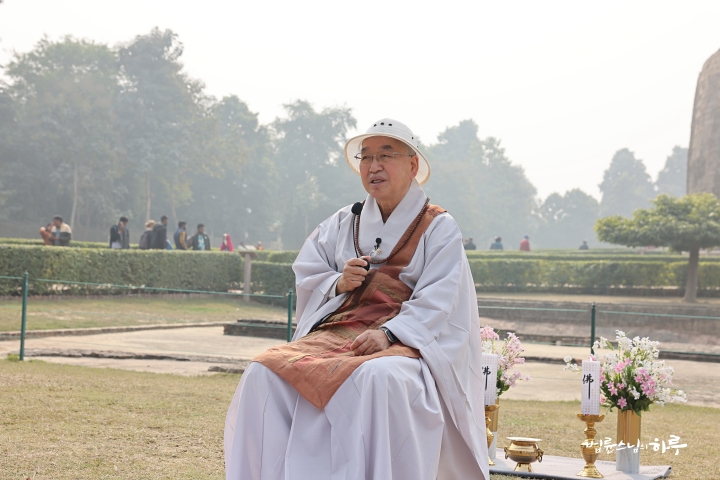
The group requested the Dharma from Sunim with three bows and entered into meditation. Sunim began explaining about the sacred site of Sarnath.
Beginning the Pilgrimage as Ordained Practitioners
Therefore, when making comparisons, we should always use the standard of ‘How was it for the Buddha at that time?’ when going on a pilgrimage. In Southern Buddhism, there are four things that one must promise when becoming an ordained practitioner. First, food must be obtained through alms. Second, one must wear the kayasa (Buddhist robe). In other words, one must wear discarded clothes. Third, one must sleep under a tree. Fourth, one must remain awake and mindful of oneself for 24 hours. If one feels capable of living like this, they promise to do so and become ordained. However, after ordination, the mindset at the time of making the promise often fades, and even after becoming ordained, we find ourselves complaining about food, clothing, and sleeping arrangements in our current reality. The reason we are having this ordination ceremony here today is to reaffirm our commitment to adopt the attitude of ordained practitioners for the next two weeks by receiving these four precepts I mentioned earlier. Even if we return the ordination and go back to our daily lives at the end of the pilgrimage, I hope that you could participate this pilgrimage with the mindset of ordained practitioners for the next two weeks. Let’s adopt the principle of ‘eating what we receive, wearing what we find, sleeping under trees, and always being awake and mindful of ourselves for 24 hours to maintain peace of mind.’ Pilgrimage is about observing ourselves falling short of this ideal, reflecting, awakening, and taking one step forward at a time.Why We Begin the Pilgrimage Here
Why do we start the pilgrimage in Sarnath instead of Lumbini or Bodhgaya? While starting from Sarnath is most efficient considering India’s current transportation conditions, this is not the main reason. It’s not accurate to say that the Buddha’s birthplace is Lumbini in Nepal. This is because when the Buddha was born, he was not yet a Buddha. The Buddha became a Buddha after attaining enlightenment. That’s why in Buddhism, Bodhgaya is considered the most sacred site.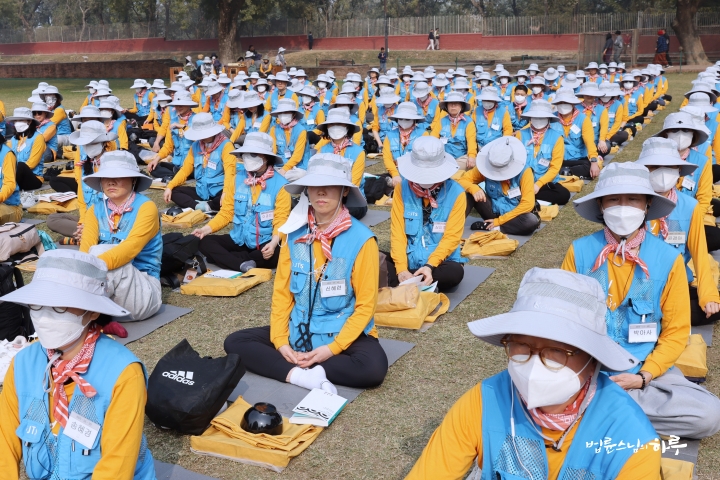
Now Go Forth and Spread the Dharma
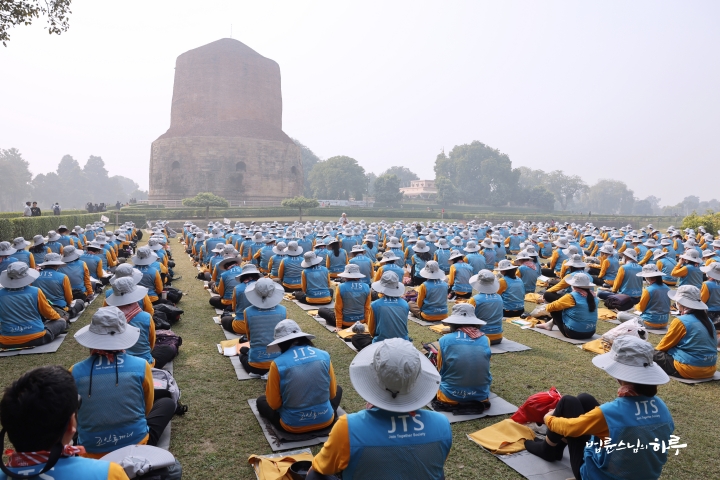
After the explanation of the sacred site, the pilgrimage group recited sutras.
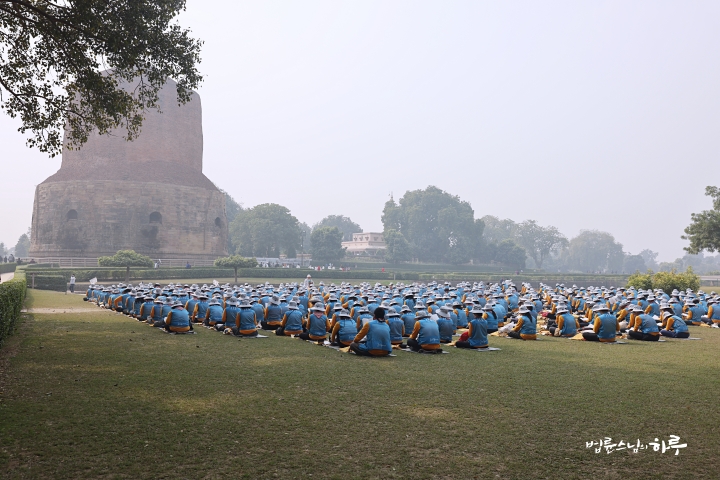
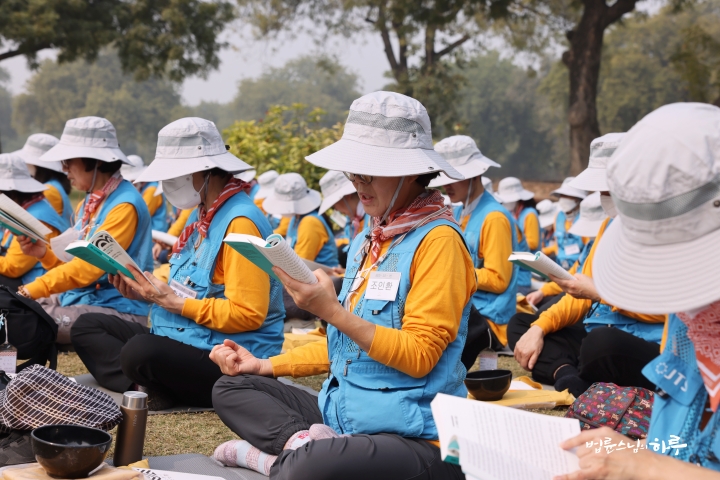
After reciting the sutras, Sunim and the pilgrimage group meditated briefly.
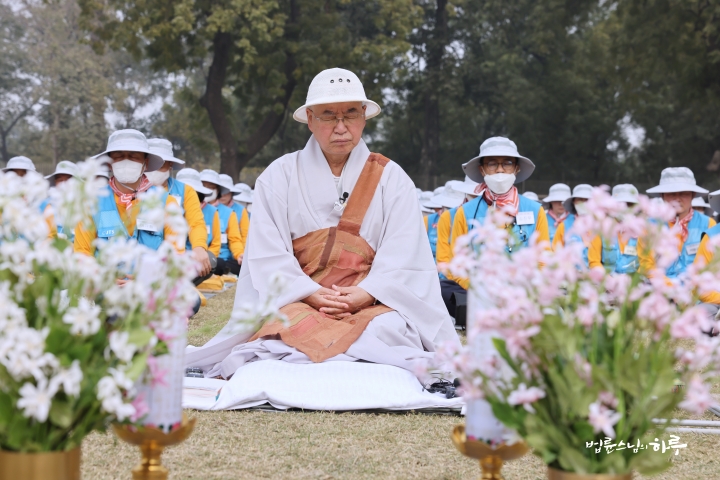
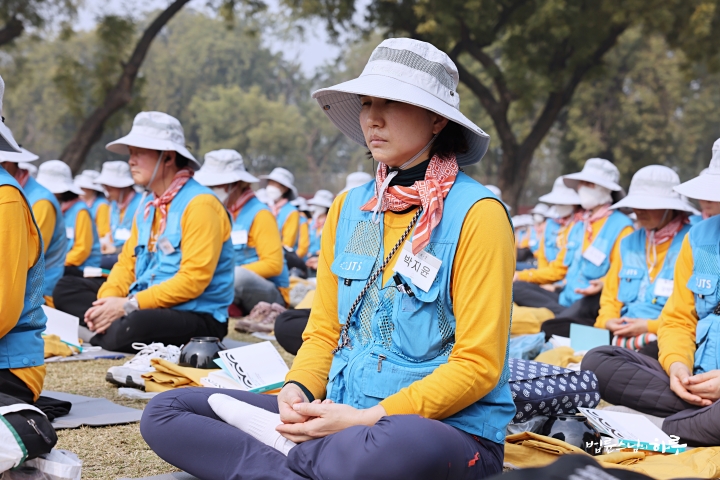
Then, the ordination ceremony was conducted. The pilgrimage group’s demeanor became solemn. They chanted to request Sunim as the ordination master and asked for the ordination. The pilgrims performed the hokye hapjang (a respectful gesture with palms together) and yeonbi (repentance for past wrongdoings).
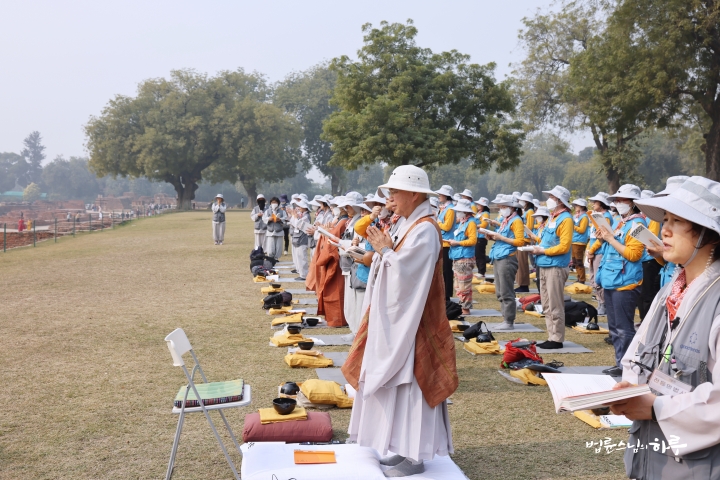
The group repented for the faults they had knowingly or unknowingly committed over the years. They placed their right thumb on their forehead and extended their left arm in the hokye hapjang gesture. As the group performed the hokye hapjang, the Dharma teachers lightly pressed the pilgrims’ forearms with the lit end of incense sticks, conducting the yeonbi ritual.
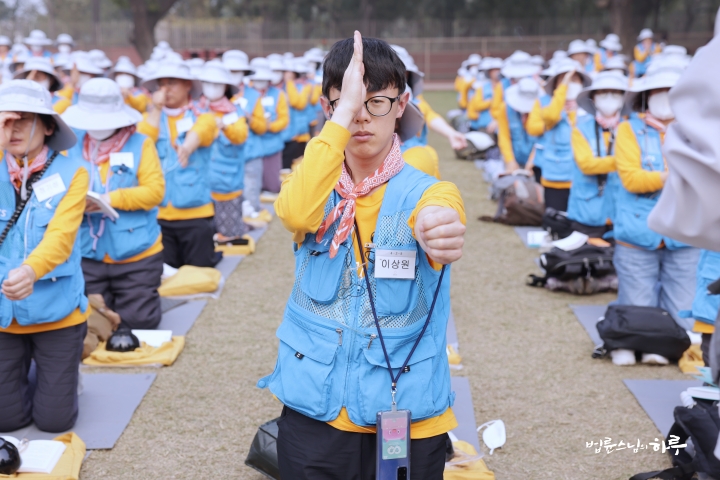
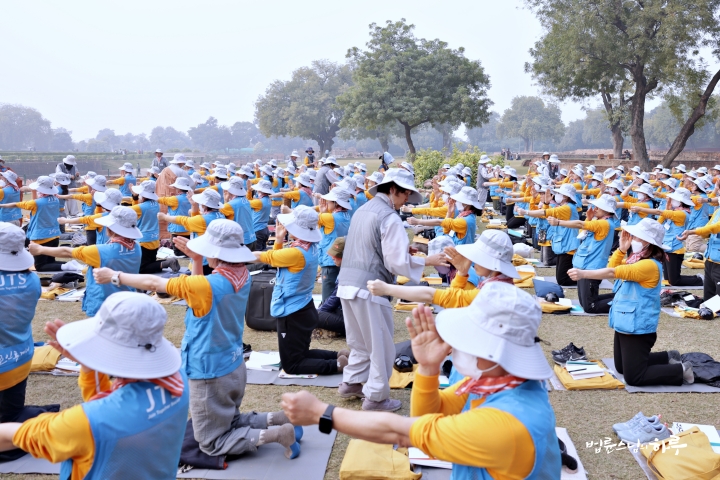
After repenting for their past and purifying their bodies and minds, the 400 pilgrims were fully prepared to receive the ordination by taking refuge in the Three Jewels once again. As the group performed three bows, Sunim explained each of the Five Precepts one by one and asked if they could keep them well. The group performed the hokye hapjang and received the ordination, saying, “We will keep them well.”
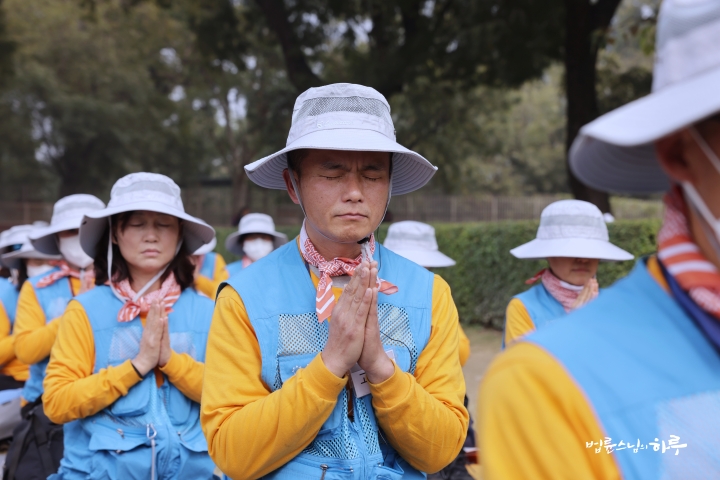
Then, Sunim’s vow followed.
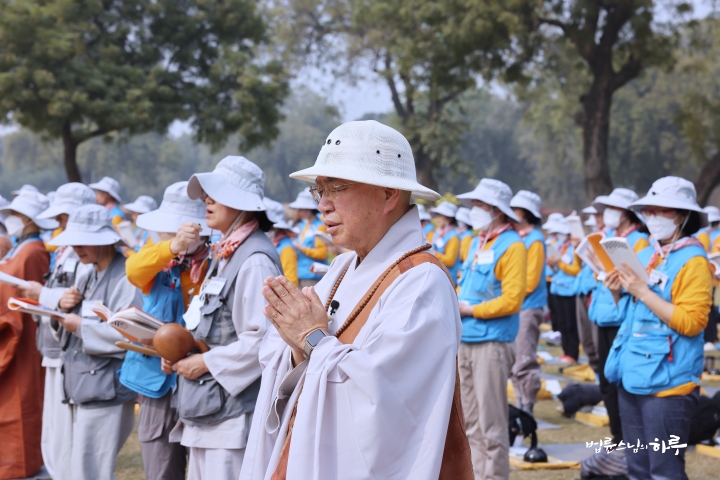
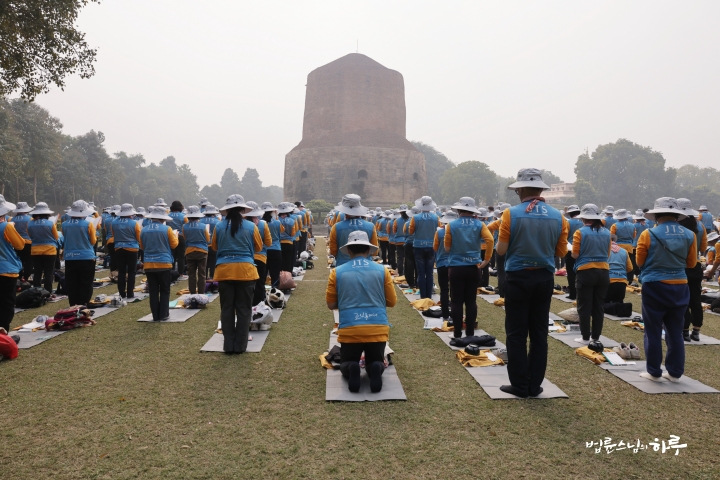
Following this, the ceremony for bestowing the kayasa (Buddhist robe) and alms bowl took place. Sunim first explained the significance of presenting the kayasa and alms bowl, then handed them over to the 500 members of the assembly.
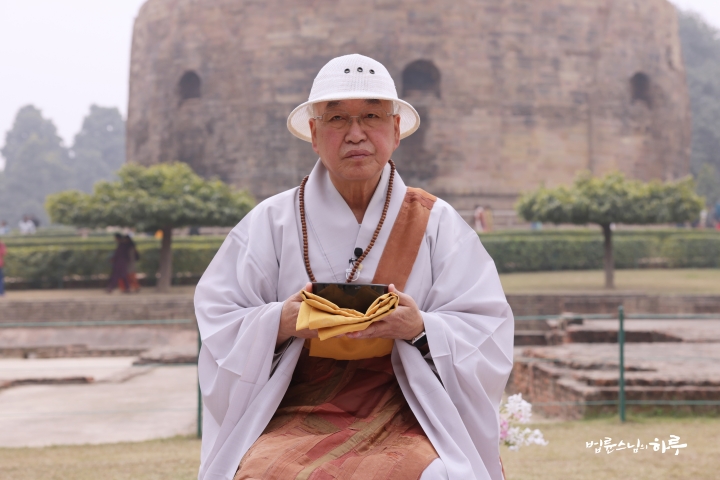
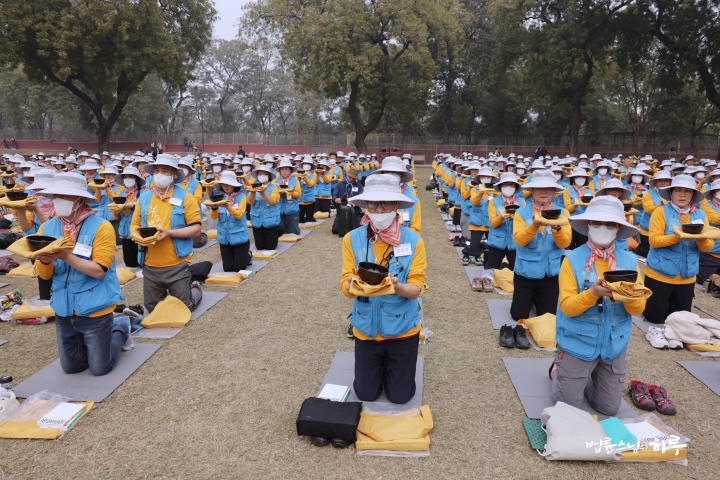
“We have received them well.”
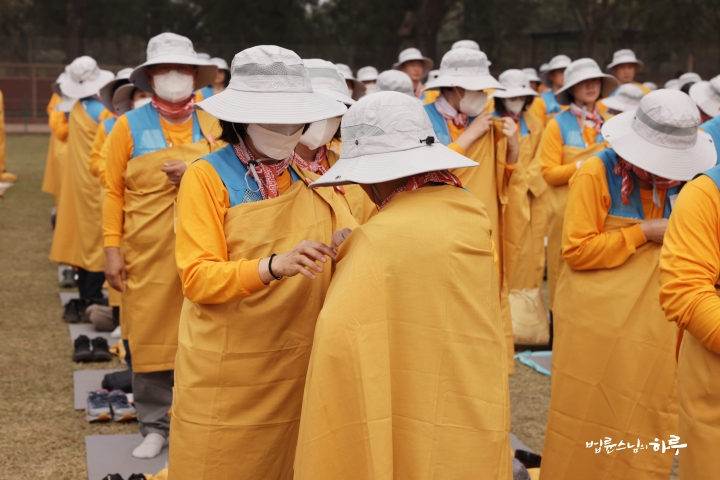
As 400 pilgrims received their kayasa, a sea of yellow >> yellow waves instantly filled the Deer Park in Sarnath.
The scene was so solemn that even passing foreigners stopped in their tracks.
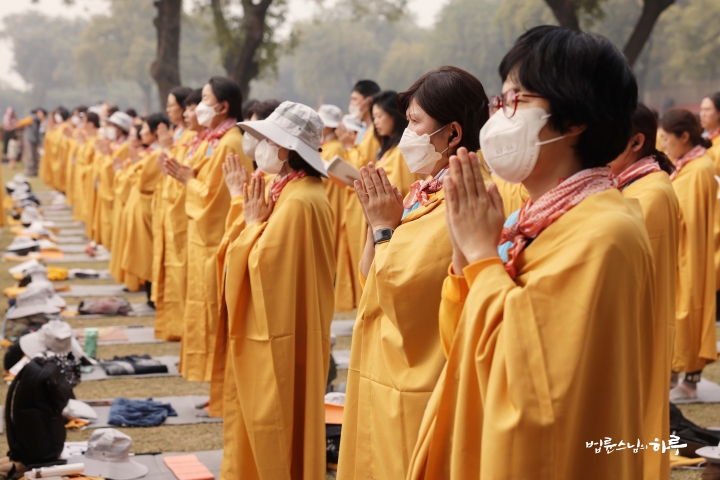
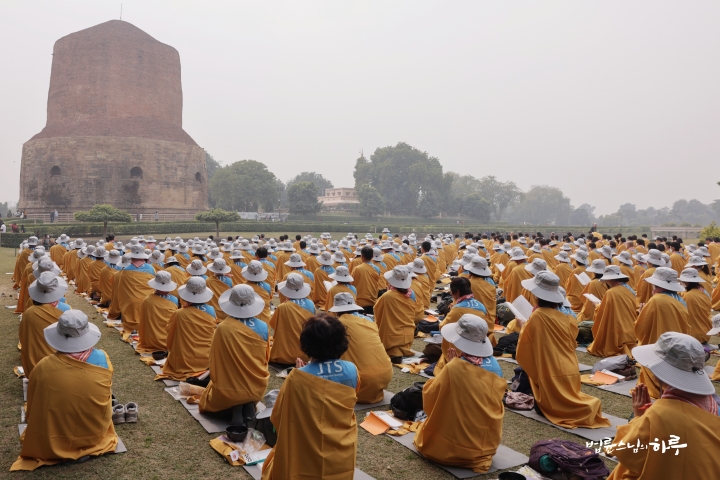
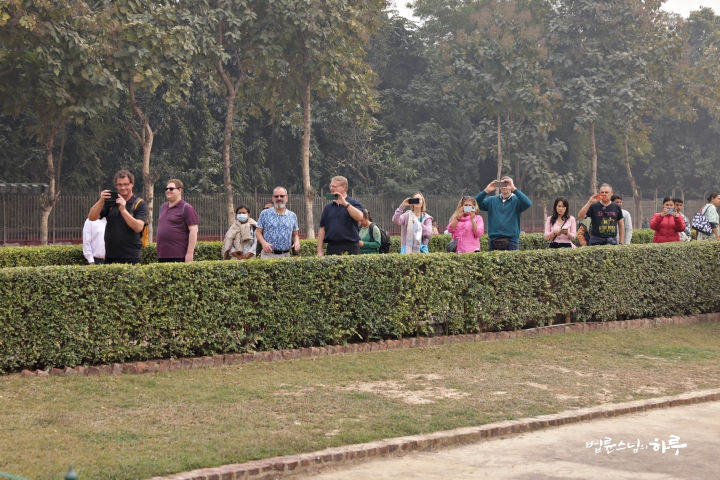
After receiving their precepts and kayasa, the pilgrims offered their respects towards the Dhamek Stupa.
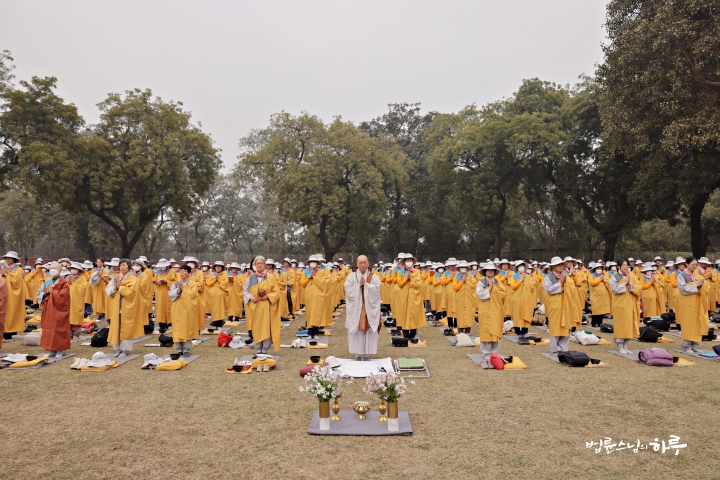
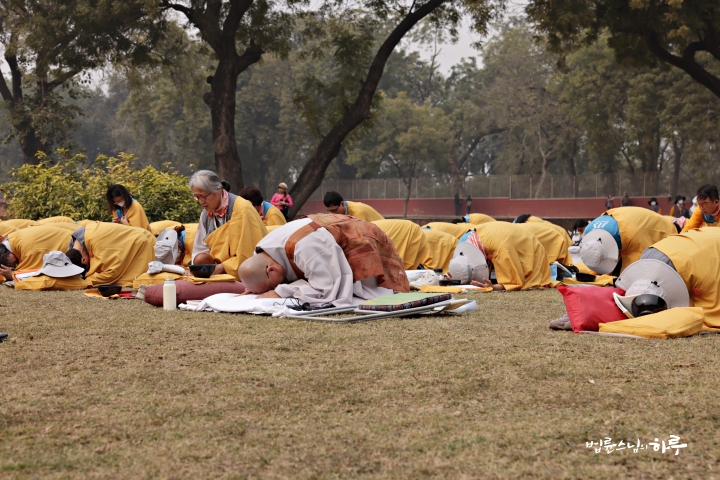
Some people seemed to find it challenging to sit for long periods, as they were not accustomed to it. However, the pilgrims offering their respects did not show any signs of discomfort or difficulty, instead focusing entirely on the present moment.
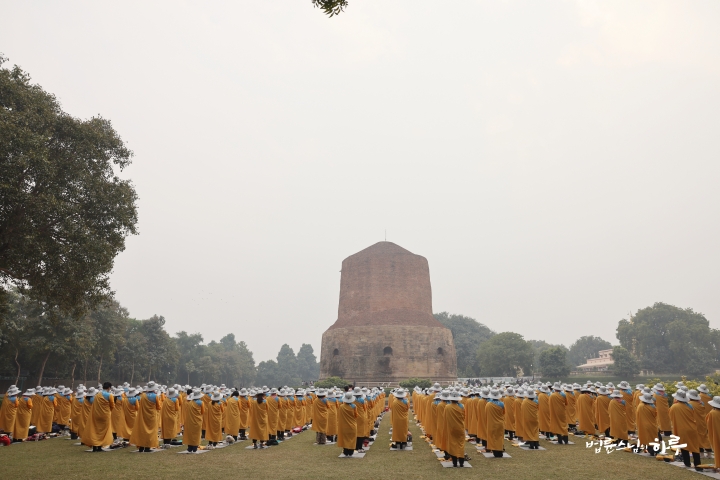
Sunim gave another Dharma talk to the monastic practitioners.
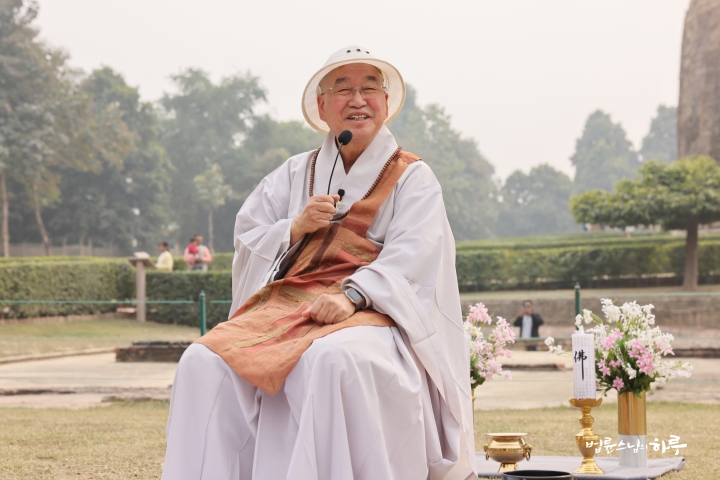
Buddhism Should Be Practiced, Not Just Believed or Known
However, as time passed, many people became monastics without hearing the Dharma or gaining the eye of wisdom. As a result, some monastics behaved in ways that were difficult for even ordinary people to understand. They would hit others, take things without permission, return home to sleep with their wives after becoming monastics, lie, and become intoxicated. This led to the creation of precepts. Originally, in the early days of the Buddha’s time, there were no precepts. Those who had given up high positions were unlikely to hit or deceive others, or use abusive language. Those who had renounced great wealth and became monastics had no reason to covet others’ possessions. Those who had left their wives behind to become monastics had no interest in other women. Those who had given up everything had no reason to drink alcohol to the point of intoxication and cause trouble. Therefore, there was no need for the Five Precepts at all.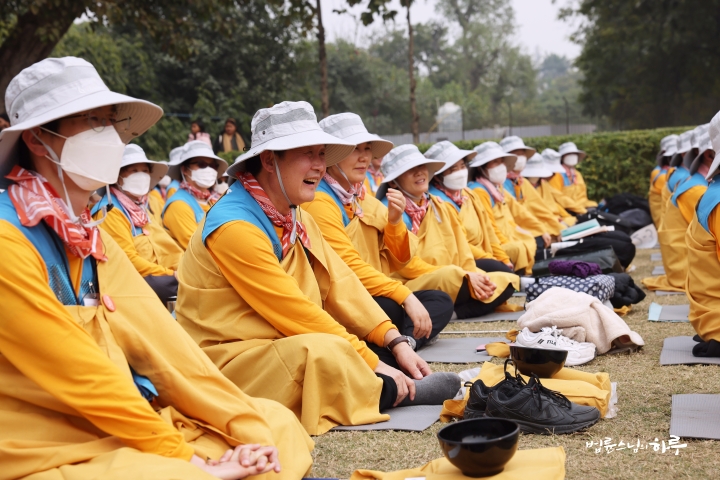
Why the Buddha’s Teachings Spread Widely
The Buddha was not part of the mainstream in society at that time, but rather on the fringes. The reason why the Buddha, who was on the fringes, was able to start Buddhism and create a new movement in traditional Indian society was because the Buddha and his disciples set an example by living according to at least the minimum precepts. By never harming others, never causing damage to others, and never disturbing others, they earned praise from everyone who saw them as “truly good people.” That’s why even though they wore tattered clothes, begged for food, and slept under trees, no one looked down on them or treated them as insignificant. The reasons why the Buddha’s teachings spread widely are: First, the practitioners were people who could be trusted personally. Second, since they begged for food, wore discarded clothes, and slept under trees, it didn’t matter how many monastic practitioners there were. Today’s Buddhism has limitations because it cannot provide the material support needed if there are too many practitioners, like building houses and preparing meals. But in the Buddha’s time, they started out this way from the beginning, so whether a thousand or ten thousand people became monastics, there was no need for material support. That’s how Buddhism was able to spread so rapidly. Instead, the biggest hurdle was that it wasn’t easy to leave home to attain enlightenment. However, once one left home, the Buddha’s teachings opened their eyes, so they were not at all constrained by clothing, food, or sleeping arrangements. Saying that the number of Buddhist believers should increase, that temple assets should increase, or that there should be a rapid increase in high-status people among Buddhist believers – these are all statements from a worldly perspective. If we want to purify the secular world while keeping the Buddhist teachings, we need to become people who are trusted by those around us, even if we don’t have status, wealth, or extensive knowledge. We need to set an example to the point where people say, “That person is really trustworthy.” What’s important is not saying “Don’t get married,” “Live alone,” or “Don’t eat meat,” but gaining people’s trust. To gain people’s trust, we must not harm others, cause damage to others, or disturb others. If we at least don’t harm others and provide even a little benefit, we will naturally gain trust. While we shouldn’t overemphasize formal precepts, without precepts, how can we gain people’s trust?How to Gain People’s Trust
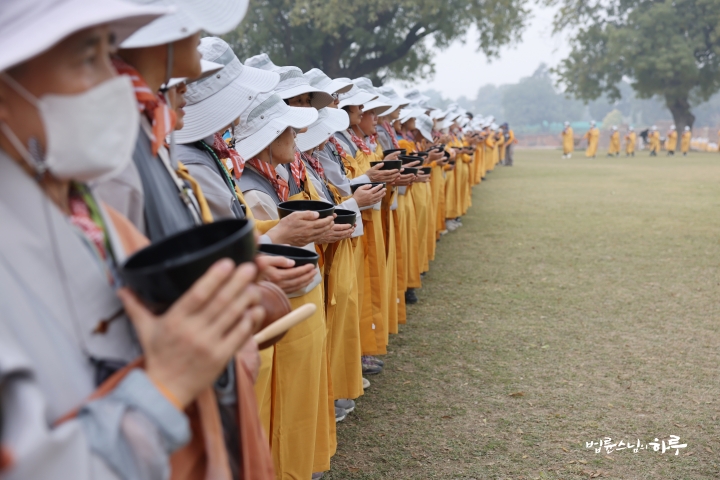
That’s why keeping the precepts is most important during the two weeks of pilgrimage. This doesn’t mean that how many prostrations you do at holy sites or how much knowledge you have about the sites is unnecessary. But if you go to bow at the great stupa when it’s time to cook meals and you’re on meal duty, it will be difficult to gain people’s trust. You should at least do your share, if not more. If there are things to carry, carry them together; if there’s cleaning to do, clean together. You should at least have the perspective that you want to be someone who benefits others rather than someone who only receives benefits – that’s how trust develops between fellow practitioners. Trust doesn’t come from knowing a lot. When you share a room, people trust those who keep things tidy more than those who leave things messy. It’s even better if you become someone who cleans up after others. Trust between people doesn’t come from formal precepts like whether you eat meat or not, but from practical actions. We need to act and speak properly to be able to trust and live with each other. The greatness of Buddhism lies in the basic attitude of the early practitioners being simple, humble, and dignified. I hope we can all remember this point again today at the site of the first turning of the Dharma wheel.The pilgrimage group offered three full prostrations with the heart of spreading the Dharma to those who are suffering, and concluded today’s visit to Sarnath, the site of the first turning of the Dharma wheel, with the Four Great Vows. The group began circumambulating the stupa, holding their alms bowls and reflecting on the Buddha’s spirit. The sound of chanting “Namo Shakyamuni Buddha” gradually filled the air.
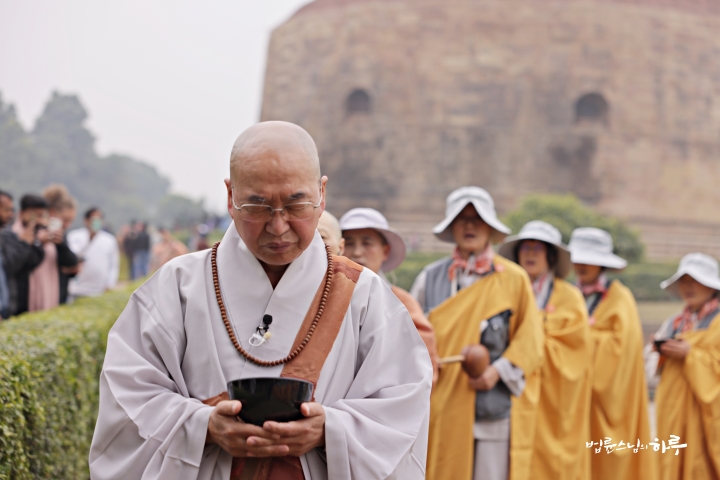
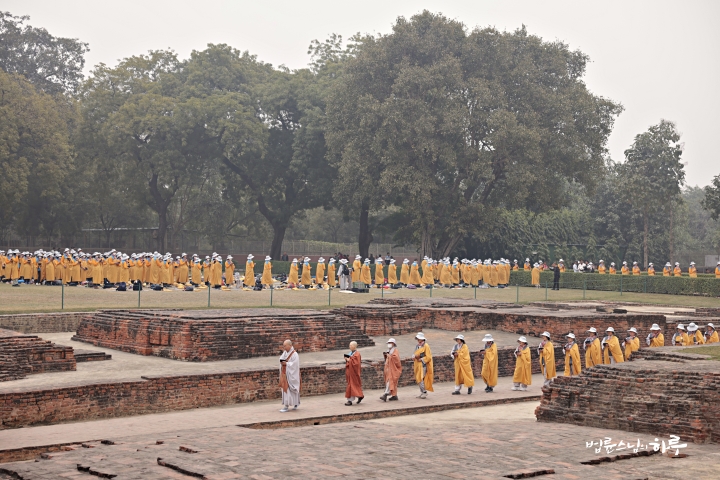
A majestic procession of about 400 people followed behind Sunim. With each step, the flowing of the yellow robes looked like a great wave.
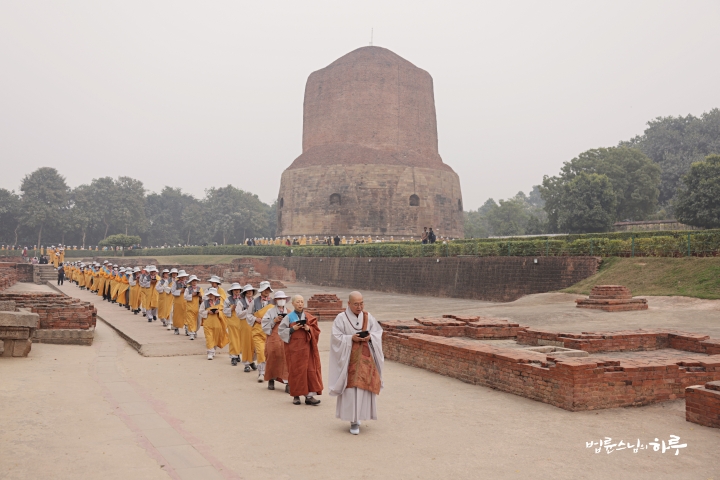
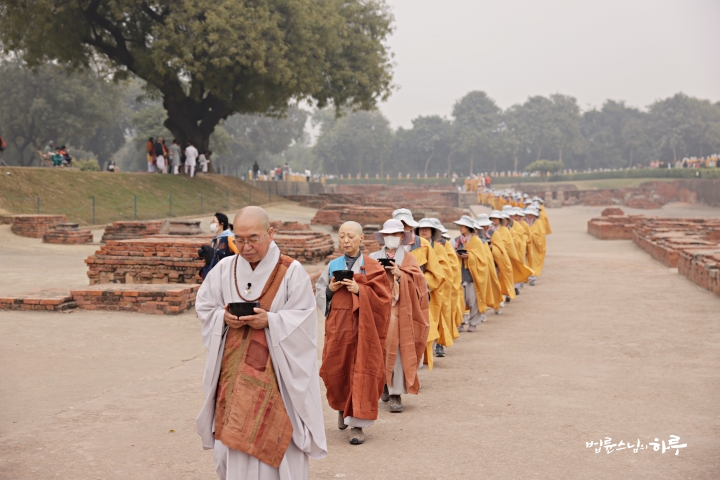
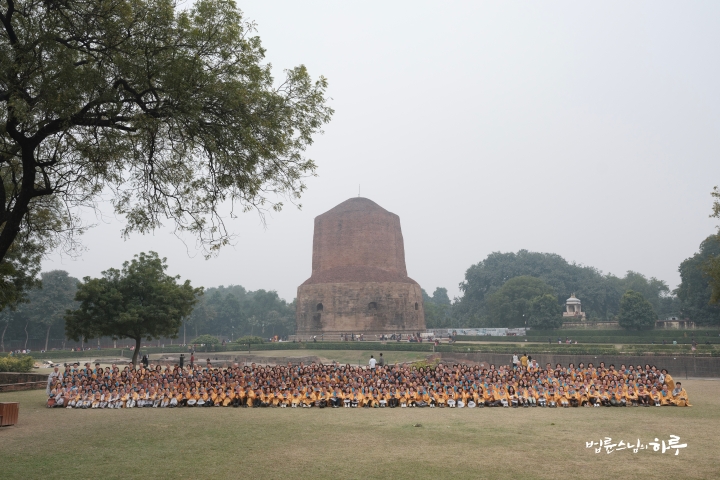
After completing the circumambulation, the pilgrims stood in front of the great stupa with the Dhamek Stupa in the background.
The 400 participants of the 34th pilgrimage took a group photo and successfully completed the 4-hour visit to Sarnath.
After the precept ceremony, Sunim went to the Sarnath Museum. Since the pilgrims who arrived yesterday afternoon couldn’t visit the museum, they decided to visit today. Sunim explained the background knowledge necessary for viewing the artifacts.
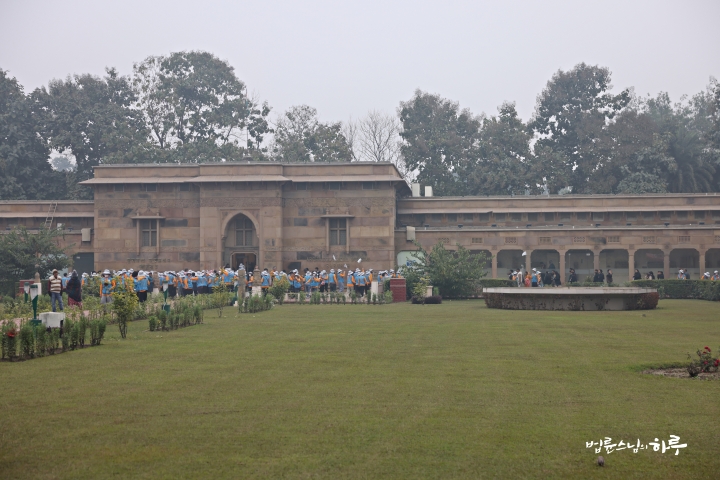
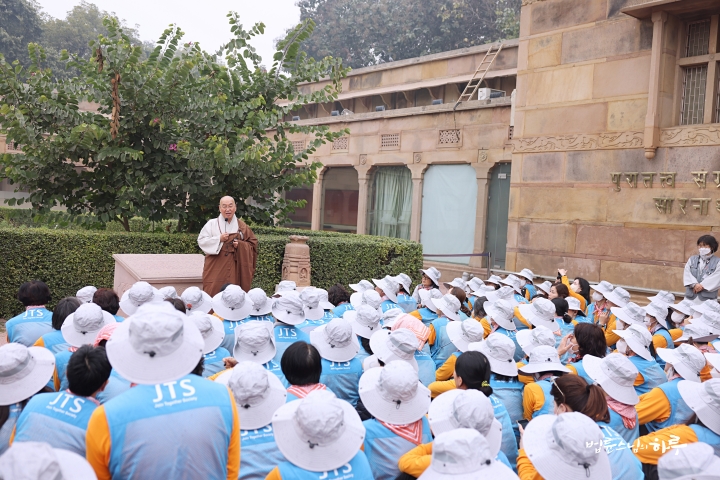
After finishing the explanation, they moved to the Thai Temple.
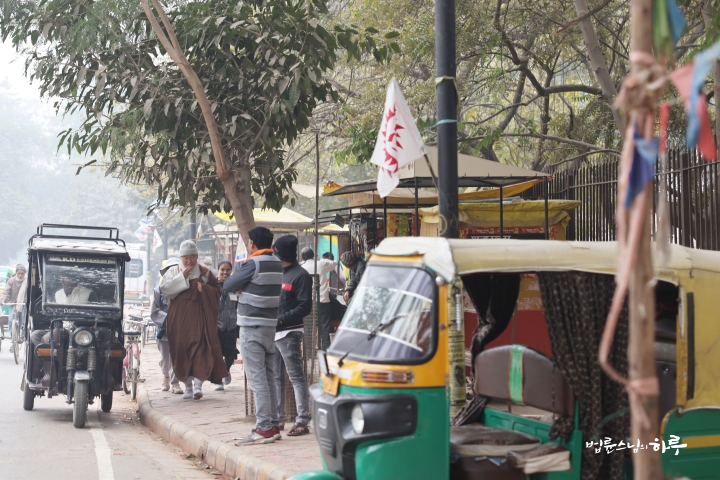
This temple has been providing accommodation for the pilgrimage group for the past two years. The abbot of the Thai Temple requested to have a conversation with Sunim, so he visited in person.
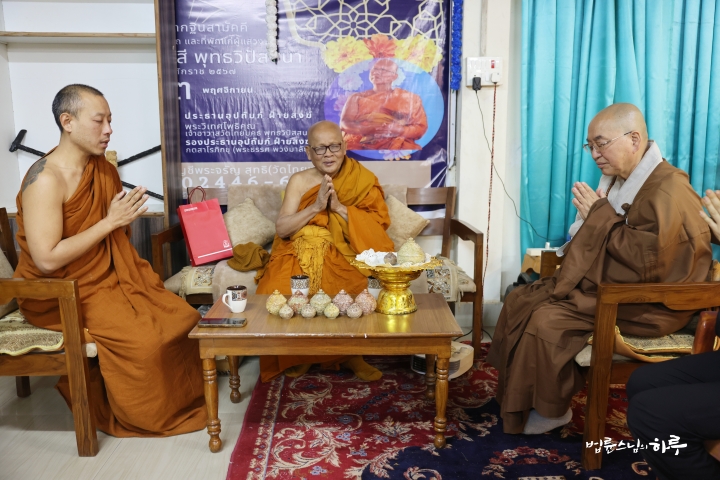
“Welcome, Sunim.”
“Hello. I came to greet you last year as well. Do you remember?”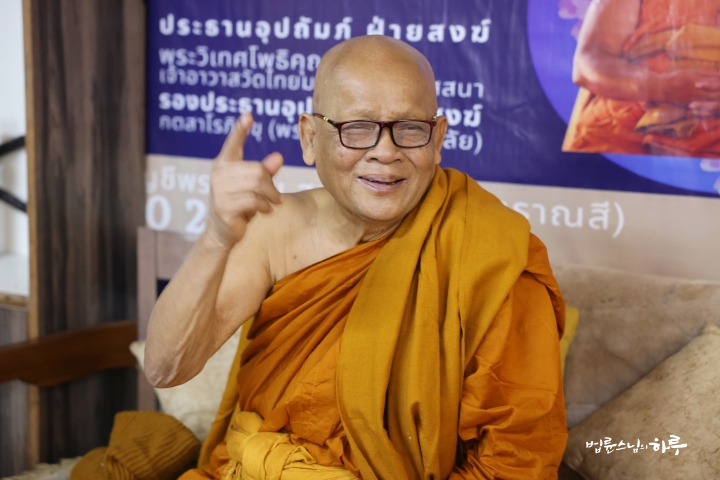
“Of course. Last year, 500 pilgrims came, right?”
“That’s correct.”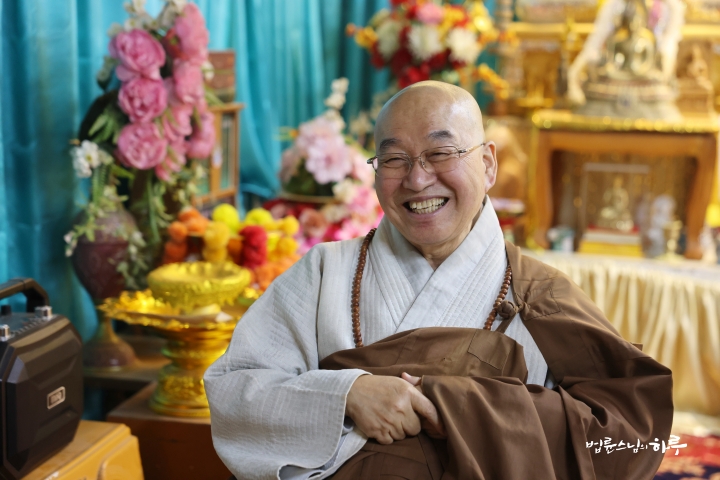
“I wanted to meet you to give you a precious gift.”
The abbot presented a finely carved stone stupa as a gift. Sunim also expressed his gratitude by giving ginseng tea as a gift.
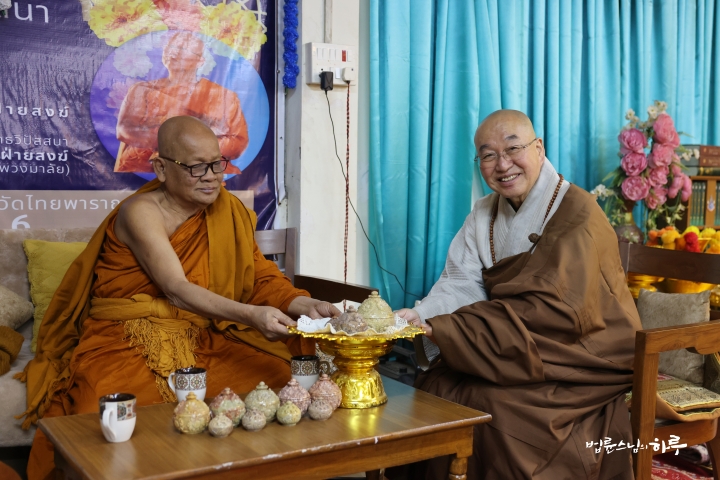
They continued their conversation. The abbot showed great interest in Sunim’s activities, such as the Sujata Academy in Bodhgaya and the ongoing sustainable development project in Bhutan, asking various questions. After an hour, Sunim concluded the conversation and stood up.
“Sunim, please contact me when you come to Bodhgaya later. The opening ceremony for Sujata Academy is on January 15th. If you have time, please attend.”“I understand. I’ll contact you when I go to Bodhgaya. But Sunim, since you travel around the world for your activities, you probably can’t stay in India for long, right? (laughs)”
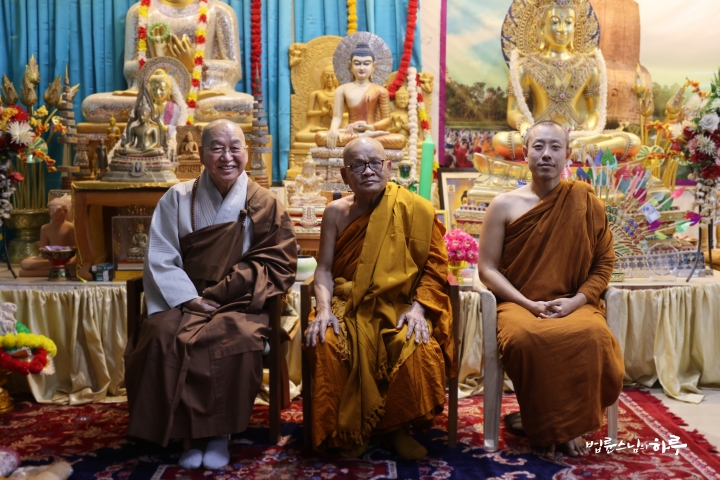
After leaving the Thai Temple, they arrived at their accommodation at 5 PM. Sunim held a meeting with the Dharma teachers to review the progress of the pilgrimage and check tomorrow’s schedule.
Tomorrow, they plan to wake up at 3:40 AM and depart for Sujata Academy at 4:30 AM.