How Should We View Growing Conflicts?
Jan 05, 2025 - Day 13 of Bhutan Survey_Buli Lake, Kikhar Chiwog Survey, Meeting with Zhemgang District Officials
Hello. This is day 13 of the Bhutan visit. Today, after visiting a lake (Buli Tasho) considered sacred by the residents of Buli area, Sunim had conversations with residents of Kikhar Chiwog in Nangkor Gewog, the last survey site in Zhemgang District. He then concluded the Zhemgang District survey through meetings with the Zhemgang District Governor and department heads.
Sunim began his day by attending the Jungto Dharma School graduation ceremony online at 5 AM, which was organized by the International Division.
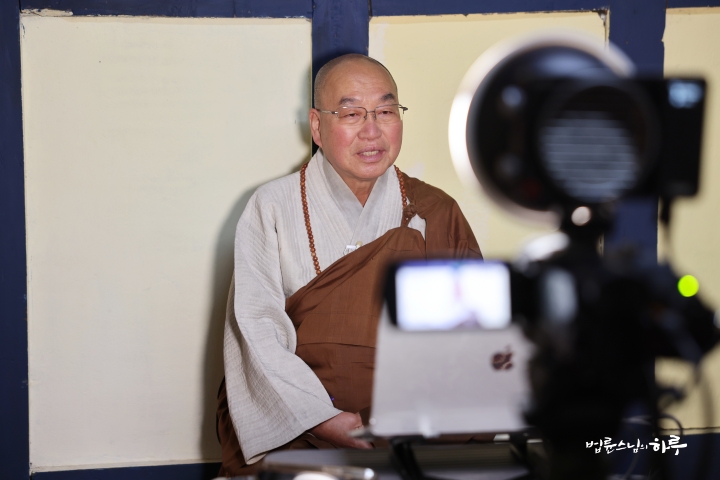
The Jungto Dharma School is an English-language course equivalent to the Jungto Buddhism Course. Eleven students from the Western U.S., Eastern U.S., and Korea attended the graduation ceremony. First, the Jungto Dharma School students presented their graduation reflections. Three students shared their experiences of how their daily lives had changed after taking classes and practicing.
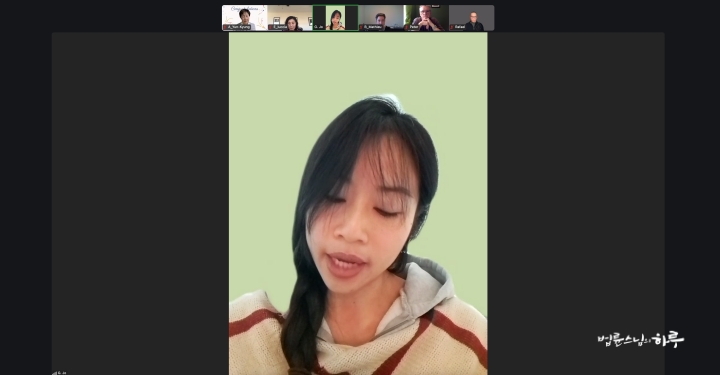
“Meeting with the group weekly was a very therapeutic and pleasant time for me. It was also my weekly reset moment as a practitioner. These weekly meetings have gradually transformed me from a self-centered and brutally competitive and jealous creature into a competent and compassionate person. I would like to show my gratitude to all the volunteers for your selfless devotion. You are the Bodhisattva. Thank you all.”
“It was actually the hurt of grief that brought me to the classes. Actually, when pain is met with Dharma, a kind of healing begins. When I first learned about the Buddha as a human being and read accounts of his doubts, his imperfections actually disappointed me a little. I expected him to be very perfect and as close to divine as possible. But as I was doing the dishes one day, I actually realized that because he was imperfect, just like any of us, anyone we love, it’s okay to be flawed and then learn and then grow and move on. I learned that karma is not a heavy beast that watches over you. It’s about shaping your mental defilements and learning to pick apart your bad habits. But I also learned through my own karma, and then I started to appreciate learning from being flawed.”
“It’s certainly helping me to overcome a lot of difficulties both big and small. I’m looking forward to continuing this practice after this. A really big thank you to everyone who’s helped prepare this course. I know it’s a huge amount of work, especially to extend this to English learners. Very appreciative of all of the work that has gone into this.”
All the other students expressed their agreement with loud applause.
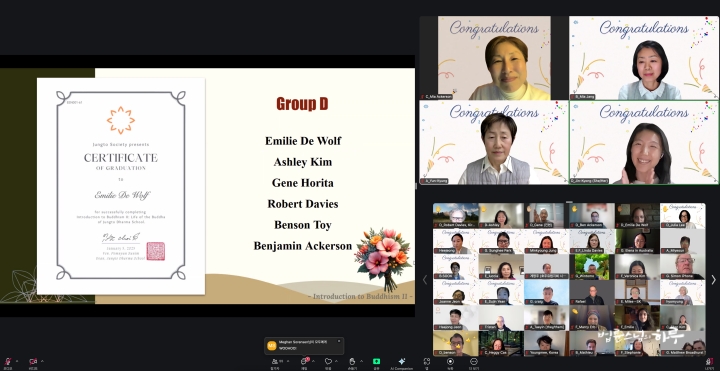
Next, diplomas were awarded. Each name was called out and the diploma was presented online. Everyone congratulated with loud applause.
Next, Sunim gave a commemorative Dharma talk for the graduates. Although the internet connection was repeatedly interrupted, forcing him to pause the talk several times, Sunim delivered the entire talk with affection for the graduates.
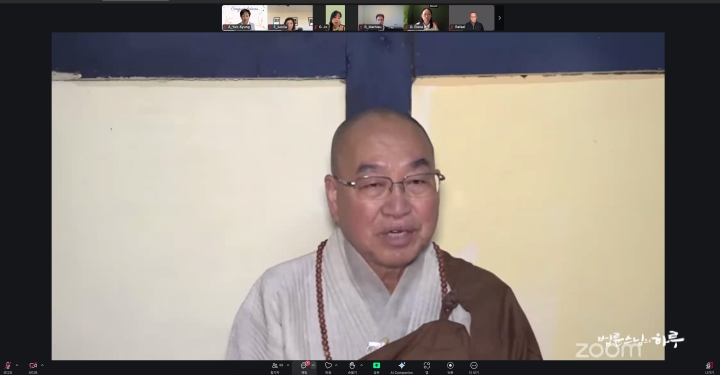
After sharing the situation of his Bhutan survey, Sunim talked about what attitude the students should have in life as they graduate.
“When we believe in Buddhism or study it philosophically, it’s very difficult to understand its social or historical aspects. However, since the Buddha lived in the world for 45 years after attaining enlightenment, studying his life allows us to understand the social conditions and historical context of his time. That’s why studying the life of the Buddha is considered very important in the Jungto Dharma School.Why Should We Study the Life of the Buddha?
The 1980s in Korea was an era of active democratization movements. At that time, Korean Buddhism was not involved at all in social democratization or the suffering of workers or farmers, and was mainly favorable to the dictatorial government. Although I believed in Buddhism and liked Buddhist philosophy, I was very disappointed that Buddhism ignored the suffering of the masses and was indifferent to social issues, to the point where I considered quitting Buddhist activities. However, my affection for Buddhism, which I had believed in and studied for the past 10 years, was too great to give up. Because of this regret, I began to study the life of the Buddha anew, wondering, ‘What was the Buddha like?’ Instead of believing in the Buddha like a god or studying him philosophically, I studied how he lived day by day, and as a result I was able to see that the Buddha responded to many problems occurring in society one by one. For example, there was an incident where a mother who couldn’t bear the grief of her child’s sudden death came to the Buddha and begged him to bring her child back to life. There was also a grandmother who came to the Buddha, unable to bear the grief of her granddaughter’s death. There were also many groups who criticized the Buddha. After hearing the Buddha’s teachings, husbands or young men would become monks, and people from other practice groups would become the Buddha’s disciples. Other religions or practice groups were very jealous and envious of the Buddha’s popularity. So they made up songs of criticism, saying, ‘Yesterday he took someone’s son, today he’s taking someone’s husband, who’s disciple will he take tomorrow?’ and had children sing them. They also had a woman spread rumors that she was pregnant with the Buddha’s child. When the Buddha’s father’s clan and mother’s clan were about to go to war over a river, he went directly to the scene to stop the war. And many people from other religions or practice groups came to the Buddha to request debates about the truth. There were many social problems like this, just like in today’s world. The Buddha taught people to keep their minds peaceful while resolving conflicts in the world peacefully. At that time, slave classes and women had an owner and couldn’t decide over their own lives. However, the Buddha made a big decision to allow these slave classes and women to become monks, making them masters of their own lives rather than slaves to anyone. It can be said that he advocated and realized equality for all people 2,600 years ago. These aspects cannot be known from the perspective of believing in the Buddha. And when studying Buddhism philosophically, these issues are not even raised as a problem. However, much of the world’s Buddhism today mostly thinks of Buddhism as Buddhist belief or study of Buddhist philosophy. That’s why Buddhism has become very passive about the suffering and conflicts that many people in society experience.How Should We View Growing Conflicts?
By studying the life of the Buddha, we can regain the social and historical aspects that were lost in Buddhism. Of course, what’s important is not that Buddha did so in the past. What’s important is to learn lessons about ‘what perspective should we have on various problems in society today.’ The world is now facing a climate crisis due to excessive consumption by humans. Conflicts are growing in many places, leading to wars. There are still places where people are starving or unable to receive treatment when sick due to absolute poverty. There are many cases where children can’t even attend elementary school properly and remain illiterate. There are various issues such as homosexuality, discrimination against the disabled, racial conflicts, and religious conflicts. Issues like life-sustaining treatment, abortion, and suicide are also being debated now. We need to learn what solutions Buddhism has for these problems. Especially with the development of artificial intelligence, we are in a situation where it’s difficult to predict how our lives will change in the future. This doesn’t mean that someone will provide alternatives, but that we need to find solutions or clues to these problems from the Buddha’s teachings. The biggest characteristics of Buddhism are, first, the ‘interdependent worldview’ that everything in this world is interconnected, and second, the ‘practice of the middle way’ that doesn’t lean towards any extreme. The Buddha took this stance at that time. However, it’s our problem to determine what stance we will take on various social issues that have arisen for us today. You are graduating from the Jungto Dharma School after studying the fundamental ideas of Buddhism and the life of the Buddha. After graduation, you need to solve two tasks. First, ‘How will I maintain my peace of mind in this complex world?’ Second, ‘How can we peacefully solve various problems present in the society we live in?’ You need to find these two issues on your own, and also find these issues together by discussion. Until now, we were learning what Buddhism is and how the Buddha lived, but from now on, you need to work together to solve tasks such as how you will live your life and how to solve many problems present in the world. I hope that even after graduation, you will become friends of the Dharma, making our lives happier and more peaceful.”The graduation ceremony concluded with everyone reciting the Four Great Vows together. After finishing the broadcast, Sunim had breakfast and thanked the guesthouse owner who had provided accommodation and meals for two days.
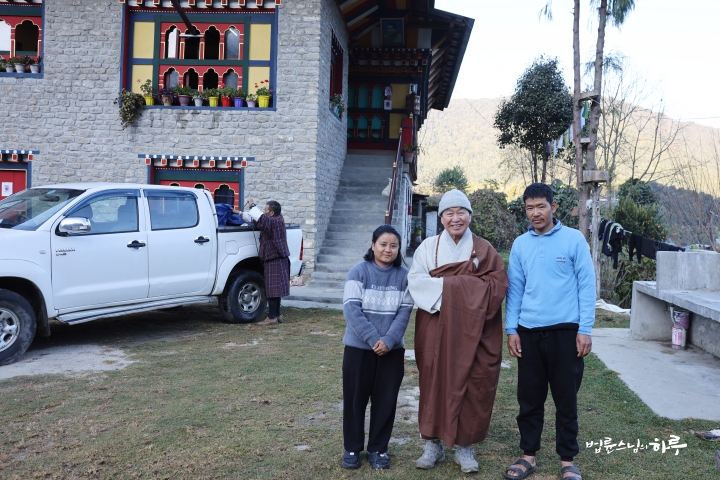
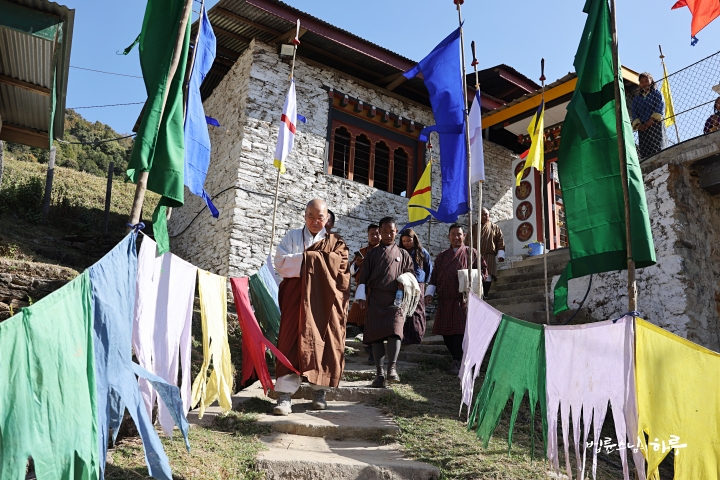
Today’s survey began with a visit to a lake considered sacred by the residents of Buli area. Buli Lake is a place where people pray to cure diseases or ward off bad luck, and the residents believe that a dragon protects this lake. This place is also known as a sacred site visited by saints of various Tibetan Buddhist sects for blessings.
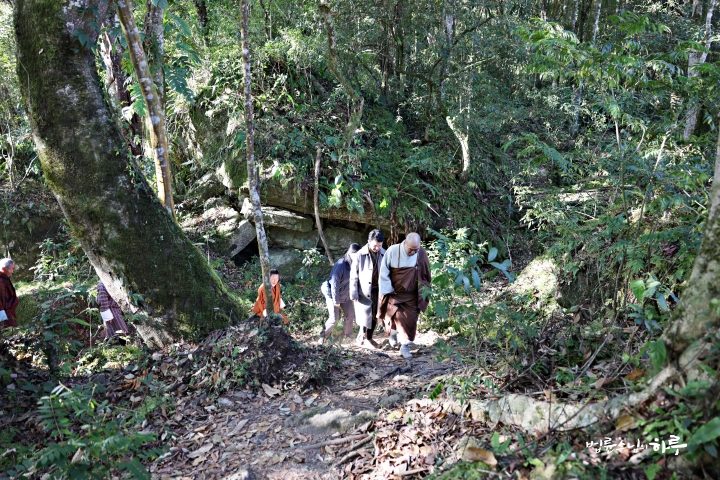
Departing at 8 AM, after about a 10-minute drive, a small gate leading to the forest appeared. The group got out of the car and walked along the forest path towards the lake. The guide managing the lake led the way, burning incense.
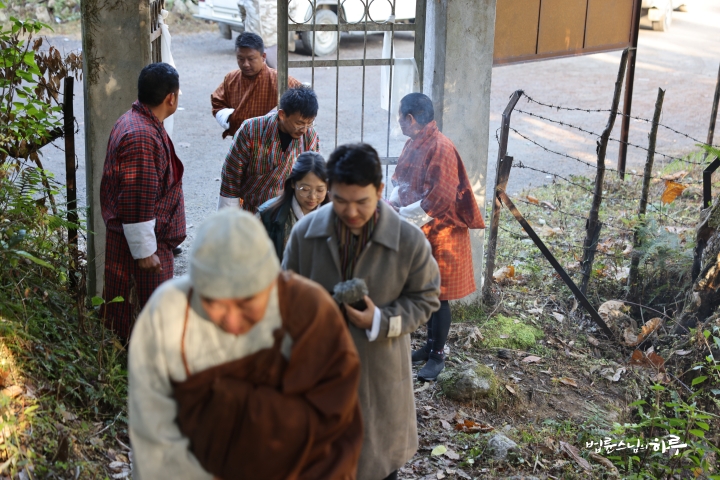
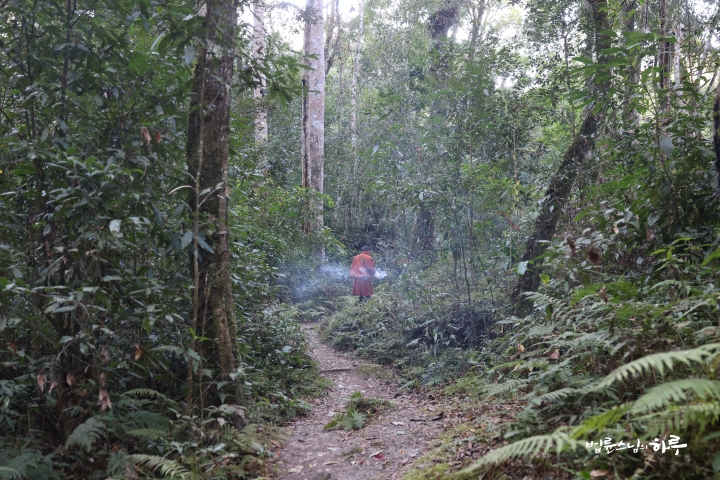
“There are many legends and anecdotes about Buli Tsho, and it’s said that two dragons protect this lake. In the morning, the dragon transforms into a bird and cleans the lake. (Laughs) They say it usually cleans until 11 AM, but I’m not sure if we’ll be able to see it today. (Laughs)”
Rinchen explained to the group as they walked along the forest path.
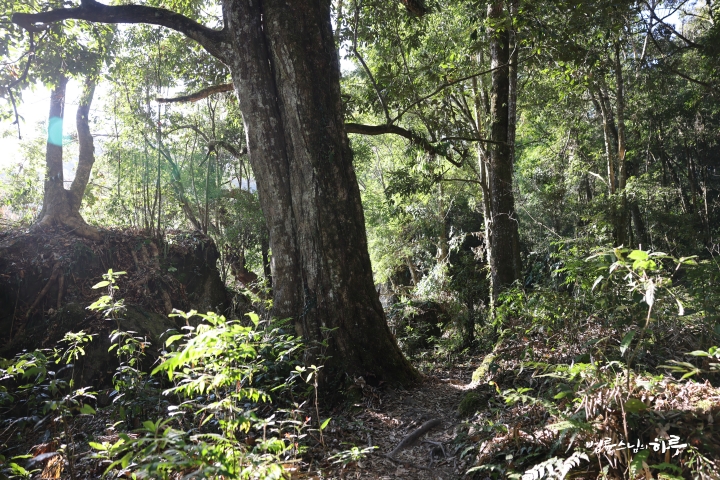
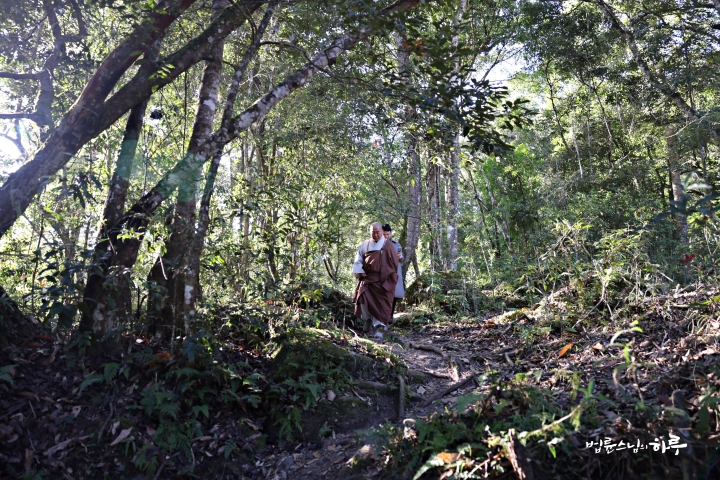
The forest path was incredibly beautiful, with morning sunlight filtering through the old trees in the forest and clear birdsong harmonizing.
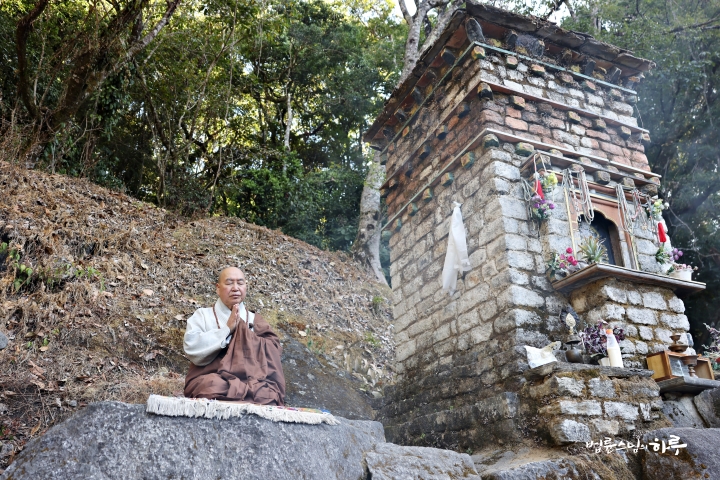
After walking along the forest path for about 10 minutes, a small prayer space appeared. Sunim lit candles and offered milk in the prayer space. The milk is said to be an offering to the dragon protecting the lake.
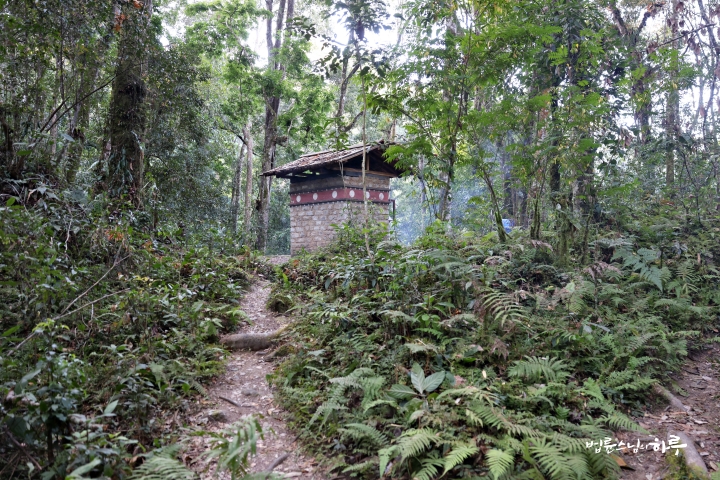
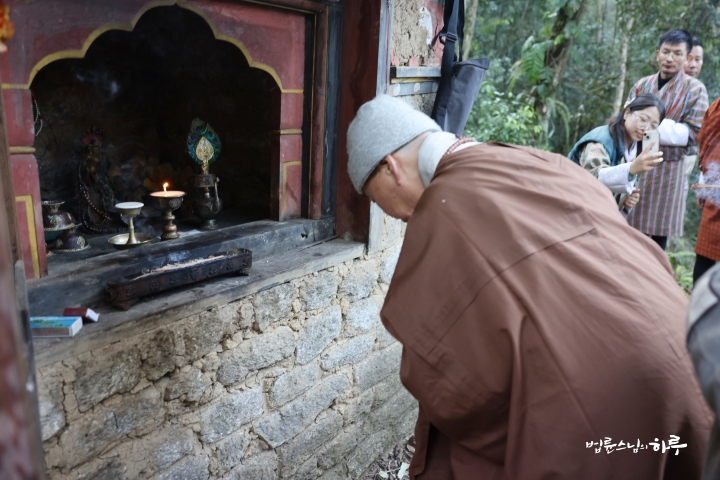
After finishing the prayer, a large lake unfolded before their eyes. The lake, without a single ripple, was as clear and clean as glass. The surrounding trees and sky were reflected on the lake surface like a decalcomania.
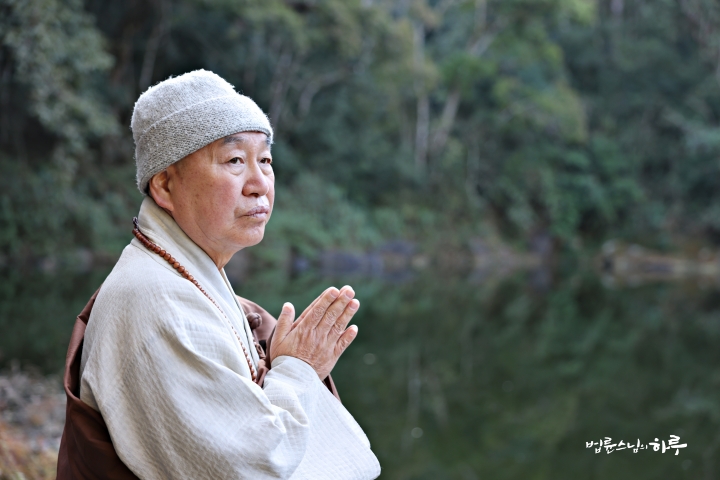
Sunim spoke while looking at the lake.
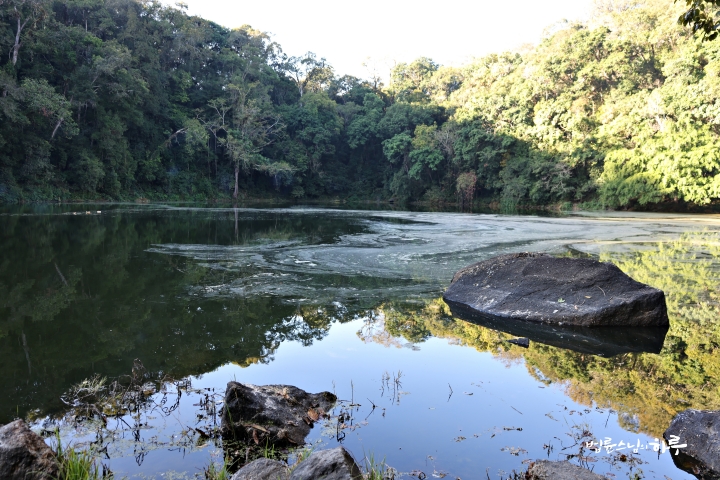
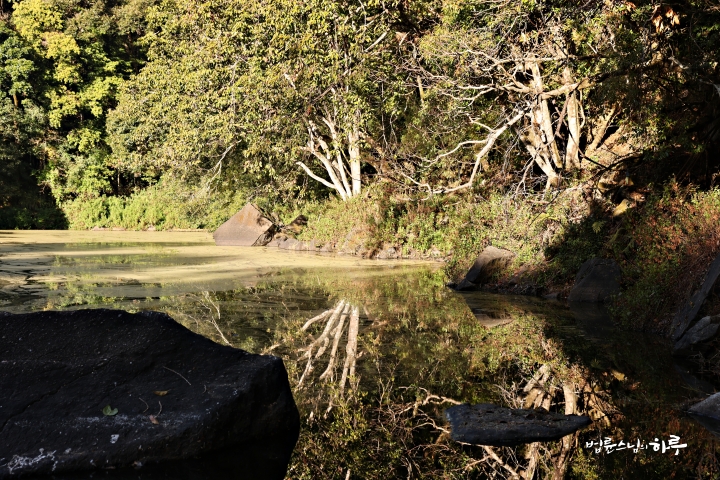
Three birds were visible far away on the lake. One of the group members asked Rinchen.
“Are those the birds you mentioned?”
“Yes, I think so.”
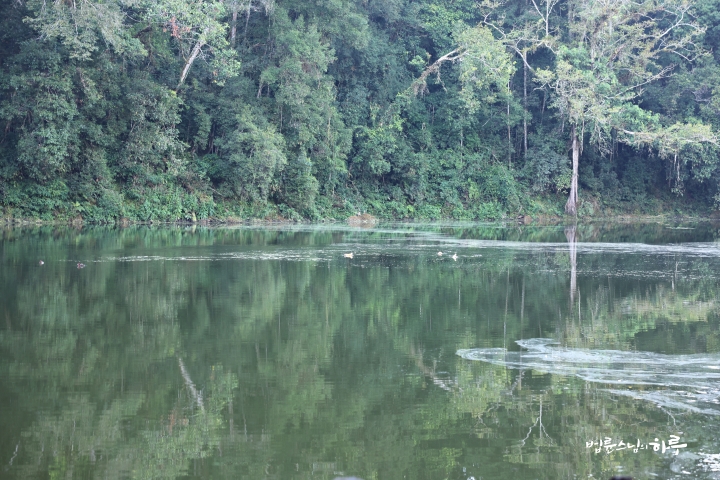
The lake guide who led them also spoke in surprise.
“This is a very rare sight. Sometimes birds are seen floating on the lake around this time, but they usually fly away when people approach. It’s quite amazing to see them still floating on the water, cleaning the lake today.”
Sunim quietly gazed at the lake and then closed his eyes, entering into a brief meditation. After opening his eyes, he spoke to the group:
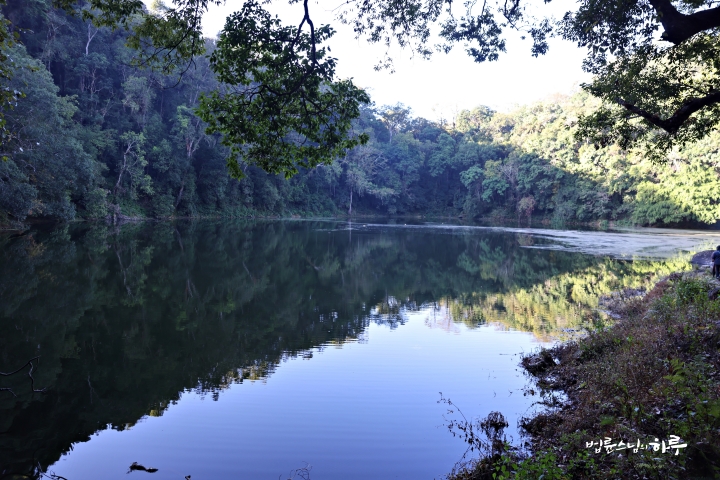
After taking commemorative photos in front of the lake and returning along the forest path, Sunim and the group headed towards Kikhar Chiwog.
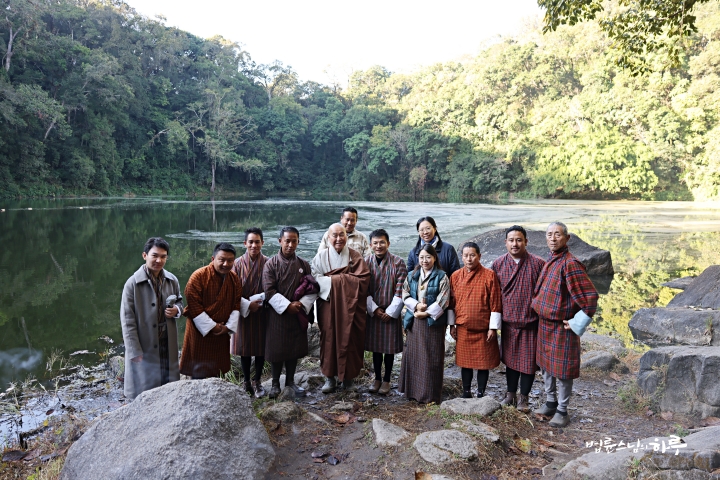
After driving for about 1 hour and 30 minutes, Sunim arrived at Kekhar Chiwog. The villagers were waiting at the entrance of the village.
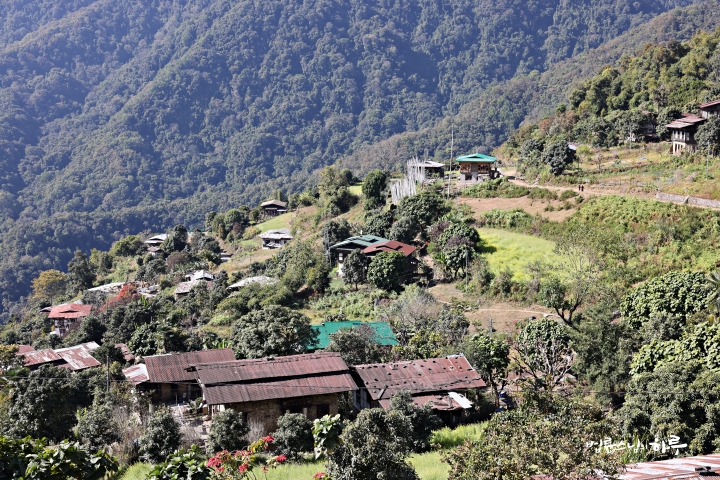
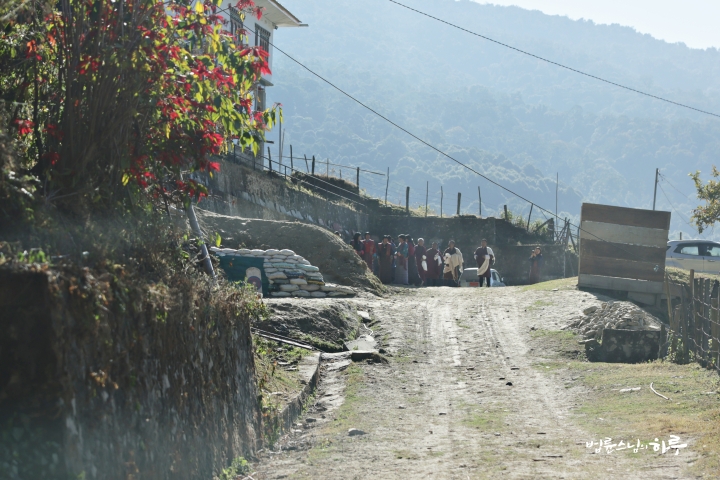
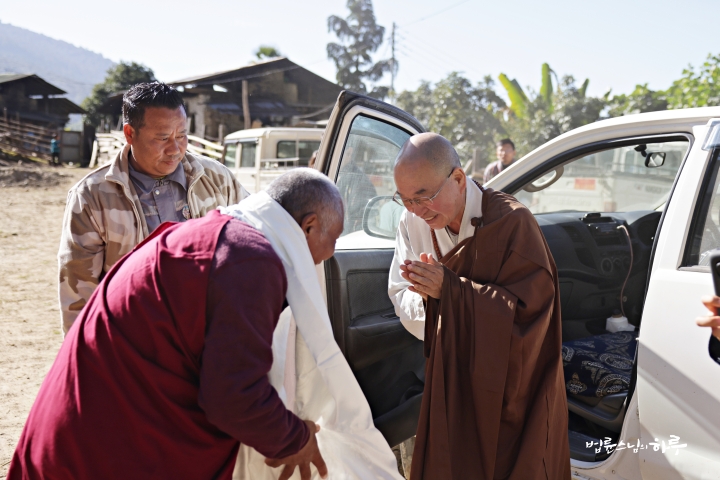
As Sunim and his group got out of the car, the village women guided them to the temple while singing traditional songs and blowing horns.
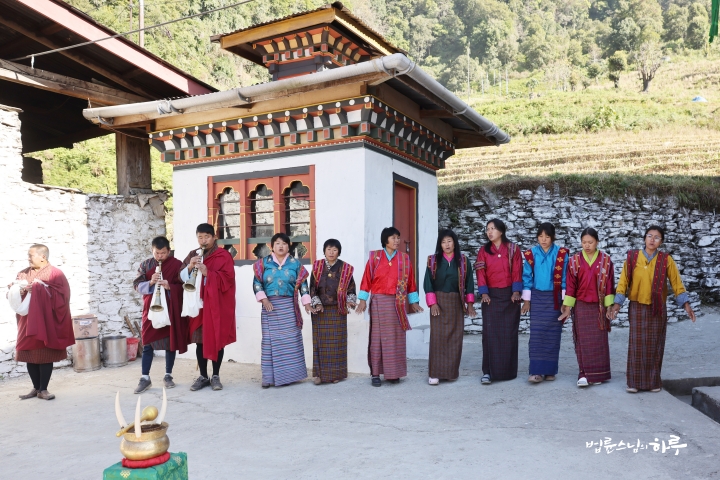
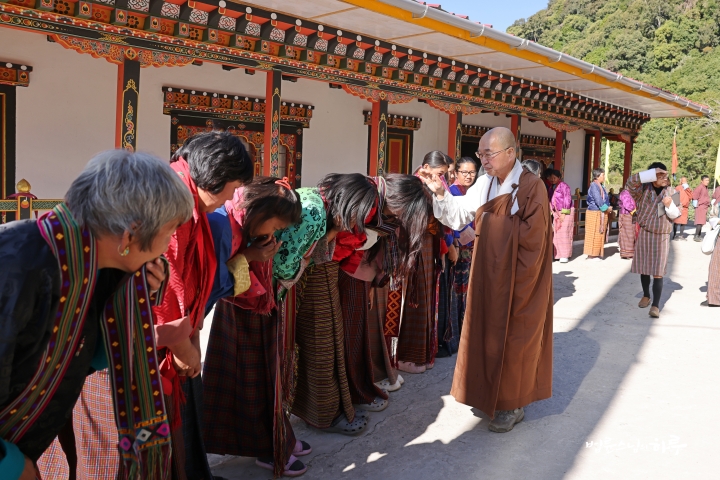
After completing the welcome ceremony in the traditional Bhutanese style in the temple courtyard, Sunim entered the main hall, paid his respects, and took a seat. The villagers served traditional Bhutanese snacks: suja (butter tea) and daisee (sweet rice flavored with butter and sugar). While warming up with the tea, the villagers filled the main hall.
After first hearing about the village’s current situation from the Tshogpa, Sunim came down from the Dharma seat and sat closer to the villagers to begin the conversation.
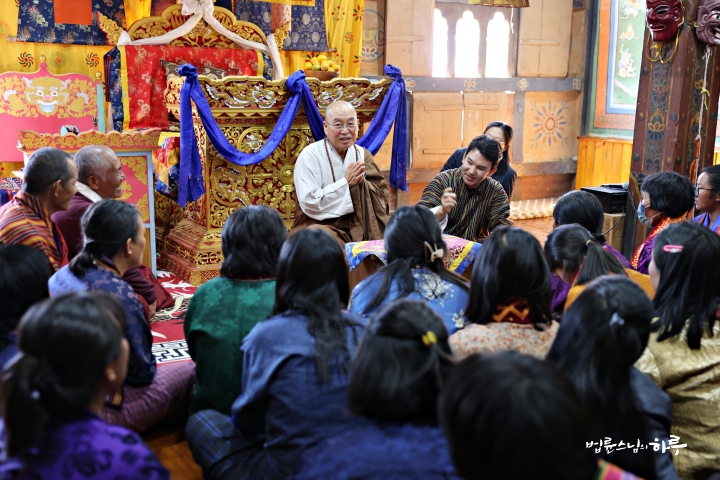
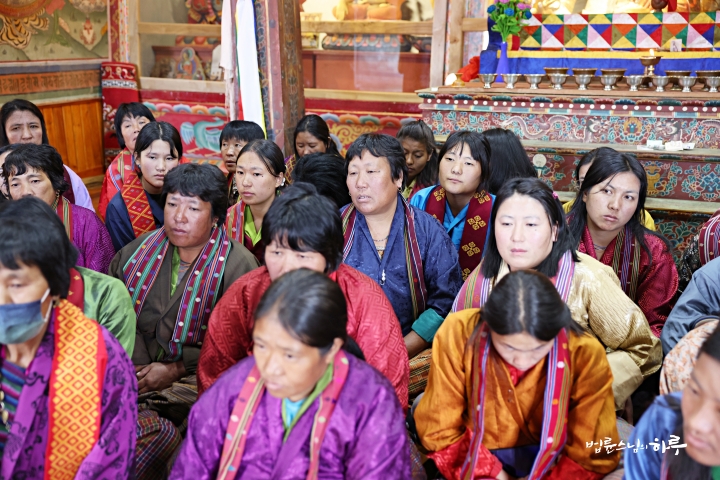
“There is one household.”
“There might also be houses that are uncomfortable to live in. When I visit rural areas, I often see houses with open interiors and no partitions. Is there anyone here whose house doesn’t have partitions?”Sunim naturally continued the conversation, asking the residents about the condition of their houses. After checking if they had partitions, shelves, and toilets, he said:
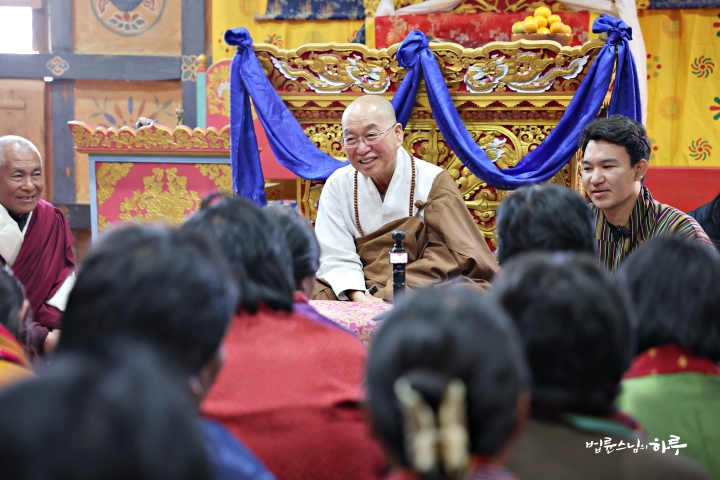
The residents listened quietly to Sunim’s words.
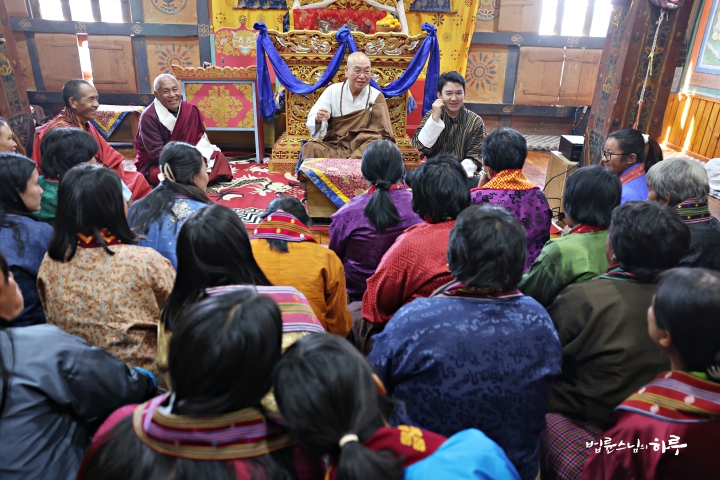
An hour and a half had passed since the conversation began. After sharing lunch prepared by Kekhar temple, Sunim got back in the car and headed to the Royal Guest House in Zhemgang.
After an hour and 30 minutes, they arrived at the Royal Guest House at 3 PM. Sunim had personally visited 32 out of 40 chiwogs in Zhemgang Dzongkhag over about two weeks. Now, he was scheduled to meet with the Zhemgang Governor and department heads to discuss the results.
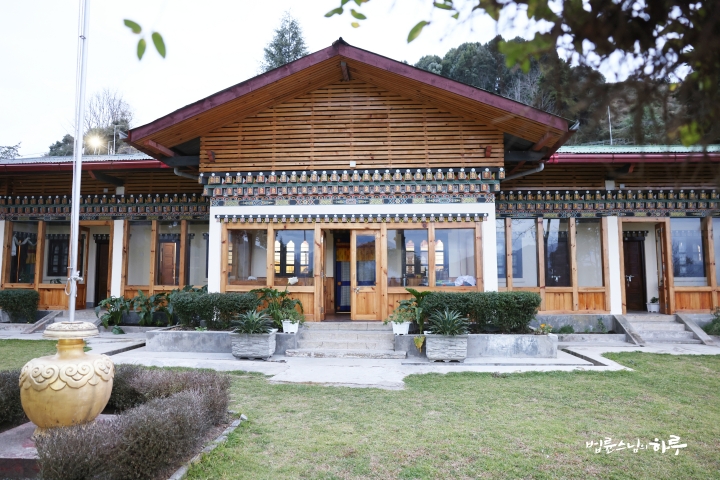
Upon arriving at the guest house, Sunim called all the drivers and those who had accompanied him on the survey.
“Thank you all for your hard work. Thanks to you, we were able to complete the Zhemgang survey successfully. I’m grateful that everyone did their best without complaining, even though the schedule must have been tight. This is a small token of my appreciation.”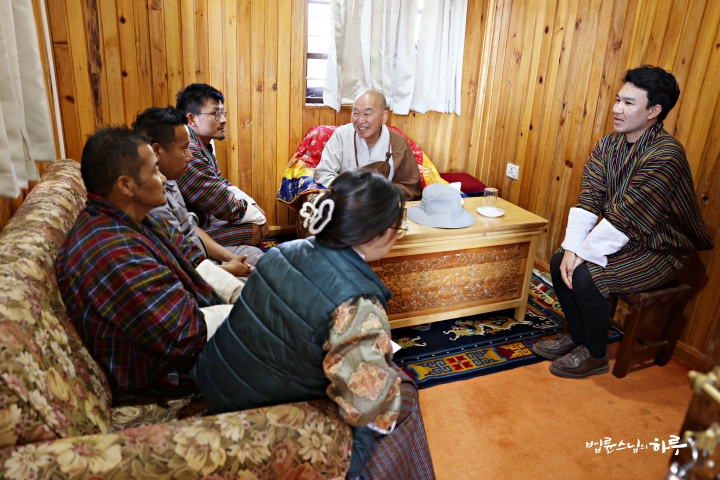
Sunim handed out pocket money to the group, expressing his gratitude. The group gratefully accepted Sunim’s gesture.
After a quick snack and organizing their belongings, the meeting began at 4:30 PM. Sunim first briefly summarized the overall results of the chiwog survey, mentioning the problems discovered in each village and the tasks that the government needs to address.
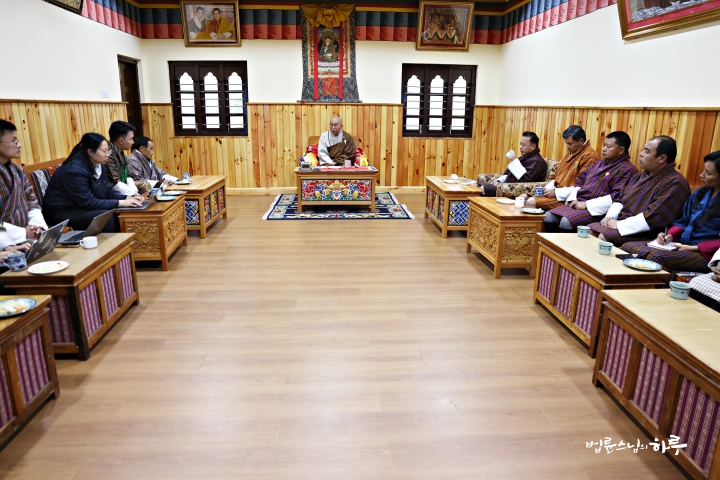
The common issues found in various villages in the Zhemgang area were living conditions, water supply, irrigation improvement, and lack of education and healthcare support. Sunim explained that JTS could provide the necessary initial support through its volunteer system.
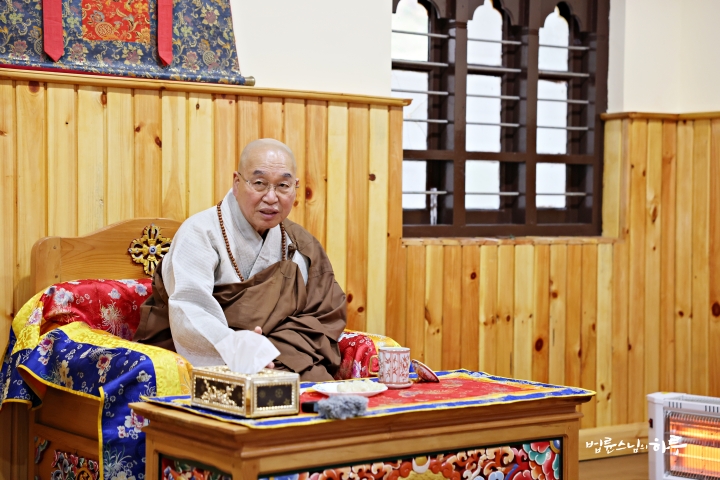
Then, a Q&A session was conducted for each department. Zhemgang officials raised specific issues related to agriculture, education, healthcare, and infrastructure improvement. For example, the education officer pointed out that 13 schools in Zhemgang needed facility repairs, and a separate boarding school was required for children with disabilities. Sunim responded that we should work together to find realistic solutions.
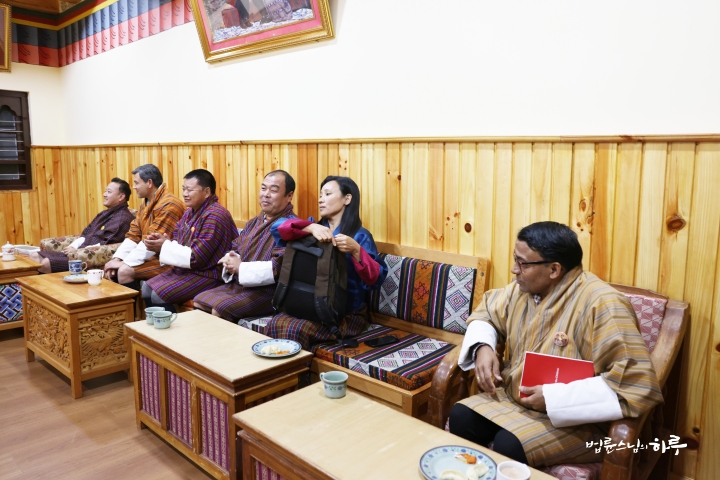
The agriculture officer reported that 69 irrigation canals needed to be improved or newly constructed at the residents’ request. Sunim emphasized the principle that residents must participate in improving irrigation canals themselves, explaining that JTS and the government could cooperate to provide necessary materials and technical support.
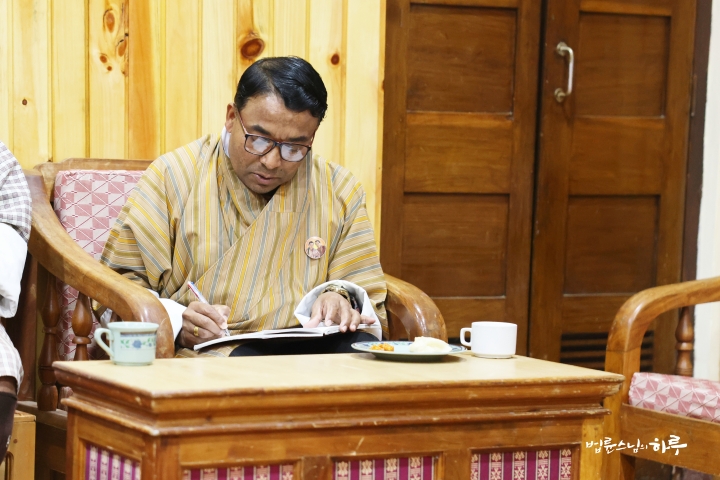
The health officer shared survey results on residents needing cataract surgery, hearing aids, and dentures. Sunim said he would discuss ways to address this issue with Bhutanese doctors and consider the possibility of foreign doctors volunteering.
One of the main points of discussion in the meeting was the systematic administrative support and personnel allocation to reduce the poverty rate in Zhemgang. The governor proposed expanding the youth employment program in cooperation with the central government to strengthen administrative power by conducting surveys at the chiwog and gewog levels. Sunim sympathized with this plan and expressed one concern.
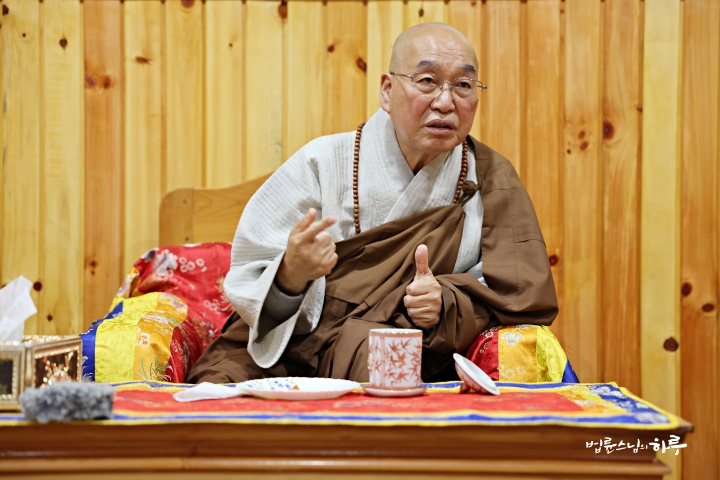
The Zhemgang Governor also sympathized with Sunim’s point and shared some ideas on how to proceed with the project while adhering to JTS principles.
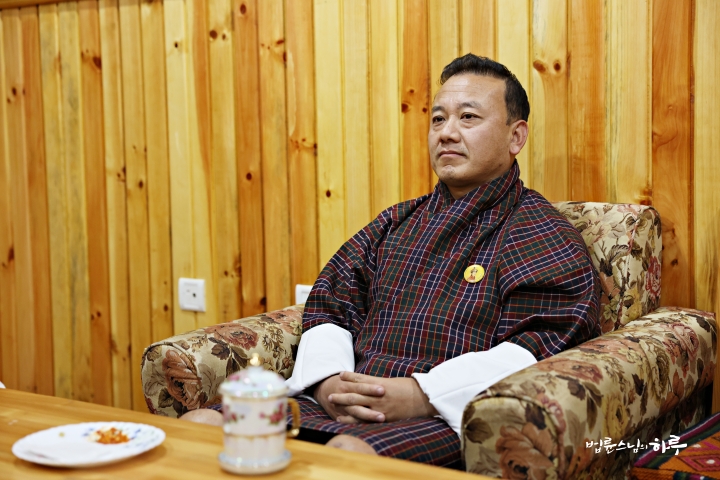
“I agree with the JTS principles you mentioned, Sunim. I fully understand the intention that we should voluntarily participate together, not just receive support. However, the problem now is that many Bhutanese civil servants are resigning and moving abroad, resulting in a shortage of civil servants and an overload of work for those who remain. Because the JTS project is so large, civil servants have to do twice as much work as usual. While local residents can do the actual work, we need at least two managers – one in the local area and one in the central office. And even if someone with technical skills can’t work together for a long time in the field, if they could provide support for about a year, the work would proceed more efficiently.
Now we’re managing JTS projects in several areas, and when the work increases, it will be 40 areas. Given the large budget of the JTS project, we’ll need manpower. Procuring personnel, delivering materials, checking receipts – all of these are tasks. Doing these tasks might prevent us from doing the work we actually wanted to do. This is because civil servants have many other duties as well. So we need personnel who can focus solely on JTS project work. If we apply for a budget from the government and have the government hire people, JTS won’t need to hire them. If the government hires them, the government will also pay their salaries.”
Sunim sympathized with the governor’s words and said he would actively consider it.
Finally, the Zhemgang Governor expressed one more concern.
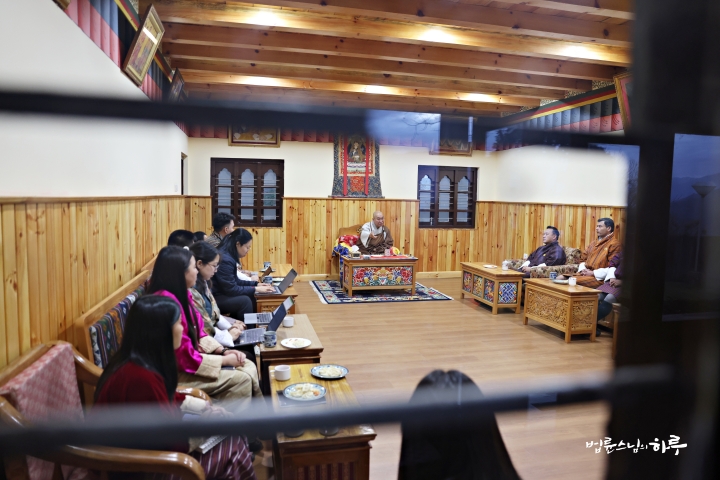
“Because you’re putting so much effort into helping our Zhemgang residents, we civil servants will also do our best with the JTS project. However, I’m worried that our civil servants’ capabilities might not meet your expectations.”
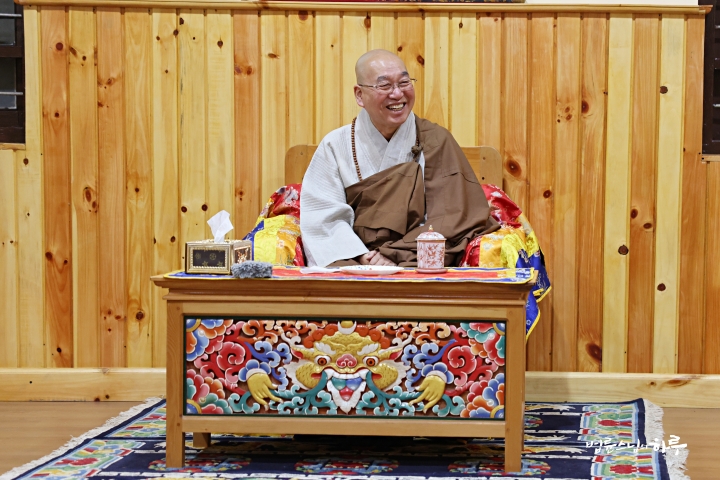
Sunim smiled and replied.
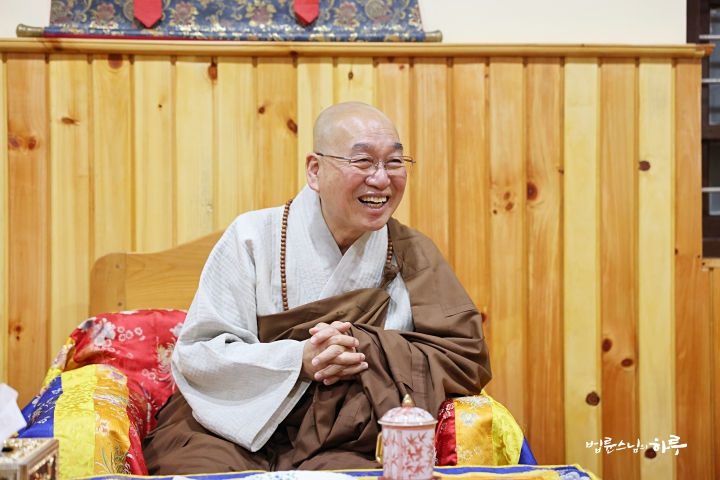
The meeting ended at 8 PM, after 3 hours and 30 minutes.
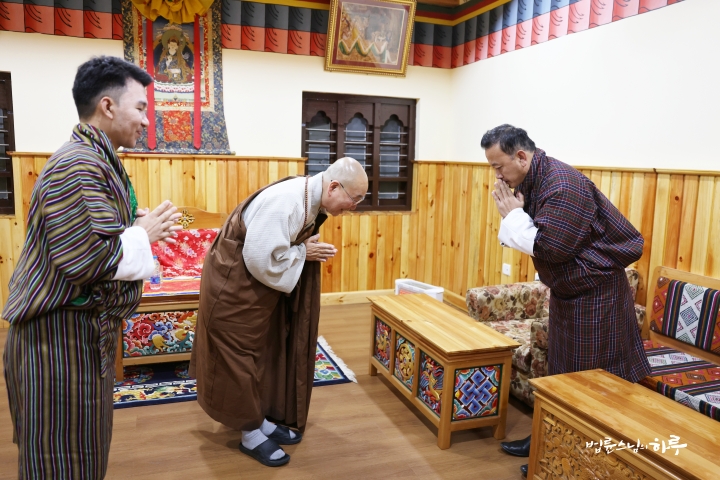
“Yes, I got it. Sunim, thank you for your hard work on the survey. We will actively pursue the project. Thank you.”
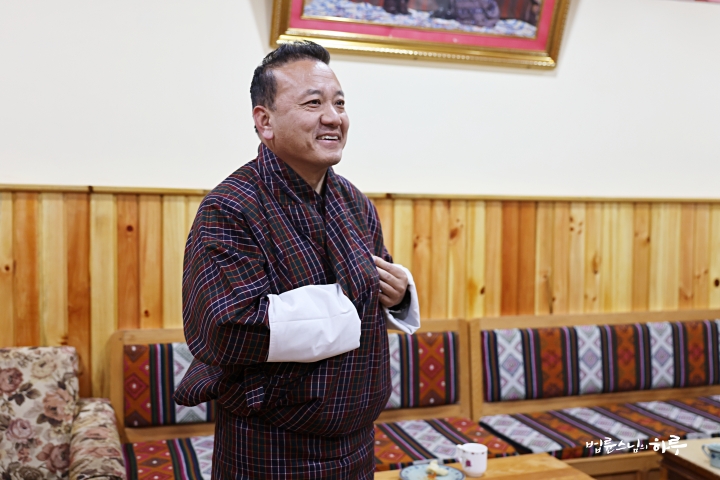
Sunim also thanked the planning officer who was in charge of the overall practical work for this Zhemgang survey.
“Are you going home today?”“I can stay here if needed.”
“Go home quickly. Your wife might kick you out.” (laughs)After seeing off the civil servants, Sunim finally discussed the financial issues of the follow-up projects after the Zhemgang survey and the manpower allocation plan with the director from the central government. He also checked in advance the content to be discussed with the cabinet minister in Thimphu tomorrow.
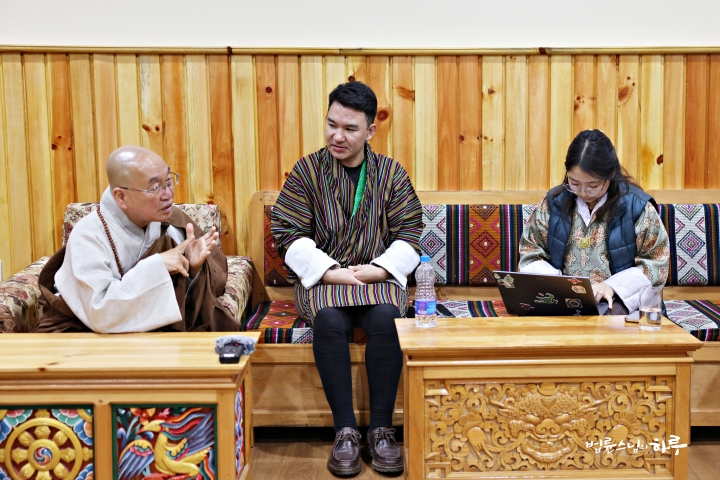
When all schedules were finished, it was 8:30 PM. Sunim ended the day by shaving his head and bathing in a long time, and then proofreading manuscripts. He plans to leave at 5 AM the next morning to move to Thimphu via Trongsa.