Feeling Anxious About Delayed Promotions at Work
Jan 03, 2025 - Day 11 of Bhutan Survey_Visiting Wamling, Thrisa, Radi, and Nimshong Chiwogs
Jan 03, 2025 – Day 11 of Bhutan Survey _ Visiting Wamling, Thrisa, Radi, and Nimshong Chiwogs
Hello. It’s the 11th day of the Bhutan survey. Today, Sunim visited Wamling, Thrisa, Radi, and Nimshong chiwogs in Shingkhar gewog and had conversations with the residents.
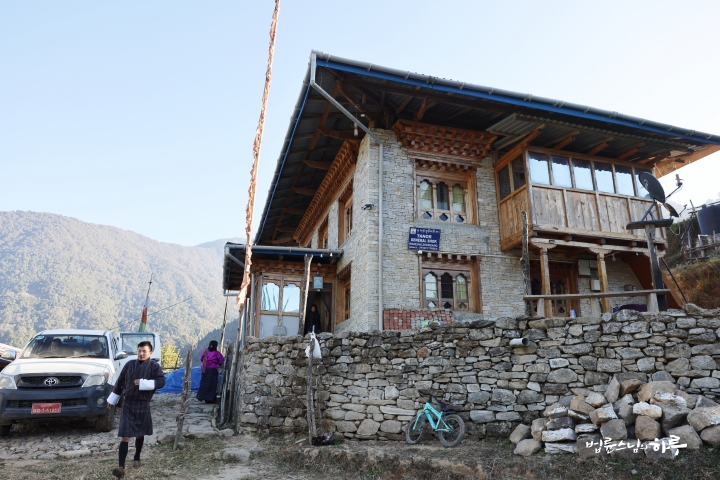
Sunim began his day with practice and meditation in the early morning, then communicated with Korea and handled various tasks. At 7:30 AM, he had breakfast prepared by the guesthouse and briefly chatted with the host before departing for the survey.
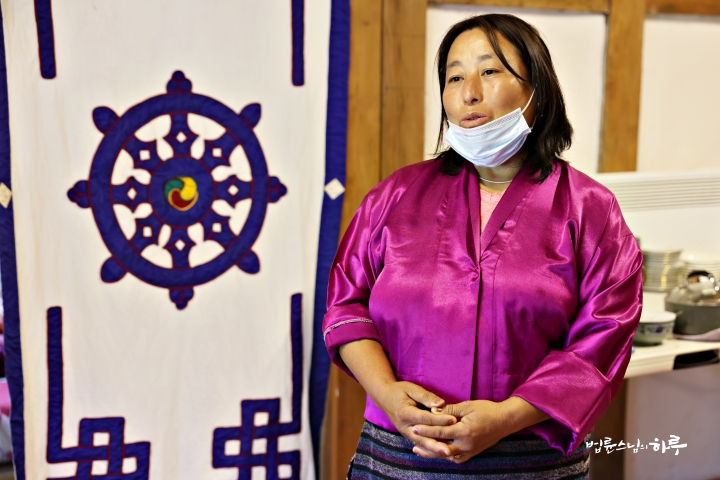
“Yes, while Wamling chiwog isn’t very well-off, it’s in a slightly better situation compared to other chiwogs.”
Sunim asked a few questions about the difficulties in the Wamling area and the residents’ lives, sharing opinions. When it was time to leave, Sunim thanked the host.
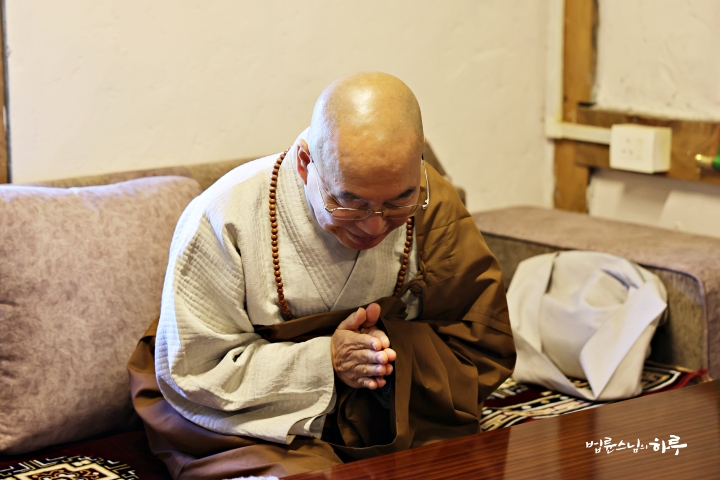
“Thank you for visiting.”
After leaving the guesthouse, he moved to the Wamling kindergarten. This was where he was scheduled to have conversations with the villagers.
Having arrived earlier than the appointed time, there weren’t many people gathered at the kindergarten. The Tshogpa checked and found that the residents were just starting to arrive. Sunim looked around the terraced fields behind the kindergarten until it was time to meet with the residents.
“This place also needs irrigation repairs. But it won’t be easy to carry cement all the way here.”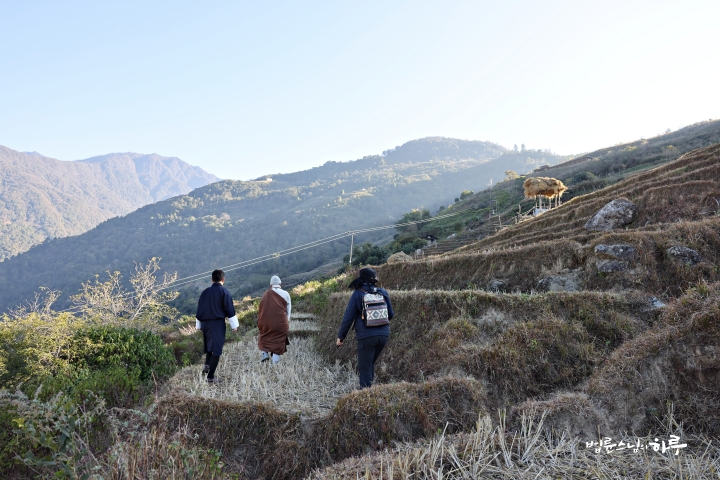
While inspecting the irrigation channels of the fields and walking, he saw residents coming from afar.
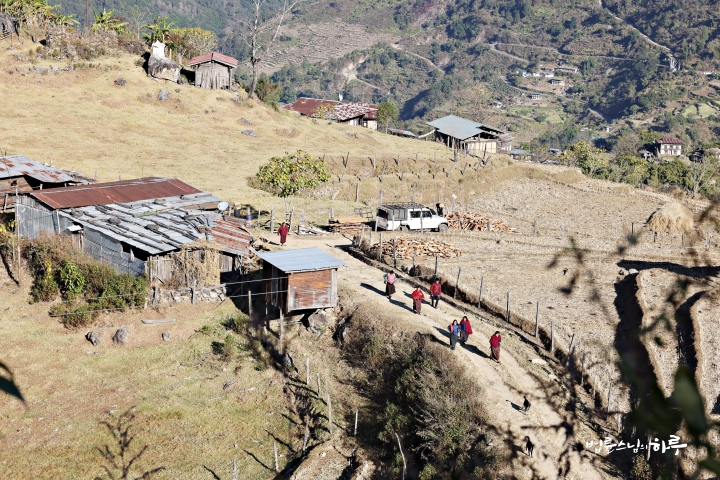
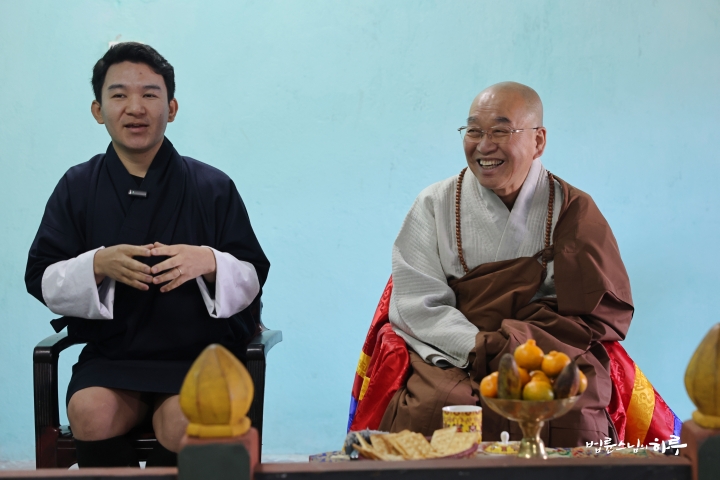
Around 9 AM, when all the villagers had gathered, a brief traditional Bhutanese welcome ceremony was held, and the conversation began in earnest. Sunim first greeted the residents.
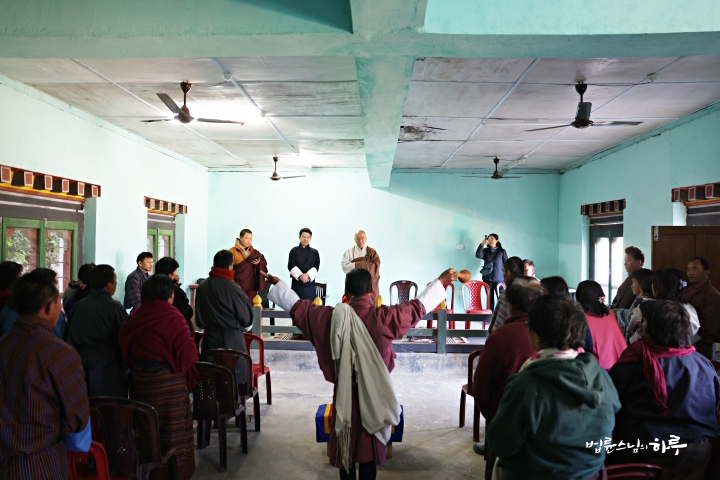
After hearing an explanation about the village’s current situation from the Tshogpa, Sunim began the conversation by explaining about the JTS project.
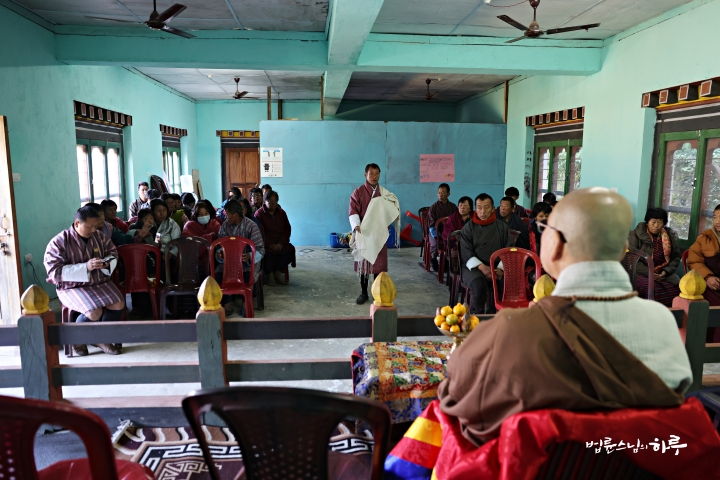
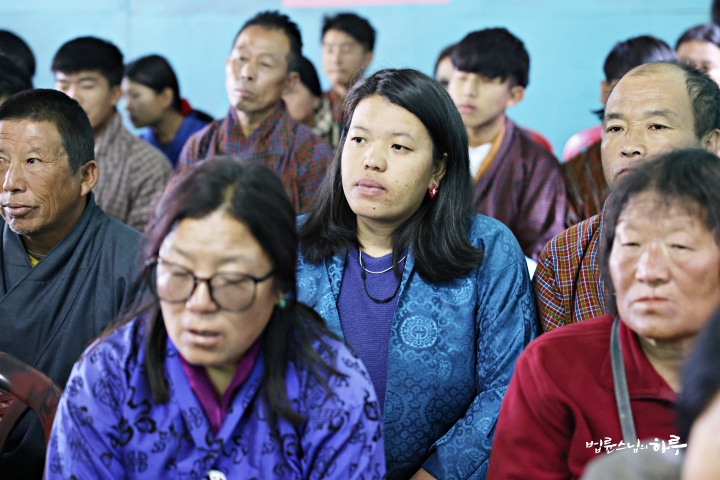
A resident responded to this.
“We need to reinforce the irrigation channels. We asked the government, but they said there was no budget, so we’ve been repairing them little by little. However, landslides occur every year, and the repaired irrigation channels often break down. If you could just provide the materials, we think we could repair them properly.”
Sunim then shared the case of Nabji village in Trongsa.
“Do you know Nabji village in Trongsa?”“Yes, we do.”
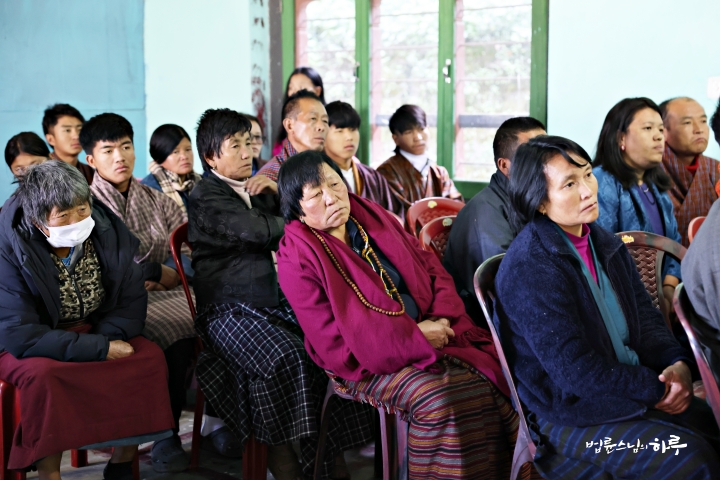
The residents responded to this.
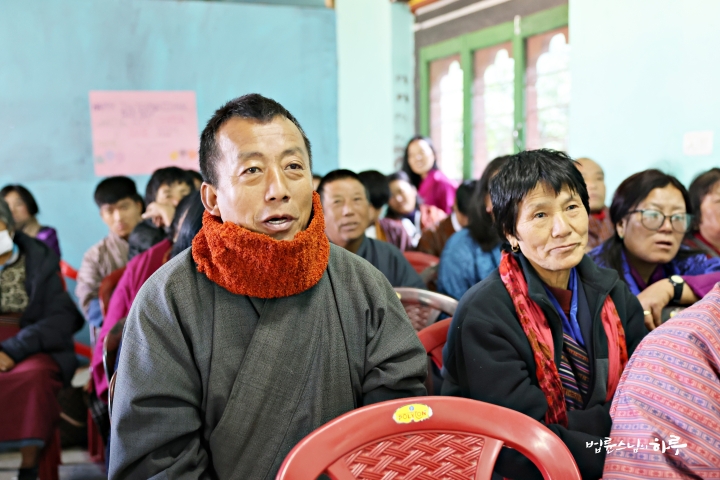
“In Wamling, our main agriculture is rice farming, so it’s difficult to farm without water. If you provide the materials, we will do the construction.”
“However, when we gather to talk like this, everyone says they’ll do it, but when the work actually starts, people often don’t show up for communal labor, causing difficulties. So this issue depends on whether all the current residents can participate. Especially for the irrigation work, many men need to step up.”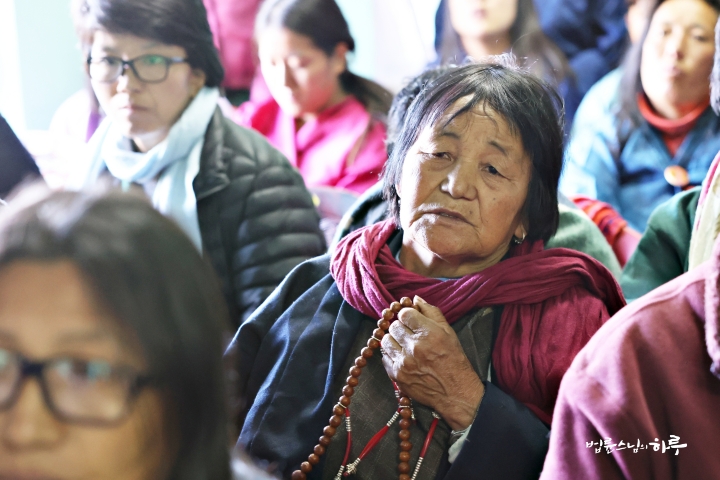
There were differing opinions among the villagers as well. Sunim explained the support principles once again.
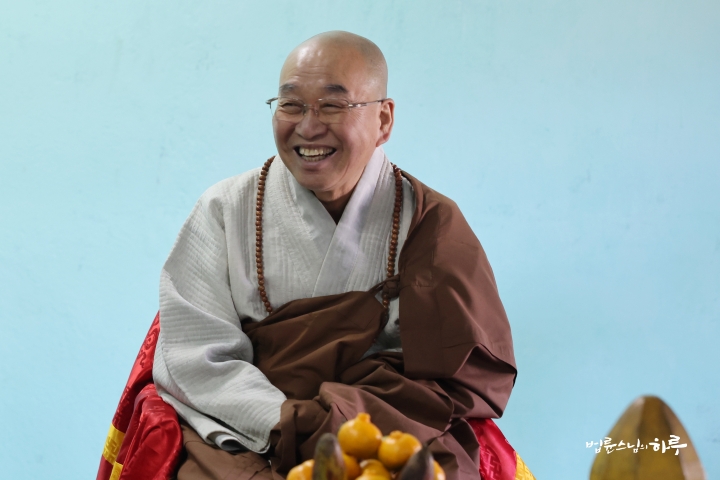
Even after this, villagers’ opinions were divided between “we can do it ourselves” and “we can’t,” but Sunim promised to support what was needed and concluded the conversation.
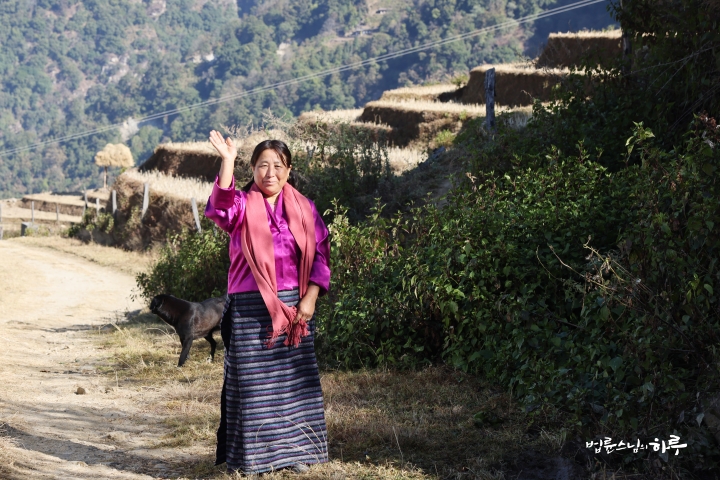
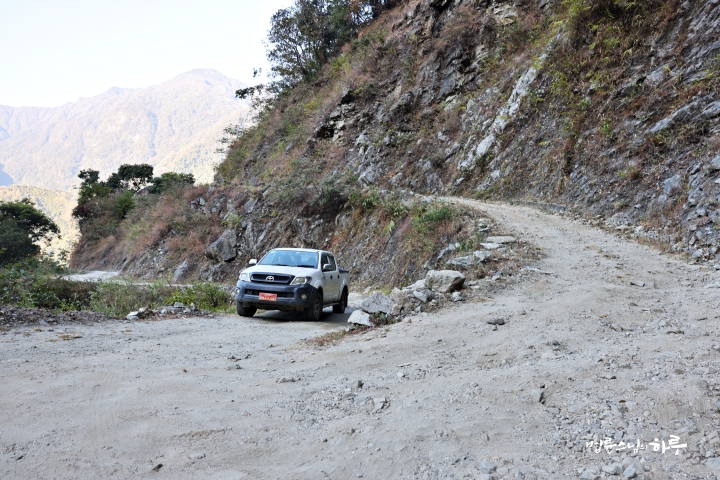
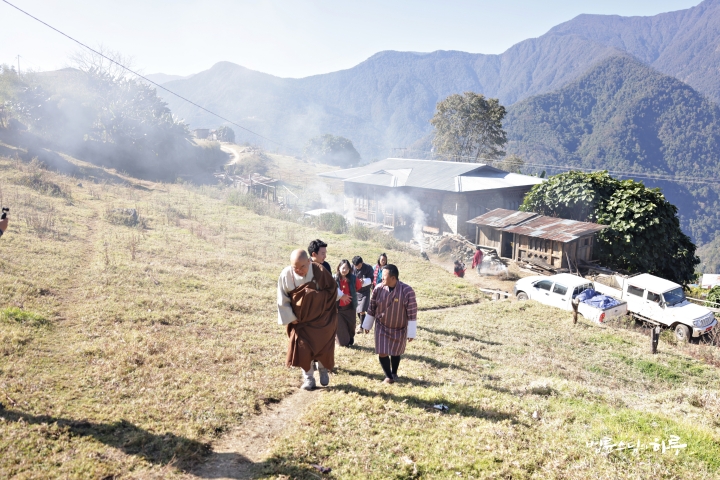
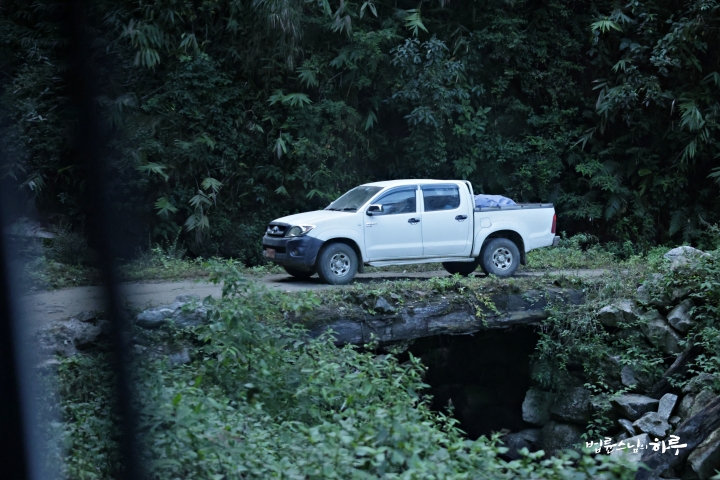
At 10 o’clock, we departed for the next survey site, Tsherisa Chiwog. After about an hour’s drive, we arrived at Tsherisa Temple at 11 AM. As vehicles couldn’t reach the temple entrance, we parked below and walked up.
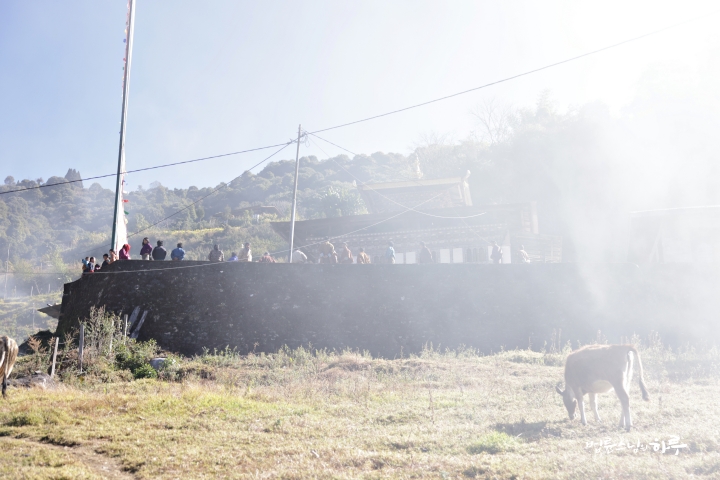
On the way to the temple, the fences around each house were quite well-maintained.
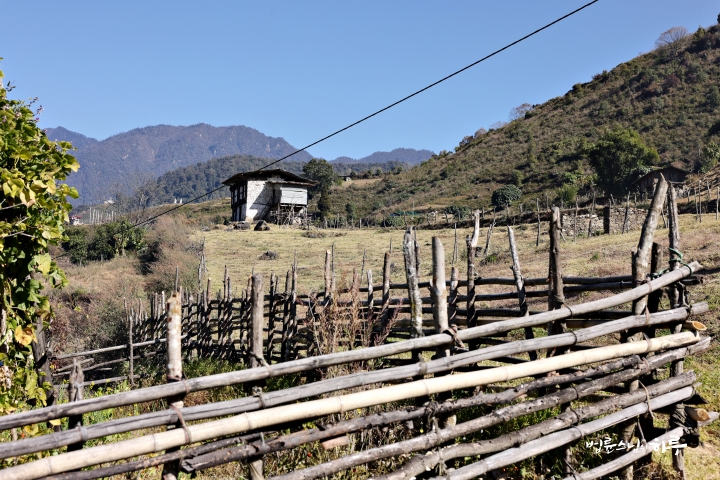
“Yes, last year, as part of a government support project, they installed fences extending about 10km. Overall, and for individual households, the fencing is quite good.”
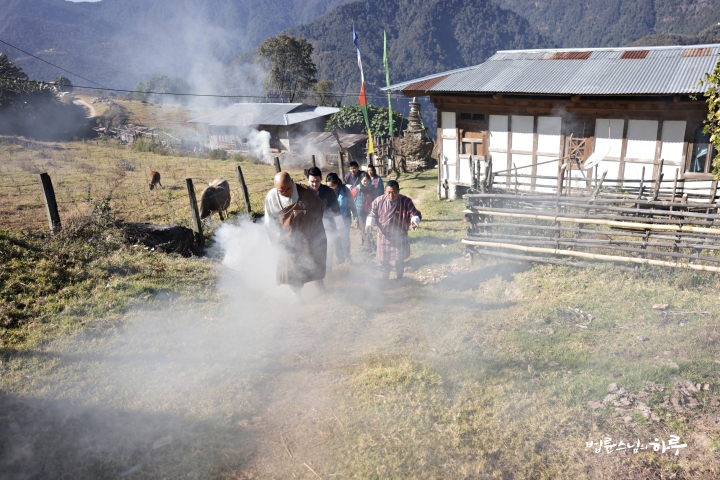
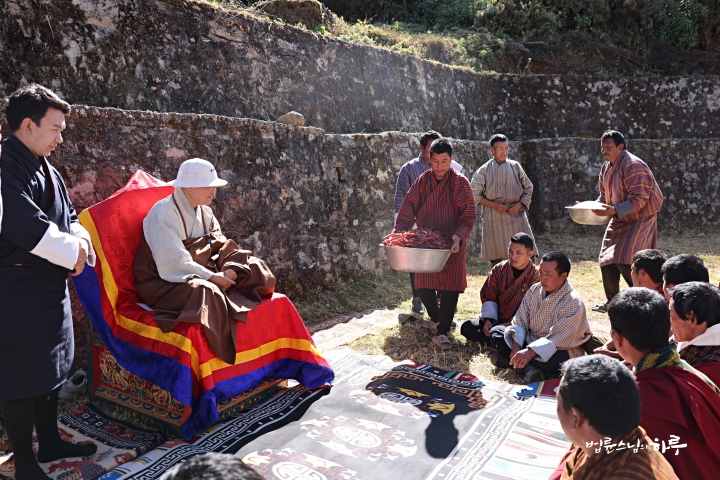
Villagers were waiting for Sunim at the temple entrance. After entering the main hall and paying respects, a simple traditional welcome ceremony was held.
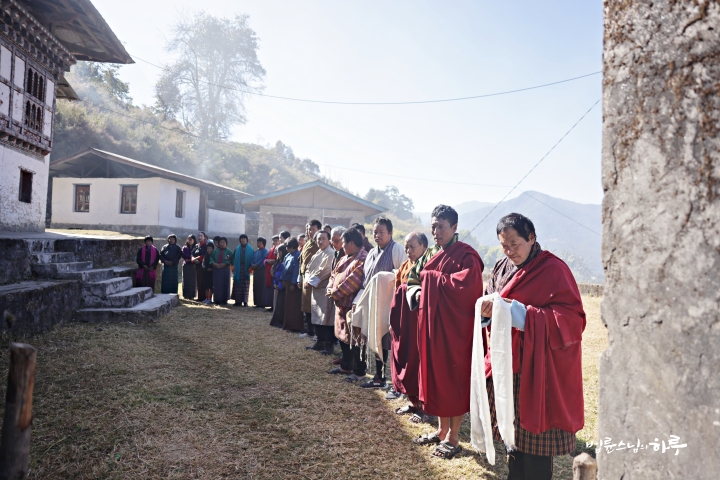
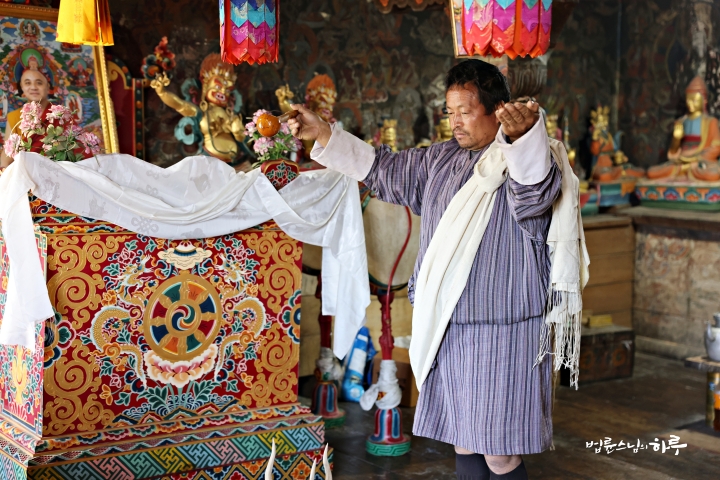
We had planned to talk with the residents in the main hall, but due to limited space inside, we moved to the backyard of the temple. Under the warm sunlight, Sunim began conversing with the villagers. He first listened to the difficulties they were facing.
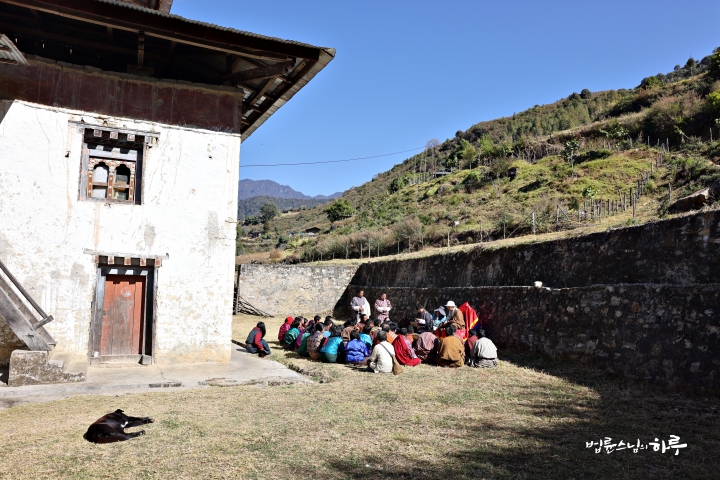
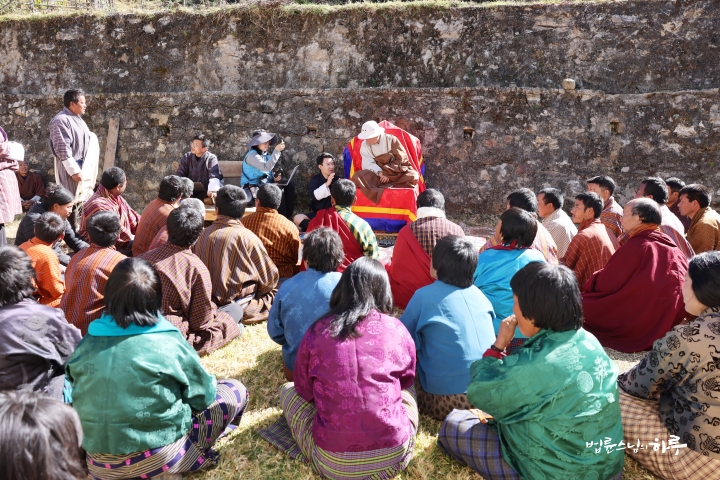
“There are 5 people without homes.”
“We have a cardamom farm, but there’s a water shortage. The water source is 3.5km away.”
“There’s a shortage of drinking water.”
“In the village, we have a child with a head injury, a child with leg problems, and a resident with disability after being injured by a bear. We need support for them.”
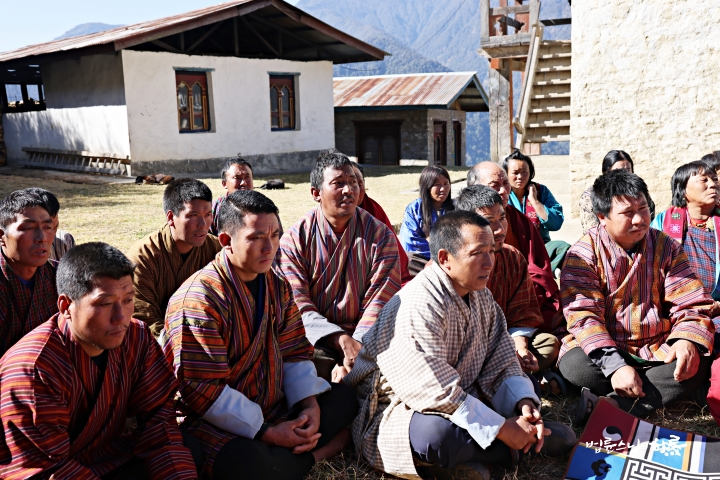
For about an hour, Sunim carefully examined various issues while talking with the Tsherisa residents. He asked detailed questions about their living and housing conditions, such as whether the village could build houses for those without homes if materials were provided, how many households lived near the cardamom farm, if they could do the water works themselves if materials were provided, whether rooms had partitions, how they lit fires, and what condition their kitchens were in.

As Sunim asked thorough questions and suggested improvements, the villagers began to open up. The initially tense atmosphere relaxed, and their willingness to improve their living conditions became apparent. After the conversation, the villagers brought a carefully prepared gift for Sunim. It was a basket of dried chili peppers, a gift filled with the sincerity of the villagers who had grown and dried them themselves.
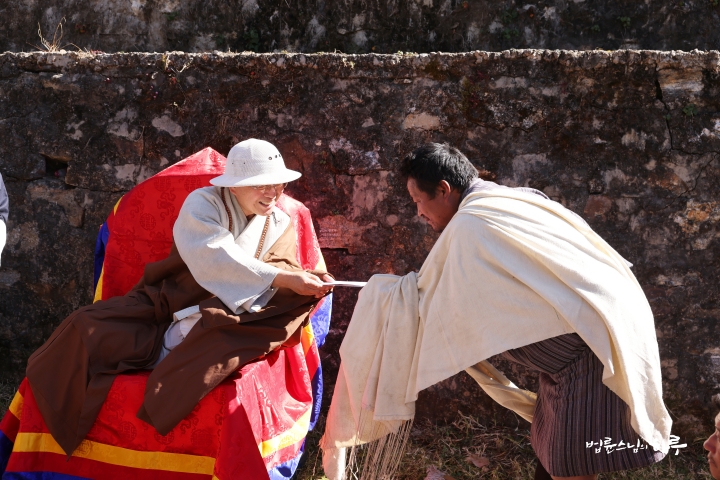
Sunim expressed his gratitude by giving an offering to the Tshogpa.
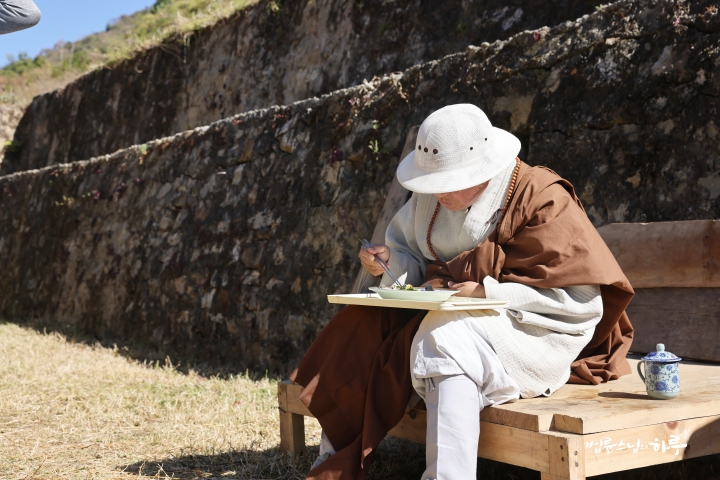
After having lunch prepared by the villagers, we left the temple to move to the next survey site, Ladi village.
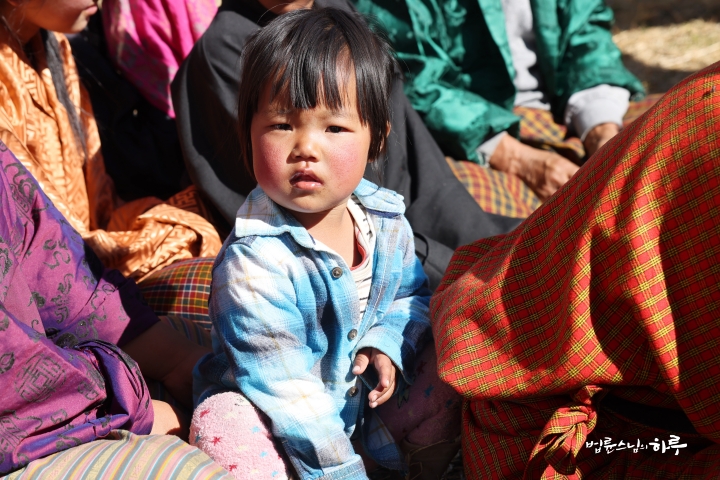
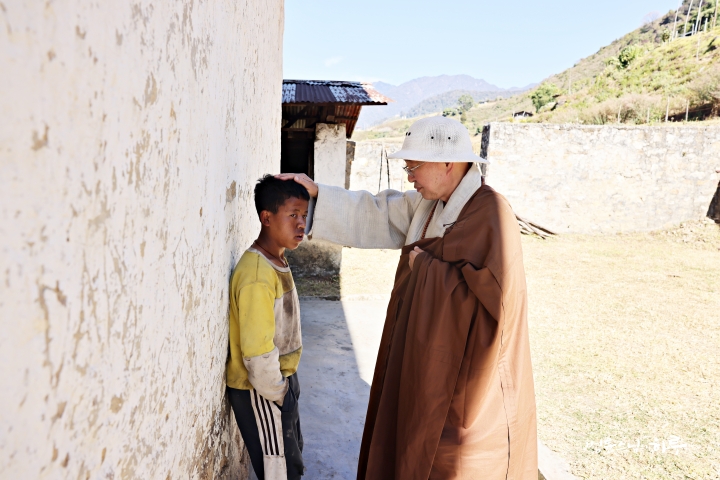
As we were about to leave the temple, a child was looking at Sunim. Judging from the unfocused eyes and unkempt appearance, it seemed to be the child with disabilities that the Tshogpa had mentioned. Sunim approached the child, gently placed his hand on the child’s head, and gave a blessing. Sunim told the staff member responsible for the Bhutan project that educational facilities for children with disabilities might be necessary and that they should develop plans for this in the future.
After another hour’s drive, we arrived at Ladi Chiwog at 1:40 PM.
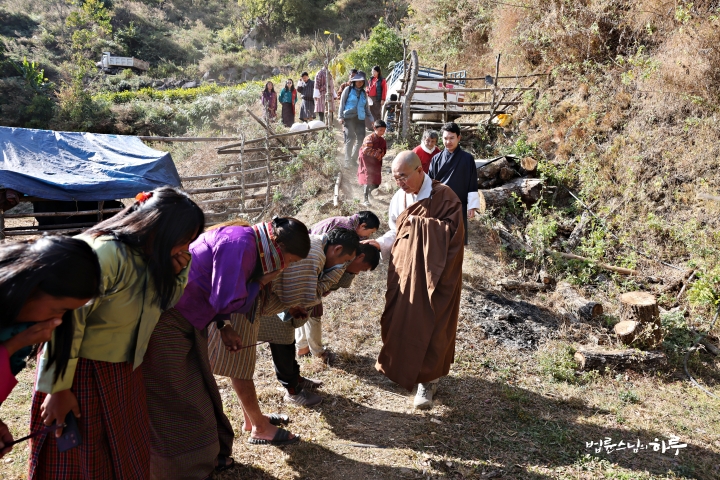
Here, villagers had gathered at the Tshogpa’s house. The Tshogpa’s house was small and modest but neatly arranged to welcome guests. In the elongated space, there was also a small shrine. Sunim paid respects at the shrine and then began talking with the residents.
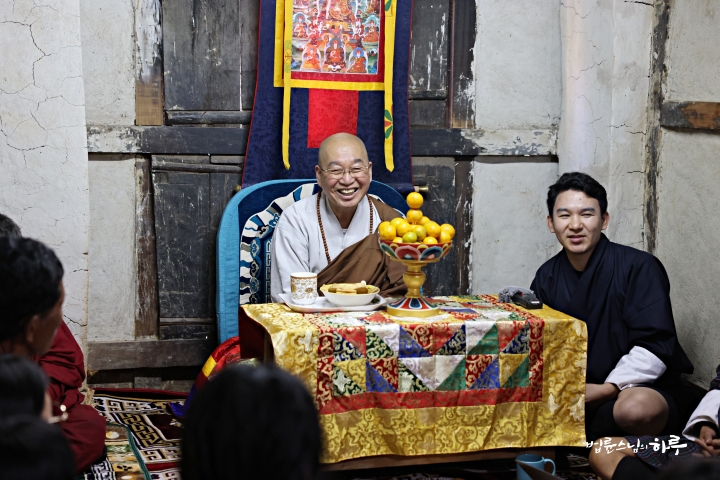
Sunim greeted the residents and explained about the JTS project. He then asked various questions about their living conditions. He inquired whether they still cooked by making fire at home, if their houses had partitions, if everyone had toilets, if their kitchens had countertops, and if they had shelves in their homes, carefully examining all aspects of the villagers’ lives.
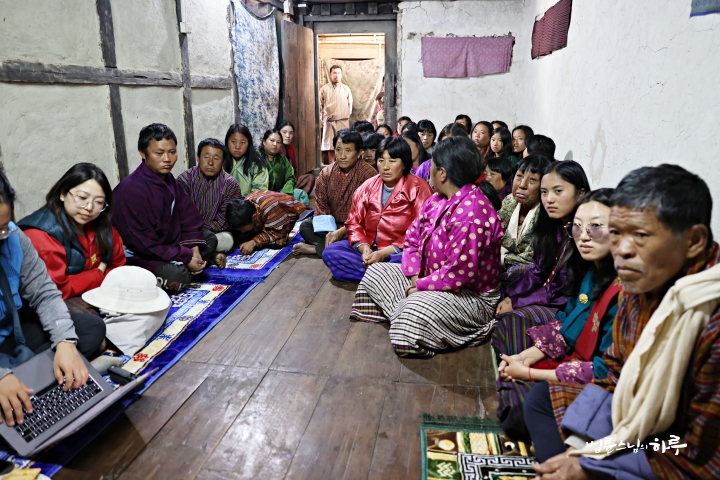
He also checked if there were any people with disabilities in the village. As the conversation continued, the people of Ladi village became increasingly animated.
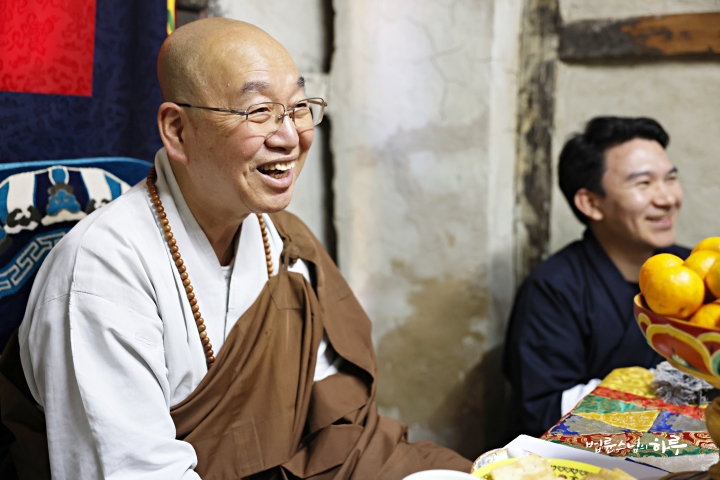
“Yes, if you provide the materials, we’ll do it! We’ll improve our village ourselves!”

The villagers answered loudly, strengthening their resolve. After finishing the conversation, Sunim departed for the last survey site, Nimshong Chiwog, with the Ladi villagers seeing him off. After about an hour’s drive, we arrived at Nimshong Elementary School at 3:45 PM.
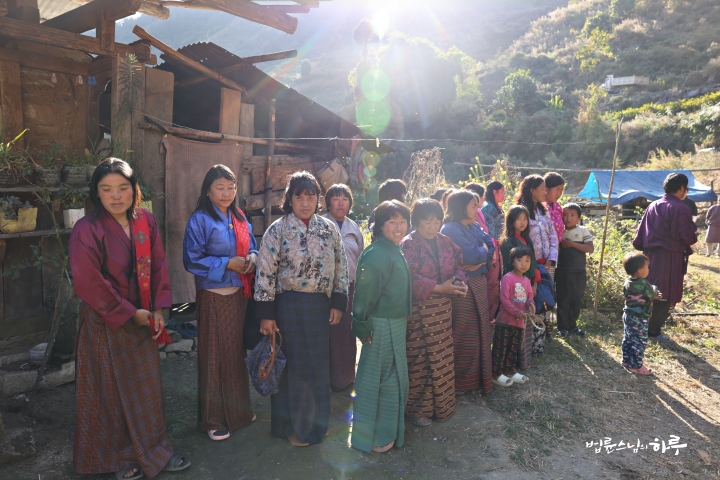
Villagers were waiting for Sunim on the school playground. After receiving a welcome from the residents, we moved to the school auditorium to start the conversation.
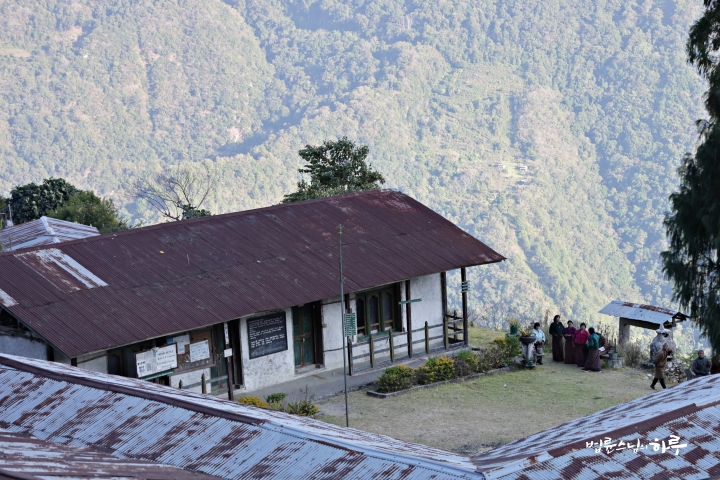
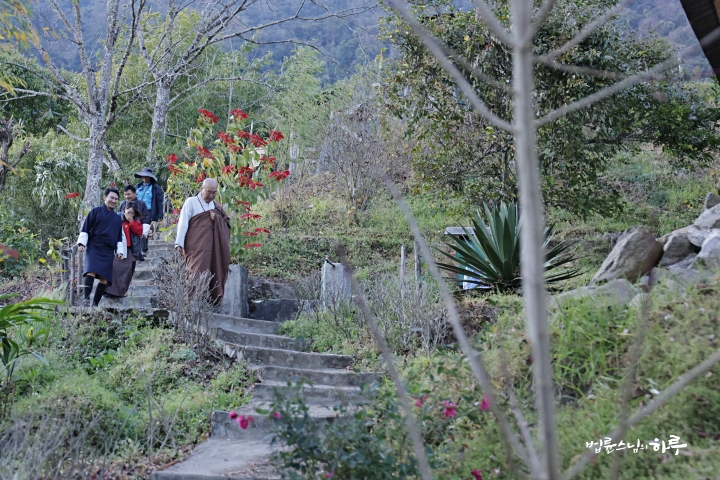
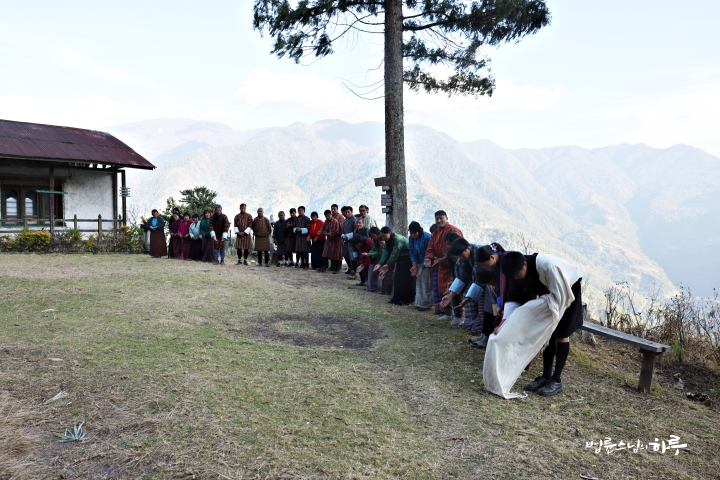
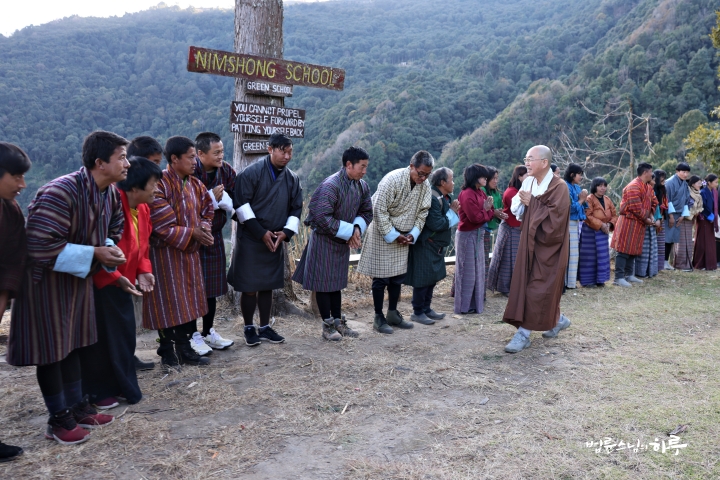
First, the Tshogpa of Nimshong village explained the current situation of the village.
“There’s a shortage of drinking water in the village, and the old irrigation canal needs repair. There are households without homes, and the overall living environment of the village needs improvement.”
Then Sunim gave his greeting.
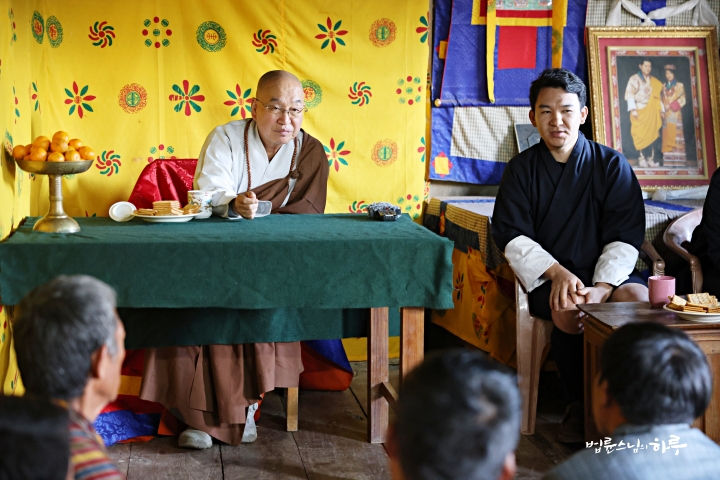

Sunim explained how he came to Bhutan, the purpose of the JTS project, and what kind of support could be provided, one by one. Even though this was the fourth survey of the day, Sunim spoke as calmly and carefully as if it were the first time.
“I’m currently visiting all 40 chiwogs in Zhemgang Dzongkhag. I’ve even slept in villagers’ homes. Some houses were very cold. Even though I was wearing thicker clothes than you, I felt cold. But if we light a fire inside the house, it’s difficult because of the smoke. We want to change these inconveniences together. Also, people need water to live, right? JTS will provide cement and pipes, so the villagers can work together to improve the water supply. Do you want to wait for the government to do these things, or do you want to do them yourselves?”A villager answered.
“If you provide the materials, we can do it ourselves, Sunim.”
Sunim smiled and said:
“What’s the use if only the Tshogpa answers? If the villagers just receive the materials and nobody works while they stay quiet, how can the Tshogpa manage alone? (laughs)”The villagers, who were initially shy and quiet, gradually spoke up with confidence.
“We can do it!”
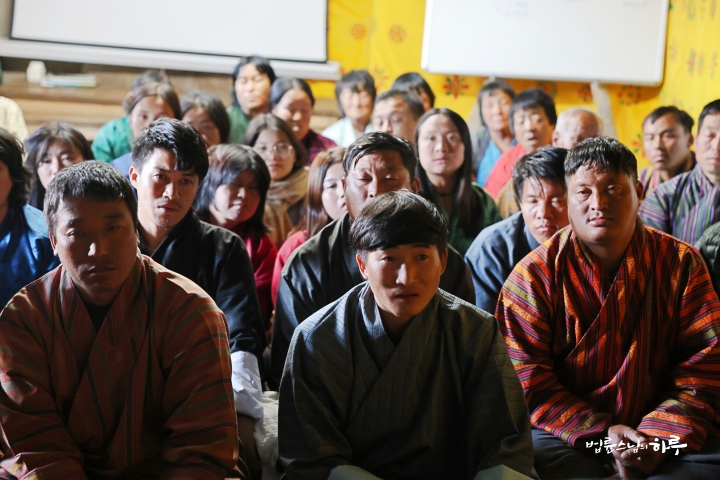
Sunim encouraged them by sharing the example of the Rebati village residents.
“Everyone, do you know Rebati Chiwog?”“Yes.”
“The Rebati residents also had a water shortage. They found a new water source, but it was 7km away. Still, the residents said, ‘This water is for our children to use in the future too,’ and insisted on doing it no matter what. So we supported them with pipes and cement. The women dug the ground, and the men carried pipes up the mountain. When they had to cross rivers, they tied the pipes with wire to continue the work. In the end, they installed water taps in every house in the village within two months. At the completion ceremony, I said this: ‘I doubted whether you could do it, and you doubted whether I would support you, but now we trust each other. From now on, I will support whatever the Rebati residents do.’ When I asked the villagers how many days they worked, they said they worked for 29 days each. That’s how much the villagers cooperated to achieve this.”
Sunim asked the residents:
“Can you do it too?”“Yes, we can do it too!”
“If you’re willing to do it yourselves, JTS will support you. If you have the will to improve your lives, we’ll provide technical knowledge when needed and tools when required. Wouldn’t it be great if we could improve our living environment on our own like this?”“Yes, that would be great!”
The residents of Nimsong responded enthusiastically.

Sunim concluded the conversation and said goodbye to the residents.
“Alright, let’s wrap it up here.”After finishing the conversation, Sunim bid farewell to Singkal Gewog Mangmi, who had accompanied him on the survey of four chiwogs throughout the day, and moved on to Nangkha Gewog.
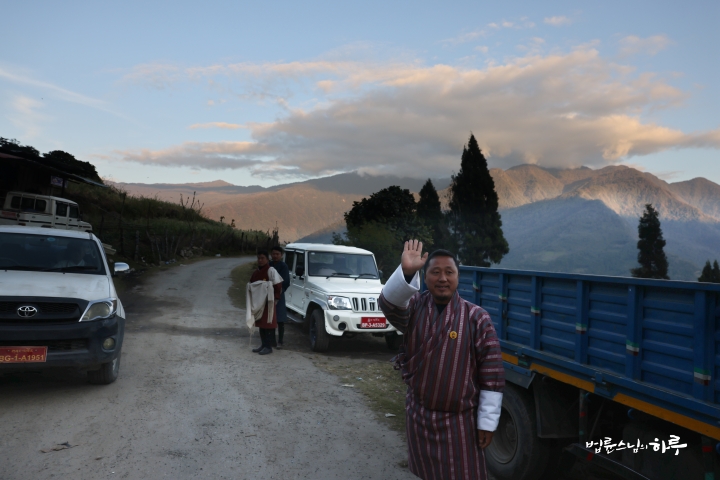
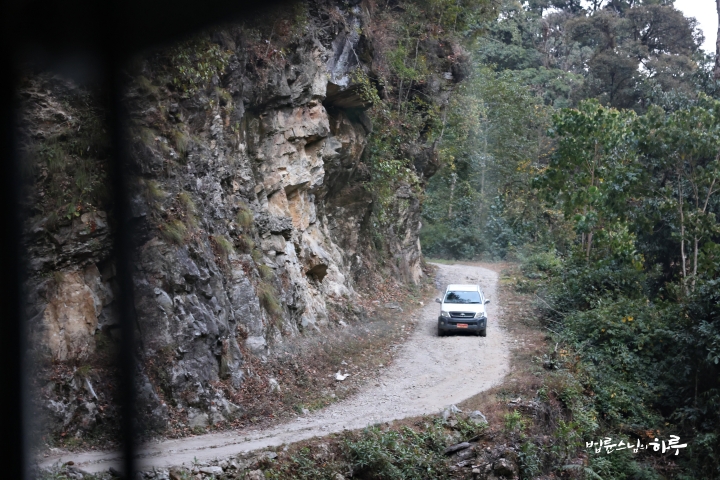
At 6:40 PM, Sunim arrived at the lodging in Nangkha Gewog. The sun had set, and it was already dark.
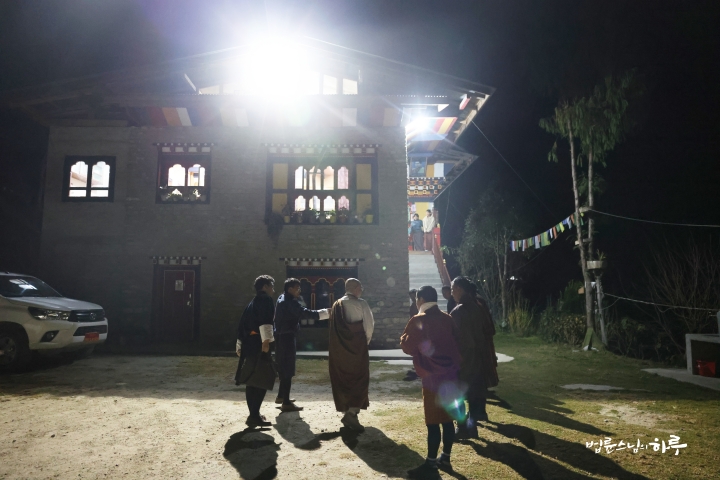
After unpacking at the lodging, Sunim had dinner with his companions and discussed the villages they had surveyed today.
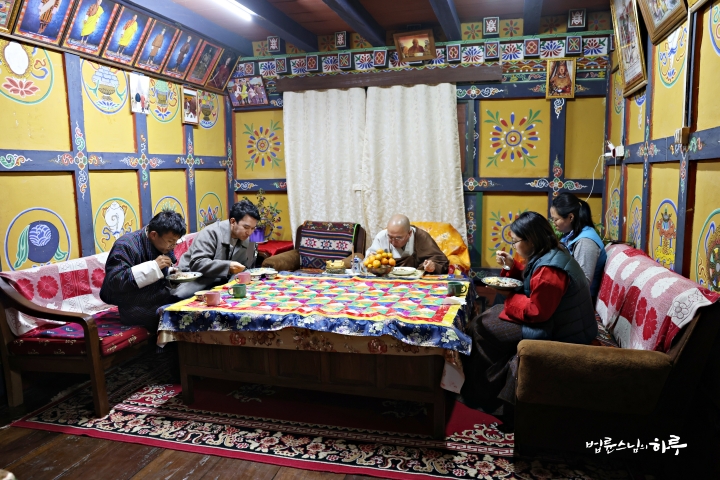
After dinner, he proofread manuscripts and concluded the day. Tomorrow, he plans to survey Nyakar-Cheldang, Kamzhing, and Dengmang Chiwogs in Nangkol Gewog.
Since there was no Dharma talk today, we’ll introduce the content from the Happiness Dialogue Q&A session held in Pohang on November 25th.
I Feel Anxious Because My Promotion at Work Keeps Getting Delayed
“At my workplace, there are two major exams for promotion from entry to retirement. In 2010, when I was eligible for the first exam, I studied harder than others and passed on my first attempt. However, I didn’t receive any news of promotion, and every year after that, other additional passers who were behind me got promoted immediately upon passing, overtaking me. As the years went by, my life became increasingly difficult with a sense of defeat and self-loathing. It took me a full seven years after passing the first exam to finally get promoted in 2017. Anyway, time passed, and last year I had the second exam. Again, I invested a full year of study and passed on my first attempt. People who passed both exams on their first try are rare in our company’s history. Currently, I’m waiting for another promotion, but I’m anxious every day, worried about repeating the past pattern. I often have dreams of being chased at night, and sometimes I dream of being assaulted. I’m trying to let go of my desires by taking up hobbies and making efforts, but the moment I think about this, I become anxious again. This is my first situation. Secondly, I lived in Busan for over 40 years since birth, but six years ago, I stubbornly moved to this small city of Pohang with just my wife and son. I find Pohang very attractive and want to live here for the rest of my life, but when I think about the parents and family we left behind, I always feel sorry that I can’t provide the best life for them as the head of the family. I want to know if this anxious and impatient feeling comes from my innate personality or from excessive desire. How can I let go a little more and live more comfortably?”
“Wanting to earn a lot of money or get promoted is not considered greed. It becomes greed when you suffer because you didn’t get promoted despite your efforts. What should you do if you tried hard to get into Seoul National University but failed? You can try again, and if you fail again, you can try once more. If one way doesn’t work, try another way, and if that doesn’t work, try something else. If it still doesn’t work out, you can give up. If you’re just suffering without doing this, that’s greed. To achieve a goal, you need to put in effort with some level of enthusiasm. If you don’t put in that much effort and then feel defeated, thinking ‘I must not be qualified,’ ‘I must not have the skills,’ or ‘It must not suit my aptitude,’ that’s because of greed. It’s not greed just because what you want is large in scale. The criterion for distinguishing between greed and aspiration is whether suffering arises when things don’t go as you wish.
“Neither option is appealing because I don’t want to take the exam every year.”
“If you had to choose one of the two, which would you pick?”“I think it would be better to approach this by understanding what the company wants, as you suggested.”
“Companies have a structure where they appoint people they deem suitable from among those who have met the qualifications. If you’ve passed the exam and qualified, but the company hasn’t appointed you, it could be because you’ve been a bit rigid in your behavior towards superiors or haven’t shown any particularly notable achievements. I’m not suggesting you lobby for promotion. When you’re having meals or drinks with your superiors, casually ask about the selection criteria during conversation. You might learn that you need to prepare certain documents well or give good briefings. Once you know this and see the final selection results, you’ll understand what kind of people your company selects. Then you can either adjust your behavior to fit these selection criteria or decide, ‘Do I really need to go that far for a promotion? I’m fine just steadily receiving my salary,’ and settle your stance that way. For example, if you get promoted quickly but get stuck in the position just below director without being able to move up, there’s a high chance you’ll be let go. These days, the salary difference between positions isn’t as significant as it used to be. So, wouldn’t it be better to move up slowly? If I were you, I’d actually ask for others to be promoted first. If the president says, ‘Shouldn’t you be promoted this time?’ you could respond like this: ‘Thank you, but there’s a younger colleague in our team with two children. It would be great if they could be promoted first. I’m doing fine and I’m willing to move up slowly.’ Wouldn’t your work life be more comfortable with this kind of attitude? If a company really needs someone, they’ll promote them even if that person says they don’t want it. If they don’t need someone, they won’t promote them even if that person asks for it. But you seem to think that if you want a promotion, they should give it to you, and if you don’t want it, they shouldn’t. You’re mistakenly thinking that you have the authority to decide on promotions. Promotions are selected by the president based on their own criteria. If you want to be promoted, you should either figure out those criteria and meet them, or choose to live with the mindset of ‘Let others go up first, I’ll move up slowly.’ If you just worry about it, you’re only hurting yourself. Also, if you’ve lived in Pohang for 6 years after moving from Busan, you could ask your wife and children, ‘I’m really satisfied living in Pohang. How about you?’ They might answer, ‘If you’re satisfied, we’re fine too,’ or they might say, ‘We really can’t live here anymore.’ After hearing their opinions, if your family says they really can’t live there, it might be better to return to where you used to live, even if it means a lower salary. But if they say, ‘We have some complaints, but since you like it here, we’ll stay,’ then you can say ‘I’m sorry’ and provide some other services to your family.
“Sunim, I think hearing your words will be a turning point for a big change in my life. Thank you.”