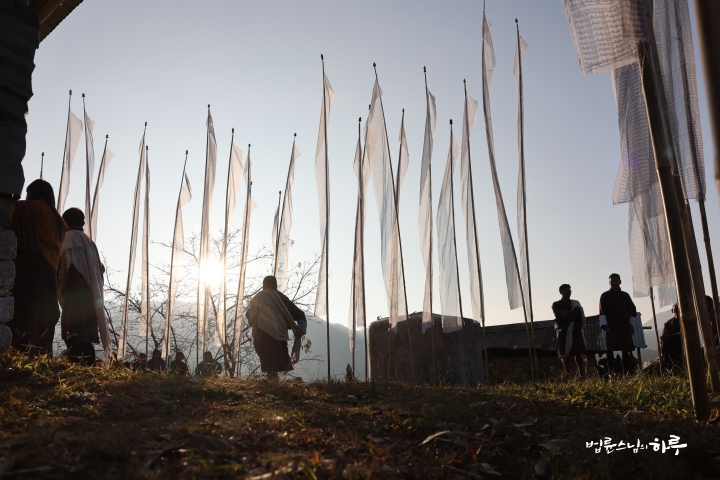
I’m Worried Because I Don’t Have Anything Specific I Want To Do After Retirement
Dec 31, 2024 - Day 8 of Bhutan Survery_ Visit to Bjoka Trong, Dali, Kamati and travel to Chepdempa Chiok
Hello. It’s the 8th day of the Bhutan survey. Today, Sunim visits Bjoka Trong, Dali, and Kamati in Bjoka Gewog to have conversations with the residents.
Sunim stayed at a guest house in Bjoka Gewog. Despite wearing many layers of clothes, it was cold due to the rural location on a mountainside and lack of heating. Sunim woke up early for practice and meditation, then proofread manuscripts. Soon it was time for breakfast.
“Did you sleep well, Sunim?” Before starting the day’s schedule, the Gup of the Gewog first offered a cup of tea to Sunim.
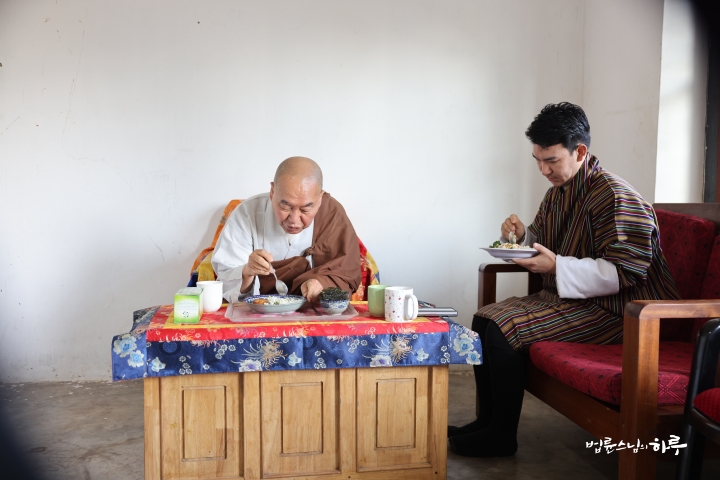
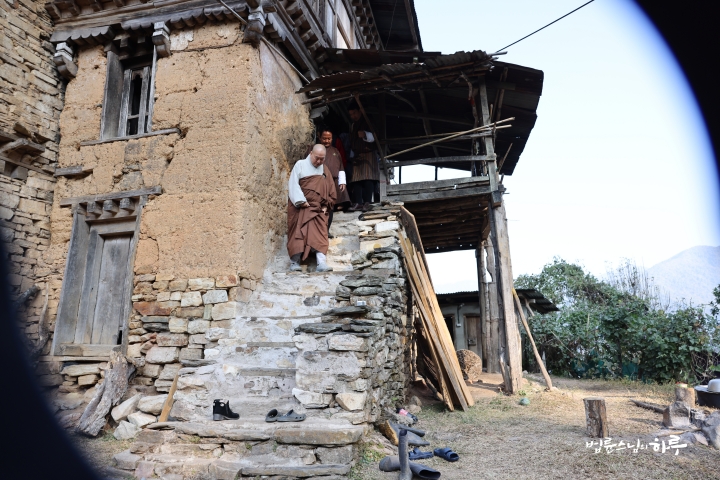
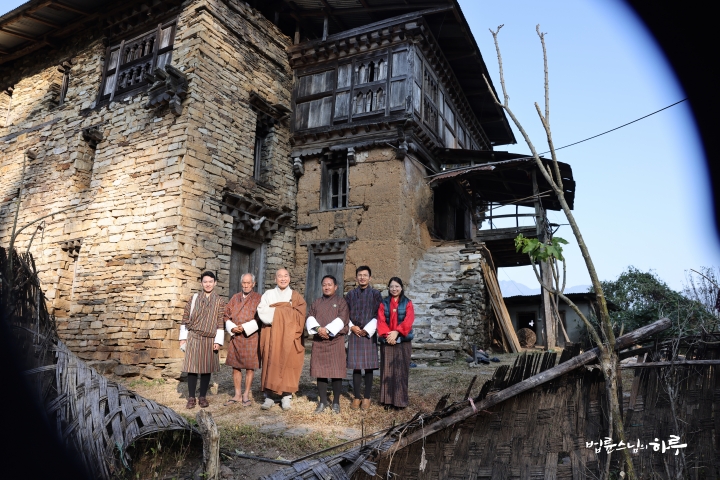
After a light breakfast, Sunim decided to visit an 800-year-old traditional house near the lodging.
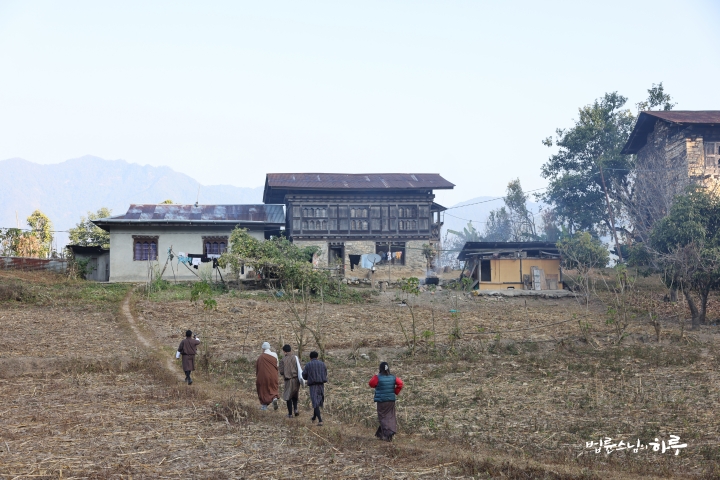
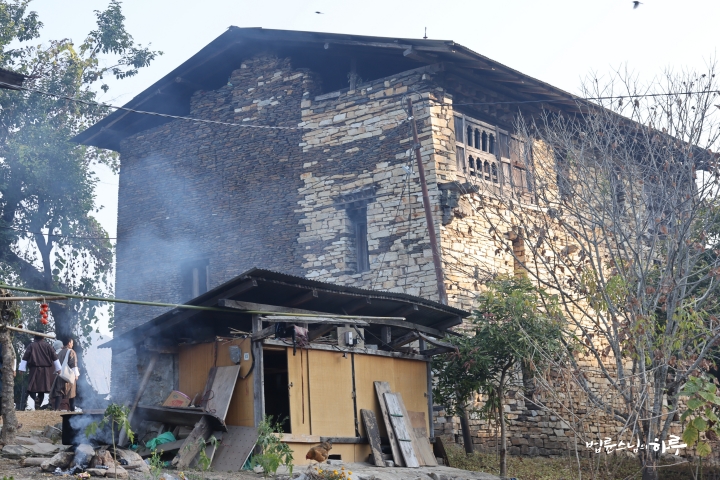
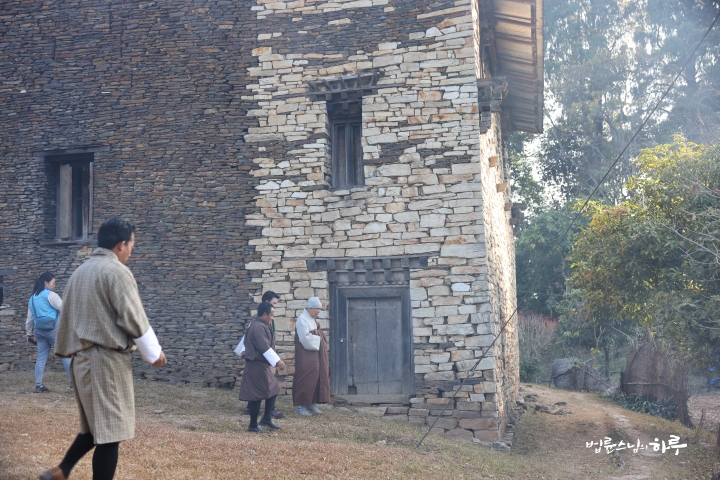
The traditional house was large. In the past, this single building housed government offices, a prison, and other facilities, serving as a kind of fortress. Currently, three families live in the house.
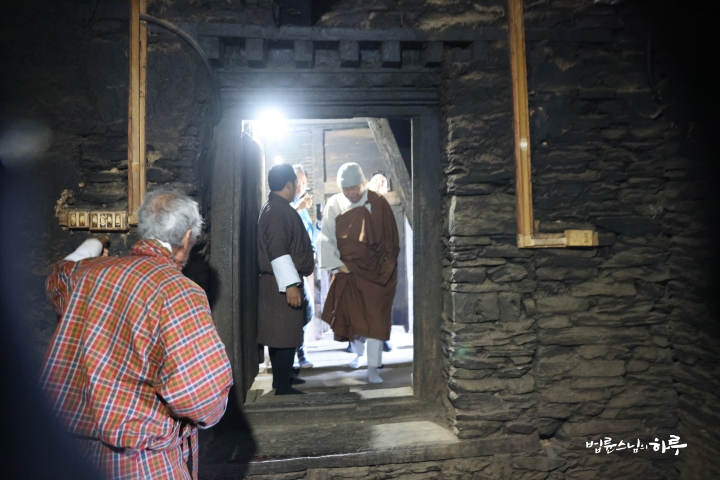
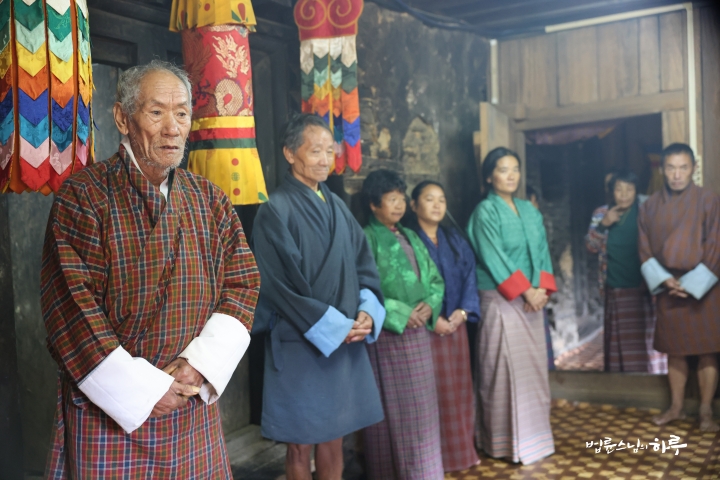
Sunim paid respects at the shrine and sat in the place guided by the elderly owner. The homeowner performed a simple ceremony for Sunim’s visit and prepared some food.
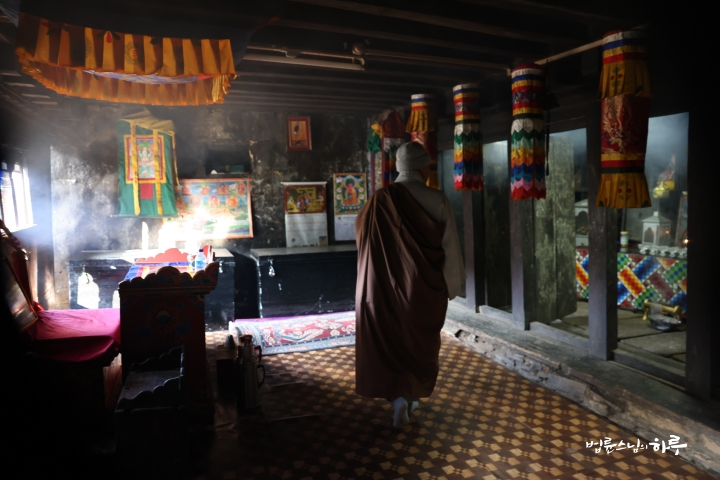
After slowly looking around the interior of the house, Sunim moved to a temple said to be 400 years old.
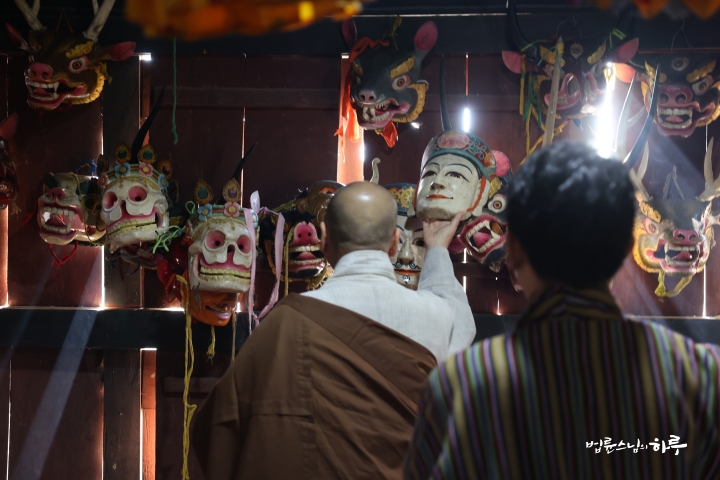
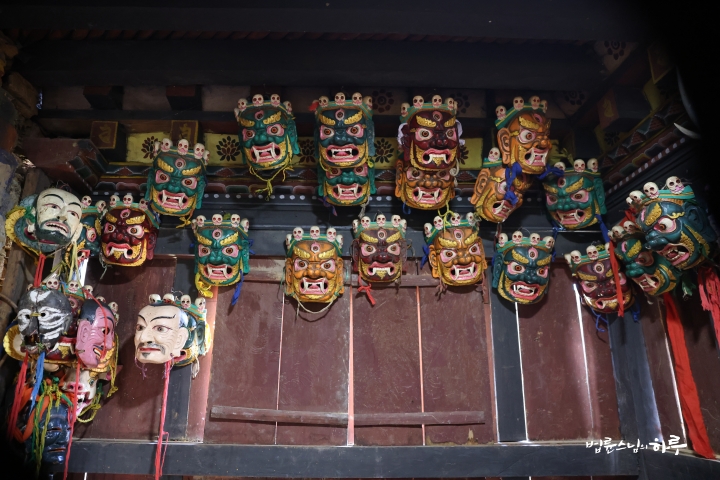
Sunim paid respects at the shrine and looked around the temple walls. The numerous traditional masks hanging on the walls were particularly impressive.
“It seems that traditional performances are still well kept in Bjoka, just like in Nabji.”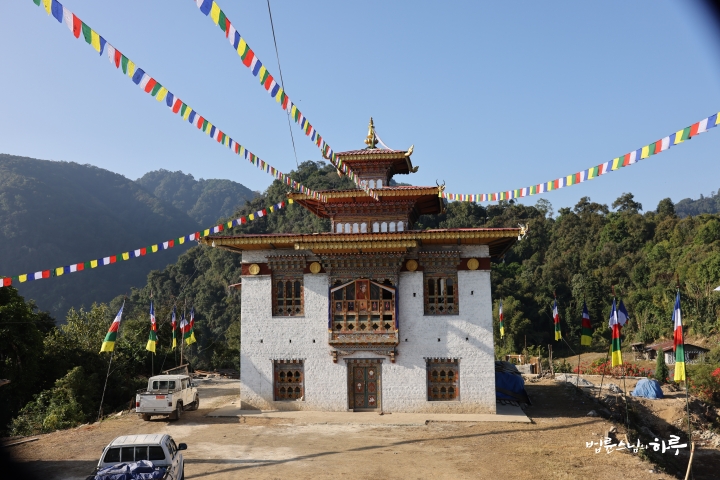
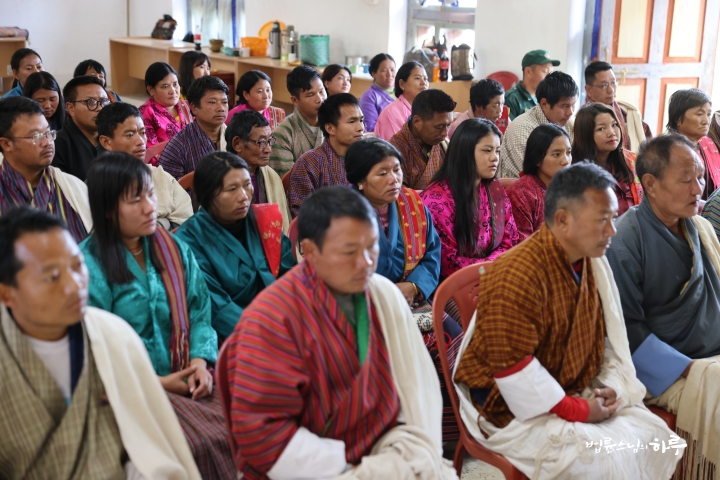
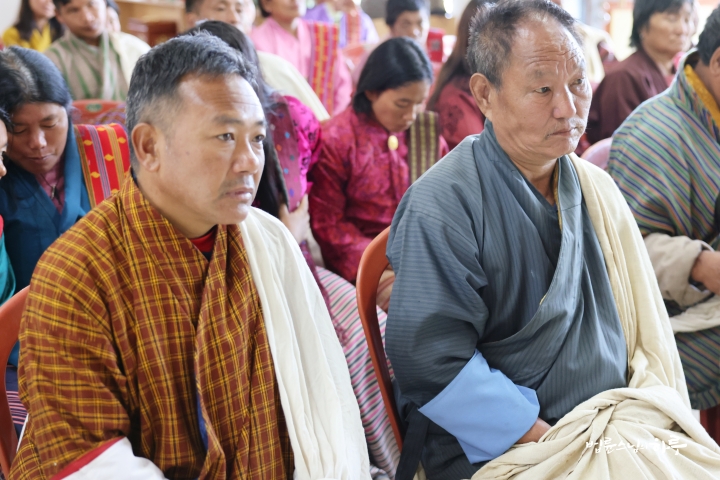
Soon it was time for the meeting with the people of Bjoka Trong village. Sunim moved to the auditorium of the Bjoka Gewog Forestry Department. About 50 residents had gathered.
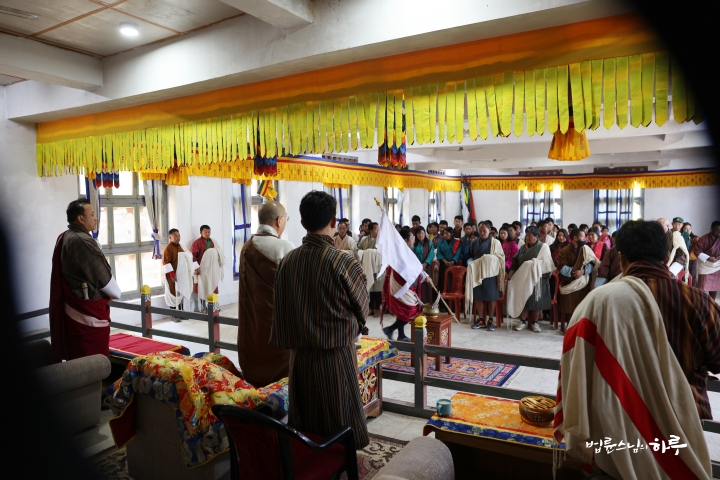
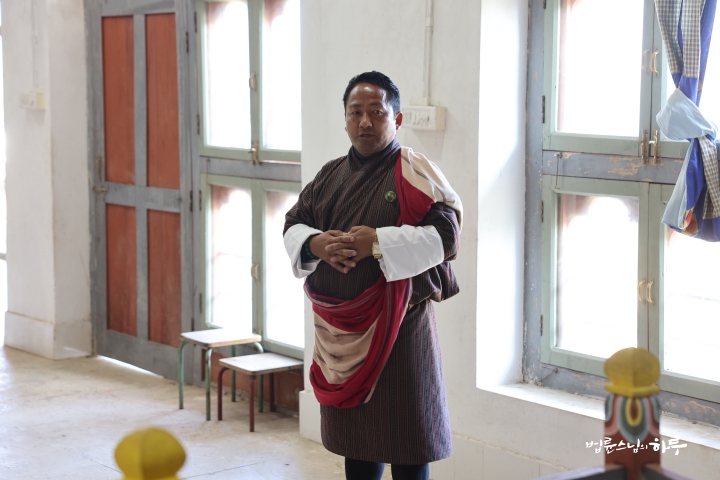
The Gup of Bjoka Gewog gave a welcome speech and provided detailed information about the village.
Sunim began greeting the villagers.
“Our meeting here today is due to the blessings of the Buddha and Bodhisattvas. Without the Buddha’s blessings, how could I, from far away in Korea, have come to meet you here in this remote village of Bjoka in Bhutan? (laughter)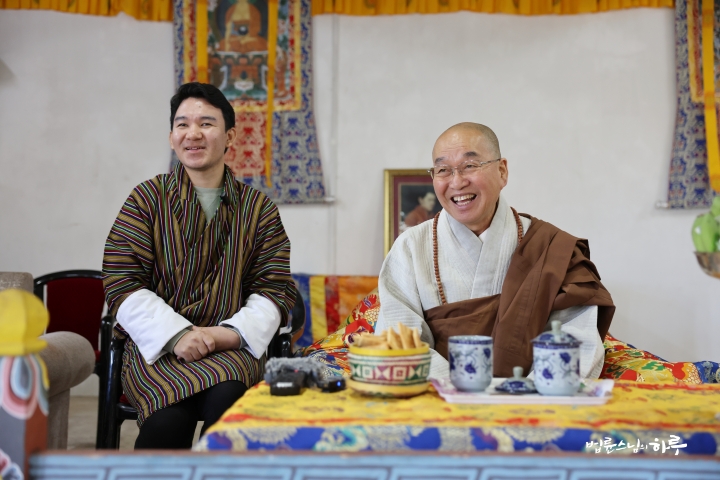
When Our Village Is Livable, We Should Let Other Villages Receive More Help
JTS funds are raised by Korean Buddhists to help those in need. In the past, Korean Buddhists thought that only building temples or erecting pagodas were acts of a Buddhist charity. The Buddha said, ‘Helping the poor and needy has the same merit as making offerings to the Buddha.’ So now, they understand that truly helping those in need – providing food to the hungry, medicine to the sick, and water to the thirsty – is the real Buddhist charity. They save 1,000 won every day, or go out on the streets with collection boxes, rain or shine, cold or hot, to raise money. Since this money is collected as if gathering funds for Buddhist charity, if you use it to improve your living conditions, it’s good for you because it makes your life more convenient, and it’s good for the donors because they accumulate great merit. So it’s beneficial for both parties. Then, how should this donation be used to generate real merit? Providing water where there is none, supplying food where people can’t eat properly.
Building houses for those without homes, or improving facilities for those with inadequate housing. Especially improving kitchen facilities for women. Installing partitions in houses if there are none, and setting up shelves. Building toilets where there are none, or rebuilding them if they are not clean. Creating irrigation channels if the fields don’t have proper water supply. Building fences because animals eat the crops. Improving facilities like desks, toilets, or chairs and desks so that elementary school children can study. Or providing educational materials like books and notebooks if they are lacking. Performing eye surgeries for those who can’t see. Providing hearing aids for those who can’t hear . If the money is used in these ways to solve people’s difficulties, it’s the same as making offerings to the Buddha.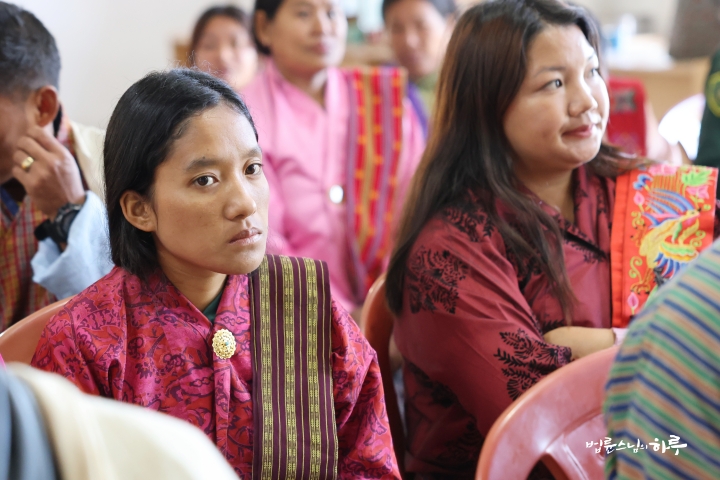
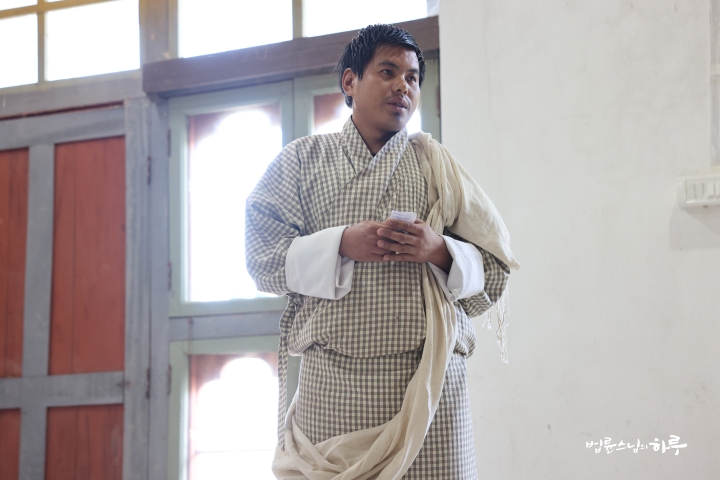
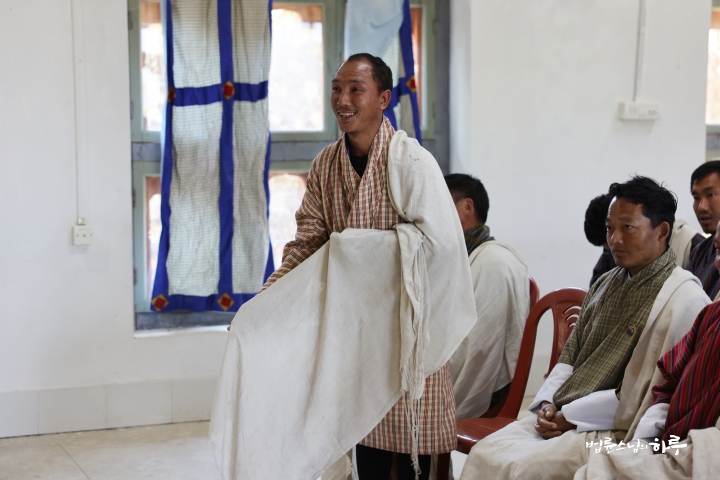
The villagers began to share their various difficulties.
– We were building a house with help from the Tarayana Foundation, but construction was halted. We want to complete the remaining part of the house.
– There are young monks living in the temple, but there are no dormitory facilities. We want to build dormitory facilities at the temple and create living facilities so they can live there.
– The drinking water problem is really serious. We receive water support from various places, but it’s really tough during the winter when there’s no water. We want to replace the water tank with a larger one or redevelop a nearby water source.
– We want to provide school uniforms for children from poor families.
– We want to repair some sections of the road.
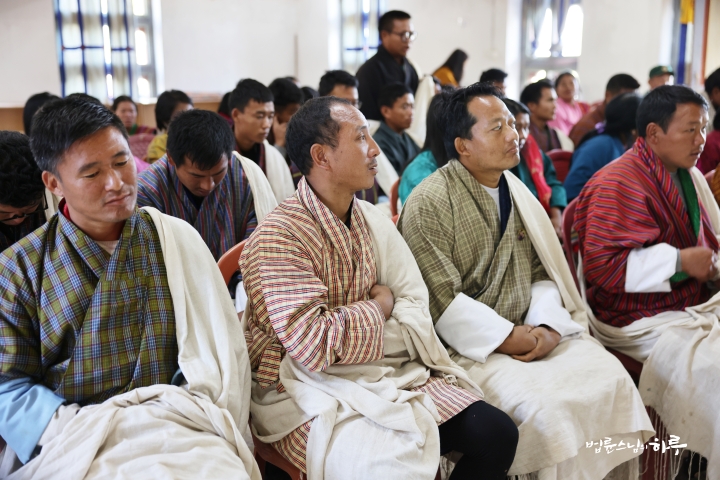
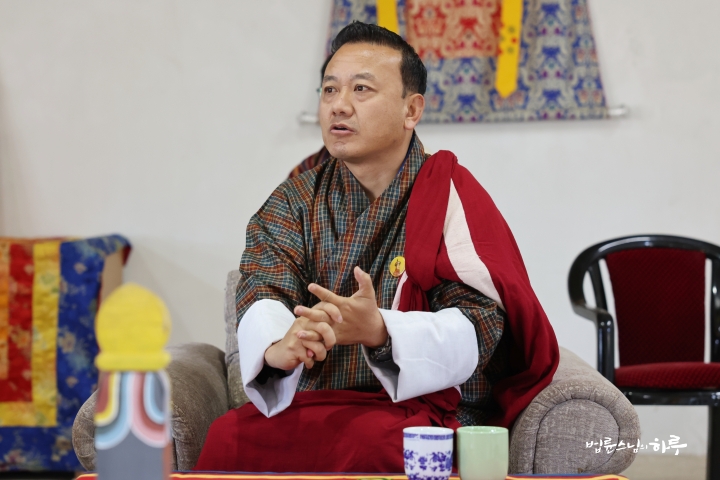
The governor, who was accompanying Sunim on today’s schedule, also urged the residents of Zhokha Trong to understand the principles of JTS projects well and apply for projects accordingly.
While moving to Dali village, Sunim visited Zhobkha Primary School.
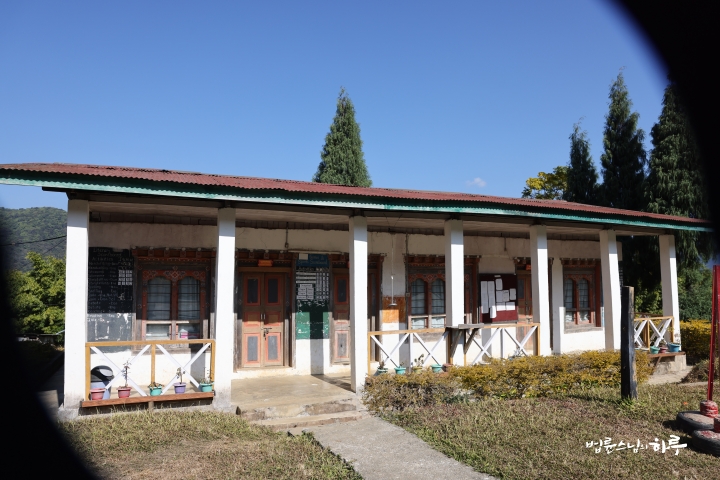
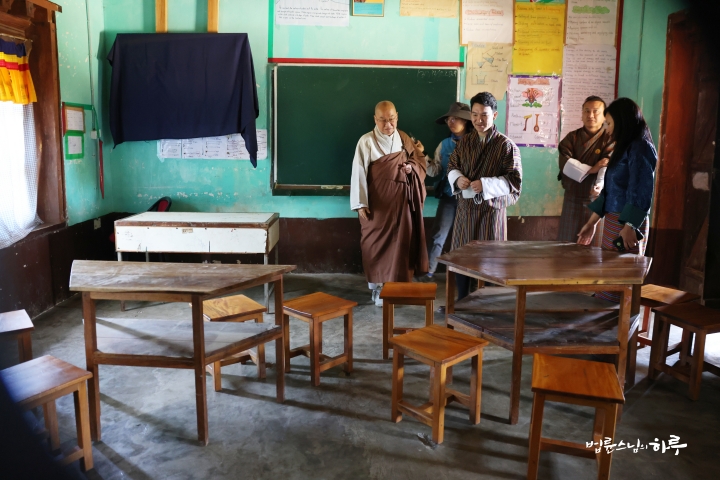
The school had 96 students, including about 40 boarding students. Upon entering the school, it was observed that although worn in places, it was relatively clean and well-equipped.
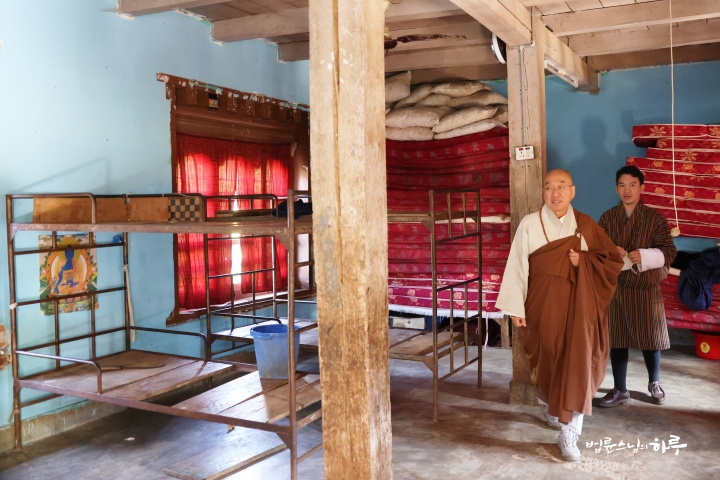
In the dormitory, it was reported that the mattresses did not fit the beds and were unusable. Sunim decided to support the replacement of bed frames for the students.
After about an hour of travel, he arrived in Dali.
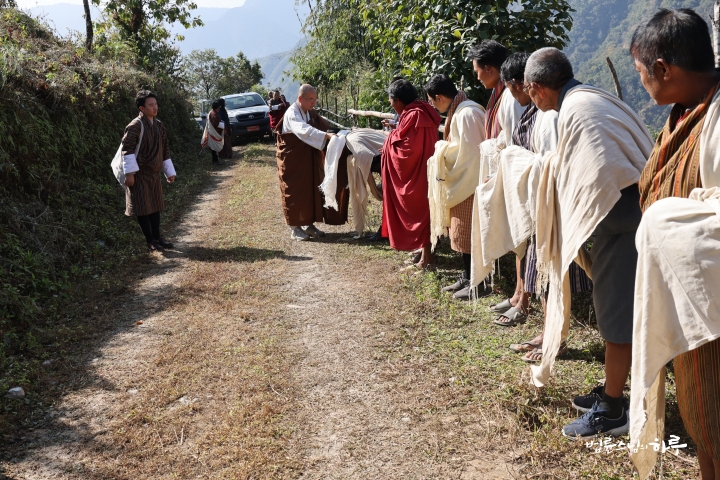
Upon arriving at the temple, Sunim paid his respects, participated in a traditional welcome ceremony, and then began a dialogue with the residents.
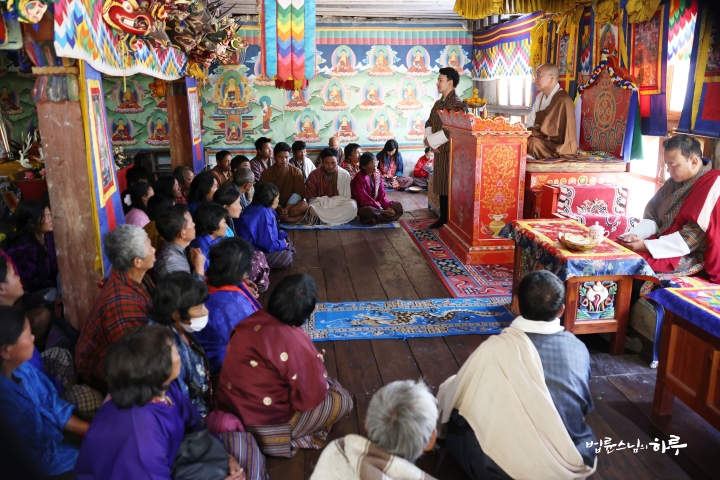
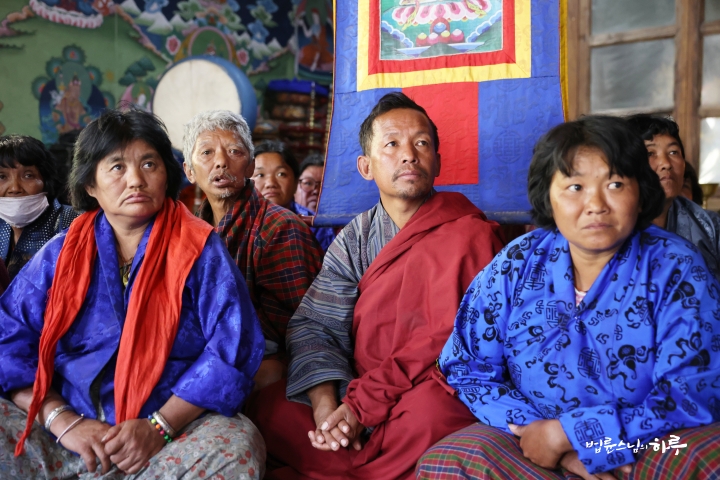
– The Tarayana Foundation supported our village once, but I wasn’t in Dali at that time, so I couldn’t receive support. I don’t have a house.
– My house is too small. If I put the kitchen inside, it becomes too cramped, so I want to build a separate kitchen outside.
– There are many events at the temple. It’s very inconvenient without a kitchen every time.
– The iron roof of the health center is old. It needs to be replaced.
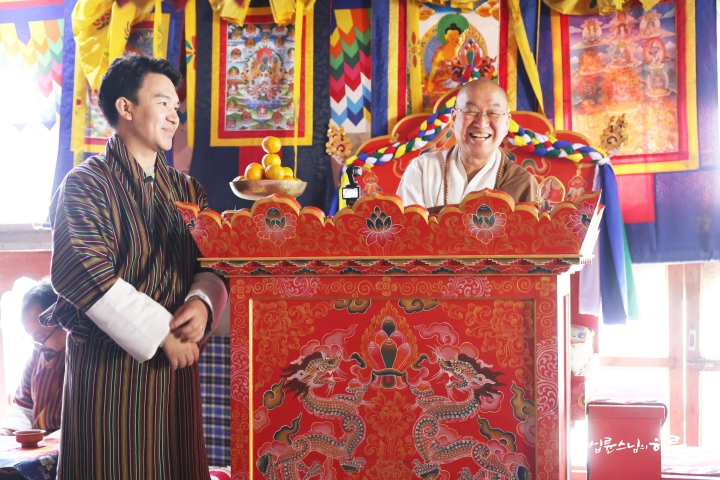
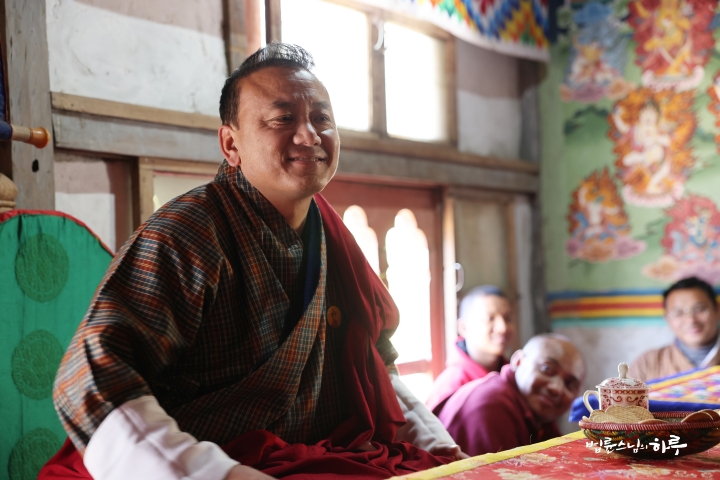
After about an hour of conversation with the residents in Dali village, Sunim had lunch prepared by the Dali temple.
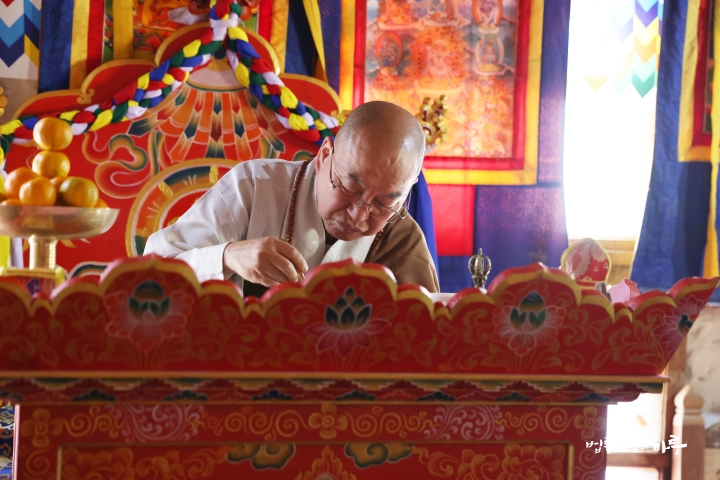
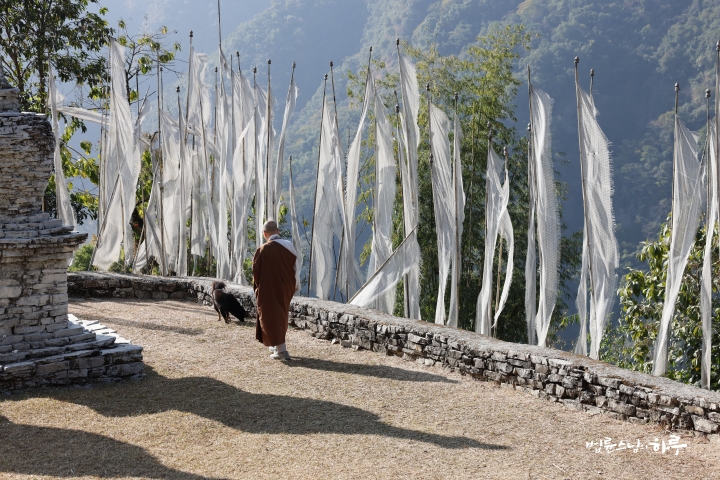
After finishing the meal, Sunim took a look around.
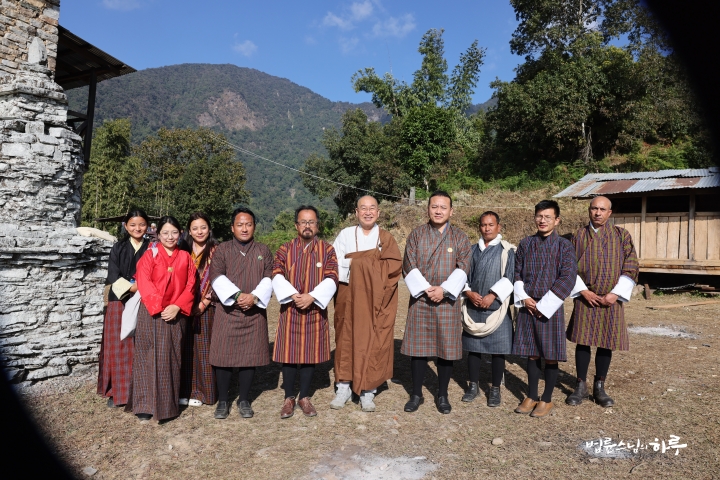
Sunim explained the location and gathered all the staff for a commemorative photo.
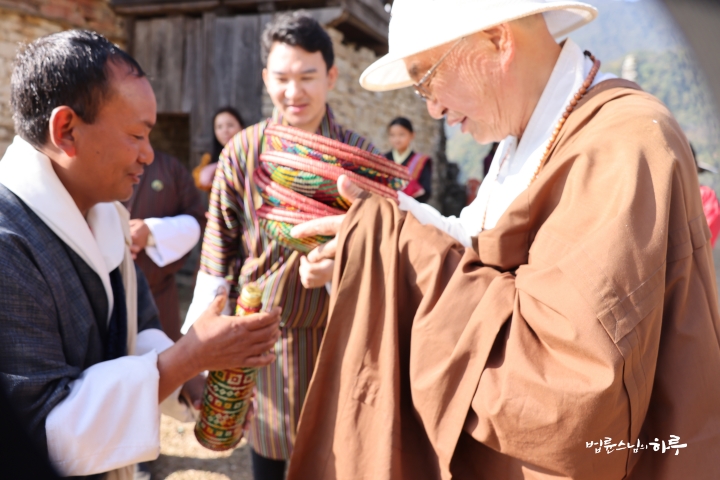
As Sunim was about to leave Dali village, a villager came with an armful of gifts for him.
“Sunim, have a safe journey. There are gifts you receive when you arrive, and these are gifts for your departure.”
Sunim accepted the gifts and gave a donation in return.
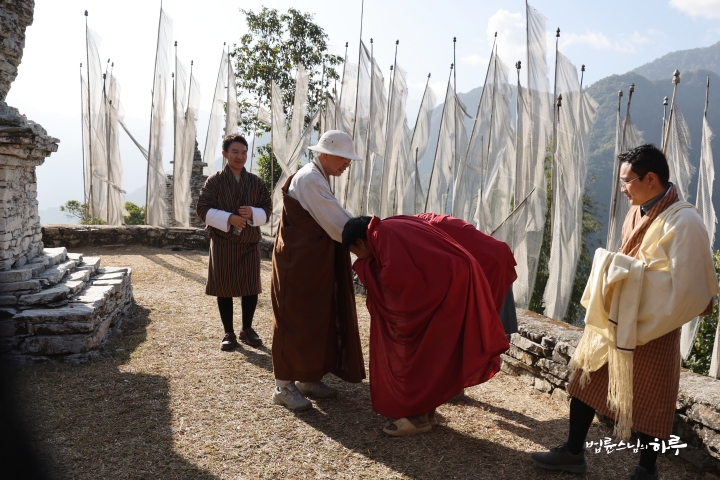
After another hour and 30 minutes of travel, he arrived in Kamati. The Kamati temple was on the mountaintop across the way.
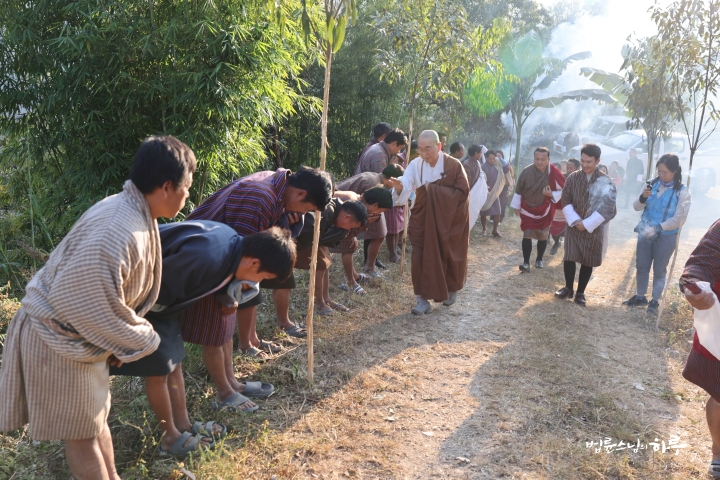
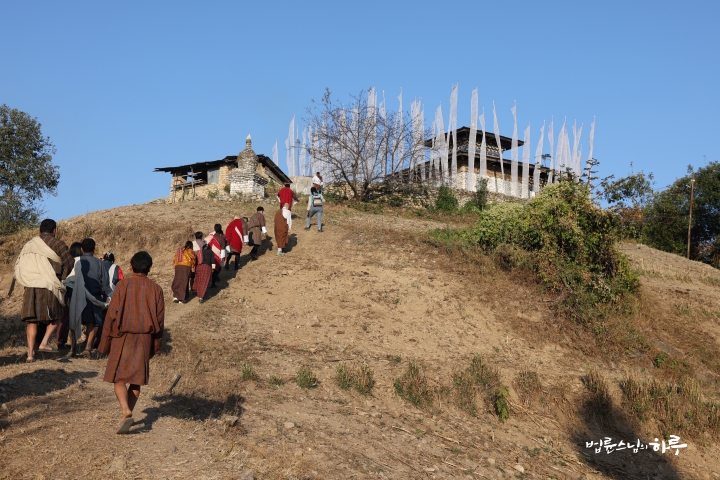
Upon arriving at the temple, Sunim received a traditional welcome ceremony and immediately began a dialogue with the residents.
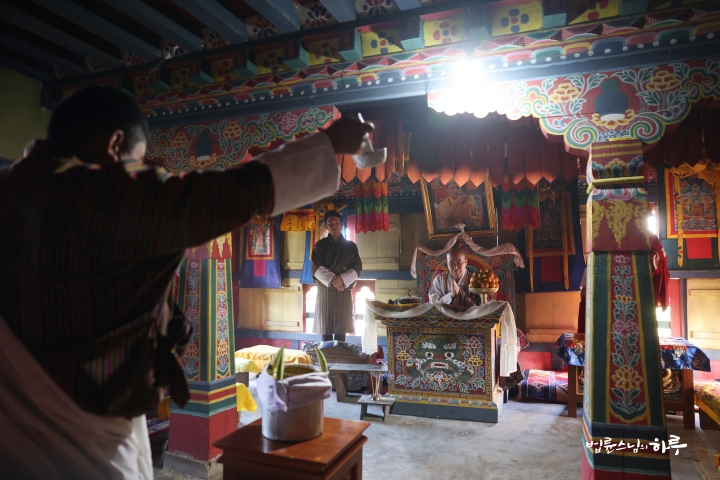
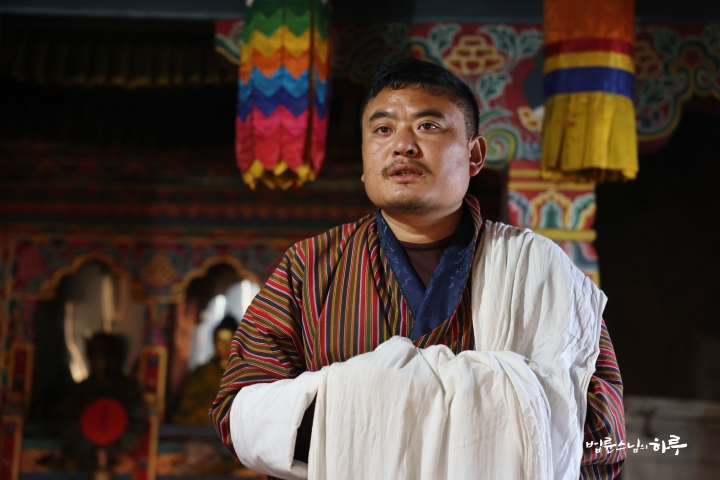
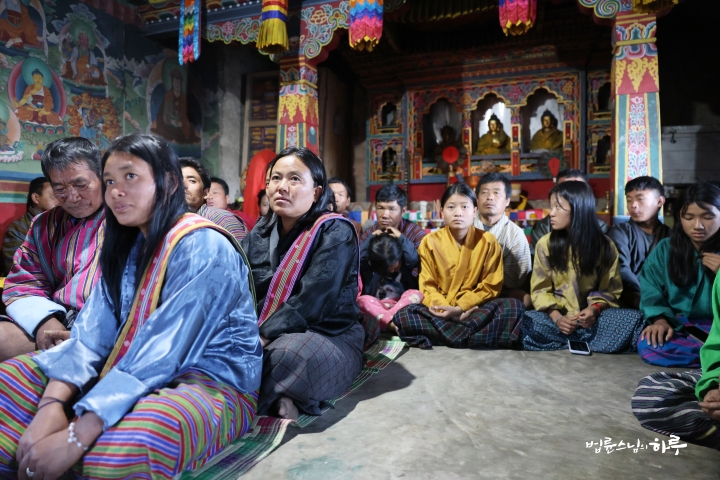
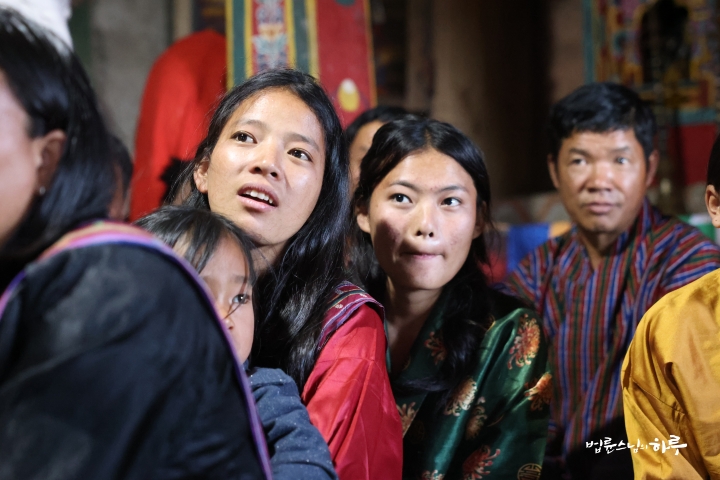
– I couldn’t build a house because I’ve been taking care of my mother who has been sick for 13 years. If you provide the materials, I will work hard.
– It would be nice to have shelves in the kitchen.
– The Tarayana Foundation provided support for a house, but they only provided roofing materials. There are no partitions, shelves, or kitchen.
– I want to build a fence to keep out wild animals.
– It would be good to have a power tiller that the village can use communally.
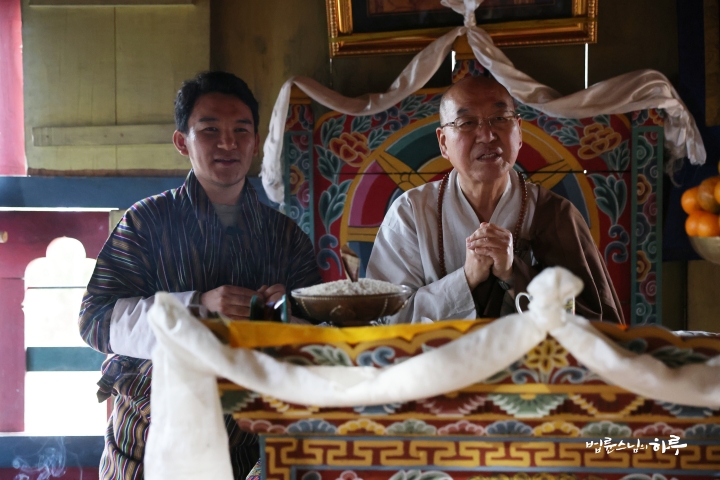
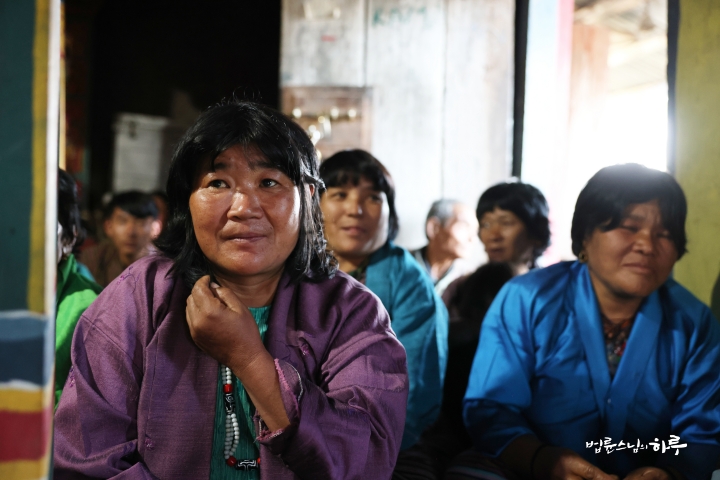
All visits for today were completed up to Kamati Chiwog. Sunim moved to Chepdempa Chiwog.
Sunim’s group, along with the Gup of Zhobkha Gewog and the vice governor, also moved to stay overnight at Chepdempa Chiwog.
Arriving at the Tshogpa’s house in Chepdempa Chiwog, Sunim paid respects at the private shrine inside the house, and after finishing the dinner prepared by the Tshogpa, it was already past 8 PM.
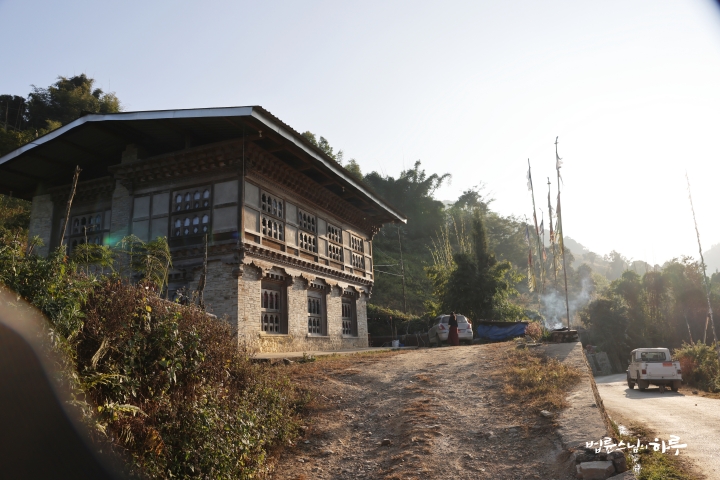
With a Lama (monk) visiting the village, there’s a festive atmosphere with the village bustling and lively. The sounds of villagers can be heard late into the night outside.
We deliver Sunim’s New Year’s message to the Jungto practitioners welcoming the new year of 2025.
Here is Sunim’s New Year’s message to Jungto practitioners.
“Dear Jungto practitioners, the new day of 2025 has dawned.I wish you all good health and happiness in the new year.
At the end of last year, 179 innocent lives were lost in a plane accident at Muan Airport.
I pray for the repose of all the departed souls.
May they rest in peace! May they be reborn in the Pure Land!
I also extend my condolences to the bereaved families.
In the new year, I hope we all live with caution in everything we do so that such unfortunate events do not occur.
I am spending the end of the year and welcoming the new year in a remote village in Bhutan, at the southern foothills of the Himalayas.
I pray for everyone’s happiness.”
2025.1.1. Midnight, Jigwang Pomnyun, with palms together
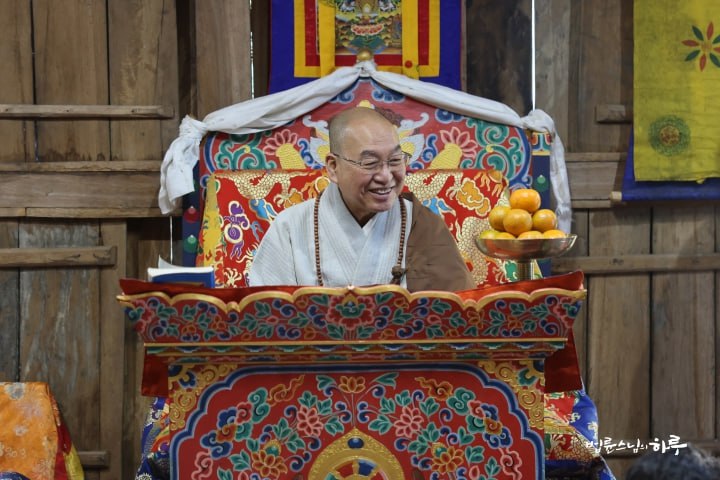
Since there was no Dharma talk today, we are introducing the conversation of the Happy Dialogue Q&A session held in Wonju on November 1st.
I’m Worried Because I Don’t Have Anything Specific I Want to Do After Retirement
“I have worked for 34 years and am facing retirement in 5 years. I’m honestly afraid of how I should live after retirement. Looking back on my life so far, as a student I just studied, and after graduation, I just went to work. I always had somewhere to go and something to do. But after retirement, I feel like I should do something I like, and I haven’t found that yet. I also think I need to prepare for it in advance, so I’m afraid. Until now, I’ve just lived doing what was given to me as time passed, without any particular preferences. As a student, I just studied, and since I attended nursing school, I got a job as a nurse after graduation. I’ve been working as a nurse until now, and soon I have to retire. I don’t know what I like or what I’m good at. What kind of mindset should I have?”
“You’ve been doing fine working at your job until now without knowing what you like, haven’t you? So, even if you don’t know what you like after retirement, do you think there will be any difficulties in just relaxing?”“It’s okay now because I’m working, but I’m worried that I’ll have too much free time after retirement.”
“Have you always been short on time throughout your life? Or have you lived worrying about how to spend your time because you had too much of it?”“I’ve always been short on time.”
“If you’re worried about having free time after always being short on time, come to me. Most people who have asked me questions were always short on time, and there weren’t many who were worried about having too much time. Have you ever heard the saying ‘The unemployed die from overwork’?”“Yes, I’ve heard that.”
“Just like that saying, your worry is not a concern at all. In fact, after retiring and a year passes, you’ll become much busier than when you were working. That’s why such a saying exists. If you’re worried about having too much time, you don’t need to worry about that at all.”“But I don’t know what I like yet.”
“There’s no problem with just relaxing.”“I feel like it would be a waste of time if I just relax without doing anything. That’s why I want to find something I like.”
“Is it easier to smoke cigarettes or not to smoke?”“Since I don’t smoke, it’s easier not to smoke.”
“That’s how you feel, right? Then let me ask someone in the audience who smokes. Can those who smoke raise their hand? How do you feel?”“It’s easier to smoke.”
“That person says it’s easier to smoke. If we were to stop them from smoking, they would probably find it very difficult. It’s the opposite for you. Let’s look at this objectively. To smoke, first, you need money. That means you have to work that much. You also have to go to a store to buy cigarettes. Then you have to unwrap the package and put it in your mouth. After smoking, you have to clean up the ashes. There’s an enormous amount of work involved, but that person says it’s harder not to smoke. If we look at it more objectively, we can see that smoking is much more difficult than not smoking. However, for someone addicted to cigarettes, not smoking is more difficult. Smoking is easier. For those who find it easier to smoke, it’s because of habit. What if it’s about work? It’s easier not to work. But you’re afraid of retiring from your job. This is all because of habit. But habits can change. Even with cigarettes, if you continue not smoking for 1-2 years, that habit gradually disappears. However, it’s very difficult in the beginning. This is called a healing crisis, and it’s the same with work. When you retire from a job you’ve always gone to, you experience such a phenomenon initially. Looking at the law of inertia in physics, objects in motion tend to stay in motion, and objects at rest tend to stay at rest. It’s the same with work; there’s inertia for those who have been continuously working, making it difficult to stop. Conversely, once you stop, it becomes difficult to start again. After retirement, it’s easier to just relax. Why do you think society has a retirement system? It’s to do easier things rather than difficult ones. As we age, it becomes harder to work. The retirement system means it’s okay to rest now. So, you can rest. If that’s difficult, you can continue working.”“While working, I had a wish to take just a 3-month break and then return. I wanted a 3-month vacation to travel as I wanted. But after retirement, I have to live not just for 3 months but for 10 or 20 more years, right? When I think about this, I wonder if I can live with satisfaction just resting without going to work.”
“That’s not difficult. First, you still have time before your retirement. For example, you have a higher probability of dying before younger people. So that’s an unnecessary worry. Second, looking at the discussions in our society, there’s a high possibility that the retirement age will be extended. If you have about 5 years left until retirement now, there’s a high chance that the retirement age will be extended within those 5 years. Currently, there are opinions to set the minimum retirement age at 65 and to consider people as elderly from 70. The Korean Senior Citizens Association is proposing to raise the elderly age to 75. If we consider people as elderly from 75, there’s a possibility that the retirement age could be extended to 70. Then your retirement would be extended by about 10 years. So you don’t need to worry about that. Third, after retirement, you can try relaxing, and if you find that enjoyable, you can continue to do so. If you get bored, you can work again. You can quickly find a job with fewer working hours and lower pay, even if it’s not at the same level as your current salary. You just need to give up on the level of salary you used to receive. If you don’t want to do that, then it’s not a worry about being bored after retirement, but a worry about money. You can continue working as much as you want. While it might be difficult to stick with your current job, there are plenty of other opportunities. People don’t have to do the same job their entire lives. These days in rural areas, there’s a lot of garlic planting work going on. Foreign workers are currently doing this work for a daily wage of 120,000 won. This is seasonal work in the fall, and when there’s a shortage of workers, they even raise the wage to 150,000 won. Also, those who grow chestnuts pay 150,000 won per day for chestnut picking.”“I’ve never done that kind of work before.”
“How many of the foreign workers from countries with completely different climates do you think have experience picking chestnuts? If you’re new to the job and not skilled, you can accept a lower wage. Instead of 120,000 won, you could offer to work for 80,000 won. In places where there’s always a shortage of workers, you can get a job just by showing up. You don’t even need to choose what kind of work to do. Currently, there are about 2 million foreign workers in our country. There are hundreds of thousands of seasonal workers who come in spring, work for 8 months, and return home that same year. That’s why airline tickets to Korea in spring are extremely expensive. It’s because so many people are coming to Korea during that time. You’ll also receive a retirement package, so you could come to me and volunteer after retirement. If you come to me, there’s an enormous amount of work to be done. You saw many people at the reception desk today, right? After completing the Happiness School and becoming a Happiness Citizen, there’s an incredible amount of work available. This kind of work makes our citizens happy and is meaningful.”“I think I’m selfish and prioritize myself over others’ happiness.”
“When you work for others’ happiness, you become happy yourself. People often don’t realize this.”“First, I want to find work that I enjoy.”
“You don’t have anything you particularly enjoy, do you? People who have something they love feel miserable when they can’t do it. So not having something you love is actually good. You won’t feel miserable no matter what kind of work you do. That’s why you’ve done well in your career. People who have something they love suffer when they can’t do it. So you don’t have any problems. Firstly, you might die before retirement, so that’s fine. Secondly, the retirement age in our country might be extended. Thirdly, after retirement, you can try relaxing, and if you enjoy it, you can continue. If you get bored, you can work. You can work for a while and then relax again. If neither is enjoyable, you can try volunteering. After retirement, you can try various things, and if you find something you like, you can do that. There’s no problem at all. However, people who have something they love don’t have this flexibility. They suffer if they can’t do what they love. So not having something you particularly love, like in your case, is an incredible blessing. Similarly, people who don’t have a particular preference in romantic partners are also fortunate. They can marry anyone and separate if needed. But people with specific preferences have a difficult life. First, it’s hard to find a partner they like. Also, it’s painful if they break up or lose their partner. So whether it’s people, things, or jobs, not having particular preferences is an enormous blessing. You don’t have any problems.”“Still, I feel like I need to have something I enjoy to live happily for the rest of my life.”
“That’s a misconception. You might think you need to have something you like, but it’s not a problem if you don’t. If you try various things, you might find something you enjoy. Right now, you’ve only done one thing because you didn’t have to focus on anything else, but after retirement, you might discover something you like through various experiences. You could try farming, become a Happiness Citizen and volunteer. If you discover something you like during this process, that’s great. If not, that’s fine too. If you try too hard to find something you like, you’ll be disappointed if you can’t find it.”“Yes, I’ll try to have as many experiences as possible. Thank you.”