I’m Worried About My Tendency to Push Away People I Like
Dec 26, 2024 - Day 3 of Bhutan Survey_Visiting Trong Dankhar, Goling, Changla Jong Zurphel, Tama Berti
Today marks the third day of the Bhutan survey. After his early morning practice and meditation, Sunim prepared for next year’s special practice, communicating with Korea. Before leaving, he gathered the staff to discuss some improvements based on their overnight stay in Phuntsholing village.
“After spending the night there, I noticed that it’s too cold for the volunteers to sleep in the building. It would be helpful to explore ways to make the accommodations warmer.”He also mentioned a few key considerations for doing business in Bhutan. By 6 AM, the Indian staff and Borisu lay practitioners were already busy loading luggage into the car and greeted Sunim as he prepared to leave for the survey site.
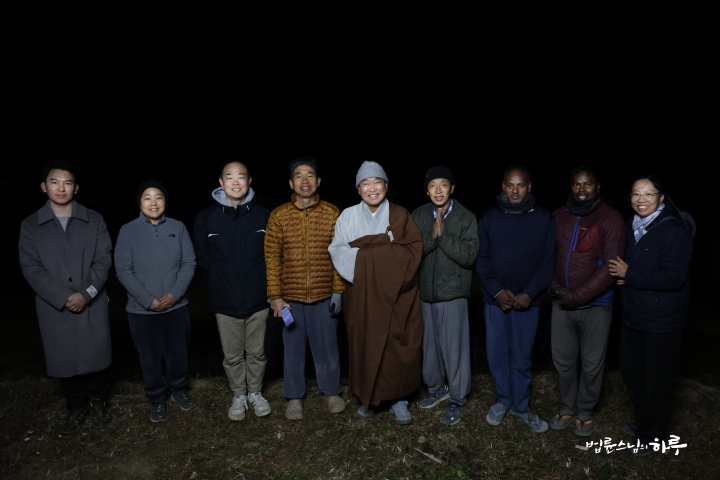
“I know it’s not easy for you lay practitioners to stay here due to the inconveniences, but I hope you manage well during your stay. I plan to survey Zhemgang Trashigang Gewog and stay at the Phangkhar JTS Center tomorrow. It would be good for you to come to Phangkhar, rest and regroup for a day, and then return to Phuntsholing village. I’ll see you tomorrow then.”Sunim and the volunteers took a photo together under the light of the Phuntsholing village temple, which was installed by Park Taehwa and Kim Jaewon, two Borisu lay practitioners.
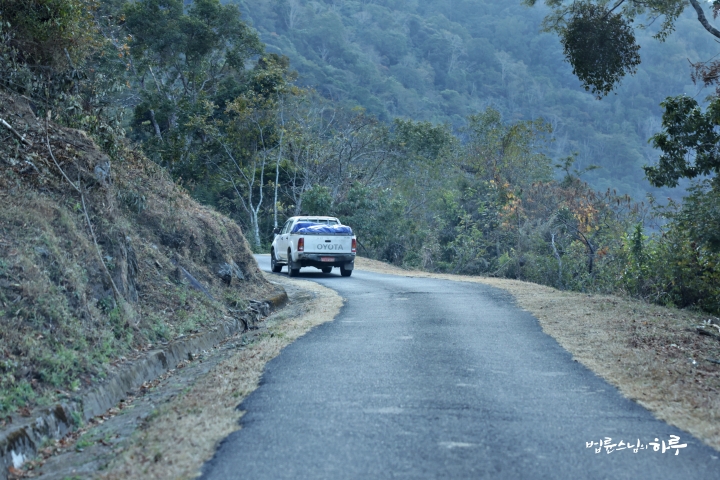
In the moving car, Sunim said to the staff.
“After staying in Phuntsholing village, It seems to be the most challenging area among the places we’ve visited so far. There are only 15 households. We should consider providing more support to Phuntsholing.”Beginning the Survey of 30 Chiwogs in Zhemgang Dzongkhag
The survey of the entire Zhemgang Dzongkhag officially begins. Today, we plan to visit three chiwogs in Trong Gewog — Trong-Dankhar, Changla Jong-Zurphel, and Tama Berti — as well as one chiwog in Nangkor Gewog, Goling, to speak with the villagers.
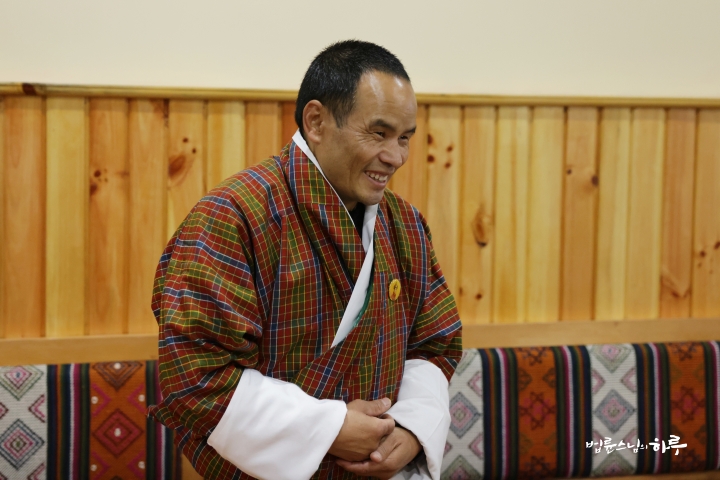
Sunim departed in the early hours of the morning, traveling in the dark, and arrived in Zhemgang Dzongkhag just as dawn broke. The deputy governor, livestock officer, and planning officer of Zhemgang came out to greet Sunim.
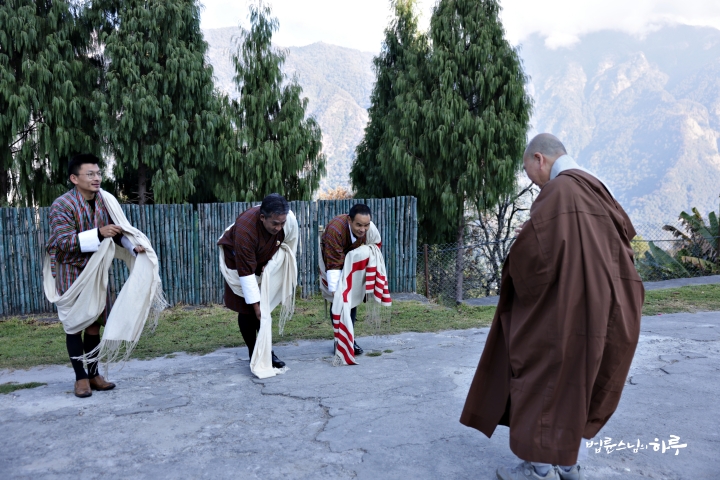
“Welcome, Sunim. Let’s have breakfast first and then start the survey schedule.”
The deputy governor guided Sunim.
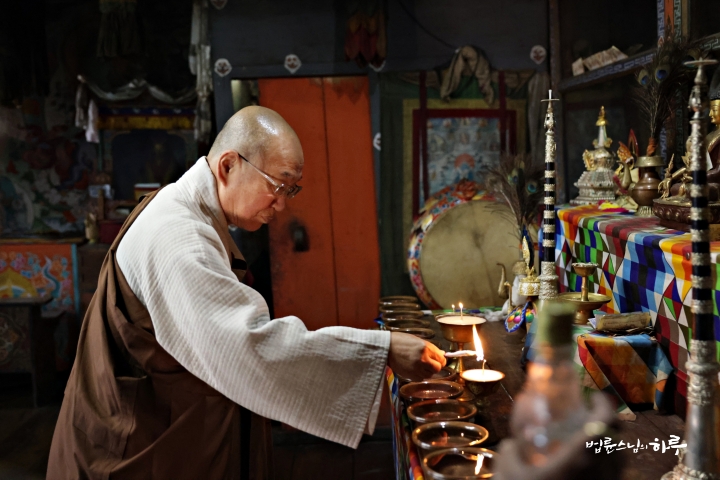
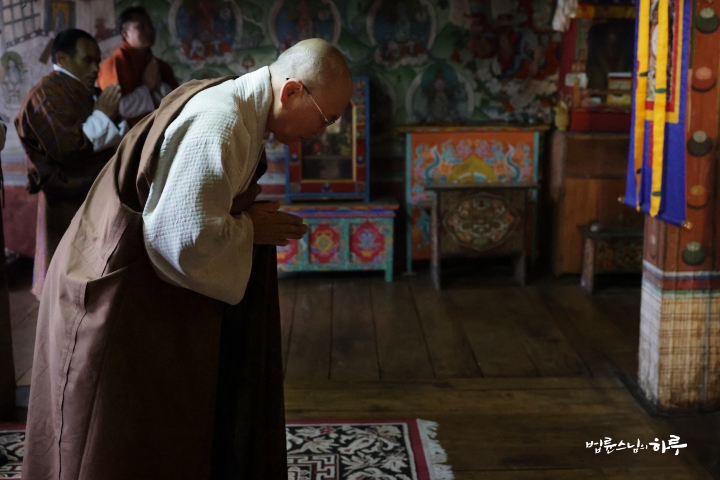
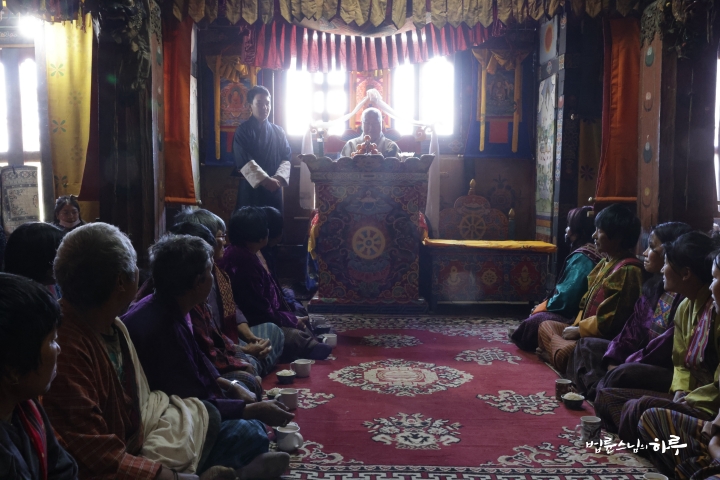
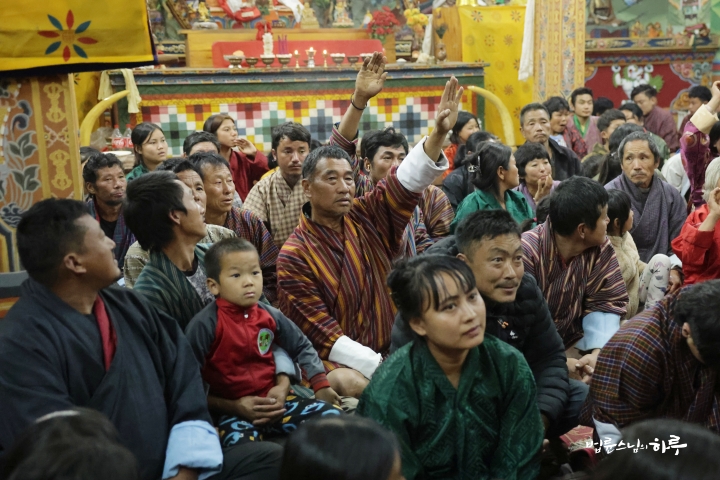
After having breakfast, which was prepared by Zhemgang Dzongkhag, Sunim began visiting the villages. After about a 10-minute drive, he arrived at the first destination, Trong-Dankhar Chiwog. The villagers were waiting for Sunim. He entered the Dankhar temple to pay respects and began talking with the residents.
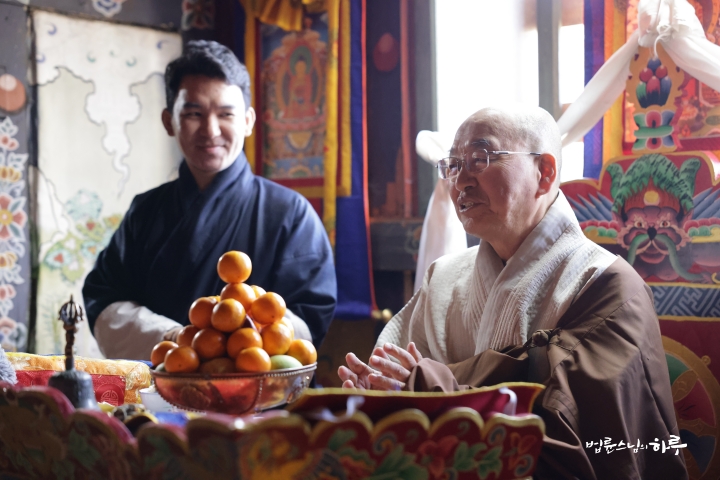
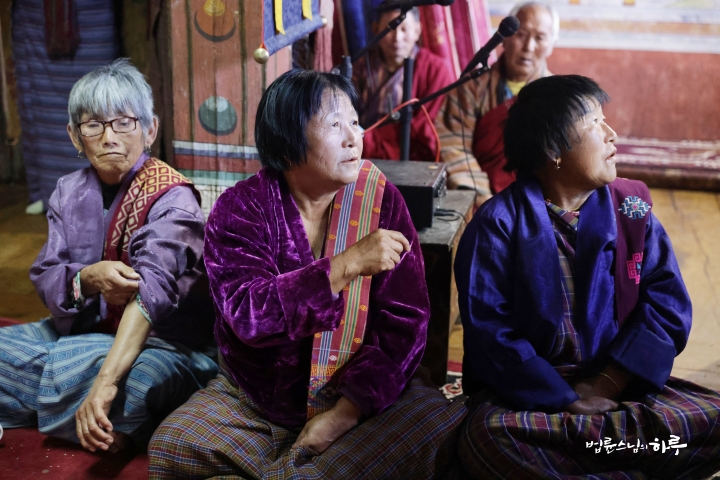
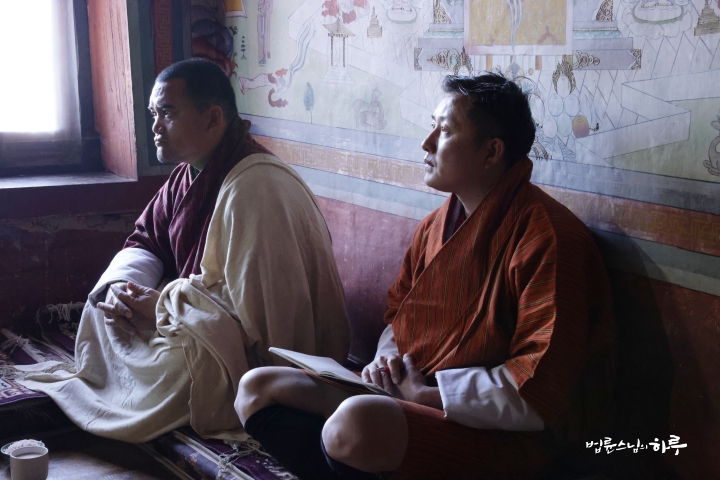
“Yes.”
“The people of Nimshong built a house for the poorest family in the village. The people of Langdurbi repaired houses. The people of Nabji village made an irrigation canal. The people of Korphu paved a section of the road. Rephati and Rimaphong installed water supply systems. Rephati’s was 7km long, and the villagers worked on the construction for a month. I hope you will also consult with the Tshogpa about what is needed in your village and let us know. If anyone has questions or suggestions, please speak up.”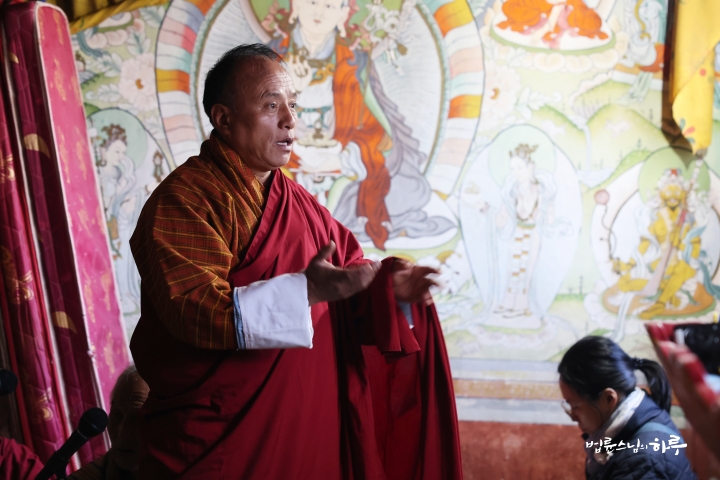
A villager who appeared to be the Tshogpa stood up and said.
“We heard that you came to Bhutan to help people in need. Thank you for that. In our village, all the paths are made of dirt, so it’s really difficult to get around during the rainy season. It would be much more convenient if we could pave them with cement.
Wild animals, especially bears, appear at night. It’s dangerous for villagers at night. So it would be good if we could install streetlights to illuminate the area and drive away the bears.
Our village also has a drinking water problem. The water storage tanks are old, not maintained, and damaged. These facilities need to be repaired.
There’s a family with three children who don’t have a house. This family is currently living in someone else’s house and they don’t have any land. We’d like to solve these problems.”
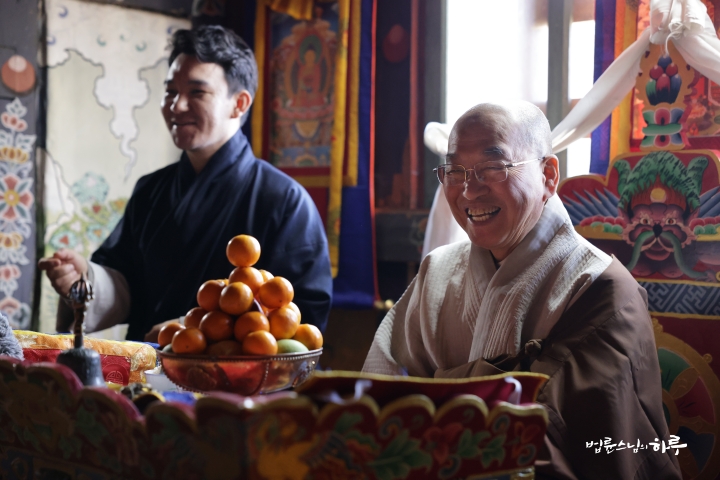
“We’ve already agreed to that.”
“If they don’t have land, someone will need to donate land.”“We don’t have much land. We need to receive land from the government.”
“If someone could provide land, this could be resolved quickly, but getting permission for government land takes a long time. Otherwise, someone could lend them land.”As soon as Sunim finished speaking, the villagers began discussing among themselves. After a moment, one person spoke up:
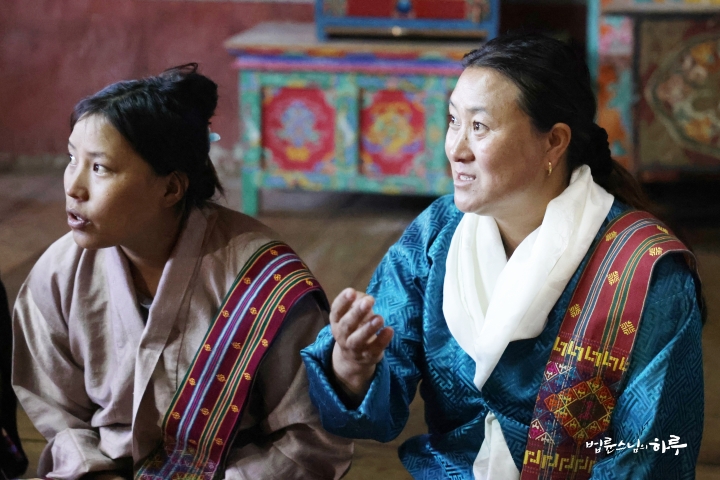
“Since we don’t have land to donate and building a new house is difficult, it would be good if we could install partitions and separate the space in the house where that family is currently living.”
“In that case, our staff will visit the site. If it can be modified for use, we’ll do that. If not, we may need to build a new one. Getting government land will take a long time. It would be good if relatives or family members could lend them land.”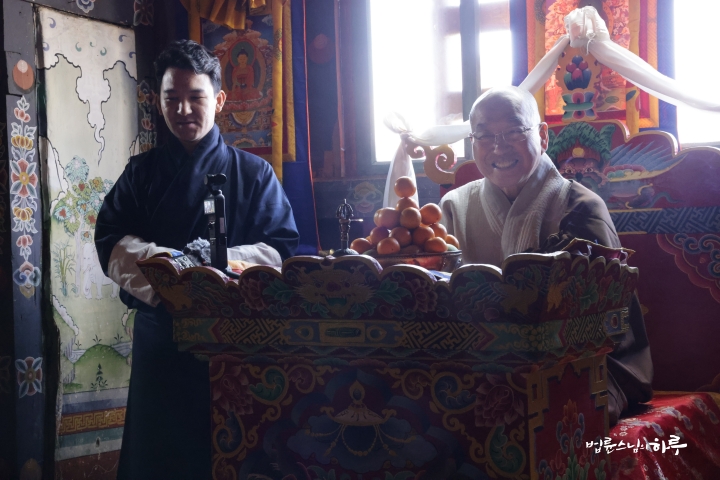
“There are three such houses here.”
“Yes, please apply to repair the kitchens. Let me emphasize again that this is not a government project. We only provide support when you are willing to do it yourselves. You need to have a plan for how you’ll do it. If it requires a lot of technical skill, we can send technicians from the Dzongkhag. Let’s work together to make our village a better place to live.”Sunim spoke with the residents of Dangkhar village for about an hour.
Over the course of a year, dozens of villagers and Tshogpas from 10 chiwogs in Zhemgang Dzongkhag and 4 chiwogs in Trongsa Dzongkhag participated directly in the construction work. As a result, it seems that the principle of ‘all work must be done by the villagers themselves’ has become firmly established as a principle of sustainable development projects. The criteria for distinguishing between requests that are eligible for JTS projects and those that should be supported by the government have also become clearer.
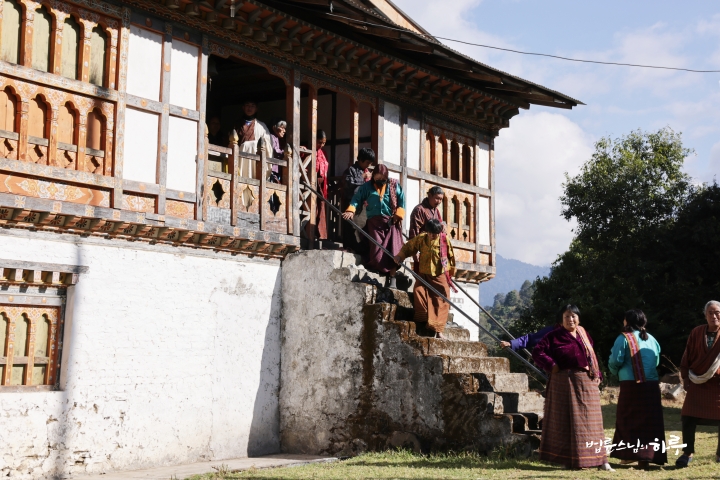
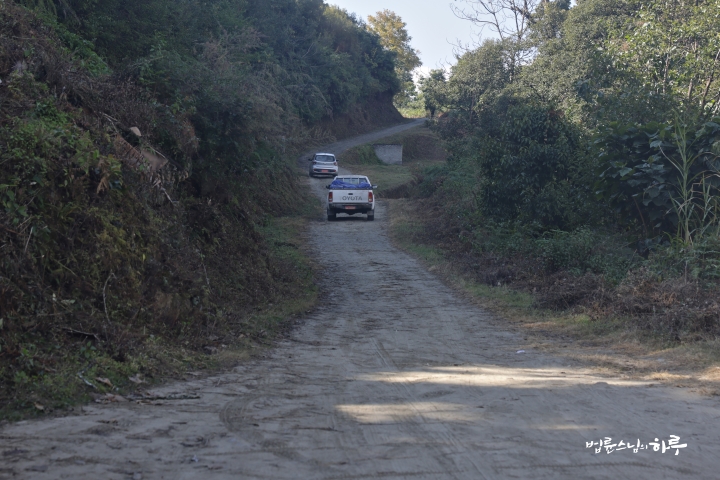
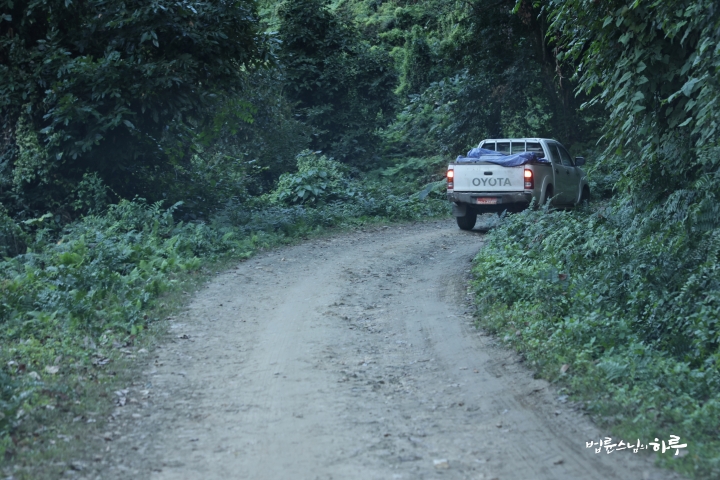
Sunim moved on to the next survey site, Goling Chiwog in Nangkor Gewog. Although it looked close in terms of distance, it took over an hour to get there due to the poor condition of the village roads.
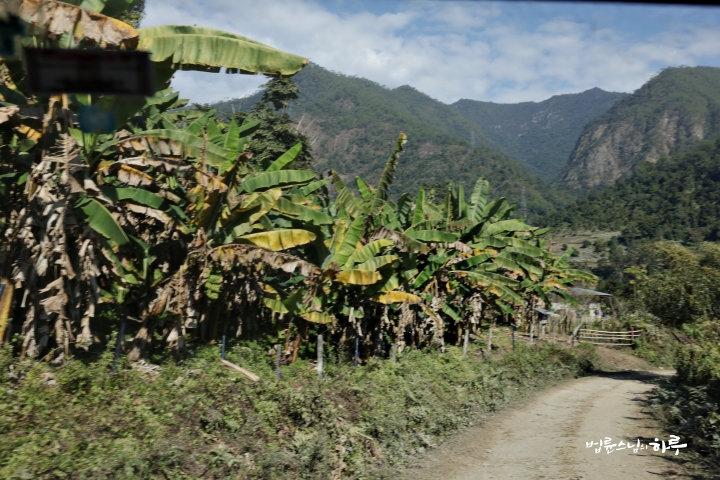
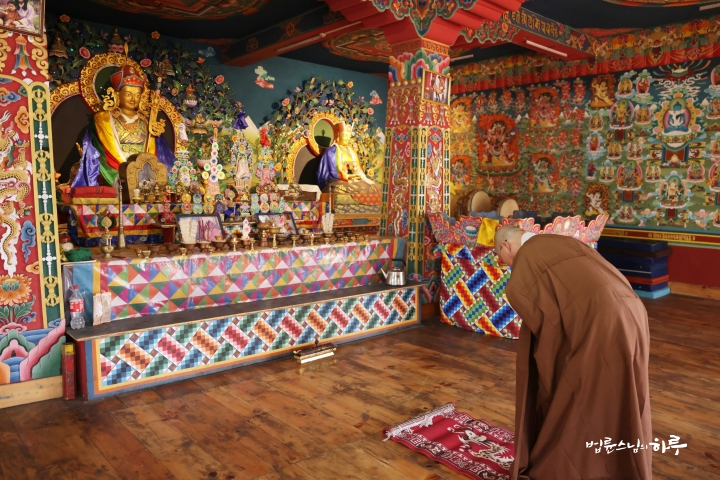
Upon arriving at Goling village, the residents were already gathered in the temple. Sunim paid respects at the temple and immediately began talking with the residents.
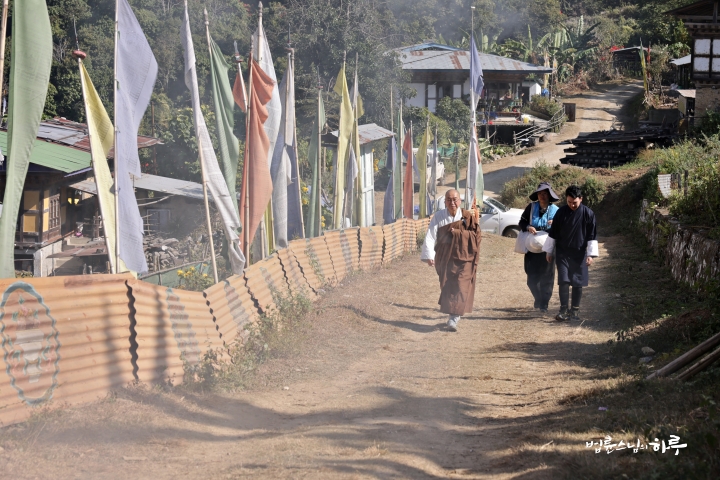
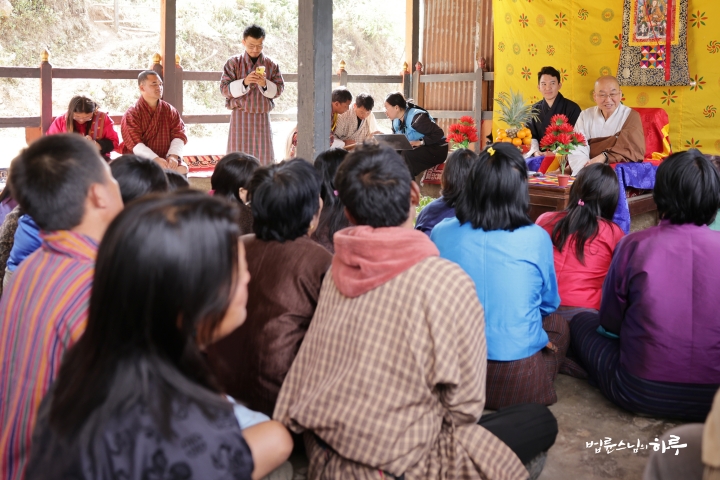
The Goling Tshogpa first spent about 10 minutes giving a welcome speech and explaining the current situation of the village.
After listening to the Tshogpa’s explanation, Sunim began a dialogue with the villagers.
“It’s nice to meet you all. I was told it was just a short trip across the river, but it took quite a while to get here. (Laughter) The scenery is beautiful and the air is clean. Were you all born and raised here?”“Yes.”
“If there were no roads, phones, or TVs, we wouldn’t have any problems. We would have just grown up here thinking this is how everyone lives. But these TVs and phones are the problem. When we keep seeing other things, we start wanting to live like that. (Laughter) It makes us feel like we’re living poorly. If we didn’t see those things, we wouldn’t be poor. So from now on, turn off your TVs and throw away your phones! (Laughter)”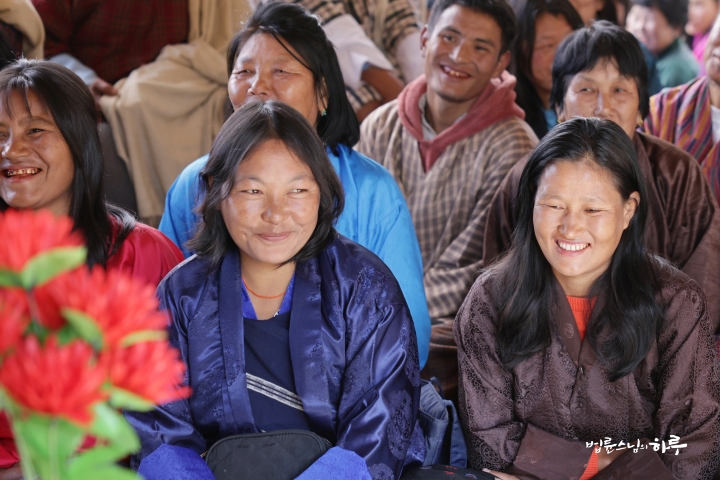
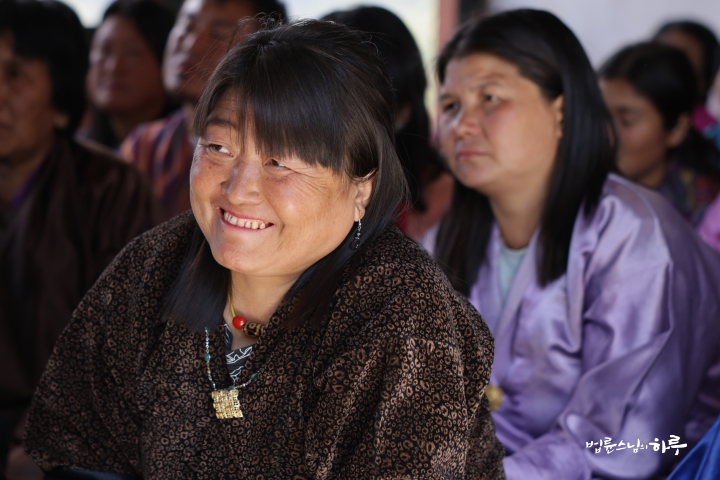
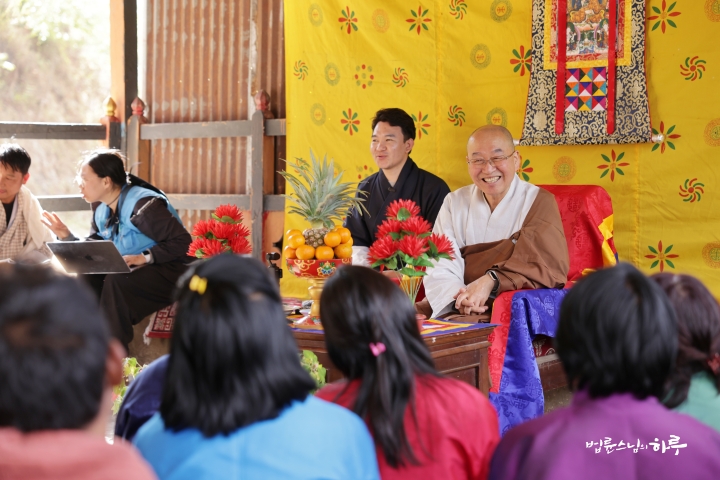
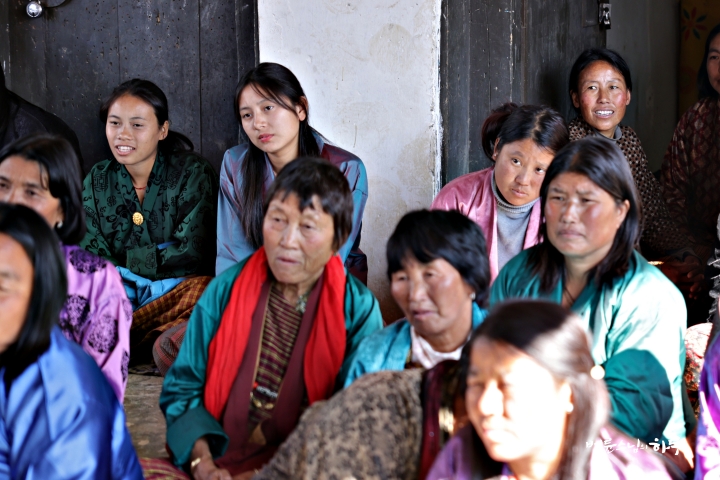
Sunim carefully explained the purpose and significance of sustainable development projects, also sharing how the pilot projects had progressed over the past year. The villagers of Goling listened attentively to his words. After finishing his explanation, Sunim asked if they had any concerns.
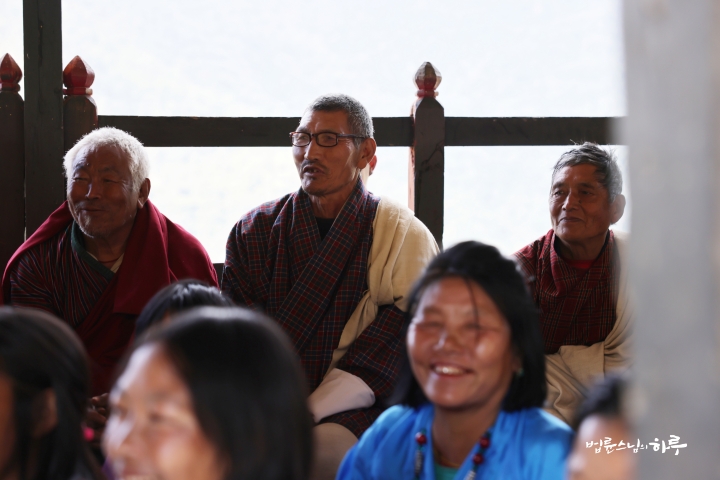
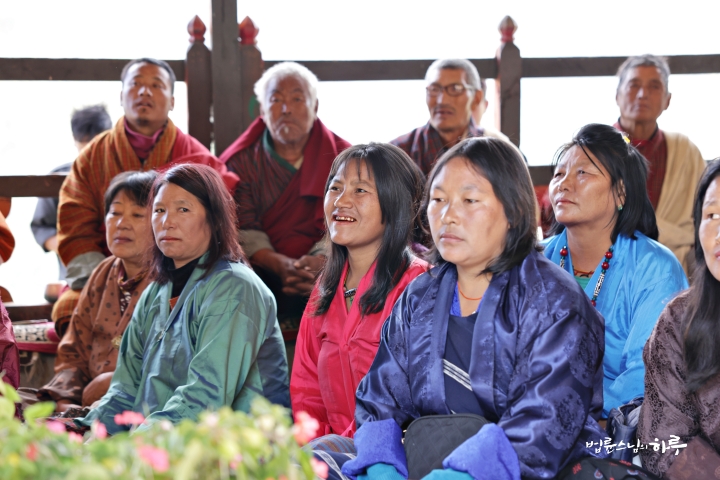
It would be convenient if the road used as a footpath were covered with cement.
We need fencing due to crop damage from wild animals.
It would be good to have a crematorium in the village.
There is a shortage of irrigation canals.
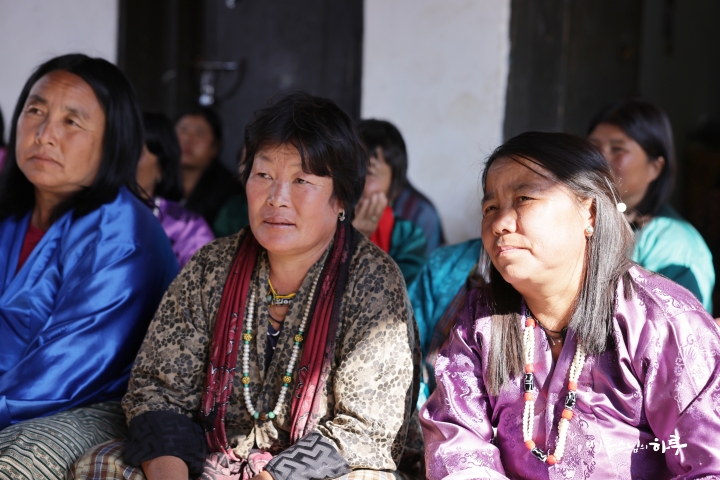
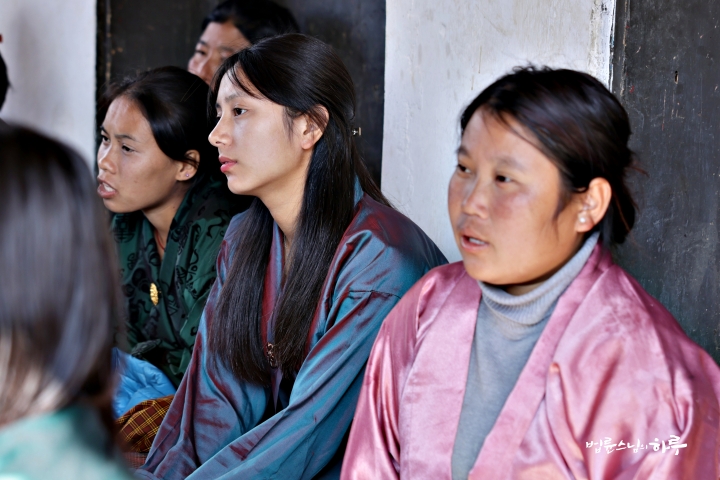
After listening to all the villagers’ requests, Sunim said.
“Everything you have requested is necessary, but JTS cannot support large-scale projects. Major projects should be requested from the government or other private organizations. Firstly, JTS aims to improve what is necessary for your daily lives. Therefore, it is difficult to support the construction of a crematorium at the temple. Secondly, we need to plan projects that you can do yourselves. For example, if you want to build a fence to keep out wild animals and you can do it by planting wooden posts, we can support that because it’s something you can do yourselves. However, if you want to build it with wire fencing, that would require technicians, so it would be difficult for us to support.”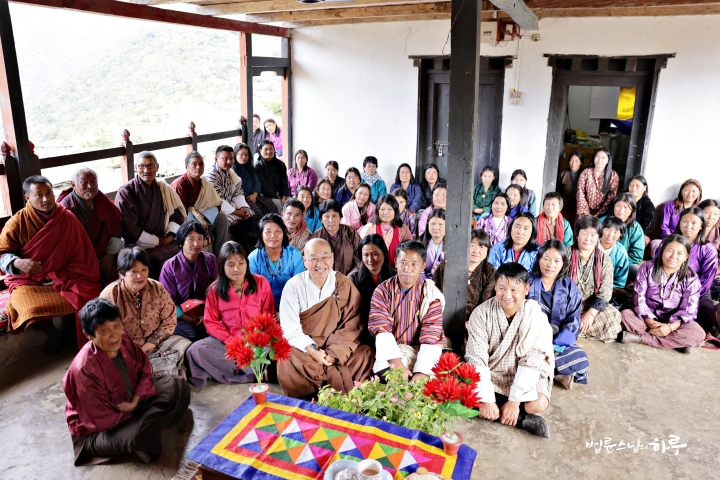
Sunim also had a conversation with the residents of Nangkol village for about an hour. By the end of the conversation, most of the participating residents seemed to understand and agree with JTS’s support direction.
It was already close to 2 PM. After having a late lunch, Sunim completed all the planned visits, including surveys of Tshang la Jong-Zurphel and Tama Berti villages.
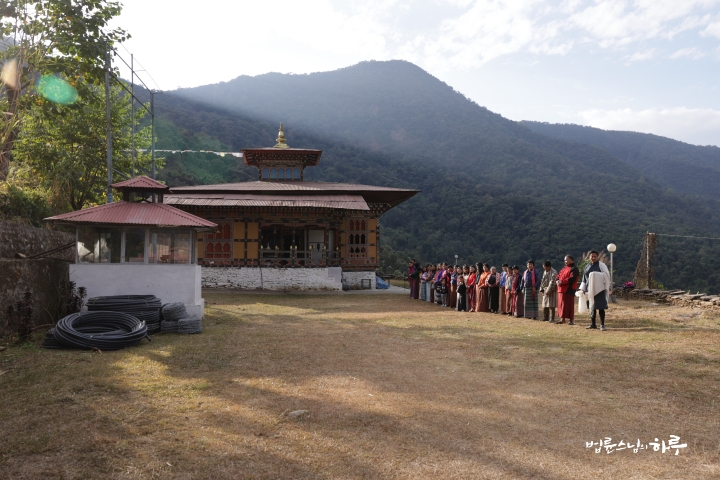
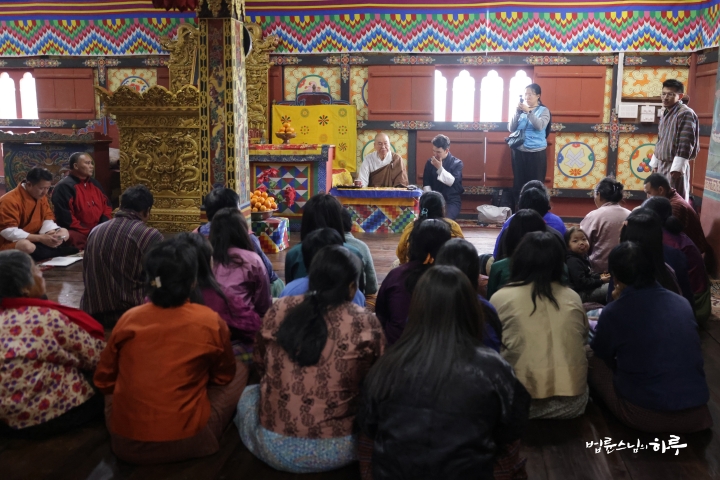
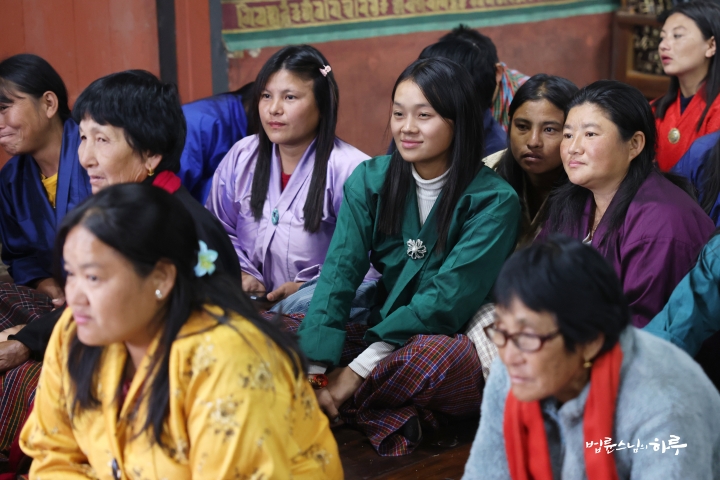
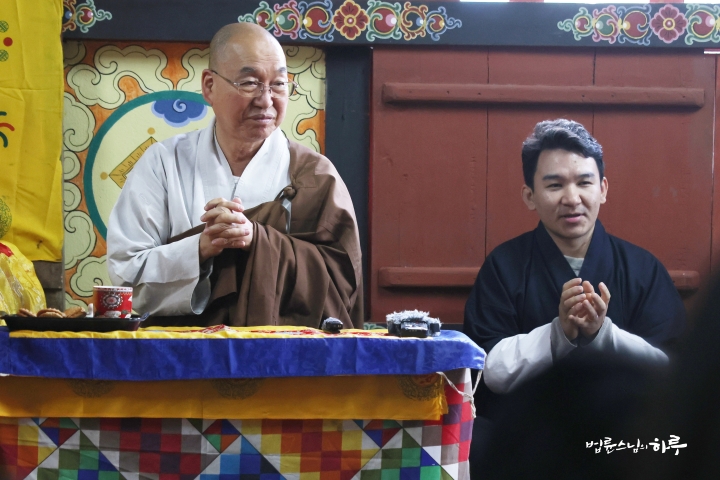
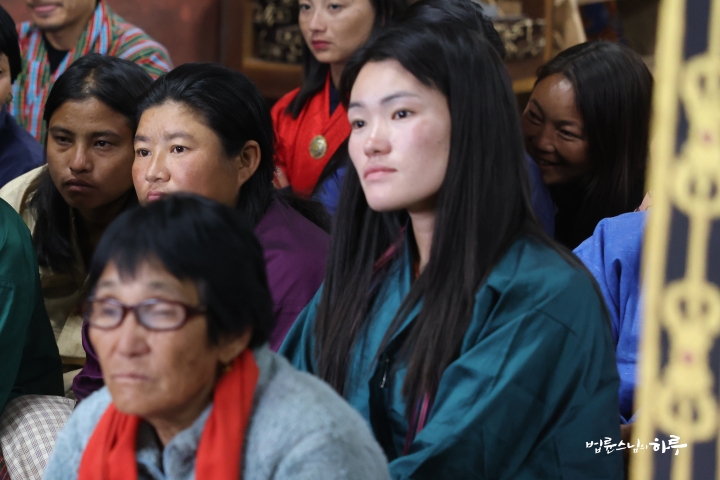
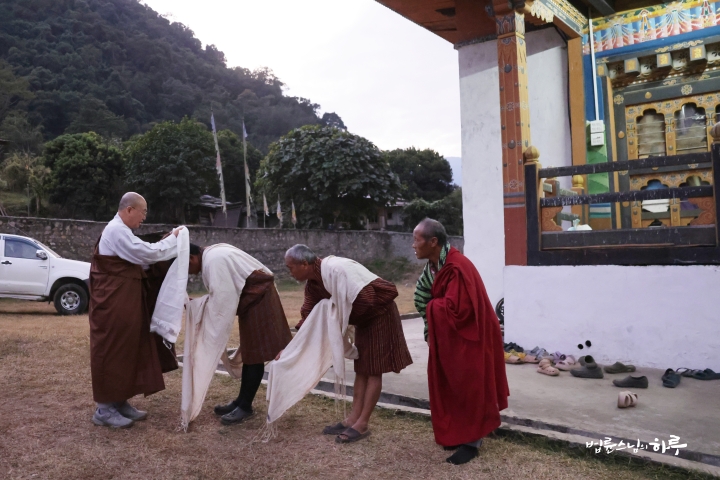
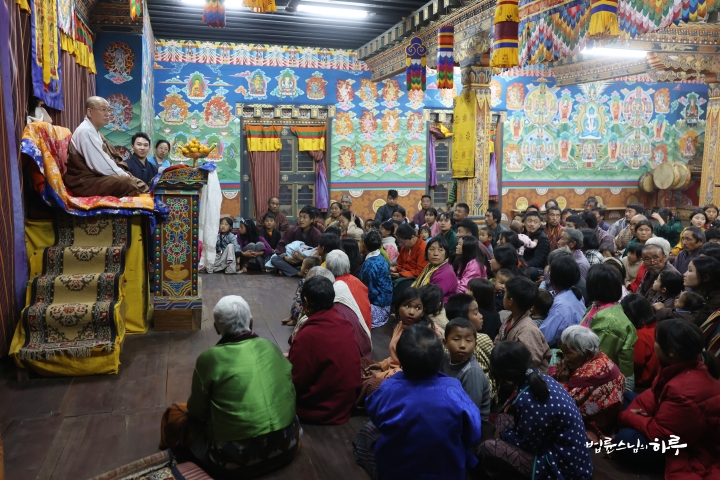
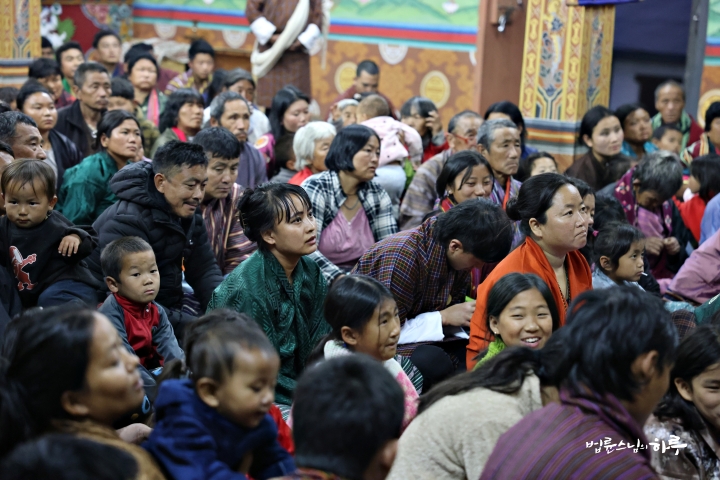
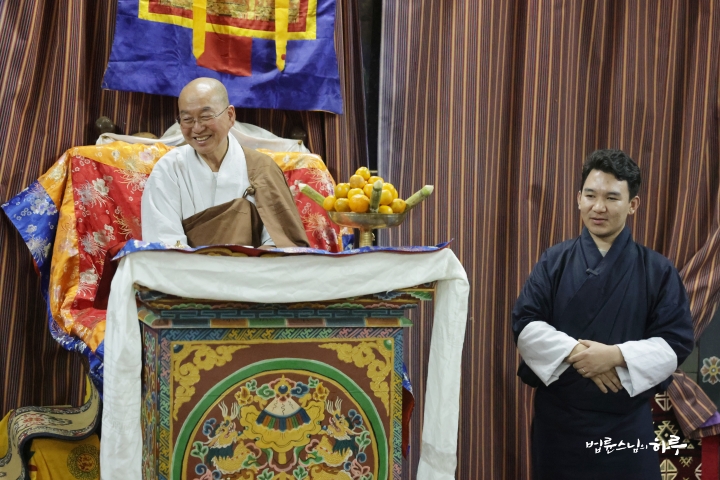
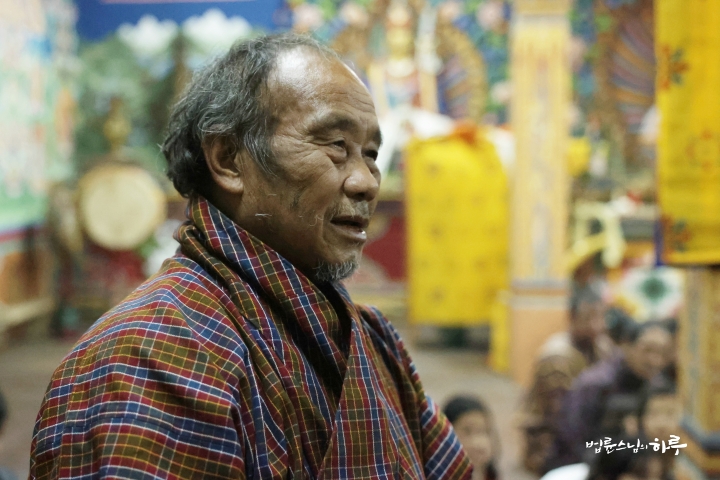
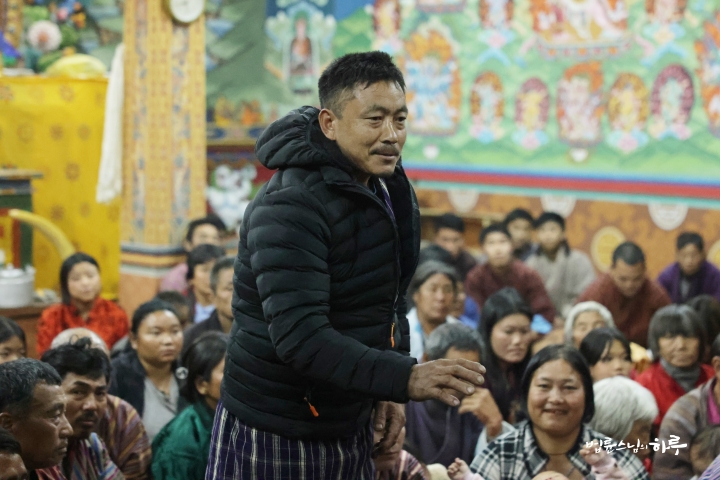
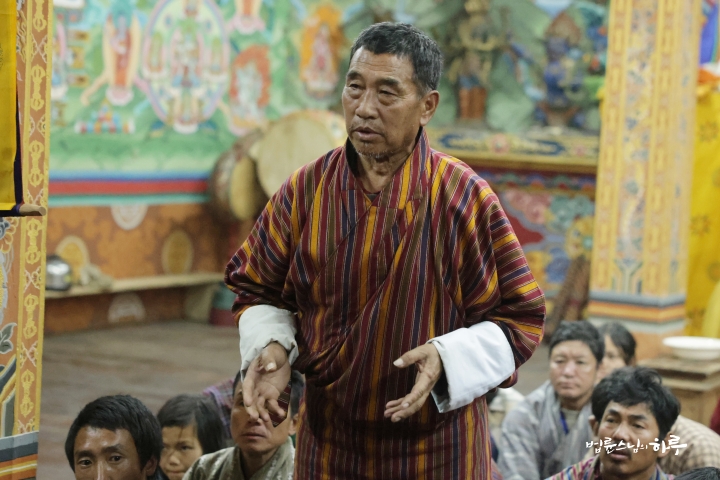
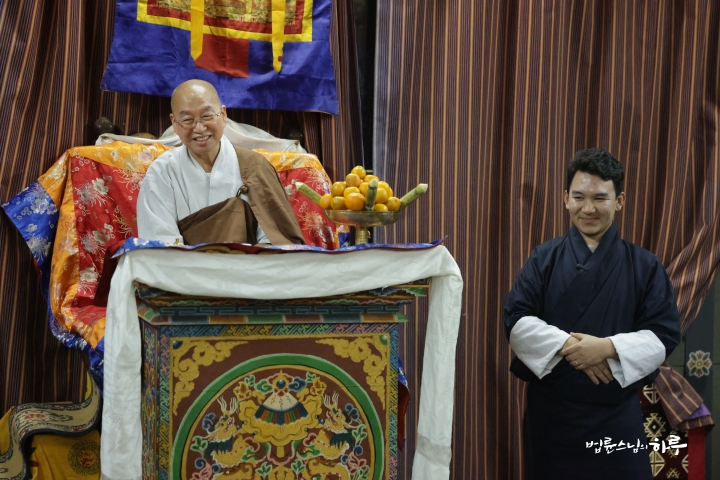
In these two villages as well, there were various requests such as solving irrigation problems, supporting facilities for the village temple, constructing road sections from the national highway to the village, supporting materials for building houses, and supporting materials for building toilets.
Sunim checked whether each village’s requests aligned with JTS’s project direction and explained them one by one to the villagers. The conversations flowed naturally. It seemed that the villagers were already familiar with JTS’s project principles.
When the survey schedule was completed, it was 6:30 PM. Sunim took a short break, had dinner, and then proofread manuscripts.
Since there was no Dharma talk today, the content of the Dharma Q&A held at the Jungto Social and Cultural Center on November 15th will be introduced.
I’m Worried About My Tendency to Push Away People I Like
“I’m 29 next year, and I’ve had this thing for a while where I tend to push people I like away. Even when I like someone first, I end up acting distant, and then they end up leaving. I suspect two reasons for this. One is that I’m overly conscious of others’ opinions, and the other is that my family atmosphere makes expressing emotions awkward. Since childhood, expressing love has felt cringeworthy and embarrassing to me. When I was in school, I was afraid of being accused of ‘wagging my tail’ when other girls expressed liking someone, so I held back. Once, at a kindergarten birthday party where we were supposed to kiss a friend we liked, I chose a friend who wouldn’t be criticized by the class – someone who wasn’t very noticeable. As a result, I seem to have lived suppressing myself and becoming sensitive to others’ views, caring more about how others might see me or whether they might be uncomfortable, rather than my own desired emotions. Now, after living independently for a year, I’m improving a bit, but I feel impatient because I seem to be changing too slowly compared to how quickly I’m aging. I’m also thinking about the marriageable age and becoming increasingly worried about late childbirth. How can I change this aspect of myself?”
“In the past, there was a concept of marriageable age. Usually, 16 to 19 years old was considered the marriageable age. That’s why expressions like ‘sweet 16’ or ‘sweet 19’ existed. Back then, if you passed 20, you were considered to have missed your chance for marriage. But nowadays, the concept of marriageable age has almost disappeared. Whether you’re fifty or sixty, it’s an era where you can get married whenever you want. In the past, it was natural to ask someone of marriageable age about their marriage status, and if they weren’t married, they might be treated as strange or lacking. However, times have changed so much that even asking such questions is now considered rude. Living alone has become natural, and it takes various forms. In the past, living alone was only possible for special reasons, like being a bhikkhuni or a nun, but now it’s not like that at all. Currently, about 36% of households in our country are single-person households, and it’s predicted that this ratio will exceed 40% by 2030. There are various reasons for living alone – never marrying, living alone after divorce, or living alone after losing a spouse – and living alone is now accepted as an ordinary form of life. There’s no need to be too bound by social norms regarding marriage. If you want to get married, try it, and whether it ends shortly or lasts long, it’s up to your choice.”“I’m more concerned about pushing people away than about marriage.”
“Are your parents’ relationship not very good?”“Not really.”
“When parents often fight during childhood, children develop an unconscious aversion to marriage. Later, when they grow up and someone they like approaches them, or when they’re about to get married, they end up pushing that person away.”“I think my mother takes good care of me usually, but there have been times when she suddenly got very angry or spoke to me in a dismissive tone. So I think I might have developed an anxious-avoidant attachment style, which makes me push away people I like.”
“That’s not too bad. But have you ever thought that getting married might be difficult when you were young?”“No, I haven’t.”
“If you have a tendency to keep pushing people away, this time, try not pushing them away and just live with it. Generally, even when we approach someone, we might feel a bit scared when they get close. For example, if you had experiences of your parents’ relationship not being good, it might have unconsciously formed a fear of marriage or intimacy. Or if you had experiences of being rejected or pushed away by your mother, teacher, or someone you liked when you were young, you might unconsciously develop a fear of rejection. If you have such fears, you might push others away even before they approach you. Our behaviors don’t just appear out of nowhere. If we look at the causes, there are often good reasons for them. However, even without analyzing the cause, if you’re aware that you have a tendency to push others away and want to overcome it, you can try to deal with it. At the moment when you feel like pushing them away, instead of pushing, try hugging them tightly. What big deal could happen? Anyway, at least the relationship with the other person starts, which is better than pushing them away and missing the chance to meet. If you continue the relationship this way, the part you’re worried about might become clear, and you might find a clue to solve it.”“Then I’ll try to practice. Thank you.”
“In the old days, practicing was really difficult. Because even holding hands once between a man and a woman meant you had to consider whether to get married or not, and it wasn’t a situation where you could easily break up. People were very cautious, thinking they might end up suffering for life if they held hands with the wrong person. So they would consult fortune-tellers and consider various conditions before making a decision. But it’s different now. It’s an era where it’s okay to hold hands and then break up. So don’t be too cautious, if it’s okay, try holding hands once. And if you break up, that’s it. When I say this, it might sound like a monk is encouraging young people to casually meet this person and that person. But what I’m talking about is not from an ethical or moral perspective. The problem is that many people torment themselves in this situation. The way to overcome this agony is to try it once. By holding hands and experiencing it, you can draw your own conclusions. If you try it and conclude ‘I was right to push them away,’ then you don’t need to regret pushing them away in the future. On the other hand, if you try holding hands and conclude ‘It wasn’t as big a deal as I thought,’ then from now on, you don’t need to push them away. Instead of just suspecting whether there’s poison in some food, try tasting it just once. If there was poison, you go to the hospital for treatment and conclude ‘Ah, I should never eat this again,’ and if there wasn’t any poison, you can eat it without worry in the future, thinking ‘I was worried for nothing.’ Constantly being anxious and repeating worries without even trying is a waste of time. In the end, you need to get a definite answer through experimentation. This is how you can escape unnecessary worries.”“Thank you.”