My Excellent Work Performance is Reducing My Team Members’ Roles
Dec 25, 2024 - Day 2 of Bhutan Survey _Nabji, Korphu, and Phumzur Villages
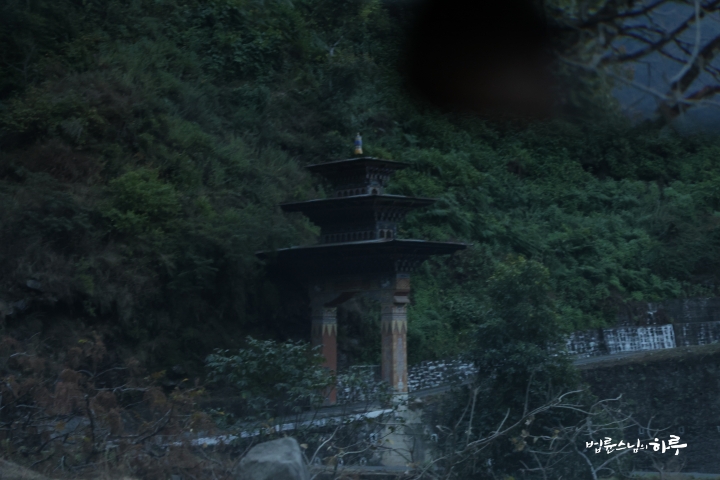
Hello. Today is the second day of the Bhutan survey. Sunim finished his practice and meditation and left Trongsa at 6 AM for Zhemgang Korphu Gewog. After a 3-hour drive along winding mountain roads, he arrived at Nabji village in Korphu Gewog.
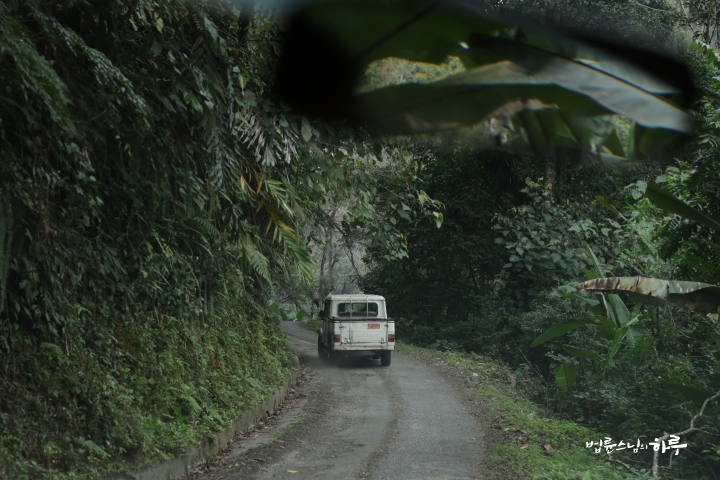
At the village entrance, the Tshogpas of Korphu Gewog, Nabji Chiwog, and Korphu Chiwog were waiting to greet Sunim. Local JTS volunteers welcomed Sunim and his group.
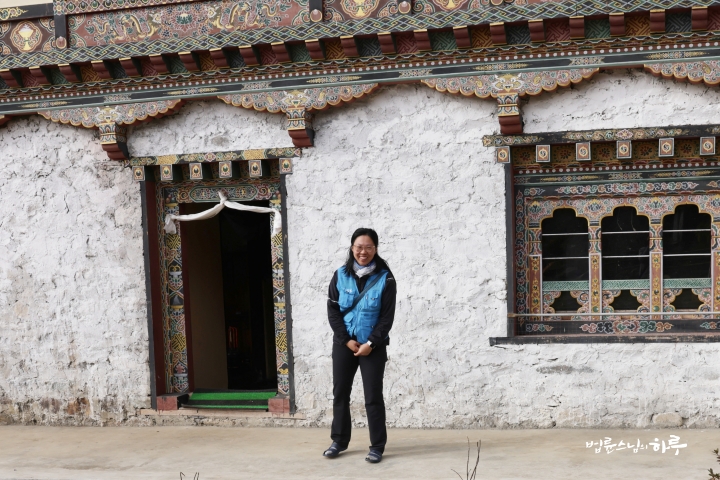
“Welcome, Sunim. Breakfast is ready.”
Sunim smiled at the brightly smiling volunteer.
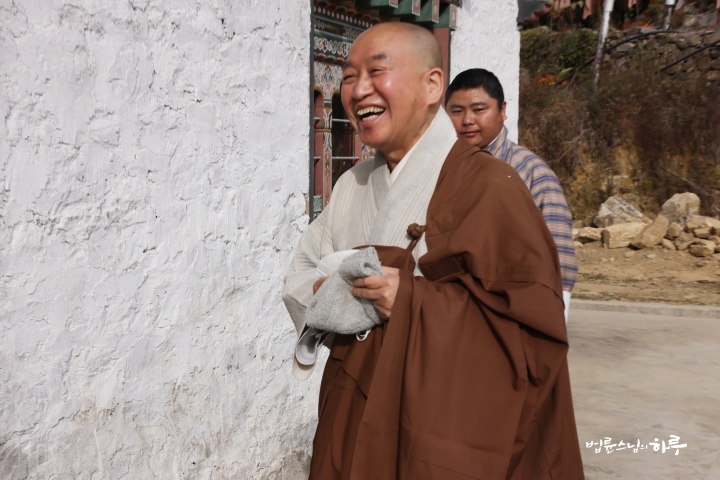
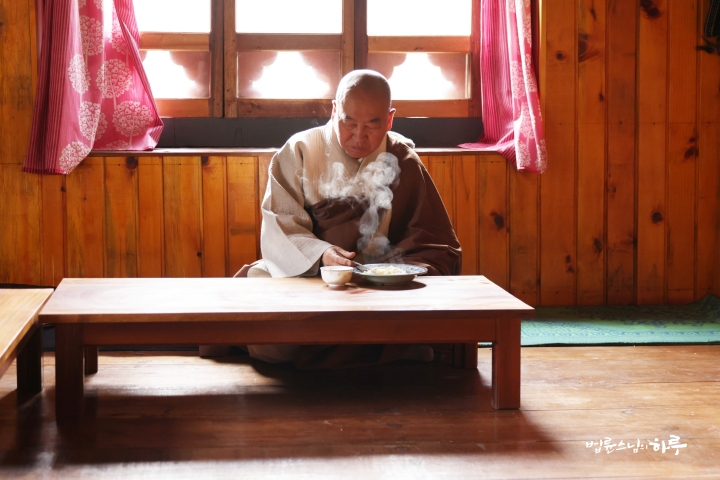
Sunim and his group enjoyed a simple breakfast that had been prepared. The reason for Sunim’s visit to Korphu Gewog today is to discuss matters with the residents of Nabji and Korphu Chiwog.
The rice fields in Nabji and Korphu Chiwog are unusually wide and gently sloped for Bhutan. To use these wide fields effectively, farm roads would make it much more convenient for farmers. Sunim will discuss this matter with the residents of Nabji and Korphu.
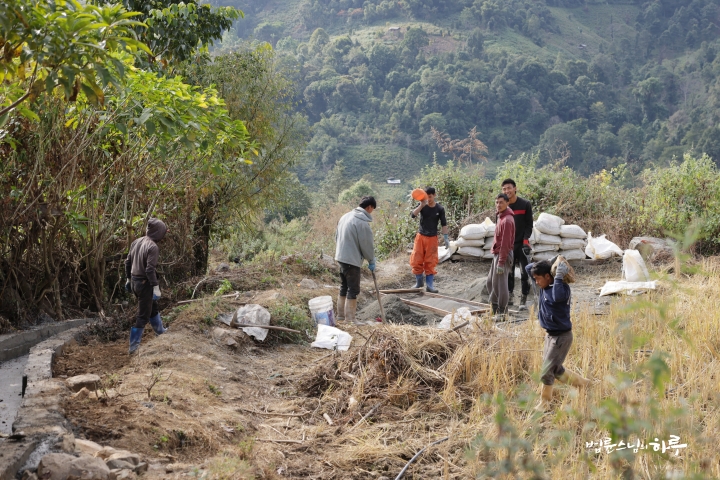
After breakfast, Sunim went to inspect the irrigation canal currently under construction in Nabji Chiwog. The villagers of Nabji Chiwog were carrying materials on their backs to build the irrigation canal.
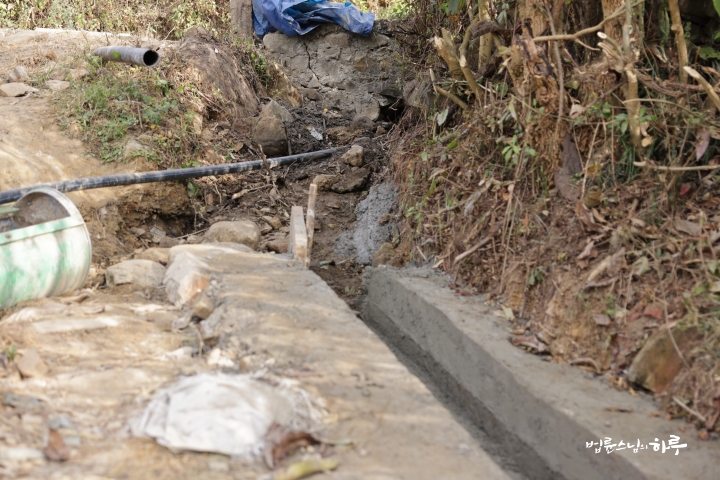
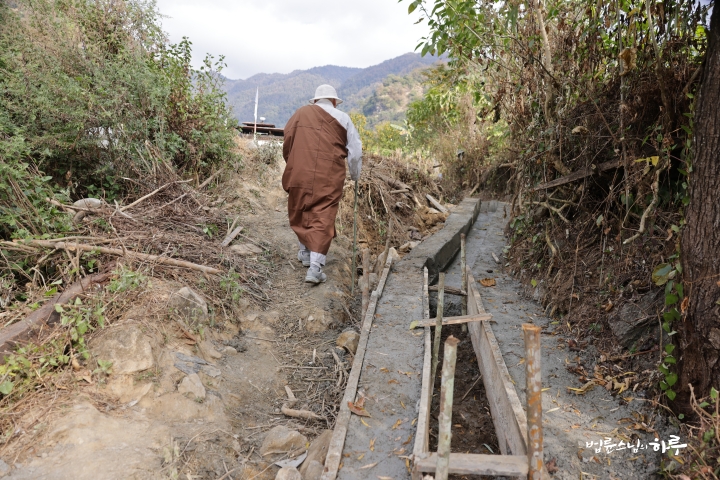
A fairly long irrigation canal had been built along the water source. Sunim walked along the canal, carefully examining it and offering some advice.
“You’re working hard. Keep it up!” The young villagers building the canal smiled brightly.
Nabji is a Buddhist sacred site in Bhutan. It has an old temple, and traditional culture is relatively well preserved. When Sunim first visited in February, he was greeted with a grand welcome, including traditional performances with masks at the temple.
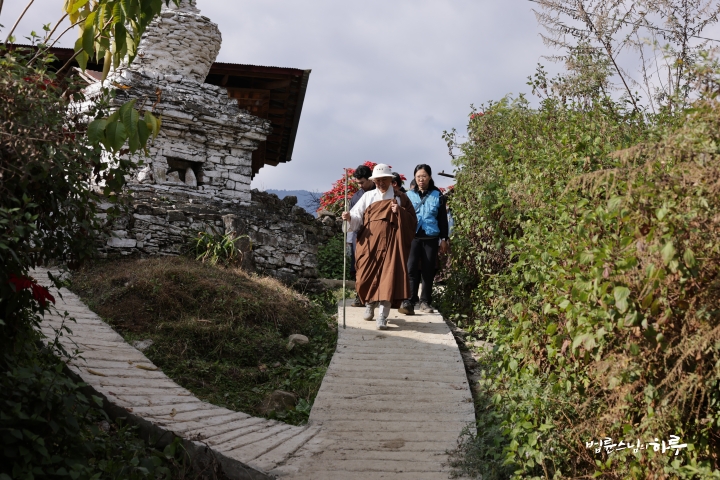
Hearing the Tshogpa’s request to fill the large open space in front of the temple with cement to make a parking lot, Sunim briefly suggested that creating a cement parking lot might actually damage the scenery. He decided to discuss this further with the villagers during their meeting. Sunim then moved to the Korphu Gewog Center, today’s meeting venue.
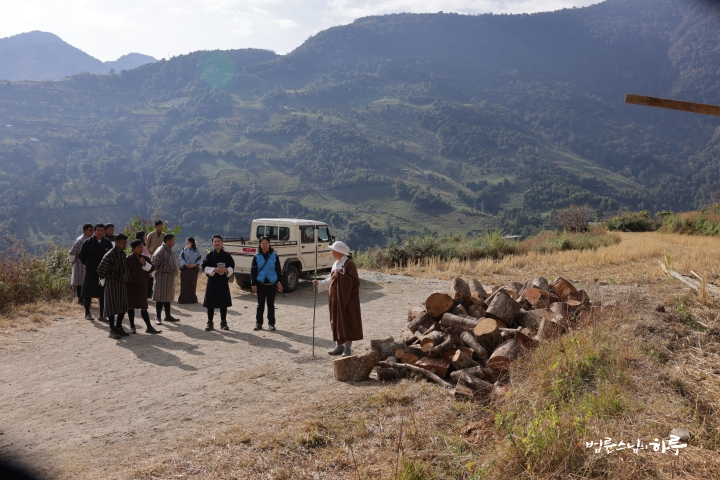
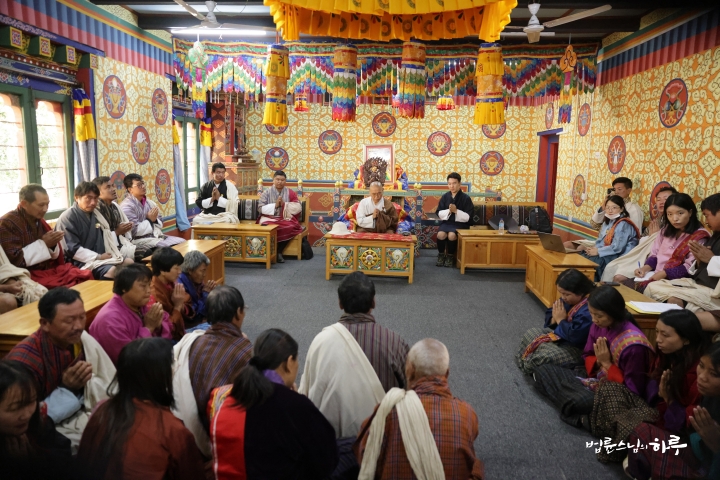
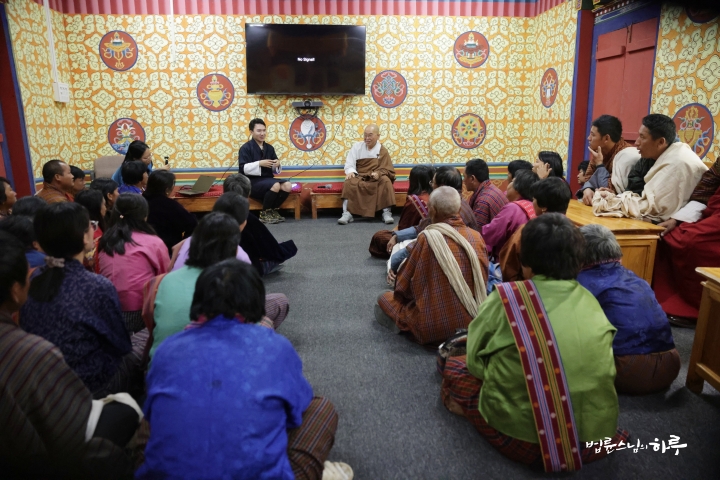
About 30 residents from Nabji and Korphu Chiwog had gathered at the Korphu Gewog Center.
“Yes.”
“In Korphu Chiwog, some parts of the road have been paved. Is it convenient to use?”“Yes.”
“This time, Korphu Chiwog asked for a road to be built outside the farmland fences. They also requested support for material transportation costs to build a water channel. Both of these are not eligible for support. I had said from the beginning that these couldn’t be done, so I wondered why they made the request and decided to survey the area myself.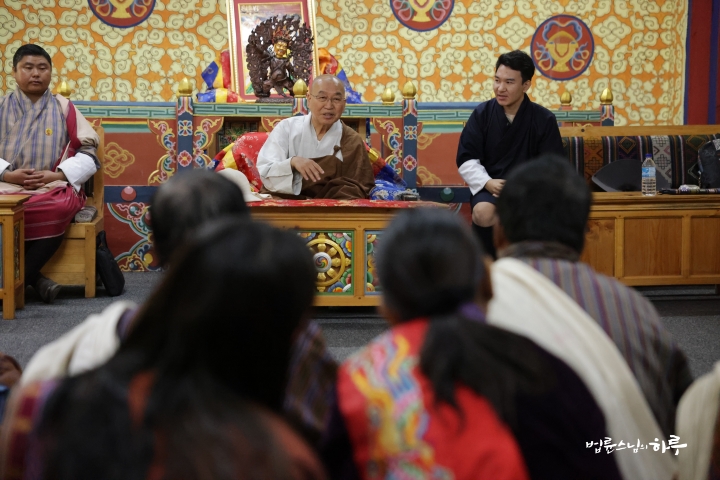
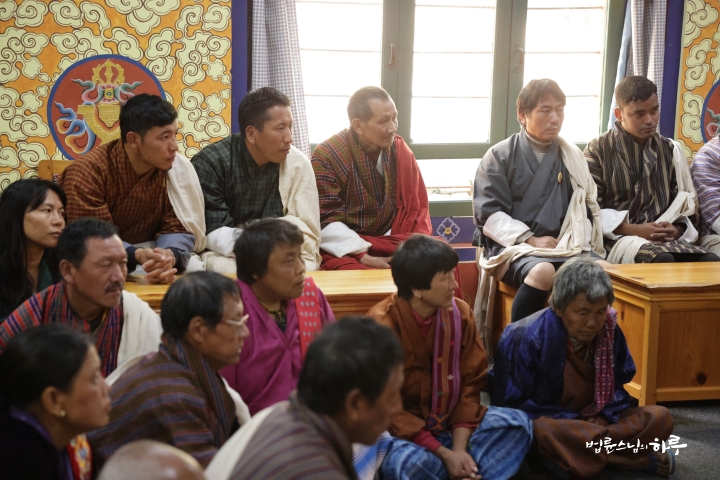
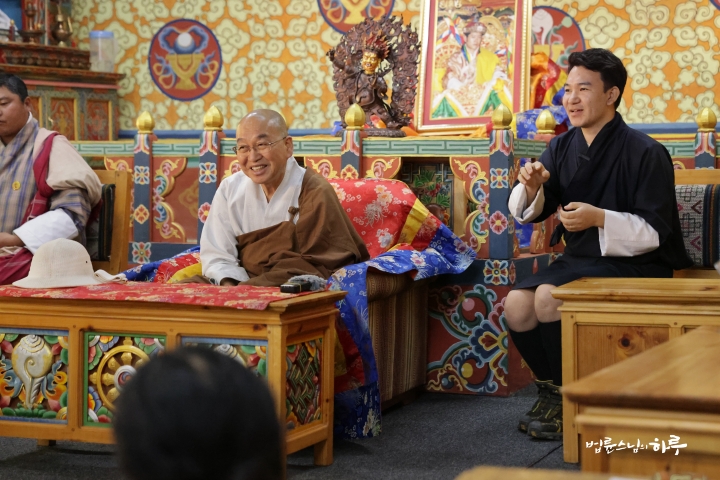
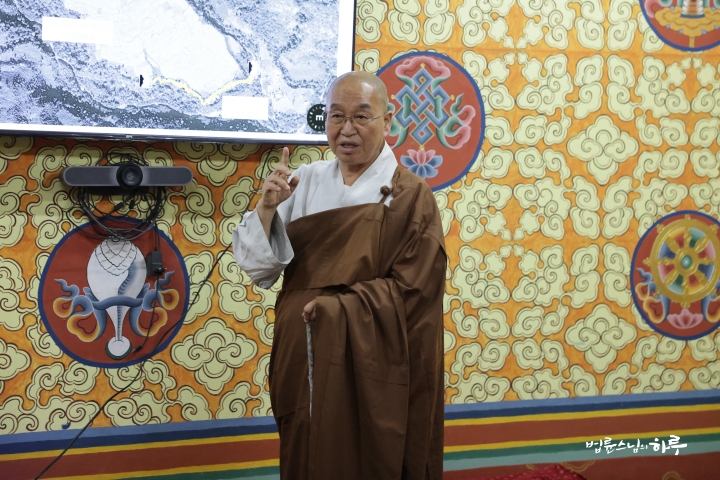
Sunim spent about 20 minutes explaining the central road construction while referring to the map on the screen.
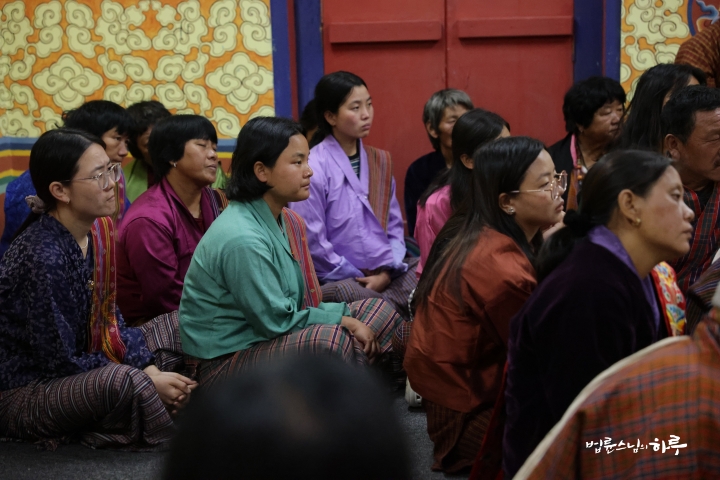
All the villagers gathered at the center listened attentively to Sunim’s explanation.
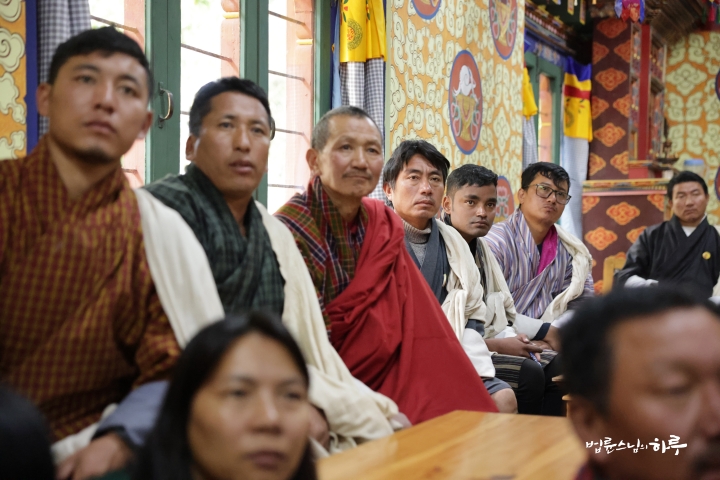
After Sunim finished speaking, no villager immediately offered an opinion. At this point, Mengmi (the deputy leader of Gewog) from Korphu Gewog stood up and spoke.
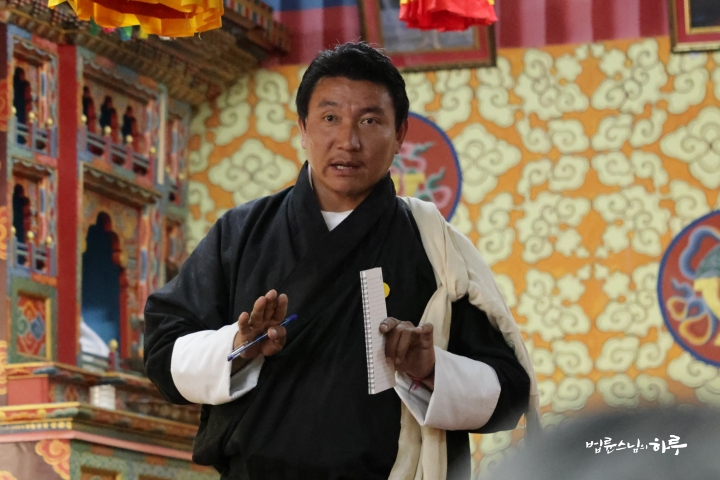
“Most villagers agree with Sunim’s suggestion to build a road in the center of the farmland. However, as far as I know, about three people from Nabji Chiwog and two from Korphu Chiwog are opposed.”
“Are the people who are opposed from Nabji Chiwog and Korphu Chiwog here?”“No, they’re not. They’re all in Thimphu or out of town.”
“Are the landowners from Nabi, or are they all from outside?”“They’re from Nabji.”
“Then can’t we contact those people and ask them to give up a little land so we can build the road?”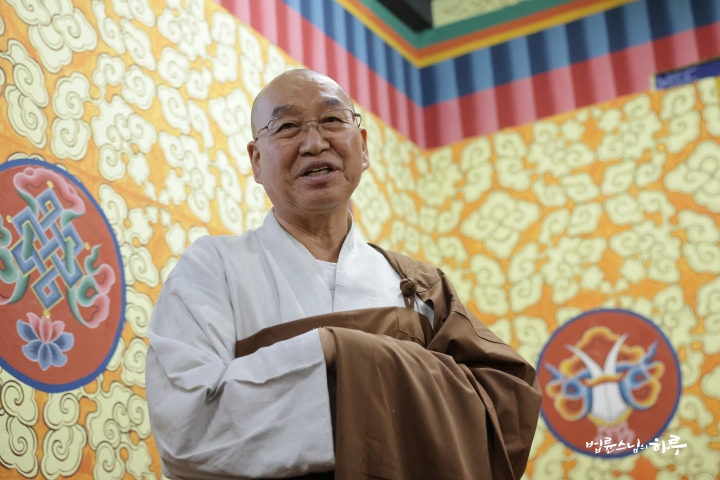
“Sunim, those whose land is close to the road and water channels will benefit, but those whose land is far from the road or water channels won’t receive any benefits.”
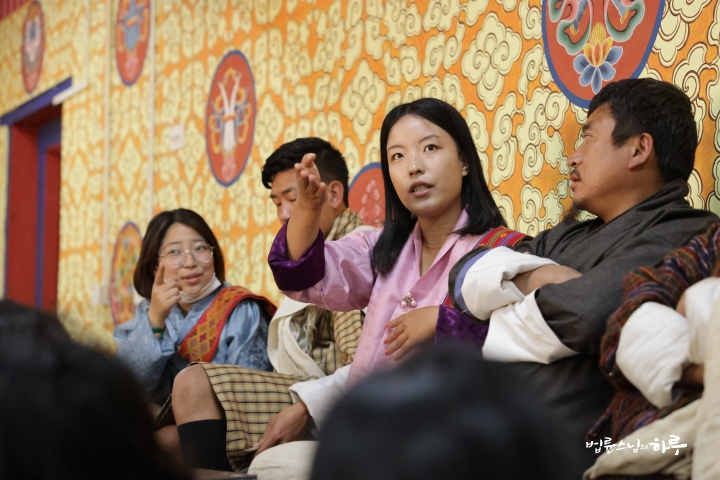
Sunim’s proposal might not bring immediate benefits, but it was an opportunity for our village to grow to the next level. A heated discussion among the villagers ensued. While most of those present agreed with Sunim’s proposal, we couldn’t build the road without the consent of the few who didn’t attend the meeting.
Some expressed disappointment that they couldn’t build the central road due to opposition from a few, even though they agreed with Sunim’s opinion.
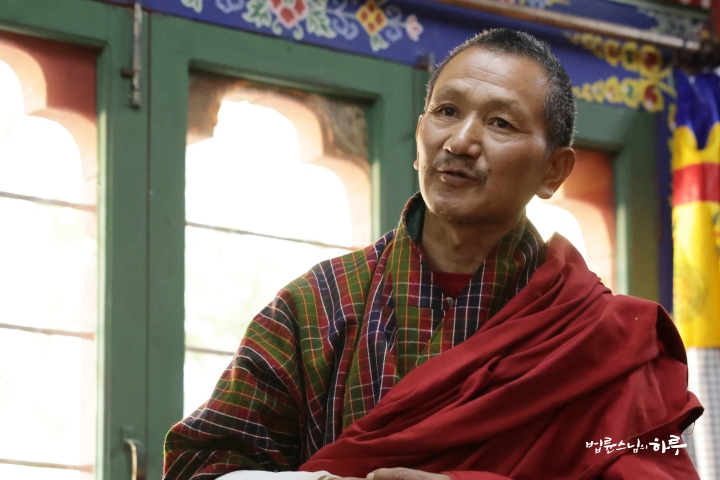
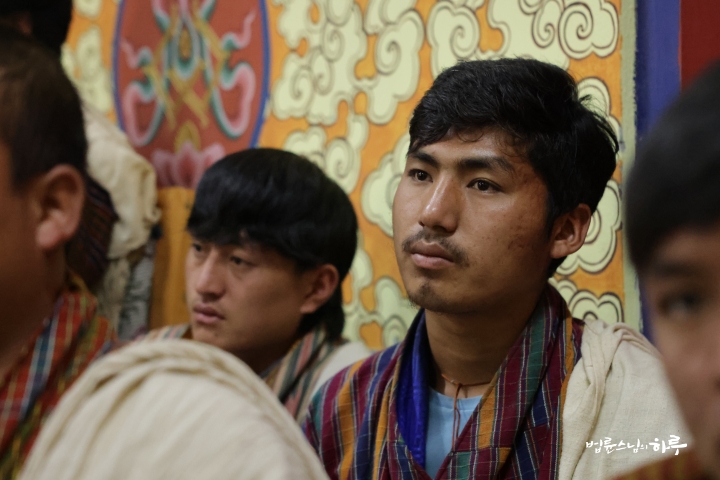
Mengmi from Korphu Gewog spoke up, seeming somewhat unsatisfied.
“Sunim, you’ve visited us twice and made suggestions because you see how difficult it is for us to farm like this, but today it seems that neither the villagers nor the Tshogpa are very interested in your proposal. So I think that proposal won’t happen this year.”
As Mengmi finished speaking, the discussion among the people started again.
“Everyone, don’t think too seriously about this. You’ve lived like this until now, right? We’re just talking about trying to improve a little. (Laughs) We’re trying to get a little better, but what can we do when people have different thoughts? Don’t think badly of someone because they didn’t agree. Those people just expressed their opinions without attacking anyone, yet we’re the ones criticizing them.(Laughs) We came up with ideas thinking it would be good to do it this way, but this is about individual land, so we need everyone’s agreement, and we didn’t get it, so we have to wait a bit. So either all the landowners agree and we do it quickly, or it proceeds as a government project. So don’t frown. (Laughs)”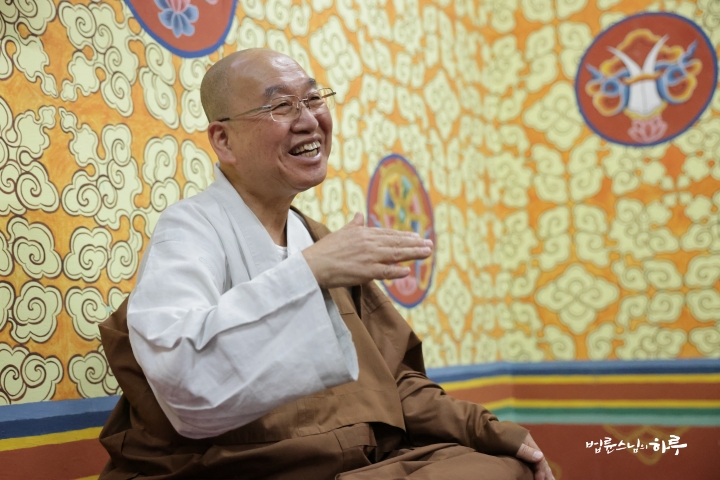
“I’m not sure if it’s the Gup’s fault or the Tshogpa’s fault that a good project is being abandoned because a few people are opposed.”
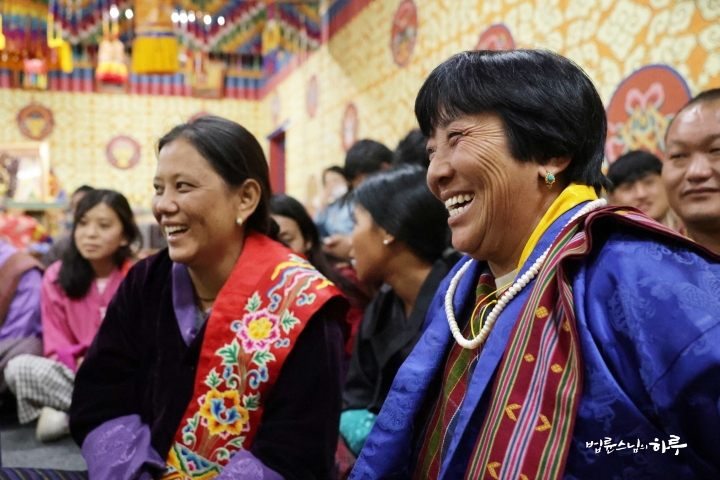
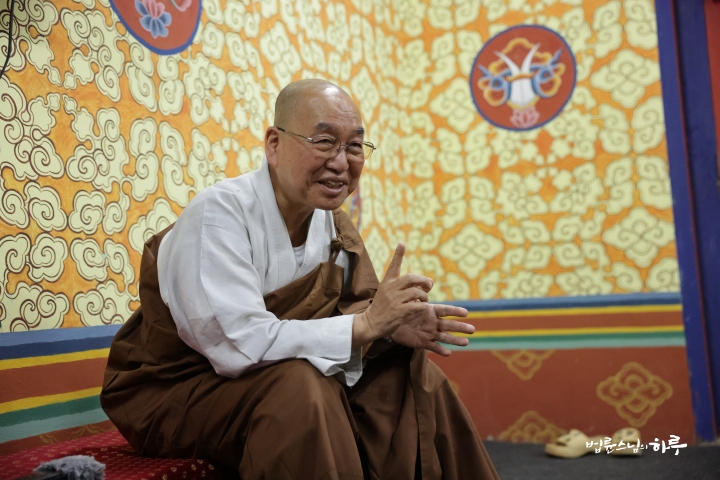
For about two hours, Sunim discussed the construction of agricultural roads and methods for maintaining Nabji Temple with the residents. The eyes, expressions, and voices of the villagers expressing their opinions were full of life. The scene unfolding here today was completely different from the first meeting with the residents in Korphu Gewog about 10 months ago.
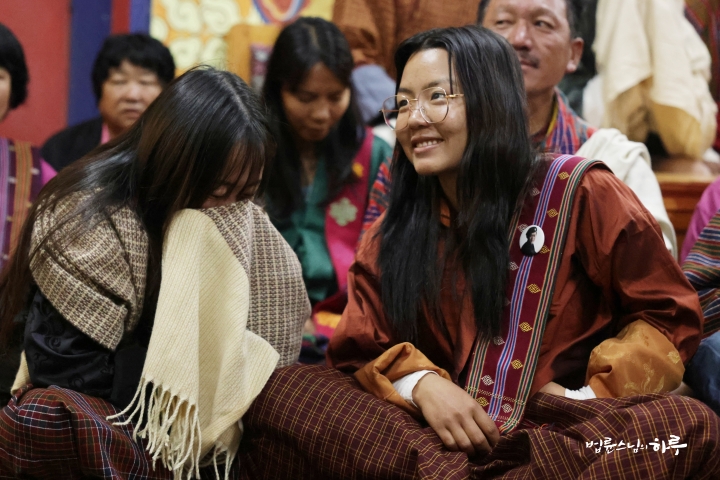
After the conversation, Sunim had lunch with the leaders at the Korphu Gewog office. Then, he moved back to Trongsa and went to Phum Zol village. Phum Zol village is the poorest village designated by the Trongsa Governor. This was Sunim’s first visit to Phum Zol village as well. JTS volunteers are creating temporary residences here and carrying out sustainable development projects. Currently, 15 households live in Phum Zol village, and JTS volunteers are creating housing improvement samples and building toilets at the temple.

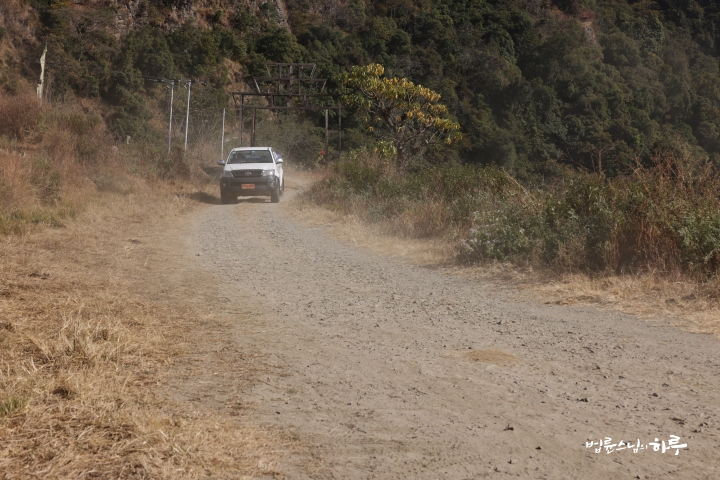
The road leading to Phum Zol village was very bumpy due to poor road conditions. After traveling for about 3 hours and 30 minutes from Korphu Gewog to Phum Zol village, the villagers waiting for Sunim could be seen in the distance.
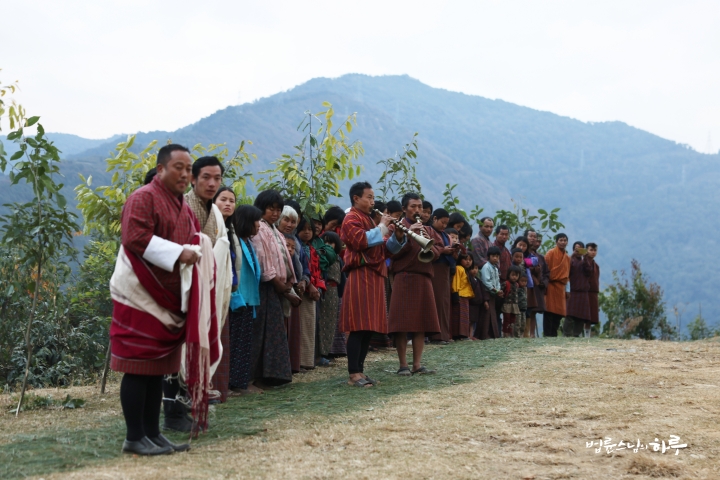
Welcomed by the residents, Sunim moved into the Phum Zol village temple. He paid respects at the main hall, sat down, performed the traditional Bhutanese greeting, and then spent time with the residents.
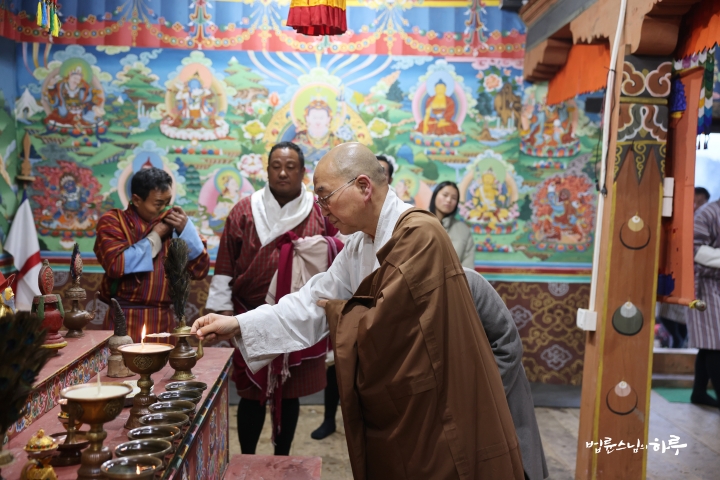
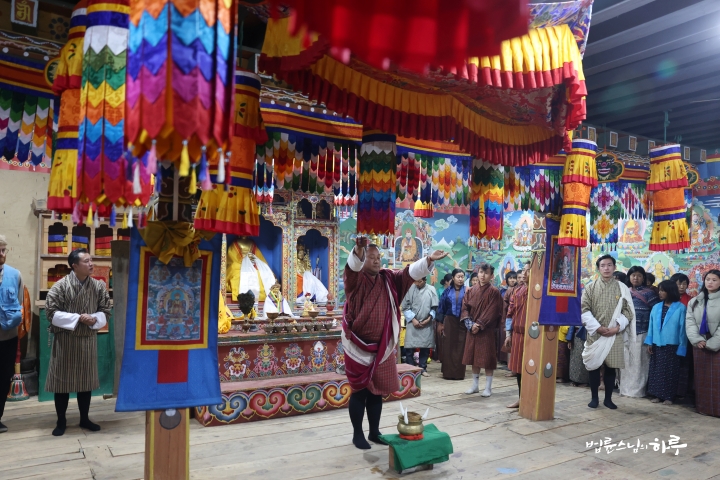
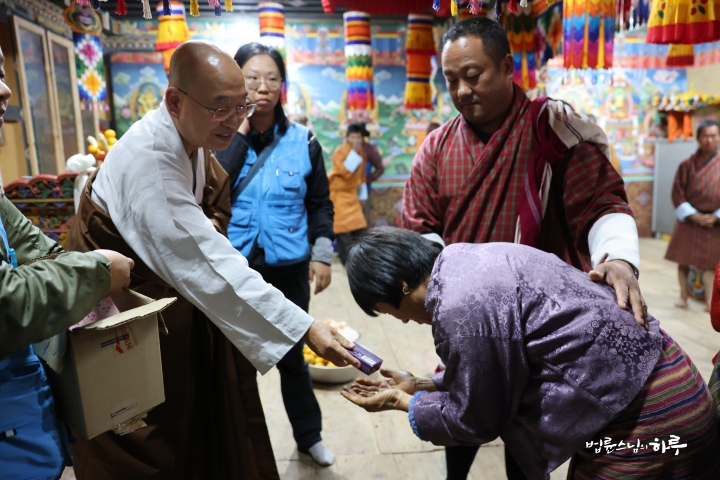
While talking with the residents, Sunim requested them to make Phum Zol village a good place to live despite its poverty, and conveyed that to do so, the villagers need to cooperate to improve their living conditions. As he finished his time with the villagers, Sunim gifted soap to the residents.
Next, Sunim toured the projects being carried out with JTS volunteers. He visited the newly built toilet at the Phum Zol village temple.
“The people of Phum Zol village seem to be much more lethargic and dependent on alcohol compared to other villagers. However, while carrying out this toilet project, most of the villagers cooperated, and the village atmosphere has changed a bit,” said a volunteer working on the project in Phum Zol village.
“Sunim, Babralji from India worked on plastering one toilet until late last night because you were coming today. Please inaugurate it.” (laughs)
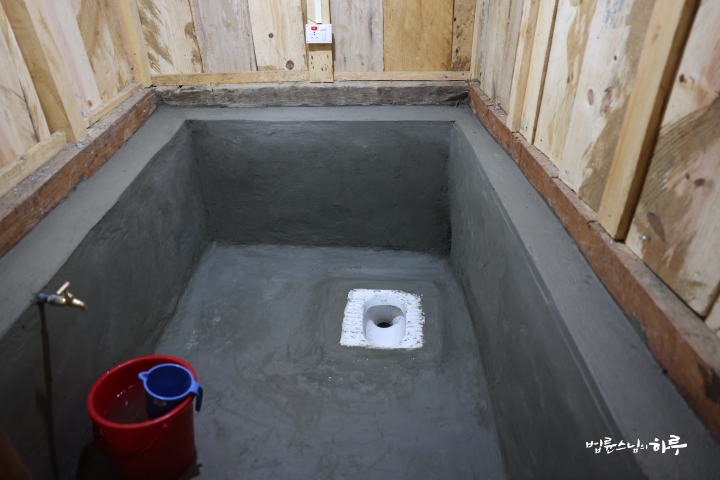
Sunim said with a smile as he entered the toilet.
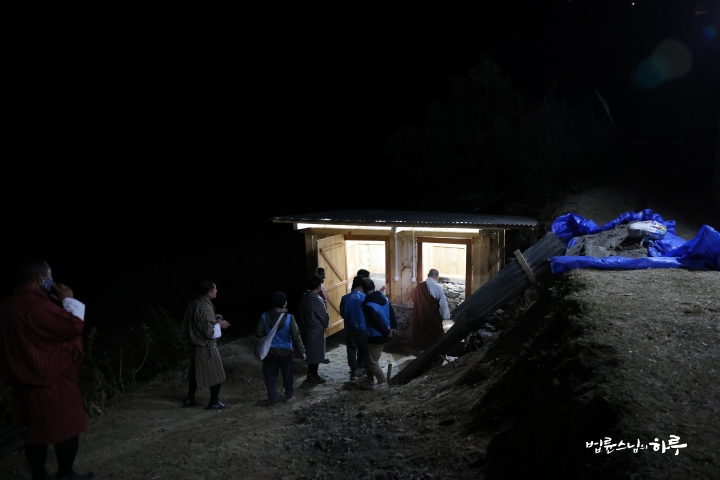
Next, Sunim toured a home undergoing housing improvement remodeling.
“It would be good to add only the absolutely necessary facilities, and even when adding, to utilize existing things as much as possible. It’s better not to change everything in a new way.”After touring all the ongoing projects, Sunim said to the Bhutanese officials accompanying him:
“JTS volunteers are staying here in temporary accommodations. I should also sleep where these people sleep tonight and see what it’s like. You all should leave the village and stay at Gewog, and we’ll meet again tomorrow.”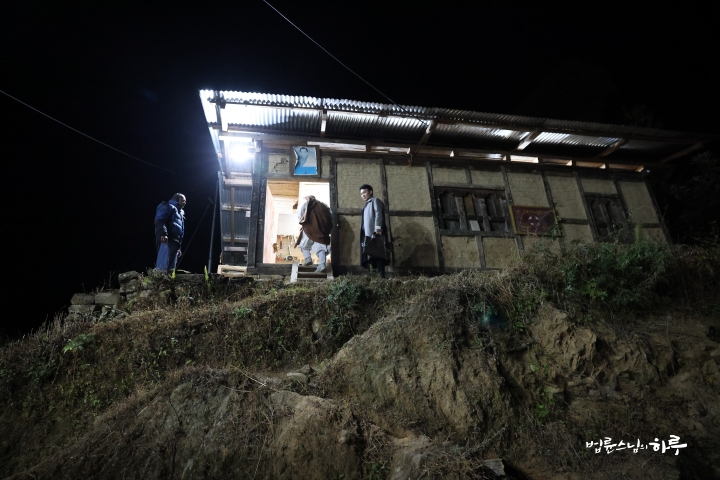
Sunim, JTS volunteers, and staff all had dinner together with jjajang rice and kimchi brought from Korea.
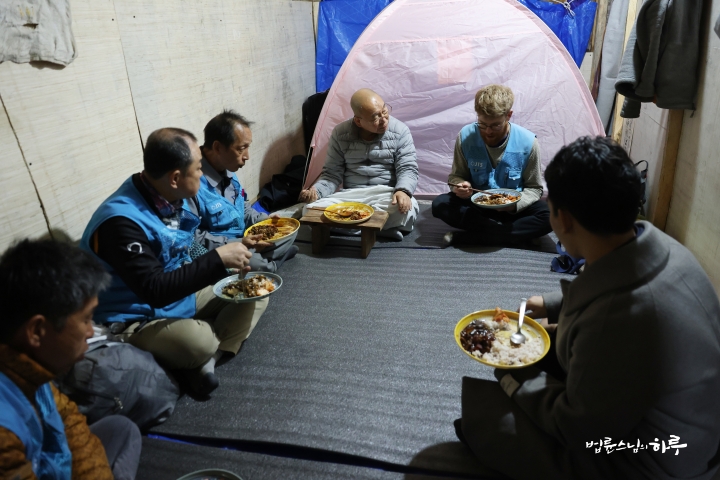
After the evening meal, the JTS Korean staff and Indian staff gathered to offer three bows to Sunim.
“Babralji and Janadanji, do you feel like you came for nothing?”“Yes, a little.” (laughs)
Laughter erupted in the small room.
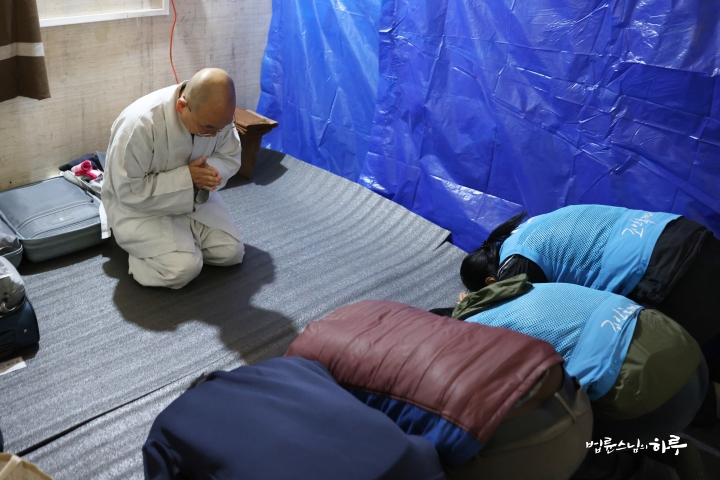
After talking with the staff, Sunim organized his belongings, laid out his bedding, and proofread his manuscript.
As there was no Dharma talk today, I would like to introduce the content from the Dharma Q&A session for Jungto members held on October 7th at the Jungto Social and Cultural Center.
My Excellent Work Performance is Reducing My Team Members’ Roles
“I’m a 20-year veteran advertising production PD. Over these two decades, I’ve taken on many roles as a PD. Typically, a PD plans ideas, communicates with staff, and coordinates client opinions. However, I’ve been directly involved in everything from planning to execution. As time passed and I gained experience, I became faster at work and clearer in my judgment. I can quickly resolve and make decisions when things aren’t going well. But because of my approach, it seems my team members’ roles are gradually diminishing. People around me advise that at my level of experience, I should step back a bit and give others opportunities. I’ve tried that, but it felt like things weren’t running smoothly. While others keep telling me to let go, I’m curious about what I can gain by doing so. I’m wondering if I really need to step back.”
“You don’t have to let go of your work. There’s no rule that says you must. There’s no problem if you don’t step back.”“Shouldn’t we work together for a win-win situation, as the saying goes?”
“If it’s more effective to do it alone, then do it alone. If it’s more effective to do it together, then do it together. If working together is less efficient than working alone, is there any reason to work together?”“It is a team effort, though.”
“Jungto Society has a lot of work and needs many volunteers. However, there are differing opinions among staff members about recruiting and working with volunteers. Some are against accepting volunteers. The reason is that when volunteers first come, they don’t know how to do the work, so they’re not actually helpful. Training volunteers takes so much time that staff members can’t do their own work, which becomes more of a hindrance. Another reason is that trained volunteers start to nitpick. When they don’t know the work well, they don’t say much, but once they become a bit familiar, they start saying things like, ‘Shouldn’t this be done this way?’ or ‘Shouldn’t that be done that way?’ making it difficult for the staff. On the other hand, those in favor of accepting volunteers believe that even if volunteers aren’t familiar with the work right away, training them and joining forces can be more effective in the long run. So, some consistently recruit volunteers and work with them. However, we can’t say which approach is more correct. In the big picture, it’s good to train many people to work together, but the approach should differ depending on the nature of the work and individual personalities. For work that involves maintaining and managing already established projects, it’s better to have many people working together. As the saying goes, ‘gather the wisdom of many,’ sometimes combining the wisdom of many people can be better than the ability of one outstanding individual. On the other hand, when pioneering a new field, it can be more effective for an exceptional individual to work alone. Some people perform better when working alone. In certain fields, leaving someone to work alone allows their talent to flourish. If you force people to work together thinking ‘we must have a win-win situation,’ it might backfire. For work that requires creativity or continuous development of ideas, it’s better to let talented individuals work freely on their own. Broadly speaking, it’s good to cooperate and create win-win situations when working, but depending on the nature of the work and individual personalities, working together isn’t always necessarily better.”“When I was younger, I didn’t worry about others’ reactions, but as I’ve gotten older, I feel self-conscious about working independently.”
“As you get older, you need to be more mindful of others. This is because as you gain more experience compared to when you first started your career, you have more people around you. When you’re young, you’re often alone, so you can act like a lone wolf and not worry too much about your superiors’ reactions without causing major problems. However, if you act dictatorially in a high position, it can create difficulties for everyone. Also, people tend to speak in generalities rather than addressing specific situations. They say things like ‘People should be gentle’ or ‘Work should be done cooperatively.’ While such advice can be helpful, it needs to be applied differently depending on the environment and individual characteristics. You need to examine the nature of your work and your personality to decide how to resolve this issue. There are a few options. First, you could retire. If you act like a lone wolf as you described, you might lose friends and juniors, which could lead to loneliness later. You’ve been doing this job for about 20 years, so you could just say, ‘That’s enough. You guys figure it out from here!’ and step down cleanly. Second, you could think of it as nurturing your juniors. Don’t worry too much about work performance, quality of output, or sales. Let it go. For someone to become good at something, they need practice. It’s impossible to produce perfect work from the start. Regardless of whether sales drop or you get scolded by your superiors, give opportunities to your juniors and try to nurture them with encouragement. Third, you could just work according to your own style. You could negotiate with the company to work in the way you want. If the company starts raising various issues and there’s a lot of talk, you can take that as a signal to retire. It’s not very good to be stuck in the middle, unable to do one thing or the other.”“Thank you.”