I’m Distressed Because My Business Partner Disrespect Me a Lot
Dec 15, 2024 - 6th Day in Mindanao, Philippines, Meeting with Ramon Magsaysay Foundation, Lecture for Korean Expatriates in Manila
Dec 15, 2024 – 6th Day in Mindanao, Philippines, Meeting with Ramon Magsaysay Foundation, Lecture for Korean Expatriates in Manila
Hello. Today we are departing from Mindanao, Philippines to Manila for a meeting with the Ramon Magsaysay Foundation and a lecture for Korean expatriates.
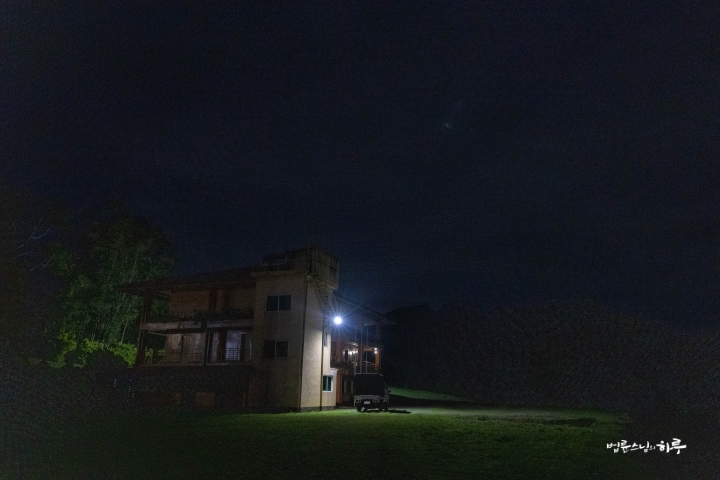
Sunim and the JTS visiting group woke up at 2:30 AM and departed from the JTS Center at 3 AM. They traveled by bus for 2 hours through pitch-black darkness from the JTS Center to Cagayan de Oro Airport.
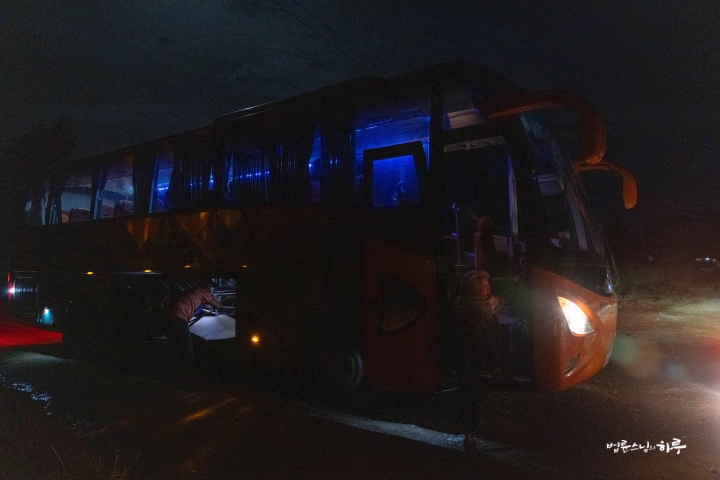
At 5 AM, they arrived at Cagayan de Oro Laguindingan Airport, checked in their luggage, and completed boarding procedures.
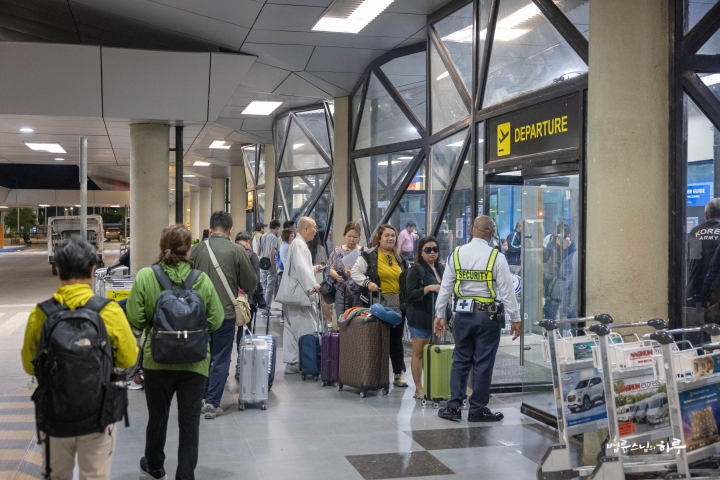
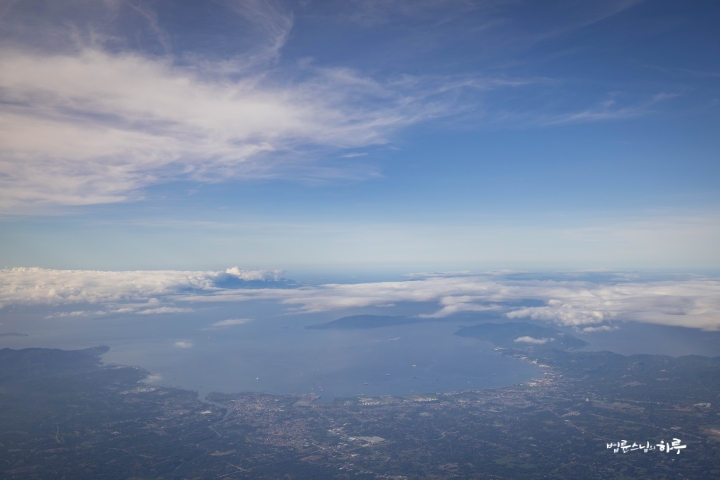
There were concerns about delays, but fortunately, the flight that departed at 7:20 AM arrived safely at Manila Airport at 9 AM after a 1 hour and 40 minute flight.
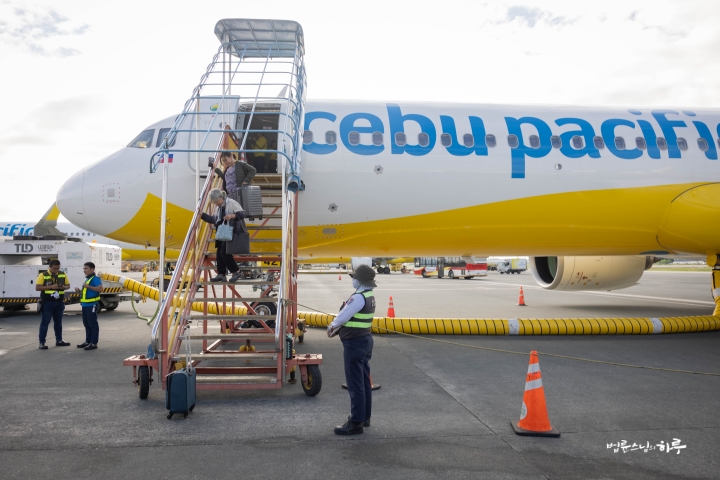
They immediately took a car to the Manila Jungto Dharma Center.
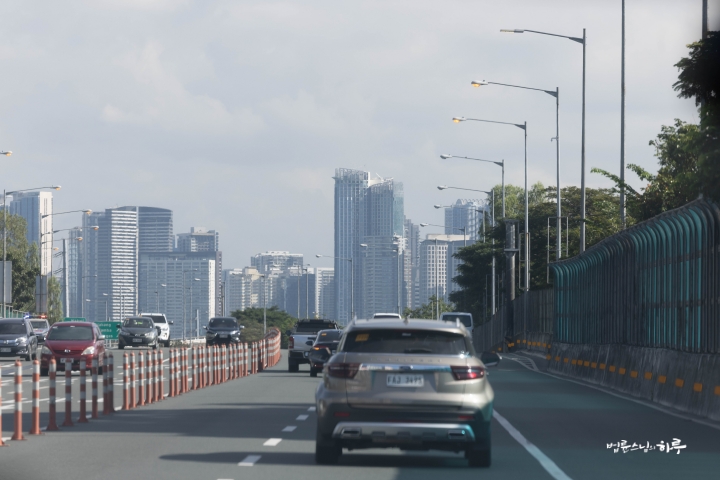
The Manila Jungto Dharma Center is located in the heart of downtown Manila. After opening, it couldn’t be utilized well due to the COVID-19 pandemic, but it has recently become lively again. They arrived at the Manila Jungto Dharma Center at 9:40 AM and had kimbap for breakfast.
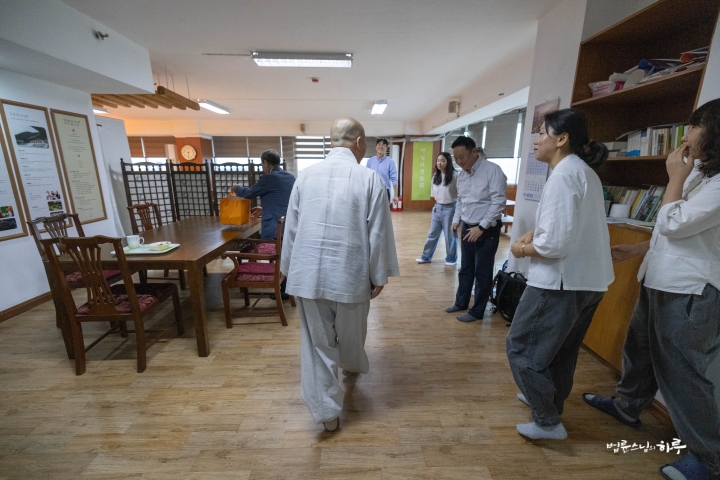
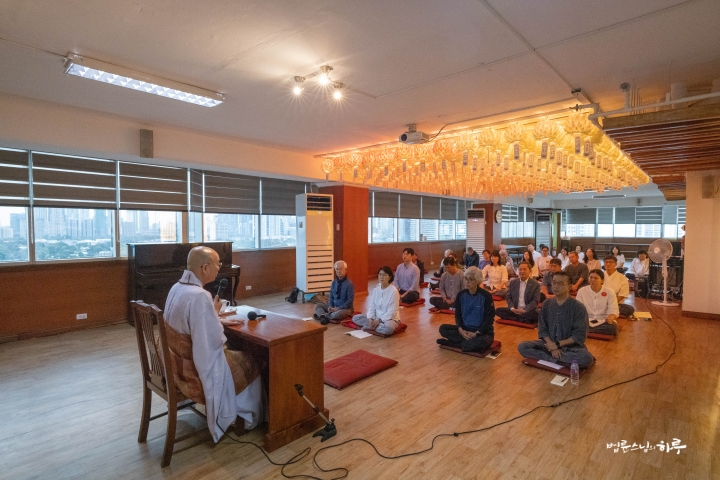
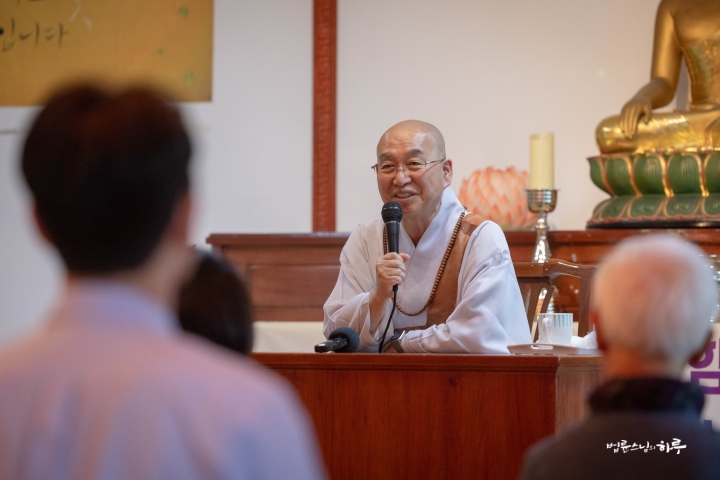
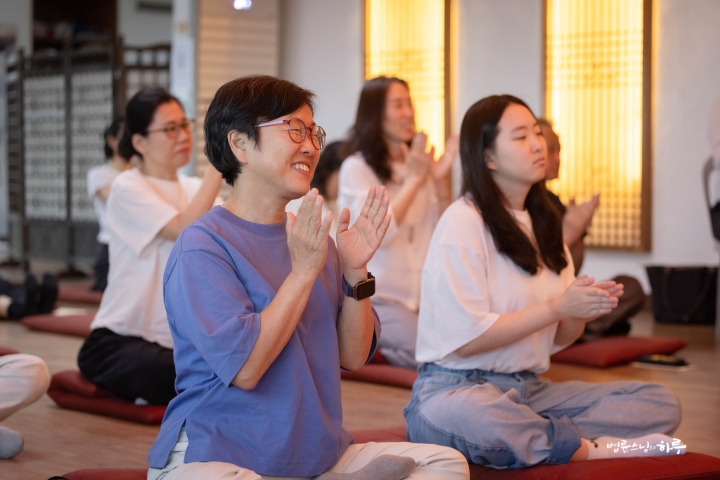
After finishing the meal, a special Dharma assembly for Manila Jungto members began at 10 AM. About 40 members were present, and they all greeted Sunim with three bows, requesting a Dharma talk.
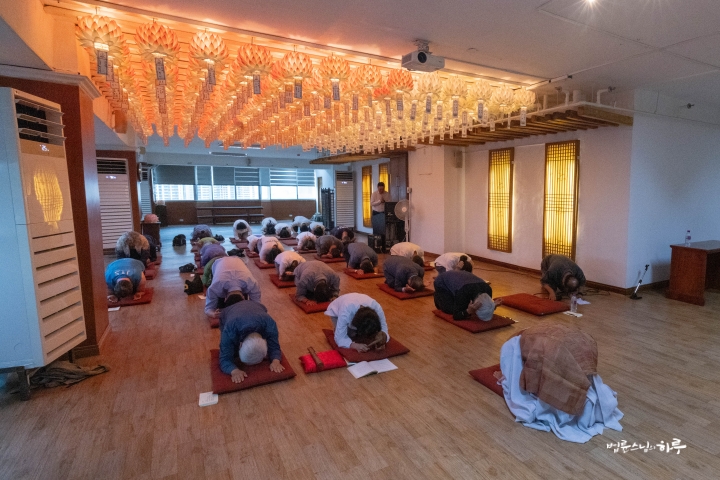
Sunim talked about how to study Buddhism by sharing a scene from the Buddha’s life as described in the scriptures.
Which is More Precious, River Water or Human Blood?
Hearing this news, the Buddha, concerned that if the fight continued, it would lead to a war with many people shedding blood, went there. The scripture describes it as ‘The Buddha was floating in the air in the middle of the river,’ which seems to be a symbolic expression that the Buddha maintained neutrality without taking sides. The Buddha called the leaders of both armies and asked: “Are you now about to fight with weapons?” “Yes, we are.” “Then, do you think this could lead to bloodshed and loss of life?” “Yes.” The Buddha then asked: “Let me ask you this. Which is more precious, the flowing river water or the blood flowing in your bodies?” “Buddha, how can that insignificant river water be compared to the blood in human bodies? Blood is far more precious.” “Then why are you trying to spill that precious blood like river water for the sake of that insignificant water?” Hearing this, both sides, who had been blinded by emotion, deeply reflected and stopped fighting. They cooperated to manage the water well and overcame that year’s drought. This is the story of the Buddha’s intervention in the Rohini River dispute.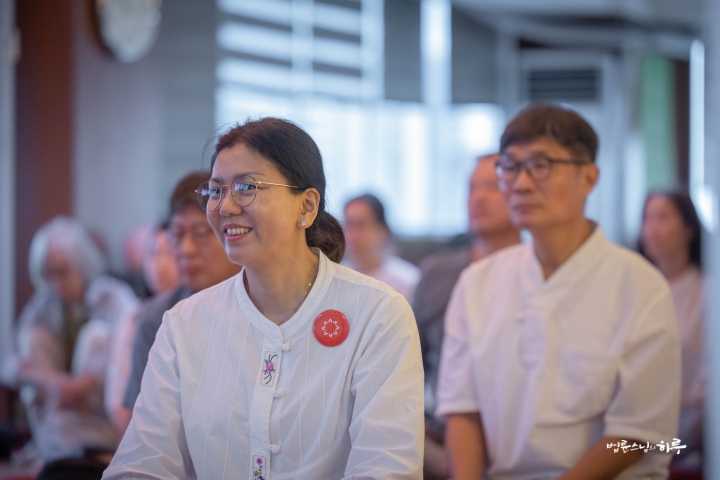
Practice, Becoming Aware Through Activities
Similarly, you should become aware through various conversations and activities. You are doing a lot of work helping people in need in Mindanao, but while helping others is important, if you become aware during these activities that ‘I’m consuming a lot’ or ‘If it were my son, I wouldn’t leave him like this,’ that is practice. If the poor children in the mountain villages of Mindanao were your children, you wouldn’t just leave them be. It’s because you think of them as someone else’s children that you leave them alone or don’t take the best care of them. Even if you can’t take care of poor children exactly the same as your own children, adjusting from 1:100 to 1:50, and from 1:50 to 1:10 is the path towards equality. When you become aware like this, change started.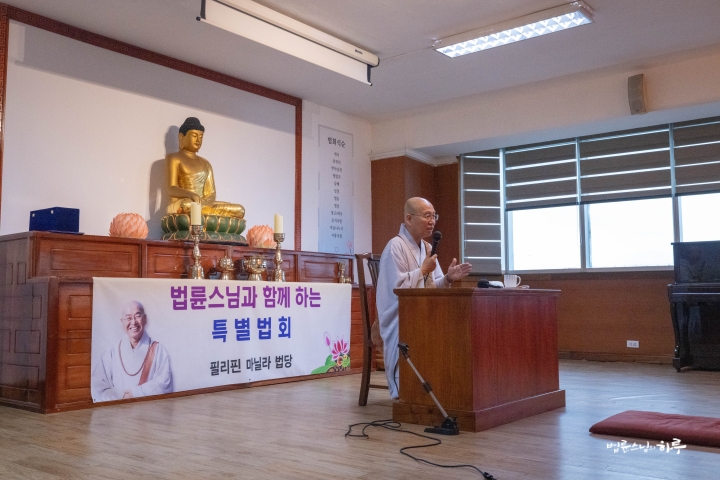
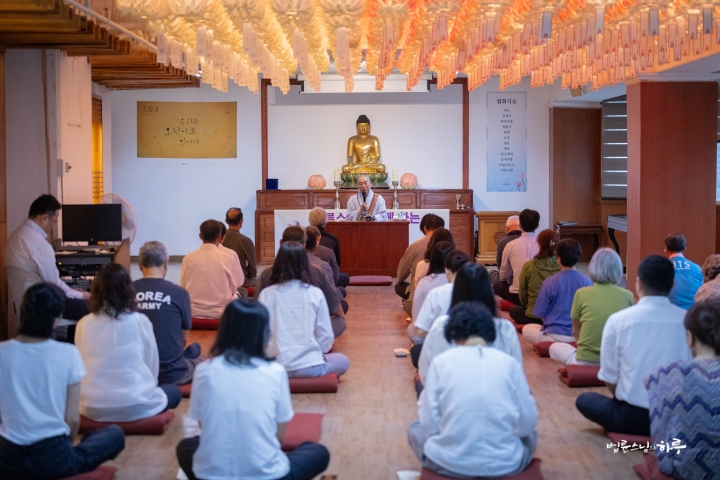
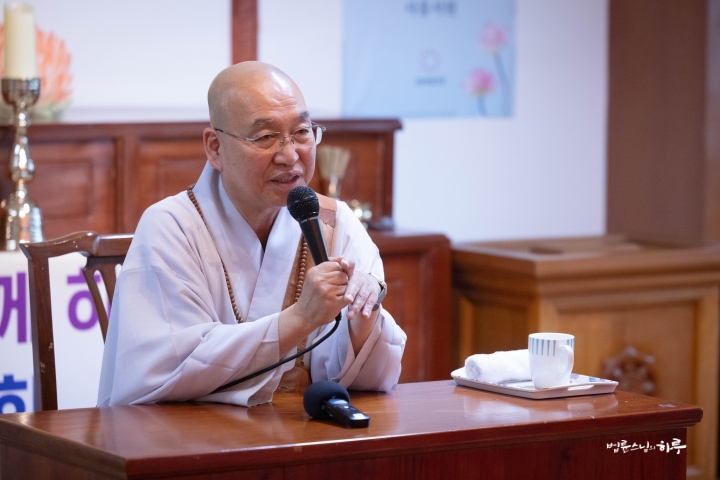
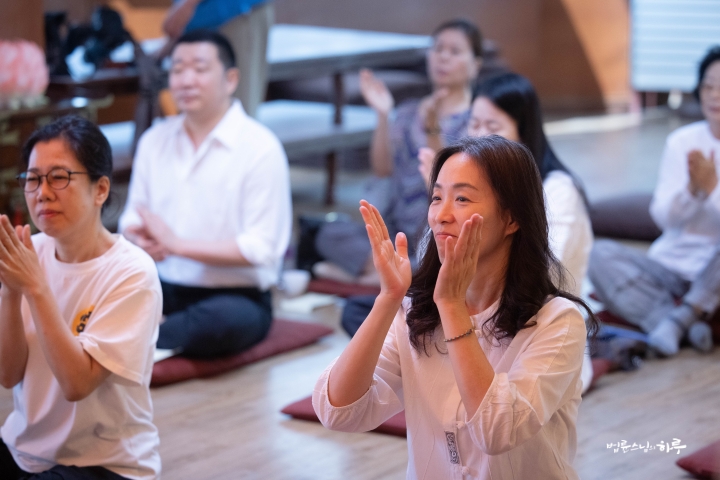
The Dharma talk ended with a big round of applause, and then a special time was held at Sunim’s suggestion.
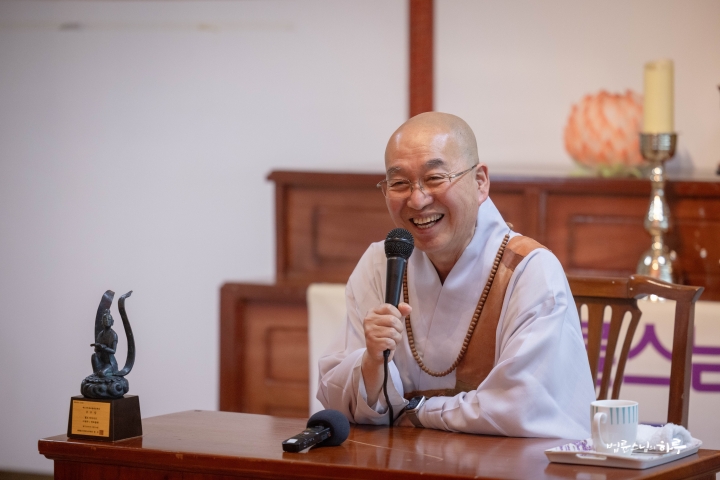
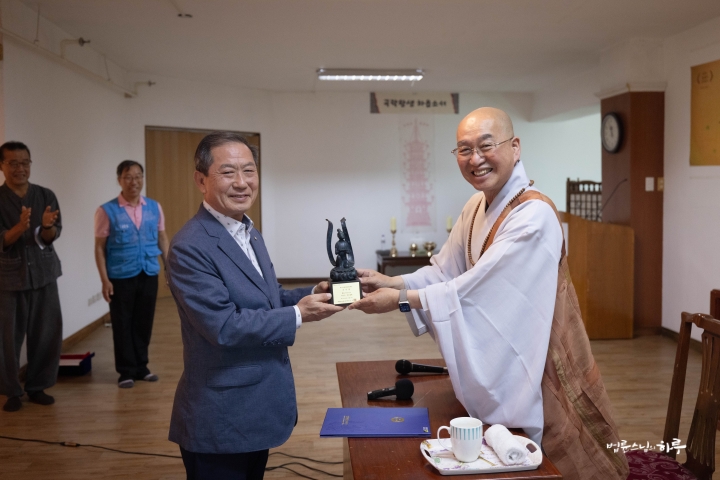
Lee Won-joo, who served as the former representative of JTS Philippines, received the Excellence Award at the Buddhist Publishing Culture Awards last October for his book ‘Hello, Mindanao,’ which compiled his experiences from 20 years of JTS work in Mindanao. Sunim read out the award plaque and certificate and personally presented them.
Former representative Lee Won-joo came forward amidst big applause to receive the award plaque and certificate.
Then, former representative Lee Won-joo briefly shared his thoughts.
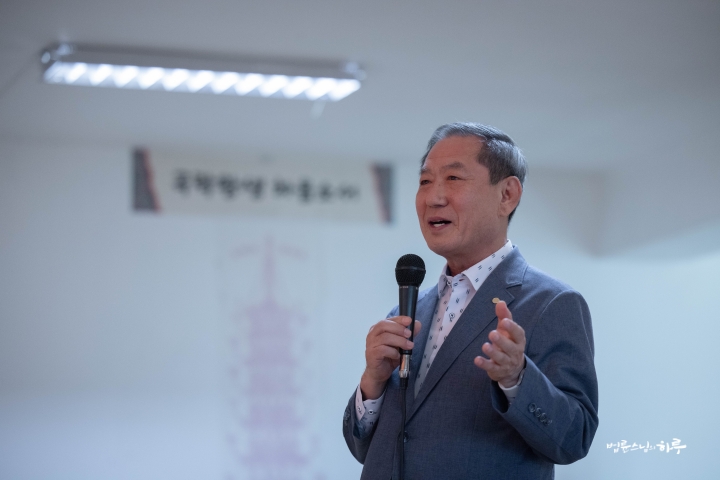
“The JTS project in Mindanao is absolutely not my activity alone. Venerable Pomnyun Sunim led from the front, and the actual activities were done by JTS volunteers. I just helped a little with the parts that were difficult for JTS volunteers to resolve. Among those, I think I contributed a little in the area of eliciting cooperation from local governments and education offices. Also, many bodhisattvas and lay practitioners in Manila Jungto have worked hard together for 20 years. I think this award is for everyone’s sweat and effort. Thank you.”
Then, Sunim encouraged Mr. Noh Jae-guk, the current representative of JTS Philippines, for his efforts in successfully completing the construction of 10 schools this year.
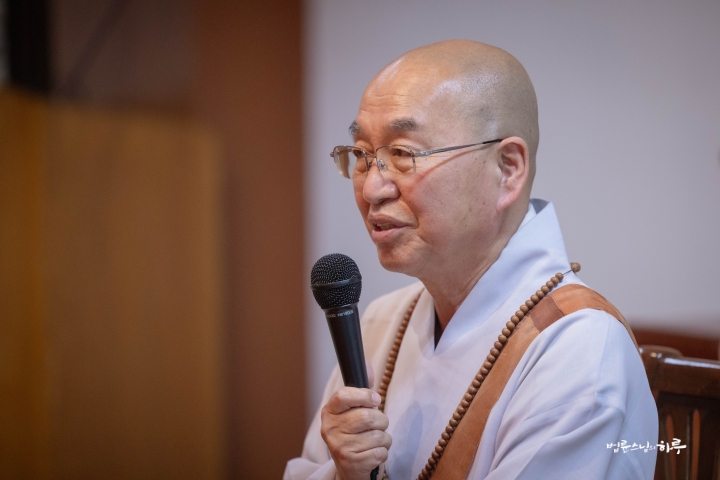
Representative Noh Jae-guk also shared his thoughts.
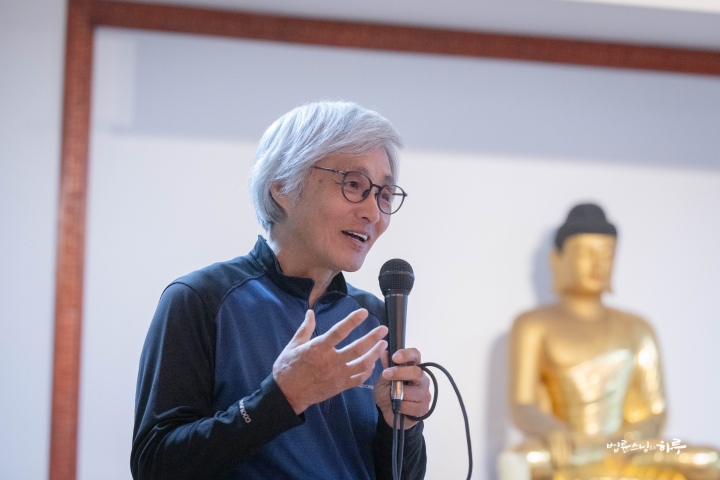
“Former representative Lee Won-joo laid such a good foundation that we were able to accomplish this without any special difficulties. However, I’m sorry that some places weren’t properly completed by the day of the opening ceremony. So I did announce, ‘There are places without toilets, so please wear diapers.’ But life wouldn’t be life without such shortages, right? I’m grateful to Dharma teacher Hyanghun and all the JTS volunteers who gave their best.”
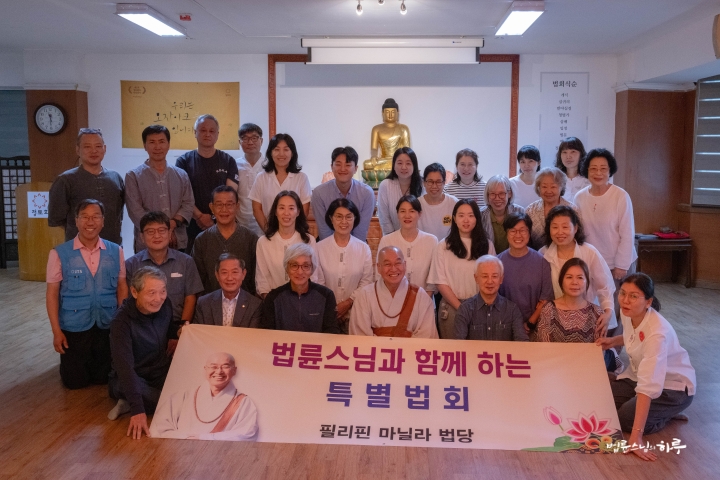
Finally, Sunim introduced each person who participated in this JTS visiting group. The special Dharma assembly at Manila Jungto Dharma Center ended with everyone encouraging each other with big applause. They took a group photo and had lunch.
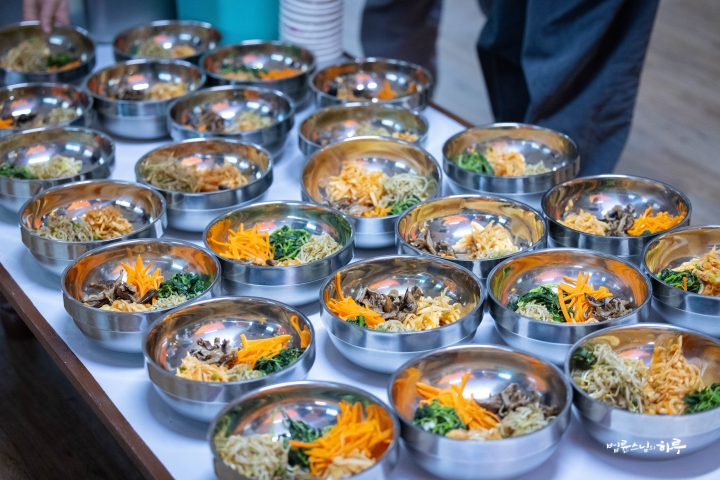
The members of Manila Jungto Dharma Center personally prepared bibimbap.
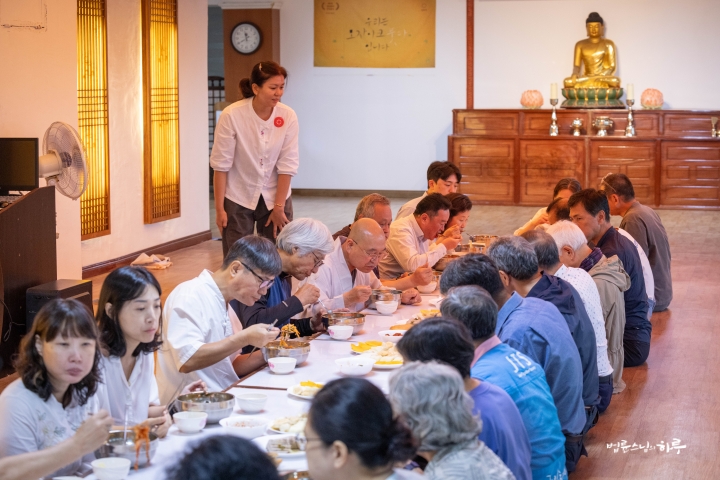
After having a conversation over the meal, Sunim immediately headed to the Ramon Magsaysay Center.
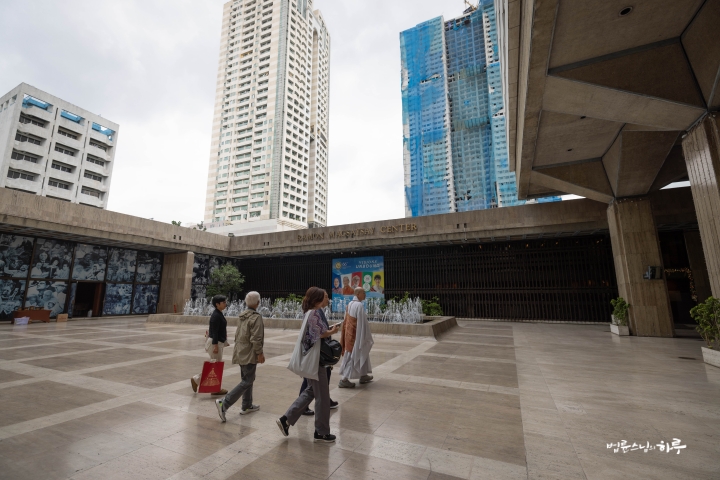
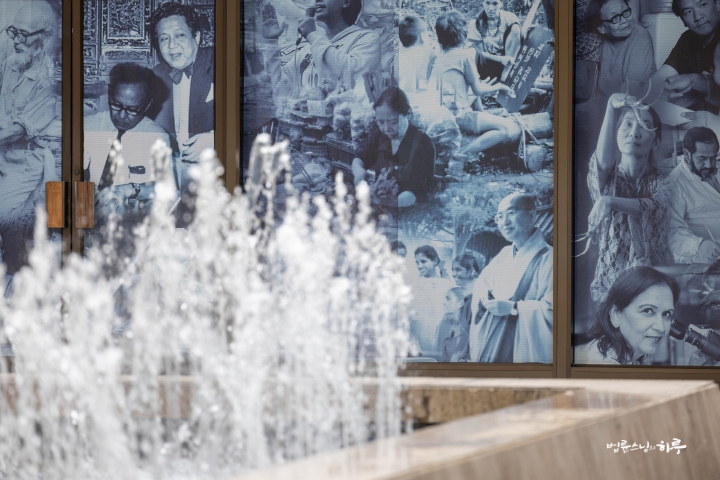
When Sunim arrived at the Ramon Magsaysay Center, an official came out to welcome him warmly. In front of the center, there was a mural engraved with the names of the awardees since 1958. Sunim’s photo also filled one part of it.
Sunim entered the library set up inside the center and met Ms. Susan Afan, the representative of the Ramon Magsaysay Foundation. They sat at a table and had a light tea conversation.
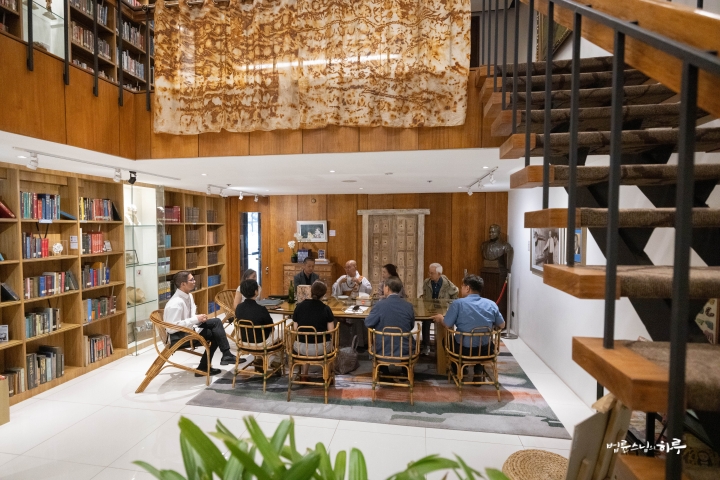
Ms. Susan first apologized for not being able to join the Mindanao visit schedule this time.
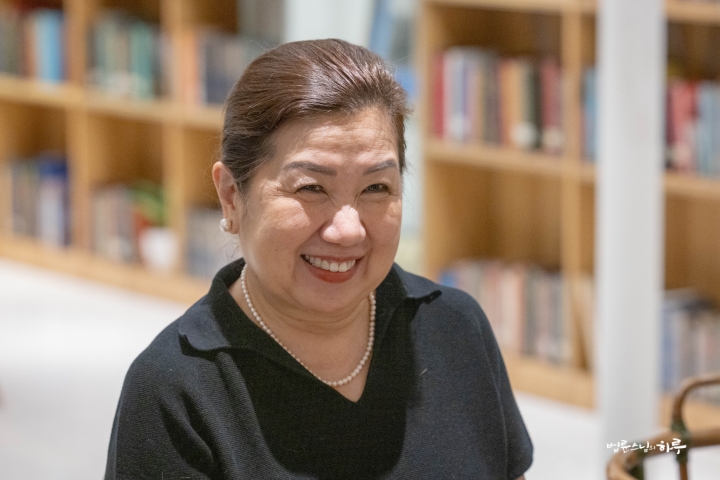
“I really wanted to go to Mindanao this time, but I’m sorry I couldn’t go because I suddenly felt unwell. The staff sent me photos of them climbing rough mountain paths. If I had participated, I would have been a big burden due to my bad knee. (laughs) When are you returning to Korea?”
“I’m taking a flight back tonight.”“Oh my God! What’s the secret to your passionate energy? Do you eat a lot of red ginseng?”
“Just live alone.” (laughs)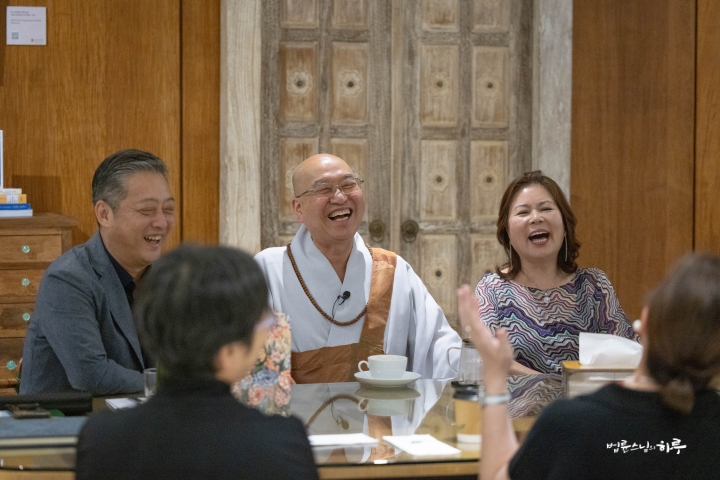
After exchanging greetings warmly, Ms. Susan explained the reason for requesting a meeting with Sunim.
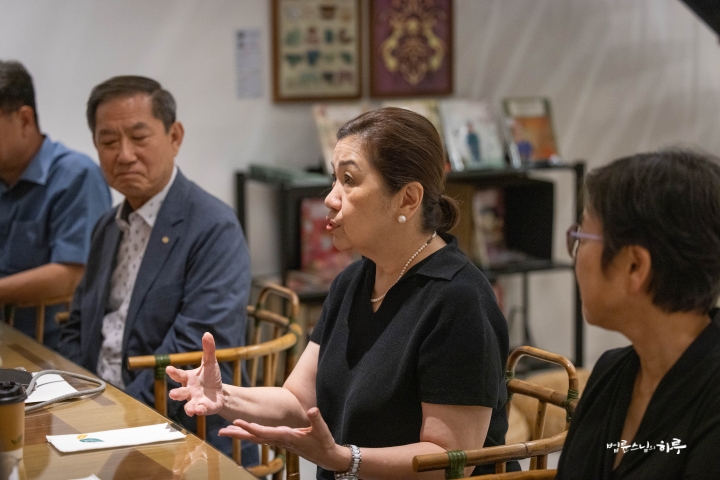
“The reason we requested this meeting with Sunim is that we wanted to receive mementos or books from previous Ramon Magsaysay Award recipients, so that their thoughts and greatness can continue like legends. The Ramon Magsaysay Foundation is now in its 67th year, and as we prepare for our 100th anniversary, we would like to seek Sunim’s advice on our path forward.”
Sunim introduced the work he has been doing and helped Ms. Susan consider how the Ramon Magsaysay Foundation could collaborate with him on various projects.
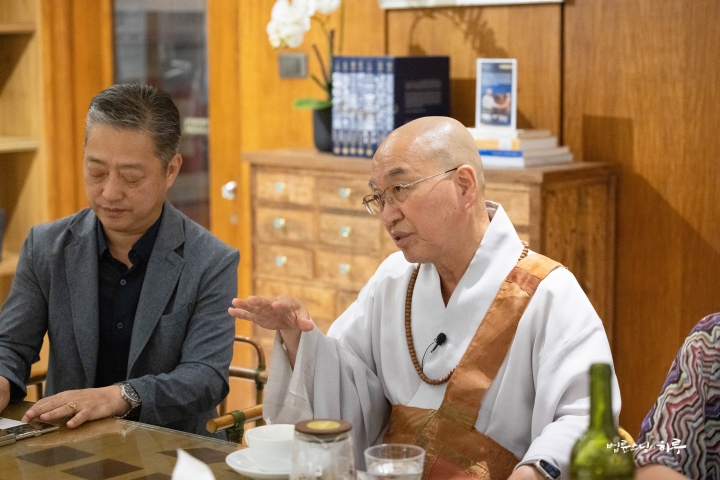
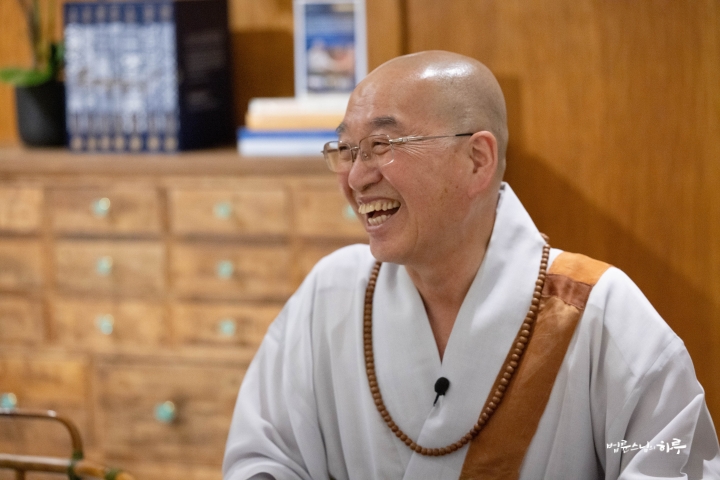
After listening to Sunim’s explanation, Ms. Susan continued.
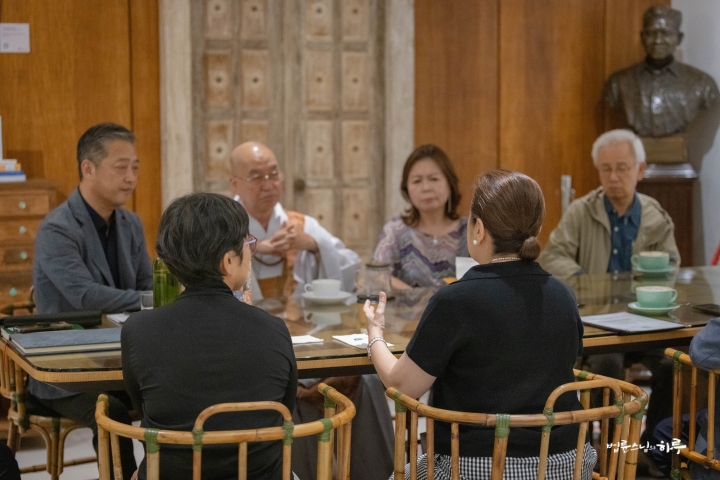
“First and foremost, I must express my amazement at your ability to plan and execute all of this. I can’t hide my excitement as I hear about your incredible organizational skills and activities.”
Ms. Susan informed Sunim about a seminar on global water supply hosted by the Asian Development Bank (ADB) from May to July next year, and invited him to the event. She then introduced some recent activities of the Ramon Magsaysay Foundation and expressed her hope for collaboration between Sunim and several outstanding individuals, introducing a few of them.
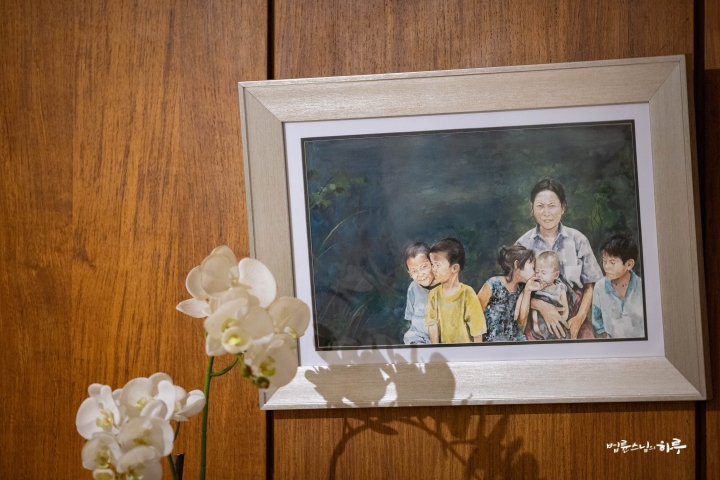
“Recently, the Ramon Magsaysay Foundation has been focusing on connecting with other awardees. There’s a Japanese doctor who has performed many cataract surgeries for patients in other countries. He has his own surgical equipment, so he can perform surgeries even in small villages if there are cataract patients in the Mindanao region. If you need his help in your work, we can connect you.
Next, there’s a person from the untouchable caste in India who is doing a lot of volunteer work to improve the lives of untouchables. When you visit India, it might be good to meet this person. Through this connection, there might be opportunities for good ideas or collaboration.
There’s also someone in Singapore who prepares 10,000 lunch boxes every day and provides them to poor people. If we can connect with this person, we might be able to collaborate on solving food problems in impoverished areas.
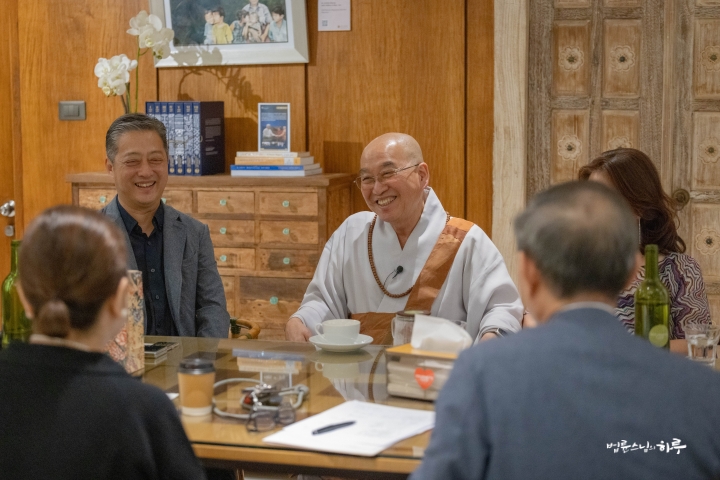
The Ramon Magsaysay Foundation is actively looking for ways to connect recent Ramon Magsaysay Award recipients so that peace and humanitarianism can continue to influence the world through their interactions.”
Sunim also expressed strong agreement with Ms. Susan’s vision and shared his perspective on how to approach support.
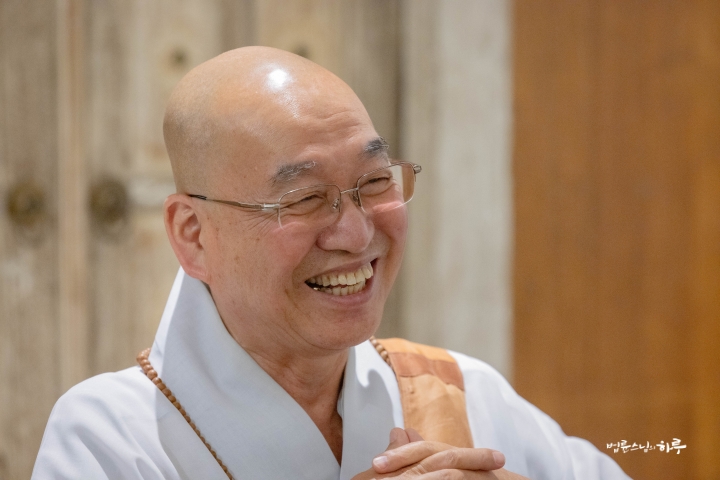
After an hour and a half of conversation, Sunim handed over the items that the Ramon Magsaysay Foundation had requested to keep in their museum. He introduced the items he had brought in a paper bag.
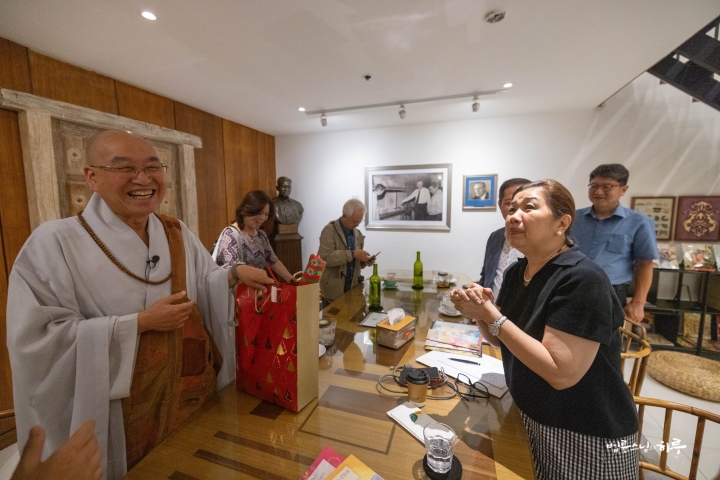
“Thank you very much.”
The Ramon Magsaysay Foundation also presented a gift to Sunim.
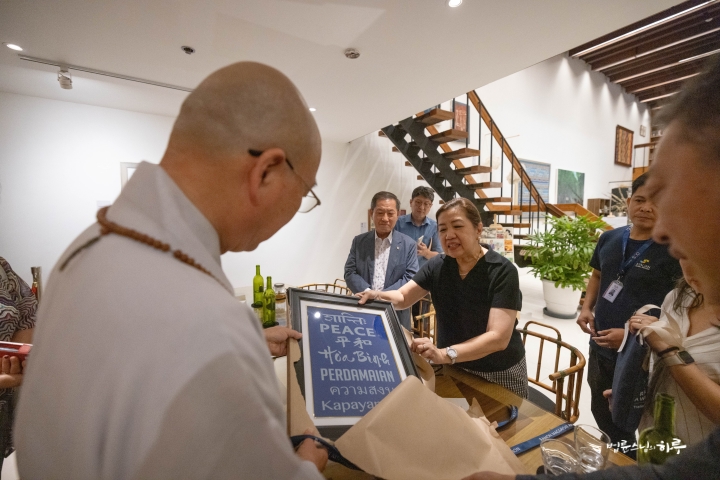
“This is a frame we used at the 66th anniversary ceremony of the Ramon Magsaysay Award. It expresses the word ‘peace’ in six different languages.”
“Thank you.” Upon ascending to the second floor of the library, Sunim was shown a collection of materials related to him.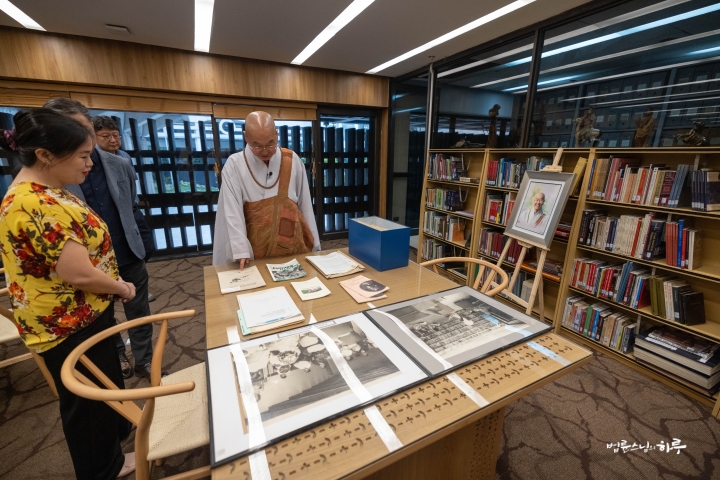
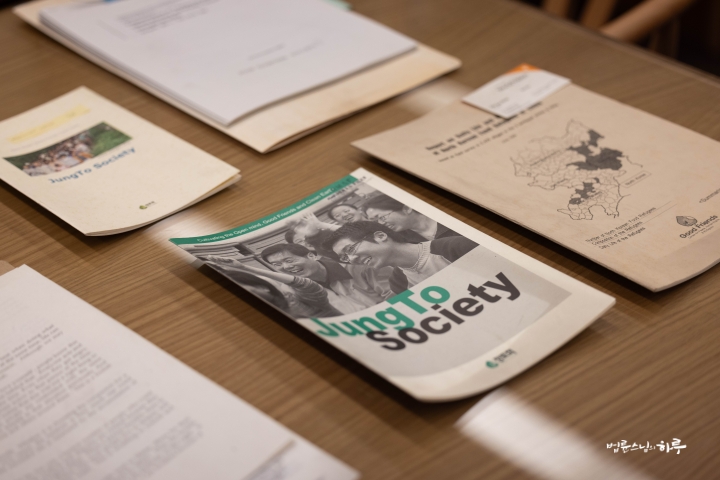
All the materials were related to Sunim’s award in 2002, which had been preserved for over 20 years. It was explained that all materials are digitized and stored so that students and researchers can refer to them when studying award recipients. Moving to the corridor, photographs of past award recipients were on display.
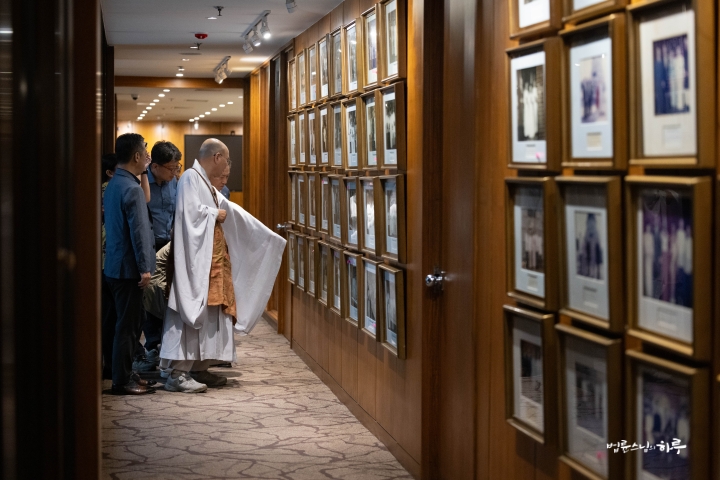
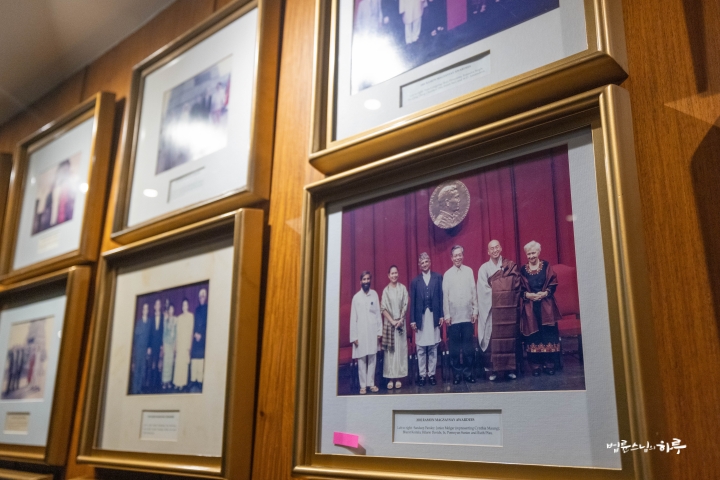
“These are the recipients since 1958.”
The Ramon Magsaysay Award holds special significance for Sunim, as it was the catalyst for the JTS project in Mindanao, Philippines, which has been ongoing for the past 20 years. President Susan expressed her gratitude and admiration for Sunim’s consistent efforts to help those in need even after receiving the award.
After taking a group photo, Sunim left the Ramon Magsaysay Foundation.
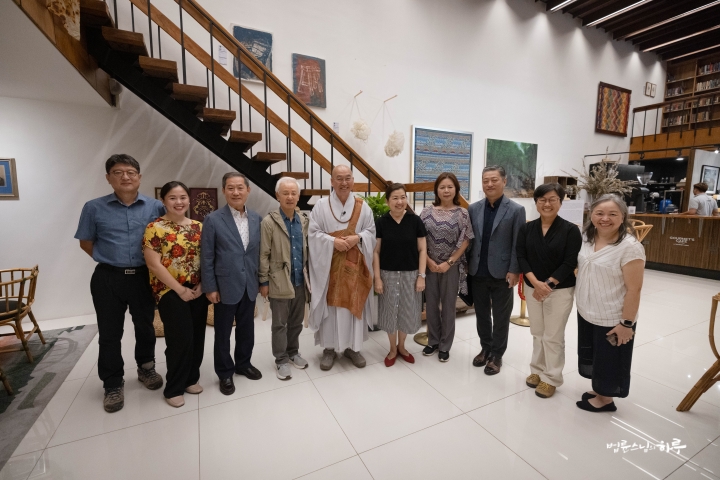
Sunim immediately headed to the lecture hall to meet with Korean expatriates in Manila.
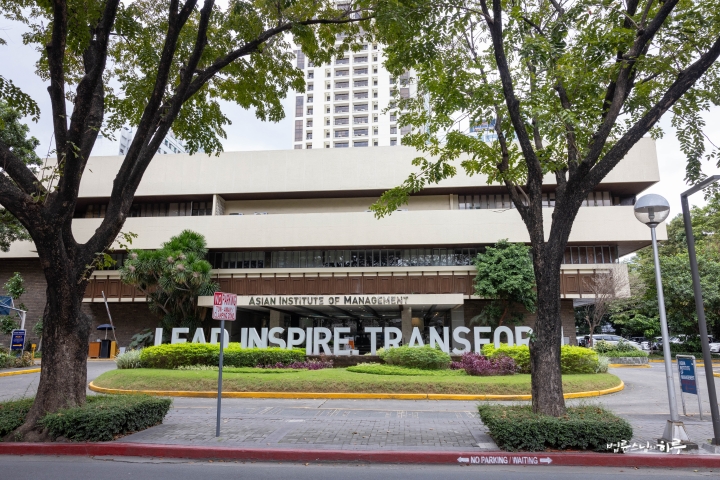
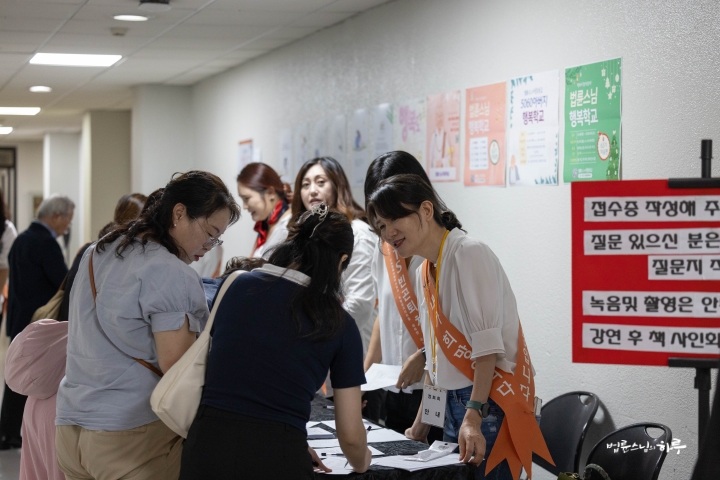
Today’s lecture is being held at the Asian Institute of Management (AIM), a business school located in Makati City. Volunteers were busy preparing for the lecture throughout the venue.
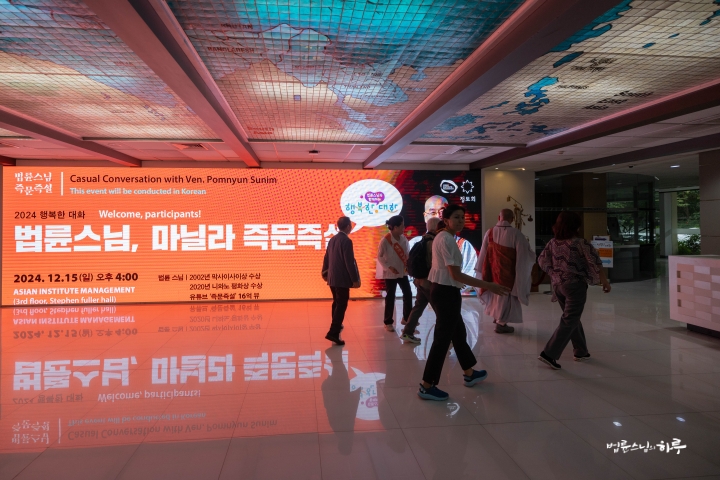
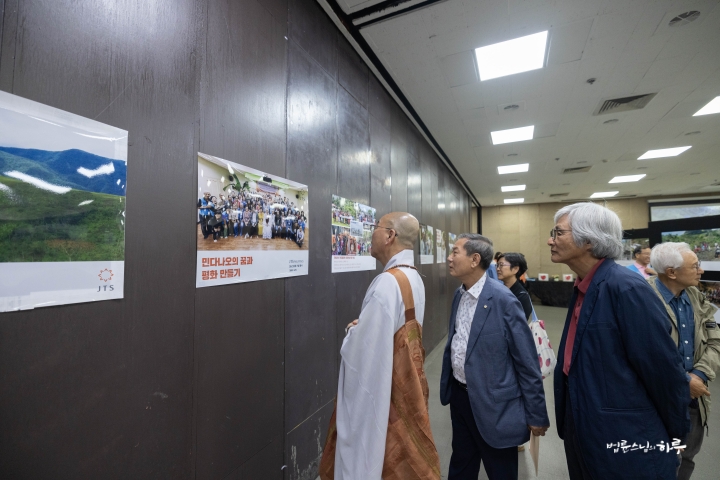
In front of the lecture hall, a photo exhibition documenting the 20-year history of JTS Philippines was held. Sunim was the first to view the exhibition.
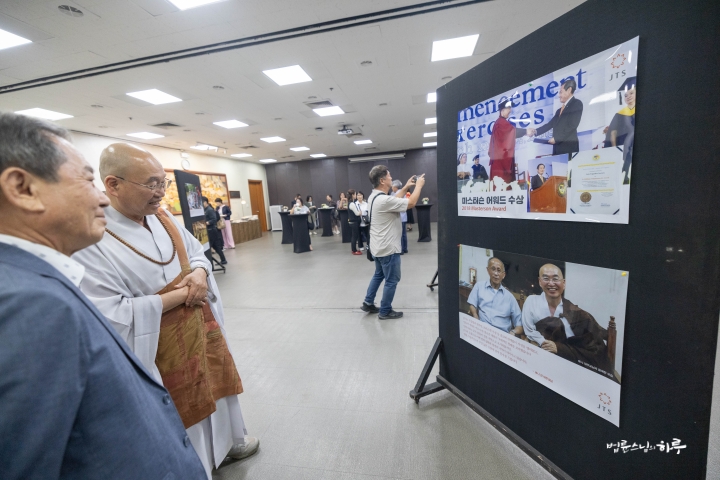
In 2002, Sunim received the Ramon Magsaysay Award, which led to a request from Archbishop Tony to survey the Mindanao region. The Mindanao support project began in 2003. Over the past 20 years, 73 schools have been built, sowing seeds of peace in Mindanao. Sunim’s face from 20 years ago looked remarkably young.
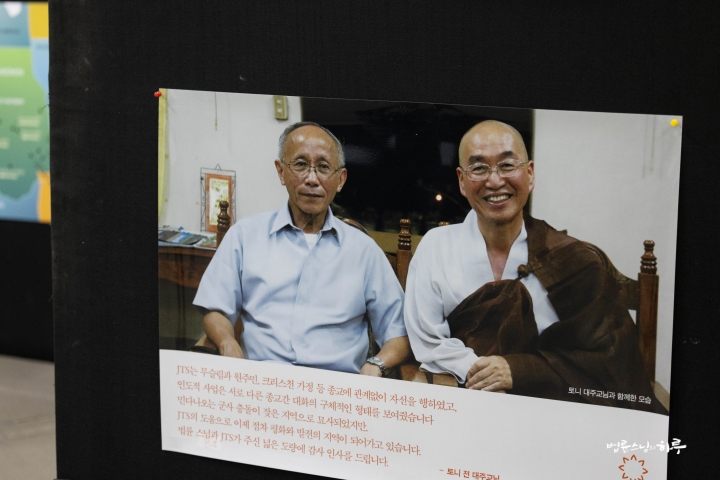
A warm smile spread across Sunim’s face as he recalled the memories of traveling to remote areas dozens of times to build a single school. Many expatriates who arrived early viewed the photo exhibition and enjoyed refreshments prepared by volunteers, including kimbap, hamburgers, rice cakes, and tea.
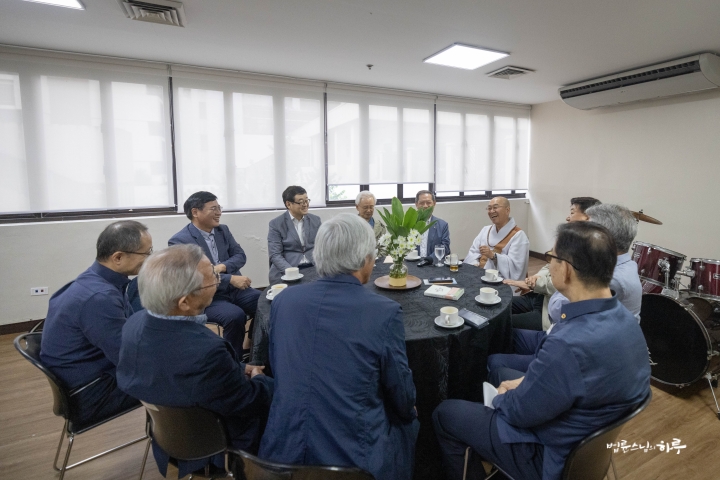
After viewing the photo exhibition, Sunim had tea with senior members of the Manila expatriate community, including former presidents of the Korean Association in the Philippines, and presidents of trade and sports associations.
With over 200 people filling the venue, a video was shown of Sunim delivering 6.36 million bars of soap to the Rohingya refugee camp on the 2nd of this month.
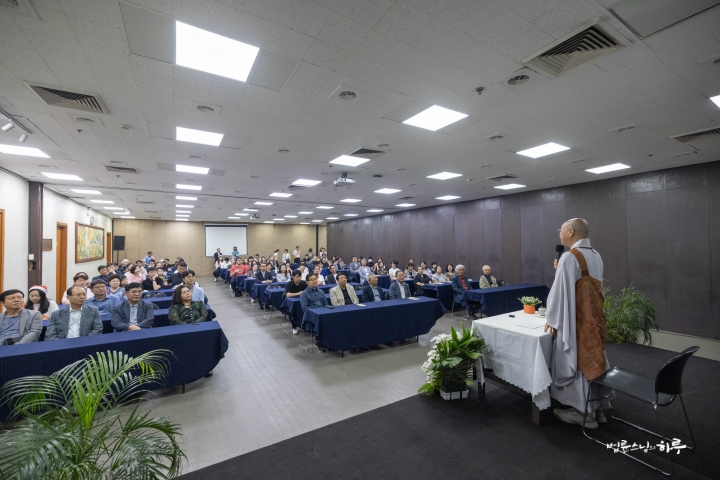
As Sunim walked onto the stage after the video ended, big applause and cheers filled the room. Many young people were also atteded. Sunim began with a greeting.
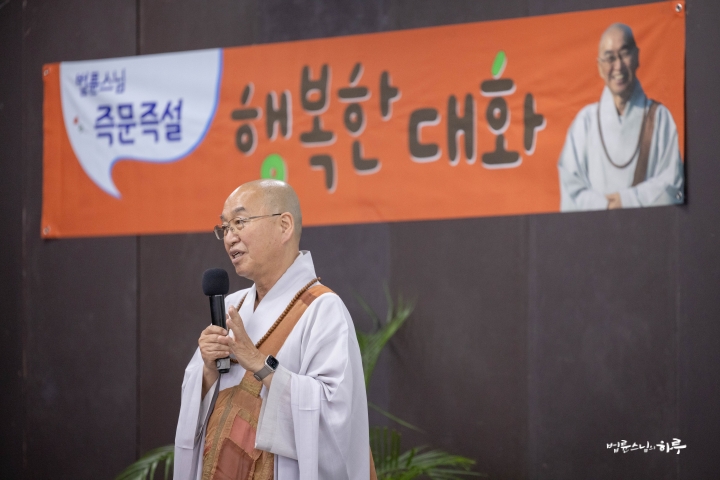
Sunim then introduced that JTS Philippines had built 10 schools in Mindanao this year and showed photos of the completion ceremonies held over the past five days.
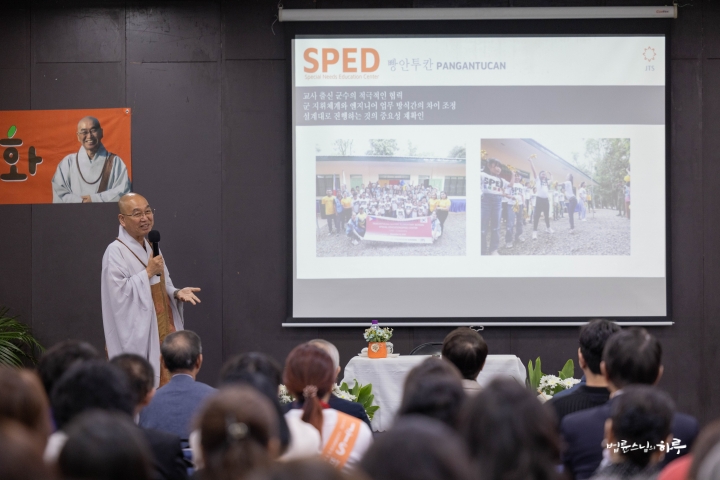
Building Schools Brought Peace
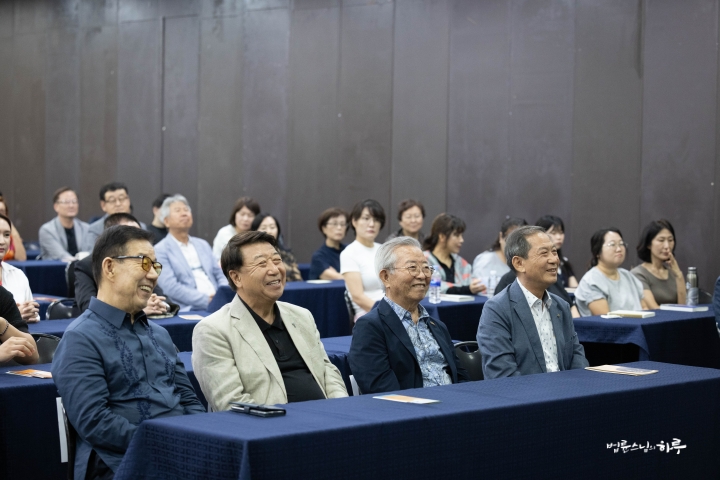
That’s why JTS never discriminates based on religion when doing this work. Even now, JTS is collaborating with Catholic bishops in various ways for our work in Mindanao. I spent time with a bishop yesterday as well. This kind of activity should be carried out beyond religious boundaries. That’s why we named the organization ‘Join Together Society’. Helping the hungry, aiding the sick, and educating children should transcend religion, gender, and nationality. When we started building schools in Mindanao, I met with a commander in the MILF (Muslim rebel) area and said this: “Adults may fight over religion or ideology. But what fault do children have? For children to study, they need schools and teachers. So please ensure the safety of teachers so they can teach children in the schools we build.” The commander readily agreed. As a result, we were able to build schools even in conflict-ridden areas. When schools were established in these conflict zones, peace truly arrived. Originally, Catholics and Muslims wouldn’t even look at each other, and would run away if they met. But as they built schools together, children attended these schools, and parents met each other, misunderstandings gradually dissolved. The same was true for indigenous villages that had inter-tribal conflicts. Peace doesn’t come from making assertions, but naturally arrives when people communicate with each other in the reality of their lives. So don’t be too afraid to come to Mindanao. If there was money to be made, you’d probably go despite the danger, but it seems you’re not going because there isn’t much money to be made. Human life can’t be lived solely for monetary gain. In the future, don’t just go hiking in the Himalayas; Mindanao also has mountains nearly 3,000 meters high. I hope that you who live in the Philippines will visit Mindanao often.Following this, there was a time for people to raise their hands and ask questions about life concerns. Anyone could raise their hand and ask Sunim a question. Over two hours, eight people had conversations with Sunim. One of them was a person running a private business who sought Sunim’s advice on how to manage their feelings when business partners made dismissive comments during every phone call, causing distress.
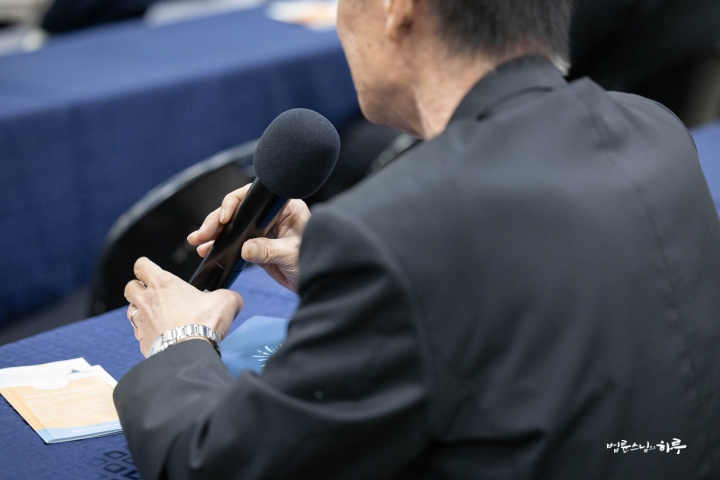
I’m Distressed Because My Business Partners Disrespect Me a Lot
“I run my own business. I work with many Korean business partners, but one of them is causing me a lot of distress. However, I can’t sever ties with them, and continuing to do business with them is causing me to lose hair and suffer emotionally. I would like to seek your wisdom, Sunim.”
“Can you explain specifically how they are distressing you?”“When we talk on the phone for business, they disrespect me a lot. Even though I put a lot of thought into making proposals that would benefit them, their attitude of disrespect towards me is too severe.”
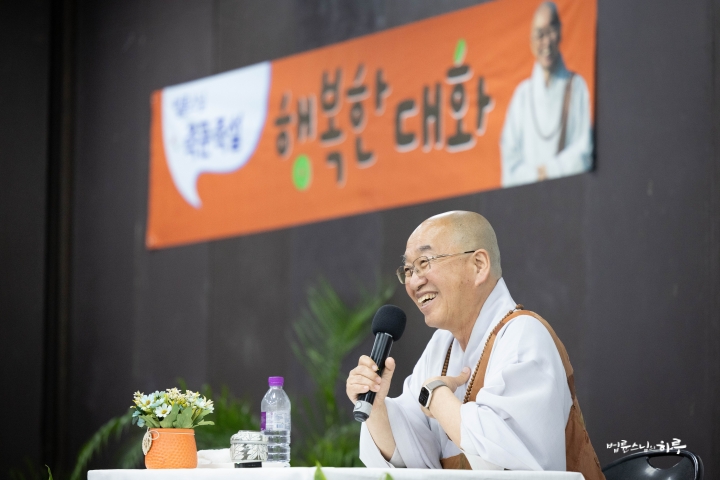
“But if I stop doing business with them, my income will decrease.”
“If you want to make money, you need to be a bit humble when dealing with others.”“It’s too difficult for me to be humble and deal with them.”
“Saying it’s difficult means you’re well-fed. If you were truly hungry, what would be so hard about being humble? In the story of Heungbu, when his sister-in-law hit his cheek with a rice paddle, he ate the rice stuck to his cheek and asked her to hit the other side too. Similarly, if you’re making money, what’s the big deal about being disrespected a bit over the phone? If it bothers you that much, you should give up on making money.”“I want to make money, not hear disrespectful comments, and overcome this situation wisely.”
“There’s no such way. That’s greed.”“Yes, I understand.”
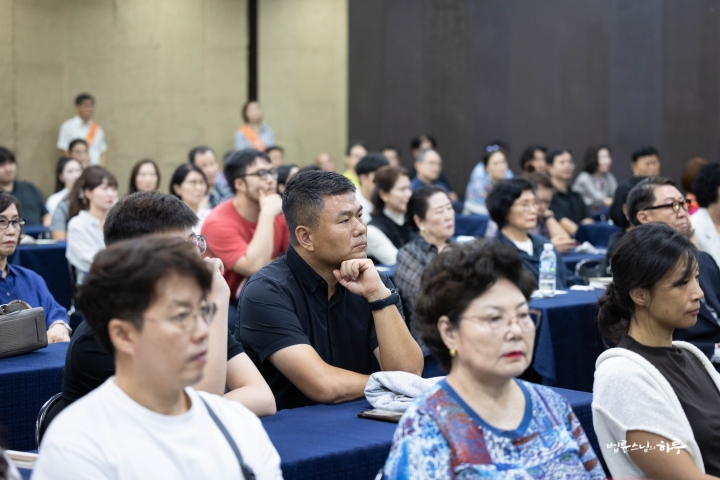
The questioner immediately understood and his face brightened. Sunim provided additional explanation.
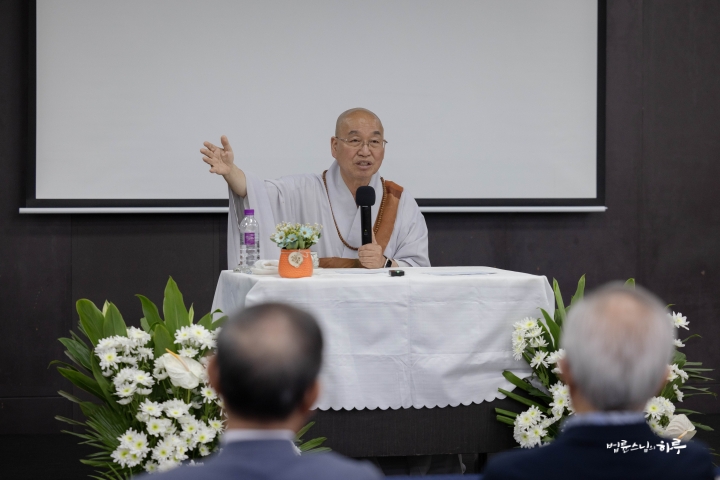
“No, you spoke realistically and well.”
“The reality is that if you want to make money, you have to endure some disrespect. But you keep thinking there must be another way, and that thought keeps causing you distress. If you’re making money, you should think, ‘It’s not like my pride is going to feed me,’ and when they say something, just respond with ‘Yes, I understand.’ What’s there to be proud about in this situation? If you still want to maintain your pride, you can say, ‘You’re being too overbearing, I can’t do business with you anymore’ and end the relationship. But then you’ll have to live with a bit of a loss. How can you have both?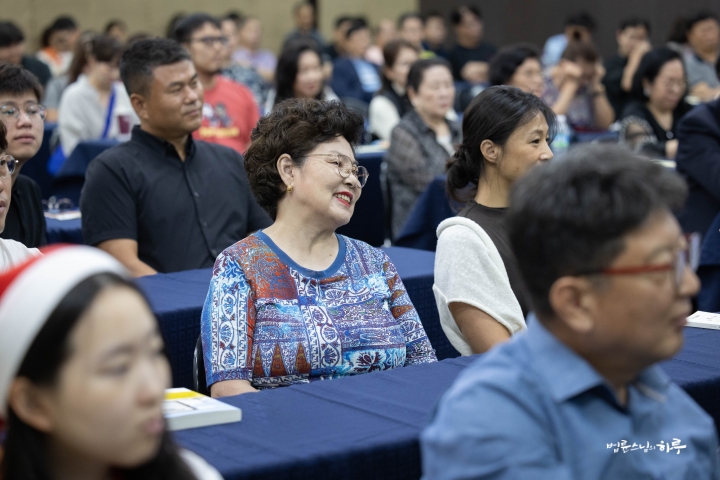
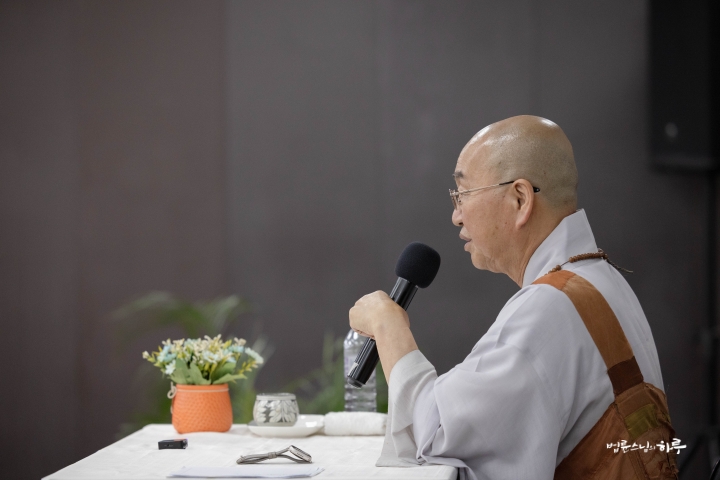
“I understand. Thank you.”
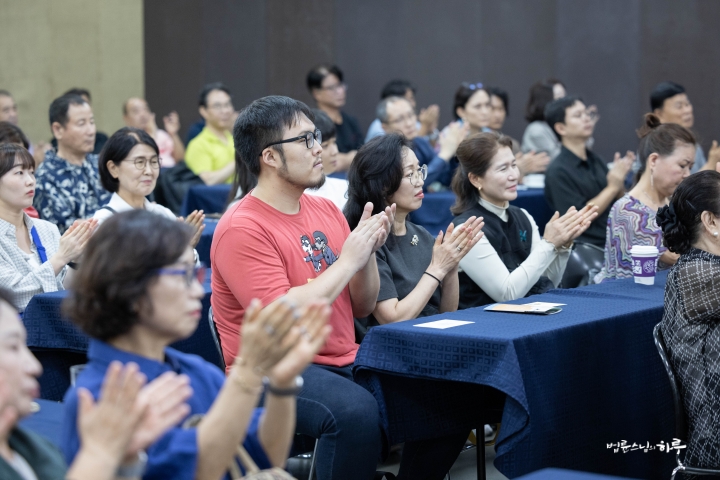
The questions continued to pour in.
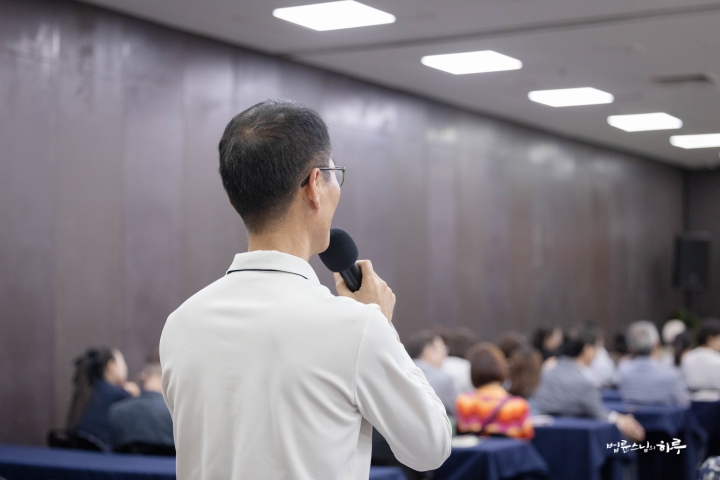
Depression among the elderly is getting worse. I was shocked when someone I know committed suicide. How can we prevent this situation?
Have you ever had doubts about your activities or felt overwhelmed, Sunim?
Volunteering is enjoyable, but earning money isn’t. I have a responsibility to make a living for my children. How should I approach this perspective?
I’ve been consistently volunteering to help Kopinos (children born to Korean fathers and Filipino mothers). Sometimes I have doubts about what I’m doing. What mindset should I have?
Sometimes I feel like I’ve lost to my wife in arguments and get upset. How should I communicate with my wife so that I don’t feel like I’ve lost?
If I accumulate good deeds, will I receive the benefits in my next life? Or will my grandchildren receive them?
Even after the impeachment resolution was passed, seeing the actions of the President of South Korea is truly baffling. How should we view this?
The last question was about the current political situation in Korea. Sunim concluded the lecture by discussing the state of emergency in Korea and emphasizing the perspective we should all have.
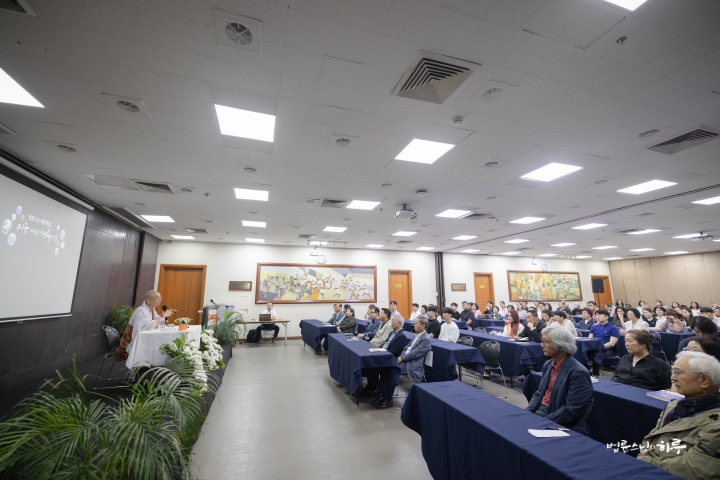
After the lecture, there was a book signing session on stage. Many people lined up to wait for their turn to receive Sunim’s signature.
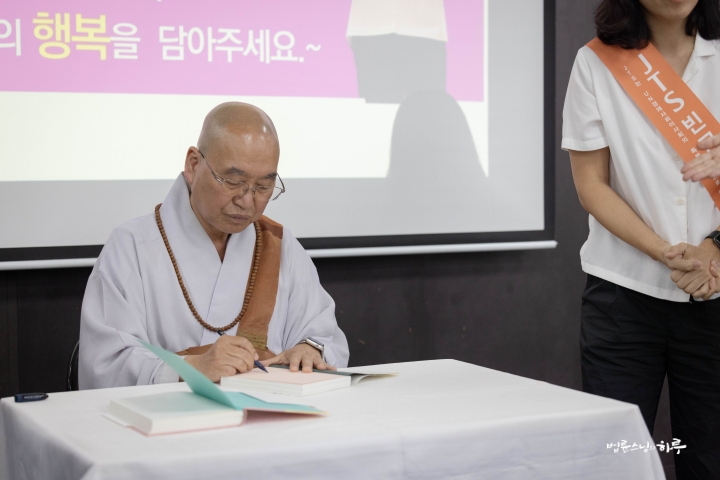
Sunim greeted each person, making eye contact. Finally, Sunim took a group photo with the volunteers who had prepared the lecture.
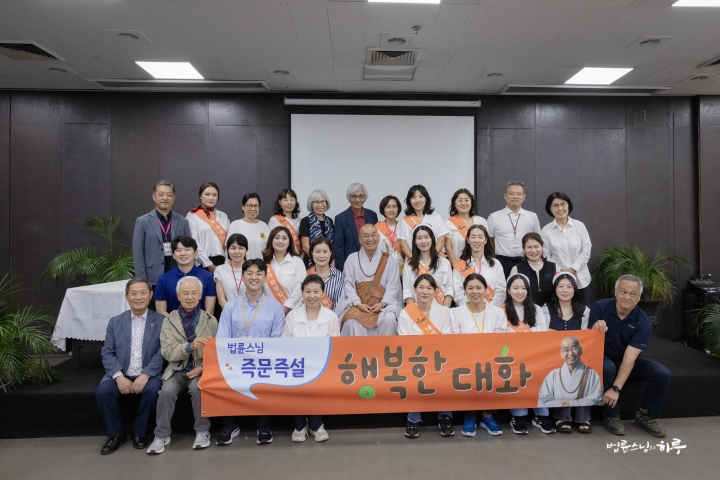
“Manila Jungto!”
The volunteers quickly cleaned up and tidied the lecture hall. Sunim also helped with the cleanup.
In the evening, Sunim had dinner at a Korean restaurant run by Lee Gyucho, the vice representative of JTS Philippines, concluding the schedule for this visit to the Philippines.
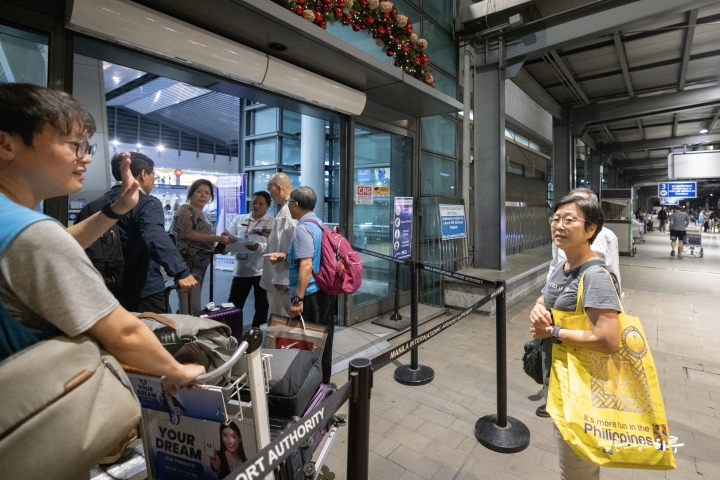
At 11:30 PM, Sunim returned to Manila Airport. After checking in luggage and completing departure procedures, Sunim worked on manuscript proofreading and other tasks in front of the boarding gate.
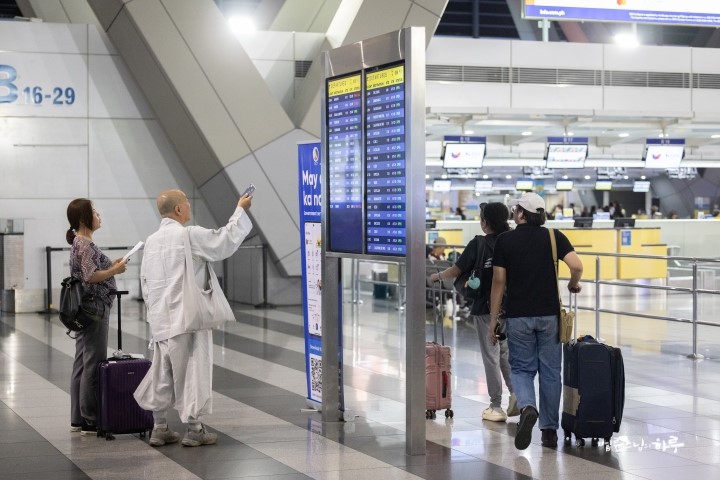
Tomorrow, Sunim will depart from Manila Airport at 2 AM and arrive at Incheon Airport at 8 AM Korean time. In the afternoon, Sunim will have an interview with the JoongAng Ilbo, and in the evening, Sunim will give the last Dharma Q&A lecture of the year in Seongnam City.