May Hope Sprout for Children Like a New School Built on Empty Land
Dec 13, 2024 - Philippines Mindanao Day 4, Mitapul, Gatung-on, School Inauguration Ceremony

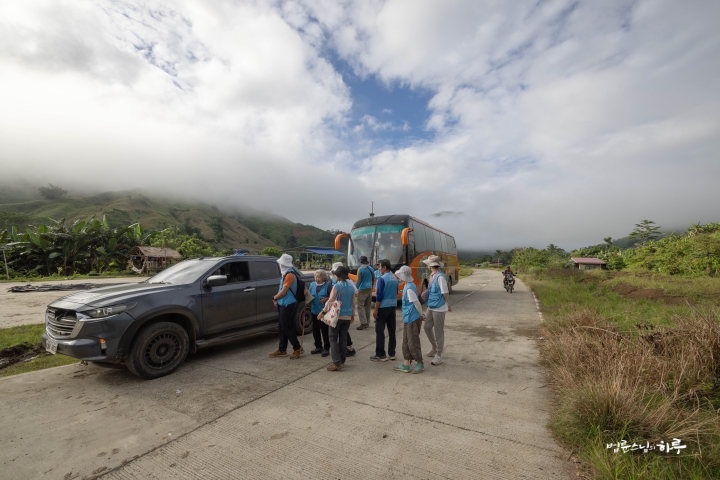
Sunim and the JTS delegation departed from Valencia at 5 a.m. and headed to Mitapul village, where the inauguration ceremony was to be held. After about 50 minutes by bus, we had breakfast at a small roadside restaurant. After a quick meal, we boarded the bus again and continued our journey.
Mitapul School Inauguration Ceremony
When we reached an unpaved road, we stopped the bus and switched to trucks. We climbed onto the truck beds and ascended a steep uphill road for about 30 minutes.
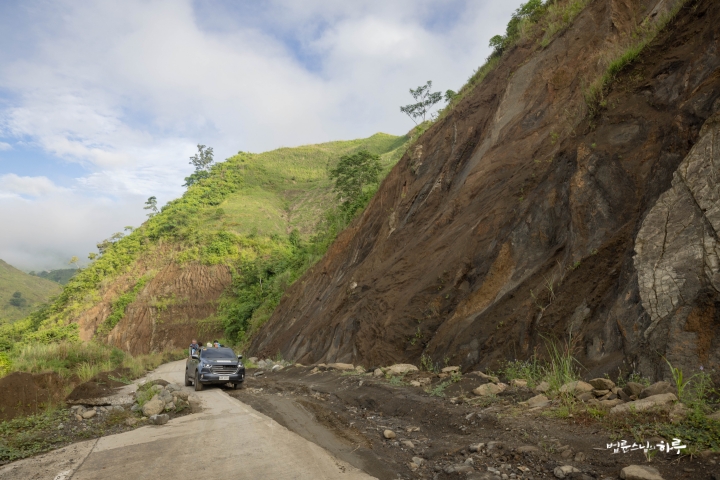
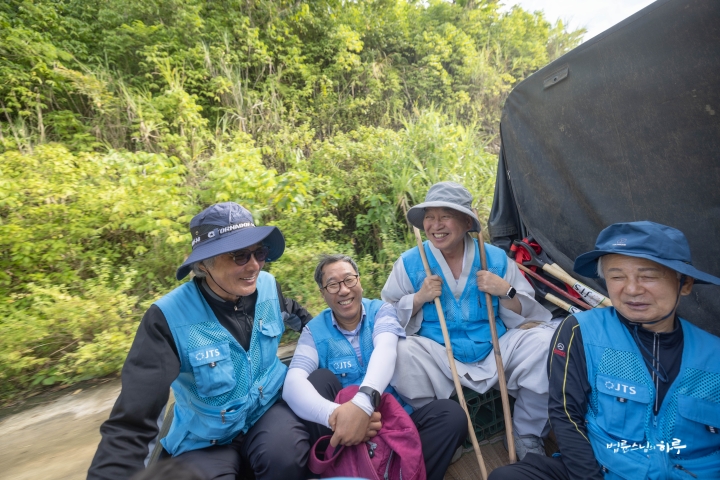
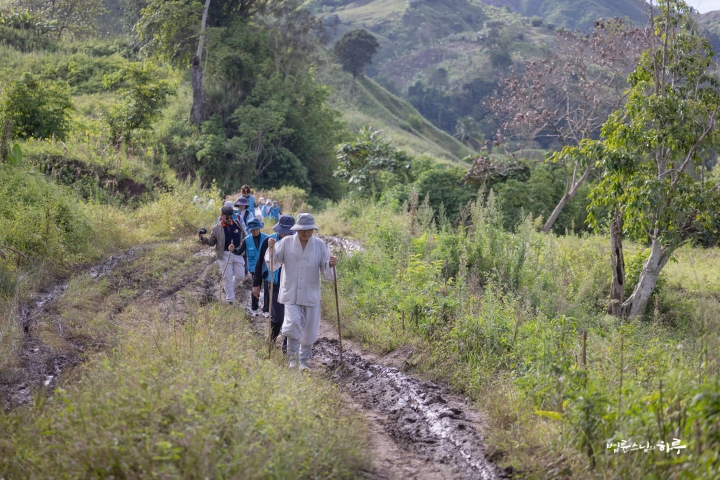
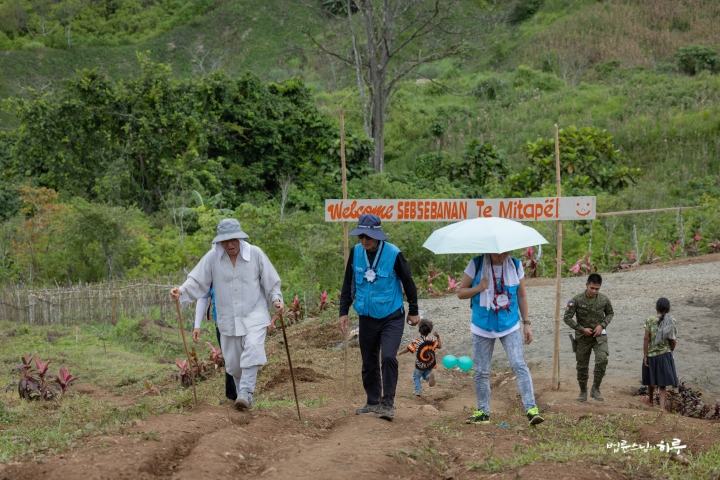
After getting off the trucks, we started walking along a mountain path at 7:30 a.m.
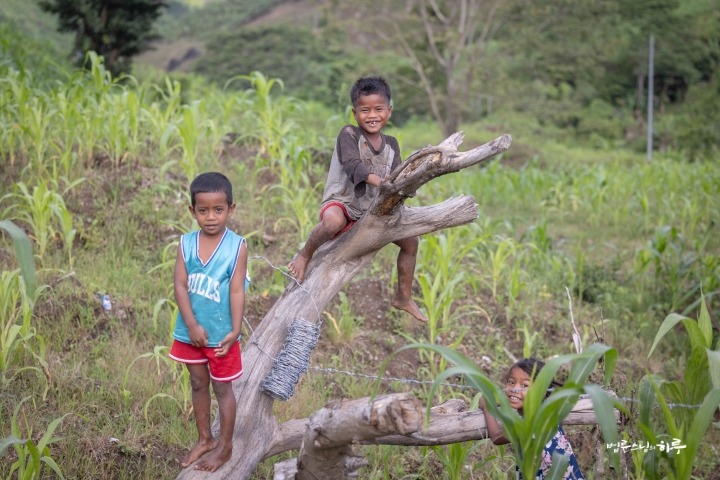
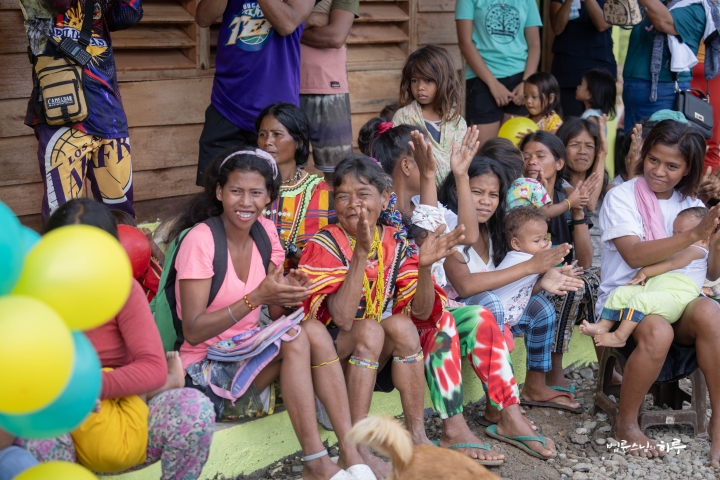
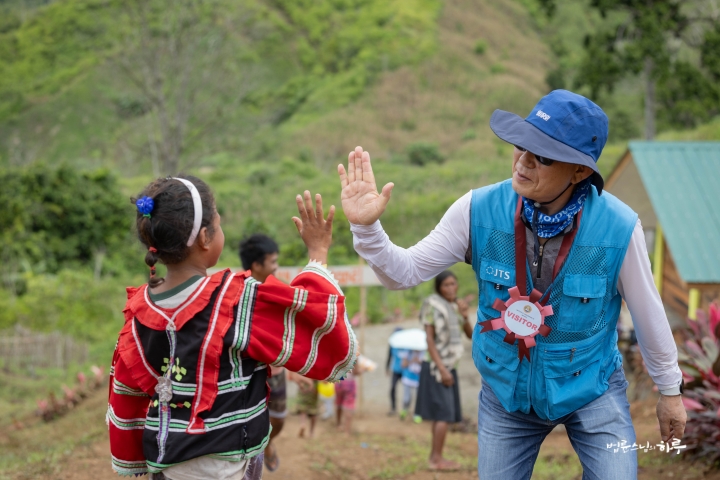
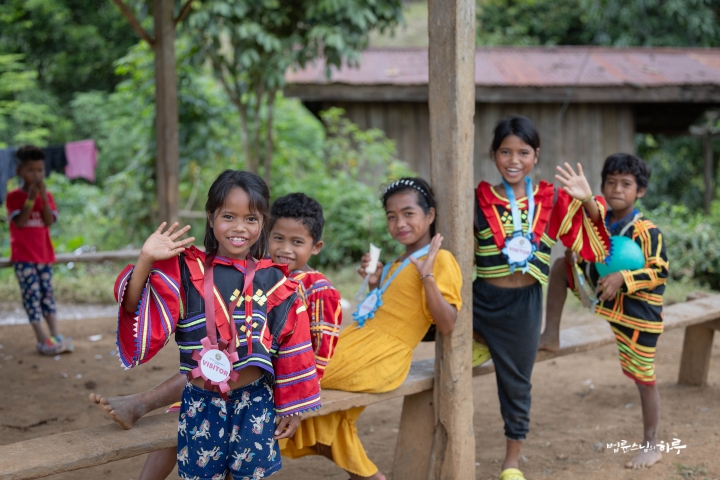
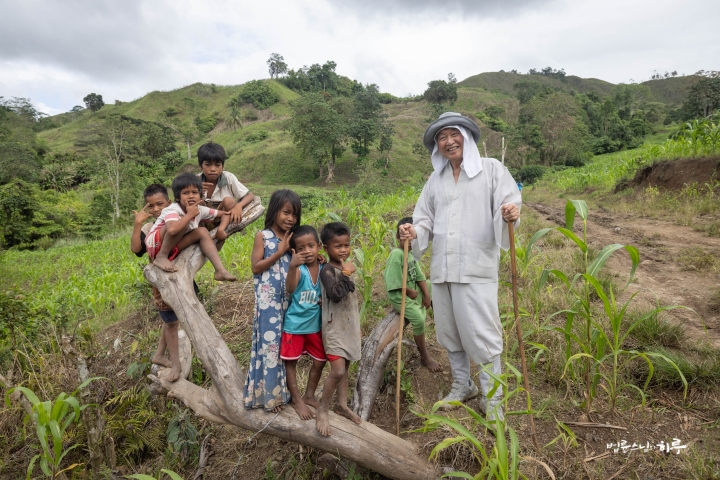
Children ran out to greet us cheerfully.
“Hi! Korean!”
The path was very muddy due to heavy rain the night before. Our shoes sank deep into the mud. We carefully placed our feet on relatively solid ground as we walked along the mountain path.
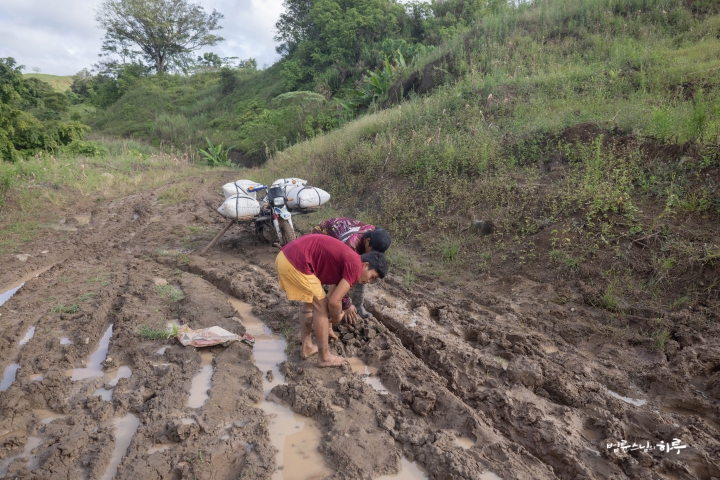
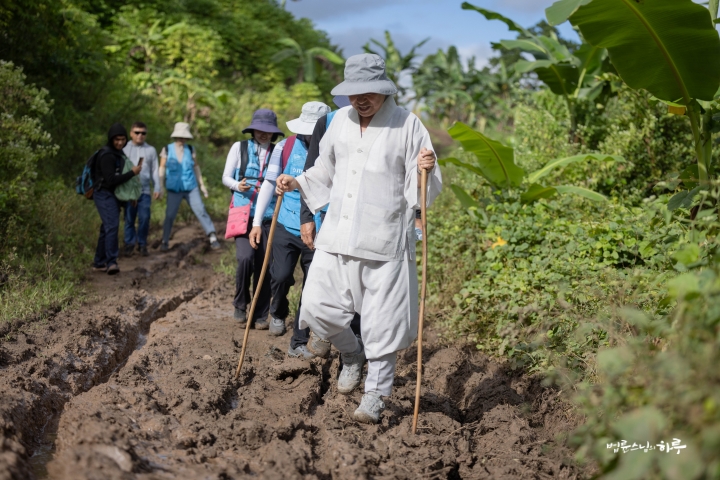
This is the same path that villagers used to carry materials by hand to build the school in Mitapul. Women carried heavy steel bars on their backs, and strong men shouldered generators weighing over 100kg using wooden frames. Although the county office had widened the road for school construction, it was washed away during the rainy season, forcing them to carry materials by hand.
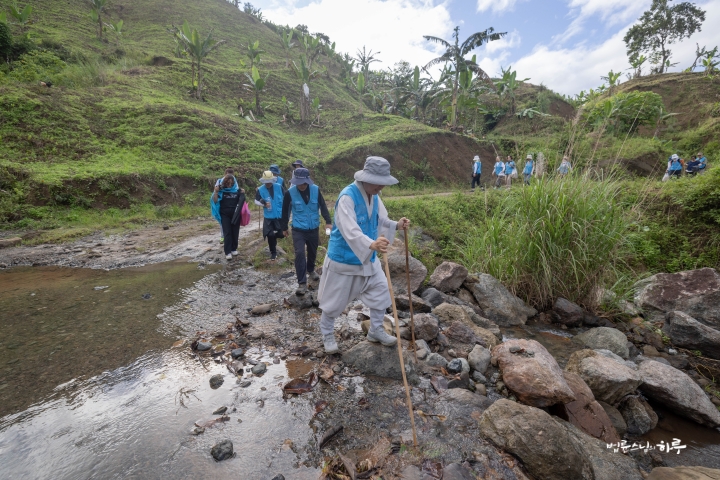
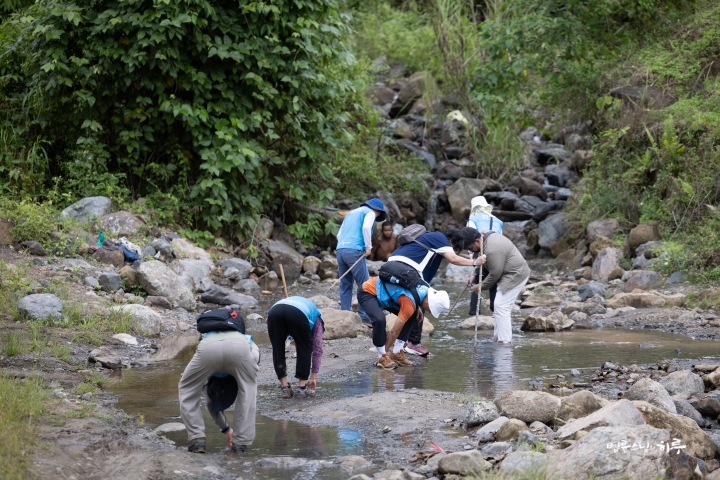
We encountered a stream where we cleaned the mud off our shoes before continuing up the slope. Our bodies were drenched in sweat. We wiped our faces with towels, but the sweat kept flowing.
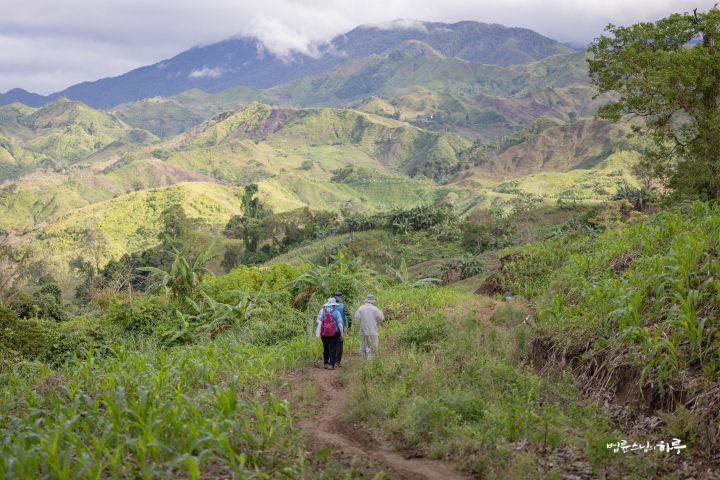
After an hour of hiking, we finally arrived at Mitapul village. We first entered the building that had been used as a school.
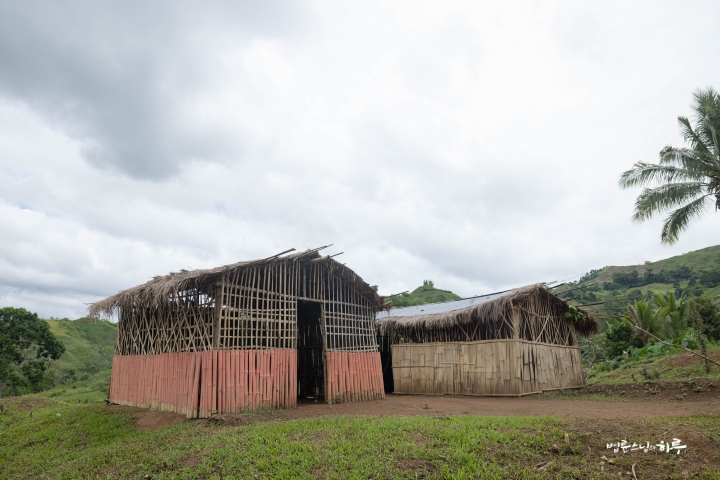
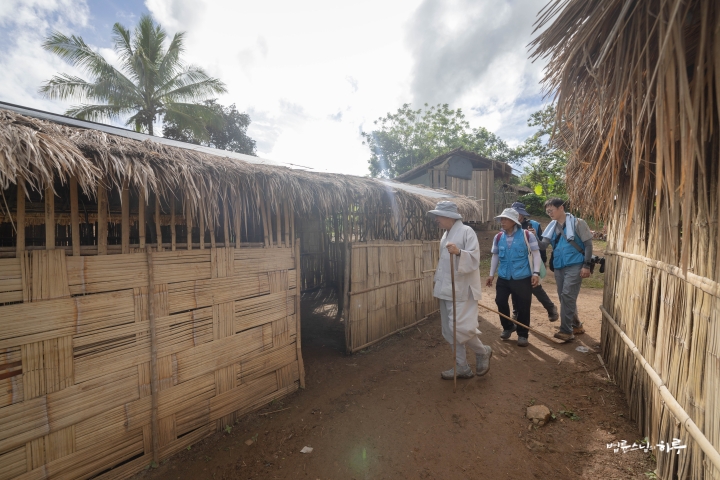
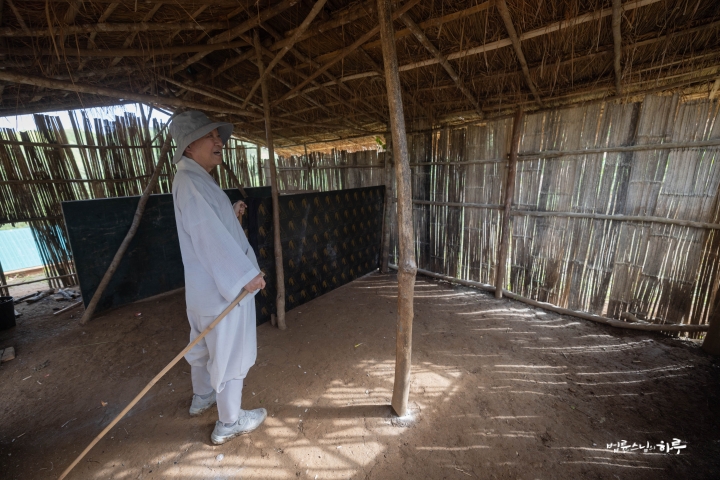
The existing school was a small building constructed by the villagers themselves. It had only a blackboard and a few old desks. Teachers had been teaching children under difficult conditions with poor electricity.
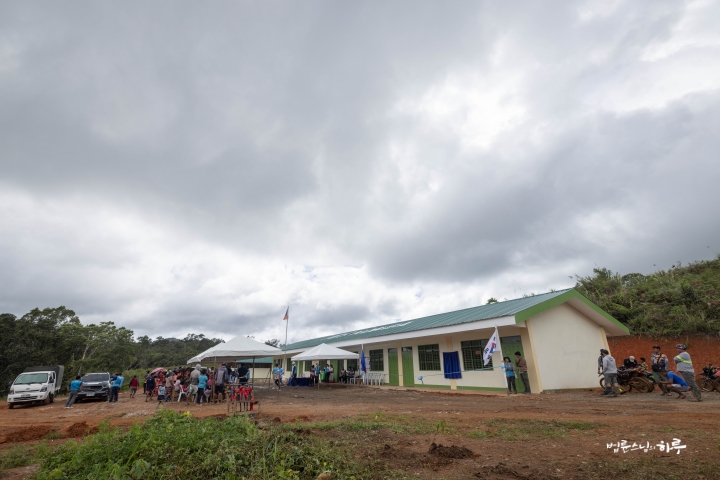
Past the old school building, on a wide plot of land just below, stood the newly constructed school. The Korean and Philippine flags fluttered above the roof.
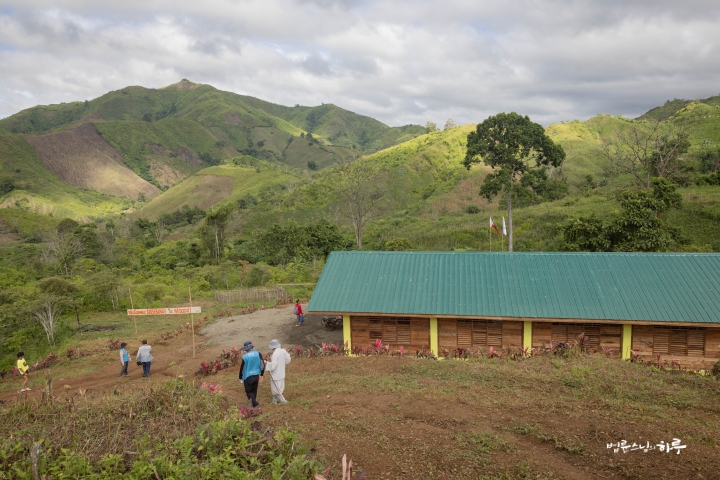
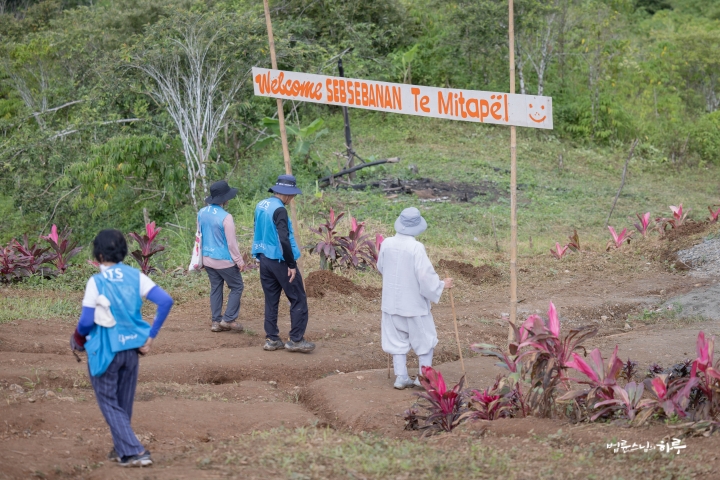
As Sunim arrived in front of the school, villagers and students greeted him warmly.
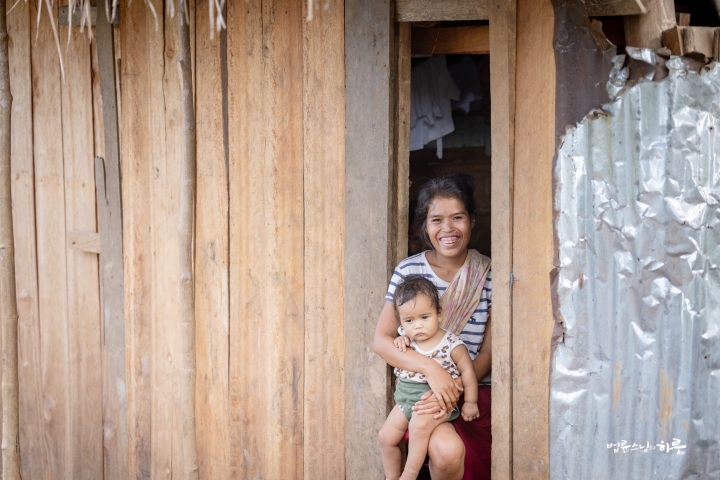
“Maayong buntag!”
Sunim took a tour around the newly built school. The foundation was made of cement, and the building was mostly constructed with wood, resulting in a very clean appearance. Sunim encouraged Mr. Roh Jae-guk, the representative, and JTS volunteers who had visited this village several times to build the school.
“Good job. It must have been really difficult to transport the materials.”The inauguration ceremony began at 9 a.m. The JTS delegation and officials from the county and education office all lined up for the ribbon-cutting and unveiling ceremony.
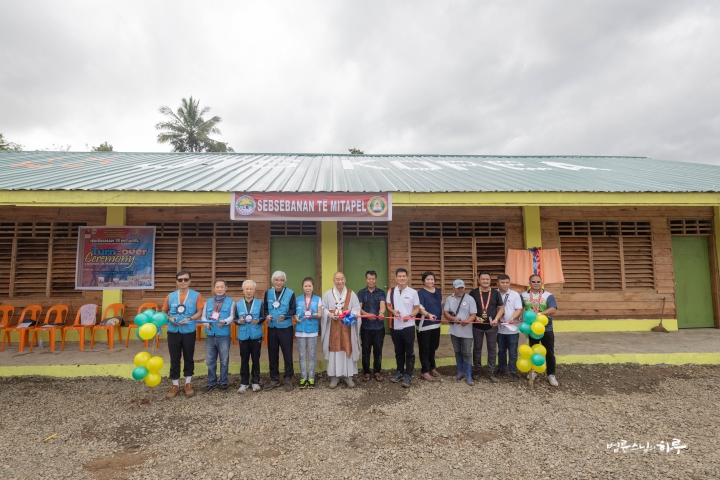
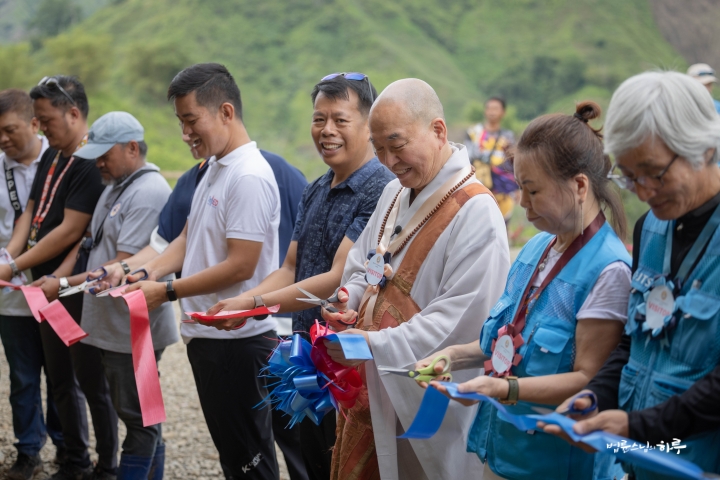
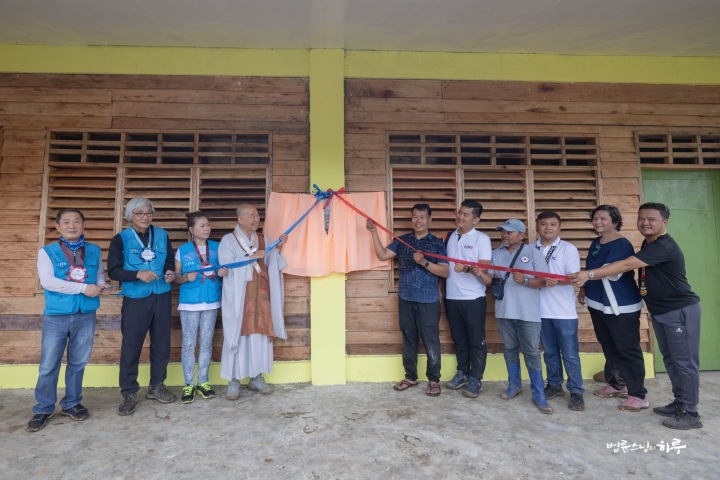
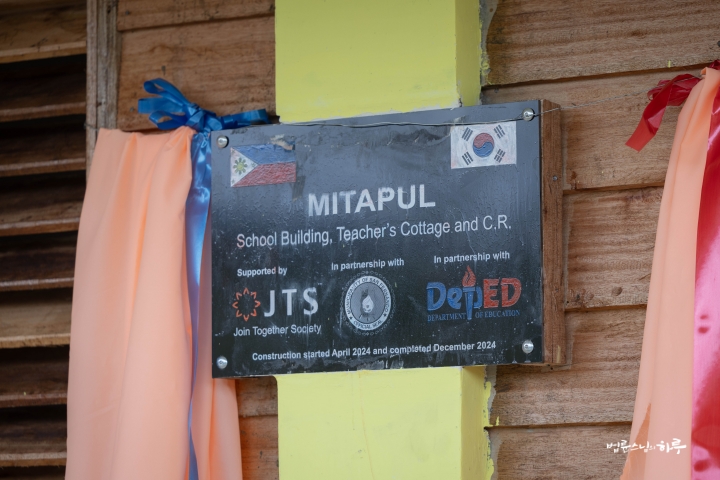
“One, two, three!”
The villagers and children cheered loudly with joy.
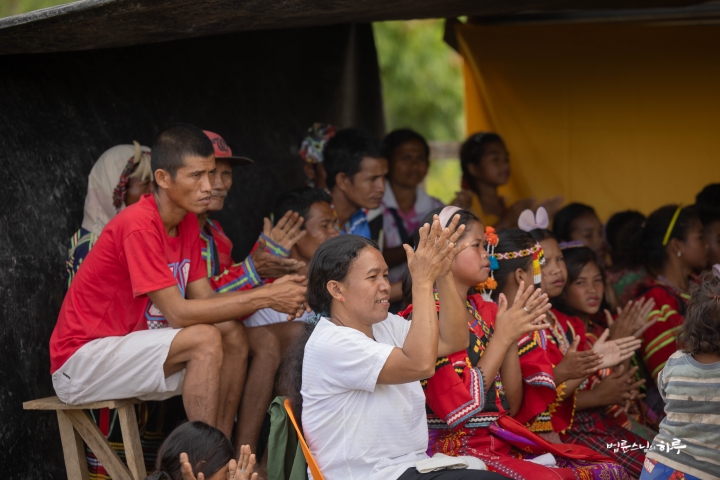
Next, we sang the Philippine national anthem and the Korean national anthem together.
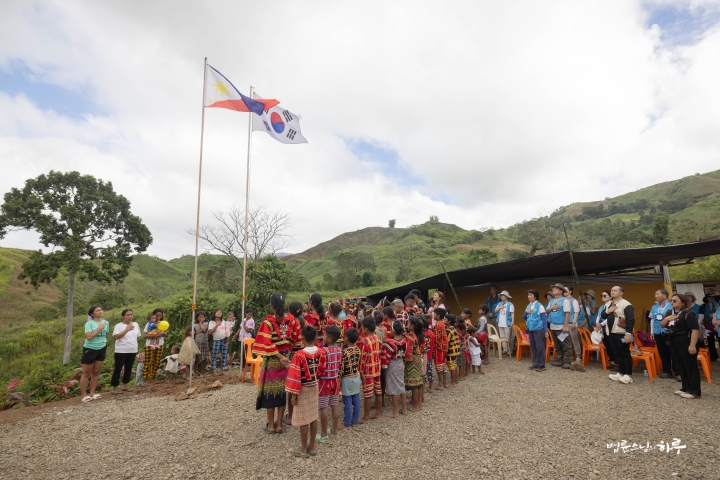
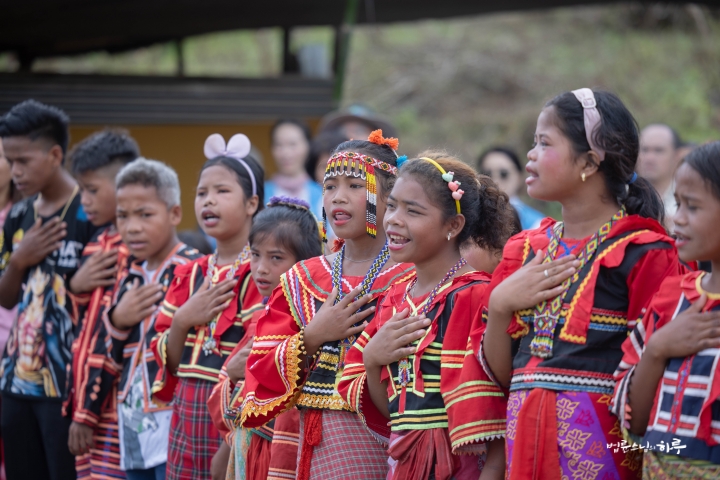
First, the village chief gave a welcoming speech to the JTS delegation, followed by a progress report from Mr. Roh Jae-guk, the representative of JTS Philippines.
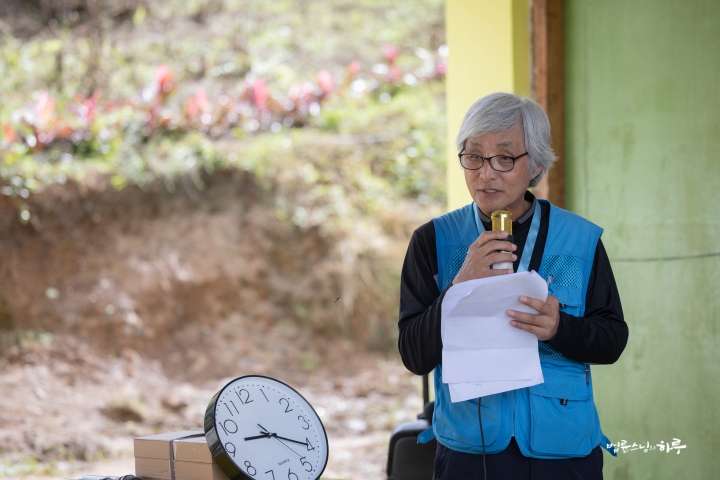
“Mitapul village is a small mountain village with a total of 42 households. However, including 28 households from Minopal village 3km away and 16 households from Bolakan village 10km away, there are a total of 86 households scattered in this area. Due to the isolated nature of the region, three volunteer teachers were teaching the children. Once the school was built, the Department of Education assigned two regular teachers to this location.
This school has a total of 69 children studying from kindergarten to 6th grade. JTS spared no effort in providing all necessary support for construction in cooperation with the villagers. The residents actively participated in transporting materials needed for school construction and directly participated in the construction work. Now that the school has been newly built, as each child learns and grows, the future of this region will gradually become brighter.”
Next, the students gave a congratulatory performance. Mitapul village had preserved its traditional culture well. All the students wore traditional clothes and performed traditional dances.
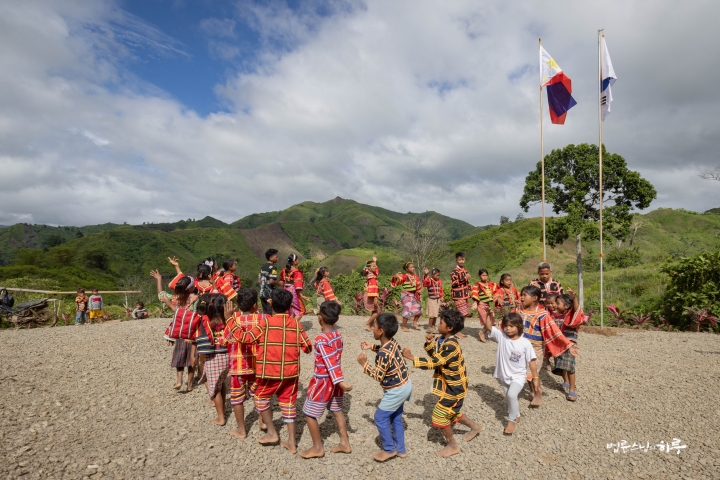
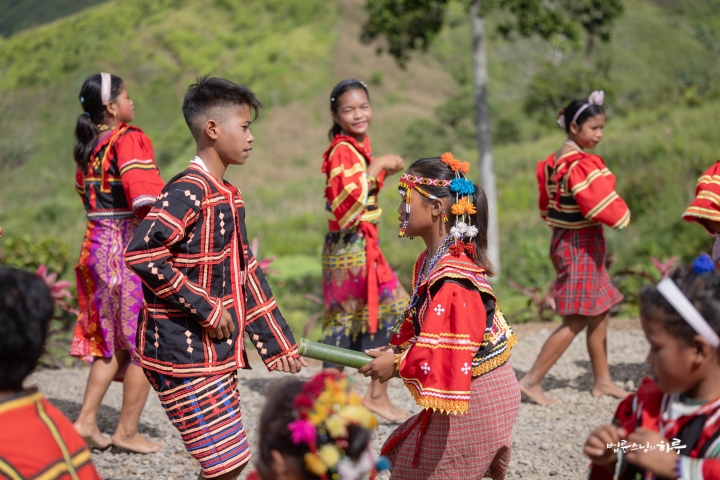
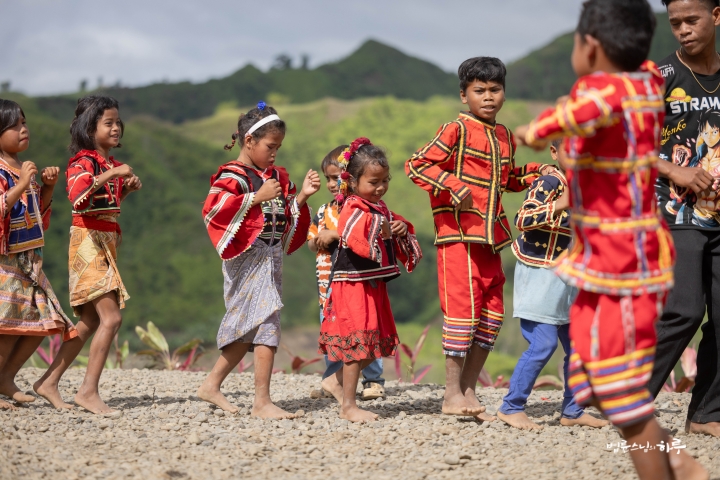
The entire JTS delegation applauded loudly to encourage the children.
Next, Sunim gave a congratulatory speech.
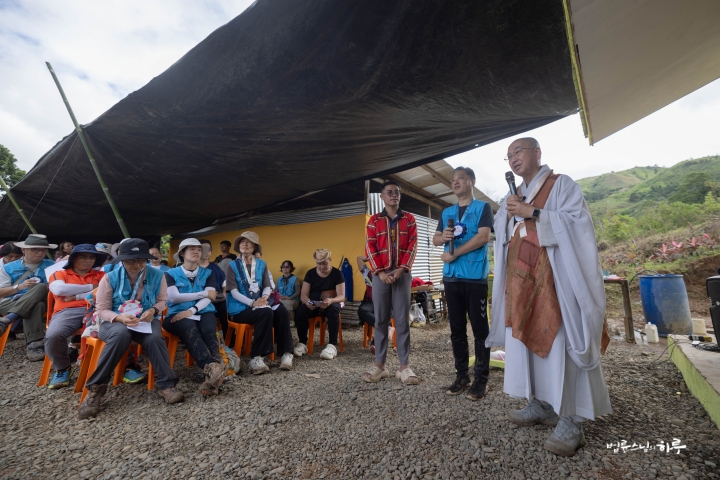
All the attendees gave a warm round of applause.
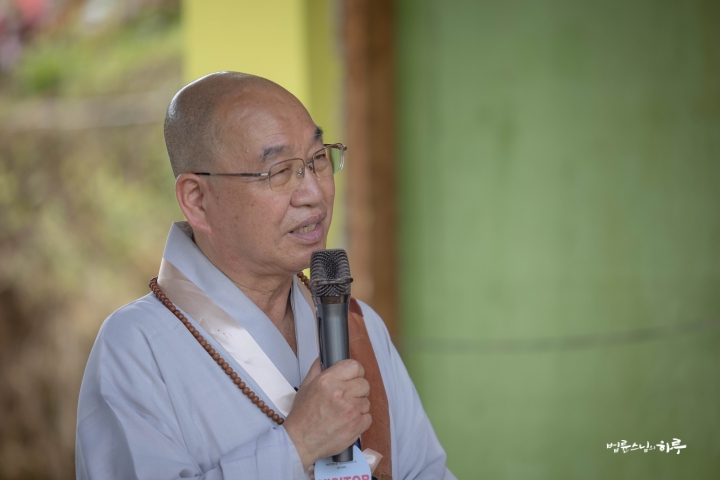

The applause and cheers continued. Sunim resumed speaking.
“Building a school in an indigenous village is never easy, but the Mittapul Elementary School was particularly challenging. However, through the efforts of many people, a small school has been built. The reason for constructing a school in such a remote mountainous area is that children born here deserve educational opportunities no less than anyone else. Did you see the children dancing earlier? Without access to education, these children might have no future. But if they are given educational opportunities, they can contribute to society just like any other child as citizens of the Philippines.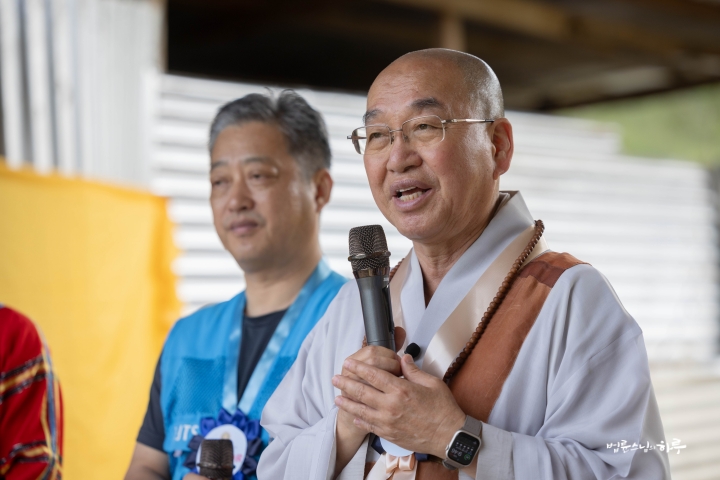
May Hope Sprouts for Children as a New School Rises on Empty Land
For children to receive consistent education, there will be many challenges beyond just constructing the school building. Above all, teachers are reluctant to come and live in this rural area. Getting teachers dispatched here to teach the children is the first hurdle. Therefore, it’s necessary for the education office to establish a system that gives special points to teachers who are dispatched here and work for a certain period, ensuring they have no disadvantages in their future career advancement as educators. I also have a request for the residents. Young people who have graduated from university didn’t become teachers to live in such rural areas. Nevertheless, they have come this far to teach our children, so the residents should take good care of the teachers. Also, due to the small number of students, teachers can’t be responsible for just one grade; they have to teach multiple grades. This means the teachers have a lot of extra work. We need to fully understand the teachers’ efforts. I hope that despite the challenging environment, the teachers will teach the children with the mindset that ‘each and every one of them is my precious child.’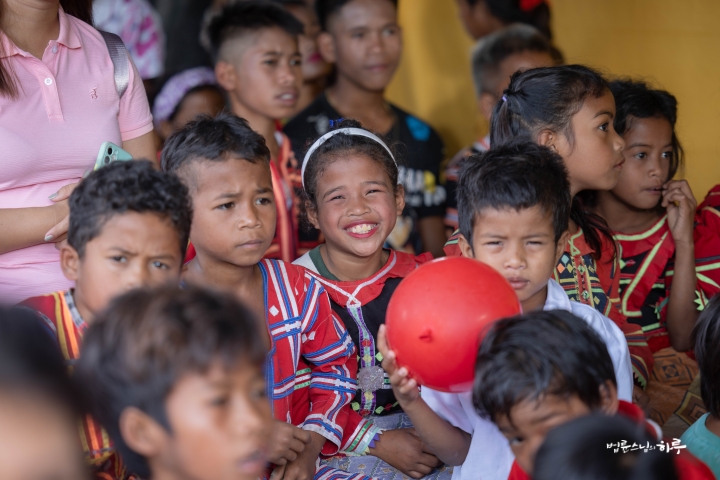
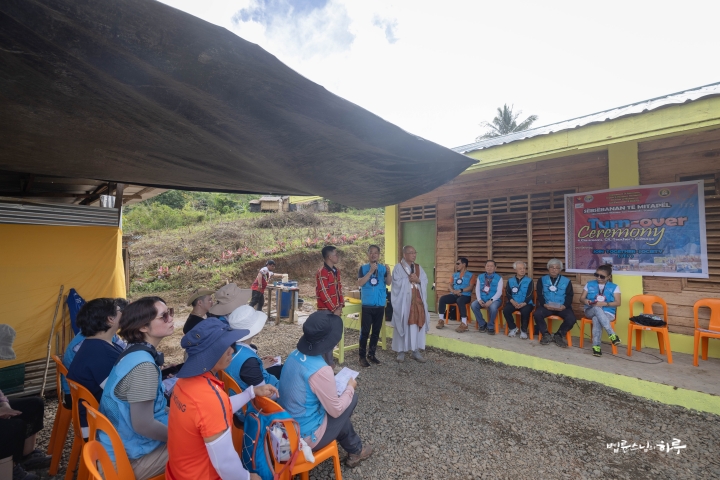
Next, the director of the Ramon Magsaysay Award Foundation Research Institute gave a congratulatory speech.
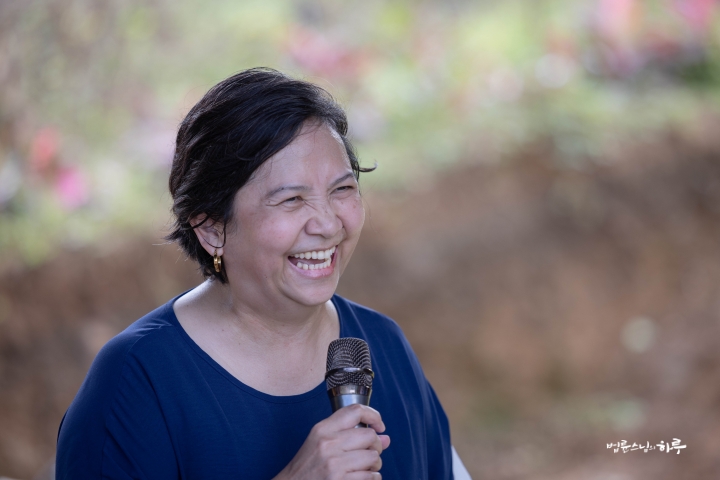
“I believe that the journey is as important as the destination. The path we’ve walked to get here is crucial. This journey has united us all. A song came to mind as I was walking. The lyrics say, ‘Children are our future. We must teach them well and let them lead the way.’ I believe, as the song says, that children are our future. If we provide them with the right education, they will become the future leaders who guide us.”
Next, the Vice Governor gave a response.
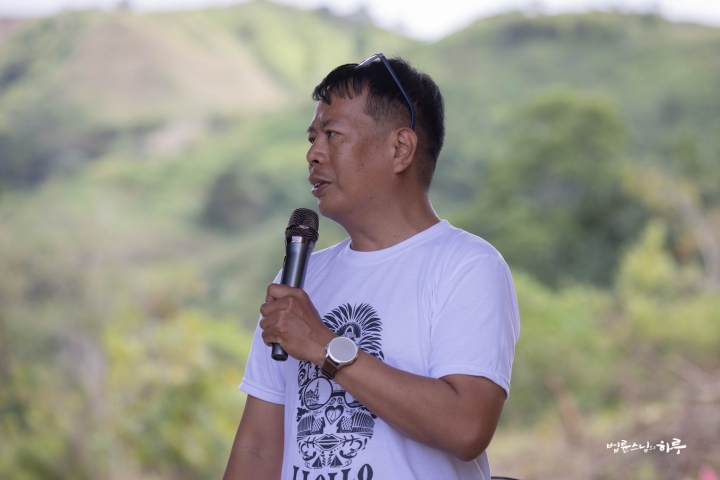
“JTS is our hero who solved the budget shortage for building the classrooms. The mayor’s office also provided funds for transporting construction materials and labor costs, but it’s still not enough. However, the governor has promised to prioritize improving roads and expanding school facilities in the future.”
Lastly, the Deputy Superintendent of Education gave a response.
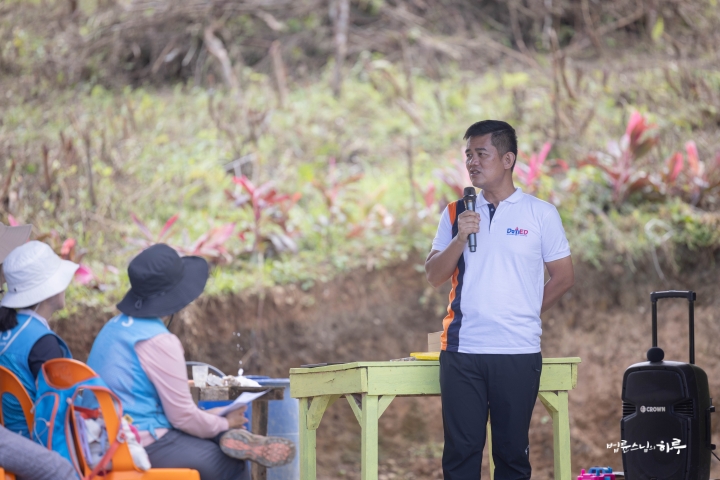
“Congratulations to the 48 students who will be learning at this school. The Department of Education has assigned two regular teachers here. If more students enroll in the future, we will assign additional teachers to improve the educational environment. We are deeply grateful to JTS for laying the foundation by building the school, and the Department of Education will ensure sustainable education by providing teachers and support to this school.”
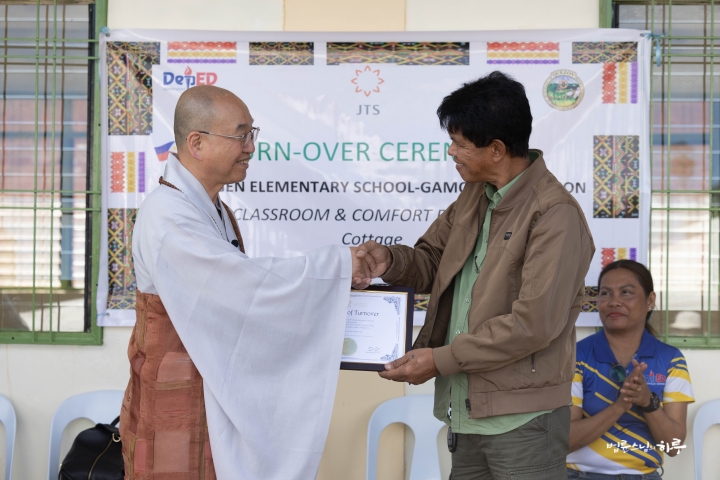
Next, there was a ceremony to hand over the completion certificate, key, and clock. Sunim presented the certificate to the governor, Park Gena, the JTS representative, handed over the key to the Deputy Superintendent of Education of Bukidnon Province, and Representative Roh Jae-guk presented the clock to the school principal.
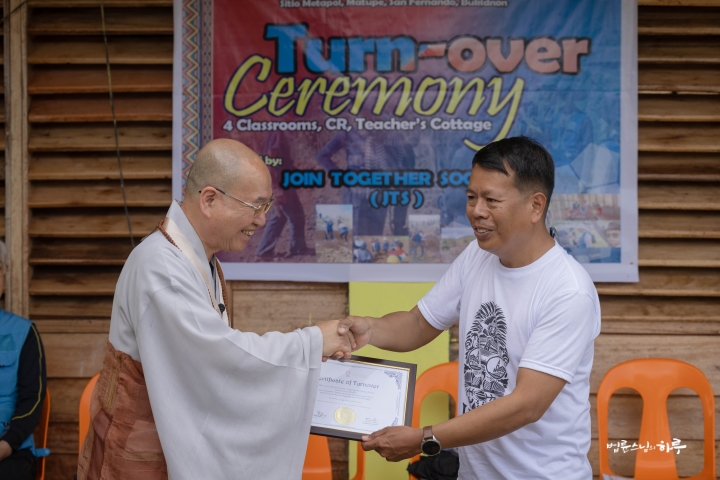
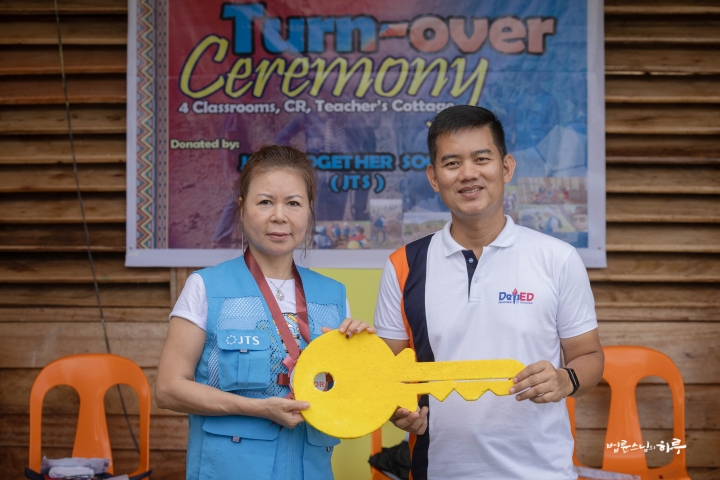
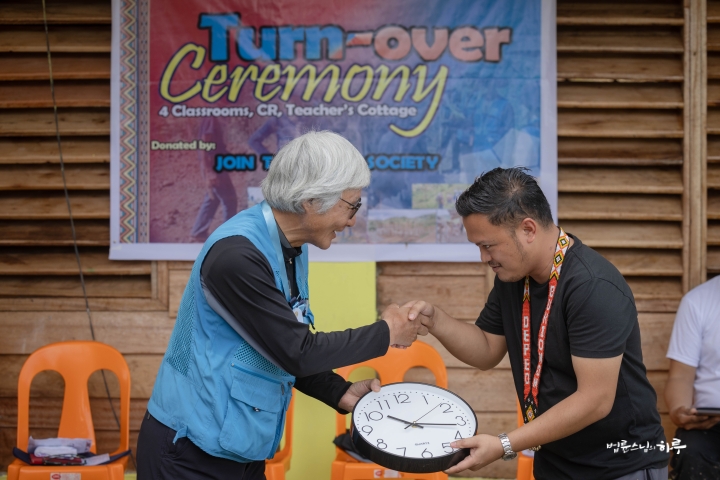
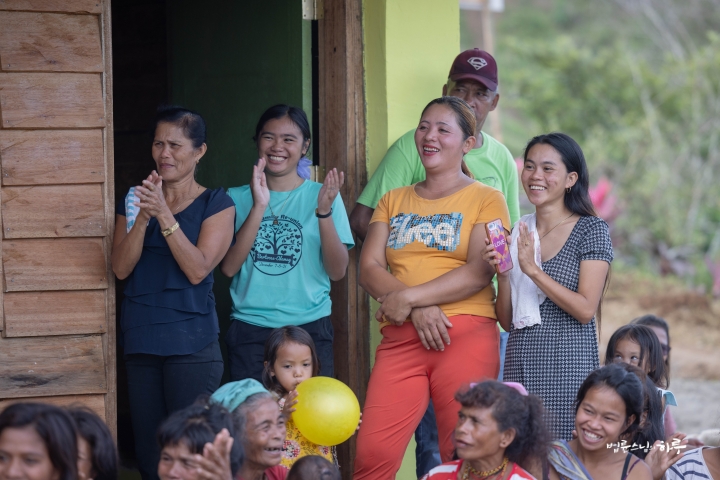
The faces of the villagers applauding were filled with joy.

Everyone moved to the school’s front yard for a commemorative tree planting. As they planted the tree with shovels, everyone wished for the children to grow healthy and strong.
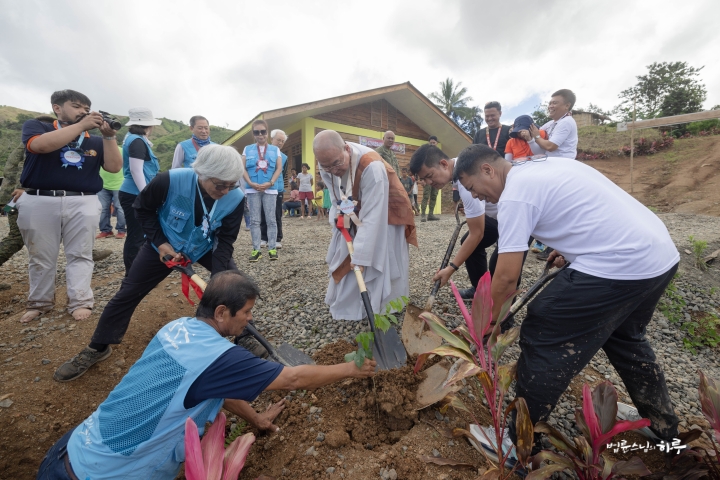
Amidst the celebratory atmosphere, everyone took a commemorative photo together.
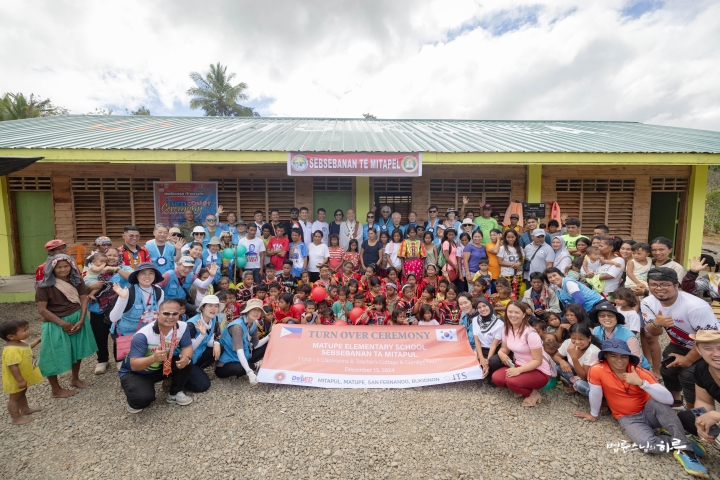
“Thank you, JTS! Mabuhay!”
Next, snacks were distributed to the children. To ensure fair distribution, the children were lined up. The children were overjoyed to receive the snacks.
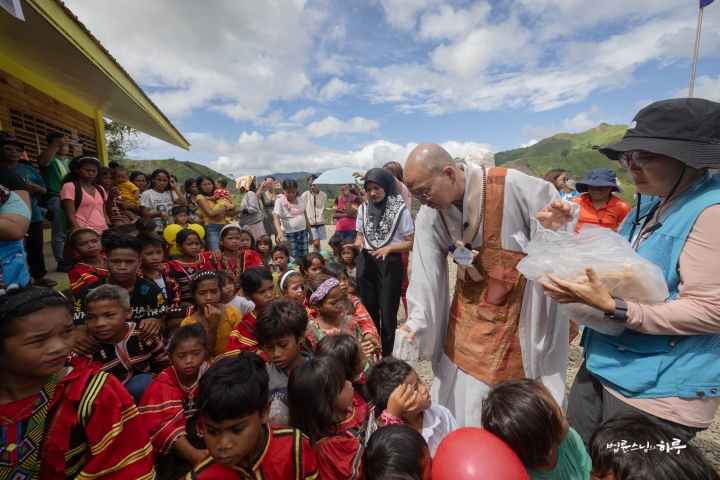
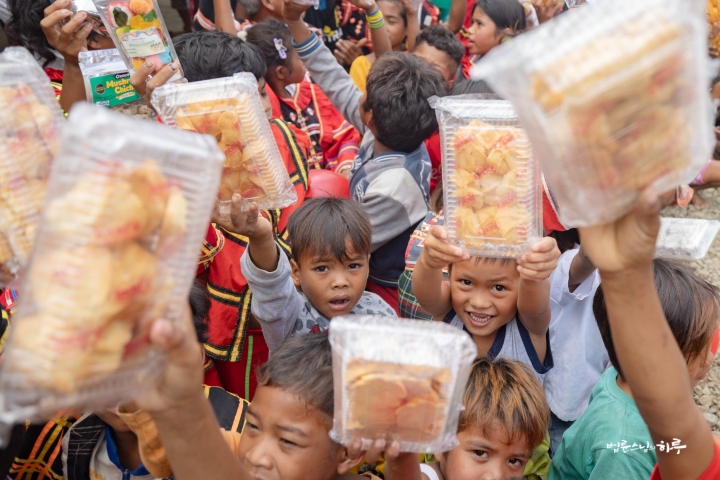
Finally, there was a time for refreshments. The villagers had prepared food with great care. Simple dishes made from their own farm produce were served.
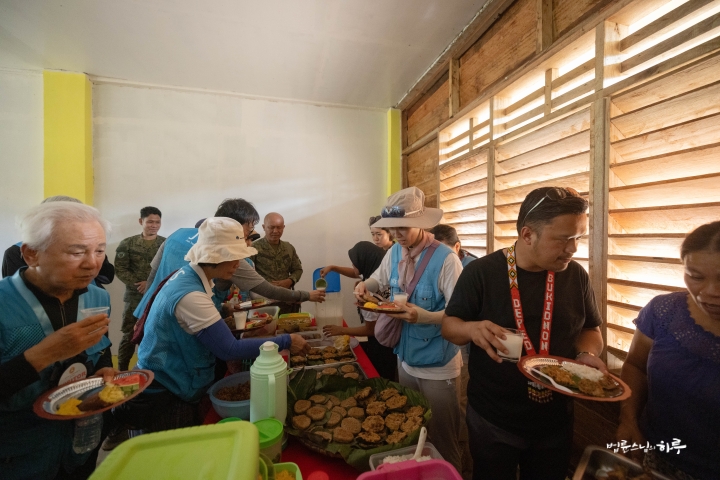
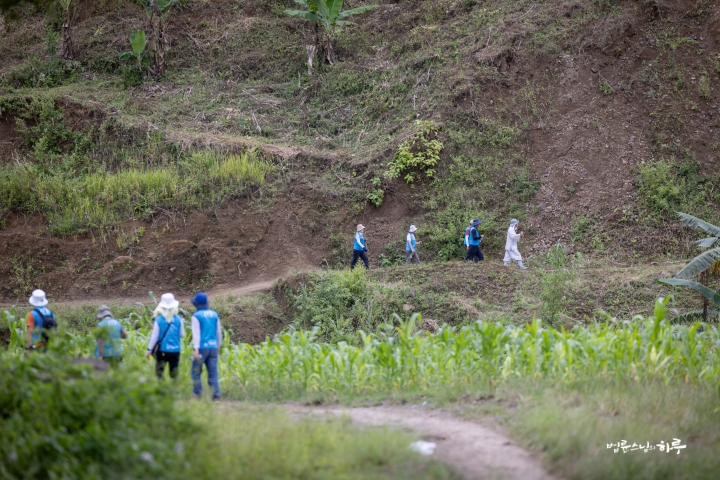
After a light refreshment, Sunim and the JTS delegation descended the mountain path once again.
The downhill path was much easier to walk. Sunim descended the muddy trail in 50 minutes.
He boarded the truck again, which was parked on the main road. After riding in the truck bed for 30 minutes on an unpaved road, he transferred to a bus.

Gatungon School Completion Ceremony
After an hour’s drive on the bus, the group encountered an unpaved road again. Everyone got off the bus, got on the truck bed, and excitedly drove on the dusty unpaved road.
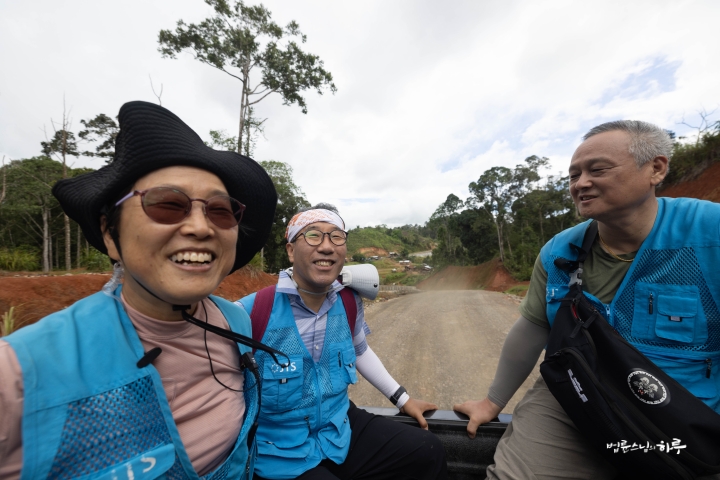
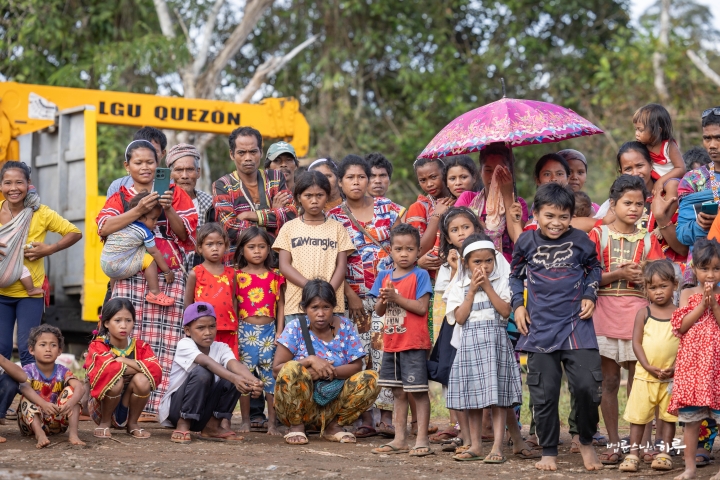
At 1 PM, Sunim arrived at Gatungon village, situated at an elevation of 1,500 meters. As Sunim and the JTS delegation got off the truck, students and parents gathered to warmly welcome them.
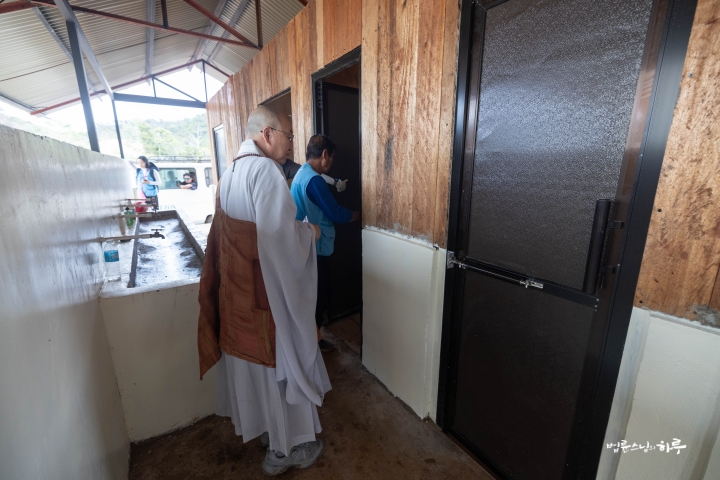
Sunim first took a tour of the newly built school. It was well-constructed with seven classrooms and separate restrooms for boys and girls. Teacher accommodations were also under construction. This was the largest school built this year.
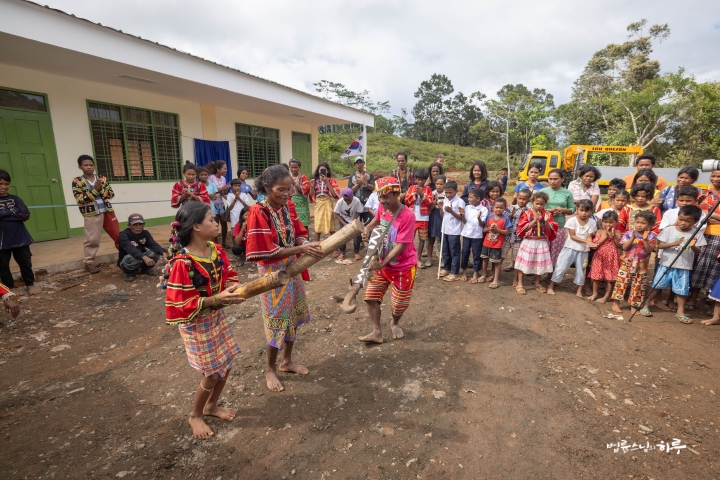
While waiting for the guests of honor, adults dressed in traditional attire and holding traditional instruments performed traditional dances. As the lively dance unfolded, the playground quickly transformed into a festive atmosphere.
After the guests of honor arrived, the ribbon-cutting and unveiling ceremony took place at 2 PM.
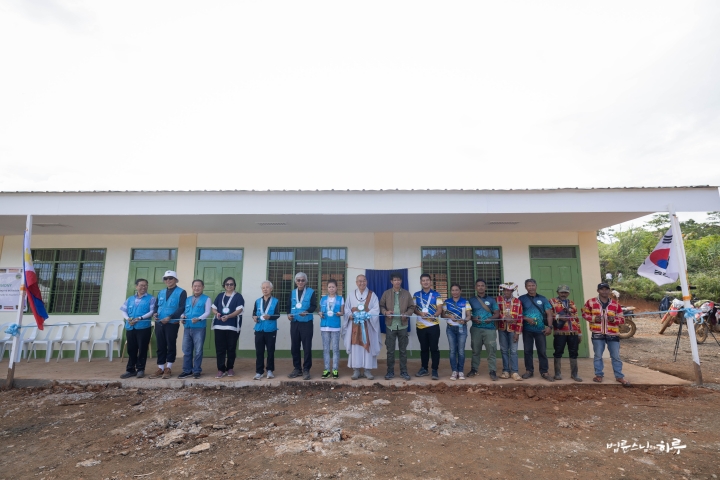
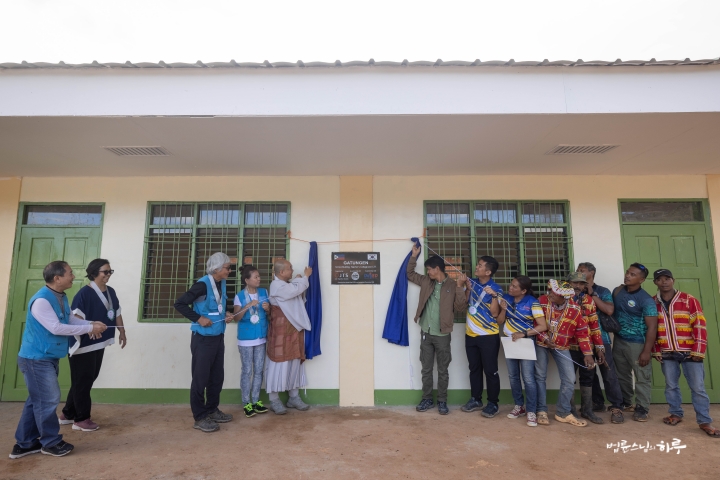
“One, two, three!”
All the residents and students cheered joyfully.
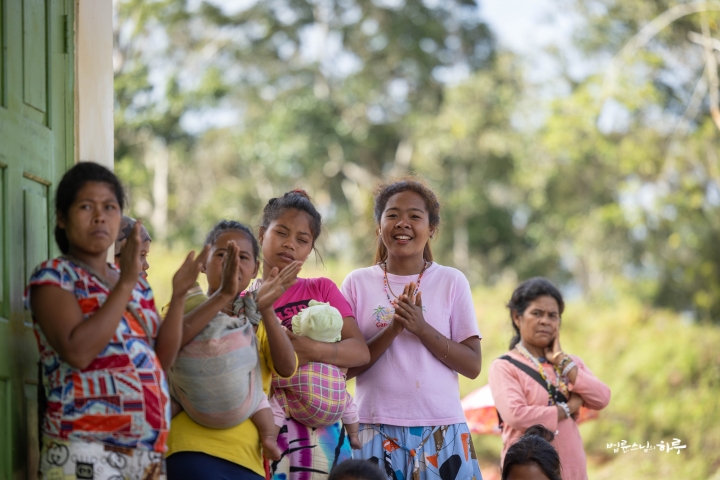
Next, students dressed in traditional clothes gave a performance. Everyone cheered and applauded as they watched the young children sing in unison with coordinated movements.
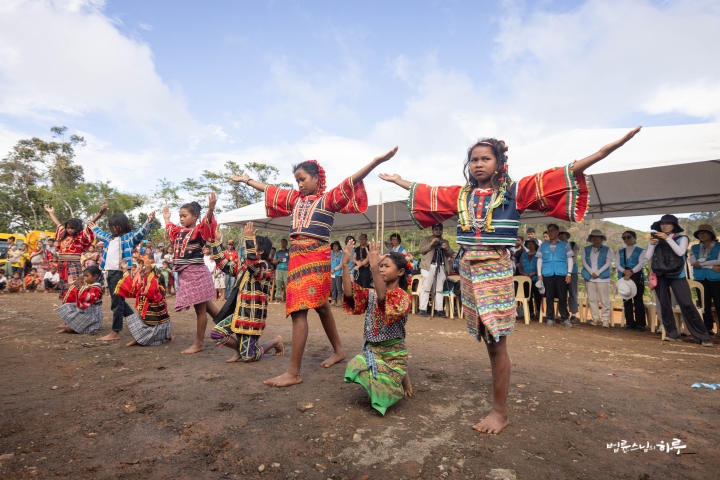
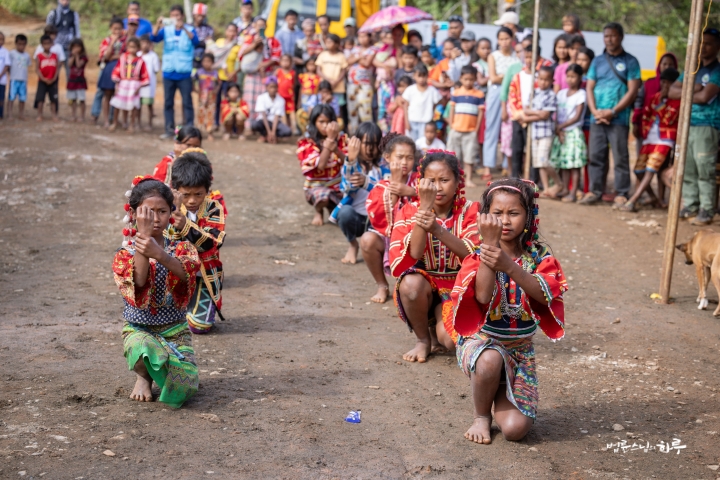
The Philippine national anthem and the South Korean national anthem were sung in succession.
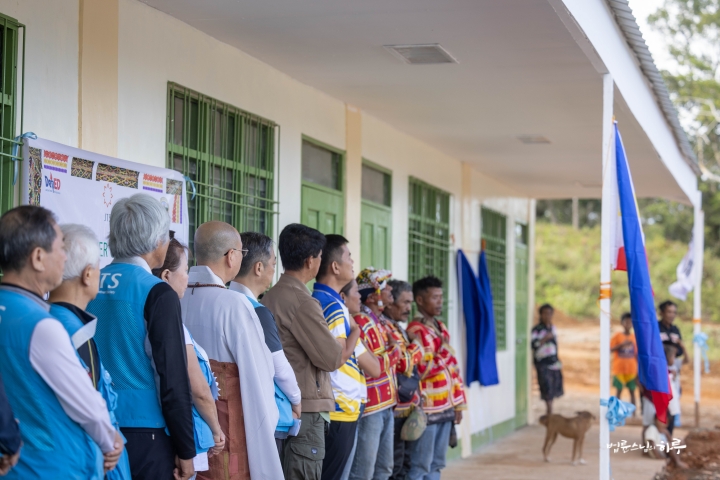
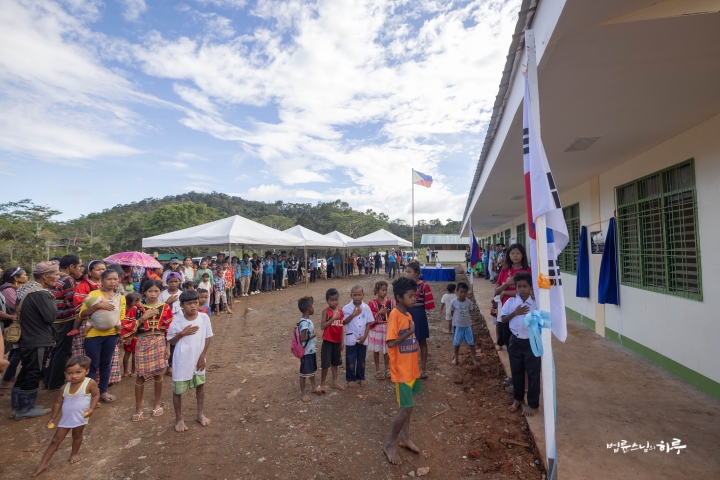
Then, Mr. Noh Jae-guk, the representative of JTS Philippines, explained the process of building the school.
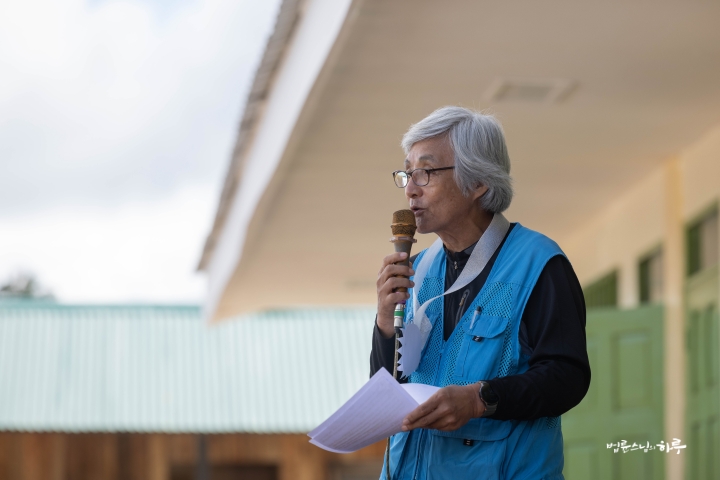
“The existing school in Gatungon village was in a very poor condition. Although it was divided into three classrooms, one side of the wall was completely open, allowing wind and rain to enter directly. There was no electricity, so doors were intentionally not installed to allow light and ventilation. In this situation, JTS decided to build a new school for Gatungon village.
However, Gatungon village is not just a place with difficulties in living, but a village that cherishes traditional culture, with a tribal museum established. Inside the museum, traditional indigenous clothing, instruments, and accessories were displayed, preserving the tribe’s identity. JTS believes that teaching traditions to children is also an important part of education, so we will continue to support this as well.”
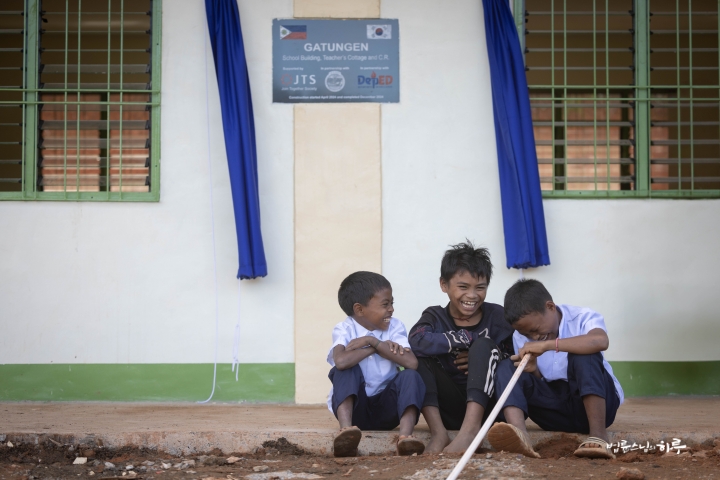
Next, the villagers presented a traditional cultural performance.
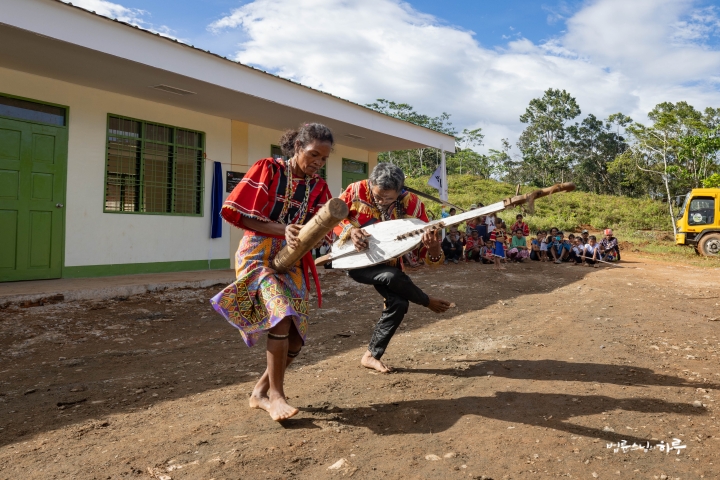
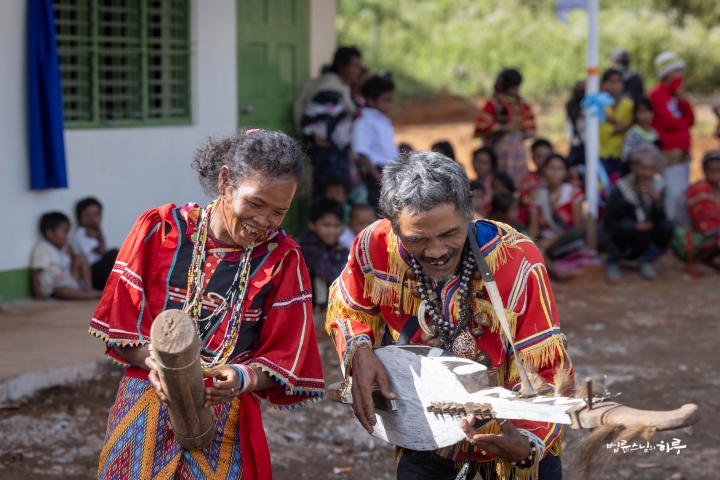
The foot movements quickly followed the rhythm, matching the mysterious sounds from wooden instruments. The instruments held by men and women harmonized in sound, and their dance movements also complemented each other. As the performance ended, everyone applauded loudly.
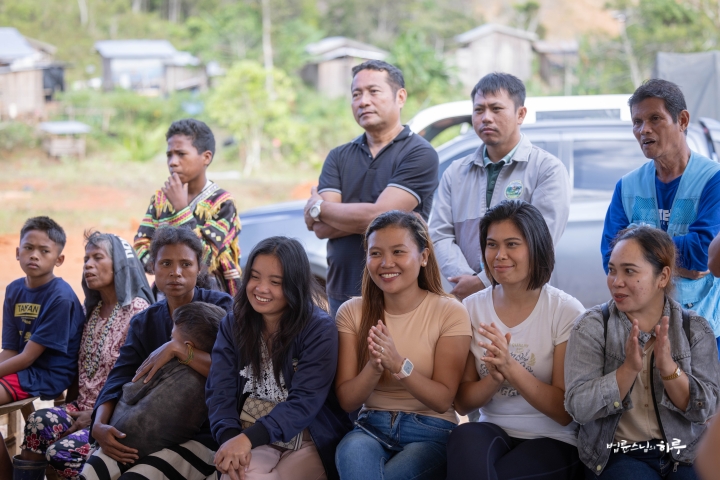
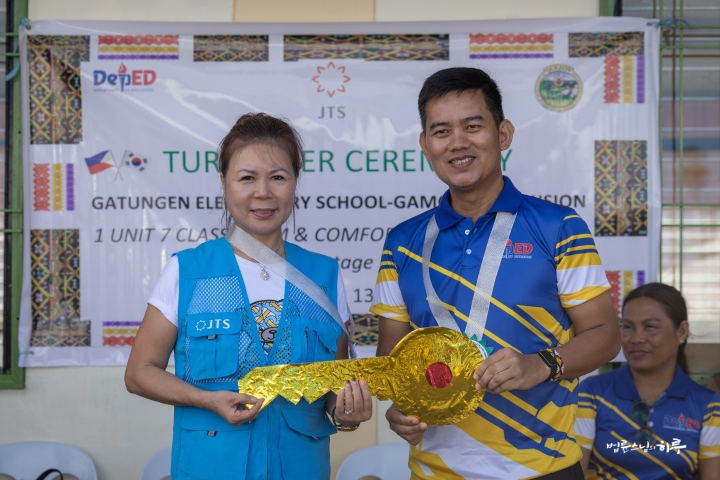
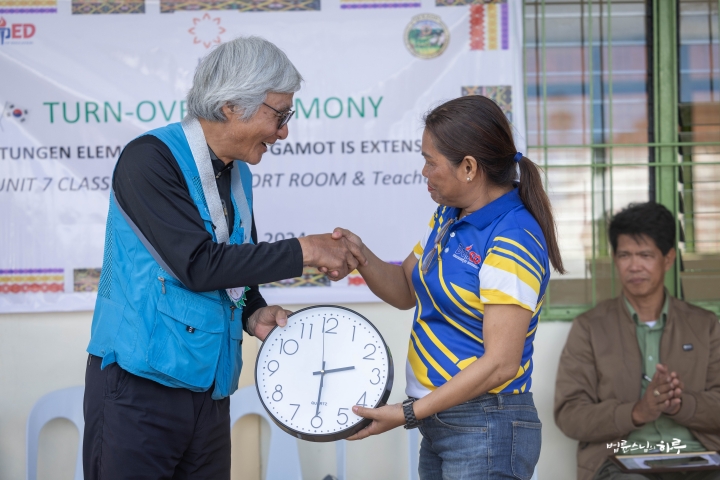
Next, Sunim presented the completion certificate to the county mayor, Ms. Park Gena, JTS representative, handed over the commemorative key of the school to the Deputy Superintendent of Education of Bukidnon Province, and Mr. Noh Jae-guk, representative of JTS Philippines, presented a clock to the school principal.
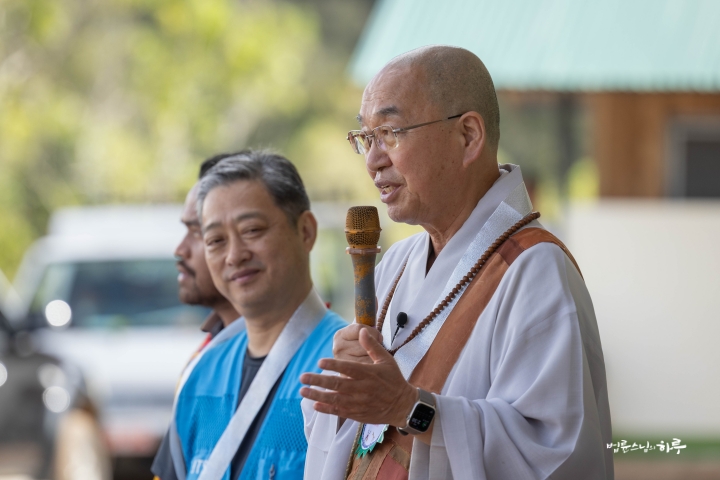
Then, Sunim gave a congratulatory speech.
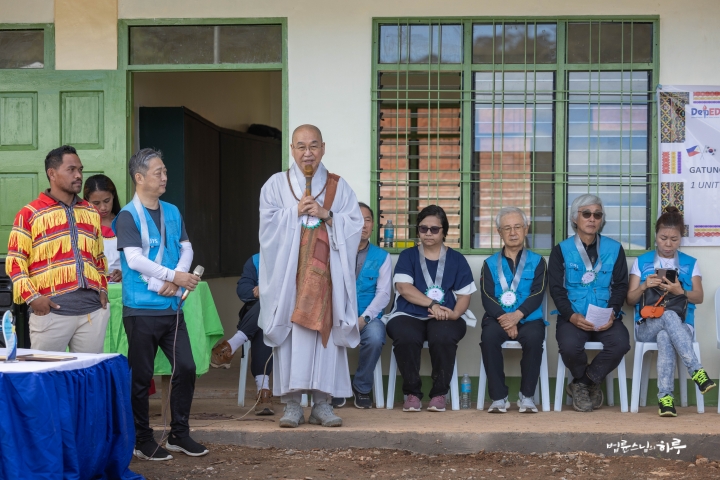
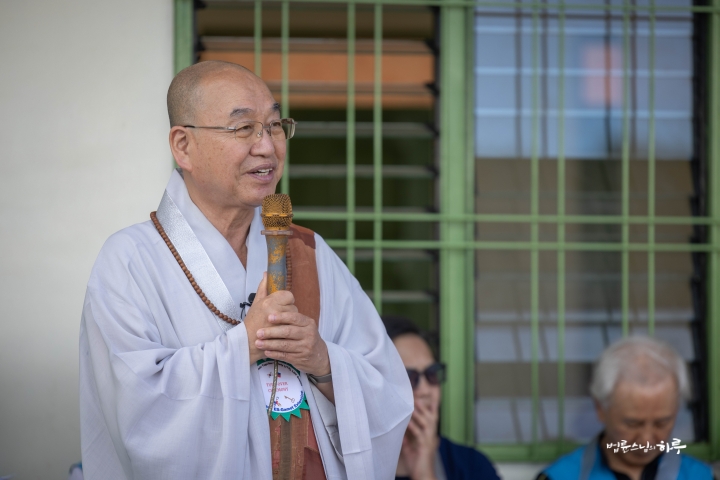
Applause and cheers followed. Sunim continued speaking.
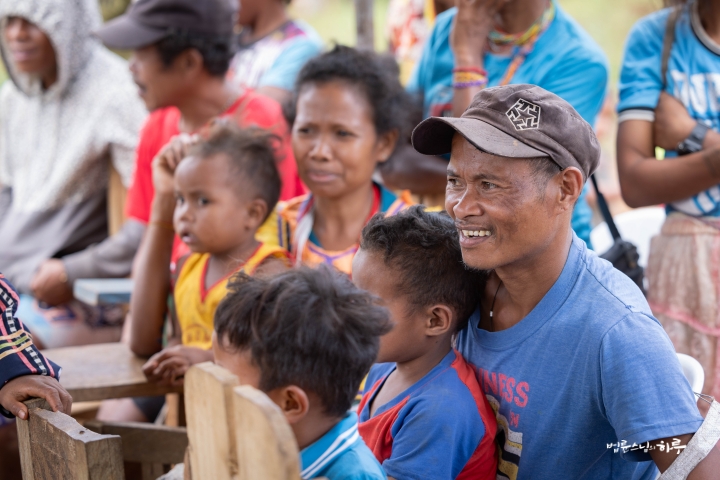
All the parents were delighted.
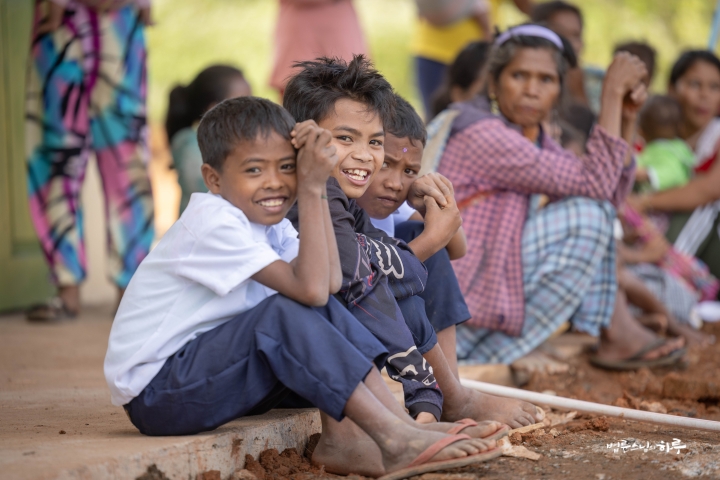
Following this, the director of the Ramon Magsaysay Foundation Research Institute, the chief technician of Quezon County, and the Deputy Superintendent of Education expressed their gratitude and thoughts in turn.
The director of the Ramon Magsaysay Foundation Research Institute emphasized that this project was not just a building, but the realization of hope through education. He expressed deep gratitude to all collaborators, stating that this achievement, made possible by JTS, local government, and local residents coming together, would brighten the future of the local community.
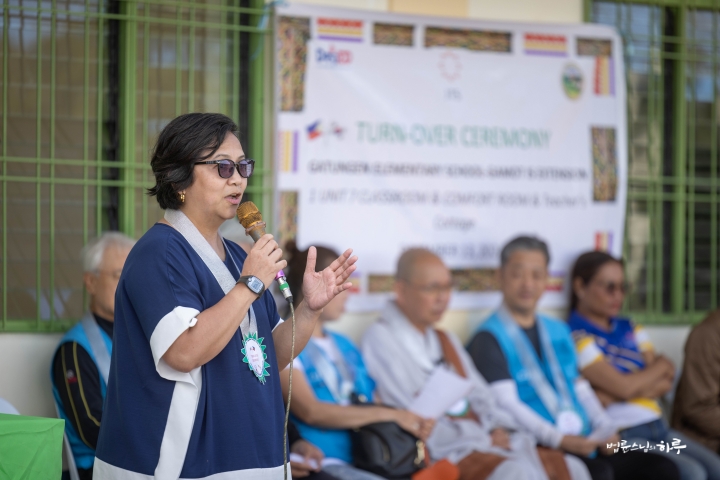
“This project is not just about building a school. We are providing students with a better educational environment, laying the foundation for them to realize their dreams. It’s overwhelming to think about the brighter future these children will create.”
Next, the chief technician of Quezon County gave a thank-you speech. He evaluated this project as an amazing achievement completed through cooperation between the local community and JTS.
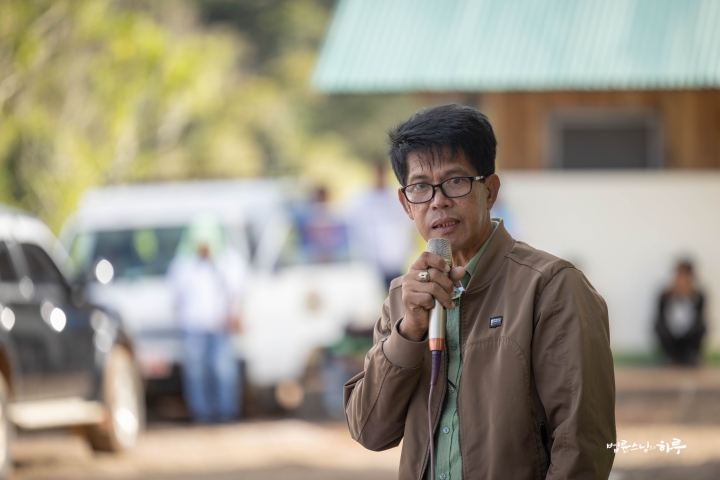
“In Quezon County, we have always considered education as the most important value. This school will not only provide children with a better learning environment but will also be the cornerstone for sustainable development in the local community. The cooperation and dedication of everyone made this achievement possible. Thanks to JTS’s support, we were able to complete this building. We will continue to do our best for educational development in the future.”
Lastly, the Deputy Superintendent of Education said that this project has significant meaning in providing new opportunities for children, and expressed deep gratitude for the dedication of JTS and the local government.
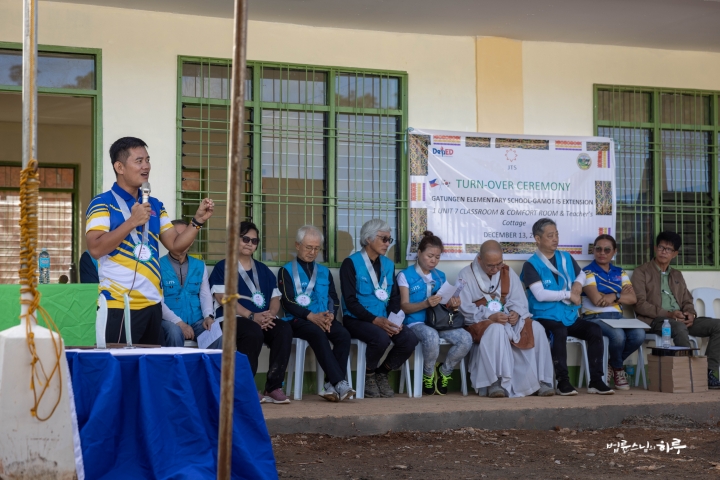
“This school gives a better future to children in poor areas and marginalized communities. We must provide equal educational opportunities to children, and this project demonstrates our commitment to achieving that goal. Children cannot choose where they are born. However, we have a responsibility to provide them with equal learning opportunities. This school embodies those values.”
Next, a commemorative tree planting took place. Just as the young seedling will grow vigorously, everyone hoped that the children would also grow and thrive in this school.
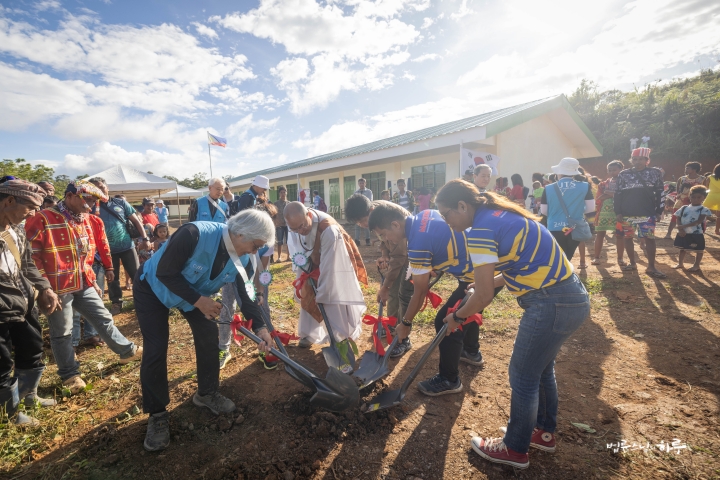
After the completion ceremony, everyone gathered in front of the newly constructed school building to take a commemorative photo.
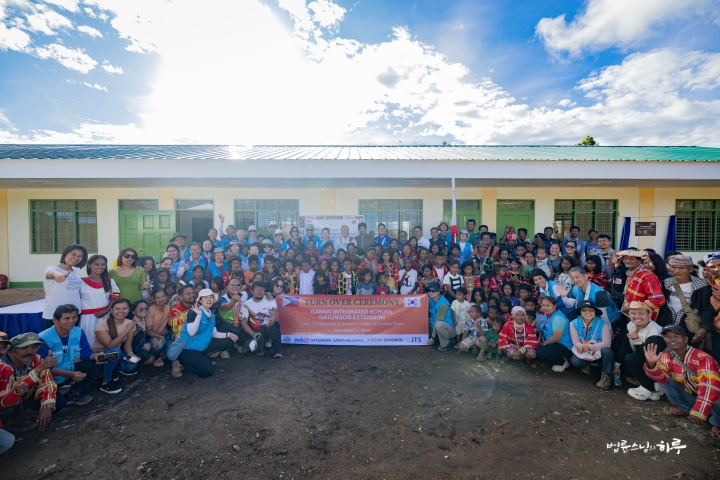
“Gatungon!”
Following the group photo, the children were ushered into the classroom and lined up to receive snacks. To ensure fair distribution, the children were seated in orderly rows before the distribution began.
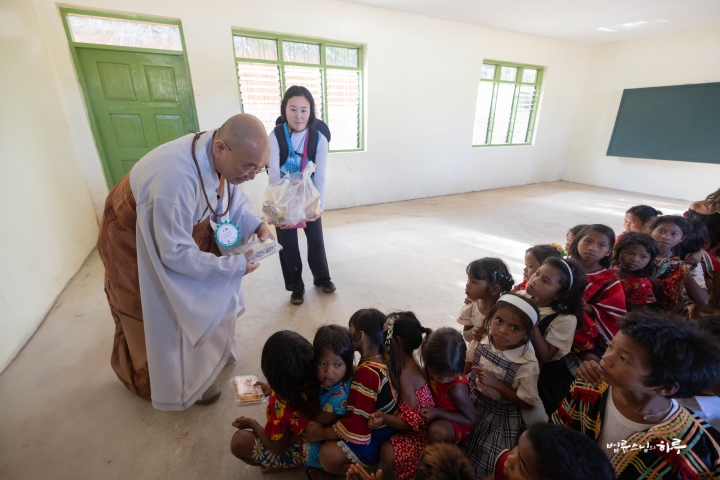
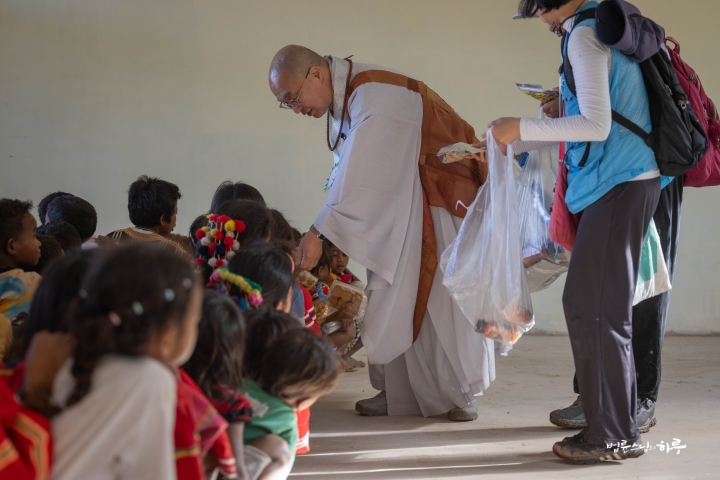
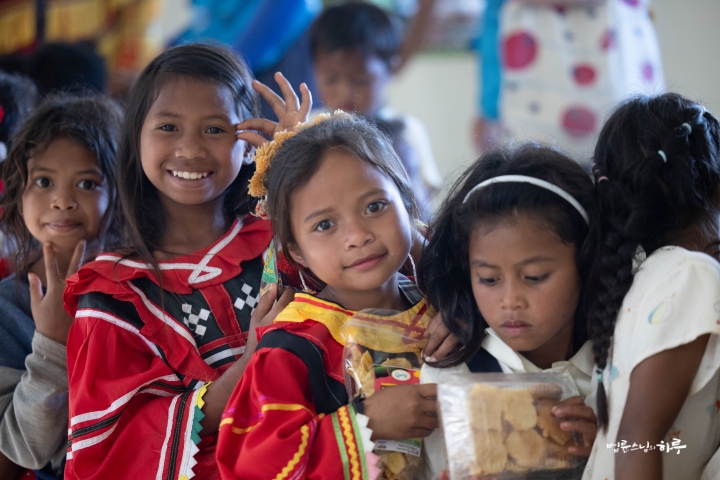
The children’s faces beamed with happiness as they held their snacks. They then moved to the classroom to enjoy a meal thoughtfully prepared by their teachers.
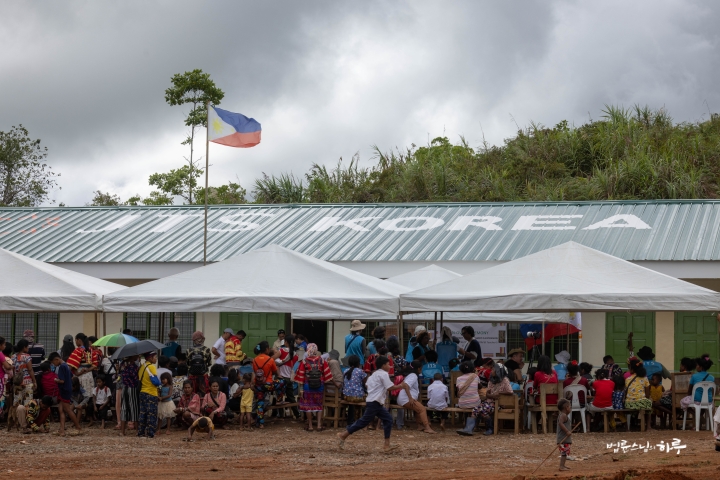
While everyone was having their meal, Sunim immediately departed by car for his lodging in Valencia to conduct the Friday Dharma Q&A live broadcast.
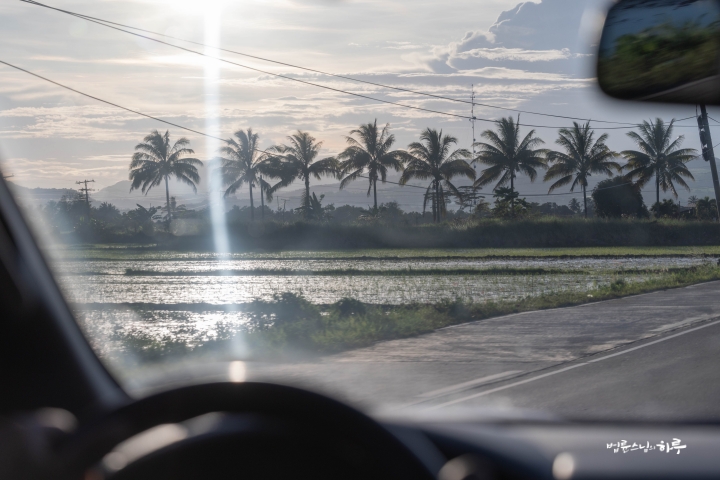
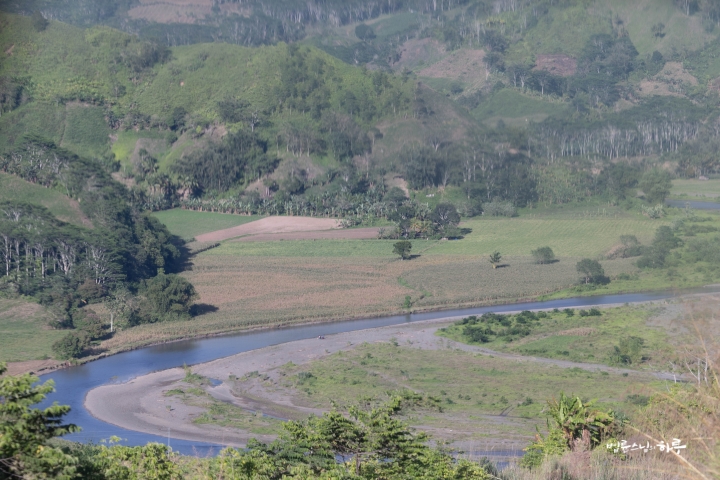
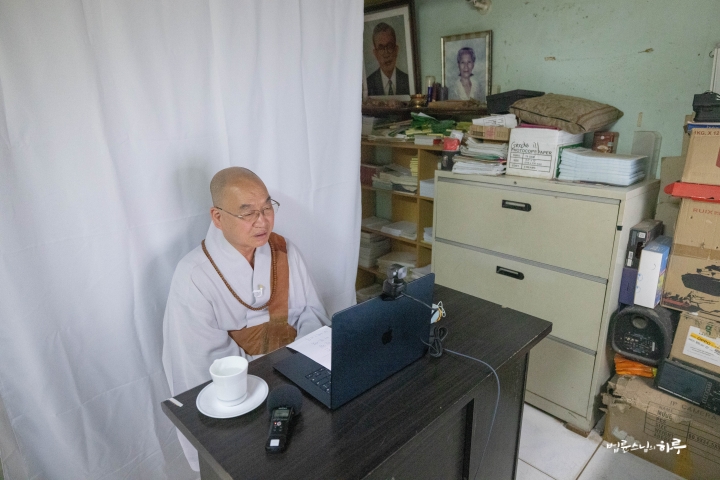
Traveling by jeep, crossing mountains and rivers, he arrived at the lodging at 5 PM. After showering, he prepared for the Friday Dharma Q&A broadcast. Due to slow internet at the lodging, he headed to a hardware store in the city center where the internet connection was best.
Seated at a desk in the hardware store’s office, Sunim began the Friday Dharma Q&A live broadcast at 6:30 PM local time, which was 7:30 PM Korean time. He shared photos of the completion ceremonies for the four schools finished so far and provided vivid updates on the local situation.
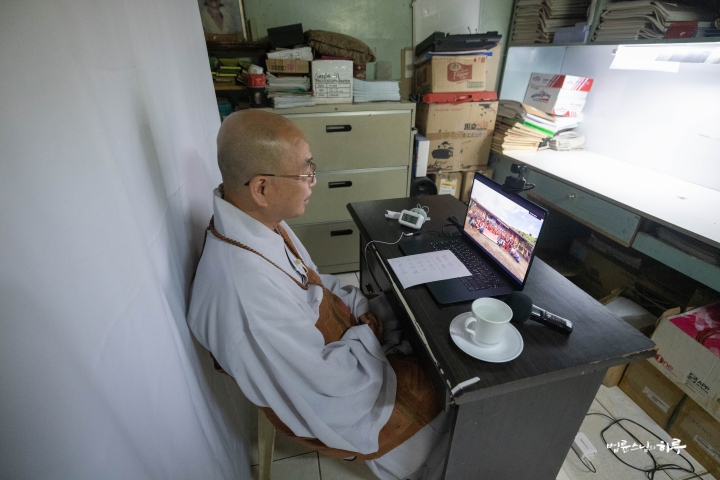
Next, they watched a video of last week’s visit to the Rohingya refugee camp, where 6.36 million bars of soap were delivered.
After the video, Sunim engaged in dialogue with questioners. Four people pressed the raise hand button to ask Sunim questions. One of them sought Sunim’s advice on how to deal with his wife’s inability to throw things away, which had turned their home into a junkyard.
My Wife Doesn’t Throw Things Away, so Our House Is Like a Junkyard
“I’m in my late 50s, and my wife is a year younger than me. Our relationship is neither particularly good nor bad, just neutral. However, my wife has a hoarding disorder and doesn’t throw things away. Our house is messy and like a junkyard. I’ve tried to persuade her nicely to throw away what needs to be discarded and organize things, but it hasn’t worked. Even when I try to help with housework, my wife prevents me from throwing things away, so it’s ineffective. I’m stressed about this and almost in a neurotic state. However, divorcing or separating over this seems extreme, so I try to have good feelings towards my wife, but when I think about the cluttered house, I get so angry that I can’t sleep well. What should I do?”
“It seems that the two of you have incompatible living habits. Just as conflicts arise when personalities don’t match, living together with mismatched habits can also lead to conflicts. There are mainly three approaches you could consider.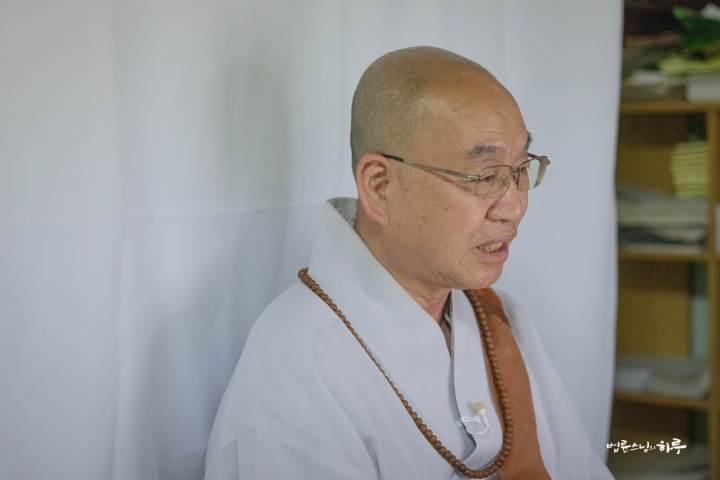
“Yes, thank you. I’ll try to understand my wife and change myself a bit to live with her.”
“I see. I should work on changing myself. I understand.”
As all the questions were answered, it was time to conclude. The live broadcast ended with a promise for next week.
“That’s all for today. I’ll be in Korea next Friday, so please ask many questions when I’m there.”After returning to his lodging, Sunim had a conversation with the JTS visiting group before retiring for the night.

Tomorrow, he plans to visit the Songko village where the Talandig tribe lives to discuss the preservation of traditional culture, tour San Miguel High School which had its completion ceremony last year, and then arrive at the JTS Center to share and gather opinions on this year’s project evaluation and next year’s project plans.