The Buddha’s Life Is Engaged Buddhism
Nov 30, 2024 - Second Day of INEB International Conference
Myanmar Urgently Needs Food Aid and Temporary Housing Support
“Could Sunim and JTS provide temporary housing that can be built cheaply and quickly for people whose homes have been burned down? Since it’s currently impossible to purchase and send supplies from the center, it would be good if you could support us to directly purchase and distribute necessary items locally. The central Dry Zone region, which is neglected by international or domestic aid, urgently needs humanitarian assistance such as food and temporary housing.”
Sunim said that the current humanitarian crisis in Myanmar is similar to North Korea during the Arduous March period in the mid-1990s, and shared his experiences from that time while discussing the possibilities and limitations of providing humanitarian aid to Myanmar.
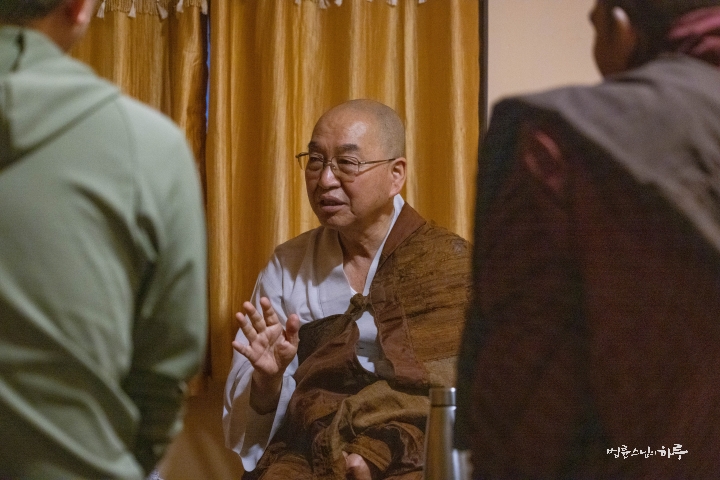
“A few days ago, four Myanmar activists were arrested at the Indian border while conducting humanitarian aid activities.”
“It seems some support might be possible at the Thai border, but it would be difficult at the Indian and Bangladeshi borders.”“The border areas are relatively better off in terms of food. The Dry Zone in the central region is the most difficult. The most houses were burned there, and soldiers are stationed in every major city, making it very hard to deliver relief supplies from the border. The situation there hasn’t even been reported outside.”
“It’s similar to the situation in North Korea. Pyongyang and the border areas were somewhat okay in North Korea too, but other regions were in very difficult situations. It was hard to access easily like the border areas, and even if relief supplies reached Pyongyang, the North Korean government didn’t allow them to be sent to other regions. To solve this problem, we created three organizations: JTS, The Peace Foundation, and Good Friends. The Peace Foundation works to maintain peace by resolving issues between the governments of South Korea, North Korea, and the United States. So it mainly cooperates with government officials and experts. JTS handles official humanitarian aid work. To provide support officially, prior consultation with the North Korean government is needed, and approval from the South Korean government is also required. However, there are many things that cannot be done officially. Good Friends was in charge of unofficial support to North Korean residents at the Chinese border. So I have had both good and bad relationships with the North Korean government. Both governments didn’t reject peace activities, but the South Korean government often rejected humanitarian aid to North Korea. The North Korean government strongly opposed unofficial support at the border, and the Chinese government didn’t like it either. So some people see me as pro-North Korean, while others see me as anti-North Korean. But I don’t discriminate based on political stance when it comes to helping people in need. I worked based on the perspective of helping them whether they were suffering inside North Korea or after crossing the border. Currently in South Korea, people are divided into those who support or oppose humanitarian aid to North Korea based on their political views. Similarly, helping the people of Myanmar needs to be studied more. From my experience so far, no matter how good our intentions and how hard we try, we can’t achieve everything we want. These political situations prevent us from doing everything we want. I even protested at the UN Refugee Agency. But they said they couldn’t do anything without the Chinese government’s permission. I understand that the Myanmar people are in a very difficult situation, but we need to study more about how to give aid. One feasible way to provide support within Myanmar could be to implement non-political humanitarian aid in cooperation with the Myanmar Sangha. This is because if the Myanmar Sangha decides and cooperates, it may be possible for JTS to provide official support. The greatest concern here is financial transparency. If transparency in budget execution is not ensured, it becomes difficult to continue support in the long term. Let’s also find ways to provide small-scale emergency support at the border.”Sunim, deeply understanding the political situation and infrastructure collapse in Myanmar, looked for realistically feasible measures by gathering various opinions from the Myanmar activists
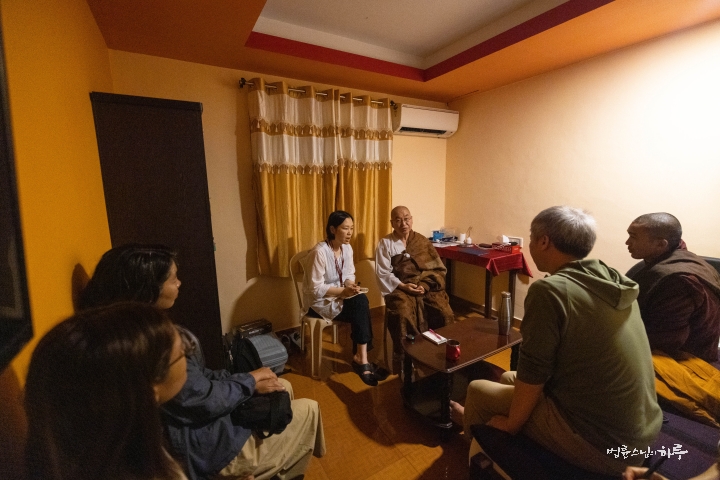
“Thank you so much for taking the time despite your busy schedule. We will also continue to look for ways.”
After the conversation, at 9:30 AM, all INEB International Conference participants headed to the Indian Government Museum together. Due to the heavy rain from the cyclone, the visit to the Mahabalipuram ruins was canceled, and instead, they decided to visit the museum together.

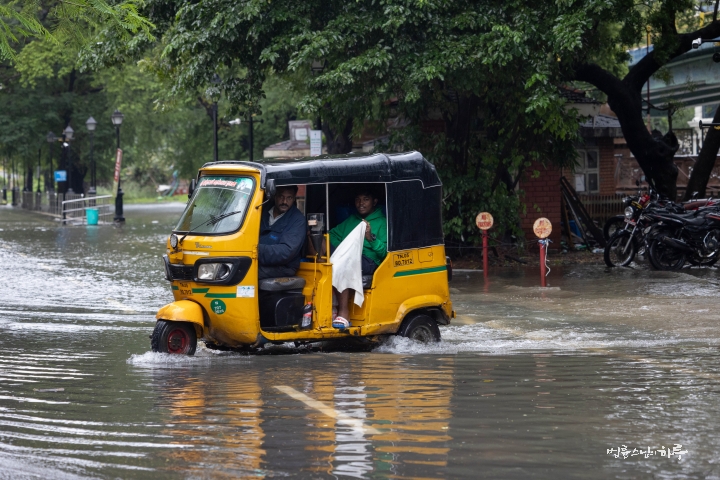
Sunim went to sit in the very back seat of the bus.
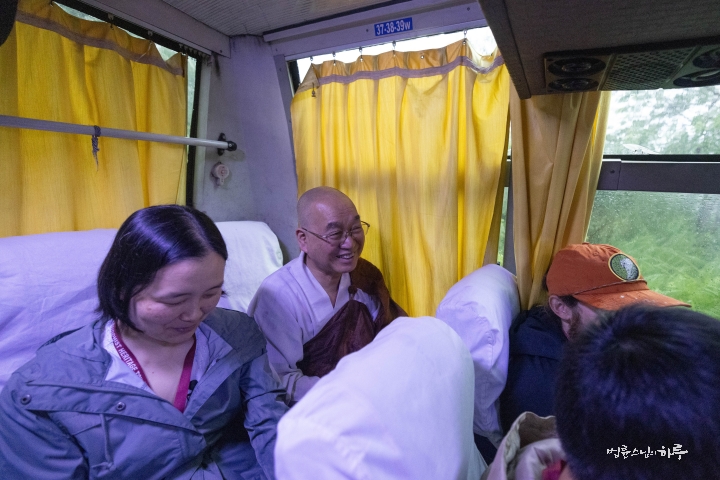
They arrived at the Indian Government Museum at 10:30 AM. While waiting on the bus for the staff to get admission tickets, Sunim said with a smile:
“In India, there’s not a hippopotamus that drinks water, but a hippopotamus that eats time.” (laughter)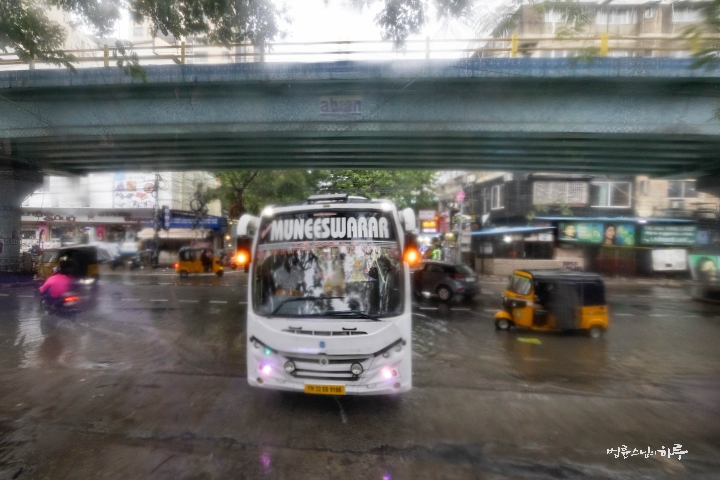
While waiting, Gautam, an INEB board member from India, gave a brief explanation about the museum.
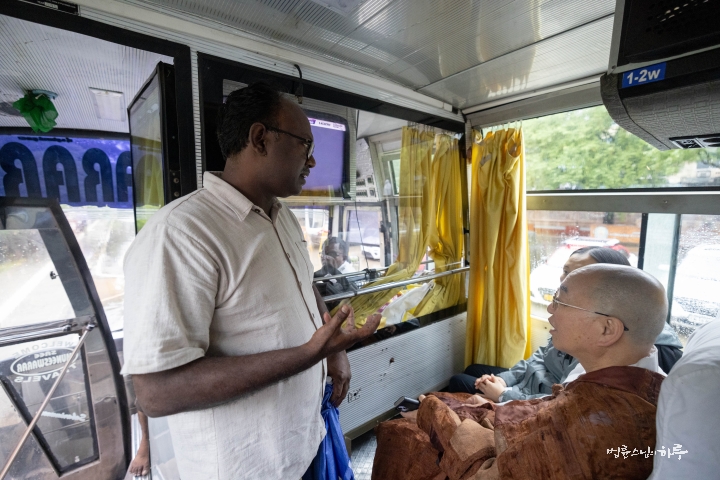
“This museum is the second oldest museum in India. The oldest museum is in Calcutta, and this museum in Chennai is the second oldest. It was established in 1851, but preparations for the museum began in 1774. The land originally belonged to an Armenian merchant. The British bought the land and stored books that the country considered valuable. They also stored documents written by the UN. It’s famous for archaeological artifacts and coin collections. There are also countless Buddha statues. There are artifacts from the Roman Empire that allow us to infer about the relationship between the Roman Empire and South India. There are even coins used in the Roman Empire with Buddha’s image engraved on them. Many Buddhist literary works are also preserved in this museum.”
They entered after getting tickets, but due to the heavy rain, there was a power outage inside the museum. Everyone turned on their phone lights to view the artifacts.
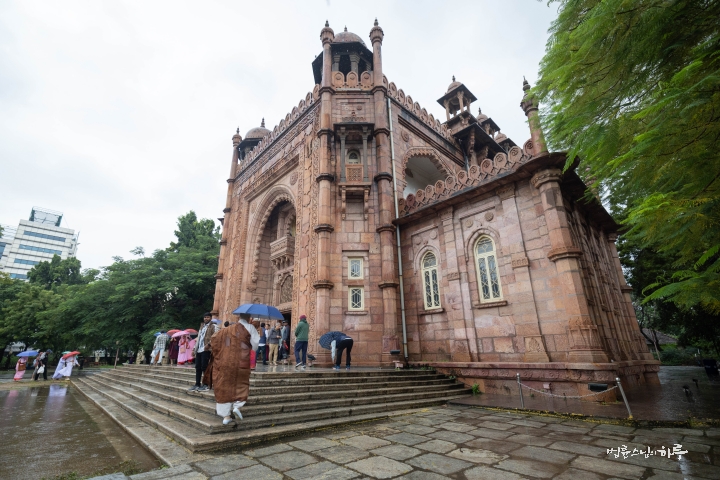
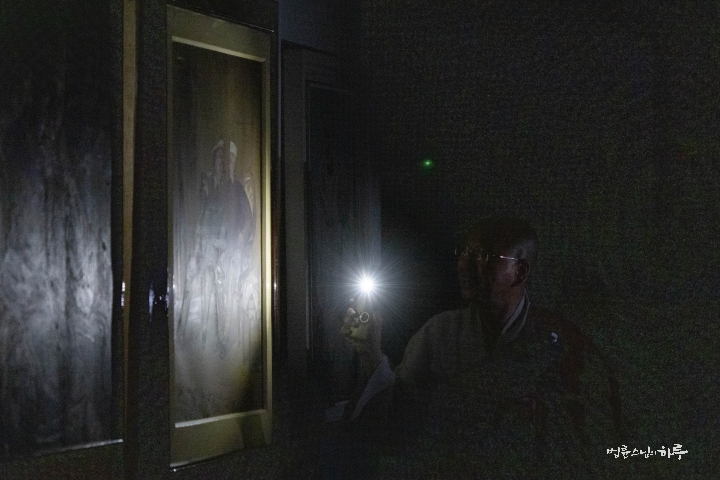
Sunim viewed the artifacts in order, moving from building to building. There were many artifacts on display, including South Indian sculptures based on Hindu culture and relics from the Gupta dynasty that ruled North India from the 4th to 7th centuries.
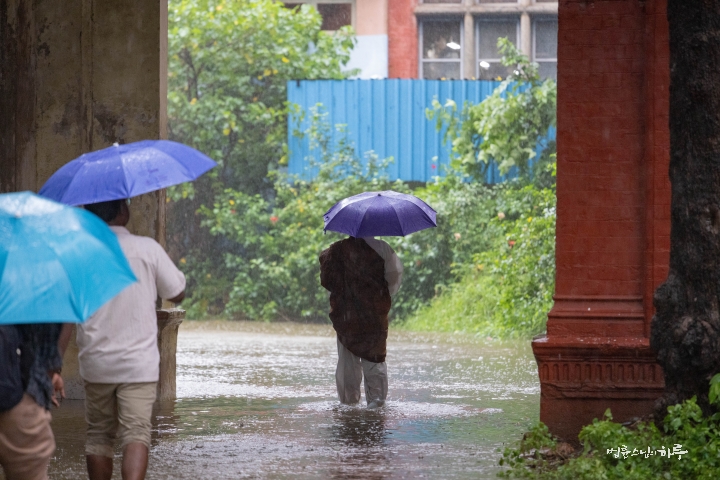
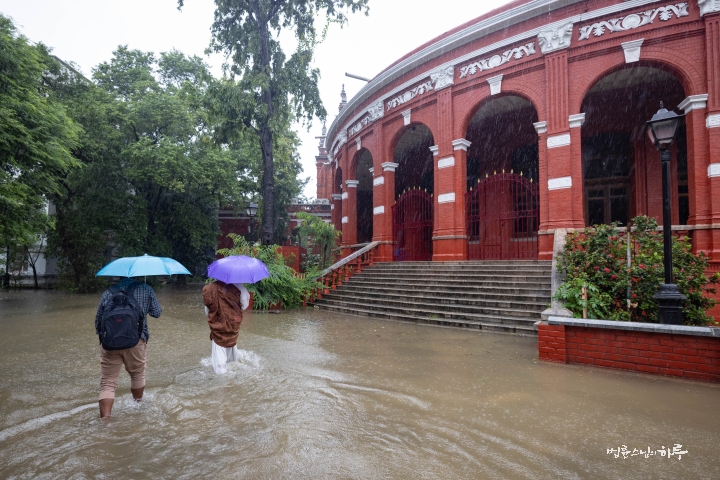
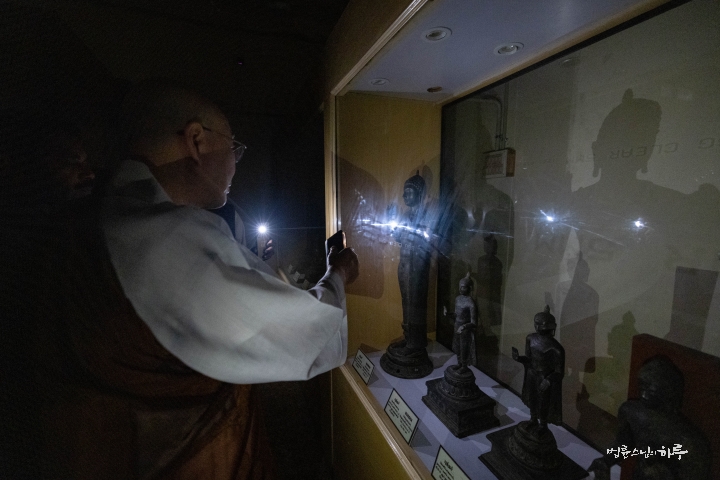
Due to the heavy rain, the outdoor garden of the museum was flooded. The participants crossed the flooded buildings one by one, visiting the Archaeology Hall, Anthropology Hall, and Bronze Hall in order. They were able to see what kind of artifacts were being discovered in South India.
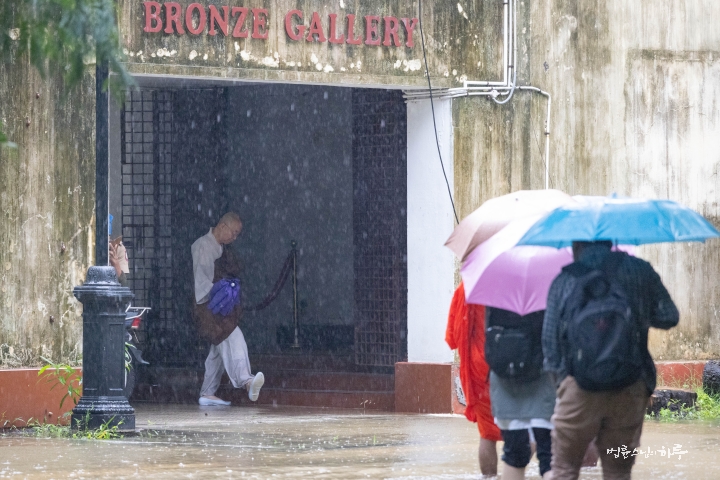
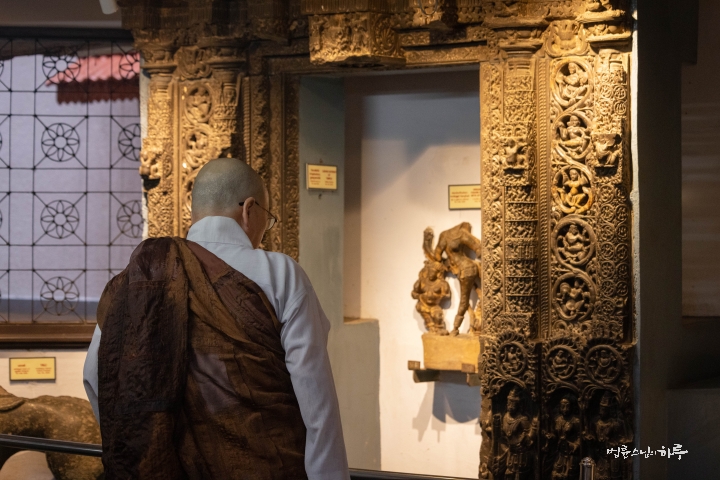
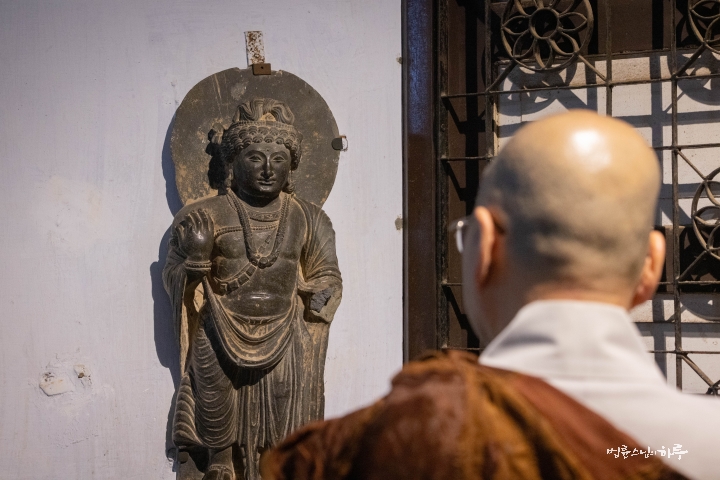
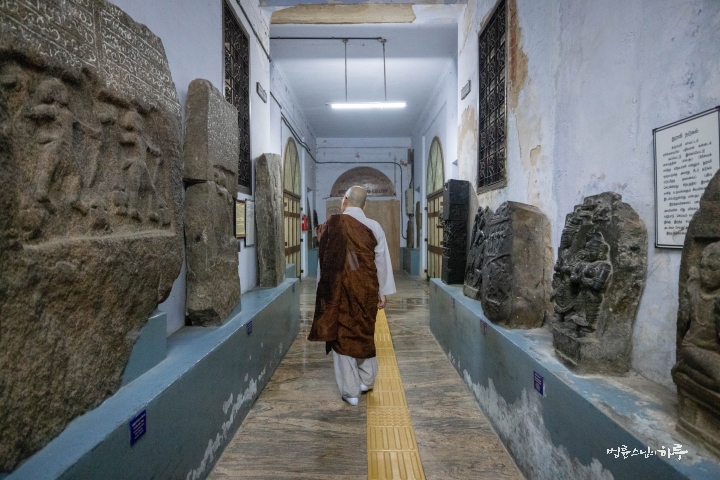
At the end of the tour, Sunim fell into a puddle while crossing the water, ruining all his clothes and injuring his leg.
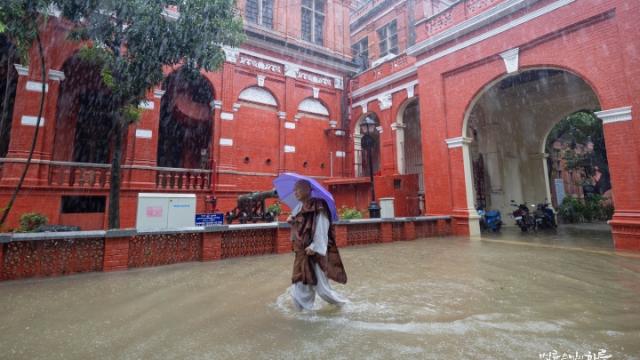
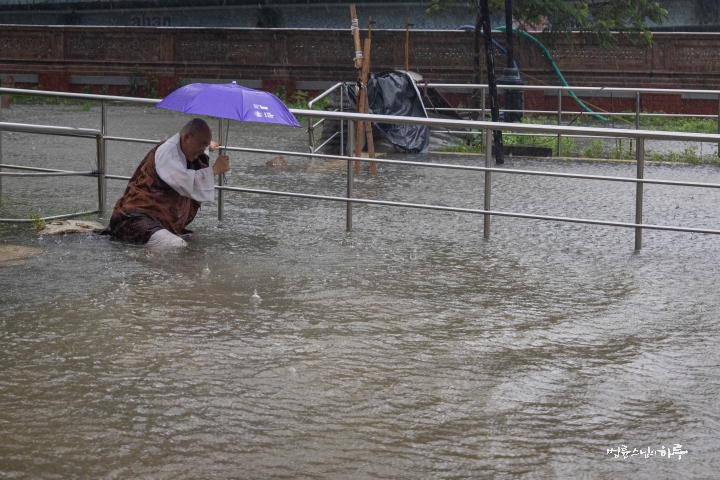
They barely managed to get on the bus and safely return to the venue.
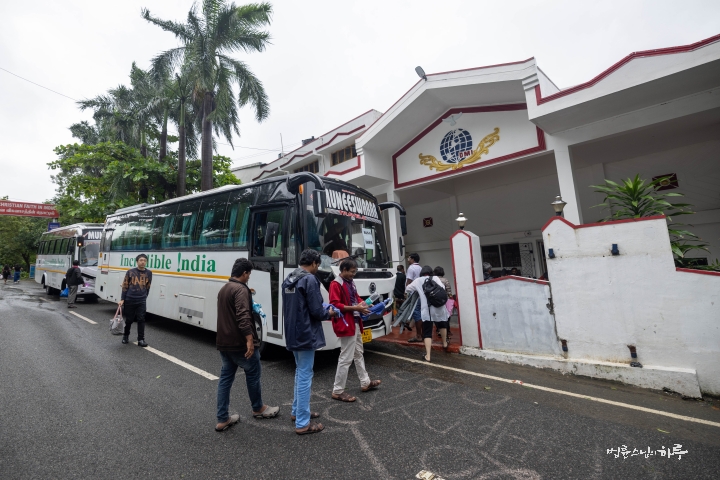
Upon arriving at the venue, Sunim immediately removed his wet kayasa (Buddhist robe), took a bath, and treated his wounds. From 3 PM, he began meeting and conversing with people.
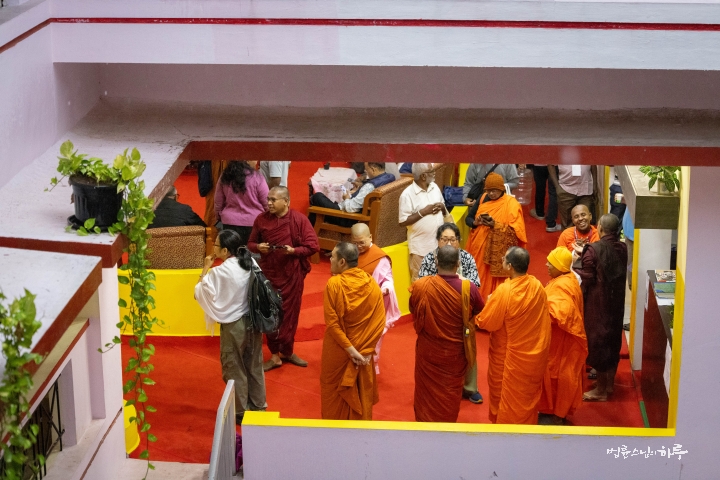
Sunim first met with Venerable Assaji from Sri Lanka to discuss in detail the matter of inviting the Sri Lankan religious groups to the International Reconciliation Society symposium in July next year. Then, he discussed with Anchali from the INEB secretariat about how to proceed with tomorrow’s symposium. Sunim also had a conversation with Venerable Silananda, who had previously visited Jungto Society through an INEB study tour and has been helping with JTS support in Sri Lanka.
Amidst these consecutive meetings, Venerable Sangkhom and Venerable Pravin from Thailand, who had visited Jungto Society through an INEB study tour a few years ago, also came to see Sunim for a conversation. Venerable Sangkhom operates an eco-friendly farm in Thailand, which Sunim has personally visited.
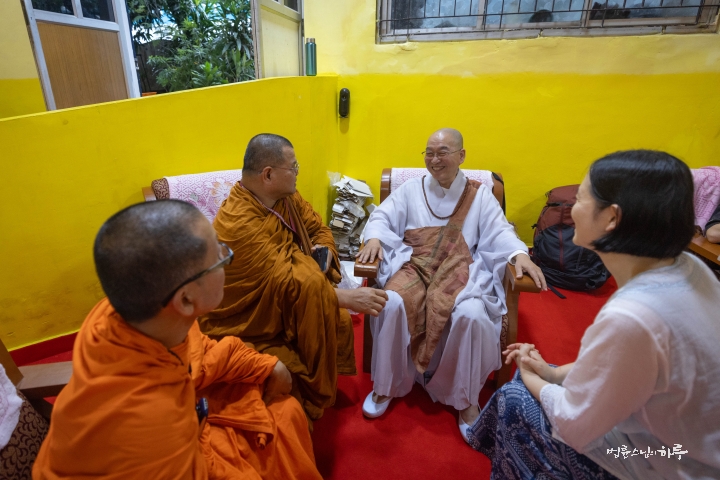
Venerable Sangkhom is dedicated to educating the younger generation to reduce global warming.
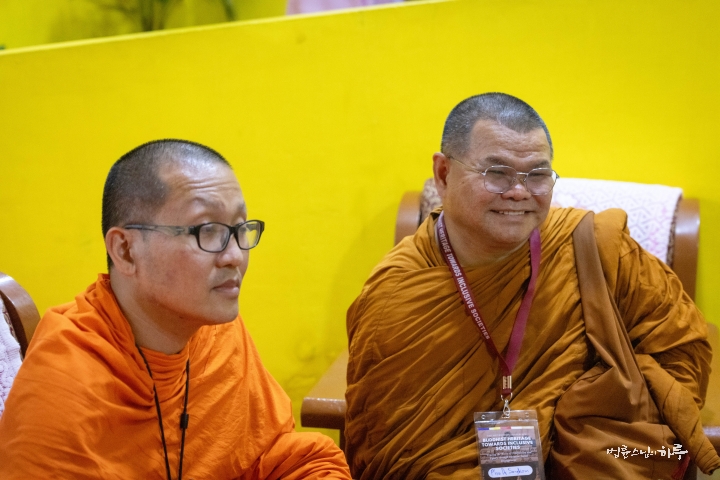
“My hometown is in an arid region. Here, we aim to educate the younger generation and address climate change issues. We’re trying to run the school in an integrated and sustainable way where students learn to plant trees and grow food themselves.”
Venerable Sangkhom and Venerable Pravin showed strong passion for sustainable education and projects focused on climate change response. Sunim also expressed strong agreement.
“Okay, I have the same thoughts. I believe we need an educational curriculum where students can plant trees, grow crops, prepare food, and become self-sufficient. I’ve had ideas about creating such a new education system, but I haven’t been able to implement it yet because I’ve been traveling around the world.”Venerable Pravin expressed concern for Sunim’s health.
“Sunim, how is your health?”
“My heart isn’t good, so it’s difficult to go uphill, and my knees hurt, making it hard to walk downhill.”“There’s a world-renowned doctor in Thailand. It would be good if you could receive treatment there.”
“If my body is in pain, I will get to work a little less.”“For the sake of humanity, you need to be healthy.” (Laughter)
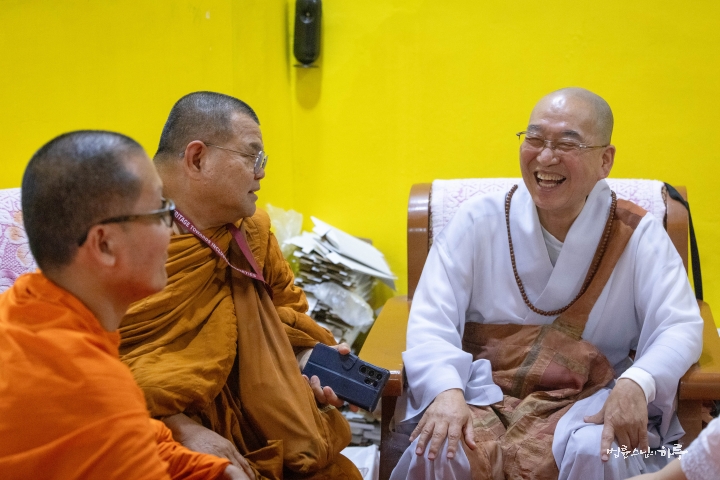
Sunim showed a video of a recently rebuilt school in Syria that had collapsed due to an earthquake. After watching the video, they discussed the importance of humanitarian aid in areas affected by war and earthquakes before concluding their conversation.
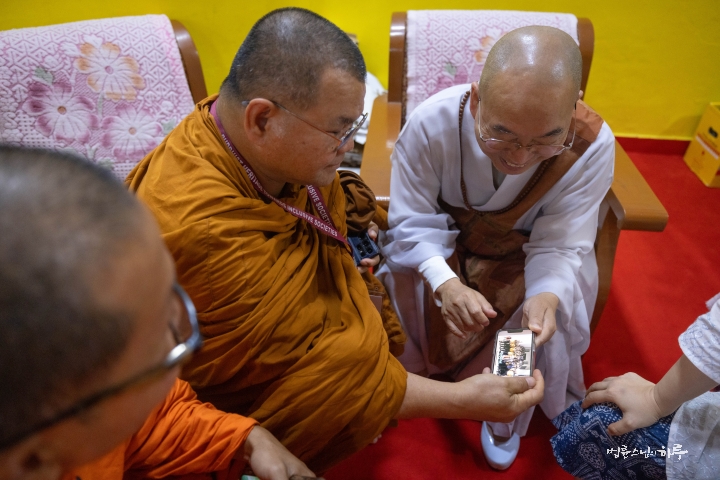
As they were talking, the sun set. At 6 PM, Sunim had a conversation with Indian activists who believe in Ambedkarite Buddhism, including Gautam, an INEB board member from India.
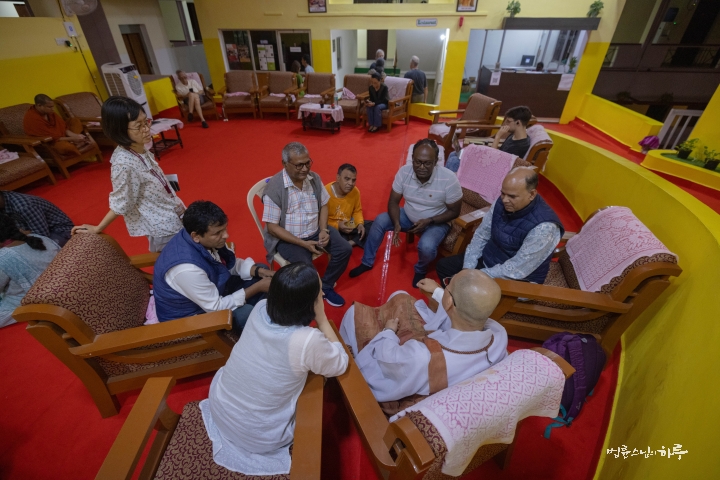
First, Gautam explained the characteristics of Ambedkarite Buddhism and its influence in India.
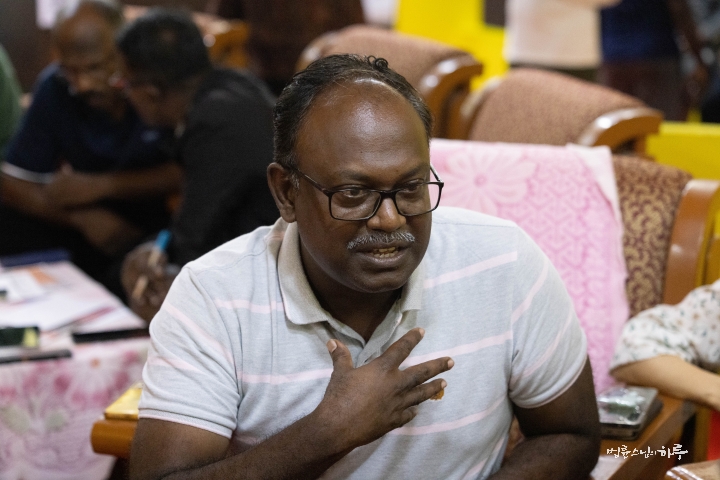
“Dr. Ambedkar said, ‘This movement is both a social movement and a spiritual movement.’ So, following his teachings, we aim to understand, practice, and spread the Dharma. Most are from the Dalit (untouchable) class, with many from poor backgrounds. Our biggest challenge is raising funds for their education and training costs (food and accommodation expenses). Many women have experienced life changes after encountering Buddhism while living in domestic violence and oppression. They gain confidence through meditation and practice, and actively participate in advocating Dharma activities. Currently, about 2,000 people are receiving education to become Dharma teachers. Men and women receive the same training programs and empowerment, which is unique in India.”
Sunim asked with a smile:
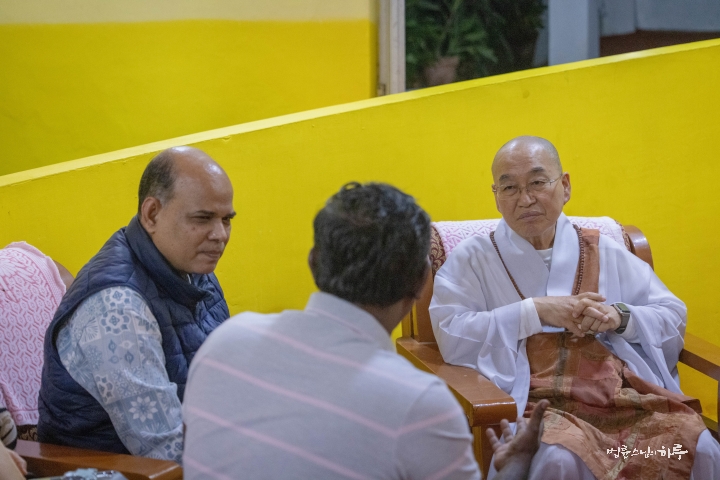
“I will soon become a Dharma teacher. I’m currently receiving Dharma teacher training.” (laughter)
Sunim then emphasized that to become a Buddhist who practices social engagement, one must study Buddha’s life in depth.
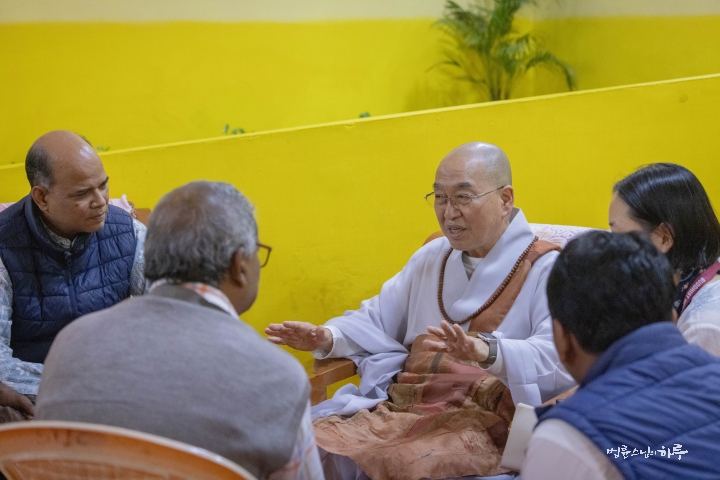
The Buddha’s Life Is Engaged Buddhism
The same applies to women’s issues. There are no gender issues in Buddhist thought. However, there are gender issues in Buddha’s life. At that time, inheritance was only for men. This was because women were treated as accessories to men. Just as all slaves had masters, women were considered slaves and thus had masters. When young, the father was the master; when married, the husband became the master; and when the husband died, the son became the master. If there were no men in the family, the woman became a person without a master and could be taken by anyone. Therefore, in Buddha’s time, only men could renounce and become a Buddhist monk. Renunciation meant abandoning family, wealth, and status, so only men could make such a decision on their own, while women could not make such decisions.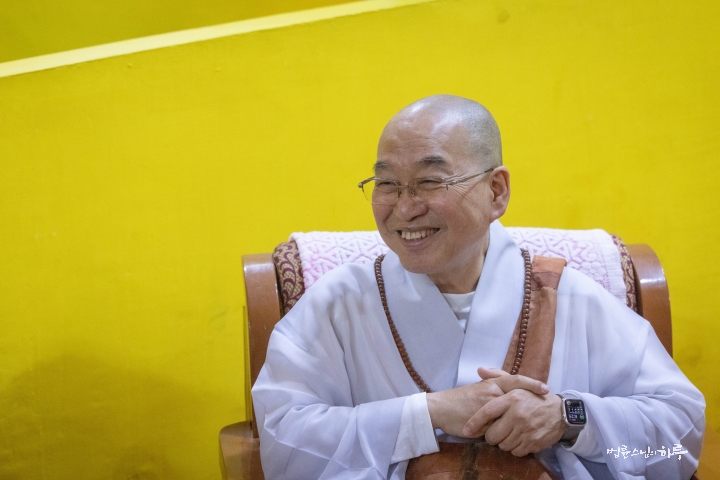
“Thank you. I will keep that in mind.”
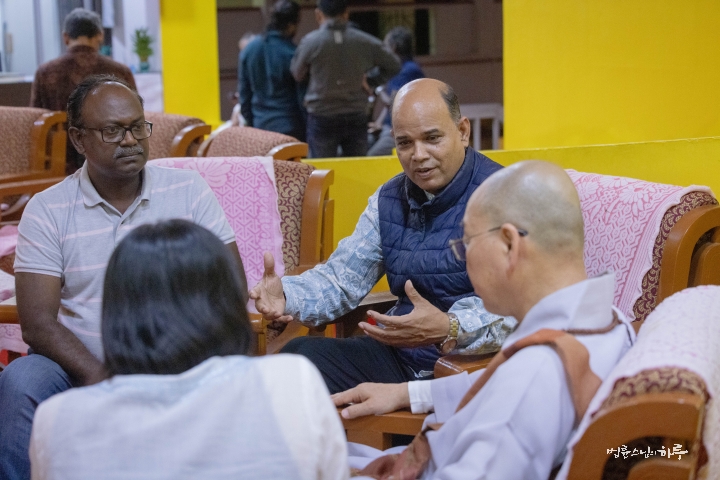
Finally, Sunim emphasized that Ambedkar Buddhism should not be limited to a specific caste but should have broader social and religious inclusivity. He stressed that practice and effort centered on the essential teachings of Buddhism are important to achieve this.
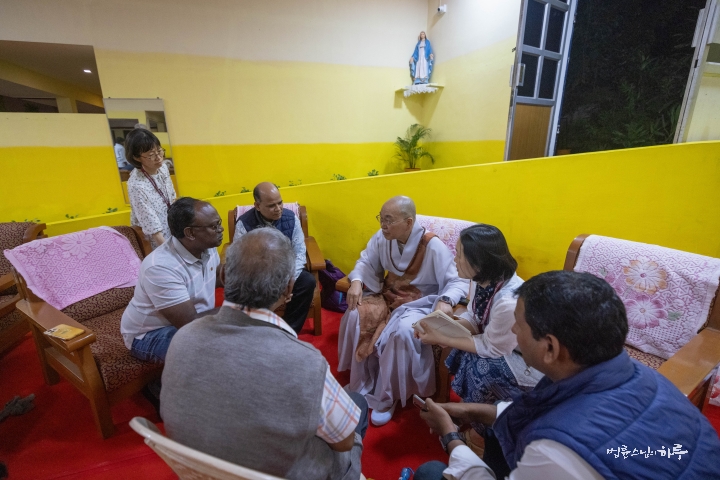
“We will strive to make Buddhism more inclusive of various classes and cultural backgrounds. It would be great if you could visit our center in Nagpur and share more insights with us.”
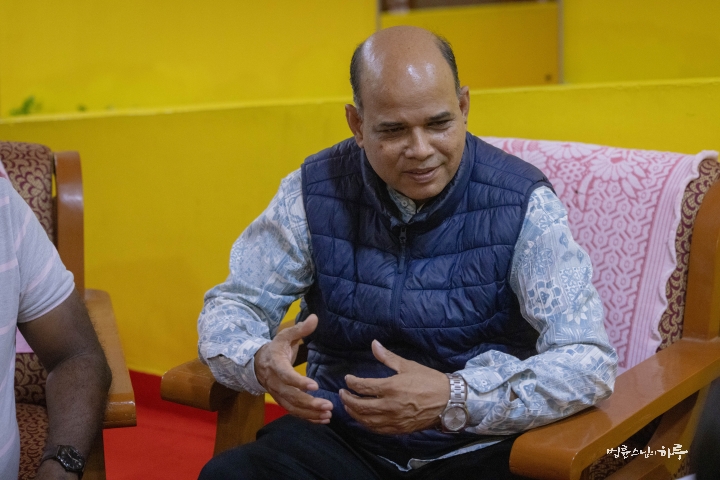
Like so, an hour passed in conversation.
After having dinner together at 7 PM, Sunim met with Dr. Tashi Zangmo from the Bhutan Nuns Foundation (BNF) to discuss support projects for Bhutan.
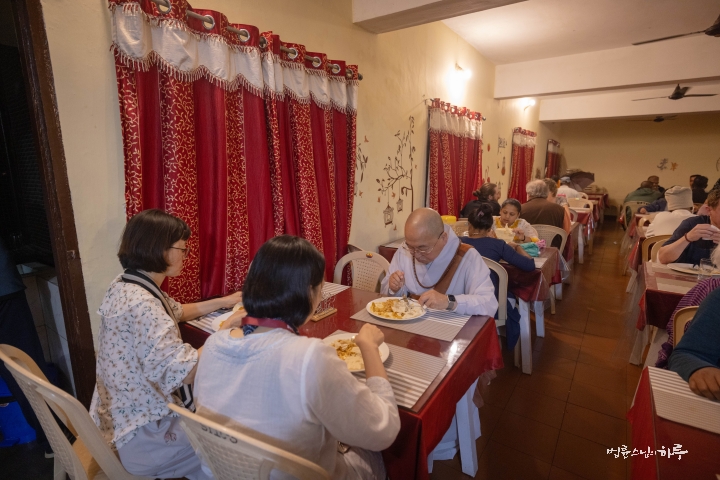
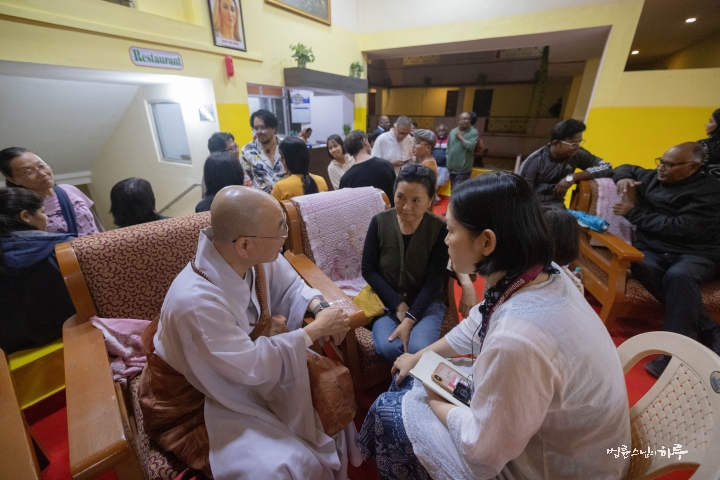
Then at 8 PM, he had a conversation with JTS India volunteers.
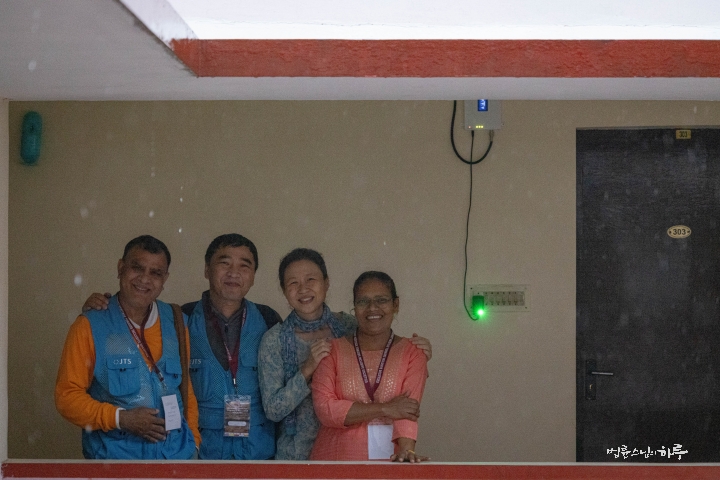
They discussed the construction plan for the Sankasia Dhamma Center and overall JTS projects in India.
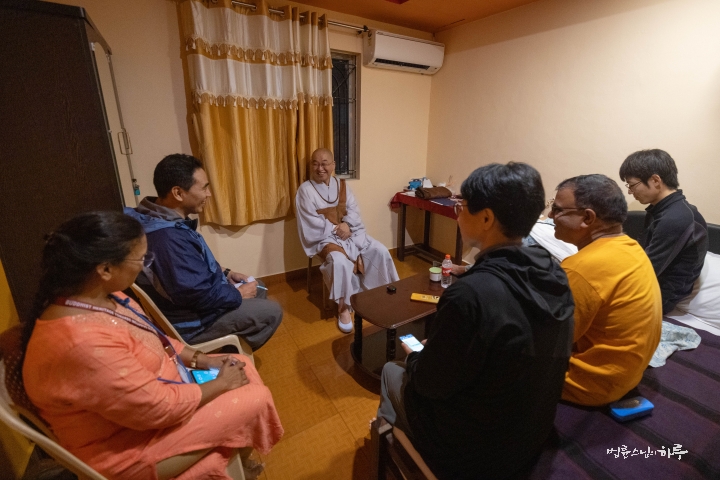
Sunim suggested that when proceeding with construction or projects, it would be good to maximize the use of necessary resources while minimizing waste. Finally, after checking on the health status of the volunteers, he encouraged them to overcome difficulties by supporting each other.
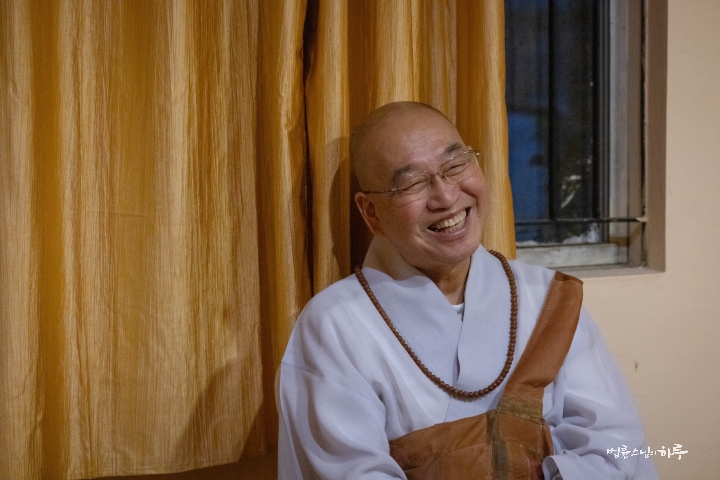
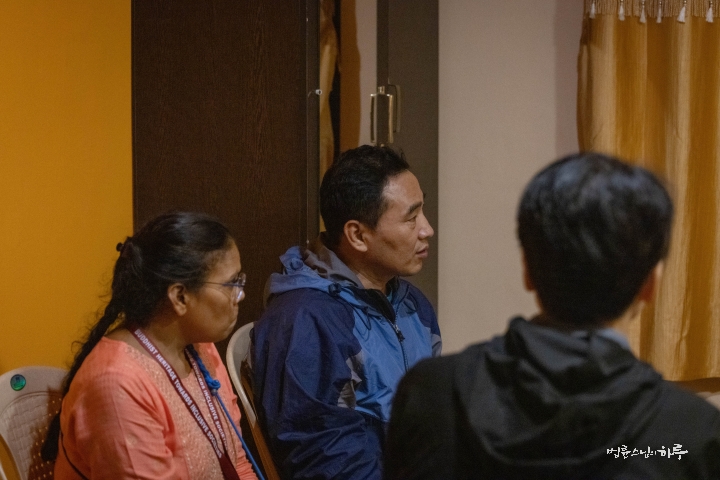
One volunteer mentioned experiencing menopausal symptoms and having difficulty adjusting.
“I’m going through a rather severe menopause, so adjusting hasn’t been easy.”
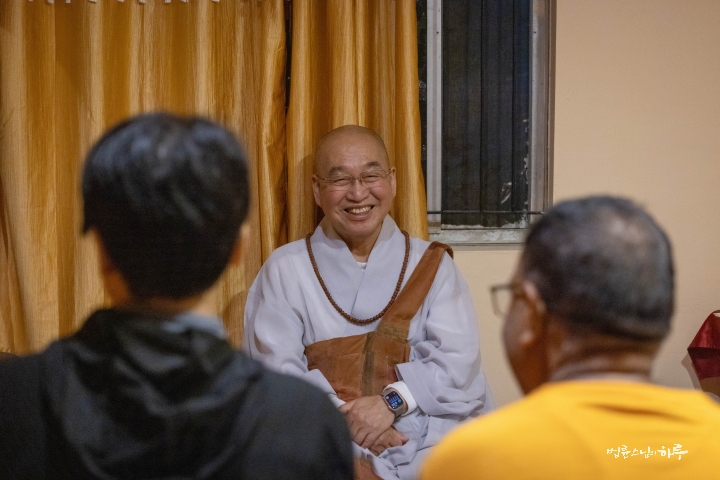
Sunim smiled and said:
Another volunteer said that this summer was particularly difficult and that they would need to observe for another year.
“I’ve spent three summers here, but this year was the toughest. It feels like the final stage of adjustment, but I think I’ll need to wait until next year to know if I’ve truly adapted or if my health has deteriorated.”
“I see. Thank you all for your hard work.”After encouraging the JTS India volunteers working in a hot country, the meeting concluded after 9 PM.
Tomorrow is the third day of the INEB International Conference. In the morning, Sunim will give a keynote speech concluding the entire event. In the afternoon, he will depart from Chennai Airport in India and travel to Dhaka Airport in Bangladesh. He plans to stay overnight in Dhaka to participate in a soap distribution ceremony at the Rohingya refugee camp the next day.