Treating Everyone as Heaven: The Spirit of Equality and Democracy in Donghak
Nov 26, 2024 - Day 2 of the Pilgrimage Commemorating the 200th Anniversary of Suun Choe Je-u Great master's Birth ...
Hello. Today is the second day of our 3-day pilgrimage with various religious leaders and social figures to commemorate the 200th anniversary of Suun Choe Je-u Great master’s birth. Following in the footsteps of Suun Choe Je-u Great master, we departed from Gyeongju and moved to Namwon, where we visited Eunjeokdang at Deokmilam in Gyoryongsan Fortress, which embodies the Donghak ideology, and had time for dialogue.
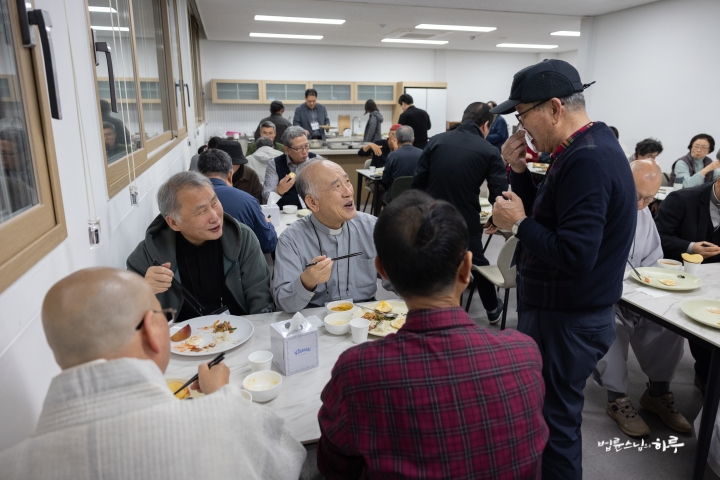
After completing his morning practice and meditation, Sunim headed to the Donghak Education and Training Center in Gyeongju at 6 AM. He had breakfast with the participants at the buffet and departed from Gyeongju by bus at 8 AM.
On the bus to Namwon, Sunim moderated the continuation of yesterday’s unfinished discussion. Yesterday, Father Kim Gi-hwa raised somewhat provocative questions about how to define the relationship between Hanulnim (the Lord of Heaven) in Donghak and Suun Choe Je-u Great master, and what challenges Cheondogyo should address. The priest, pastor, and Gyoreong(Cheondogyo pastor) shared their thoughts and exchanged opinions. While we were discussing it, we had arrived in Namwon.
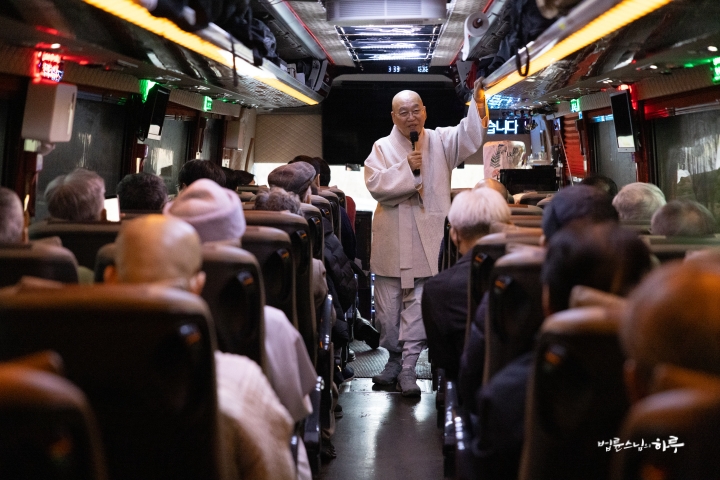
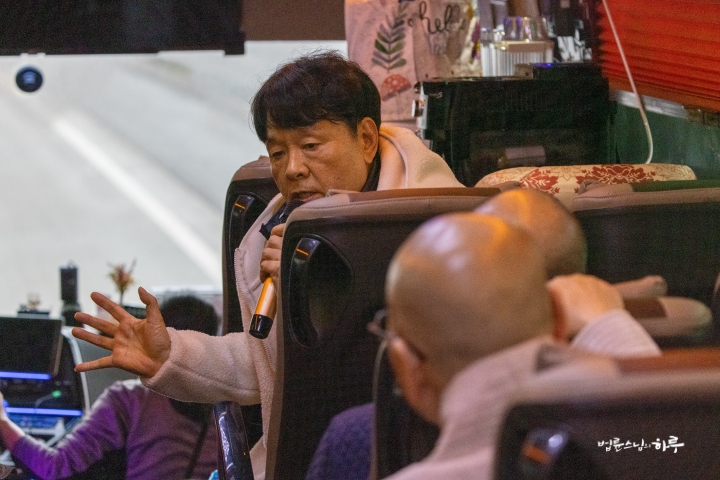
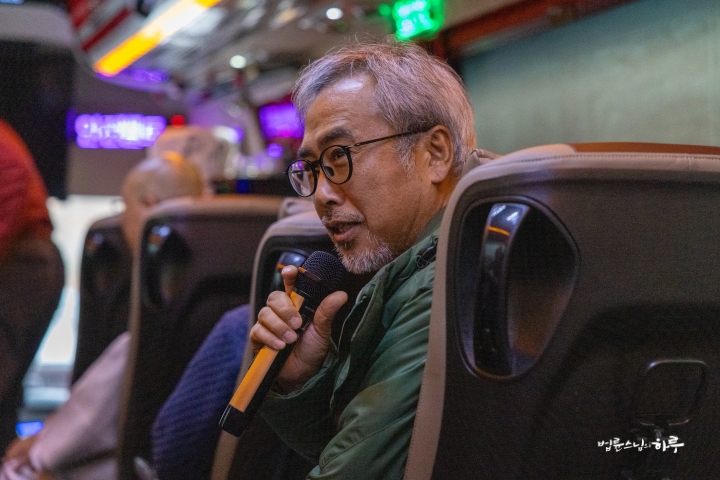
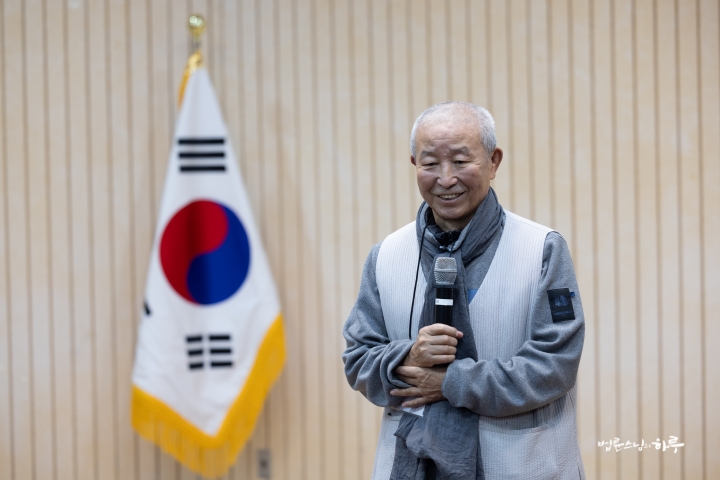
Sunim asked former Gyoreong Park Nam-soo to explain the significance of why we are on this pilgrimage to Namwon.
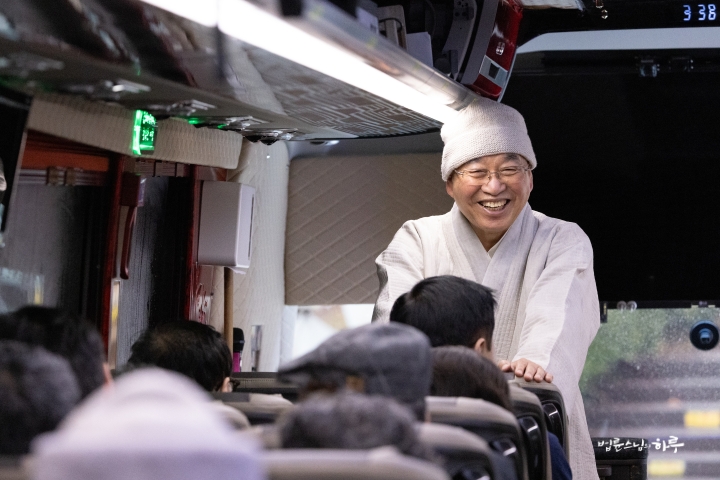
Although the Gyoreong had lost his voice due to a cold, he made every effort to provide an explanation.
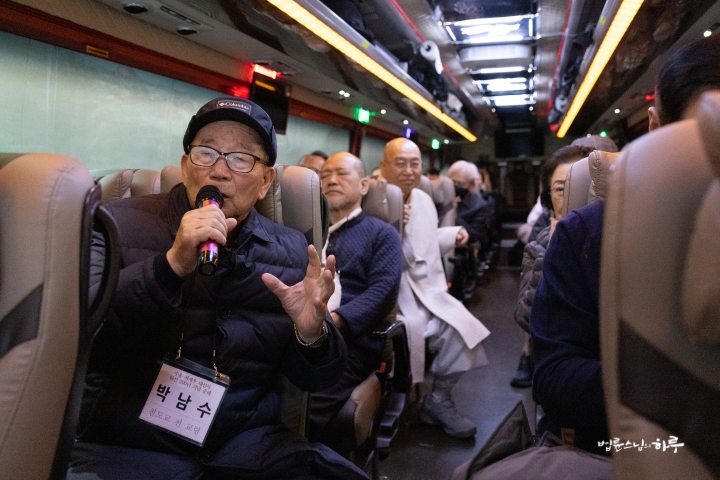
Following the Path Walked by Suun Choe Je-u Great Master
“The road we are traveling on by bus now is the same path that Suun Choe Je-u Great master walked in November 1861, heading towards Eunjeokdang at Deokmilam in Namwon, Jeolla Province, after attaining enlightenment at Yongdamjeong in Gyeongju in 1860. There were three profound reasons for Great master’s journey on this path. First, it was a path of refuge. Second, it was a journey to complete unfinished business after his enlightenment. Third, it was a path taken to prepare and establish Donghak as a structured religion. Understanding this helps us grasp the significance of our pilgrimage today as we follow the path Great master walked. According to Hanulnim’s principle that ‘Unless it spreads from the East to the West, it will not prosper,’ Choe Je-u Great master’s journey from Gyeongju to Namwon represents his second founding. Today, we are on a pilgrimage along the most meaningful path in Cheondogyo. Although it pains us that we haven’t fully restored Eunjeokdang yet, I hope this opportunity to visit the site and understand Great master’s mindset will be valuable as we commemorate the 200th anniversary of Choe Je-u Great master’s birth.”
Sunim also shared a few stories related to Eunjeokdang at Deokmilam in Gyoryongsan Fortress.
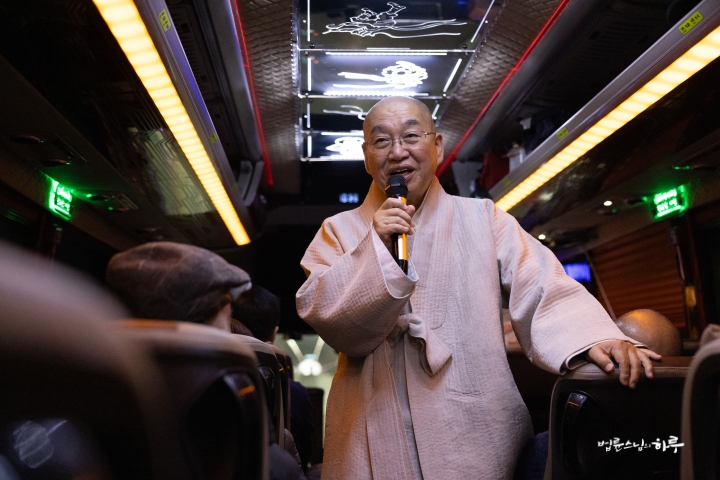
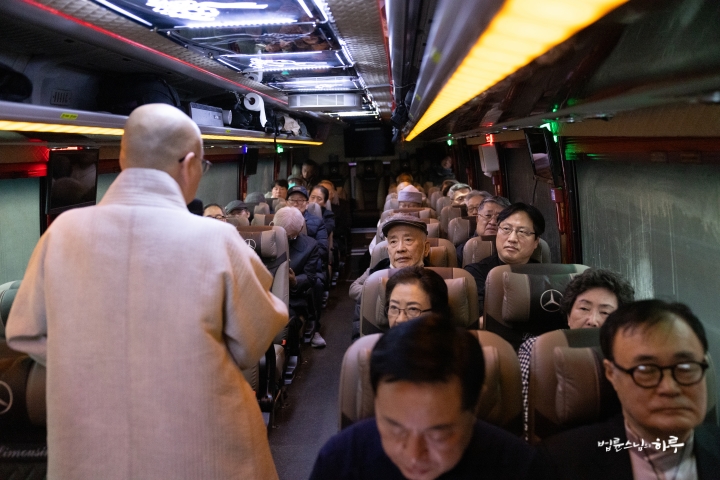
While it was drizzling in Gyeongju, the sun came out brightly as we arrived in Namwon. One person exclaimed in admiration:
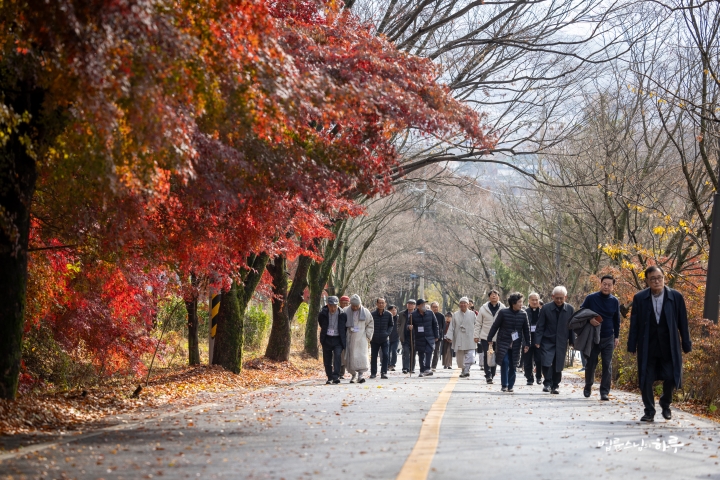
“It seems God is blessing us, thanks to Sunim.”
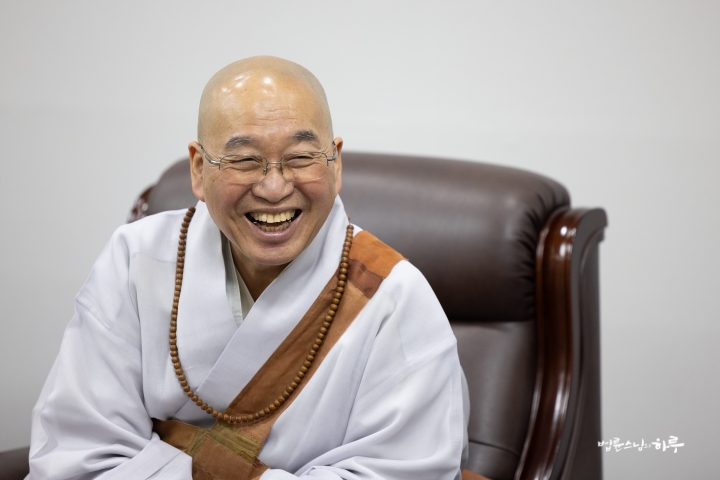
Sunim replied with a smile.
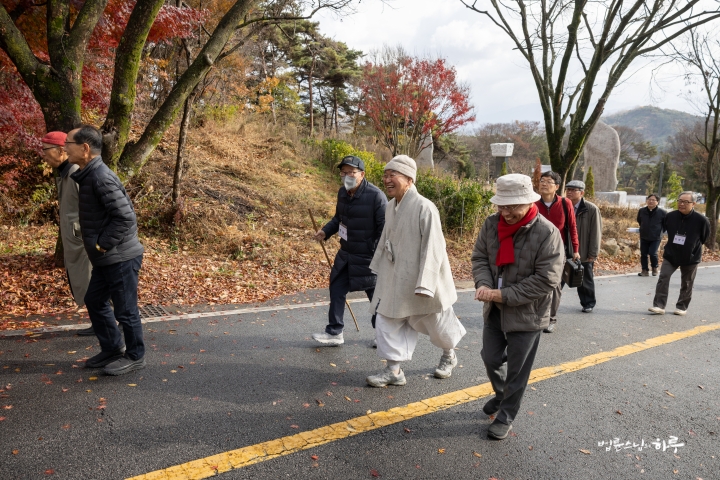
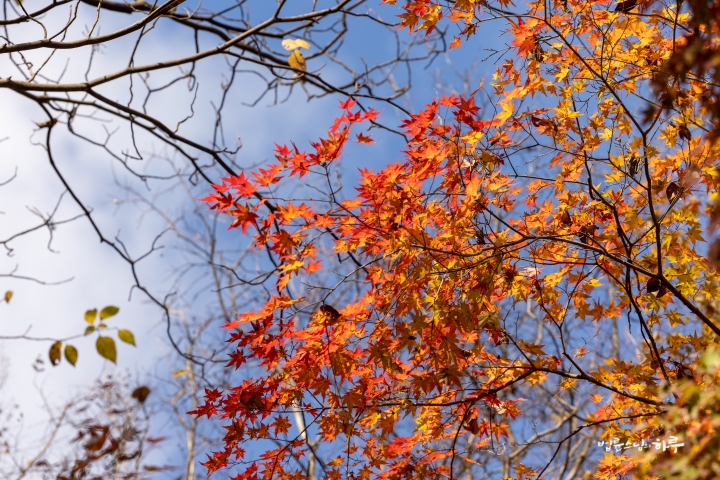
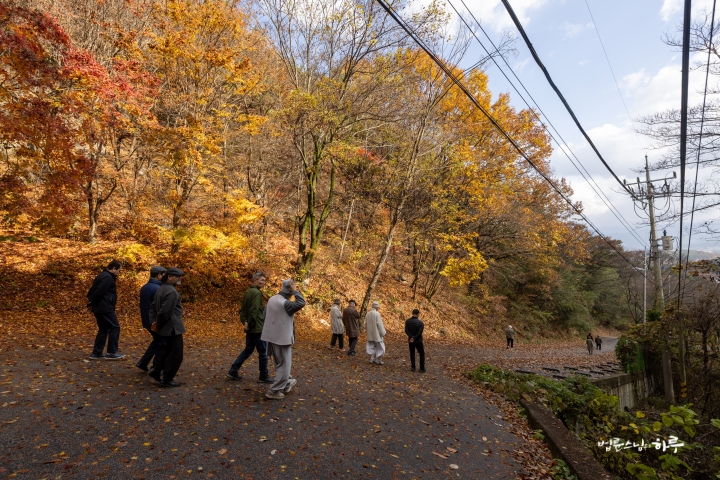
We headed towards Gyoryongsan Fortress. As we slowly climbed the mountain path, the autumn foliage at its peak welcomed the participants with vibrant colors.
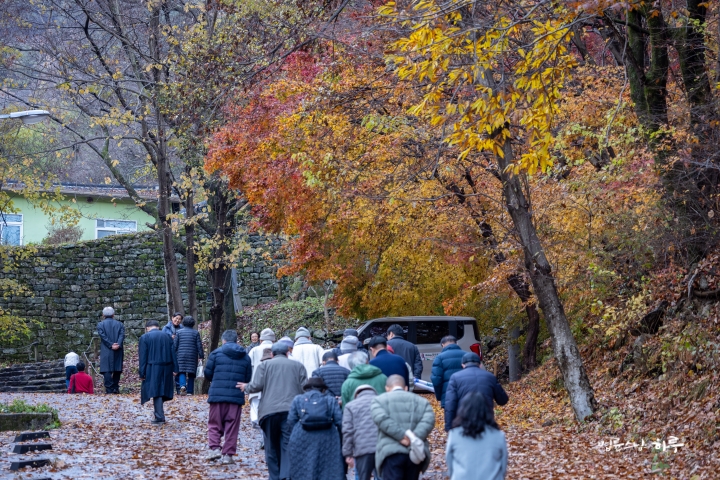
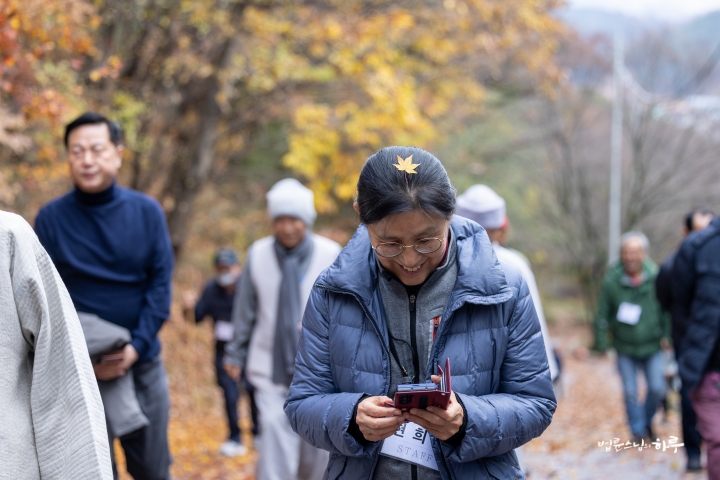
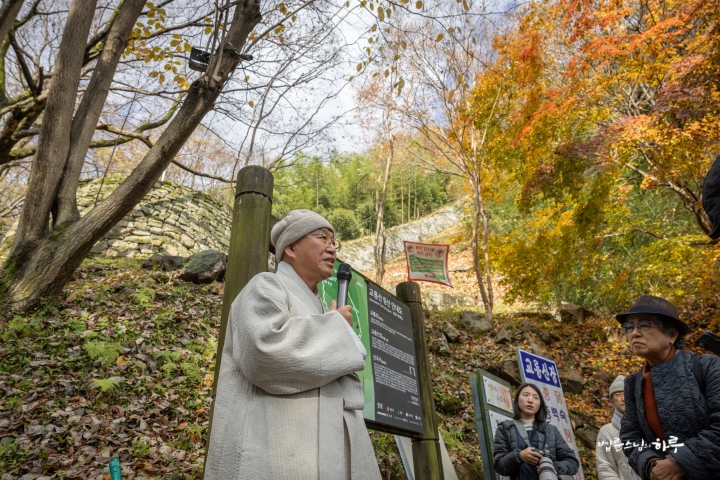
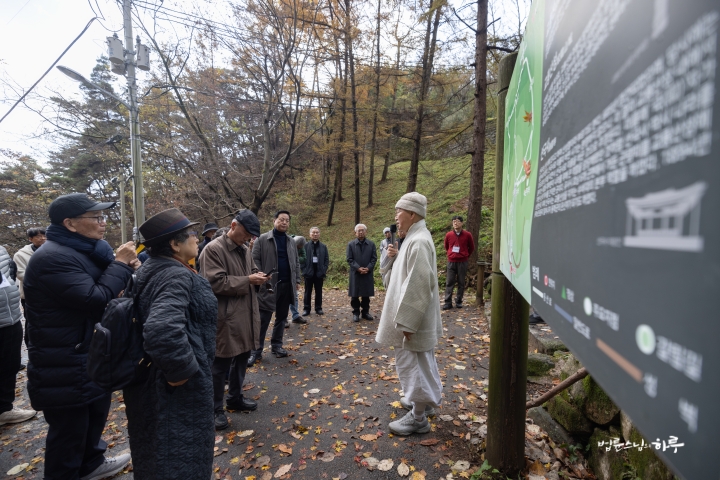
After about 10 minutes of uphill walking, we arrived at the entrance of Gyoryongsan Fortress. There was an information board in front of the winding stone staircase.
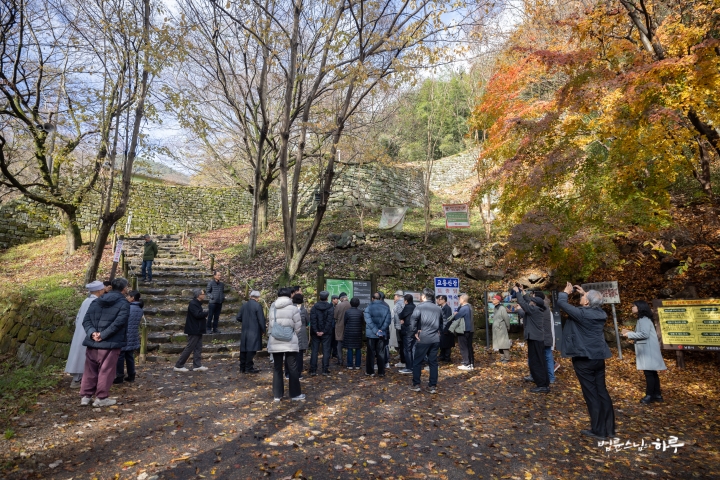
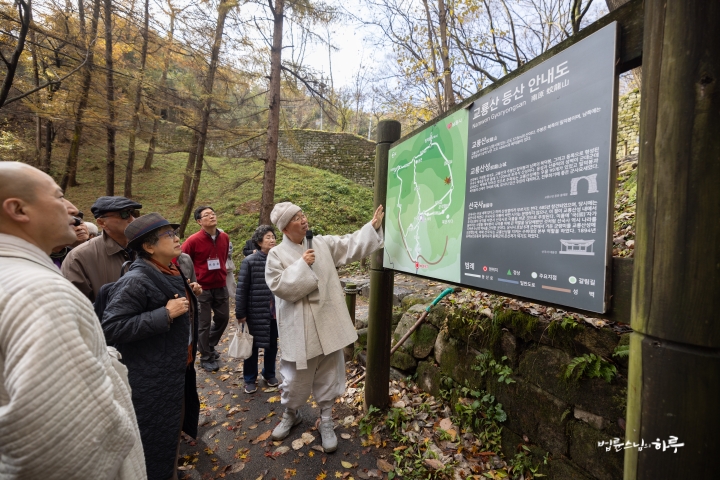
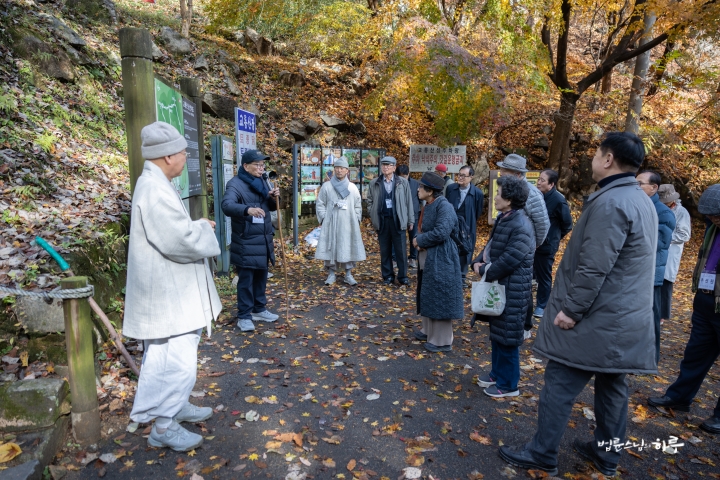
Sunim first pointed to the information board and explained about Eunjeokdang at Deokmilam in Gyoryongsan Fortress.
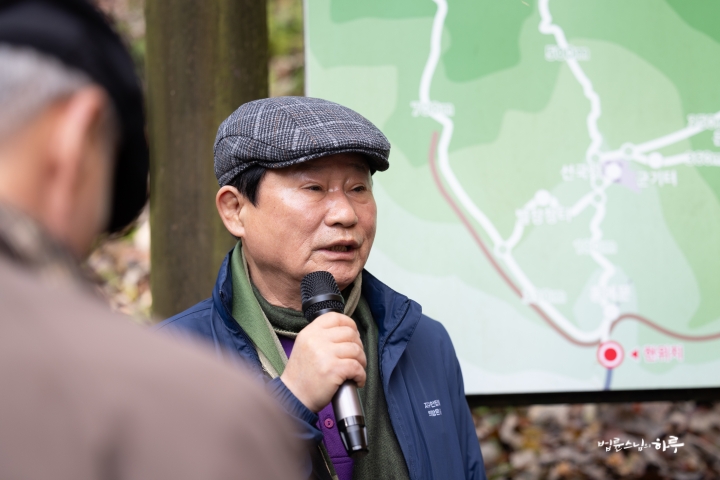
Next, the president of the Donghak Descendants Association, Ju Seon-won, gave a detailed explanation about the achievements of Choe Je-u Great master at this place.
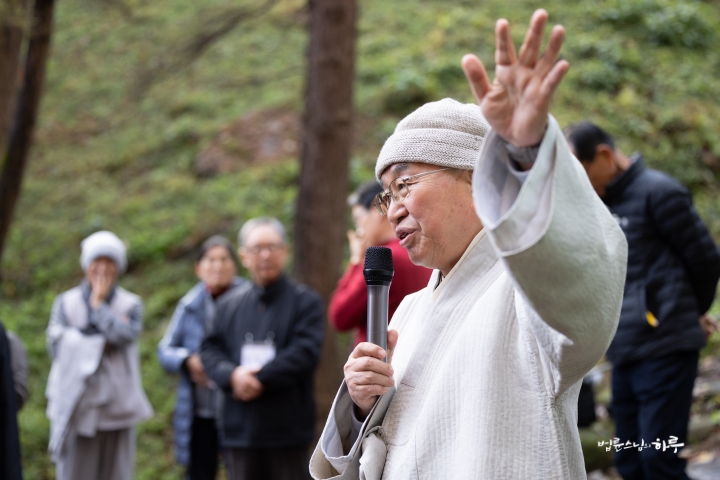
Then, Sunim explained the connection between Master Hyewol and Choe Je-u Great master, noting how this relationship developed into Master Yongseong and Son Byeong-hui leading the March 1st Independence Movement, and how the support of Master Yongseong and wealthy landowners from Jeolla Province, who donated their entire fortunes, laid the foundation for the Provisional Government of the Republic of Korea in Shanghai.
The Reasons why the March 1st Independence Movement and the Establishment of the Provisional Government in Shanghai Were Possible
Later, Hyewol Sunim was only allowed to travel between his temple and Silsangsa, the main temple in Namwon. On the way to Silsangsa, there was a place called Unbong, where he naturally began to visit a wealthy household. The household had one son named Im Dong-su, who was about the same age as Yongseong Sunim. Having known each other since childhood, Im Dong-su later provided all the funds for Yongseong Sunim’s independence movement activities. It wasn’t just Im Dong-su’s family; his brother-in-law and other wealthy families in the area also provided funds for Yongseong Sunim’s independence movement. Although it hasn’t been officially revealed yet, it is said that most of the funds for the Provisional Government in Shanghai came from here and were prepared in advance. When the Eulsa Treaty was signed in 1905, Yongseong Sunim went to China in 1907 to prepare for the establishment of a government-in-exile, and the funds were already prepared in Shanghai. This is why they were able to establish the Provisional Government immediately after the March 1st Movement began, and it was possible due to the financial support of Yongseong Sunim and Im Dong-su. To this day, the source of the funds for the establishment of the Provisional Government in Shanghai has never been fully disclosed. The story of President Syngman Rhee raising funds in the United States came much later. It would have been impossible to raise funds from abroad immediately after the Provisional Government was established.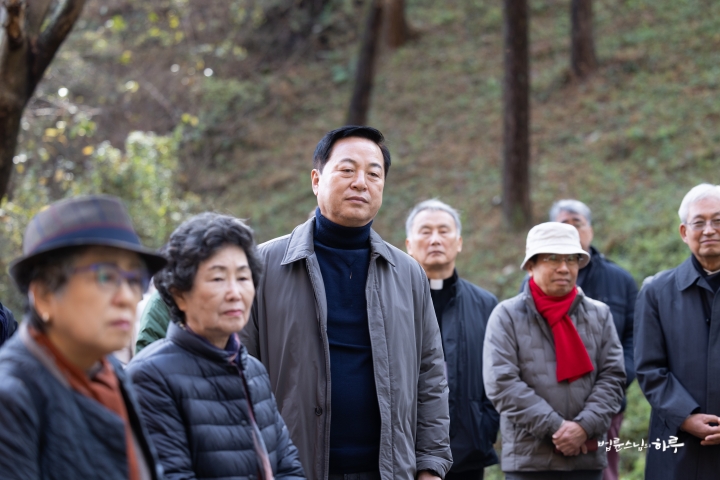
Next, Park Nam-soo, former Cheondogyo leader, shared a few words.
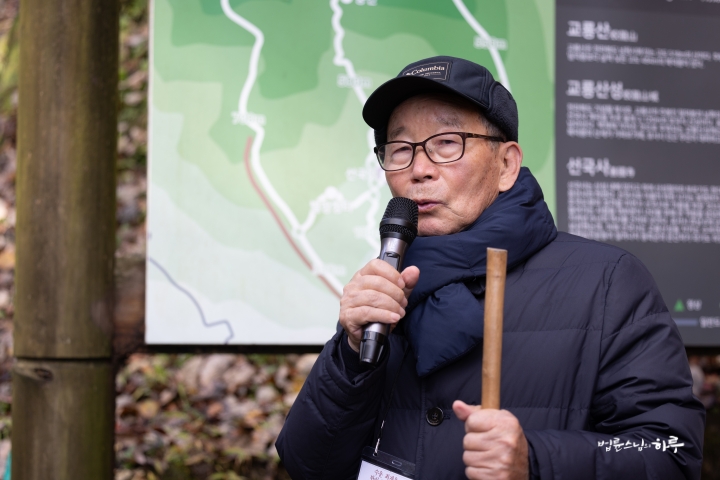
“There are some differences between Cheondogyo and Buddhism in the historical accounts related to this place. The person Cheondogyo calls Songwoldang is referred to as Hyewol Hwasang in Buddhism, and what we call Eunjeokam is called Deokmilam in Buddhism. How much persecution must the monk who sheltered a person fleeing with the crime of ‘left-wing rebellion’ have faced? It seems that Cheondogyo itself could not reveal the name Hyewol Hwasang and recorded it as Songwoldang to protect him. The name Songwoldang remains in Cheondogyo history. Just looking at this one incident, we can see how much the government suppressed Donghak at that time. It was an era of Confucian supremacy and Buddhist oppression, so Buddhism was also being suppressed. In fact, Choi Je-u Great master performed his prayer for enlightenment at Naewon Hermitage, which is under Tongdosa Temple. Without the help of Buddhism, I think it would have been difficult for Cheondogyo, the Great Way of the Infinite Era of the Later Heaven, to be born.
Many people say that Donghak was created by combining Confucianism, Buddhism, Taoism, and Christianity, but that’s not true at all. That’s a very insulting statement about Donghak. How could one create a new religion by taking good points from other religions? That doesn’t qualify as a religion. There is Confucian ethics and Buddhist enlightenment, but we can’t claim them as our own. Cheondogyo has the idea of the Early Heaven Opening and the Later Heaven Opening. If we call the opening of the sky and the creation of the earth the Early Heaven Opening world, the Later Heaven Opening means the beginning of the era of Sicheonju (serving the Lord of Heaven) where humans become the center.”
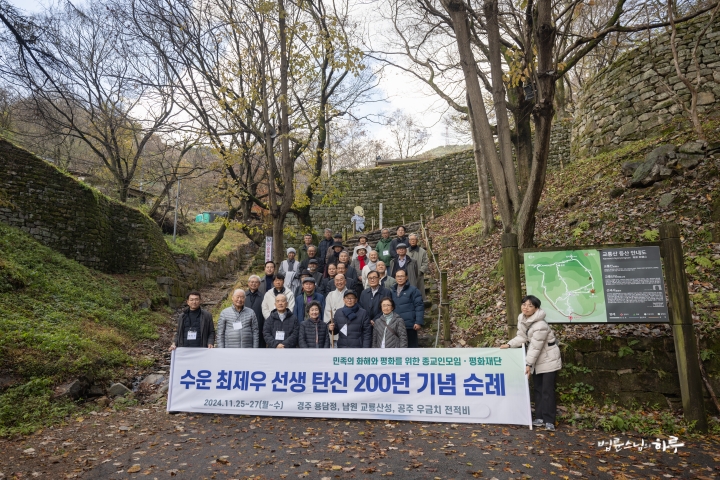
After listening to the explanation, we could feel that Gyoryongsan Fortress is not only Cheondogyo’s second sacred place but also a sacred place for our nation. We decided to discuss the specific contents of Donggyeong Daejeon and Yongdam Yusa, which Choi Je-u Great master wrote here, in the afternoon dialogue session, and we all took a commemorative photo together.
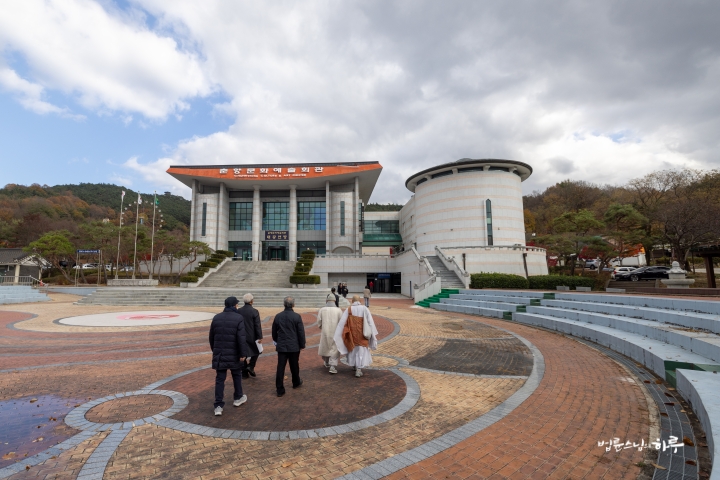
After coming down the mountain path again and having lunch, we headed to the small performance hall of the Chunhyang Culture and Arts Center in Namwon city to have a dialogue session.
Before starting the dialogue session, the religious group had tea and conversation with Park Hee-seung, the National Assembly member for Namwon City, and Choi Kyung-sik, the mayor of Namwon City.
Sunim urged the mayor of Namwon City to take great interest in the restoration of Deokmilam Eunjeokdang in Gyoryongsan Fortress.
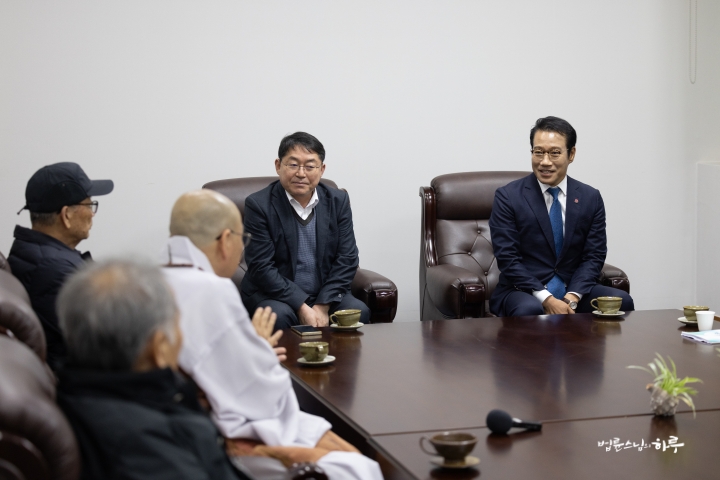
The mayor also agreed to take active interest and conduct research.
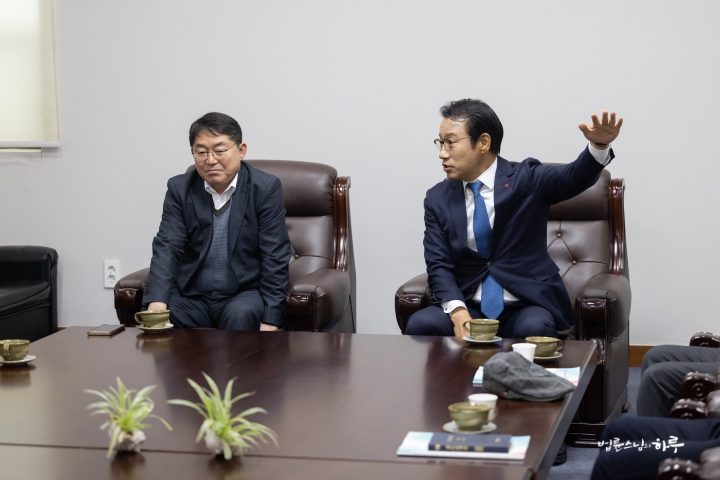
“Since the spirit of Namwon comes from Gyoryongsan Fortress, we will also take great interest and make efforts.”
After finishing the tea conversation, we all headed to the small performance hall for the dialogue session. Today’s dialogue topic is ‘Donghak Thought and Donghak Revolution’. This is because Choi Je-u Great master compiled Donghak thought at Deokmilam Eunjeokdang in Gyoryongsan Fortress, Namwon.
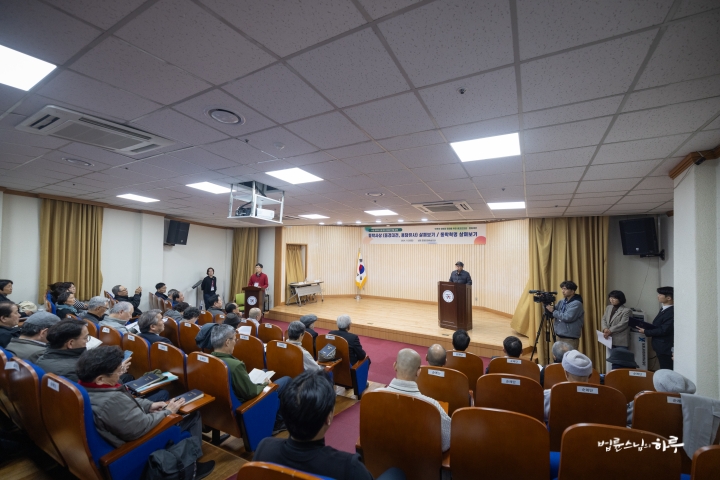
First, Park Hee-seung, the National Assembly member for Namwon City, gave a congratulatory speech.
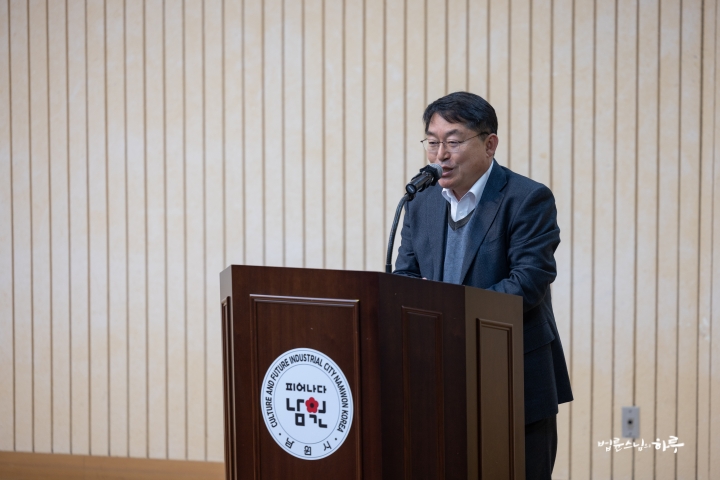
“I believe that Donghak thought, which took root ideologically through Donggyeong Daejeon by Choi Je-u Sunim, contains ideas that are the foundation and basis of democracy in our country. I think it’s a philosophy we should emulate in these turbulent times. I will also play a small role in making Deokmilam Eunjeokdang a sacred place and widely known to the public as an important asset that can be the basis of our spiritual ideology.”
Next, Mayor Choi Kyung-sik gave a congratulatory speech.
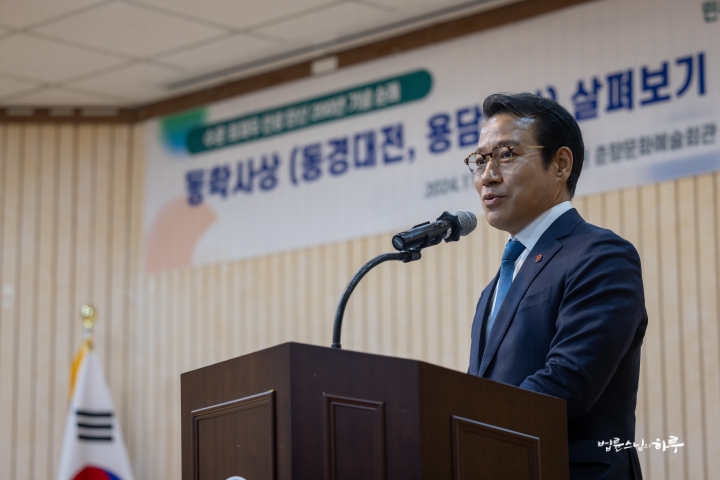
“Deokmilam Eunjeokdang, where Choi Je-u Great master first used the term Donghak, is a symbol of the Korean national spirit beyond its historical and religious significance. I believe that restoring this important history and passing it on to future generations is a role that administrative officials like myself should take on. In cooperation with religious organizations, citizens, and National Assembly member Park Hee-seung, I will strive to promote the restoration project as soon as possible.”
After the congratulatory speeches, we began the main dialogue session.
The first dialogue topic is ‘Examining Donghak Thought’. Professor Cho Sung-hwan from the Northeast Asia Humanities and Social Research Institute at Wonkwang University explained the core of Donghak thought based on Donggyeong Daejeon and Yongdam Yusa to serve as a primer for discussion. Professor Cho emphasized the meaning of Sicheonju, Bogukamin, and Gaebyeok thoughts in Donghak ideology and their influence on the Donghak Peasant Revolution and democracy.
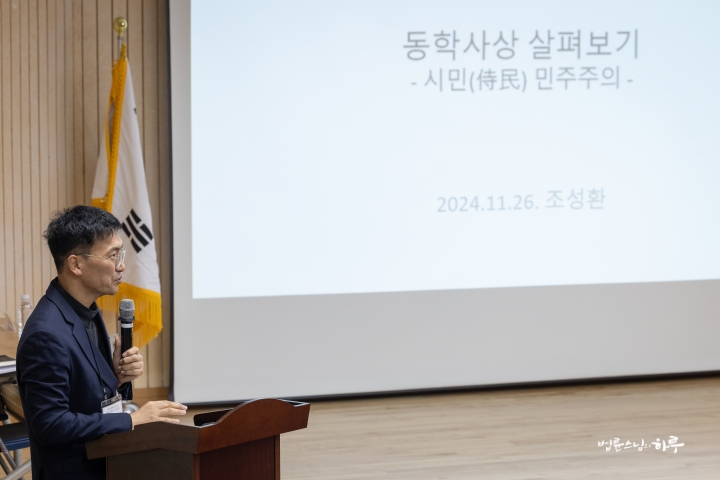
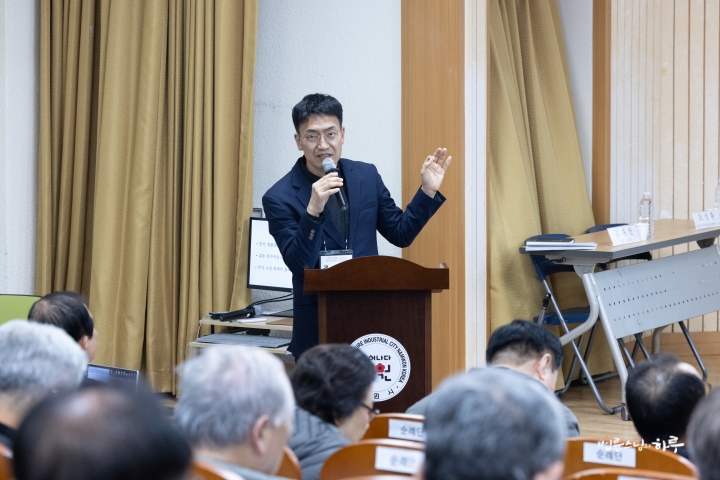
Treating Everyone as Heaven: The Spirit of Equality and Democracy in Donghak
“The concept of Sicheonju (serving the Lord of Heaven) comes from Donggyeong Daejeon. ‘There is a divine spirit in me. There is a divine spirit in my neighbor.’ This is the central content of Donghak thought. Through this concept, Choi Je-u saw that faith applies equally to everyone. The word ‘Bo’ in Bogukamin means to help. It means to help the country and make the people comfortable. This symbolizes democratic participation beyond simple protection. I think this contains the revolutionary spirit of Donghak where people directly participate in politics. Choi Je-u presented the philosophy of Sicheonju, which means to serve people like heaven. This was not simply a religious command, but the starting point of Gaebyeok thought to open a new social order. Even during the Donghak Peasant Revolution, General Jeon Bong-jun ordered, ‘If possible, do not harm the enemy.’ I see this as an ethical practice based on the human view of Sicheonju, not simply a revolution. Hanulnim is a being commonly distributed to all, providing a philosophical foundation that treats nobles and commoners, men and women without distinction. This shows the essence of democracy that is equally shared by all without distinction.”
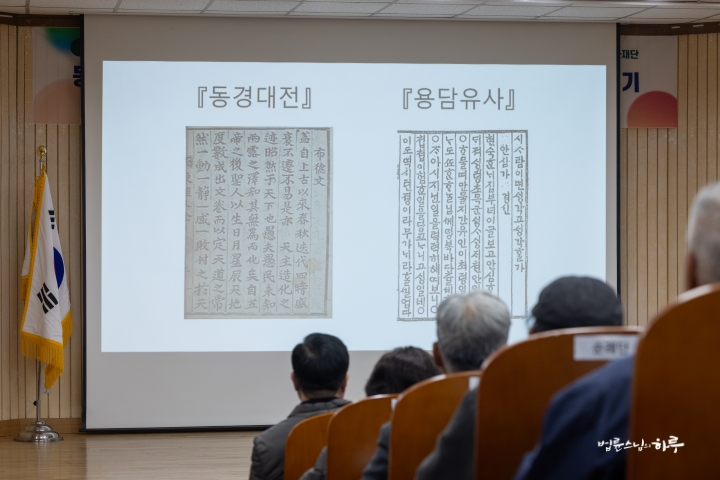
After a detailed explanation of Donghak thought, we had a free discussion time.
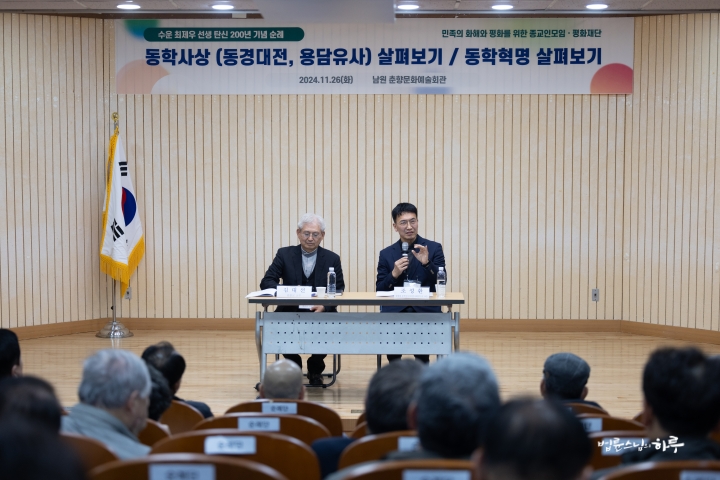
In this dialogue, there was a discussion about how people practicing Donghak apply the philosophy of ‘Sicheonju’ in their daily lives. There were also various questions and answers about how Donghak can contribute to modern issues such as gender equality, environmental problems, and social justice, and how Donghak, as an indigenous democratic thought in Korea, relates to modern democracy. Through this, the philosophical and practical significance of Donghak thought was deeply illuminated.
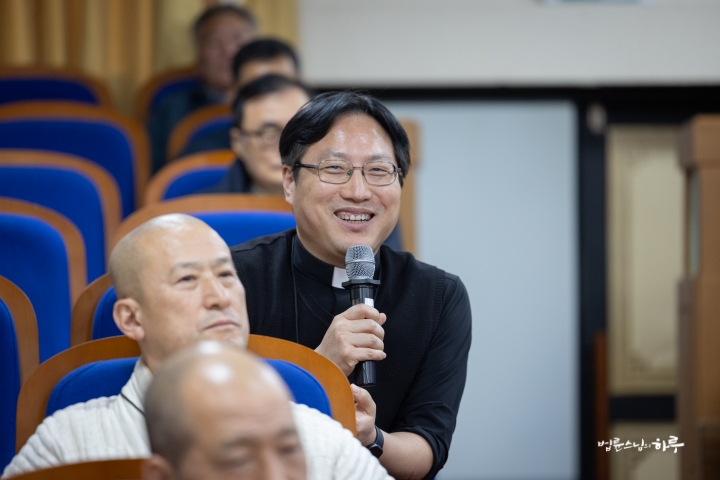
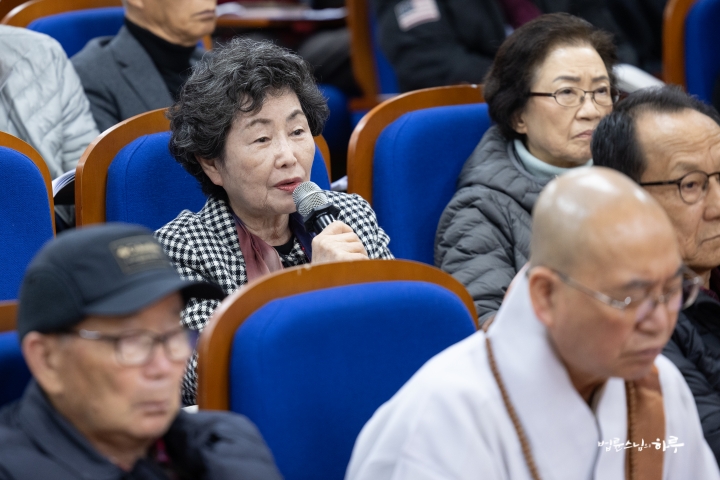
After a short break, we started the second dialogue session. Ven. Dobeop from Silsangsa Temple in Namwon and Pastor Jang Hyo-soo from Namwon First Church gave congratulatory speeches before continuing the dialogue.
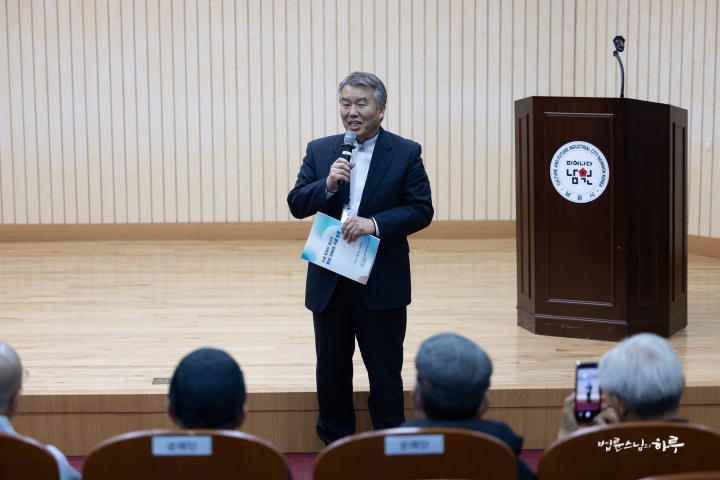
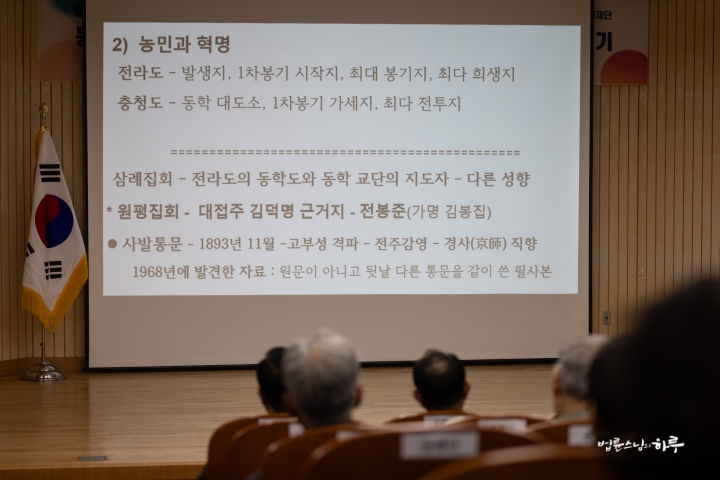
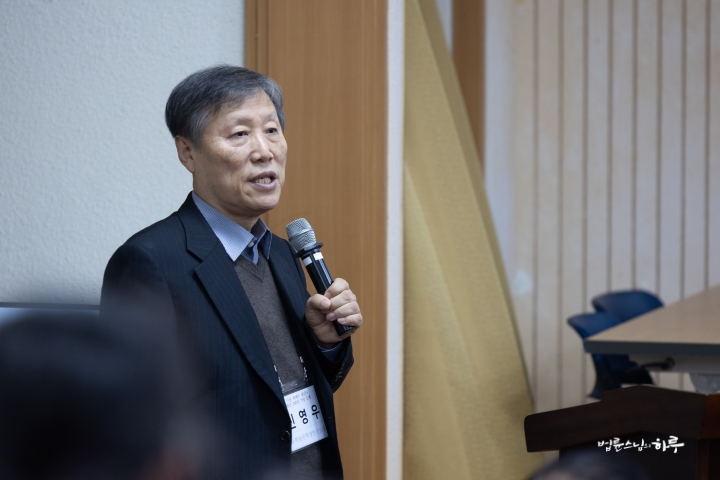
The topic of this dialogue is ‘Examining the Donghak Revolution’. Director Shin Young-woo of the Donghak Peasant Revolution Research Institute provided an explanation to serve as a primer for discussion. Director Shin explained in detail the spirit of equality held by the Donghak peasant army based on the ideological foundation of Donghak, the revolutionary goals of the Donghak peasant army, the historical significance of the Battle of Ugeumchi, and what the Donghak Peasant Revolution implies for us today.
The Dream of Equality and Revolution: Lessons from the Donghak Peasant Revolution
“The Donghak Peasant Revolution can only be properly evaluated if it includes all three elements: Donghak, peasants, and revolution. If any one of these is missing, its essence cannot be properly revealed. The ideology of Donghak is based on an egalitarian spirit that denies the class system and the spirit of Yumusangja (mutual aid) where people help each other. The cohesion within the group was strengthened as those who have (Yu) and those who don’t have (Mu) relied on each other (Sang), fundamentally changing their quality of life. This was the demand of the times, and Donghak gained much support through this. Therefore, the Donghak peasant army fought together, transcending differences in status and class. This was a revolutionary attempt to dream of a new equal society beyond the framework of society at that time. Donghak was not simply a domestic issue, but a civilian teaching responding to the invasion of Western powers and Japan after the Opium War. General Jeon Bong-jun and the Donghak peasant army had revolutionary goals to change the entire country, beyond simply a regional uprising. The Battle of Ugeumchi was not just a battle that took place in one region. We must not forget that today’s Republic of Korea exists because of countless sacrifices. We should use the Donghak Peasant Revolution as a historical lesson to look back on the problems facing our society today and suggest the direction that future Korean society should take.”
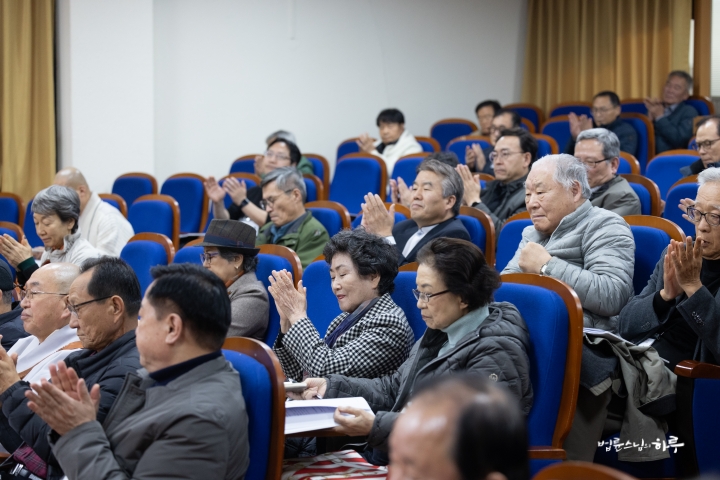
Following Director Shin’s presentation, we had a free discussion time. Despite tens of thousands of deaths in the Donghak Peasant Revolution, the scale of the damage is still being researched. Everyone expressed their regret and asked various questions.
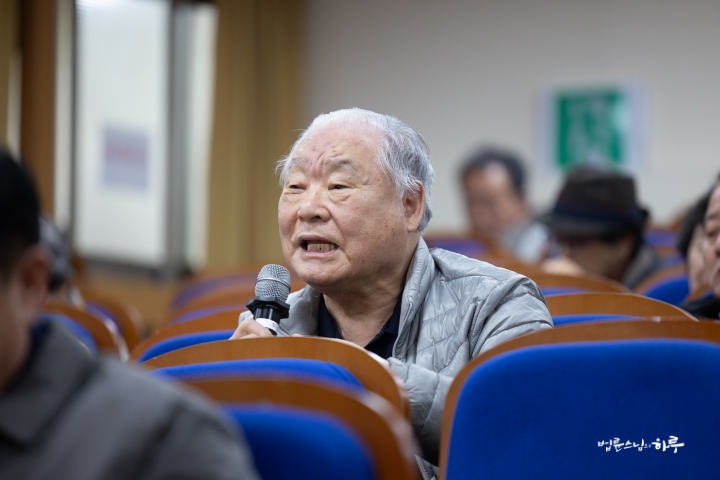
When the Donghak peasants dreamed of social transformation and took action, how were they able to maintain their distance from radical groups and maintain their purity?
How was the restoration of honor and compensation for the bereaved families of the Donghak Peasant Revolution carried out?
What were the strategic options for the Donghak peasant army to face both Japanese foreign forces and domestic feudal forces simultaneously?
Did the leaders of the Donghak Peasant Revolution intend to overthrow the monarchy and establish a democratic system after defeating the Japanese army, or did they seek other alternatives?
To what extent was Donghak thought shared among the majority of the Donghak peasant army, and did the Later Heaven Opening thought actually have an influence?
In what form can Donghak thought be revived in the present, and how can it respond to the current demands of the times?
Many questions were raised, and various discussions followed according to the questions.
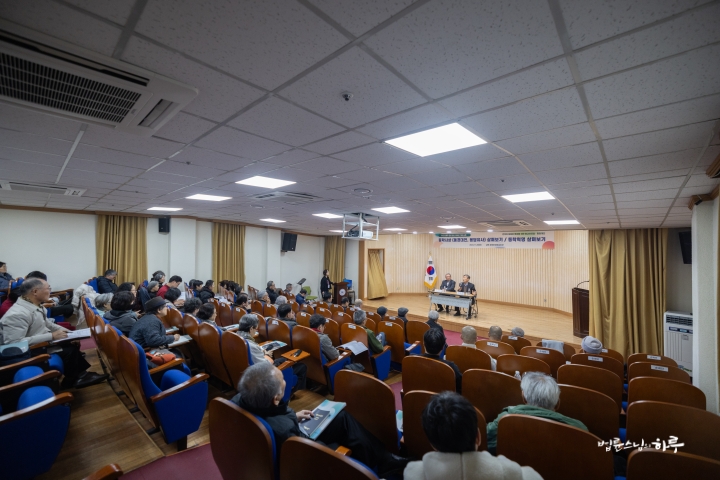
The dialog forum, which started at 2 PM, continued until 6 PM in the evening. As the discussion focused on ‘Donghak philosophy’ and the ‘Donghak Revolution,’ the content of the debate became very specific, and it gradually deepened as time went on. At the end of the four-hour discussion, Mr. Ko Kyung-bin, an advisory committee member of the Peace Foundation, provided concluding remarks.

“I thought, if it weren’t for this spirit of the Donghak Revolution, where people fought to the end without surrendering, prepared to die even though they knew they would likely lose the war, could we really say that we regained our national sovereignty when we were liberated in 1945? In this respect, I believe that all citizens of the Republic of Korea who are not familiar with Donghak or Cheondogyo owe a great debt to those who made today’s Republic of Korea possible.”
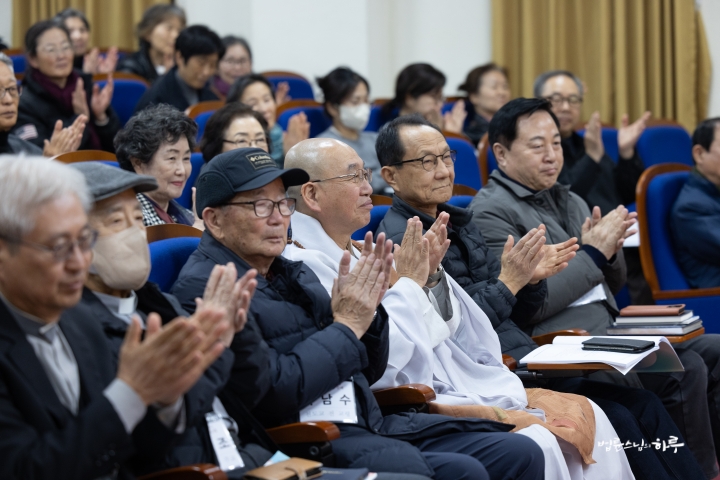
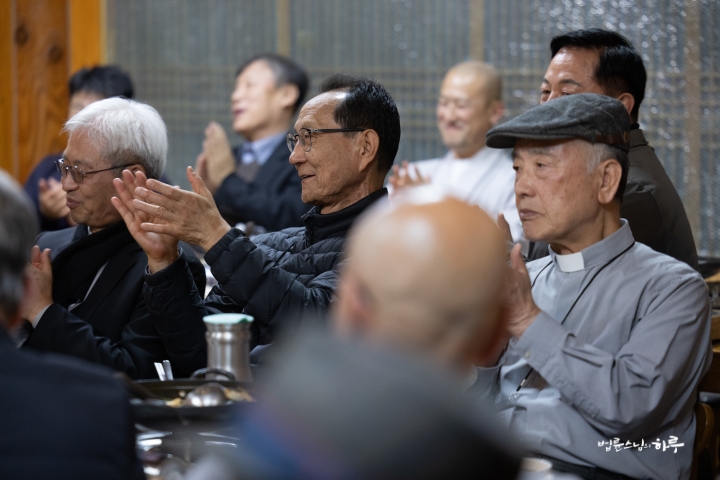
We concluded the dialogue session with a big round of applause.
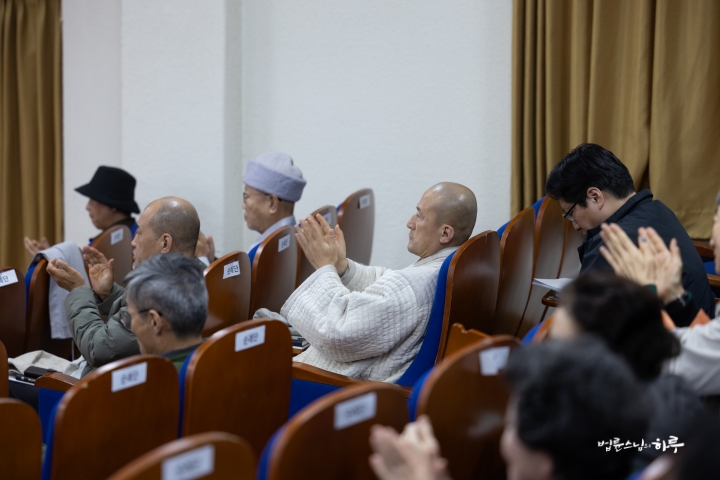
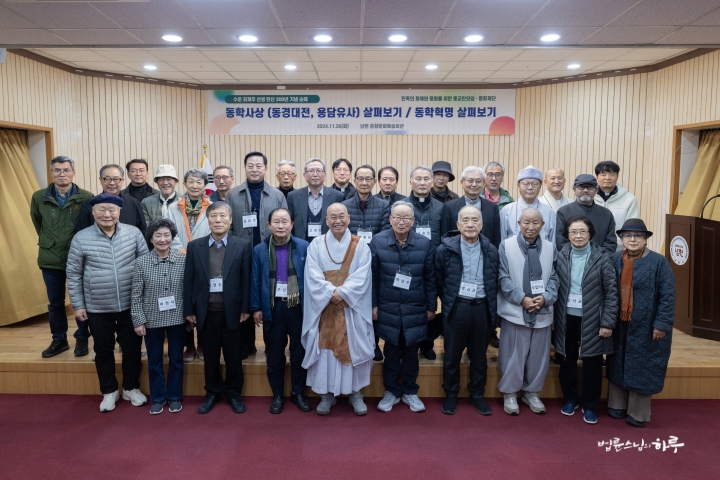
After taking a commemorative photo together, we headed to the restaurant for dinner.
During dinner, Sunim led a session where participants shared their thoughts and feelings about the pilgrimage over the past two days.
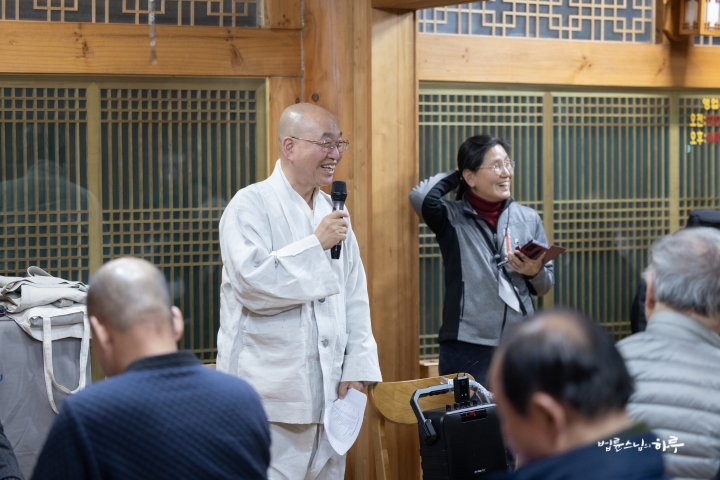
The pilgrimage included a diverse group of religious leaders from Cheondogyo, Anglican Church, Protestant Church, Won Buddhism, Catholic Church, and Buddhism, as well as various opinion leaders from Korean society such as civic activists, politicians, and journalists. Given the diversity of participants, the reflections shared were equally varied.
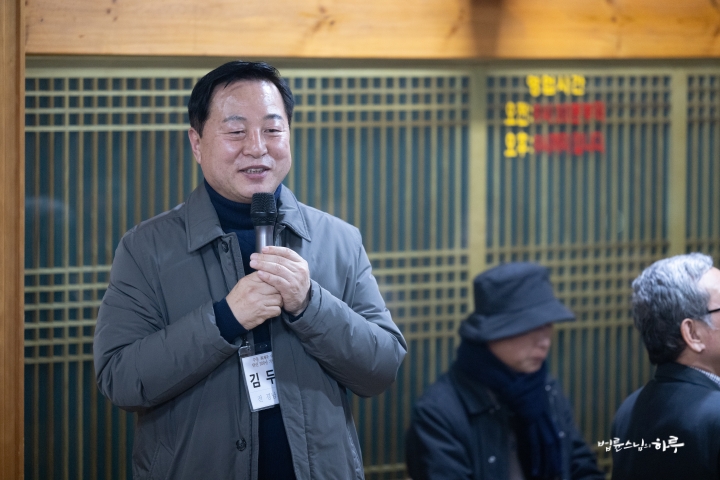
“The Donghak Peasant Revolution remains an unfinished task. As a politician, I’ve come to realize that we need to consider electoral system reform and a multi-party structure to create a social structure that allows for dialogue and compromise.”
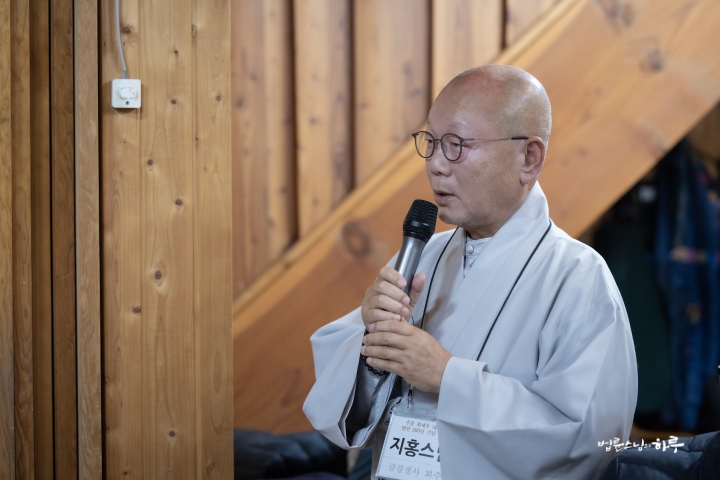
“I believe the spirit of Donghak is the cornerstone of democracy where the people are the masters. This pilgrimage has reinforced my conviction that changing our religious order’s election system to a direct vote is the first step towards democratization.”
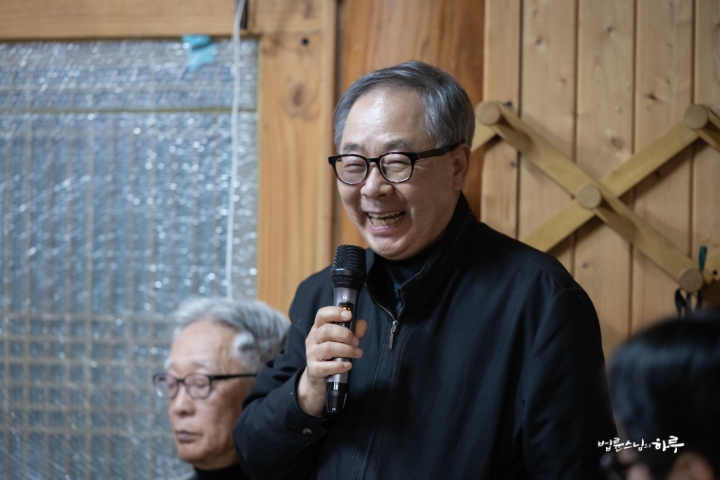
“Donghak is not simply a part of history but provides new teachings that can save us even in modern times. Particularly, Donghak’s philosophy of reverence for heaven, humans, and nature offers a direction to save the world in this era of climate crisis.”
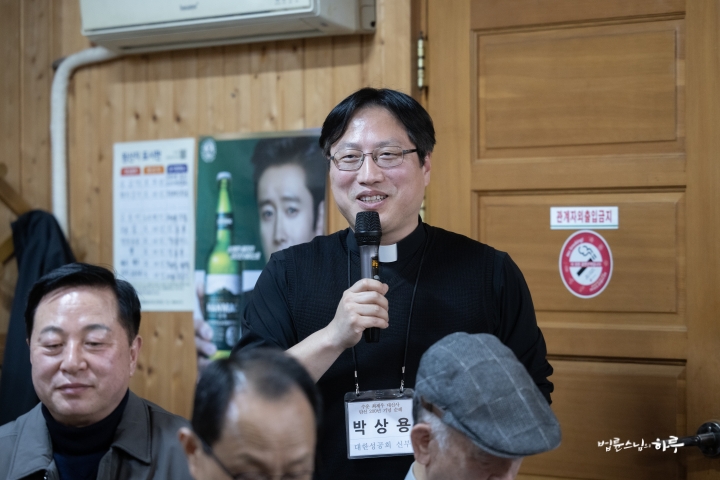
“During these three days of pilgrimage, I’ve deeply reflected on my identity as a Korean and the spirit of Donghak. I regret my ignorance about the indigenous democratic spirit in Korea and have resolved to study it more in the future.”
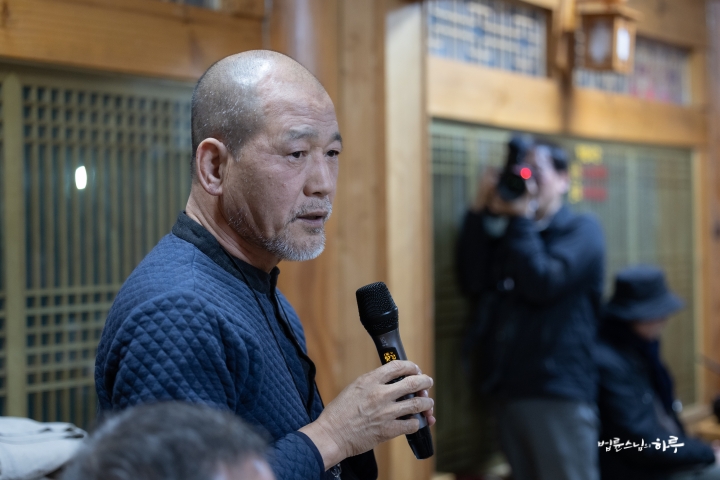
“This was an opportunity to comprehensively review the influence of the Donghak spirit on the Donghak Peasant Revolution, the March 1st Independence Movement, and the development of democracy.”
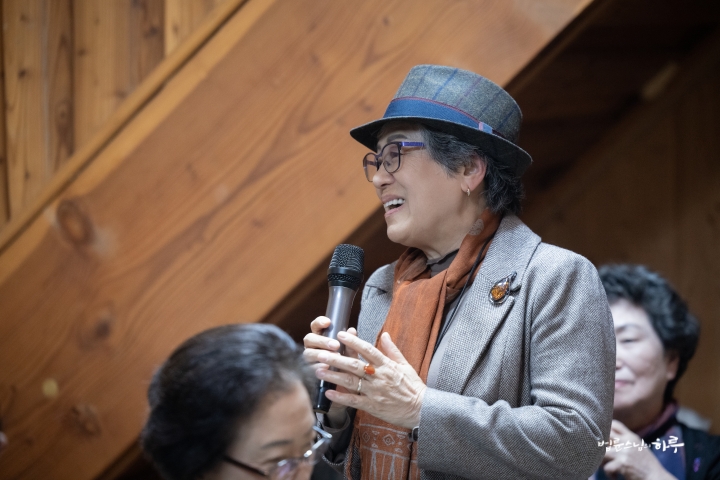
“This pilgrimage went beyond a simple historical exploration and made me deeply consider how Donghak philosophy can be applied to modern society.”
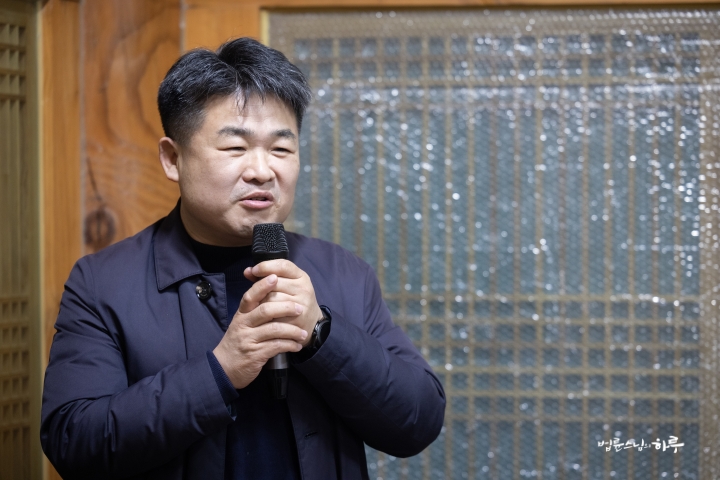
“Great Master Choe Je-u created a new Korean spirit that transcended Confucianism, Buddhism, and Christianity. I feel deeply moved realizing that this gathering, 200 years later, is actualizing the Donghak spirit of the Great Master.”
Former Cultural Heritage Administration Director Chung Jae-sook recited a poem instead of sharing her thoughts.
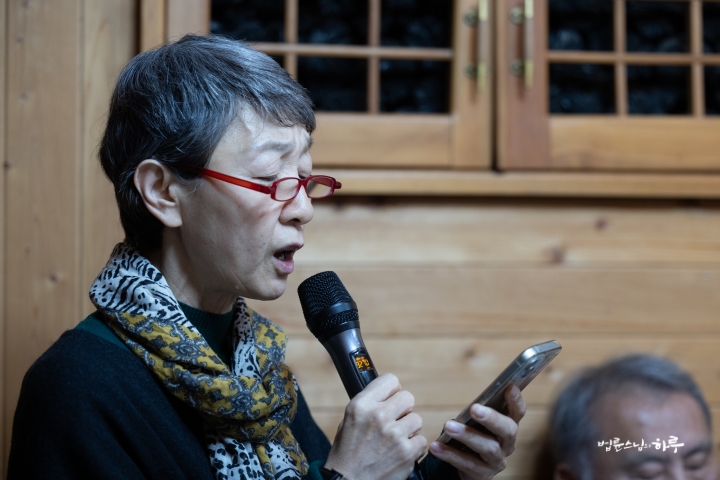
“When mung bean flowers bloom profusely, our Bongjun will return… (omitted)”
Moved by the poem recitation, Anglican Bishop Park Kyung-jo said it reminded him of a traditional folk song and sang a verse commemorating the Donghak Peasant Revolution.
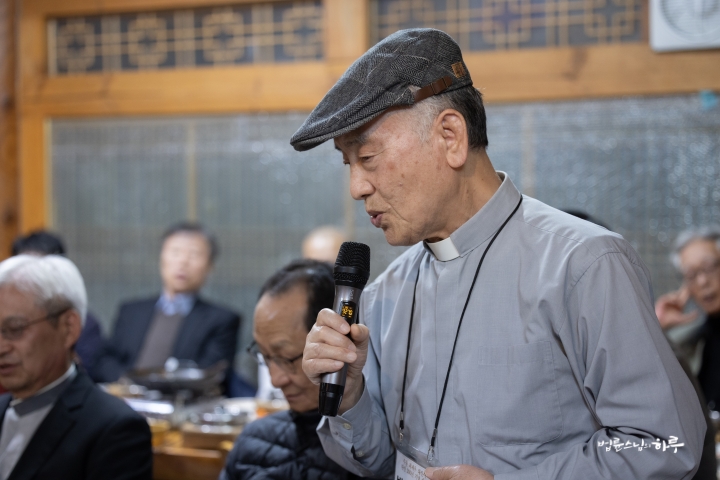
“Bird, bird, blue bird. Don’t sit in the mung bean field. ♬ When the mung bean flowers fall, the blue-robed general will leave in tears.”
This evoked the situation during the Donghak Peasant Revolution and General Jeon Bong-jun. The lyrics seemed to encapsulate both the pain and hope of the revolution through the imagery of mung bean flowers and the blue-robed general.
Finally, Sunim expressed gratitude to those who gave keynote presentations today.
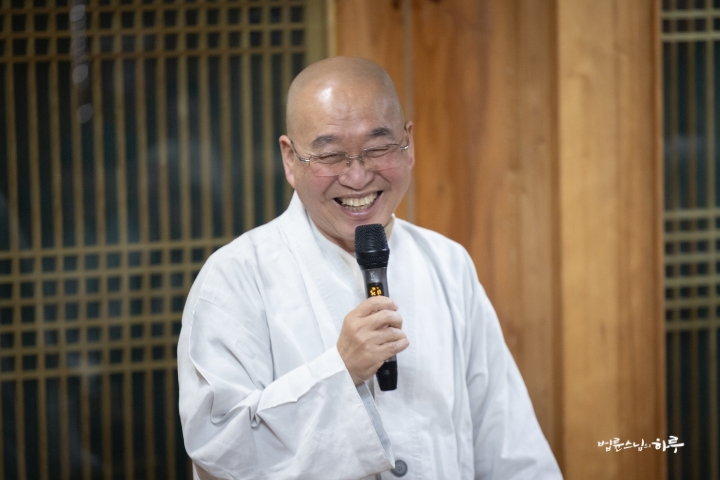
The sharing session concluded with applause.
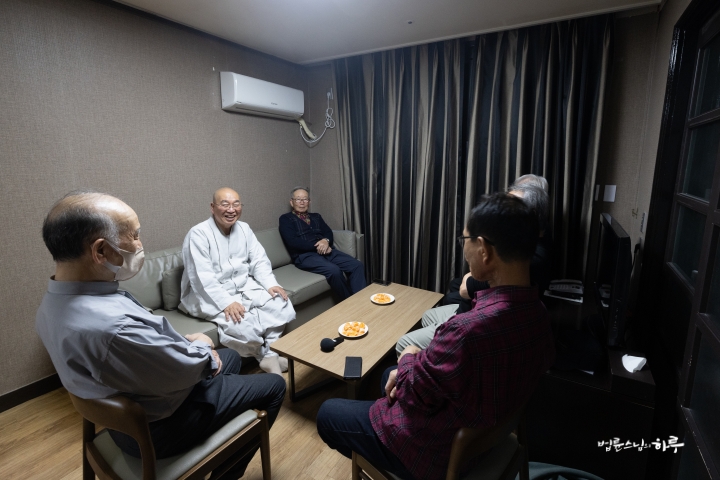
After everyone returned to their accommodations, Sunim held a brief evaluation meeting with the elders of the Religious People’s Association for Reconciliation and Peace of the Korean People, who organized this pilgrimage. They briefly discussed the strengths and areas for improvement, and agreed to prepare well for tomorrow’s dialogue forum at the Cheondogyo Central Temple in Seoul.
Sunim bid farewell to the religious leaders and departed for Seoul at 9 PM. The participants all retired to their rooms for the night.
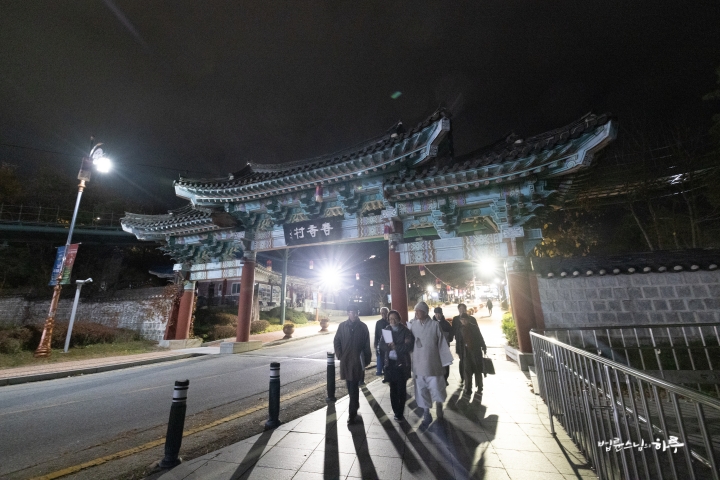
Tomorrow, after the live broadcast of the Weekly Dharma Assembly in the morning, the final dialogue forum will be held in the afternoon at the Cheondogyo Central Temple. The topic will be “The Influence of Great Master Choe Je-u and Donghak Philosophy on Modern Korean History.”