I’m a Student Who Retook the College Entrance Exam. How Can I Manage My Emotions If the Result Is Not Good?
Nov 24, 2024 - Third Day of Kimjang
Good morning. A new day has dawned at the Dubuk Retreat Center. Today marks the third day since we began the Kimjang collective work, and it’s the day we’ll be finishing up the kimchi-making process.
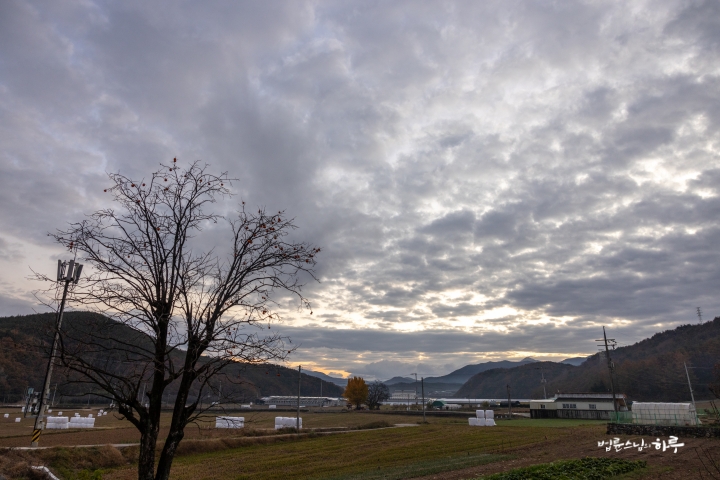
After completing the early morning practice and meditation, everyone gathered in the courtyard at 7 AM. The start time for the collective work was delayed by an hour compared to yesterday. First, we had breakfast to replenish our energy.
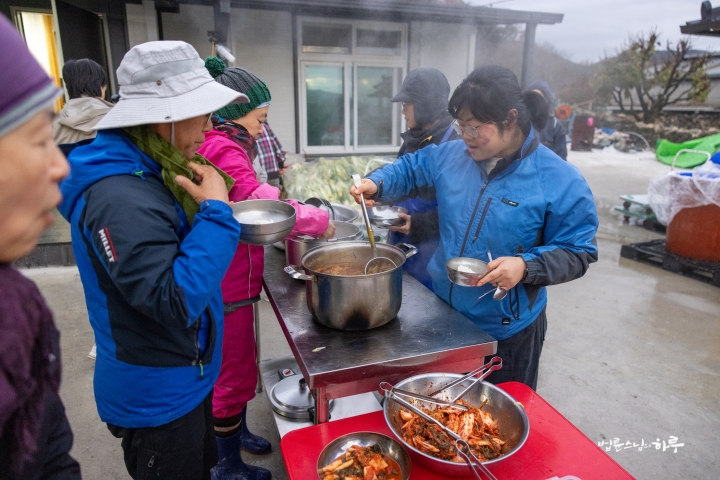
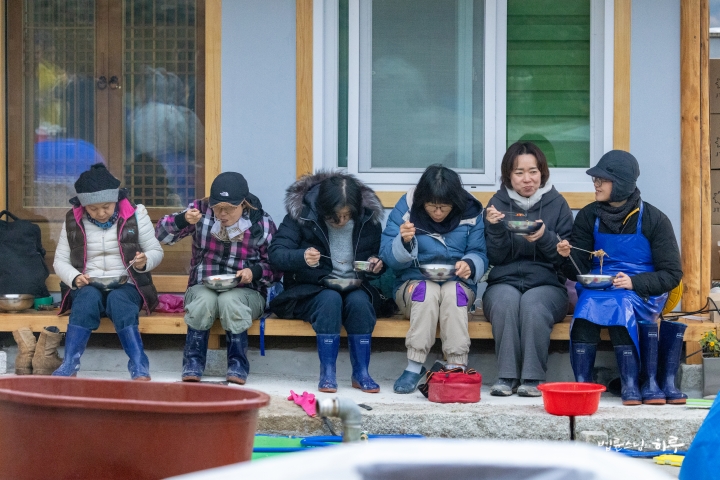
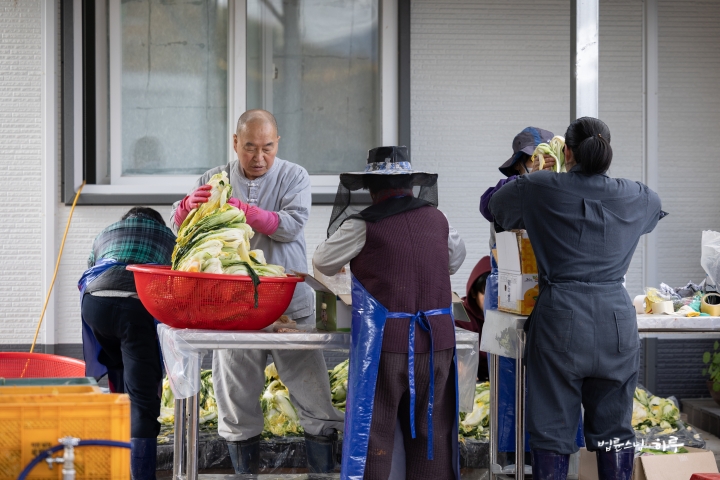
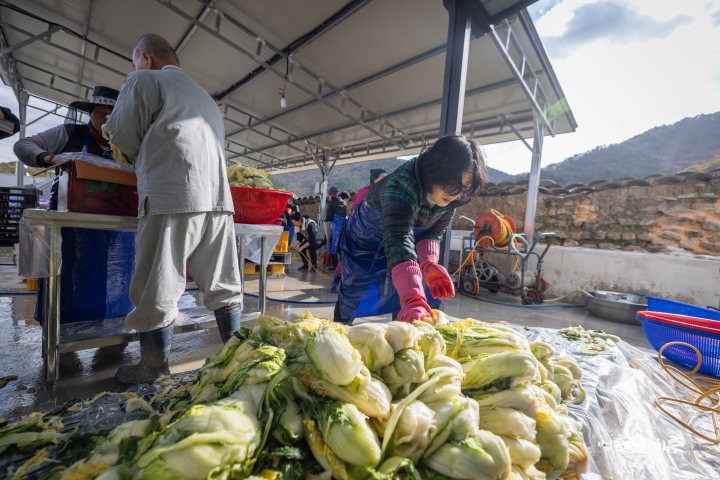
After finishing the meal, we immediately began the task of mixing the remaining cabbage with the kimchi seasoning.
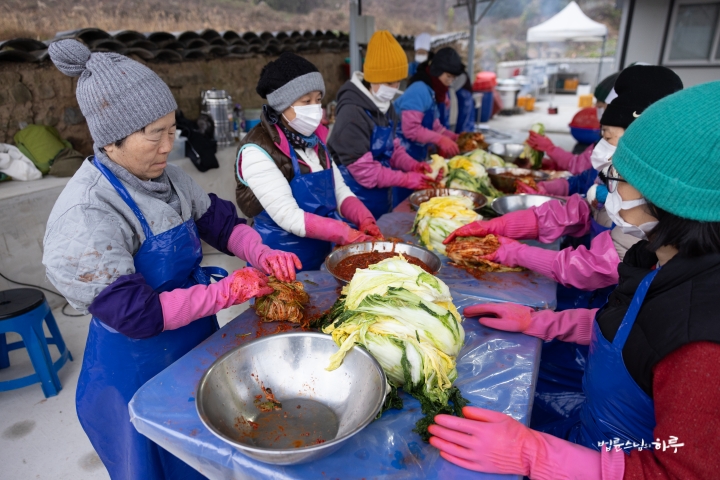

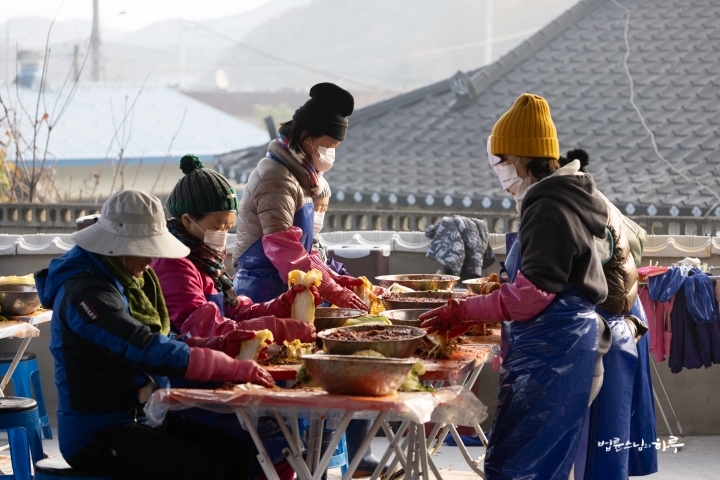
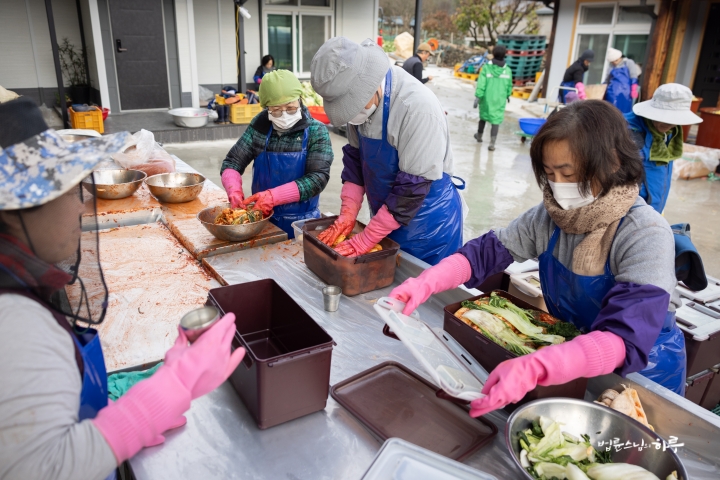
After standing all day yesterday making kimchi, people started complaining about aches in their backs, shoulders, and various other places. As the morning temperature dropped, hands and feet became numb with cold.
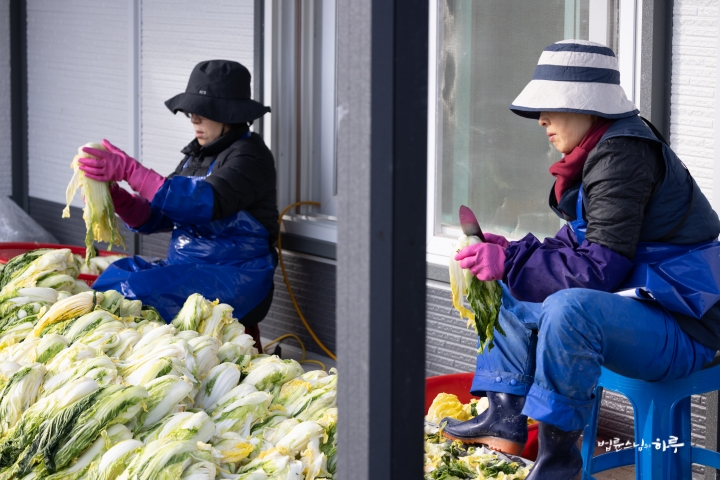
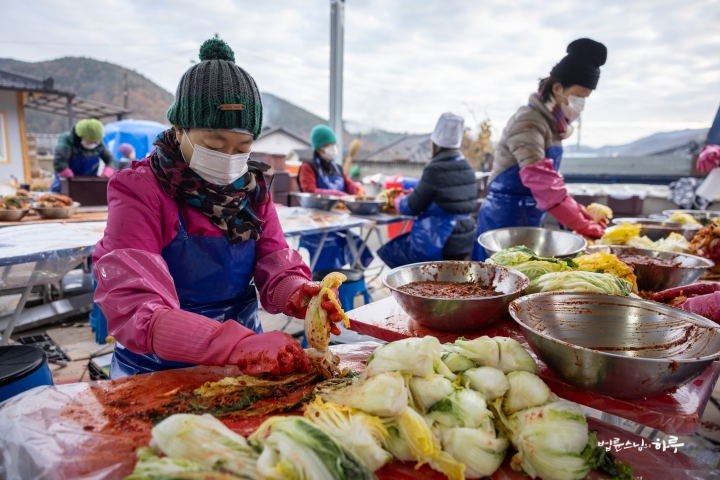
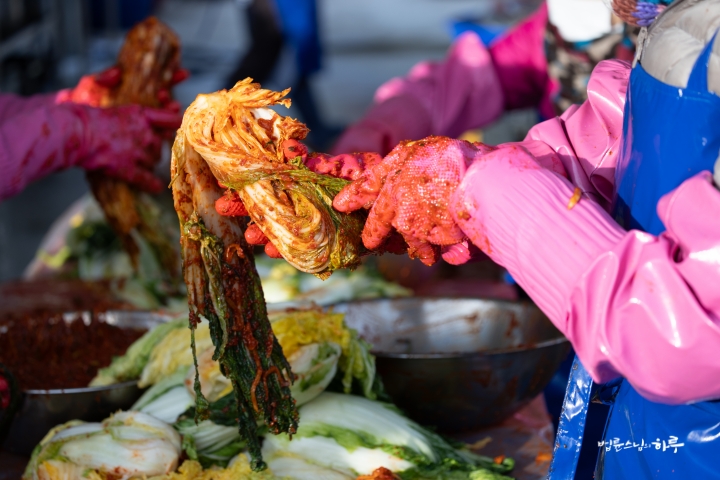
However, laughter never ceased in the kimchi factory. Looking at each other’s faces, we regained strength and continued making kimchi.
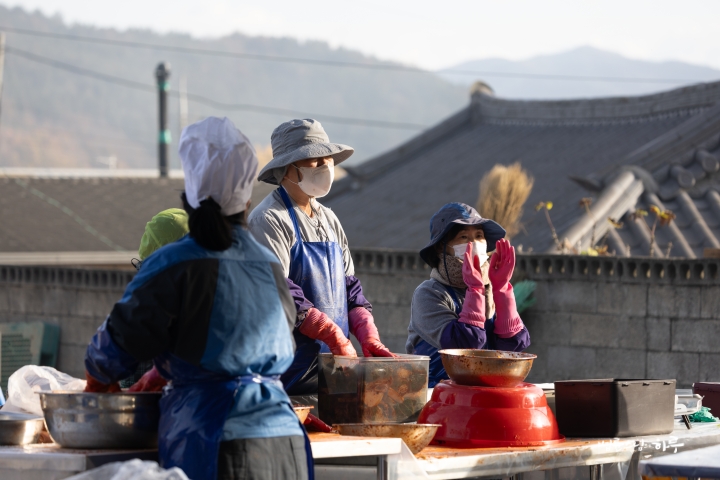
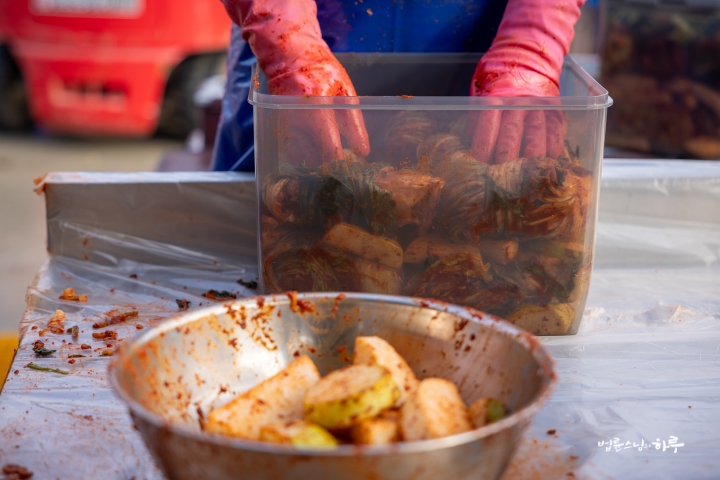
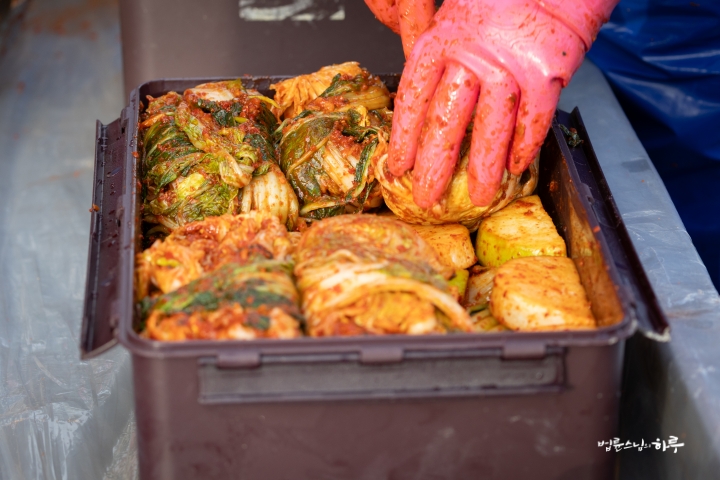
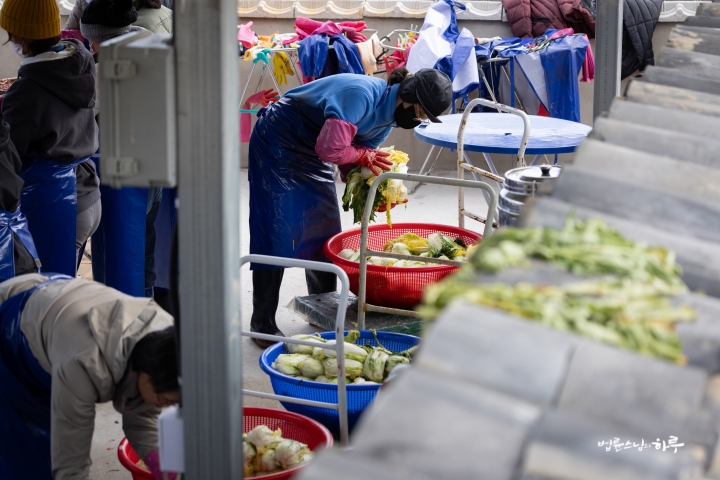
“Please bring the cabbage!”
“Here comes the cabbage!”
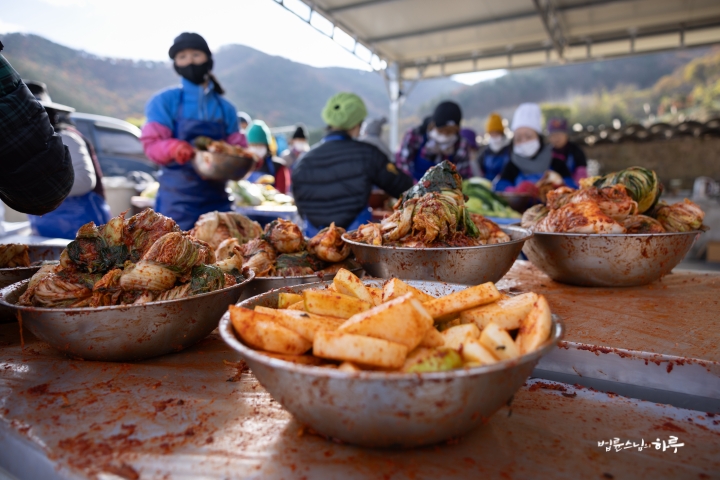
“Please bring the seasoning!”
“Here comes the seasoning!”

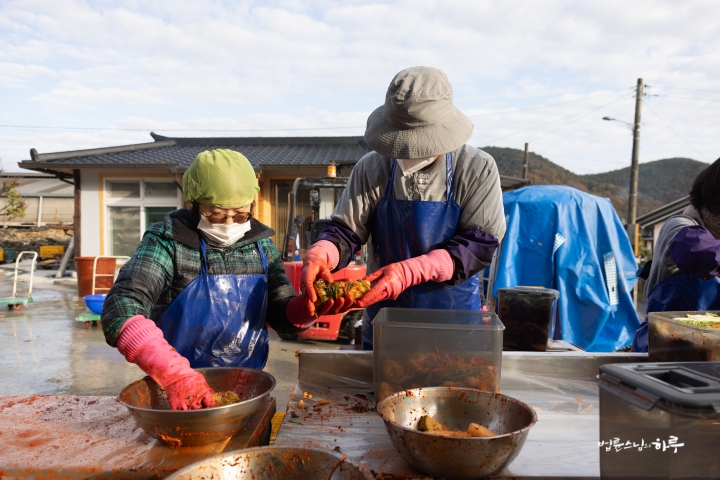
Finally, we could see the end in sight. There was only one basket of cabbage left.
“We’re done!”
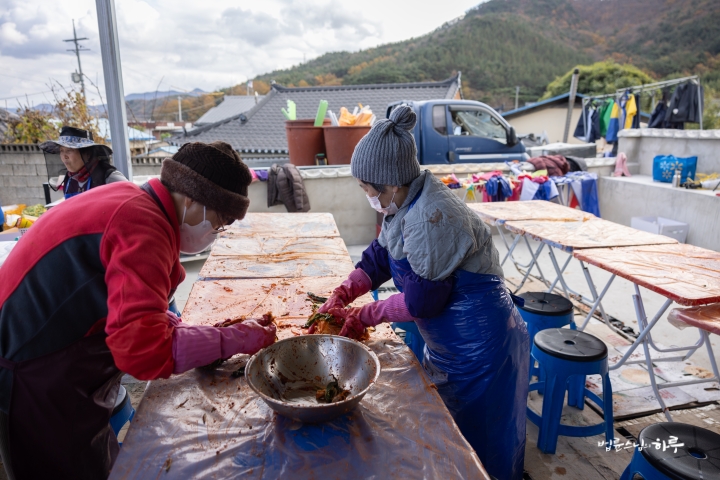
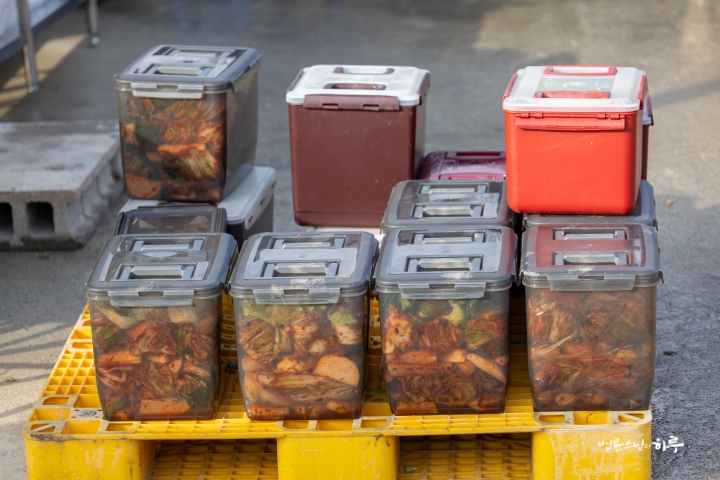
We used up all the kimchi seasoning, right down to the bottom of the container. Now only a small bowl’s worth remained.
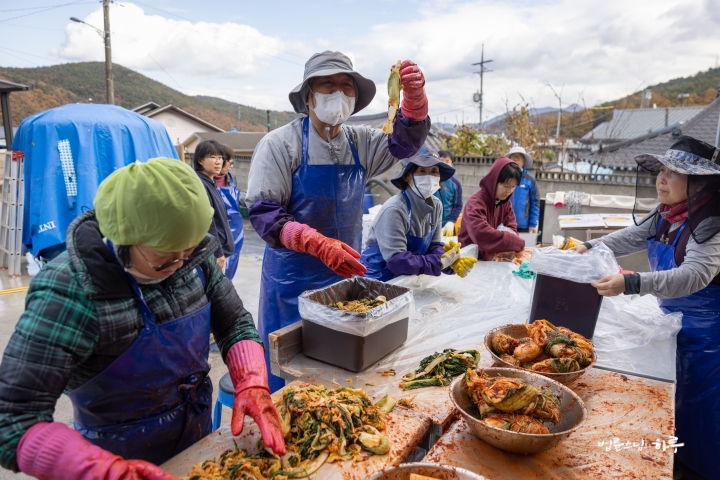
Sunim carefully scraped every bit of seasoning from the bowl, leaving nothing behind, and mixed it with the remaining cabbage leaves to package for eating.
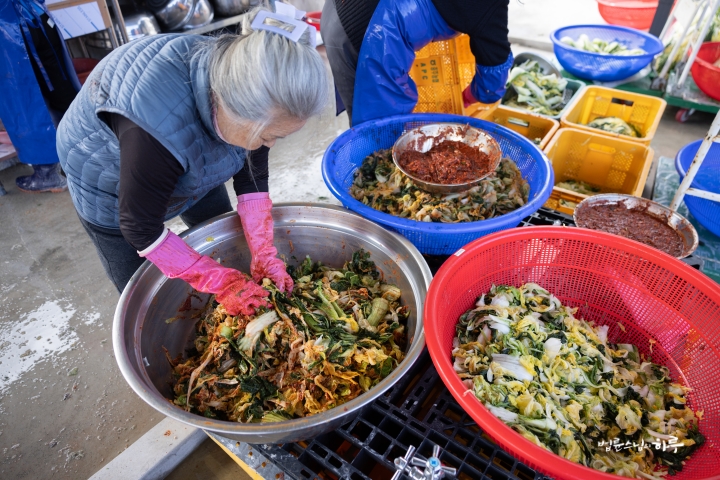
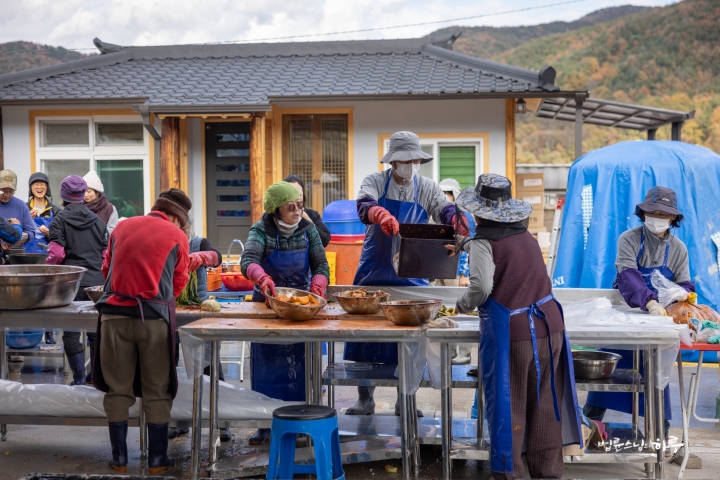
Finally, we finished making kimchi. A lot of cabbage that had been salted but not seasoned remained. We decided to package all the remaining salted cabbage and send it in boxes to be shared between the Seoul community and the Dubuk community.
After lunch, we began the cleanup process.
“I’ll pack the salted cabbage. Please take care of the cleanup.”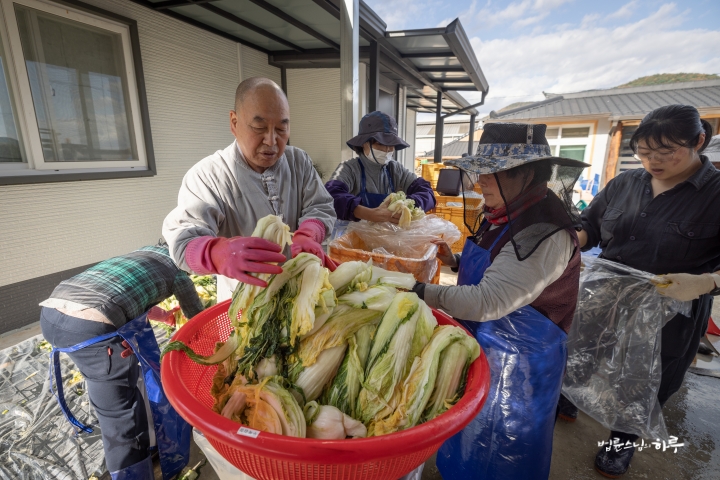
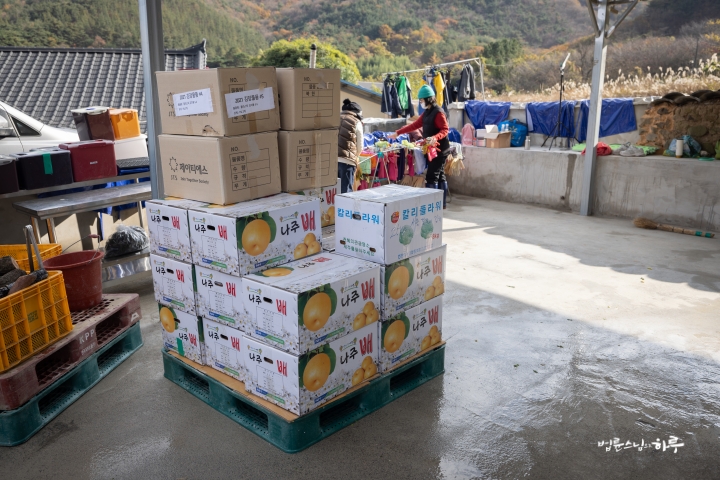
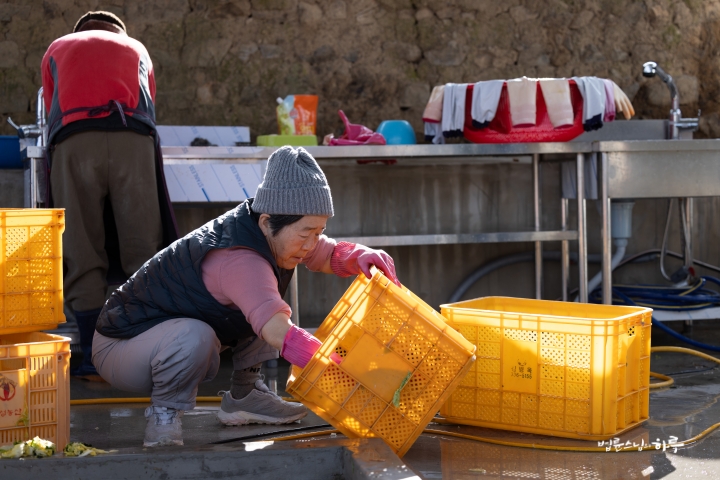
Sunim packed the salted cabbage, while the Haengjas divided roles for the cleanup. They thoroughly washed all the used shelves, cutting boards, knives, baskets, trays, bowls, and rubber containers with water. They also moved items from the storage back to their original places.
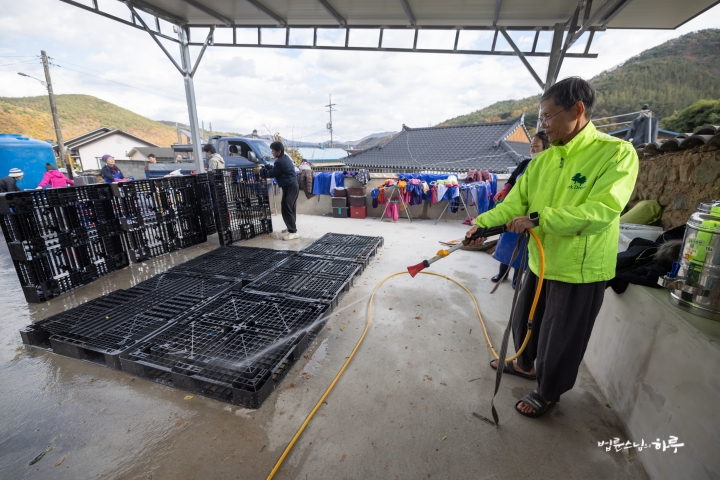
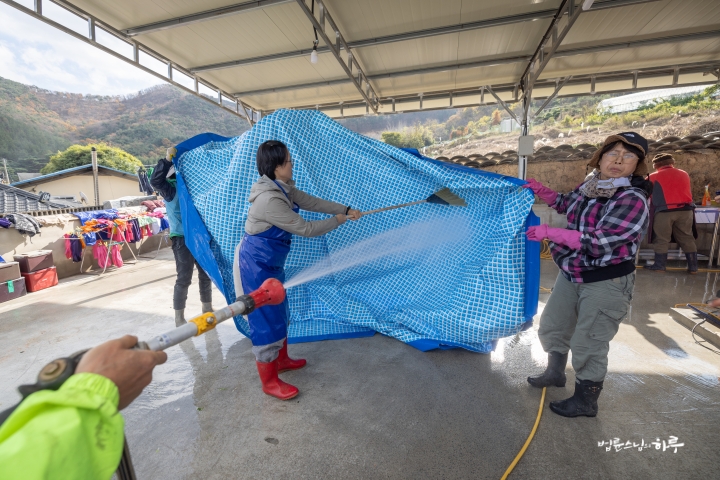
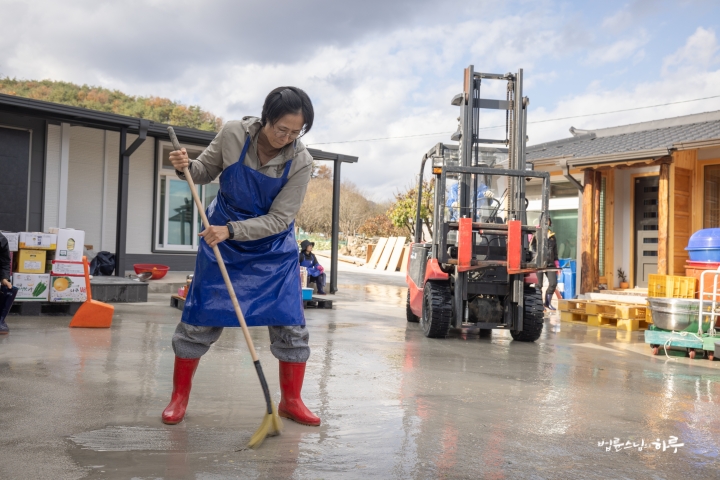
They dismantled the installed laundry racks and large tubes, and thoroughly swept the courtyard after sprinkling water. They also washed the rubber gloves, aprons, and boots stained with kimchi seasoning and hung them on the clothesline.
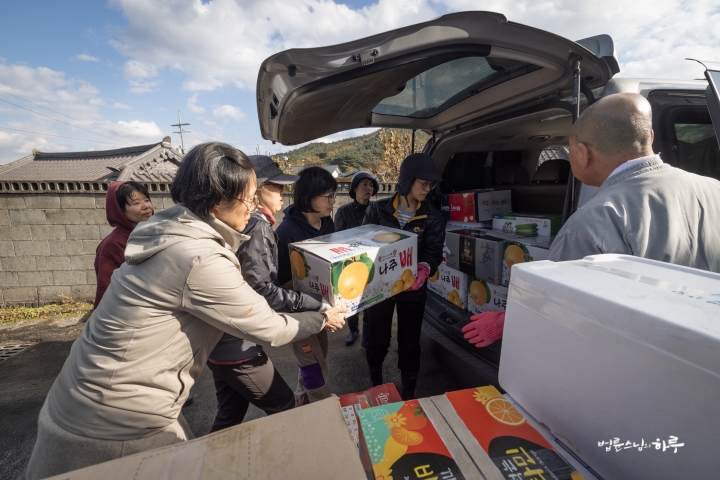
The kimchi for the Seoul community and Dubuk community to eat for a year was all packed in boxes. Some were moved to the low-temperature refrigerator, and some were loaded onto a van to be taken to Seoul.
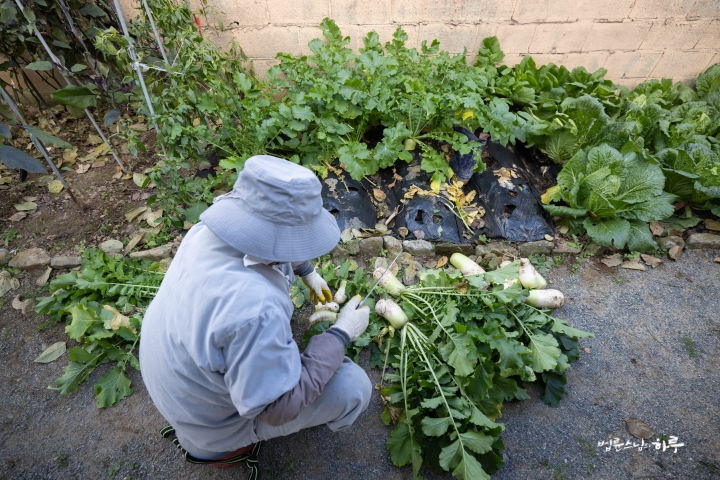
As the cleaning was wrapping up, Sunim went to the vegetable garden with a few Haengjas to pull up radishes.
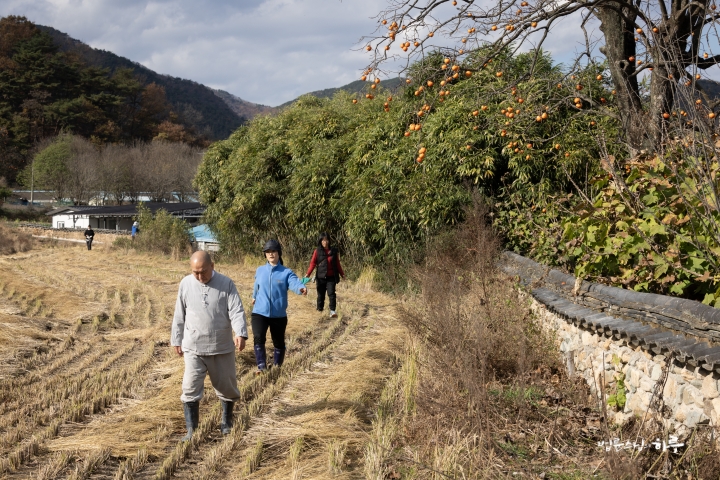
“They say the temperature will soon drop below freezing, so we need to pull up all the remaining radishes in the garden.”
With a hand pull, the radishes came out of the ground easily. Right there, they cut off the radish greens with a knife and gathered them separately.
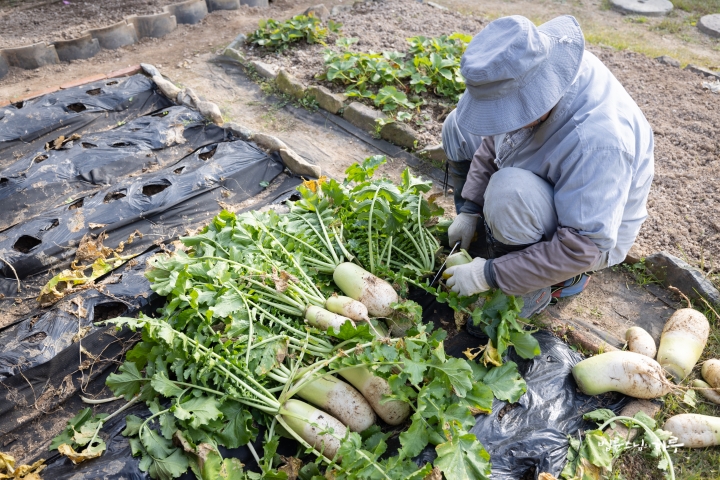
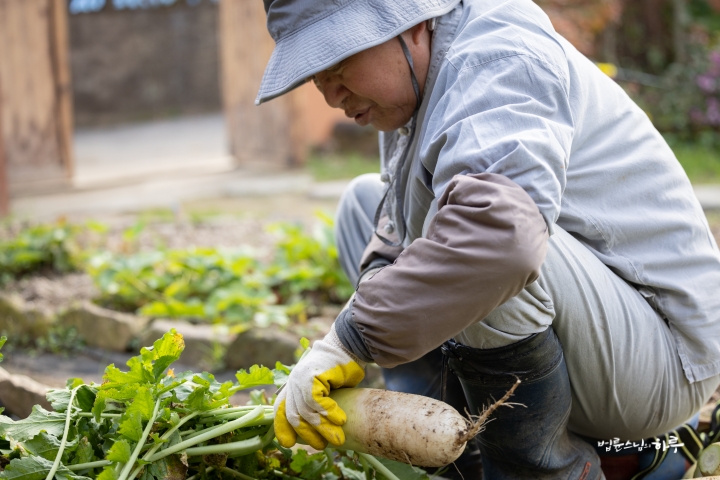
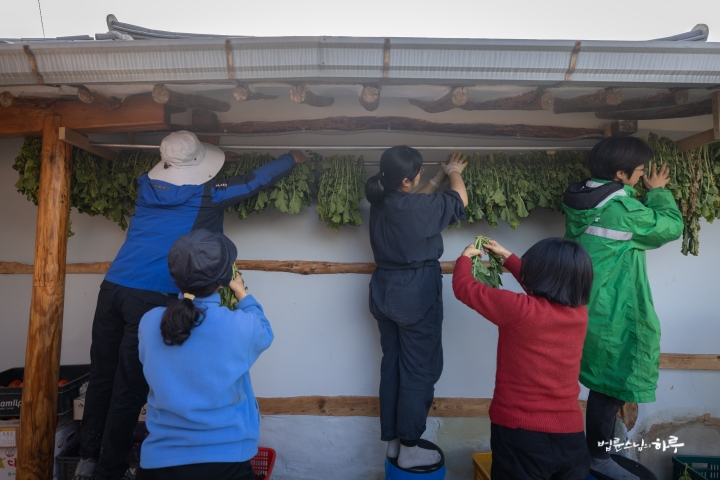
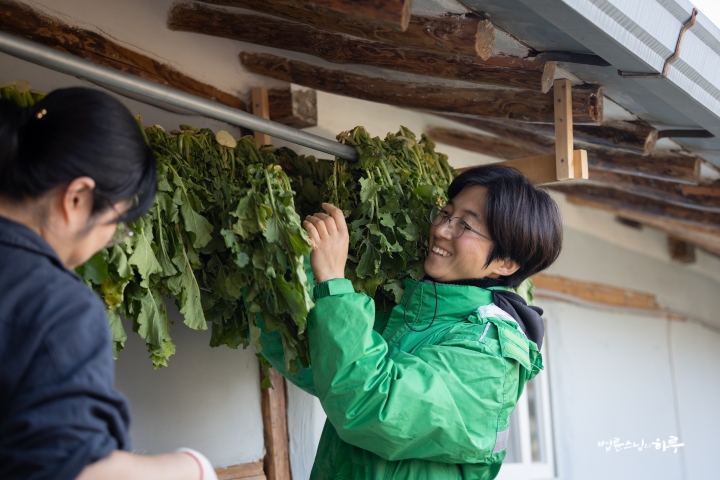
The cut radish greens were hung under the eaves where the wind could circulate well.
Over the past three days, everyone worked together to successfully complete 1,300 heads of kimchi. From 3 PM, we sat around in the courtyard to reflect on the process and share our thoughts. The kimchi-making was not just simple labor, but a time to confirm the power and harmony of the community. The time spent making kimchi with fellow practitioners remained as a warm memory.
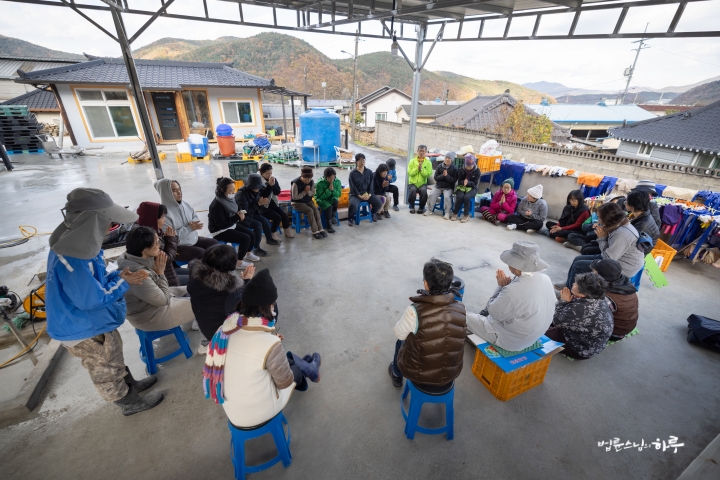
We took turns sharing our thoughts.
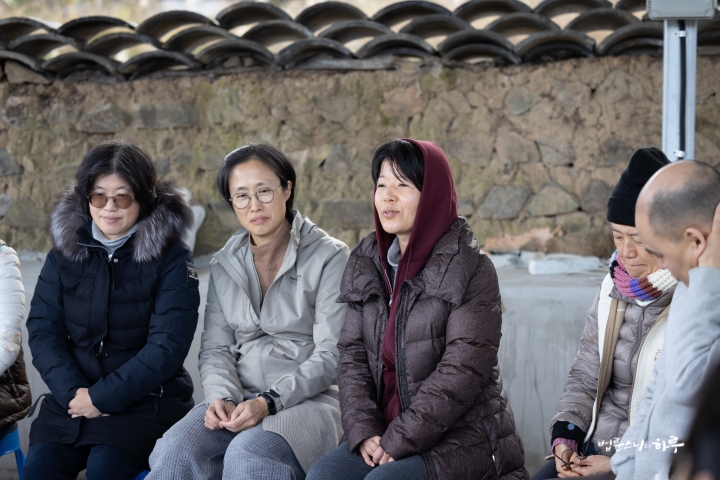
“It reminded me of making kimchi with my family when I was young. I’m grateful that I could feel that warm time again here with my fellow practitioners.”
“I realized that kimchi-making is not just about making kimchi, but about sharing the heart of the community. The time spent laughing and working together was a great happiness in itself.”
“My back ached and my hands were sore, but it was fun because we did it together. The warm weather made it even more enjoyable to work.”
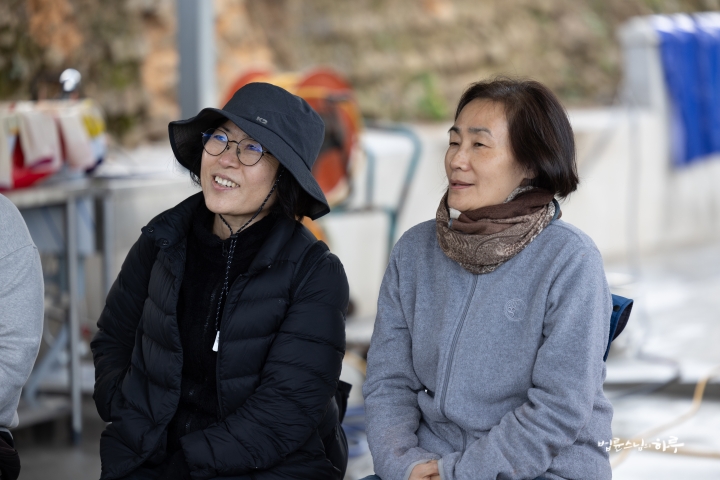
Some shared self-discoveries they made while working.
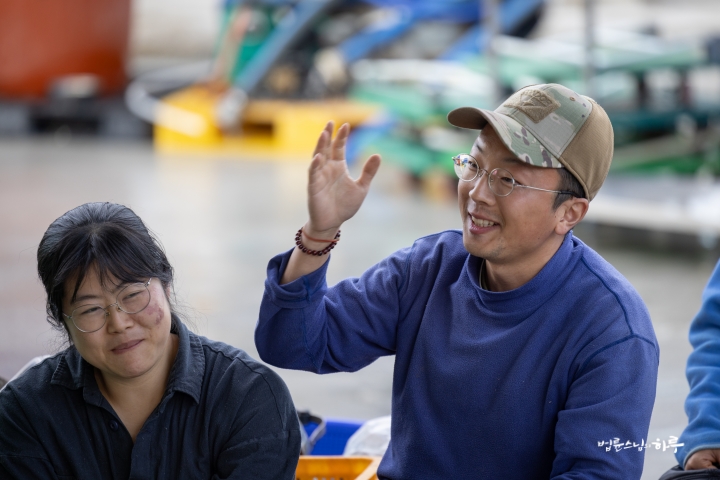
“I had no idea how much the cabbage should be salted or how much of the cabbage base should be cut off. I realized that I lack attention to detail when I work.”
“In areas where I’m good at, I tend to discriminate a lot and be stubborn, but since kimchi-making is an area I’m not familiar with, I was able to work without my usual stubbornness.”
“I had an aversion to getting kimchi seasoning on my clothes. I realized that my dislike was stronger than others’. But as I continued working, without being caught up in that dislike, my mind has now become lighter.”
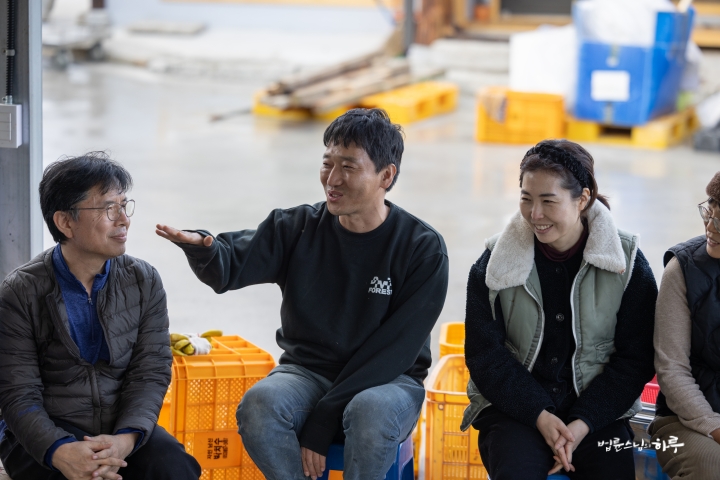
Although the location for this kimchi-making was suddenly changed from Dubuk Retreat Center to Goindol Dharma Hall, it could proceed smoothly thanks to the thorough preparation by the farming team Haengjas at Dubuk Retreat Center. Many expressed their gratitude for this.
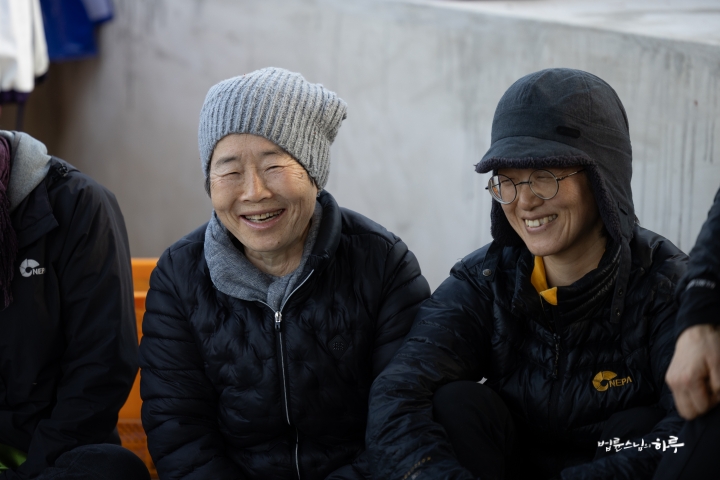
“I was burdened by the thought of having to work for three days, but once we started, everything went smoothly. Thanks to the Dubuk team’s excellent preparation, we were able to finish easily. My body is tired, but my mind is light.”
“This kimchi-making was possible thanks to the farming team. We were able to make kimchi because they grew excellent cabbage, overcoming soft rot and aphids. I’m grateful for the effort that went into everything from planting the cabbage to harvesting and kimchi-making.”
The Haengjas at Dubuk Retreat Center expressed their gratitude to the Lay Member Group volunteers who helped with the preparations.
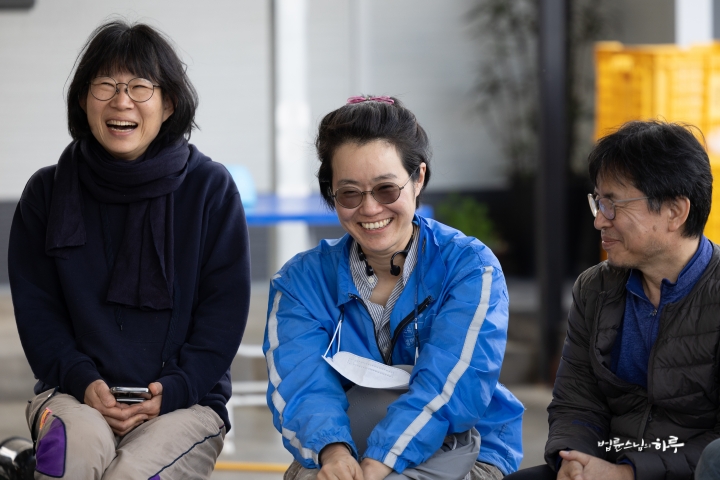
“Due to the change of location, we had to move almost everything except the roof and buildings. But thanks to the help of the Lay Member Group volunteers, we were able to prepare everything.”
This year’s kimchi-making introduced a new salting method where the cabbage was not flipped over midway. While some people liked not having to flip the cabbage, others said that the cabbage ended up being less salted, resulting in having to salt the cabbage multiple times. Also, the cabbage was only halved for salting. Some thought this was good because fewer leaves fell off when washing the salted cabbage, while others thought it resulted in the cabbage being less salted.
After hearing everyone’s thoughts, Sunim shared his reflections last.
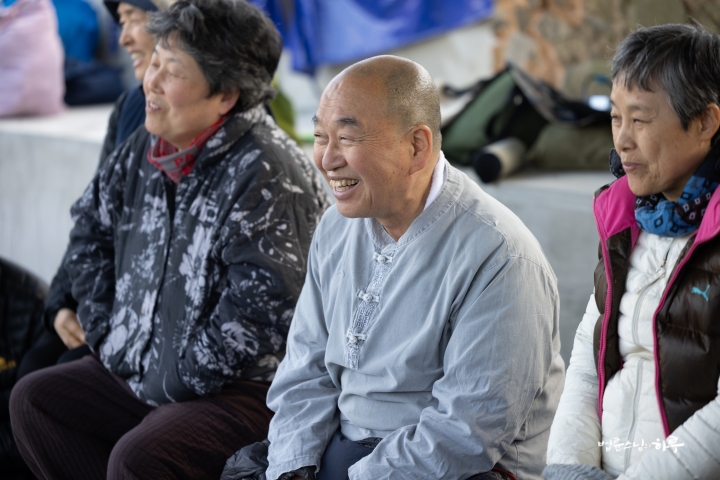
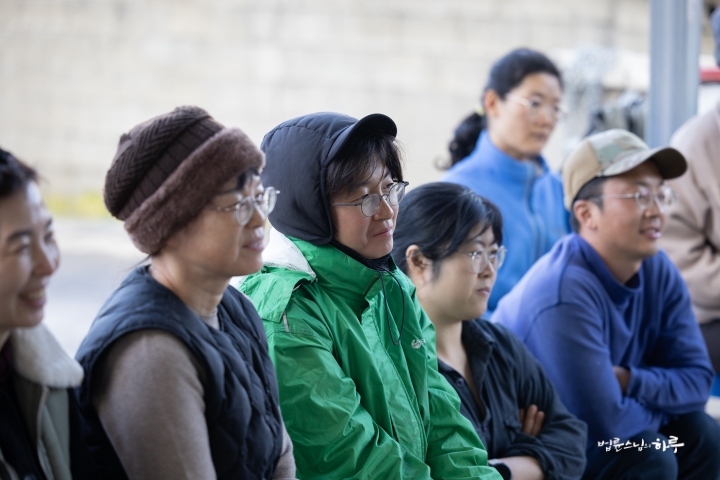
Sunim also proposed specific improvement measures for next year.
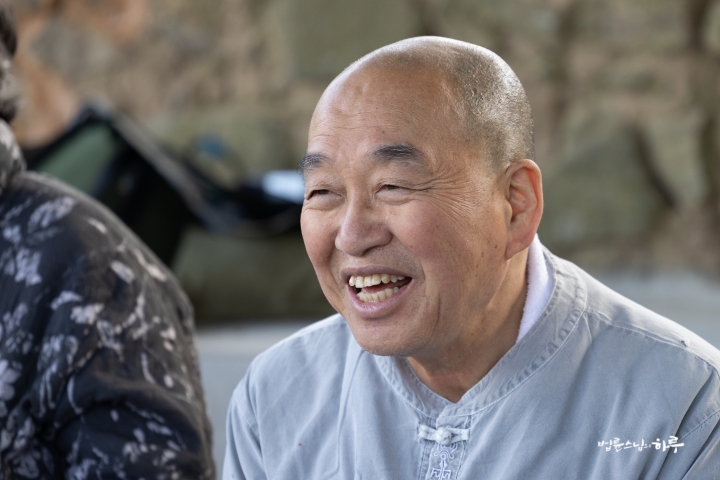
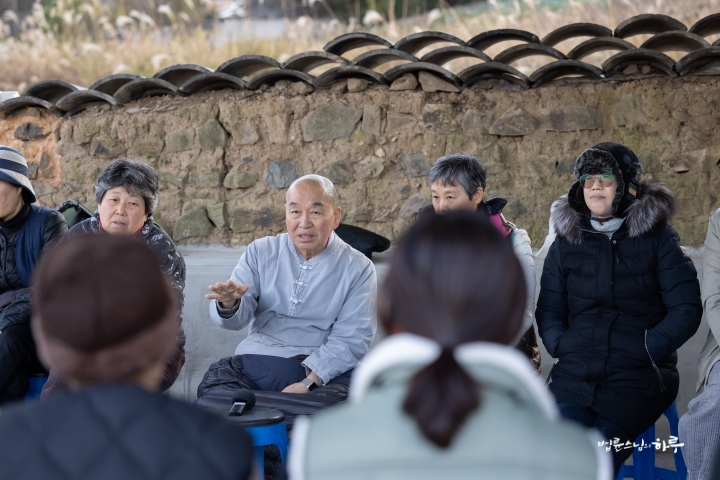
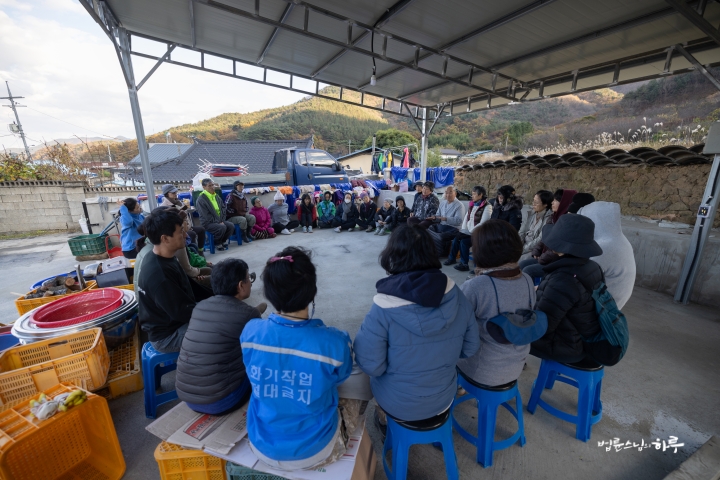
After finishing kimchi-making, the faces of the Sangha members were filled with bright smiles rather than fatigue.
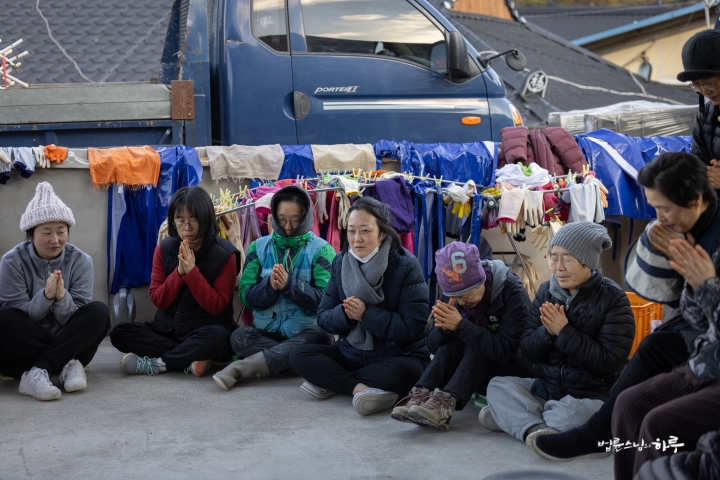
Although a few tasks remained, the completion of kimchi-making marked the near conclusion of the year’s farming activities.
The Seoul lay Sangha departed for Seoul with their vehicles loaded with freshly made kimchi. As the sun set, Sunim finished his day by doing office work and proofreading manuscripts.
Since there was no Dharma talk today, I will share the content from the Dharma Q&A session held in Jeju on the 23rd.
I’m a Student Who Retook the College Entrance Exam. How Can I Manage My Feelings If the Results Are Not Good?
“I’m a student who retook the college entrance exam last Thursday. Looking back on 20 years of my life, I think I’ve done quite well. Since childhood, I’ve won many awards in various competitions, been first in my class, served as vice president of the student council in middle school, and as student council president in high school. I always thought I was special. However, last year, I experienced failure for the first time when I didn’t get into the university I wanted. It was the first major setback in my life, and I felt like a loser. I’ve always done my best in everything and usually achieved good results. But when I worked just as hard as last year and the results weren’t good, how should I manage my feelings?”
“Did you do well on this year’s college entrance exam?”“Yes, I think I did better than last year.”
“Since you did well, do you want to apply to a school that requires a higher score than last year?”“Yes.”
“If you don’t get in again, you’ll have to take the exam for the third time. (Laughs) Originally, there are no rankings. Rankings are relative. When two people are walking, and one person is ahead while the other is behind, the person in front might say to the person behind, ‘What are you doing? Hurry up!’ The person in front thinks the person behind is slow, but what would the person behind say?” “They might ask why the person in front is rushing.” “The person behind would say, ‘Why are you in such a hurry?’ Today, I set the departure time from the lodging at 5:50 AM, and I was waiting in the car at that time. But at 5:50, the person who was supposed to come with me didn’t show up. So, instead of waiting, I honked the horn. How do you think I felt at that moment? I probably thought, ‘If we agreed to leave at 5:50, why are they dawdling?’ That’s why I honked. Then, what do you think the person inside was thinking? They probably thought, ‘Sunim is so impatient. Why can’t he just wait a little instead of honking?’ People always view things from their own perspective. This is because our brain structure is designed that way.
“I think it was a good thing.”
“The later in life you experience such frustration, the greater the magnitude of unhappiness an individual feels. That’s why you should be grateful for the frustrations you experience in your youth. Thanks to the experience of facing setbacks, you gain the opportunity to realize, ‘I’ve been living in a fantasy, only conscious of others’ views!’ or ‘I’ve been living dependent on others’ evaluations and gazes without truly knowing myself!’ Don’t just see it as a failure because you didn’t pass the exam; instead, use it as an opportunity to become self-aware and reflect on yourself. If you’re a Christian, you might say, ‘Thank you, God.’ There’s a saying that ‘Humans can only hear God’s true voice in suffering.’ When things are going well for us, we tend to become arrogant and fail to truly know ourselves. You should use this experience as an opportunity to truly know yourself. Since you said you did well on this college entrance exam, if you aim for an even higher-ranked school, there’s a possibility of failing again. However, this time, instead of feeling ‘frustrated’ by the failure, you could push forward with the mindset of ‘It’s okay. I’ll try again for this school.’ Or if you think, ‘Is there really a need to spend another year preparing?’ you could slightly lower your goals. The important thing is to maintain balance. You shouldn’t give up on the major you want just because you prioritize a safe choice, nor should you ignore safety by insisting only on your preference for a better school. By experiencing one failure in university admissions, you gain these life experiences. The blessings that God or Buddha gives us don’t always come in the name of success. Sometimes blessings come in the form of failure or even disaster. If we can accept disaster as a blessing, at that moment, there’s nothing left to fear. For example, if a husband has an affair, at first, the wife might feel angry and wronged. But through this experience, she can use it as an opportunity to reflect on herself, thinking, ‘I’ve been living only thinking about myself. I didn’t sufficiently consider my husband’s loneliness.’ Then that experience becomes a great blessing. On the other hand, if she’s consumed only by resentment and anger, she’s likely to invite second and third disasters upon herself. As the saying goes, ‘Failure is the mother of success.’ We should use failure as an opportunity to realize and become aware of new things. It’s important not to be bound by the thought of failure, but rather to change your perspective and see it as an opportunity to reflect on yourself and grow.
“Thank you. I understand well.”
Starting tomorrow, for the next three days, there are plans to participate in a pilgrimage and dialogue forum organized by the Religious People’s Gathering for National Reconciliation and Peace. This event, commemorating the 200th anniversary of the birth of Great Master Choe Je-u Suun, will trace the footsteps of the Great Master through Gyeongju, Namwon, and Seoul.