I Hate That I’m Becoming Like My Father, Whom I Disliked So Much
Oct 31, 2024 - 4th Day in Bhutan, Departing Paro, Transit in Bangkok
Hello. Today marks the end of the Bhutan visit schedule, with departure from Trongsa and a full day of travel back to Korea.
Sunim completed his early morning practice and meditation at the lodging and departed Trongsa at 5:55 AM, heading towards Paro Airport.

After an hour of travel, he stopped at a roadside restaurant for breakfast. After the meal, Sunim conversed with Yeshi, a Bhutanese central government official. Yeshi had just become a civil servant this year after graduating from university.
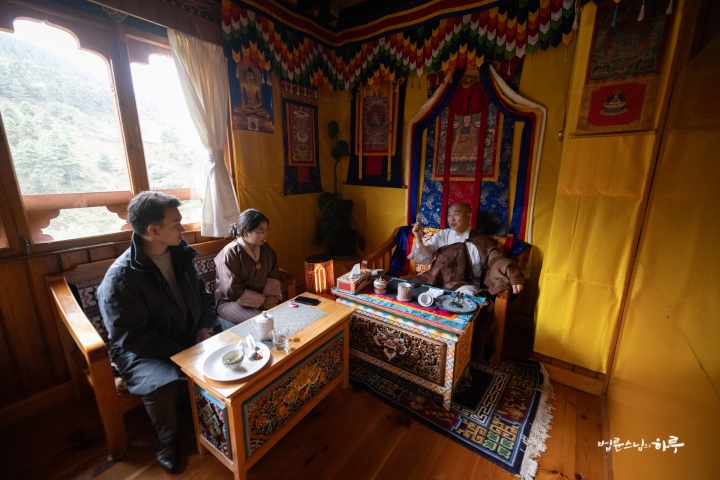
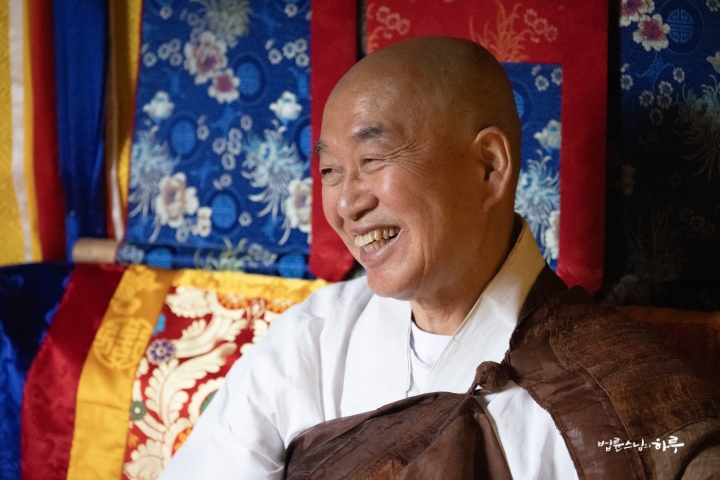
Yeshi smiled and said,
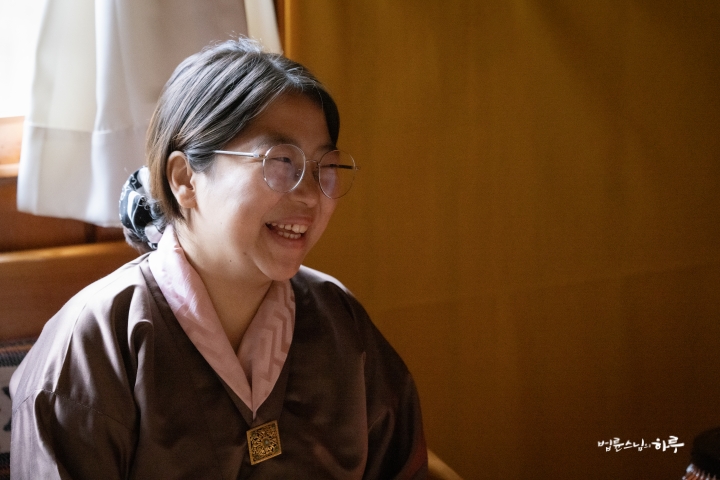
“Yes. I read ‘A Day in the Life of Sunim’ today. I read about someone asking you about not getting proper evaluations at work due to their introverted personality. I was also worried about not being able to express myself properly to my team leader because I’m introverted. After reading your answer, my concern was resolved too.”
“Well done. Yeshi, if you have anything you want to ask me, feel free to do so. There’s an online Dharma Q&A session with English interpretation twice a month, so you can participate in that program and ask questions.”“Yes, I understand.”
Leaving the restaurant, they got back in the car and drove along the mountain road.
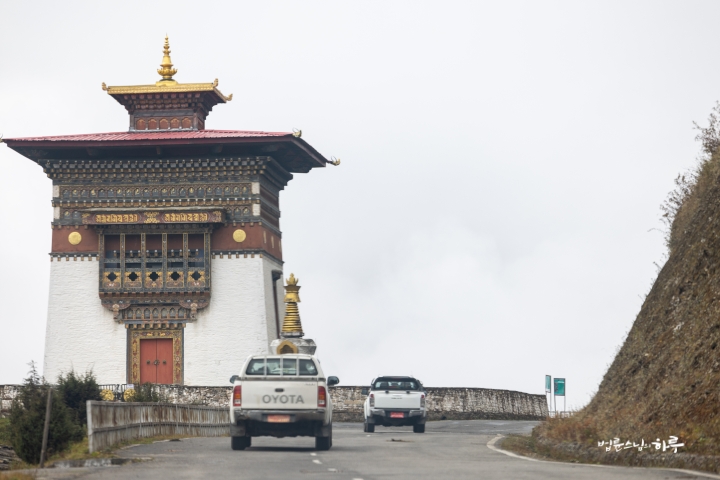
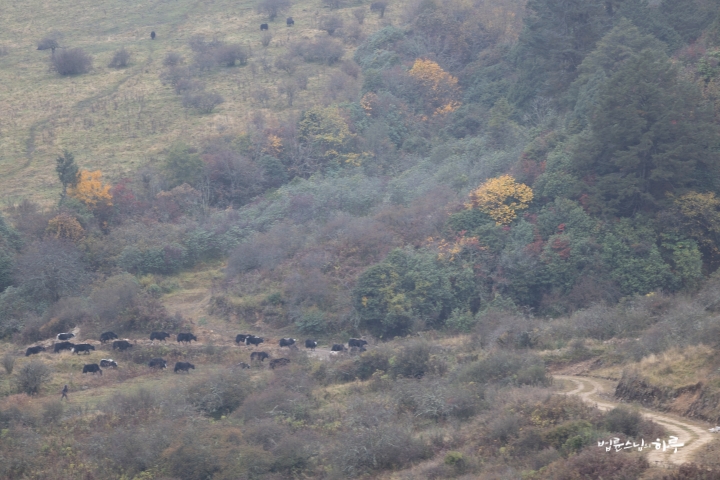
At 10 AM, they arrived in Punakha, had a quick cup of tea, and continued on their way.
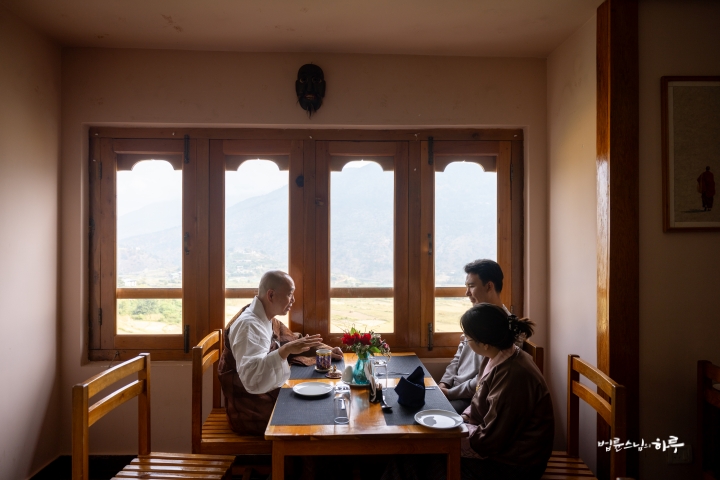
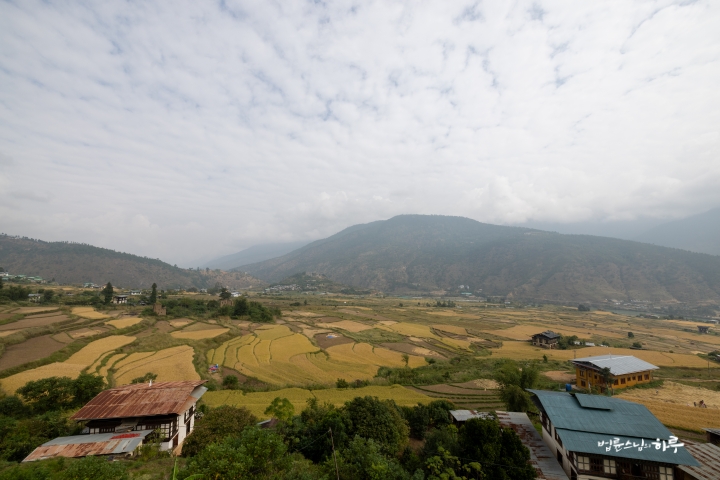
After crossing two mountains over 3,000 meters in altitude, they arrived in Thimphu at noon. Upon arrival, a Foreign Ministry official came out with Sunim’s passport. They restored the erased visa content and extended its validity. It was time to part ways with Yeshi, the Bhutanese central government official.
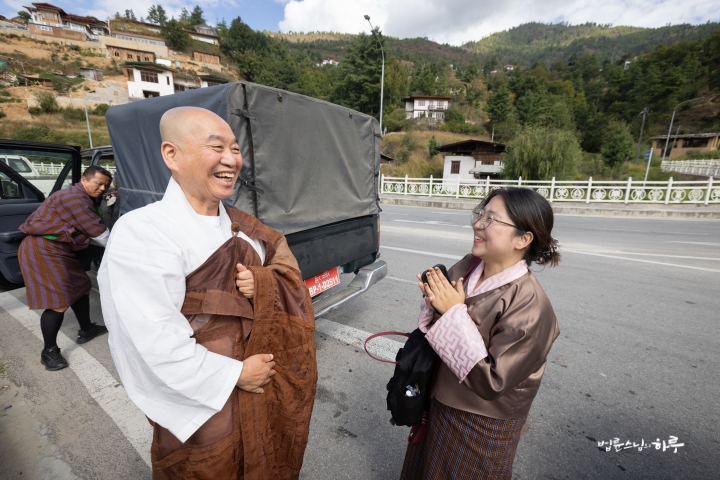
“I learned a lot this time as well. Take care, Sunim.”
After briefly stopping by Rinchen Dawa’s house in downtown Thimphu to gather belongings, Sunim departed for Paro Airport.
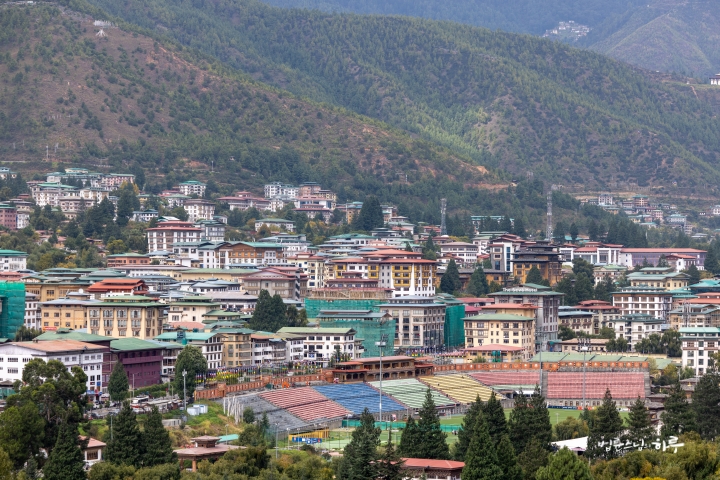
Arriving at Paro Airport at 2 PM, Sunim checked in luggage and completed departure procedures.
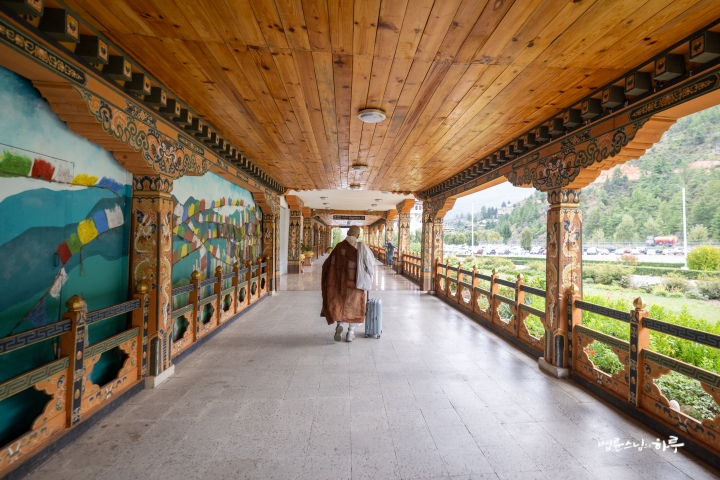
While waiting for the flight, Sunim met Tshewang and Kezang, staff members of the Bhutan Nuns Foundation who had accompanied him during his visit to Bhutan last April. They were at the airport to travel to Korea to participate in the Women’s INEB (International Network of Engaged Buddhists) program starting November 1st, which included a visit to Jungto Society.
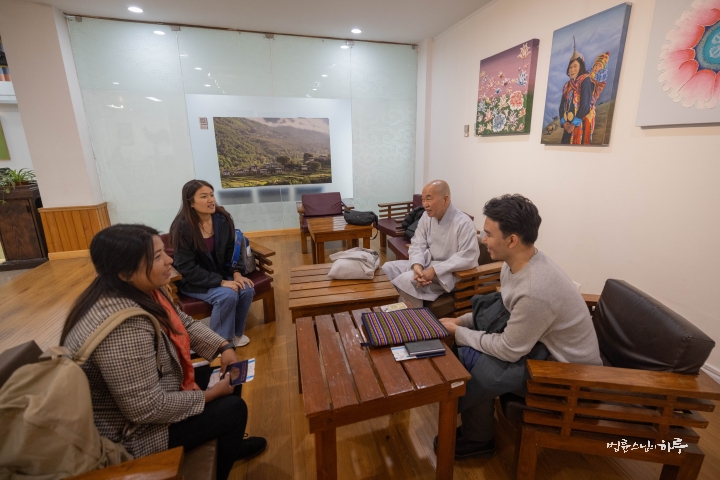
After exchanging warm greetings, it was time to board the plane.
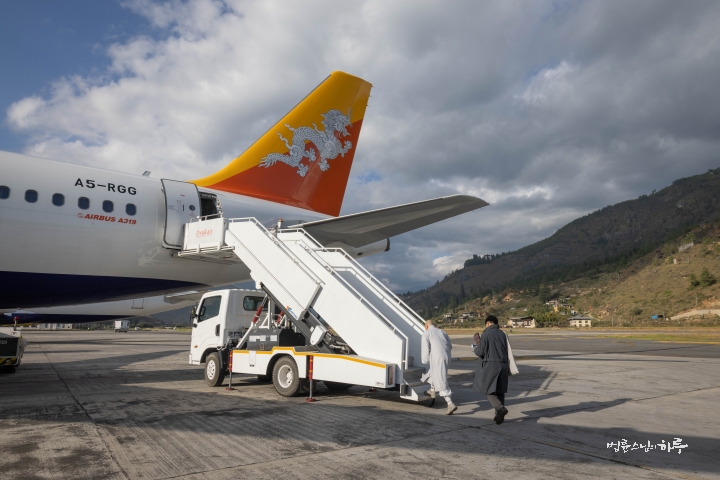
Having successfully completed the 3-night, 4-day visit to Bhutan, Sunim departed from Paro Airport at 4:20 PM.
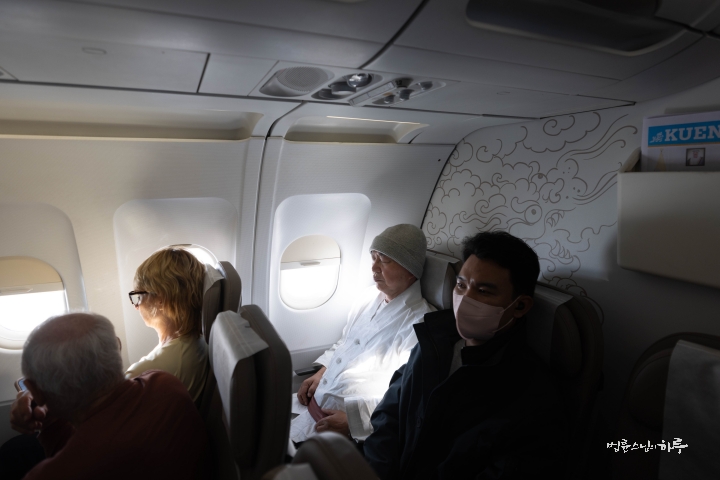
After having a late lunch as an in-flight meal and proofreading manuscripts, the plane arrived at Bangkok Airport at 8 PM local time after a 2-hour and 30-minute flight. After retrieving luggage and exiting the airport, Sunim had tea and conversed with the Bhutan Nuns Foundation staff members.
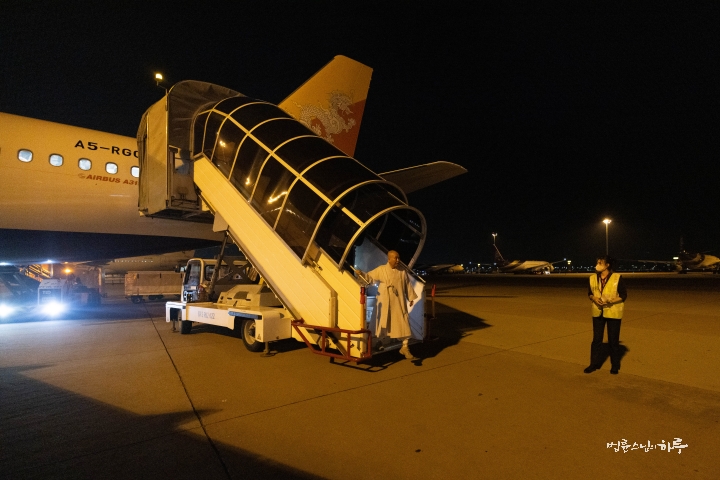
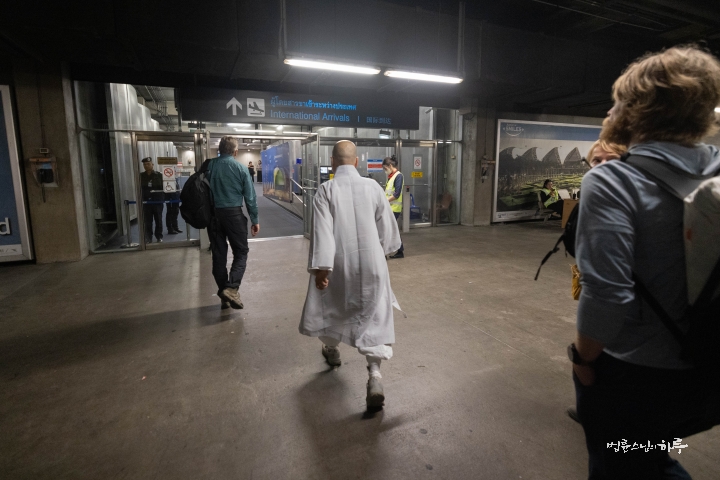
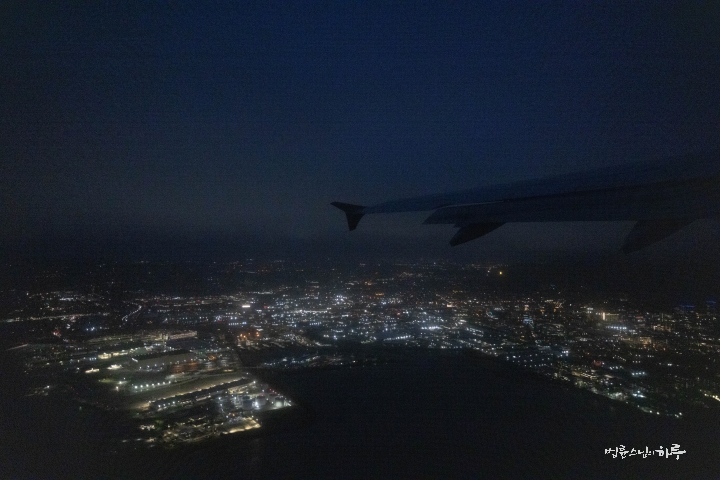
After 9 PM, Sunim checked in luggage again, completed departure procedures, and headed to the boarding gate. He continued proofreading manuscripts until boarding time. The plane departed from Bangkok Airport at 11:15 PM and flew through the night towards Incheon Airport.
As there was no Dharma talk today, I will share the content of the conversation Sunim had with young people during the Youth Gyeongju History Tour on the 19th.

**I Hate That I’m Becoming Like My Father, Whom I Disliked So Much
** “Recently, I feel like I’m gradually becoming more like my father, whom I disliked so much. My father sometimes uses abusive language when someone goes against his will or when he doesn’t like someone. This is the aspect of my father that I despised. It was so difficult to deal with him that I even stopped contacting him for several years. However, now I feel like I’m becoming exactly like him. I’m especially hurting those close to me more. I desperately want to change myself. What kind of attitude and mindset should I adopt to avoid becoming like my father?”
“To change yourself, you first need to reconcile with your father. One way is to try living with your father for a while. While living together, practice keeping your mind at ease regardless of what your father does. If you can turn your mind around and think, ‘I can’t change my father’s temperament. However, despite having such a temperament, he gave birth to us and raised us,’ and accept your father as he is, your life will change. In the future, even if you meet a man, get married, or have children, you won’t use hurtful words or actions like your father did. However, if you don’t overcome this, you’re likely to treat those close to you exactly like your father did. It’s not that it will definitely happen, but the probability is high. There’s a Korean saying that goes, ‘A harsh mother-in-law produces a harsh daughter-in-law.’ When someone who was severely bullied by a sergeant in the military becomes a sergeant themselves, do you think they will treat their subordinates well? Or will they bully their subordinates in the same way? The probability is high that they will bully their subordinates in the same way. They might even say, ‘What you’re going through is nothing compared to what I went through!’ and boast about how much worse they had it. This is human psychology. To break this vicious cycle, you need to reconcile with your father. If it’s difficult to live with your father right now, it would be good to pray like this while bowing alone at home: ‘Father’s anger, irritation, and shouting were hurtful to me as a child. But now that I’ve grown up, I realize that it was just his temperament and not intended to hurt me.’ Try spending time reconciling with your father in your mind while repeating these words. Your father lived according to his temperament. You, too, are acting according to your temperament now, not deliberately trying to hurt the people you love, right? That temperament comes out without you realizing it. Similarly, you can understand that your father wasn’t trying to hurt you either. He shouted because he couldn’t control his temper, and threw things because things didn’t go his way. I, as a child, was hurt by seeing such behavior. There was no one who intentionally hurt me, but I ended up being hurt.
“I haven’t exactly reconciled with my father, but I seem to be accepting his behavior to some extent.”
“If you couldn’t tolerate it before, but can tolerate it a bit now, that’s progress. If you were to live with your father right now, you might still feel stressed and want to run away. So, first, try doing a 100-day prayer on your own with the prayer text I just mentioned. After 100 days, go talk to your father again. If you still feel uncomfortable, do another 100-day prayer. Then go back to your father and check again. You can gauge whether your karma has been resolved by how much trauma is triggered when you’re stimulated by your father. If you feel pity or understanding when your father gets angry, you won’t get angry anymore. However, if your old wounds are touched and you think, ‘He’s doing it again! He still hasn’t changed his temper,’ and feelings of rebellion surge up, then your wounds haven’t been healed yet. I’m explaining it simply, but it’s actually very difficult to do in practice. This is what we call dissolving karma. It’s challenging because you’re changing the destiny that’s been passed down from father to child for generations.”“I could reconcile with my father even now, but I hate that I seem to be becoming just like the father I disliked.”
“I’m not asking you to make a formal reconciliation with your father, but to develop a heart that fully understands him. When the wounds in your heart are healed, your actions will change too. This is because the past wounds are causing your current behavior.”“Thank you. I understand.”

“Thank you.”
Tomorrow, after catching some sleep on an overnight flight, Sunim will arrive at Incheon Airport at 6 AM. He will then head directly to the Seoul Jungto Center to unpack before meeting with the JTS representative to discuss support for Rohingya refugees. In the evening, he is scheduled to give a Dharma Q&A lecture in Wonju.