How can I improve a marriage with communication difficulties?
Oct 5, 2024 - Happiness School Special Lecture, Day 1 of Content Volunteer Day
How can I improve a marriage with communication difficulties?
“My wife insists on a response when I don’t answer, feeling ignored otherwise. Conversely, when she doesn’t respond to my questions, I feel frustrated and keep asking, often leading to arguments. As a child, I was a slow learner and struggled to understand others’ tones, emotions, and expressions. My tendency to talk only about myself often made others feel disrespected and angry, damaging relationships. My wife thinks I have a different sense of conversation flow, leading to misunderstandings and anger. When her feelings are hurt by my words or actions, she often negates all my efforts. This makes me feel disrespected, causing anger and shouting. Due to repeated conflicts, my wife says she can’t live like this anymore and suggested I seek advice from Sunim. My wife, who married me despite experiencing my insensitive anger before marriage, is like a savior to me. Feeling I should accept criticism, I’ve come here seeking Sunim’s wisdom. Please advise on how to resolve this situation.”
“It seems you have some self-awareness. If you’ve realized that there are communication issues due to your background and tendency to interpret and act on things in your own way, try speaking honestly with your wife.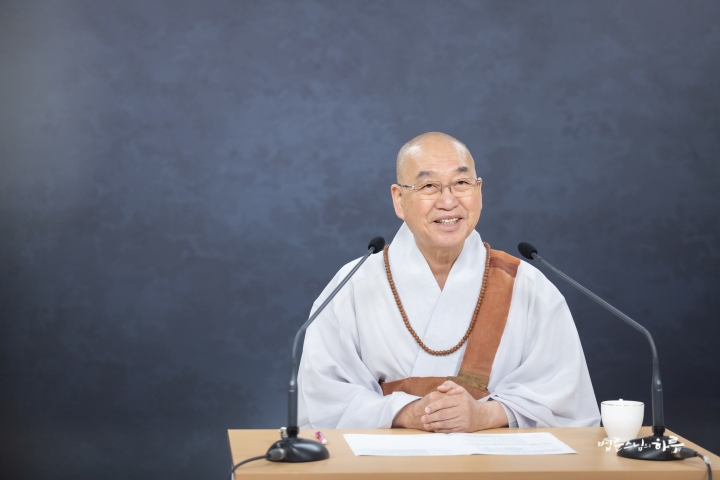
Even in my interactions with people I live with, I often notice gaps between my intended meaning and how others understand it. This can lead to unexpected outcomes. When the other person tends to forget or misunderstand, it’s better to communicate through text messages rather than verbally, and to double-check for understanding. The listener should always confirm by asking, ‘Is this what you mean?’ This can improve relationships. However, if you start blaming each other for not speaking clearly or not listening properly, conflicts will arise. So, why don’t you both try this process of mutual confirmation?
When people are strangers, misunderstandings might not matter much, but for a married couple who interact daily, it can be very challenging. The frustration builds up, leading to thoughts of separation. Instead of feeling wronged, I suggest you honestly explain your background to your wife and propose spending a year working on reducing misunderstandings through mutual confirmation. This could be a way to find improvement.
There are two paths here. One is to say, ‘I don’t want to improve. I can’t live with someone who doesn’t understand my words or feelings. I want to separate.’ The other is to say, ‘We’ve been together, we have children, so let’s try to improve through mutual effort.’ You can choose to work on improvement.”
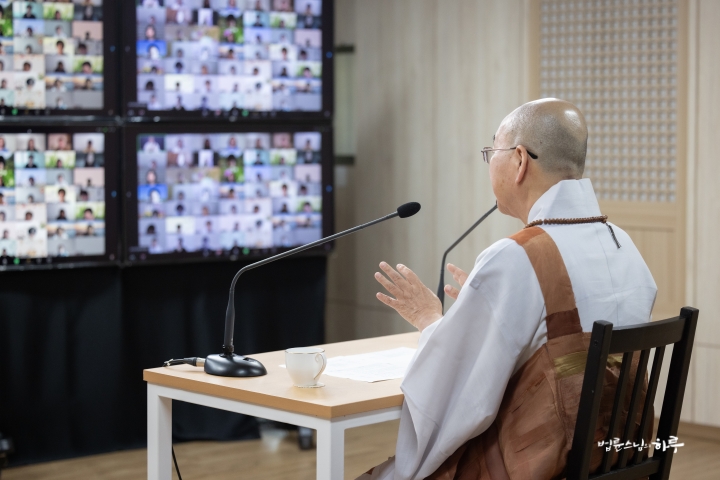
“If I had heard your advice ten years ago, I could have understood my wife better from our dating period, resolved our conversations more effectively, and avoided building up resentment. Currently, any question I ask my wife seems to upset her and lead to negative emotions. I’m often very confused and upset. How should I handle this situation?”
“So, it’s not because you don’t trust each other or because anyone is bad, but due to these reasons, you’ve reached a state where you don’t even want to talk. You’re at a point where you don’t respond to each other’s questions because you think you’ll be misunderstood again. This could lead to a decision to separate, but I think it would be too hasty to end things over this. I suggest you apologize to your wife first, try to improve, and if it still doesn’t work, then separation could be an option. Just as you feel frustrated when your wife doesn’t answer your questions, she feels the same when you don’t respond to hers.Let’s try to improve first. Agree to answer each other when asked, and if you don’t want to answer, express that instead of staying silent. This effort is necessary. If one says, ‘I don’t want to answer right now,’ the other can understand and wait. But if there’s no response at all, it’s unclear whether the message was understood, ignored, or not heard.
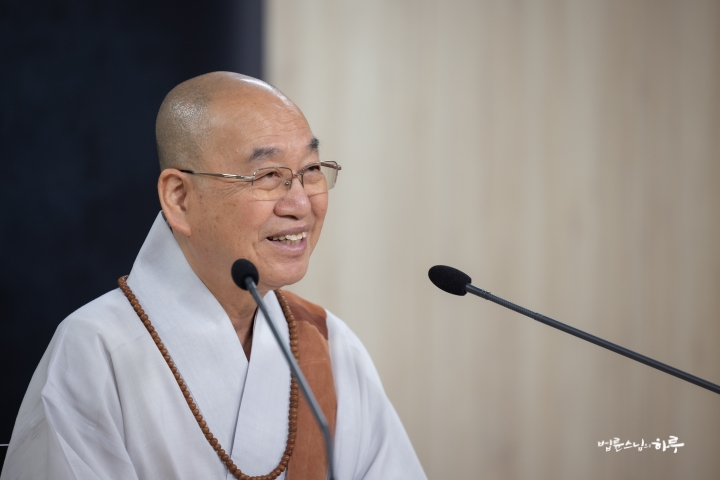
First, accurately confess your own situation. Say something like, “Because of the environment I grew up in, I have communication issues. I’d appreciate your cooperation in considering this.” This way, you’re explaining your circumstances. Second, propose ways to improve. If that doesn’t work, try following your wife’s decisions.”
“Yes, thank you for your valuable advice. Listening to you, I realize I’ve been very negligent in confirming understanding. I assumed too easily that since we’re all human, she would automatically understand what I say. From now on, I’ll open my heart and approach her first. I also see that I need to be patient and not force a response when she doesn’t want to answer. Thank you.”
The questions continued. After answering all the questions, the promised two hours quickly passed.
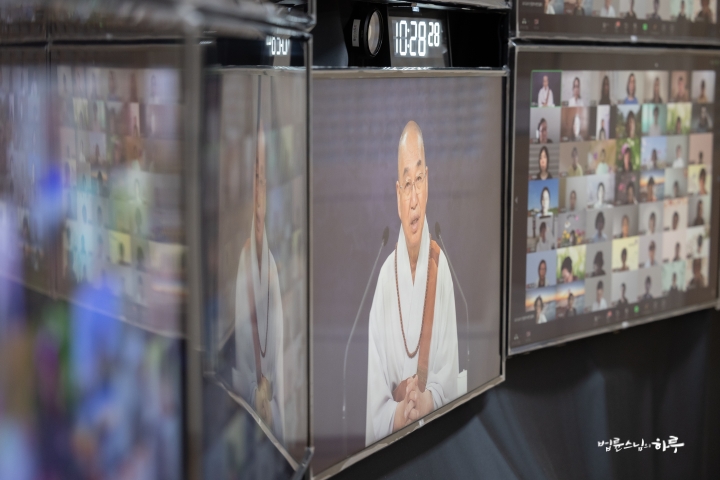
Sunim concluded the live broadcast, promising to meet again next month.

After a quick lunch, Sunim headed straight to Gyeongju. Starting today, for the next two days, volunteers who produce content for Jungto Society gathered to have conversations with Sunim and take a trip around the historical sites in Gyeongju.

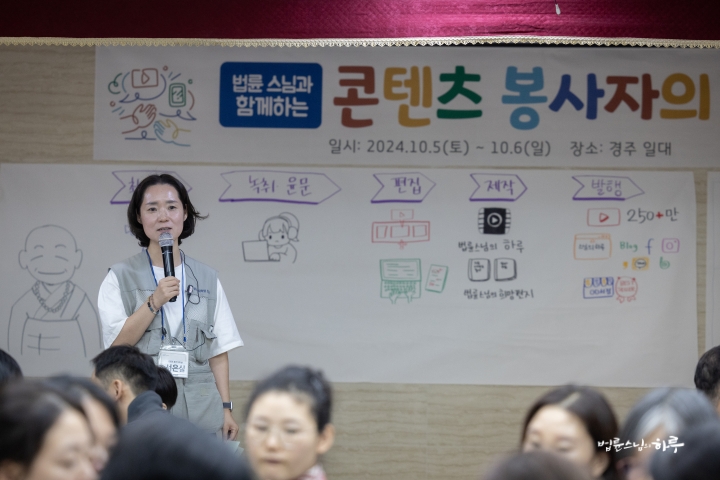
The meeting began at 1 PM at the accommodation located in front of Bulguksa Temple in Gyeongju. About 70 volunteers from three teams – the publishing team, video team, and ‘A Day in the Life of Sunim’ team – gathered in one place.
To create “A Day in the Life of Sunim” a staff member accompanies Sunim and takes photographs. All of Sunim’s Dharma talks are recorded, and only the relevant parts for “A Day in the Life of Sunim” are selected and sent to the transcription team. The transcription team transcribes and does the first round of editing before sending it back. The staff member then compiles this, does a second round of editing, writes the day’s article, inserts the edited Dharma talk, and arranges the photos to complete the final draft. The publishing team then schedules the publication on the website and blog. After scheduling, the audio service production team creates the audio version, and the English translation review team checks the AI-translated version of “A Day in the Life of Sunim.” About 60 volunteers are involved in this entire process.
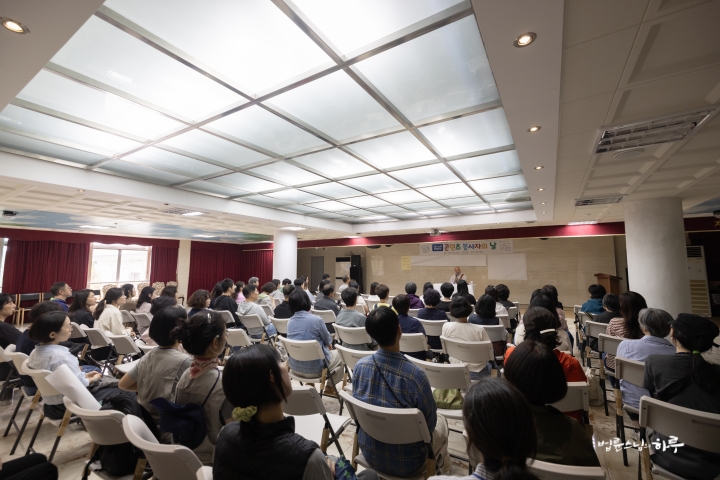
The Content Volunteer Day began with a warm welcome address from Dharma teacher Myosu.
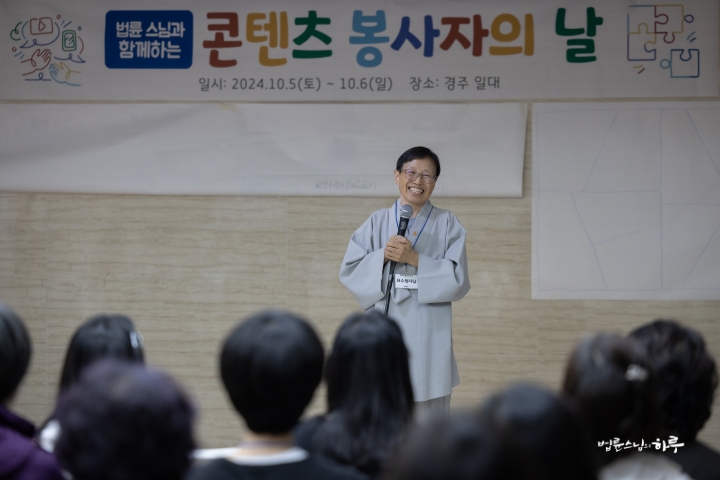
“My role is mainly to make the lively content you create less lively. This is because I primarily focus on reviewing and checking. (Laughter) Thanks to your unified efforts in creating diverse content, I believe many people can listen to Sunim’s dharma talks. I think the true mosaic Buddha is being realized in the content creation process, and I hope we can continue to create even better content through more organic connections in the future. To better fulfill Sunim’s intentions, I hope this gathering will be an opportunity to listen carefully to Sunim’s words today and make a new start.”
Sunim then gave the opening dharma talk.
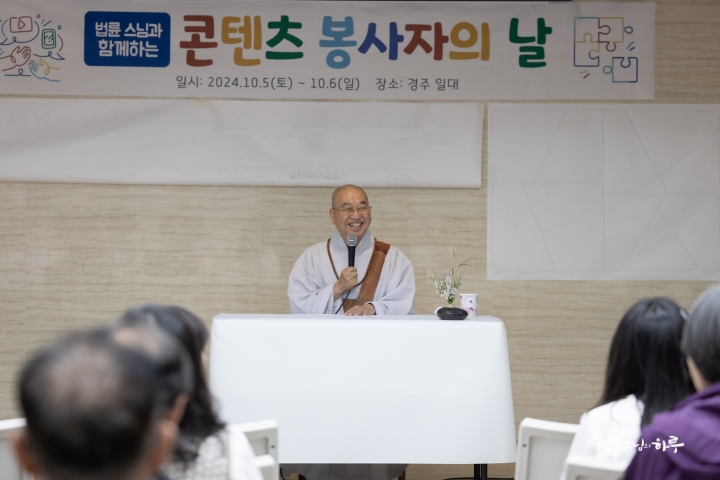
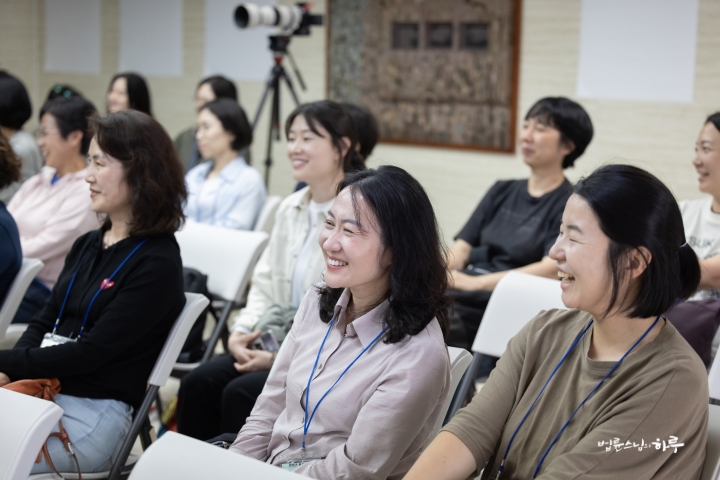
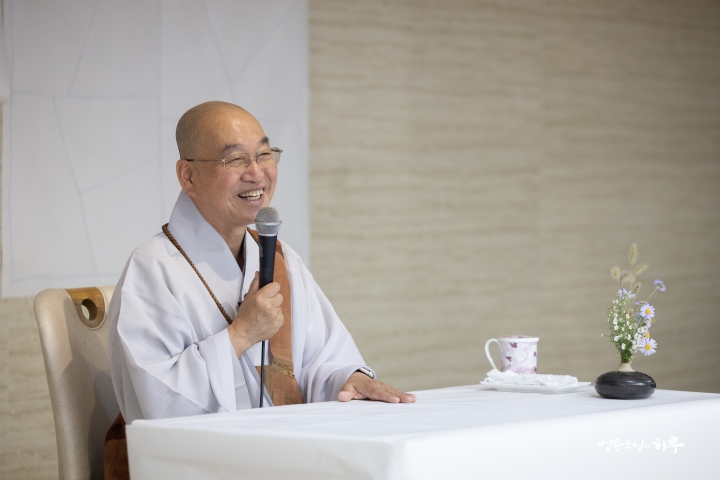
Points to Consider When Transcribing Speech to Text
Today, we have gathered people who transcribe Dharma Q&A into text. You might think it’s simple to just write down the conversations from Dharma Q&A as they are, but there are differences between spoken and written language. When listening to a conversation directly, repeating the same thing two or three times isn’t boring and can often be effective in guiding the conversation. However, when transcribed, repeating the same phrase two or three times can feel extremely tedious. Also, while speech can convey emotion, when transcribed, the emotion often disappears, and it’s easy for the reader to receive it as mere information. Speech can contain heart, but writing mostly contains thoughts. Even words that contain heart, when transcribed, often change into text where the heart is lost and only thoughts remain. So, there’s a risk that my dharma talks, when transcribed, could be transformed into mere knowledge. Even the conversations between the Buddha and his disciples, when passed down orally, retained emotions or heart in the words. But when these were transcribed into text, the emotions completely disappeared, and it mainly became about understanding, leading Buddhism down a path of philosophization. In this process, it was inevitable for the Buddha’s teachings to become intellectualized. As a result, when people say they’re studying Buddhism, it often leans towards how much they know about Buddhist doctrines, becoming a matter of knowledge. Even if we think about the conversations between the Buddha and his disciples, while some might have been simple, how could all conversations have flowed so simply? There must have been times when explanations were needed for things the other person didn’t understand, and times when they listened to the other person’s story. But in an era without written language, as people had to memorize and pass on these teachings, they likely reduced a lot of repetition. If it had been written down, it might have been different, but since they had to memorize and transmit it, they couldn’t help but summarize to some extent. Also, when having a conversation, people directly talk about their suffering; they don’t mention the date or location. But when someone records the conversation, they organize it like a newspaper reporter, noting who was talking to whom, when the conversation took place, where it happened, and so on, so this information inevitably remains in the record.
Despite this organization, when you actually read the sutras, you’ll find an enormous amount of repetition. From a reader’s perspective, you might wonder why they keep repeating the same things instead of just omitting them, but when transmitting orally, this repetition might have been necessary for the meaning and atmosphere of the Dharma talk to come alive. When all this orally transmitted content was recorded in writing, it ended up feeling repetitive and cumbersome.
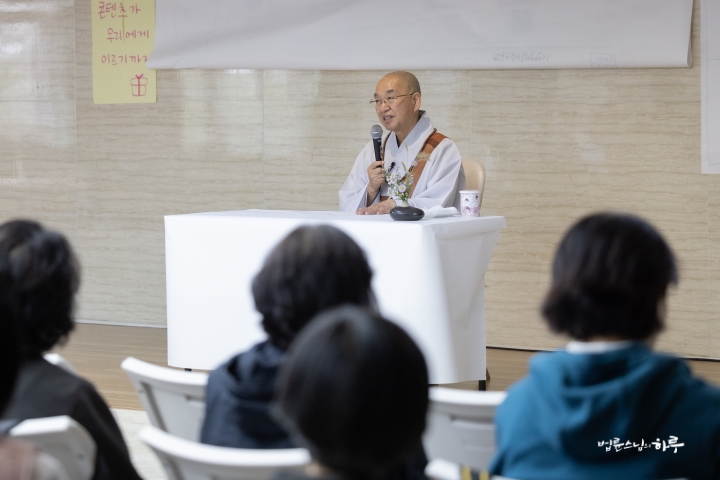
Balancing Accurate Recording and Readability
When transcribing Dharma talks, you may have noticed the difference between spoken and written language. When I engage in dialogue with questioners, I sometimes revisit topics that were missed earlier. When converting this to text, we need to rearrange the content in a logical order for natural reading. This process of editing to ensure the context and meaning flow naturally in written form is called “polishing.” During this process, focusing too much on accurate recording can make the text cumbersome, while emphasizing organization might strip away Sunim’s tone and spirit, leaving only dry content. The empathy and emotion that emerge through repeated dialogue may be lost in the polishing process. Therefore, when polishing, it’s crucial to strike a balance between accurate recording and readability. When publishing these edited contents as a book, another challenge arises. Further summarization and refinement are necessary. For instance, a three-page Dharma talk might be condensed into two pages for the book. Consequently, much content is removed. This editing process has the advantage of conciseness but may lose some of the original emotion. As the content’s presentation is determined during this process of organizing and polishing, we often say “editing is a second creation” or “translation is a second creation.”
Reflecting on the Efforts of Many Working Behind the Scenes
What is ultimately conveyed to the public and recorded in history is what you have documented. Will Venerable Pomnyun Sunim’s words and actions themselves be recorded in history? Or will it be only what the “A Day in the Life of Sunim” team has recorded? It’s not Sunim’s words and actions that remain, but what the “A Day in the Life of Sunim” team has documented that becomes historical record. From this perspective, you could say that you are creating history. Looking at records from Buddha’s time, it’s said that Ananda alone remembered and recorded all those events. But now that we’re doing it ourselves, it seems hard to believe that one person could have done it all. I suspect that many people worked together, but Ananda’s name was consistently used. (Laughter)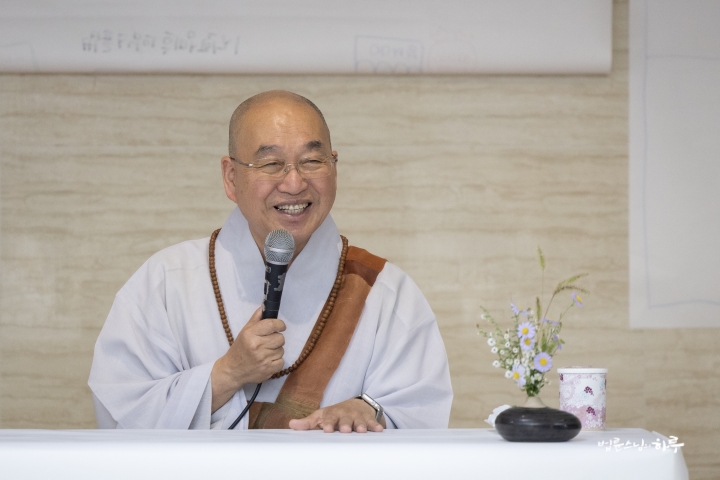
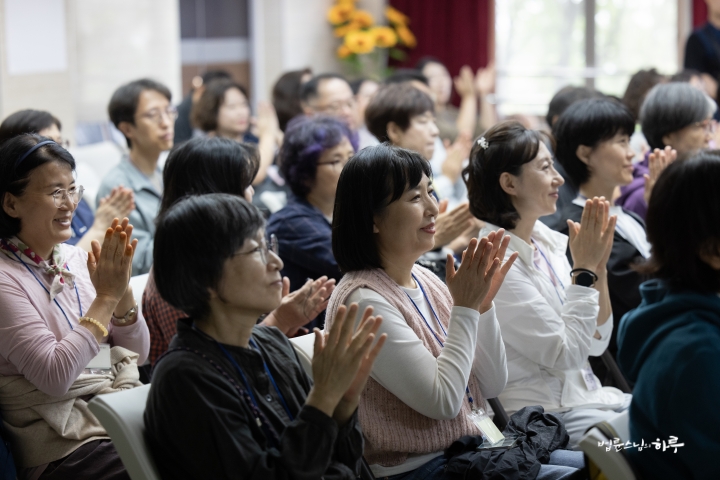
After a brief break to organize the space, group introductions began at 2 PM. Sunim also joined one of the groups and participated in the program.
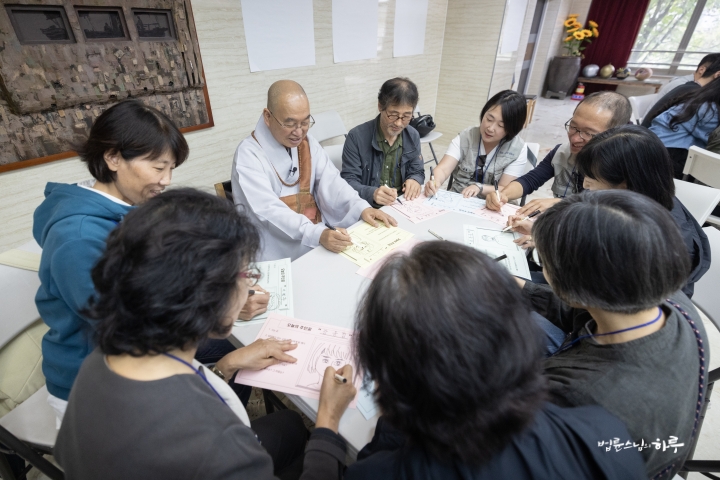
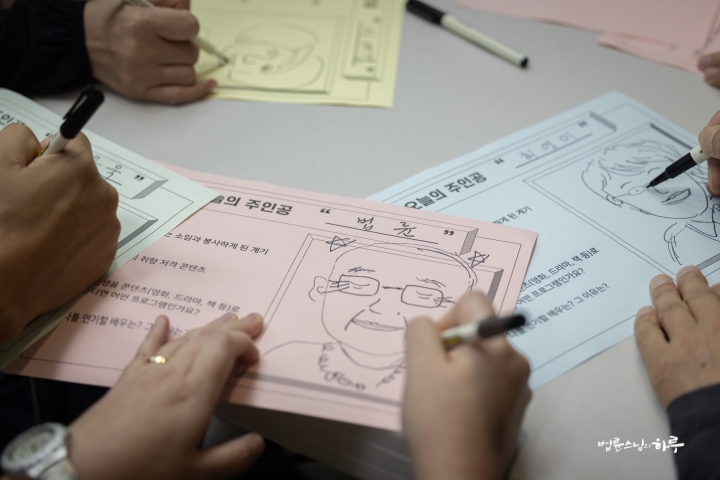
Participants drew the face of the person next to them on paper. The papers were passed around in a circle, and each person’s face was completed by the hands of their fellow practitioners. They spent time getting to know each other, sharing their current responsibilities and areas of interest.
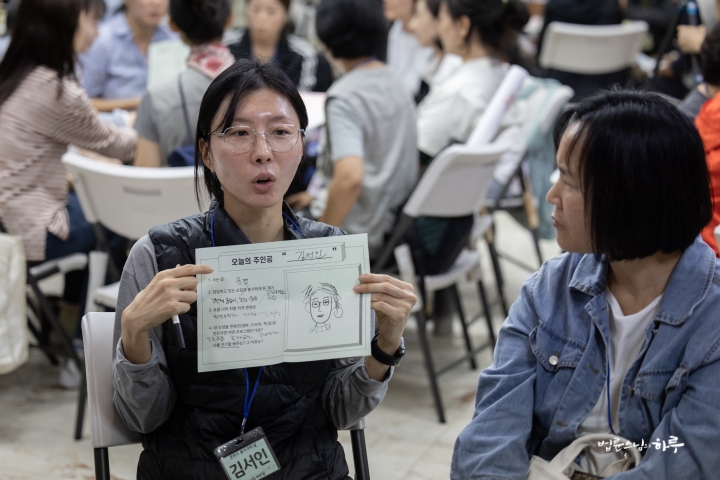
“I volunteer to transcribe Sunim’s Dharma talks twice a month. These days, my favorite content is YouTube videos about environmental conservation.”
“I volunteer in the publishing team, helping to create books. I’m very interested in social sciences.”
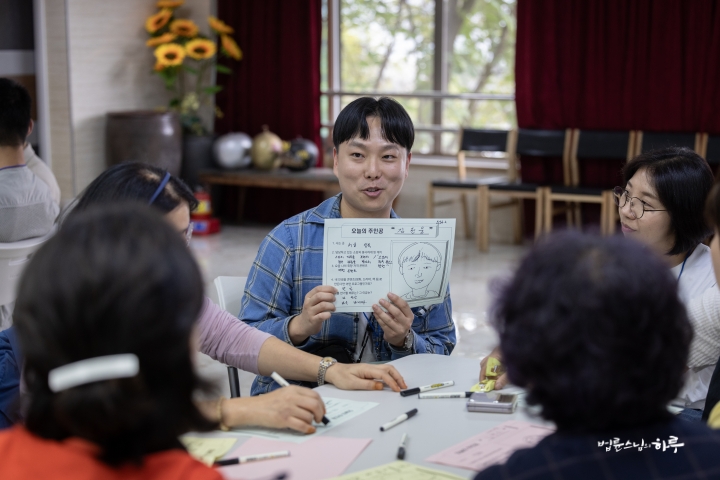
“I’m responsible for audio production and English version publication in the ‘A Day in the Life of Sunim’ team. I volunteer with the hope of spreading Sunim’s Dharma talks worldwide and making people a little happier.”
“I’m in charge of inputting and categorizing data in the video team. We keep the questions from Dharma Q&A sessions in a database format so they can be easily found at any time.”
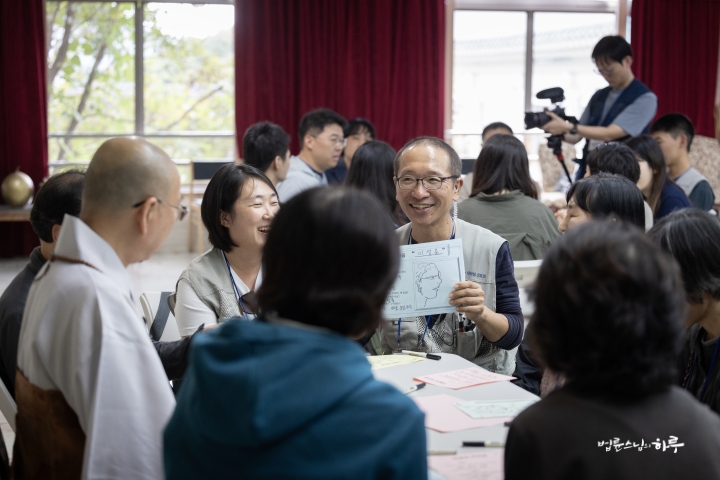
Next, each team gave a presentation. They gathered to discuss and present their achievements, rewards, and areas for improvement at each stage of content production, from filming to transcription, editing, production, and publication.
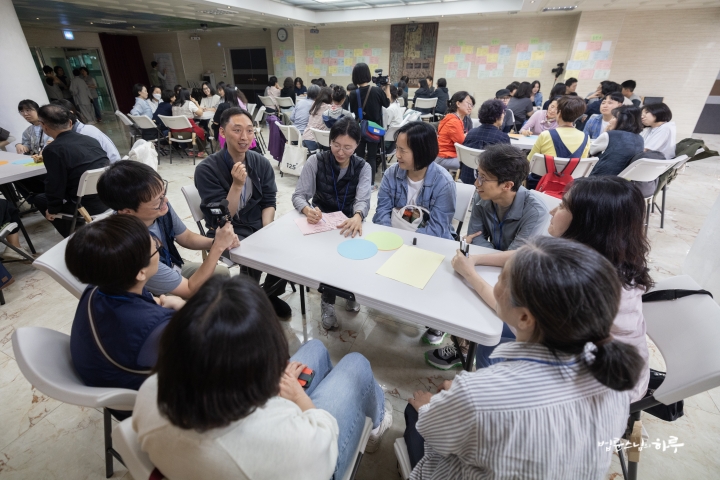
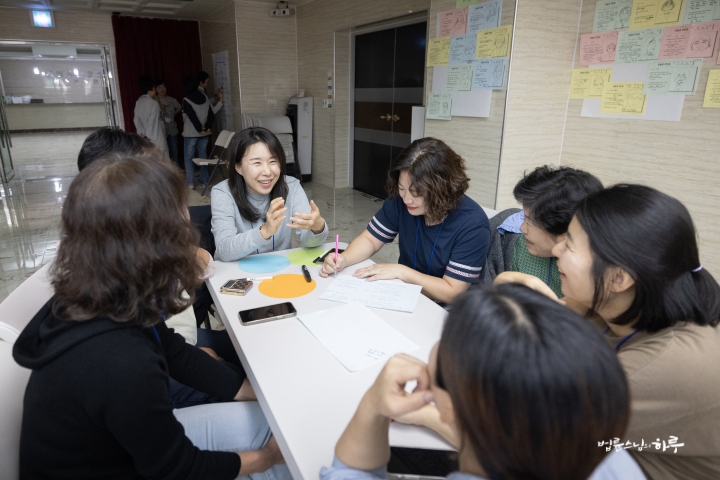
“When I put on my earphones and start transcribing, it feels like Sunim is giving a Dharma talk just for me. We all take pride in our volunteer work.”
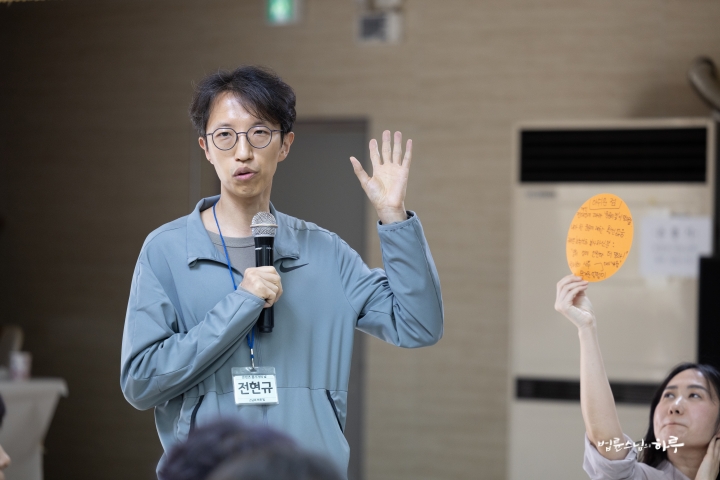
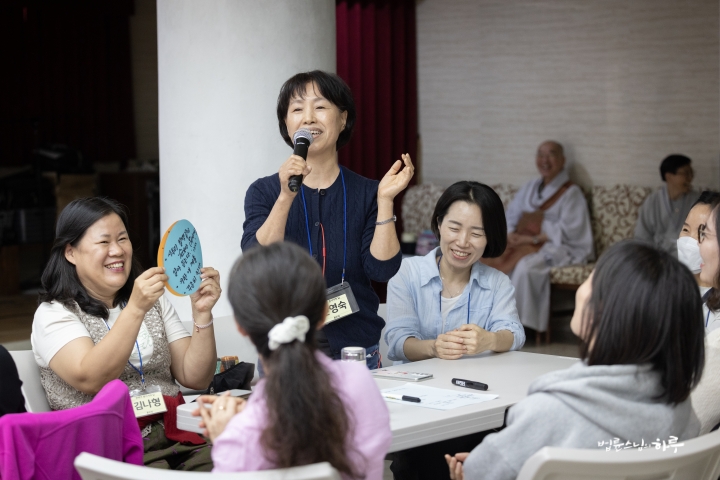
“As we’re from Gyeongsang Province, we understand Sunim’s dialect better than AI, making transcription much easier for us. There was a time when Sunim gave a Dharma talk about a woman collecting mustard seeds, and while we immediately understood ‘mustard seeds,’ the AI kept transcribing it as ‘puppies.’ This way, we get to hear Dharma talks that others might miss while volunteering.” (Laughter)
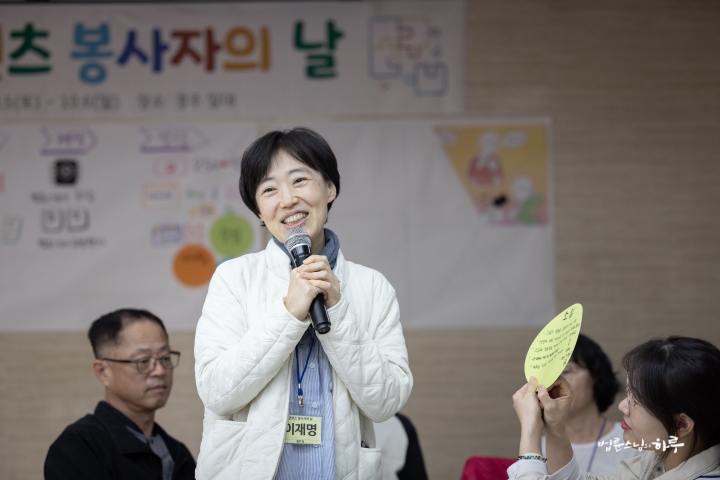
“When I spend all day transcribing Sunim’s Dharma talks, it feels like Sunim is living with us at home. It’s as if he’s saying, ‘Why aren’t you transcribing quickly?’ which motivates me to work harder.”
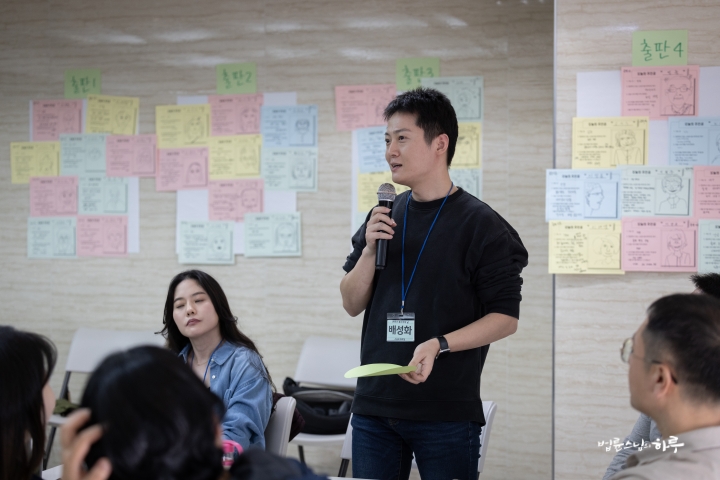
“We use AI technology to translate and publish ‘A Day in the Life of Sunim’ in English. Since AI can make mistakes, we find and correct them. We volunteer with pride, feeling like pioneers in spreading the Dharma worldwide. The downside is that the English version doesn’t have many views yet. Some days, I view it ten times myself. Please spread the word!” (Laughter)
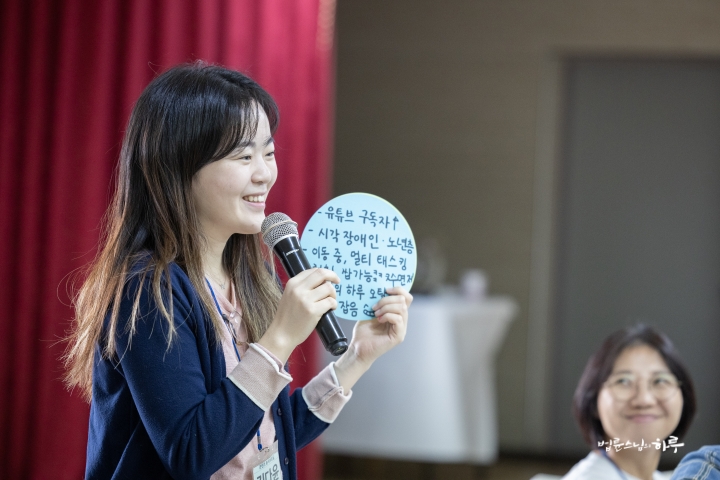
“We create videos with audio for ‘A Day in the Life of Sunim’ and upload them to YouTube. In the past, if ‘A Day in the Life of Sunim’ was too long, people would put it off. Now that it’s on YouTube, people listen while walking, exercising, or doing dishes. The greatest reward is that visually impaired people can now listen to ‘A Day in the Life of Sunim’.”
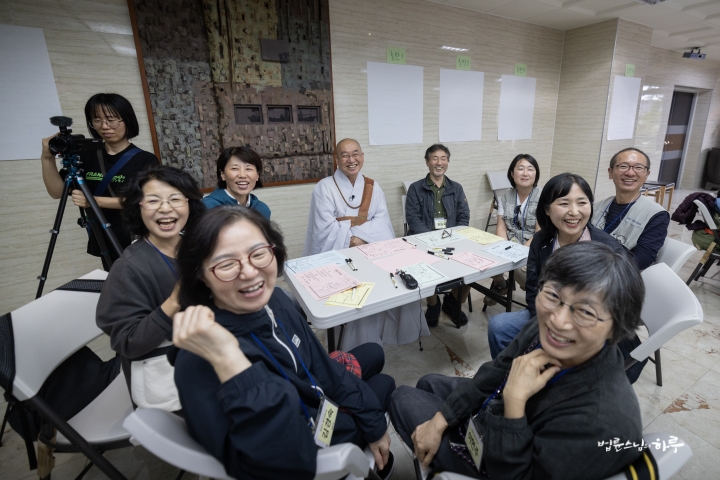
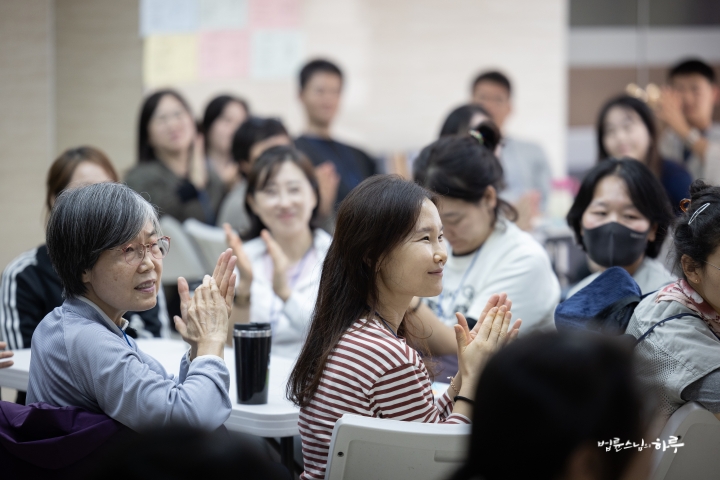
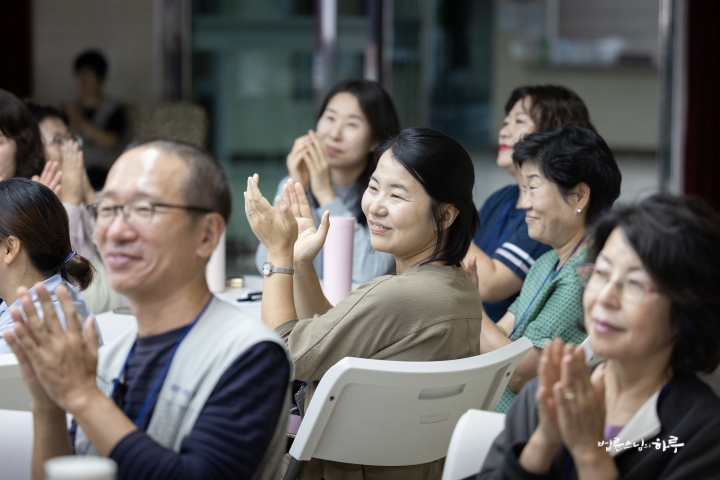
Various episodes experienced during volunteering were shared. Everyone laughed heartily and encouraged each other with big applause. It was a time to reflect on one’s position within the whole of Mosaic Buddha.
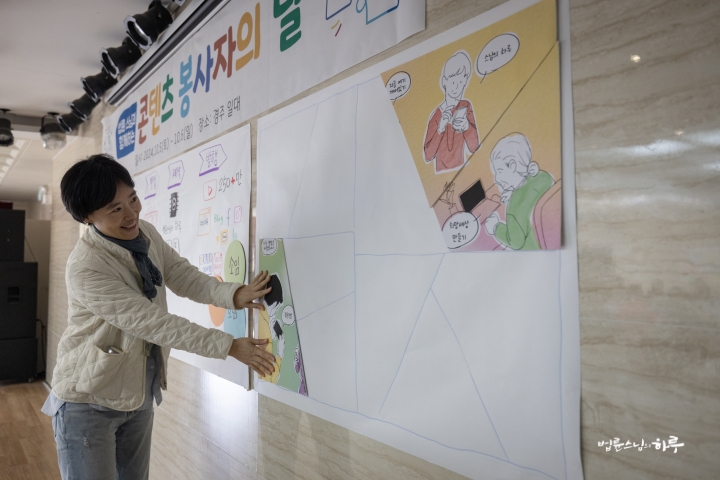
After each team’s presentation – filming, transcription, editing, production, and publication – a piece of the mosaic was attached. Venerable Pomnyun Sunim attached the final piece of the mosaic. Finally, the phrase “We are Mosaic Buddha” was revealed. As the picture was completed, Sunim shared a few words.
“Thank you all for your hard work in your respective roles.”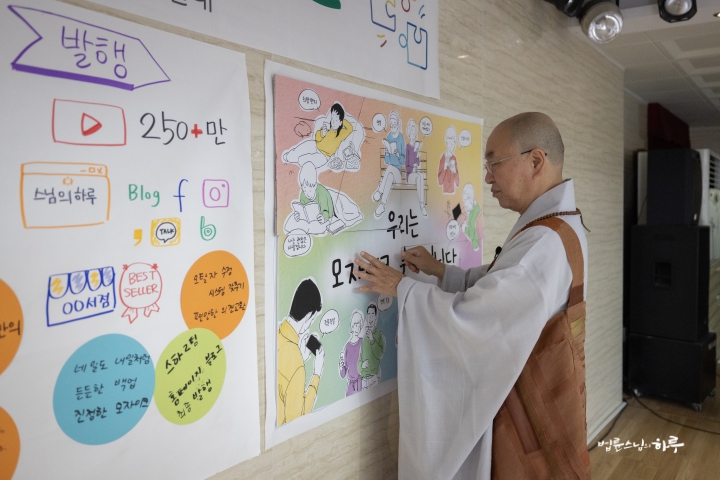
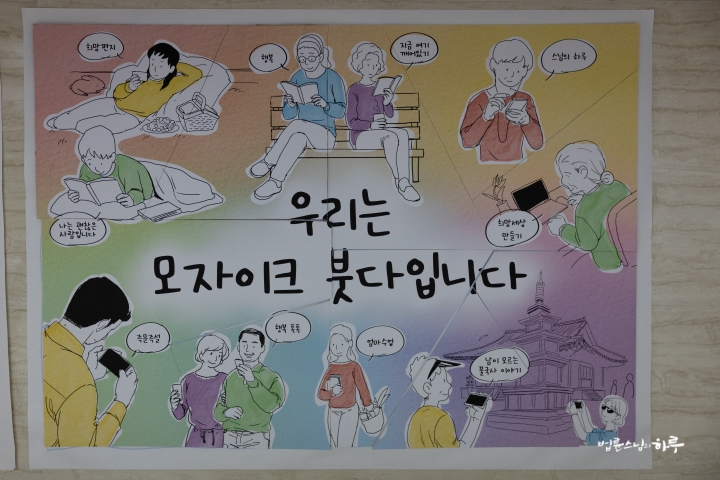
The team introduction session concluded with a big round of applause.
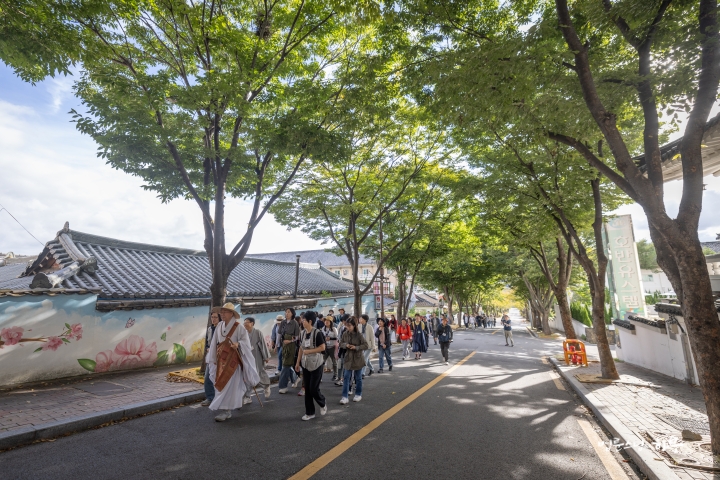
Next, everyone headed to Bulguksa Temple. From 4 PM to 6 PM, for two hours, Sunim provided a detailed guided tour of the temple grounds.
Sunim’s explanation began in front of the map erected at the One Pillar Gate (Ilju-mun).
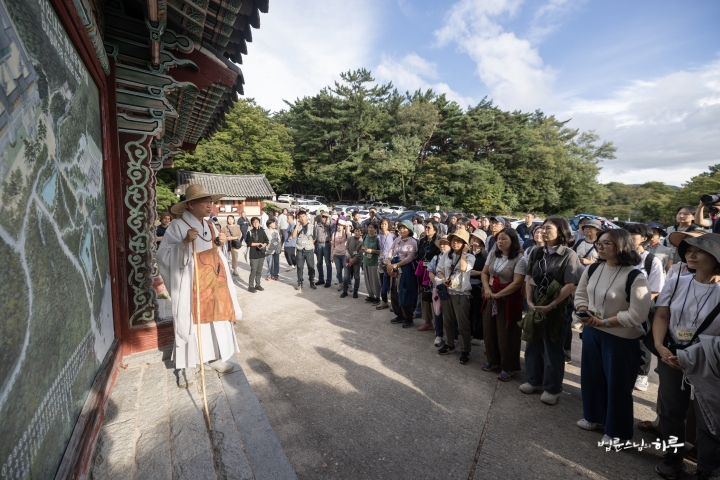
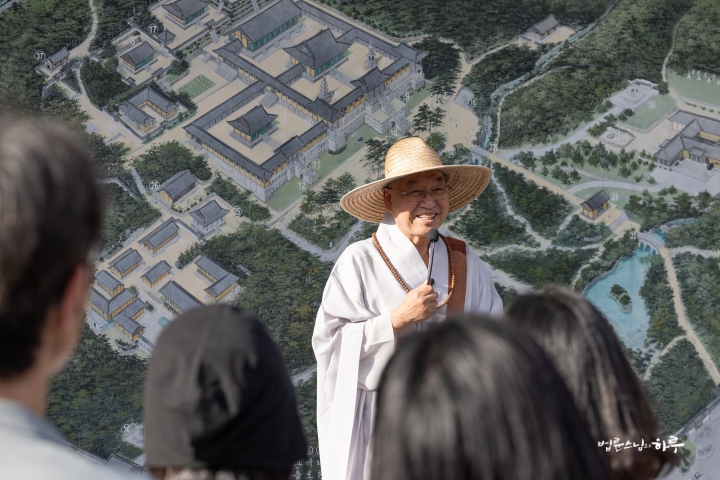
If the sun had been out, it would have been very hot, but fortunately, it was cloudy, making it pleasant for the tour. Although Sunim often guides people through Bulguksa, he tailors his explanations to the audience each time. Today, he provided detailed explanations about the historical origins, temple layout, and background scriptures in a way that was easy for the content-creating volunteers to understand.
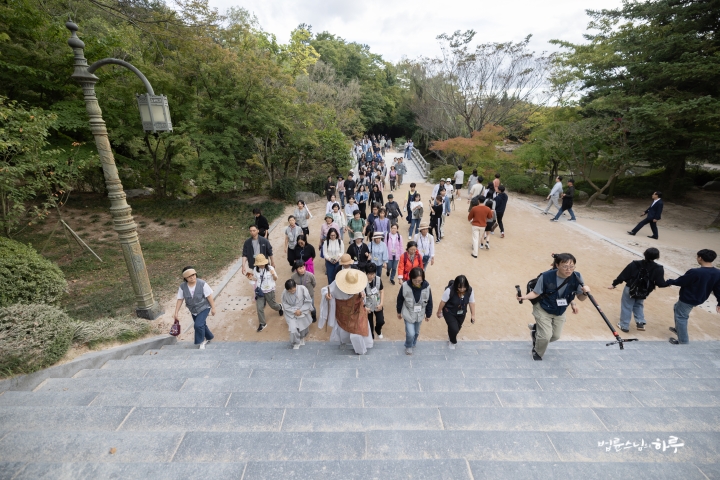
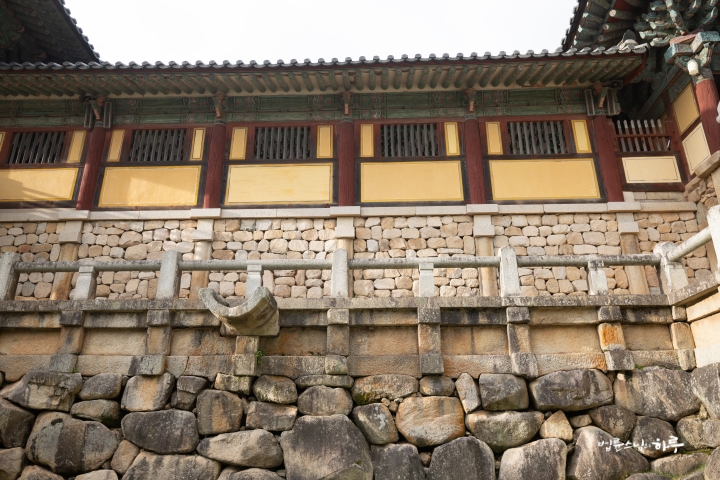
In front of the Cheongungyo (Blue Cloud Bridge) and Baegungyo (White Cloud Bridge), which are National Treasures, Sunim explained about the mosaic Buddha that can be learned from the stone embankment.
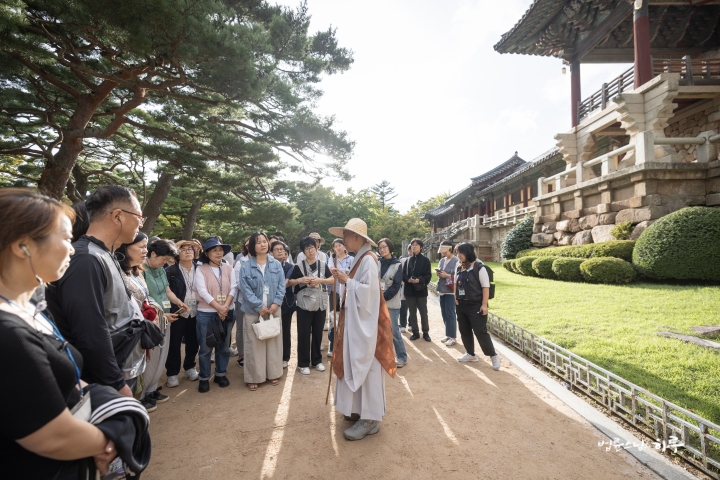
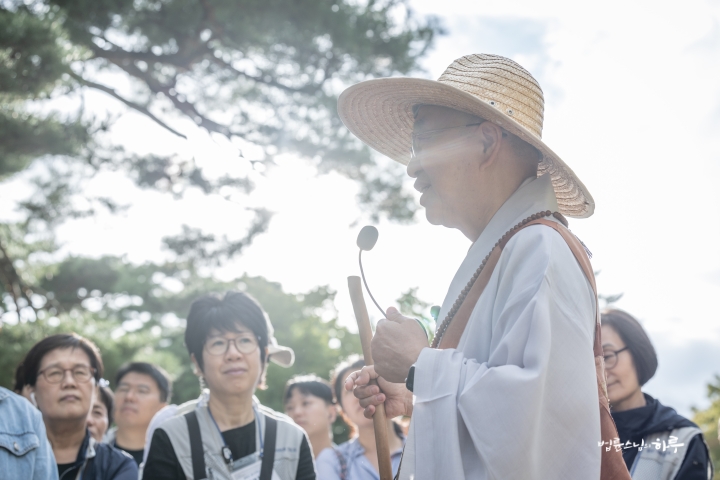
The Mosaic Buddha Spirit in the Foundation of Bulguksa Temple
This world is composed of many different elements coming together. Similarly, the foundation at the bottom has large stones, small stones, and fist-sized stones. The fact that all these stones play their own roles represents the world of Avatamsaka and the natural world. Based on this nature, the human world was built upon it. In the human world, well-refined individuals, or people of character, appear. This is represented by the pillars between the stones. In Buddhism, they are called bodhisattvas. Thanks to the bodhisattvas standing like pillars, the stones in between can be unrefined natural stones. From here, they may look polished, but they are actually natural stones with only one flat side that were collected. Only the exposed side is stacked flat, while the sides are unrefined. They are simply stacked between the two pillars. When stacked this way, the strength of the foundation is the same as if it were built with well-polished stones.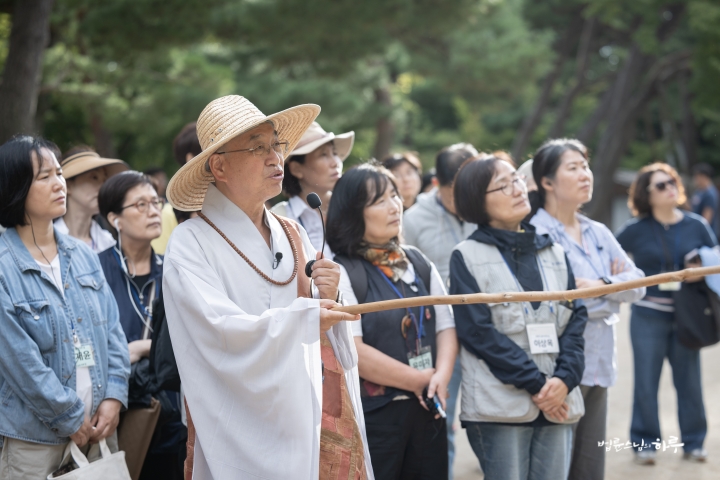
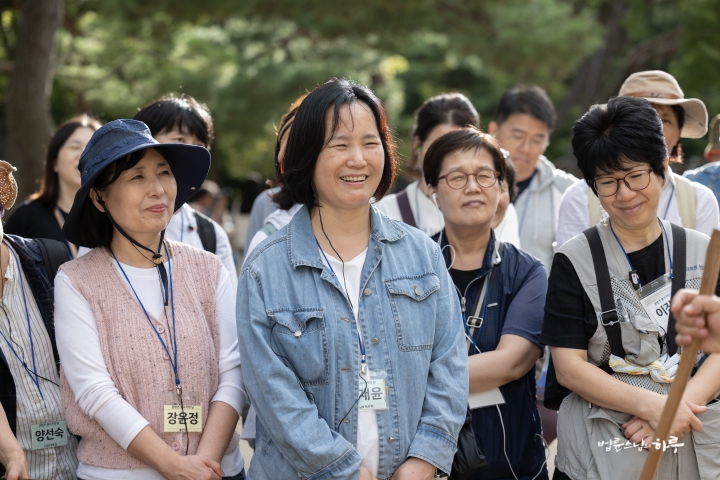
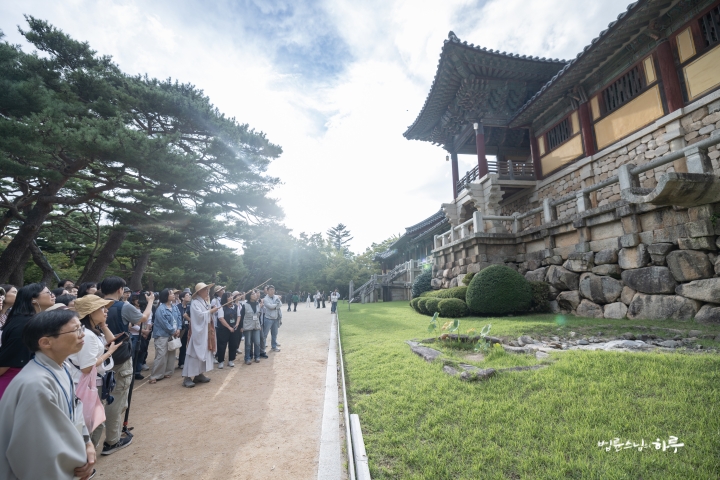
Together, we went up to the front yard of the main hall to see Dabotap and Seokgatap. As we passed through the corridor, Dabotap and Seokgatap, standing tall towards the sky, appeared. Sunim continued his explanation in front of Dabotap.
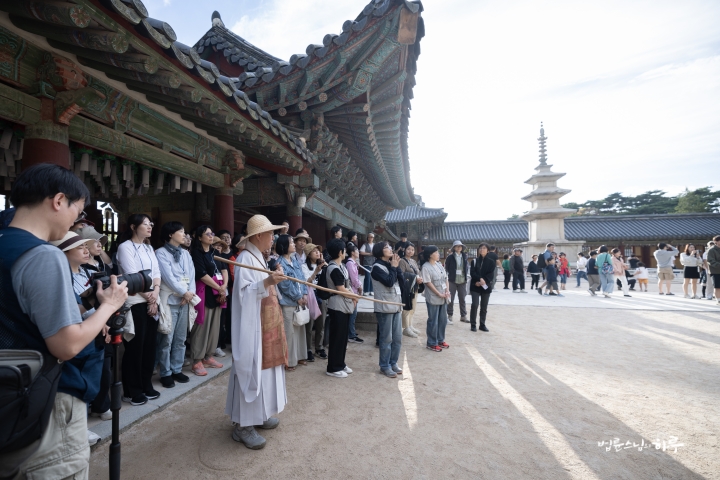
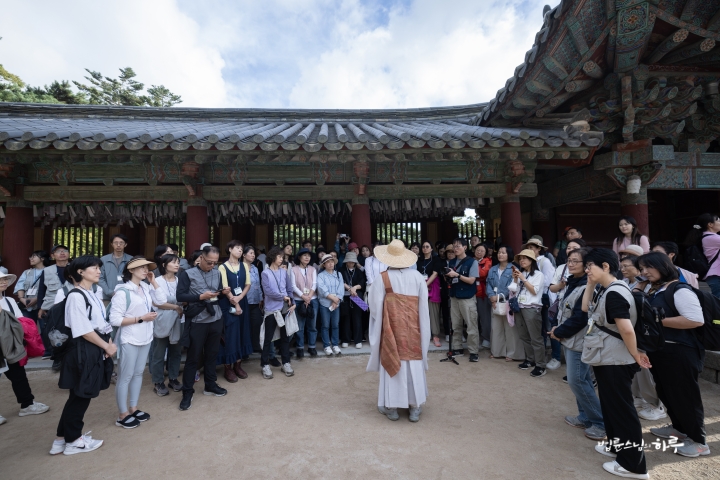
Sunim and the group walked around Dabotap and Seokgatap pagodas, passed by Daeungjeon Hall and Museoljeon Hall, and climbed up the steep stairs.
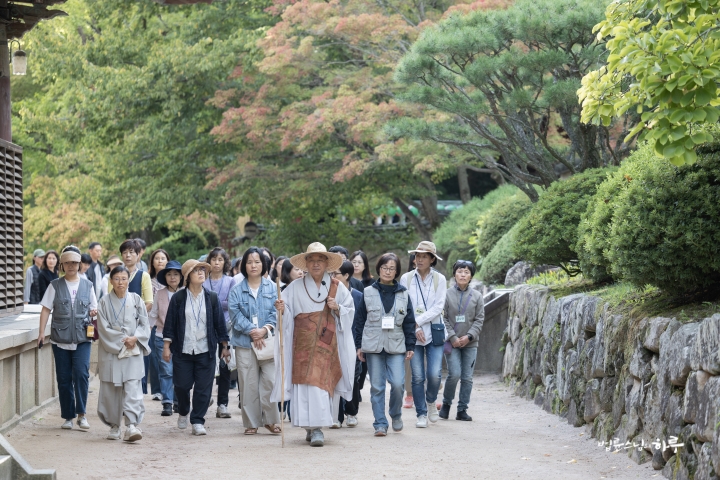
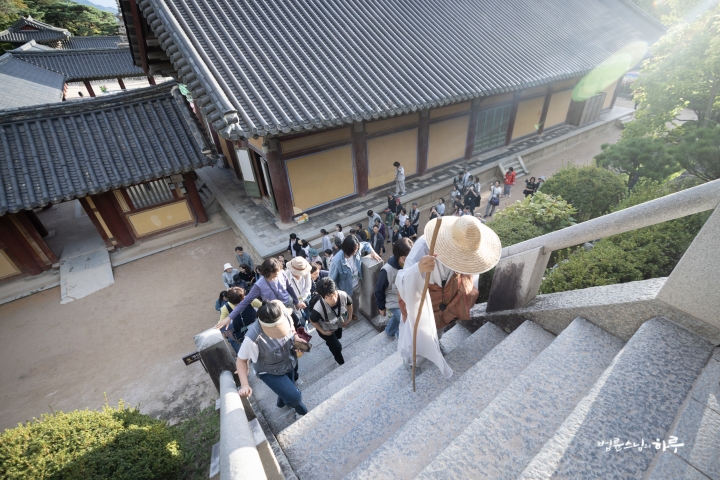
The beauty of Bulguksa Temple was captured in a single glance over the wall.
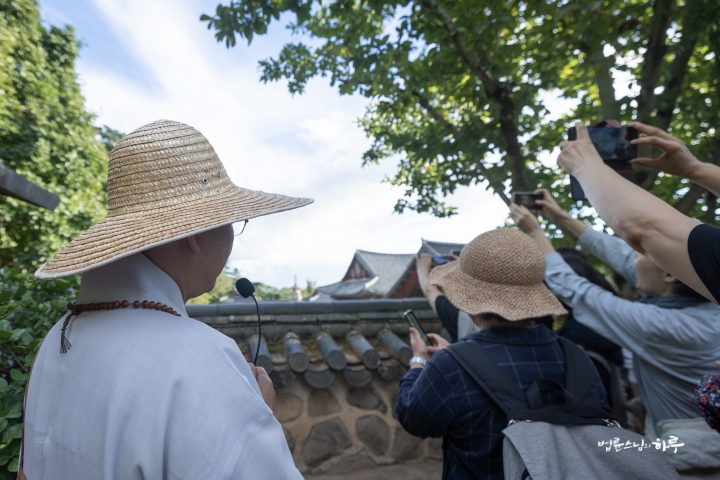
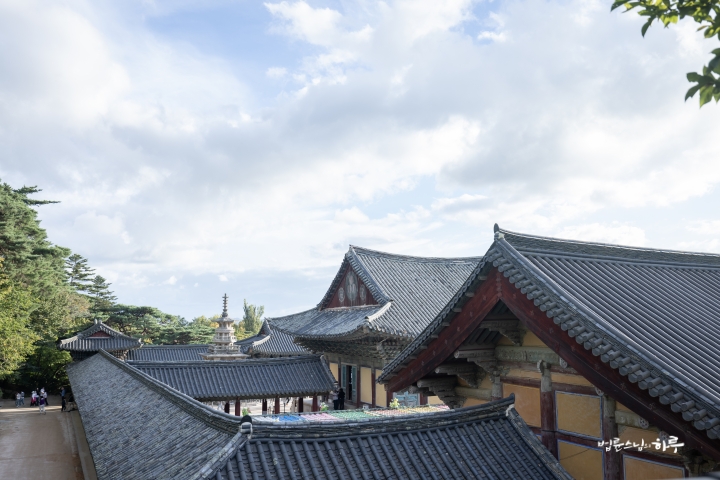
After viewing Gwaneumjeon Hall, passing by Birojeon Hall, seeing Nahanjeon Hall, and finally visiting Anyangmun Gate, the group arrived back at Yeonhwagyo and Chilbogyo bridges.
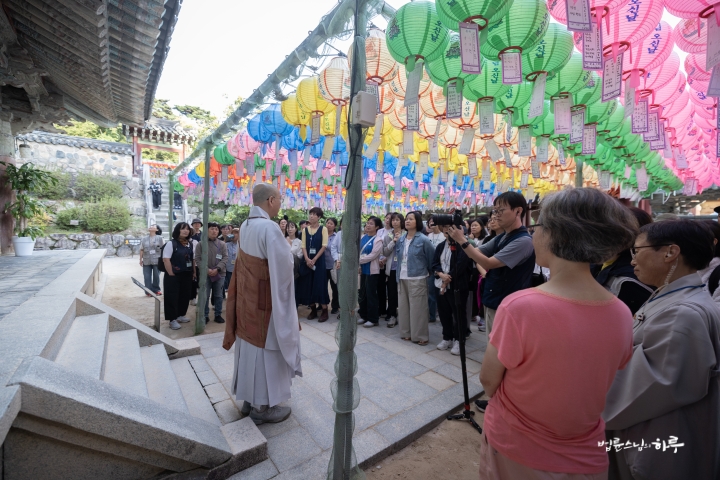
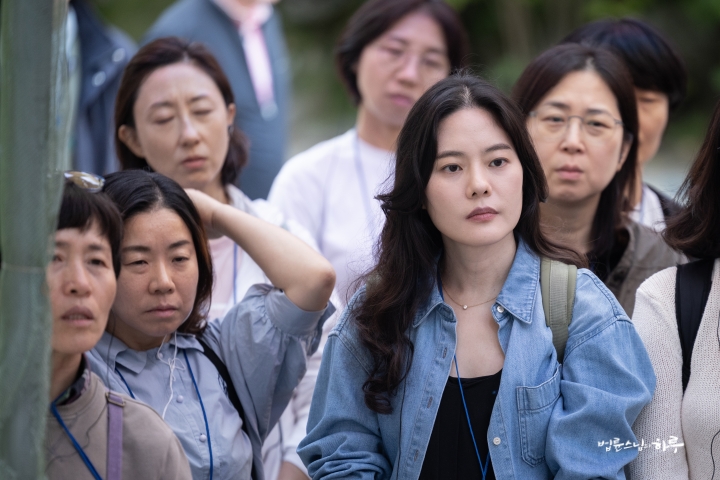
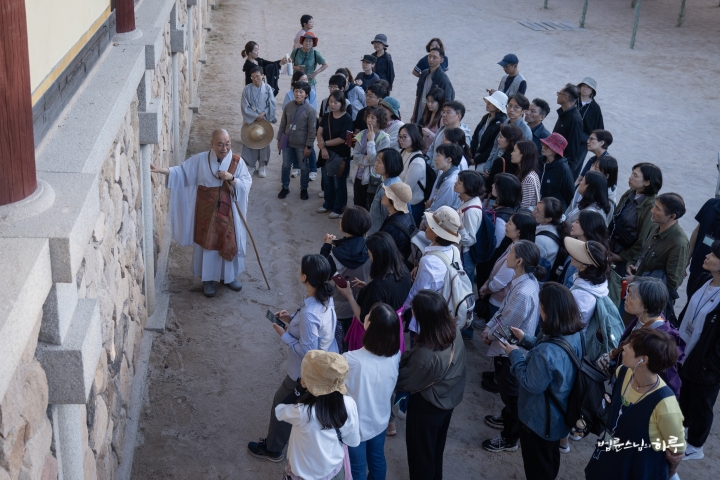
After taking a group photo with Bulguksa Temple as the backdrop, there was time for team photos, including the publishing team, video team, and the “A Day in the Life of Sunim” team.
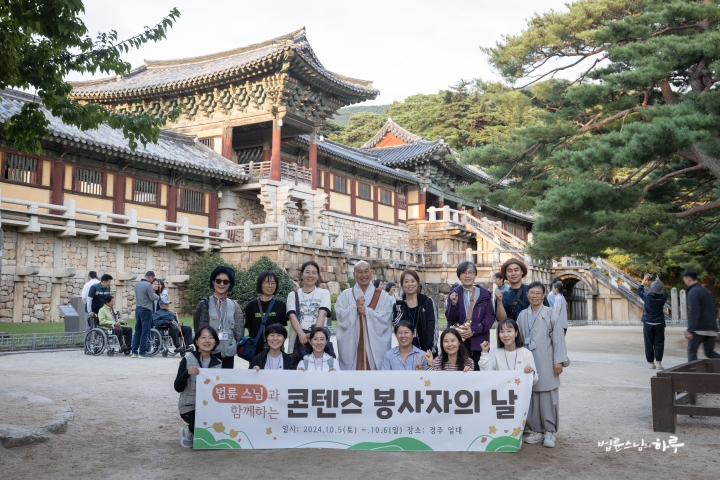
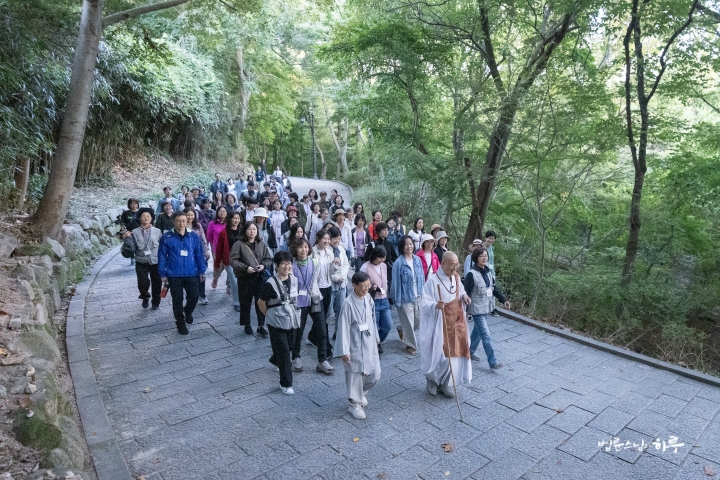
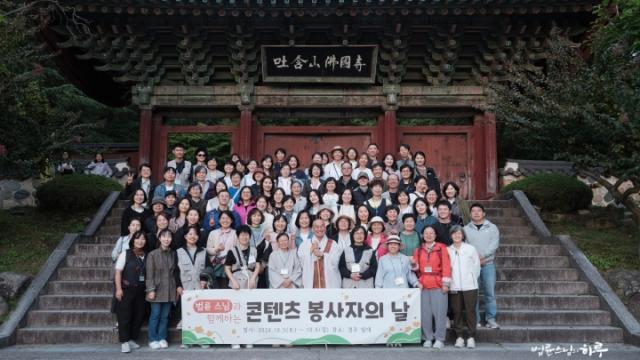
After spending two hours touring Bulguksa Temple, the group returned to their accommodation.

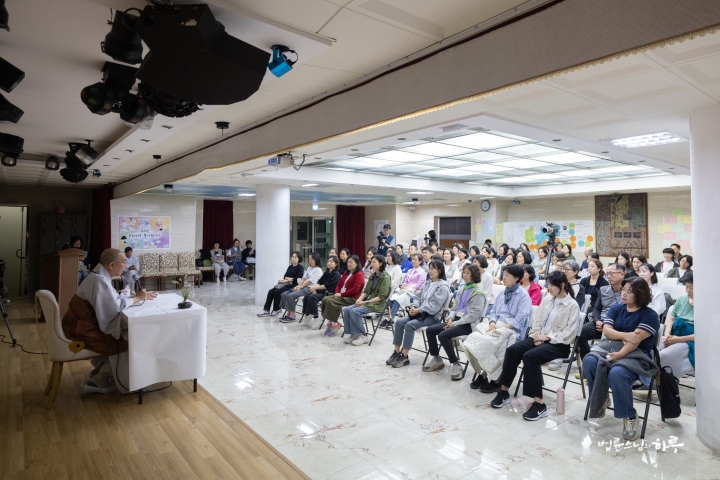
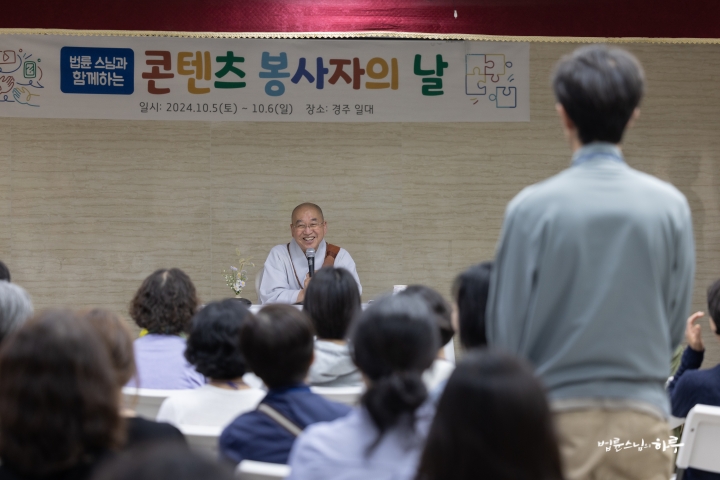
After dinner, everyone gathered in the auditorium at 7:30 PM for the Dharma Q&A session.
Sunim began with a smile and asked:
“Yes.”
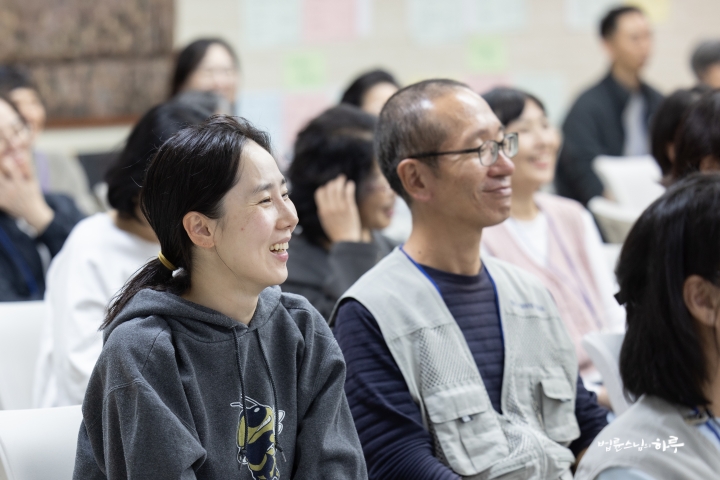
Anyone who had questions or difficulties while volunteering raised their hand to ask Sunim. Over the course of two hours, twelve people engaged in conversations with Sunim. One person sought Sunim’s advice on how to maintain the right mindset when volunteer schedules conflict with personal commitments or when tasks pile up, sometimes causing them to feel greedy and want to step back.
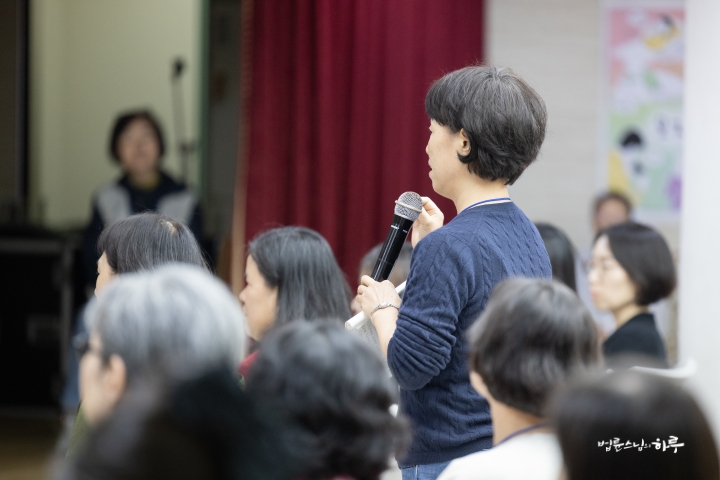
How Should We Handle the Urge to Withdraw from Volunteering?
“When volunteering, sometimes personal schedules conflict, or tasks pile up, making me feel rushed. At times like these, I wonder, ‘Why am I struggling so much just because I volunteered?’ Also, there are times when I feel like I’m forcing myself to volunteer, not for the sake of volunteering itself, but out of a desire to maintain a connection with Jungto Society. What mindset should I adopt when I feel like stepping back from volunteering?”
“We must stop actions that harm others. We should cultivate actions that help others. In Chinese characters, this is called ‘ji-ak-su-seon’ (止惡修善).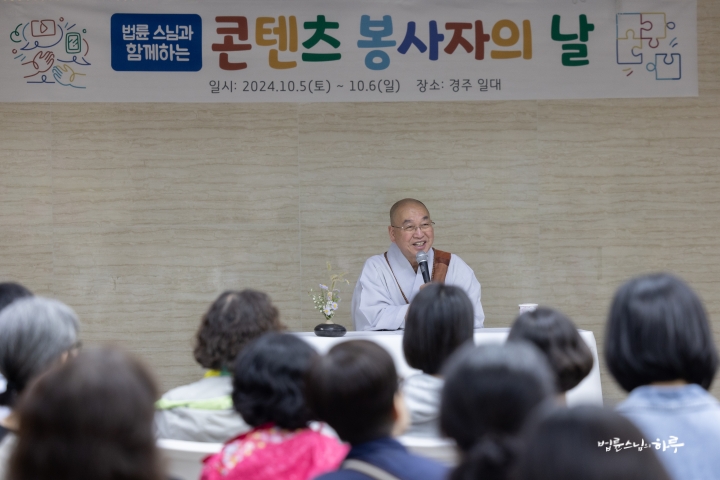
“Yes, thank you.”
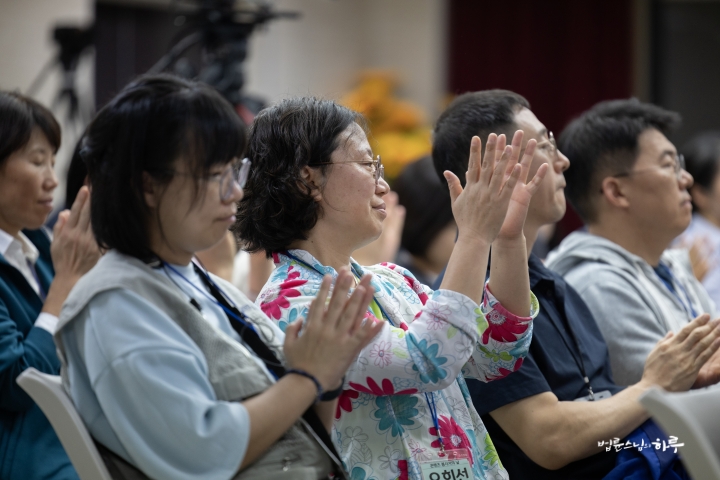
The questions continued.
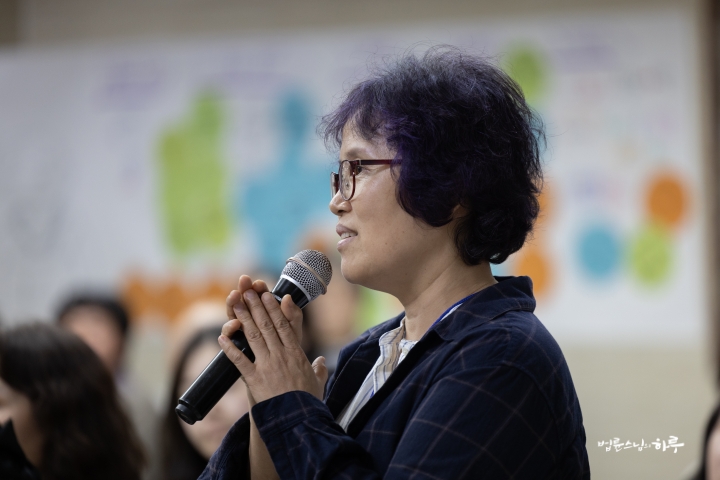
Are there plans to publish “A Day in the Life of Sunim” as a book? I’m also curious if the manuscripts are organized by date.
I’m in charge of compiling transcripts in the publishing team. I need to review them carefully before sending them to you, but my eyes hurt and I get tired from repeated reviews. I love the transcription work, but it’s exhausting to work until 11 PM and wake up at 5 AM.
When I first started volunteering for transcription, listening to the Dharma talks felt precious, but over time, that sense of value seems to be fading. What mindset should I have while volunteering?
I’m curious why there’s almost no production of Sunim’s Dharma Q&A or content in China. Is it due to surveillance of religious activities, or are there other reasons?
I find myself spacing out more often. In the past, I had troubles, but now I don’t, yet my work pace has slowed down and my relationships with people have become looser. How should I interpret this situation?
Are there plans to make a documentary about Sunim? I majored in film and directing, so I’d like to help.
When I introduced “A Day in the Life of Sunim” to an acquaintance, they weren’t interested because they thought it was simply about Sunim’s daily routine. Would it be better to change the name to something more appealing to the public?
I’m curious about when Sunim reads books or newspapers. There are no photos of Sunim studying, so I wondered if Sunim doesn’t study.
Sometimes my husband criticizes me, saying, “Is that what Venerable Pomnyun taught you?” I dislike hearing this and often do volunteer work in secret. How should I deal with my husband?
I’m curious about Sunim’s teenage years. How did you choose the path of a monk after dreaming of becoming a scientist?
I’m raising a three-year-old child. What mindset should I have while raising my child? Also, I’m curious about what kind of person Sunim’s mother was.
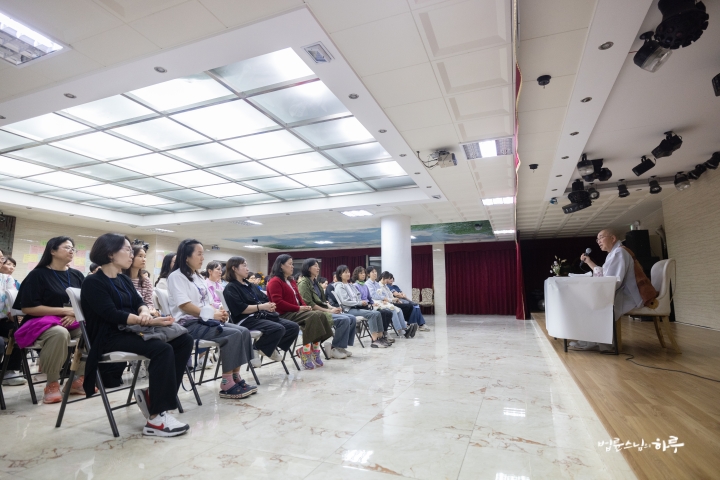
It was a time to establish what perspective to have when creating content and what mindset to have when volunteering. The Dharma Q&A ended at 9:30 PM, followed by group sharing sessions.
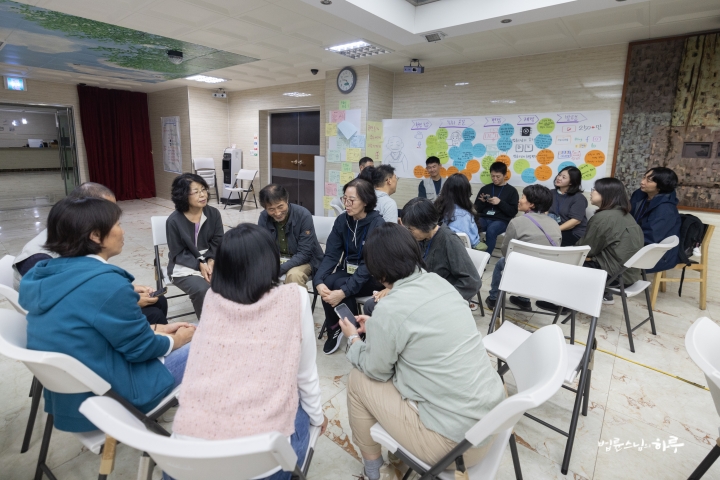
Tomorrow morning, Sunim will guide the group to King Munmu’s Underwater Tomb and Gameunsa Temple Site in Donghae, then hold the closing ceremony for the Content Volunteer Day at Banwolseong Fortress. In the afternoon, he will participate in an online Unification Festival with North Korean defectors for a dialogue session.