I’m Curious About How to Recover Lent Money Without Causing Hurt
Oct 3, 2024 - Meeting with Seoul Superintendent of Education Candidate, Celebration of Publishing "Pureun Baedal Malchip" Book
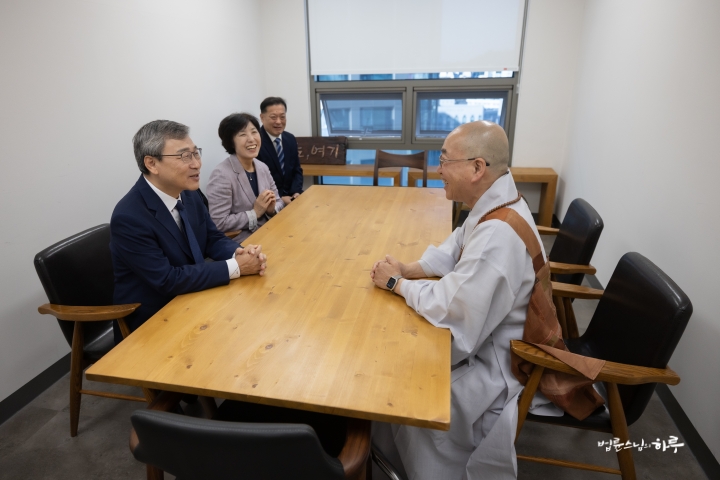
“Today is the first day of official campaigning, and I started my first schedule by visiting Venerable Pomnyun Sunim. I’ve learned a lot from observing Sunim’s activities, so I came to visit.”
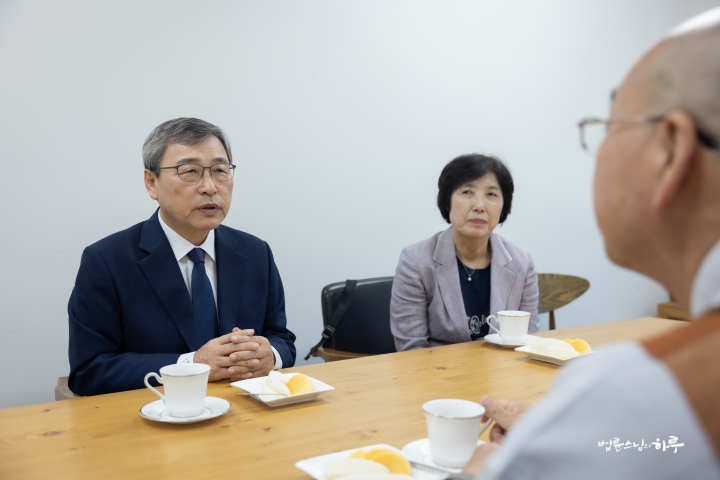
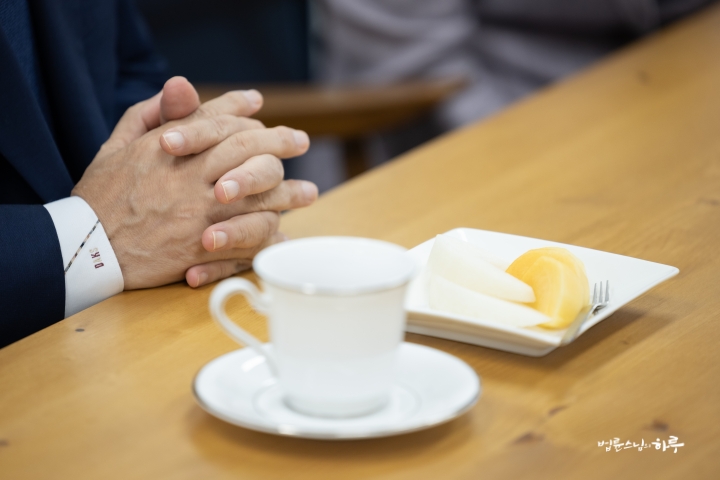
The candidate explained that he had served as the chairman of the Truth and Reconciliation Commission and decided to run for election after retiring from Seoul National University last year because the country was in such turmoil. His wife, who graduated from Jungto Sutra School, accompanied him to meet Sunim. Sunim shared his thoughts on education issues with the candidate.
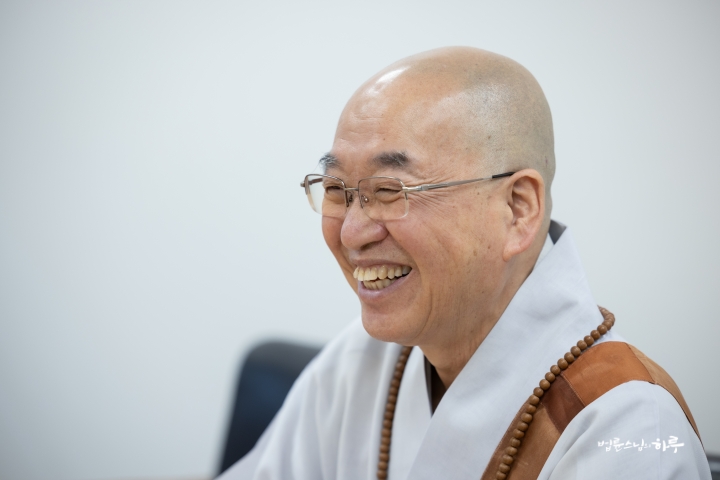
Education for Fostering Creative Talent
In the past, teachers taught everything in detail, but nowadays, I think the education system should change so that students watch videos of knowledge-based content in advance, and during class time, students discuss among themselves with teachers assisting. This is how creative education can be achieved. In most classrooms in our country, teachers still explain alone at the front while most students doze off. Until now, imitation education has been very successful in developing Korea, but we can no longer overcome the stagnation phase with imitation education. To nurture creative talent that can respond to future society, we need to change the education system first.”“I completely agree with your thoughts, Sunim.”
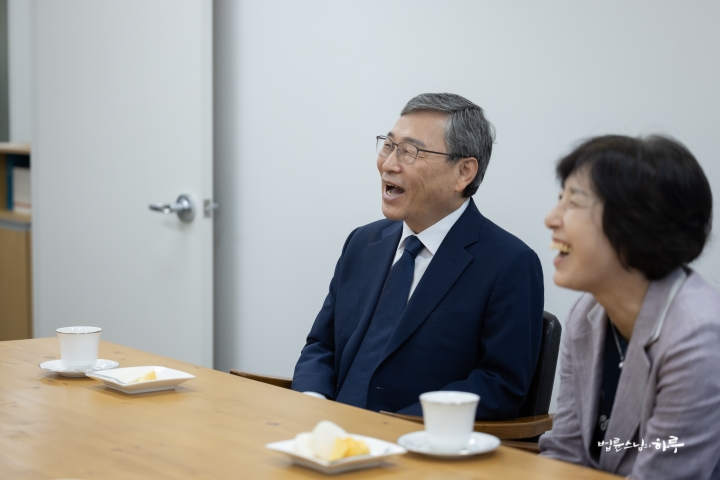
Sunim shared many stories about the direction Korean school education should take, including the trial and error Jungto Society experienced in transitioning online.
“Thank you so much for your valuable words today.”
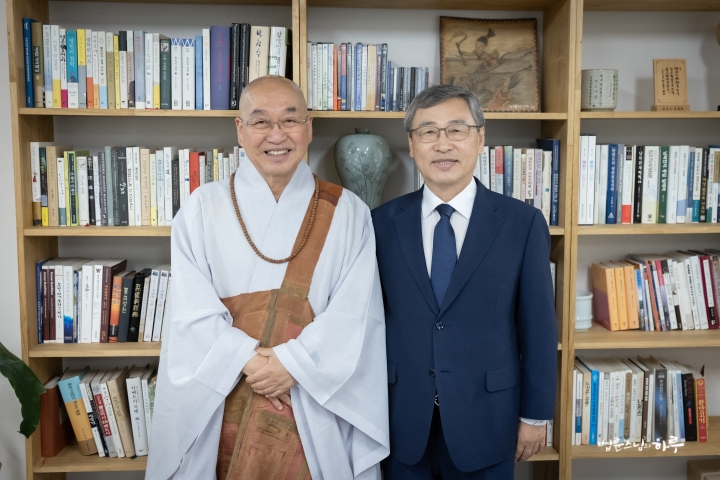
After finishing the conversation, they took a commemorative photo together.
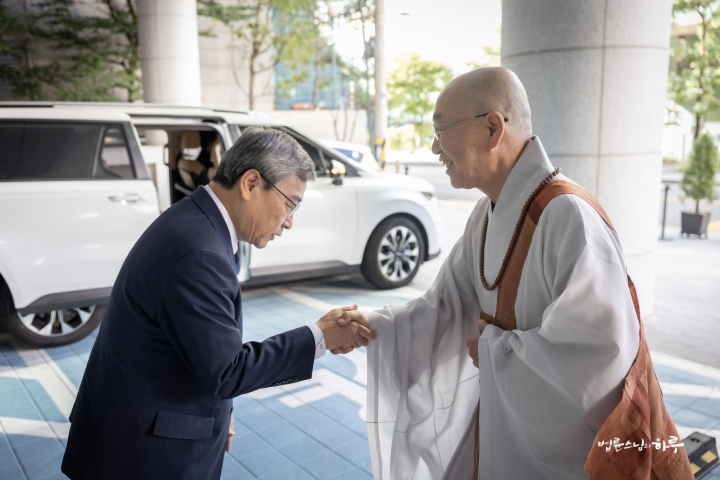
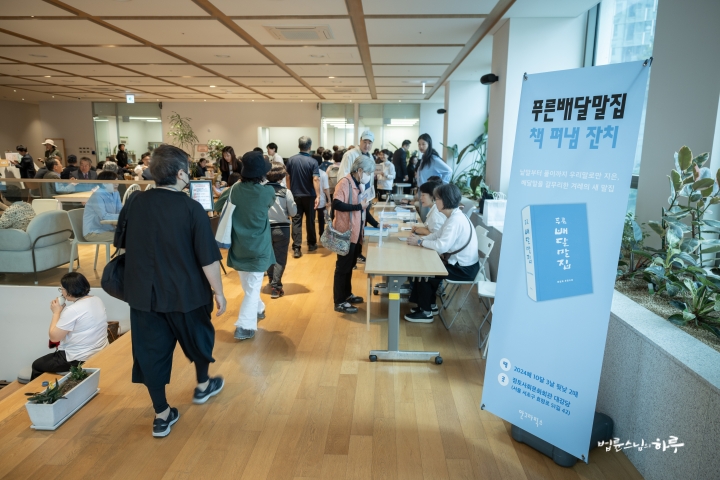
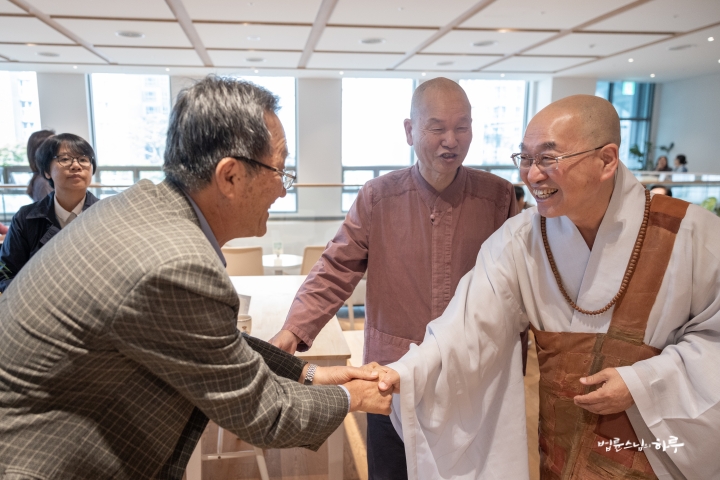
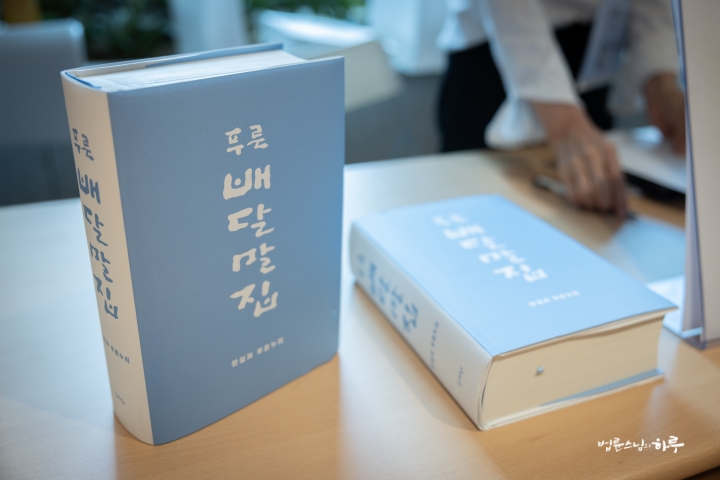
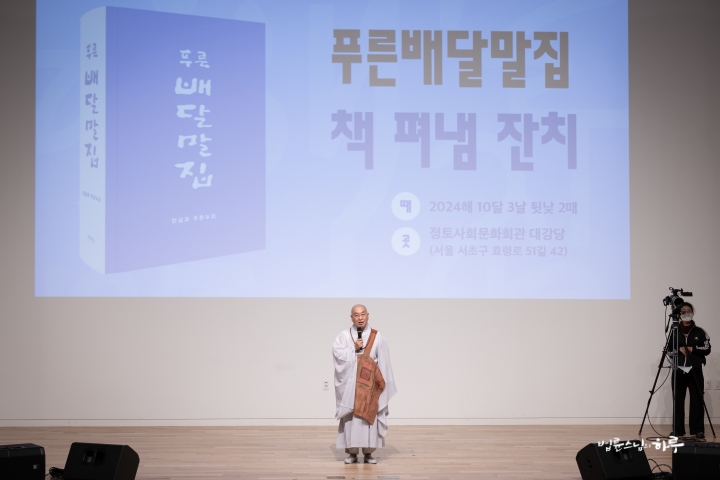
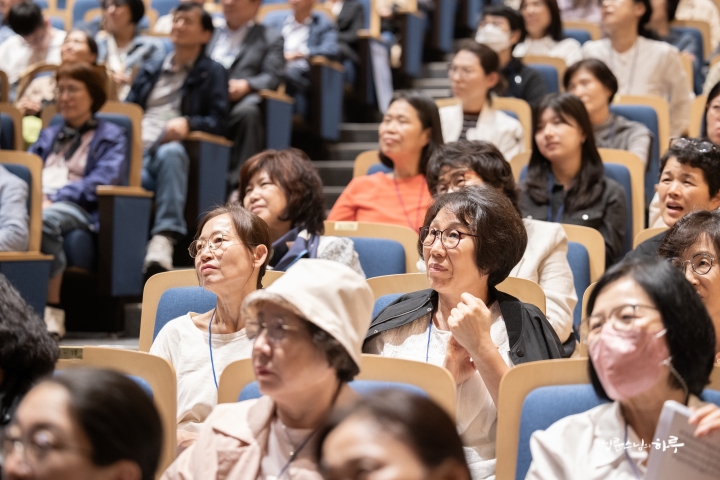
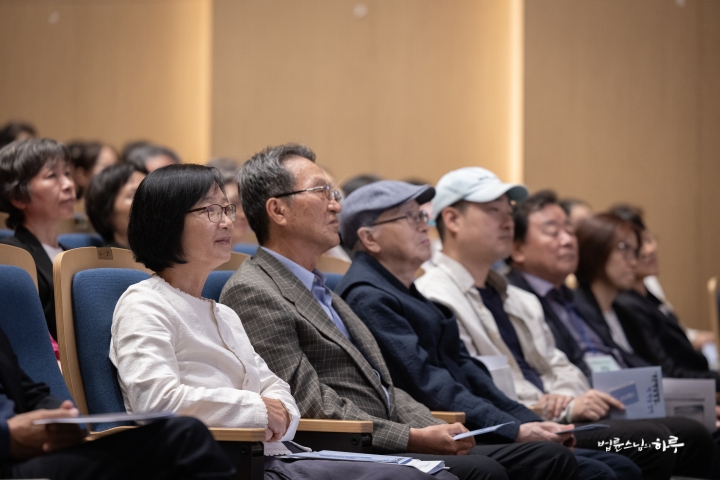
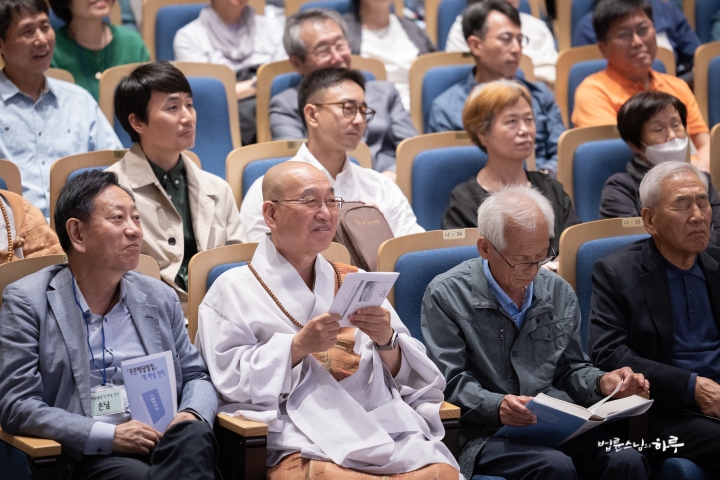
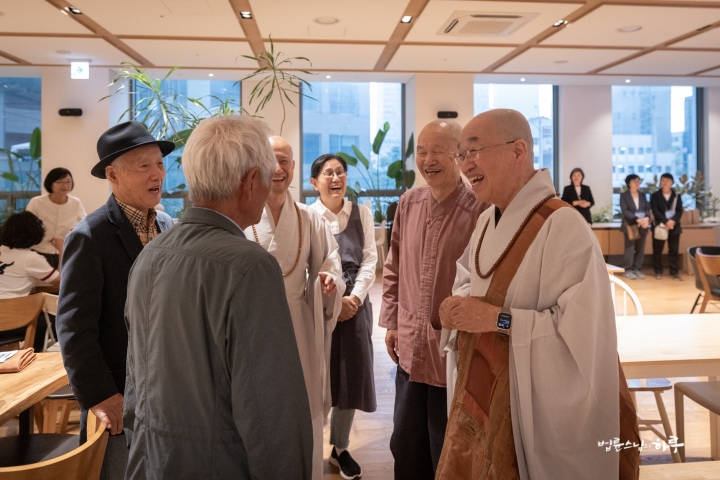
After lunch, Sunim greeted guests at the cafe on the 2nd floor of the Jungto Social and Cultural Center from 1:30 PM. Today is the day of the celebration for publishing “Pureun Baedal Malchip”, a book that explains Korean words using Korean. Many people who have put a lot of effort into cultivating the Korean language gathered in one place.
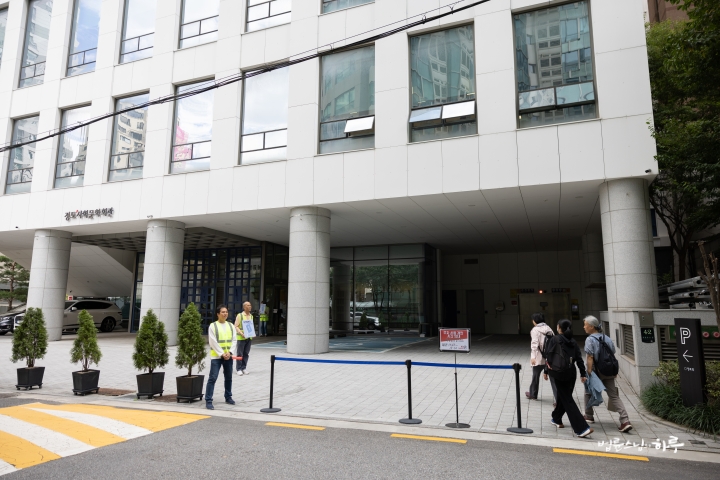
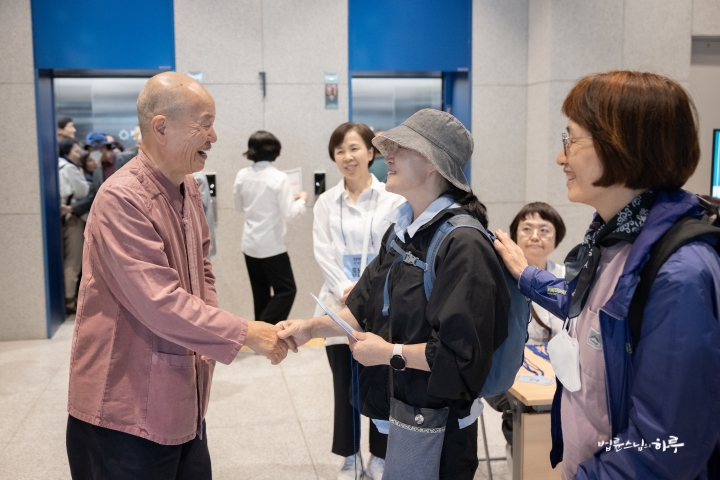
After greeting each other warmly, everyone moved to the basement auditorium where the book celebration was held at 2 PM.
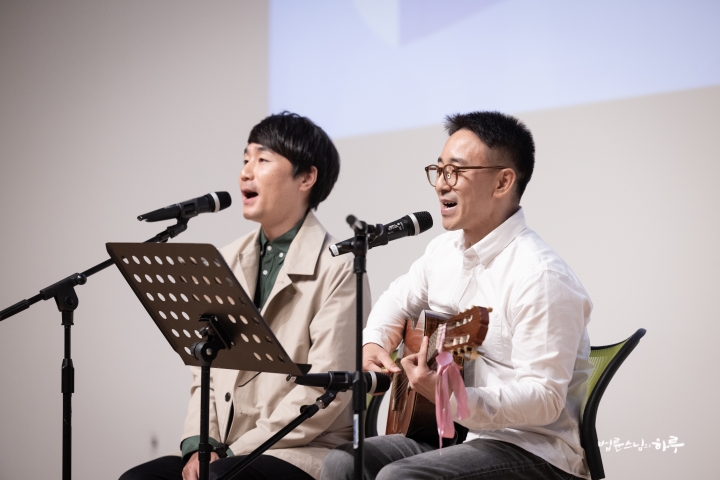
First, as an opening performance, Han Jae-kyung and Lee Sang-shin beautifully sang “Our Language Song” and “Evergreen Tree” with their beautiful voices.
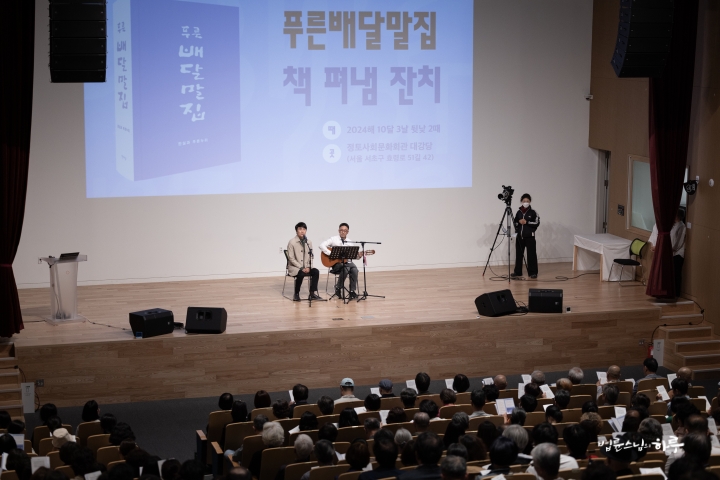
♬ Let’s use easy Korean words, easy words ♬
♬ Words we used since childhood, words we spoke with puppies ♬
♬ Shepherd’s purse, dandelion, pasque flower, violet, wild grape, Korean wild grape, hardy kiwi, acorn, Minnow, willow, crucian carp, Korean gudgeon, loach ♬
♬ Cuckoo cuckoo cuckoo, cuckoo cuckoo cuckoo, moorhen moorhen moorhen ♬
They opened the book celebration stage wide with a wonderful song that touched our hearts.
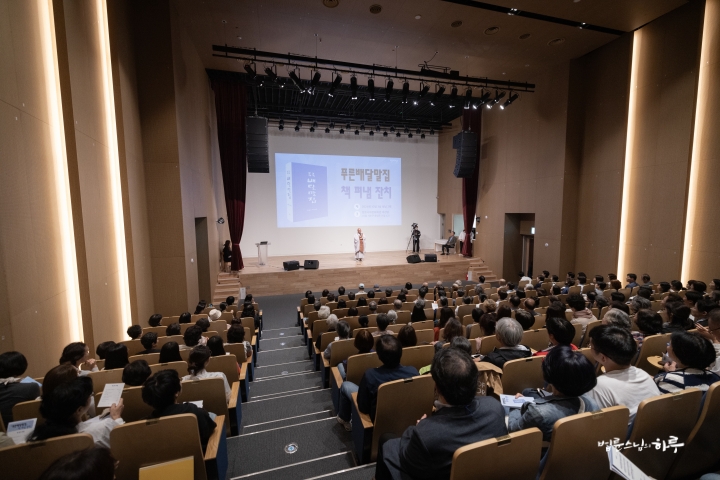
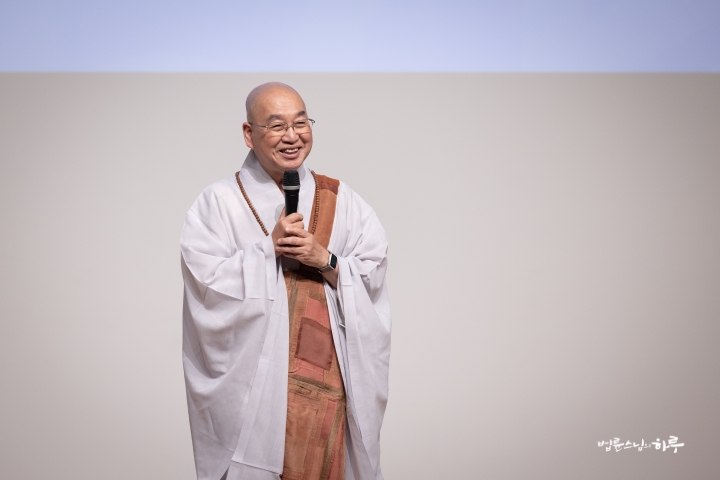
Next, Sunim gave opening remarks to start the book celebration.
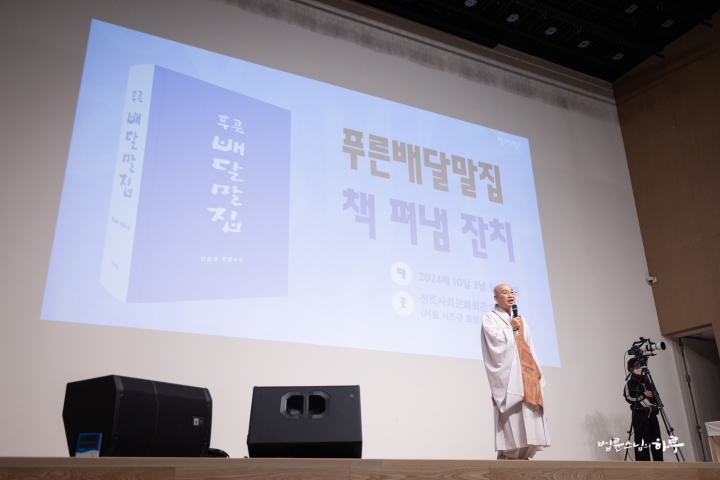
Four Major Difficulties the Korean Language Had to Face
It is said that we had our own writing system called Garimto from ancient times. However, our writing system was not used in daily life, and we eventually adopted Chinese characters to express our language. As we expressed our language using ideograms, we couldn’t express words using phonetic symbols, and the Chinese characters introduced to write actually changed our language. This was the first difficulty our language had to face. However, only 5 percent of the population, including a minority of Confucian scholars and the ruling class, learned Chinese writing, so the Korean language used by the common people could be passed down as it was.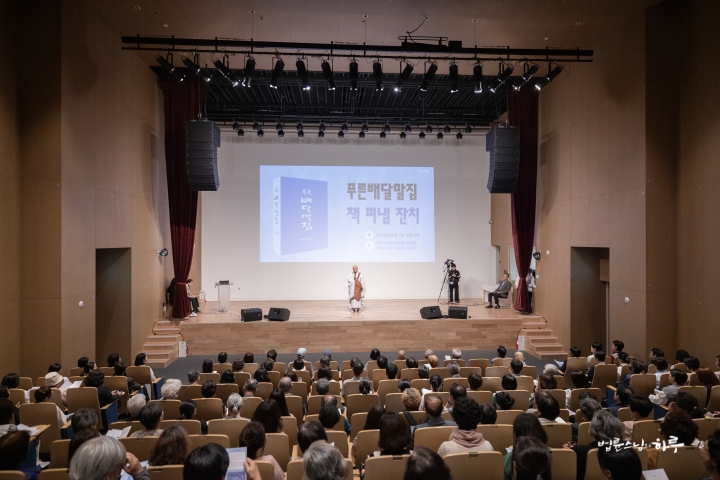
How Can We Exercise Creativity?
The citizens of our Republic of Korea, with its long history and tradition, already had the DNA to manifest this Korean Wave historically. It’s because we had this foundation that our culture could develop like this today, not simply because we made efforts recently. To become a little more creative, I think we need to know more deeply about our language and our history. Hasn’t most of our education so far been about imitating the technology and culture of other countries? But the imitation method has now reached its limit. To pioneer new things and exercise creativity, we need to fuse what is uniquely ours with what has come from outside. I’m not saying we should insist only on our traditions. When we know our traditions better, we can also develop pride in our hearts. This event was organized with such an intention.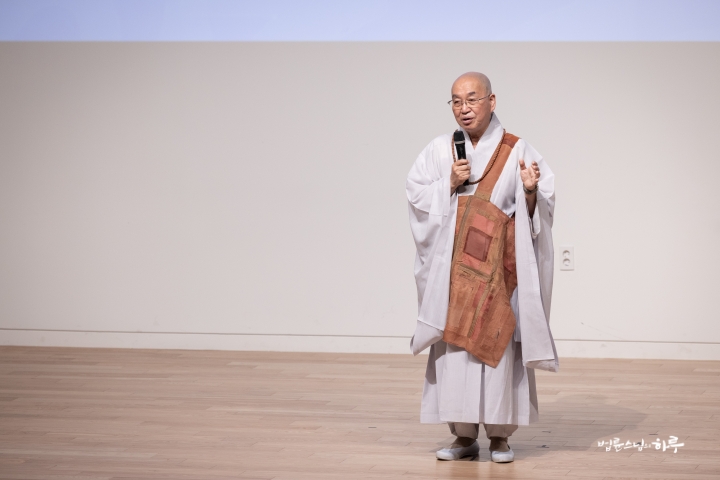
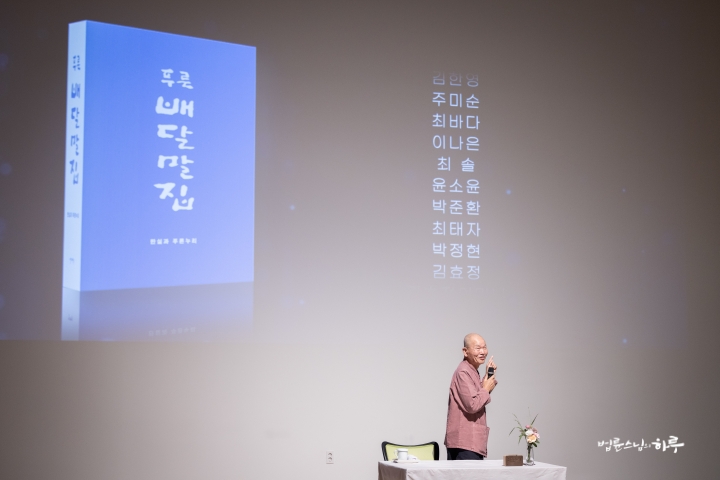
Next, Deulkkot from Pureunnuri shared the story of how the book “Pureun Baedal Maljip” came to be, along with a video presentation.
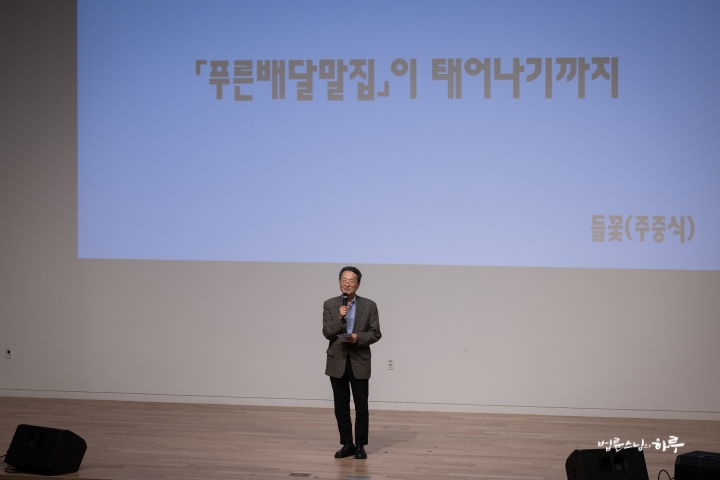
“In 2014, at the ‘Native Language Lovers Meeting’ held in Jinju, I met Kim Su-eup and heard about ‘Our People’s Language and Life,’ which is when we first set our minds to create a dictionary. Despite many difficulties, Han-sil didn’t give up and walked steadily day and night to fulfill her initial goal. Eleven years after setting that first goal, ‘Pureun Baedal Maljip’ was finally published.”
It was a touching moment to witness Mr. Choi Han-sil’s determination to walk the path of reviving our language without giving up.
Next, they heard from Professor Lee Ki-sang, who wrote the sharing note for this book, followed by a speech from An Mano, the representative of Ahn Graphics Publishing House, which published “Pureun Baedal Maljip.”
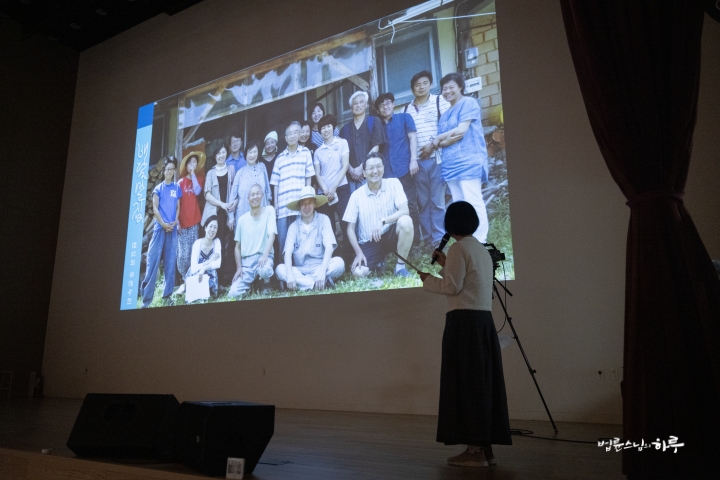
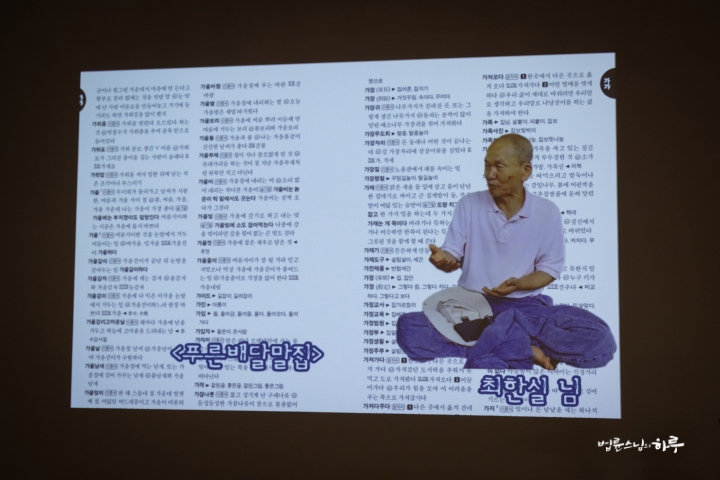
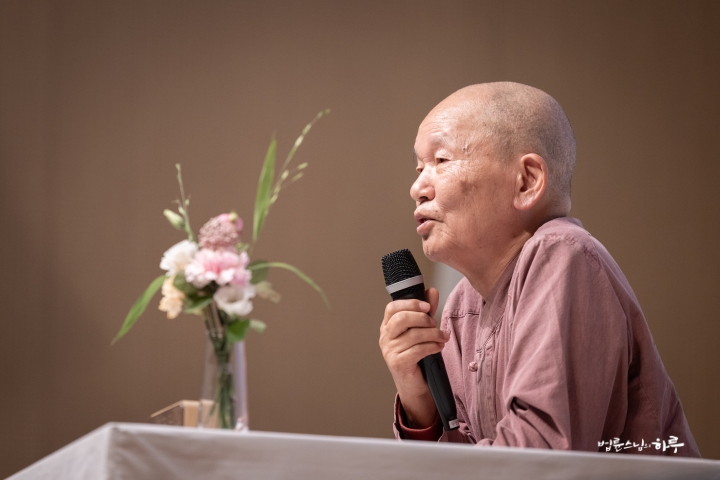
Next, they listened to the words of Mr. Choi Han-sil, the author of this book. As the host announced that he would invite his to the stage with a big round of applause, Mr. Choi Han-sil smiled and began speaking.
“We were just asked to give a big round of applause, but how do we express ‘applause’ in our language?”
“Son-ppeok (hand clapping).”
“Now, let’s give a big son-ppeok once more.”
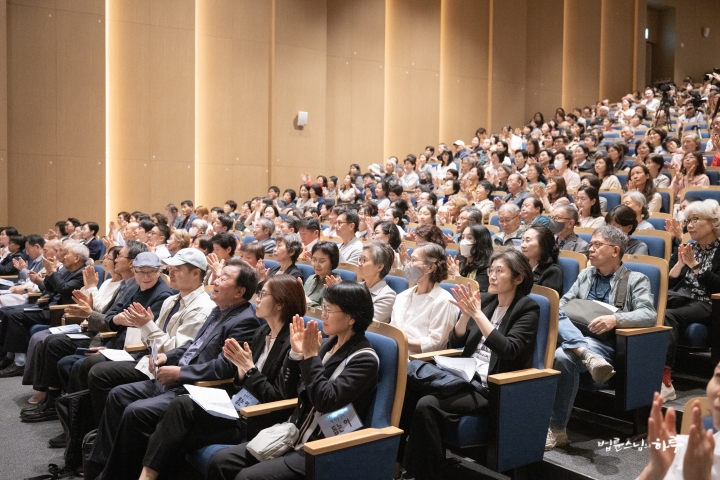
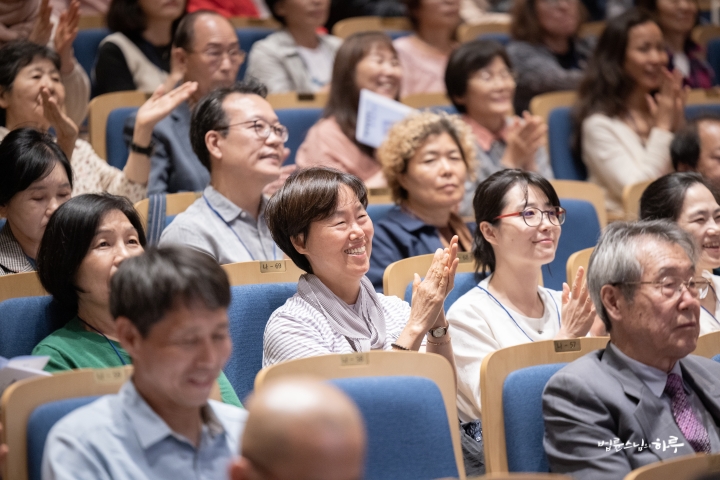
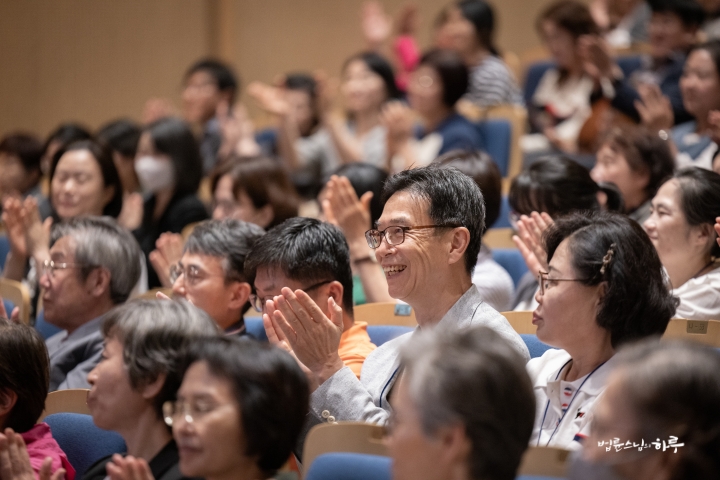
He began his talk about our language while everyone clapped loudly.
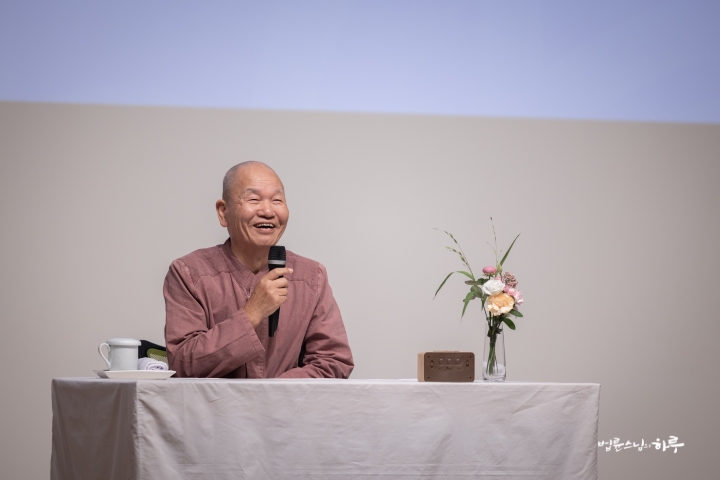
“Our native words should flow naturally when we open our mouths, but how did we end up using foreign words so often? We could simply say, ‘How do I use this tool?’ but instead, we use difficult expressions like ‘What is the usage method of this machine?’ The word ‘use’ is a Japanese-derived term. We have the simple expression ‘mal’ (word), yet we insist on saying ‘eon-eo’ (language).
In our language, we call a school ‘baegot.’ Today, most of the words we learn and use in baegot come from Japanese. If we were lacking native words and needed to borrow from other languages to enrich our vocabulary, it would be understandable to adopt words from other countries. However, the words that came from Japanese have pushed out perfectly good native words and taken their place.
I invited you today for a ‘book celebration,’ but ‘book launch’ is a Japanese-derived term. These days, people don’t even use ‘book launch’ anymore, they use ‘book concert’ more often. When eating at a ‘bapjip’ (rice house), it feels like eating at a low-class place, so most people say they eat at a ‘sikdang’ (restaurant), and nowadays, saying you eat at a ‘restaurant’ makes it sound like you’re eating at a high-class place. (Laughter)
The Korean word for ‘person,’ ‘saram,’ comes from ‘salam,’ which combines ‘sal’ meaning ‘to live’ and ‘am.’ It means the best-living life among all living beings. Our people created the word ‘saram’ with this meaning. Therefore, a person should not live carelessly but should live well. The word ‘saram’ implies that one should not only have a calm and content mind but also live well in all aspects. Our people did not consider someone living well alone while others around them were starving to death as a true ‘saram.’ It was our people’s way to offer even an empty room to those without a home.
Although it’s late, it’s right to reclaim and use our language now. Reviving our language, which embodies our spirit, is an act of saving our people and strengthening our country from its foundations.”
Mr. Choi Han-sil provided numerous examples of commonly used Japanese and English words, demonstrating how replacing them with native Korean words can bring out their true meaning and illuminate the spirit of our people.
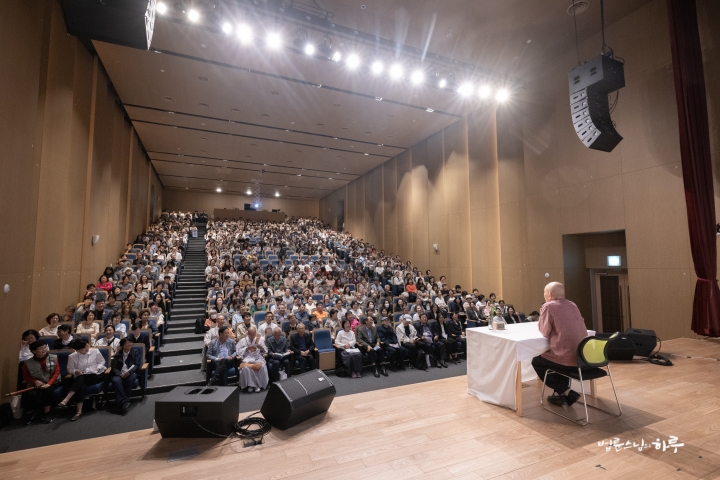
Finally, after a Q&A session addressing curious points, the lecture concluded. This was followed by a Korean language riddle session. Mr. Choi Han-sil posed questions, and the audience raised their hands to answer correctly.
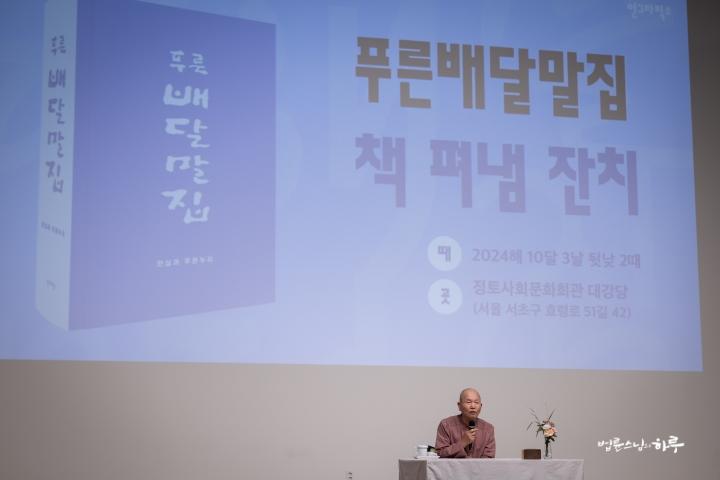
“How do you read 365 days in Korean?”
“Seo-on-yeosun-datsae-il.”
“How do you read the year 2024 in Korean?”
“Duzeumun-seumulne hae.”
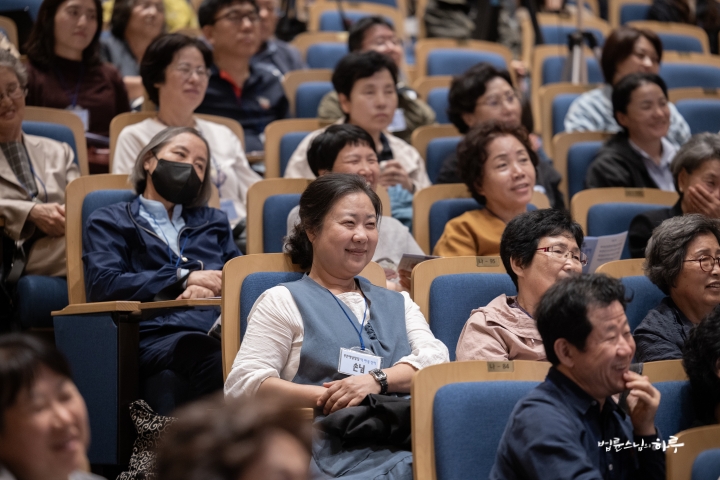
As they solved riddles, it was time to conclude. Those who answered correctly received eco-friendly gifts.
It was a time to understand why our people should use our native language, even now. After the book celebration, they all took a commemorative photo together.
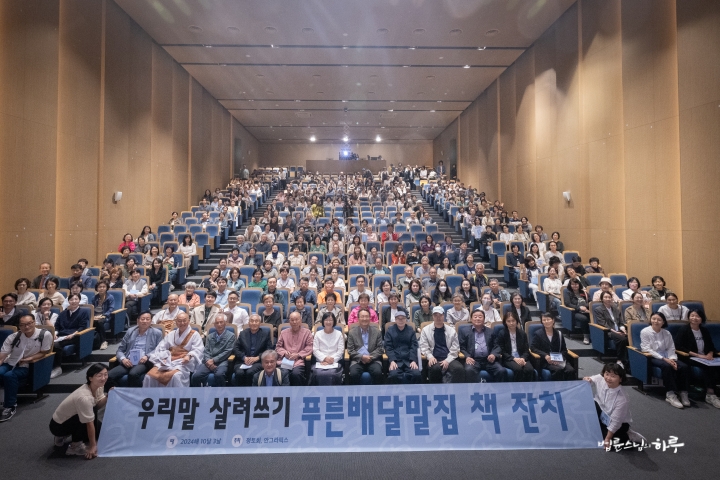
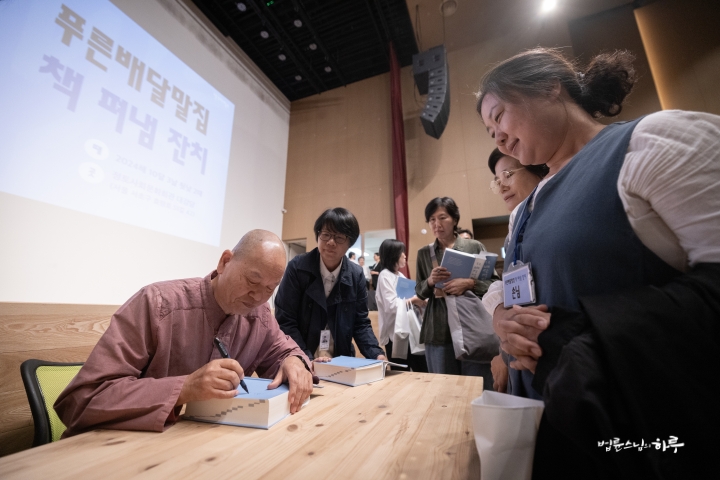
Following this, there was a book signing session on stage, after which they moved to the second-floor cafe for a post-event gathering. Mr. Choi Han-sil personally gifted chestnuts he had collected from the mountains to the attendees.
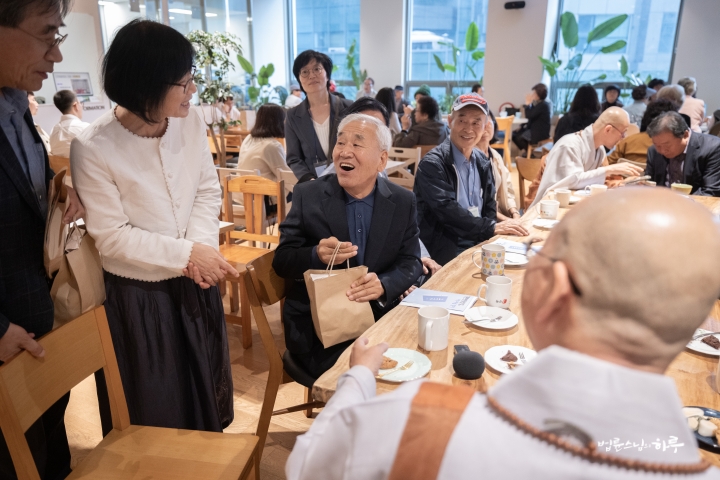
Sunim also shared tea and conversation with the guests. He mentioned that, unlike Western learning, he plans to embark on a pilgrimage in late November to commemorate the 200th anniversary of the birth of Choe Je-u, who founded Donghak from an independent and subjective standpoint. Sunim and the guests also had extensive discussions about Donghak.
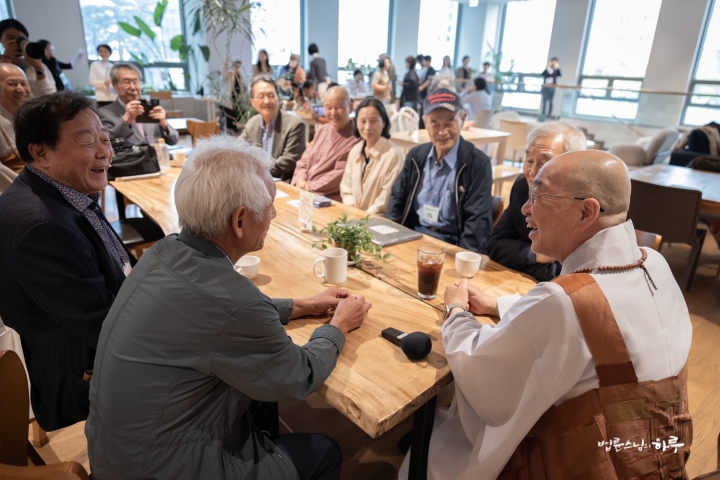
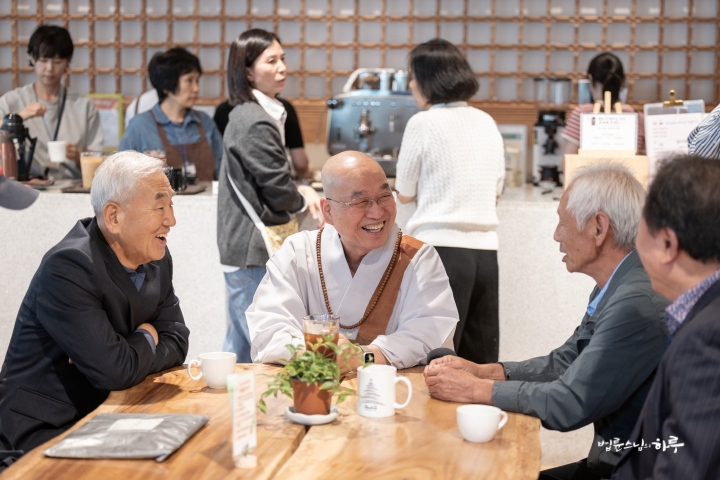
After seeing off Mr. Choi Han-sil and the guests, Sunim departed for Dubuk Retreat Center at 5 PM.
After a four-hour drive, he arrived at Dubuk Retreat Center at 9 PM and concluded his day’s activities.

As there was no Dharma talk today, this article will share a conversation between Sunim and a questioner from the Dharma Q&A held in Auckland, New Zealand on September 7th.
How to Recover Borrowed Money Without Causing Hurt
“I need to collect about $4,000 from someone close to me, but because we’re so close, I’m hesitant to ask for fear of damaging our relationship. I’m not sure how to go about getting it back, but I also feel reluctant to just let it go. Could you please give me a witty suggestion on how to recover the money?”
“Does this person have extra money now, or not?”“They talk about stock investments every morning. They also discuss making money with their colleagues. It seems they do have extra money.”
“When you gave the money, did you just give it or lend it?”“We invested in a business together, and when I withdrew midway, we agreed that the money would be returned to me.”
“Then you can simply say, ‘Please return the money as we agreed.'”“I’ve mentioned it several times and received small amounts. It seems they’re treating the remaining amount as if it never existed.”
“You can remind them that there’s still an outstanding amount.”“I sent a message about it, but after some time passed, there was no response at all. Actually, it’s my older brother.”
“Try sending regular messages. ‘Please return the money. $4,000 is still outstanding. I’m in a bit of a difficult situation.’ It’s good to send messages regularly like this. Keep sending messages whether there’s a response or not. Why should you do this? It’s not just about getting the $4,000 back. By doing this, your brother won’t be able to ask to borrow money again in the future. If you get the money back this way, that’s great, but even if you don’t, the other person won’t be able to ask to borrow money again, so it has a preventive effect. That’s why you should never just let it go.Regularly, whenever you meet, say, ‘Please return that money. I’m in a bit of a difficult situation.’ Don’t provoke anger, but send a message when they might have forgotten, and then send another when they might have forgotten again, but don’t irritate them. This way, they can return the money when they’re in a good mood. If you provoke them too much, not only will the relationship deteriorate, but they might also decide, ‘You’re being petty about money. I won’t give it to you even if I have it.’ Then you won’t get the money back, and the relationship will worsen. But if you leave it alone, they’ll forget. So you need to remind them regularly. If you get the money back, that’s great, but even if you don’t, it has a preventive effect.”
You shouldn’t just keep regretting the money you couldn’t get back. It’s also very important to prevent future losses. So there’s no need to be too regretful about lending a small amount of money and not getting it back. Once you have such an experience, you won’t be at risk of losing a large sum again. Consider a few thousand dollars as a deposit. By putting down this deposit, the other person won’t be able to ask to borrow money again, so it has a preventive effect.If you focus too much on getting the money back, the brotherly affection will break, and you won’t get the money back either. If you just leave it alone, they might ask to borrow money again later, saying they’re in a difficult situation. Then you can’t refuse to lend, and it becomes awkward, right? So you need to maintain the relationship appropriately, like fishing bait, pushing and pulling.”
“I understand well. Thank you.”
Tomorrow, the seventh Happy Dialogue Dharma Q&A of this year is scheduled to be held in Gwangju.