How Much Should I Care for My Parents Who Raised Me in a Domestic Violence Environment?
Sep 9, 2024 - Oceania Dharma Q&A Tour (5) in Perth
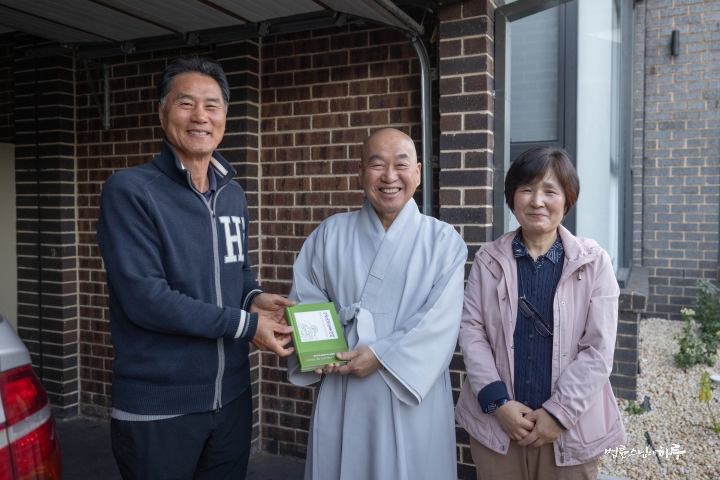
After completing his morning practice and meditation, Sunim had breakfast at 6 AM in his accommodation. After finishing the meal and before departing, he presented his book on the Heart Sutra to Mr. Kim Seung-ju and Mrs. Choi Young-hee, the couple who provided lodging and meals for the night, as a token of gratitude.
After expressing his gratitude, Sunim headed to Melbourne Airport.
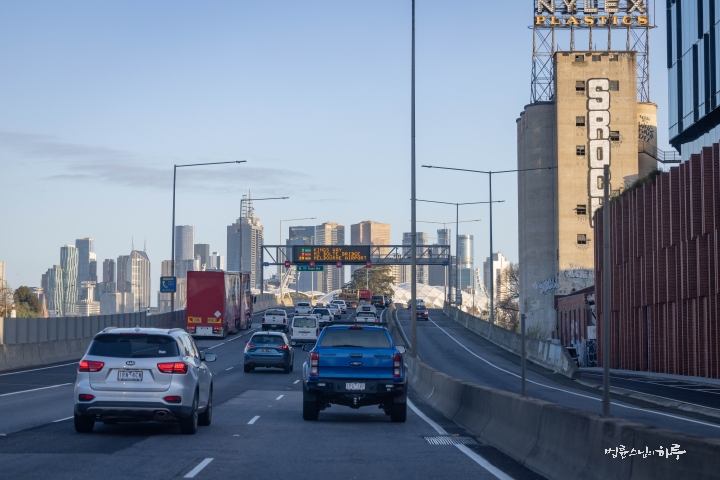
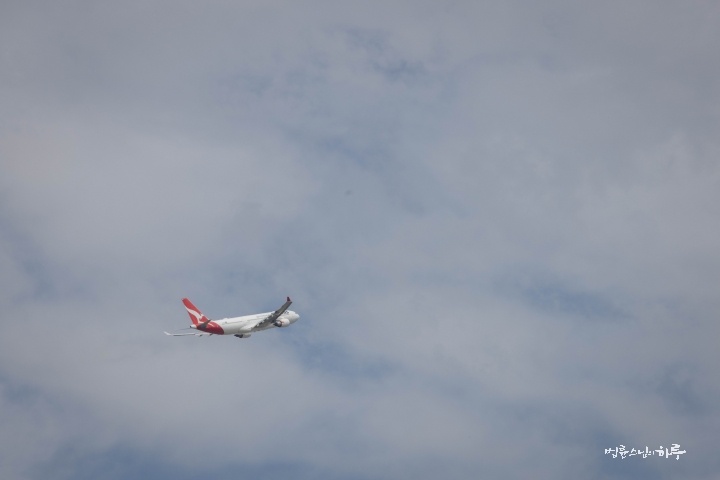
Arriving at Melbourne Airport at 8 AM, he checked in his luggage and proceeded to the boarding gate. While waiting at the gate, he attended to some work before departing from Melbourne Airport at 9:20 AM. After a 4-hour and 10-minute flight, he arrived at Perth Airport in Australia at 11:30 AM local time.
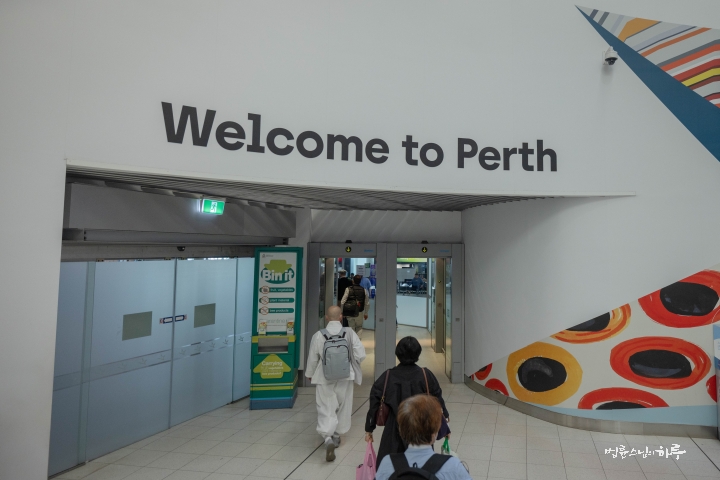
After retrieving his luggage and completing immigration procedures, Sunim was greeted outside the airport by Heo Cheong and members of the Perth Jungto Society who had prepared for the lecture.
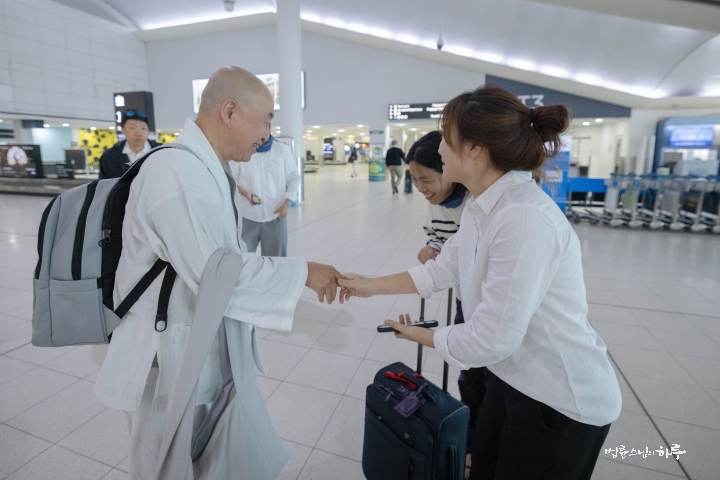
“Welcome to Perth.”
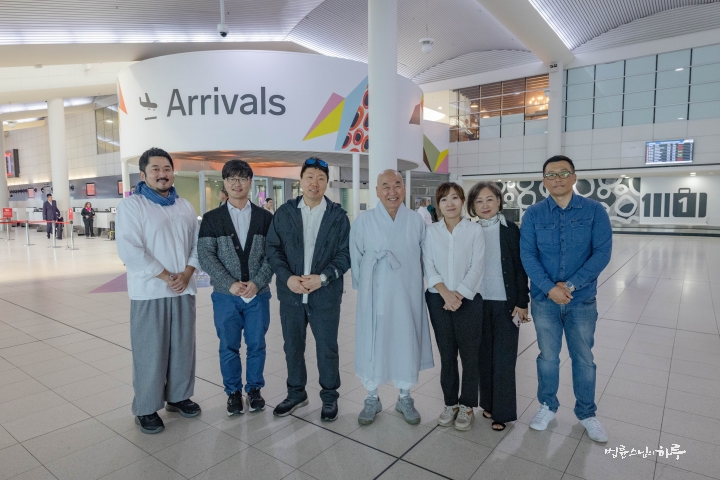
After exchanging warm greetings and taking commemorative photos, they immediately headed to the accommodation.
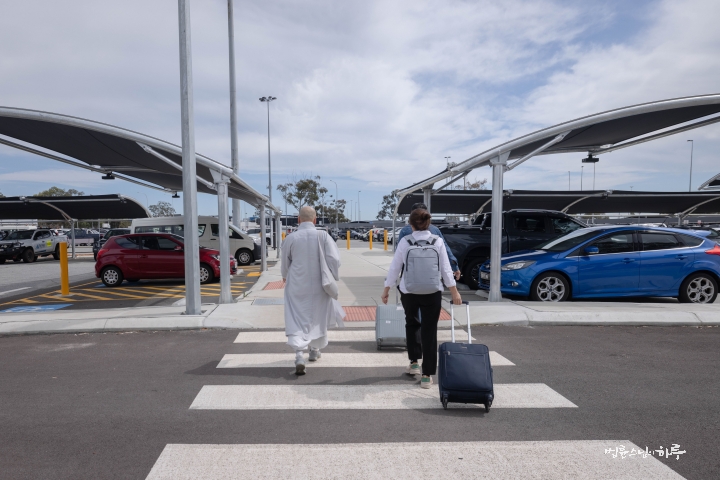
Considering Sunim’s tight schedule, the lecture preparation team had arranged accommodation near the lecture venue. After a 20-minute drive from the airport, they arrived at the accommodation at 12:40 PM. After lunch, Sunim handled some work-related matters, communicating with Korea.
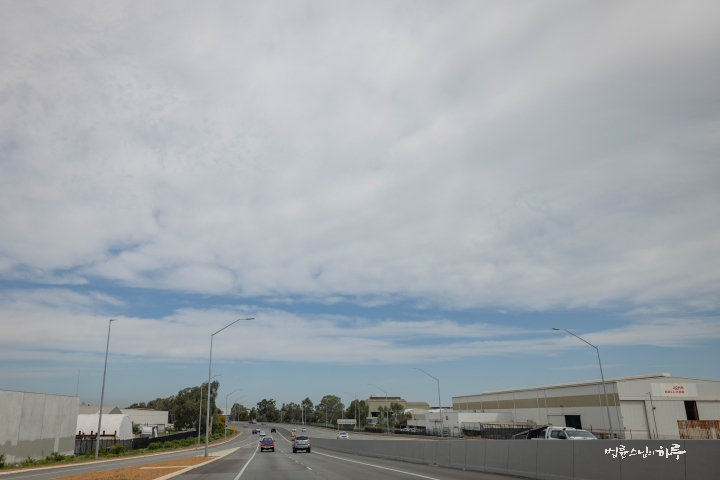
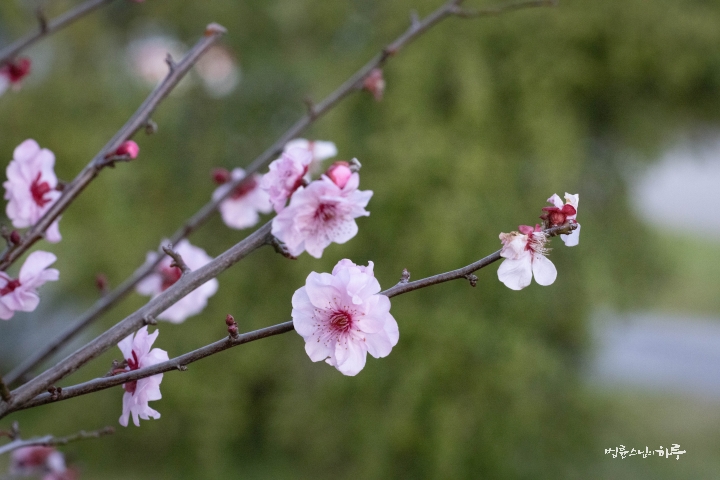
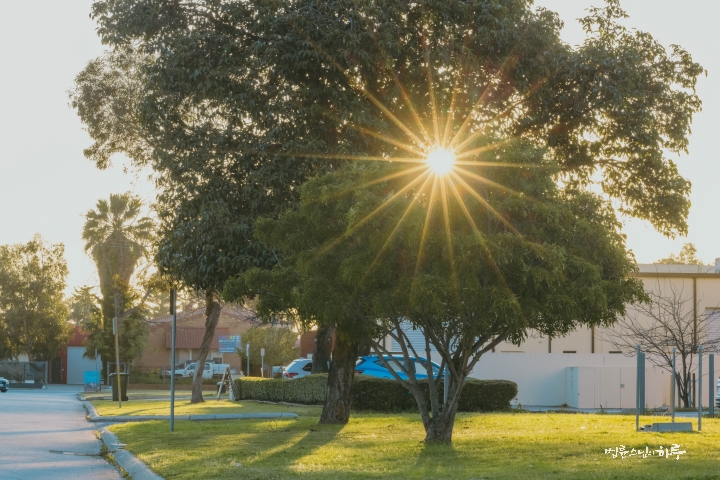
Spring has arrived in Australia. Being in the Southern Hemisphere, the seasons are opposite to those in Korea.
After about an hour of work, Sunim headed to the lecture venue for the English-interpreted lecture for locals. This lecture was hastily arranged upon hearing that there were many Bhutanese people in Perth, Australia.
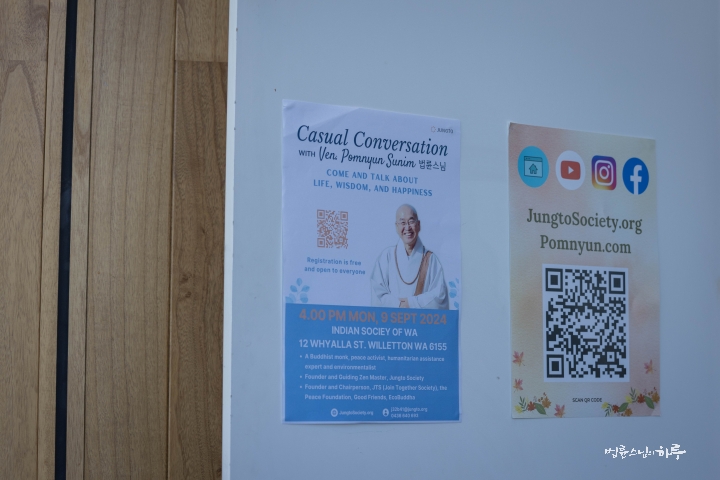
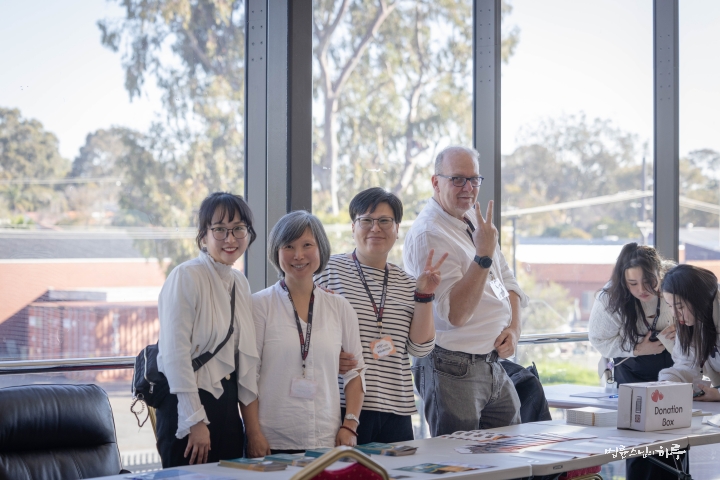
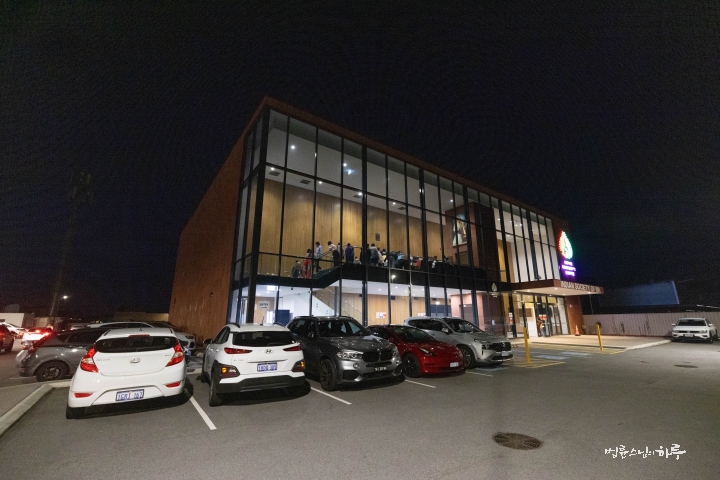
Today’s lecture is being held at the Indian Community Center (Indian Society of WA) located in Willetton. The building is operated by the Indian Society of Western Australia (ISWA) and was lent for Sunim’s lecture today.
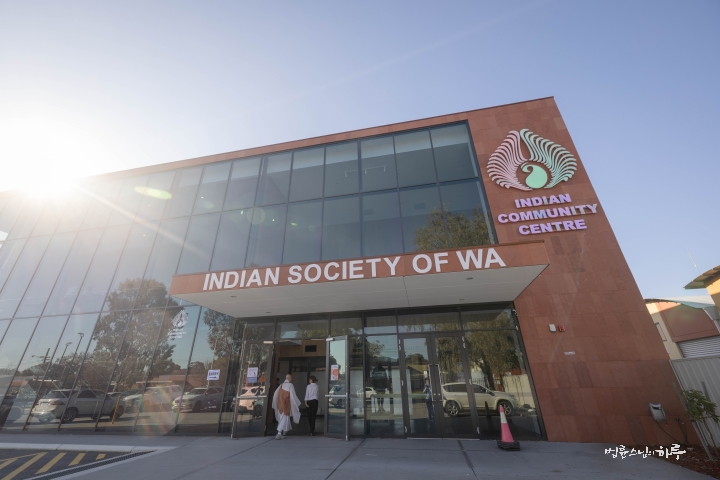
The lecture began at 4 PM sharp, after watching a video showing Sunim’s visits to Bhutan over the past year to create a new model for sustainable development.
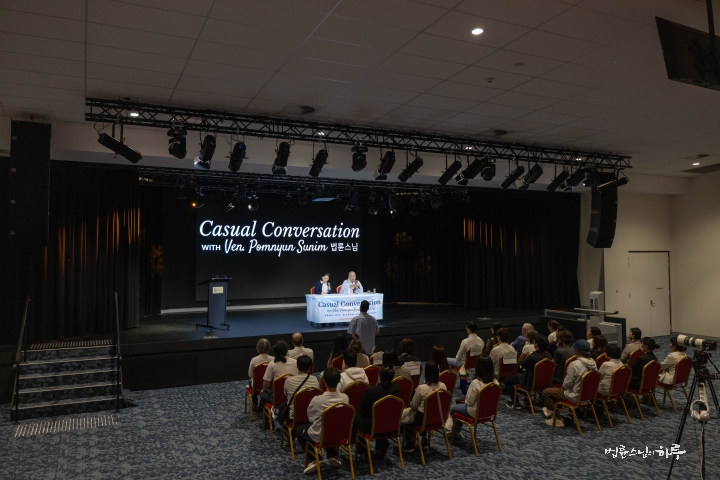
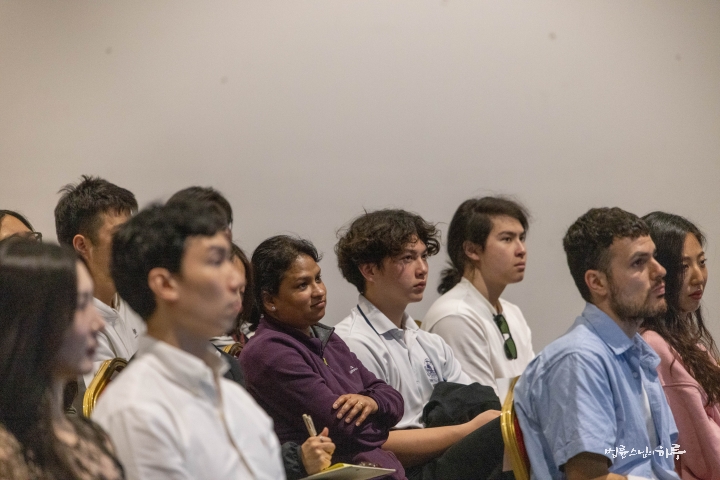
Despite the hasty preparation, about 20 people heard about the lecture and attended. However, unfortunately, there were no Bhutanese people among the attendees. Sunim began the conversation with a smile.
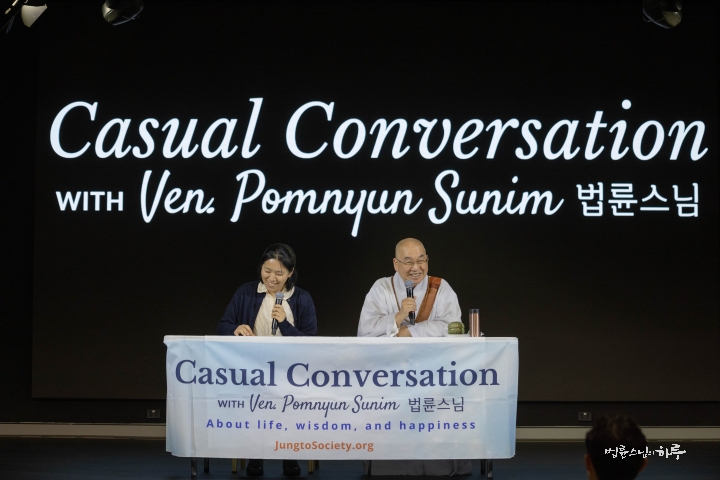
“
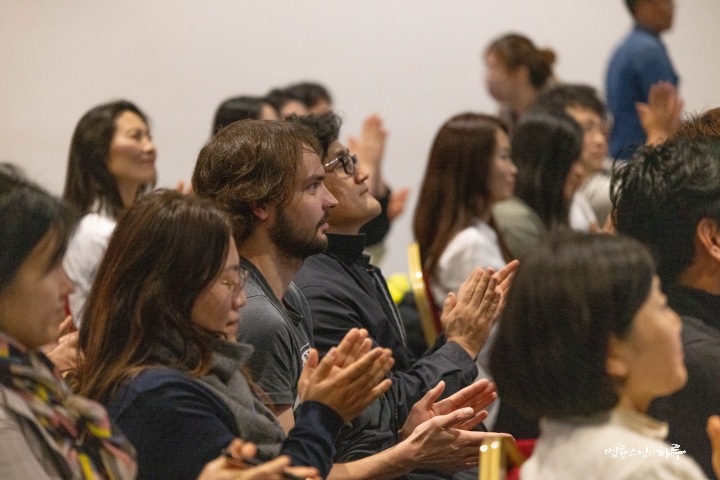
Then, anyone could raise their hand and ask Sunim a question. Over the course of an hour and a half, five people engaged in dialogue with Sunim.
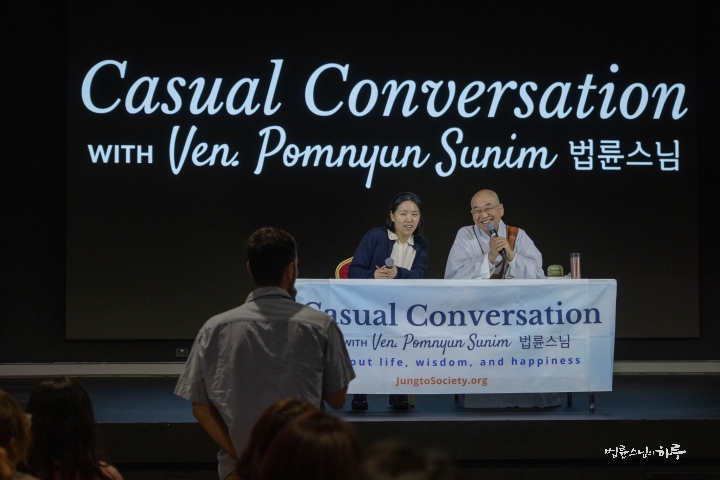
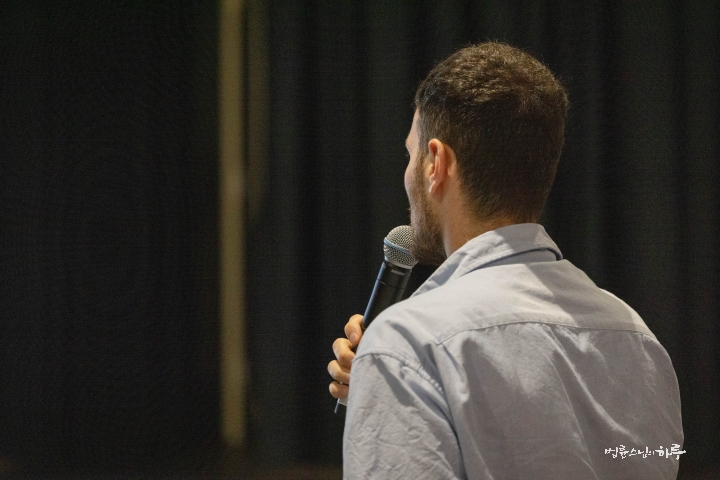
As a son, what can I do to help my family overcome their anger and regret? Is trying to help an inappropriate action?
How can we free ourselves from worries about the future?
Does wisdom bring happiness? Why do past mistakes always bring regret?
I’m transitioning from teenager to adult. Is it right to spend time on career and success, or is it better to make memories with friends? Which is more important?
I need to make a decision, but I can’t because I have to consider my relationship with the other person. What should I do in this situation?
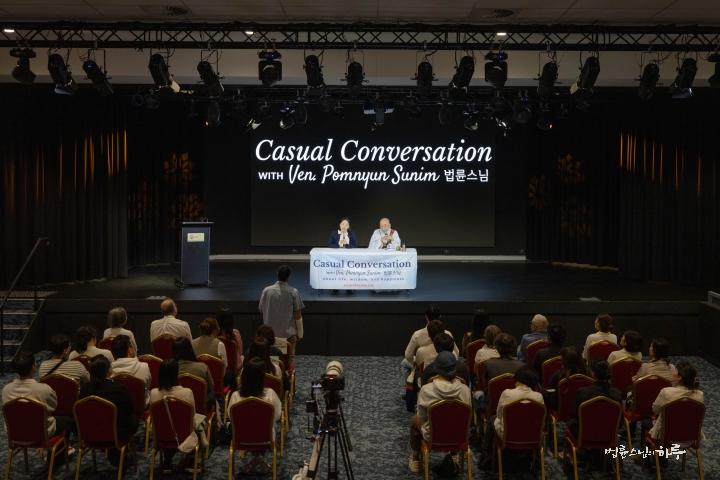
After finishing the conversation, Sunim briefly spoke about the original topic he intended to discuss with the Bhutanese people: “Climate Crisis and Sustainable Development.”
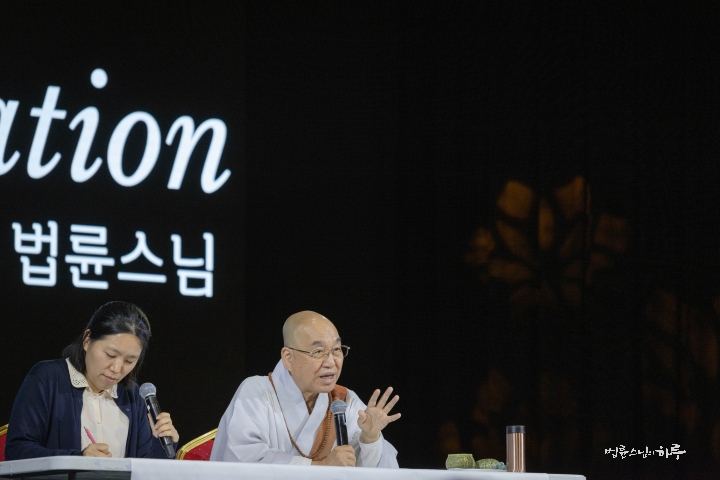
I understand that in today’s era, where material production index is used as a standard for living well, it’s natural to want to live in more developed countries. However, in this age of climate crisis, we need to reduce our consumption to overcome this crisis. We need to create a model in advance that can suggest ‘there is this way of life’ when, in 50 to 100 years, environmental pollution becomes so severe that it’s impossible to continue living in the current way. That’s why I’m currently working on a sustainable village development movement with residents in the Zhemgang region, which is the least developed area in Bhutan. I would like to ask all of you to strengthen your efforts to reduce consumption to overcome the climate crisis.”
In the Era of Climate Crisis, Excessive Consumption by the Wealthy Is a Serious Crime
“There’s no need to feel inferior because you’re poor. Among wealthy people, some consume as much as 100 or 1,000 people combined. In this era of climate crisis, such behavior is a serious crime. Yet, we envy them. As long as we envy this, it will be difficult to overcome the climate crisis. The less you consume, the more you can slow down the climate crisis. If you’re going to consume less anyway, there’s no need to acquire a lot and then struggle to consume less. It’s much easier to consume less when you don’t have much. You don’t need to deliberately throw away what you have, but you also don’t need to feel too shabby about not having things.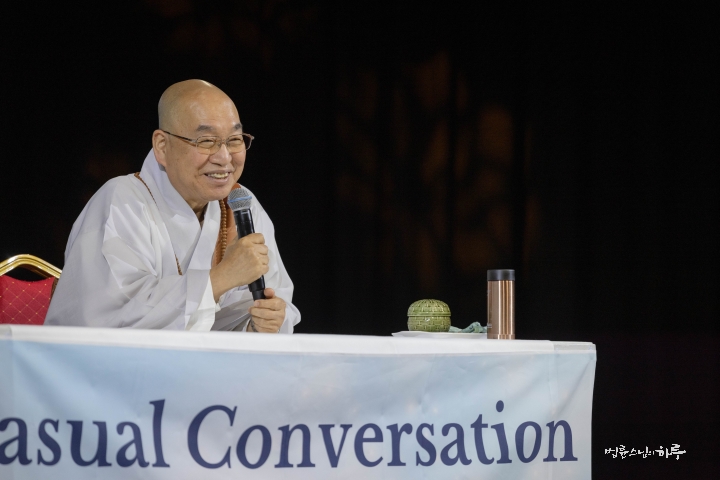
What Does It Mean to Live Well?
If there were no other side effects, we could continue this way. However, we’re now facing a climate crisis and can no longer continue like this. The current climate crisis is being caused by OECD member countries, which account for about 12 billion people, or 15% of the global population. Now, China with its 1.4 billion population is following this path. India, also with 1.4 billion people, is following this path. Other countries are following this path too. If we continue at the current rate, the climate crisis will inevitably worsen rapidly. This is not a distant future issue. So, what should we do?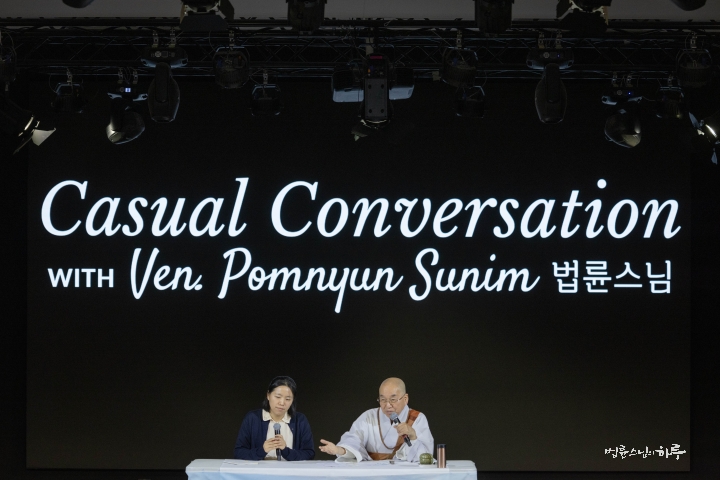
After finishing the lecture at 5:30 PM, Sunim went to his accommodation for dinner.
After dinner, Sunim arrived at the lecture hall again at 7 PM.
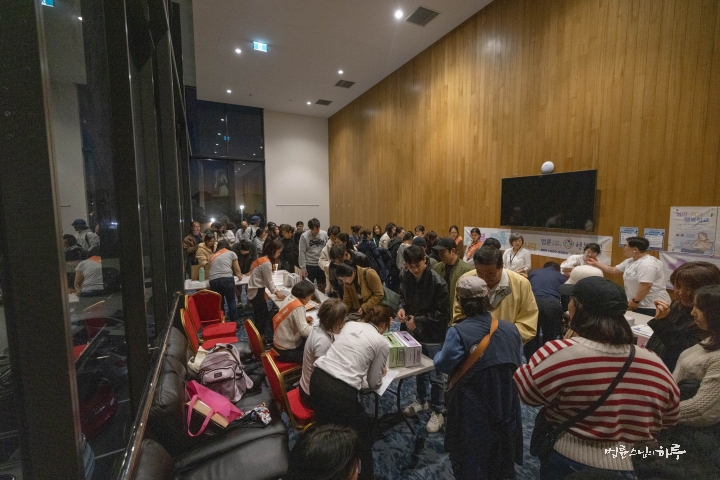
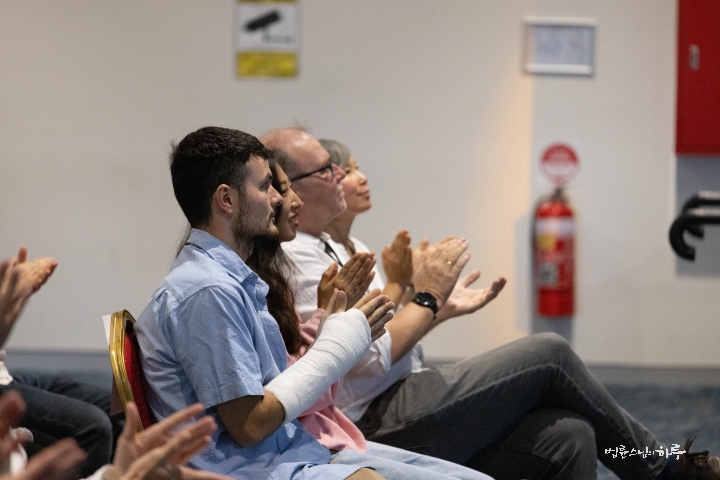
As the introductory video about Sunim ended and he walked onto the stage, a big round of applause and cheers erupted.
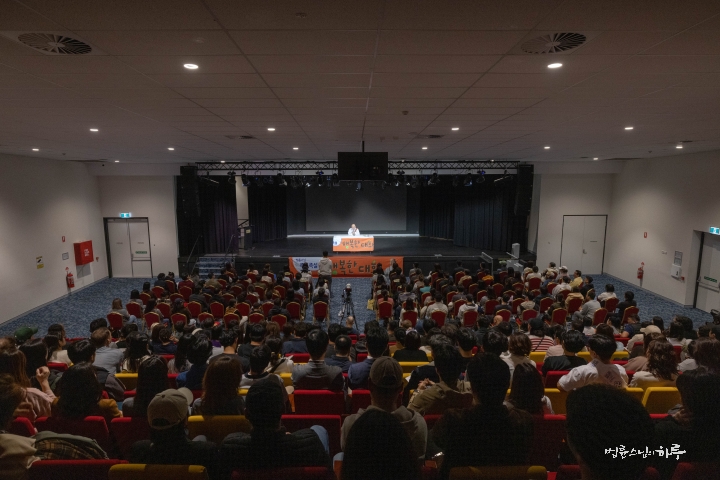
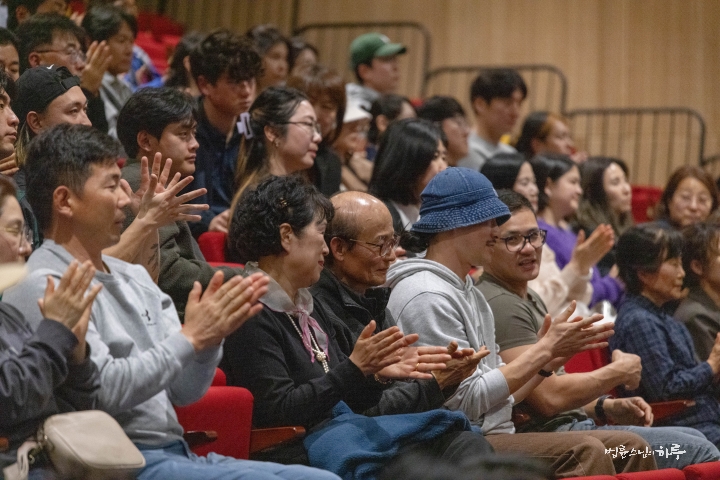
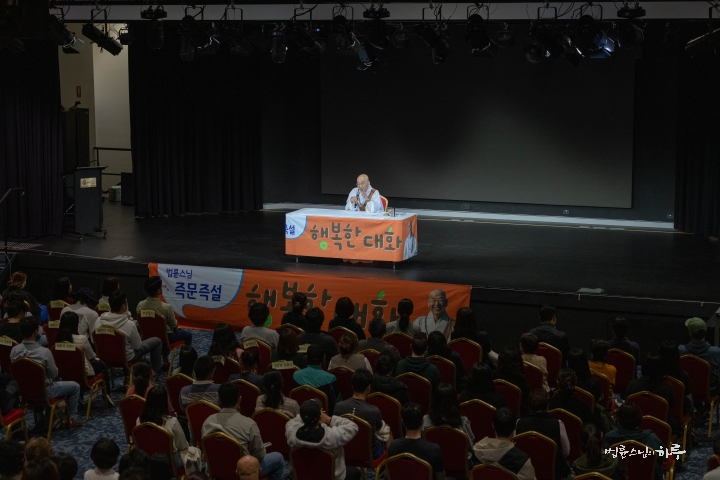
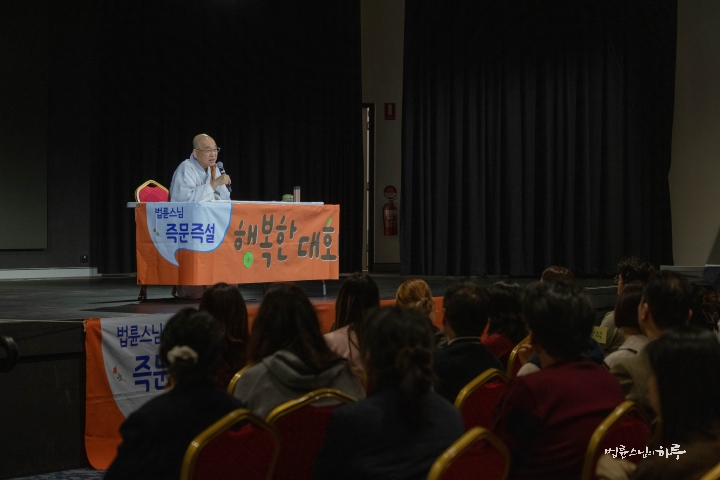
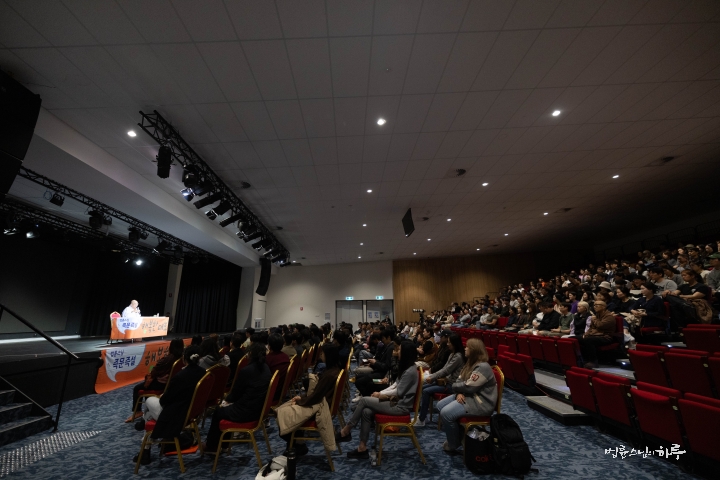
With about 200 people filling the seats, Sunim began the conversation by casually asking how everyone was doing.
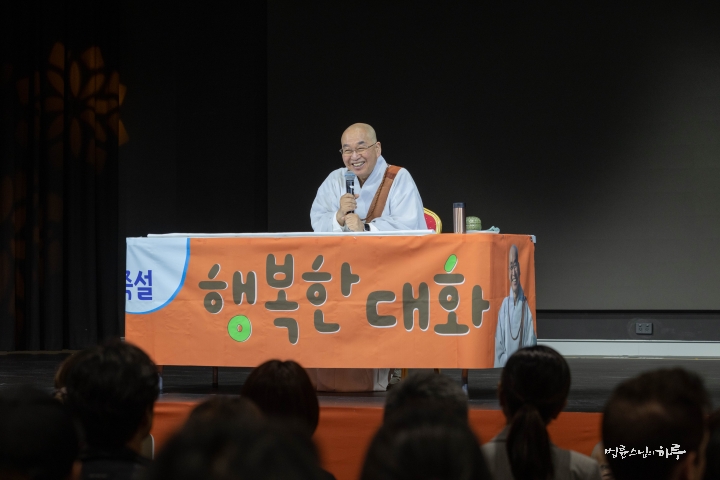
“It was in 2017.”
“Oh, it was 2017? You have a good memory. My first visit to Perth was in 2014 when I gave lectures in 115 places around the world over 115 days, moving to a different country or city every day. That was my first time in Perth. And it seems I came again in 2017. So this must be my third visit. Have you all been well since then?”“Yes!”
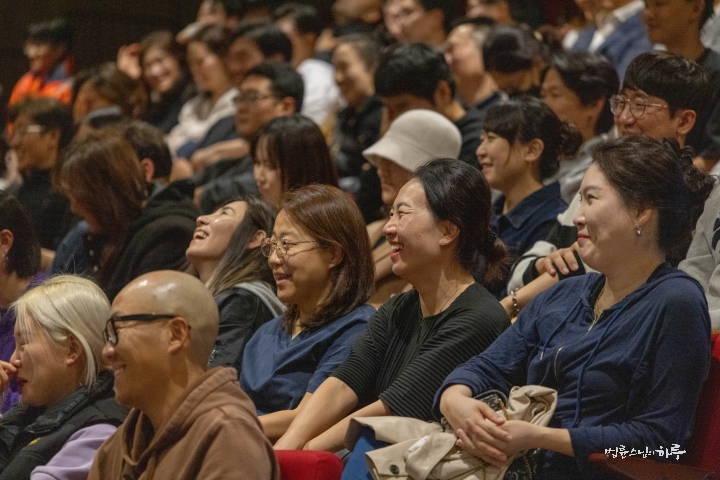
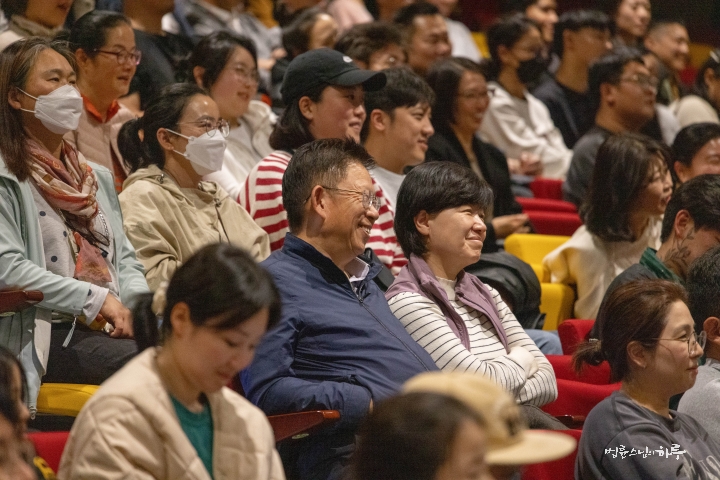
Then, six people who had submitted questions in advance began their dialogue with Sunim. In the latter part of the lecture, five more people asked questions on the spot and conversed with Sunim. Over the course of two hours, eleven people were able to ask Sunim questions. One of them shared their concern about how to treat their parents, saying they had been abused at home during childhood but were afraid of feeling regret if their parents passed away.
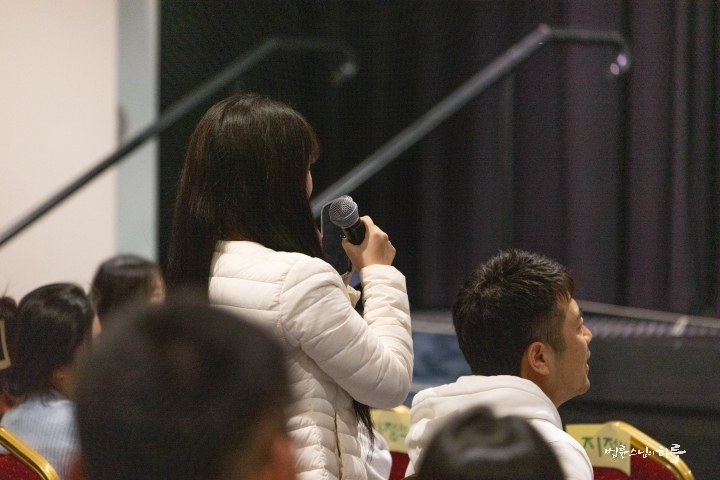
How Much Should I Care for My Parents Who Raised Me in a Domestic Violence Environment?
“I grew up with a hearing-impaired father and a mother with unconventional thoughts. As a child, I experienced domestic violence from my father and neglect from my mother’s indifference. Fortunately, with help from others, I grew up bright and cheerful without becoming too twisted. I began to understand that my parents acted that way due to their own childhood wounds and unfortunate environments, which reduced my resentment towards them. However, their existence still feels like a burden in my life. Eventually, wanting to live well on my own, I left my parents and came to Australia. Currently, I don’t particularly take care of my parents, only occasionally checking if they’re alive. But I wonder if it’s okay to live like this. I want to love them but don’t want to be hurt again. However, I’m concerned about regretting it after they pass away. As a child, to what extent should I care for my parents? How can I avoid regret later?”
“As long as you don’t harm, damage, or abuse your parents, there’s no inherent duty that a child must fulfill towards their parents. You don’t have to do anything. This is true even from a natural ecosystem perspective. In nature, when a mother gives birth, an instinct to protect the offspring arises. This is called the instinct for species preservation. Without this instinct, the species would become extinct. It’s because of this instinct that the species can continue to exist on Earth. However, in no species in the natural ecosystem do offspring care for their parents. No matter how old, the relationship between adults is equal. But offspring that haven’t become adults are not yet independent life forms because their lives are maintained by the mother’s care. When the offspring grow and become adults, they become equal to their mothers.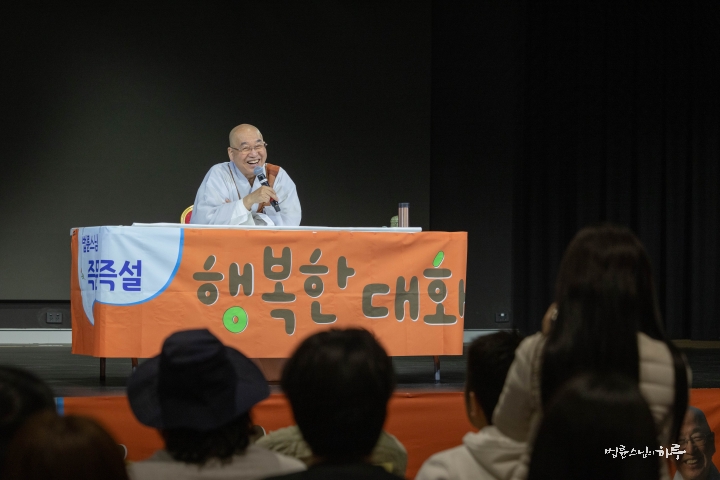
“Thank you.”
The questions continued. Today, there were many light-hearted and cheerful questions as well.
One person asked for Sunim’s advice on how to handle a situation where a newly adopted puppy seemed to have gained a higher status in the household than themselves.
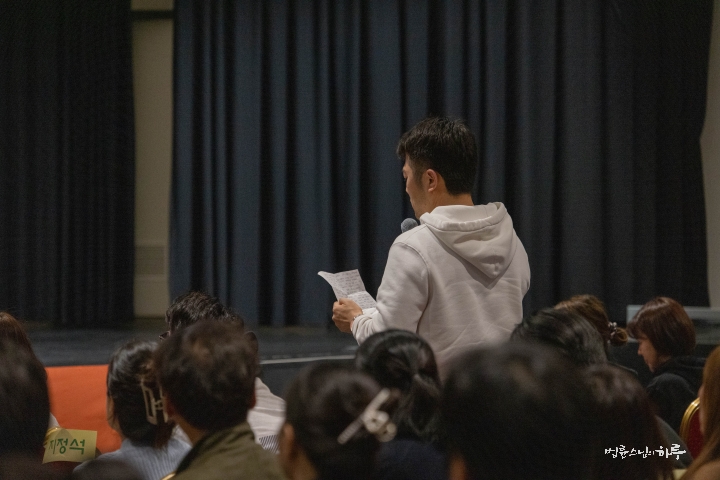
Why Does the Puppy Have a Higher Status Than Me at Home?
“Recently, we got a puppy, and it seems to have a higher status than me in the house. What is this puppy doing so well that it’s getting better treatment than me? I can’t understand what makes the puppy better than me.”
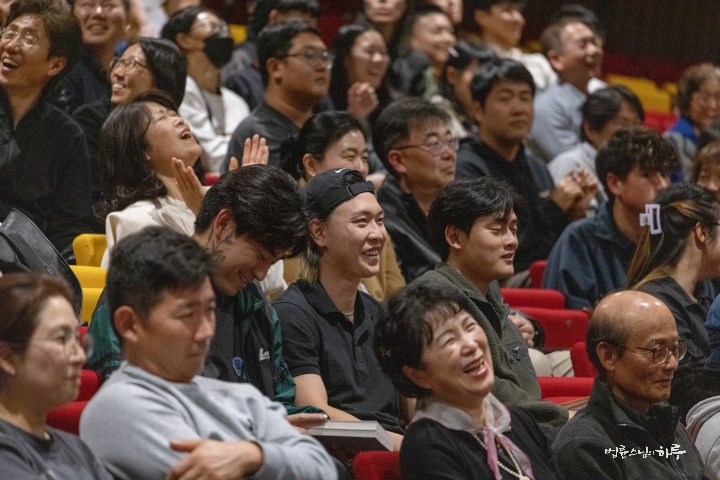
“It’s because the puppy doesn’t nag. It just eats what it’s given and stays quiet. But you nag, assert yourself, and that’s why you’re less likable.” (Laughter)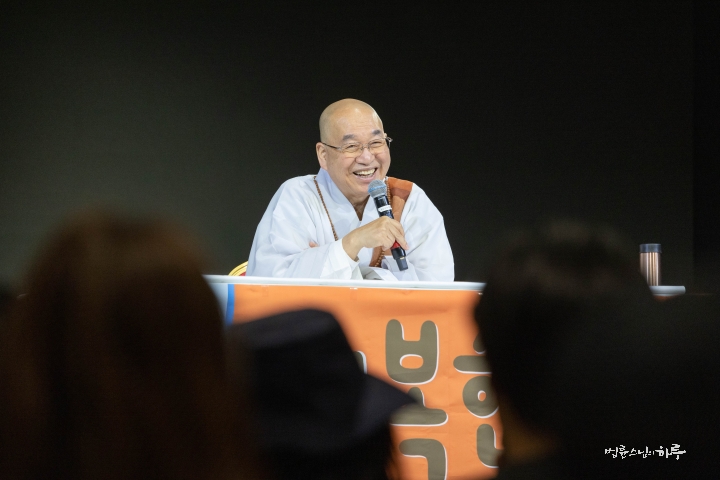
Sunim’s witty response made everyone burst into laughter.
The last questioner asked how to overcome the tedium that comes with aging, noting that there seem to be fewer things to laugh about as one gets older.
How Can We Overcome the Tedium That Comes With Aging?
“As I get older, it seems like there are fewer and fewer things to laugh about. Looking around, I don’t think it’s just me. Sunim, you must have heard various stories from many people. I’m curious about your big data-based answer on how people overcome this tedium and live their lives.”
“Feeling tedium means that nothing much is happening. It’s a good thing. If suddenly your child fell ill and had to be rushed to the hospital, or you had a car accident, or you or your spouse were diagnosed with cancer, or your company caught fire, would you be able to feel tedium?”“No.”
But when nothing is happening, you tend to think, ‘Well, I don’t need to practice anymore, I’m doing fine,’ and you stop practicing and volunteering. Then when calamity strikes, you panic and start praying frantically again. To stay healthy, is it better to treat an illness after it occurs or to prevent it?”
“Prevention is better.”
“Prevention is indeed the best. What’s the key to prevention? Is it being in a state where there are no pathogens at all? Or is it building your immunity so that you can overcome any pathogens? Building immunity is true prevention. Similarly, it’s not a blessing if nothing ever happens to you. When accidents happen here and there, when this and that occur, and you can handle this one way and that another way, that’s when you build immunity. Some days you work late, some days you finish early – all these situations are just part of human life. Having the inner strength to view things this way is immunity. With this perspective, nothing is a problem no matter what happens.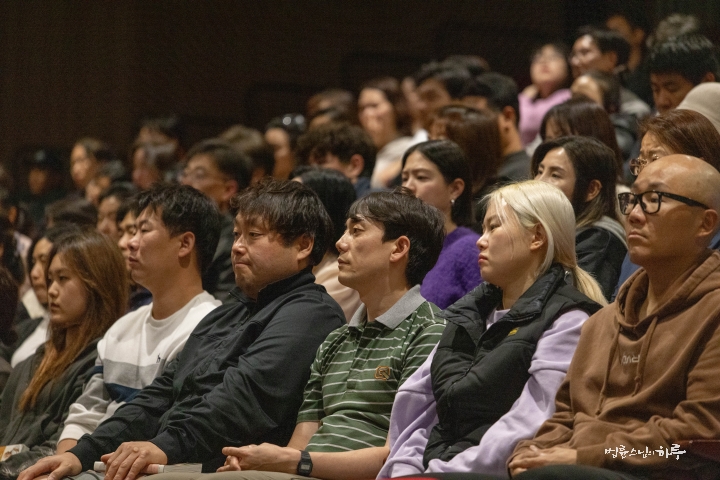
“Thank you.”
There were many more questions that followed.
I’m a student who has been living in Australia on a working holiday visa for a year. While working here, I suddenly felt like studying. Is it okay to start studying again even though I’ve left it for a while?
I’ve suppressed my emotions so much that now it’s hard for me to feel them. How can I overcome this suppression and feel emotions again?
After my divorce, I received a restraining order and can’t see my two daughters. How should I view maternal love? Should I give up on meeting my children?
Is a dream or goal absolutely necessary in life? How can I have dreams or goals?
When I look at newspapers, broadcasts, and SNS, there’s an overwhelming amount of information. How can I maintain my center amidst this flood of information?
After marriage, I’m raising three children. My father in Korea is very ill, but I feel guilty because I’m living a happy life with my children in Australia.
I write a diary every night, but I get angry thinking about the losses I’ve had and can’t sleep. How should I manage my mind?
After answering all the questions, Sunim gave his closing remarks.
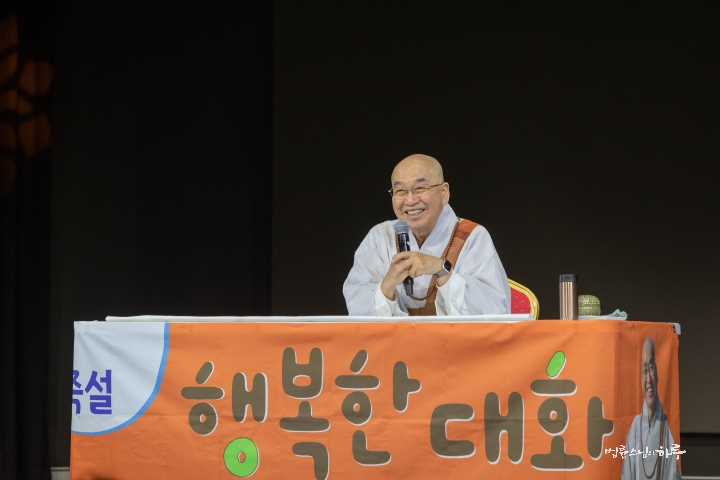
“Yes!”
“Was it beneficial?”“Yes!”
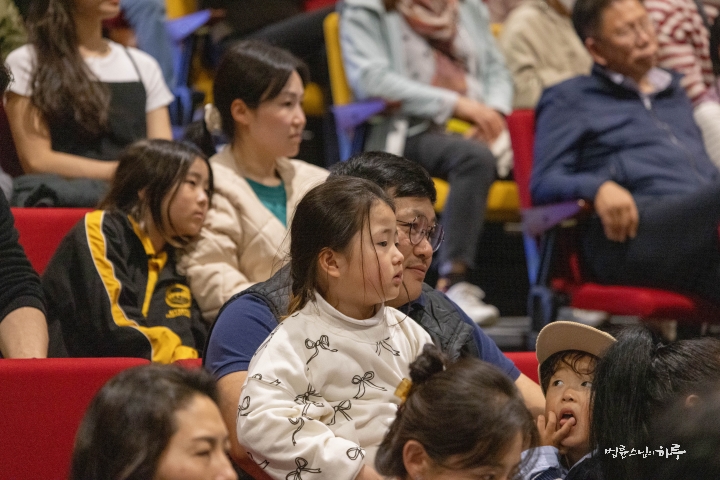
By the time the conversation ended, it was well past 9 PM.
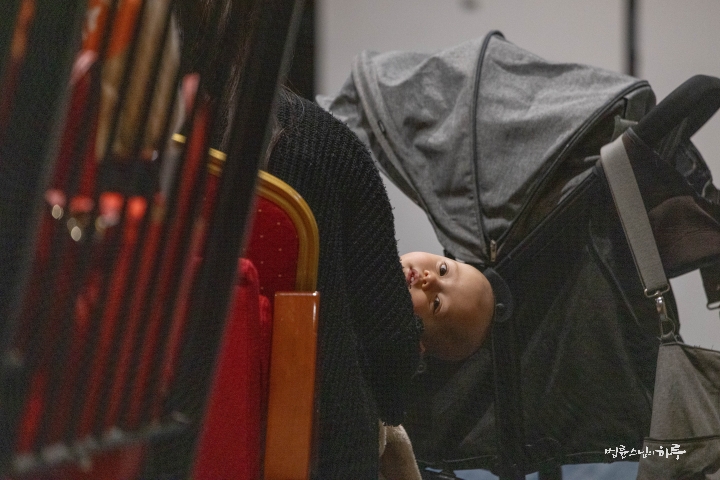
Immediately after, Sunim held a book signing session on stage. Many people lined up to receive Sunim’s signature and express their gratitude.
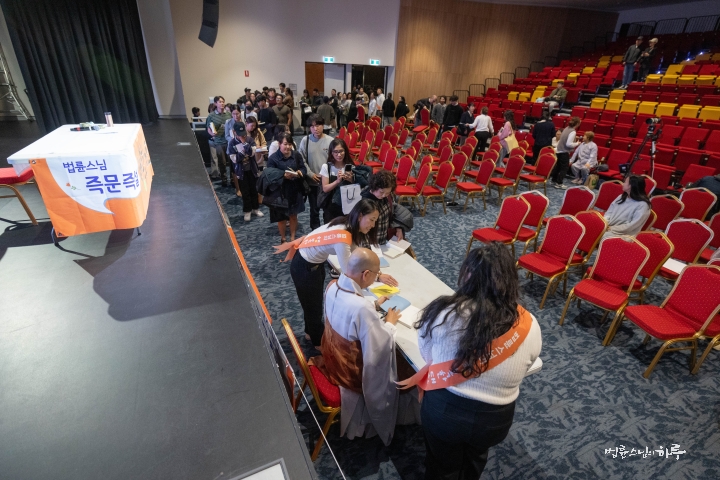
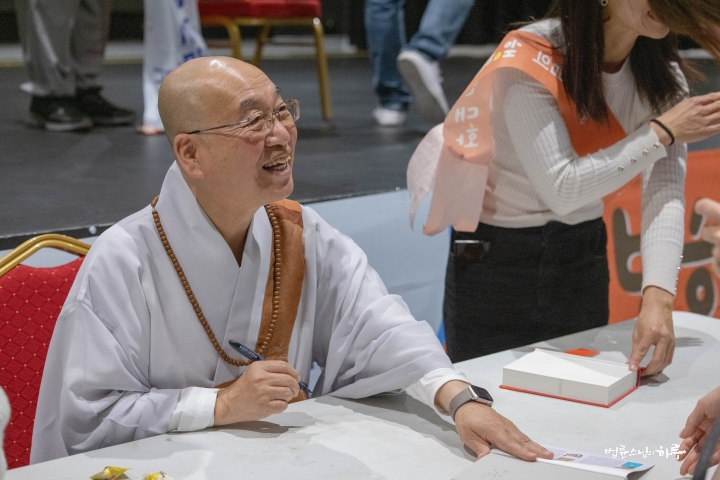
After the book signing, Sunim took a commemorative photo with the volunteers who prepared for the lecture.
“Perth!”
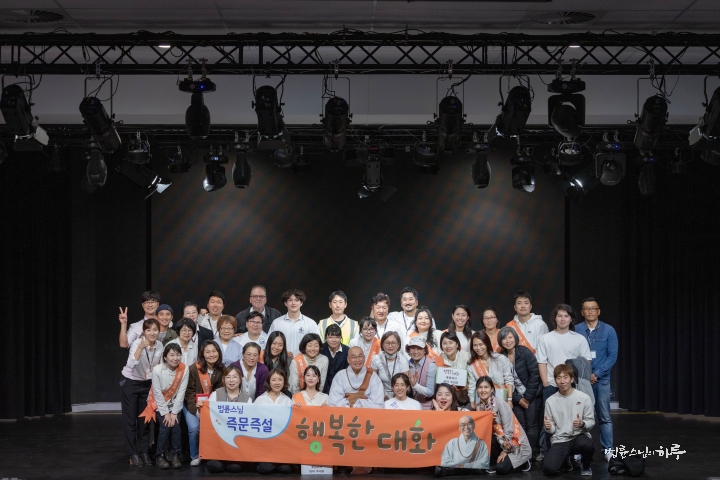
After all the audience members left the lecture hall, Sunim spent time greeting the volunteers.
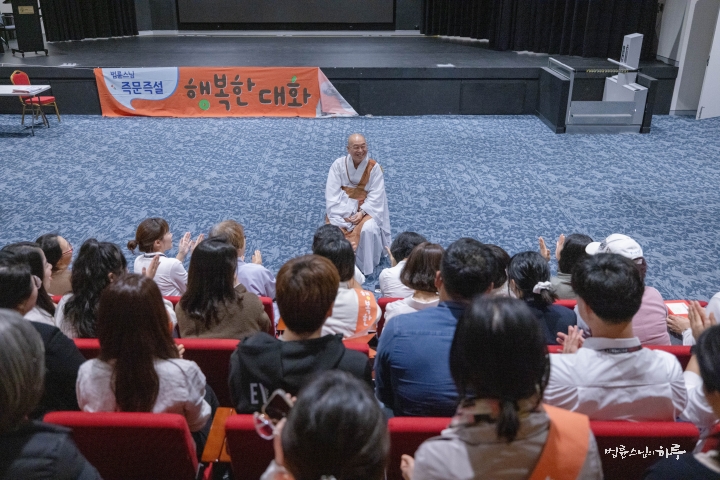
One by one, they took the microphone and briefly introduced themselves. After each introduction, everyone applauded enthusiastically.
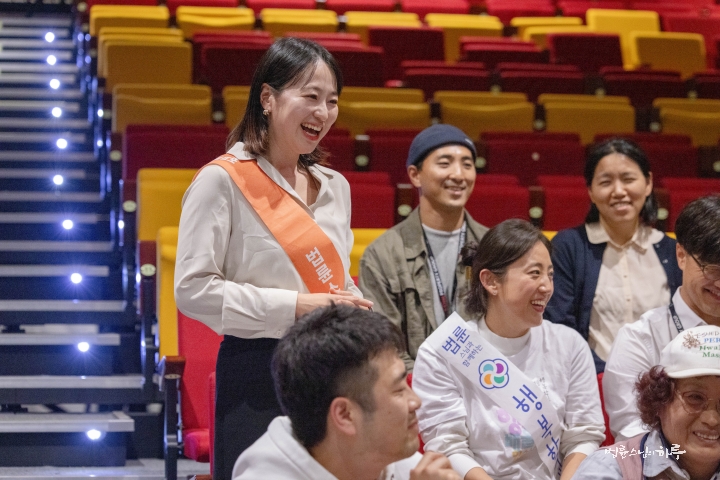
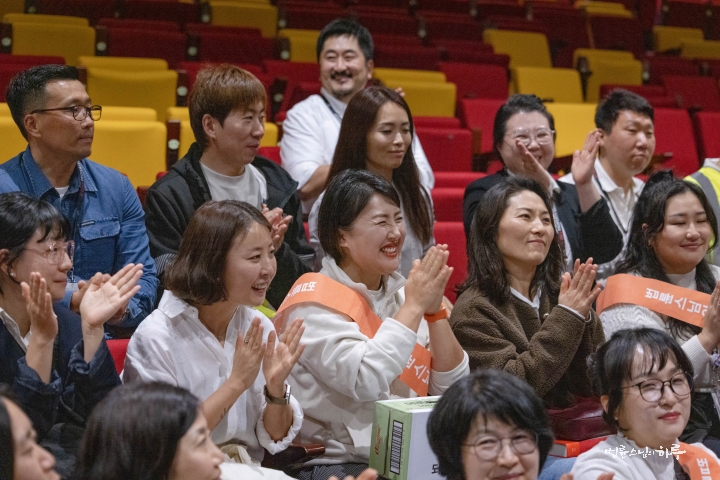
Their names, ages, occupations, and the number of years they had lived in Australia all varied. After listening to all the introductions, Sunim smiled and said:
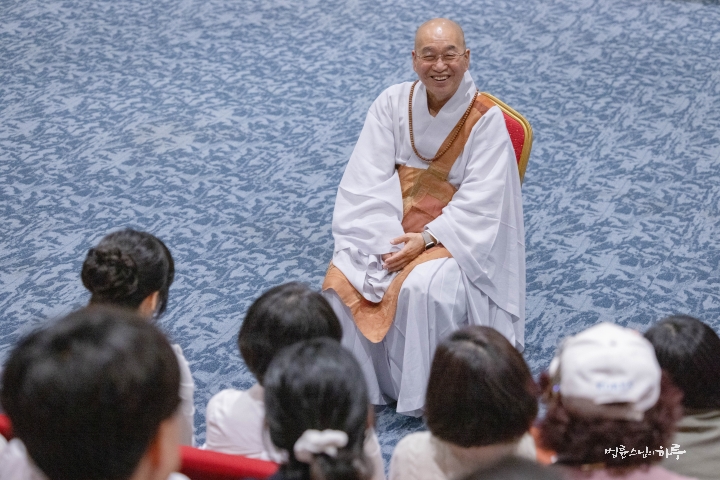
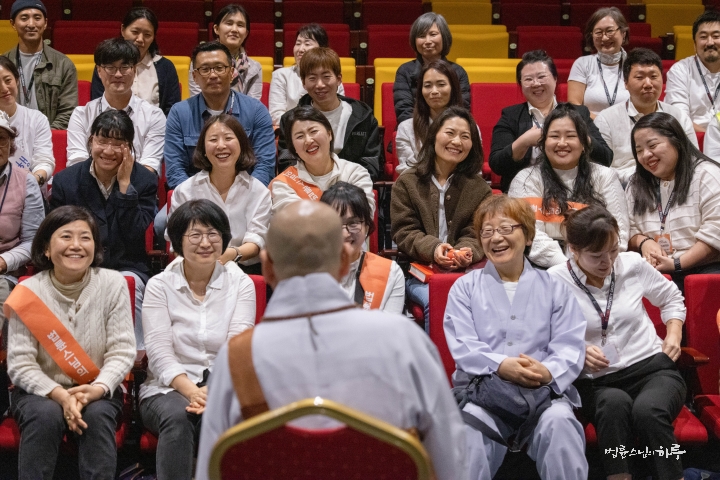
Sunim gifted his Diamond Sutra book to those who oversaw the lecture and provided accommodation, expressing his gratitude.
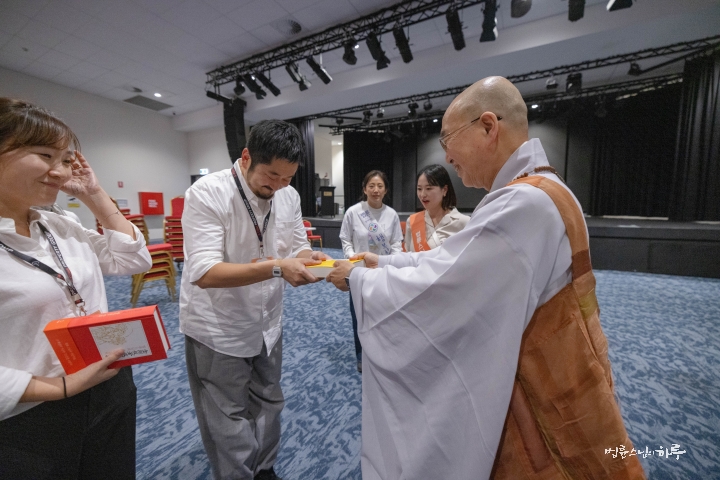
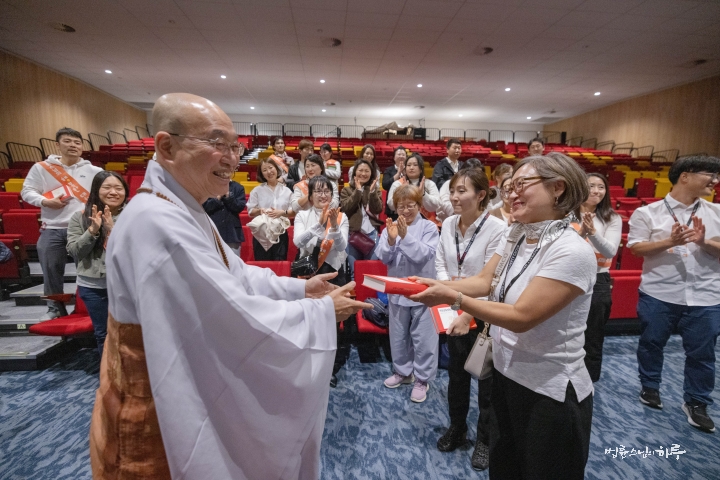
After thanking the volunteers, Sunim left the lecture hall. The president of the Perth Korean Association, who had been waiting outside, came to greet Sunim.
“Sunim, I enjoyed your lecture.”
“Thank you.”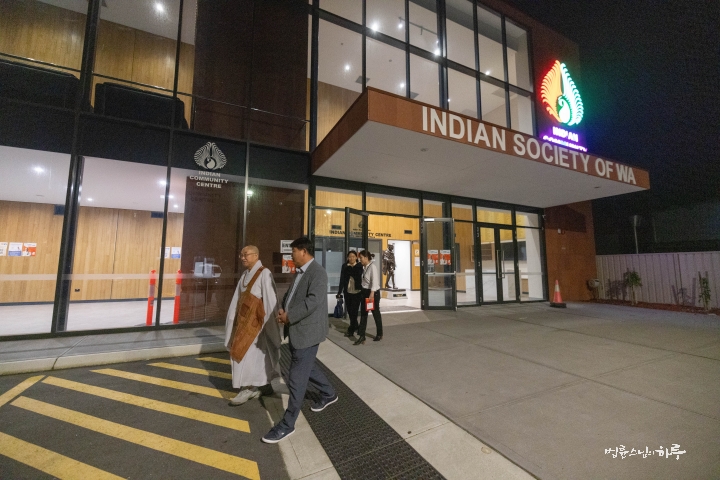
After a brief exchange of greetings, Sunim departed for his accommodation. It was past 10 PM when he arrived at the lodging. It had been another long day.
Tomorrow, Sunim will move from Perth Airport to Brisbane Airport in the morning, and in the evening, he is scheduled to give a Dharma Q&A lecture for Korean expatriates living in Brisbane.