How to Cope with Loneliness After Husband’s Infidelity During Pregnancy?
Sep 6, 2024 - Oceania Dharma Q&A Tour (2) for Korean Expatriates in Sydney

After completing his morning practice and meditation, Sunim departed for Blue Mountains National Park, a representative Australian landmark, at 6:40 AM. Usually, Sunim’s schedule is packed with lectures, but today, Jeong-min Pyo, a Jungto Society member who works as a tour guide in Australia, offered to show Sunim around the Blue Mountains.

“Sunim, you’re always so busy. Since you have some free time today, I thought it would be nice for you to see Australia’s beautiful nature.”

After a 1 hour and 20 minute drive from Sydney city, they arrived at the Blue Mountains at 8 AM. Their first stop was Lincoln’s Rock, the starting point of the mountain range and known for its stunning views. Due to their early start, there were no other visitors at any of the locations they visited.
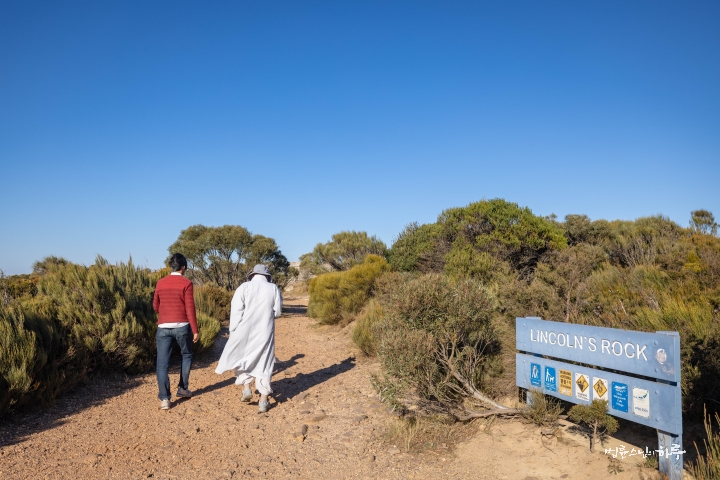
This spot is famous for photo opportunities where people can sit on the edge of the cliff. The vast canyon range viewed from the cliff truly lived up to its name “Blue Mountains,” with its blue hue and well-preserved natural beauty. Jeong-min Pyo provided detailed explanations at each location they visited.
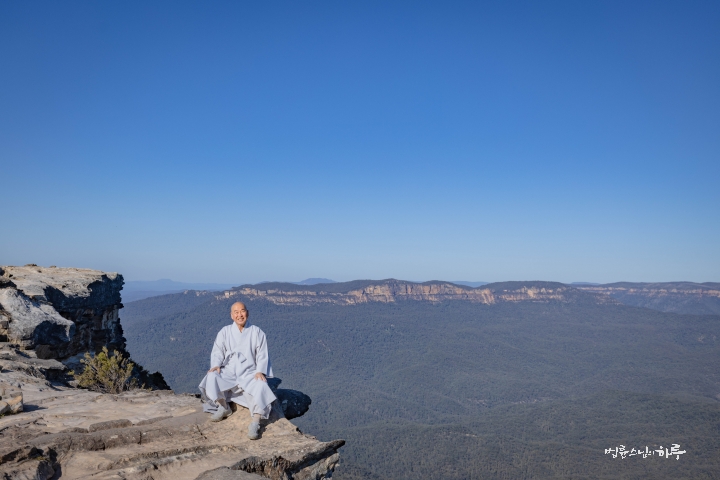
“The name ‘Blue Mountains’ comes from the eucalyptus trees. These trees, beloved by koalas, cover over a million hectares of the entire mountain range. The oil from these trees reflects the shortest wavelength of blue light when it meets sunlight. That’s why the mountains appear blue from a distance, hence the name Blue Mountains.”

Next, they headed to the Three Sisters Walk, the most famous attraction in the Blue Mountains. Upon arriving at the Echo Point lookout, the Three Sisters rock formation came into full view. It was an unusual experience to look down at the mountains rather than up.
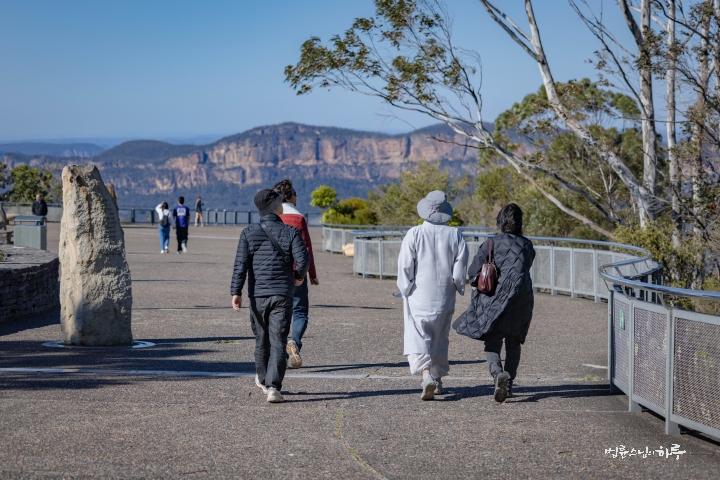

There’s a sad legend about the Three Sisters among the local indigenous people. Long ago, a wizard lived with three beautiful sisters. When an evil sorcerer heard about the sisters and attempted to kidnap them, the wizard turned them into three rocks to protect them. During the ensuing battle with the evil sorcerer, the wizard found himself in danger and lost his magic staff. As a result, the three sisters remain as rocks to this day. The legend says that the wizard, transformed into a crow, still searches for his staff somewhere in the Blue Mountains.
Next, they visited the Boars Head lookout to see the boar-shaped rock. Sunim was curious about why it was called a boar’s head, but as soon as he saw the massive rock formation, he understood immediately.


They took commemorative photos in front of this natural sculpture and spent some time appreciating the panoramic view of the Blue Mountains. Sunim thought that if this rock formation were located in Korea, it might have been called the “Turtle Ship Rock” due to its resemblance to the famous Korean warship.

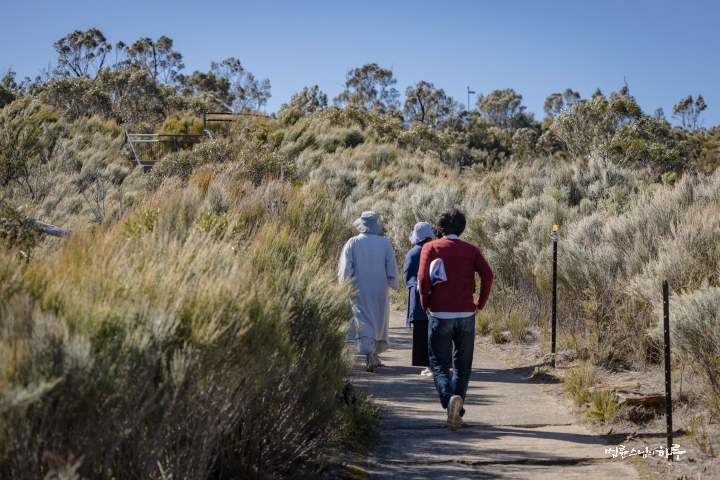
Lastly, they visited the Featherdale Wildlife Park to see various animals native to Australia. The park is home to about 1,400 animals from 280 species.
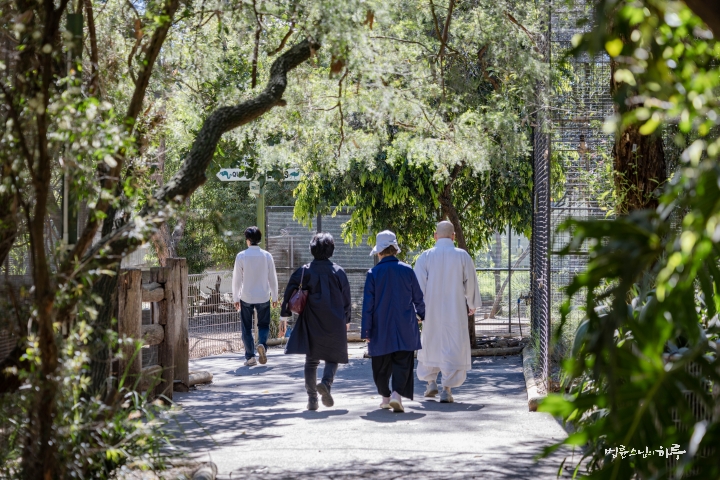
They saw many of Australia’s representative animals, including endangered species like the Tasmanian devil and bilby, as well as wallabies, emus, wombats, quokkas, and kangaroos.




The koalas brought the biggest smiles to everyone’s faces.
“Koalas are only awake for 4 hours a day. They sleep for 20 hours. It’s rare to see them awake like this.”


They also saw adorable penguins. These were Little Blue Penguins, the smallest penguin species. They looked so cute, almost like walking dolls.

With the visit to the wildlife park, they concluded their Blue Mountains tour. They had compressed what would typically be a full-day tour into half a day. Sunim expressed his gratitude to Jeong-min Pyo for the detailed guidance.
“Thank you. I learned a lot from your explanations.”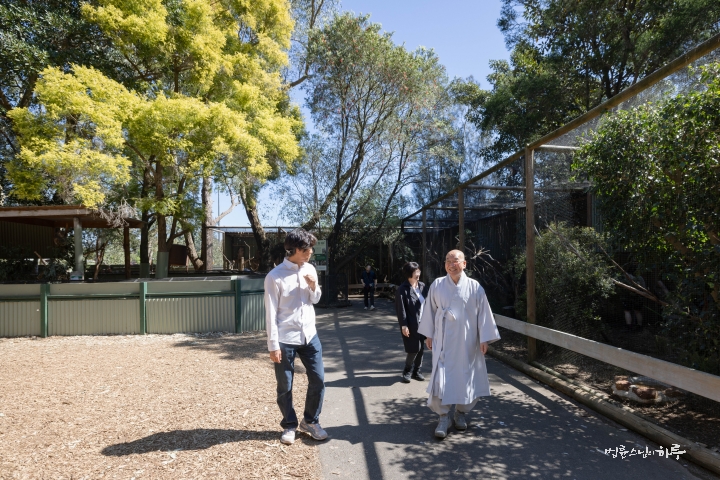
Returning to the accommodation, Sunim had lunch and took some time to rest and prepare. After a brief rest, they left for the lecture venue at 5:30 PM.


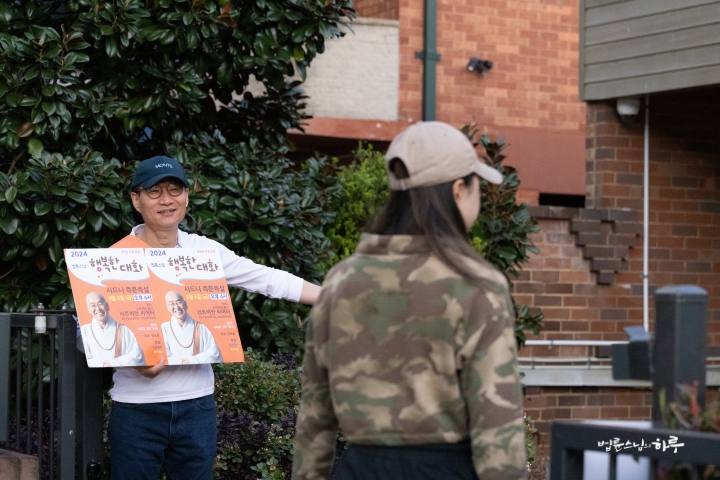
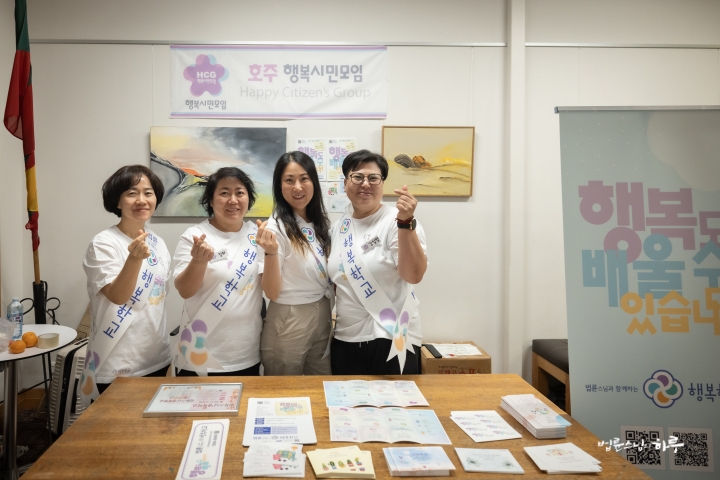
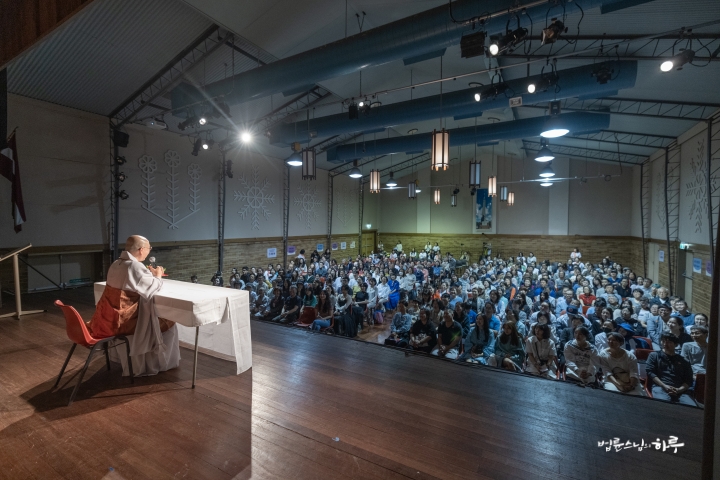
Today’s lecture is being held at the Latvian Theatre in Strathfield, Sydney. As Sunim arrived at the venue, volunteers were warmly welcoming the attendees. Many Korean expatriates came to the lecture hall to meet Sunim, who was visiting Sydney for the first time in 5 years since the COVID-19 pandemic.

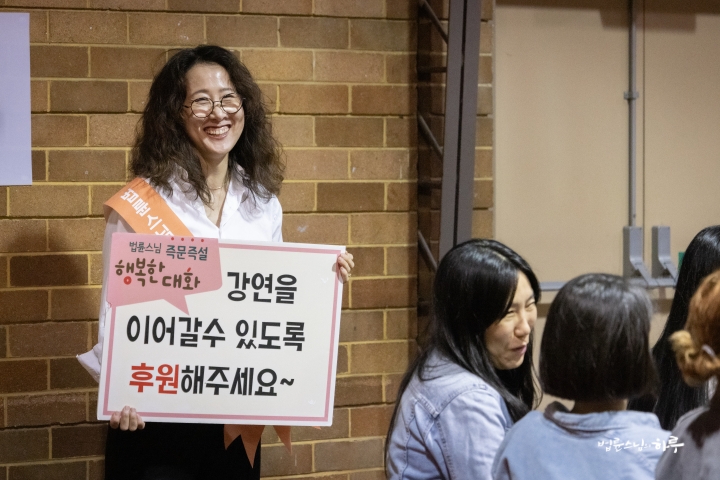
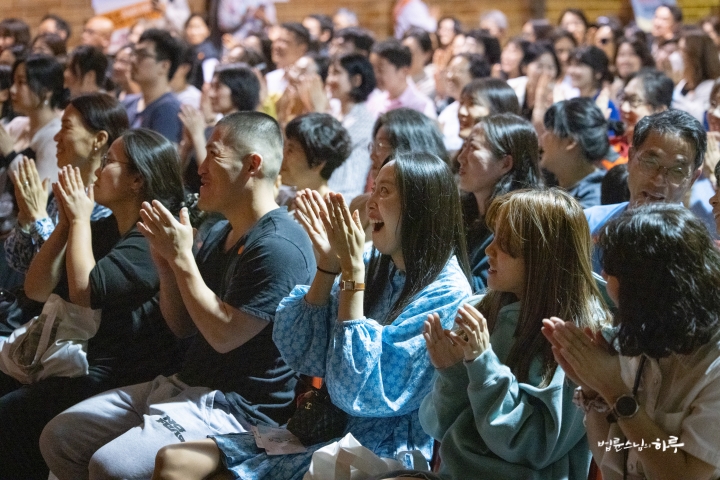
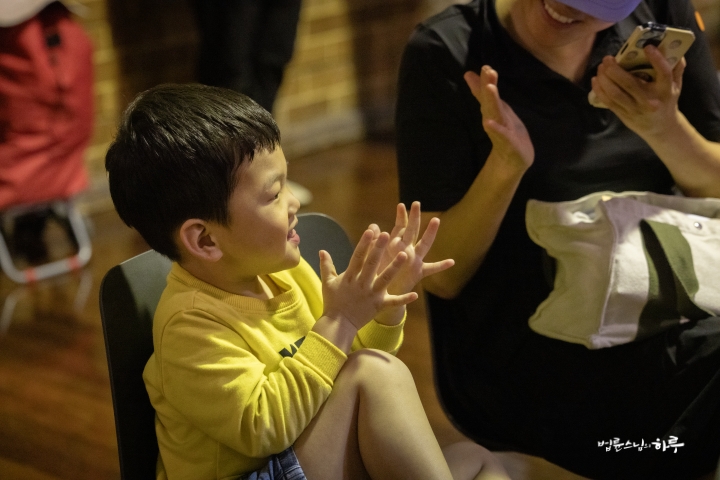
At precisely 6 PM, as the introductory video about Sunim ended, he walked onto the stage. Thunderous applause erupted from the audience. Sunim smiled and began his greeting.
A Conversation That Dissolves Suffering as We Talk
As we engage in such conversations, our worries may be resolved, our suffering may be alleviated, or our stress may be relieved. We call this kind of conversation that dissolves suffering ‘Dharma talk.’ In Indian, it’s called ‘Dhamma.’ Dhamma means truth. So, we call a conversation that dissolves suffering a ‘Dhamma talk.’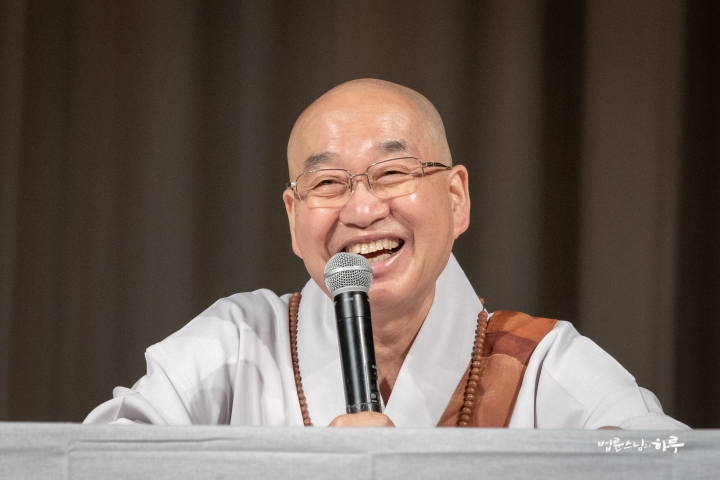
Following this, those who had requested questions in advance raised their hands and began to converse with Sunim. Over the course of two hours, eight people were able to ask Sunim questions. Various life concerns and questions were raised. One person mentioned that when panic disorder symptoms appear, they instinctively pray to Jesus, and asked for Sunim’s advice on how to endure these painful moments.
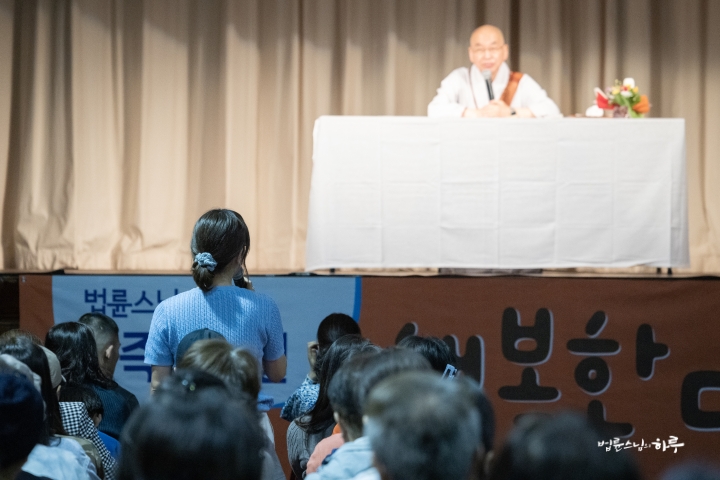
How Should I Manage My Minds When Panic Disorder Occurs?
“I experience some discomfort when using airplanes or public transportation due to panic disorder symptoms. The hospital recommended counseling, which I’m currently receiving. When the prodromal symptoms start, my mind goes blank, and I can’t practice mindfulness as I usually do. Then, instinctively, I start praying for help. The object of my prayer is Jesus, and it’s very effective. However, after my condition improves due to prayer, I experience a reality check. This is because I’m not a Christian. I’m a graduate of a Buddhist university and I practice mindfulness. In the Bible, there’s a verse that says, ‘I will be with you.’ As a practitioner, I should stand alone as the master of my life without relying on anything, but for someone like me who is mentally vulnerable and needs to hold onto something in moments of crisis that occur frequently, how should I spend those moments?”
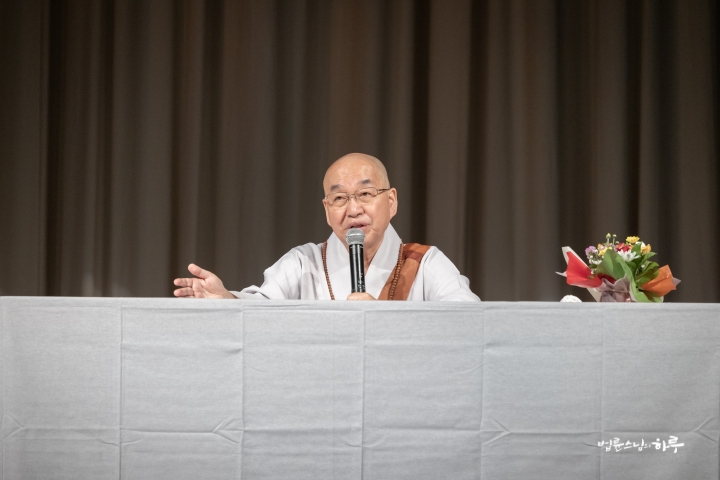
Our consciousness and unconsciousness often don’t align like this. When someone visits, we might outwardly welcome them, but inwardly feel uncomfortable. This means our unconscious is rejecting them. On the other hand, when our unconscious aligns with our consciousness, we can say our mind becomes at ease. So there’s no need to reject it.
For instance, in cases of mental illness, sometimes when a shaman performs a ritual or receives divine possession, it actually makes the person feel better. Usually, when we talk about science, it needs to work almost 99% of the time for us to call it science or a principle. But these divine possessions sometimes work and sometimes don’t, and they work for less than one in ten people. We can’t recommend such things to others. I once had a chronic illness and received treatment in a dream. In the dream, I went to a hospital, but there was no doctor. I often leave if my primary doctor isn’t there, but an unfamiliar doctor told me to get treatment while I was there, so I did. After waking up from that dream, my illness was completely cured. When I went to my primary doctor, they asked what I had done and said my symptoms had greatly improved. This can be said to be something working in the unconscious.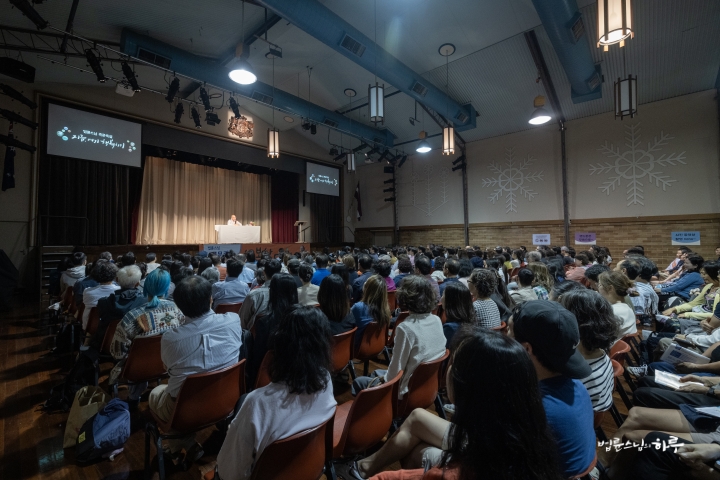
So, for someone with anxiety, it’s good to pray like this: ‘I am at peace. Thank you.’ If you’re a Christian, you can pray like this: ‘I am at peace. God, thank you.’ Here, God or Buddha isn’t the key, but it’s important that you keep giving suggestions to your unconscious. Even if you’re anxious, if you keep bowing and suggesting ‘I am at peace,’ this has the effect of influencing your unconscious. Although there are many side effects, the reason religions exist in this world is because, although not as high a probability as science, these effects appear depending on the person.

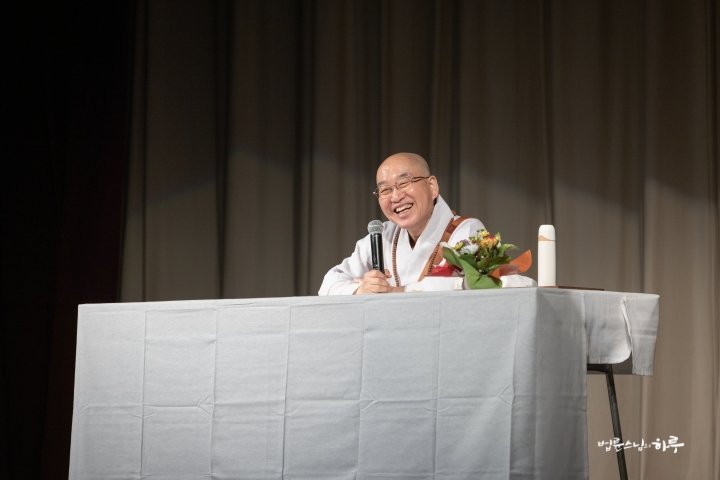
“Thank you.”
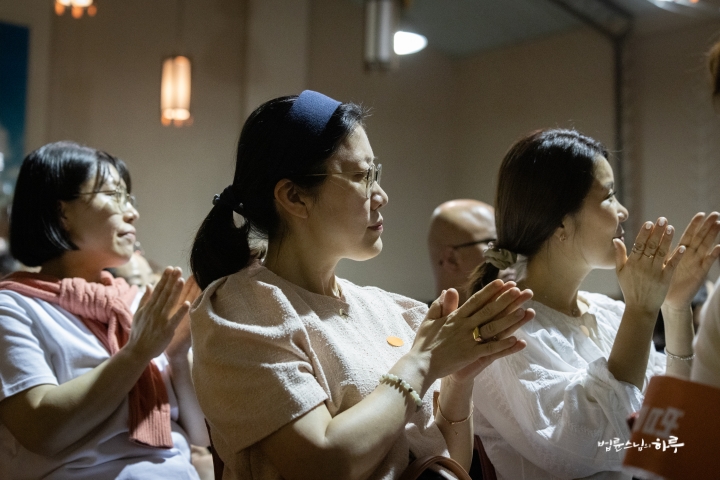
The questions continued to pour in.

I get angry when dealing with my daughter who has a similar personality to mine. How can I interact with her more comfortably?
To what extent is it appropriate to engage in self-blame and self-criticism?
I’m very ambitious about work and have many things I want to do. As a result, I feel anxious and guilty even when I’m resting. What should I do?
I’m furious to learn that my mother, who took care of my grandmother for over 20 years, has no share in the inheritance. What should I do?
Who grants the “right to be happy” that Sunim always talks about? Why does Sunim consider happiness so important?
In the current global crisis, what does Sunim see as the most urgent issue? What can I do living in Sydney?
I’m troubled because my parents oppose my marriage to a foreign girlfriend. What stance should I take?
As the conversation progressed, it was time to conclude. Sunim asked for understanding.
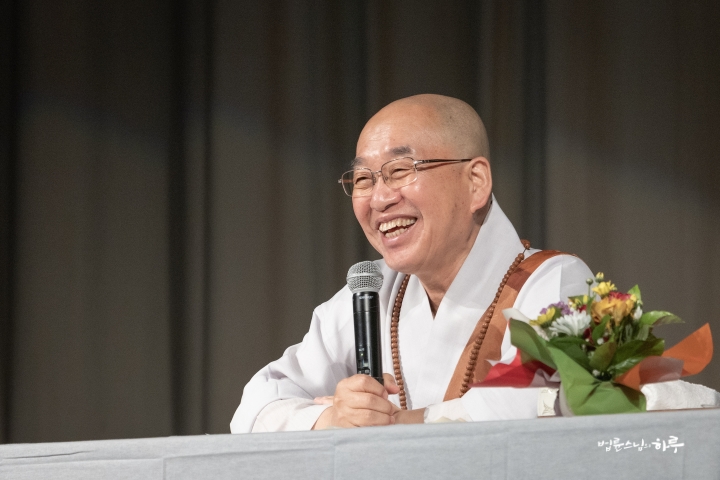
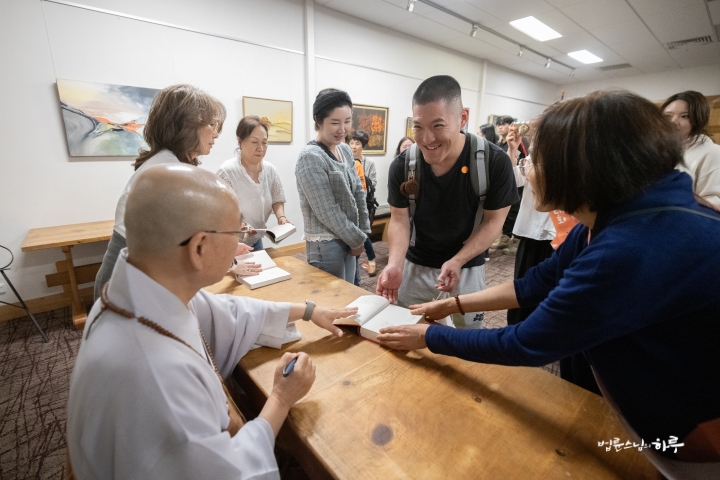
After the lecture, a book signing was held in the auditorium lobby. Many attendees lined up, waiting for their turn to see Sunim’s face up close and get his signature.
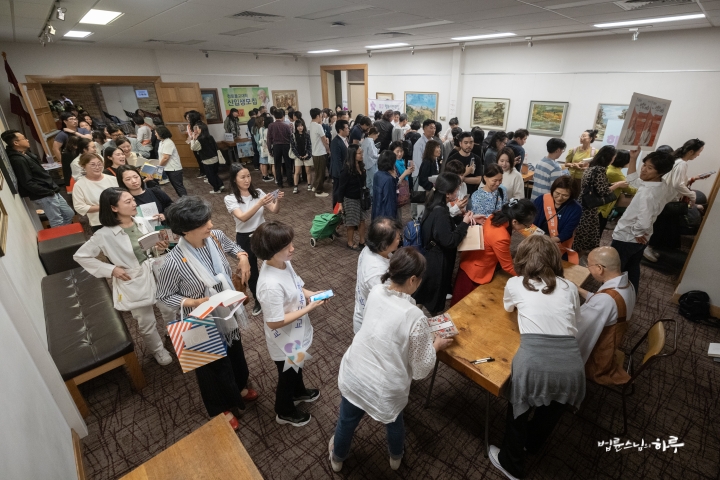
“Sunim, I enjoyed your lecture today. I became really happy after listening to the Dharma Q&A.”
Most people getting their books signed expressed their gratitude to Sunim.
After the book signing, Sunim took a commemorative photo on stage with the volunteers who helped prepare for the lecture.
“Sydney!”

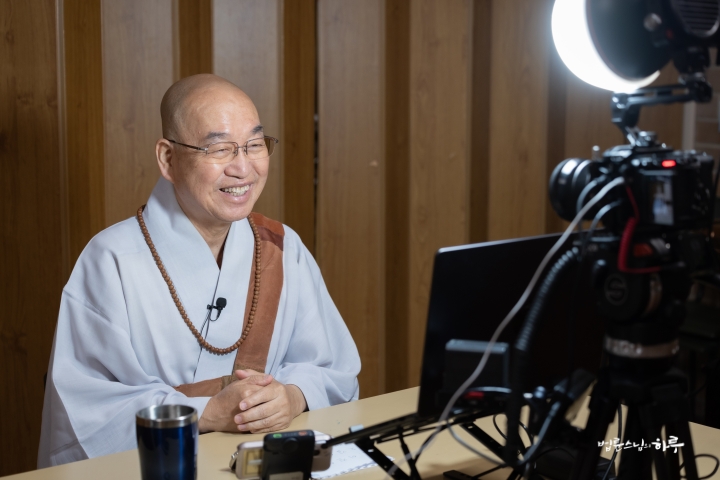
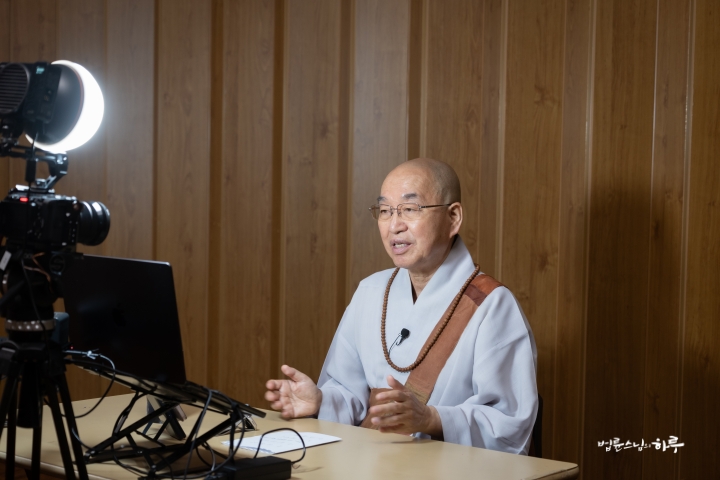
Soon after, Sunim hurried to the office prepared on the second floor for the Friday Dharma Q&A live broadcast. While Sunim was doing the live broadcast, the volunteers cleaned up and organized the lecture hall.
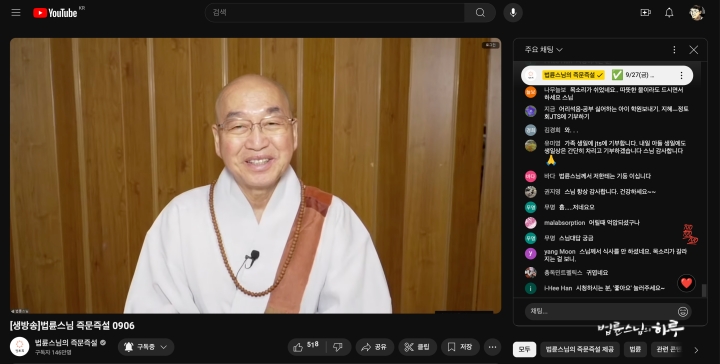
At 8:30 PM local time, 7:30 PM Korean time, the Friday Dharma Q&A live broadcast began. With about 3,700 people connected to the live broadcast, Sunim gave his opening remarks.
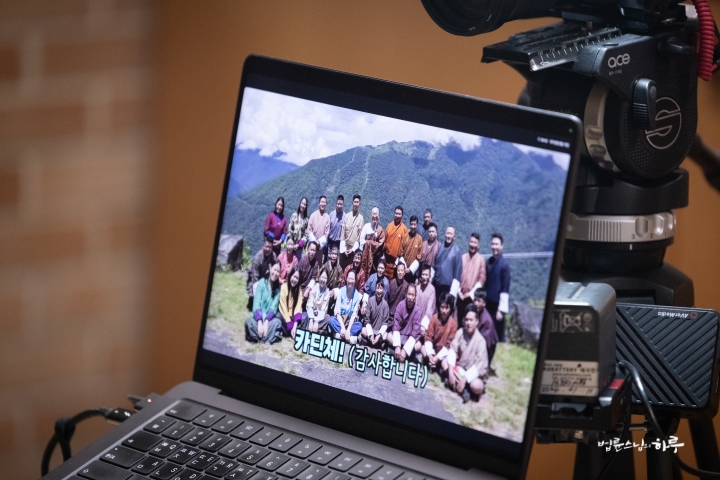
Then, we watched videos of Sunim visiting the earthquake-affected areas in Türkiye and Syria and Bhutan last week.
“The world is now entering an era of climate crisis due to environmental pollution. Wars are also breaking out in various parts of the world due to conflicts. Moreover, in many parts of the world, there is still a shortage of food and medicine due to poverty, and many children are unable to attend even elementary school. First and foremost, it’s crucial to awaken from our own foolishness, acquire wisdom, and not torment ourselves. However, I hope that you will all take a step further and participate in activities to eradicate absolute poverty, establish peace, and prevent the climate crisis.”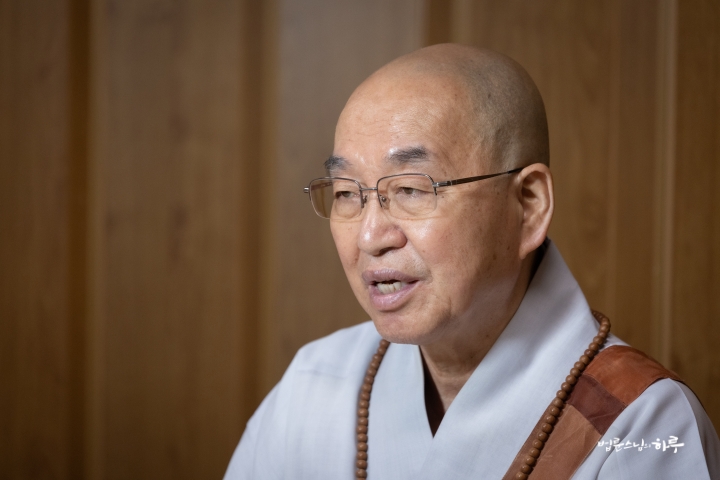
After the video ended, Sunim began a dialogue with those who had pre-submitted questions. Four people pressed the raise hand button and asked Sunim questions. One of them sought Sunim’s advice on how to manage her emotions after witnessing her husband’s infidelity during her pregnancy and going through a difficult time since then.
How to Cope with Loneliness After Husband’s Infidelity During Pregnancy?
“Three years ago, I witnessed my husband’s infidelity while I was pregnant. Afterwards, he apologized for his actions and tried hard to make amends, but I was emotionally overwhelmed by the stress of experiencing this for the first time and expressed my feelings to him without restraint. As a result, it seems he found it difficult, and for the past year and a half, he has been asking for a divorce. Since then, I’ve done a lot of self-reflection and listened to many of Venerable Pomnyun Sunim’s teachings, deciding to accept all of my husband’s opinions. Although we live as a weekend couple, these days he rarely comes home, saying he’s busy with work. I’m grateful for the angelic child by my side and am trying to live happily. Nevertheless, loneliness occasionally creeps in. How should I manage my momentary desires to meet other men? Even in this situation where my husband is absent, if I’m happy, can my child grow up without feeling any lack?” 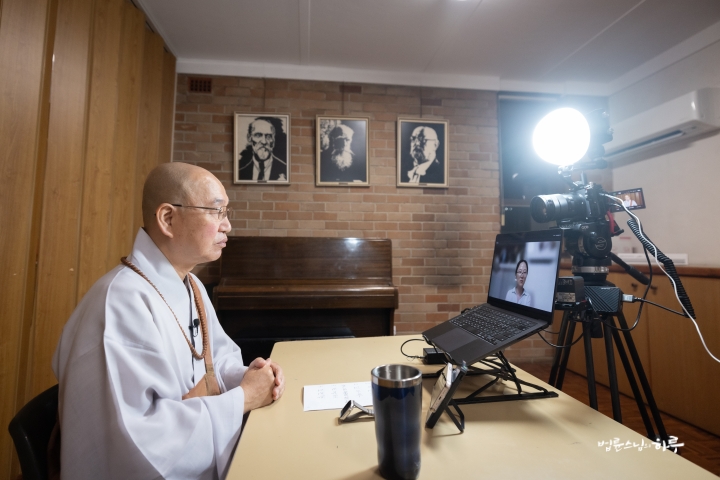
However, if you can live alone happily without feeling any loneliness, it won’t be a problem for your child at all. You should understand that your child will adopt about 90 percent of your psychological state. Of course, as the child grows, they will develop their own thoughts and may experience hurt accordingly, but when they’re young, they are closely connected to their mother and are therefore mostly influenced by her.
Setting aside the child issue for now, the fact that your husband had an affair must have been a huge shock. Due to this shock, you became stressed and reacted sensitively, expressing those emotions for a long time. Initially, your husband might have begged for forgiveness, saying ‘I was wrong. Please forgive me,’ but when this situation repeats, human psychology tends to develop resistance. So it leads to thoughts like, ‘Well, I don’t know. What do you want me to do? Isn’t divorce the only option?’It’s the same when educating children. From a mother’s perspective, she might think the child has done something 10 units wrong and scold them accordingly, but the child often thinks they’ve only done 5 units wrong. At first, the child might have thought they were wrong, but after being scolded for 10 units, they feel it’s unfair to be scolded to this extent and develop resistance. When resistance develops, the educational effect is lost. Because the child is young, they might just endure the scolding for now, but as they grow, they will express that sense of unfairness. If you cover up wrongdoings, the child’s behavior worsens, but if you scold them according to your temperament, the child may be hurt.
It’s the same with your husband. Because you dealt with him emotionally to relieve your anger, your husband forgot about his wrongdoing and instead developed resistance. If your husband says, ‘Fine, let’s get divorced then,’ you might suddenly feel scared and say, ‘I was wrong.’ You shouldn’t approach it this way. You haven’t done anything wrong. It was your husband who made a mistake by having an affair. If your husband admits his mistake and begs for forgiveness, promising never to do it again, you should accept his apology thinking, ‘Although I’m hurt, this man is still better than other men.’ Then you can forget about the past and continue your married life well.
However, if you think, ‘No matter how rich he is, how handsome he is, or even if he’s the father of my child, I don’t want to live with someone who looks at other women besides me,’ then you need to clearly define your position. This is not about money, but truly about your life, so you should tell your husband, ‘You might have made such a mistake, but I don’t want to live with these feelings. So let’s get divorced.’
Right now, your position between these two options is unclear. You’re hesitant to divorce because you’re not confident about raising the child alone, but you also feel bad about just accepting your husband back. You’re constantly trying to juggle these two conflicting interests, which is why you’re experiencing distress.
If you had forgiven your husband and put the incident behind you, your husband’s current behavior would be a separate issue. You’re still a young woman, but your husband doesn’t come home and is out and about claiming to be doing business. The question is whether you need to maintain this kind of married life. This is a separate issue from what we discussed earlier and pertains to what kind of life you want to live.
Don’t discuss the past. One approach could be to say, ‘Since you’re having affairs, I’ll also seek happiness with other men.’ However, this approach risks escalating the conflict and is not good for the child’s upbringing. So, don’t hold back. Call your husband and make this request: ‘I feel very lonely because you’re away from home and don’t come back. It’s too lonely to just look at our child all day. Your business is important, but for the sake of me and our children, please increase the frequency of your visits home.’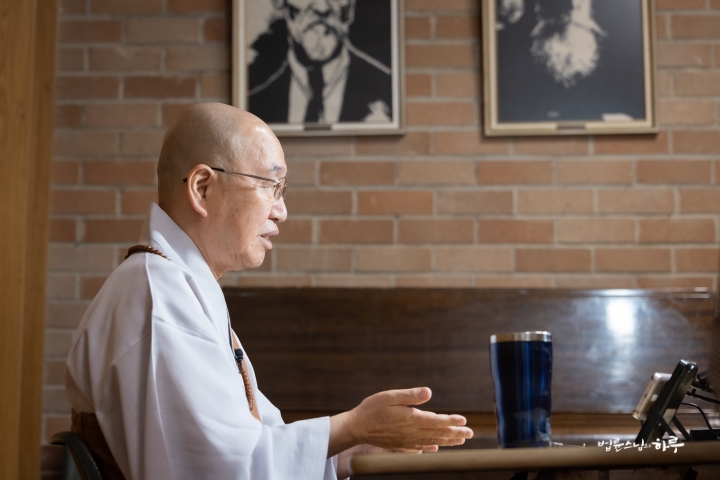
“I will talk to my husband honestly. Thank you.”
After the conversation ended, it was past 9:30 PM. Sunim asked for understanding regarding next week’s broadcast.
“Next week’s Friday Dharma Q&A time coincides exactly with the time I’ll be on a plane, so I won’t be able to do a live broadcast. Please don’t think ‘It’s not a live broadcast, so I won’t listen.’ It would be good if you continue to listen to the Dharma Q&A consistently.”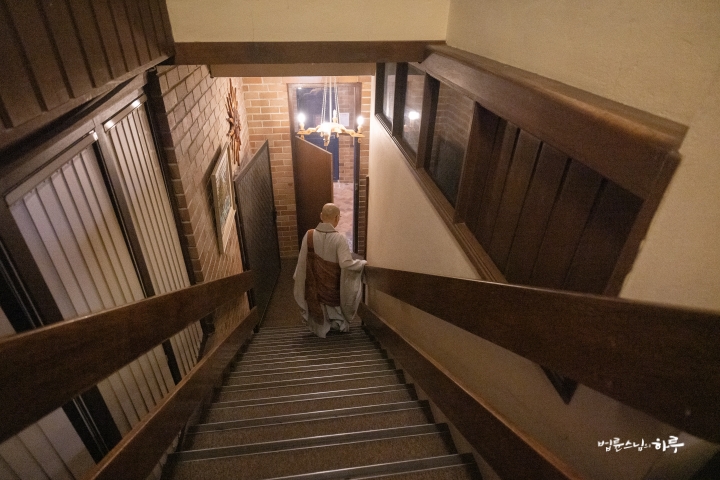
After the live broadcast, Sunim hurriedly returned to the lecture hall. The volunteers had just finished sharing their thoughts, sitting around in the empty hall after removing all 400 chairs.
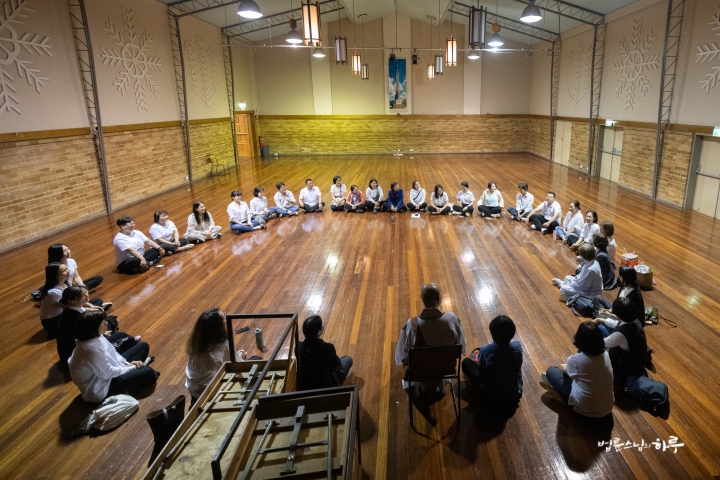
When Sunim arrived, they took a moment for introductions. They shared their names, their roles in Jungto Society, and brief impressions.
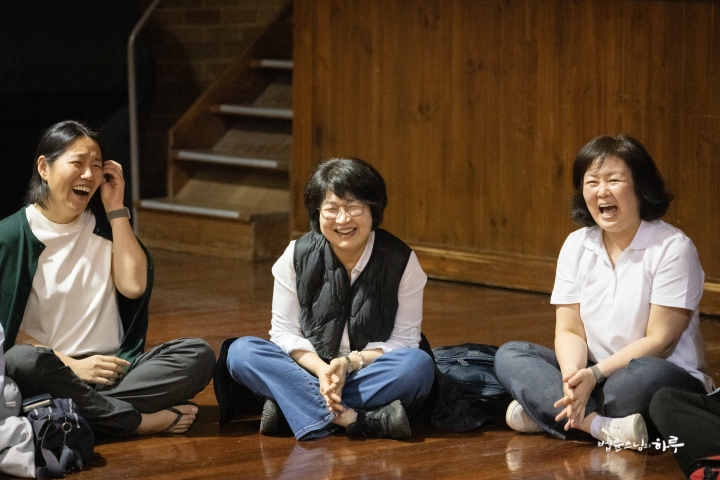
“Thanks to you, Sunim, I’m living well without getting divorced. Thank you.”
“I used to live hating my parents, but after meeting you, Sunim, I decided I didn’t want to pass on this kind of life to my children. As I practiced, I gradually began to understand what happiness is, and I also developed a forgiving heart towards my mother. Thanks to you, Sunim, I also got a good job. I’m sincerely grateful.”
“I’ve been listening to your Dharma talks whenever I was really struggling, Sunim. Seeing you up close today brings tears to my eyes. I’m not crying because I’m sad, but because I’m grateful.”
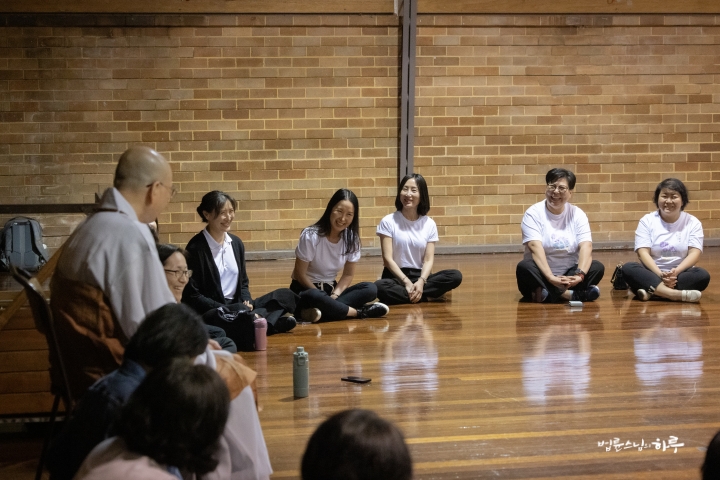
Most expressed their gratitude to Sunim.
“At the precept ceremony, you looked at me and asked, ‘Can you spread the Dharma?’ So I immediately spread the Dharma to my husband.”
“My husband hasn’t changed, but my heart has improved a lot.”

After going around once, Sunim expressed his gratitude.
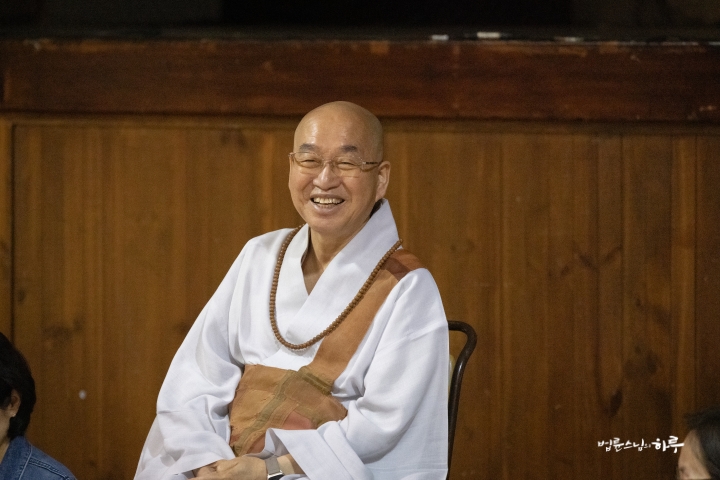
After taking commemorative photos by groups, Sunim greeted the volunteers and left the lecture hall.
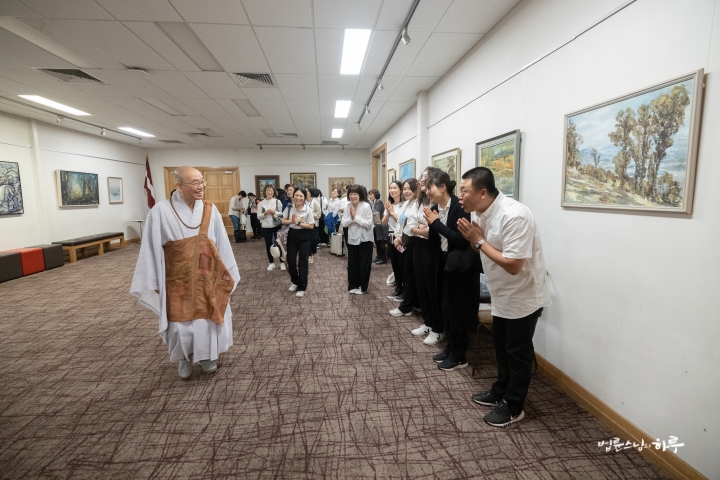
“Sunim, stay healthy!”
“Yes, let’s meet again in two years.”Promising to meet again, they headed to their accommodations after 10 PM.


Tomorrow, Sunim will depart from Sydney Airport in the morning, fly to Auckland Airport in New Zealand, have tea with New Zealand Jungto Society members in the afternoon, visit Namguk Seon Center, and in the evening, give a Dharma Q&A lecture for Korean expatriates living in New Zealand.