My Economic Income Is Unstable, So My Mind Is Always Anxious
Sep 4, 2024 - Thimphu Site Visit, Cabinet Minister Meeting, Bhutan ▶ Sydney
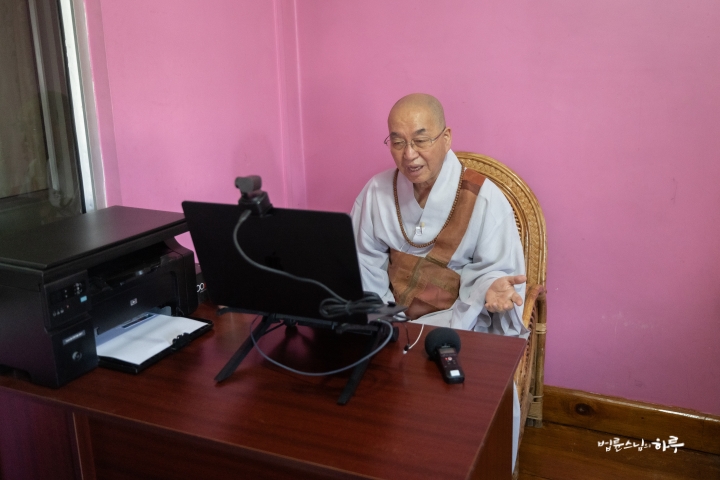
After completing his morning practice and meditation, Sunim had breakfast at 6 AM. At 7 AM (10 AM Korean time), he conducted a live-streamed Weekly Dharma Assembly. Once all the Jungto Society members had entered the video conference room, Sunim greeted them.
Through the workshop, we had time to discuss various topics such as what sustainable development is, how to develop villages, and what attitude to take. Although we’ve talked about many things before, we could only discuss them partially due to time constraints. However, in this workshop, we had enough time to talk comprehensively about why we want to do this work and how we should do it. Since the most important aspect of sustainable development is the voluntary and independent participation of residents, we also took time for the residents themselves to check what is needed one by one and plan how to carry out each project in the future.
I’d like to briefly share with you the scenes from my visit to the earthquake-affected areas in Türkiye-Syria and the JTS workshop I conducted in Bhutan.”
Then, we watched a video showing Sunim’s visit to the earthquake recovery site in Türkiye-Syria and the JTS workshop he conducted in Bhutan last week.
After watching the video, Sunim shared a few words.
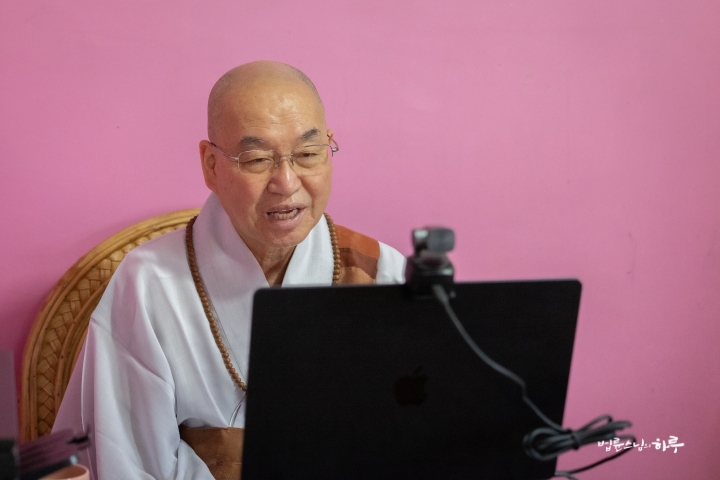
The activities you just saw in the video all correspond to the vows of Jungto practitioners, so these activities should all become your vows. That’s why I want to share and discuss these with you.”
Then, those who had requested questions in advance had a conversation with Sunim. Over the course of an hour, a total of four people asked Sunim questions. One of them had been working as a cartoonist but felt constantly anxious due to unstable economic income and sought Sunim’s advice on how to continue their practice.
My Economic Income Is Unstable, So My Mind Is Always Anxious
“I work as a cartoonist, but making a living is difficult. When I asked you before, you told me that if I enjoy drawing cartoons, I should continue even if I have to starve. So I’ve kept drawing cartoons. But because of the constant unstable income, I sometimes felt so anxious while working that I could barely breathe. Now I’m exhausted and don’t want to draw cartoons anymore. But when I try to apply for other jobs, I get scared just thinking about working and start crying. I’ve tried simple labor jobs too, but the shouting environment triggered my anxiety. I’m taking medication and keep trying my best despite the fear. How should I live my life?”
“The difficulties you’re experiencing now are not because you’re drawing cartoons, or because you don’t have a job, or because you’re young, but because of a mental illness. So first and most importantly, you need to go to the hospital and receive treatment. Secondly, every morning while bowing, you need to give yourself the suggestion, ‘I am at peace.’ When you ask, ‘How can I not be anxious?’ it means you are currently anxious. Even though your current state is anxious, you need to keep giving yourself the suggestion ‘I am at peace’ to move towards peace.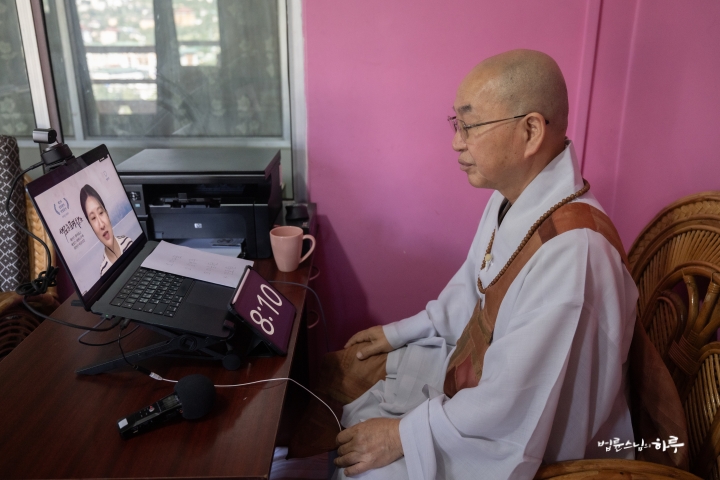
In Bhutan, some people have extremely poor indoor facilities or no houses at all. For these people, I offer to support building houses and improving indoor facilities. But for Syrian refugees, JTS simply cannot afford to build houses. So I tell the Syrian refugees to think, ‘At least we have tents, that’s fortunate.’ And I remind them that while they may live like this, their children shouldn’t have to, so more important than building a house right now is educating their children. Because once children grow up, they miss the opportunity for education.
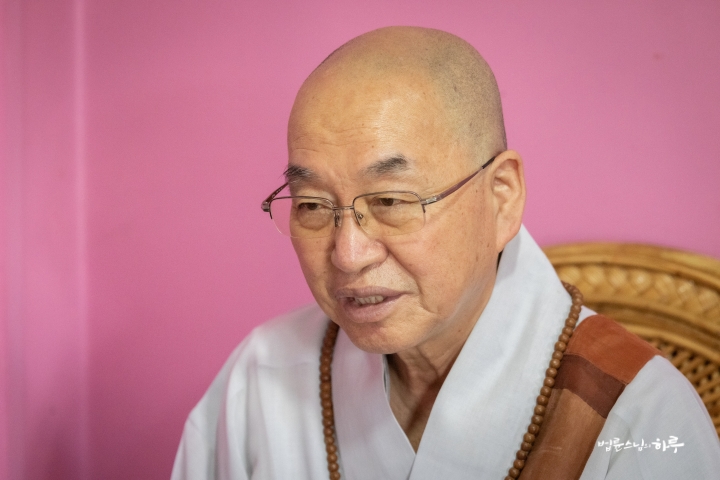
Buddha had the perspective that ‘To spread the Dharma, it’s okay to beg for food, wear picked-up clothes, and sleep under trees. But I will spread this Dharma for the suffering sentient beings.’ That’s why he lived proudly while begging for alms all his life. The reason I’m traveling around the world like this now is to awaken people’s consciousness so that we all reduce consumption, because if climate change worsens, all of humanity and all living beings will suffer. If we cook and eat delicious food, wear nice clothes, and travel here and there for fun, but eventually lead to the extinction of our descendants, is that really the way to live well? Isn’t it a better path to live simply in terms of eating, dressing, and living, but to live for a long time? I’m asking many people this and guiding them towards a better path.
If you keep talking about economic lack while living in South Korea, there’s no end to dissatisfaction. If you want to draw cartoons, just draw cartoons. If you have a firm will to draw cartoons even if you have to beg for food and wear picked-up clothes, then live drawing cartoons. If you want to eat, dress, and sleep better than others, you should quit drawing cartoons no matter how much you like it. You can go to construction sites or supermarkets where they need workers and work there. Then you can earn 100,000 won and spend 50,000 won on food. But in Syrian refugee camps, you can’t find a job that pays even 10,000 won a day. So your psychological anxiety problem is not due to cartoons. It’s not because you can’t find a job.
Right now in South Korea, there are many job openings but not enough people to work, which is becoming a big problem. That’s why over 2 million foreign workers have come to Korea to work, but there’s still a shortage of workers. If you’re looking for a job where you work less but earn a lot of money, such jobs are hard to find. For example, if you want to make big money by investing in stocks or coins, you should be prepared to lose money. If someone called you and said they’d give you a billion won if you put ten million won in the bank, and you lost it, isn’t that greed that you brought upon yourself? Unrealistic thoughts led to a big loss. So you have to take responsibility for what you’ve done. You should move forward thinking, ‘My greed blinded me! From now on, I need to live with a clear mind!’
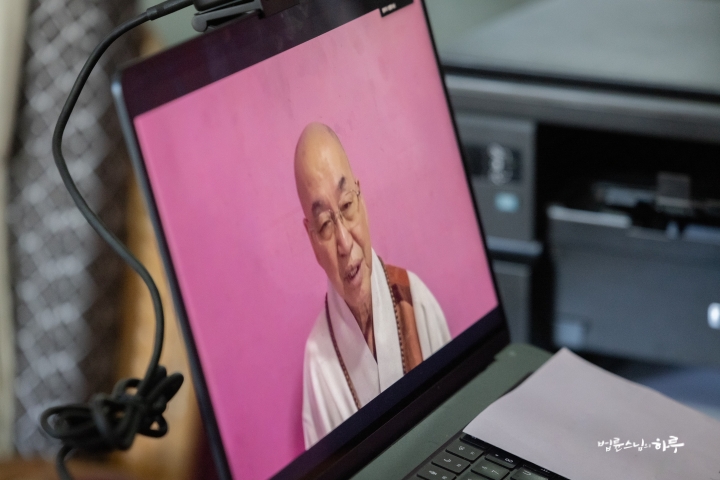
“Thank you.”
“Because you’re currently experiencing mental difficulties, you might find my words frustrating. However, try living with the perspective I’ve talked about. If you fail, get up again and try again. That’s how you can live as the master of your life, even if it’s just for a day.”
The questions continued. When the conversation ended, it was 8:30 AM. Sunim apologized, saying that he probably wouldn’t be able to do a live broadcast for next week’s Dharma Assembly as he would be on a plane.
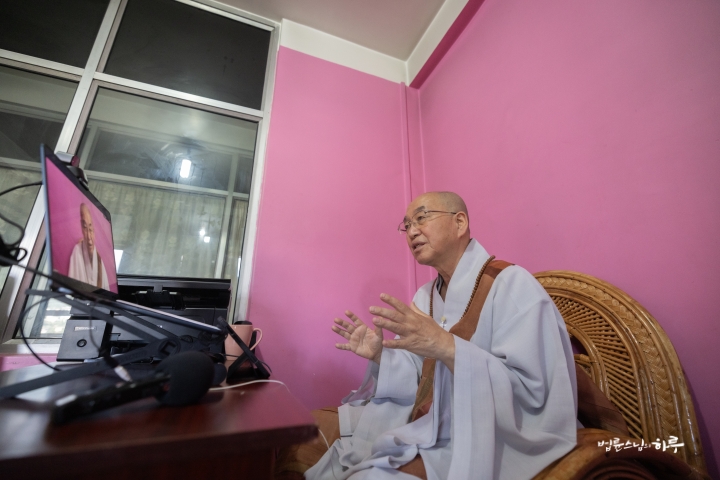
After finishing the live broadcast, Sunim immediately packed his belongings and went out to explore the surroundings of Thimphu.
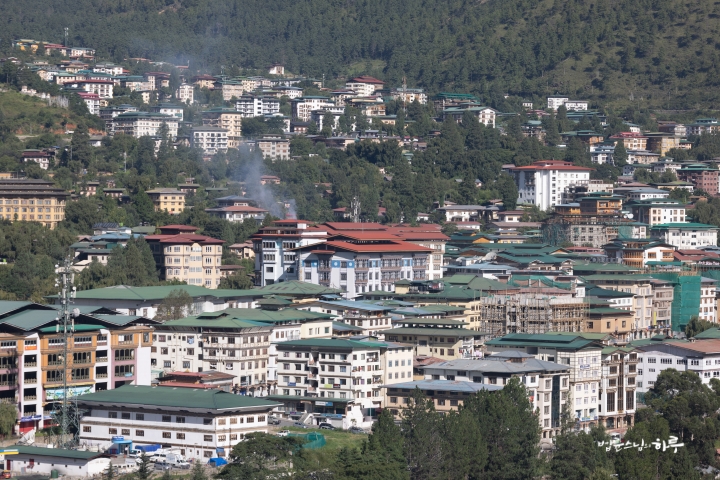
Originally, a training session for government officials was planned, but it was canceled due to internal circumstances of the Bhutanese government. So, it was decided to explore Buddhist sites around Thimphu instead.
“It’s great that we now have time to look around northern Thimphu, which we’ve always wanted to do but never had the chance.”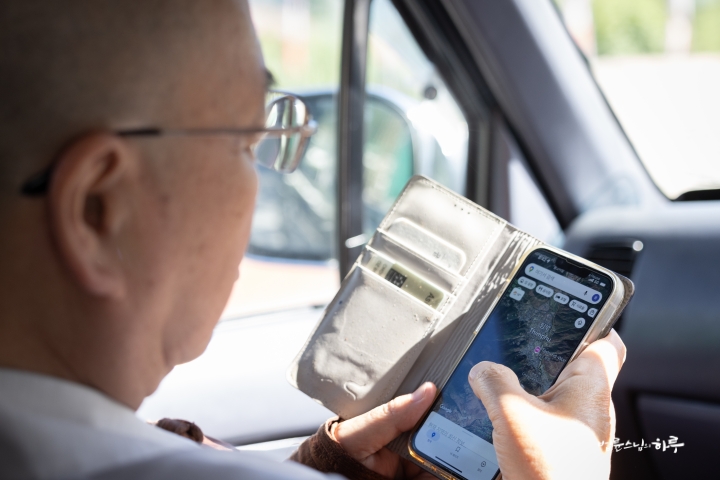
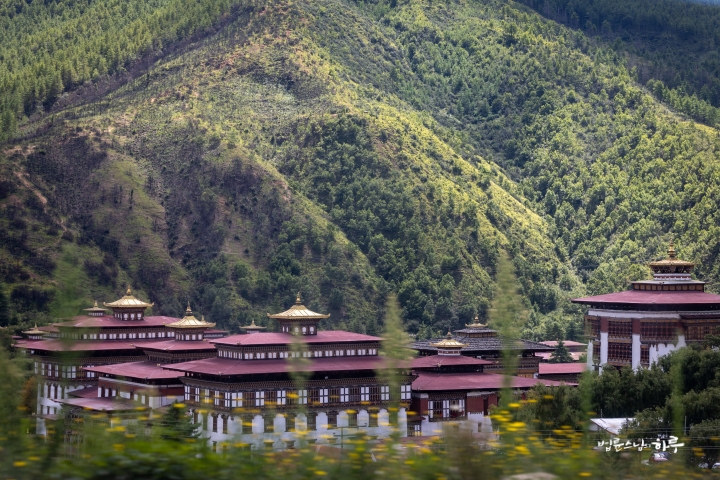
First, Sunim visited Tango Buddhist University, located 15km north of Thimphu city.
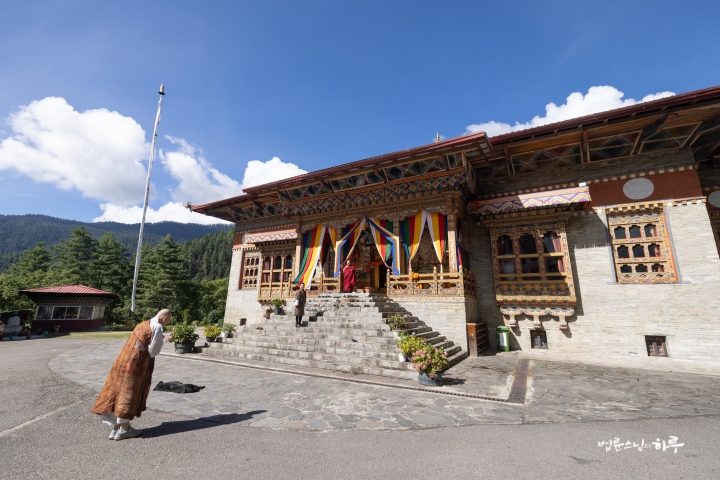
Upon entering the main hall, many monks were having their formal monastic meal (Barugongyang). As everyone was eating, Sunim quietly paid respects and left the hall.
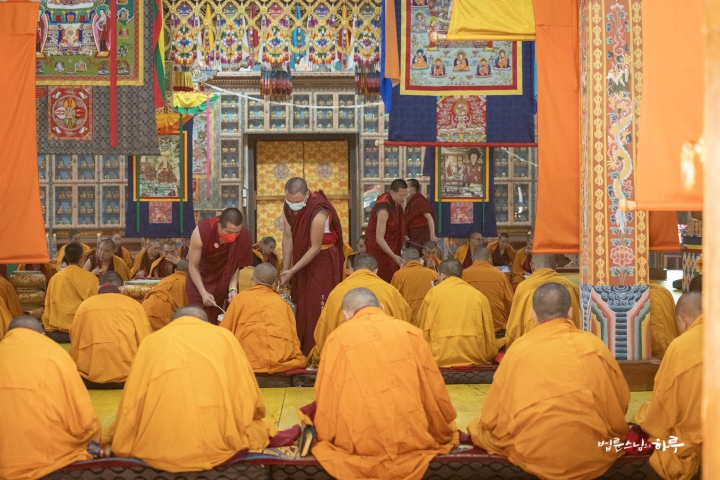
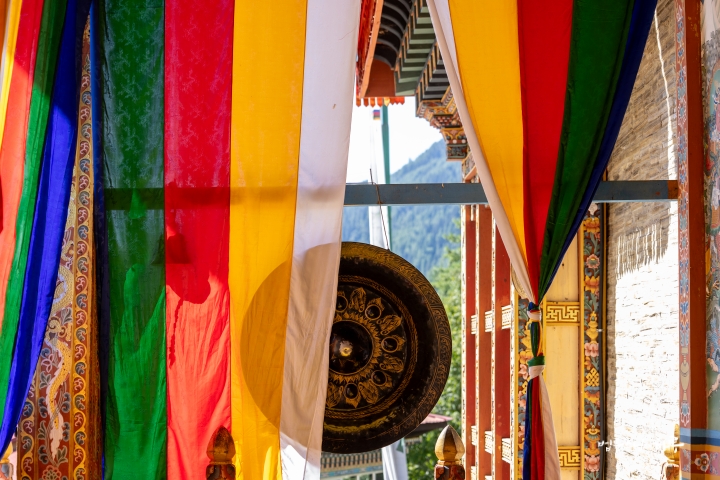
The monks at Tango University study for a 9-year course, and upon successful completion, they meditate for 3 years and 3 months at the nearby Cheri Monastery. This place is considered sacred by the Bhutanese people because Zhabdrung Rinpoche, who unified Bhutan and established its national identity in the 17th century, meditated in a cave here.
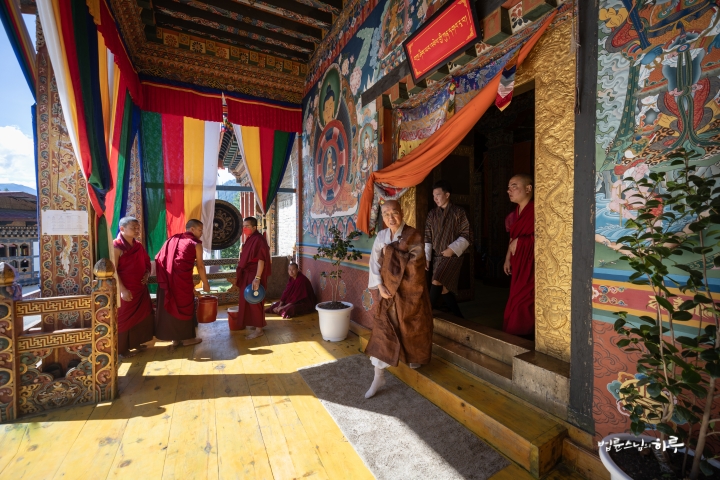
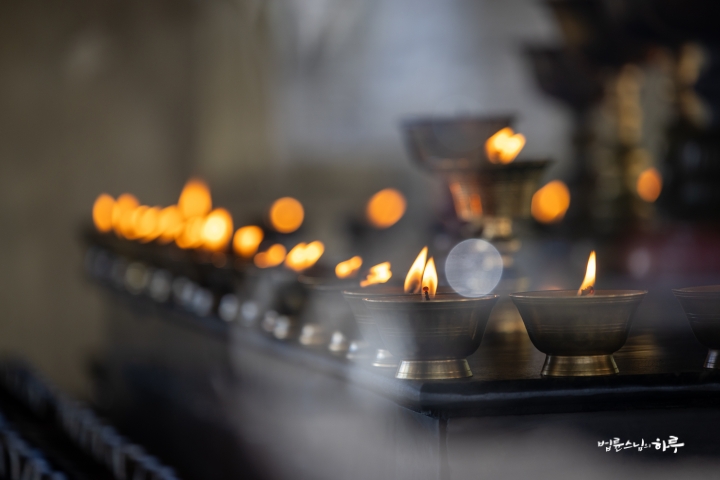
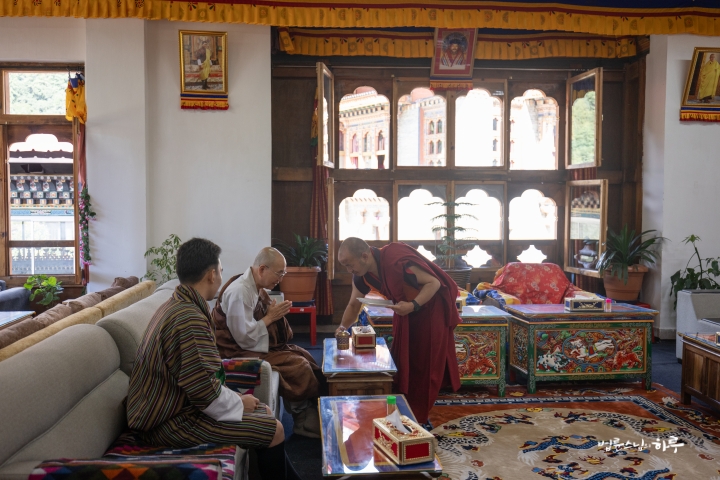
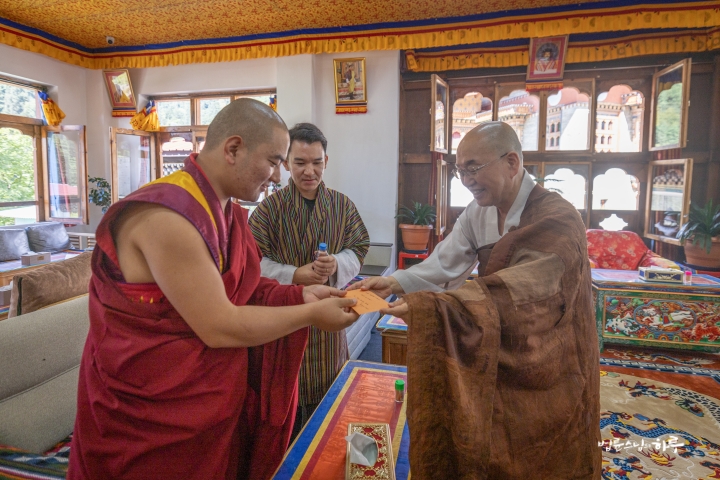
After touring the university, Sunim sat down for a brief tea break, then offered a donation to the monk who had guided them before leaving the university.
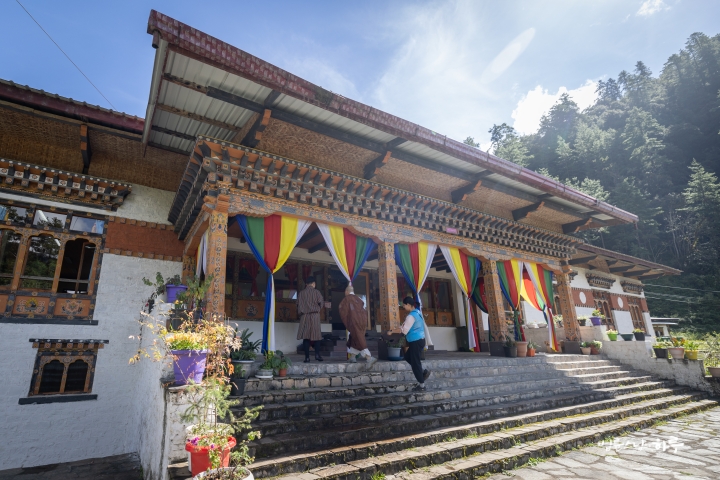
They then got back in the car and headed to Dechenphug Lhakhang temple. Dechenphug Lhakhang is a fortified monastery located on the western slope of the Thimphu valley. It is said to have been built in the 12th century by Dampa, the son of Phajo Drugom Shigpo (1184-1251), who popularized Drukpa Buddhism throughout Bhutan.
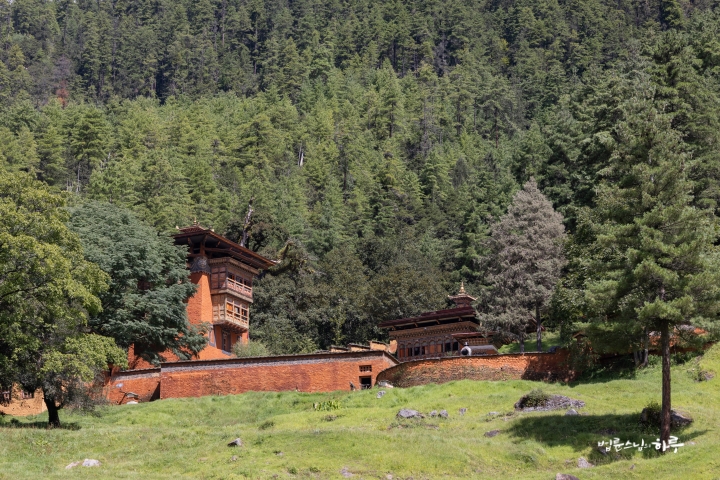
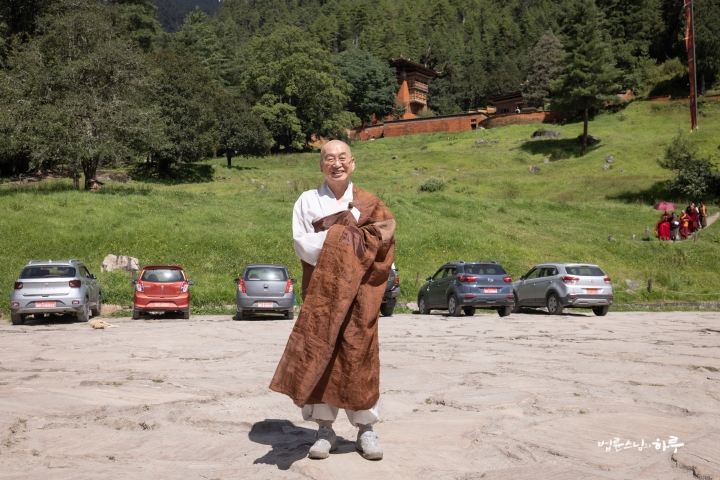
Inside the temple, there is a famous fortified tower called Goenkhang, which houses the protective deity of Thimphu. This tower can only be visited by Bhutanese citizens and is off-limits to foreigners, so Sunim paid his respects from the outside. Sunim offered a prayer with his palms together, facing the temple.
“May the sustainable development projects in Bhutan be successful. May the Korean Peninsula and the world be peaceful.”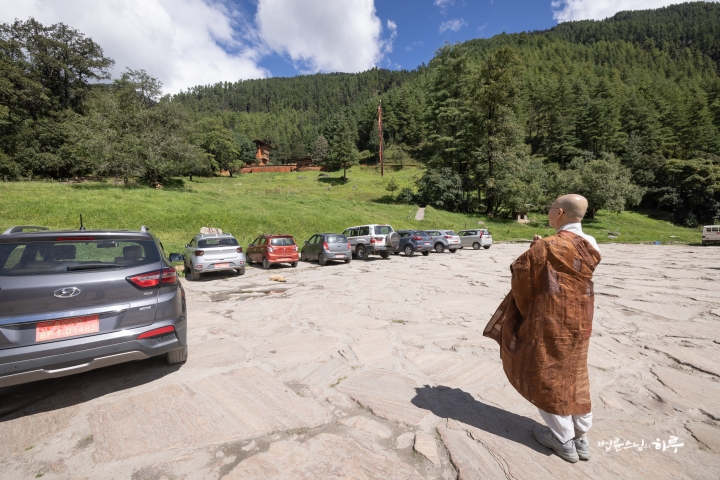
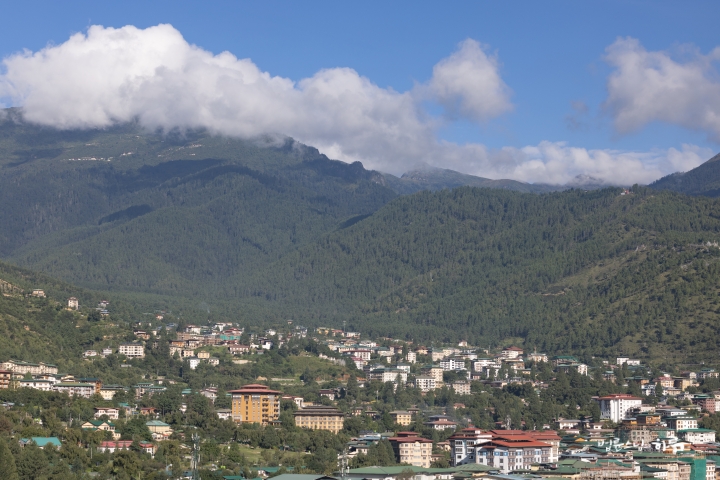
Next, they headed to Thimphu city center to meet with a Bhutanese cabinet minister. For several years, many apartments have been built in Thimphu, the capital of Bhutan, centered around the new town. To see how much development had taken place, they took a detour through the new town.
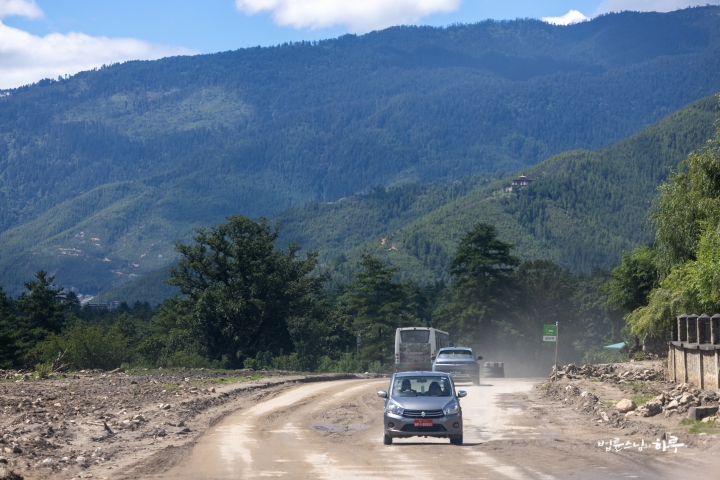
All the apartments looked the same because they had to adhere to traditional styles. The height is also restricted to 6 floors, as buildings must be lower than the royal palace.
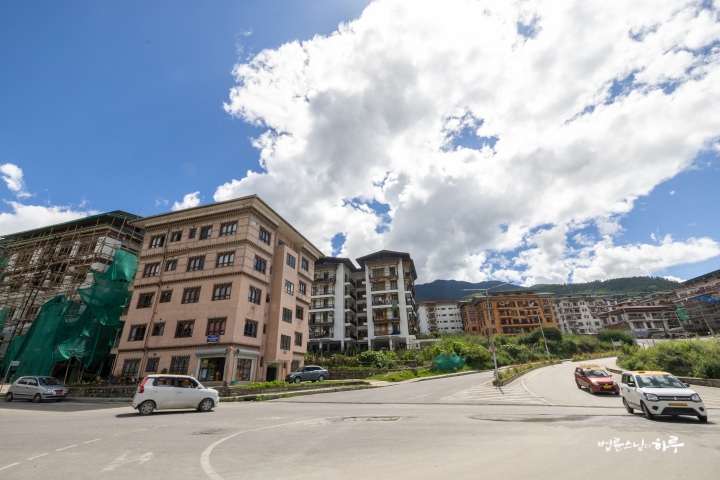
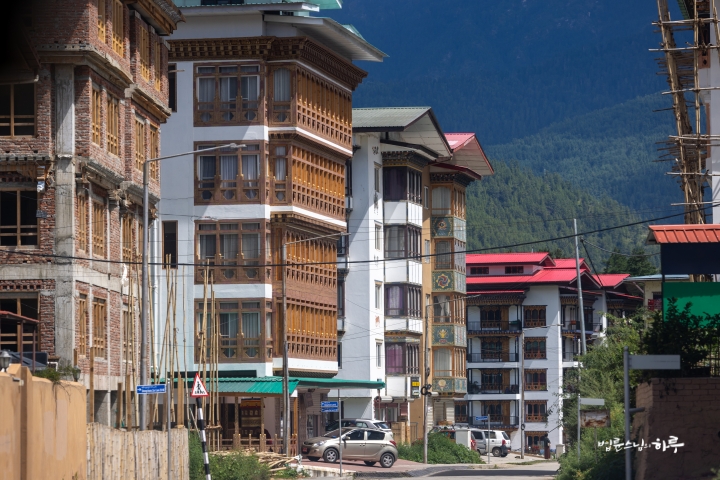
Upon arriving in downtown Thimphu, they stopped at a Korean restaurant called Sanmaru, where they were served tea and greeted the owner. They then moved to the Bhutanese government office to meet their 11:30 appointment.
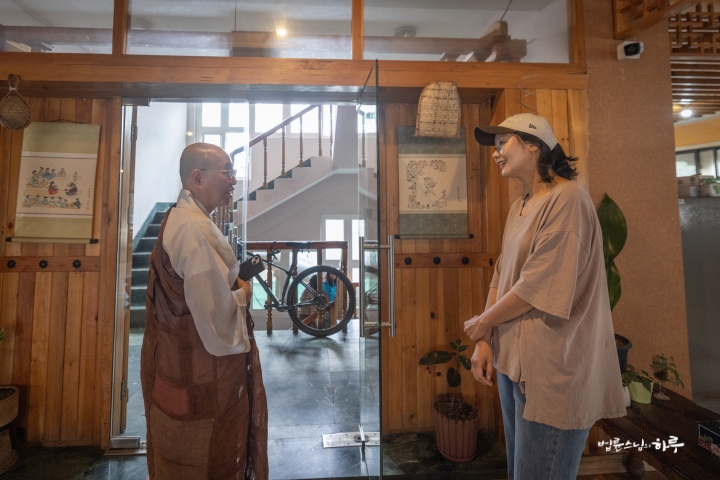
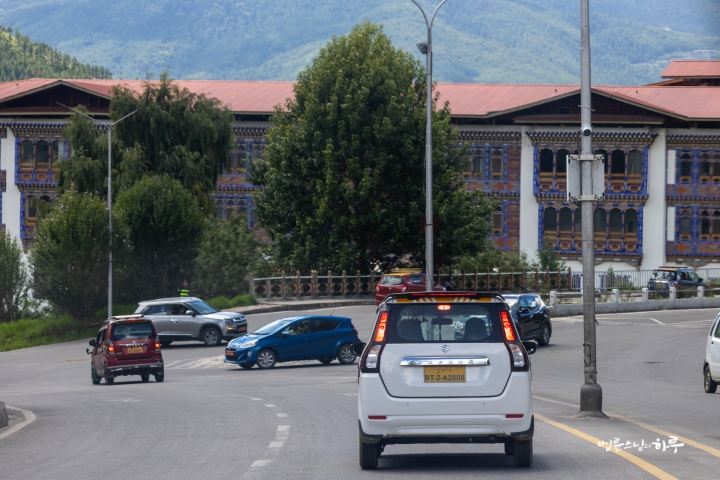
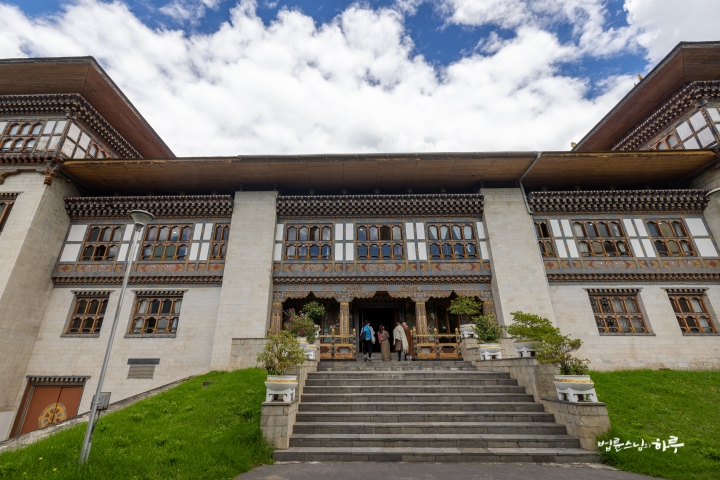
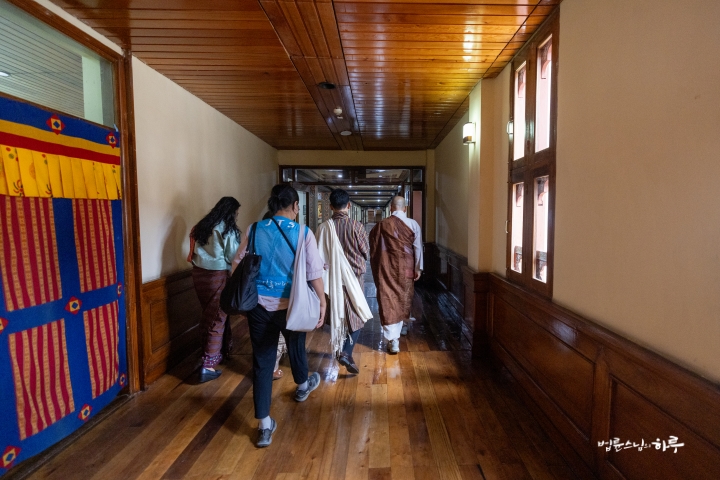
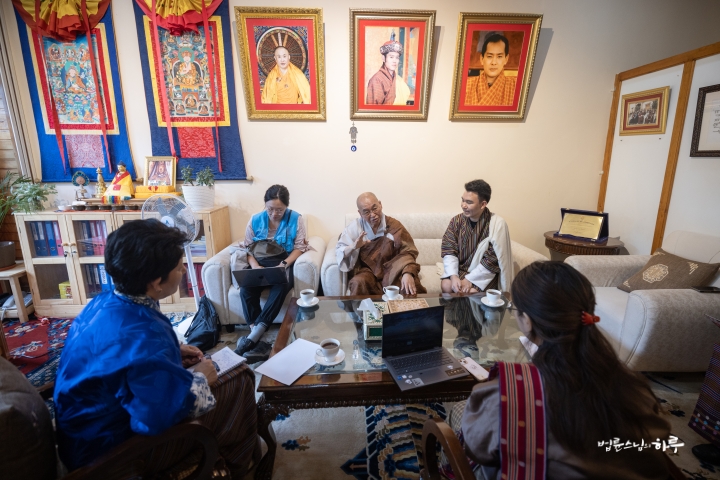
When Sunim arrived at the cabinet minister’s office, the minister warmly welcomed him.
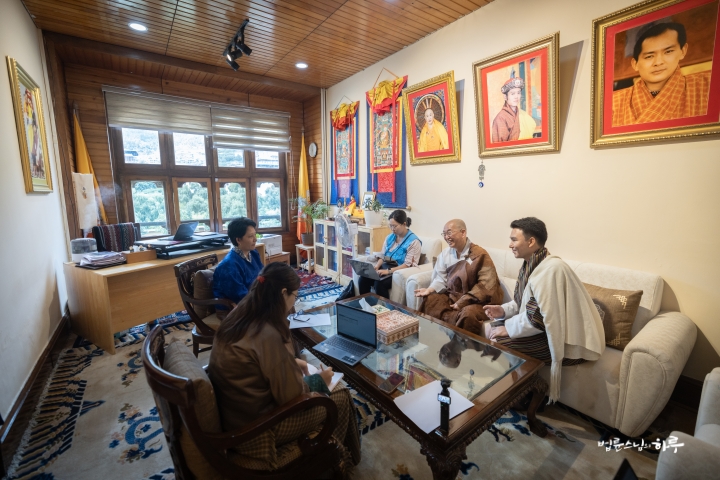
“How was your visit to Bhutan this time?”
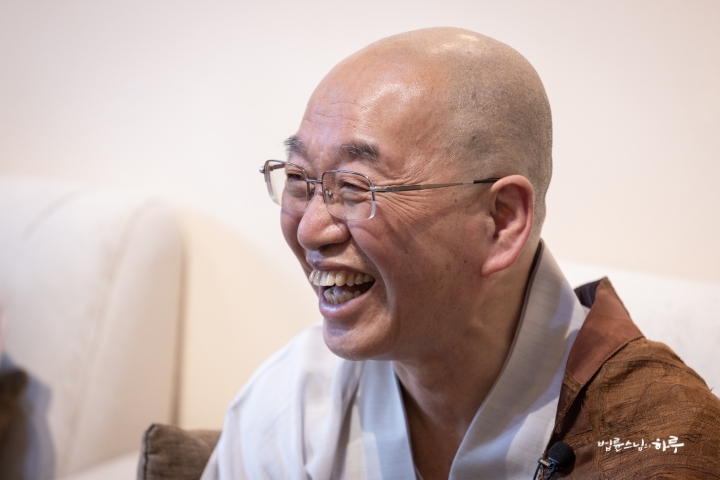
Sunim smiled and replied:
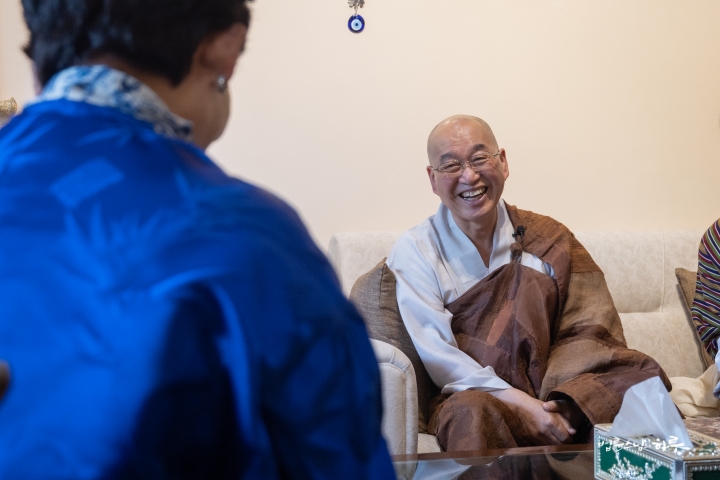
Sunim then made some suggestions regarding areas where the Bhutanese government could provide assistance for sustainable development. First, he discussed the findings from the healthcare survey and what he would like to request from the Bhutanese government.
How About Organizing a Medical Camp for the Villagers?
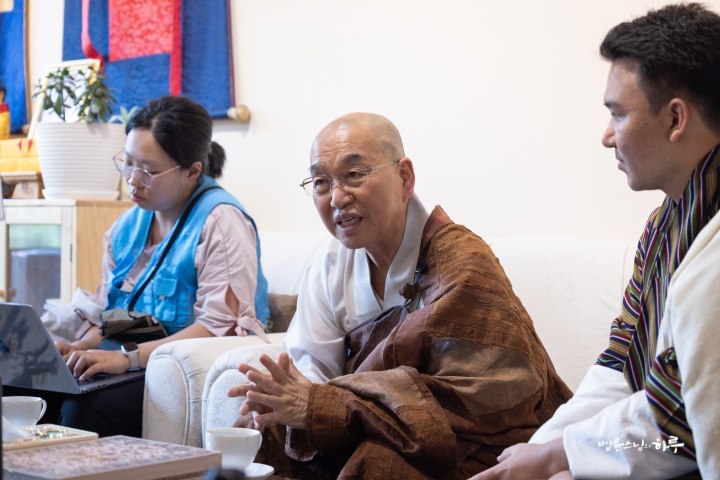
Next, we looked into dental services for providing dentures. We’ve secured doctors, but we haven’t found dental technicians to make the teeth yet. We also looked into ENT services related to hearing aids. Previously, hearing aids were expensive, costing over $1,000, making them difficult to distribute. However, recently, a device that functions as both earphones and hearing aids has been released for $100. If we test it and the response is good, we should be able to distribute them widely.”
After hearing Sunim’s proposal, the Cabinet Minister responded.
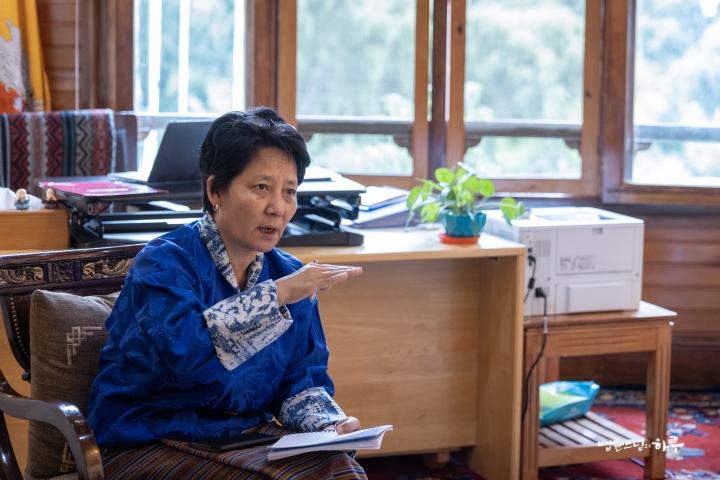
“The Bhutanese government also has officials in charge of medical fields, so I’ll connect you with them. When medical experts discuss, better methods will emerge.”
“Yes, we will submit a proposal.”“The medical camp will likely incur significant costs. How can these costs be covered?”
Next, Sunim sought cooperation regarding bringing experts from Korea at the end of October to survey and develop eco-friendly plans for the Paro Taktsang Monastery.
Then, Sunim shared his future visit schedule to Bhutan.
The villagers’ participation is more active than we expected. The reason seems to be that the money comes from a lama, not from the government. All Bhutanese are Buddhists, after all. We will submit a proposal for the main project once the pilot project succeeds. We’re still in the experimental stage.”
“Thank you very much.”
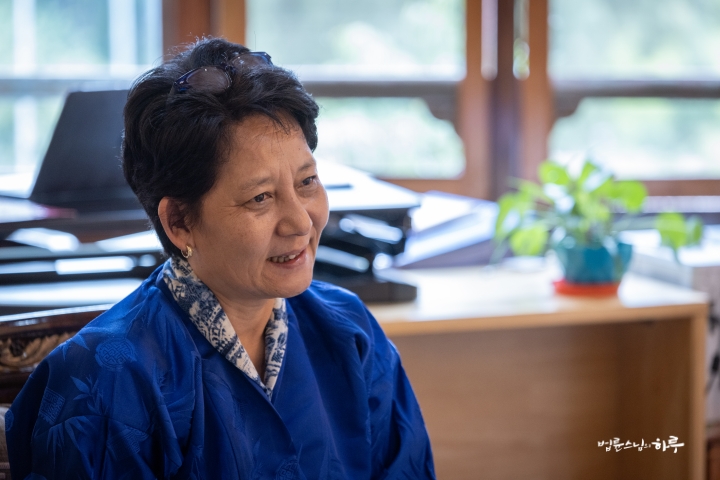
We said our goodbyes, agreeing to meet again when Sunim next visits Bhutan.
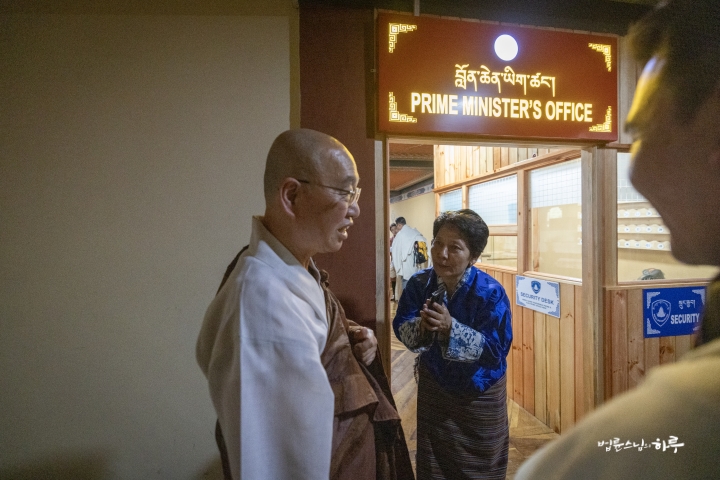
“What’s your next schedule?”
“I’m going to Australia today. In Australia, I plan to give a lecture to Bhutanese students studying there about what kind of life is good to live.” (Laughs)“Thank you. Please contact us whenever you come to Bhutan. We will always make time.”
After leaving the Bhutanese government office, we headed straight to Paro Airport.
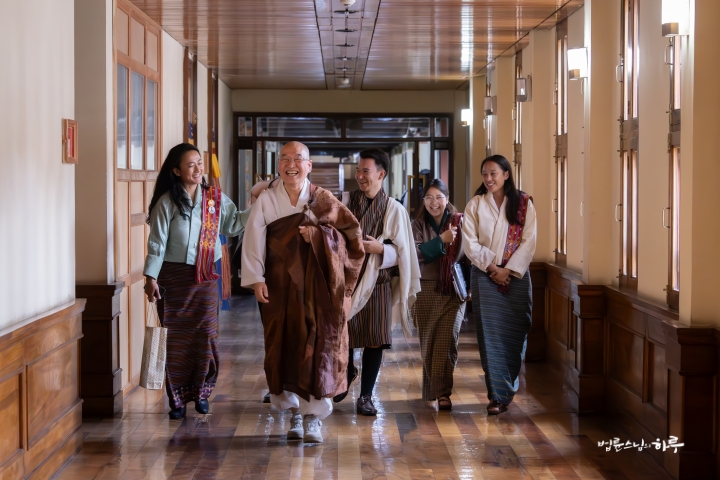
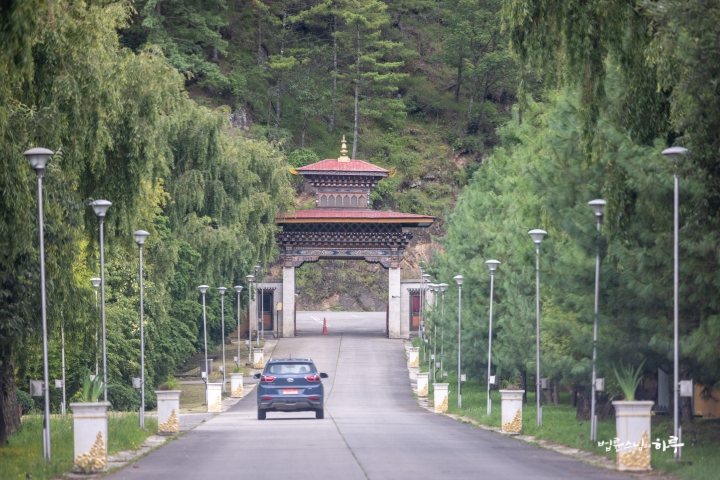
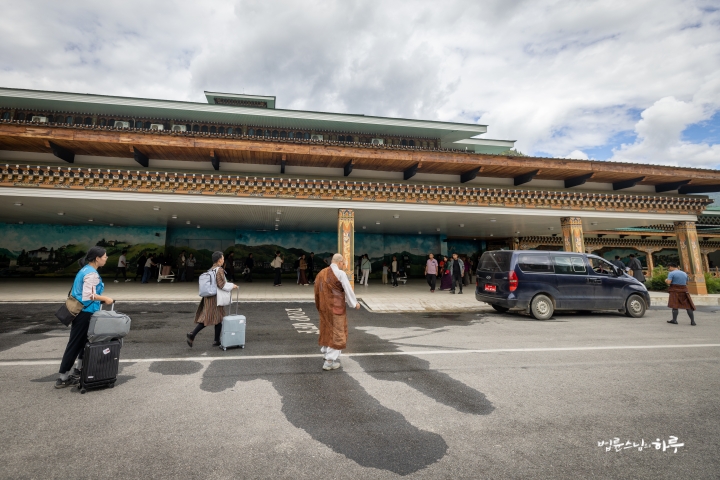
We arrived at Paro Airport at 1:30 PM and expressed gratitude to Rinchen Dawa, who had been interpreting for Sunim throughout the week.
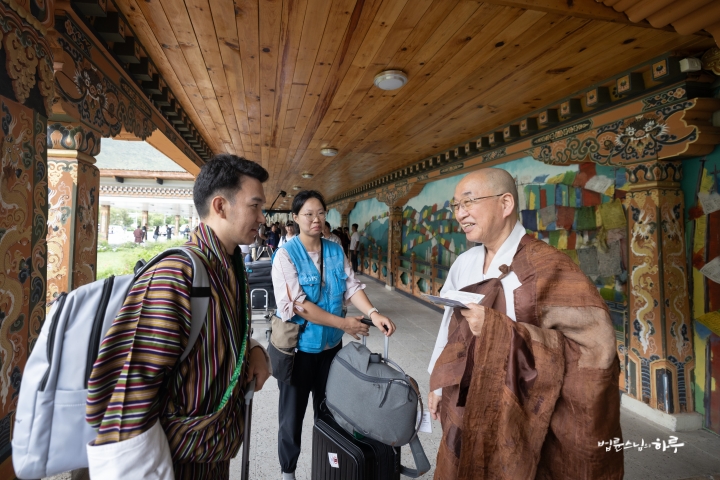
After discussing with the JTS volunteer about future tasks to be carried out with Bhutanese officials and villagers, we entered the airport, checked in our luggage, and completed departure procedures.
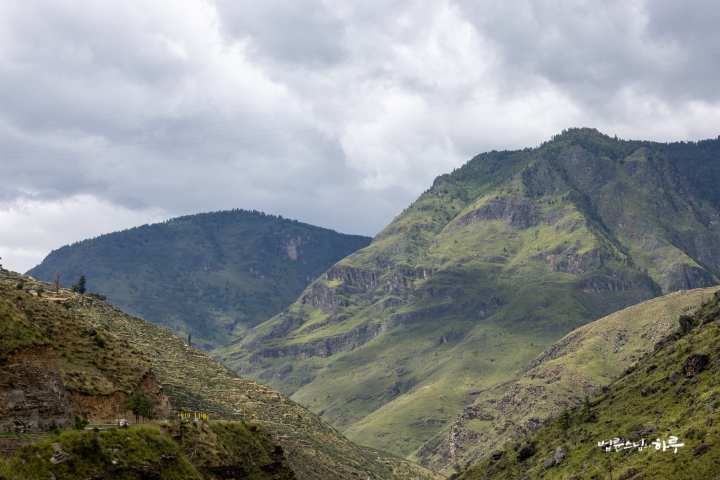
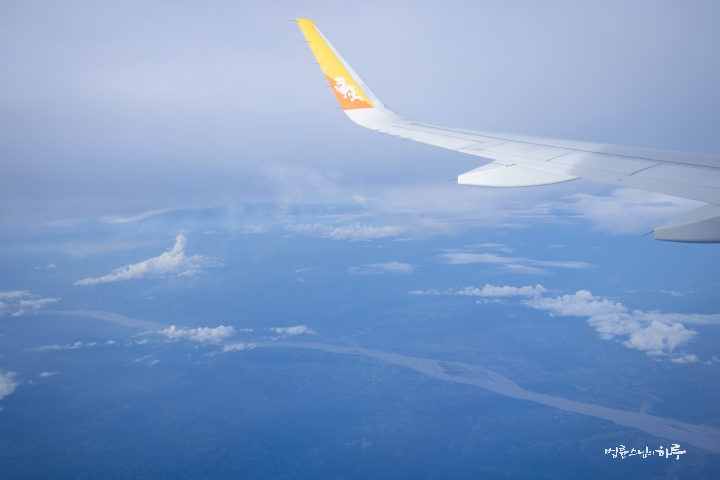
The plane that departed from Paro Airport at 4 PM flew for 3 hours and 10 minutes, arriving at Bangkok Airport at 8:30 PM local time.
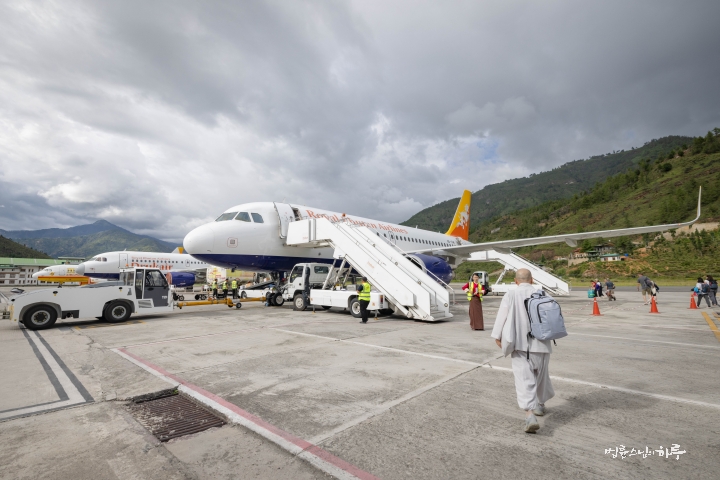
While waiting to transfer to the next flight at Bangkok Airport, Sunim attended to some work.
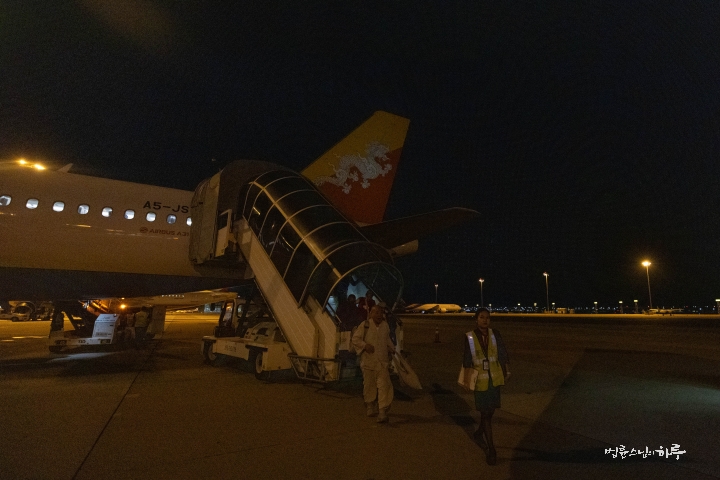
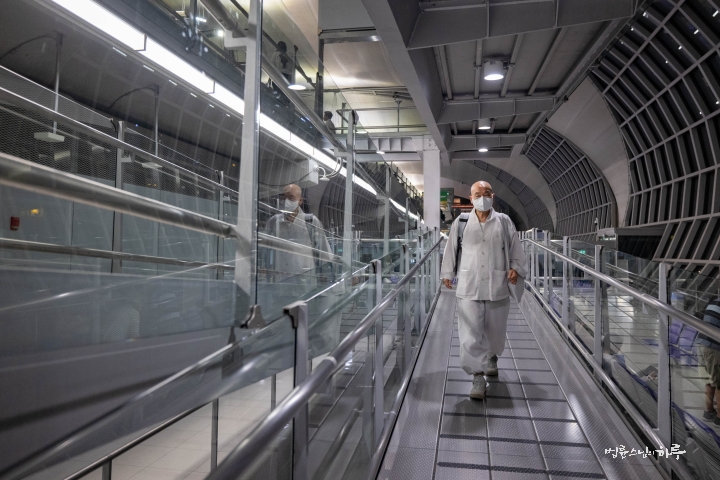
We boarded another plane and departed from Bangkok Airport at 10:20 PM, heading to Sydney, Australia. On the plane, Sunim proofread manuscripts and attended to various tasks before falling asleep in his seat.
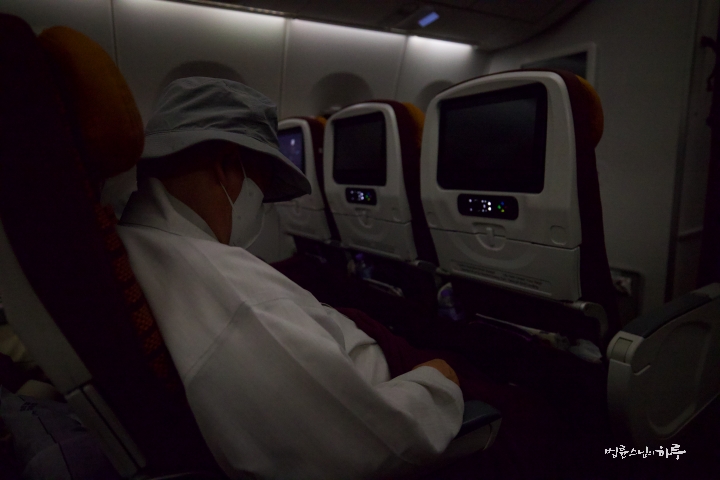
Tomorrow, after flying all night, we will arrive at Sydney Airport at 10:20 AM. Then, Sunim will give a Dharma Q&A lecture to foreigners living in Sydney, with English interpretation.