Why Do We Live a Life of Repeating Pleasure and Suffering?
Aug 31, 2024 - 1 Day of JTS Workshop in Bhutan
Aug 31, 2024 – 1 Day of JTS Workshop in Bhutan
Hello. Starting today, Sunim will be conducting a three-day workshop in Bhutan with leaders from five gewog villages in Zhemgang and Trongsa districts on the theme of ‘Sustainable Development’. Today, the first day, featured Sunim’s lecture, presentations of pilot project cases, and group discussions.
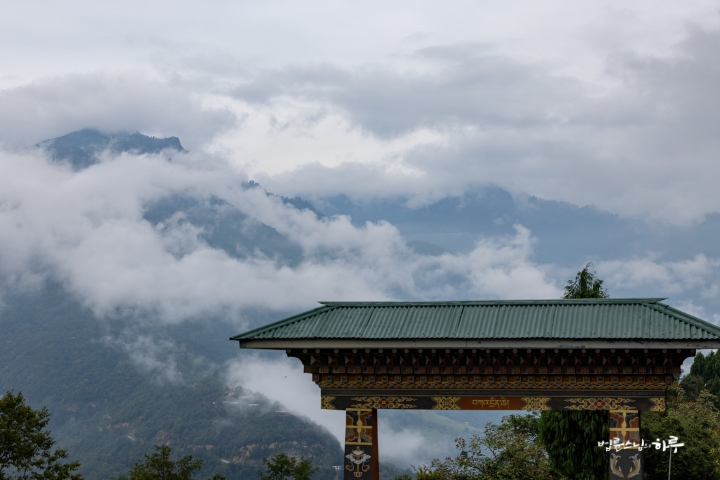
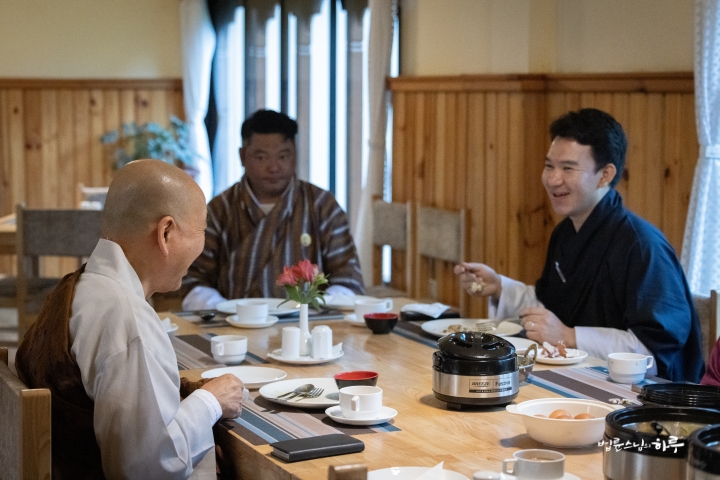
After spending a night in Trongsa, breakfast was served at the accommodation at 7 AM. After finishing the meal, the group departed from Trongsa at 7:30 AM and headed towards Zhemgang.
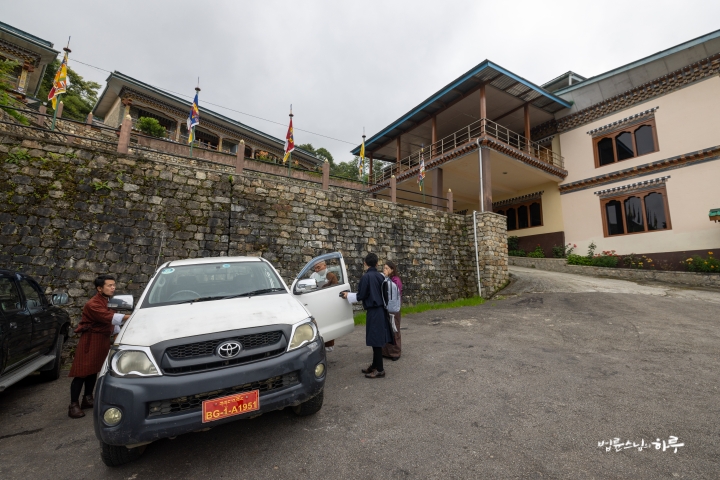
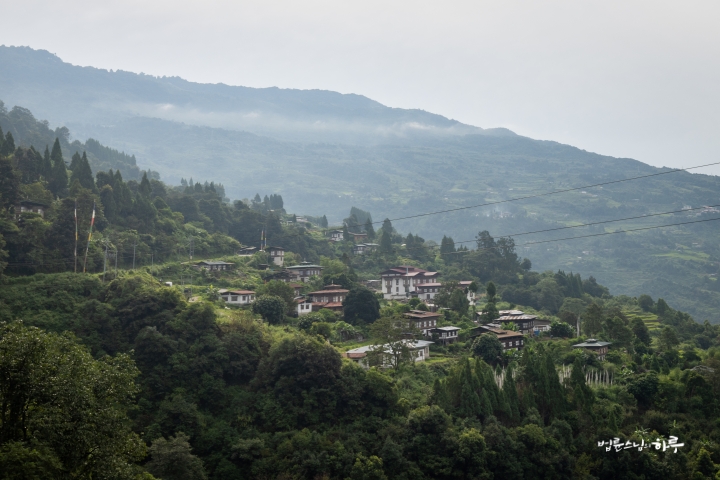
After driving for 3 hours along winding mountain roads, they arrived at the Zhemgang Royal Guest House, their accommodation, at 10:20 AM.
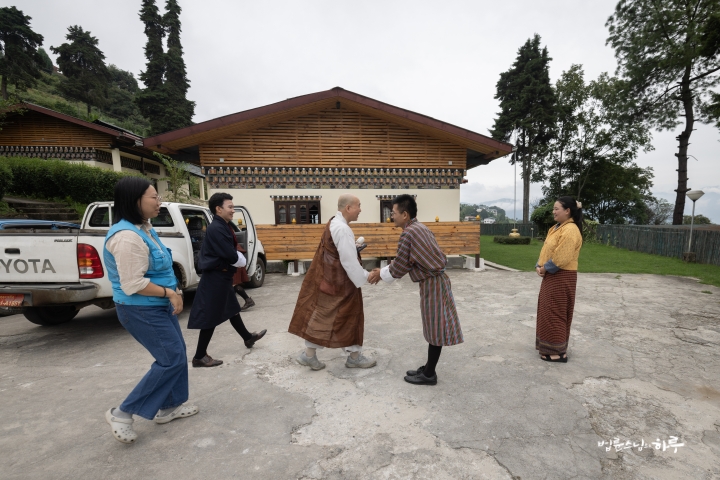
As Sunim got out of the car, the Zhemgang planning officer warmly welcomed him.
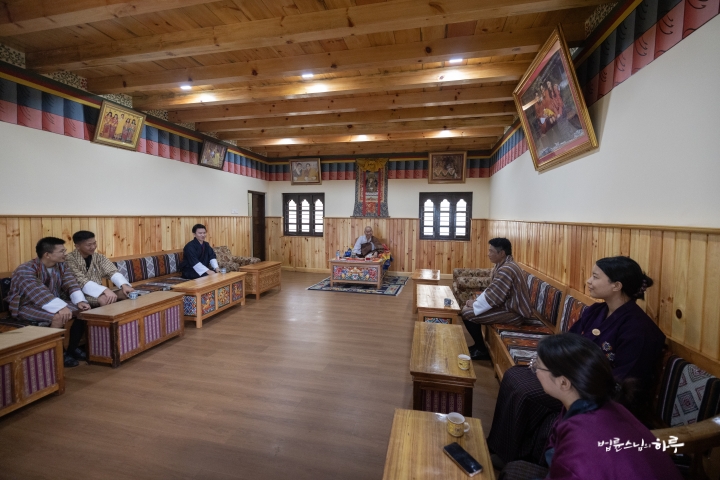
Before starting the event, Sunim had tea and exchanged greetings with Bhutanese government officials. They discussed various topics, including whether there was any landslide damage during the rainy season, if the pilot projects in the gewogs were successfully completed, why the Royal Guest House was poorly managed, and if there were ways to improve it.
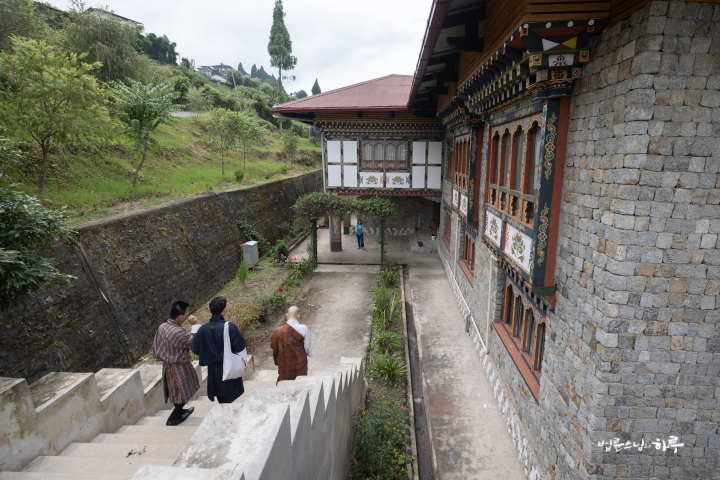
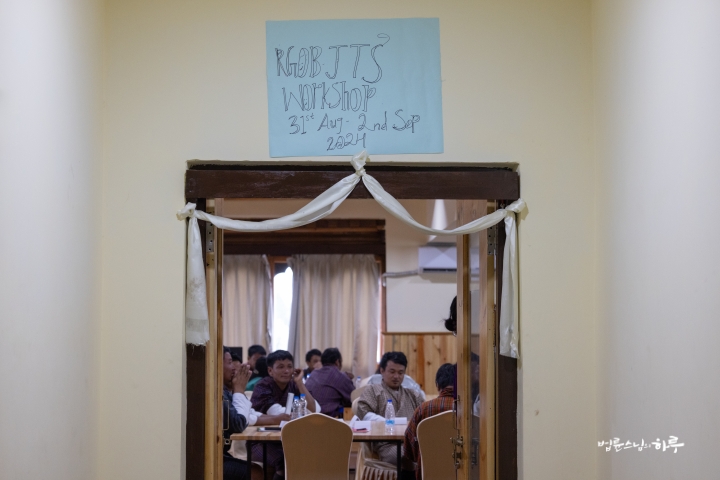
After unpacking at the Zhemgang Royal Guest House and taking a short break, they moved to the Zhemgang Startup Center where the JTS workshop was to be held at 11:50 AM.
The village leaders from the five gewogs had completed their registration and were watching videos of Sunim’s previous visits to Bhutan.
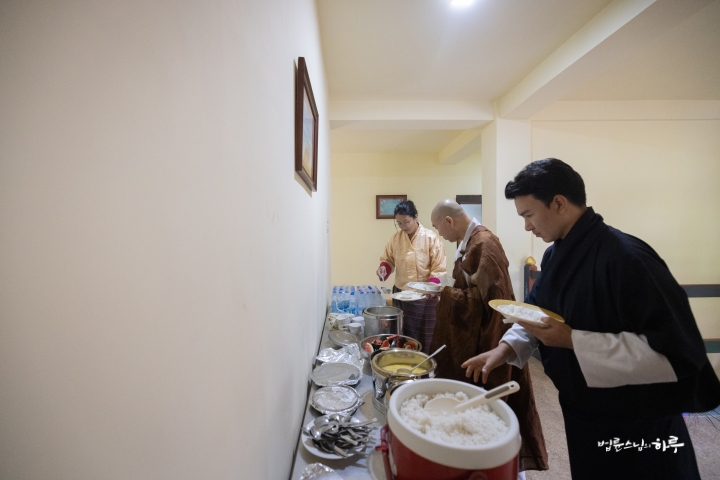
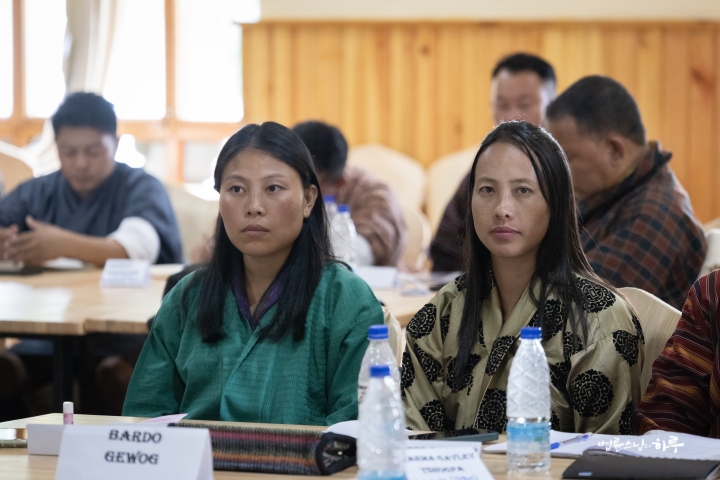
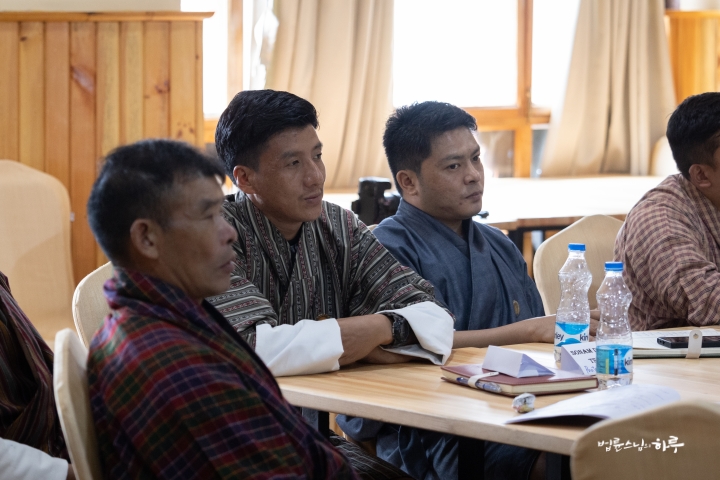
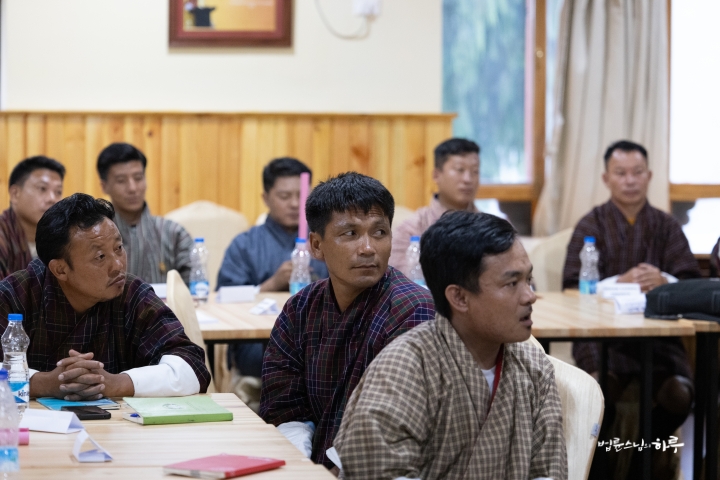
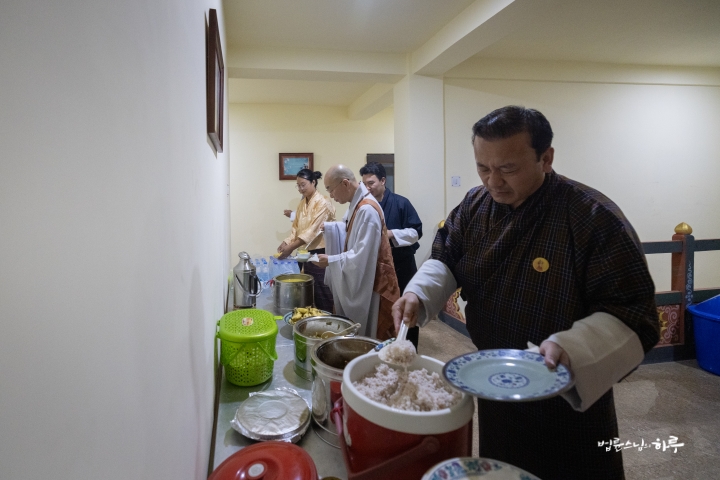
For this workshop, Bhutanese central government officials, gewog leaders, and village leaders all gathered in one place. A total of 34 people attended from Korphu Gewog in Trongsa district, and Bardo, Goshing, Phangkhar, and Nangla Gewogs in Zhemgang district. After exchanging greetings, lunch was served at noon.
After the meal, participant introductions began at 1 PM.
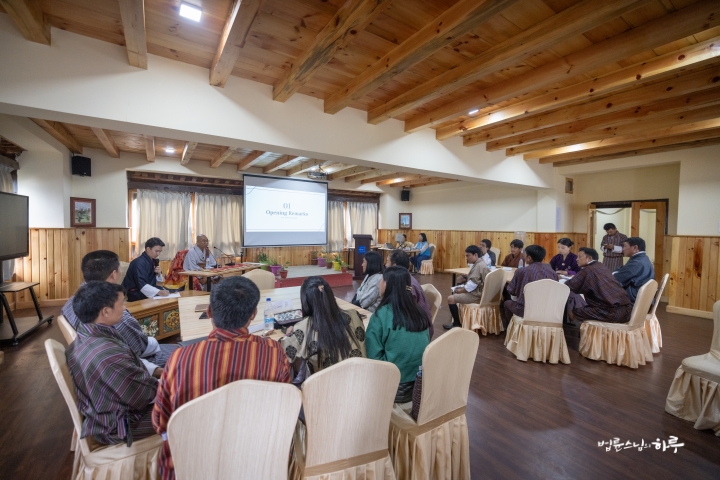
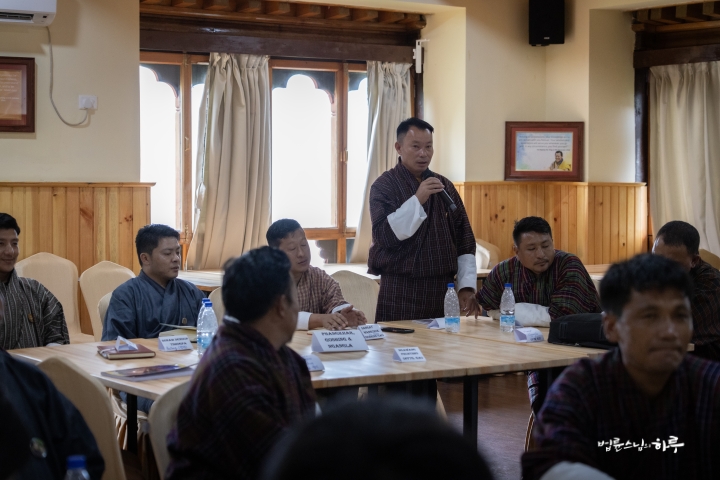
“Nice to meet you. I am the Tshogpa (village leader) of Nabji Chiwog from Korphu Gewog.”
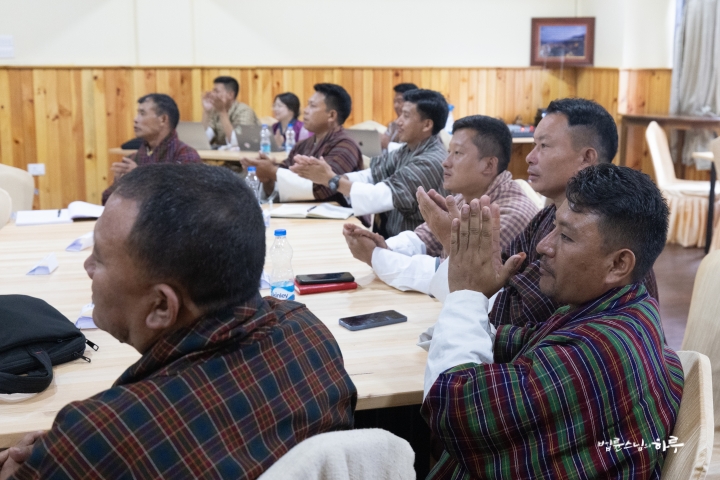
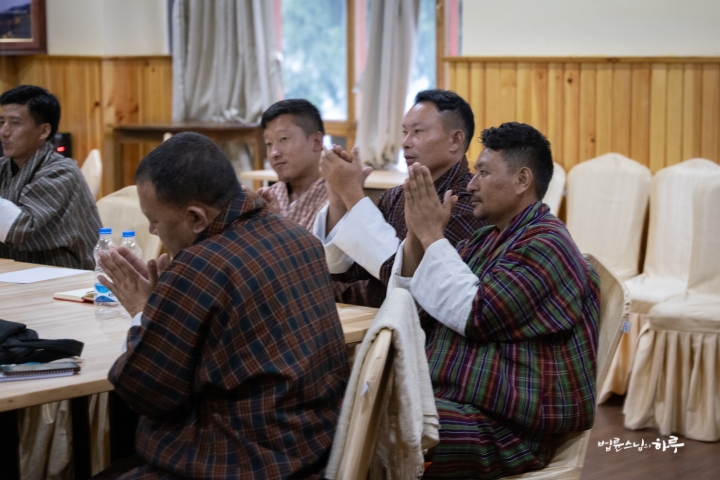
Loud applause erupted after each person’s introduction.
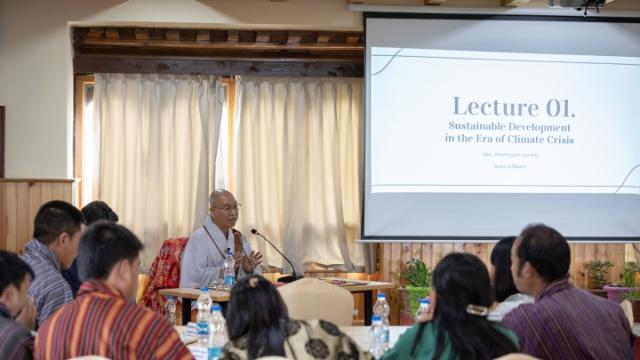
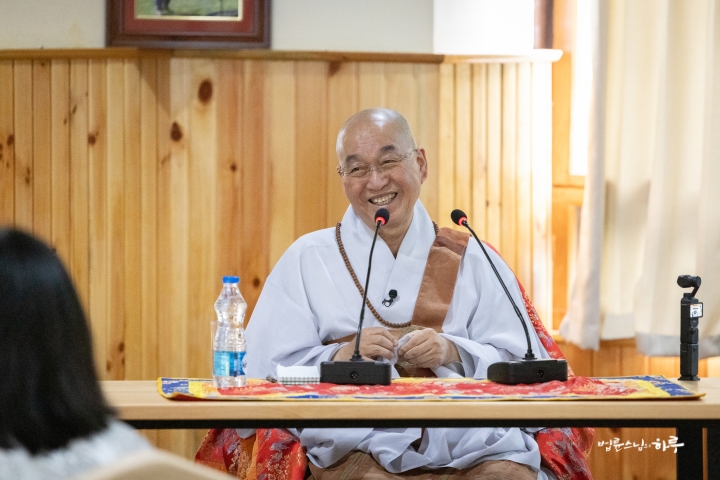
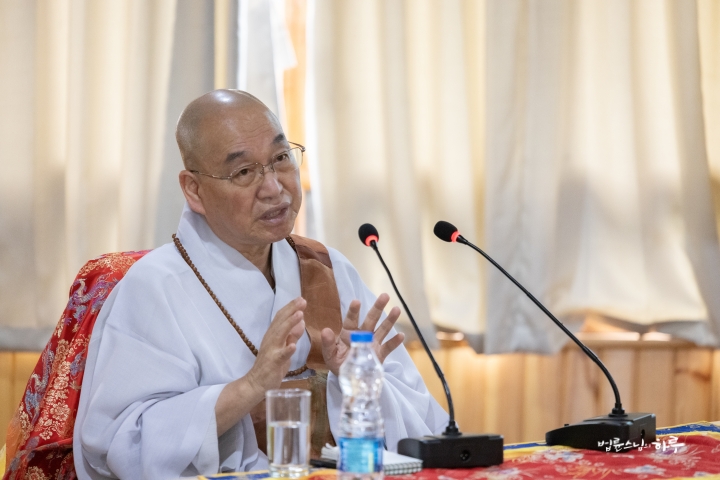
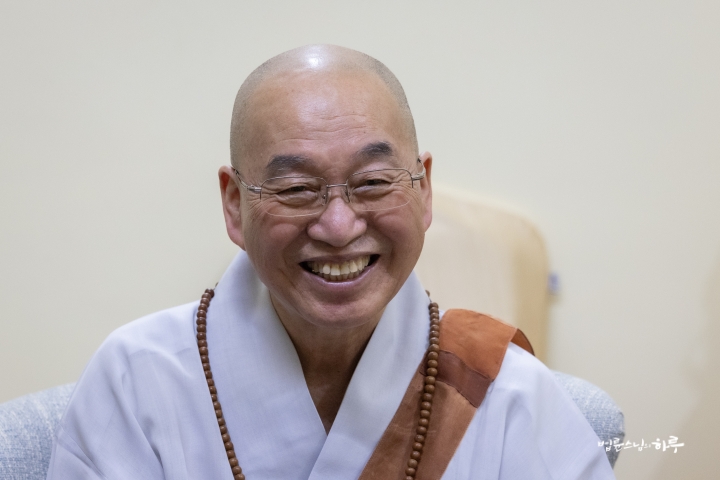
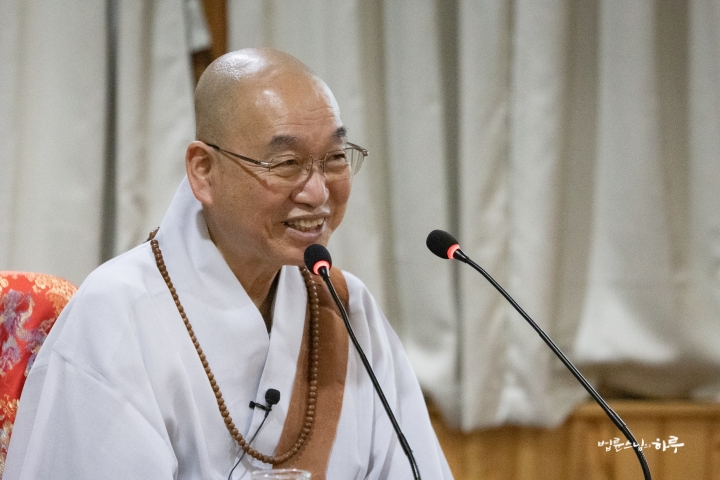
Then, Sunim opened the workshop by explaining its purpose. He emphasized that Korea’s development was not solely due to government policies, but that the voluntary participation of citizens and community spirit played crucial roles, based on Korea’s experience.
Reasons for South Korea’s Rapid Economic Growth
First, Koreans have always placed great importance on their children’s education. Even during wartime, all schools remained operational. The educational civil servants who became teachers were exceptionally diligent, as most of them were top students themselves. Second, the government developed and implemented effective economic development policies. Third, there was an internal factor that outsiders often overlooked. Koreans have a strong sense of community, embodied in the phrase “We take care of our own village.” In their language, they use “we” more often than “I.” As a result, even during Japanese colonial rule, educated individuals would return to their hometowns during school breaks to teach children who couldn’t attend school. This became a cultural norm. In the 1960s, when I was in school, college students would spend about three weeks of their vacation doing “rural service activities,” helping with farm work or volunteering in factories. There was a strong belief that those who received education should share their benefits with those who didn’t. This led to a national movement called “Saemaul Undong” (New Village Movement), based on the idea of “We develop our village ourselves.”At that time, most Korean houses had thatched roofs made of straw. When the government or businesses provided new roofing materials like slate, villagers would voluntarily improve their roofs. If the government provided cement, villagers would work together to pave the streets or widen paths to accommodate handcarts. People would even give up small portions of their land without compensation for these improvements. All of this was done voluntarily.
Let’s Change Our Village Ourselves
Of course, we can’t undertake large-scale development projects. That’s the government’s responsibility. However, we can make efforts on our own, without government assistance, to improve our living spaces like homes, clean up village roads, or widen them by having landowners give up small portions of their land to make transportation easier. If materials are needed for such projects, JTS is willing to provide them to the best of our ability. However, these initiatives are only effective when residents have a voluntary desire to improve their own village. If it’s just about receiving support without this initiative, it won’t have much impact.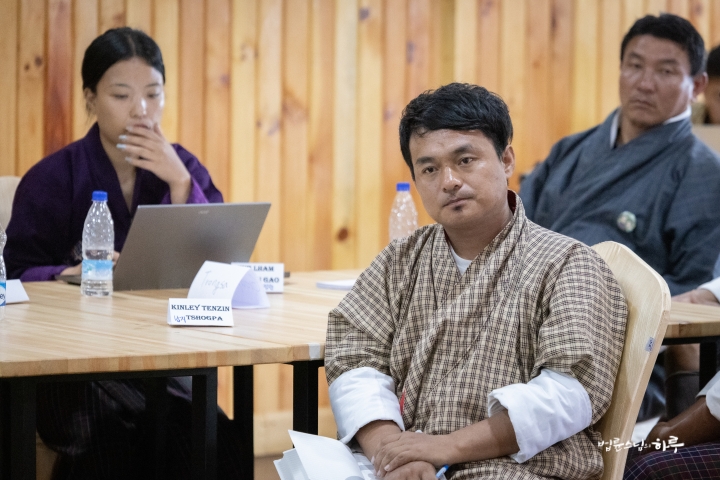
From 2 PM, volunteer Park Si-hyun gave a detailed introduction to JTS. While presenting the activities JTS has carried out over the past 30 years, she explained the principles of JTS’s relief efforts case by case.
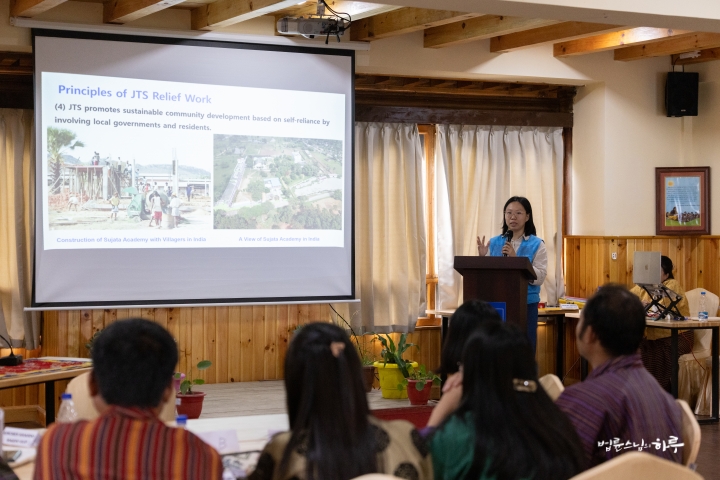
Sunim then supplemented the explanation about JTS’s operational principles and their potential application in Bhutan. Referring to examples from Mindanao in the Philippines and Sujata Academy in India, he emphasized the need to train children to help others from a young age, rather than just focusing on studying.
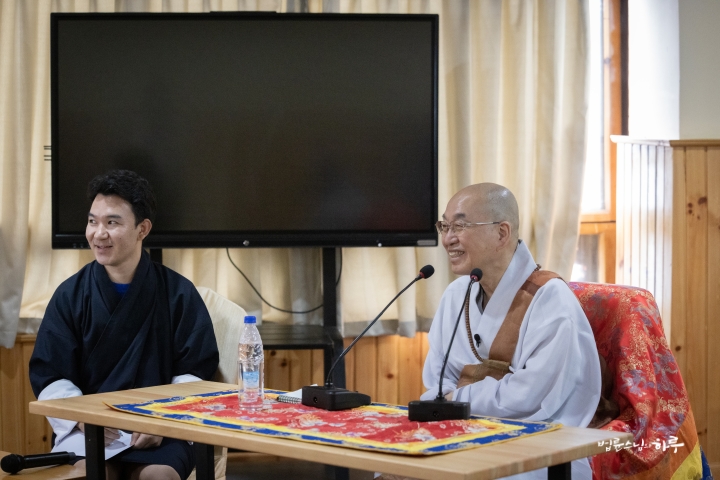
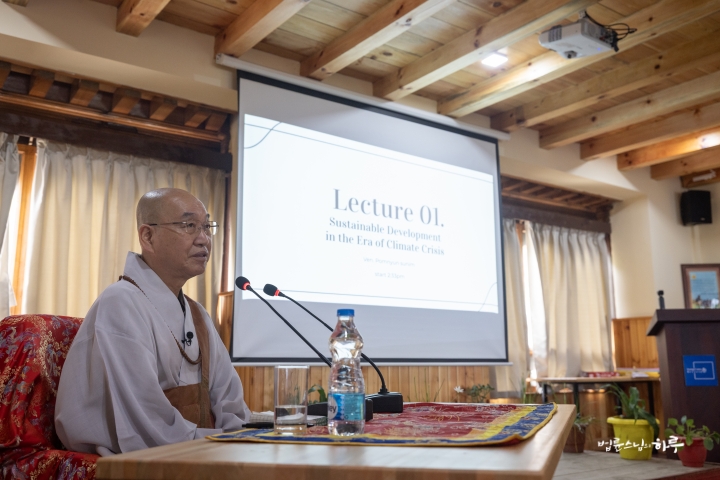
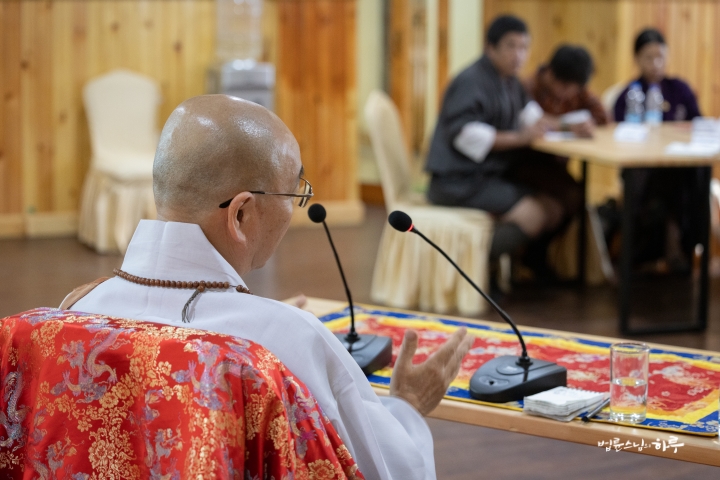
From 2:40 PM, Sunim continued with a lecture on “Sustainable Development in the Age of Climate Crisis.” He explained the severity of natural disasters caused by climate change, emphasized that Bhutan should pursue both environmental preservation and sustainable development simultaneously, and then spoke about what true happiness is.
Why Do We Live a Life of Repeating Pleasure and Suffering?
Third, it’s about when humans feel happiness. People feel satisfied when they get what they want. When satisfied, they feel good. When eating something delicious, they say, “Wow, this is tasty!” and feel content. When having a drink, they say, “Ah, this feels good!” and enjoy it. When earning money, they feel good about it, and when passing a desired exam, they feel happy about succeeding. In this way, we consider immediate gratification as happiness. However, not everything we want actually comes true. In fact, more often than not, things don’t work out. That’s when we feel bad. In other words, when our desires are fulfilled, we feel good, and when they’re not, we feel bad. This constant cycle of happiness and unhappiness is what Buddha referred to as “samsara.” It means the repetition of suffering (苦) and pleasure (樂).When almost nothing we want is achieved and unhappiness reaches its peak, we call it hell. When many of our desires are fulfilled and happiness reaches its peak, we call it heaven. People don’t want to go to hell and wish to go to heaven, but in reality, our lives revolve around these extremes. This is called samsara. What Buddha refers to as nirvana is escaping this cycle. If we seek joy by satisfying our desires when they arise, we inevitably experience suffering when those desires are not met. Buddha taught us to simply be aware of our desires as they are. Instead of thinking, “My desire must be fulfilled,” we should recognize, “Ah, a desire is arising.” By becoming free from these desires through awareness, we can escape suffering and achieve true happiness.
When we receive help from someone and get what we want, we feel good. However, if this continues, the pleasure gradually diminishes. To maintain the same level of pleasure, the amount of help received needs to keep increasing. For example, if you got 1 million won this time, you’d need to get 2 million won next time to maintain the same level of joy. As we get used to receiving help, our desires keep growing. When we don’t have money, we think we’ll be happy if we have a lot, but once we actually have a lot, we can’t enjoy the good feeling anymore. Eventually, in search of greater pleasure, we might reach the endpoint of sexual gratification and drug addiction.
How to Increase Gross National Happiness (GNH)
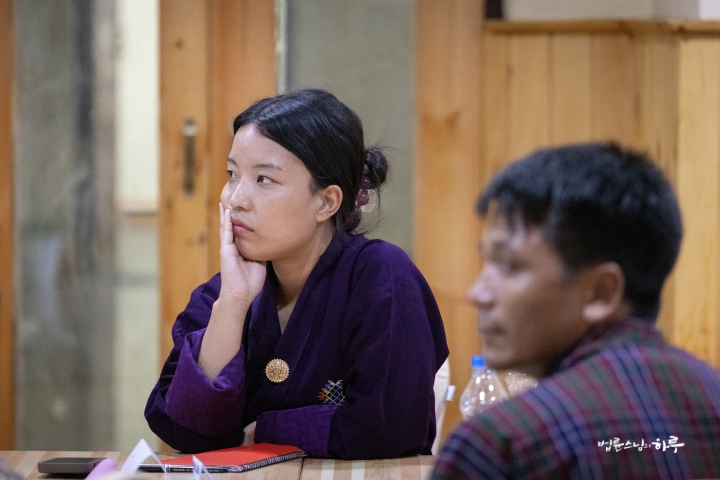
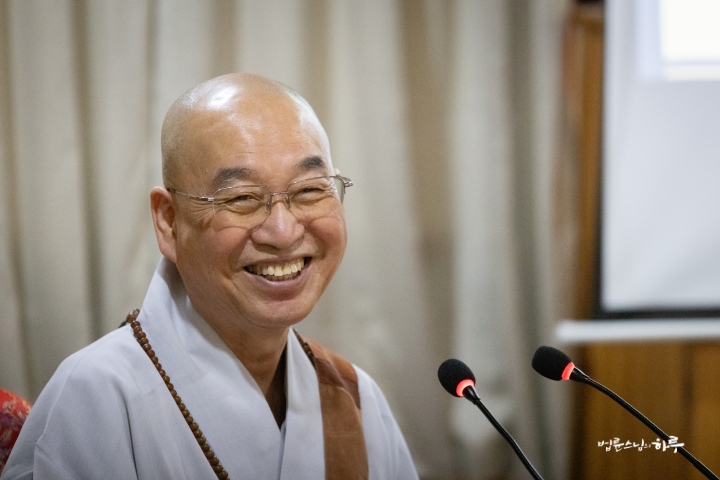
Why do bodhisattvas and patriots appear in this world? They don’t live a life of sacrifice for sentient beings because it’s difficult. They can follow that path for a lifetime because they hold the value that it is the best way for them to live. This is how to increase Gross National Happiness (GNH). Living a life of giving and helping together, rather than a life of consumption, is the most effective way to increase GNH. This path is also the path of practice taught by the Buddha, the way to increase GNH as stated by the 4th King of Bhutan, and the way to overcome the climate crisis.I heard that the term of a Chokpa (local leader) is five years. Would it be happier to receive a salary for five years and lord over the residents? Or would it be happier to improve residents’ housing, repair irrigation systems, or do something for the development of the village? One is comfortable now but not very rewarding later, while the other is a bit difficult now but very rewarding later. It’s a question of which life we choose to live.
The core of Buddha’s teaching is that serving others is serving oneself. It doesn’t mean that you’ll receive blessings after you die if you do things for others, but that serving others is truly the way to serve yourself. This might sound a bit difficult, but once this issue is resolved, you can sincerely and consistently carry out methods to increase your GNH. Otherwise, you’ll keep looking at the monk’s face while doing this work.
Lastly, Sunim explained one by one the criteria for evaluating whether a sustainable development project has been successful.
Seven Criteria for Judging the Success of Sustainable Development
“How can we evaluate whether a project we’ve done is sustainable development or not? First, the less money spent, the better it can be considered. Is it better to spend less money to make this desk? Or is it better to spend more money? Is it better to spend more money to do the same thing? Or is it better to spend less?”“It’s better to spend less money.”
“First, we need to be economical. If we spend less money, we can do more with the same amount. Second, it’s better to use materials from Bhutan. We can evaluate it as better when the ratio of materials produced in Bhutan is higher than imported products. There are two reasons for this. One is that using materials from within Bhutan makes it easier to repair later. The other is from an environmental perspective; bringing things from far away emits more CO2 gas, so the less transportation, the better. Third, it’s better if we can do it with local technology. Of course, for tasks we can’t do with our technology, we need better external technology, but it’s best if we can do it with the technology we have. This is because when it breaks down later, we can repair it ourselves with our own technology. Fourth, it’s better to make it as convenient as possible. Fifth, it’s better if the benefits reach even one more person. Sixth, even if it’s a bit difficult, there should be a sense of fulfillment after doing the work. If the reaction is that they never want to do it again, it can’t be called sustainable development. Seventh, we must preserve the environment without destroying it. The success of sustainable development should be evaluated based on these criteria. All these methods increase GNH and preserve the environment. And because we can do these methods independently, they are sustainable.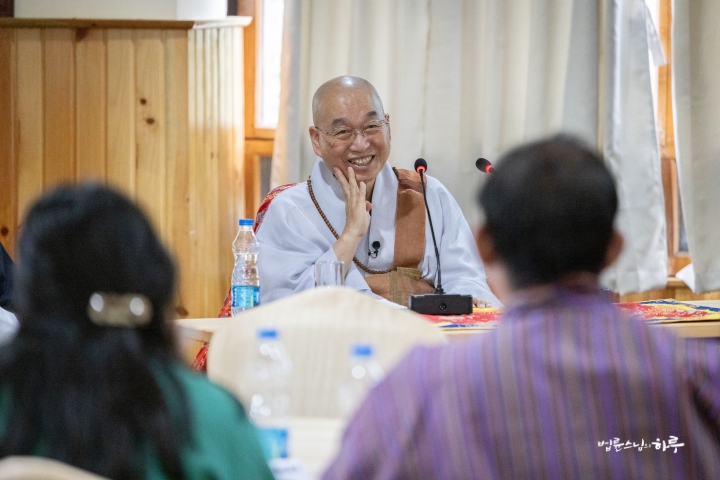
Why Bhutan Can Become the Most Advanced Country in the World
If you keep trying to follow others, it’s difficult to break away from being at the tail end. If you change direction and turn around, the tail becomes the front. We need to think, ‘How can Bhutan become the most advanced country in the world?’ You may not be able to think this way because you’re in a position of following, but as I constantly observe the most advanced countries, I can clearly see that they will soon reach a cliff. The value system that equates producing and consuming more with living well has now reached its limit. We need to change direction now. When asked ‘Then where should we go?’, I’m meeting with you now with the intention of creating an alternative that we can show to the world. If we ask others for help, they may pity us, but they won’t respect us. However, just as the King of Bhutan first proposed the concept of Gross National Happiness (GNH), if we create a new path, foreigners will be moved by us and support us. We should lead in a way that many countries around the world think, ‘Bhutan’s sustainable development model is really good. Let’s participate in it too.’ In the future, many people from Korea, Canada, the United States, and other countries around the world will come to Bhutan to volunteer. So this work is not only about changing your villages but also about pioneering a new future for humanity. Can the people creating the most advanced model in the world look gloomy because it’s hard? (Laughter)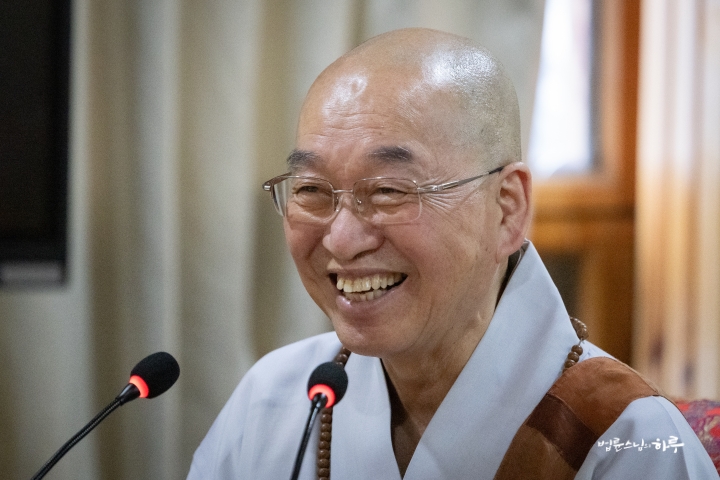
As Sunim’s lecture ended, everyone responded with applause.
From 4:20 PM, there was a case presentation session on the pilot project conducted in Korphu Gewog. After watching a video of villagers working together in Nabji Chiwog, the Korphu Gewog administrator reported on the achievements, challenges, and solutions of the irrigation canal repair in Nabji Chiwog, road repair in Korphu Chiwog, and housing improvement project in Nimshong Chiwog.
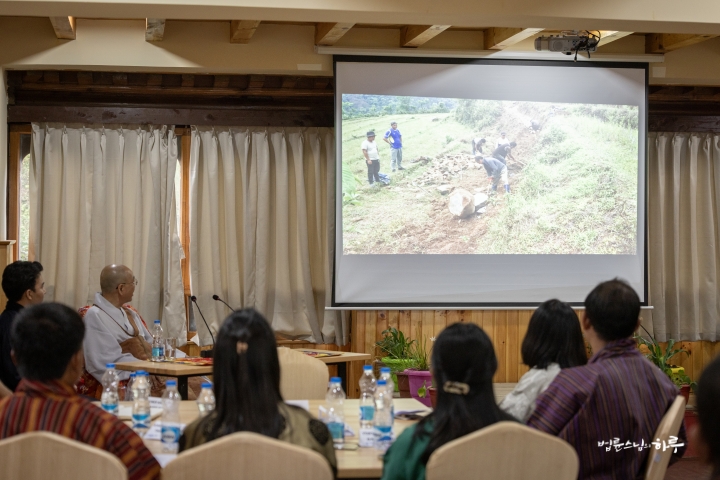
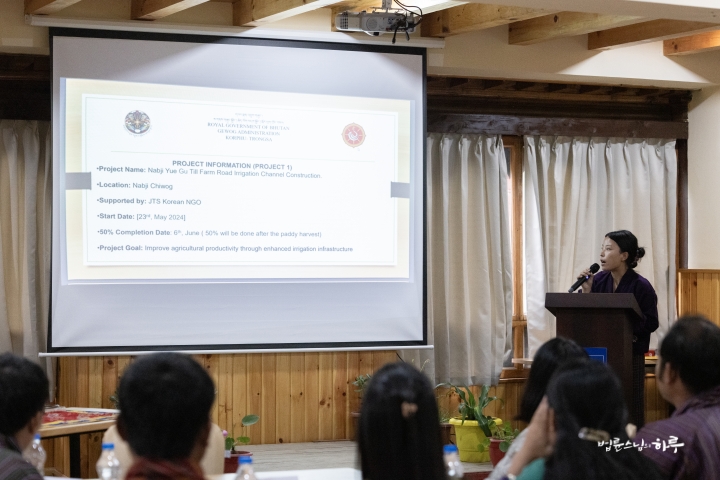
The planning officer of Trongsa said there were more achievements.
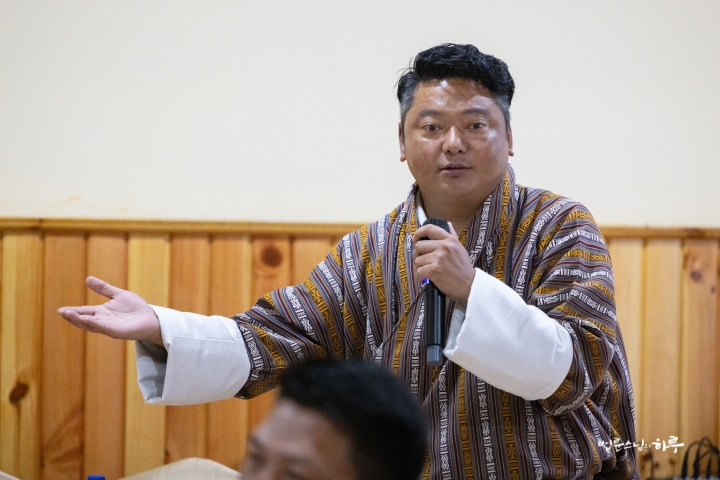
“Through this pilot project, residents experienced how good it is to help each other, and they moved away from the idea that simply leaving it to construction workers is the best approach.”
Next, the Chiwog Tshogpas from Korphu, Nabji, and Nimshong Chiwogs, where the pilot projects were conducted, shared their experiences.
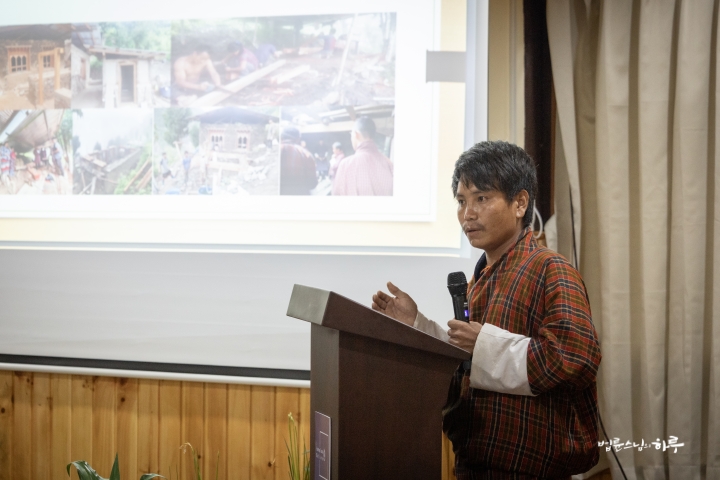
“Before building the house, all the villagers promised to help, but since a house benefits an individual, it wasn’t easy to get actual participation from the villagers. In the end, relatives and family members came and played a big role in building the house, and they provided lunch and snacks to complete the construction.”
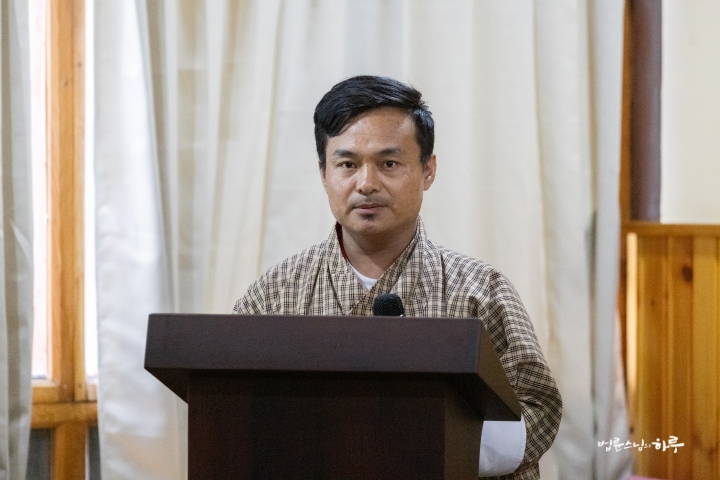
“There were some differences of opinion when making the irrigation canal. People whose fields were near the canal insisted on working only up to their fields, while those whose fields were far from the canal thought that if everyone made the canal up to their own fields, it would naturally reach their fields too.”
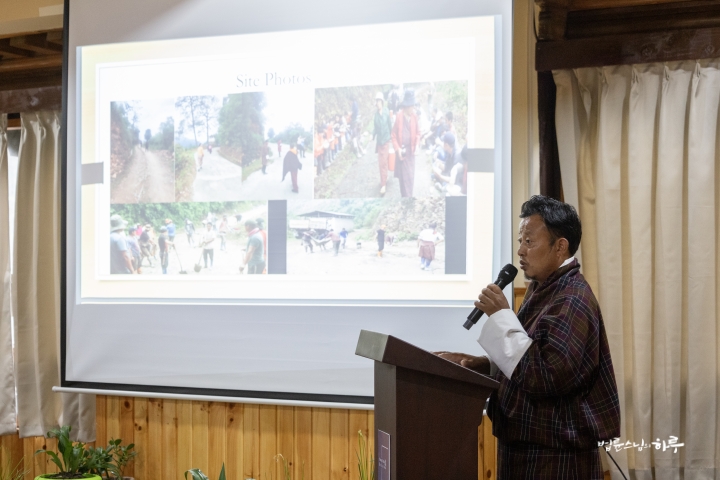
“After starting the road construction, some people didn’t participate. So we all agreed to impose a fine for non-attendance, and after that, there were no major difficulties with the construction. However, most people considered building the road as a great merit-making act, so they donated a lot of food and drinks, allowing us to work in a joyful atmosphere.”
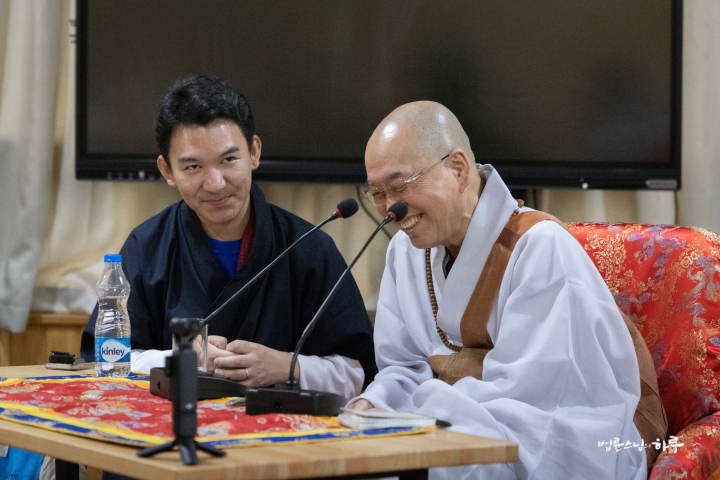
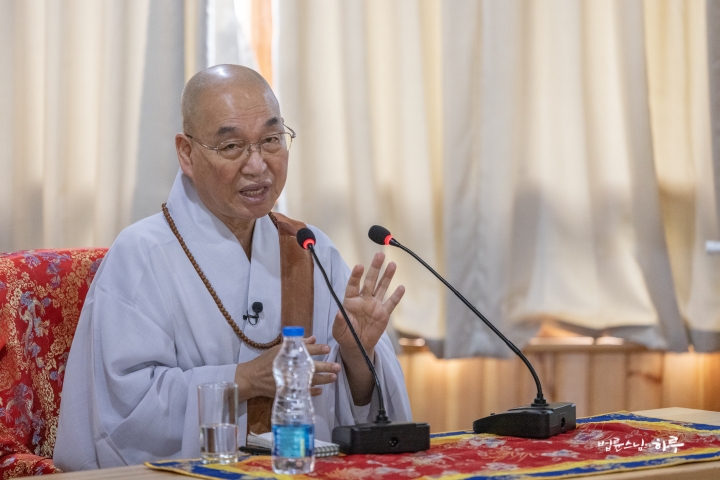
After listening carefully to the Tshogpas’ case presentations, Sunim finally gave feedback on the presentation content.
With a big round of applause, the case presentations concluded, and from 5:40 PM, group discussions began.
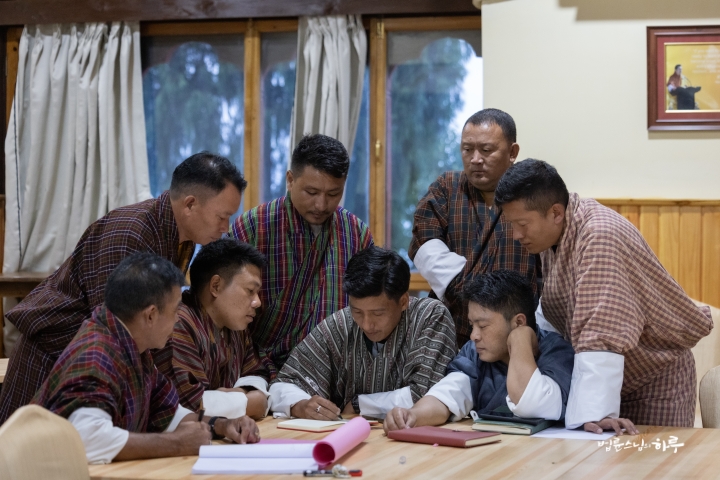
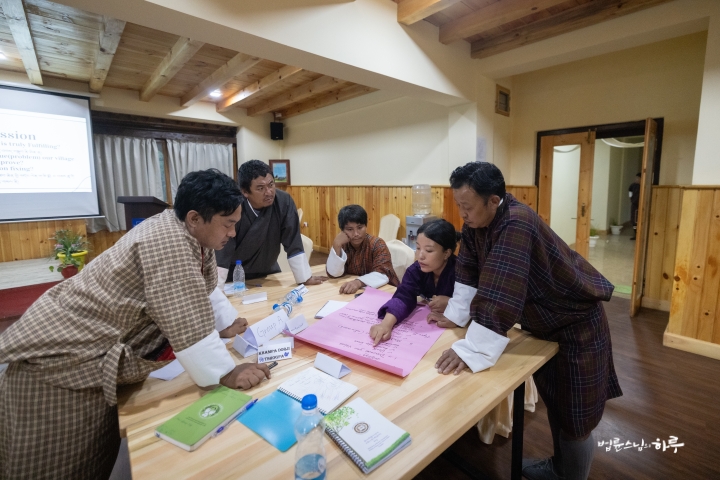
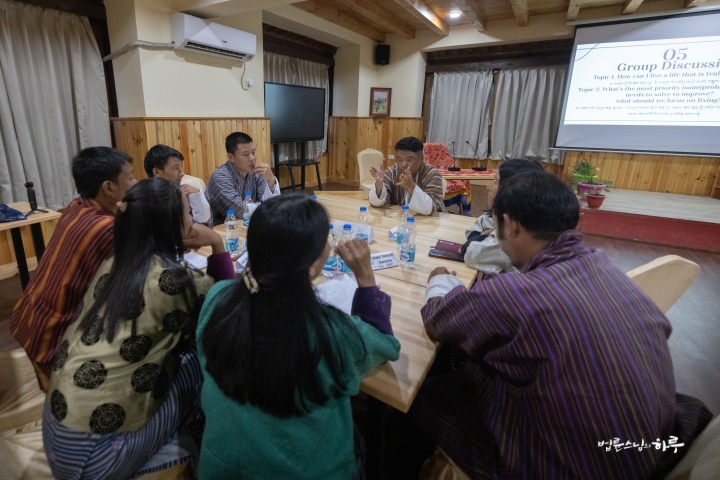
The topics for group discussion were “What is true happiness in life?” and “What kind of development does our village need?” After group discussions, participants shared their thoughts and opinions and discussed the direction of village development.
While the group discussions were taking place, Sunim had a meeting with the Dzongdag of Zhemgang, Deputy Dzongdag, and Deputy Dzongdag in charge of planning.
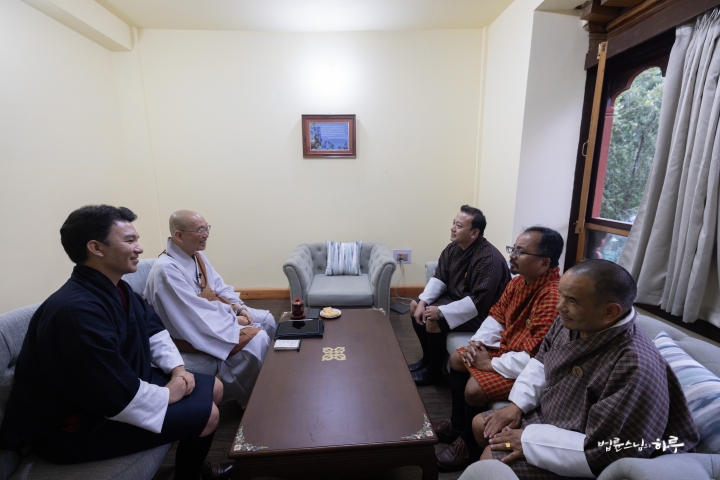
“We always want to see you whenever you visit. We are always happy when you come. Thank you for sincerely caring about the people of Bhutan.”
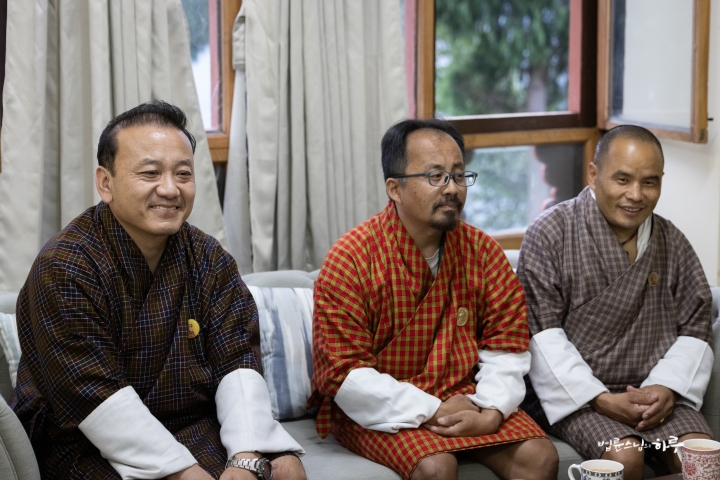
Sunim asked for advice on what to prepare to start the sustainable development project in earnest from next year.
“We plan to survey all 40 Chiwogs in Zhemgang from December. Is this possible?”The Dzongdag of Zhemgang replied that it was certainly possible.
“It’s possible. If we survey 3 to 4 Chiwogs a day, 15 days will be enough. There are places difficult to reach by car, but December is the dry season, so there won’t be any problems traveling. If we request the Gups to prepare the issues that need to be resolved in the village before the visit, it will be an effective survey. There are many projects that can’t be carried out due to lack of government budget, and it would be good to tackle these one by one.”
Sunim emphasized the importance of resident participation.
The Dzongdag of Panbang expressed gratitude, saying that Sunim was reviving the sense of community.
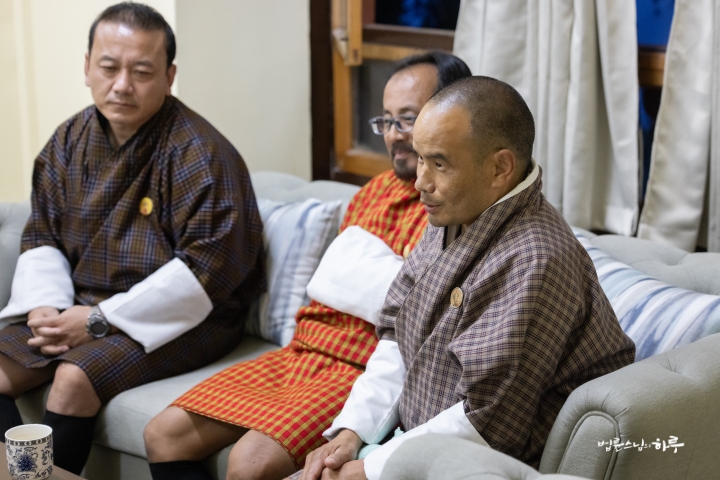
“Until 15 years ago, Bhutan had a culture of helping each other when building houses or farming. But recently, as everyone started earning more money, that culture disappeared. However, Sunim is now working to revive that sense of community.”
Before long, the group discussion time ended, and everyone gathered again to present the content of their discussions. The Dzongdags also attended and listened carefully to the presentations.
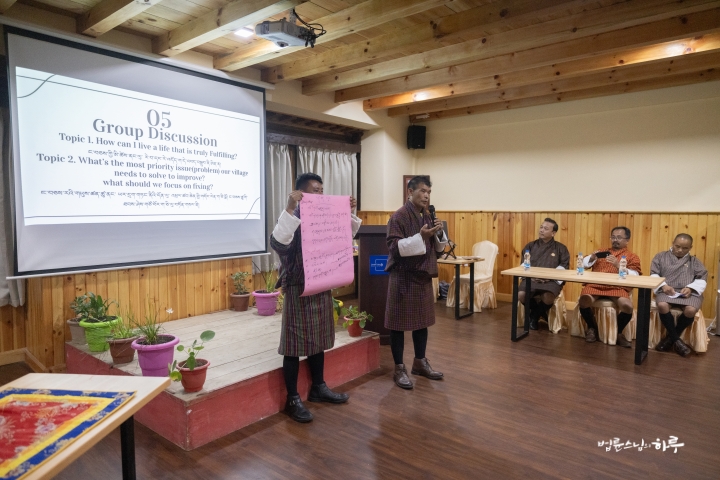
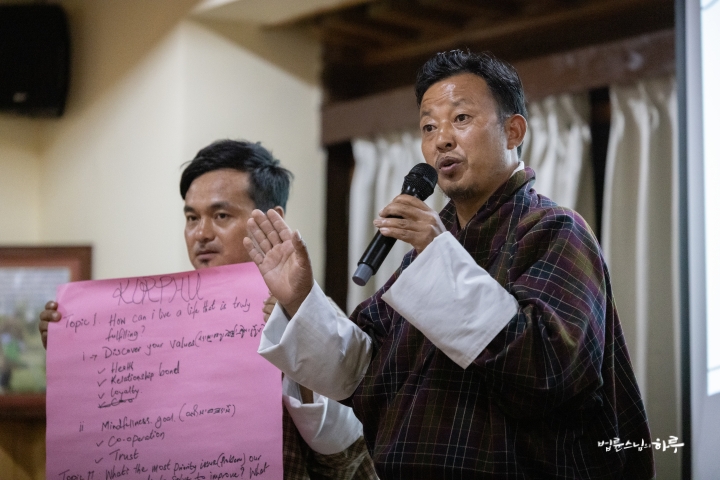
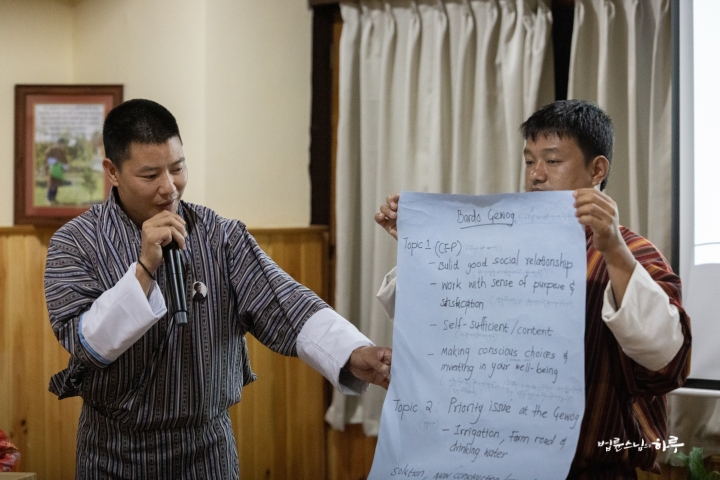
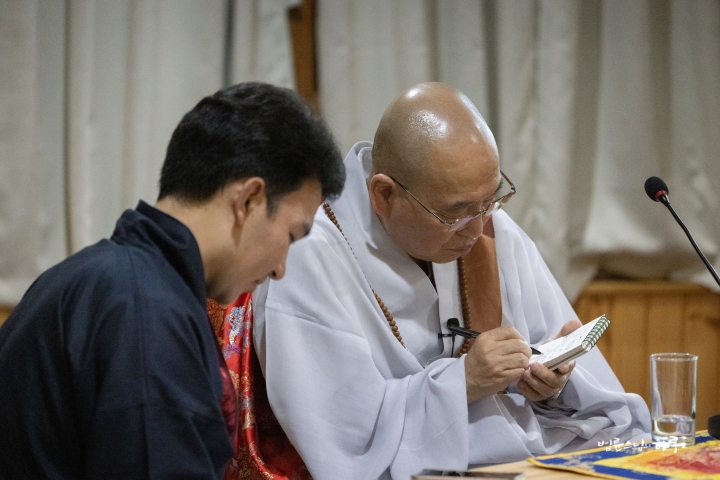
After the group presentations, Sunim asked the Dzongdag of Zhemgang to say a few words. The Dzongdag expressed gratitude for Sunim’s efforts and urged the village leaders to do their best until the end.
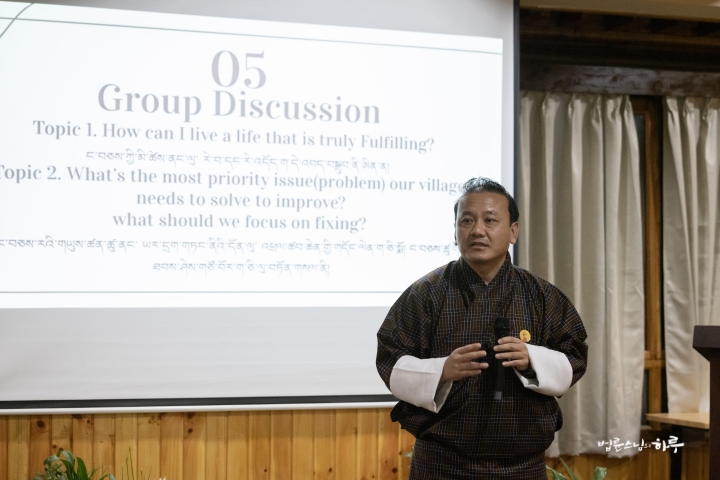
“I was very impressed by the passion and effort you all demonstrated during this workshop. In particular, seeing the successful progress of pilot projects in Kolpu Gewog deeply moved me, showing the achievements you have made together with Sunim. It is truly a great blessing that Sunim has come all the way from Korea to Bhutan to help with Bhutan’s development. I hope you will make good use of this opportunity. However, no matter how good the support is, it will be difficult to achieve results if you do not actively participate. This project can only succeed if we all work together. Sunim told me that if we carry out this project well, it could have a positive impact on other regions of Bhutan as well. Your role is that important.”
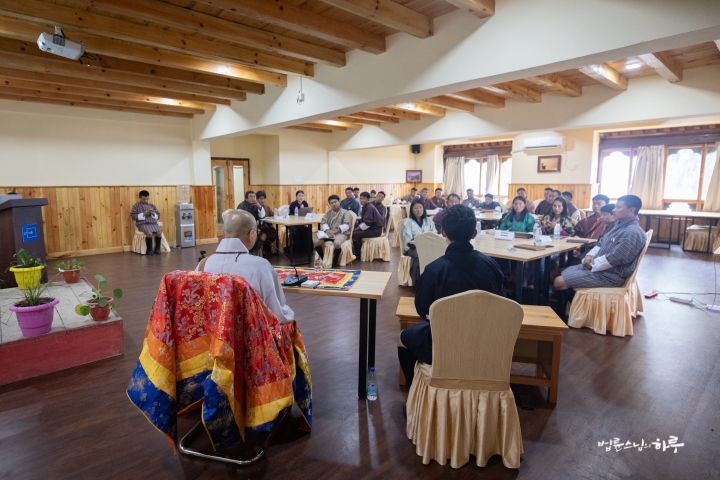
Sunim concluded today’s schedule with these final remarks.
Why This Project Was Not Included in the Government’s Development Plan
Heaven Helps Those Who Help Themselves
So, just as the villagers are participating in this project with the mindset of ‘Let’s build our village ourselves,’ I hope you’ll approach this project as if it were your own. Like the residents, you should consider yourselves volunteers for this project. Let’s work together to create new changes.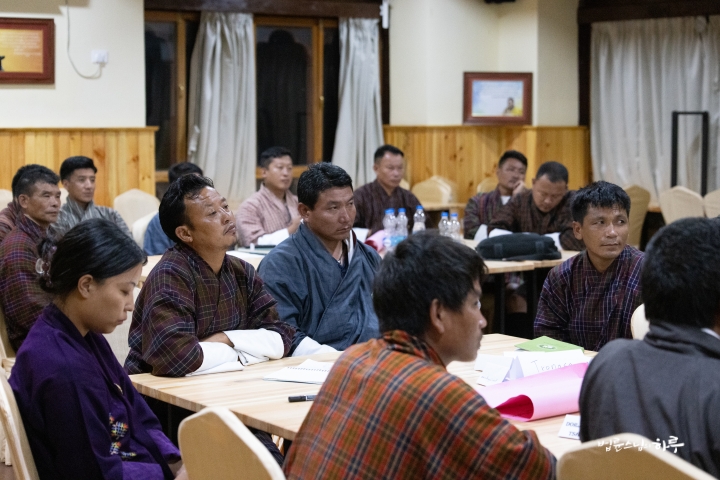
Since the governor has shared many good words today, Sunim concluded his talk here, ending the first day of the JTS workshop. Dinner followed, during which discussions continued.
A quiet revolution for sustainable development has begun in Zhemgang, a remote mountainous region of Bhutan.
After dinner, all participants moved to their accommodations to end the day. Sunim proofread manuscripts and handled various tasks before retiring for the night.
Tomorrow, Sunim will participate online in the Dharma Propagation Practitioners’ Assembly during the morning and lunch hours to give a Dharma talk. The second day of the JTS workshop will focus on the theme of ‘Sustainable Development’ throughout the day.