Let’s complete this school and give hope to those affected by the earthquake
Aug 28, 2024 - Visit to Turkey Earthquake Recovery Site
Hello. Today, we are visiting and surveying the site where JTS is building a school that was destroyed in the Turkey earthquake.
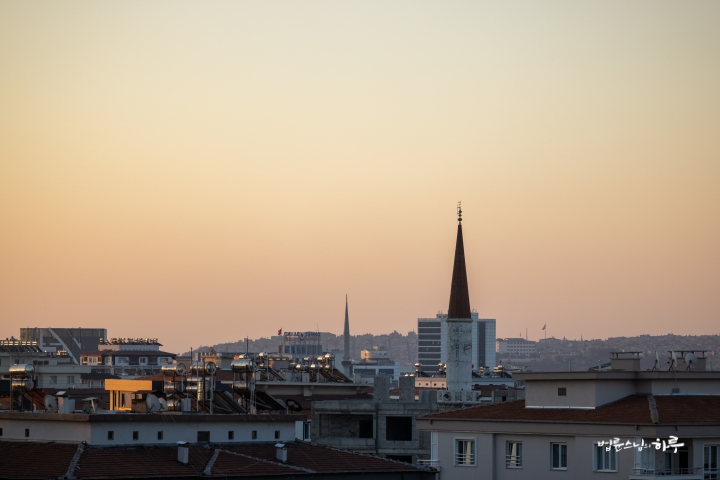
Sunim woke up at 3 AM, practiced and meditated, and then started a live broadcast of the Dharma talk at 4 AM local time in Turkey, which is 10 AM Korean time.
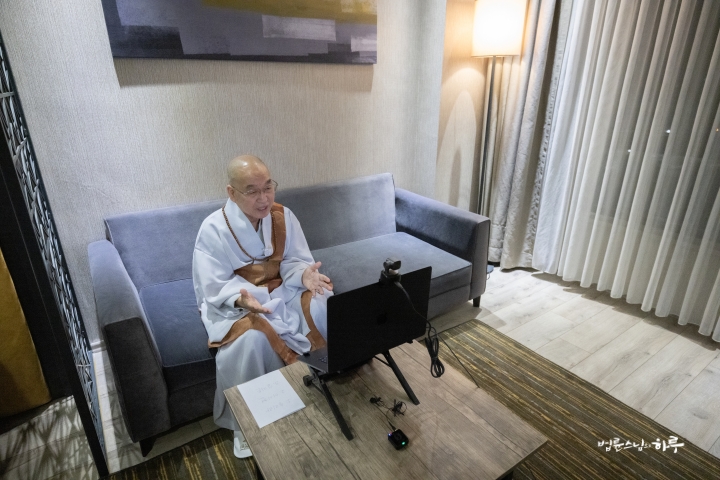
Once all the Jungto Society members entered the video conference room, Sunim gave his opening remarks.
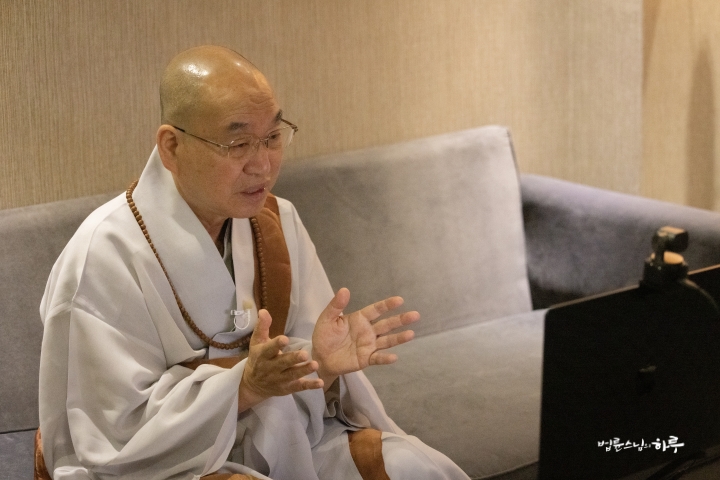
Next, we watched a video showing Sunim’s activities over the past week, including his attendance at a psychology symposium in Switzerland and his Dharma Q&A sessions for Korean expatriates in Zurich and Frankfurt.
After the video ended, Sunim engaged in a dialogue with those who had requested questions in advance. Three people pressed the raise hand button and asked Sunim questions. One of them sought Sunim’s advice on how to overcome a situation where they felt disliked by their coworkers.
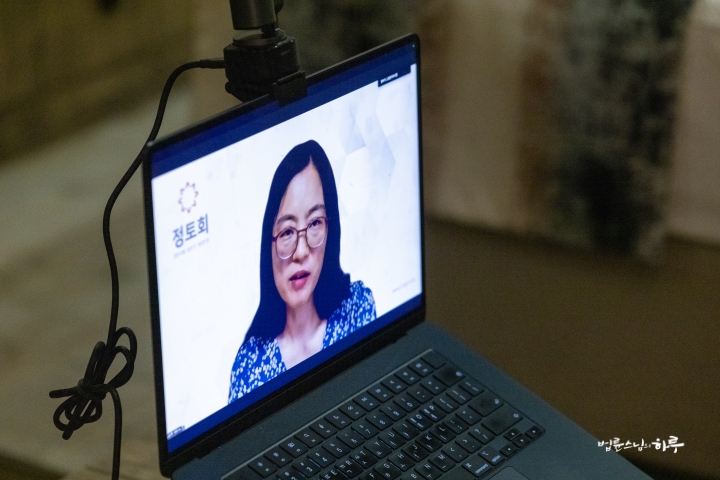
I’m Struggling Because My Coworkers Dislike Me “I’ve been working for 7 years, and currently, my coworkers seem to dislike me. When our departments merged, I received additional responsibilities on top of my existing work and attended a 10-week training. Since then, it feels like my coworkers have developed a dislike for me. When I requested a workload adjustment due to the overwhelming tasks, they held meetings without me and unilaterally informed me of the results. Recently, during the process of determining who would receive an award for work performance, even though I had offered to give up the award, my supervisor became furious when a higher-level agency nominated me. Seeing my coworkers applaud this reaction deeply hurt me. I’ve sought help from a psychiatrist and reported the situation to a higher-ranking supervisor. The problem is that I don’t want to be in the office with my coworkers, eat with them, or even talk to them. My heart races as soon as it’s time to go to work. I don’t understand why they talk behind my back but pretend to be concerned when speaking to me directly. How can I overcome this difficulty?”
“Wouldn’t it be wonderful if everything in this world was good? However, in reality, when one thing is good, another tends to be bad, and vice versa.In a competitive society, is it unusual for people to be jealous when someone excels? Isn’t it a common human psychological phenomenon to envy those who are doing well, especially in relationships that are not as close as family or best friends?
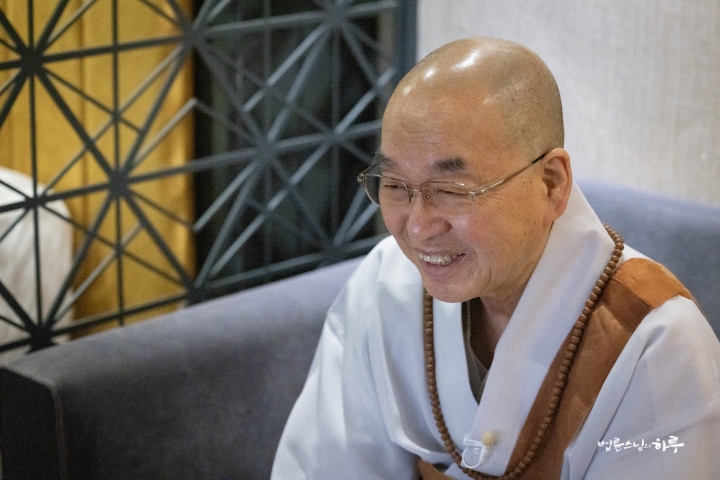
“I treated my colleagues with a positive attitude, grateful that their support allowed me to complete the training successfully. I expected that if I approached them with goodwill, they would treat me well in return. I think I was hurt because things didn’t turn out as I had hoped. As you suggested, I will focus on doing my part rather than resenting my colleagues. It will be challenging, but I’ll try to maintain a good relationship with them.”
“From what you’ve said, your attitude seems somewhat passive. While it’s better than feeling completely unable to work with your colleagues, if your mindset remains this passive, you’re likely to quit your job in the future. With such a passive attitude, you’ll continue to feel tense, dislike going to work, and accumulate stress. You might end up exploding after enduring for a while. That’s why you need to change your thinking to be more proactive. It’s normal human psychology for coworkers to be jealous when someone is doing well. You should understand that ‘they’re jealous because I’m doing well.’ There’s no need to feel guilty as you haven’t done anything wrong. It would be good to respond more proactively, like treating everyone to a meal to celebrate your success. Usually, when someone does well, people applaud at first, but if that person fails later, they might feel schadenfreude. Similarly, you should realize through this experience that life isn’t always positive. Understanding that in this world, when one thing is good, another tends to be bad, and vice versa, will help you understand your colleagues and reduce your stress.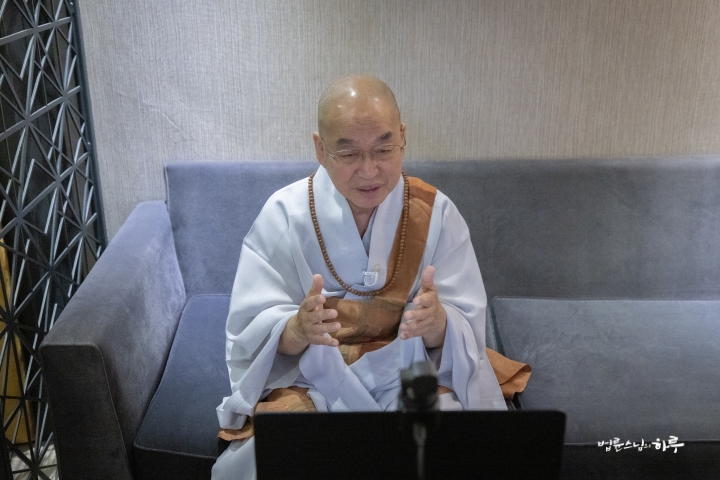
“Yes, I understand that I shouldn’t be troubled by issues arising from my success. I used to be very afraid of being criticized by people, but now I’ll choose to demonstrate my abilities while accepting criticism.”
The questions continued. After an hour and a half of conversation, Sunim concluded the live broadcast with closing remarks.
“Next week’s Dharma talk will likely be held in Bhutan. I expect that the internet situation in Bhutan may not be very good. However, I will bring you live updates from the scene, so please understand.”After finishing the live broadcast, Sunim had breakfast at the accommodation and departed for the Turkey-Syria border region at 7 AM.
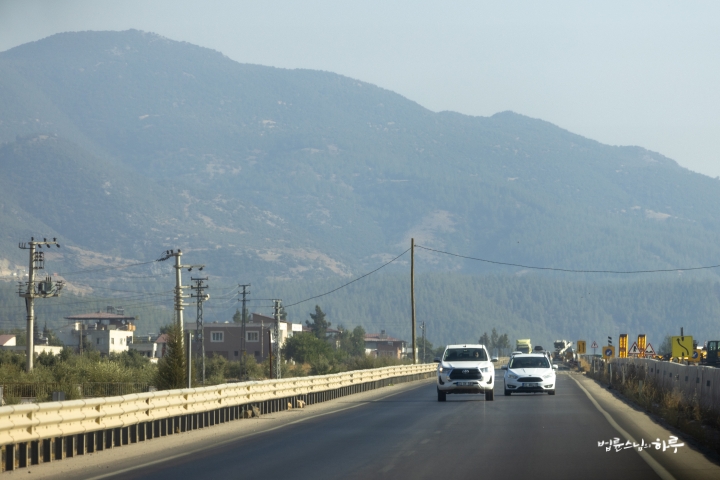
As we approached the earthquake-affected area, Sunim looked out the car window and commented.
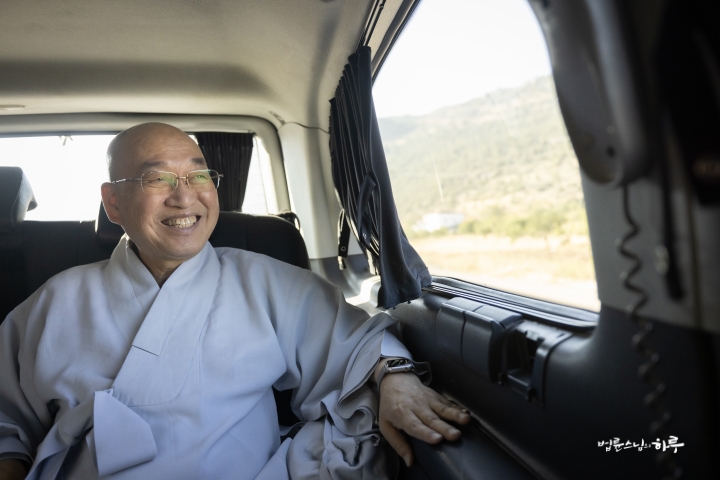
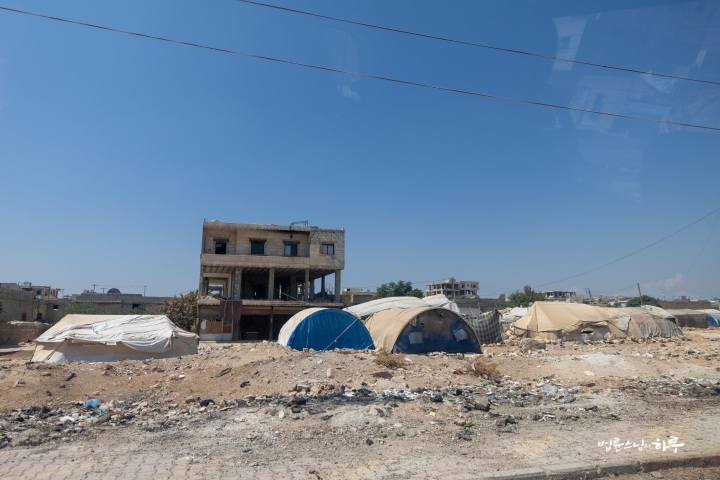
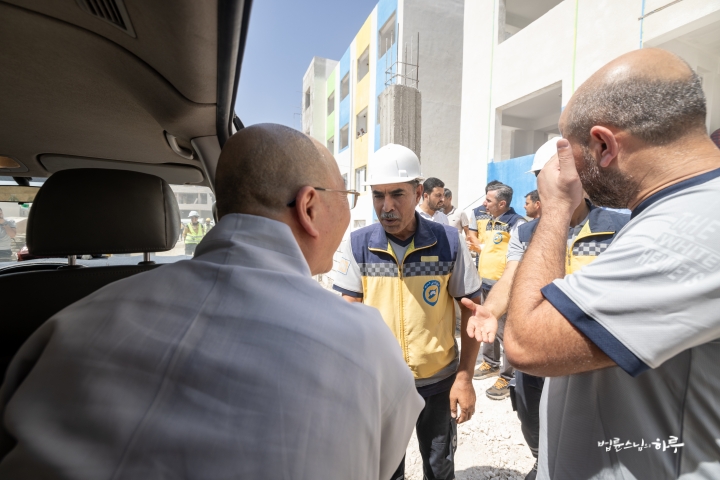
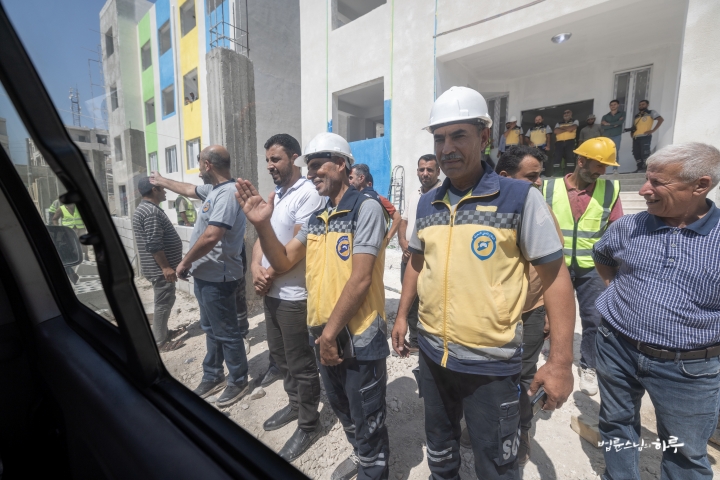
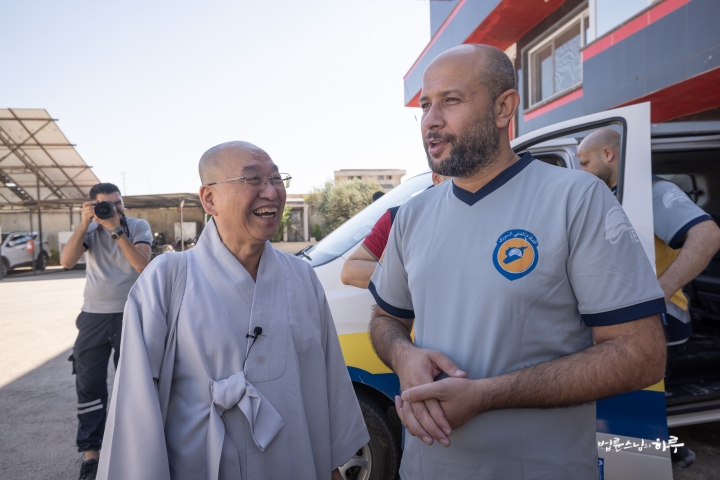
After a three-hour drive, we arrived at the school construction site at 10:20 AM. As Sunim got out of the car, White Helmet volunteers warmly welcomed him.
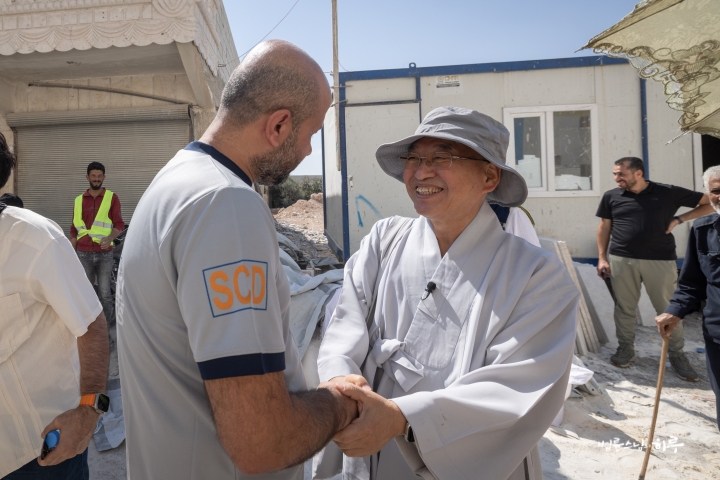
“It’s good to see you.”
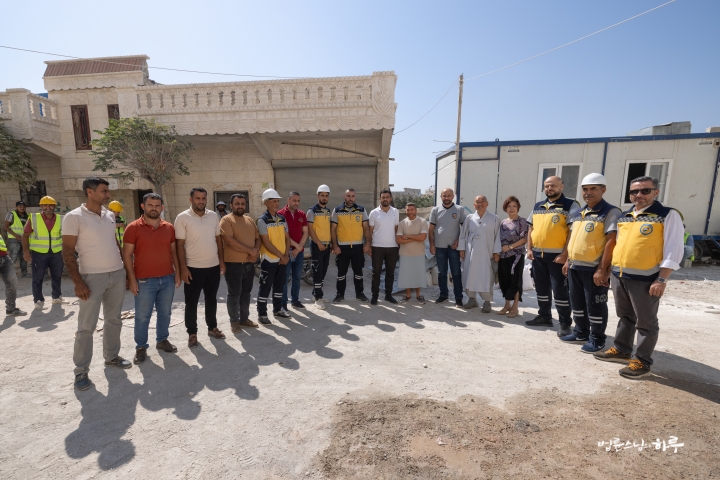
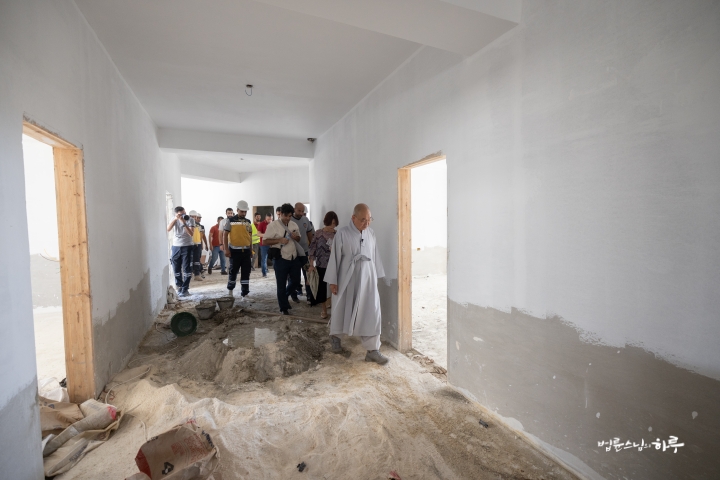
After taking a group photo, we began to tour the new school under construction.
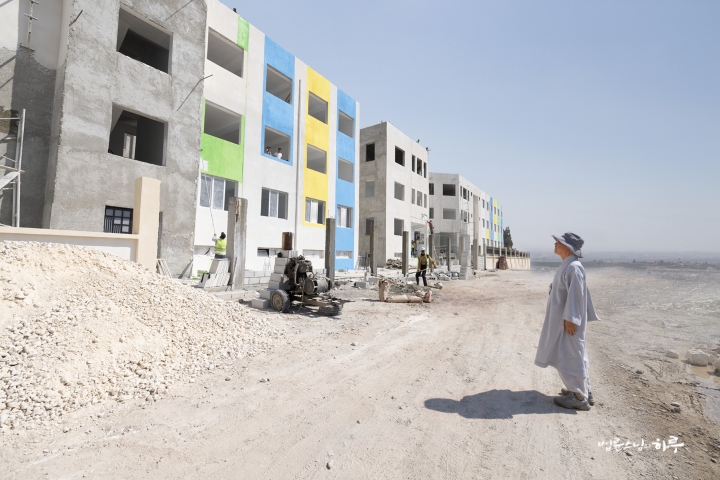
When Sunim first came to survey the earthquake-damaged area, the school was completely collapsed and in a dilapidated state. Today, a beautiful new building in pastel colors stood tall. This school is being rebuilt as part of the Turkey-Syria earthquake recovery project, a collaboration between JTS and the White Helmets.
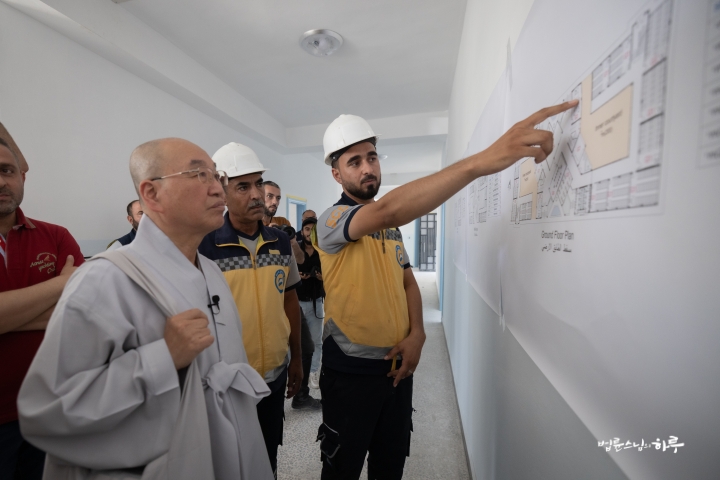
First, the construction manager showed the floor plans for each level of the school, explaining, “Here are the classrooms, administrative office, and restrooms,” detailing the layout of the school facilities.
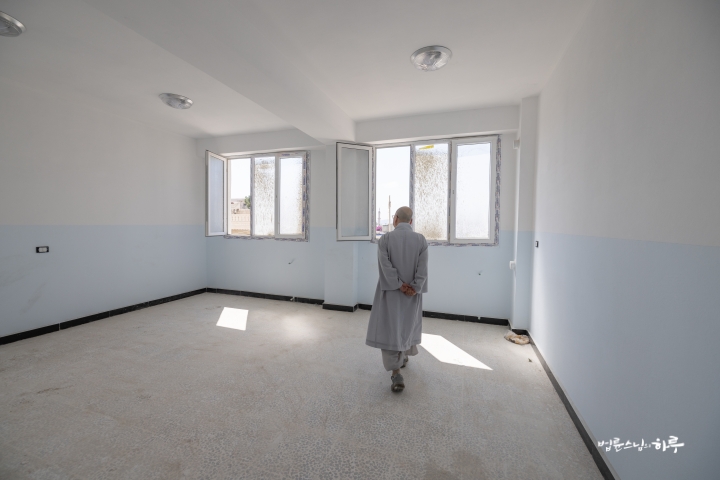
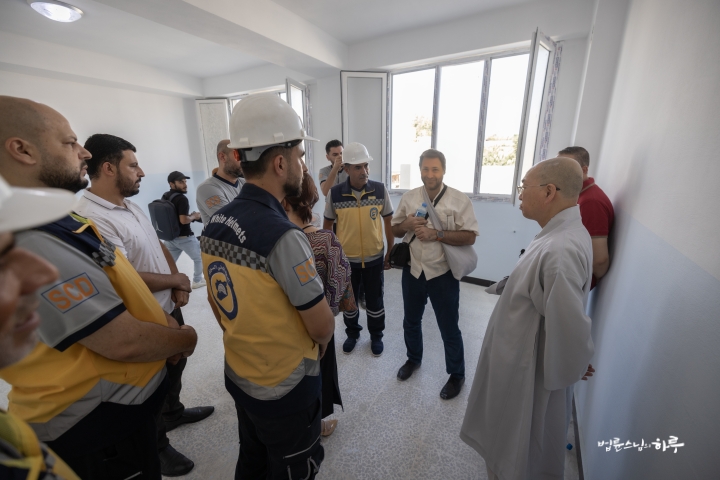
Sunim toured the school’s interior with the volunteers, personally inspecting the classrooms, meeting rooms, and faculty offices currently under construction.
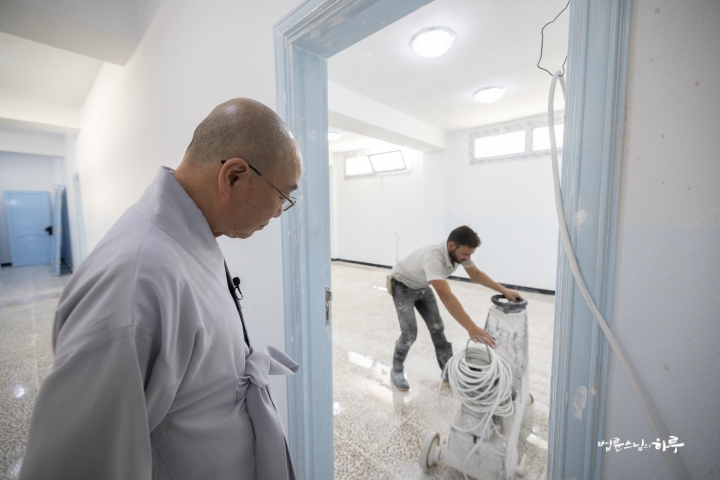
They added that the school was designed with a bomb shelter in the basement for use as an emergency evacuation site, and thorough safety measures were being put in place to prepare for various situations. After hearing the explanation, Sunim emphasized, “Emergency measures must be in place to safely evacuate in disaster situations such as fires or earthquakes.”
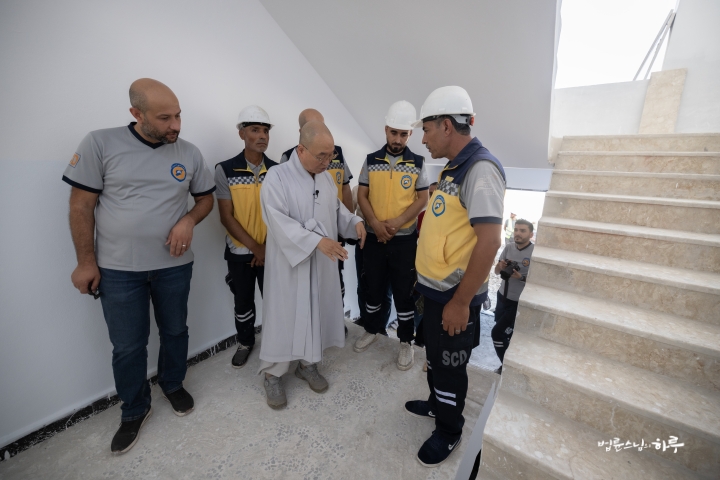
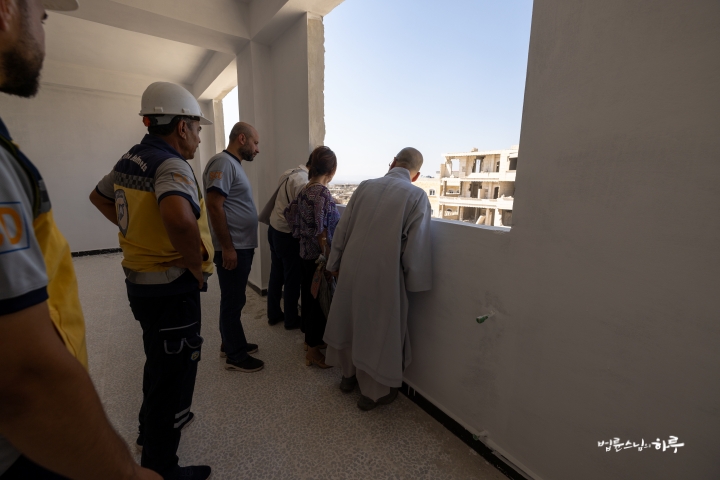
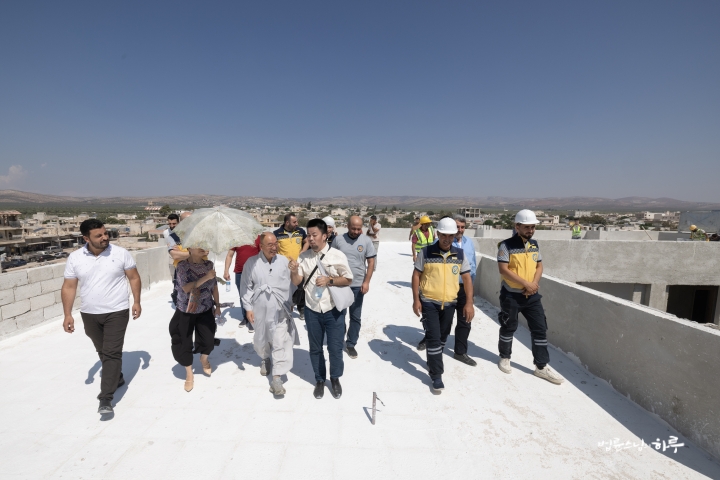
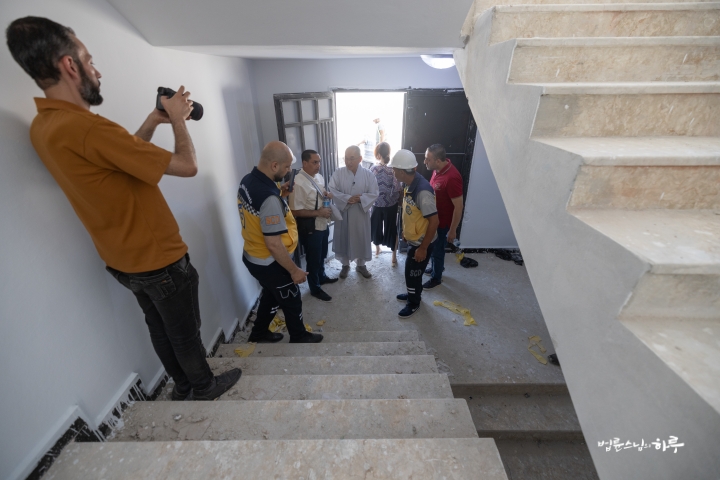
We thoroughly inspected the entire building from the first floor to the rooftop. Sunim showed particular interest in the safety issues of the school facilities. While checking if emergency evacuation routes and fire prevention facilities were properly installed, he said, “There should be sufficient emergency stairs and exits for students to evacuate quickly in case of fire or earthquake.” Thanks to Sunim’s repeated emphasis, the White Helmet volunteers were also reminded of the importance of thorough preparation for school safety issues.
While touring the facilities, opinions were also exchanged about classroom size and layout.
When Sunim expressed concern about the small classroom design, the construction manager responded.
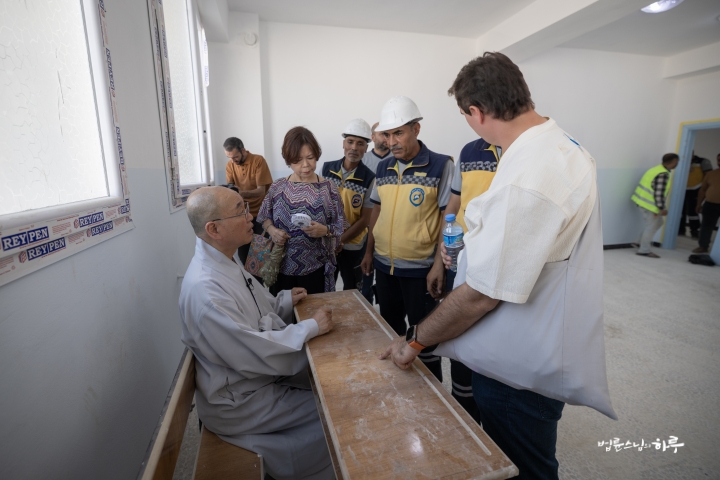
“It’s designed to accommodate about 30 students, and we’re considering how to make it as comfortable as possible for students to study.”
After touring the school inside and out for an hour, the White Helmet volunteers expressed their gratitude to Sunim.
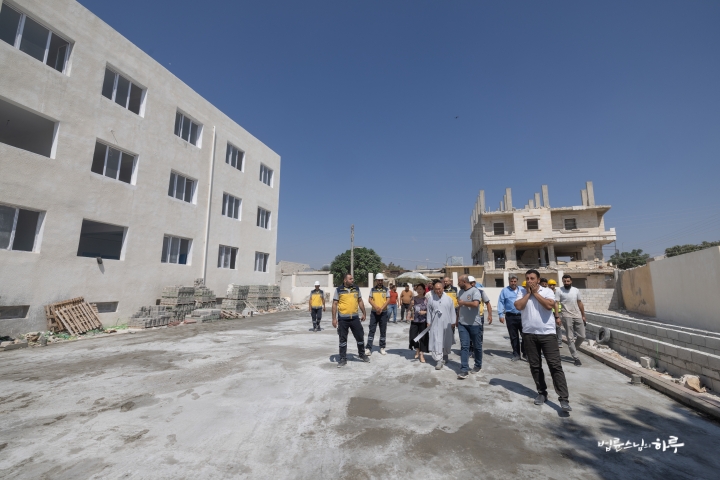
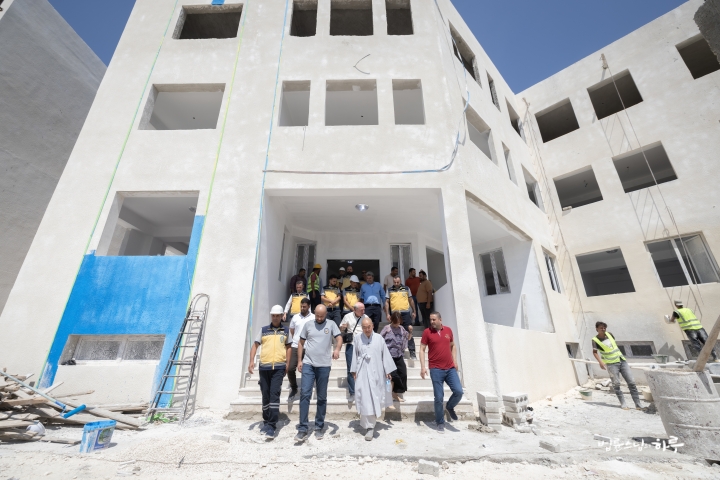
“Thank you so much for building this school. Many children have suffered through war and earthquakes, and many were unable to receive education. Thanks to you, many children will now be able to study. We are sincerely grateful.”
Sunim replied:
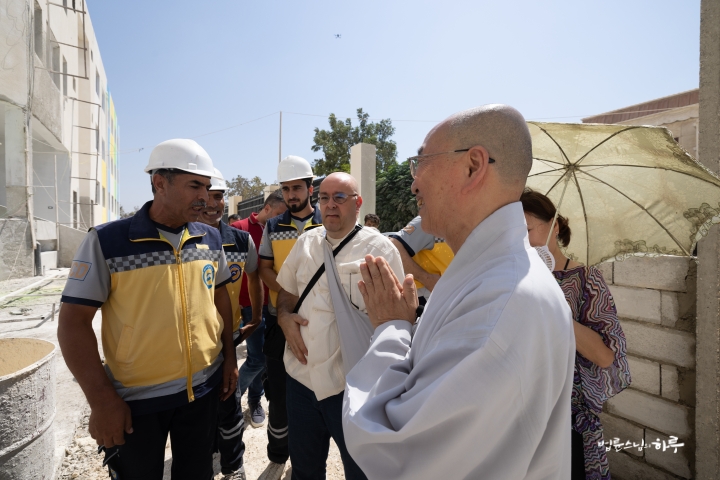
From 11:20 AM, a meeting was held in the school office with White Helmet volunteers to discuss the earthquake recovery situation and future directions. First, Sunim expressed his gratitude for the hard work of the White Helmet volunteers.
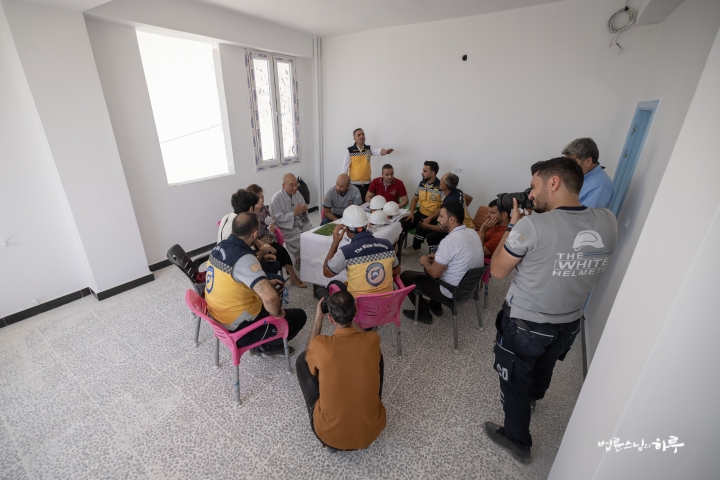
Sunim emphasized the safety and quality of the school construction.
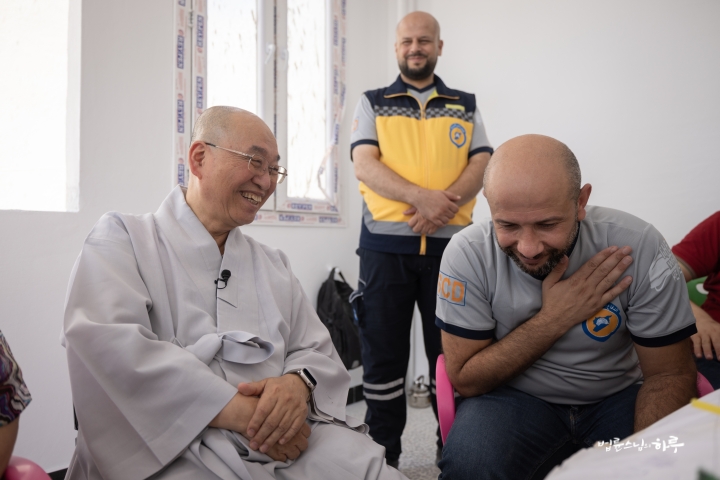
As the discussion about the progress of school construction continued, Sunim suggested creating a memorial space.
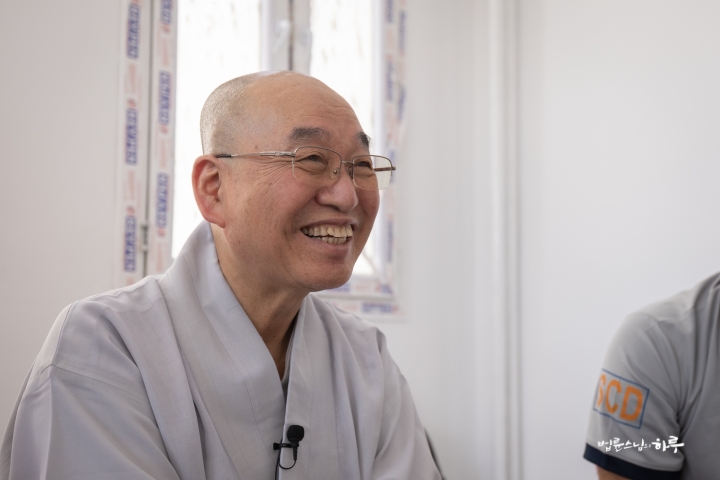
When everyone readily agreed to Sunim’s proposal, they also discussed where to install the memorial space for the victims.
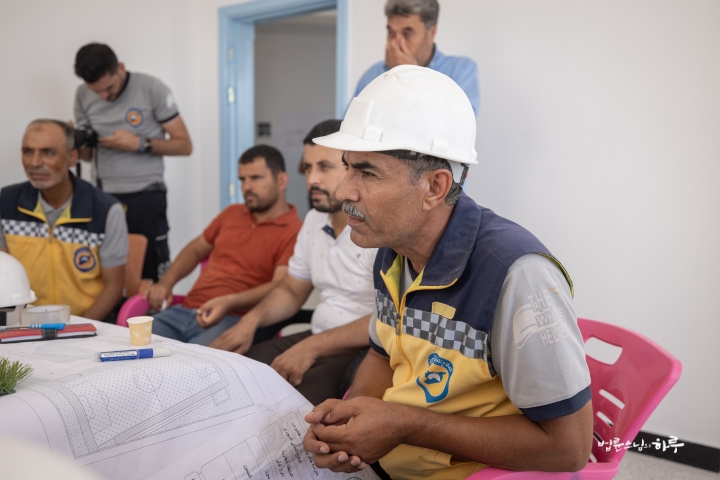
The White Helmet volunteers all hoped that the school reconstruction would become a symbolic place that gives hope to the local community and students, beyond just being a simple construction project.
Sunim also talked about the issue of space utilization in the school.
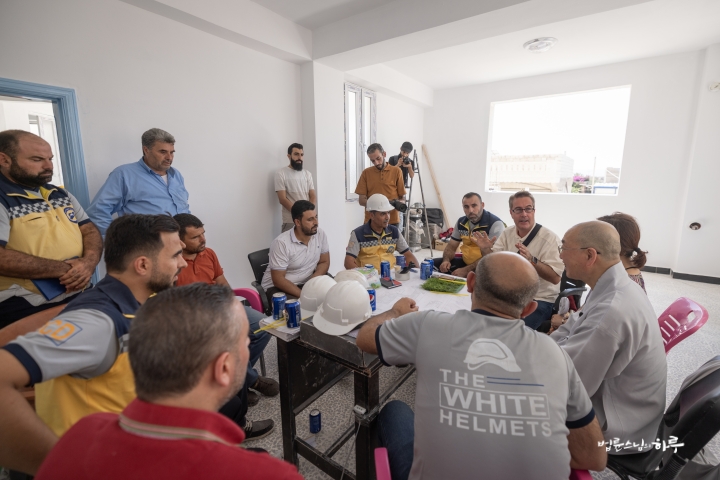
The volunteers informed him that they are working on using the empty lot next to the school and are in negotiations with the landowners.
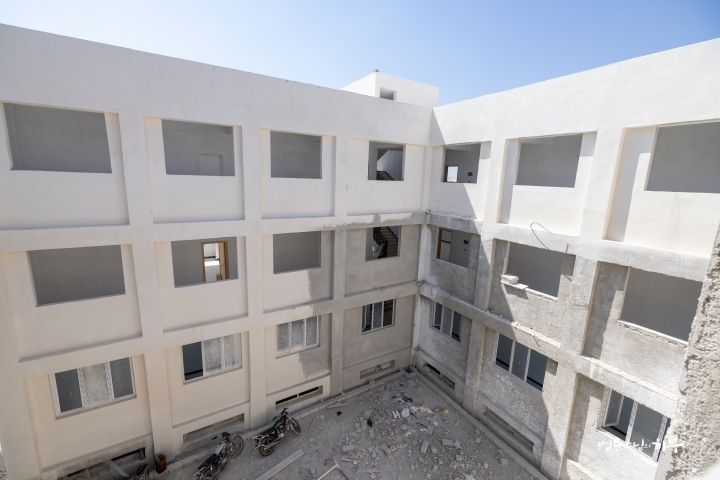
Although a new school building for 4,000 students has been built with JTS support and White Helmets’ efforts, there are still a million children in refugee camps who are not receiving education. Sunim proposed introducing an online education system to quickly address the education problem.
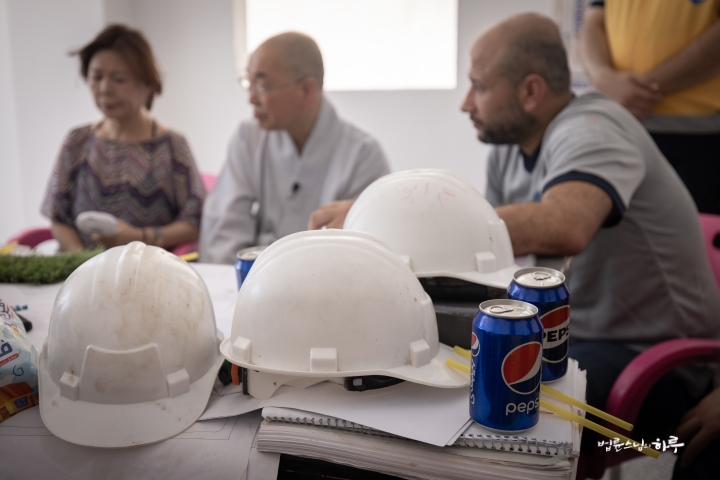
The White Helmet volunteers all agreed with Sunim’s proposal and responded:
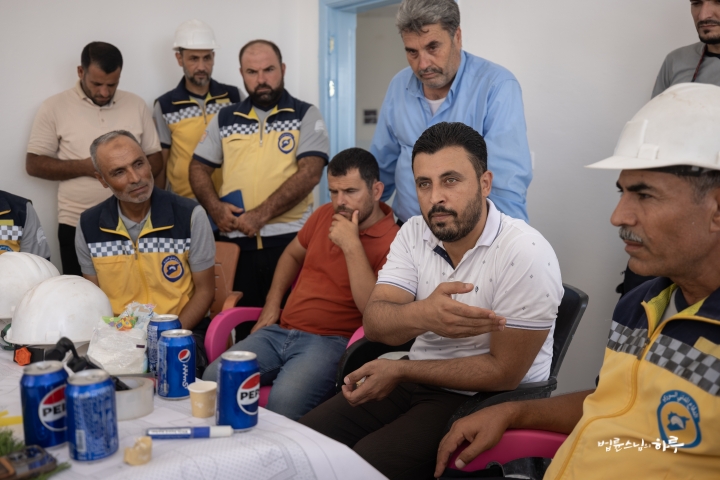
“Sunim’s suggestion is really good. However, infrastructure needs to be established. We will look into building the infrastructure to enable online classes.”
Through this conversation, we could see how much responsibility they feel towards the local community and their strong will to solve educational problems. Sunim once again encouraged the White Helmet volunteers.
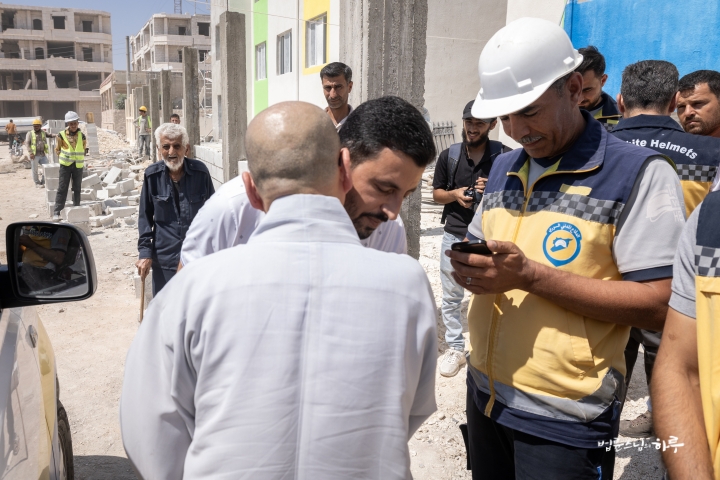
“The White Helmets’ helmets that the volunteers had taken off looked truly impressive and dignified.
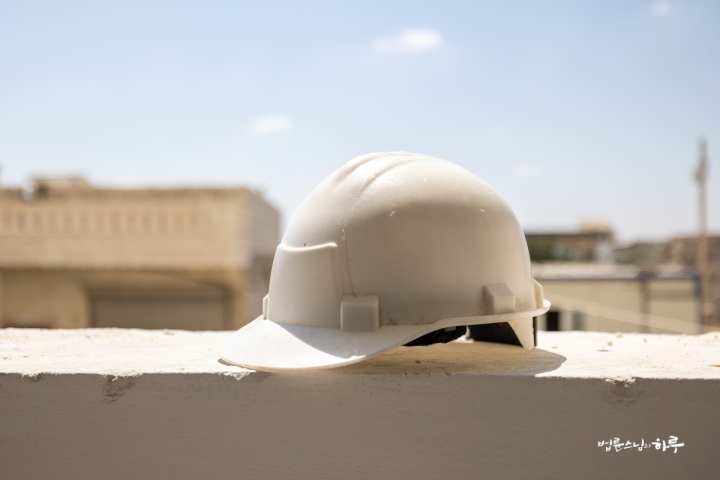
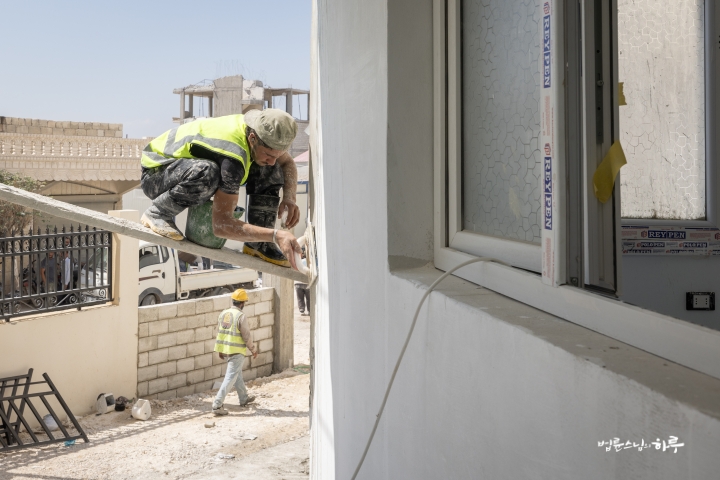
After finishing the school visit and saying goodbye to the construction managers, we moved to a clothing factory operated by the White Helmets.
We drove for two hours. Inside the car, we had lunch with the boxed meals prepared by the White Helmets volunteers.
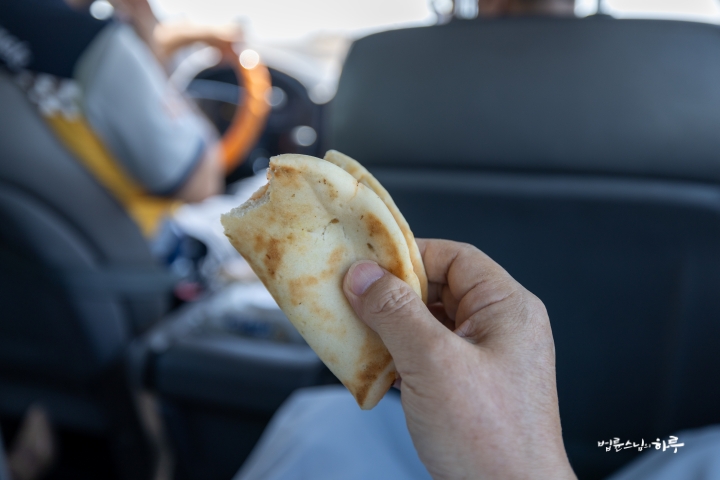
As we drove on unpaved roads, the car kept bumping. The driver apologized and said:
“Sunim, the ride must be very uncomfortable for you, isn’t it?”
Sunim smiled and replied:
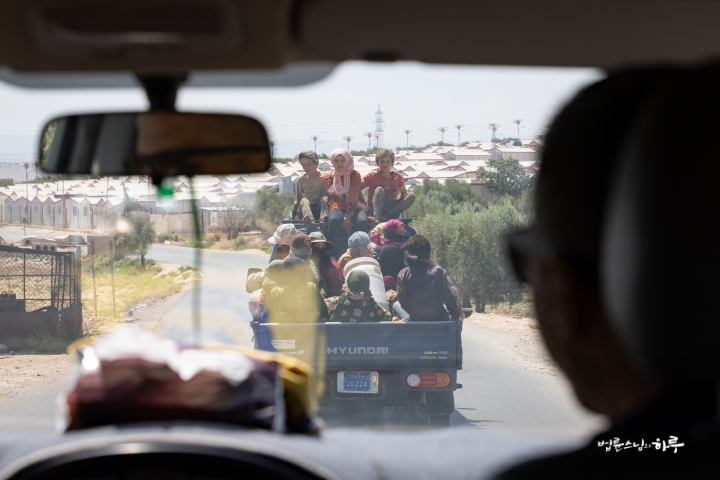
Through the car window, we could see refugee camps continuously.
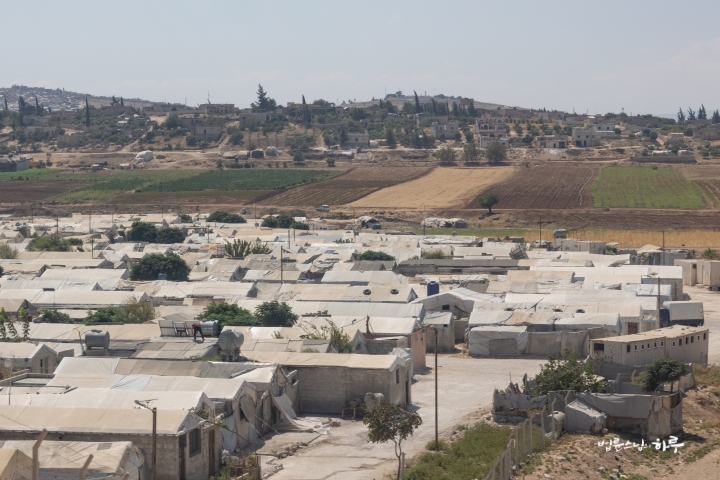
Although Sunim repeatedly emphasized the importance of children’s education, he was also aware that the reality was not easy.
At 1:50 PM, we arrived at the clothing factory operated by the White Helmets. Guided by the factory manager, we observed the overall operations and activities.
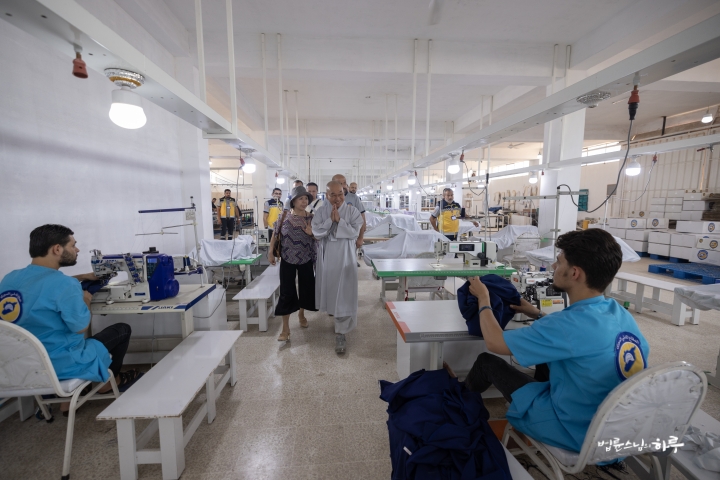
The factory was producing various products to help with earthquake recovery and support the self-reliance of local residents. Sunim expressed admiration for the diverse product manufacturing activities while touring the factory.
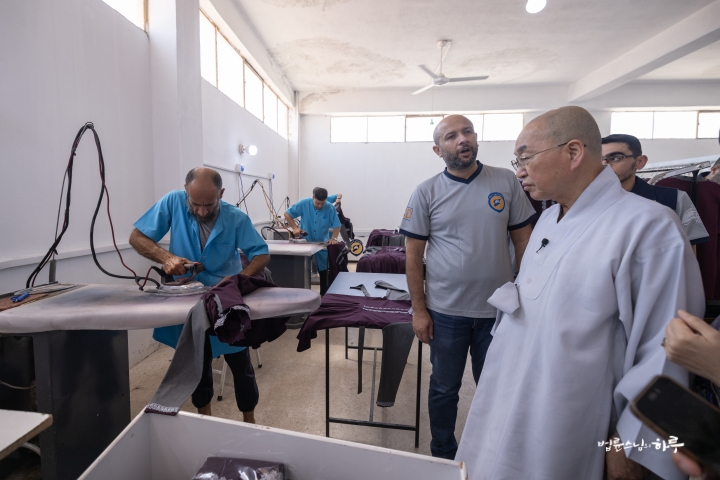
The factory was producing various clothes, including school uniforms. Sunim showed great interest in the uniform production process.
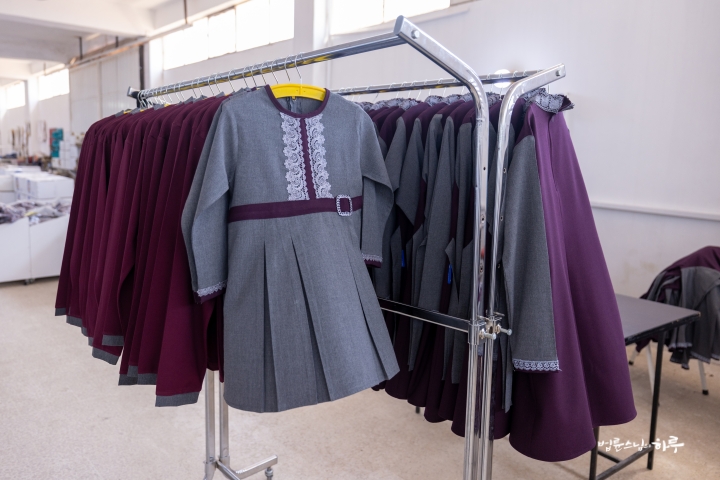
“Yes.”
The boys’ uniforms were also well-made and sturdy.
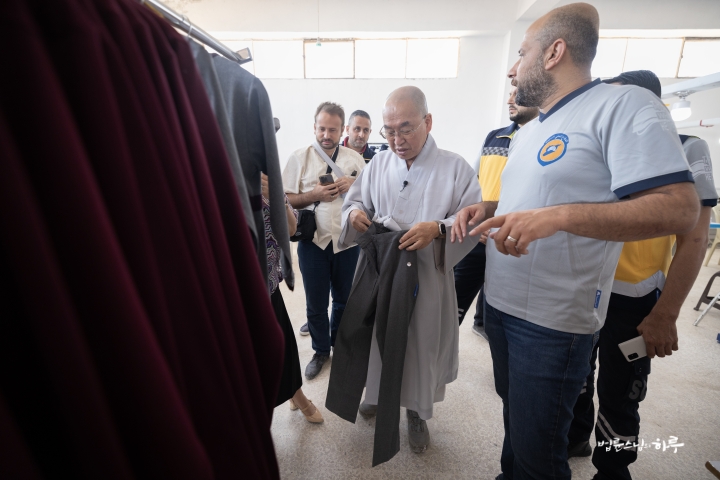
The factory manager emphasized the automated system and efficient production process.
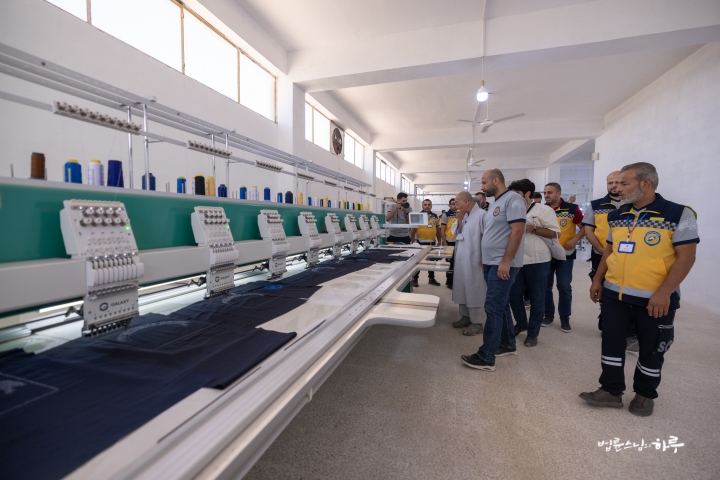
“Here, once we design on the computer, we can produce quickly. Everything will be ready by the opening ceremony. We’ve already made all the uniforms.”
They also briefly discussed whether it would be better to distribute uniforms to 4,000 students on the day of the opening ceremony or in advance.
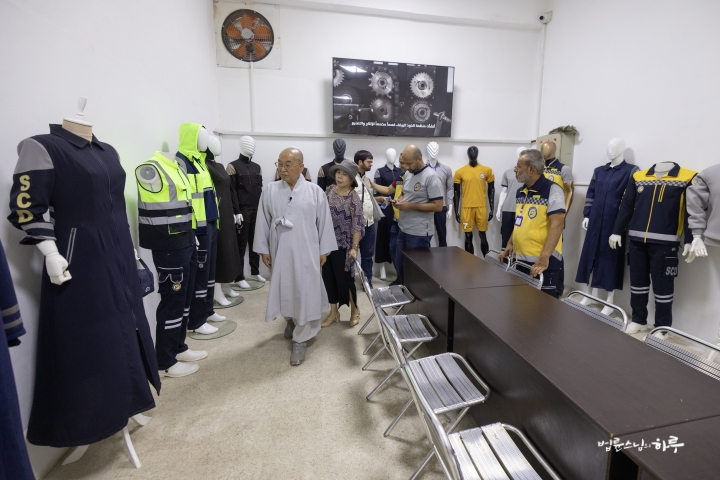
After touring the factory, Sunim encouraged the volunteers working there.
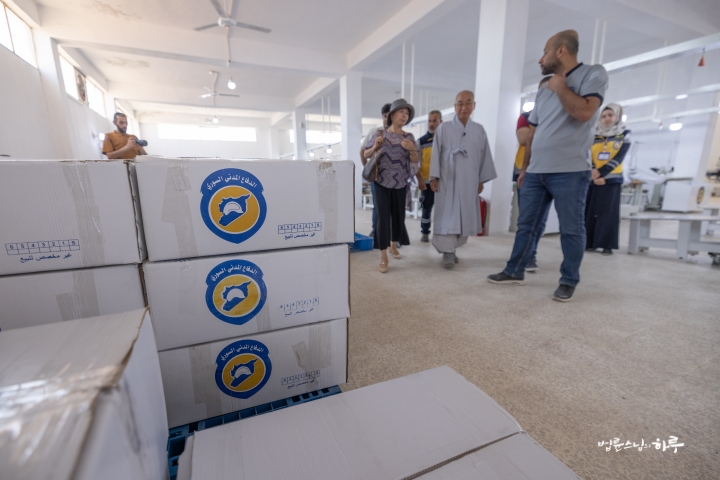
Sunim highly appreciated the various activities of the White Helmets volunteers contributing to the local community after the earthquake and concluded the factory visit.
We moved to the factory office for a meeting with the factory management. They discussed various topics including the factory’s operation method, energy use, and future construction plans. In particular, the White Helmets factory was operating using a clean energy system utilizing solar power.
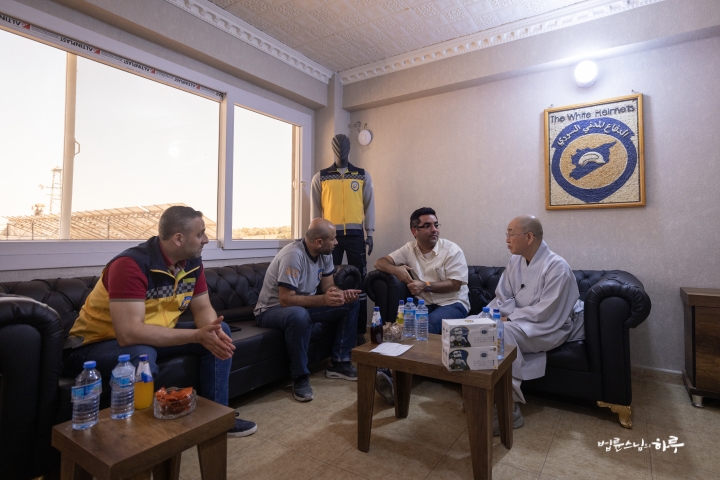
“Currently, the use of regular electricity is decreasing, and our goal this year is to completely switch to solar power.”
“It seems that using as much solar power as possible will enable energy self-sufficiency.”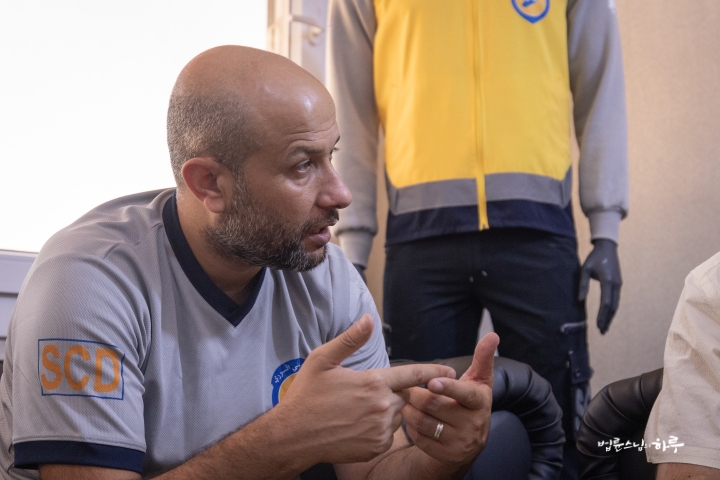
Sunim highly valued the self-sufficient energy system. While explaining the factory’s various business areas, Sunim asked another question.
“There’s a huge demand for construction, so why don’t you create your own construction company?”“If we operate a construction company, there could be transparency issues and misunderstandings. Currently, we outsource construction to external companies through bidding.”
“I understand completely. Nevertheless, it might be good to consider self-reliant methods for the future.”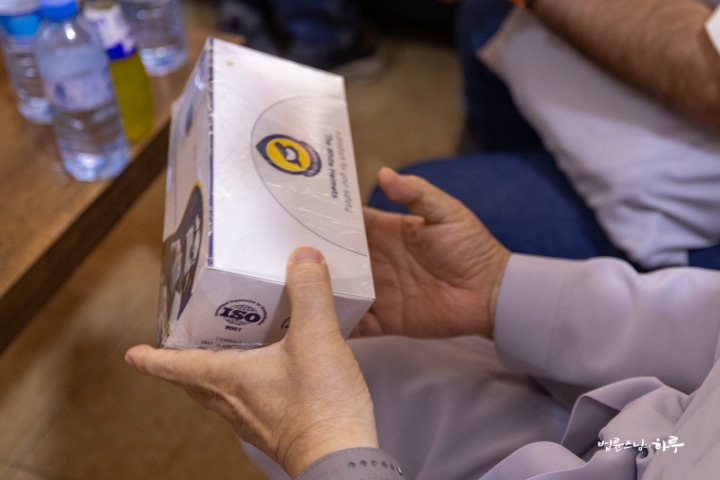
The factory was also producing various items such as masks and clothes. Sunim emphasized that the items produced in the factory would be of great help to local residents and asked them to ensure that they could be used safely and comfortably.
As there was a report that the construction schedule was tight, Sunim made a suggestion about the school opening ceremony date during the meeting.
However, the White Helmets volunteers expressed confidence that they could complete all construction by October 9th. After the meeting, Sunim expressed his gratitude to the factory staff.
“Please do your best. We are here to give hope to the local residents and students.”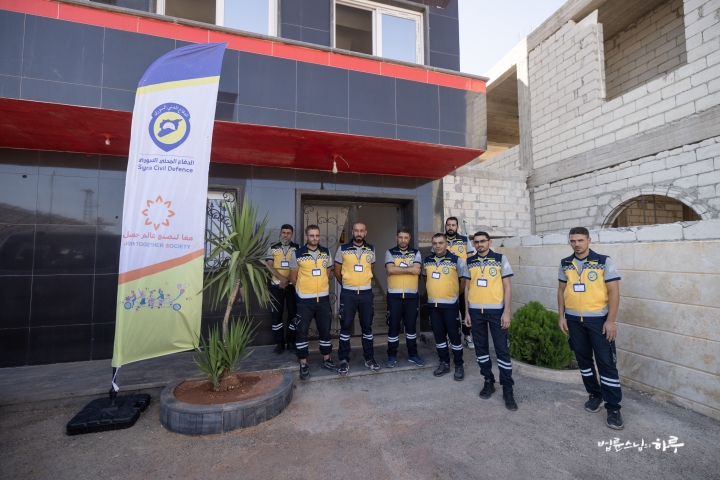
Then, from 3 PM, we moved to the White Helmets office for a meeting with the Syrian representative.
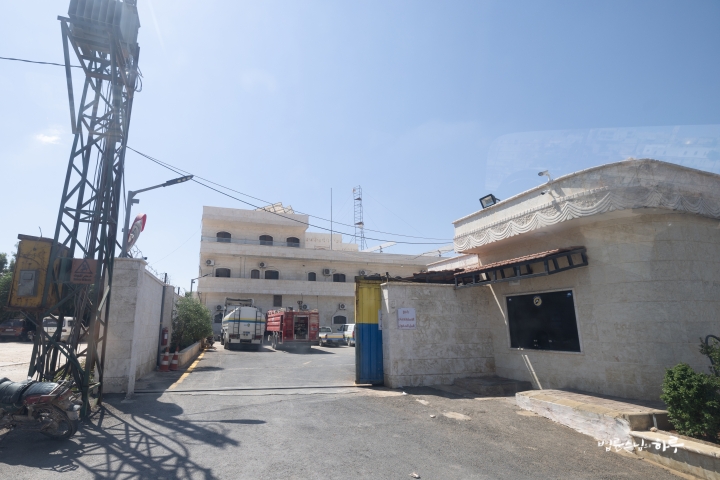
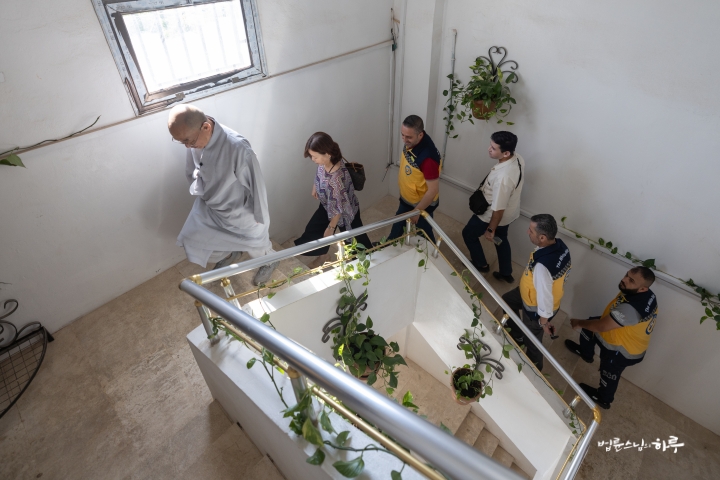
They discussed the progress of school construction, future plans, and the construction schedule. First, Sunim expressed his concerns.
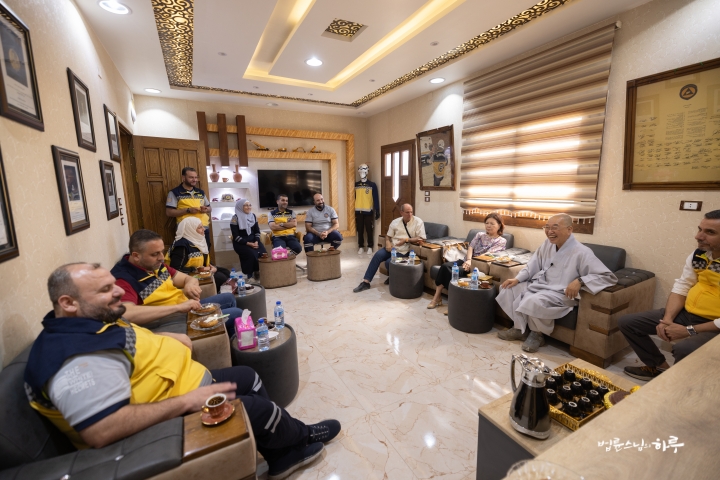
The Syrian representative then explained the situation.
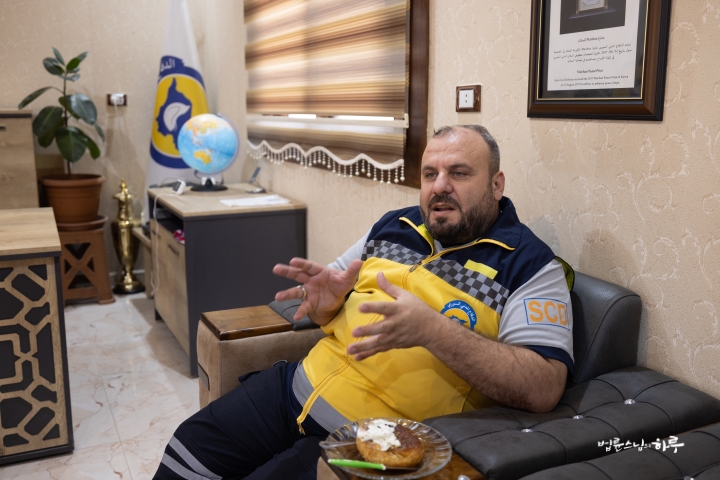
“If we postpone the school opening ceremony, there could be educational confusion as the students’ curriculum progress might differ from other schools. We will do our best to proceed with the opening ceremony on the scheduled date. We will complete the construction by deploying White Helmets members and new workforce. All personnel are prioritizing quality and safety, so please don’t worry.”
Sunim once again expressed his gratitude.
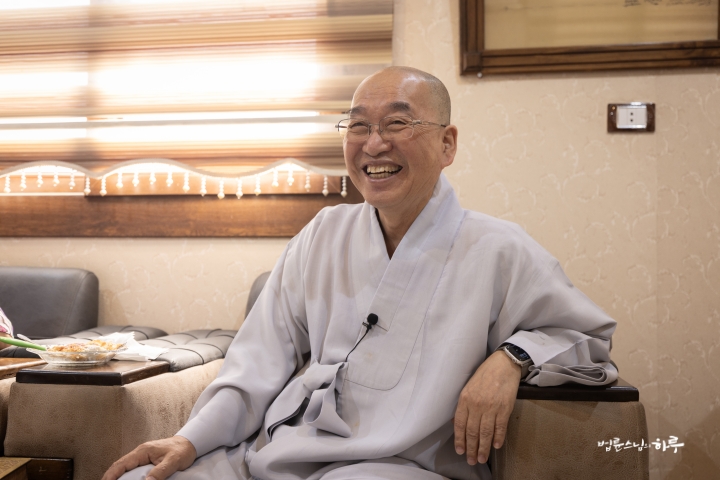
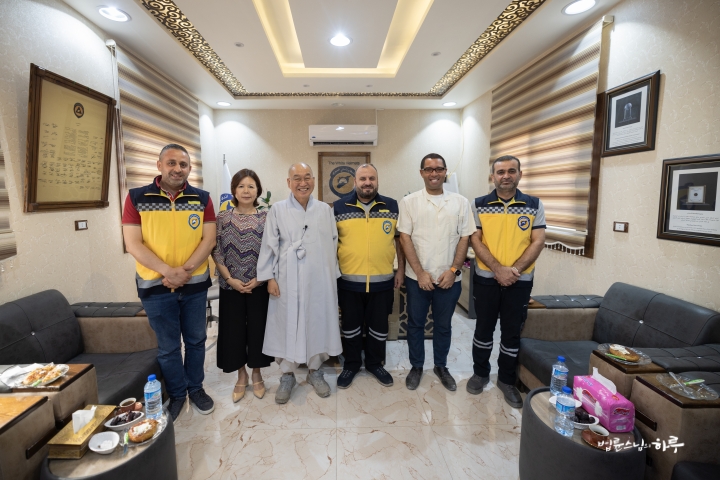
We took a commemorative photo together and concluded the meeting.
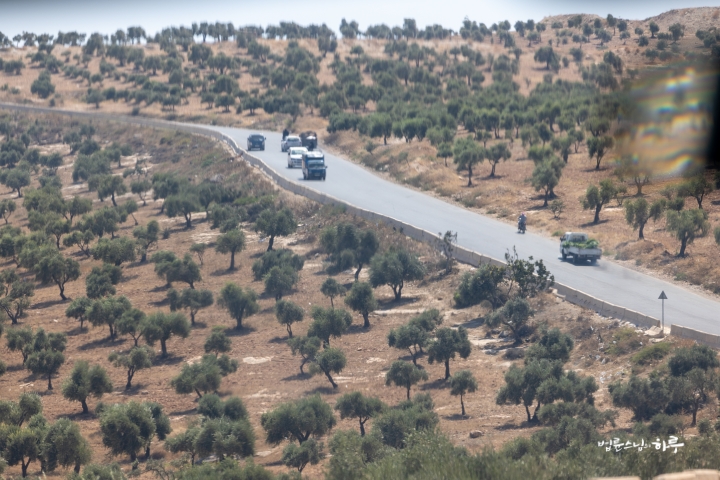
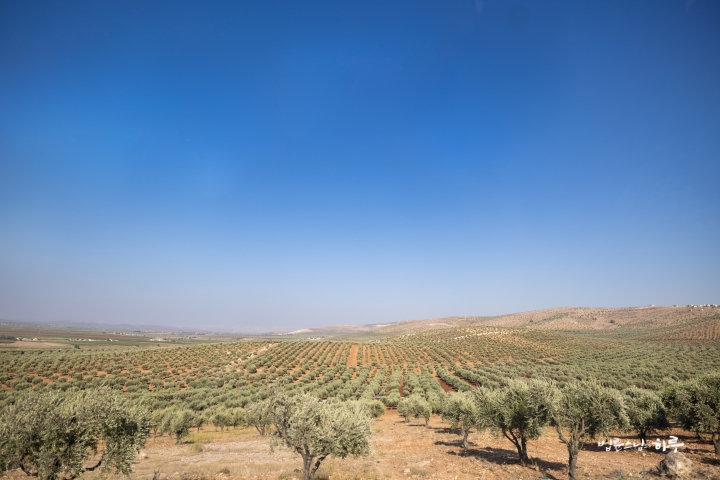
After completing the inspection of the earthquake damage recovery site, we headed back to our accommodation. The wide fields densely planted with olive trees were a spectacular sight.
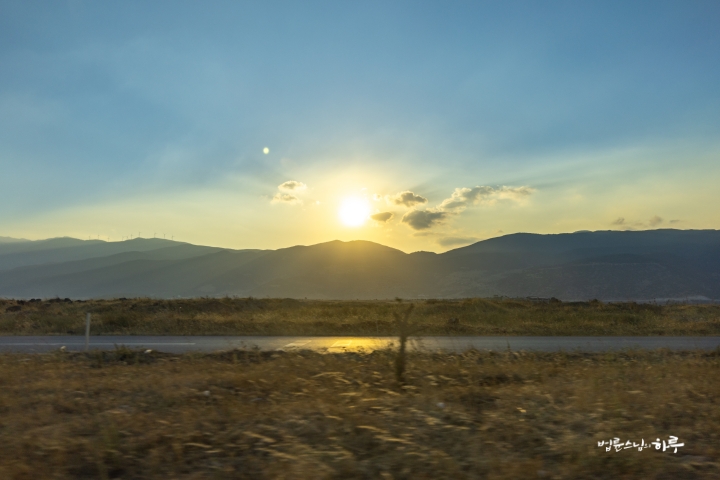
The sun set as we returned to our accommodation.
After arriving at the accommodation at 7 PM, Sunim had dinner. He proofread manuscripts and handled work matters before ending his daily routine.
Today, Sunim devoted all his efforts to bring hope and courage to people affected by war and earthquakes. We hope that Sunim’s steps will be a great strength to the residents suffering from earthquake damage and civil war.
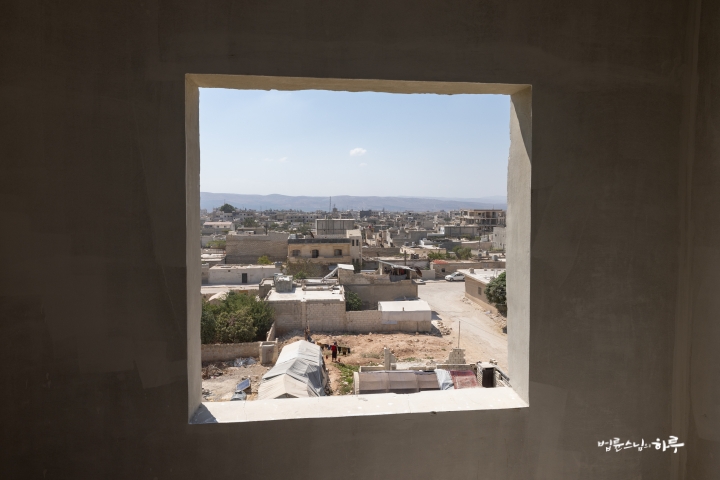
Tomorrow morning, he will have a meeting with White Helmets volunteers, and in the afternoon, he will depart from Gaziantep Airport, transit through Istanbul Airport, and then take a flight to Delhi, India, in the evening to enter Bhutan.”