The More I Practice, the More Past Wounds Surface
Aug 21, 2024 - Interfaith Meeting, Dharma Q&A, Peace Research Seminar
**Aug 21, 2024 – Interfaith Meeting, Dharma Q &A, Peace Research Seminar **
Good morning. A new day has dawned at the Seoul Jungto Center.
After completing his morning practice and meditation, Sunim participated in an online meeting with Gyeolsa Practitioners starting at 7 AM. Evaluating the past 5 years since transitioning to an online Jungto Society after the COVID-19 pandemic, Sunim first shared his thoughts on what preparations need to be made in the second half of the year for Jungto Society to continue developing in the future.
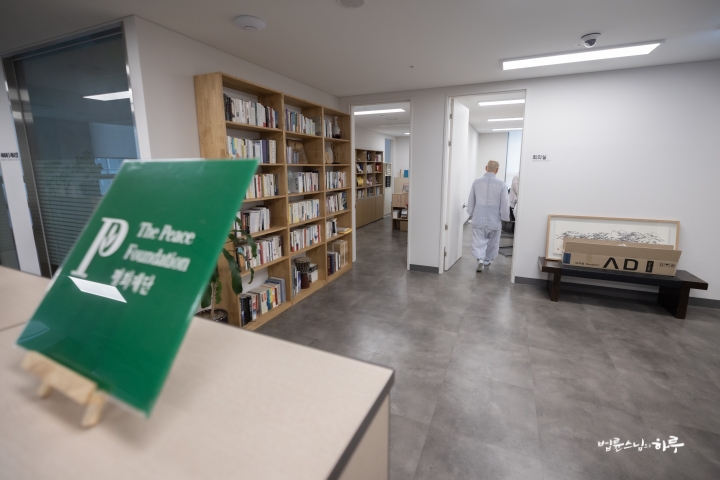
While the Gyeolsa Practitioners engaged in active discussion, Sunim headed to the Peace Foundation early in the morning for an interfaith meeting for national reconciliation and peace. Once the pastors, priests, ministers, bishops, and religious leaders all arrived at the Jungto Social and Cultural Center, they began the meeting over a meal together.
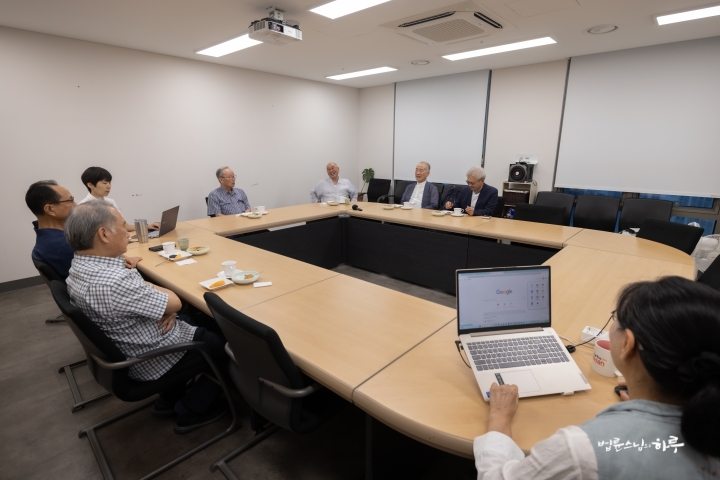
After finishing the meal, they moved to the Peace Foundation meeting room to have a more in-depth conversation. Minister Kim Dae-sun from the Korean Life Movement Alliance, who is running a suicide prevention campaign, opened the discussion.
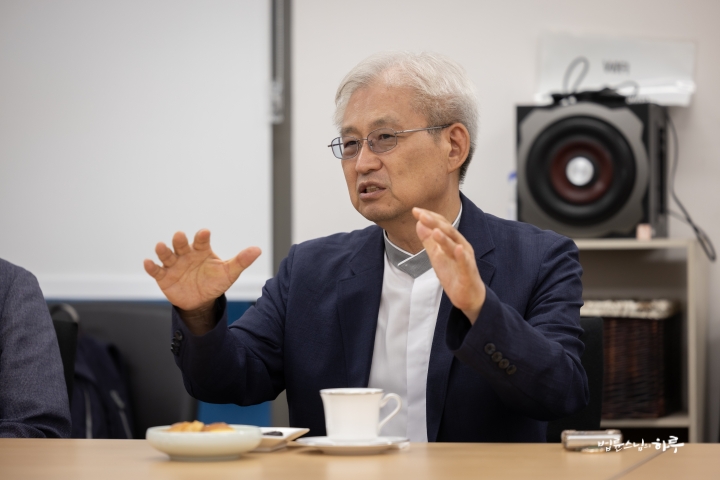
“Looking at the statistics, Korea’s suicide rate had been continuously decreasing since 2012, but it has started increasing again this year. With small business owners struggling to recover economically after COVID, suicide rates among those in their 20s and 30s are increasing. Currently, 40 people commit suicide every day in Korea. So I’m making various efforts, including requesting the establishment of a Suicide Prevention Committee in the Presidential Office, to prevent suicides.”
After listening to the minister’s words, Sunim made a comment.
“If a Suicide Prevention Committee is formed, they should give me an award. I’ve given many Dharma Q&A lectures since 2012, including 300 nationwide lectures over 12 years, and during that time, the suicide rate has continued to decrease.” (Laughter)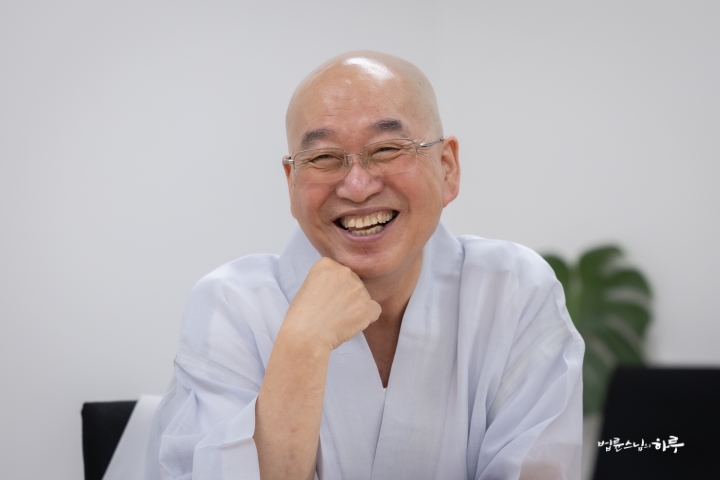
The bishop then said with a smile:
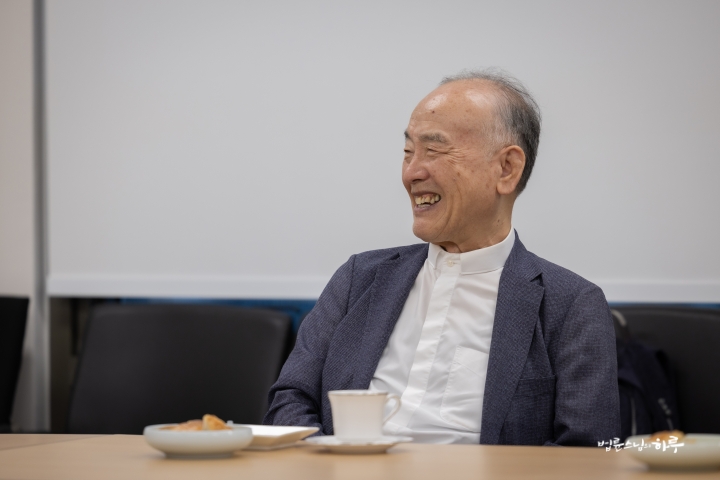
“While Sunim has made great contributions to lowering the suicide rate, you’ve also contributed to the decline in birth rates, so that merit is somewhat diminished.” (Laughter)
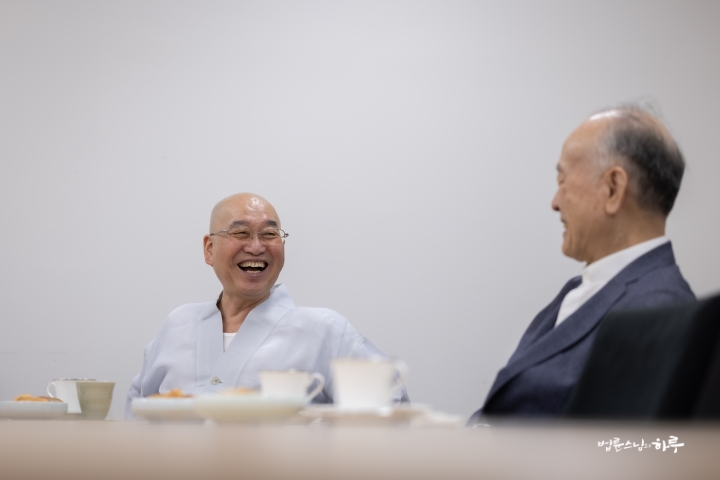
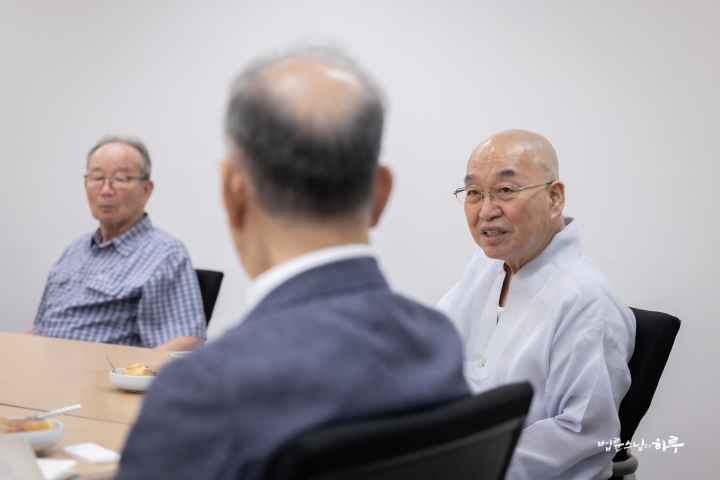
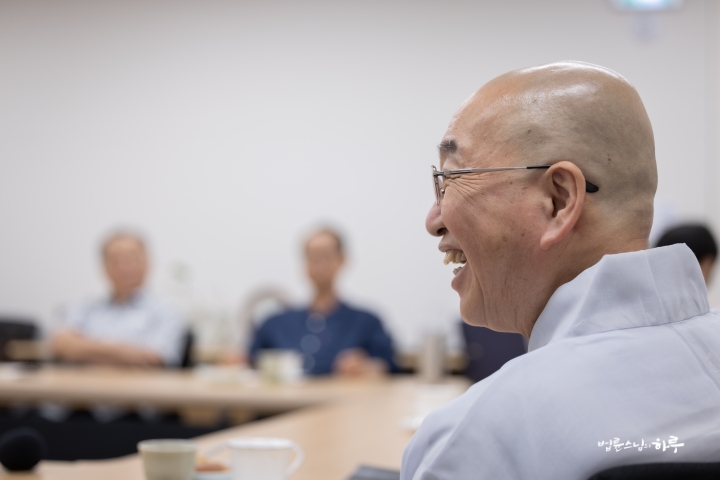
After a good laugh, they began their main discussion. First, they discussed how to hold commemorative events for the 200th anniversary of Choe Je-u Daeshinsa’s birth this year. Sunim made a few suggestions:
The Origins of Korean Democracy: Choe Je-u Daeshinsa’s Donghak Thought
Korean democracy did not entirely originate from the West. Just as there is a huge difference between viewing the establishment of the Republic of Korea government as being founded by the U.S. after Japan’s defeat versus seeing it as inheriting the legitimacy of the March 1st Movement and the Provisional Government of the Republic of Korea in Shanghai, today’s democratization is not simply transplanted from the West. Although it was greatly influenced by the West, at its roots lie the Donghak ideology of Later Heaven and the Donghak Revolution. These grassroots efforts by the people failed due to foreign oppression, but they erupted again later, combining with Western democratization trends to bring about the democratization of Korea today. We can say that the Republic of Korea was created based on an indigenous movement that arose from within, combined with external influences. In this respect, I believe Choe Je-u Daeshinsa’s Donghak thought has a very important meaning in our history as it later connected to the March 1st Movement and the Provisional Government in Shanghai.”After hearing Sunim’s suggestion, Pastor Park Jong-hwa added a comment:
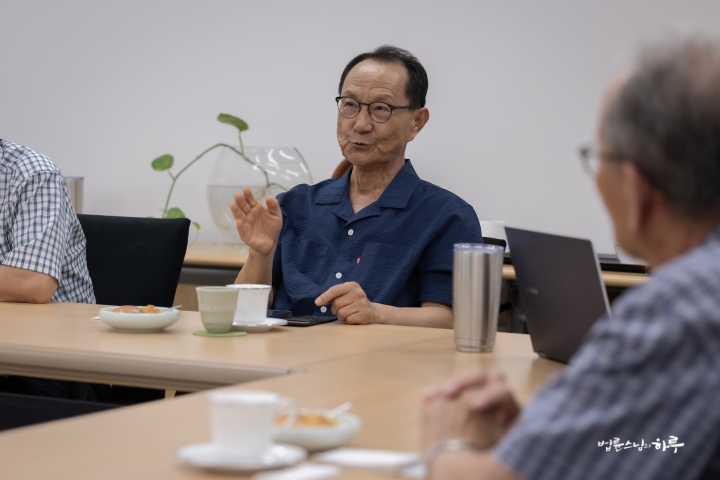
“I think examining the role of Donghak in modern and contemporary history would be very meaningful, regardless of religion. After the failure of Donghak, the number of Christians and Catholics suddenly increased by more than three times. Although the Donghak Revolution failed, the people’s han (deep sorrow) began to be embraced again in various ways, and this became the driving force that enabled Cheondogyo, Christianity, and Buddhism to cooperate in the March 1st Movement later. If we see Donghak as the seed of the peace movement, I think we need to deeply reflect on its meaning.”
While many good suggestions were made, there were also practical concerns about the preparation work, so they decided to review once more at next month’s meeting about what scale of commemorative events they could hold.
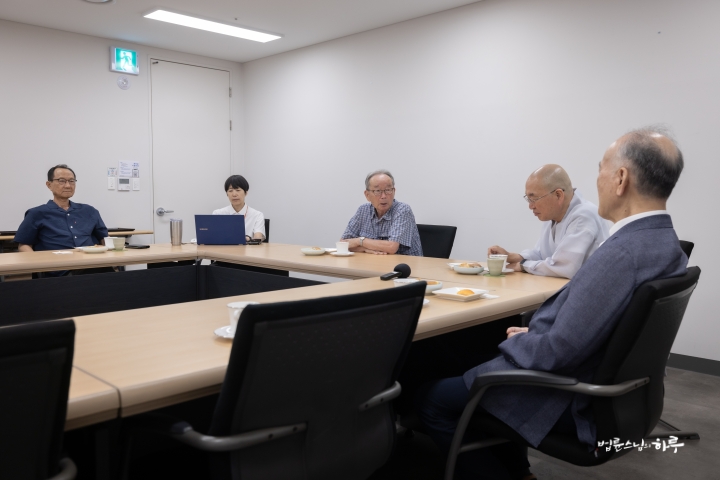
Next, they had extensive discussions about what programs to prepare on the theme of “interfaith dialogue” for the Peace Foundation’s 20th anniversary event on November 14 and the International Association for Religious Studies (IARS) seminar to be held in July next year. The meeting concluded after these discussions.
As the religious leaders were leaving, Sunim gave them noodles made from wheat grown at the Dubuk Retreat Center as gifts.
“We grew this ourselves. Please try it.”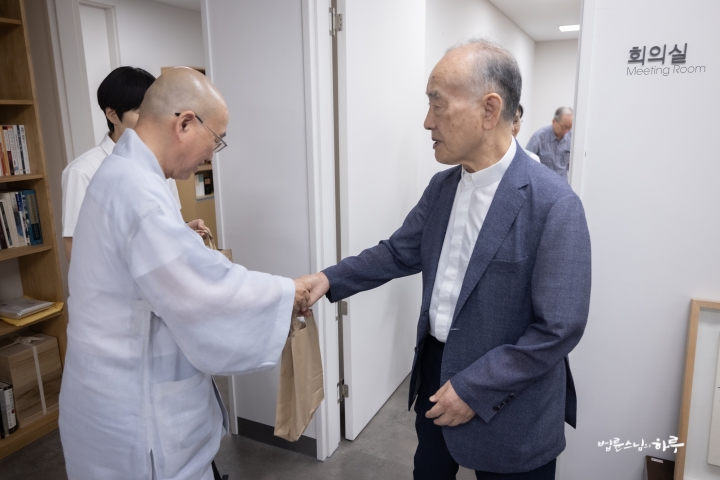
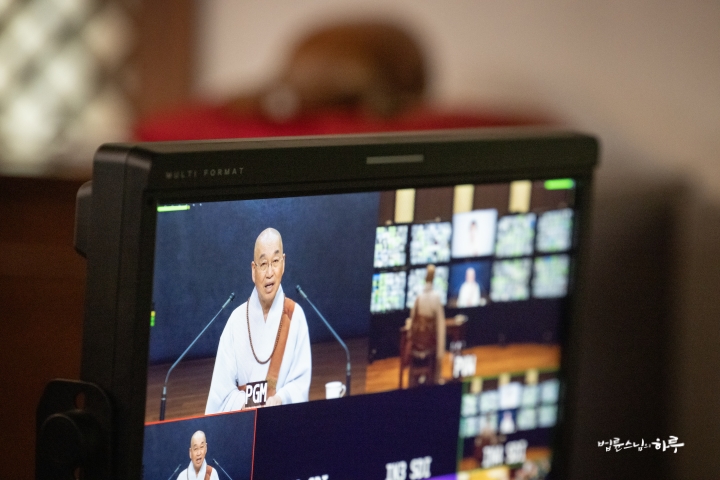
After seeing off the religious leaders, Sunim moved to the broadcasting studio at the Seoul Jungto Center to conduct a live Dharma Q&A session.
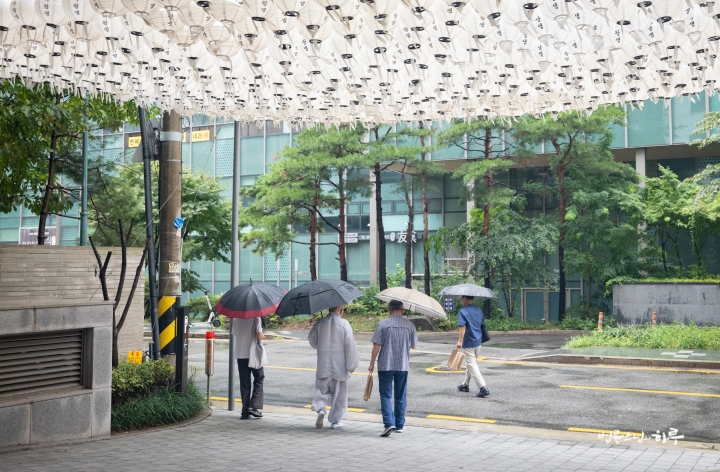
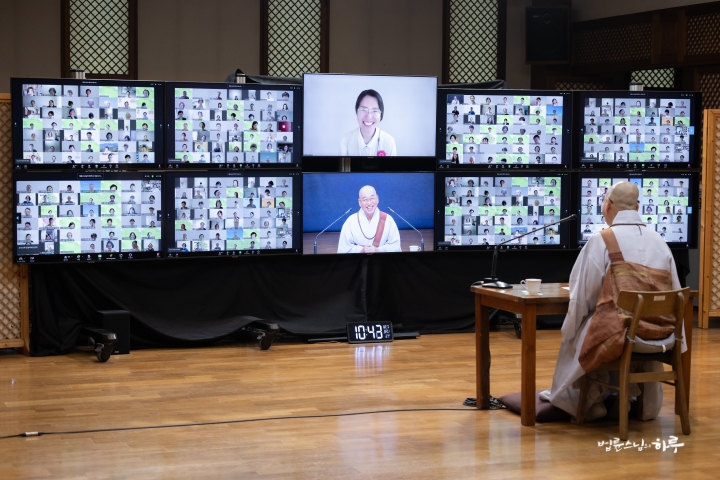
At 10 AM, the live Dharma Q&A session began with all Jungto Society members entering the video conference room. First, they watched a video showing the activities of Jungto Society members over the past week.
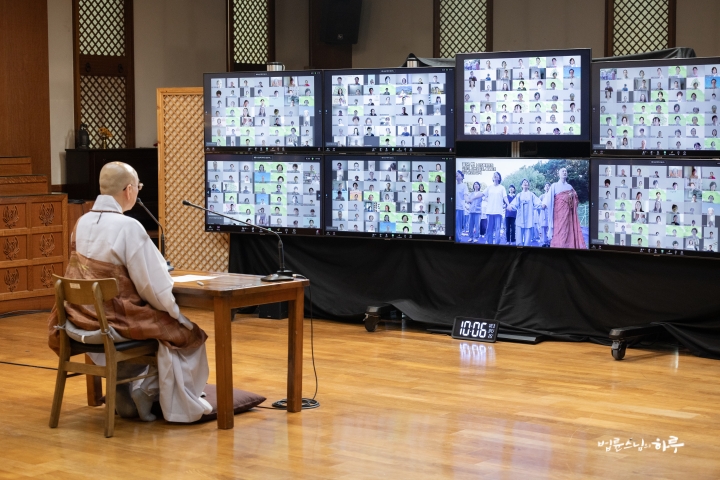
After the audience paid respects with three bows to request a Dharma talk, Sunim gave opening remarks.
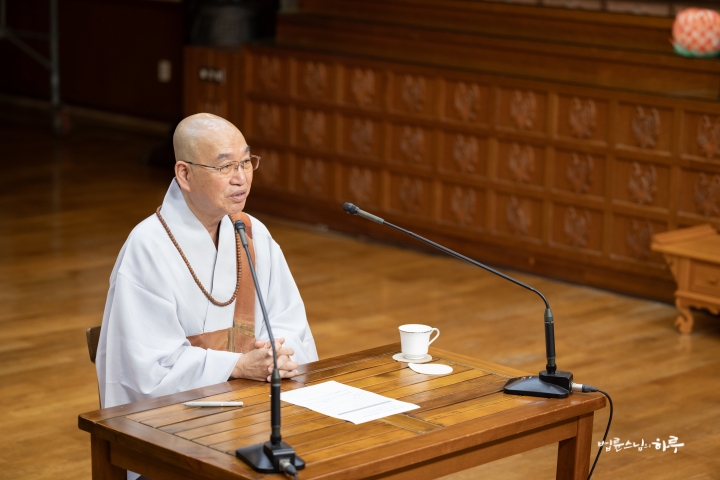
Sunim then expressed deep concern that the recent August 15th Liberation Day celebration events violated the spirit of the Constitution of the Republic of Korea.
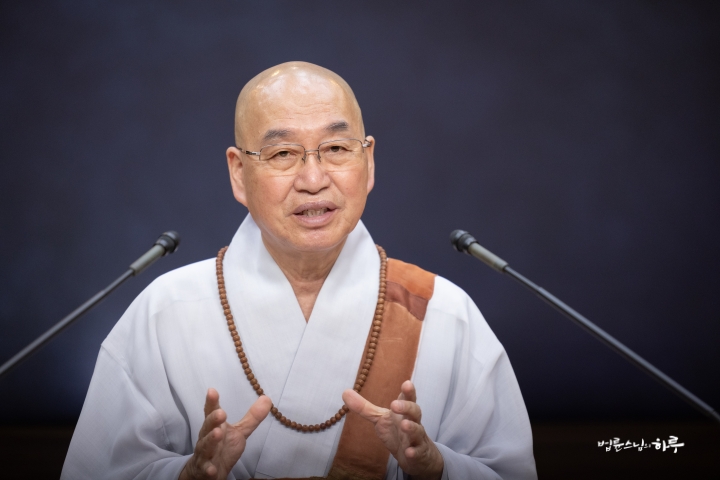
Damaging the Identity of the Republic of Korea at the August 15th Liberation Day Celebration
I think it’s fine to say that we should not be too bound by past wounds in the future and work to improve Korea-Japan relations, even if we have past wounds from Japan. However, it is not desirable to forget or distort past history. It’s not just undesirable, but deeply concerning. This is because there is a risk of damaging the identity of the Republic of Korea. Currently, within the Republic of Korea, there are progressive and conservative people, opposition and ruling party supporters, Buddhists and Christians, foreigners who have naturalized as Korean citizens, and people who have returned after living abroad. Various types of people live together like this. And there is freedom of thought, ideology, belief, and religion. Everyone has the freedom of expression to say whatever they want. The Republic of Korea is a country that values a free democratic basic order as an important value. Nevertheless, there are basic principles we must uphold. That is the Constitution, which constitutes the identity of the Republic of Korea. The Constitution is not fixed and unchangeable. We can always discuss and amend the Constitution. We have amended the Constitution 8 times since enacting it in 1948. However, all citizens of the Republic of Korea must enjoy freedom within the framework of the current Constitution. So what is specified in the current Constitution of the Republic of Korea? The most important content in the Constitution of the Republic of Korea is in the preamble. The preamble of the Constitution states: ‘We, the people of Korea, proud of a resplendent history and traditions dating from time immemorial, upholding the cause of the Provisional Republic of Korea Government born of the March First Independence Movement of 1919 and the democratic ideals of the April Nineteenth Uprising of 1960 against injustice…’ First, the subject is ‘We, the people of Korea, who have a long history and have inherited a brilliant culture.’ Second, when our country was taken away, we launched the March 1st Movement to regain our country. In other words, the ‘Provisional Government of the Republic of Korea’ established in Shanghai pursued the independence of the country by inheriting the March 1st Independence Movement. Because it inherited the legitimacy of the Provisional Government of the Republic of Korea as the identity of the state, it is expressed as ‘upholding the cause.’ From the time the Constitution was proclaimed in the Constituent Assembly on July 17, 1948, the Constitution has changed several times, but nevertheless, its basic spirit has remained unchanged. Third, it states that it upholds ‘the democratic ideals of the April Nineteenth Uprising against injustice.’ Then it is expressed as ‘having assumed the mission of democratic reform and peaceful unification of our homeland.’ This means that those who run the Republic of Korea should run the country based on the mission of democratic reform and peaceful unification.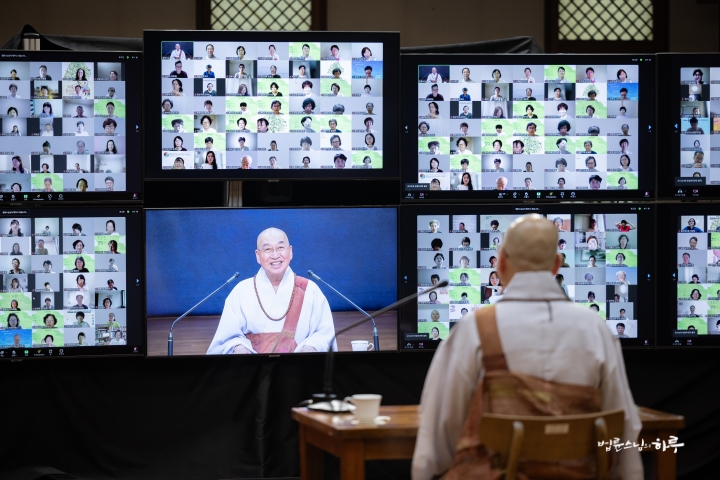
The Danger of Defining 1948 as the Founding of the Republic of Korea
Currently, two governments have been established in South and North Korea, but the basis for claiming that South Korea has inherited more legitimacy than North Korea is that it has inherited the legitimacy of the March 1st Movement and the Provisional Government of the Republic of Korea. That’s why we still use the name ‘Republic of Korea’ as the country’s name. However, if we define the time when one government was established in South Korea and another government was established in North Korea in 1948 as the founding of the Republic of Korea, we lose the grounds to claim legitimacy over North Korea. Moreover, if we define 1948 as the founding of the Republic of Korea, those who fought for independence or collaborated with Japan before that become people who have nothing to do with today’s Republic of Korea. This is an act that damages the spirit of the nation.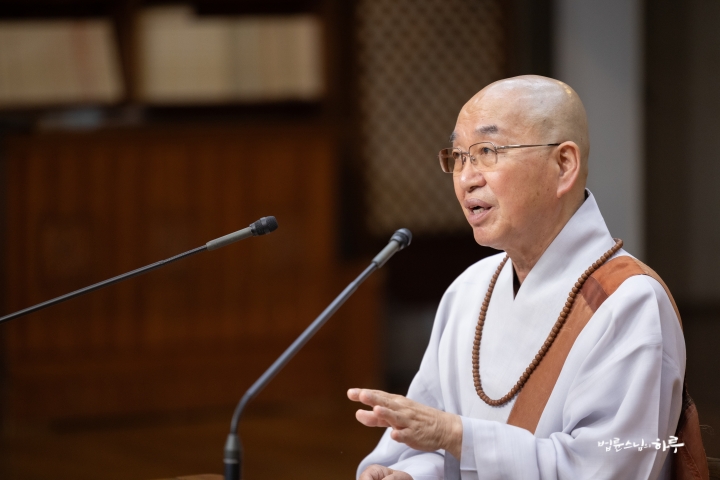
A President Who Does Not Mention the History of Japanese Occupation and Movement on August 15 Liberation Day
At the very least, on August 15 Liberation Day, we should truthfully speak about how Japan forcibly annexed our country and caused immense suffering. It’s a fact that Japan stole our land, forced women into sexual slavery as comfort women, conscripted young men as student soldiers to be used as cannon fodder, and imposed forced labor, causing tremendous pain to our people. To prevent such suffering from happening again, we must further develop and protect our nation. However, being too fixated on the past and maintaining hostile relations with Japan, with whom we should work together for future development, is not helpful for national progress. While we should request sufficient apologies from the Japanese government for past wrongs, we cannot sever relations if they don’t apologize. We can accept statements about improving Korea-Japan relations, as this doesn’t compromise the identity of the Republic of Korea. Some may argue for or against cooperation with Japan depending on their apology, but at least on August 15 Liberation Day, we should talk about our history of resistance against foreign invasion and the suffering we endured.However, this year’s presidential speech on August 15 does not clearly affirm the national identity of the Republic of Korea. This is a truly serious issue. While poor economic management, problematic labor policies, or inadequate healthcare solutions can be evaluated as government mismanagement, this issue risks undermining the identity of both the nation and its citizens. It’s on a completely different level from other political issues. This matter should be viewed based on the constitution, regardless of progressive or conservative ideologies, ruling or opposition parties, or religious affiliations. It’s particularly concerning when government officials or representatives of related organizations take stances that deny the identity of the Republic of Korea. They should quickly step down from their positions. To maintain their roles, they should refrain from making such statements and apologize for past remarks. While political views are a matter of personal freedom, those who deny the nation’s identity should not become government officials.
Following this, Sunim engaged in a dialogue with those who had requested questions in advance. Three people pressed the raise hand button and asked questions to Sunim.
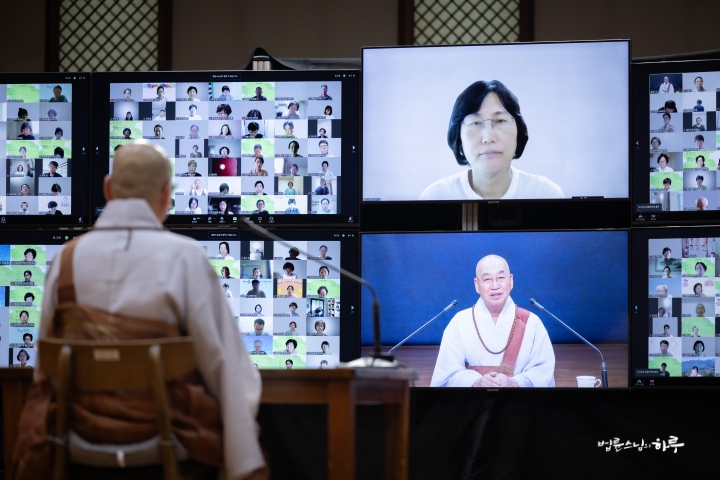
When practicing meditation, we are sometimes instructed to approach it comfortably, and other times to approach it with strong determination. I’m confused – what’s the difference between these two approaches?
The utilization rate of mental health services in Korea is significantly lower compared to other countries. Can mental illnesses such as obsessive-compulsive disorder, panic disorder, paranoia, and depression be healed through Buddha’s teachings?
The things my husband says are hurting me. How should I examine my own feelings, and how should I view my husband?
After conducting a one-hour Dharma Q&A session, Sunim concluded the live broadcast just after 11 o’clock. Upon leaving the broadcasting room, he returned to the Jungto Social and Cultural Center.
At 1 PM, Sunim attended a research seminar at The Peace Foundation. This month’s seminar topic was “Characteristics and Lifestyle of North Korean Elites.” A former high-ranking North Korean official was invited to explain the selection process for North Korean leadership. Sunim and many research fellows from The Peace Foundation attended, gaining a deeper understanding of North Korea. The seminar concluded after three hours of presentations and discussions.
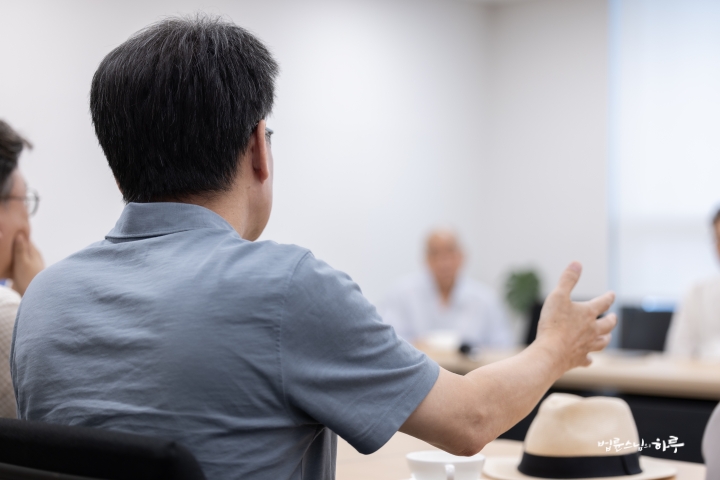
From 4 PM, Sunim spent two hours discussing The Peace Foundation’s 20th-anniversary celebration and future project directions with the foundation’s planning committee members.
As the sun set, at 7:30 PM, Sunim conducted a live broadcast of the evening practice session for members from the Seoul Jungto Center’s broadcasting room. Three people had pre-registered questions and engaged in conversations with Sunim. One of them sought Sunim’s advice on how to approach practice, expressing that the more they practiced, the more painful memories from the past surfaced.
The More I Practice, the More Past Wounds Surface
“During the opening ceremony of the recent 1000-Day Practice, while listening to practice stories, my childhood memories that I had forgotten suddenly came to mind. Since then, every time I do my early morning practice, past wounds keep surfacing, leading to a chain of distressing thoughts. Of course, after finishing my practice, I often feel more grateful for things I had taken for granted. When these past memories and wounds surface, I feel like I should confront and resolve them, but on the other hand, I wonder if I’m creating unnecessary suffering by summoning memories I’ve forgotten until now. What attitude should I adopt that would be desirable from a practice perspective?”
“There’s no need to deliberately recall forgotten memories and suffer. Since you mentioned that past memories naturally surface every time you practice, asking whether it’s better to think about them or not isn’t quite appropriate. Thoughts aren’t something we can simply choose not to have just because we don’t want them. You’ve been living with these past memories buried. They didn’t come to mind because you were preoccupied with other thoughts. Stimulated by hearing others’ practice stories, these thoughts arose during your prayers. Being buried, they could have surfaced at any time. However, there’s no need to deliberately uncover and dwell on these buried memories. Leave what’s covered as it is, but also don’t try to forcefully rebury thoughts that naturally surface. Therefore, it would be more appropriate to ask how to handle thoughts that naturally emerge.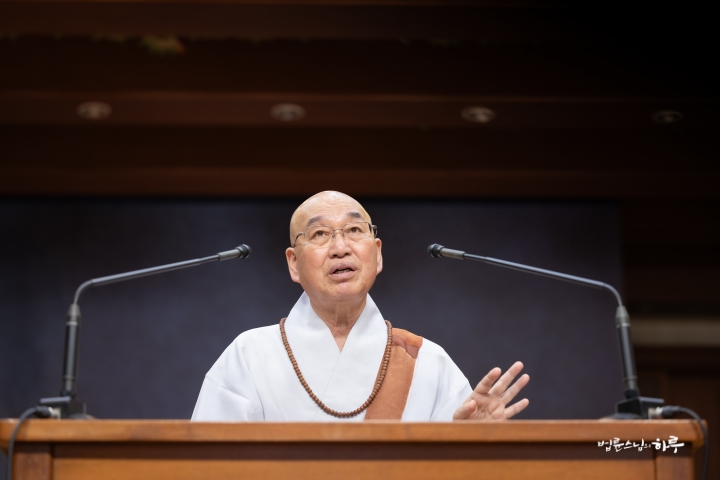
Of course, it would be better if a mother didn’t negatively impact her child, but what can we do if that was the extent of your mother’s capacity? Even if your mother had some issues, she still fed you, clothed you, did your laundry, and raised you to this point. If you were to have a child and raise them, you might find yourself yelling at your child without realizing it when you lose your temper. Even if you do that occasionally, wouldn’t your love for the child far outweigh any feelings of dislike?
Based on your adult experiences, you should be able to understand that ‘Mom didn’t hate me, she was just struggling herself.’ You need to heal yourself by realizing, ‘I was hurt when I was young, but looking back as an adult, it wasn’t such a big deal.’ If you can recall the memories without feeling anger or resentment anymore, then you’ve healed. However, if you feel there’s no problem simply because you don’t remember, that’s not healing; it’s just burying the issue. When memories don’t surface and wounds don’t appear, it means the wounds can resurface anytime the memories come back. If you can recall past memories without emotional reactions, that’s when you can consider yourself healed.
Practice isn’t about forgetting past wounds. Practice is about healing wounds and becoming free from them. If the wounds are too big to heal on your own, you need to seek professional help for treatment. If the wounds aren’t that severe, you can heal yourself, and that’s what we call practice. If you’ve been hurt by your parents, you should actually offer prayers of gratitude to them. Sometimes the hatred might be so strong that you don’t even want to bow, but if you consistently pray, ‘Thank you for giving birth to me and raising me,’ there will come a day when you suddenly realize, ‘My parents really loved me,’ ‘They went through so much to raise me,’ and tears will flow. That’s how healing progresses. Practice is one method of healing wounds.”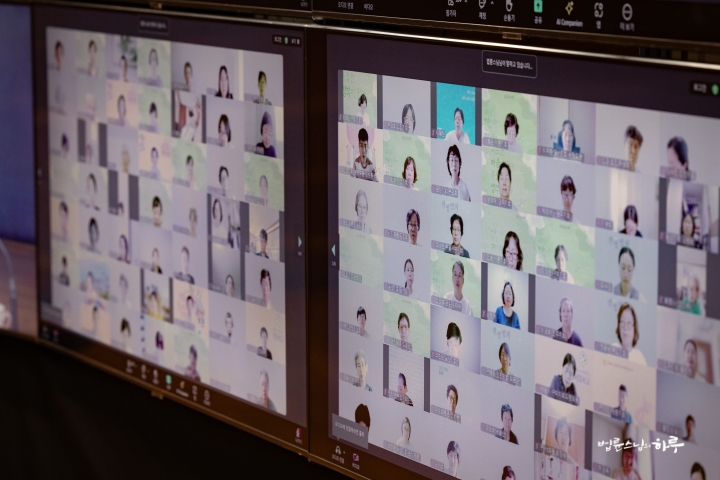
“When you said that past wounds were just covered up, I realized it. I will face the wounds I’ve been covering up through practice and work on healing them. Thank you.”
“During meditation, memories from the past that you haven’t thought about might surface. This is neither good nor bad; it’s simply past events coming to mind. If they don’t surface, that’s fine, and if they do, you can heal them. Pain feels unpleasant, but it helps us recognize when there’s a problem. If your knee cartilage was torn but you felt no pain, you wouldn’t know to seek treatment. Pain lets us know there’s an issue, prompting us to go to the hospital. So pain is actually good. Without pain, you wouldn’t know if you had a bedsore causing your flesh to rot. Pain is beneficial because it alerts us to problems.”The questions continued. After finishing the conversations, Sunim gave his closing remarks.
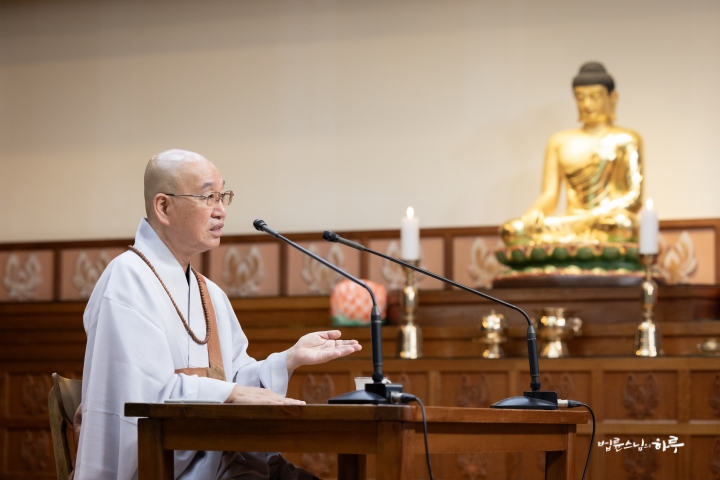
The live broadcast ended after 9 PM.
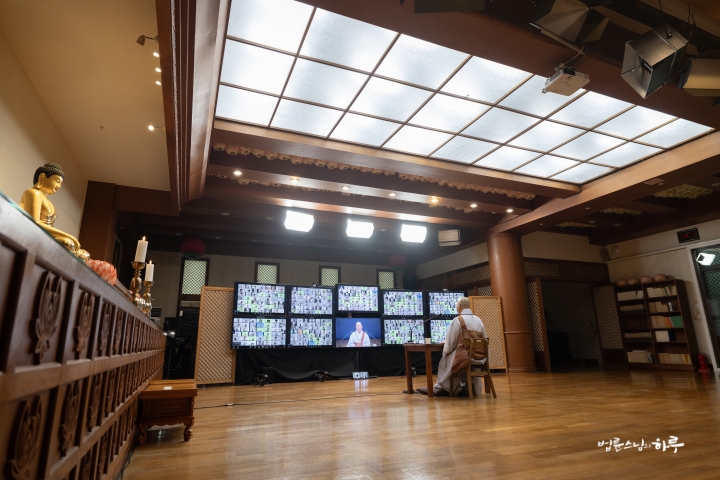
Tomorrow, Sunim will have a breakfast meeting with North Korea experts at The Peace Foundation, followed by conversations with visitors to the foundation during lunch. In the evening, he will board a flight at Incheon Airport to Zurich, Switzerland. Starting tomorrow, Sunim will visit 10 countries over the course of a month, conducting Dharma Q&A sessions and engaging in humanitarian aid activities.
A Day in the Life of Sunim is translated by AI, edited by volunteers